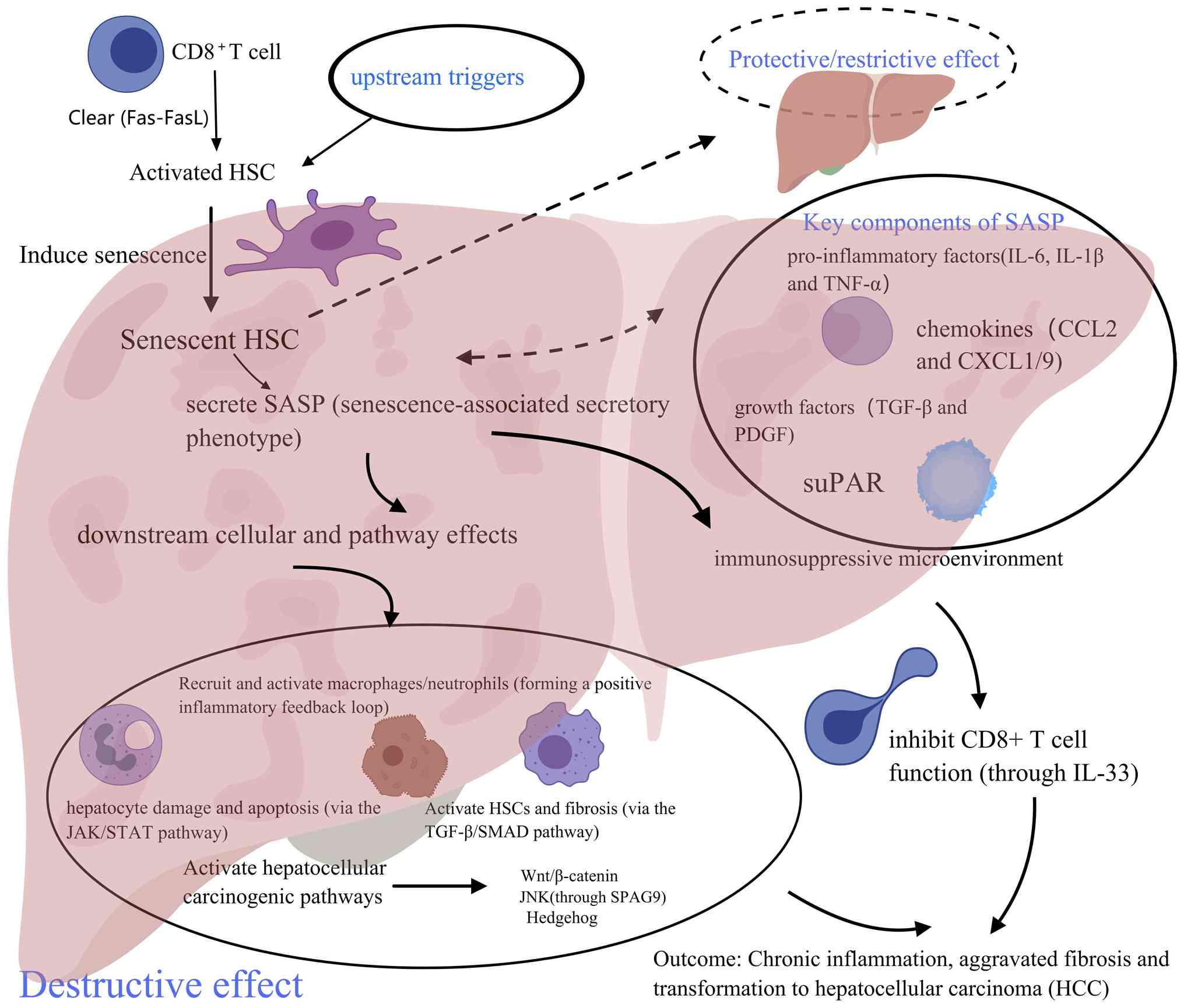
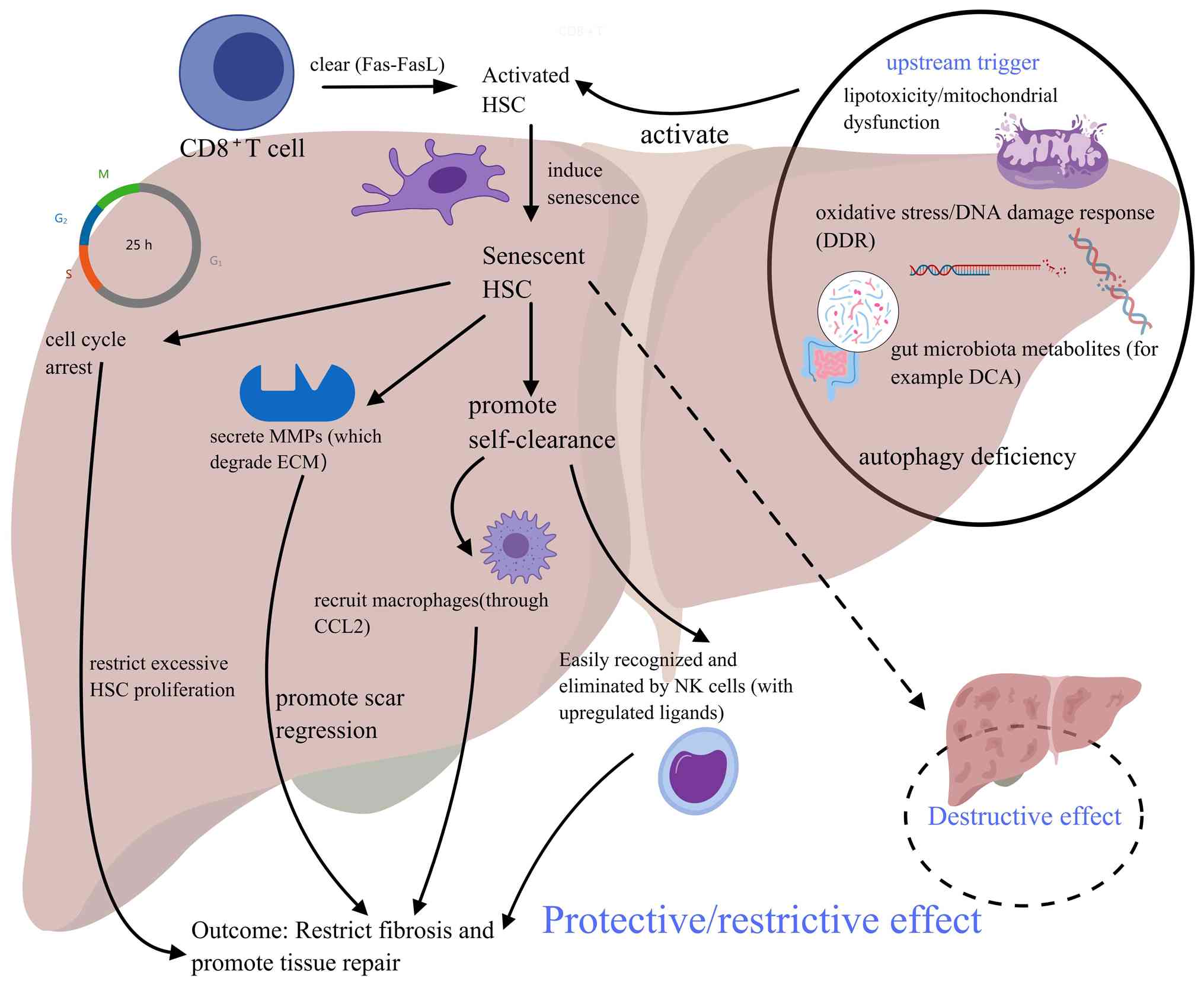
|
1
|
Rinella ME, Lazarus JV, Ratziu V, Francque
SM, Sanyal AJ, Kanwal F, Romero D, Abdelmalek MF, Anstee QM, Arab
JP, et al: A multi-society Delphi consensus statement on new fatty
liver disease nomenclature. J Hepatol. 79:1542–1556.
2023.PubMed/NCBI View Article : Google Scholar
|
|
2
|
Huang DQ, El-Serag HB and Loomba R: Global
epidemiology of NAFLD-related HCC: Trends, predictions, risk
factors and prevention. Nat Rev Gastroenterol Hepatol. 18:223–238.
2021.PubMed/NCBI View Article : Google Scholar
|
|
3
|
Riazi K, Azhari H, Charette JH, Underwood
FE, King JA, Afshar EE, Swain MG, Congly SE, Kaplan GG and Shaheen
AA: The prevalence and incidence of NAFLD worldwide: A systematic
review and meta-analysis. Lancet Gastroenterol Hepatol. 7:851–861.
2022.PubMed/NCBI View Article : Google Scholar
|
|
4
|
Tsuchida T and Friedman SL: Mechanisms of
hepatic stellate cell activation. Nat Rev Gastroenterol Hepatol.
14:397–411. 2017.PubMed/NCBI View Article : Google Scholar
|
|
5
|
Ferreira-Gonzalez S, Rodrigo-Torres D,
Gadd VL and Forbes SJ: Cellular senescence in liver disease and
regeneration. Semin Liver Dis. 41:50–66. 2021.PubMed/NCBI View Article : Google Scholar
|
|
6
|
Krizhanovsky V, Yon M, Dickins RA, Hearn
S, Simon J, Miething C, Yee H, Zender L and Lowe SW: Senescence of
activated stellate cells limits liver fibrosis. Cell. 134:657–667.
2008.PubMed/NCBI View Article : Google Scholar
|
|
7
|
Aravinthan A, Scarpini C, Tachtatzis P,
Verma S, Penrhyn-Lowe S, Harvey R, Davies SE, Allison M, Coleman N
and Alexander G: Hepatocyte senescence predicts progression in
non-alcohol-related fatty liver disease. J Hepatol. 58:549–556.
2013.PubMed/NCBI View Article : Google Scholar
|
|
8
|
Hernández-Gea V, Ghiassi-Nejad Z,
Rozenfeld R, Gordon R, Fiel MI, Yue Z, Czaja MJ and Friedman SL:
Autophagy releases lipid that promotes fibrogenesis by activated
hepatic stellate cells in mice and in human tissues.
Gastroenterology. 142:938–946. 2012.PubMed/NCBI View Article : Google Scholar
|
|
9
|
Allaire M, Rautou PE, Codogno P and
Lotersztajn S: Autophagy in liver diseases: Time for translation? J
Hepatol. 70:985–998. 2019.PubMed/NCBI View Article : Google Scholar
|
|
10
|
Kale A, et al: Senescent cells and
therapeutic targeting in liver fibrosis. Gut. 2020.
|
|
11
|
Friedman SL, Neuschwander-Tetri BA,
Rinella M and Sanyal AJ: Mechanisms of NAFLD development and
therapeutic strategies. Nat Med. 24:908–922. 2018.PubMed/NCBI View Article : Google Scholar
|
|
12
|
Campisi J and d'Adda di Fagagna F:
Cellular senescence: When bad things happen to good cells. Nat Rev
Mol Cell Biol. 8:729–740. 2007.PubMed/NCBI View Article : Google Scholar
|
|
13
|
Tchkonia T, Zhu Y, van Deursen J, Campisi
J and Kirkland JL: Cellular senescence and the senescent secretory
phenotype: Therapeutic opportunities. J Clin Invest. 123:966–972.
2013.PubMed/NCBI View Article : Google Scholar
|
|
14
|
Xiong J, Dong L, Lv Q, Yin Y, Zhao J, Ke
Y, Wang S, Zhang W and Wu M: Targeting senescence-associated
secretory phenotypes to remodel the tumour microenvironment and
modulate tumour outcomes. Clin Transl Med. 14(1772)2024.PubMed/NCBI View Article : Google Scholar
|
|
15
|
Myung PK, Kugel JF and Goodrich JA: The
Borrelia burgdorferi p66 protein interacts with the human
lipopolysaccharide-induced tumor necrosis factor-alpha factor. J
Bacteriol. 184:1350–1357. 2002.
|
|
16
|
Tang X, Metzger D, Leeman S and Amar S:
LPS-induced TNF-alpha factor (LITAF)-deficient mice show delayed
LPS-induced cytokine expression. Proc Natl Acad Sci USA.
103:13777–13782. 2006.
|
|
17
|
Ceccarelli S, Panera N, Mina M, Gnani D,
De Stefanis C, Crudele A, Rychlicki C, Petrini S, Bruscalupi G,
Agostinelli L, et al: LPS-induced TNF-α factor mediates
pro-inflammatory and pro-fibrogenic pattern in non-alcoholic fatty
liver disease. Oncotarget. 6:41434–41452. 2015.PubMed/NCBI View Article : Google Scholar
|
|
18
|
Beringer A and Miossec P: IL-17 and TNF-α
co-operation contributes to the proinflammatory response of hepatic
stellate cells. Clin Exp Immunol. 198:111–120. 2019.PubMed/NCBI View Article : Google Scholar
|
|
19
|
Lemmers A, Moreno C, Gustot T, Maréchal R,
Degré D, Demetter P, de Nadai P, Geerts A, Quertinmont E,
Vercruysse V, et al: The interleukin-17 pathway is involved in
human alcoholic liver disease. Hepatology. 49:646–657.
2009.PubMed/NCBI View Article : Google Scholar
|
|
20
|
Zhou Y, Zhang L, Ma Y, Xie L, Yang YY, Jin
C, Chen H, Zhou Y, Song GQ, Ding J and Wu J: Secretome of senescent
hepatic stellate cells favors malignant transformation from
nonalcoholic steatohepatitis-fibrotic progression to hepatocellular
carcinoma. Theranostics. 13:4430–4448. 2023.PubMed/NCBI View Article : Google Scholar
|
|
21
|
Kuilman T and Peeper DS:
Senescence-messaging secretome: SMS-ing cellular stress. Nat Rev
Cancer. 9:81–94. 2009.PubMed/NCBI View Article : Google Scholar
|
|
22
|
Gorgoulis V, Adams PD, Alimonti A, Bennett
DC, Bischof O, Bishop C, Campisi J, Collado M, Evangelou K,
Ferbeyre G, et al: Cellular senescence: Defining a path forward.
Cell. 179:813–827. 2019.PubMed/NCBI View Article : Google Scholar
|
|
23
|
Faget DV, Ren Q and Stewart SA: Unmasking
senescence: Context-dependent effects of SASP in cancer. Nat Rev
Cancer. 19:439–453. 2019.PubMed/NCBI View Article : Google Scholar
|
|
24
|
Coppé JP, Patil CK, Rodier F, Sun Y, Muñoz
DP, Goldstein J, Nelson PS, Desprez PY and Campisi J:
Senescence-associated secretory phenotypes reveal
cell-nonautonomous functions of oncogenic RAS and the p53 tumor
suppressor. PLoS Biol. 6:2853–2868. 2008.PubMed/NCBI View Article : Google Scholar
|
|
25
|
Engelmann C and Tacke F: The potential
role of cellular senescence in non-alcoholic fatty liver disease.
Int J Mol Sci. 23(652)2022.PubMed/NCBI View Article : Google Scholar
|
|
26
|
Li Q and Wang L: Navigating the complex
role of senescence in liver disease. Chin Med J (Engl).
137:3061–3072. 2024.PubMed/NCBI View Article : Google Scholar
|
|
27
|
Rosenthal SB, Liu X, Ganguly S, Dhar D,
Pasillas MP, Ricciardelli E, Li RZ, Troutman TD, Kisseleva T, Glass
CK and Brenner DA: Heterogeneity of HSCs in a mouse model of NASH.
Hepatology. 74:667–685. 2021.PubMed/NCBI View Article : Google Scholar
|
|
28
|
Du K, Jun JH, Dutta RK and Diehl AM:
Plasticity, heterogeneity and multifunctionality of hepatic
stellate cells in liver pathophysiology. Hepatol Commun.
8(e0411)2024.PubMed/NCBI View Article : Google Scholar
|
|
29
|
Kumar P, Hassan M, Tacke F and Engelmann
C: Delineating the heterogeneity of senescence-induced-functional
alterations in hepatocytes. Cell Mol Life Sci.
81(200)2024.PubMed/NCBI View Article : Google Scholar
|
|
30
|
Carter JK and Friedman SL: Hepatic
stellate cell-immune interactions in NASH. Front Endocrinol
(Lausanne). 13(867940)2022.PubMed/NCBI View Article : Google Scholar
|
|
31
|
Razdan N, Vasilopoulos T and Herbig U:
Telomere dysfunction promotes transdifferentiation of human
fibroblasts into myofibroblasts. Aging Cell.
17(e12838)2018.PubMed/NCBI View Article : Google Scholar
|
|
32
|
Akkız H, Gieseler RK and Canbay A: Liver
fibrosis: From basic science towards clinical progress, focusing on
the central role of hepatic stellate cells. Int J Mol Sci.
25(7873)2024.PubMed/NCBI View Article : Google Scholar
|
|
33
|
Okina Y, Sato-Matsubara M, Matsubara T,
Daikoku A, Longato L, Rombouts K, Thanh Thuy LT, Ichikawa H,
Minamiyama Y, Kadota M, et al: TGF-β1-driven reduction of
cytoglobin leads to oxidative DNA damage in stellate cells during
non-alcoholic steatohepatitis. J Hepatol. 73:882–895.
2020.PubMed/NCBI View Article : Google Scholar
|
|
34
|
Frippiat C, Chen QM, Zdanov S, Magalhaes
JP, Remacle J and Toussaint O: Subcytotoxic H2O2 stress triggers a
release of transforming growth factor-beta1, which induces
biomarkers of cellular senescence of human diploid fibroblasts. J
Biol Chem. 276:2531–2537. 2001.PubMed/NCBI View Article : Google Scholar
|
|
35
|
Amor C, Feucht J, Leibold J, Ho YJ, Zhu C,
Alonso-Curbelo D, Mansilla-Soto J, Boyer JA, Li X, Giavridis T, et
al: Senolytic CAR T cells reverse senescence-associated
pathologies. Nature. 583:127–132. 2020.PubMed/NCBI View Article : Google Scholar
|
|
36
|
Nelson G, Wordsworth J, Wang C, Jurk D,
Lawless C, Martin-Ruiz C and von Zglinicki T: A senescent cell
bystander effect: Senescence-induced senescence. Aging Cell.
11:345–349. 2012.PubMed/NCBI View Article : Google Scholar
|
|
37
|
Grohmann M, Wiede F, Dodd GT, Gurzov EN,
Ooi GJ, Butt T, Rasmiena AA, Kaur S, Gulati T, Goh PK, et al:
Obesity drives STAT-1-Dependent NASH and STAT-3-Dependent HCC.
Cell. 175:1289–1306.e20. 2018.PubMed/NCBI View Article : Google Scholar
|
|
38
|
Anstee QM, Reeves HL, Kotsiliti E, Govaere
O and Heikenwalder M: From NASH to HCC: Current concepts and future
challenges. Nat Rev Gastroenterol Hepatol. 16:411–428.
2019.PubMed/NCBI View Article : Google Scholar
|
|
39
|
Loo TM, Kamachi F, Watanabe Y, Yoshimoto
S, Kanda H, Arai Y, Nakajima-Takagi Y, Iwama A, Koga T, Sugimoto Y,
et al: Gut Microbiota Promotes Obesity-Associated Liver Cancer
through PGE2-Mediated Suppression of Antitumor Immunity. Cancer
Discov. 7:522–538. 2017.PubMed/NCBI View Article : Google Scholar
|
|
40
|
Brennan PN, Elsharkawy AM, Kendall TJ,
Loomba R, Mann DA and Fallowfield JA: Antifibrotic therapy in
nonalcoholic steatohepatitis: Time for a human-centric approach.
Nat Rev Gastroenterol Hepatol. 20:679–688. 2023.PubMed/NCBI View Article : Google Scholar
|
|
41
|
Yamagishi R, Kamachi F, Nakamura M,
Yamazaki S, Kamiya T, Takasugi M, Cheng Y, Nonaka Y, Yukawa-Muto Y,
Thuy LTT, et al: Gasdermin D-mediated release of IL-33 from
senescent hepatic stellate cells promotes obesity-associated
hepatocellular carcinoma. Sci Immunol. 7(eabl7209)2022.PubMed/NCBI View Article : Google Scholar
|
|
42
|
Yoshimoto S, Loo TM, Atarashi K, Kanda H,
Sato S, Oyadomari S, Iwakura Y, Oshima K, Morita H, Hattori M, et
al: Obesity-induced gut microbial metabolite promotes liver cancer
through senescence secretome. Nature. 499:97–101. 2013.PubMed/NCBI View Article : Google Scholar
|
|
43
|
Gao B and Radaeva S: Natural killer and
natural killer T cells in liver fibrosis. Biochim Biophys Acta.
1832:1061–1069. 2013.PubMed/NCBI View Article : Google Scholar
|
|
44
|
Park O, Jeong WI, Wang L, Wang H, Lian ZX,
Gershwin ME and Gao B: Diverse roles of invariant natural killer T
cells in liver injury and fibrosis induced by carbon tetrachloride.
Hepatology. 49:1683–1694. 2009.PubMed/NCBI View Article : Google Scholar
|
|
45
|
Wagner KD and Wagner N: The senescence
markers p16INK4A, p14ARF/p19ARF and p21 in organ development and
homeostasis. Cells. 11(1966)2022.PubMed/NCBI View Article : Google Scholar
|
|
46
|
Jiang Z, Qian B, Xu T, Bai J and Fu W:
Immune microenvironment on the molecular mechanisms and therapeutic
targets of MAFLD. Immunotargets Ther. 14:719–733. 2025.PubMed/NCBI View Article : Google Scholar
|
|
47
|
Carter J, Wang S and Friedman SL: Ten
thousand points of light: Heterogeneity among the stars of NASH
Fibrosis. Hepatology. 74:543–546. 2021.PubMed/NCBI View Article : Google Scholar
|
|
48
|
Wiemann SU, Satyanarayana A, Tsahuridu M,
Tillmann HL, Zender L, Klempnauer J, Flemming P, Franco S, Blasco
MA, Manns MP and Rudolph KL: Hepatocyte telomere shortening and
senescence are general markers of human liver cirrhosis. FASEB J.
16:935–942. 2002.PubMed/NCBI View Article : Google Scholar
|
|
49
|
Verma S, Tachtatzis P, Penrhyn-Lowe S,
Scarpini C, Jurk D, Von Zglinicki T, Coleman N and Alexander GJ:
Sustained telomere length in hepatocytes and cholangiocytes with
increasing age in normal liver. Hepatology. 56:1510–1520.
2012.PubMed/NCBI View Article : Google Scholar
|
|
50
|
Jannone G, Rozzi M, Najimi M, Decottignies
A and Sokal EM: An optimized protocol for histochemical detection
of senescence-associated beta-galactosidase activity in
cryopreserved liver tissue. J Histochem Cytochem. 68:269–278.
2020.PubMed/NCBI View Article : Google Scholar
|
|
51
|
Serrano M, Lin AW, McCurrach ME, Beach D
and Lowe SW: Oncogenic RAS provokes premature cell senescence
associated with accumulation of p53 and p16INK4a. Cell. 88:593–602.
1997.PubMed/NCBI View Article : Google Scholar
|
|
52
|
Guo J, Huang X, Dou L, Yan M, Shen T, Tang
W and Li J: Aging and aging-related diseases: From molecular
mechanisms to interventions and treatments. Signal Transduct Target
Ther. 7(391)2022.PubMed/NCBI View Article : Google Scholar
|
|
53
|
Friedman SL: Hepatic stellate cells:
Protean, multifunctional and enigmatic cells of the liver. Physiol
Rev. 88:125–172. 2008.PubMed/NCBI View Article : Google Scholar
|
|
54
|
De Waal Malefyt R, Abrams J, Bennett B,
Figdor CG and de Vries JE: Interleukin 10(IL-10) inhibits cytokine
synthesis by human monocytes: An autoregulatory role of IL-10
produced by monocytes. J Exp Med. 174:1209–1220. 1991.PubMed/NCBI View Article : Google Scholar
|
|
55
|
Cheng N, Kim KH and Lau LF: Senescent
hepatic stellate cells promote liver regeneration through IL-6 and
ligands of CXCR2. JCI Insight. 7(158207)2022.PubMed/NCBI View Article : Google Scholar
|
|
56
|
Irvine KM, Skoien R, Bokil NJ, Melino M,
Thomas GP, Loo D, Gabrielli B, Hill MM, Sweet MJ, Clouston AD and
Powell EE: Senescent human hepatocytes express a unique secretory
phenotype and promote macrophage migration. World J Gastroenterol.
20:17851–17862. 2014.PubMed/NCBI View Article : Google Scholar
|
|
57
|
Thompson KC, Trowern A, Fowell A, Marathe
M, Haycock C, Arthur MJ and Sheron N: Primary rat and mouse hepatic
stellate cells express the macrophage inhibitor cytokine
interleukin-10 during the course of activation in vitro.
Hepatology. 28:1518–1524. 1998.PubMed/NCBI View Article : Google Scholar
|
|
58
|
Li S, Yang F, Cheng F, Zhu L and Yan Y:
Lipotoxic hepatocyte derived LIMA1 enriched small extracellular
vesicles promote hepatic stellate cells activation via inhibiting
mitophagy. Cell Mol Biol Lett. 29(82)2024.PubMed/NCBI View Article : Google Scholar
|
|
59
|
Wang Q, Lv Q, Bian H, Yang L, Guo KL, Ye
SS, Dong XF and Tao LL: A novel tumor suppressor SPINK5 targets
Wnt/β-catenin signaling pathway in esophageal cancer. Cancer Med.
8:2360–2371. 2019.PubMed/NCBI View Article : Google Scholar
|
|
60
|
Kordes C, Sawitza I and Häussinger D:
Canonical Wnt signaling maintains the quiescent stage of hepatic
stellate cells. Biochem Biophys Res Commun. 367:116–123.
2008.PubMed/NCBI View Article : Google Scholar
|
|
61
|
Verdelho Machado M and Diehl A: Role of
hedgehog signaling pathway in NASH. Int J Mol Sci.
17(857)2016.PubMed/NCBI View Article : Google Scholar
|
|
62
|
Ding J, Li HY, Zhang L, Zhou Y and Wu J:
Hedgehog signaling, a critical pathway governing the development
and progression of hepatocellular carcinoma. Cells.
10(123)2021.PubMed/NCBI View Article : Google Scholar
|
|
63
|
Chen Y, Gao WK, Shu YY and Ye J:
Mechanisms of ductular reaction in non-alcoholic steatohepatitis.
World J Gastroenterol. 28:2088–2099. 2022.PubMed/NCBI View Article : Google Scholar
|
|
64
|
Shen X, Peng Y and Li H: The
injury-related activation of hedgehog signaling pathway modulates
the repair-associated inflammation in liver fibrosis. Front
Immunol. 8(1450)2017.PubMed/NCBI View Article : Google Scholar
|
|
65
|
Hu Y, Peng L, Zhuo X, Yang C and Zhang Y:
Hedgehog signaling pathway in fibrosis and targeted therapies.
Biomolecules. 14(1485)2024.PubMed/NCBI View Article : Google Scholar
|
|
66
|
Brenner C, Galluzzi L, Kepp O and Kroemer
G: Decoding cell death signals in liver inflammation. J Hepatol.
59:583–594. 2013.PubMed/NCBI View Article : Google Scholar
|
|
67
|
Singh R, Kaushik S, Wang Y, Xiang Y, Novak
I, Komatsu M, Tanaka K, Cuervo AM and Czaja MJ: Autophagy regulates
lipid metabolism. Nature. 458:1131–1135. 2009.PubMed/NCBI View Article : Google Scholar
|
|
68
|
Pickles S, Vigié P and Youle RJ: Mitophagy
and quality control mechanisms in mitochondrial maintenance. Curr
Biol. 28:R170–R185. 2018.PubMed/NCBI View Article : Google Scholar
|
|
69
|
Cui X, Zhou Z, Tu H, Wu J, Zhou J, Yi Q,
Liu O and Dai X: Mitophagy in fibrotic diseases: Molecular
mechanisms and therapeutic applications. Front Physiol.
15(1430230)2024.PubMed/NCBI View Article : Google Scholar
|
|
70
|
Liu S, Wang L, Zhu L, Zhao T, Han P, Yan
F, Wang X, Li C, Wang Z and Yang BF: Mechanism and regulation of
mitophagy in liver diseases: A review. Front Cell Dev Biol.
13(1614940)2025.PubMed/NCBI View Article : Google Scholar
|
|
71
|
Du Y, Zhu S, Zeng H, Wang Z, Huang Y, Zhou
Y, Zhang W, Zhu J and Yang C: Research progress on the effect of
autophagy and exosomes on liver fibrosis. Curr Stem Cell Res Ther.
19:785–797. 2024.PubMed/NCBI View Article : Google Scholar
|
|
72
|
Passos JF, Nelson G, Wang C, Richter T,
Simillion C, Proctor CJ, Miwa S, Olijslagers S, Hallinan J, Wipat
A, et al: Feedback between p21 and reactive oxygen production is
necessary for cell senescence. Mol Syst Biol. 6(347)2010.PubMed/NCBI View Article : Google Scholar
|
|
73
|
Vial G, Dubouchaud H and Leverve XM: Liver
mitochondria and insulin resistance. Acta Biochim Pol. 57:389–392.
2010.PubMed/NCBI
|
|
74
|
Pacher P, Beckman JS and Liaudet L: Nitric
oxide and peroxynitrite in health and disease. Physiol Rev.
87:315–424. 2007.PubMed/NCBI View Article : Google Scholar
|
|
75
|
Beltrán B, Mathur A, Duchen MR,
Erusalimsky JD and Moncada S: The effect of nitric oxide on cell
respiration: A key to understanding its role in cell survival or
death. Proc Natl Acad Sci USA. 97:14602–14607. 2000.PubMed/NCBI View Article : Google Scholar
|
|
76
|
d'Adda di Fagagna F: Living on a break:
Cellular senescence as a DNA-damage response. Nat Rev Cancer.
8:512–522. 2008.PubMed/NCBI View Article : Google Scholar
|
|
77
|
Kim KS, Seu YB, Baek SH, Kim MJ, Kim KJ,
Kim JH and Kim JR: Induction of cellular senescence by insulin-like
growth factor binding protein-5 through a p53-dependent mechanism.
Mol Biol Cell. 18:4543–4552. 2007.PubMed/NCBI View Article : Google Scholar
|
|
78
|
Kortlever RM, Higgins PJ and Bernards R:
Plasminogen activator inhibitor-1 is a critical downstream target
of p53 in the induction of replicative senescence. Nat Cell Biol.
8:877–884. 2006.PubMed/NCBI View Article : Google Scholar
|
|
79
|
Merendino N, Costantini L, Manzi L,
Molinari R, D'Eliseo D and Velotti F: Dietaryω-3
polyunsaturated fatty acid DHA: A potential adjuvant in the
treatment of cancer. Biomed Res Int. 2013(310186)2013.PubMed/NCBI View Article : Google Scholar
|
|
80
|
Wu Z, Xia M, Wang J, Aguilar MM,
Buist-Homan M and Moshage H: Extracellular vesicles originating
from steatotic hepatocytes promote hepatic stellate cell senescence
via AKT/mTOR signaling. Cell Biochem Funct.
42(e4077)2024.PubMed/NCBI View Article : Google Scholar
|
|
81
|
Sun R, Cao M, Zhang J, Yang W, Wei H, Meng
X, Yin L and Pu Y: Benzene exposure alters expression of enzymes
involved in fatty acid β-oxidation in male C3H/He mice. Int J
Environ Res Public Health. 13(1068)2016.PubMed/NCBI View Article : Google Scholar
|
|
82
|
Tighanimine K, Nabuco Leva Ferreira
Freitas JA, Nemazanyy I, Bankolé A, Benarroch-Popivker D, Brodesser
S, Doré G, Robinson L, Benit P, Ladraa S, et al: A homoeostatic
switch causing glycerol-3-phosphate and phosphoethanolamine
accumulation triggers senescence by rewiring lipid metabolism. Nat
Metab. 6:323–342. 2024.PubMed/NCBI View Article : Google Scholar
|
|
83
|
Najt CP, Devarajan M and Mashek DG:
Perilipins at a glance. J Cell Sci. 135(jcs259501)2022.PubMed/NCBI View Article : Google Scholar
|
|
84
|
Sztalryd C and Kimmel AR: Perilipin: Lipid
droplet coat protein adapted for tissue-specific energy storage and
utilization, and lipids cytoprotection. Biochimie. 96:96–101.
2014.PubMed/NCBI View Article : Google Scholar
|
|
85
|
Marschallinger J, Iram T, Zardeneta M, Lee
SE, Lehallier B, Haney MS, Pluvinage JV, Mathur V, Hahn O, Morgens
DW, et al: Lipid-droplet-accumulating microglia represent a
dysfunctional and proinflammatory state in the aging brain. Nat
Neurosci. 23:194–208. 2020.PubMed/NCBI View Article : Google Scholar
|
|
86
|
Mashek DG: Hepatic lipid droplets: A
balancing act between energy storage and metabolic dysfunction in
NAFLD. Mol Metab. 50(101115)2021.PubMed/NCBI View Article : Google Scholar
|
|
87
|
Hosseini MS, Barjesteh F, Azedi F,
Alipourfard I, Rezaei Z and Bahreini E: Comparative analysis of
β-Estradiol and testosterone on lipid droplet accumulation, and
regulatory protein expression in palmitate/oleate-induced fatty
HepG2 cells. BMC Gastroenterol. 25(263)2025.PubMed/NCBI View Article : Google Scholar
|
|
88
|
Li H and Humphreys BD: Targeting de novo
lipogenesis to mitigate kidney disease. J Clin Invest.
134(e178125)2024.PubMed/NCBI View Article : Google Scholar
|
|
89
|
Conte M, Vasuri F, Trisolino G, Bellavista
E, Santoro A, Degiovanni A, Martucci E, D'Errico-Grigioni A,
Caporossi D, Capri M, et al: Increased Plin2 expression in human
skeletal muscle is associated with sarcopenia and muscle weakness.
PLoS One. 8(e73709)2013.PubMed/NCBI View Article : Google Scholar
|
|
90
|
Li H, Zhou Y, Wang H, Zhang M, Qiu P,
Zhang M, Zhang R, Zhao Q and Liu J: Crosstalk between liver
macrophages and surrounding cells in nonalcoholic steatohepatitis.
Front Immunol. 11(1169)2020.PubMed/NCBI View Article : Google Scholar
|
|
91
|
Wang YB, Li T, Wang FY, Yao X, Bai QX, Su
HW, Liu J, Wang L and Tan RZ: The dual role of cellular senescence
in macrophages: Unveiling the hidden driver of age-related
inflammation in kidney disease. Int J Biol Sci. 21:632–657.
2025.PubMed/NCBI View Article : Google Scholar
|
|
92
|
Campisi J: Senescent cells, tumor
suppression and organismal aging: Good citizens, bad neighbors.
Cell. 120:513–522. 2005.PubMed/NCBI View Article : Google Scholar
|
|
93
|
Yue B, Gao Y, Hu Y, Zhan M, Wu Y and Lu L:
Harnessing CD8+ T cell dynamics in hepatitis B virus-associated
liver diseases: Insights, therapies and future directions. Clin
Transl Med. 14(e1731)2024.PubMed/NCBI View Article : Google Scholar
|
|
94
|
Damba T, Zhang M, Serna Salas SA, Wu Z,
van Goor H, Arenas AF, Muñoz-Ortega MH, Ventura-Juárez J,
Buist-Homan M and Moshage H: Inhibition of endogenous hydrogen
sulfide production reduces activation of hepatic stellate cells via
the induction of cellular senescence. Cell Cycle. 23:629–644.
2024.PubMed/NCBI View Article : Google Scholar
|
|
95
|
Ducimetière L, Vermeer M and Tugues S: The
interplay between innate lymphoid cells and the tumor
microenvironment. Front Immunol. 10(2895)2019.PubMed/NCBI View Article : Google Scholar
|
|
96
|
Serna-Salas SA, Arroyave-Ospina JC, Zhang
M, Damba T, Buist-Homan M, Muñoz-Ortega MH, Ventura-Juárez J and
Moshage H: α-1 Adrenergic receptor antagonist doxazosin reverses
hepatic stellate cells activation via induction of senescence. Mech
Ageing Dev. 201(111617)2022.PubMed/NCBI View Article : Google Scholar
|
|
97
|
Duan Y, Pan J, Chen J, Zhu D, Wang J, Sun
X, Chen L and Wu L: Soluble egg antigens of schistosoma japonicum
induce senescence of activated hepatic stellate cells by activation
of the FoxO3a/SKP2/P27 pathway. PLoS Negl Trop Dis.
10(e0005268)2016.PubMed/NCBI View Article : Google Scholar
|
|
98
|
Zhu NL, Asahina K, Wang J, Ueno A, Lazaro
R, Miyaoka Y, Miyajima A and Tsukamoto H: Hepatic stellate
cell-derived delta-like homolog 1 (DLK1) protein in liver
regeneration. J Biol Chem. 287:10355–10367. 2012.PubMed/NCBI View Article : Google Scholar
|
|
99
|
Panebianco C, Oben JA, Vinciguerra M and
Pazienza V: Senescence in hepatic stellate cells as a mechanism of
liver fibrosis reversal: A putative synergy between retinoic acid
and PPAR-gamma signalings. Clin Exp Med. 17:269–280.
2017.PubMed/NCBI View Article : Google Scholar
|
|
100
|
Zhu Y, Tchkonia T, Pirtskhalava T, Gower
AC, Ding H, Giorgadze N, Palmer AK, Ikeno Y, Hubbard GB, Lenburg M,
et al: The Achilles' heel of senescent cells: From transcriptome to
senolytic drugs. Aging Cell. 14:644–658. 2015.PubMed/NCBI View Article : Google Scholar
|
|
101
|
Wang MJ, Zhang HL, Chen F, Guo XJ, Liu QG
and Hou J: The double-edged effects of IL-6 in liver regeneration,
aging, inflammation and diseases. Exp Hematol Oncol.
13(62)2024.PubMed/NCBI View Article : Google Scholar
|
|
102
|
Ferreira-Gonzalez S, Lu WY, Raven A, et
al: Paracrine signaling by senescent cells promotes liver
regeneration. EMBO J. 37(e99195)2018.
|
|
103
|
Kordes C, Bock HH, Reichert D, May P and
Häussinger D: Hepatic stellate cells: Current state and open
questions. Biol Chem. 402:1021–1032. 2021.PubMed/NCBI View Article : Google Scholar
|
|
104
|
Bird TG, Müller M, Boulter L, Vincent DF,
Ridgway RA, Lopez-Guadamillas E, Lu WY, Jamieson T, Govaere O,
Campbell AD, et al: TGFβ inhibition restores a regenerative
response in acute liver injury by suppressing paracrine senescence.
Sci Transl Med. 10(eaan1230)2018.PubMed/NCBI View Article : Google Scholar
|
|
105
|
Ritschka B, Storer M, Mas A, Heinzmann F,
Ortells MC, Morton JP, Sansom OJ, Zender L and Keyes WM: The
senescence-associated secretory phenotype induces cellular
plasticity and tissue regeneration. Genes Dev. 31:172–183.
2017.PubMed/NCBI View Article : Google Scholar
|
|
106
|
Cheng Y, Wang X, Wang B, Zhou H, Dang S,
Shi Y, Hao L, Luo Q, Jin M, Zhou Q and Zhang Y: Aging-associated
oxidative stress inhibits liver progenitor cell activation in mice.
Aging (Albany NY). 9:1359–1374. 2017.PubMed/NCBI View Article : Google Scholar
|
|
107
|
Saliev T and Singh PB: Targeting
senescence: A review of senolytics and senomorphics in anti-aging
interventions. Biomolecules. 15(860)2025.PubMed/NCBI View Article : Google Scholar
|
|
108
|
Roeb E: Non-alcoholic fatty liver
diseases: Current challenges and future directions. Ann Transl Med.
9(726)2021.PubMed/NCBI View Article : Google Scholar
|
|
109
|
Geng Y and Schwabe RF: Hepatic stellate
cell heterogeneity: Functional aspects and therapeutic
implications. Hepatology: May 8, 2025 (Epub ahead of print).
|
|
110
|
Schaenman JM, Rossetti M, Sidharthan S, et
al: Increased p16INK4a expression in peripheral blood T cells is
associated with frailty in patients evaluated for liver
transplantation. Am J Transplant. 18:696–703. 2018.
|
|
111
|
Sidharthan S, Wang T, Ying Z, et al:
Sarcopenia, frailty, and immunosenescence in liver transplant
candidates. Transplant Direct. 6(e598)2020.
|
|
112
|
Miller WC, Yousefzadeh MJ, Fisher J,
Sarumi H, Kirchner V, Niedernhofer LJ and Pruett T: A brief report
on biomarkers of cellular senescence associated with liver frailty
and length of stay in liver transplantation. GeroScience.
47:5257–5265. 2025.PubMed/NCBI View Article : Google Scholar
|
|
113
|
Montégut L, Lambertucci F, Moledo-Nodar L,
Fiuza-Luces C, Rodríguez-López C, Serra-Rexach JA, Lachkar S,
Motiño O, Abdellatif M, Durand S, et al: Acyl-CoA-binding protein
as a driver of pathological aging. Proc Natl Acad Sci USA.
122(e2501584122)2025.PubMed/NCBI View Article : Google Scholar
|
|
114
|
Yu JH, Lee HA and Kim SU: Noninvasive
imaging biomarkers for liver fibrosis in nonalcoholic fatty liver
disease: Current and future. Clin Mol Hepatol. 29
(Suppl):S136–S149. 2023.PubMed/NCBI View Article : Google Scholar
|
|
115
|
Xiang X, Dong C, Zhou L, Liu J, Rabinowitz
ZM, Zhang Y, Guo H, He F, Chen X, Wang Y, et al: Novel PET imaging
probe for quantitative detection of senescence in vivo. J Med Chem.
67:5924–5934. 2024.PubMed/NCBI View Article : Google Scholar
|
|
116
|
Birch J and Gil J: Senescence and the
SASP: Many therapeutic avenues. Genes Dev. 34:1565–1576.
2020.PubMed/NCBI View Article : Google Scholar
|
|
117
|
Raffaele M, Kovacovicova K, Frohlich J, Lo
Re O, Giallongo S, Oben JA, Faldyna M, Leva L, Giannone AG, Cabibi
D and Vinciguerra M: Mild exacerbation of obesity- and
age-dependent liver disease progression by senolytic cocktail
dasatinib + quercetin. Cell Commun Signal. 19(44)2021.PubMed/NCBI View Article : Google Scholar
|
|
118
|
Yakubo S, Abe H, Li Y, Kudo M, Kimura A,
Wakabayashi T, Watanabe Y, Kimura N, Setsu T, Yokoo T, et al:
Dasatinib and quercetin as senolytic drugs improve fat deposition
and exhibit antifibrotic effects in the medaka metabolic
dysfunction-associated steatotic liver disease model. Diseases.
12(317)2024.PubMed/NCBI View Article : Google Scholar
|
|
119
|
Luo J, Li L, Chang B, Zhu Z, Deng F, Hu M,
Yu Y, Lu X, Chen Z, Zuo D and Zhou J: Mannan-binding lectin via
interaction with cell surface calreticulin promotes senescence of
activated hepatic stellate cells to limit liver fibrosis
progression. Cell Mol Gastroenterol Hepatol. 14:75–99.
2022.PubMed/NCBI View Article : Google Scholar
|
|
120
|
Trussoni CE, O'Hara SP and LaRusso NF:
Correction to: Cellular senescence in the cholangiopathies: A
driver of immunopathology and a novel therapeutic target. Semin
Immunopathol. 44:527–544. 2022.PubMed/NCBI View Article : Google Scholar
|
|
121
|
Suda M, Paul KH, Tripathi U, Minamino T,
Tchkonia T and Kirkland JL: Targeting cell senescence and
senolytics: Novel interventions for age-related endocrine
dysfunction. Endocr Rev. 45:655–675. 2024.PubMed/NCBI View Article : Google Scholar
|
|
122
|
Watanabe Y, Abe H, Kimura N, Arao Y,
Ishikawa N, Yuichiro M, Setsu T, Sakamaki A, Kamimura H, Yokoo T,
et al: Navitoclax improves acute-on-chronic liver failure by
eliminating senescent cells in mice. Hepatol Res. 53:460–472.
2023.PubMed/NCBI View Article : Google Scholar
|
|
123
|
Mohamad Anuar NN, Nor Hisam NS, Liew SL
and Ugusman A: Clinical review: Navitoclax as a pro-apoptotic and
anti-fibrotic agent. Front Pharmacol. 11(564108)2020.PubMed/NCBI View Article : Google Scholar
|
|
124
|
Sharma AK, Roberts RL, Benson RD Jr,
Pierce JL, Yu K, Hamrick MW and McGee-Lawrence ME: The senolytic
drug navitoclax (ABT-263) causes trabecular bone loss and impaired
osteoprogenitor function in aged mice. Front Cell Dev Biol.
8(354)2020.PubMed/NCBI View Article : Google Scholar
|
|
125
|
Tang Q, Xiao D, Veviorskiy A, Xin Y, Lok
SWY, Pulous FE, Zhang P, Zhu Y, Ma Y, Hu X, et al: AI-driven
robotics laboratory identifies pharmacological TNIK inhibition as a
potent senomorphic agent. Aging Dis. 17:432–51. 2025.PubMed/NCBI View Article : Google Scholar
|
|
126
|
Meijnikman AS, Herrema H, Scheithauer TPM,
Kroon J, Nieuwdorp M and Groen AK: Evaluating causality of cellular
senescence in non-alcoholic fatty liver disease. JHEP Rep.
3(100301)2021.PubMed/NCBI View Article : Google Scholar
|
|
127
|
Ryan P and Lee J: In vitro senescence and
senolytic functional assays. Biomater Sci. 13:3509–3531.
2025.PubMed/NCBI View Article : Google Scholar
|
|
128
|
Fei B, Wang H, Ding Y, Shao N, Wen P, Cao
Y, Li J, Tanaka M, Wang Z and Li S: Reprogramming cellular
senescence of hepatic stellate cells to combat liver fibrosis by
targeted nanodrugs. Mater Today Bio. 33(101996)2025.PubMed/NCBI View Article : Google Scholar
|
|
129
|
Kakde SP, Mushtaq M, Liaqat M, Ali H,
Mushtaq MM, Sarwer MA, Ullah S, Hassan MW, Khalid A and Bokhari
SFH: Emerging Therapies for non-alcoholic steatohepatitis (NASH): A
comprehensive review of pharmacological and non-pharmacological
approaches. Cureus. 16(e69129)2024.PubMed/NCBI View Article : Google Scholar
|
|
130
|
Rinella ME, Neuschwander-Tetri BA,
Siddiqui MS, Abdelmalek MF, Caldwell S, Barb D, Kleiner DE and
Loomba R: AASLD Practice Guidance on the clinical assessment and
management of nonalcoholic fatty liver disease. Hepatology.
77:1797–1835. 2023.PubMed/NCBI View Article : Google Scholar
|
|
131
|
Panyod S, Wu W-K, Hu M-Y, Huang H-S, Chen
R-A, Chen Y-H, Shen T-CD, Ho C-T, Liu C-J, Chuang H-L, Huang C-C,
et al: Healthy diet intervention reverses the progression of NASH
through gut microbiota modulation. Microbiol Spectr.
12(e186823)2024.PubMed/NCBI View Article : Google Scholar
|
|
132
|
Liu Q, Liu S, Chen L, Zhao Z, Du S, Dong
Q, Xin Y and Xuan S: Role and effective therapeutic target of gut
microbiota in NAFLD/NASH. Exp Ther Med. 18:1935–1944.
2019.PubMed/NCBI View Article : Google Scholar
|