Spandidos Publications Logo
  • About
    • About Spandidos
    • Aims and Scopes
    • Abstracting and Indexing
    • Editorial Policies
    • Reprints and Permissions
    • Job Opportunities
    • Terms and Conditions
    • Contact
  • Journals
    • All Journals
    • Oncology Letters
      • Oncology Letters
      • Information for Authors
      • Editorial Policies
      • Editorial Board
      • Aims and Scope
      • Abstracting and Indexing
      • Bibliographic Information
      • Archive
    • International Journal of Oncology
      • International Journal of Oncology
      • Information for Authors
      • Editorial Policies
      • Editorial Board
      • Aims and Scope
      • Abstracting and Indexing
      • Bibliographic Information
      • Archive
    • Molecular and Clinical Oncology
      • Molecular and Clinical Oncology
      • Information for Authors
      • Editorial Policies
      • Editorial Board
      • Aims and Scope
      • Abstracting and Indexing
      • Bibliographic Information
      • Archive
    • Experimental and Therapeutic Medicine
      • Experimental and Therapeutic Medicine
      • Information for Authors
      • Editorial Policies
      • Editorial Board
      • Aims and Scope
      • Abstracting and Indexing
      • Bibliographic Information
      • Archive
    • International Journal of Molecular Medicine
      • International Journal of Molecular Medicine
      • Information for Authors
      • Editorial Policies
      • Editorial Board
      • Aims and Scope
      • Abstracting and Indexing
      • Bibliographic Information
      • Archive
    • Biomedical Reports
      • Biomedical Reports
      • Information for Authors
      • Editorial Policies
      • Editorial Board
      • Aims and Scope
      • Abstracting and Indexing
      • Bibliographic Information
      • Archive
    • Oncology Reports
      • Oncology Reports
      • Information for Authors
      • Editorial Policies
      • Editorial Board
      • Aims and Scope
      • Abstracting and Indexing
      • Bibliographic Information
      • Archive
    • Molecular Medicine Reports
      • Molecular Medicine Reports
      • Information for Authors
      • Editorial Policies
      • Editorial Board
      • Aims and Scope
      • Abstracting and Indexing
      • Bibliographic Information
      • Archive
    • World Academy of Sciences Journal
      • World Academy of Sciences Journal
      • Information for Authors
      • Editorial Policies
      • Editorial Board
      • Aims and Scope
      • Abstracting and Indexing
      • Bibliographic Information
      • Archive
    • International Journal of Functional Nutrition
      • International Journal of Functional Nutrition
      • Information for Authors
      • Editorial Policies
      • Editorial Board
      • Aims and Scope
      • Abstracting and Indexing
      • Bibliographic Information
      • Archive
    • International Journal of Epigenetics
      • International Journal of Epigenetics
      • Information for Authors
      • Editorial Policies
      • Editorial Board
      • Aims and Scope
      • Abstracting and Indexing
      • Bibliographic Information
      • Archive
    • Medicine International
      • Medicine International
      • Information for Authors
      • Editorial Policies
      • Editorial Board
      • Aims and Scope
      • Abstracting and Indexing
      • Bibliographic Information
      • Archive
  • Articles
  • Information
    • Information for Authors
    • Information for Reviewers
    • Information for Librarians
    • Information for Advertisers
    • Conferences
  • Language Editing
Spandidos Publications Logo
  • About
    • About Spandidos
    • Aims and Scopes
    • Abstracting and Indexing
    • Editorial Policies
    • Reprints and Permissions
    • Job Opportunities
    • Terms and Conditions
    • Contact
  • Journals
    • All Journals
    • Biomedical Reports
      • Information for Authors
      • Editorial Policies
      • Editorial Board
      • Aims and Scope
      • Abstracting and Indexing
      • Bibliographic Information
      • Archive
    • Experimental and Therapeutic Medicine
      • Information for Authors
      • Editorial Policies
      • Editorial Board
      • Aims and Scope
      • Abstracting and Indexing
      • Bibliographic Information
      • Archive
    • International Journal of Epigenetics
      • Information for Authors
      • Editorial Policies
      • Editorial Board
      • Aims and Scope
      • Abstracting and Indexing
      • Bibliographic Information
      • Archive
    • International Journal of Functional Nutrition
      • Information for Authors
      • Editorial Policies
      • Editorial Board
      • Aims and Scope
      • Abstracting and Indexing
      • Bibliographic Information
      • Archive
    • International Journal of Molecular Medicine
      • Information for Authors
      • Editorial Policies
      • Editorial Board
      • Aims and Scope
      • Abstracting and Indexing
      • Bibliographic Information
      • Archive
    • International Journal of Oncology
      • Information for Authors
      • Editorial Policies
      • Editorial Board
      • Aims and Scope
      • Abstracting and Indexing
      • Bibliographic Information
      • Archive
    • Medicine International
      • Information for Authors
      • Editorial Policies
      • Editorial Board
      • Aims and Scope
      • Abstracting and Indexing
      • Bibliographic Information
      • Archive
    • Molecular and Clinical Oncology
      • Information for Authors
      • Editorial Policies
      • Editorial Board
      • Aims and Scope
      • Abstracting and Indexing
      • Bibliographic Information
      • Archive
    • Molecular Medicine Reports
      • Information for Authors
      • Editorial Policies
      • Editorial Board
      • Aims and Scope
      • Abstracting and Indexing
      • Bibliographic Information
      • Archive
    • Oncology Letters
      • Information for Authors
      • Editorial Policies
      • Editorial Board
      • Aims and Scope
      • Abstracting and Indexing
      • Bibliographic Information
      • Archive
    • Oncology Reports
      • Information for Authors
      • Editorial Policies
      • Editorial Board
      • Aims and Scope
      • Abstracting and Indexing
      • Bibliographic Information
      • Archive
    • World Academy of Sciences Journal
      • Information for Authors
      • Editorial Policies
      • Editorial Board
      • Aims and Scope
      • Abstracting and Indexing
      • Bibliographic Information
      • Archive
  • Articles
  • Information
    • For Authors
    • For Reviewers
    • For Librarians
    • For Advertisers
    • Conferences
  • Language Editing
Login Register Submit
  • This site uses cookies
  • You can change your cookie settings at any time by following the instructions in our Cookie Policy. To find out more, you may read our Privacy Policy.

    I agree
Search articles by DOI, keyword, author or affiliation
Search
Advanced Search
presentation
Experimental and Therapeutic Medicine
Join Editorial Board Propose a Special Issue
Print ISSN: 1792-0981 Online ISSN: 1792-1015
Journal Cover
June-2026 Volume 31 Issue 6

Full Size Image

Sign up for eToc alerts
Recommend to Library

Journals

International Journal of Molecular Medicine

International Journal of Molecular Medicine

International Journal of Molecular Medicine is an international journal devoted to molecular mechanisms of human disease.

International Journal of Oncology

International Journal of Oncology

International Journal of Oncology is an international journal devoted to oncology research and cancer treatment.

Molecular Medicine Reports

Molecular Medicine Reports

Covers molecular medicine topics such as pharmacology, pathology, genetics, neuroscience, infectious diseases, molecular cardiology, and molecular surgery.

Oncology Reports

Oncology Reports

Oncology Reports is an international journal devoted to fundamental and applied research in Oncology.

Experimental and Therapeutic Medicine

Experimental and Therapeutic Medicine

Experimental and Therapeutic Medicine is an international journal devoted to laboratory and clinical medicine.

Oncology Letters

Oncology Letters

Oncology Letters is an international journal devoted to Experimental and Clinical Oncology.

Biomedical Reports

Biomedical Reports

Explores a wide range of biological and medical fields, including pharmacology, genetics, microbiology, neuroscience, and molecular cardiology.

Molecular and Clinical Oncology

Molecular and Clinical Oncology

International journal addressing all aspects of oncology research, from tumorigenesis and oncogenes to chemotherapy and metastasis.

World Academy of Sciences Journal

World Academy of Sciences Journal

Multidisciplinary open-access journal spanning biochemistry, genetics, neuroscience, environmental health, and synthetic biology.

International Journal of Functional Nutrition

International Journal of Functional Nutrition

Open-access journal combining biochemistry, pharmacology, immunology, and genetics to advance health through functional nutrition.

International Journal of Epigenetics

International Journal of Epigenetics

Publishes open-access research on using epigenetics to advance understanding and treatment of human disease.

Medicine International

Medicine International

An International Open Access Journal Devoted to General Medicine.

Journal Cover
June-2026 Volume 31 Issue 6

Full Size Image

Sign up for eToc alerts
Recommend to Library

  • Article
  • Citations
    • Cite This Article
    • Download Citation
    • Create Citation Alert
    • Remove Citation Alert
    • Cited By
  • Similar Articles
    • Related Articles (in Spandidos Publications)
    • Similar Articles (Google Scholar)
    • Similar Articles (PubMed)
  • Download PDF
  • Download XML
  • View XML

  • Supplementary Files
    • Supplementary_Data.xlsx
Article Open Access

Multi‑omics analysis of glutamine and fish collagen peptides in alleviating post‑antibiotic Streptococcus pneumoniae injury in feline lung cells

  • Authors:
    • Huasong Bai
    • Tong Liu
    • Hengyan Wang
    • Hongchen Jin
    • Yunliang Li
    • Zhanzhong Wang
  • View Affiliations / Copyright

    Affiliations: Nourse Science Centre for Pet Nutrition, Wuhu, Anhui 241200, P.R. China, School of Food and Biological Engineering, Jiangsu University, Zhenjiang, Jiangsu 212013, P.R. China
    Copyright: © Bai et al. This is an open access article distributed under the terms of Creative Commons Attribution License.
  • Article Number: 148
    |
    Published online on: March 30, 2026
       https://doi.org/10.3892/etm.2026.13143
  • Expand metrics +
Metrics: Total Views: 0 (Spandidos Publications: | PMC Statistics: )
Metrics: Total PDF Downloads: 0 (Spandidos Publications: | PMC Statistics: )
Cited By (CrossRef): 0 citations Loading Articles...

This article is mentioned in:


Abstract

Streptococcus pneumoniae (SP) infection often leads to persistent lung injury even after antibiotic treatment. Despite this phenomenon, the mechanisms underlying host cell recovery remain poorly understood. Upon breaching the epithelial barrier, SP primarily targets the pulmonary interstitial cells, which constitute the major mesenchymal component of the lung. These cells serve as essential effectors of tissue repair, extracellular matrix remodeling and epithelial restoration. Therefore, a feline pulmonary interstitial cell (FCA‑L2) model of SP infection was established to investigate the protective effects of glutamine (GLU) and fish collagen peptides (FCP) through integrated transcriptomic and metabolomic analyses. Cells were infected with SP (0.05 McFarland units for 4 h) and then treated with doxycycline (7.5 µg/ml for 18 h) followed by GLU (40 mM) or FCP (500 µg/ml). Notably, SP infection increased lactate dehydrogenase (LDH) release by 3.5‑fold, induced secretion of IL‑1β, TNF‑α and IL‑8, disrupted tight‑junction proteins (claudin, ZO‑1 and occludin) and caused oxidative imbalance and apoptosis despite antibiotic (doxycycline) treatment. However, treatment with GLU or FCP significantly reduced LDH release by ~40%, restored junctional proteins, suppressed inflammatory cytokines and enhanced antioxidant enzyme activities. Multi‑omics analysis revealed that GLU promoted amino acid biosynthesis and energy metabolism and suppressed aminoacyl‑tRNA synthetases and cell‑cycle regulators, thereby enhancing metabolic adaptability. By contrast, FCP activated amino and nucleotide sugar metabolism, increased polyunsaturated fatty‑acid synthesis and supported glycocalyx repair and membrane reconstruction. GLU and FCP provided complementary metabolic and structural protection, which mitigated post‑infectious stress and promoted cellular recovery. The findings of the present study underscore the potential of bioactive food‑derived compounds as adjunctive therapies that may accelerate lung tissue repair and enhance the efficacy of conventional antibiotics.
View Figures

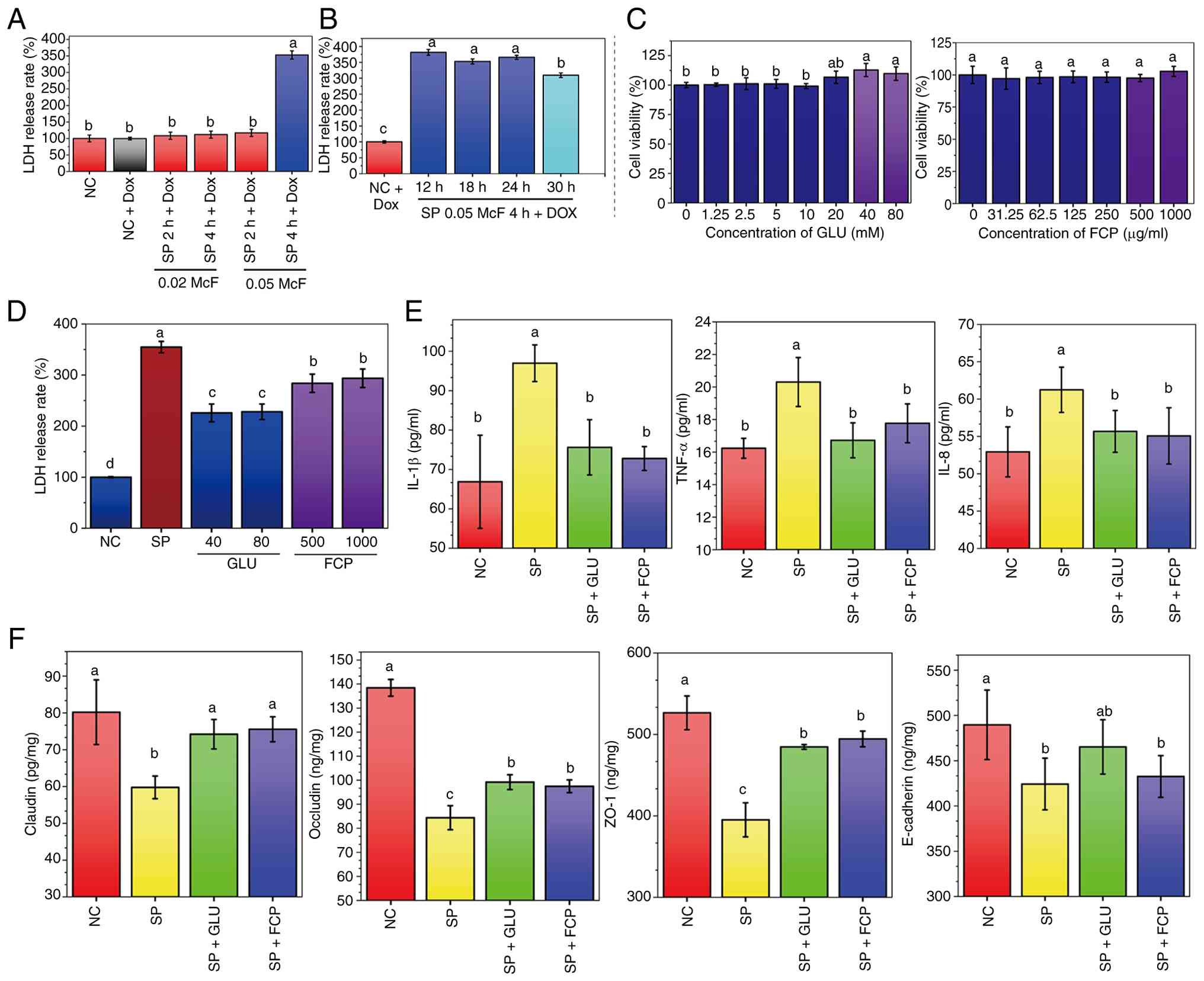
Figure 1

Effects of GLU and FCP on
cytotoxicity, cytokine levels and tight junction protein expression
in SP-infected feline lung FCA-L2 cells. (A) LDH release following
SP infection at different durations and bacterial concentrations.
NC: untreated cells in minimum essential medium; NC-Dox: cells
treated with 3.75 µg/ml Dox for 18 h; SP + 2 h + Dox and SP + 4 h +
Dox: SP infection for 2 or 4 h, followed by 3.75 µg/ml Dox
treatment for 18 h. (B) Time-course assessment of LDH release after
SP infection (0.05 McF, 4 h) followed by doxycycline treatment
(3.75 µg/ml) for 12, 18, 24 or 30 h. The NC + DOX group represents
uninfected cells treated with DOX for the corresponding duration.
(C) Cell viability of FCA-L2 cells after treatment with different
concentrations of GLU (left) or FCP (right), assessed using the
Cell Counting Kit-8 assay. (D) LDH release after SP infection (4 h)
followed by 18 h treatment with GLU or FCP in the presence of 3.75
µg/ml Dox. The SP group received Dox alone. (E) Levels of IL-1β,
TNF-α and IL-8 in the supernatant of SP-infected cells treated with
GLU (40 mM) or FCP (500 µg/ml). (F) Expression of tight junction
proteins, including E-cadherin, occludin, claudin and ZO-1, after
GLU or FCP treatment. All data are presented as mean ± standard
deviation (n≥4 per group). Different lowercase letters (a-d)
indicate significant differences (P<0.05), while groups sharing
at least one common letter show no statistically significant
difference. GLU, glutamine; FCP, fish collagen peptides; SP,
Streptococcus pneumoniae; ZO-1, zonula occludens-1; NC,
negative control; Dox, doxycycline; McF, McFarland; LDH, lactate
dehydrogenase.

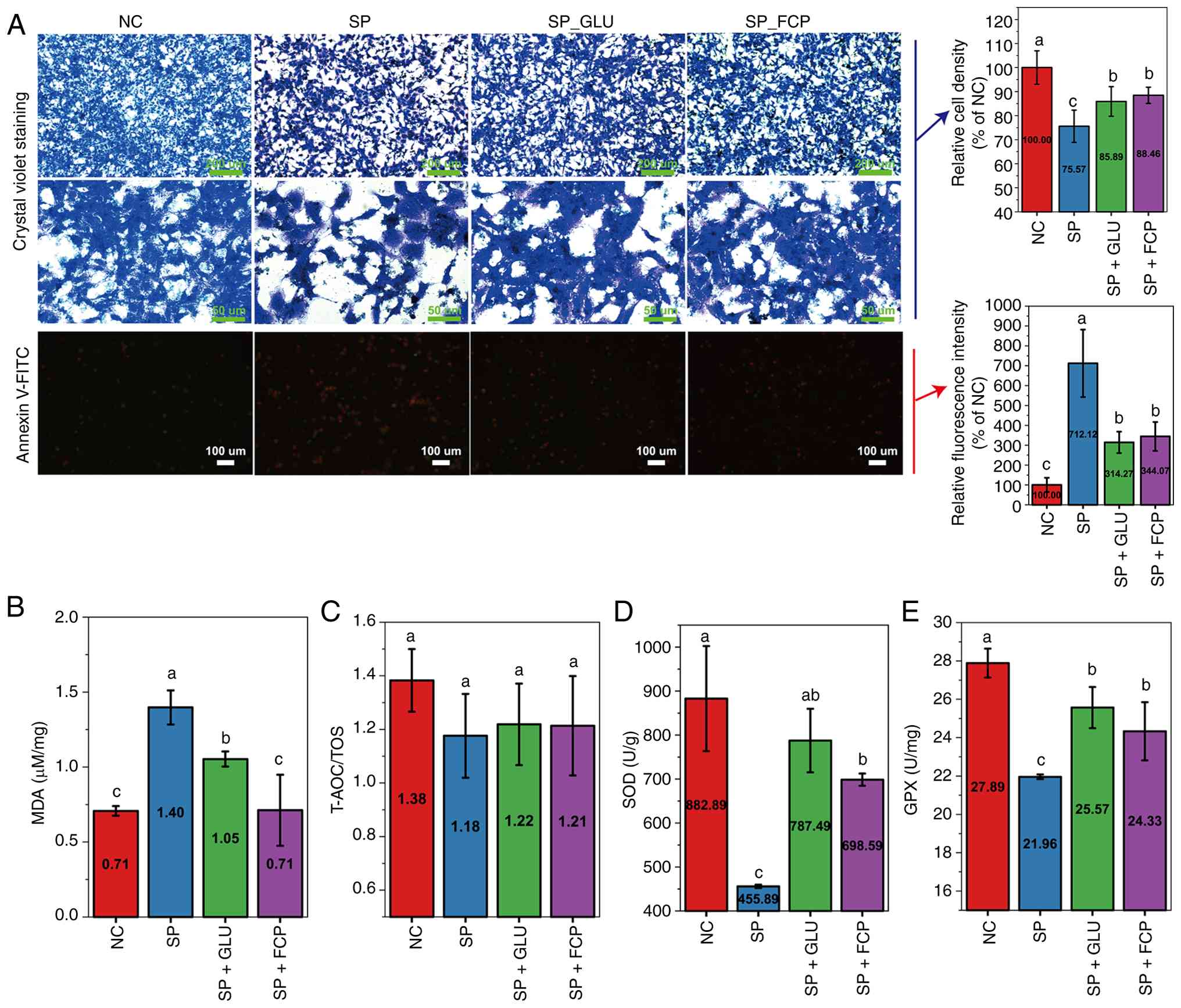
Figure 2

Effects of GLU and FCP on morphology,
apoptosis and oxidative stress in SP-infected FCA-L2 cells. (A)
Morphological changes (crystal violet staining, scale bars, 200 and
50 µm) and apoptosis (Annexin V-FITC/PI staining, scale bar, 100
µm) in each group following intervention with GLU (40 mM) or FCP
(500 µg/ml). The right panels show the corresponding quantitative
bar charts for relative cell density and the relative percentage of
apoptotic cells following intervention with GLU (40 mM) or FCP (500
ug/ml). (B) MDA levels; (C) Ratio of T-AOC/TOS; (D) SOD levels; and
(E) GPX levels. All data are expressed as mean ± standard deviation
(n≥4 per group). Different lowercase letters (a-c) indicate
significant differences (P<0.05), while groups sharing at least
one common letter show no statistically significant difference.
GLU, glutamine; FCP, fish collagen peptides; SP, Streptococcus
pneumoniae; MDA, malondialdehyde; SOD, superoxide dismutase;
MDA, malondialdehyde; T-AOC, total anti-oxidant capacity; TOS,
total oxidant capacity; GPX, glutathione peroxidase.

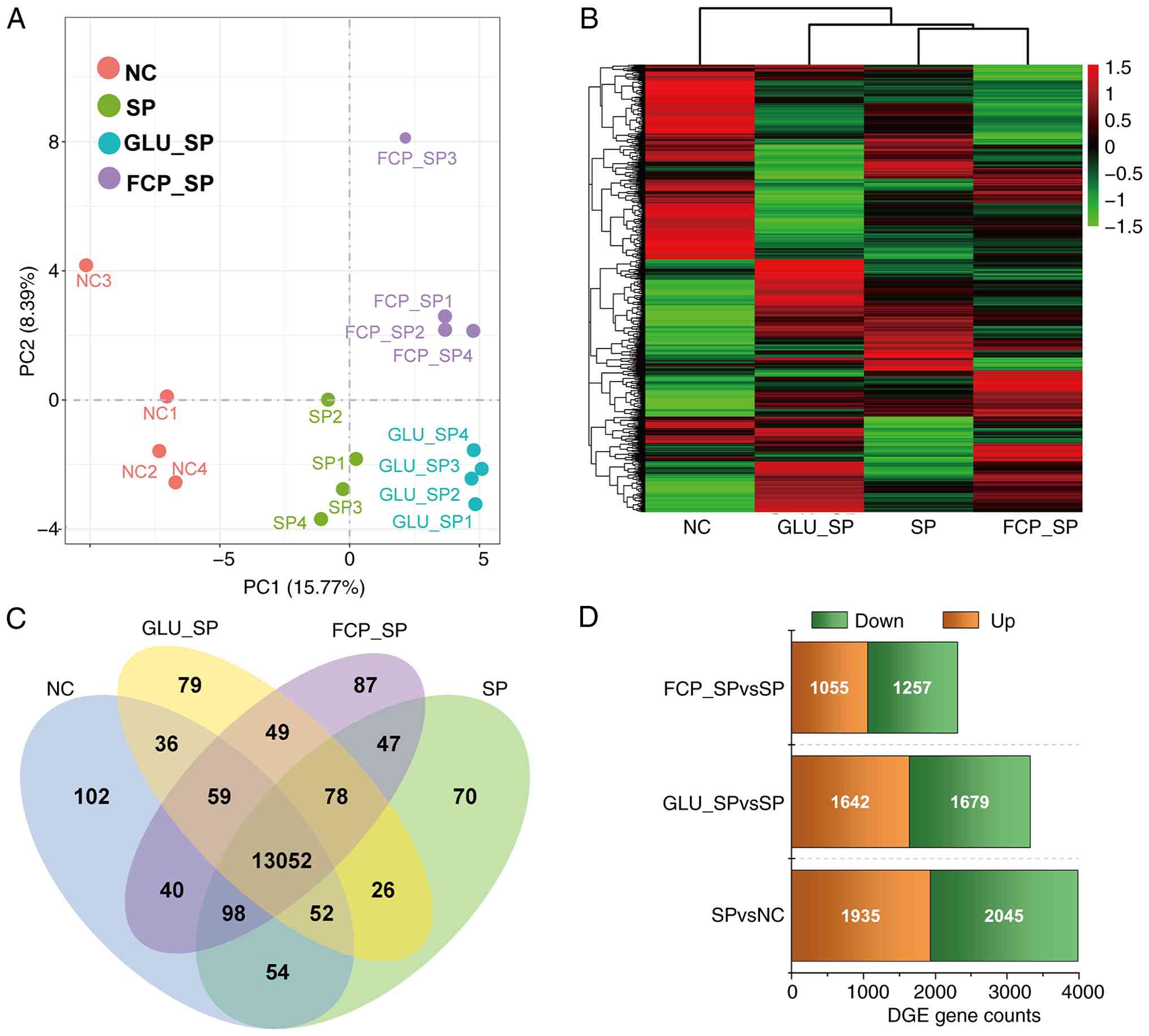
Figure 3

Transcriptomic profiling and
identification of DEGs. (A) PCA showing distinct clustering among
NC, SP, GLU_SP and FCP_SP groups. (B) Heatmap of DEGs based on
FPKM-normalized values; columns represent sample groups and rows
represent individual genes. (C) Venn diagram showing the number of
unique and overlapping DEGs among groups. (D) Bar plot summarizing
the number of upregulated and downregulated DEGs in each
comparison. Data were based on reference-guided RNA sequencing (n=4
per group). DGES, differentially expressed genes; PCA, Principal
component analysis; GLU, glutamine; FCP, fish collagen peptides;
SP, Streptococcus pneumoniae; SOD, superoxide dismutase;
MDA, malondialdehyde; NC, negative control.

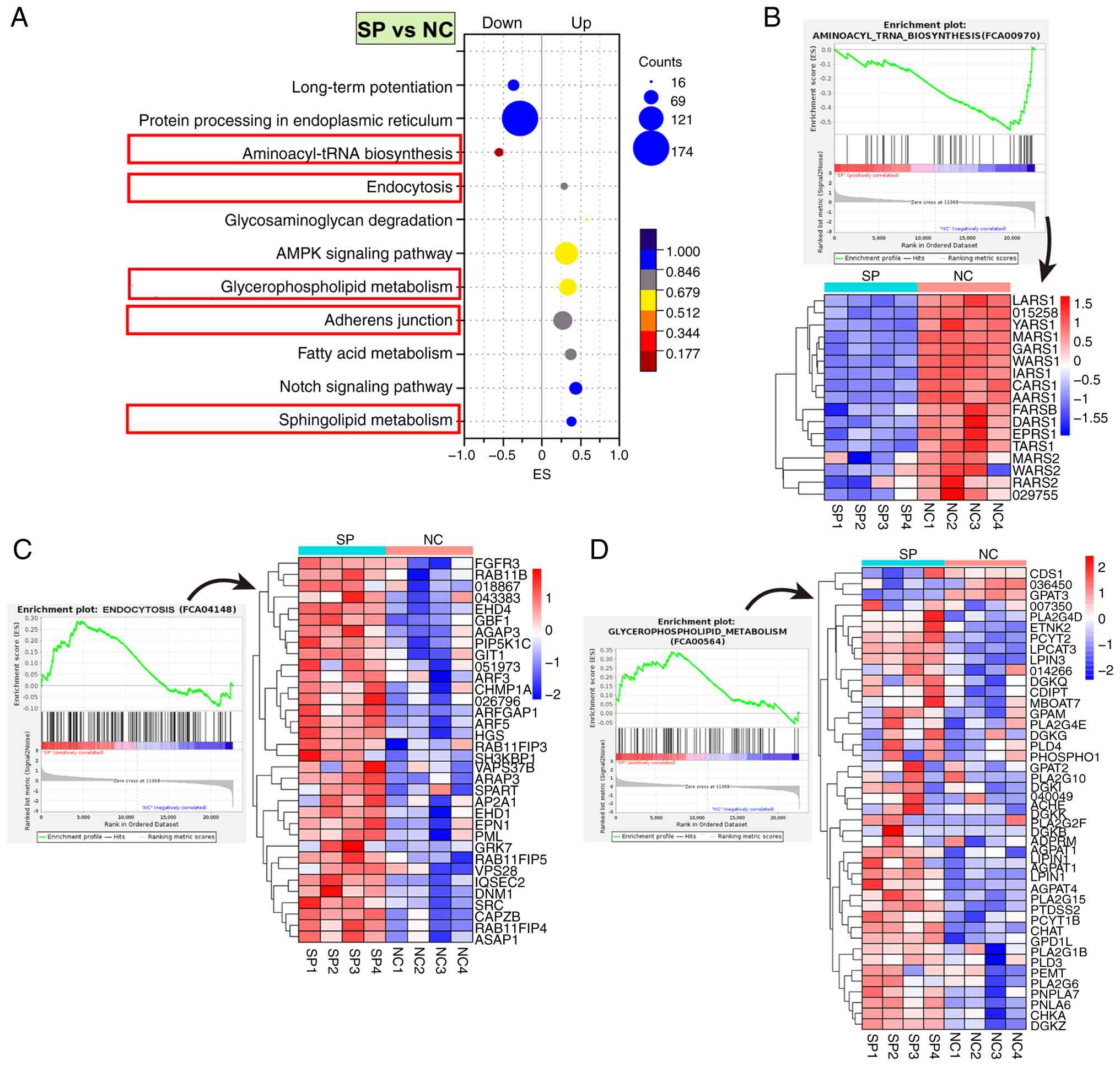
Figure 4

KEGG-GSEA enrichment analysis of
SP-infected FCA-L2 cells. (A) Bubble plot of enriched KEGG pathways
in SP vs. NC. The y-axis represents enriched pathways, the x-axis
shows the ES, where positive values indicate upregulation and
negative values indicate downregulation. Bubble size reflects the
number of enriched genes and color represents the false discovery
rate (q-value). (B-D) GSEA enrichment plots and heatmaps of core
genes in significantly enriched pathways, including (B)
aminoacyl-tRNA biosynthesis, (C) endocytosis and (D)
glycerophospholipid metabolism. Upper panels show the ES curve with
the peak corresponding to the pathway's ES value. Lower panels
display hierarchical clustering heatmaps of leading-edge core genes
in each pathway. KEGG, Kyoto Encyclopedia of Genes and Genomes;
GSEA, gene set enrichment analysis; SP, Streptococcus
pneumoniae; NC, negative control; ES, enrichment score.

Figure 5

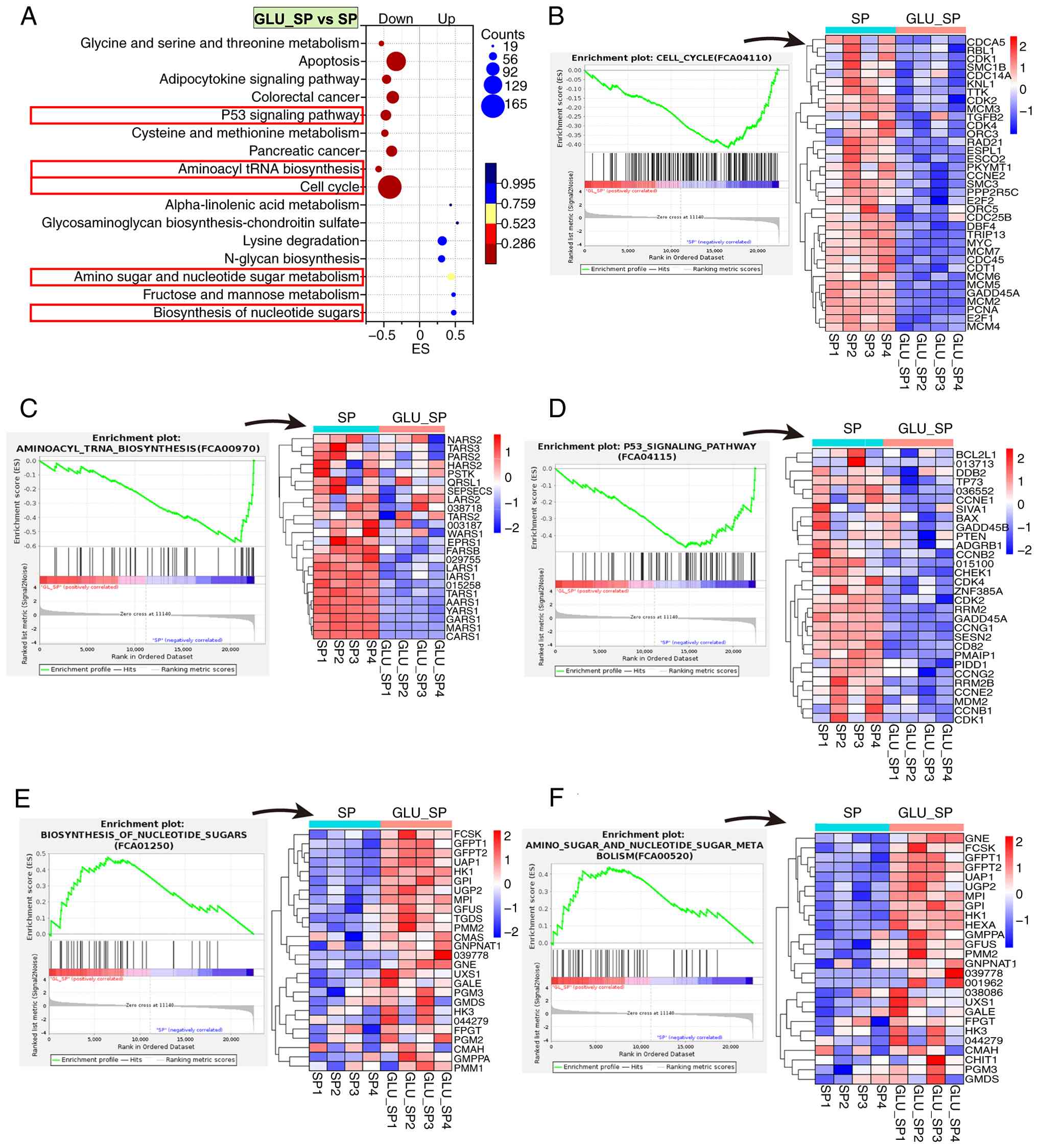
KEGG-based GSEA of transcriptomic
changes in FCA-L2 cells following GLU treatment after SP infection.
(A) KEGG enrichment bubble plot of pathways significantly altered
in the GLU_SP vs. SP group. The x-axis indicates ES, bubble size
represents the number of core genes and bubble color corresponds to
FDR values. (B-F) GSEA enrichment plots and heatmaps of core genes
enriched in representative pathways, including (B) cell cycle, (C)
aminoacyl-tRNA biosynthesis, (D) p53 signaling pathway, (E)
biosynthesis of nucleotide sugars and (F) amino sugar and
nucleotide sugar metabolism. Heatmaps display Z-score normalized
expression levels (n=4 per group). KEGG, Kyoto Encyclopedia of
Genes and Genomes; GSEA, gene set enrichment analysis; GLU,
glutamine; SP, Streptococcus pneumoniae; NC, negative
control; ES, enrichment score; FDR, false discovery rate.

Figure 6

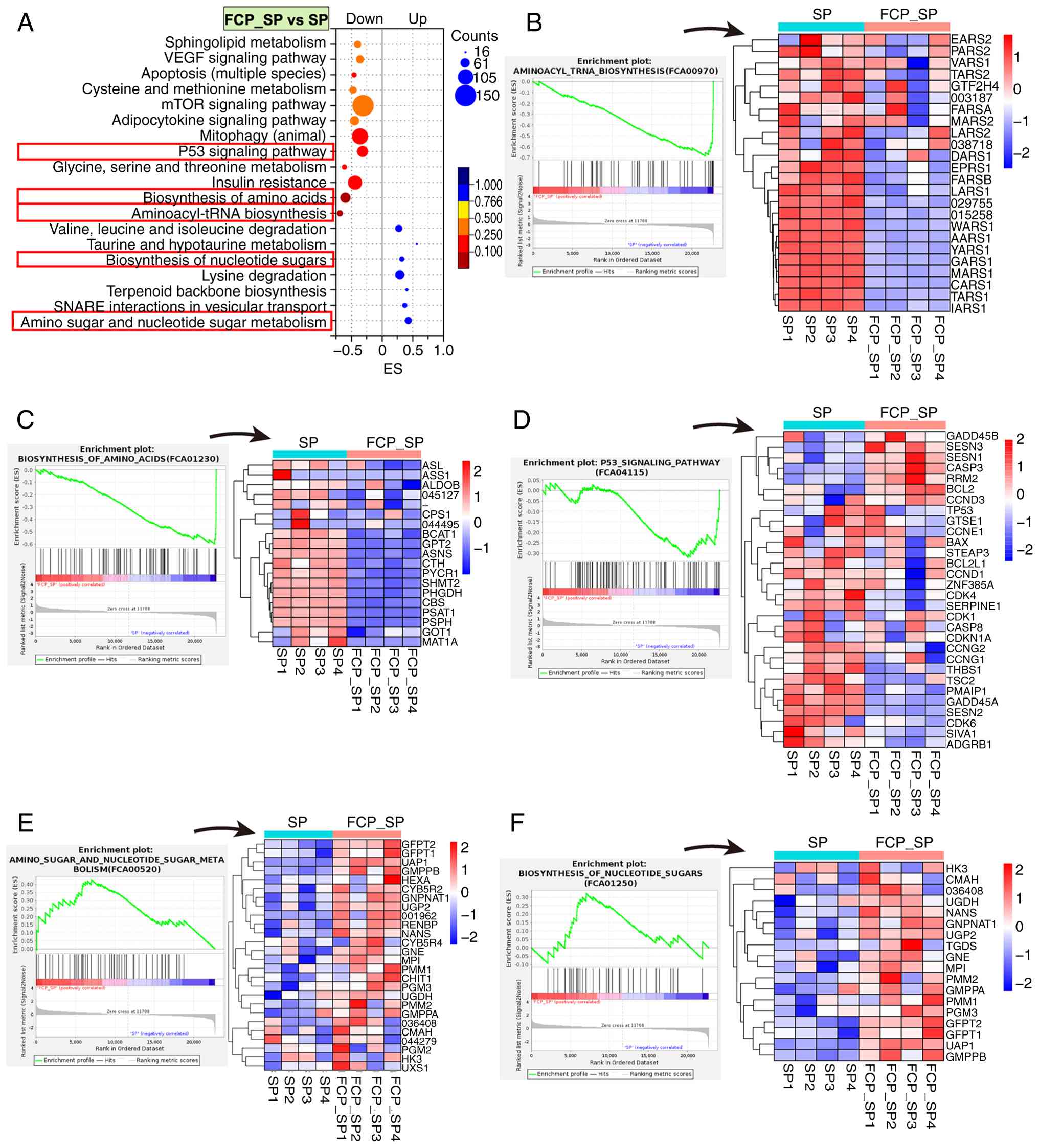
KEGG-based GSEA of transcriptomic
changes in FCA-L2 cells following FCP treatment after SP infection.
(A) KEGG enrichment bubble plot showing pathways significantly
regulated in the FCP_SP vs. SP group. The x-axis represents ES,
bubble size indicates the number of enriched genes and color
corresponds to the FDR. (B-F) GSEA enrichment plots and heatmaps of
core genes in selected pathways, including (B) aminoacyl-tRNA
biosynthesis, (C) biosynthesis of amino acids, (D) p53 signaling
pathway, (E) amino sugar and nucleotide sugar metabolism and (F)
biosynthesis of nucleotide sugars. Heatmaps show Z-score-normalized
gene expression (n=4 per group). KEGG, Kyoto Encyclopedia of Genes
and Genomes; GSEA, gene set enrichment analysis; FCP, fish collagen
peptides; SP, Streptococcus pneumoniae; NC, negative
control; ES, enrichment score; FDR, false discovery rate.

Figure 7

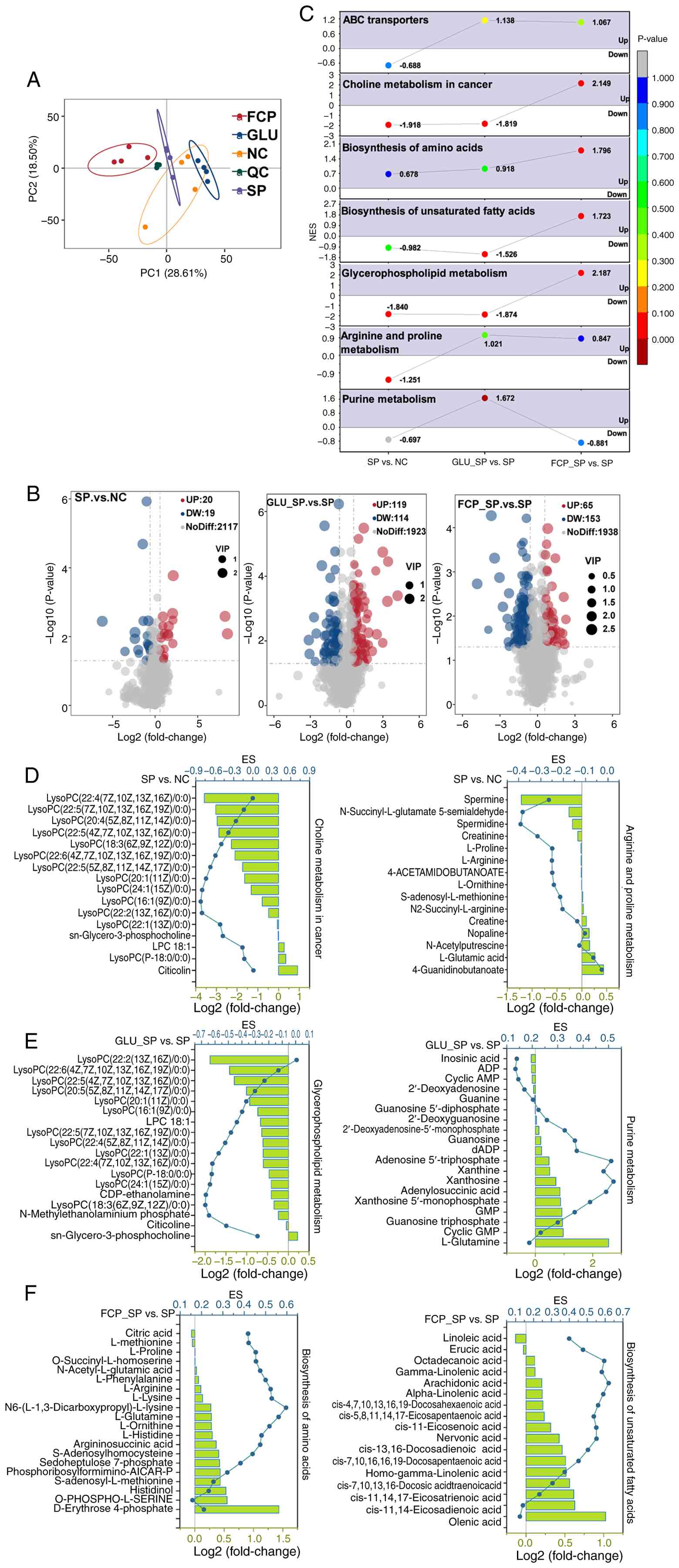
Untargeted metabolomic profiling and
pathway enrichment analysis in FCA-L2 cells. (A) PC analysis score
plot showing sample distribution across treatment groups. (B)
Volcano plots of differential metabolites in SP vs. NC, GLU_SP vs.
SP and FCP_SP vs. SP comparisons. Significantly changed metabolites
are colored by fold change and significance threshold. (C)
Metabolite set enrichment analysis comparing SP vs. NC, GLU_SP vs.
SP and FCP_SP vs. SP. The x-axis represents comparison groups; the
y-axis lists enriched Kyoto Encyclopedia of Genes and Genomes
pathways; NES>0 indicates pathway upregulation. (D) Enrichment
plots of downregulated metabolites in glycerophospholipid
metabolism and arginine and proline metabolism (SP vs. NC). (E)
Enrichment plots showing downregulation of glycerophospholipid
metabolism and upregulation of purine metabolism (GLU_SP vs. SP).
(F) Enrichment plots showing upregulated metabolites in
biosynthesis of amino acids and biosynthesis of unsaturated fatty
acids (FCP_SP vs. SP). PC, principal component; GLU, glutamine;
FCP, fish collagen peptides; SP, Streptococcus pneumoniae;
NC, negative control; QC, quality control; NES, normalized
enrichment score.

Figure 8

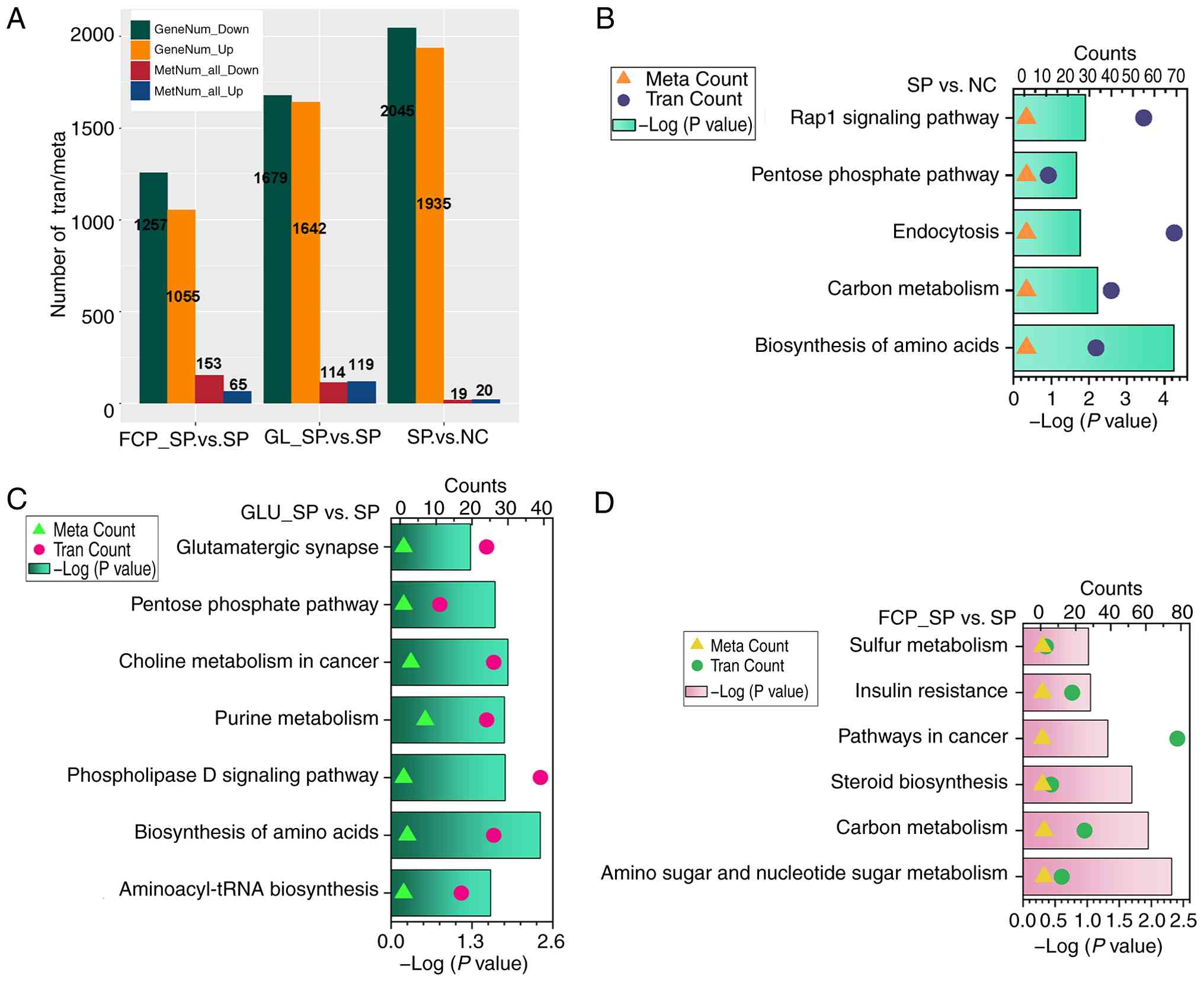
Integrated transcriptomic and
metabolomic analysis of FCA-L2 cells. (A) Bar plot showing the
number of differentially expressed genes and differential
metabolites in SP vs. NC, GLU_SP vs. SP and FCP_SP vs. SP
comparisons. (B-D) Joint Kyoto Encyclopedia of Genes and Genomes
enrichment analysis of transcriptomic and metabolomic datasets
using hypergeometric testing. Bubble plots show commonly enriched
pathways in (B) SP vs. NC, (C) GLU_SP vs. SP and (D) FCP_SP vs. SP
groups. The x-axis represents-log(P-value) based on Fisher's exact
test. Bubble size indicates total number of molecules mapped to the
pathway and shape indicates omics source. GLU, glutamine; FCP, fish
collagen peptides; SP, Streptococcus pneumoniae; NC,
negative control; Tran, transcriptomics; meta, metabolomics.

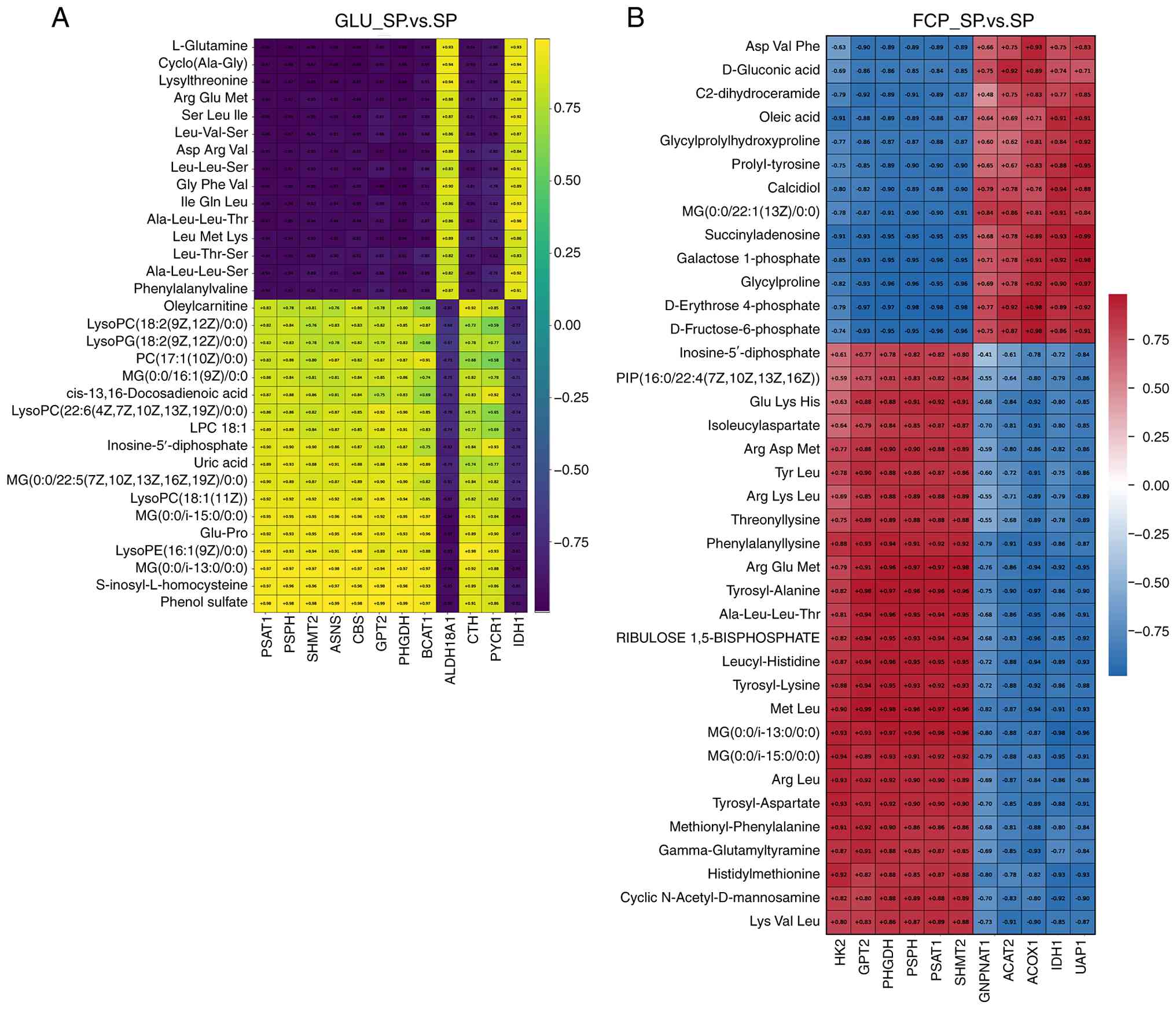
Figure 9

Correlation analysis between key
genes and metabolites derived from joint transcriptomic-metabolomic
enrichment. (A) Pearson correlation heatmap showing associations
between differentially expressed genes and differential metabolites
in the GLU_SP vs. SP group. (B) Pearson correlation heatmap showing
associations between differentially expressed genes and
differential metabolites in the FCP_SP vs. SP group. Pearson
correlation coefficients were calculated to evaluate the
consistency of variation trends between gene expression and
metabolite abundance. Positive correlations indicate coordinated
changes, whereas negative correlations indicate inverse regulatory
relationships. Each grid is annotated with the corresponding
correlation coefficient. Hierarchical clustering was applied to
both genes and metabolites to identify functional association
modules. GLU, glutamine; FCP, fish collagen peptides; SP,
Streptococcus pneumoniae
View References

1 

Li Y, Jiang Y, Zhang H, Zhang J, Ma J, Yang Z, Qiu M and Wang J: Research on acute lung injury inflammatory network. Int J Clin Pharmacol Ther. 61:394–403. 2023.PubMed/NCBI View Article : Google Scholar

2 

Lanks CW, Musani AI and Hsia DW: Community-acquired pneumonia and hospital-acquired pneumonia. Med Clin North Am. 103:487–501. 2019.PubMed/NCBI View Article : Google Scholar

3 

de Benedictis FM, Kerem E, Chang AB, Colin AA, Zar HJ and Bush A: Complicated pneumonia in children. Lancet. 396:786–798. 2020.PubMed/NCBI View Article : Google Scholar

4 

Liu YN, Zhang YF, Xu Q, Qiu Y, Lu QB, Wang T, Zhang XA, Lin SH, Lv CL, Jiang BG, et al: Infection and co-infection patterns of community-acquired pneumonia in patients of different ages in China from 2009 to 2020: A national surveillance study. Lancet Microbe. 4:e330–e339. 2023.PubMed/NCBI View Article : Google Scholar

5 

Dear JD: Bacterial pneumonia in dogs and cats: An update. Vet Clin North Am Small Anim Pract. 50:447–465. 2020.PubMed/NCBI View Article : Google Scholar

6 

Nguyen N, Xu S, Lam TYW, Liao W, Wong WSF and Ge R: ISM1 suppresses LPS-induced acute lung injury and post-injury lung fibrosis in mice. Mol Med. 28(72)2022.PubMed/NCBI View Article : Google Scholar

7 

Wang Y, Wang L, Ma S, Cheng L and Yu G: Repair and regeneration of the alveolar epithelium in lung injury. FASEB J. 38(e23612)2024.PubMed/NCBI View Article : Google Scholar

8 

Huang X, Zhang X, Machireddy N, Evans CE, Trewartha SD, Hu G, Fang Y, Mutlu GM, Wu D and Zhao YY: Endothelial FoxM1 reactivates aging-impaired endothelial regeneration for vascular repair and resolution of inflammatory lung injury. Sci Transl Med. 15(eabm5755)2023.PubMed/NCBI View Article : Google Scholar

9 

Morris SB, Ocadiz-Ruiz R, Asai N, Malinczak CA, Rasky AJ, Lombardo GK, Velarde EM, Ptaschinski C, Zemans RL, Lukacs NW and Fonseca W: Long-term alterations in lung epithelial cells after EL-RSV infection exacerbate allergic responses through IL-1β-induced pathways. Mucosal Immunol. 17:1072–1088. 2024.PubMed/NCBI View Article : Google Scholar

10 

Lucas R, Hadizamani Y, Gonzales J, Gorshkov B, Bodmer T, Berthiaume Y, Moehrlen U, Lode H, Huwer H, Hudel M, et al: Impact of bacterial toxins in the lungs. Toxins (Basel). 12(223)2020.PubMed/NCBI View Article : Google Scholar

11 

El Agha E and Thannickal VJ: The lung mesenchyme in development, regeneration, and fibrosis. J Clin Invest. 133(e170498)2023.PubMed/NCBI View Article : Google Scholar

12 

Zhang J, Wang T, Wang Y, Li Y, Wang L, Wang J, Miao Y, Xu F and Yao Y: Bacterial pneumonia induces senescence in resident alveolar macrophages that are outcompeted by monocytes. Cell Rep. 44(115571)2025.PubMed/NCBI View Article : Google Scholar

13 

Wang S, Li X, Ma Q, Wang Q, Wu J, Yu H, Li K, Li Y, Wang J, Zhang Q, et al: Glutamine metabolism is required for alveolar regeneration during lung injury. Biomolecules. 12(728)2022.PubMed/NCBI View Article : Google Scholar

14 

Shaghaghi H, Para R, Tran C, Roman J, Ojeda-Lassalle Y, Sun J, Romero F and Summer R: Glutamine restores mitochondrial respiration in bleomycin-injured epithelial cells. Free Radic Biol Med. 176:335–344. 2021.PubMed/NCBI View Article : Google Scholar

15 

Arribas-López E, Zand N, Ojo O, Snowden MJ and Kochhar T: The effect of amino acids on wound healing: A systematic review and meta-analysis on arginine and glutamine. Nutrients. 13(2498)2021.PubMed/NCBI View Article : Google Scholar

16 

Stehle P, Ellger B, Kojic D, Feuersenger A, Schneid C, Stover J, Scheiner D and Westphal M: Glutamine dipeptide-supplemented parenteral nutrition improves the clinical outcomes of critically ill patients: A systematic evaluation of randomised controlled trials. Clin Nutr ESPEN. 17:75–85. 2017.PubMed/NCBI View Article : Google Scholar

17 

Kim Y, Lee JO, Lee JM, Lee MH, Kim HM, Chung HC, Kim DU, Lee JH and Kim BJ: Low molecular weight collagen peptide (LMWCP) promotes hair growth by activating the Wnt/GSK-3β/β-catenin signaling pathway. J Microbiol Biotechnol. 34:17–28. 2024.PubMed/NCBI View Article : Google Scholar

18 

Bayan R, Tauseef I, Hussain M, Ahmed MS, Haider A, Khalil AA, Islam SU and Subhan F: Fish collagen peptides' modulating effect on human skin microbiota against pathogenic Staphylococcus aureus. Future Microbiol. 18:795–807. 2023.PubMed/NCBI View Article : Google Scholar

19 

Czajka A, Kania EM, Genovese L, Corbo A, Merone G, Luci C and Sibilla S: Daily oral supplementation with collagen peptides combined with vitamins and other bioactive compounds improves skin elasticity and has a beneficial effect on joint and general wellbeing. Nutr Res. 57:97–108. 2018.PubMed/NCBI View Article : Google Scholar

20 

Rahabi M, Salon M, Bruno-Bonnet C, Prat M, Jacquemin G, Benmoussa K, Alaeddine M, Parny M, Bernad J, Bertrand B, et al: Bioactive fish collagen peptides weaken intestinal inflammation by orienting colonic macrophages phenotype through mannose receptor activation. Eur J Nutr. 61:2051–2066. 2022.PubMed/NCBI View Article : Google Scholar

21 

Hwang SB, Park HJ and Lee BH: Hair-growth-promoting effects of the fish collagen peptide in human dermal papilla cells and C57BL/6 mice modulating Wnt/β-catenin and BMP signaling pathways. Int J Mol Sci. 23(11904)2022.PubMed/NCBI View Article : Google Scholar

22 

Ligresti G, Raslan AA, Hong J, Caporarello N, Confalonieri M and Huang SK: Mesenchymal cells in the lung: Evolving concepts and their role in fibrosis. Gene. 859(147142)2023.PubMed/NCBI View Article : Google Scholar

23 

Andersson-Sjöland A, Nihlberg K, Eriksson L, Bjermer L and Westergren-Thorsson G: Fibrocytes and the tissue niche in lung repair. Respir Res. 12(76)2011.PubMed/NCBI View Article : Google Scholar

24 

Doherty DF, Roets L and Krasnodembskaya AD: The role of lung resident mesenchymal stromal cells in the pathogenesis and repair of chronic lung disease. Stem Cells. 41:431–443. 2023.PubMed/NCBI View Article : Google Scholar

25 

Sveiven SN and Nordgren TM: Lung-resident mesenchymal stromal cells are tissue-specific regulators of lung homeostasis. Am J Physiol Lung Cell Mol Physiol. 319:L197–Ll210. 2020.PubMed/NCBI View Article : Google Scholar

26 

Thomas K, Zondler L, Ludwig N, Kardell M, Lüneburg C, Henke K, Mersmann S, Margraf A, Spieker T, Tekath T, et al: Glutamine prevents acute kidney injury by modulating oxidative stress and apoptosis in tubular epithelial cells. JCI Insight. 7(e163161)2022.PubMed/NCBI View Article : Google Scholar

27 

Zhao Y, Albrecht E, Stange K, Li Z, Schregel J, Sciascia QL, Metges CC and Maak S: Glutamine supplementation stimulates cell proliferation in skeletal muscle and cultivated myogenic cells of low birth weight piglets. Sci Rep. 11(13432)2021.PubMed/NCBI View Article : Google Scholar

28 

Huang CY, Chen JK and Kuo WT: Glutamine induces remodeling of tight junctions in Caco-2 colorectal cancer cell. Med Oncol. 40(32)2022.PubMed/NCBI View Article : Google Scholar

29 

Yang X, Zhong Y, Wang D and Lu Z: A simple colorimetric method for viable bacteria detection based on cell counting Kit-8. Anal Methods. 13:5211–5215. 2021.PubMed/NCBI View Article : Google Scholar

30 

Galindo-Feria AS, Notarnicola A, Lundberg IE and Horuluoglu B: Aminoacyl-tRNA synthetases: On anti-synthetase syndrome and beyond. Front Immunol. 13(866087)2022.PubMed/NCBI View Article : Google Scholar

31 

Rubio Gomez MA and Ibba M: Aminoacyl-tRNA synthetases. RNA. 26:910–936. 2020.PubMed/NCBI View Article : Google Scholar

32 

Horgan CP and McCaffrey MW: The dynamic Rab11-FIPs. Biochem Soc Trans. 37:1032–1036. 2009.PubMed/NCBI View Article : Google Scholar

33 

Wilson B, Flett C, Gemperle J, Lawless C, Hartshorn M, Hinde E, Harrison T, Chastney M, Taylor S, Allen J, et al: Proximity labelling identifies pro-migratory endocytic recycling cargo and machinery of the Rab4 and Rab11 families. J Cell Sci. 136(jcs260468)2023.PubMed/NCBI View Article : Google Scholar

34 

Horgan CP, Hanscom SR, Jolly RS, Futter CE and McCaffrey MW: Rab11-FIP3 binds dynein light intermediate chain 2 and its overexpression fragments the Golgi complex. Biochem Biophys Res Commun. 394:387–392. 2010.PubMed/NCBI View Article : Google Scholar

35 

Shindou H and Shimizu T: Acyl-CoA:lysophospholipid acyltransferases. J Biol Chem. 284:1–5. 2009.PubMed/NCBI View Article : Google Scholar

36 

Gibellini F and Smith TK: The Kennedy pathway-de novo synthesis of phosphatidylethanolamine and phosphatidylcholine. IUBMB Life. 62:414–428. 2010.PubMed/NCBI View Article : Google Scholar

37 

Mérida I, Avila-Flores A and Merino E: Diacylglycerol kinases: At the hub of cell signalling. Biochem J. 409:1–18. 2008.PubMed/NCBI View Article : Google Scholar

38 

Yu TCY, Zhao L, Sze KMF, Tian L, Zhang VX, Lee E, Kam CS, Lee JMF, Ho DWH, Tsui YM, et al: GPD1L supports glycerol-3-phosphate and triacylglycerol synthesis and promotes tumor progression in HCC. Hepatology. 83:735–752. 2026.PubMed/NCBI View Article : Google Scholar

39 

Malumbres M and Barbacid M: Cell cycle, CDKs and cancer: A changing paradigm. Nat Rev Cancer. 9:153–166. 2009.PubMed/NCBI View Article : Google Scholar

40 

Fragkos M, Ganier O, Coulombe P and Méchali M: DNA replication origin activation in space and time. Nat Rev Mol Cell Biol. 16:360–374. 2015.PubMed/NCBI View Article : Google Scholar

41 

Liu X and Winey M: The MPS1 family of protein kinases. Annu Rev Biochem. 81:561–585. 2012.PubMed/NCBI View Article : Google Scholar

42 

Mannini L, Cucco F, Quarantotti V, Amato C, Tinti M, Tana L, Frattini A, Delia D, Krantz ID, Jessberger R and Musio A: SMC1B is present in mammalian somatic cells and interacts with mitotic cohesin proteins. Sci Rep. 5(18472)2015.PubMed/NCBI View Article : Google Scholar

43 

Kroef V, Ruegenberg S, Horn M, Allmeroth K, Ebert L, Bozkus S, Miethe S, Elling U, Schermer B, Baumann U and Denzel MS: GFPT2/GFAT2 and AMDHD2 act in tandem to control the hexosamine pathway. Elife. 11(e69223)2022.PubMed/NCBI View Article : Google Scholar

44 

Wilson JE: Isozymes of mammalian hexokinase: Structure, subcellular localization and metabolic function. J Exp Biol. 206:2049–2057. 2003.PubMed/NCBI View Article : Google Scholar

45 

Rodríguez-Díaz J and Yebra MJ: Enhanced UDP-glucose and UDP-galactose by homologous overexpression of UDP-glucose pyrophosphorylase in Lactobacillus casei. J Biotechnol. 154:212–215. 2011.PubMed/NCBI View Article : Google Scholar

46 

Chen J, Cui L, Lu S and Xu S: Amino acid metabolism in tumor biology and therapy. Cell Death Dis. 15(42)2024.PubMed/NCBI View Article : Google Scholar

47 

Riley T, Sontag E, Chen P and Levine A: Transcriptional control of human p53-regulated genes. Nat Rev Mol Cell Biol. 9:402–412. 2008.PubMed/NCBI View Article : Google Scholar

48 

Yang X and Qian K: Protein O-GlcNAcylation: emerging mechanisms and functions. Nat Rev Mol Cell Biol. 18:452–465. 2017.PubMed/NCBI View Article : Google Scholar

49 

Morales MM and Pratt MR: The post-translational modification O-GlcNAc is a sensor and regulator of metabolism. Open Biol. 14(240209)2024.PubMed/NCBI View Article : Google Scholar

50 

Wang B and Tontonoz P: Phospholipid remodeling in physiology and disease. Annu Rev Physiol. 81:165–188. 2019.PubMed/NCBI View Article : Google Scholar

51 

Morris SM Jr: Arginine metabolism revisited. J Nutr. 146:2579S–2586S. 2016.PubMed/NCBI View Article : Google Scholar

52 

Cruzat V, Macedo Rogero M, Noel Keane K, Curi R and Newsholme P: Glutamine: Metabolism and immune function, supplementation and clinical translation. Nutrients. 10(1564)2018.PubMed/NCBI View Article : Google Scholar

53 

Prekeris R: Rabs, Rips, FIPs, and endocytic membrane traffic. ScientificWorldJournal. 3:870–880. 2003.PubMed/NCBI View Article : Google Scholar

54 

Loughran AJ, Orihuela CJ and Tuomanen EI: Streptococcus pneumoniae: Invasion and inflammation. Microbiol Spectr 7: 10.1128/microbiolspec.gpp3-0004-2018, 2019.

55 

Bogaert D, De Groot R and Hermans PWM: Streptococcus pneumoniae colonisation: The key to pneumococcal disease. Lancet Infect Dis. 4:144–154. 2004.PubMed/NCBI View Article : Google Scholar

56 

Ceccato A, Ferrer M, Barbeta E and Torres A: Adjunctive therapies for community-acquired pneumonia. Clin Chest Med. 39:753–764. 2018.PubMed/NCBI View Article : Google Scholar

57 

Gonzalez-Baro MR and Coleman RA: Mitochondrial acyltransferases and glycerophospholipid metabolism. Biochim Biophys Acta Mol Cell Biol Lipids. 1862:49–55. 2017.PubMed/NCBI View Article : Google Scholar

58 

Bradley RM, Marvyn PM, Aristizabal Henao JJ, Mardian EB, George S, Aucoin MG, Stark KD and Duncan RE: Acylglycerophosphate acyltransferase 4 (AGPAT4) is a mitochondrial lysophosphatidic acid acyltransferase that regulates brain phosphatidylcholine, phosphatidylethanolamine, and phosphatidylinositol levels. Biochim Biophys Acta. 1851:1566–1576. 2015.PubMed/NCBI View Article : Google Scholar

59 

Law SH, Chan ML, Marathe GK, Parveen F, Chen CH and Ke LY: An Updated review of lysophosphatidylcholine metabolism in human diseases. Int J Mol Sci. 20(1149)2019.PubMed/NCBI View Article : Google Scholar

60 

Wang LM, Zhang WL, Lyu N, Suo YR, Yang L, Yu B and Jiang XJ: Research advance of Chinese medicine in treating atherosclerosis: Focus on lipoprotein-associated phospholipase A2. Chin J Integr Med. 30:277–288. 2024.PubMed/NCBI View Article : Google Scholar

61 

Subramanian K, Henriques-Normark B and Normark S: Emerging concepts in the pathogenesis of the Streptococcus pneumoniae: From nasopharyngeal colonizer to intracellular pathogen. Cell Microbiol. 21(e13077)2019.PubMed/NCBI View Article : Google Scholar

62 

Ogawa M, Shizukuishi S, Akeda Y and Ohnishi M: Molecular mechanism of Streptococcus pneumoniae-targeting xenophagy recognition and evasion: Reinterpretation of pneumococci as intracellular bacteria. Microbiol Immunol. 67:224–227. 2023.PubMed/NCBI View Article : Google Scholar

63 

Xie X, Wang Y, Yu D, Xie R, Liu Z and Huang B: DNM1, a dynamin-related protein that contributes to endocytosis and peroxisome fission, is required for the vegetative growth, sporulation, and virulence of Metarhizium robertsii. Appl Environ Microbiol. 86:e01217–20. 2020.PubMed/NCBI View Article : Google Scholar

64 

Martínez RAS, Pinky PD, Harlan BA and Brewer GJ: GTP energy dependence of endocytosis and autophagy in the aging brain and Alzheimer's disease. Geroscience. 45:757–780. 2023.PubMed/NCBI View Article : Google Scholar

65 

Xu J, Liang Y, Li N, Dang S, Jiang A, Liu Y, Guo Y, Yang X, Yuan Y, Zhang X, et al: Clathrin-associated carriers enable recycling through a kiss-and-run mechanism. Nat Cell Biol. 26:1652–1668. 2024.PubMed/NCBI View Article : Google Scholar

66 

Settembre C, Fraldi A, Medina DL and Ballabio A: Signals from the lysosome: A control centre for cellular clearance and energy metabolism. Nat Rev Mol Cell Biol. 14:283–296. 2013.PubMed/NCBI View Article : Google Scholar

67 

Okahashi N, Nakata M, Kuwata H and Kawabata S: Streptococcus oralis induces lysosomal impairment of macrophages via bacterial hydrogen peroxide. Infect Immun. 84:2042–2050. 2016.PubMed/NCBI View Article : Google Scholar

68 

Wang Z: Cell cycle progression and synchronization: An overview. Methods Mol Biol. 2579:3–23. 2022.PubMed/NCBI View Article : Google Scholar

69 

Takénaka A and Moras D: Correlation between equi-partition of aminoacyl-tRNA synthetases and amino-acid biosynthesis pathways. Nucleic Acids Res. 48:3277–3285. 2020.PubMed/NCBI View Article : Google Scholar

70 

Walter P and Ron D: The unfolded protein response: From stress pathway to homeostatic regulation. Science. 334:1081–1086. 2011.PubMed/NCBI View Article : Google Scholar

71 

Geng P, Qin W and Xu G: Proline metabolism in cancer. Amino Acids. 53:1769–1777. 2021.PubMed/NCBI View Article : Google Scholar

72 

Krishnan N, Dickman MB and Becker DF: Proline modulates the intracellular redox environment and protects mammalian cells against oxidative stress. Free Radic Biol Med. 44:671–681. 2008.PubMed/NCBI View Article : Google Scholar

73 

Cao J, Li M, Liu K, Shi X, Sui N, Yao Y, Wang X, Li S, Tian Y, Tan S, et al: Oxidative phosphorylation safeguards pluripotency via UDP-N-acetylglucosamine. Protein Cell. 14:376–381. 2023.PubMed/NCBI View Article : Google Scholar

74 

Nishikawa A, Karita S and Umekawa M: Ngk1 kinase-mediated N-acetylglucosamine metabolism promotes UDP-GlcNAc biosynthesis in Saccharomyces cerevisiae. FEBS Lett. 598:1644–1654. 2024.PubMed/NCBI View Article : Google Scholar

75 

Alteheld B, Evans ME, Gu LH, Ganapathy V, Leibach FH, Jones DP and Ziegler TR: Alanylglutamine dipeptide and growth hormone maintain PepT1-mediated transport in oxidatively stressed Caco-2 cells. J Nutr. 135:19–26. 2005.PubMed/NCBI View Article : Google Scholar

76 

Xu G, Zhao W and Yu Z: Intestinal epithelial transport of bioactive di/tripeptides through PepT1: Molecular mechanism and influencing factors. Food Chem. 496(146851)2025.PubMed/NCBI View Article : Google Scholar

77 

Spanier B and Rohm F: Proton coupled oligopeptide transporter 1 (PepT1) function, regulation, and influence on the intestinal homeostasis. Compr Physiol. 8:843–869. 2018.PubMed/NCBI View Article : Google Scholar

78 

Paneque A, Fortus H, Zheng J, Werlen G and Jacinto E: The hexosamine biosynthesis pathway: Regulation and function. Genes (Basel). 14(933)2023.PubMed/NCBI View Article : Google Scholar

79 

Zhu Q, Cheng X, Cheng Y, Chen J, Xu H, Gao Y, Duan X, Ji J, Li X and Yi W: O-GlcNAcylation regulates the methionine cycle to promote pluripotency of stem cells. Proc Natl Acad Sci USA. 117:7755–7763. 2020.PubMed/NCBI View Article : Google Scholar

80 

Chen CL, Hsu SC, Ann DK, Yen Y and Kung HJ: Arginine signaling and cancer metabolism. Cancers (Basel). 13(3541)2021.PubMed/NCBI View Article : Google Scholar

81 

Wyant GA, Abu-Remaileh M, Wolfson RL, Chen WW, Freinkman E, Danai LV, Vander Heiden MG and Sabatini DM: mTORC1 activator SLC38A9 is required to efflux essential amino acids from lysosomes and use protein as a nutrient. Cell. 171:642–654.e12. 2017.PubMed/NCBI View Article : Google Scholar

82 

Wu Z, Hou Y, Dai Z, Hu CA and Wu G: Metabolism, nutrition, and redox signaling of hydroxyproline. Antioxid Redox Signal. 30:674–682. 2019.PubMed/NCBI View Article : Google Scholar

83 

Swanson D, Block R and Mousa SA: Omega-3 fatty acids EPA and DHA: Health benefits throughout life. Adv Nutr. 3:1–7. 2012.PubMed/NCBI View Article : Google Scholar

84 

Kousparou C, Fyrilla M, Stephanou A and Patrikios I: DHA/EPA (Omega-3) and LA/GLA (Omega-6) as bioactive molecules in neurodegenerative diseases. Int J Mol Sci. 24(10717)2023.PubMed/NCBI View Article : Google Scholar

85 

Kostadinova E, Chaput C, Gutbier B, Lippmann J, Sander LE, Mitchell TJ, Suttorp N, Witzenrath M and Opitz B: NLRP3 protects alveolar barrier integrity by an inflammasome-independent increase of epithelial cell adherence. Sci Rep. 6(30943)2016.PubMed/NCBI View Article : Google Scholar

86 

Cui L, Yang R, Huo D, Li L, Qu X, Wang J and Wang X, Liu H, Chen H and Wang X: Streptococcus pneumoniae extracellular vesicles aggravate alveolar epithelial barrier disruption via autophagic degradation of OCLN (occludin). Autophagy. 20:1577–1596. 2024.PubMed/NCBI View Article : Google Scholar

87 

Sura T, Gering V, Cammann C, Hammerschmidt S, Maaß S, Seifert U and Becher D: Streptococcus pneumoniae and influenza A virus co-infection induces altered polyubiquitination in A549 cells. Front Cell Infect Microbiol. 12(817532)2022.PubMed/NCBI View Article : Google Scholar

88 

Jones DL, Morley MP, Li X, Ying Y, Zhao G, Schaefer SE, Rodriguez LR, Cardenas-Diaz FL, Li S, Zhou S, et al: An injury-induced mesenchymal-epithelial cell niche coordinates regenerative responses in the lung. Science. 386(eado5561)2024.PubMed/NCBI View Article : Google Scholar

89 

Xin S, Ding Y, Yu T, Fu Y, Cui Y and Nie H: Mesenchymal stem cell-secreted KGF ameliorates acute lung injury via the Gab1/ERK/NF-κB signaling axis. Cell Mol Biol Lett. 30(79)2025.PubMed/NCBI View Article : Google Scholar

90 

Ushakumary MG, Riccetti M and Perl AT: Resident interstitial lung fibroblasts and their role in alveolar stem cell niche development, homeostasis, injury, and regeneration. Stem Cells Transl Med. 10:1021–1032. 2021.PubMed/NCBI View Article : Google Scholar

91 

Kang H, Kim OH, Chang ES, Kim J, Kim JY, Shin GS, Kim CH, Lim Y, Seo YJ, Kim JW and Lee HJ: Enhanced engraftment and immunomodulatory effects of integrin alpha-2-overexpressing mesenchymal stromal cells in lipopolysaccharide-induced acute lung injury. Stem Cell Res Ther. 16(286)2025.PubMed/NCBI View Article : Google Scholar

92 

van der Koog L, Boerrigter MJ, Gorter IC, Gosens R and Nagelkerke A: Lung fibroblast-derived extracellular vesicles and soluble factors alleviate elastase-induced lung injury. Eur J Pharmacol. 974(176612)2024.PubMed/NCBI View Article : Google Scholar

93 

van der Koog L, Woest ME, Gorter IC, Verschut V, Elferink RAB, Zuidhof AB, Nugraha DF, Koloko Ngassie ML, Bos SIT, Dhakad D, et al: Fibroblast-derived osteoglycin promotes epithelial cell repair. NPJ Regen Med. 10(16)2025.PubMed/NCBI View Article : Google Scholar

94 

Ren W, Xia Y, Chen S, Wu G, Bazer FW, Zhou B, Tan B, Zhu G, Deng J and Yin Y: Glutamine metabolism in macrophages: A novel target for obesity/type 2 diabetes. Adv Nutr. 10:321–330. 2019.PubMed/NCBI View Article : Google Scholar

95 

Liu PS, Wang H, Li X, Chao T, Teav T, Christen S, Di Conza G, Cheng WC, Chou CH, Vavakova M, et al: α-ketoglutarate orchestrates macrophage activation through metabolic and epigenetic reprogramming. Nat Immunol. 18:985–994. 2017.PubMed/NCBI View Article : Google Scholar

Related Articles

  • Abstract
  • View
  • Download
  • Twitter
Copy and paste a formatted citation
Spandidos Publications style
Bai H, Liu T, Wang H, Jin H, Li Y and Wang Z: Multi‑omics analysis of glutamine and fish collagen peptides in alleviating post‑antibiotic <em>Streptococcus pneumoniae</em> injury in feline lung cells. Exp Ther Med 31: 148, 2026.
APA
Bai, H., Liu, T., Wang, H., Jin, H., Li, Y., & Wang, Z. (2026). Multi‑omics analysis of glutamine and fish collagen peptides in alleviating post‑antibiotic <em>Streptococcus pneumoniae</em> injury in feline lung cells. Experimental and Therapeutic Medicine, 31, 148. https://doi.org/10.3892/etm.2026.13143
MLA
Bai, H., Liu, T., Wang, H., Jin, H., Li, Y., Wang, Z."Multi‑omics analysis of glutamine and fish collagen peptides in alleviating post‑antibiotic <em>Streptococcus pneumoniae</em> injury in feline lung cells". Experimental and Therapeutic Medicine 31.6 (2026): 148.
Chicago
Bai, H., Liu, T., Wang, H., Jin, H., Li, Y., Wang, Z."Multi‑omics analysis of glutamine and fish collagen peptides in alleviating post‑antibiotic <em>Streptococcus pneumoniae</em> injury in feline lung cells". Experimental and Therapeutic Medicine 31, no. 6 (2026): 148. https://doi.org/10.3892/etm.2026.13143
Copy and paste a formatted citation
x
Spandidos Publications style
Bai H, Liu T, Wang H, Jin H, Li Y and Wang Z: Multi‑omics analysis of glutamine and fish collagen peptides in alleviating post‑antibiotic <em>Streptococcus pneumoniae</em> injury in feline lung cells. Exp Ther Med 31: 148, 2026.
APA
Bai, H., Liu, T., Wang, H., Jin, H., Li, Y., & Wang, Z. (2026). Multi‑omics analysis of glutamine and fish collagen peptides in alleviating post‑antibiotic <em>Streptococcus pneumoniae</em> injury in feline lung cells. Experimental and Therapeutic Medicine, 31, 148. https://doi.org/10.3892/etm.2026.13143
MLA
Bai, H., Liu, T., Wang, H., Jin, H., Li, Y., Wang, Z."Multi‑omics analysis of glutamine and fish collagen peptides in alleviating post‑antibiotic <em>Streptococcus pneumoniae</em> injury in feline lung cells". Experimental and Therapeutic Medicine 31.6 (2026): 148.
Chicago
Bai, H., Liu, T., Wang, H., Jin, H., Li, Y., Wang, Z."Multi‑omics analysis of glutamine and fish collagen peptides in alleviating post‑antibiotic <em>Streptococcus pneumoniae</em> injury in feline lung cells". Experimental and Therapeutic Medicine 31, no. 6 (2026): 148. https://doi.org/10.3892/etm.2026.13143
Follow us
  • Twitter
  • LinkedIn
  • Facebook
About
  • Spandidos Publications
  • Careers
  • Cookie Policy
  • Privacy Policy
How can we help?
  • Help
  • Live Chat
  • Contact
  • Email to our Support Team