Spandidos Publications Logo
  • About
    • About Spandidos
    • Aims and Scopes
    • Abstracting and Indexing
    • Editorial Policies
    • Reprints and Permissions
    • Job Opportunities
    • Terms and Conditions
    • Contact
  • Journals
    • All Journals
    • Oncology Letters
      • Oncology Letters
      • Information for Authors
      • Editorial Policies
      • Editorial Board
      • Aims and Scope
      • Abstracting and Indexing
      • Bibliographic Information
      • Archive
    • International Journal of Oncology
      • International Journal of Oncology
      • Information for Authors
      • Editorial Policies
      • Editorial Board
      • Aims and Scope
      • Abstracting and Indexing
      • Bibliographic Information
      • Archive
    • Molecular and Clinical Oncology
      • Molecular and Clinical Oncology
      • Information for Authors
      • Editorial Policies
      • Editorial Board
      • Aims and Scope
      • Abstracting and Indexing
      • Bibliographic Information
      • Archive
    • Experimental and Therapeutic Medicine
      • Experimental and Therapeutic Medicine
      • Information for Authors
      • Editorial Policies
      • Editorial Board
      • Aims and Scope
      • Abstracting and Indexing
      • Bibliographic Information
      • Archive
    • International Journal of Molecular Medicine
      • International Journal of Molecular Medicine
      • Information for Authors
      • Editorial Policies
      • Editorial Board
      • Aims and Scope
      • Abstracting and Indexing
      • Bibliographic Information
      • Archive
    • Biomedical Reports
      • Biomedical Reports
      • Information for Authors
      • Editorial Policies
      • Editorial Board
      • Aims and Scope
      • Abstracting and Indexing
      • Bibliographic Information
      • Archive
    • Oncology Reports
      • Oncology Reports
      • Information for Authors
      • Editorial Policies
      • Editorial Board
      • Aims and Scope
      • Abstracting and Indexing
      • Bibliographic Information
      • Archive
    • Molecular Medicine Reports
      • Molecular Medicine Reports
      • Information for Authors
      • Editorial Policies
      • Editorial Board
      • Aims and Scope
      • Abstracting and Indexing
      • Bibliographic Information
      • Archive
    • World Academy of Sciences Journal
      • World Academy of Sciences Journal
      • Information for Authors
      • Editorial Policies
      • Editorial Board
      • Aims and Scope
      • Abstracting and Indexing
      • Bibliographic Information
      • Archive
    • International Journal of Functional Nutrition
      • International Journal of Functional Nutrition
      • Information for Authors
      • Editorial Policies
      • Editorial Board
      • Aims and Scope
      • Abstracting and Indexing
      • Bibliographic Information
      • Archive
    • International Journal of Epigenetics
      • International Journal of Epigenetics
      • Information for Authors
      • Editorial Policies
      • Editorial Board
      • Aims and Scope
      • Abstracting and Indexing
      • Bibliographic Information
      • Archive
    • Medicine International
      • Medicine International
      • Information for Authors
      • Editorial Policies
      • Editorial Board
      • Aims and Scope
      • Abstracting and Indexing
      • Bibliographic Information
      • Archive
  • Articles
  • Information
    • Information for Authors
    • Information for Reviewers
    • Information for Librarians
    • Information for Advertisers
    • Conferences
  • Language Editing
Spandidos Publications Logo
  • About
    • About Spandidos
    • Aims and Scopes
    • Abstracting and Indexing
    • Editorial Policies
    • Reprints and Permissions
    • Job Opportunities
    • Terms and Conditions
    • Contact
  • Journals
    • All Journals
    • Biomedical Reports
      • Information for Authors
      • Editorial Policies
      • Editorial Board
      • Aims and Scope
      • Abstracting and Indexing
      • Bibliographic Information
      • Archive
    • Experimental and Therapeutic Medicine
      • Information for Authors
      • Editorial Policies
      • Editorial Board
      • Aims and Scope
      • Abstracting and Indexing
      • Bibliographic Information
      • Archive
    • International Journal of Epigenetics
      • Information for Authors
      • Editorial Policies
      • Editorial Board
      • Aims and Scope
      • Abstracting and Indexing
      • Bibliographic Information
      • Archive
    • International Journal of Functional Nutrition
      • Information for Authors
      • Editorial Policies
      • Editorial Board
      • Aims and Scope
      • Abstracting and Indexing
      • Bibliographic Information
      • Archive
    • International Journal of Molecular Medicine
      • Information for Authors
      • Editorial Policies
      • Editorial Board
      • Aims and Scope
      • Abstracting and Indexing
      • Bibliographic Information
      • Archive
    • International Journal of Oncology
      • Information for Authors
      • Editorial Policies
      • Editorial Board
      • Aims and Scope
      • Abstracting and Indexing
      • Bibliographic Information
      • Archive
    • Medicine International
      • Information for Authors
      • Editorial Policies
      • Editorial Board
      • Aims and Scope
      • Abstracting and Indexing
      • Bibliographic Information
      • Archive
    • Molecular and Clinical Oncology
      • Information for Authors
      • Editorial Policies
      • Editorial Board
      • Aims and Scope
      • Abstracting and Indexing
      • Bibliographic Information
      • Archive
    • Molecular Medicine Reports
      • Information for Authors
      • Editorial Policies
      • Editorial Board
      • Aims and Scope
      • Abstracting and Indexing
      • Bibliographic Information
      • Archive
    • Oncology Letters
      • Information for Authors
      • Editorial Policies
      • Editorial Board
      • Aims and Scope
      • Abstracting and Indexing
      • Bibliographic Information
      • Archive
    • Oncology Reports
      • Information for Authors
      • Editorial Policies
      • Editorial Board
      • Aims and Scope
      • Abstracting and Indexing
      • Bibliographic Information
      • Archive
    • World Academy of Sciences Journal
      • Information for Authors
      • Editorial Policies
      • Editorial Board
      • Aims and Scope
      • Abstracting and Indexing
      • Bibliographic Information
      • Archive
  • Articles
  • Information
    • For Authors
    • For Reviewers
    • For Librarians
    • For Advertisers
    • Conferences
  • Language Editing
Login Register Submit
  • This site uses cookies
  • You can change your cookie settings at any time by following the instructions in our Cookie Policy. To find out more, you may read our Privacy Policy.

    I agree
Search articles by DOI, keyword, author or affiliation
Search
Advanced Search
presentation
Experimental and Therapeutic Medicine
Join Editorial Board Propose a Special Issue
Print ISSN: 1792-0981 Online ISSN: 1792-1015
Journal Cover
July-2026 Volume 32 Issue 1

Full Size Image

Sign up for eToc alerts
Recommend to Library

Journals

International Journal of Molecular Medicine

International Journal of Molecular Medicine

International Journal of Molecular Medicine is an international journal devoted to molecular mechanisms of human disease.

International Journal of Oncology

International Journal of Oncology

International Journal of Oncology is an international journal devoted to oncology research and cancer treatment.

Molecular Medicine Reports

Molecular Medicine Reports

Covers molecular medicine topics such as pharmacology, pathology, genetics, neuroscience, infectious diseases, molecular cardiology, and molecular surgery.

Oncology Reports

Oncology Reports

Oncology Reports is an international journal devoted to fundamental and applied research in Oncology.

Experimental and Therapeutic Medicine

Experimental and Therapeutic Medicine

Experimental and Therapeutic Medicine is an international journal devoted to laboratory and clinical medicine.

Oncology Letters

Oncology Letters

Oncology Letters is an international journal devoted to Experimental and Clinical Oncology.

Biomedical Reports

Biomedical Reports

Explores a wide range of biological and medical fields, including pharmacology, genetics, microbiology, neuroscience, and molecular cardiology.

Molecular and Clinical Oncology

Molecular and Clinical Oncology

International journal addressing all aspects of oncology research, from tumorigenesis and oncogenes to chemotherapy and metastasis.

World Academy of Sciences Journal

World Academy of Sciences Journal

Multidisciplinary open-access journal spanning biochemistry, genetics, neuroscience, environmental health, and synthetic biology.

International Journal of Functional Nutrition

International Journal of Functional Nutrition

Open-access journal combining biochemistry, pharmacology, immunology, and genetics to advance health through functional nutrition.

International Journal of Epigenetics

International Journal of Epigenetics

Publishes open-access research on using epigenetics to advance understanding and treatment of human disease.

Medicine International

Medicine International

An International Open Access Journal Devoted to General Medicine.

Journal Cover
July-2026 Volume 32 Issue 1

Full Size Image

Sign up for eToc alerts
Recommend to Library

  • Article
  • Citations
    • Cite This Article
    • Download Citation
    • Create Citation Alert
    • Remove Citation Alert
    • Cited By
  • Similar Articles
    • Related Articles (in Spandidos Publications)
    • Similar Articles (Google Scholar)
    • Similar Articles (PubMed)
  • Download PDF
  • Download XML
  • View XML
Article Open Access

Fatty acid‑activated proton transporter SR4 prevents hepatic steatosis and metabolic alterations in diabetic mice by improving mitochondria function, energy balance and oxidative stress

  • Authors:
    • James Figarola
    • Jyotsana Singhal
    • Sharad Singhal
  • View Affiliations / Copyright

    Affiliations: Department of Diabetes Complications and Metabolism, Arthur Riggs Diabetes and Metabolism Research Institute, City of Hope National Medical Center, Duarte, CA 91010, USA, Department of Medical Oncology and Therapeutics Research, Beckman Research Institute, City of Hope National Medical Center, Duarte, CA 91010, USA
    Copyright: © Figarola et al. This is an open access article distributed under the terms of Creative Commons Attribution License.
  • Article Number: 195
    |
    Published online on: May 20, 2026
       https://doi.org/10.3892/etm.2026.13190
  • Expand metrics +
Metrics: Total Views: 0 (Spandidos Publications: | PMC Statistics: )
Metrics: Total PDF Downloads: 0 (Spandidos Publications: | PMC Statistics: )
Cited By (CrossRef): 0 citations Loading Articles...

This article is mentioned in:


Abstract

Type 2 diabetes (T2D) is a growing global health crisis, largely driven by rising obesity rates. Untreated T2D leads to severe complications such as cardiovascular disease, nephropathy, retinopathy, neuropathy and hepatic dysfunction. Current therapies primarily manage hyperglycemia but often fail to address core pathophysiological drivers such as insulin resistance and obesity. This highlights an urgent need for novel therapeutics with distinct mechanisms, particularly those targeting energy metabolism and insulin sensitivity, to improve long‑term T2D outcomes. Modulating mitochondrial respiration through mild uncoupling has emerged as a promising strategy to promote negative energy balance. SR4, a small‑molecule mitochondrial uncoupler, represents a novel class of fatty acid‑activated proton transporters. In the present study, the metabolic effects of oral SR4 administration were investigated in male db/db mice, a model of T2D. SR4 significantly reduced body weight gain and improved body composition by selectively decreasing fat mass without affecting lean mass. Indirect calorimetry demonstrated that SR4 treatment increased oxygen consumption and total energy expenditure, independent of food intake. Importantly, SR4 notably improved glycemic control, reduced insulin resistance and prevented dyslipidemia, hepatic steatosis and liver injury. Mechanistically, SR4 activated hepatic AMPK, enhanced mitochondrial respiration and mitigated oxidative stress. Liver transcriptomic profiling further demonstrated broad metabolic reprogramming, including downregulation of lipogenesis and PPARγ signaling, concurrently with the upregulation of genes involved in energy metabolism and antioxidant defense. Collectively, these findings demonstrated that SR4 ameliorates multiple aspects of metabolic dysfunction in an obese T2D mouse model by targeting key pathways in energy regulation and lipid metabolism. The present results provided additional mechanistic insights into the effects of mitochondrial uncouplers in the liver and support further investigation of SR4 and related fatty acid anion transporters as a novel therapeutic class for metabolic diseases.
View Figures

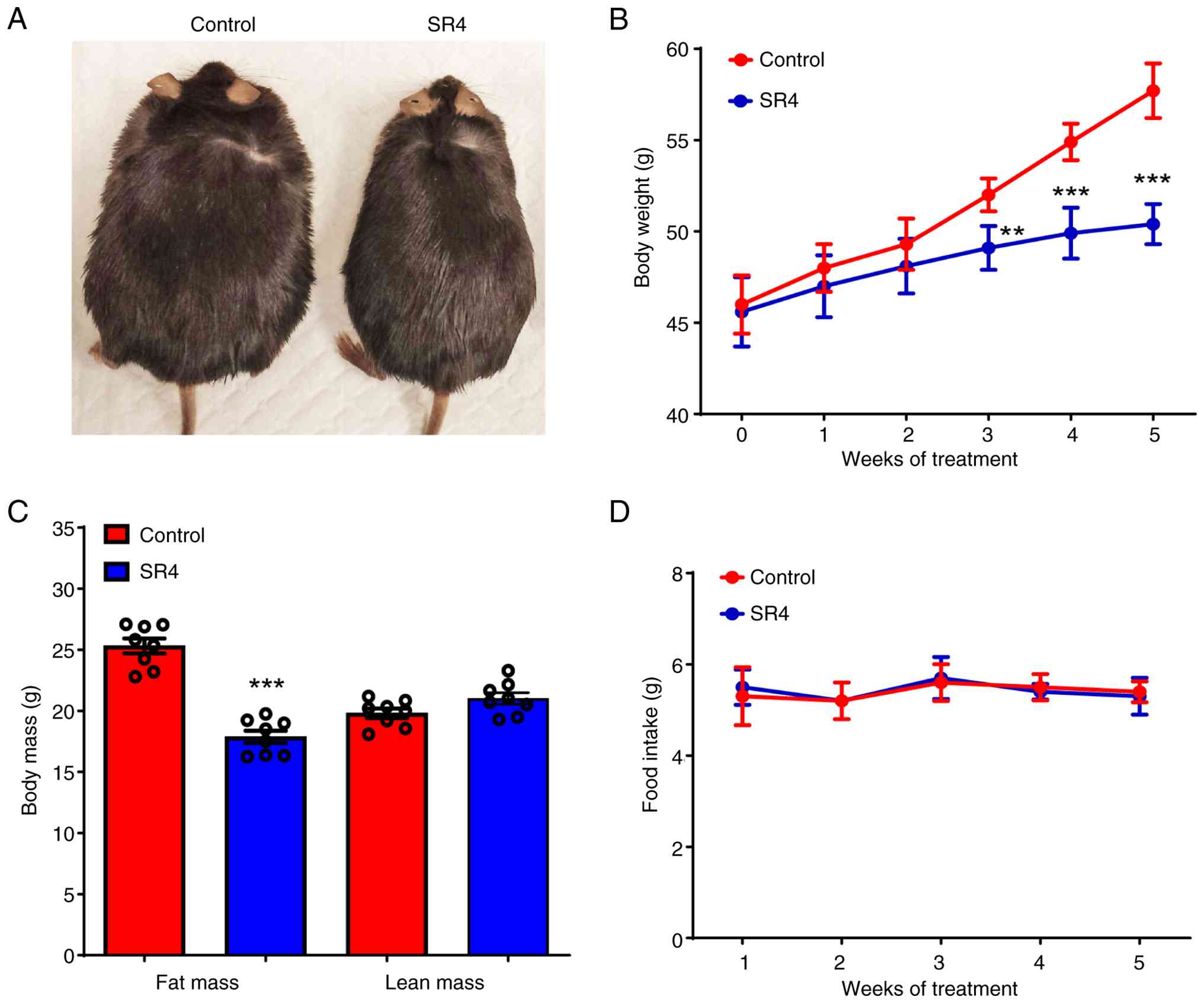
Figure 1

SR4 reduces BW and body fat mass
without altering food intake in db/db mice. (A)
Representative images of mice from each treatment group,
demonstrating differences in overall body shape. (B) Weekly mean BW
of vehicle vs. SR4-treated mice. (C) Quantification of body fat
mass and lean mass percentage after 5 weeks of treatment,
determined using EchoMRI™ technology. (D) Mean food
intake of each mouse was manually measured. All quantitative data
are presented as the mean ± SEM, with n=8 animals per group.
Statistical significance is indicated as follows:
**P<0.01 and ***P<0.001 for SR4 vs.
control. BW, body weight.

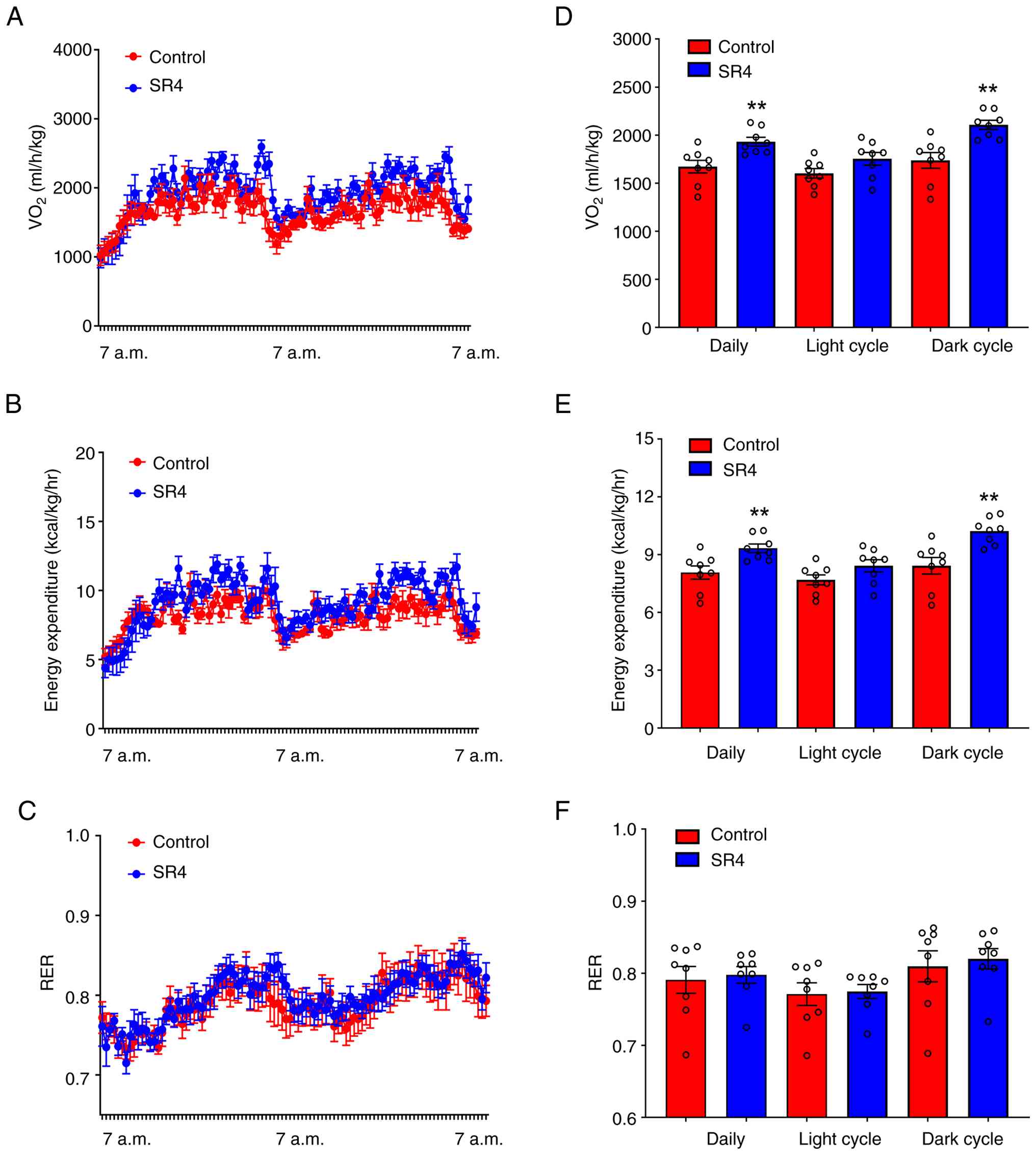
Figure 2

SR4 increases oxygen consumption and
energy expenditure in db/db mice. (A) Daily total oxygen
consumption rates, (B) energy expenditure and (C) RER of control
and SR4-treated mice. (D) Average oxygen consumption, (E) energy
expenditure and (F) RER in both light and dark cycles. All
quantitative data are presented as the mean ± SEM, with n=8 animals
per group. Statistical significance is indicated as follows:
**P<0.01 for SR4 vs. control. RER, respiratory
exchange ratio; VO2, maximal oxygen consumption.

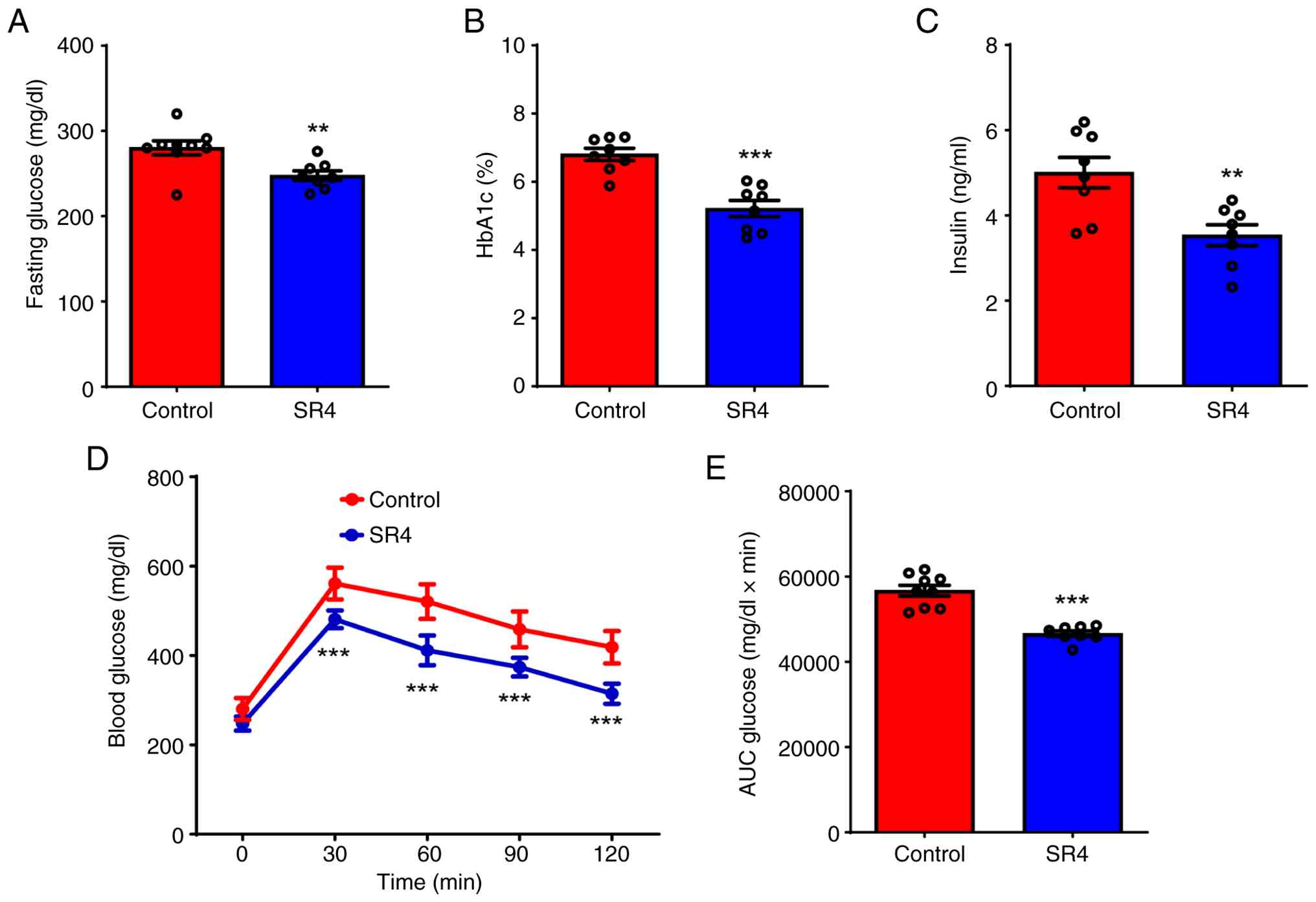
Figure 3

SR4 improves glycemic control in
db/db mice. (A) Fasting plasma glucose, (B) HbA1c, (C)
fasting plasma insulin, (D) intraperitoneal glucose tolerance test
and (E) total AUC. All quantitative data are presented as the mean
± SEM, with n=8 animals per group. Statistical significance is
indicated as follows: **P<0.01 and
***P<0.001 for SR4 vs. control. HbA1c, glycated
hemoglobin; AUC, area under the curve.

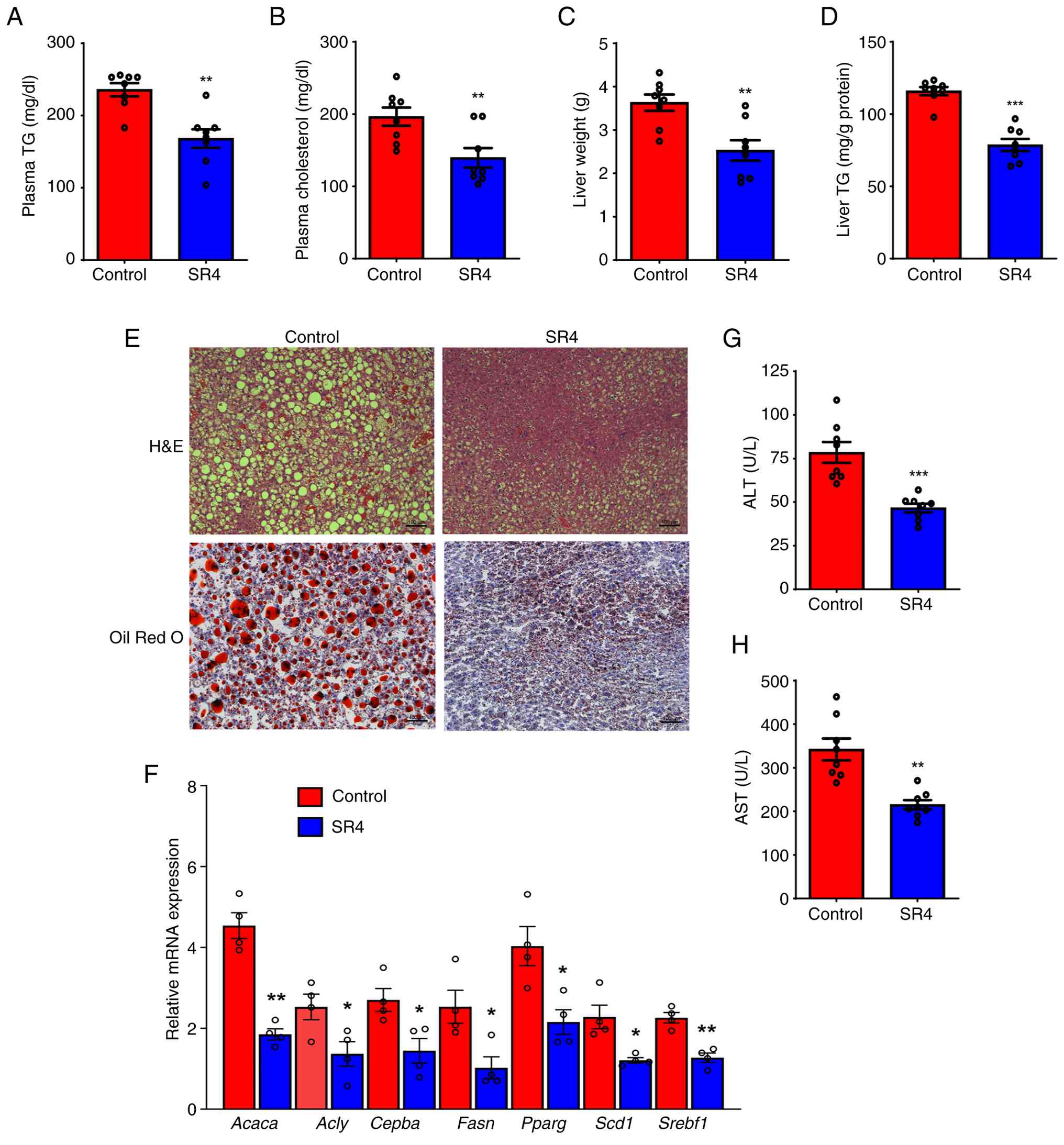
Figure 4

SR4 ameliorates dyslipidemia and
hepatic steatosis in db/db mice. Plasma (A) TG and (B)
cholesterol levels, (C) liver weight and liver TG content (D) of
control and SR4-treated mice at the end of the present study. (E)
Representative images of liver sections stained with H&E and
Oil Red O. Magnification, x160, scale bar 100 µm. (F) Quantitative
PCR analysis showing the relative mRNA expression levels of lipid
metabolism-associated genes Acaca, Acly,
Cebpa, Fasn, Pparg, Scd1 and
Srepbf1 in liver of mice with and without SR4 treatment.
Plasma levels of liver injury enzymes (G) ALT and (H) AST. All
quantitative data are presented as the mean ± SEM, with n=8 animals
per group for panels A-D and G-H and n=4 animals per group for
panel F. Statistical significance is indicated as follows:
*P<0.05, **P<0.01 and
***P<0.001 for SR4 vs. control. ALT, alanine
transaminase; AST, aspartate aminotransferase; Acaca,
acetyl-coenzyme A carboxylase; Acly, ATP citrate lyase;
Cebpa, CCAAT/enhancer-binding protein a; Fasn, fatty
acid synthase; Pparg, peroxisome proliferator-activated
receptor g; Scd1, stearoyl-coenzyme A desaturase 1;
Srebf1, sterol regulatory element binding protein-1c; TG,
triglycerides.

Figure 5

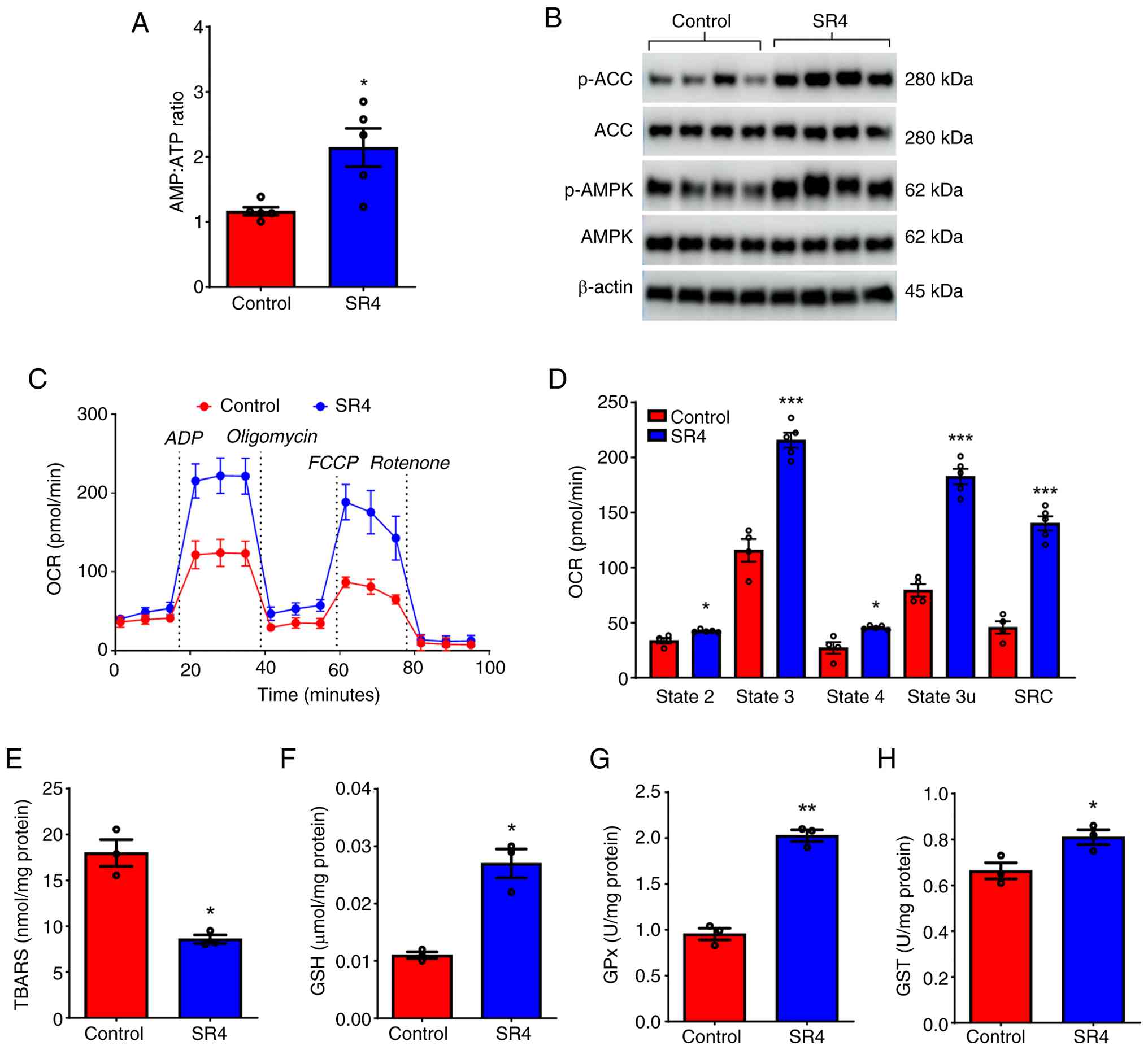
SR4 activates hepatic AMPK, increases
liver mitochondrial respiration and alleviates oxidative stress in
db/db mice. (A) Liver AMP:ATP ratio in control and
SR4-treated animals (n=5). (B) Representative western blotting
analysis of protein lysates from liver (n = 3). Lysates were
subjected to SDS-PAGE and immuno-blotted with antibodies specific
to phosphorylated and total AMPK, phosphorylated and total ACC or
β-actin. (C) Seahorse analysis of mitochondrial function and
bioenergetics of freshly isolated liver mitochondria (n=4-5 per
group) after 5 weeks of SR4 treatment. Real time OCR and key
respiration parameters such as (D) basal respiration (state 2),
ADP-linked respiration (state 3), maximal respiration (state 3u),
proton leak (state 4) and spare respiratory capacity are shown. (E)
Hepatic levels of MDA, measured as TBARS and antioxidants (F) GSH,
(G) GPx and (H) GST in liver lysates of control and SR4-treated
mice (n=3). Statistical significance is indicated as follows:
*P<0.05, **P<0.01 and
***P<0.001 for SR4 vs. control. p-, phosphorylated.
ACC, acetyl-CoA carboxylase; OCR, oxygen consumption rate; MDA,
malondialdehyde; FCCP, carbonyl
cyanide-p-trifluoromethoxyphenylhydrazone; GSH, glutathione; GST,
glutathione S-transferase; GPx, glutathione peroxidase; TBARS,
thiobarbituric acid reactive substances.

Figure 6

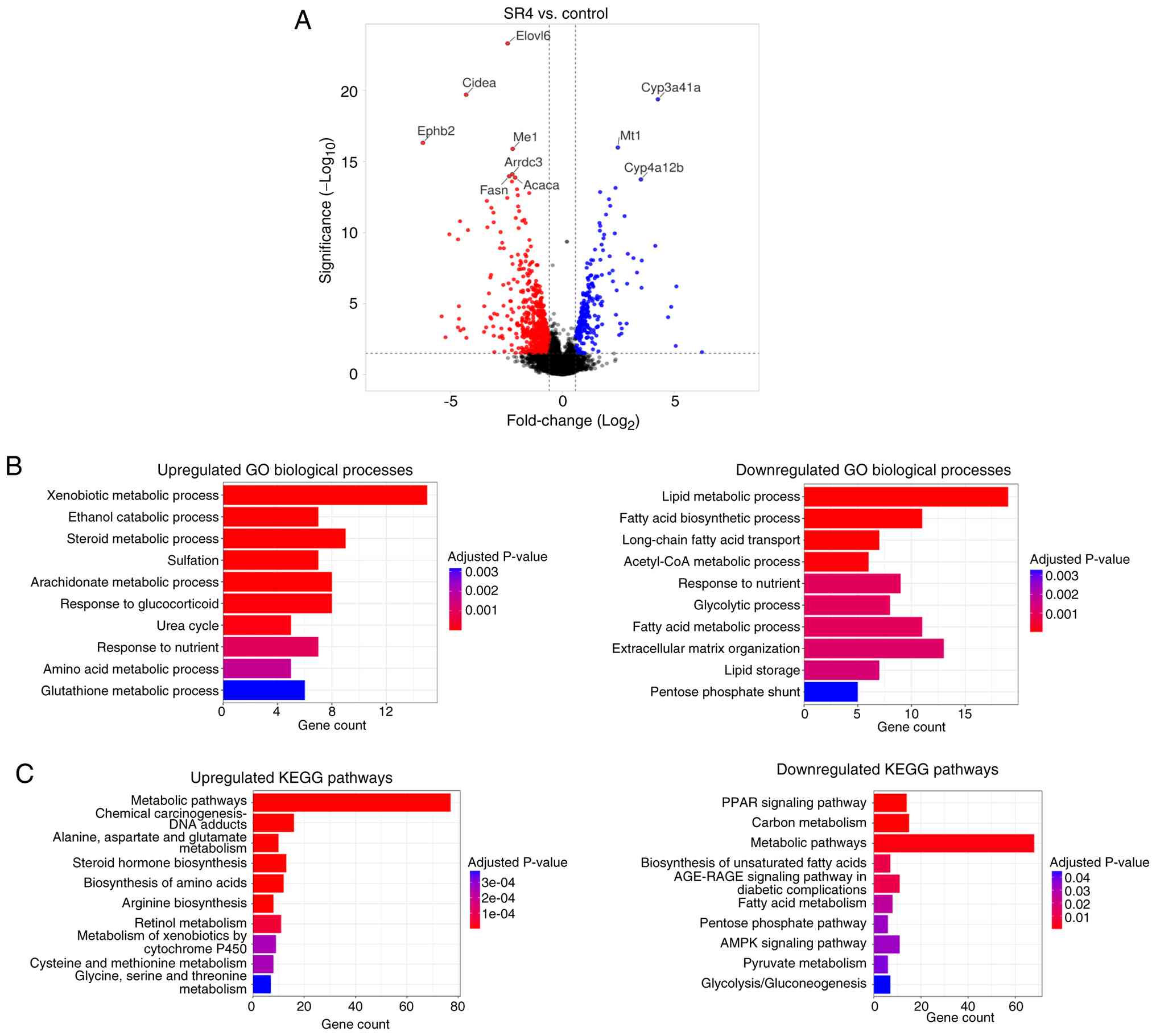
Transcriptomic analysis of hepatic
gene expression in SR4-treated db/db mice. (A) Volcano plot
of DEGs between SR4 and vehicle-treated db/db mice. DEGs
with P<0.05 and a fold-change ≥1.5 are depicted in red
(downregulated) and blue (upregulated) circles. Black circles
represent DEGs below the cut-off. Annotated dots correspond to the
top 10 DEGs with the largest (Manhattan) distance from the origin
above the significance thresholds indicated by the dashed line.
Data plotted using the VolcaNoseR web tool. (B) Bar plots of the
top ten significantly enriched upregulated (left panel) and
downregulated (right panel) GO biological processes. (C) Bar plots
of the top ten significantly enriched upregulated (left panel) and
downregulated (right panel) KEGG pathways. GO, gene ontology; KEGG,
Kyoto Encyclopedia of Genes and Genomes.

Figure 7

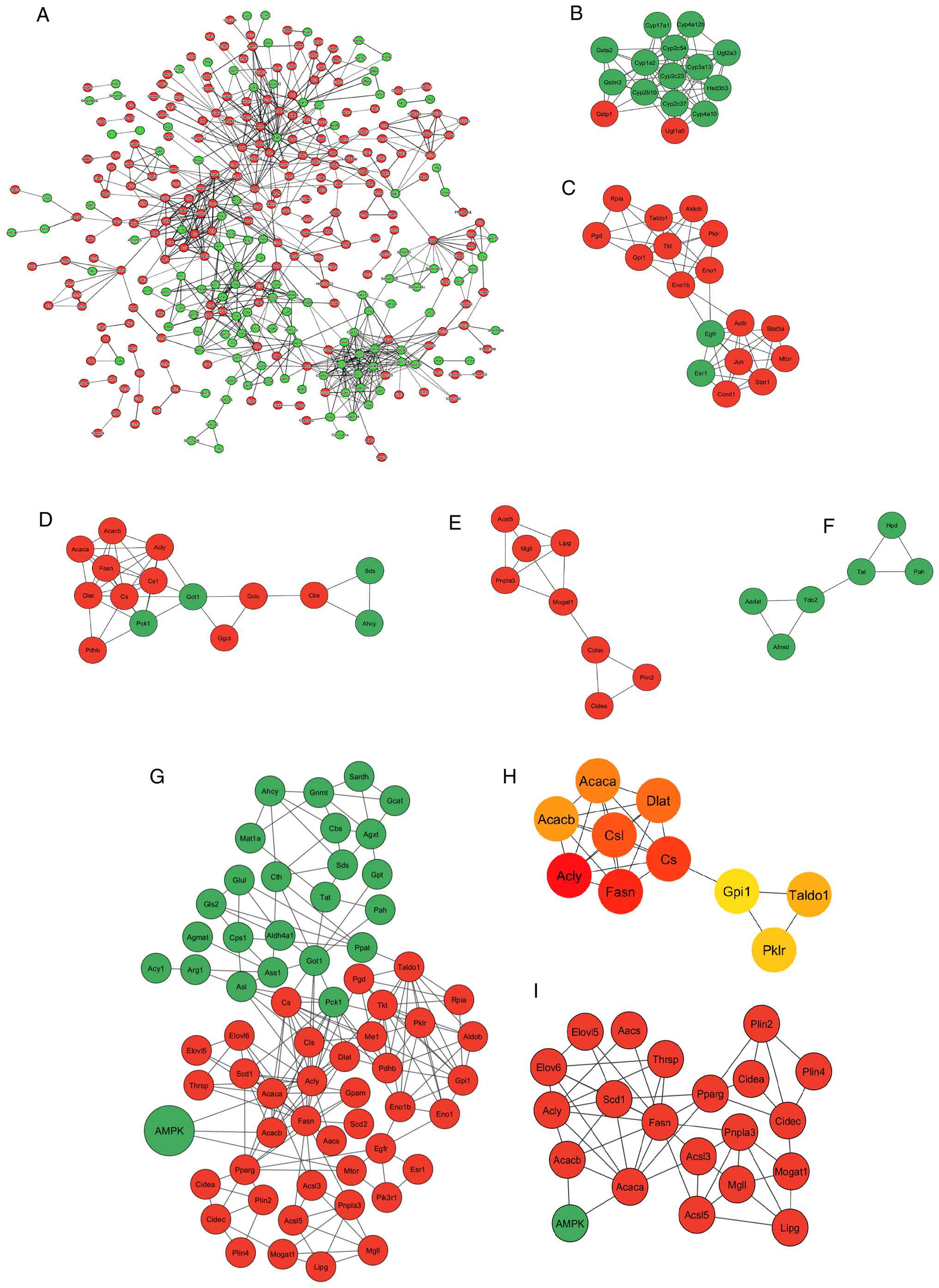
PPI networks and subnetworks
(modules) of DEGs in SR4-treated db/db mice livers. (A) PPI
network of all 642 DEGs. For clarity, disconnected nodes are not
shown. Circles represent genes (nodes) and lines between them
represent interactions (edges). The top 5 most significant modules
from the PPI network of DEGs, identified by MCODE screening. These
modules are associated with (B) steroid hormone biosynthesis, (C)
pentose phosphate pathway and glycolysis, (D) fatty acid synthesis
and pyruvate metabolism, (E) lipid droplet metabolism and (F)
metabolism of amino acids and derivatives. (G) PPI subnetwork for
genes associated with AMPK and nutrient and energy metabolic
pathways, as identified by GO and KEGG enrichment analyses. (H) Top
10 hub genes identified in the subnetwork in (G) using the ‘Maximal
Clique Centrality’ plugin of CytoHubba. (I) Putative
AMPK/PPARγ-associated regulatory axis for fatty acid and TG
synthesis, TG production, lipid droplet formation and storage. In
panels (A-G) and (I), green and red circles represent upregulated
and downregulated genes, respectively. In panel (H), red circles
indicate hub genes with high-ranking scores, while yellow
rectangles represent hub genes with lower-ranking scores. PPARγ,
peroxisome proliferator-activated receptor γ; PPI, protein-protein
interaction; TG, triglycerides; DEGs, differentially expressed
genes.

Figure 8

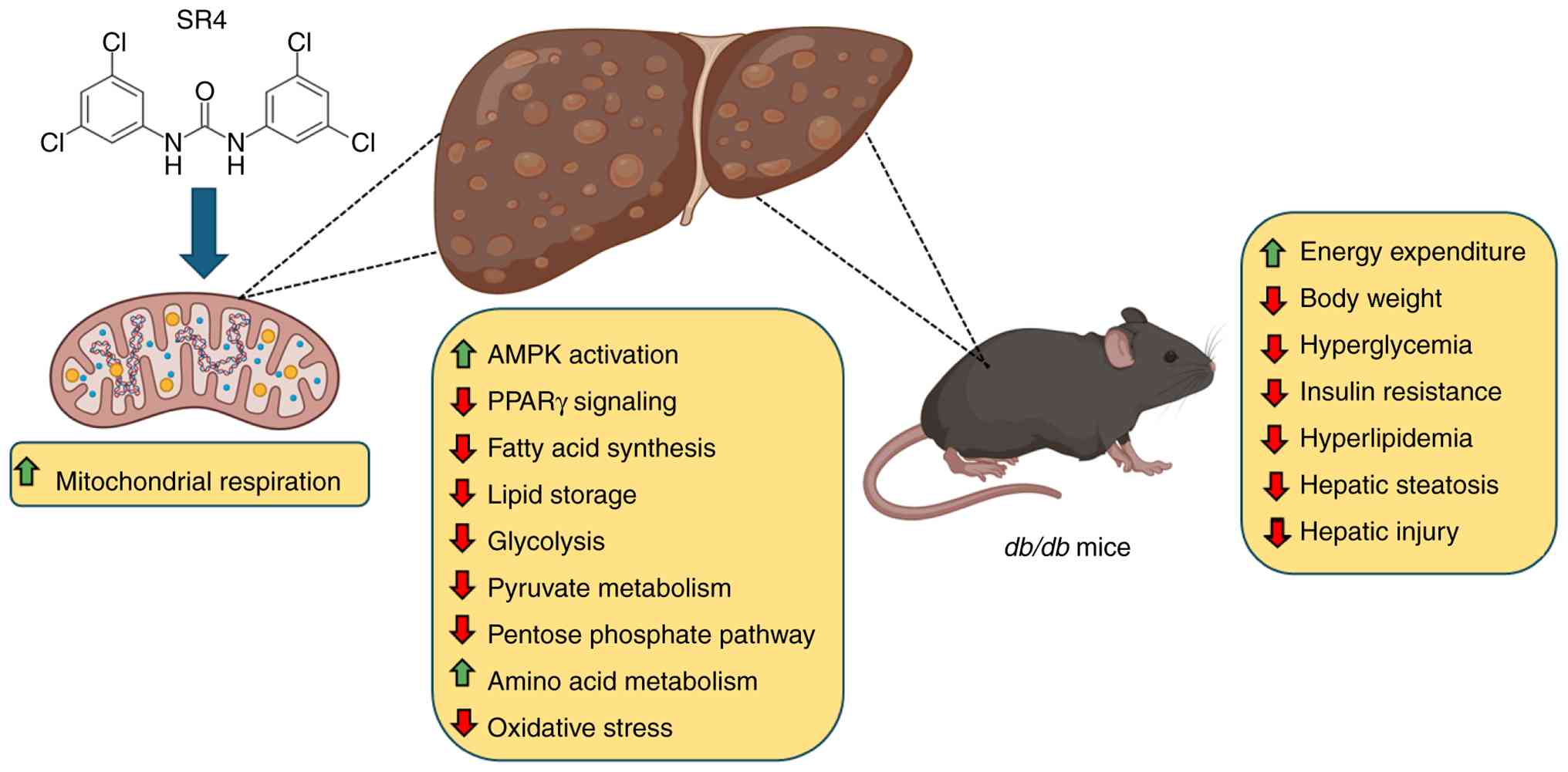
Summary of the metabolic effects of
SR4 on the liver of db/db mice. SR4 functions as a
mitochondrial uncoupler by facilitating fatty acid-activated proton
transport across the inner mitochondrial membrane. As a bisaryl
urea-based anion transporter, SR4 enhances the flip-flop movement
of deprotonated fatty acids across the inner mitochondrial
membrane, promoting proton leak. This uncoupling disrupts the
mitochondrial proton gradient, leading to reduced ATP synthesis.
The resulting decline in cellular ATP levels activates AMPK, a key
regulator of energy homeostasis. In the liver, AMPK activation
suppresses lipogenic pathways, including PPARγ signaling, while
promoting catabolic processes that support mitochondrial function
and energy utilization. This metabolic reprogramming enhances
mitochondrial respiration and oxidative capacity, reduces oxidative
stress and improves metabolic flexibility. Collectively, these
effects contribute to broad metabolic improvements in db/db
mice, including increased energy expenditure and metabolic
activity, reduced nody weight, improved glycemic control, enhanced
insulin sensitivity, correction of dyslipidemia and attenuation of
hepatic steatosis and injury. Figure partly created in BioRender.
PPARγ, peroxisome proliferator-activated receptor γ.
View References

1 

American Diabetes Association Professional Practice Committee. Classification and diagnosis of diabetes: 2. Diagnosis and Classification of Diabetes: Standards of Care in Diabetes-2024. Diabetes Care. 47 (Suppl 1):S20–S42. 2024.PubMed/NCBI View Article : Google Scholar

2 

International Diabetes Federation: IDF Diabetes Atlas, 11th edition. Brussels, Belgium, IDF, 2025.

3 

Khan MAB, et al: Global burden of diabetes and its projections to 2050: A systematic review. Lancet Diabetes Endocrinol, 2023.

4 

Mooradian AD: Dyslipidemia in type 2 diabetes mellitus. Nat Clin Pract Endocrinol Metab. 5:150–159. 2009.PubMed/NCBI View Article : Google Scholar

5 

Caturano A, D'Angelo M, Mormone A, Russo V, Mollica MP, Salvatore T, Galiero R, Rinaldi L, Vetrano E, Marfella R, et al: Oxidative stress in type 2 diabetes: Impacts from pathogenesis to lifestyle modifications. Curr Issues Mol Biol. 45:6651–6666. 2023.PubMed/NCBI View Article : Google Scholar

6 

Younossi ZM, Golabi P, Price JK, Owrangi S, Gundu-Rao N, Satchi R and Paik JM: The global epidemiology of nonalcoholic fatty liver disease and nonalcoholic steatohepatitis among patients with type 2 diabetes. Clin Gastroenterol Hepatol. 22:1999–2010.e8. 2024.PubMed/NCBI View Article : Google Scholar

7 

Younossi ZM, Kalligeros M and Henry L: Epidemiology of metabolic dysfunction-associated steatotic liver disease. Clin Mol Hepatol. 31 (Suppl):S32–S50. 2025.PubMed/NCBI View Article : Google Scholar

8 

Davies MJ, Aroda VR, Collins BS, Gabbay RA, Green J, Maruthur NM, Rosas SE, Del Prato S, Mathieu C, Mingrone G, et al: Management of hyperglycemia in type 2 diabetes, 2022. A consensus report by the American diabetes association (ADA) and the european association for the study of diabetes (EASD). Diabetes Care. 45:2753–2786. 2022.PubMed/NCBI View Article : Google Scholar

9 

Goedeke L and Shulman GI: Therapeutic potential of mitochondrial uncouplers for the treatment of metabolic associated fatty liver disease and NASH. Mol Metab. 46(101178)2021.PubMed/NCBI View Article : Google Scholar

10 

Alexopoulos SJ, Chen SY, Brandon AE, Salamoun JM, Byrne FL, Garcia CJ, Beretta M, Olzomer EM, Shah DP, Philp AM, et al: Mitochondrial uncoupler BAM15 reverses diet-induced obesity and insulin resistance in mice. Nat Commun. 11(2397)2020.PubMed/NCBI View Article : Google Scholar

11 

Kanemoto N, Okamoto T, Tanabe K, Shimada T, Minoshima H, Hidoh Y, Aoyama M, Ban T, Kobayashi Y, Ando H, et al: Antidiabetic and cardiovascular beneficial effects of a liver-localized mitochondrial uncoupler. Nat Commun. 10(2172)2019.PubMed/NCBI View Article : Google Scholar

12 

Figarola JL, Singhal J, Tompkins JD, Rogers GW, Warden C, Horne D, Riggs AD, Awasthi S and Singhal SS: SR4 Uncouples mitochondrial oxidative phosphorylation, modulates AMP-dependent kinase (AMPK)-mammalian target of rapamycin (mTOR) signaling, and inhibits proliferation of HepG2 hepatocarcinoma cells. J Biol Chem. 290:30321–30341. 2015.PubMed/NCBI View Article : Google Scholar

13 

Singhal SS, Figarola J, Singhal J, Nagaprashantha L, Berz D, Rahbar S and Awasthi S: Novel compound 1,3-bis (3,5-dichlorophenyl) urea inhibits lung cancer progression. Biochem Pharmacol. 86:1664–1672. 2013.PubMed/NCBI View Article : Google Scholar

14 

Figarola JL, Singhal J, Singhal S, Kusari J and Riggs A: Bioenergetic modulation with the mitochondria uncouplers SR4 and niclosamide prevents proliferation and growth of treatment-naïve and vemurafenib-resistant melanomas. Oncotarget. 9:36945–36965. 2018.PubMed/NCBI View Article : Google Scholar

15 

Rawling T, MacDermott-Opeskin H, Roseblade A, Pazderka C, Clarke C, Bourget K, Wu X, Lewis W, Noble B, Gale PA, et al: Aryl urea substituted fatty acids: A new class of protonophoric mitochondrial uncoupler that utilises a synthetic anion transporter. Chem Sci. 11:12677–12685. 2020.PubMed/NCBI View Article : Google Scholar

16 

York E, McNaughton DA, Roseblade A, Cranfield CG, Gale PA and Rawling T: Structure-activity relationship and mechanistic studies of bisaryl urea anticancer agents indicate mitochondrial uncoupling by a fatty Acid-Activated Mechanism. ACS Chem Biol. 17:2065–2073. 2022.PubMed/NCBI View Article : Google Scholar

17 

Figarola JL, Singhal P, Rahbar S, Gugiu BG, Awasthi S and Singhal SS: COH-SR4 reduces body weight, improves glycemic control and prevents hepatic steatosis in high fat diet-induced obese mice. PLoS One. 8(e83801)2013.PubMed/NCBI View Article : Google Scholar

18 

Lau JK, Zhang X and Yu J: Animal models of non-alcoholic fatty liver disease: Current perspectives and recent advances. J Pathol. 241:36–44. 2017.PubMed/NCBI View Article : Google Scholar

19 

Benedé-Ubieto R, Estévez-Vázquez O, Ramadori P, Cubero FJ and Nevzorova YA: Guidelines and considerations for metabolic tolerance tests in mice. Diabetes Metab Syndr Obes. 13:439–450. 2020.PubMed/NCBI View Article : Google Scholar

20 

Noeman SA, Hamooda HE and Baalash AA: Biochemical study of oxidative stress markers in the liver, kidney and heart of high fat diet induced obesity in rats. Diabetol Metab Syndr. 3(17)2011.PubMed/NCBI View Article : Google Scholar

21 

Fraga CG, Leibovitz BE and Tappel AL: Lipid peroxidation measured as thiobarbituric acid-reactive substances in tissue slices: Characterization and comparison with homogenates and microsomes. Free Radic Biol Med. 4:155–1561. 1988.PubMed/NCBI View Article : Google Scholar

22 

Iuso A, Repp B, Biagosch C, Terrile C and Prokisch H: Assessing mitochondrial bioenergetics in isolated mitochondria from various mouse tissues using Seahorse XF96 analyzer. Methods Mol Biol. 1567:217–230. 2017.PubMed/NCBI View Article : Google Scholar

23 

Livak KJ and Schmittgen TD: Analysis of relative gene expression data using real-time quantitative PCR and the 2(-delta delta C(T)) method. Methods. 25:402–408. 2001.PubMed/NCBI View Article : Google Scholar

24 

Robinson MD, McCarthy DJ and Smyth GK: edgeR: A Bioconductor package for differential expression analysis of digital gene expression data. Bioinformatics. 26:139–140. 2010.PubMed/NCBI View Article : Google Scholar

25 

Love MI, Huber W and Anders S: Moderated estimation of fold change and dispersion for RNA-seq data with DESeq2. Genome Biol. 15(550)2014.PubMed/NCBI View Article : Google Scholar

26 

Goedhart J and Luijsterburg MS: VolcaNoseR is a web app for creating, exploring, labeling and sharing volcano plots. Sci Rep. 10(20560)2020.PubMed/NCBI View Article : Google Scholar

27 

Huang DW, Sherman BT, Lempicki RA and Lemoine S: DAVID: A web server for functional enrichment analysis and functional annotation of gene lists (2021 update). Nucleic Acids Res. 50:W216–W221. 2022.PubMed/NCBI View Article : Google Scholar

28 

Szklarczyk D, Nastou K, Koutrouli M, Kirsch R, Mehryary F, Hachilif R, Hu D, Peluso ME, Huang Q, Fang T, et al: The STRING database in 2025: Protein networks with directionality of regulation. Nucleic Acids Res. 53:D730–D737. 2025.PubMed/NCBI View Article : Google Scholar

29 

Shannon P, Markiel A, Ozier O, Baliga NS, Wang JT, Ramage D, Amin N, Schwikowski B and Ideker T: Cytoscape: A software environment for integrated models of biomolecular interaction networks. Genome Res. 13:2498–2504. 2003.PubMed/NCBI View Article : Google Scholar

30 

Bader GD and Hogue CW: An automated method for finding molecular complexes in large protein interaction networks. BMC Bioinformatics. 4(2)2003.PubMed/NCBI View Article : Google Scholar

31 

Chin CH, Chen SH, Wu HH, Ho CW, Ko MT and Lin CY: cytoHubba: Identifying hub objects and sub-networks from complex interactome. BMC Syst Biol. 8 (Suppl 4)(S11)2014.PubMed/NCBI View Article : Google Scholar

32 

Burke SJ, Batdorf HM, Burk DH, Noland RC, Eder AE, Boulos MS, Karlstad MD and Collier JJ: Db/db mice exhibit features of human type 2 diabetes that are not present in weight-matched C57BL/6J mice fed a Western diet. J Diabetes Res. 2017(8503754)2017.PubMed/NCBI View Article : Google Scholar

33 

Sahai A, Malladi P, Pan X, Paul R, Melin-Aldana H, Green RM and Whitington PF: Obese and diabetic db/db mice develop marked liver fibrosis in a model of nonalcoholic steatohepatitis: Role of short-form leptin receptors and osteopontin. Am J Physiol Gastrointest Liver Physiol. 287:G1035–G1043. 2004.PubMed/NCBI View Article : Google Scholar

34 

Zhao H, Matsuzaka T, Nakano Y, Motomura K, Tang N, Yokoo T, Okajima Y, Han SI, Takeuchi Y, Aita Y, et al: Elovl6 deficiency improves glycemic control in diabetic db/db mice by expanding β-Cell mass and increasing insulin secretory capacity. Diabetes. 66:1833–1846. 2017.PubMed/NCBI View Article : Google Scholar

35 

Matsuzaka T, Atsumi A, Matsumori R, Nie T, Shinozaki H, Suzuki-Kemuriyama N, Kuba M, Nakagawa Y, Ishii K, Shimada M, et al: Elovl6 promotes nonalcoholic steatohepatitis. Hepatology. 56:2199–2208. 2012.PubMed/NCBI View Article : Google Scholar

36 

Xiao Y, Batmanov K, Hu W, Zhu K, Tom AY, Guan D, Jiang C, Cheng L, McCright SJ, Yang EC, et al: Hepatocytes demarcated by EphB2 contribute to the progression of nonalcoholic steatohepatitis. Sci Transl Med. 15(eadc9653)2023.PubMed/NCBI View Article : Google Scholar

37 

Mimche PN, Lee CM, Mimche SM, Thapa M, Grakoui A, Henkemeyer M and Lamb TJ: EphB2 receptor tyrosine kinase promotes hepatic fibrogenesis in mice via activation of hepatic stellate cells. Sci Rep. 8(2532)2018.PubMed/NCBI View Article : Google Scholar

38 

Zhou L, Xu L, Ye J, Li D, Wang W, Li X, Wu L, Wang H, Guan F and Li P: Cidea promotes hepatic steatosis by sensing dietary fatty acids. Hepatology. 56:95–107. 2012.PubMed/NCBI View Article : Google Scholar

39 

Sans A, Bonnafous S, Rousseau D, Patouraux S, Canivet CM, Leclere PS, Tran-Van-Nhieu J, Luci C, Bailly-Maitre B, Xu X, et al: The differential expression of Cide family members is associated with NAFLD progression from steatosis to steatohepatitis. Sci Rep. 9(7501)2019.PubMed/NCBI View Article : Google Scholar

40 

Simmen FA, Pabona JMP, Al-Dwairi A, Alhallak I, Montales MTE and Simmen RCM: Malic enzyme 1 (ME1) promotes adiposity and hepatic steatosis and induces circulating insulin and leptin in obese female mice. Int J Mol Sci. 24(6613)2023.PubMed/NCBI View Article : Google Scholar

41 

Al-Dwairi A, Pabona JM, Simmen RC and Simmen FA: Cytosolic malic enzyme 1 (ME1) mediates high fat diet-induced adiposity, endocrine profile, and gastrointestinal tract proliferation-associated biomarkers in male mice. PLoS One. 7(e46716)2012.PubMed/NCBI View Article : Google Scholar

42 

Batista TM, Dagdeviren S, Carroll SH, Cai W, Melnik VY, Noh HL, Saengnipanthkul S, Kim JK, Kahn CR and Lee RT: Arrestin domain-containing 3 (Arrdc3) modulates insulin action and glucose metabolism in liver. Proc Natl Acad Sci USA. 117:6733–6740. 2020.PubMed/NCBI View Article : Google Scholar

43 

Patwari P, Emilsson V, Schadt EE, Chutkow WA, Lee S, Marsili A, Zhang Y, Dobrin R, Cohen DE, Larsen PR, et al: The arrestin domain-containing 3 protein regulates body mass and energy expenditure. Cell Metab. 14:671–683. 2011.PubMed/NCBI View Article : Google Scholar

44 

Dorn C, Riener MO, Kirovski G, Saugspier M, Steib K, Weiss TS, Gäbele E, Kristiansen G, Hartmann A and Hellerbrand C: Expression of fatty acid synthase in nonalcoholic fatty liver disease. Int J Clin Exp Pathol. 3:505–514. 2010.PubMed/NCBI

45 

O'Farrell M, Duke G, Crowley R, Buckley D, Martins EB, Bhattacharya D, Friedman SL and Kemble G: FASN inhibition targets multiple drivers of NASH by reducing steatosis, inflammation and fibrosis in preclinical models. Sci Rep. 12(15661)2022.PubMed/NCBI View Article : Google Scholar

46 

Mateo-Marín MA and Alves-Bezerra M: Targeting acetyl-CoA carboxylases for the treatment of MASLD. J Lipid Res. 65(100676)2024.PubMed/NCBI View Article : Google Scholar

47 

Tamura YO, Sugama J, Iwasaki S, Sasaki M, Yasuno H, Aoyama K, Watanabe M, Erion DM and Yashiro H: Selective Acetyl-CoA carboxylase 1 inhibitor improves hepatic steatosis and hepatic fibrosis in a preclinical nonalcoholic steatohepatitis model. J Pharmacol Exp Ther. 379:280–289. 2021.PubMed/NCBI View Article : Google Scholar

48 

Jamwal R, de la Monte SM, Ogasawara K, Adusumalli S, Barlock BB and Akhlaghi F: Nonalcoholic fatty liver disease and diabetes are associated with decreased CYP3A4 protein expression and activity in human liver. Mol Pharm. 15:2621–2632. 2018.PubMed/NCBI View Article : Google Scholar

49 

Woolsey SJ, Mansell SE, Kim RB, Tirona RG and Beaton MD: CYP3A activity and expression in nonalcoholic fatty liver disease. Drug Metab Dispos. 43:1484–1490. 2015.PubMed/NCBI View Article : Google Scholar

50 

Ping DB, Sun X, Peng Y and Liu CH: Cyp4a12-mediated retinol metabolism in stellate cells is the antihepatic fibrosis mechanism of the Chinese medicine Fuzheng Huayu recipe. Chin Med. 18(51)2023.PubMed/NCBI View Article : Google Scholar

51 

Theken KN, Deng Y, Kannon MA, Miller TM, Poloyac SM and Lee CR: Activation of the acute inflammatory response alters cytochrome P450 expression and eicosanoid metabolism. Drug Metab Dispos. 39:22–29. 2011.PubMed/NCBI View Article : Google Scholar

52 

Li X, Zhong S, Sun Y, Huang X, Li Y, Wang L, Wu Y, Yang M, Yuan HX, Liu J and Zang S: Integration analysis identifies the role of metallothionein in the progression from hepatic steatosis to steatohepatitis. Front Endocrinol (Lausanne). 13(951093)2022.PubMed/NCBI View Article : Google Scholar

53 

Guan C, Zou X, Shi W, Gao J, Yang C, Ge Y, Xu Z, Bi S and Zhong X: Metallothionein 1B attenuates inflammation and hepatic steatosis in MASH by inhibiting the AKT/PI3K pathway. J Lipid Res. 66(100701)2025.PubMed/NCBI View Article : Google Scholar

54 

Laila UE, Zhao ZL, Xu DY, Liu H and Xu ZX: Pharmacological advances and therapeutic applications of niclosamide in cancer and other diseases. Eur J Med Chem. 290(117527)2025.PubMed/NCBI View Article : Google Scholar

55 

Park KS, Jo I, Pak K, Bae SW, Rhim H, Suh SH, Park J, Zhu H, So I and Kim KW: FCCP depolarizes plasma membrane potential by activating proton and Na+ currents in bovine aortic endothelial cells. Pflugers Arch. 443:344–352. 2002.PubMed/NCBI View Article : Google Scholar

56 

Vilar-Gomez E, Martinez-Perez Y, Calzadilla-Bertot L, Torres-Gonzalez A, Gra-Oramas B, Gonzalez-Fabian L, Friedman SL, Diago M and Romero-Gomez M: Weight loss through lifestyle modification significantly reduces features of nonalcoholic steatohepatitis. Gastroenterology. 2:367–378. 2015.PubMed/NCBI View Article : Google Scholar

57 

Wilding JP: The importance of weight management in type 2 diabetes mellitus. Int J Clin Pract. 68:682–691. 2014.PubMed/NCBI View Article : Google Scholar

58 

Neeland IJ, Linge J and Birkenfeld AL: Changes in lean body mass with glucagon-like peptide-1-based therapies and mitigation strategies. Diabetes Obes Metab. 26 (Suppl 4):S16–S27. 2024.PubMed/NCBI View Article : Google Scholar

59 

Cava E, Yeat NC and Mittendorfer B: Preserving healthy muscle during weight loss. Adv Nutr. 8:511–519. 2017.PubMed/NCBI View Article : Google Scholar

60 

Hardie DG, Ross FA and Hawley SA: AMPK: A nutrient and energy sensor that maintains energy homeostasis. Nat Rev Mol Cell Biol. 13:251–262. 2012.PubMed/NCBI View Article : Google Scholar

61 

Tai T, Shao YY, Zheng YQ, Jiang LP, Han HR, Yin N, Li HD, Ji JZ, Mi QY, Yang L, et al: Clopidogrel ameliorates High-fat diet-induced hepatic steatosis in mice through activation of the AMPK signaling pathway and beyond. Front Pharmacol. 15(1496639)2024.PubMed/NCBI View Article : Google Scholar

62 

Wang Y, Liu S, Ni M, Chen Y, Chen R, Wang J, Jiang W, Zhou T, Fan S, Chang J, et al: Terf2ip deficiency accelerates non-alcoholic steatohepatitis through regulating lipophagy and fatty acid oxidation via Sirt1/AMPK pathway. Free Radic Biol Med. 220:78–91. 2024.PubMed/NCBI View Article : Google Scholar

63 

Matsusue K, Haluzik M, Lambert G, Yim SH, Gavrilova O, Ward JM, Brewer B Jr, Reitman ML and Gonzalez FJ: Liver-specific disruption of PPARgamma in leptin-deficient mice improves fatty liver but aggravates diabetic phenotypes. J Clin Invest. 111:737–747. 2003.PubMed/NCBI View Article : Google Scholar

64 

Baumann A, Burger K, Brandt A, Staltner R, Jung F, Rajcic D, Lorenzo Pisarello MJ and Bergheim I: GW9662, a peroxisome proliferator-activated receptor gamma antagonist, attenuates the development of non-alcoholic fatty liver disease. Metabolism. 133(155233)2022.PubMed/NCBI View Article : Google Scholar

65 

Sozio MS, Lu C, Zeng Y, Liangpunsakul S and Crabb DW: Activated AMPK inhibits PPARα and PPARγ transcriptional activity in hepatoma cells. Am J Physiol Gastrointest Liver Physiol. 301:G739–G747. 2011.PubMed/NCBI View Article : Google Scholar

66 

Blanchard PG, Festuccia WT, Houde VP, St-Pierre P, Brûlé S, Turcotte V, Côté M, Bellmann K, Marette A and Deshaies Y: Major involvement of mTOR in the PPARγ-induced stimulation of adipose tissue lipid uptake and fat accretion. J Lipid Res. 53:1117–1125. 2012.PubMed/NCBI View Article : Google Scholar

67 

Hunter CA, Kartal F, Koc ZC, Murphy T, Kim JH, Denvir J and Koc EC: Mitochondrial oxidative phosphorylation is impaired in TALLYHO mice, a new obesity and type 2 diabetes animal model. Int J Biochem Cell Biol. 116(105616)2019.PubMed/NCBI View Article : Google Scholar

68 

Xiong G, Zhang K, Ma Y, Song Y, Zhang W, Qi T, Qiu H, Shi J, Kan C, Zhang J and Sun X: BAM15 as a mitochondrial uncoupler: A promising therapeutic agent for diverse diseases. Front Endocrinol (Lausanne). 14(1252141)2023.PubMed/NCBI View Article : Google Scholar

69 

Yoo HC, Yu YC, Sung Y and Han JM: Glutamine reliance in cell metabolism. Exp Mol Med. 52:1496–1516. 2020.PubMed/NCBI View Article : Google Scholar

70 

Amores-Sánchez MI and Medina MA: Glutamine, as a precursor of glutathione, and oxidative stress. Mol Genet Metab. 67:100–105. 1999.PubMed/NCBI View Article : Google Scholar

71 

Torres N, Tobón-Cornejo S, Velazquez-Villegas LA, Noriega LG, Alemán-Escondrillas G and Tovar AR: Amino acid catabolism: An overlooked area of metabolism. Nutrients. 15(3378)2023.PubMed/NCBI View Article : Google Scholar

72 

TeSlaa T, Ralser M, Fan J and Rabinowitz JD: The pentose phosphate pathway in health and disease. Nat Metab. 5:1275–1289. 2023.PubMed/NCBI View Article : Google Scholar

73 

Dungubat E, Kusano H, Mori I, Tawara H, Sutoh M, Ohkura N, Takanashi M, Kuroda M, Harada N, Udo E, et al: Age-dependent sex difference of non-alcoholic fatty liver disease in TSOD and db/db mice. PLoS One. 17(e0278580)2022.PubMed/NCBI View Article : Google Scholar

74 

Chen SY, Beretta M, Olzomer EM, Alexopoulos SJ, Shah DP, Byrne FL, Salamoun JM, Garcia CJ, Smith GC, Larance M, et al: Head-to-head comparison of BAM15, semaglutide, rosiglitazone, NEN, and calorie restriction on metabolic physiology in female db/db mice. Biochim Biophys Acta Mol Basis Dis. 1870(166908)2024.PubMed/NCBI View Article : Google Scholar

Related Articles

  • Abstract
  • View
  • Download
  • Twitter
Copy and paste a formatted citation
Spandidos Publications style
Figarola J, Singhal J and Singhal S: Fatty acid‑activated proton transporter SR4 prevents hepatic steatosis and metabolic alterations in diabetic mice by improving mitochondria function, energy balance and oxidative stress. Exp Ther Med 32: 195, 2026.
APA
Figarola, J., Singhal, J., & Singhal, S. (2026). Fatty acid‑activated proton transporter SR4 prevents hepatic steatosis and metabolic alterations in diabetic mice by improving mitochondria function, energy balance and oxidative stress. Experimental and Therapeutic Medicine, 32, 195. https://doi.org/10.3892/etm.2026.13190
MLA
Figarola, J., Singhal, J., Singhal, S."Fatty acid‑activated proton transporter SR4 prevents hepatic steatosis and metabolic alterations in diabetic mice by improving mitochondria function, energy balance and oxidative stress". Experimental and Therapeutic Medicine 32.1 (2026): 195.
Chicago
Figarola, J., Singhal, J., Singhal, S."Fatty acid‑activated proton transporter SR4 prevents hepatic steatosis and metabolic alterations in diabetic mice by improving mitochondria function, energy balance and oxidative stress". Experimental and Therapeutic Medicine 32, no. 1 (2026): 195. https://doi.org/10.3892/etm.2026.13190
Copy and paste a formatted citation
x
Spandidos Publications style
Figarola J, Singhal J and Singhal S: Fatty acid‑activated proton transporter SR4 prevents hepatic steatosis and metabolic alterations in diabetic mice by improving mitochondria function, energy balance and oxidative stress. Exp Ther Med 32: 195, 2026.
APA
Figarola, J., Singhal, J., & Singhal, S. (2026). Fatty acid‑activated proton transporter SR4 prevents hepatic steatosis and metabolic alterations in diabetic mice by improving mitochondria function, energy balance and oxidative stress. Experimental and Therapeutic Medicine, 32, 195. https://doi.org/10.3892/etm.2026.13190
MLA
Figarola, J., Singhal, J., Singhal, S."Fatty acid‑activated proton transporter SR4 prevents hepatic steatosis and metabolic alterations in diabetic mice by improving mitochondria function, energy balance and oxidative stress". Experimental and Therapeutic Medicine 32.1 (2026): 195.
Chicago
Figarola, J., Singhal, J., Singhal, S."Fatty acid‑activated proton transporter SR4 prevents hepatic steatosis and metabolic alterations in diabetic mice by improving mitochondria function, energy balance and oxidative stress". Experimental and Therapeutic Medicine 32, no. 1 (2026): 195. https://doi.org/10.3892/etm.2026.13190
Follow us
  • Twitter
  • LinkedIn
  • Facebook
About
  • Spandidos Publications
  • Careers
  • Cookie Policy
  • Privacy Policy
How can we help?
  • Help
  • Live Chat
  • Contact
  • Email to our Support Team