Spandidos Publications Logo
  • About
    • About Spandidos
    • Aims and Scopes
    • Abstracting and Indexing
    • Editorial Policies
    • Reprints and Permissions
    • Job Opportunities
    • Terms and Conditions
    • Contact
  • Journals
    • All Journals
    • Oncology Letters
      • Oncology Letters
      • Information for Authors
      • Editorial Policies
      • Editorial Board
      • Aims and Scope
      • Abstracting and Indexing
      • Bibliographic Information
      • Archive
    • International Journal of Oncology
      • International Journal of Oncology
      • Information for Authors
      • Editorial Policies
      • Editorial Board
      • Aims and Scope
      • Abstracting and Indexing
      • Bibliographic Information
      • Archive
    • Molecular and Clinical Oncology
      • Molecular and Clinical Oncology
      • Information for Authors
      • Editorial Policies
      • Editorial Board
      • Aims and Scope
      • Abstracting and Indexing
      • Bibliographic Information
      • Archive
    • Experimental and Therapeutic Medicine
      • Experimental and Therapeutic Medicine
      • Information for Authors
      • Editorial Policies
      • Editorial Board
      • Aims and Scope
      • Abstracting and Indexing
      • Bibliographic Information
      • Archive
    • International Journal of Molecular Medicine
      • International Journal of Molecular Medicine
      • Information for Authors
      • Editorial Policies
      • Editorial Board
      • Aims and Scope
      • Abstracting and Indexing
      • Bibliographic Information
      • Archive
    • Biomedical Reports
      • Biomedical Reports
      • Information for Authors
      • Editorial Policies
      • Editorial Board
      • Aims and Scope
      • Abstracting and Indexing
      • Bibliographic Information
      • Archive
    • Oncology Reports
      • Oncology Reports
      • Information for Authors
      • Editorial Policies
      • Editorial Board
      • Aims and Scope
      • Abstracting and Indexing
      • Bibliographic Information
      • Archive
    • Molecular Medicine Reports
      • Molecular Medicine Reports
      • Information for Authors
      • Editorial Policies
      • Editorial Board
      • Aims and Scope
      • Abstracting and Indexing
      • Bibliographic Information
      • Archive
    • World Academy of Sciences Journal
      • World Academy of Sciences Journal
      • Information for Authors
      • Editorial Policies
      • Editorial Board
      • Aims and Scope
      • Abstracting and Indexing
      • Bibliographic Information
      • Archive
    • International Journal of Functional Nutrition
      • International Journal of Functional Nutrition
      • Information for Authors
      • Editorial Policies
      • Editorial Board
      • Aims and Scope
      • Abstracting and Indexing
      • Bibliographic Information
      • Archive
    • International Journal of Epigenetics
      • International Journal of Epigenetics
      • Information for Authors
      • Editorial Policies
      • Editorial Board
      • Aims and Scope
      • Abstracting and Indexing
      • Bibliographic Information
      • Archive
    • Medicine International
      • Medicine International
      • Information for Authors
      • Editorial Policies
      • Editorial Board
      • Aims and Scope
      • Abstracting and Indexing
      • Bibliographic Information
      • Archive
  • Articles
  • Information
    • Information for Authors
    • Information for Reviewers
    • Information for Librarians
    • Information for Advertisers
    • Conferences
  • Language Editing
Spandidos Publications Logo
  • About
    • About Spandidos
    • Aims and Scopes
    • Abstracting and Indexing
    • Editorial Policies
    • Reprints and Permissions
    • Job Opportunities
    • Terms and Conditions
    • Contact
  • Journals
    • All Journals
    • Biomedical Reports
      • Information for Authors
      • Editorial Policies
      • Editorial Board
      • Aims and Scope
      • Abstracting and Indexing
      • Bibliographic Information
      • Archive
    • Experimental and Therapeutic Medicine
      • Information for Authors
      • Editorial Policies
      • Editorial Board
      • Aims and Scope
      • Abstracting and Indexing
      • Bibliographic Information
      • Archive
    • International Journal of Epigenetics
      • Information for Authors
      • Editorial Policies
      • Editorial Board
      • Aims and Scope
      • Abstracting and Indexing
      • Bibliographic Information
      • Archive
    • International Journal of Functional Nutrition
      • Information for Authors
      • Editorial Policies
      • Editorial Board
      • Aims and Scope
      • Abstracting and Indexing
      • Bibliographic Information
      • Archive
    • International Journal of Molecular Medicine
      • Information for Authors
      • Editorial Policies
      • Editorial Board
      • Aims and Scope
      • Abstracting and Indexing
      • Bibliographic Information
      • Archive
    • International Journal of Oncology
      • Information for Authors
      • Editorial Policies
      • Editorial Board
      • Aims and Scope
      • Abstracting and Indexing
      • Bibliographic Information
      • Archive
    • Medicine International
      • Information for Authors
      • Editorial Policies
      • Editorial Board
      • Aims and Scope
      • Abstracting and Indexing
      • Bibliographic Information
      • Archive
    • Molecular and Clinical Oncology
      • Information for Authors
      • Editorial Policies
      • Editorial Board
      • Aims and Scope
      • Abstracting and Indexing
      • Bibliographic Information
      • Archive
    • Molecular Medicine Reports
      • Information for Authors
      • Editorial Policies
      • Editorial Board
      • Aims and Scope
      • Abstracting and Indexing
      • Bibliographic Information
      • Archive
    • Oncology Letters
      • Information for Authors
      • Editorial Policies
      • Editorial Board
      • Aims and Scope
      • Abstracting and Indexing
      • Bibliographic Information
      • Archive
    • Oncology Reports
      • Information for Authors
      • Editorial Policies
      • Editorial Board
      • Aims and Scope
      • Abstracting and Indexing
      • Bibliographic Information
      • Archive
    • World Academy of Sciences Journal
      • Information for Authors
      • Editorial Policies
      • Editorial Board
      • Aims and Scope
      • Abstracting and Indexing
      • Bibliographic Information
      • Archive
  • Articles
  • Information
    • For Authors
    • For Reviewers
    • For Librarians
    • For Advertisers
    • Conferences
  • Language Editing
Login Register Submit
  • This site uses cookies
  • You can change your cookie settings at any time by following the instructions in our Cookie Policy. To find out more, you may read our Privacy Policy.

    I agree
Search articles by DOI, keyword, author or affiliation
Search
Advanced Search
presentation
Experimental and Therapeutic Medicine
Join Editorial Board Propose a Special Issue
Print ISSN: 1792-0981 Online ISSN: 1792-1015
Journal Cover
October-2026 Volume 32 Issue 4

Full Size Image

Sign up for eToc alerts
Recommend to Library

Journals

International Journal of Molecular Medicine

International Journal of Molecular Medicine

International Journal of Molecular Medicine is an international journal devoted to molecular mechanisms of human disease.

International Journal of Oncology

International Journal of Oncology

International Journal of Oncology is an international journal devoted to oncology research and cancer treatment.

Molecular Medicine Reports

Molecular Medicine Reports

Covers molecular medicine topics such as pharmacology, pathology, genetics, neuroscience, infectious diseases, molecular cardiology, and molecular surgery.

Oncology Reports

Oncology Reports

Oncology Reports is an international journal devoted to fundamental and applied research in Oncology.

Experimental and Therapeutic Medicine

Experimental and Therapeutic Medicine

Experimental and Therapeutic Medicine is an international journal devoted to laboratory and clinical medicine.

Oncology Letters

Oncology Letters

Oncology Letters is an international journal devoted to Experimental and Clinical Oncology.

Biomedical Reports

Biomedical Reports

Explores a wide range of biological and medical fields, including pharmacology, genetics, microbiology, neuroscience, and molecular cardiology.

Molecular and Clinical Oncology

Molecular and Clinical Oncology

International journal addressing all aspects of oncology research, from tumorigenesis and oncogenes to chemotherapy and metastasis.

World Academy of Sciences Journal

World Academy of Sciences Journal

Multidisciplinary open-access journal spanning biochemistry, genetics, neuroscience, environmental health, and synthetic biology.

International Journal of Functional Nutrition

International Journal of Functional Nutrition

Open-access journal combining biochemistry, pharmacology, immunology, and genetics to advance health through functional nutrition.

International Journal of Epigenetics

International Journal of Epigenetics

Publishes open-access research on using epigenetics to advance understanding and treatment of human disease.

Medicine International

Medicine International

An International Open Access Journal Devoted to General Medicine.

Journal Cover
October-2026 Volume 32 Issue 4

Full Size Image

Sign up for eToc alerts
Recommend to Library

  • Article
  • Citations
    • Cite This Article
    • Download Citation
    • Create Citation Alert
    • Remove Citation Alert
    • Cited By
  • Similar Articles
    • Related Articles (in Spandidos Publications)
    • Similar Articles (Google Scholar)
    • Similar Articles (PubMed)
  • Download PDF
  • Download XML
  • View XML
Article Open Access

RPLP0 drives diffuse large B‑cell lymphoma cell proliferation through reactive oxygen species‑dependent AKT/mTOR activation and inhibition of stress‑induced autophagy

  • Authors:
    • Shanshan Wang
    • Xutao Yang
    • Rochelle Mcgowan
    • Belinda Hodge
    • Daniel Shan
    • Nicolas Miller
    • Jiahong Tang
  • View Affiliations / Copyright

    Affiliations: Department of Hematology and Oncology, Hospital of Joint Logistics Support Force, Zhengzhou, Henan 450007, P.R. China, Department of Genetics, DICAT National Biomedical Computation Centre, Vancouver BC V6B 5A6, Canada
    Copyright: © Wang et al. This is an open access article distributed under the terms of Creative Commons Attribution License.
  • Article Number: 269
    |
    Published online on: August 7, 2026
       https://doi.org/10.3892/etm.2026.13264
  • Expand metrics +
Metrics: Total Views: 0 (Spandidos Publications: | PMC Statistics: )
Metrics: Total PDF Downloads: 0 (Spandidos Publications: | PMC Statistics: )
Cited By (CrossRef): 0 citations Loading Articles...

This article is mentioned in:


Abstract

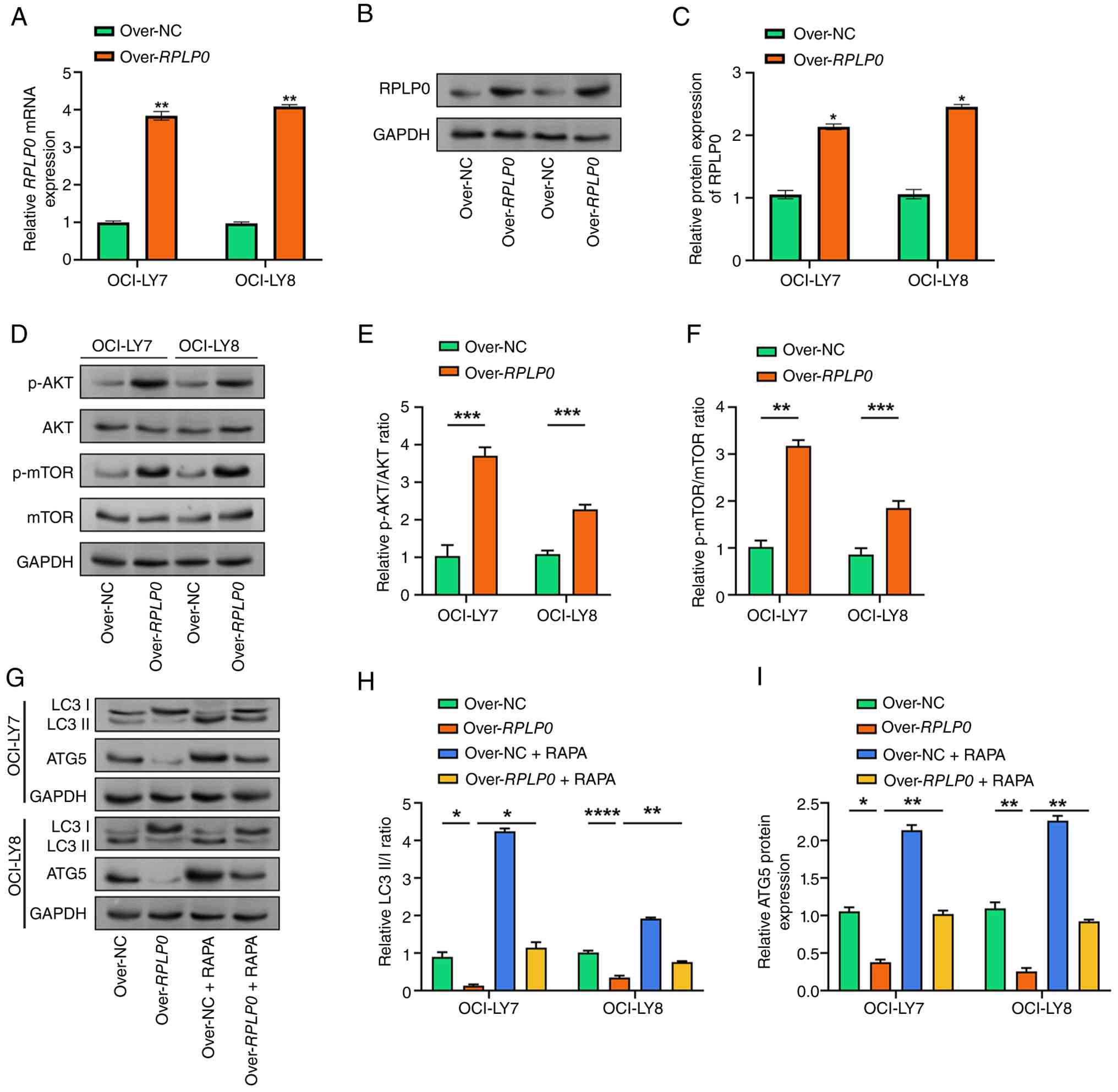
Diffuse large B‑cell lymphoma (DLBCL) is a common, aggressive subtype of non‑Hodgkin lymphoma with poor outcomes. Identifying the primary molecular causes of DLBCL remains key. The present study examined the function of ribosomal protein lateral stalk subunit P0 (RPLP0) in DLBCL pathogenesis. The Cancer Genome Atlas‑DLBCL and GSE12453 datasets overlapping differentially expressed genes were identified. Hub genes were identified via protein‑protein interaction network analysis. DLBCL cells were subjected to functional tests following RPLP0 overexpression or knockdown. Reverse transcription‑quantitative PCR, western blotting, flow cytometry, transmission electron microscopy, colony formation assay and biochemical analysis were among the tests performed. N‑acetylcysteine (NAC), rapamycin (RAPA) and 3‑MA were among the medication therapies. In the DLBCL datasets, six ribosome‑associated genes were differentially expressed. RPLP0 knockdown inhibited the proliferation of DLBCL cells and caused G2‑phase arrest, without impacting apoptosis. Thioredoxin, heat shock protein family A member 1A and heat shock protein family B member 1 expression was downregulated by RPLP0 knockdown, which also increased the NAD+/NADH ratio, promoted reactive oxygen species (ROS) accumulation and caused mitochondrial membrane potential depolarization. Meanwhile, 3‑MA reversed the effects of RPLP0 knockdown, which encouraged LC3‑II accumulation, autophagy‑related gene 5 (ATG5) overexpression and an increase in autophagic vesicles. Autophagy‑related indicators were decreased, and AKT/mTOR phosphorylation was increased by RPLP0 overexpression, which RAPA inhibited. NAC therapy preserved the viability of RPLP0‑silenced cells, restored p‑AKT/p‑mTOR levels and restored normal LC3 and ATG5 expression. These findings suggest that RPLP0 regulates stress‑induced autophagy through ROS‑dependent AKT/mTOR signaling and may represent a potential therapeutic target for DLBCL.
View Figures

Figure 1

Overlapping DEGs in DLBCL found in
the GSE12453 and TCGA-DLBCL datasets. (A) A volcano plot shows the
upregulated (orange) and downregulated (green) DEGs from TCGA-DLBCL
dataset. (B) The volcano plot shows the upregulated (orange) and
downregulated (green) DEGs found in the GSE12453 dataset. (C) Venn
diagram showing the overlap of upregulated DEGs between TCGA-DLBCL
and GSE12453 datasets. (D) Venn diagram illustrating the overlap of
downregulated DEGs between the two datasets. PPI network analysis
of the overlapping upregulated DEGs. The top 15 genes were selected
using the (E) MCC, (F) MNC and (G) EPC algorithms. (H) The six
candidate genes were identified from the MCC, MNC and EPC
algorithms. (I and J) Expression of the six candidate genes
(RPS11, RPL27, RPS18, RPS5,
RPLP0 and RPS3) in DLBCL and normal groups in the (I)
TCGA-DLBCL dataset and (J) GSE12453 datasets.
****P<0.0001. DLBCL, diffuse large B-cell lymphoma;
DEGs, differentially expressed genes; PPI, protein-protein
interaction; MCC, maximal clique centrality; MNC, maximum
neighborhood component; EPC, edge percolated component; TCGA, The
Cancer Genome Atlas.

Figure 2

Expression and knockdown efficiency
of RPLP0 in DLBCL cell lines. (A) RT-qPCR analysis of
RPLP0 expression in the GM12878 (normal B cell), OCI-LY7,
OCI-LY8 and U2932 cell lines. (B and C) WB analysis of RPLP0
expression in the GM12878 (normal B cell), OCI-LY7, OCI-LY8 and
U2932 cell lines. Knockdown of RPLP0 using three different
siRNA constructs (si-RPLP0-1, si-RPLP0-2 and
si-RPLP0-3) in (D) OCI-LY7 and (E) OCI-LY8 cells. The
efficiency of RPLP0 knockdown was assessed by RT-qPCR. The
x-axis represents the siRNA constructs used (si-RPLP0-1,
si-RPLP0-2 and si-RPLP0-3), and the y-axis shows
relative mRNA levels. (F) The efficiency of RPLP0 knockdown
was assessed by WB. The y-axis shows relative protein levels in (G)
OCI-LY7 and (H) OCI-LY8. *P<0.05,
**P<0.01 and ***P<0.001. DLBCL, diffuse
large B-cell lymphoma; RT-qPCR, reverse transcription-quantitative
PCR; WB, western blot; si, small interfering RNA; NC, negative
control.

Figure 3

Effects of RPLP0 knockdown on
cell proliferation, cell cycle distribution and apoptosis in
OCI-LY7 and OCI-LY8 cell lines. (A) Colony formation assay
assessing the proliferative capacity of OCI-LY7 and OCI-LY8 cells
following RPLP0 knockdown. (B) The x-axis represents the
different groups (si-NC vs. si-RPLP0-1) and the y-axis shows
the number of colonies formed. (C) Cell cycle analysis by flow
cytometry in OCI-LY7 and OCI-LY8 cells after RPLP0
knockdown. (D) The x-axis represents the cell cycle phases
(G1, S and G2), and the y-axis represents the
percentage of cells in each phase. (E) Apoptosis analysis by flow
cytometry in OCI-LY7 and OCI-LY8 cells after RPLP0
knockdown. (F) Quantification of the apoptosis rate in the
indicated groups (si-NC, si-RPLP0-1).
**P<0.01. ns, not significant; si, small interfering
RNA; NC, negative control; RPLP0, ribosomal protein lateral stalk
subunit P0.

Figure 4

Effects of RPLP0 knockdown on
oxidative stress and mitochondrial function in OCI-LY7 and OCI-LY8
cell lines. (A) Representative western blotting images showing the
expression of TXN, HSPA1A and HSPB1 in OCI-LY7 and OCI-LY8 cells
following RPLP0 knockdown. GAPDH was used as the loading
control. (B) Quantitative analysis of TXN, HSPA1A and HSPB1 protein
expression in OCI-LY7 cells. (C) Quantitative analysis of TXN,
HSPA1A and HSPB1 protein expression in OCI-LY8 cells. (D)
Measurement of the NAD+/NADH ratio in OCI-LY7 and
OCI-LY8 cells following si-RPLP0-1 transfection. The x-axis
represents the treatment groups (si-NC vs. si-RPLP0-1) and
the y-axis shows the NAD+/NADH ratio. (E) Mitochondrial
membrane potential analysis by JC-1 staining in
RPLP0-knockdown OCI-LY7 and OCI-LY8 cell. Scale bar: 50 µm.
(F) Quantitative analysis of the JC-1 red/green fluorescence ratio.
(G) ROS levels in OCI-LY7 and OCI-LY8 cells following
si-RPLP0-1 transfection, measured by
7'-dichlorodihydrofluorescein diacetate fluorescence. Scale bar, 50
µm. (H) Quantitative analysis of relative reactive oxygen species
fluorescence intensity. *P<0.05,
**P<0.01 and ***P<0.001. ROS, reactive
oxygen species; si, small interfering RNA; NC, negative control;
RPLP0, ribosomal protein lateral stalk subunit P0; TXN,
thioredoxin; HSPA1A, heat shock protein family A member 1A; HSPB1,
heat shock protein family B member 1.

Figure 5

Impact of RPLP0 knockdown on
autophagy markers, mitochondrial morphology and the effects of 3-MA
treatment in OCI-LY7 and OCI-LY8 cells. (A) WB analysis of
autophagy-related proteins LC3 and ATG5 in OCI-LY7 and OCI-LY8
cells transfected with si-RPLP0-1. (B) Quantitative analysis
of the LC3-II/LC3-I ratio in OCI-LY7 and OCI-LY8 cells. (C)
Quantitative analysis of ATG5 protein expression in OCI-LY7 and
OCI-LY8 cells. (D) Transmission electron microscopy images showing
increased autophagic vacuoles in RPLP0-silenced cells
compared with controls, with (E) quantitative analysis of the
number of autolysosomes per field. Scale bar, 2 µm. (F) WB analysis
of LC3-I, LC3-II, cleaved Caspase-3 and Caspase-3 expression in
OCI-LY7 and OCI-LY8 cells treated with 3-MA (5 mM) following
si-RPLP0-1 transfection. (G) Quantitative analysis of the
LC3-II/LC3-I ratio in the indicated treatment groups. (H)
Quantitative analysis of Caspase-3 protein expression in the
indicated treatment groups. *P<0.05,
**P<0.01, ***P<0.001,
****P<0.0001 and ns, not significant. WB, western
blotting; 3-MA, 3-methyladenine; RPLP0, ribosomal protein
lateral stalk subunit P0; si, small interfering RNA; NC, negative
control; ATG5, autophagy-related gene 5.

Figure 6

Effects of RPLP0
overexpression on the AKT/mTOR pathway and autophagy in OCI-LY7 and
OCI-LY8 cell lines. (A) RT-qPCR analysis of RPLP0 expression
in OCI-LY7 and OCI-LY8 cells transfected with the RPLP0
overexpression plasmid. The x-axis represents the treatment groups,
and the y-axis shows relative mRNA expression levels. (B) WB
analysis of RPLP0 expression in OCI-LY7 and OCI-LY8 cells
transfected with the RPLP0 overexpression plasmid. (C)
Quantitative analysis of RPLP0 protein expression in OCI-LY7 and
OCI-LY8 cells. (D) Representative WB images showing the expression
of phosphorylated AKT, total AKT, phosphorylated mTOR and total
mTOR in OCI-LY7 and OCI-LY8 cells following RPLP0
overexpression. GAPDH was used as the loading control. (E)
Quantitative analysis of the phosphorylated AKT/total AKT ratio.
(F) Quantitative analysis of the phosphorylated mTOR/total mTOR
ratio. (G) Representative WB images showing LC3-I, LC3-II and ATG5
expression in OCI-LY7 and OCI-LY8 cells following RPLP0
overexpression, with or without RAPA treatment (25 nM). GAPDH was
used as the loading control. (H) Quantitative analysis of the
LC3-II/LC3-I ratio in the indicated treatment groups. (I)
Quantitative analysis of ATG5 protein expression in the indicated
treatment groups. *P<0.05, **P<0.01,
***P<0.001 and ****P<0.0001. RT-qPCR,
reverse transcription-quantitative PCR; RAPA; rapamycin, WB,
western blotting; ATG5, autophagy-related gene 5.

Figure 7

Effects of RPLP0 knockdown and
NAC treatment on AKT/mTOR signaling, autophagy, and cell viability
in DLBCL cell lines. (A) Representative WB images and quantitative
analysis of AKT/mTOR pathway-related proteins in OCI-LY7 and
OCI-LY8 cells after RPLP0 knockdown, with or without NAC
treatment (5 mM). (B) Quantitative analysis of the phosphorylated
AKT/total AKT ratio in the indicated treatment groups. (C)
Quantitative analysis of the phosphorylated mTOR/total mTOR ratio
in the indicated treatment groups. (D) Representative WB images and
quantitative analysis of LC3 and autophagy-related gene 5
expression in OCI-LY7 and OCI-LY8 cells after RPLP0
knockdown, with or without NAC treatment. (E) Quantitative analysis
of the LC3-II/LC3-I ratio in the indicated treatment groups. (F)
Quantitative analysis of autophagy-related protein 5 expression in
the indicated treatment groups. (G and H) Cell viability analysis
using CCK-8 assays in (G) OCI-LY7 and (H) OCI-LY8 cells following
RPLP0 knockdown and NAC treatment. The x-axis represents the
treatment groups, and the y-axis shows relative cell viability.
*P<0.05, **P<0.01,
***P<0.001 and ****P<0.0001. DLBCL,
diffuse large B-cell lymphoma; WB, western blot; NAC,
N-acetyl-L-cysteine; CCK-8, Cell Counting Kit-8; RPLP0, ribosomal
protein lateral stalk subunit P0; si, small interfering RNA; NC,
negative control; p-, phosphorylated.
View References

1 

Shi X, Zhuo H, Du Y, Nyhan K, Ioannidis J and Wallach JD: Environmental risk factors for non-Hodgkin's lymphoma: Umbrella review and comparison of meta-analyses of summary and individual participant data. BMJ Med. 1(e000184)2022.PubMed/NCBI View Article : Google Scholar

2 

Chu Y, Liu Y, Fang X, Jiang Y, Ding M, Ge X, Yuan D, Lu K, Li P, Li Y, et al: The epidemiological patterns of non-Hodgkin lymphoma: Global estimates of disease burden, risk factors, and temporal trends. Front Oncol. 13(1059914)2023.PubMed/NCBI View Article : Google Scholar

3 

Mafra A, Laversanne M, Gospodarowicz M, Klinger P, De Paula Silva N, Piñeros M, Piñeros M, Steliarova-Foucher E, Bray F and Znaor A: Global patterns of non-Hodgkin lymphoma in 2020. Int J Cancer. 151:1474–1481. 2022.PubMed/NCBI View Article : Google Scholar

4 

Garg M, Takyar J, Dhawan A, Saggu G, Agrawal N, Hall A, Raut M and Ryland KE: Diffuse large B-cell lymphoma (DLBCL): A structured literature review of the epidemiology, treatment guidelines, and real-world treatment patterns. Blood. 140 (Suppl 1):S12106–S12107. 2022.

5 

Berhan A, Almaw A, Damtie S and Solomon Y: Diffuse large B cell lymphoma (DLBCL): Epidemiology, pathophysiology, risk stratification, advancement in diagnostic approaches and prospects: Narrative review. Discov Oncol. 16(184)2025.PubMed/NCBI View Article : Google Scholar

6 

He MY and Kridel R: Treatment resistance in diffuse large B-cell lymphoma. Leukemia. 35:2151–2165. 2021.PubMed/NCBI View Article : Google Scholar

7 

Walker JS, Wenzl K, Novak JP, Stokes ME, Hopper MA, Dropik AR, Siminski MS, Bock AM, Sarangi V, Ortiz M, et al: Integrated genomics with refined cell-of-origin subtyping distinguishes subtype-specific mechanisms of treatment resistance and relapse in diffuse large B-cell lymphoma. Blood Cancer J. 15(120)2025.PubMed/NCBI View Article : Google Scholar

8 

Candelaria M and Dueñas-Gonzalez A: Rituximab in combination with cyclophosphamide, doxorubicin, vincristine, and prednisone (R-CHOP) in diffuse large B-cell lymphoma. Ther Adv Hematol. 12(2040620721989579)2021.PubMed/NCBI View Article : Google Scholar

9 

Susanibar-Adaniya S and Barta SK: 2021 Update on diffuse large B cell lymphoma: A review of current data and potential applications on risk stratification and management. Am J Hematol. 96:617–629. 2021.PubMed/NCBI View Article : Google Scholar

10 

Vietri M, Miranda MR, Amodio G, Ciaglia T, Bertamino A, Campiglia P, Remondelli P, Vestuto V and Moltedo O: The link between endoplasmic reticulum stress and lysosomal dysfunction under oxidative stress in cancer cells. Biomolecules. 15(930)2025.PubMed/NCBI View Article : Google Scholar

11 

Zuo H, Chen C and Sa Y: Therapeutic potential of autophagy in immunity and inflammation: Current and future perspectives. Pharmacol Rep. 75:499–510. 2023.PubMed/NCBI View Article : Google Scholar

12 

Xu H, Yu X, Yang Z, Song Q, Cheng S, He Z and Dai L: PAX5-activated lncRNA ARRDC1-AS1 accelerates the autophagy and progression of DLBCL through sponging miR-2355-5p to regulate ATG5. Life Sci. 286(119932)2021.PubMed/NCBI View Article : Google Scholar

13 

Kong YL, Pan BH, Liang JH, Zhu HY, Wang L, Xia Y, Wu JZ, Fan L, Li JY and Xu W: Chidamide, a histone deacetylase inhibitor, inhibits autophagy and exhibits therapeutic implication in chronic lymphocytic leukemia. Aging (Albany NY). 12:16083–16098. 2020.PubMed/NCBI View Article : Google Scholar

14 

Mouhssine S, Maher N, Matti BF, Alwan AF and Gaidano G: Targeting BTK in B cell malignancies: From mode of action to resistance mechanisms. Int J Mol Sci. 25(3234)2024.PubMed/NCBI View Article : Google Scholar

15 

Yan B, Guo J, Lai W, Chen Y, Wang Z, Peng Y and Chang S: The multifaceted roles of ribosomal P. complex in cancer. World J Surg Oncol. 23(388)2025.PubMed/NCBI View Article : Google Scholar

16 

Chang C and Xu M: miR-4731-5p enhances apoptosis and alleviates epithelial-mesenchymal transition through targeting RPLP0 in non-small-cell lung cancer. J Oncol. 2022(3793318)2022.PubMed/NCBI View Article : Google Scholar

17 

Pérez-Gómez JM, Porcel-Pastrana F, De La Luz-Borrero M, Montero-Hidalgo AJ, Gómez-Gómez E, Herrera-Martínez AD, Guzmán-Ruiz R, Malagón MM, Gahete MD and Luque RM: LRP10, PGK1 and RPLP0: Best reference genes in periprostatic adipose tissue under obesity and prostate cancer conditions. Int J Mol Sci. 24(15140)2023.PubMed/NCBI View Article : Google Scholar

18 

Zhou J, Li XY, Liu YJ, Feng J, Wu Y, Shen HM and Lu GD: Full-coverage regulations of autophagy by ROS: From induction to maturation. Autophagy. 18:1240–1255. 2022.PubMed/NCBI View Article : Google Scholar

19 

Omolekan TO, Chamcheu JC, Buerger C and Huang S: PI3K/AKT/mTOR signaling network in human health and diseases. Cells. 13(1500)2024.PubMed/NCBI View Article : Google Scholar

20 

Gomez Solsona B, Horn H, Schmitt A, Xu W, Bucher P, Heinrich A, Kalmbach S, Kreienkamp N, Franke M, Wimmers F, et al: Inhibition of glutaminase-1 in DLBCL potentiates venetoclax-induced antitumor activity by promoting oxidative stress. Blood Adv. 7:7433–7444. 2023.PubMed/NCBI View Article : Google Scholar

21 

Caserta S, Martino EA, Skafi M, Alvaro ME, Bruzzese A, Amodio N, Lucia E, Olivito V, Labanca C, Mendicino F, et al: Management of primary refractory diffuse large B-cell lymphoma in patients unsuitable for CAR T-cell therapy. Eur J Haematol. 116:771–784. 2026.PubMed/NCBI View Article : Google Scholar

22 

Brune V, Tiacci E, Pfeil I, Döring C, Eckerle S, Van Noesel CJ, Klapper W, Falini B, von Heydebreck A, Metzler D, et al: Origin and pathogenesis of nodular lymphocyte-predominant Hodgkin lymphoma as revealed by global gene expression analysis. J Exp Med. 205:2251–2268. 2008.PubMed/NCBI View Article : Google Scholar

23 

Ritchie ME, Phipson B, Wu D, Hu Y, Law CW, Shi W and Smyth GK: limma powers differential expression analyses for RNA-sequencing and microarray studies. Nucleic Acids Res. 43(e47)2015.PubMed/NCBI View Article : Google Scholar

24 

Hata A and Hayama M: Selection of RT-PCR assays and reliability of viral gene detection in water samples containing RT-PCR inhibitors. Water Air Soil Pollut. 236(618)2025.

25 

Livak KJ and Schmittgen TD: Analysis of relative gene expression data using real-time quantitative PCR and the 2(-Delta Delta C(T)) method. Methods. 25:402–408. 2001.PubMed/NCBI View Article : Google Scholar

26 

Xiang Y, Zheng Y, Liu S, Liu G, Li Z and Dong W: Comparison of the sensitivity of western blotting between PVDF and NC membranes. Sci Rep. 11(12022)2021.PubMed/NCBI View Article : Google Scholar

27 

Bram Ednersson S, Stenson M, Stern M, Enblad G, Fagman H, Nilsson-Ehle H, Hasselblom S and Andersson PO: Expression of ribosomal and actin network proteins and immunochemotherapy resistance in diffuse large B cell lymphoma patients. Br J Haematol. 181:770–781. 2018.PubMed/NCBI View Article : Google Scholar

28 

Hagner PR, Mazan-Mamczarz K, Dai B, Balzer EM, Corl S, Martin SS, Zhao XF and Gartenhaus RB: Ribosomal protein S6 is highly expressed in non-Hodgkin lymphoma and associates with mRNA containing a 5' terminal oligopyrimidine tract. Oncogene. 30:1531–1541. 2011.PubMed/NCBI View Article : Google Scholar

29 

Liang ZX, Liu HS, Xiong L, Yang X, Wang FW, Zeng ZW, He XW, Wu XR and Lan P: A novel NF-κB regulator encoded by circPLCE1 inhibits colorectal carcinoma progression by promoting RPS3 ubiquitin-dependent degradation. Mol Cancer. 20(103)2021.PubMed/NCBI View Article : Google Scholar

30 

Park SY, Seo D, Jeon EH, Park JY, Jang BC, Kim JI, Im SS, Lee JH, Kim S, Cho CH and Lee YH: RPL27 contributes to colorectal cancer proliferation and stemness via PLK1 signaling. Int J Oncol. 63(93)2023.PubMed/NCBI View Article : Google Scholar

31 

Xu C, Lu Z, Hou G and Zhu M: Exploring the function and prognostic value of RPLP0, RPLP1 and RPLP2 expression in lung adenocarcinoma. J Mol Histol. 55:1079–11091. 2024.PubMed/NCBI View Article : Google Scholar

32 

Teller A, Jechorek D, Hartig R, Adolf D, Reißig K, Roessner A and Franke S: Dysregulation of apoptotic signaling pathways by interaction of RPLP0 and cathepsin X/Z in gastric cancer. Pathol Res Pract. 211:62–70. 2015.PubMed/NCBI View Article : Google Scholar

33 

Lin D, Fu R, Xi E and Bai Y (eds): Computational prediction of biological signatures for candidate driver genes associated with ovarian cancer. 2021 IEEE International Conference on Bioinformatics and Biomedicine (BIBM). IEEE, 2021.

34 

Wang CH, Wang LK, Wu CC, Chen ML, Lee MC, Lin YY and Tsai FM: The ribosomal protein RPLP0 mediates PLAAT4-induced cell cycle arrest and cell apoptosis. Cell Biochem Biophys. 77:253–260. 2019.PubMed/NCBI View Article : Google Scholar

35 

Murphy MP, Bayir H, Belousov V, Chang CJ, Davies KJA, Davies MJ, Dick TP, Finkel T, Forman HJ, Janssen-Heininger Y, et al: Guidelines for measuring reactive oxygen species and oxidative damage in cells and in vivo. Nat Metab. 4:651–662. 2022.PubMed/NCBI View Article : Google Scholar

36 

Wu C, Chen S, Wu Z, Xue J, Zhang W, Wang S, Zhao X and Wu S: Chidamide and orelabrutinib synergistically induce cell cycle arrest and apoptosis in diffuse large B-cell lymphoma by regulating the PI3K/AKT/mTOR pathway. J Cancer Res Clin Oncol. 150(98)2024.PubMed/NCBI View Article : Google Scholar

37 

Muri J and Kopf M: The thioredoxin system: Balancing redox responses in immune cells and tumors. Eur J Immunol. 53(e2249948)2023.PubMed/NCBI View Article : Google Scholar

38 

Kumari B: Cellular stress responses and associated diseases: A focus on heat shock proteins. Cell Biochem Biophys. 83:2793–2804. 2025.PubMed/NCBI View Article : Google Scholar

39 

Bonavita R, Vitale F, Verdicchio LV, Williams SV, Caporaso MG, Fleming A and Renna M: Small HSPs at the crossroad between protein aggregation, autophagy and unconventional secretion: Clinical implications and potential therapeutic opportunities in the context of neurodegenerative diseases. Front Cell Dev Biol. 13(1538377)2025.PubMed/NCBI View Article : Google Scholar

40 

Feng Q, Hu K, Hu H, Lu Y, Zhang H, Wang G, Zhang Q, Xu Z, Gao X, Jia X, et al: Berberine derivative DCZ0358 induce oxidative damage by ROS-mediated JNK signaling in DLBCL cells. Int Immunopharmacol. 125(111139)2023.PubMed/NCBI View Article : Google Scholar

41 

Du X, Wei H, Zhang B, Pang LK, Zhao R, Zhang XD and Yao W: Unveiling the prognostic implications of RPLP1 upregulation in osteosarcoma. Am J Cancer Res. 13:4822–4831. 2023.PubMed/NCBI

42 

Meng Y, Yuan L, Meng G, Huang H, Huang X, Xu X and Peng X: c-Myc-regulated RPLP0 via the ROS-mediated JAK2/STAT3 positive feedback loop facilitates hepatocellular carcinoma malignancy progression. Int J Oncol. 68(13)2026.PubMed/NCBI View Article : Google Scholar

43 

Liu X, Hussain R, Mehmood K, Tang Z, Zhang H and Li Y: Mitochondrial-endoplasmic reticulum communication-mediated oxidative stress and autophagy. Biomed Res Int. 2022(6459585)2022.PubMed/NCBI View Article : Google Scholar

44 

Prakash R, Fauzia E, Siddiqui AJ, Yadav SK, Kumari N, Shams MT, Naeem A, Praharaj PP, Khan MA, Bhutia SK, et al: Oxidative stress-induced autophagy compromises stem cell viability. Stem Cells. 40:468–478. 2022.PubMed/NCBI View Article : Google Scholar

45 

Zhang YL, Ma MX, Xing LN, Zhang JN, Guo XN and Qiao SK: Downregulation of autophagy is associated with poor clinical outcome after immunochemotherapy in patients with diffuse large B-cell lymphoma. Exp Hematol. 139(104638)2024.PubMed/NCBI View Article : Google Scholar

46 

Chen Y, Wang F, Wu P, Gong S, Gao J, Tao H, Shen Q, Wang S, Zhou Z and Jia Y: Artesunate induces apoptosis, autophagy and ferroptosis in diffuse large B cell lymphoma cells by impairing STAT3 signaling. Cell Signal. 88(110167)2021.PubMed/NCBI View Article : Google Scholar

47 

Iriondo MN, Etxaniz A, Varela YR, Ballesteros U, Hervás JH, Montes LR, Goñi FM and Alonso A: LC3 subfamily in cardiolipin-mediated mitophagy: A comparison of the LC3A, LC3B and LC3C homologs. Autophagy. 18:2985–3003. 2022.PubMed/NCBI View Article : Google Scholar

48 

Wei F, Qin N, Chen Y, Liu Z, Zhao X, Yu X, Feng Z, Wang Y, Yang A and Cui H: ATG16L1 membrane recruitment in autophagy. Crit Rev Biochem Mol Biol. 60:107–122. 2025.PubMed/NCBI View Article : Google Scholar

49 

Huang J, Chen L, Wu J, Ai D, Zhang JQ, Chen TG and Wang L: Targeting the PI3K/AKT/mTOR signaling pathway in the treatment of human diseases: Current status, trends, and solutions. J Med Chem. 65:16033–16061. 2022.PubMed/NCBI View Article : Google Scholar

50 

Yi X, Zhang C, Liu B, Gao G, Tang Y, Lu Y, Pan Z, Wang G and Feng W: Ribosomal protein L22-like1 promotes prostate cancer progression by activating PI3K/Akt/mTOR signalling pathway. J Cell Mol Med. 27:403–411. 2023.PubMed/NCBI View Article : Google Scholar

51 

Liu L, Wu Y, Liu K, Zhu M, Guang S, Wang F, Liu X, Yao X, He J and Fu C: The absence of the ribosomal protein Rpl2702 elicits the MAPK-mTOR signaling to modulate mitochondrial morphology and functions. Redox Biol. 73(103174)2024.PubMed/NCBI View Article : Google Scholar

52 

Wang G, Liu H, An L, Hou S and Zhang Q: CAPG facilitates diffuse large B-cell lymphoma cell progression through PI3K/AKT signaling pathway. Hum Immunol. 83:832–842. 2022.PubMed/NCBI View Article : Google Scholar

53 

Li J, Chen X, Kang R, Zeh H, Klionsky DJ and Tang D: Regulation and function of autophagy in pancreatic cancer. Autophagy. 17:3275–3296. 2021.PubMed/NCBI View Article : Google Scholar

54 

Du J, Ye T, Li P, Yu Y, Fan F, Zhang R and Shen N: Plumbagin induces apoptosis in diffuse large B-cell lymphoma by modulating the ROS-PI3K-Akt-mTOR signaling pathway. Crit Rev Eukaryot Gene Expr. 35:13–25. 2025.PubMed/NCBI View Article : Google Scholar

Related Articles

  • Abstract
  • View
  • Download
  • Twitter
Copy and paste a formatted citation
Spandidos Publications style
Wang S, Yang X, Mcgowan R, Hodge B, Shan D, Miller N and Tang J: <em>RPLP0</em> drives diffuse large B‑cell lymphoma cell proliferation through reactive oxygen species‑dependent AKT/mTOR activation and inhibition of stress‑induced autophagy. Exp Ther Med 32: 269, 2026.
APA
Wang, S., Yang, X., Mcgowan, R., Hodge, B., Shan, D., Miller, N., & Tang, J. (2026). <em>RPLP0</em> drives diffuse large B‑cell lymphoma cell proliferation through reactive oxygen species‑dependent AKT/mTOR activation and inhibition of stress‑induced autophagy. Experimental and Therapeutic Medicine, 32, 269. https://doi.org/10.3892/etm.2026.13264
MLA
Wang, S., Yang, X., Mcgowan, R., Hodge, B., Shan, D., Miller, N., Tang, J."<em>RPLP0</em> drives diffuse large B‑cell lymphoma cell proliferation through reactive oxygen species‑dependent AKT/mTOR activation and inhibition of stress‑induced autophagy". Experimental and Therapeutic Medicine 32.4 (2026): 269.
Chicago
Wang, S., Yang, X., Mcgowan, R., Hodge, B., Shan, D., Miller, N., Tang, J."<em>RPLP0</em> drives diffuse large B‑cell lymphoma cell proliferation through reactive oxygen species‑dependent AKT/mTOR activation and inhibition of stress‑induced autophagy". Experimental and Therapeutic Medicine 32, no. 4 (2026): 269. https://doi.org/10.3892/etm.2026.13264
Copy and paste a formatted citation
x
Spandidos Publications style
Wang S, Yang X, Mcgowan R, Hodge B, Shan D, Miller N and Tang J: <em>RPLP0</em> drives diffuse large B‑cell lymphoma cell proliferation through reactive oxygen species‑dependent AKT/mTOR activation and inhibition of stress‑induced autophagy. Exp Ther Med 32: 269, 2026.
APA
Wang, S., Yang, X., Mcgowan, R., Hodge, B., Shan, D., Miller, N., & Tang, J. (2026). <em>RPLP0</em> drives diffuse large B‑cell lymphoma cell proliferation through reactive oxygen species‑dependent AKT/mTOR activation and inhibition of stress‑induced autophagy. Experimental and Therapeutic Medicine, 32, 269. https://doi.org/10.3892/etm.2026.13264
MLA
Wang, S., Yang, X., Mcgowan, R., Hodge, B., Shan, D., Miller, N., Tang, J."<em>RPLP0</em> drives diffuse large B‑cell lymphoma cell proliferation through reactive oxygen species‑dependent AKT/mTOR activation and inhibition of stress‑induced autophagy". Experimental and Therapeutic Medicine 32.4 (2026): 269.
Chicago
Wang, S., Yang, X., Mcgowan, R., Hodge, B., Shan, D., Miller, N., Tang, J."<em>RPLP0</em> drives diffuse large B‑cell lymphoma cell proliferation through reactive oxygen species‑dependent AKT/mTOR activation and inhibition of stress‑induced autophagy". Experimental and Therapeutic Medicine 32, no. 4 (2026): 269. https://doi.org/10.3892/etm.2026.13264
Follow us
  • Twitter
  • LinkedIn
  • Facebook
About
  • Spandidos Publications
  • Careers
  • Cookie Policy
  • Privacy Policy
How can we help?
  • Help
  • Live Chat
  • Contact
  • Email to our Support Team