Spandidos Publications Logo
  • About
    • About Spandidos
    • Aims and Scopes
    • Abstracting and Indexing
    • Editorial Policies
    • Reprints and Permissions
    • Job Opportunities
    • Terms and Conditions
    • Contact
  • Journals
    • All Journals
    • Oncology Letters
      • Oncology Letters
      • Information for Authors
      • Editorial Policies
      • Editorial Board
      • Aims and Scope
      • Abstracting and Indexing
      • Bibliographic Information
      • Archive
    • International Journal of Oncology
      • International Journal of Oncology
      • Information for Authors
      • Editorial Policies
      • Editorial Board
      • Aims and Scope
      • Abstracting and Indexing
      • Bibliographic Information
      • Archive
    • Molecular and Clinical Oncology
      • Molecular and Clinical Oncology
      • Information for Authors
      • Editorial Policies
      • Editorial Board
      • Aims and Scope
      • Abstracting and Indexing
      • Bibliographic Information
      • Archive
    • Experimental and Therapeutic Medicine
      • Experimental and Therapeutic Medicine
      • Information for Authors
      • Editorial Policies
      • Editorial Board
      • Aims and Scope
      • Abstracting and Indexing
      • Bibliographic Information
      • Archive
    • International Journal of Molecular Medicine
      • International Journal of Molecular Medicine
      • Information for Authors
      • Editorial Policies
      • Editorial Board
      • Aims and Scope
      • Abstracting and Indexing
      • Bibliographic Information
      • Archive
    • Biomedical Reports
      • Biomedical Reports
      • Information for Authors
      • Editorial Policies
      • Editorial Board
      • Aims and Scope
      • Abstracting and Indexing
      • Bibliographic Information
      • Archive
    • Oncology Reports
      • Oncology Reports
      • Information for Authors
      • Editorial Policies
      • Editorial Board
      • Aims and Scope
      • Abstracting and Indexing
      • Bibliographic Information
      • Archive
    • Molecular Medicine Reports
      • Molecular Medicine Reports
      • Information for Authors
      • Editorial Policies
      • Editorial Board
      • Aims and Scope
      • Abstracting and Indexing
      • Bibliographic Information
      • Archive
    • World Academy of Sciences Journal
      • World Academy of Sciences Journal
      • Information for Authors
      • Editorial Policies
      • Editorial Board
      • Aims and Scope
      • Abstracting and Indexing
      • Bibliographic Information
      • Archive
    • International Journal of Functional Nutrition
      • International Journal of Functional Nutrition
      • Information for Authors
      • Editorial Policies
      • Editorial Board
      • Aims and Scope
      • Abstracting and Indexing
      • Bibliographic Information
      • Archive
    • International Journal of Epigenetics
      • International Journal of Epigenetics
      • Information for Authors
      • Editorial Policies
      • Editorial Board
      • Aims and Scope
      • Abstracting and Indexing
      • Bibliographic Information
      • Archive
    • Medicine International
      • Medicine International
      • Information for Authors
      • Editorial Policies
      • Editorial Board
      • Aims and Scope
      • Abstracting and Indexing
      • Bibliographic Information
      • Archive
  • Articles
  • Information
    • Information for Authors
    • Information for Reviewers
    • Information for Librarians
    • Information for Advertisers
    • Conferences
  • Language Editing
Spandidos Publications Logo
  • About
    • About Spandidos
    • Aims and Scopes
    • Abstracting and Indexing
    • Editorial Policies
    • Reprints and Permissions
    • Job Opportunities
    • Terms and Conditions
    • Contact
  • Journals
    • All Journals
    • Biomedical Reports
      • Information for Authors
      • Editorial Policies
      • Editorial Board
      • Aims and Scope
      • Abstracting and Indexing
      • Bibliographic Information
      • Archive
    • Experimental and Therapeutic Medicine
      • Information for Authors
      • Editorial Policies
      • Editorial Board
      • Aims and Scope
      • Abstracting and Indexing
      • Bibliographic Information
      • Archive
    • International Journal of Epigenetics
      • Information for Authors
      • Editorial Policies
      • Editorial Board
      • Aims and Scope
      • Abstracting and Indexing
      • Bibliographic Information
      • Archive
    • International Journal of Functional Nutrition
      • Information for Authors
      • Editorial Policies
      • Editorial Board
      • Aims and Scope
      • Abstracting and Indexing
      • Bibliographic Information
      • Archive
    • International Journal of Molecular Medicine
      • Information for Authors
      • Editorial Policies
      • Editorial Board
      • Aims and Scope
      • Abstracting and Indexing
      • Bibliographic Information
      • Archive
    • International Journal of Oncology
      • Information for Authors
      • Editorial Policies
      • Editorial Board
      • Aims and Scope
      • Abstracting and Indexing
      • Bibliographic Information
      • Archive
    • Medicine International
      • Information for Authors
      • Editorial Policies
      • Editorial Board
      • Aims and Scope
      • Abstracting and Indexing
      • Bibliographic Information
      • Archive
    • Molecular and Clinical Oncology
      • Information for Authors
      • Editorial Policies
      • Editorial Board
      • Aims and Scope
      • Abstracting and Indexing
      • Bibliographic Information
      • Archive
    • Molecular Medicine Reports
      • Information for Authors
      • Editorial Policies
      • Editorial Board
      • Aims and Scope
      • Abstracting and Indexing
      • Bibliographic Information
      • Archive
    • Oncology Letters
      • Information for Authors
      • Editorial Policies
      • Editorial Board
      • Aims and Scope
      • Abstracting and Indexing
      • Bibliographic Information
      • Archive
    • Oncology Reports
      • Information for Authors
      • Editorial Policies
      • Editorial Board
      • Aims and Scope
      • Abstracting and Indexing
      • Bibliographic Information
      • Archive
    • World Academy of Sciences Journal
      • Information for Authors
      • Editorial Policies
      • Editorial Board
      • Aims and Scope
      • Abstracting and Indexing
      • Bibliographic Information
      • Archive
  • Articles
  • Information
    • For Authors
    • For Reviewers
    • For Librarians
    • For Advertisers
    • Conferences
  • Language Editing
Login Register Submit
  • This site uses cookies
  • You can change your cookie settings at any time by following the instructions in our Cookie Policy. To find out more, you may read our Privacy Policy.

    I agree
Search articles by DOI, keyword, author or affiliation
Search
Advanced Search
presentation
International Journal of Molecular Medicine
Join Editorial Board Propose a Special Issue
Print ISSN: 1107-3756 Online ISSN: 1791-244X
Journal Cover
March 2013 Volume 31 Issue 3

Full Size Image

Sign up for eToc alerts
Recommend to Library

Journals

International Journal of Molecular Medicine

International Journal of Molecular Medicine

International Journal of Molecular Medicine is an international journal devoted to molecular mechanisms of human disease.

International Journal of Oncology

International Journal of Oncology

International Journal of Oncology is an international journal devoted to oncology research and cancer treatment.

Molecular Medicine Reports

Molecular Medicine Reports

Covers molecular medicine topics such as pharmacology, pathology, genetics, neuroscience, infectious diseases, molecular cardiology, and molecular surgery.

Oncology Reports

Oncology Reports

Oncology Reports is an international journal devoted to fundamental and applied research in Oncology.

Experimental and Therapeutic Medicine

Experimental and Therapeutic Medicine

Experimental and Therapeutic Medicine is an international journal devoted to laboratory and clinical medicine.

Oncology Letters

Oncology Letters

Oncology Letters is an international journal devoted to Experimental and Clinical Oncology.

Biomedical Reports

Biomedical Reports

Explores a wide range of biological and medical fields, including pharmacology, genetics, microbiology, neuroscience, and molecular cardiology.

Molecular and Clinical Oncology

Molecular and Clinical Oncology

International journal addressing all aspects of oncology research, from tumorigenesis and oncogenes to chemotherapy and metastasis.

World Academy of Sciences Journal

World Academy of Sciences Journal

Multidisciplinary open-access journal spanning biochemistry, genetics, neuroscience, environmental health, and synthetic biology.

International Journal of Functional Nutrition

International Journal of Functional Nutrition

Open-access journal combining biochemistry, pharmacology, immunology, and genetics to advance health through functional nutrition.

International Journal of Epigenetics

International Journal of Epigenetics

Publishes open-access research on using epigenetics to advance understanding and treatment of human disease.

Medicine International

Medicine International

An International Open Access Journal Devoted to General Medicine.

Journal Cover
March 2013 Volume 31 Issue 3

Full Size Image

Sign up for eToc alerts
Recommend to Library

  • Article
  • Citations
    • Cite This Article
    • Download Citation
    • Create Citation Alert
    • Remove Citation Alert
    • Cited By
  • Similar Articles
    • Related Articles (in Spandidos Publications)
    • Similar Articles (Google Scholar)
    • Similar Articles (PubMed)
  • Download PDF
  • Download XML
  • View XML
Article Open Access

Non-conventional apoptotic response to ionising radiation mediated by N-methyl D-aspartate receptors in immature neuronal cells

  • Authors:
    • Nada Samari
    • Louis De Saint-Georges
    • Giuseppe Pani
    • Sarah Baatout
    • Luc Leyns
    • Mohammed Abderrafi Benotmane
  • View Affiliations / Copyright

    Affiliations: Radiobiology Unit, Molecular and Cellular Biology Expert Group, Institute for Environment, Health and Safety, Belgian Nuclear Research Centre, SCK•CEN, B-2400 Mol, Belgium, Laboratory for Cell Genetics, Vrije Universiteit Brussel, B-1050 Brussels, Belgium
    Copyright: © Samari et al. This is an open access article distributed under the terms of Creative Commons Attribution License [CC BY_NC 3.0].
  • Pages: 516-524
    |
    Published online on: January 15, 2013
       https://doi.org/10.3892/ijmm.2013.1245
  • Expand metrics +
Metrics: Total Views: 0 (Spandidos Publications: | PMC Statistics: )
Metrics: Total PDF Downloads: 0 (Spandidos Publications: | PMC Statistics: )
Cited By (CrossRef): 0 citations Loading Articles...

This article is mentioned in:


Abstract

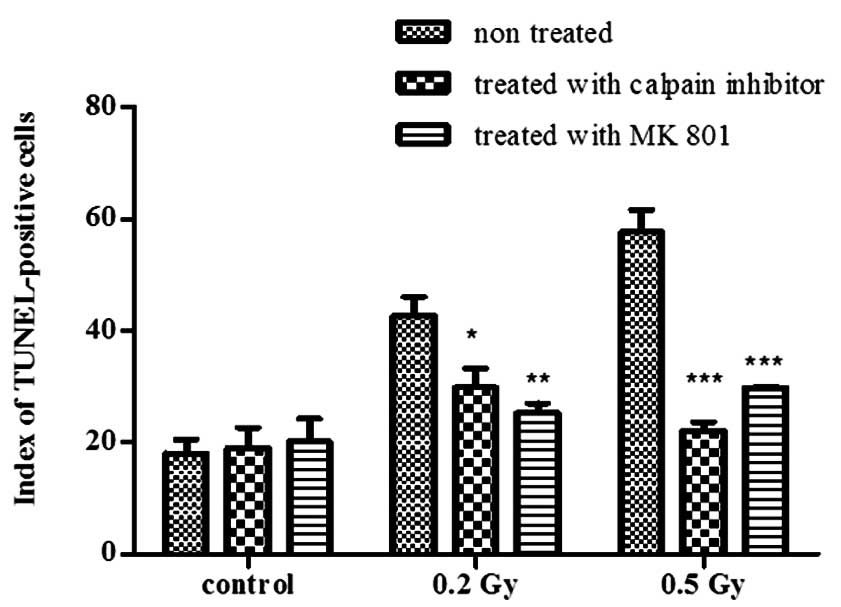
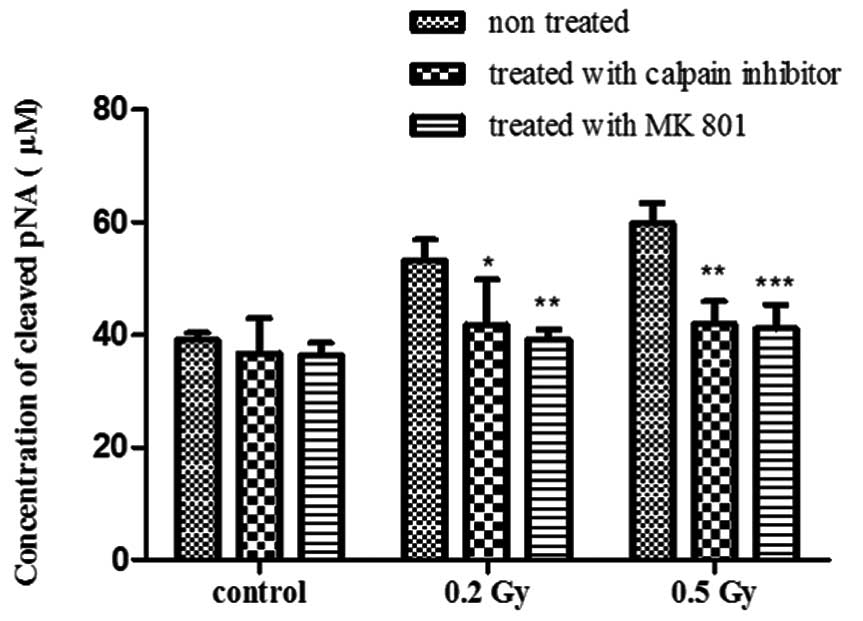
During cortical development, N-methyl D-aspartate (NMDA) receptors are highly involved in neuronal maturation and synapse establishment. Their implication in the phenomenon of excitotoxicity has been extensively described in several neurodegenerative diseases due to the permissive entry of Ca2+ ions and massive accumulation in the intracellular compartment, which is highly toxic to cells. Ionising radiation is also a source of stress to the cells, particularly immature neurons. Their capacity to induce cell death has been described for various cell types either by directly damaging the DNA or indirectly through the generation of reactive oxygen species responsible for the activation of a battery of stress response effectors leading in certain cases, to cell death. In this study, in order to determine whether a link exists between NMDA receptors-mediated excitotoxicity and radiation-induced cell death, we evaluated radiation-induced cell death in vitro and in vivo in maturing neurons during the fetal period. Cell death induction was assessed by TUNEL, caspase-3 activity and DNA ladder assays, with or without the administration of dizocilpine (MK-801), a non-competitive NMDA receptor antagonist which blocks neuronal Ca2+ influx. To further investigate the possible involvement of Ca2+-dependent enzyme activation, known to occur at high Ca2+ concentrations, we examined the protective effect of a calpain inhibitor on cell death induced by radiation. Doses ranging from 0.2 to 0.6 Gy of X-rays elicited a clear apoptotic response that was prevented by the injection of dizocilpine (MK-801) or calpain inhibitor. These data demonstrate the involvement of NMDA receptors in radiation-induced neuronal death by the activation of downstream effectors, including calpain-related pathways. An increased apoptotic process elicited by radiation, occurring independently of the normal developmental scheme, may eliminate post-mitotic but immature neuronal cells and deeply impair the establishment of the neuronal network, which in the case of cortical development is critical for cognitive capacities.
View Figures

Figure 1

Figure 2

Figure 3

Figure 4

Figure 5

Figure 6

View References

1 

Li YQ, Jay V and Wong CS: Oligodendrocytes in the adult rat spinal cord undergo radiation-induced apoptosis. Cancer Res. 56:5417–5422. 1996.PubMed/NCBI

2 

Saito S, Aoki I, Sawada K and Suhara T: Quantitative assessment of central nervous system disorder induced by prenatal X-ray exposure using diffusion and manganese-enhanced MRI. NMR Biomed. 25:75–83. 2011. View Article : Google Scholar : PubMed/NCBI

3 

Thabet A, Kalva SP, Liu B, Mueller PR and Lee SI: Interventional radiology in pregnancy complications: indications, technique, and methods for minimizing radiation exposure. Radiographics. 32:255–274. 2012. View Article : Google Scholar

4 

Otake M and Schull WJ: Radiation-related brain damage and growth retardation among the prenatally exposed atomic bomb survivors. Int J Radiat Biol. 74:159–171. 1998. View Article : Google Scholar : PubMed/NCBI

5 

Sudhof TC: Neuroligins and neurexins link synaptic function to cognitive disease. Nature. 455:903–911. 2008. View Article : Google Scholar : PubMed/NCBI

6 

Bassell GJ and Warren ST: Fragile X syndrome: loss of local mRNA regulation alters synaptic development and function. Neuron. 60:201–214. 2008. View Article : Google Scholar : PubMed/NCBI

7 

Garcia O, Torres M, Helguera P, Coskun P and Busciglio J: A role for thrombospondin-1 deficits in astrocyte-mediated spine and synaptic pathology in Down’s syndrome. PLoS One. 5:e142002010.PubMed/NCBI

8 

Luo J: GSK3beta in ethanol neurotoxicity. Mol Neurobiol. 40:108–121. 2009. View Article : Google Scholar : PubMed/NCBI

9 

Zecevic N: Synaptogenesis in layer I of the human cerebral cortex in the first half of gestation. Cereb Cortex. 8:245–252. 1998. View Article : Google Scholar : PubMed/NCBI

10 

Balslev Y, Saunders NR and Mollgard K: Synaptogenesis in the neocortical anlage and early developing neocortex of rat embryos. Acta Anat (Basel). 156:2–10. 1996. View Article : Google Scholar : PubMed/NCBI

11 

Oppenheim RW: Cell death during development of the nervous system. Annu Rev Neurosci. 14:453–501. 1991. View Article : Google Scholar : PubMed/NCBI

12 

Wolvetang EJ, Wilson TJ, Sanij E, et al: ETS2 overexpression in transgenic models and in Down syndrome predisposes to apoptosis via the p53 pathway. Hum Mol Genet. 12:247–255. 2003. View Article : Google Scholar : PubMed/NCBI

13 

Okamoto M, Suzuki Y, Shirai K, et al: Effect of radiation on the development of immature hippocampal neurons in vitro. Radiat Res. 172:718–724. 2009. View Article : Google Scholar : PubMed/NCBI

14 

Bolaris S, Bozas E, Benekou A, Philippidis H and Stylianopoulou F: In utero radiation-induced apoptosis and p53 gene expression in the developing rat brain. Int J Radiat Biol. 77:71–81. 2001. View Article : Google Scholar : PubMed/NCBI

15 

Poulaki V, Benekou A, Bozas E, Bolaris S and Stylianopoulou F: p53 expression and regulation by NMDA receptors in the developing rat brain. J Neurosci Res. 56:427–440. 1999. View Article : Google Scholar : PubMed/NCBI

16 

Perez-Otano I and Ehlers MD: Learning from NMDA receptor trafficking: clues to the development and maturation of glutamatergic synapses. Neurosignals. 13:175–189. 2004. View Article : Google Scholar : PubMed/NCBI

17 

Hynd MR, Scott HL and Dodd PR: Glutamate-mediated excitotoxicity and neurodegeneration in Alzheimer’s disease. Neurochem Int. 45:583–595. 2004.

18 

Blandini F: An update on the potential role of excitotoxicity in the pathogenesis of Parkinson’s disease. Funct Neurol. 25:65–71. 2010.PubMed/NCBI

19 

Lipton SA and Rosenberg PA: Excitatory amino acids as a final common pathway for neurologic disorders. N Engl J Med. 330:613–622. 1994. View Article : Google Scholar : PubMed/NCBI

20 

Brorson JR, Marcuccilli CJ and Miller RJ: Delayed antagonism of calpain reduces excitotoxicity in cultured neurons. Stroke. 26:1259–1267. 1995. View Article : Google Scholar : PubMed/NCBI

21 

Alaoui F, Pratt J, Trocherie S, Court L and Stutzmann JM: Acute effects of irradiation on the rat brain: protection by glutamate blockade. Eur J Pharmacol. 276:55–60. 1995. View Article : Google Scholar : PubMed/NCBI

22 

De Vos WH, Van Neste L, Dieriks B, Joss GH and Van Oostveldt P: High content image cytometry in the context of subnuclear organization. Cytometry A. 77:64–75. 2010.PubMed/NCBI

23 

Verkhratsky A and Kirchhoff F: NMDA Receptors in glia. Neuroscientist. 13:28–37. 2007. View Article : Google Scholar

24 

Wallace SS: Enzymatic processing of radiation-induced free radical damage in DNA. Radiat Res. 150(Suppl 5): S60–S79. 1998. View Article : Google Scholar : PubMed/NCBI

25 

Jeggo P and Lavin MF: Cellular radiosensitivity: how much better do we understand it? Int J Radiat Biol. 85:1061–1081. 2009. View Article : Google Scholar : PubMed/NCBI

26 

Chistiakov DA, Voronova NV and Chistiakov PA: Genetic variations in DNA repair genes, radiosensitivity to cancer and susceptibility to acute tissue reactions in radiotherapy-treated cancer patients. Acta Oncol. 47:809–824. 2008. View Article : Google Scholar : PubMed/NCBI

27 

Kurz EU and Lees-Miller SP: DNA damage-induced activation of ATM and ATM-dependent signaling pathways. DNA Repair (Amst). 3:889–900. 2004. View Article : Google Scholar : PubMed/NCBI

28 

Harris CC and Hollstein M: Clinical implications of the p53 tumor-suppressor gene. N Engl J Med. 329:1318–1327. 1993. View Article : Google Scholar : PubMed/NCBI

29 

Verheyde J, de Saint-Georges L, Leyns L and Benotmane MA: The role of Trp53 in the transcriptional response to ionizing radiation in the developing brain. DNA Res. 13:65–75. 2006. View Article : Google Scholar : PubMed/NCBI

30 

Lai CY, Tsai AC, Chen MC, et al: Aciculatin induces p53-dependent apoptosis via MDM2 depletion in human cancer cells in vitro and in vivo. PLoS One. 7:e421922012. View Article : Google Scholar : PubMed/NCBI

31 

Laptenko O and Prives C: Transcriptional regulation by p53: one protein, many possibilities. Cell Death Differ. 13:951–961. 2006. View Article : Google Scholar : PubMed/NCBI

32 

Koike T, Yang Y, Suzuki K and Zheng X: Axon and dendrite degeneration: its mechanisms and protective experimental paradigms. Neurochem Int. 52:751–760. 2008. View Article : Google Scholar : PubMed/NCBI

33 

Vosler PS, Gao Y, Brennan CS, et al: Ischemia-induced calpain activation causes eukaryotic (translation) initiation factor 4G1 (eIF4GI) degradation, protein synthesis inhibition, and neuronal death. Proc Natl Acad Sci USA. 108:18102–18107. 2011. View Article : Google Scholar

34 

Arundine M and Tymianski M: Molecular mechanisms of calcium-dependent neurodegeneration in excitotoxicity. Cell Calcium. 34:325–337. 2003. View Article : Google Scholar : PubMed/NCBI

35 

Waring P: Redox active calcium ion channels and cell death. Arch Biochem Biophys. 434:33–42. 2005. View Article : Google Scholar : PubMed/NCBI

36 

Wroge CM, Hogins J, Eisenman L and Mennerick S: Synaptic NMDA receptors mediate hypoxic excitotoxic death. J Neurosci. 32:6732–6742. 2012. View Article : Google Scholar : PubMed/NCBI

37 

D’Orsi B, Bonner H, Tuffy LP, et al: Calpains are downstream effectors of bax-dependent excitotoxic apoptosis. J Neurosci. 32:1847–1858. 2012.PubMed/NCBI

38 

Tenneti L and Lipton SA: Involvement of activated caspase-3-like proteases in N-methyl-D-aspartate-induced apoptosis in cerebrocortical neurons. J Neurochem. 74:134–142. 2000. View Article : Google Scholar : PubMed/NCBI

39 

Taylor RC, Cullen SP and Martin SJ: Apoptosis: controlled demolition at the cellular level. Nat Rev Mol Cell Biol. 9:231–241. 2008. View Article : Google Scholar : PubMed/NCBI

40 

Siman R and Noszek JC: Excitatory amino acids activate calpain I and induce structural protein breakdown in vivo. Neuron. 1:279–287. 1988. View Article : Google Scholar : PubMed/NCBI

41 

Czogalla A and Sikorski AF: Spectrin and calpain: a ‘target’ and a ‘sniper’ in the pathology of neuronal cells. Cell Mol Life Sci. 62:1913–1924. 2005.

42 

Bano D, Young KW, Guerin CJ, et al: Cleavage of the plasma membrane Na+/Ca2+ exchanger in excitotoxicity. Cell. 120:275–285. 2005. View Article : Google Scholar : PubMed/NCBI

43 

French JP, Quindry JC, Falk DJ, et al: Ischemia-reperfusion-induced calpain activation and SERCA2a degradation are attenuated by exercise training and calpain inhibition. Am J Physiol Heart Circ Physiol. 290:H128–H136. 2006. View Article : Google Scholar : PubMed/NCBI

44 

Wu HY, Tomizawa K, Oda Y, et al: Critical role of calpain-mediated cleavage of calcineurin in excitotoxic neurodegeneration. J Biol Chem. 279:4929–4940. 2004. View Article : Google Scholar : PubMed/NCBI

45 

Saito Y, Nishio K, Ogawa Y, et al: Molecular mechanisms of 6-hydroxydopamine-induced cytotoxicity in PC12 cells: involvement of hydrogen peroxide-dependent and -independent action. Free Radic Biol Med. 42:675–685. 2007. View Article : Google Scholar : PubMed/NCBI

46 

Boehmerle W and Endres M: Salinomycin induces calpain and cytochrome c-mediated neuronal cell death. Cell Death Dis. 2:e1682011. View Article : Google Scholar : PubMed/NCBI

47 

Blomgren K, Zhu C, Wang X, et al: Synergistic activation of caspase-3 by m-calpain after neonatal hypoxia-ischemia: a mechanism of ‘pathological apoptosis’. J Biol Chem. 276:10191–10198. 2001.PubMed/NCBI

48 

McGinnis KM, Gnegy ME, Park YH, Mukerjee N and Wang KK: Procaspase-3 and poly(ADP)ribose polymerase (PARP) are calpain substrates. Biochem Biophys Res Commun. 263:94–99. 1999. View Article : Google Scholar : PubMed/NCBI

49 

Komarova EA, Chernov MV, Franks R, et al: Transgenic mice with p53-responsive lacZ: p53 activity varies dramatically during normal development and determines radiation and drug sensitivity in vivo. EMBO J. 16:1391–1400. 1997. View Article : Google Scholar : PubMed/NCBI

50 

Morris EJ, Keramaris E, Rideout HJ, et al: Cyclin-dependent kinases and P53 pathways are activated independently and mediate Bax activation in neurons after DNA damage. J Neurosci. 21:5017–5026. 2001.PubMed/NCBI

51 

Djebaili M, Rondouin G, Baille V and Bockaert J: p53 and Bax implication in NMDA induced-apoptosis in mouse hippocampus. Neuroreport. 11:2973–2976. 2000. View Article : Google Scholar : PubMed/NCBI

52 

Sedarous M, Keramaris E, O’Hare M, et al: Calpains mediate p53 activation and neuronal death evoked by DNA damage. J Biol Chem. 278:26031–26038. 2003. View Article : Google Scholar : PubMed/NCBI

53 

Hama Y, Katsuki H, Izumi Y, Kume T and Akaike A: Excitotoxicity-associated p53 expression in adult rat retina is mediated by calpain activity but not by Cl− influx. J Pharmacol Sci. 110:493–496. 2009. View Article : Google Scholar : PubMed/NCBI

Related Articles

  • Abstract
  • View
  • Download
  • Twitter
Copy and paste a formatted citation
Spandidos Publications style
Samari N, De Saint-Georges L, Pani G, Baatout S, Leyns L and Benotmane MA: Non-conventional apoptotic response to ionising radiation mediated by N-methyl D-aspartate receptors in immature neuronal cells. Int J Mol Med 31: 516-524, 2013.
APA
Samari, N., De Saint-Georges, L., Pani, G., Baatout, S., Leyns, L., & Benotmane, M.A. (2013). Non-conventional apoptotic response to ionising radiation mediated by N-methyl D-aspartate receptors in immature neuronal cells. International Journal of Molecular Medicine, 31, 516-524. https://doi.org/10.3892/ijmm.2013.1245
MLA
Samari, N., De Saint-Georges, L., Pani, G., Baatout, S., Leyns, L., Benotmane, M. A."Non-conventional apoptotic response to ionising radiation mediated by N-methyl D-aspartate receptors in immature neuronal cells". International Journal of Molecular Medicine 31.3 (2013): 516-524.
Chicago
Samari, N., De Saint-Georges, L., Pani, G., Baatout, S., Leyns, L., Benotmane, M. A."Non-conventional apoptotic response to ionising radiation mediated by N-methyl D-aspartate receptors in immature neuronal cells". International Journal of Molecular Medicine 31, no. 3 (2013): 516-524. https://doi.org/10.3892/ijmm.2013.1245
Copy and paste a formatted citation
x
Spandidos Publications style
Samari N, De Saint-Georges L, Pani G, Baatout S, Leyns L and Benotmane MA: Non-conventional apoptotic response to ionising radiation mediated by N-methyl D-aspartate receptors in immature neuronal cells. Int J Mol Med 31: 516-524, 2013.
APA
Samari, N., De Saint-Georges, L., Pani, G., Baatout, S., Leyns, L., & Benotmane, M.A. (2013). Non-conventional apoptotic response to ionising radiation mediated by N-methyl D-aspartate receptors in immature neuronal cells. International Journal of Molecular Medicine, 31, 516-524. https://doi.org/10.3892/ijmm.2013.1245
MLA
Samari, N., De Saint-Georges, L., Pani, G., Baatout, S., Leyns, L., Benotmane, M. A."Non-conventional apoptotic response to ionising radiation mediated by N-methyl D-aspartate receptors in immature neuronal cells". International Journal of Molecular Medicine 31.3 (2013): 516-524.
Chicago
Samari, N., De Saint-Georges, L., Pani, G., Baatout, S., Leyns, L., Benotmane, M. A."Non-conventional apoptotic response to ionising radiation mediated by N-methyl D-aspartate receptors in immature neuronal cells". International Journal of Molecular Medicine 31, no. 3 (2013): 516-524. https://doi.org/10.3892/ijmm.2013.1245
Follow us
  • Twitter
  • LinkedIn
  • Facebook
About
  • Spandidos Publications
  • Careers
  • Cookie Policy
  • Privacy Policy
How can we help?
  • Help
  • Live Chat
  • Contact
  • Email to our Support Team