Spandidos Publications Logo
  • About
    • About Spandidos
    • Aims and Scopes
    • Abstracting and Indexing
    • Editorial Policies
    • Reprints and Permissions
    • Job Opportunities
    • Terms and Conditions
    • Contact
  • Journals
    • All Journals
    • Oncology Letters
      • Oncology Letters
      • Information for Authors
      • Editorial Policies
      • Editorial Board
      • Aims and Scope
      • Abstracting and Indexing
      • Bibliographic Information
      • Archive
    • International Journal of Oncology
      • International Journal of Oncology
      • Information for Authors
      • Editorial Policies
      • Editorial Board
      • Aims and Scope
      • Abstracting and Indexing
      • Bibliographic Information
      • Archive
    • Molecular and Clinical Oncology
      • Molecular and Clinical Oncology
      • Information for Authors
      • Editorial Policies
      • Editorial Board
      • Aims and Scope
      • Abstracting and Indexing
      • Bibliographic Information
      • Archive
    • Experimental and Therapeutic Medicine
      • Experimental and Therapeutic Medicine
      • Information for Authors
      • Editorial Policies
      • Editorial Board
      • Aims and Scope
      • Abstracting and Indexing
      • Bibliographic Information
      • Archive
    • International Journal of Molecular Medicine
      • International Journal of Molecular Medicine
      • Information for Authors
      • Editorial Policies
      • Editorial Board
      • Aims and Scope
      • Abstracting and Indexing
      • Bibliographic Information
      • Archive
    • Biomedical Reports
      • Biomedical Reports
      • Information for Authors
      • Editorial Policies
      • Editorial Board
      • Aims and Scope
      • Abstracting and Indexing
      • Bibliographic Information
      • Archive
    • Oncology Reports
      • Oncology Reports
      • Information for Authors
      • Editorial Policies
      • Editorial Board
      • Aims and Scope
      • Abstracting and Indexing
      • Bibliographic Information
      • Archive
    • Molecular Medicine Reports
      • Molecular Medicine Reports
      • Information for Authors
      • Editorial Policies
      • Editorial Board
      • Aims and Scope
      • Abstracting and Indexing
      • Bibliographic Information
      • Archive
    • World Academy of Sciences Journal
      • World Academy of Sciences Journal
      • Information for Authors
      • Editorial Policies
      • Editorial Board
      • Aims and Scope
      • Abstracting and Indexing
      • Bibliographic Information
      • Archive
    • International Journal of Functional Nutrition
      • International Journal of Functional Nutrition
      • Information for Authors
      • Editorial Policies
      • Editorial Board
      • Aims and Scope
      • Abstracting and Indexing
      • Bibliographic Information
      • Archive
    • International Journal of Epigenetics
      • International Journal of Epigenetics
      • Information for Authors
      • Editorial Policies
      • Editorial Board
      • Aims and Scope
      • Abstracting and Indexing
      • Bibliographic Information
      • Archive
    • Medicine International
      • Medicine International
      • Information for Authors
      • Editorial Policies
      • Editorial Board
      • Aims and Scope
      • Abstracting and Indexing
      • Bibliographic Information
      • Archive
  • Articles
  • Information
    • Information for Authors
    • Information for Reviewers
    • Information for Librarians
    • Information for Advertisers
    • Conferences
  • Language Editing
Spandidos Publications Logo
  • About
    • About Spandidos
    • Aims and Scopes
    • Abstracting and Indexing
    • Editorial Policies
    • Reprints and Permissions
    • Job Opportunities
    • Terms and Conditions
    • Contact
  • Journals
    • All Journals
    • Biomedical Reports
      • Information for Authors
      • Editorial Policies
      • Editorial Board
      • Aims and Scope
      • Abstracting and Indexing
      • Bibliographic Information
      • Archive
    • Experimental and Therapeutic Medicine
      • Information for Authors
      • Editorial Policies
      • Editorial Board
      • Aims and Scope
      • Abstracting and Indexing
      • Bibliographic Information
      • Archive
    • International Journal of Epigenetics
      • Information for Authors
      • Editorial Policies
      • Editorial Board
      • Aims and Scope
      • Abstracting and Indexing
      • Bibliographic Information
      • Archive
    • International Journal of Functional Nutrition
      • Information for Authors
      • Editorial Policies
      • Editorial Board
      • Aims and Scope
      • Abstracting and Indexing
      • Bibliographic Information
      • Archive
    • International Journal of Molecular Medicine
      • Information for Authors
      • Editorial Policies
      • Editorial Board
      • Aims and Scope
      • Abstracting and Indexing
      • Bibliographic Information
      • Archive
    • International Journal of Oncology
      • Information for Authors
      • Editorial Policies
      • Editorial Board
      • Aims and Scope
      • Abstracting and Indexing
      • Bibliographic Information
      • Archive
    • Medicine International
      • Information for Authors
      • Editorial Policies
      • Editorial Board
      • Aims and Scope
      • Abstracting and Indexing
      • Bibliographic Information
      • Archive
    • Molecular and Clinical Oncology
      • Information for Authors
      • Editorial Policies
      • Editorial Board
      • Aims and Scope
      • Abstracting and Indexing
      • Bibliographic Information
      • Archive
    • Molecular Medicine Reports
      • Information for Authors
      • Editorial Policies
      • Editorial Board
      • Aims and Scope
      • Abstracting and Indexing
      • Bibliographic Information
      • Archive
    • Oncology Letters
      • Information for Authors
      • Editorial Policies
      • Editorial Board
      • Aims and Scope
      • Abstracting and Indexing
      • Bibliographic Information
      • Archive
    • Oncology Reports
      • Information for Authors
      • Editorial Policies
      • Editorial Board
      • Aims and Scope
      • Abstracting and Indexing
      • Bibliographic Information
      • Archive
    • World Academy of Sciences Journal
      • Information for Authors
      • Editorial Policies
      • Editorial Board
      • Aims and Scope
      • Abstracting and Indexing
      • Bibliographic Information
      • Archive
  • Articles
  • Information
    • For Authors
    • For Reviewers
    • For Librarians
    • For Advertisers
    • Conferences
  • Language Editing
Login Register Submit
  • This site uses cookies
  • You can change your cookie settings at any time by following the instructions in our Cookie Policy. To find out more, you may read our Privacy Policy.

    I agree
Search articles by DOI, keyword, author or affiliation
Search
Advanced Search
presentation
International Journal of Molecular Medicine
Join Editorial Board Propose a Special Issue
Print ISSN: 1107-3756 Online ISSN: 1791-244X
Journal Cover
April 2013 Volume 31 Issue 4

Full Size Image

Sign up for eToc alerts
Recommend to Library

Journals

International Journal of Molecular Medicine

International Journal of Molecular Medicine

International Journal of Molecular Medicine is an international journal devoted to molecular mechanisms of human disease.

International Journal of Oncology

International Journal of Oncology

International Journal of Oncology is an international journal devoted to oncology research and cancer treatment.

Molecular Medicine Reports

Molecular Medicine Reports

Covers molecular medicine topics such as pharmacology, pathology, genetics, neuroscience, infectious diseases, molecular cardiology, and molecular surgery.

Oncology Reports

Oncology Reports

Oncology Reports is an international journal devoted to fundamental and applied research in Oncology.

Experimental and Therapeutic Medicine

Experimental and Therapeutic Medicine

Experimental and Therapeutic Medicine is an international journal devoted to laboratory and clinical medicine.

Oncology Letters

Oncology Letters

Oncology Letters is an international journal devoted to Experimental and Clinical Oncology.

Biomedical Reports

Biomedical Reports

Explores a wide range of biological and medical fields, including pharmacology, genetics, microbiology, neuroscience, and molecular cardiology.

Molecular and Clinical Oncology

Molecular and Clinical Oncology

International journal addressing all aspects of oncology research, from tumorigenesis and oncogenes to chemotherapy and metastasis.

World Academy of Sciences Journal

World Academy of Sciences Journal

Multidisciplinary open-access journal spanning biochemistry, genetics, neuroscience, environmental health, and synthetic biology.

International Journal of Functional Nutrition

International Journal of Functional Nutrition

Open-access journal combining biochemistry, pharmacology, immunology, and genetics to advance health through functional nutrition.

International Journal of Epigenetics

International Journal of Epigenetics

Publishes open-access research on using epigenetics to advance understanding and treatment of human disease.

Medicine International

Medicine International

An International Open Access Journal Devoted to General Medicine.

Journal Cover
April 2013 Volume 31 Issue 4

Full Size Image

Sign up for eToc alerts
Recommend to Library

  • Article
  • Citations
    • Cite This Article
    • Download Citation
    • Create Citation Alert
    • Remove Citation Alert
    • Cited By
  • Similar Articles
    • Related Articles (in Spandidos Publications)
    • Similar Articles (Google Scholar)
    • Similar Articles (PubMed)
  • Download PDF
  • Download XML
  • View XML
Article

mTOR inhibitor RAD001 (everolimus) induces apoptotic, not autophagic cell death, in human nasopharyngeal carcinoma cells

  • Authors:
    • Yuchen Cai
    • Qing Xia
    • Quanguan Su
    • Rongzhen Luo
    • Yueli Sun
    • Yanxia Shi
    • Wenqi Jiang
  • View Affiliations / Copyright

    Affiliations: State Key Laboratory of Oncology in South China, Guangzhou, Guangdong, P.R. China
  • Pages: 904-912
    |
    Published online on: February 21, 2013
       https://doi.org/10.3892/ijmm.2013.1282
  • Expand metrics +
Metrics: Total Views: 0 (Spandidos Publications: | PMC Statistics: )
Metrics: Total PDF Downloads: 0 (Spandidos Publications: | PMC Statistics: )
Cited By (CrossRef): 0 citations Loading Articles...

This article is mentioned in:


Abstract

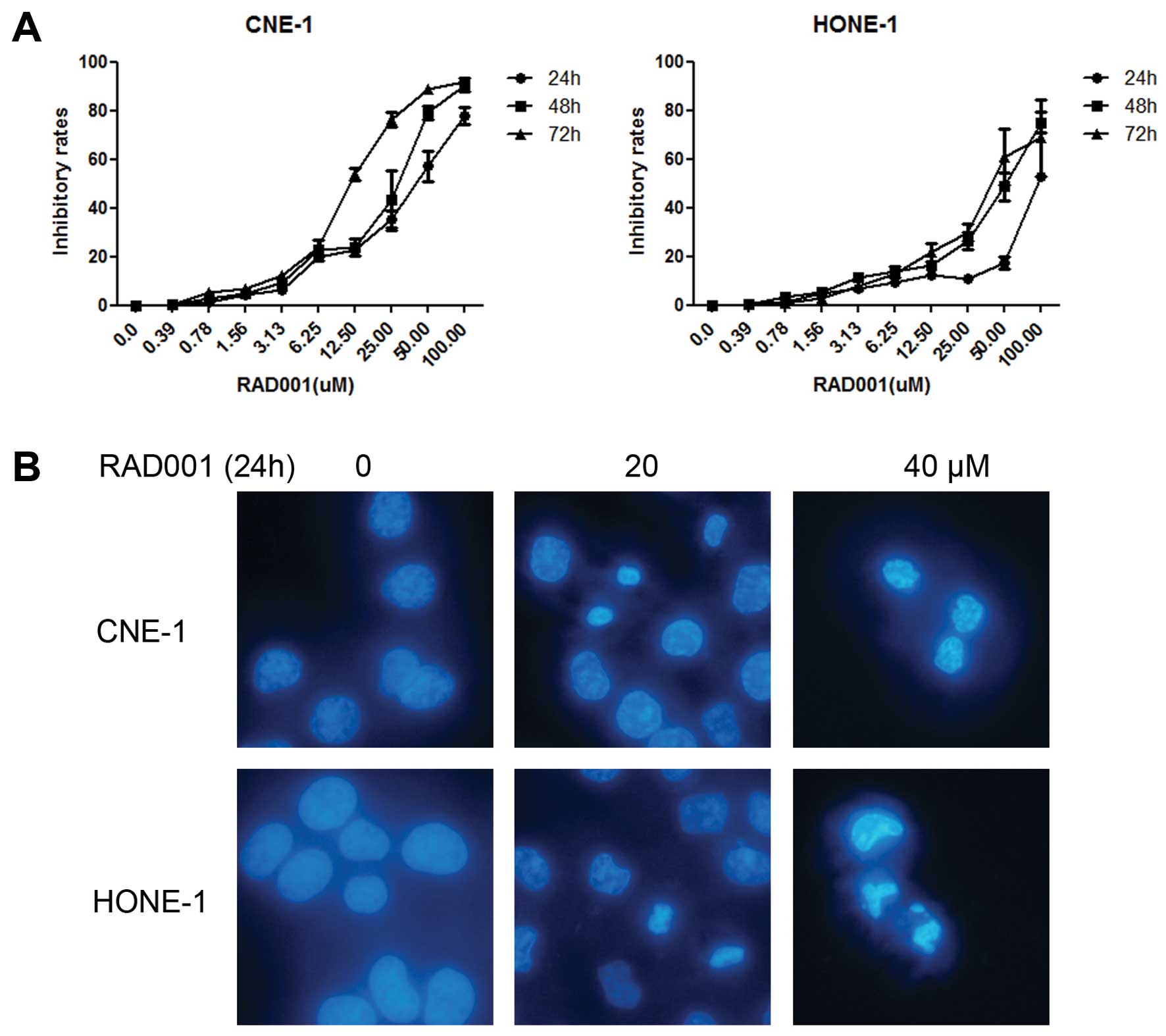
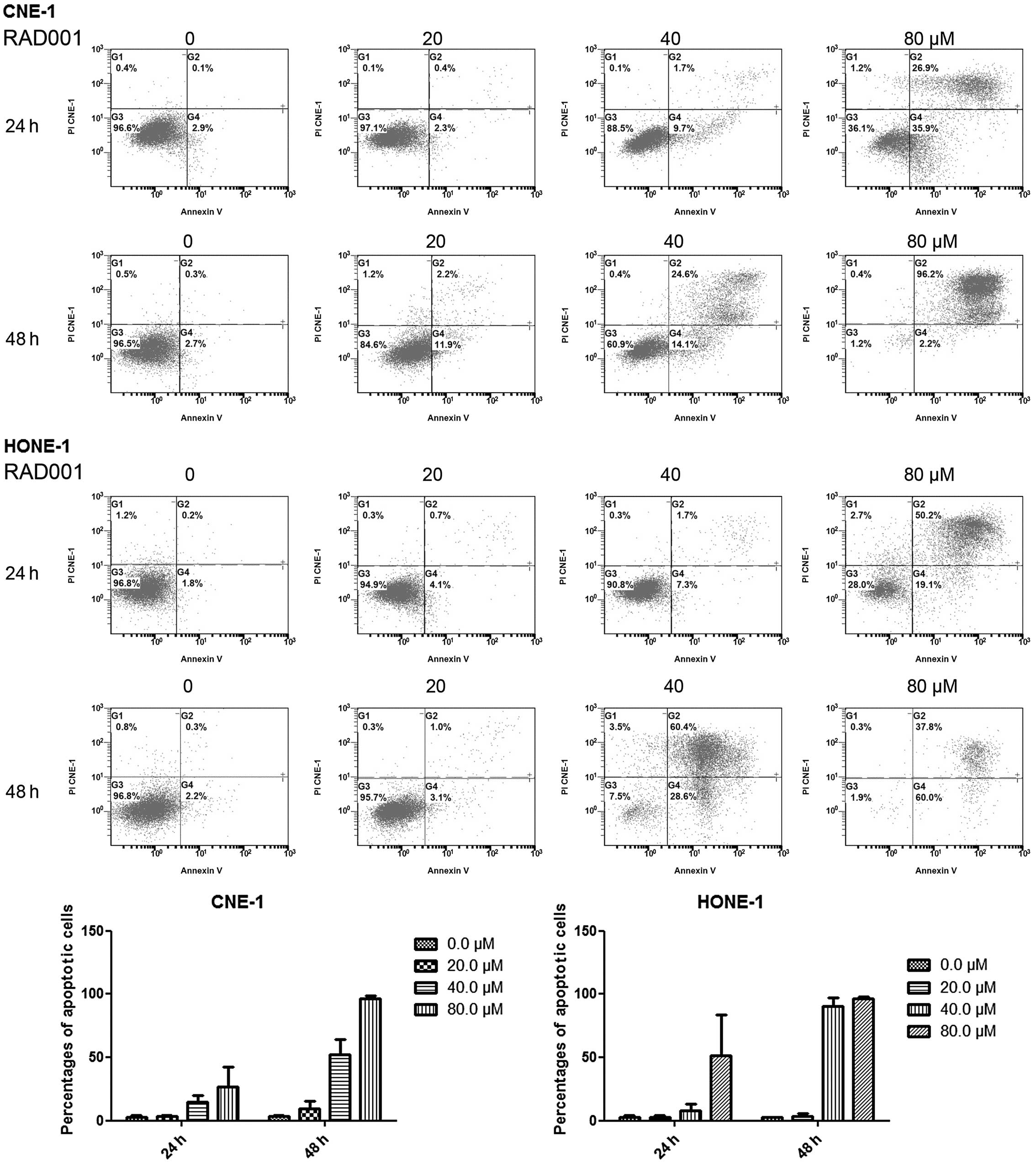
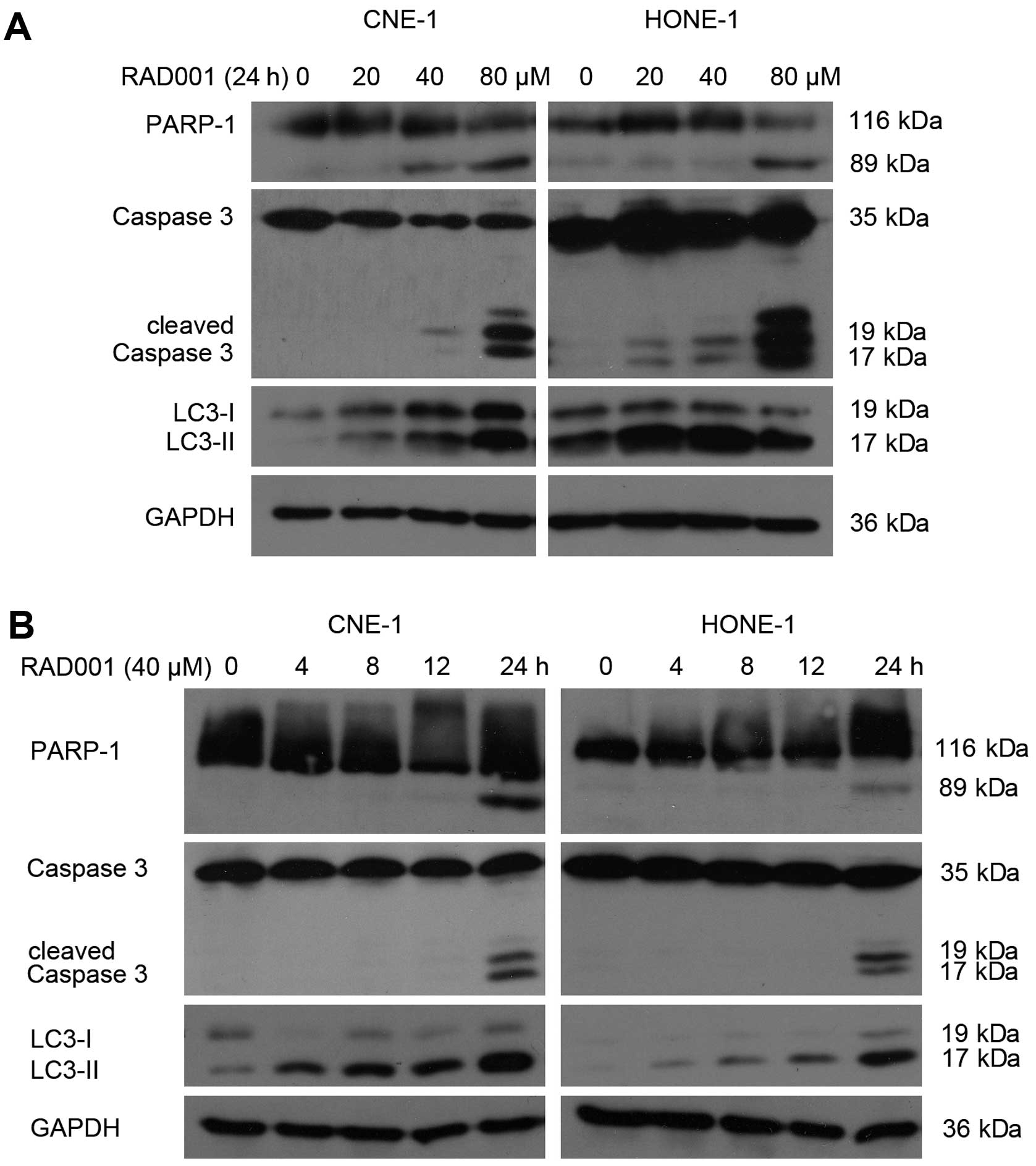
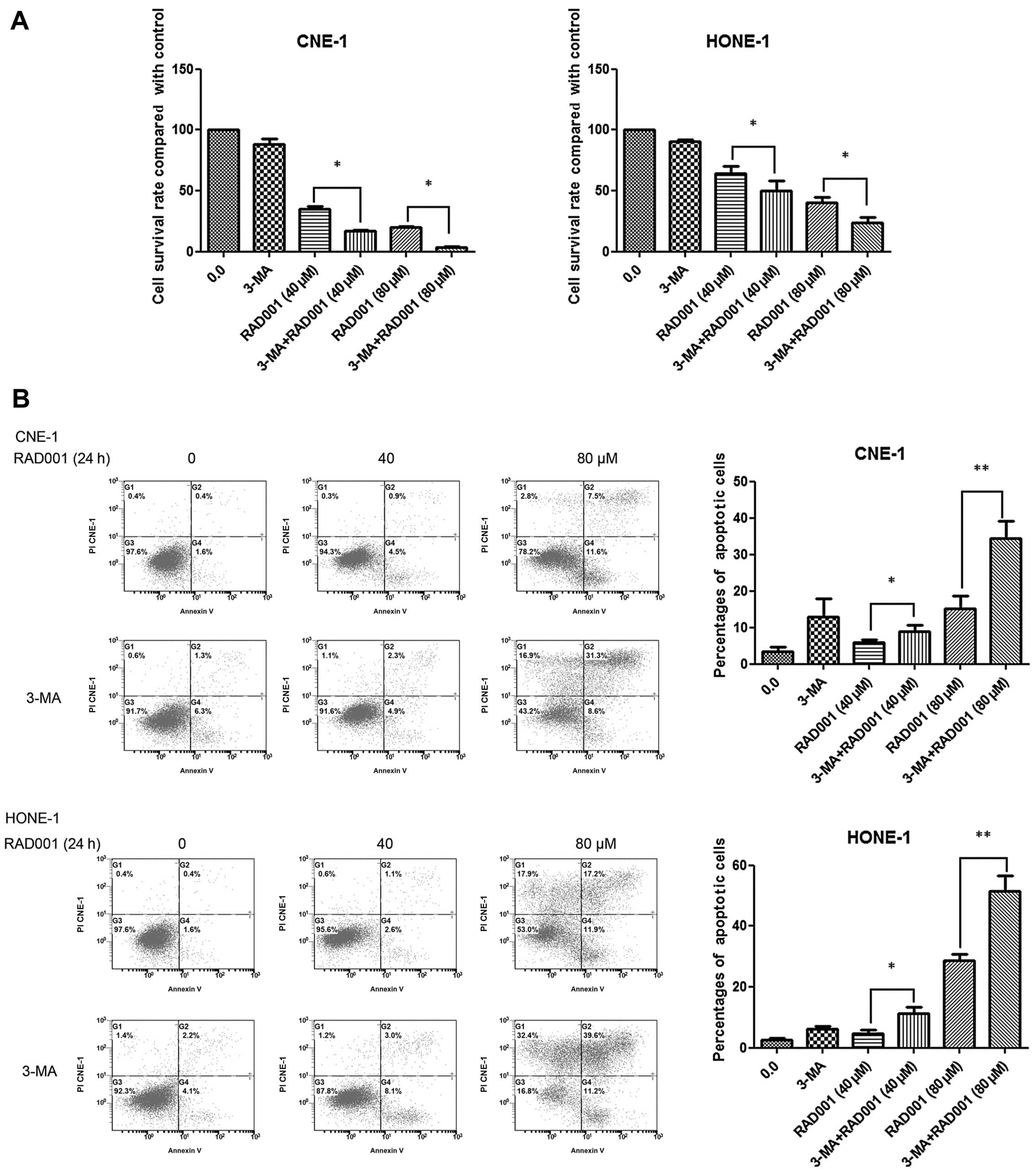
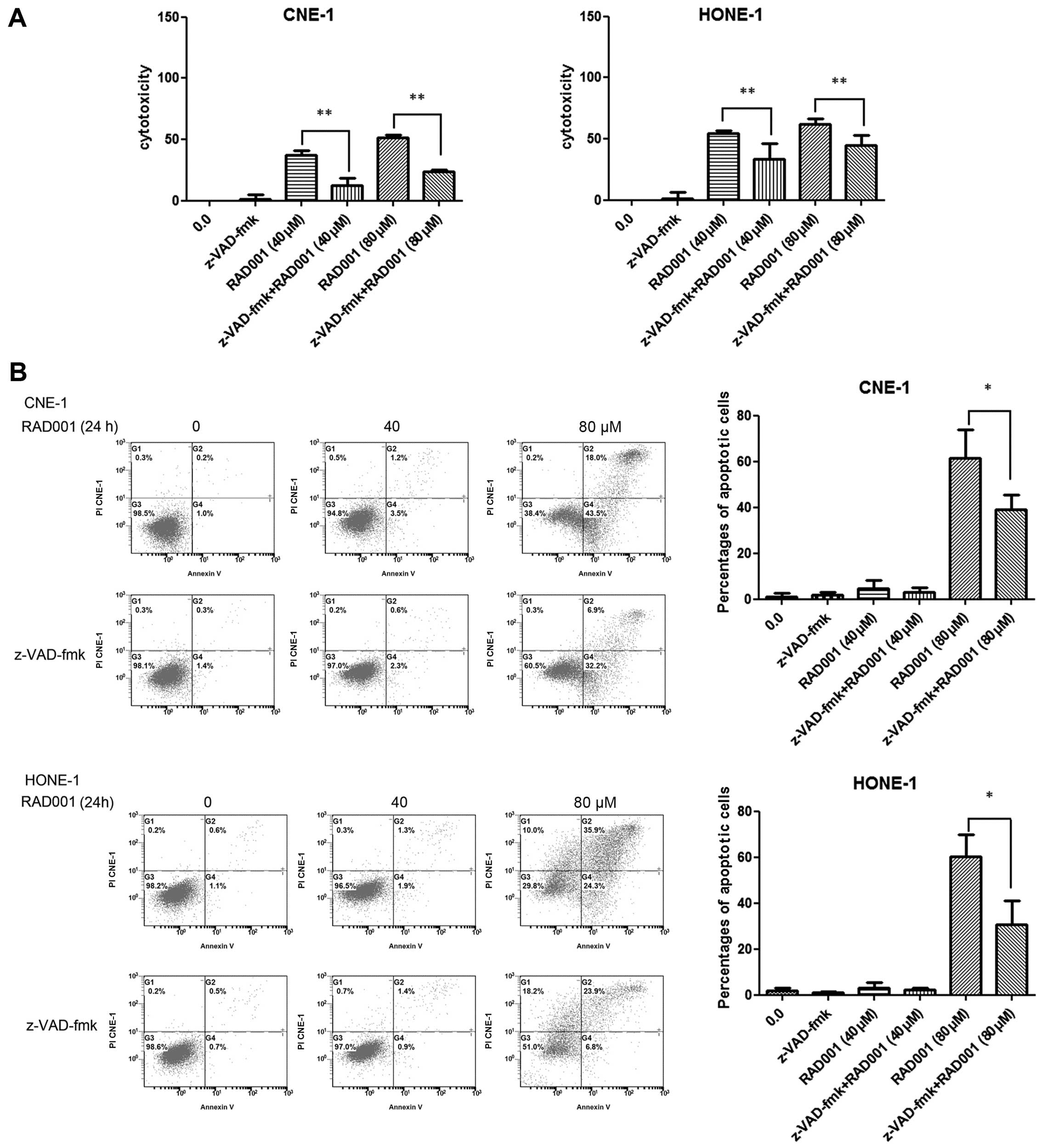
Mammalian target of rapamycin (mTOR) is a serine/threonine protein kinase and a key element in the phosphatidylinositol 3-kinase (PI3K)/protein kinase B (Akt) signaling pathway. Moreover, it is a negative regulator of autophagy and acts as a central regulator in cell growth. For the treatment of cancer, mTOR is a novel and validated therapeutic target. Previous studies have shown that Akt is frequently activated in nasopharyngeal carcinoma (NPC) tissues; thus, the inhibition of mTOR may be a treatment strategy for this tumor type. To evaluate the effect of the mTOR inhibitor RAD001 on NPC cell lines, we performed 4-[3-(4-iodophenyl)-2-(4-nitrophenyl)-2H-5-tetrazolio]-1,3-benzene disulfonate (WST-1) assays, lactate dehydrogenase (LDH) assays, western blotting and flow cytometry to evaluate the mechanisms of cell death. The growth of both CNE-1 and HONE-1 cells was inhibited in a time- and dose-dependent manner. CNE-1 was more sensitive, with a 50% growth inhibition (GI50) of 30.0±1.0 µM compared to HONE-1, cells which had a GI50 of 56.9±13.1 µM. RAD001 induced apoptosis and autophagy in both cell lines. RAD001 induced a significant increase in growth inhibition in the two cell lines when used in combination with the autophagy inhibitor, 3-methyladenine; however, the percentages of apoptotic cells decreased when RAD001 was combined with the caspase inhibitor, z-VAD-fmk. In conclusion, the main mechanism of the mTOR inhibitor RAD001 in these two NPC cells was apoptotic, not autophagic cell death. The combination of RAD001 with autophagy inhibitors may be a useful therapeutic strategy for nasopharyngeal carcinoma.
View Figures

Figure 1

Figure 2

Figure 3

Figure 4

Figure 5

View References

1 

Lee AW, Lin JC and Ng WT: Current management of nasopharyngeal cancer. Semin Radiat Oncol. 22:233–244. 2012. View Article : Google Scholar : PubMed/NCBI

2 

Ma BB, Hui EP and Chan AT: Systemic approach to improving treatment outcome in nasopharyngeal carcinoma: current and future directions. Cancer Sci. 99:1311–1318. 2008. View Article : Google Scholar : PubMed/NCBI

3 

Qian W, Liu J, Jin J, Ni W and Xu W: Arsenic trioxide induces not only apoptosis but also autophagic cell death in leukemia cell lines via up-regulation of Beclin-1. Leuk Res. 31:329–339. 2007. View Article : Google Scholar : PubMed/NCBI

4 

Basciani S, Vona R, Matarrese P, Ascione B, Mariani S, Cauda R, Gnessi L, Malorni W, Straface E and Lucia MB: Imatinib interferes with survival of multi drug resistant Kaposi’s sarcoma cells. FEBS Lett. 581:5897–5903. 2007.PubMed/NCBI

5 

Yang W, Monroe J, Zhang Y, George D, Bremer E and Li H: Proteasome inhibition induces both pro- and anti-cell death pathways in prostate cancer cells. Cancer Lett. 243:217–227. 2006. View Article : Google Scholar : PubMed/NCBI

6 

Hay N and Sonenberg N: Upstream and downstream of mTOR. Genes Dev. 18:1926–1945. 2004. View Article : Google Scholar

7 

Huang S and Houghton PJ: Targeting mTOR signaling for cancer therapy. Curr Opin Pharmacol. 3:371–377. 2003. View Article : Google Scholar

8 

Gomez-Pinillos A and Ferrari AC: mTOR signaling pathway and mTOR inhibitors in cancer therapy. Hematol Oncol Clin North Am. 26:483–505. 2012. View Article : Google Scholar : PubMed/NCBI

9 

Grzybowska-Izydorczyk O and Smolewski P: mTOR kinase inhibitors as a treatment strategy in hematological malignancies. Future Med Chem. 4:487–504. 2012. View Article : Google Scholar : PubMed/NCBI

10 

Zoncu R, Efeyan A and Sabatini DM: mTOR: from growth signal integration to cancer, diabetes and ageing. Nat Rev Mol Cell Biol. 12:21–35. 2011. View Article : Google Scholar : PubMed/NCBI

11 

Wan X and Helman LJ: The biology behind mTOR inhibition in sarcoma. Oncologist. 12:1007–1018. 2007. View Article : Google Scholar : PubMed/NCBI

12 

Chan S: Targeting the mammalian target of rapamycin (mTOR): a new approach to treating cancer. Br J Cancer. 91:1420–1424. 2004. View Article : Google Scholar : PubMed/NCBI

13 

Vignot S, Faivre S, Aguirre D and Raymond E: mTOR targeted therapy of cancer with rapamycin derivatives. Ann Oncol. 16:525–537. 2005. View Article : Google Scholar : PubMed/NCBI

14 

Lin CI, Whang EE, Donner DB, Du J, Lorch J, He F, Jiang X, Price BD, Moore FD Jr and Ruan DT: Autophagy induction with RAD001 enhances chemosensitivity and radiosensitivity through Met inhibition in papillary thyroid cancer. Mol Cancer Res. 8:1217–1226. 2010. View Article : Google Scholar : PubMed/NCBI

15 

Molinolo AA, Marsh C, El Dinali M, Gangane N, Jennison K, Hewitt S, Patel V, Seiwert TY and Gutkind JS: mTOR as a molecular target in HPV-associated oral and cervical squamous carcinomas. Clin Cancer Res. 18:2558–2568. 2012. View Article : Google Scholar : PubMed/NCBI

16 

Mabuchi S, Altomare DA, Cheung M, Zhang L, Poulikakos PI, Hensley HH, Schilder RJ, Ozols RF and Testa JR: RAD001 inhibits human ovarian cancer cell proliferation, enhances cisplatin-induced apoptosis, and prolongs survival in an ovarian cancer model. Clin Cancer Res. 13:4261–4270. 2007. View Article : Google Scholar : PubMed/NCBI

17 

Götze KS, Hoffmann D, Schätzl HM, Peschel C, Fend F and Decker T: Fatal Epstein-Barr virus-associated lymphoproliferative disorder following treatment with a novel mTOR inhibitor for relapsed chronic lymphocytic leukemia cells. Haematologica. 92:1282–1283. 2007.

18 

Ghayad SE, Bieche I, Vendrell JA, Keime C, Lidereau R, Dumontet C and Cohen PA: mTOR inhibition reverses acquired endocrine therapy resistance of breast cancer cells at the cell proliferation and gene-expression levels. Cancer Sci. 99:1992–2003. 2008.PubMed/NCBI

19 

Zitzmann K, De Toni EN, Brand S, Göke B, Meinecke J, Spöttl G, Meyer HH and Auemhammer CJ: The novel mTOR inhibitor RAD001 (everolimus) induces antiproliferative effects in human pancreatic neuroendocrine tumor cells. Neuroendocrinology. 85:54–60. 2007. View Article : Google Scholar : PubMed/NCBI

20 

Patel V, Marsh CA, Dorsam RT, Mikelis CM, Masedunskas A, Amornphimoltham P, Nathan CA, Singh B, Weigert R, Molinolo AA and Gutkind JS: Decreased lymphangiogenesis and lymph node metastasis by mTOR inhibition in head and neck cancer. Cancer Res. 71:7103–7112. 2011. View Article : Google Scholar : PubMed/NCBI

21 

Yip WK, Leong VC, Abdullah MA, Yusoff S and Seow HF: Overexpression of phospho-Akt correlates with phosphorylation of EGF receptors, FKHR and BAD in nasopharyngeal carcinoma. Oncol Rep. 19:319–328. 2008.PubMed/NCBI

22 

Ma BB, Lui VW, Hui EP, Lau CP, Ho K, Ng MH, Cheng SH, Tsao SW and Chan AT: The activity of mTOR inhibitor RAD001 (everolimus) in nasopharyngeal carcinoma and cisplatin-resistant cell lines. Invest New Drugs. 28:413–420. 2010. View Article : Google Scholar : PubMed/NCBI

23 

Beuvink I, Boulay A, Fumagalli S, Zilbermann F, Ruetz S, O’Reilly T, Natt F, Hall J, Lane HA and Thomas G: The mTOR inhibitor RAD001 sensitizes tumor cells to DNA-damaged induced apoptosis through inhibition of p21 translation. Cell. 120:747–759. 2005. View Article : Google Scholar : PubMed/NCBI

24 

Pinto-Leite R, Arantes-Rodrigues R, Palmeira C, Gaivão I, Cardoso ML, Colaço A, Santos L and Oliveira P: Everolimus enhances gemcitabine-induced cytotoxicity in bladder-cancer cell lines. J Toxicol Environ Health A. 75:788–799. 2012. View Article : Google Scholar : PubMed/NCBI

25 

Zhu Y, Zhang X, Liu Y, Zhang S, Liu J, Ma Y and Zhang J: Antitumor effect of the mTOR inhibitor everolimus in combination with trastuzumab on human breast cancer stem cells in vitro and in vivo. Tumour Biol. 33:1349–1362. 2012. View Article : Google Scholar : PubMed/NCBI

26 

Zhang X, Zhang S, Liu Y, Liu J, Ma Y, Zhu Y and Zhang J: Effects of the combination of RAD001 and docetaxel on breast cancer stem cells. Eur J Cancer. 48:1581–1592. 2012. View Article : Google Scholar : PubMed/NCBI

27 

Lee KH, Hur HS, Im SA, Lee J, Kim HP, Yoon YK, Han SW, Song SH, Oh DY, Kim TY and Bang YJ: RAD001 shows activity against gastric cancer cells and overcomes 5-FU resistance by downregulating thymidylate synthase. Cancer Lett. 299:22–28. 2010. View Article : Google Scholar : PubMed/NCBI

28 

Haritunians T, Mori A, O’Kelly J, Luong QT, Giles FJ and Koeffler HP: Antiproliferative activity of RAD001 (everolimus) as a single agent and combined with other agents in mantle cell lymphoma. Leukemia. 21:333–339. 2007. View Article : Google Scholar : PubMed/NCBI

29 

Wanner K, Hipp S, Oelsner M, Ringshausen I, Bogner C, Peschel C and Decker T: Mammalian target of rapamycin inhibition induces cell cycle arrest in diffuse large B cell lymphoma (DLBCL) cells and sensitises DLBCL cells to rituximab. Br J Haematol. 134:475–484. 2006. View Article : Google Scholar

30 

Wang ZG, Fukazawa T, Nishikawa T, Watanabe N, Sakurama K, Motoki T, Hatakeyama S, Omori O, Ohara T, Tanabe S, Fujiwara Y, Takaoka M, Shirakawa Y, Yamatsuji T, Tanaka N and Naomoto Y: RAD001 offers a therapeutic intervention through inhibition of mTOR as a potential strategy for esophageal cancer. Oncol Rep. 23:1167–1172. 2010.PubMed/NCBI

31 

Liu H, Scholz C, Zang C, Schefe JH, Habbel P, Regierer AC, Schulz CO, Possinger K and Eucker J: Metformin and the mTOR inhibitor everolimus (RAD001) sensitize breast cancer cells to the cytotoxic effect of chemotherapeutic drugs in vitro. Anticancer Res. 32:1627–1637. 2012.PubMed/NCBI

32 

Cao C, Subhawong T, Albert JM, Kim KW, Geng L, Sekhar KR, Gi YJ and Lu B: Inhibition of mammalian target of rapamycin or apoptotic pathway induces autophagy and radiosensitizes PTEN null prostate cancer cells. Cancer Res. 66:10040–10047. 2006. View Article : Google Scholar : PubMed/NCBI

33 

Altmeyer A, Josset E, Denis JM, Gueulette J, Slabbert J, Mutter D, Noël G and Bischoff P: The mTOR inhibitor RAD001 augments radiation-induced growth inhibition in a hepatocellular carcinoma cell line by increasing autophagy. Int J Oncol. 41:1381–1386. 2012.PubMed/NCBI

34 

Crazzolara R, Bradstock KF and Bendall LJ: RAD001 (everolimus) induces autophagy in acute lymphoblastic leukemia. Autophagy. 5:727–728. 2009. View Article : Google Scholar : PubMed/NCBI

35 

Rosich L, Xargay-Torrent S, López-Guerra M, Campo E, Colomer D and Roué G: Counteracting autophagy overcomes resistance to everolimus in mantle cell lymphoma. Clin Cancer Res. 18:5278–5289. 2012. View Article : Google Scholar : PubMed/NCBI

36 

Maycotte P and Thorburn A: Autophagy and cancer therapy. Cancer Biol Ther. 11:127–137. 2011. View Article : Google Scholar

37 

Castedo M, Roumier T, Blanco J, Ferri KF, Barretina J, Tintignac LA, Andreau K, Perfettini JL, Amendola A, Nardacci R, Leduc P, Ingber DE, Druillennec S, Roques B, Leibovitch SA, Vilella-Bach M, Chen J, Este JA, Modjtahedi N, Piacentini M and Kroemer G: Sequential involvement of Cdk1, mTOR and p53 in apoptosis induced by the HIV-1 envelope. EMBO J. 21:4070–4080. 2002. View Article : Google Scholar : PubMed/NCBI

38 

Li B, Desai SA, MacCorkle-Chosnek RA, Fan L and Spencer DM: A novel conditional Akt ‘survival switch’ reversibly protects cells from apoptosis. Gene Ther. 9:233–244. 2002.

Related Articles

  • Abstract
  • View
  • Download
  • Twitter
Copy and paste a formatted citation
Spandidos Publications style
Cai Y, Xia Q, Su Q, Luo R, Sun Y, Shi Y and Jiang W: mTOR inhibitor RAD001 (everolimus) induces apoptotic, not autophagic cell death, in human nasopharyngeal carcinoma cells . Int J Mol Med 31: 904-912, 2013.
APA
Cai, Y., Xia, Q., Su, Q., Luo, R., Sun, Y., Shi, Y., & Jiang, W. (2013). mTOR inhibitor RAD001 (everolimus) induces apoptotic, not autophagic cell death, in human nasopharyngeal carcinoma cells . International Journal of Molecular Medicine, 31, 904-912. https://doi.org/10.3892/ijmm.2013.1282
MLA
Cai, Y., Xia, Q., Su, Q., Luo, R., Sun, Y., Shi, Y., Jiang, W."mTOR inhibitor RAD001 (everolimus) induces apoptotic, not autophagic cell death, in human nasopharyngeal carcinoma cells ". International Journal of Molecular Medicine 31.4 (2013): 904-912.
Chicago
Cai, Y., Xia, Q., Su, Q., Luo, R., Sun, Y., Shi, Y., Jiang, W."mTOR inhibitor RAD001 (everolimus) induces apoptotic, not autophagic cell death, in human nasopharyngeal carcinoma cells ". International Journal of Molecular Medicine 31, no. 4 (2013): 904-912. https://doi.org/10.3892/ijmm.2013.1282
Copy and paste a formatted citation
x
Spandidos Publications style
Cai Y, Xia Q, Su Q, Luo R, Sun Y, Shi Y and Jiang W: mTOR inhibitor RAD001 (everolimus) induces apoptotic, not autophagic cell death, in human nasopharyngeal carcinoma cells . Int J Mol Med 31: 904-912, 2013.
APA
Cai, Y., Xia, Q., Su, Q., Luo, R., Sun, Y., Shi, Y., & Jiang, W. (2013). mTOR inhibitor RAD001 (everolimus) induces apoptotic, not autophagic cell death, in human nasopharyngeal carcinoma cells . International Journal of Molecular Medicine, 31, 904-912. https://doi.org/10.3892/ijmm.2013.1282
MLA
Cai, Y., Xia, Q., Su, Q., Luo, R., Sun, Y., Shi, Y., Jiang, W."mTOR inhibitor RAD001 (everolimus) induces apoptotic, not autophagic cell death, in human nasopharyngeal carcinoma cells ". International Journal of Molecular Medicine 31.4 (2013): 904-912.
Chicago
Cai, Y., Xia, Q., Su, Q., Luo, R., Sun, Y., Shi, Y., Jiang, W."mTOR inhibitor RAD001 (everolimus) induces apoptotic, not autophagic cell death, in human nasopharyngeal carcinoma cells ". International Journal of Molecular Medicine 31, no. 4 (2013): 904-912. https://doi.org/10.3892/ijmm.2013.1282
Follow us
  • Twitter
  • LinkedIn
  • Facebook
About
  • Spandidos Publications
  • Careers
  • Cookie Policy
  • Privacy Policy
How can we help?
  • Help
  • Live Chat
  • Contact
  • Email to our Support Team