Spandidos Publications Logo
  • About
    • About Spandidos
    • Aims and Scopes
    • Abstracting and Indexing
    • Editorial Policies
    • Reprints and Permissions
    • Job Opportunities
    • Terms and Conditions
    • Contact
  • Journals
    • All Journals
    • Oncology Letters
      • Oncology Letters
      • Information for Authors
      • Editorial Policies
      • Editorial Board
      • Aims and Scope
      • Abstracting and Indexing
      • Bibliographic Information
      • Archive
    • International Journal of Oncology
      • International Journal of Oncology
      • Information for Authors
      • Editorial Policies
      • Editorial Board
      • Aims and Scope
      • Abstracting and Indexing
      • Bibliographic Information
      • Archive
    • Molecular and Clinical Oncology
      • Molecular and Clinical Oncology
      • Information for Authors
      • Editorial Policies
      • Editorial Board
      • Aims and Scope
      • Abstracting and Indexing
      • Bibliographic Information
      • Archive
    • Experimental and Therapeutic Medicine
      • Experimental and Therapeutic Medicine
      • Information for Authors
      • Editorial Policies
      • Editorial Board
      • Aims and Scope
      • Abstracting and Indexing
      • Bibliographic Information
      • Archive
    • International Journal of Molecular Medicine
      • International Journal of Molecular Medicine
      • Information for Authors
      • Editorial Policies
      • Editorial Board
      • Aims and Scope
      • Abstracting and Indexing
      • Bibliographic Information
      • Archive
    • Biomedical Reports
      • Biomedical Reports
      • Information for Authors
      • Editorial Policies
      • Editorial Board
      • Aims and Scope
      • Abstracting and Indexing
      • Bibliographic Information
      • Archive
    • Oncology Reports
      • Oncology Reports
      • Information for Authors
      • Editorial Policies
      • Editorial Board
      • Aims and Scope
      • Abstracting and Indexing
      • Bibliographic Information
      • Archive
    • Molecular Medicine Reports
      • Molecular Medicine Reports
      • Information for Authors
      • Editorial Policies
      • Editorial Board
      • Aims and Scope
      • Abstracting and Indexing
      • Bibliographic Information
      • Archive
    • World Academy of Sciences Journal
      • World Academy of Sciences Journal
      • Information for Authors
      • Editorial Policies
      • Editorial Board
      • Aims and Scope
      • Abstracting and Indexing
      • Bibliographic Information
      • Archive
    • International Journal of Functional Nutrition
      • International Journal of Functional Nutrition
      • Information for Authors
      • Editorial Policies
      • Editorial Board
      • Aims and Scope
      • Abstracting and Indexing
      • Bibliographic Information
      • Archive
    • International Journal of Epigenetics
      • International Journal of Epigenetics
      • Information for Authors
      • Editorial Policies
      • Editorial Board
      • Aims and Scope
      • Abstracting and Indexing
      • Bibliographic Information
      • Archive
    • Medicine International
      • Medicine International
      • Information for Authors
      • Editorial Policies
      • Editorial Board
      • Aims and Scope
      • Abstracting and Indexing
      • Bibliographic Information
      • Archive
  • Articles
  • Information
    • Information for Authors
    • Information for Reviewers
    • Information for Librarians
    • Information for Advertisers
    • Conferences
  • Language Editing
Spandidos Publications Logo
  • About
    • About Spandidos
    • Aims and Scopes
    • Abstracting and Indexing
    • Editorial Policies
    • Reprints and Permissions
    • Job Opportunities
    • Terms and Conditions
    • Contact
  • Journals
    • All Journals
    • Biomedical Reports
      • Information for Authors
      • Editorial Policies
      • Editorial Board
      • Aims and Scope
      • Abstracting and Indexing
      • Bibliographic Information
      • Archive
    • Experimental and Therapeutic Medicine
      • Information for Authors
      • Editorial Policies
      • Editorial Board
      • Aims and Scope
      • Abstracting and Indexing
      • Bibliographic Information
      • Archive
    • International Journal of Epigenetics
      • Information for Authors
      • Editorial Policies
      • Editorial Board
      • Aims and Scope
      • Abstracting and Indexing
      • Bibliographic Information
      • Archive
    • International Journal of Functional Nutrition
      • Information for Authors
      • Editorial Policies
      • Editorial Board
      • Aims and Scope
      • Abstracting and Indexing
      • Bibliographic Information
      • Archive
    • International Journal of Molecular Medicine
      • Information for Authors
      • Editorial Policies
      • Editorial Board
      • Aims and Scope
      • Abstracting and Indexing
      • Bibliographic Information
      • Archive
    • International Journal of Oncology
      • Information for Authors
      • Editorial Policies
      • Editorial Board
      • Aims and Scope
      • Abstracting and Indexing
      • Bibliographic Information
      • Archive
    • Medicine International
      • Information for Authors
      • Editorial Policies
      • Editorial Board
      • Aims and Scope
      • Abstracting and Indexing
      • Bibliographic Information
      • Archive
    • Molecular and Clinical Oncology
      • Information for Authors
      • Editorial Policies
      • Editorial Board
      • Aims and Scope
      • Abstracting and Indexing
      • Bibliographic Information
      • Archive
    • Molecular Medicine Reports
      • Information for Authors
      • Editorial Policies
      • Editorial Board
      • Aims and Scope
      • Abstracting and Indexing
      • Bibliographic Information
      • Archive
    • Oncology Letters
      • Information for Authors
      • Editorial Policies
      • Editorial Board
      • Aims and Scope
      • Abstracting and Indexing
      • Bibliographic Information
      • Archive
    • Oncology Reports
      • Information for Authors
      • Editorial Policies
      • Editorial Board
      • Aims and Scope
      • Abstracting and Indexing
      • Bibliographic Information
      • Archive
    • World Academy of Sciences Journal
      • Information for Authors
      • Editorial Policies
      • Editorial Board
      • Aims and Scope
      • Abstracting and Indexing
      • Bibliographic Information
      • Archive
  • Articles
  • Information
    • For Authors
    • For Reviewers
    • For Librarians
    • For Advertisers
    • Conferences
  • Language Editing
Login Register Submit
  • This site uses cookies
  • You can change your cookie settings at any time by following the instructions in our Cookie Policy. To find out more, you may read our Privacy Policy.

    I agree
Search articles by DOI, keyword, author or affiliation
Search
Advanced Search
presentation
International Journal of Molecular Medicine
Join Editorial Board Propose a Special Issue
Print ISSN: 1107-3756 Online ISSN: 1791-244X
Journal Cover
May 2013 Volume 31 Issue 5

Full Size Image

Sign up for eToc alerts
Recommend to Library

Journals

International Journal of Molecular Medicine

International Journal of Molecular Medicine

International Journal of Molecular Medicine is an international journal devoted to molecular mechanisms of human disease.

International Journal of Oncology

International Journal of Oncology

International Journal of Oncology is an international journal devoted to oncology research and cancer treatment.

Molecular Medicine Reports

Molecular Medicine Reports

Covers molecular medicine topics such as pharmacology, pathology, genetics, neuroscience, infectious diseases, molecular cardiology, and molecular surgery.

Oncology Reports

Oncology Reports

Oncology Reports is an international journal devoted to fundamental and applied research in Oncology.

Experimental and Therapeutic Medicine

Experimental and Therapeutic Medicine

Experimental and Therapeutic Medicine is an international journal devoted to laboratory and clinical medicine.

Oncology Letters

Oncology Letters

Oncology Letters is an international journal devoted to Experimental and Clinical Oncology.

Biomedical Reports

Biomedical Reports

Explores a wide range of biological and medical fields, including pharmacology, genetics, microbiology, neuroscience, and molecular cardiology.

Molecular and Clinical Oncology

Molecular and Clinical Oncology

International journal addressing all aspects of oncology research, from tumorigenesis and oncogenes to chemotherapy and metastasis.

World Academy of Sciences Journal

World Academy of Sciences Journal

Multidisciplinary open-access journal spanning biochemistry, genetics, neuroscience, environmental health, and synthetic biology.

International Journal of Functional Nutrition

International Journal of Functional Nutrition

Open-access journal combining biochemistry, pharmacology, immunology, and genetics to advance health through functional nutrition.

International Journal of Epigenetics

International Journal of Epigenetics

Publishes open-access research on using epigenetics to advance understanding and treatment of human disease.

Medicine International

Medicine International

An International Open Access Journal Devoted to General Medicine.

Journal Cover
May 2013 Volume 31 Issue 5

Full Size Image

Sign up for eToc alerts
Recommend to Library

  • Article
  • Citations
    • Cite This Article
    • Download Citation
    • Create Citation Alert
    • Remove Citation Alert
    • Cited By
  • Similar Articles
    • Related Articles (in Spandidos Publications)
    • Similar Articles (Google Scholar)
    • Similar Articles (PubMed)
  • Download PDF
  • Download XML
  • View XML
Article

Lentivirus-mediated estrogen receptor α overexpression in the central nervous system ameliorates experimental autoimmune encephalomyelitis in mice

  • Authors:
    • Xiao Hu
    • Xinyue Qin
  • View Affiliations / Copyright

    Affiliations: Department of Neurology, The First Affiliated Hospital of Chongqing Medical University, Chongqing 400016, P.R. China
  • Pages: 1209-1221
    |
    Published online on: March 15, 2013
       https://doi.org/10.3892/ijmm.2013.1306
  • Expand metrics +
Metrics: Total Views: 0 (Spandidos Publications: | PMC Statistics: )
Metrics: Total PDF Downloads: 0 (Spandidos Publications: | PMC Statistics: )
Cited By (CrossRef): 0 citations Loading Articles...

This article is mentioned in:


Abstract

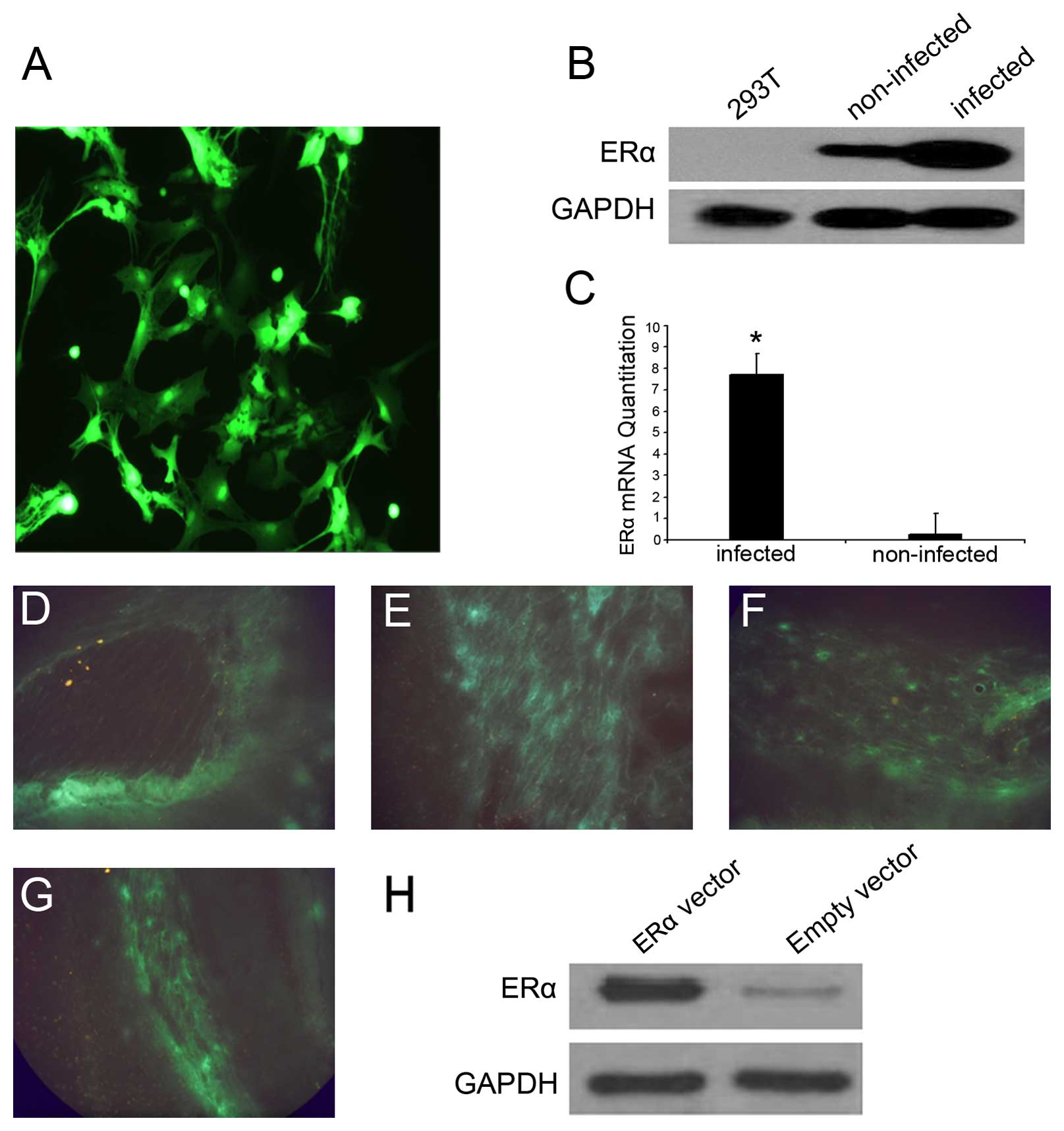
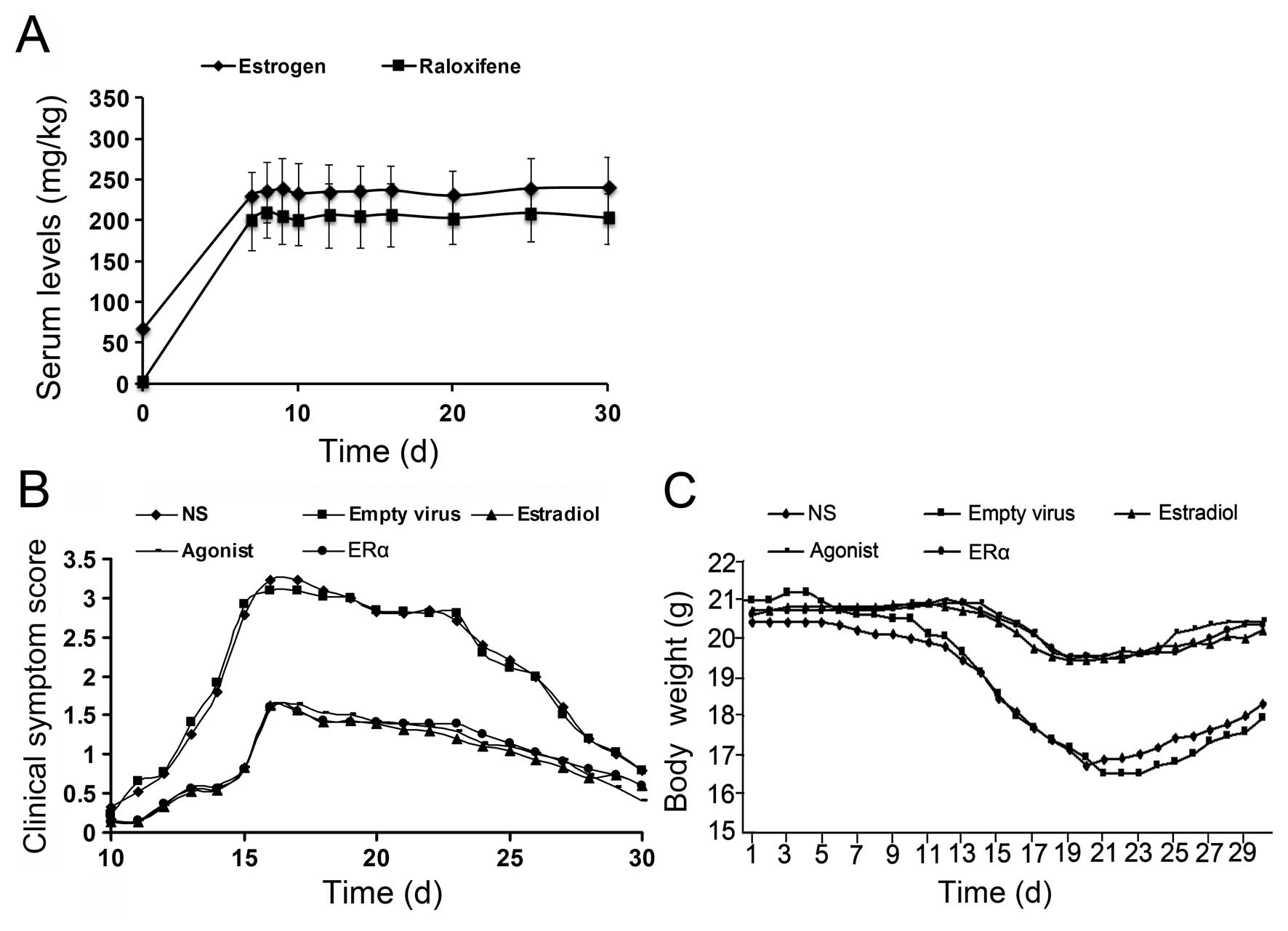
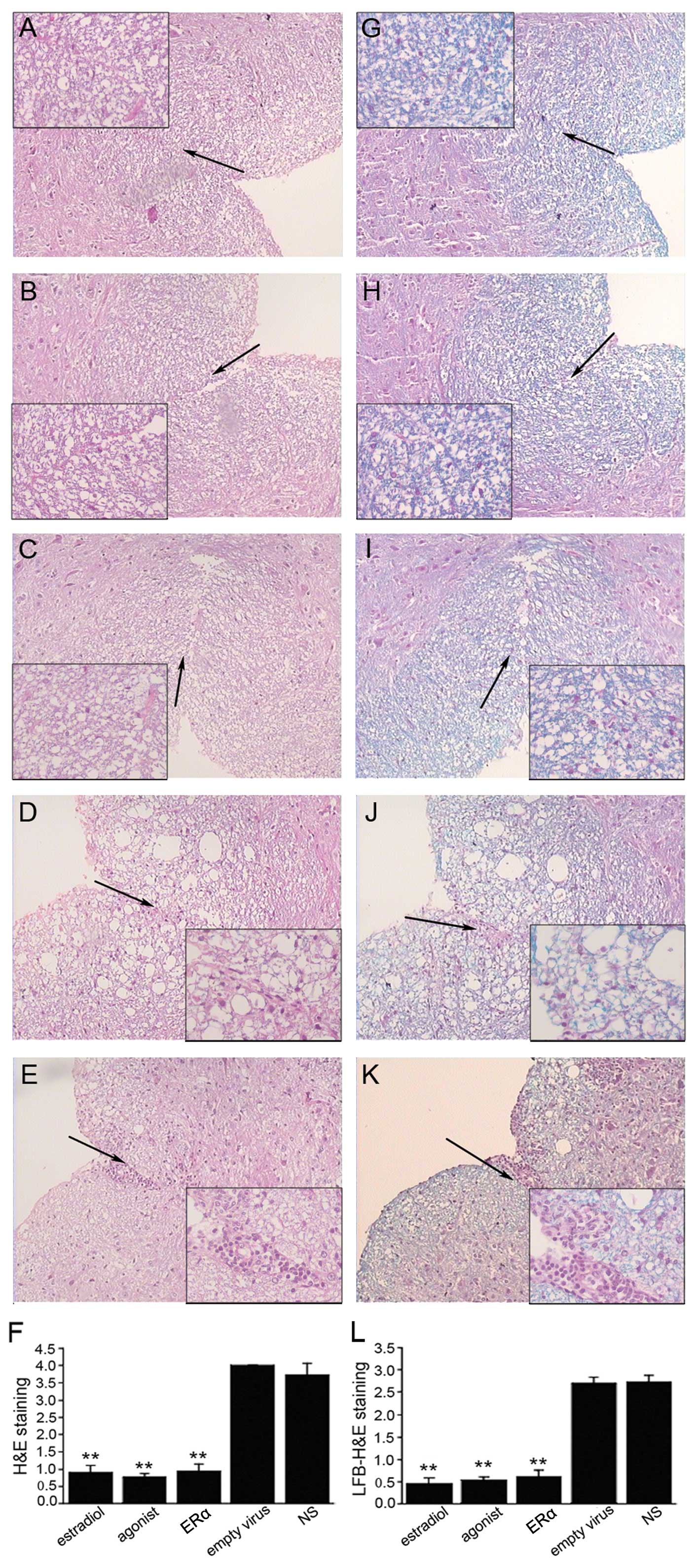
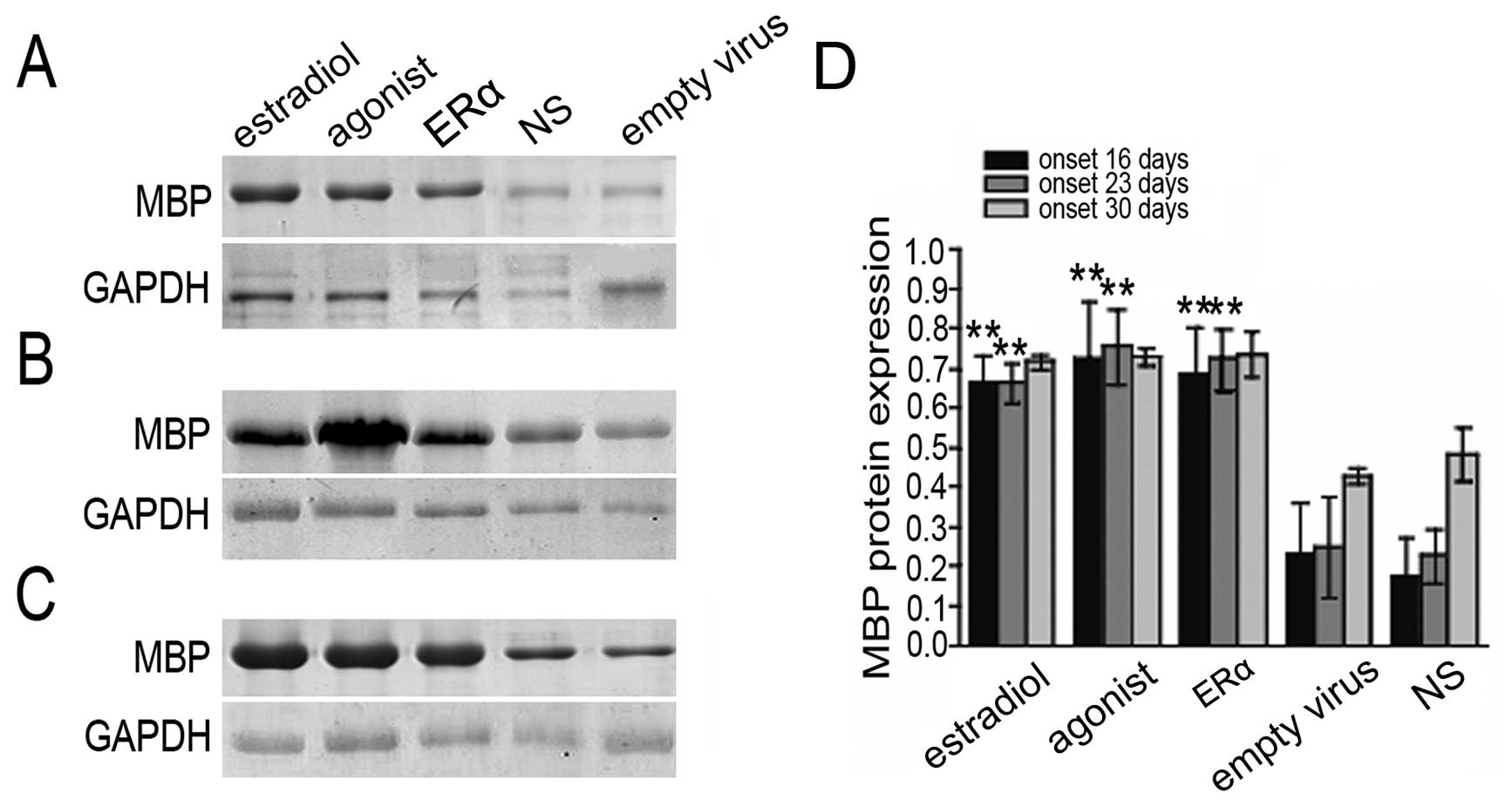
Multiple sclerosis (MS) is an autoimmune disease characterized by inflammatory cell infiltration of the central nervous system (CNS) and multifocal demyelination. Clinical data and clinical indicators demonstrate that estrogen improves the relapse-remittance of MS patients. This study aimed to investigate the anti-inflammatory effects and the underlying mechanism(s) of action of estrogen and estrogen receptor α (ERα) in an experimental autoimmune encephalomyelitis (EAE) mouse model of MS. An ERα recombinant lentivirus was constructed. Mouse neurons were cultured in serum-free culture medium, and ERα recombinant lentivirus with a multiplicity of infection (MOI) of 5 was used to infect the neurons. Furthermore, neuronal ERα mRNA and protein expression were detected using real-time quantitative PCR and western blot analysis. We sterotaxically injected ERα recombinant lentivirus into the lateral ventricle of mouse brains, and successfully identified infected neurons using Flag immunofluorescence staining to determine the optimal dose. A total of 75 C57BL/6 mice were ovariectomized. After 2 weeks, EAE was induced with myelin oligodendrocyte glycoprotein (MOG) 35-55 peptide. The EAE mice were divided into 5 groups: the estrogen group (treatment with estradiol), the ERα agonist group (treatment with raloxifene), the ERα recombinant lentivirus group (ERα group, treatment with ERα recombinant lentivirus), the empty virus group and the normal saline (NS) group; clinical symptoms and body weight were compared among the groups. We assessed EAE-related parameters, detected pathological changes with immunohistochemistry and quantified the expression of myelin basic protein (MBP), matrix metalloproteinase-9 (MMP-9), and a subset of EAE-related cytokines using enzyme-linked immunosorbent assay (ELISA). We successfully constructed an ERα recombinant lentivirus. C57BL/6 mouse neurons can survive in culture for at least 8 weeks. During that period, the recombinant lentivirus was able to infect the neurons, while sustaining green fluorescence protein (GFP) expression. ERα recombinant lentivirus also infected the neurons at a MOI of 5. The ERα mRNA and protein expression levels were higher in the infected neurons compared to the uninfected ones. We successfully infected the CNS of C57BL/6 mice by stereotaxically injecting ERα recombinant lentivirus into the lateral ventricle of the mouse brains and induced EAE. The lentivirus-mediated overexpression of ERα reduced the incidence of EAE, ameliorated the clinical symptoms, inhibited inflammatory cell CNS infiltration, and reduced nerve fiber demyelination. MMP-9, tumor necrosis factor-α (TNF-α), interferon-γ (IFN-γ), interleukin (IL)-17 and IL-23 expression levels were decreased, while those of MBP and IL-4 were increased. These data demonstrate that it is possible to induce the overexpression of ERα using a recombinant lentivirus, and that this novel intervention ameliorates EAE in a mouse model. Mechanistically, estrogen and ERα inhibit inflammatory responses, and ERα alleviates damage to the myelin sheath. Collectively, our findings support the potential use of ERα as a therapeutic target for the treatment of MS.
View Figures

Figure 1

Figure 2

Figure 3

Figure 4

Figure 5

Figure 6

Figure 7

View References

1 

Ouallet J, Baumann N, Marie Y and Villarroya H: Fas system up-regulation in experimental autoimmune encephalomyelitis. J Neurol Sci. 170:96–104. 1999. View Article : Google Scholar : PubMed/NCBI

2 

Barac-Latas V, Muhvic D and Radosevic-Stabic B: The influence of pregnancy on development and course of chronic relapsing experimental autoimmune encephalomyelitis in rats: implications for multiple sclerosis. Coll Antropol. 34(Suppl 1): 267–271. 2010.

3 

Runmarker B and Andersen O: Pregnancy is associated with a lower risk of onset and a better prognosis in multiple sclerosis. Brain. 118:253–261. 1995. View Article : Google Scholar : PubMed/NCBI

4 

Confavreux C, Hutchinson M, Hours MM, Cortinovis-Tourniaire P and Moreau T: Rate of pregnancy-related relapse in multiple sclerosis. Pregnancy in Multiple Sclerosis Group. N Engl J Med. 339:285–291. 1998. View Article : Google Scholar : PubMed/NCBI

5 

Niino M, Hirotani M, Fukazawa T, Kikuchi S and Sasaki H: Estrogens as potential therapeutic agents in multiple sclerosis. Cent Nerv Syst Agents Med Chem. 9:87–94. 2009. View Article : Google Scholar : PubMed/NCBI

6 

Sicotte NL, Liva SM, Klutch R, et al: Treatment of multiple sclerosis with the pregnancy hormone estriol. Ann Neurol. 52:421–428. 2002. View Article : Google Scholar : PubMed/NCBI

7 

Soldan SS, Alvarez Retuerto AI, Sicotte NL and Voskuhl RR: Immune modulation in multiple sclerosis patients treated with the pregnancy hormone estriol. J Immunol. 171:6267–6274. 2003. View Article : Google Scholar : PubMed/NCBI

8 

Lelu K, Laffont S, Delpy L, et al: Estrogen receptor alpha signaling in T lymphocytes is required for estradiol-mediated inhibition of Th1 and Th17 cell differentiation and protection against experimental autoimmune encephalomyelitis. J Immunol. 187:2386–2393. 2011. View Article : Google Scholar

9 

Wang C, Dehghani B, Li Y, et al: Membrane estrogen receptor regulates experimental autoimmune encephalomyelitis through up-regulation of programmed death 1. J Immunol. 182:3294–3303. 2009. View Article : Google Scholar

10 

Bodhankar S, Wang C, Vandenbark AA and Offner H: Estrogen- induced protection against experimental autoimmune encephalomyelitis is abrogated in the absence of B cells. Eur J Immunol. 41:1165–1175. 2011. View Article : Google Scholar : PubMed/NCBI

11 

Subramanian S, Yates M, Vandenbark AA and Offner H: Oestrogen-mediated protection of experimental autoimmune encephalomyelitis in the absence of Foxp3+ regulatory T cells implicates compensatory pathways including regulatory B cells. Immunology. 132:340–347. 2011.PubMed/NCBI

12 

Gold SM and Voskuhl RR: Estrogen treatment in multiple sclerosis. J Neurol Sci. 286:99–103. 2009. View Article : Google Scholar : PubMed/NCBI

13 

MacKenzie-Graham AJ, Rinek GA, Avedisian A, et al: Estrogen treatment prevents gray matter atrophy in experimental autoimmune encephalomyelitis. J Neurosci Res. 90:1310–1323. 2012. View Article : Google Scholar : PubMed/NCBI

14 

Ziehn MO, Avedisian AA, Dervin SM, O’Dell TJ and Voskuhl RR: Estriol preserves synaptic transmission in the hippocampus during autoimmune demyelinating disease. Lab Invest. 92:1234–1245. 2012. View Article : Google Scholar : PubMed/NCBI

15 

Giraud SN, Caron CM, Pham-Dinh D, Kitabgi P and Nicot AB: Estradiol inhibits ongoing autoimmune neuroinflammation and NFkappaB-dependent CCL2 expression in reactive astrocytes. Proc Natl Acad Sci USA. 107:8416–8421. 2010. View Article : Google Scholar : PubMed/NCBI

16 

Bodhankar S and Offner H: Gpr30 forms an integral part of E2-protective pathway in experimental autoimmune encephalomyelitis. Immunol Endocr Metab Agents Med Chem. 11:262–274. 2011. View Article : Google Scholar : PubMed/NCBI

17 

Matejuk A, Bakke AC, Hopke C, Dwyer J, Vandenbark AA and Offner H: Estrogen treatment induces a novel population of regulatory cells, which suppresses experimental autoimmune encephalomyelitis. J Neurosci Res. 77:119–126. 2004. View Article : Google Scholar

18 

Tiwari-Woodruff S and Voskuhl RR: Neuroprotective and anti-inflammatory effects of estrogen receptor ligand treatment in mice. J Neurol Sci. 286:81–85. 2009. View Article : Google Scholar : PubMed/NCBI

19 

Du S, Sandoval F, Trinh P, Umeda E and Voskuhl R: Estrogen receptor-beta ligand treatment modulates dendritic cells in the target organ during autoimmune demyelinating disease. Eur J Immunol. 41:140–150. 2011. View Article : Google Scholar

20 

Blasko E, Haskell CA, Leung S, et al: Beneficial role of the GPR30 agonist G-1 in an animal model of multiple sclerosis. J Neuroimmunol. 214:67–77. 2009. View Article : Google Scholar : PubMed/NCBI

21 

Subramanian S, Miller LM, Grafe MR, Vandenbark AA and Offner H: Contribution of GPR30 for 1,25 dihydroxyvitamin D(3) protection in EAE. Metab Brain Dis. 27:29–35. 2012. View Article : Google Scholar : PubMed/NCBI

22 

Lelu K, Delpy L, Robert V, et al: Endogenous estrogens, through estrogen receptor alpha, constrain autoimmune inflammation in female mice by limiting CD4+ T-cell homing into the CNS. Eur J Immunol. 40:3489–3498. 2010. View Article : Google Scholar : PubMed/NCBI

23 

Gold SM, Sasidhar MV, Morales LB, et al: Estrogen treatment decreases matrix metalloproteinase (MMP)-9 in autoimmune demyelinating disease through estrogen receptor alpha (ERalpha). Lab Invest. 89:1076–1083. 2009. View Article : Google Scholar

24 

Spence RD, Hamby ME, Umeda E, et al: Neuroprotection mediated through estrogen receptor-alpha in astrocytes. Proc Natl Acad Sci USA. 108:8867–8872. 2011. View Article : Google Scholar : PubMed/NCBI

25 

Wong LF, Goodhead L, Prat C, Mitrophanous KA, Kingsman SM and Mazarakis ND: Lentivirus-mediated gene transfer to the central nervous system: therapeutic and research applications. Hum Gene Ther. 17:1–9. 2006. View Article : Google Scholar : PubMed/NCBI

26 

Foster TC, Rani A, Kumar A, Cui L and Semple-Rowland SL: Viral vector-mediated delivery of estrogen receptor-alpha to the hippocampus improves spatial learning in estrogen receptor-alpha knockout mice. Mol Ther. 16:1587–1593. 2008. View Article : Google Scholar

27 

Brewer GJ, Torricelli JR, Evege EK and Price PJ: Optimized survival of hippocampal neurons in B27-supplemented Neurobasal, a new serum-free medium combination. J Neurol Sci. 35:567–576. 1993.PubMed/NCBI

28 

Hu X, Lei L, Yuan J, Xing W, WJY and Qin X: Construction of recombinant lentivirus carrying mouse estrogen receptor α and identification in infected neurons. Acad J Sec Mil Med Univ. 32:160–166. 2011.

29 

Tiwari-Woodruff S, Morales LB, Lee R and Voskuhl RR: Differential neuroprotective and antiinflammatory effects of estrogen receptor (ER)alpha and ERbeta ligand treatment. Proc Natl Acad Sci USA. 104:14813–14818. 2007. View Article : Google Scholar : PubMed/NCBI

30 

Tapia-Gonzalez S, Carrero P, Pernia O, Garcia-Segura LM and Diz-Chaves Y: Selective Er modulators reduce microglia reactivity in vivo after peripheral inflammation: potential role of microglial ERs. J Endocrinol. 198:219–230. 2008. View Article : Google Scholar : PubMed/NCBI

31 

Legge KL, Min B, Bell JJ, et al: Coupling of peripheral tolerance to endogenous interleukin 10 promotes effective modulation of myelin-activated T cells and ameliorates experimental allergic encephalomyelitis. J Exp Med. 191:2039–2052. 2000. View Article : Google Scholar

32 

Murphy AC, Lalor SJ, Lynch MA and Mills KH: Infiltration of Th1 and Th17 cells and activation of microglia in the CNS during the course of experimental autoimmune encephalomyelitis. Brain Behav Immun. 24:641–651. 2010. View Article : Google Scholar : PubMed/NCBI

33 

Jacobs EC: Genetic alterations in the mouse myelin basic proteins result in a range of dysmyelinating disorders. J Neurol Sci. 228:195–197. 2005. View Article : Google Scholar : PubMed/NCBI

34 

Molineaux SM, Engh H, De Ferra F, Hudson L and Lazzarini RA: Recombination within the myelin basic protein gene created the dysmyelinating shiverer mouse mutation. Proc Natl Acad Sci USA. 83:7542–7546. 1986. View Article : Google Scholar : PubMed/NCBI

35 

Fainardi E, Castellazzi M, Bellini T, et al: Cerebrospinal fluid and serum levels and intrathecal production of active MMP-9 as markers of disease activity in patients with multiple sclerosis. Mult Scler. 12:294–301. 2006. View Article : Google Scholar : PubMed/NCBI

36 

Kurzepa J, Bartosik-Psujek H, Suchozebrska-Jesionek D, Rejdak K, Stryjecka-Zimmer M and Stelmasiak Z: Role of matrix metalloproteinases in the pathogenesis of multiple sclerosis. Neurol Neurochir Pol. 39:63–67. 2005.(In Polish).

37 

Rubinson DA, Dillon CP, Kwiatkowski AV, et al: A lentivirus-based system to functionally silence genes in primary mammalian cells, stem cells and transgenic mice by RNA interference. Nat Genet. 33:401–406. 2003. View Article : Google Scholar : PubMed/NCBI

38 

Trobridge G and Russell DW: Cell cycle requirements for transduction by foamy virus vectors compared to those of oncovirus and lentivirus vectors. J Virol. 78:2327–2335. 2004. View Article : Google Scholar : PubMed/NCBI

39 

Yip PK, Wong LF, Pattinson D, et al: Lentiviral vector expressing retinoic acid receptor beta2 promotes recovery of function after corticospinal tract injury in the adult rat spinal cord. Hum Mol Genet. 15:3107–3118. 2006. View Article : Google Scholar : PubMed/NCBI

40 

Ambrosino C, Tarallo R, Bamundo A, et al: Identification of a hormone-regulated dynamic nuclear actin network associated with estrogen receptor alpha in human breast cancer cell nuclei. Mol Cell Proteomics. 9:1352–1367. 2010. View Article : Google Scholar

41 

Vigna E and Naldini L: Lentiviral vectors: excellent tools for experimental gene transfer and promising candidates for gene therapy. J Gene Med. 2:308–316. 2000. View Article : Google Scholar : PubMed/NCBI

42 

Bruck W: The pathology of multiple sclerosis is the result of focal inflammatory demyelination with axonal damage. J Neurol. 252(Suppl 5): v3–v9. 2005. View Article : Google Scholar : PubMed/NCBI

43 

Liu HY, Buenafe AC, Matejuk A, et al: Estrogen inhibition of EAE involves effects on dendritic cell function. J Neurol Sci. 70:238–248. 2002.PubMed/NCBI

44 

Baumann N and Pham-Dinh D: Biology of oligodendrocyte and myelin in the mammalian central nervous system. Physiol Rev. 81:871–927. 2001.PubMed/NCBI

45 

Daigle JL, Hong JH, Chiang CS and McBride WH: The role of tumor necrosis factor signaling pathways in the response of murine brain to irradiation. Cancer Res. 61:8859–8865. 2001.PubMed/NCBI

46 

Griffiths I, Klugmann M, Anderson T, et al: Axonal swellings and degeneration in mice lacking the major proteolipid of myelin. Science. 280:1610–1613. 1998. View Article : Google Scholar : PubMed/NCBI

47 

De Rosbo NK and Bernard CC: Multiple sclerosis brain immunoglobulins stimulate myelin basic protein degradation in human myelin: a new cause of demyelination. J Neurochem. 53:513–518. 1989.PubMed/NCBI

48 

Einstein ER, Csejtey J, Dalal KB, Adams CW, Bayliss OB and Hallpike JF: Proteolytic activity and basic protein loss in and around multiple sclerosis plaques: combined biochemical and histochemical observations. J Neurochem. 19:653–662. 1972. View Article : Google Scholar

49 

Harauz G, Ishiyama N, Hill CM, Bates IR, Libich DS and Fares C: Myelin basic protein-diverse conformational states of an intrinsically unstructured protein and its roles in myelin assembly and multiple sclerosis. Micron. 35:503–542. 2004. View Article : Google Scholar

50 

Crawford DK, Mangiardi M, Song B, et al: Oestrogen receptor beta ligand: a novel treatment to enhance endogenous functional remyelination. Brain. 133:2999–3016. 2010. View Article : Google Scholar : PubMed/NCBI

51 

Garay L, Gonzalez Deniselle MC, Gierman L, et al: Steroid protection in the experimental autoimmune encephalomyelitis model of multiple sclerosis. Neuroimmunomodulation. 15:76–83. 2008.PubMed/NCBI

52 

Sarkaki A, Amani R, Badavi M, et al: Pre-treatment effect of different doses of soy isoflavones on spatial learning and memory in an ovariectomized animal model of Alzheimer’s disease. Pak J Biol Sci. 11:1114–1119. 2008.PubMed/NCBI

53 

Sheldahl LC, Marriott LK, Bryant DM, Shapiro RA and Dorsa DM: Neuroprotective effects of estrogen and selective estrogen receptor modulators begin at the plasma membrane. Minerva Endocrinol. 32:87–94. 2007.PubMed/NCBI

54 

Riggs BL and Hartmann LC: Selective estrogen-receptor modulators - mechanisms of action and application to clinical practice. N Engl J Med. 348:618–629. 2003. View Article : Google Scholar : PubMed/NCBI

55 

Chitnis T and Khoury SJ: Cytokine shifts and tolerance in experimental autoimmune encephalomyelitis. Immunol Res. 28:223–239. 2003. View Article : Google Scholar : PubMed/NCBI

56 

McGeachy MJ and Anderton SM: Cytokines in the induction and resolution of experimental autoimmune encephalomyelitis. Cytokine. 32:81–84. 2005. View Article : Google Scholar : PubMed/NCBI

57 

Suryani S and Sutton I: An interferon-gamma-producing Th1 subset is the major source of IL-17 in experimental autoimmune encephalitis. J Neuroimmunol. 183:96–103. 2007.PubMed/NCBI

58 

Butti E, Bergami A, Recchia A, et al: IL4 gene delivery to the CNS recruits regulatory T cells and induces clinical recovery in mouse models of multiple sclerosis. Gene Ther. 15:504–515. 2008. View Article : Google Scholar : PubMed/NCBI

59 

Bebo BF Jr, Dehghani B, Foster S, Kurniawan A, Lopez FJ and Sherman LS: Treatment with selective estrogen receptor modulators regulates myelin specific T-cells and suppresses experimental autoimmune encephalomyelitis. Glia. 57:777–790. 2009. View Article : Google Scholar

60 

Juedes AE, Hjelmstrom P, Bergman CM, Neild AL and Ruddle NH: Kinetics and cellular origin of cytokines in the central nervous system: insight into mechanisms of myelin oligodendrocyte glycoprotein-induced experimental autoimmune encephalomyelitis. J Immunol. 164:419–426. 2000. View Article : Google Scholar

61 

Monteiro de Castro G, Eduarda Zanin M, Ventura-Oliveira D, Aparecida Vilella C, Ashimine R and De Lima Zollner R: Th1 and Th2 cytokine immunomodulation by gangliosides in experimental autoimmune encephalomyelitis. Cytokine. 26:155–163. 2004.PubMed/NCBI

62 

Abraham M, Shapiro S, Karni A, Weiner HL and Miller A: Gelatinases (MMP-2 and MMP-9) are preferentially expressed by Th1 vs. Th2 cells J Neuroimmunol. 163:157–164. 2005. View Article : Google Scholar : PubMed/NCBI

63 

Correale J and Bassani Molinas Mde L: Temporal variations of adhesion molecules and matrix metalloproteinases in the course of MS. J Neuroimmunol. 140:198–209. 2003. View Article : Google Scholar : PubMed/NCBI

64 

Illes Z, Safrany E, Peterfalvi A, et al: 3′UTR C2370A allele of the IL-23 receptor gene is associated with relapsing-remitting multiple sclerosis. Neurosci Lett. 431:36–38. 2008.

65 

Harrington LE, Hatton RD, Mangan PR, et al: Interleukin 17- producing CD4+ effector T cells develop via a lineage distinct from the T helper type 1 and 2 lineages. Nat Immunol. 6:1123–1132. 2005.PubMed/NCBI

66 

Kawanokuchi J, Shimizu K, Nitta A, et al: Production and functions of IL-17 in microglia. J Neuroimmunol. 194:54–61. 2008. View Article : Google Scholar : PubMed/NCBI

67 

Kolls JK and Linden A: Interleukin-17 family members and inflammation. Immunity. 21:467–476. 2004. View Article : Google Scholar : PubMed/NCBI

68 

Tian AY, Zhang RW, Shi XG and Yu HM: Alteration of T helper cell subsets in the optic nerve of experimental autoimmune encephalomyelitis. Int J Mol Med. 25:869–874. 2010.PubMed/NCBI

69 

Uyttenhove C, Sommereyns C, Theate I, Michiels T and van Snick J: Anti-IL-17A autovaccination prevents clinical and histological manifestations of experimental autoimmune encephalomyelitis. Ann NY Acad Sci. 1110:330–336. 2007. View Article : Google Scholar

Related Articles

  • Abstract
  • View
  • Download
  • Twitter
Copy and paste a formatted citation
Spandidos Publications style
Hu X and Qin X: Lentivirus-mediated estrogen receptor α overexpression in the central nervous system ameliorates experimental autoimmune encephalomyelitis in mice. Int J Mol Med 31: 1209-1221, 2013.
APA
Hu, X., & Qin, X. (2013). Lentivirus-mediated estrogen receptor α overexpression in the central nervous system ameliorates experimental autoimmune encephalomyelitis in mice. International Journal of Molecular Medicine, 31, 1209-1221. https://doi.org/10.3892/ijmm.2013.1306
MLA
Hu, X., Qin, X."Lentivirus-mediated estrogen receptor α overexpression in the central nervous system ameliorates experimental autoimmune encephalomyelitis in mice". International Journal of Molecular Medicine 31.5 (2013): 1209-1221.
Chicago
Hu, X., Qin, X."Lentivirus-mediated estrogen receptor α overexpression in the central nervous system ameliorates experimental autoimmune encephalomyelitis in mice". International Journal of Molecular Medicine 31, no. 5 (2013): 1209-1221. https://doi.org/10.3892/ijmm.2013.1306
Copy and paste a formatted citation
x
Spandidos Publications style
Hu X and Qin X: Lentivirus-mediated estrogen receptor α overexpression in the central nervous system ameliorates experimental autoimmune encephalomyelitis in mice. Int J Mol Med 31: 1209-1221, 2013.
APA
Hu, X., & Qin, X. (2013). Lentivirus-mediated estrogen receptor α overexpression in the central nervous system ameliorates experimental autoimmune encephalomyelitis in mice. International Journal of Molecular Medicine, 31, 1209-1221. https://doi.org/10.3892/ijmm.2013.1306
MLA
Hu, X., Qin, X."Lentivirus-mediated estrogen receptor α overexpression in the central nervous system ameliorates experimental autoimmune encephalomyelitis in mice". International Journal of Molecular Medicine 31.5 (2013): 1209-1221.
Chicago
Hu, X., Qin, X."Lentivirus-mediated estrogen receptor α overexpression in the central nervous system ameliorates experimental autoimmune encephalomyelitis in mice". International Journal of Molecular Medicine 31, no. 5 (2013): 1209-1221. https://doi.org/10.3892/ijmm.2013.1306
Follow us
  • Twitter
  • LinkedIn
  • Facebook
About
  • Spandidos Publications
  • Careers
  • Cookie Policy
  • Privacy Policy
How can we help?
  • Help
  • Live Chat
  • Contact
  • Email to our Support Team