Spandidos Publications Logo
  • About
    • About Spandidos
    • Aims and Scopes
    • Abstracting and Indexing
    • Editorial Policies
    • Reprints and Permissions
    • Job Opportunities
    • Terms and Conditions
    • Contact
  • Journals
    • All Journals
    • Oncology Letters
      • Oncology Letters
      • Information for Authors
      • Editorial Policies
      • Editorial Board
      • Aims and Scope
      • Abstracting and Indexing
      • Bibliographic Information
      • Archive
    • International Journal of Oncology
      • International Journal of Oncology
      • Information for Authors
      • Editorial Policies
      • Editorial Board
      • Aims and Scope
      • Abstracting and Indexing
      • Bibliographic Information
      • Archive
    • Molecular and Clinical Oncology
      • Molecular and Clinical Oncology
      • Information for Authors
      • Editorial Policies
      • Editorial Board
      • Aims and Scope
      • Abstracting and Indexing
      • Bibliographic Information
      • Archive
    • Experimental and Therapeutic Medicine
      • Experimental and Therapeutic Medicine
      • Information for Authors
      • Editorial Policies
      • Editorial Board
      • Aims and Scope
      • Abstracting and Indexing
      • Bibliographic Information
      • Archive
    • International Journal of Molecular Medicine
      • International Journal of Molecular Medicine
      • Information for Authors
      • Editorial Policies
      • Editorial Board
      • Aims and Scope
      • Abstracting and Indexing
      • Bibliographic Information
      • Archive
    • Biomedical Reports
      • Biomedical Reports
      • Information for Authors
      • Editorial Policies
      • Editorial Board
      • Aims and Scope
      • Abstracting and Indexing
      • Bibliographic Information
      • Archive
    • Oncology Reports
      • Oncology Reports
      • Information for Authors
      • Editorial Policies
      • Editorial Board
      • Aims and Scope
      • Abstracting and Indexing
      • Bibliographic Information
      • Archive
    • Molecular Medicine Reports
      • Molecular Medicine Reports
      • Information for Authors
      • Editorial Policies
      • Editorial Board
      • Aims and Scope
      • Abstracting and Indexing
      • Bibliographic Information
      • Archive
    • World Academy of Sciences Journal
      • World Academy of Sciences Journal
      • Information for Authors
      • Editorial Policies
      • Editorial Board
      • Aims and Scope
      • Abstracting and Indexing
      • Bibliographic Information
      • Archive
    • International Journal of Functional Nutrition
      • International Journal of Functional Nutrition
      • Information for Authors
      • Editorial Policies
      • Editorial Board
      • Aims and Scope
      • Abstracting and Indexing
      • Bibliographic Information
      • Archive
    • International Journal of Epigenetics
      • International Journal of Epigenetics
      • Information for Authors
      • Editorial Policies
      • Editorial Board
      • Aims and Scope
      • Abstracting and Indexing
      • Bibliographic Information
      • Archive
    • Medicine International
      • Medicine International
      • Information for Authors
      • Editorial Policies
      • Editorial Board
      • Aims and Scope
      • Abstracting and Indexing
      • Bibliographic Information
      • Archive
  • Articles
  • Information
    • Information for Authors
    • Information for Reviewers
    • Information for Librarians
    • Information for Advertisers
    • Conferences
  • Language Editing
Spandidos Publications Logo
  • About
    • About Spandidos
    • Aims and Scopes
    • Abstracting and Indexing
    • Editorial Policies
    • Reprints and Permissions
    • Job Opportunities
    • Terms and Conditions
    • Contact
  • Journals
    • All Journals
    • Biomedical Reports
      • Information for Authors
      • Editorial Policies
      • Editorial Board
      • Aims and Scope
      • Abstracting and Indexing
      • Bibliographic Information
      • Archive
    • Experimental and Therapeutic Medicine
      • Information for Authors
      • Editorial Policies
      • Editorial Board
      • Aims and Scope
      • Abstracting and Indexing
      • Bibliographic Information
      • Archive
    • International Journal of Epigenetics
      • Information for Authors
      • Editorial Policies
      • Editorial Board
      • Aims and Scope
      • Abstracting and Indexing
      • Bibliographic Information
      • Archive
    • International Journal of Functional Nutrition
      • Information for Authors
      • Editorial Policies
      • Editorial Board
      • Aims and Scope
      • Abstracting and Indexing
      • Bibliographic Information
      • Archive
    • International Journal of Molecular Medicine
      • Information for Authors
      • Editorial Policies
      • Editorial Board
      • Aims and Scope
      • Abstracting and Indexing
      • Bibliographic Information
      • Archive
    • International Journal of Oncology
      • Information for Authors
      • Editorial Policies
      • Editorial Board
      • Aims and Scope
      • Abstracting and Indexing
      • Bibliographic Information
      • Archive
    • Medicine International
      • Information for Authors
      • Editorial Policies
      • Editorial Board
      • Aims and Scope
      • Abstracting and Indexing
      • Bibliographic Information
      • Archive
    • Molecular and Clinical Oncology
      • Information for Authors
      • Editorial Policies
      • Editorial Board
      • Aims and Scope
      • Abstracting and Indexing
      • Bibliographic Information
      • Archive
    • Molecular Medicine Reports
      • Information for Authors
      • Editorial Policies
      • Editorial Board
      • Aims and Scope
      • Abstracting and Indexing
      • Bibliographic Information
      • Archive
    • Oncology Letters
      • Information for Authors
      • Editorial Policies
      • Editorial Board
      • Aims and Scope
      • Abstracting and Indexing
      • Bibliographic Information
      • Archive
    • Oncology Reports
      • Information for Authors
      • Editorial Policies
      • Editorial Board
      • Aims and Scope
      • Abstracting and Indexing
      • Bibliographic Information
      • Archive
    • World Academy of Sciences Journal
      • Information for Authors
      • Editorial Policies
      • Editorial Board
      • Aims and Scope
      • Abstracting and Indexing
      • Bibliographic Information
      • Archive
  • Articles
  • Information
    • For Authors
    • For Reviewers
    • For Librarians
    • For Advertisers
    • Conferences
  • Language Editing
Login Register Submit
  • This site uses cookies
  • You can change your cookie settings at any time by following the instructions in our Cookie Policy. To find out more, you may read our Privacy Policy.

    I agree
Search articles by DOI, keyword, author or affiliation
Search
Advanced Search
presentation
International Journal of Molecular Medicine
Join Editorial Board Propose a Special Issue
Print ISSN: 1107-3756 Online ISSN: 1791-244X
Journal Cover
October 2013 Volume 32 Issue 4

Full Size Image

Sign up for eToc alerts
Recommend to Library

Journals

International Journal of Molecular Medicine

International Journal of Molecular Medicine

International Journal of Molecular Medicine is an international journal devoted to molecular mechanisms of human disease.

International Journal of Oncology

International Journal of Oncology

International Journal of Oncology is an international journal devoted to oncology research and cancer treatment.

Molecular Medicine Reports

Molecular Medicine Reports

Covers molecular medicine topics such as pharmacology, pathology, genetics, neuroscience, infectious diseases, molecular cardiology, and molecular surgery.

Oncology Reports

Oncology Reports

Oncology Reports is an international journal devoted to fundamental and applied research in Oncology.

Experimental and Therapeutic Medicine

Experimental and Therapeutic Medicine

Experimental and Therapeutic Medicine is an international journal devoted to laboratory and clinical medicine.

Oncology Letters

Oncology Letters

Oncology Letters is an international journal devoted to Experimental and Clinical Oncology.

Biomedical Reports

Biomedical Reports

Explores a wide range of biological and medical fields, including pharmacology, genetics, microbiology, neuroscience, and molecular cardiology.

Molecular and Clinical Oncology

Molecular and Clinical Oncology

International journal addressing all aspects of oncology research, from tumorigenesis and oncogenes to chemotherapy and metastasis.

World Academy of Sciences Journal

World Academy of Sciences Journal

Multidisciplinary open-access journal spanning biochemistry, genetics, neuroscience, environmental health, and synthetic biology.

International Journal of Functional Nutrition

International Journal of Functional Nutrition

Open-access journal combining biochemistry, pharmacology, immunology, and genetics to advance health through functional nutrition.

International Journal of Epigenetics

International Journal of Epigenetics

Publishes open-access research on using epigenetics to advance understanding and treatment of human disease.

Medicine International

Medicine International

An International Open Access Journal Devoted to General Medicine.

Journal Cover
October 2013 Volume 32 Issue 4

Full Size Image

Sign up for eToc alerts
Recommend to Library

  • Article
  • Citations
    • Cite This Article
    • Download Citation
    • Create Citation Alert
    • Remove Citation Alert
    • Cited By
  • Similar Articles
    • Related Articles (in Spandidos Publications)
    • Similar Articles (Google Scholar)
    • Similar Articles (PubMed)
  • Download PDF
  • Download XML
  • View XML
Article

Inhibition of RAGE signaling through the intracellular delivery of inhibitor peptides by PEI cationization

  • Authors:
    • Endy Widya Putranto
    • Hitoshi Murata
    • Ken‑Ichi Yamamoto
    • Ken Kataoka
    • Hidenori Yamada
    • Jun‑Ichiro Futami
    • Masakiyo Sakaguchi
    • Nam‑Ho Huh
  • View Affiliations / Copyright

    Affiliations: Department of Cell Biology, Okayama University Graduate School of Medicine, Dentistry and Pharmaceutical Sciences, Okayama 700‑8558, Japan, Department of Life Science, Faculty of Science, Okayama University of Science, Okayama 700‑0005, Japan, Department of Medical Bioengineering Science, Okayama University Graduate School of Natural Science and Biotechnology, Okayama 700‑8530, Japan
  • Pages: 938-944
    |
    Published online on: August 9, 2013
       https://doi.org/10.3892/ijmm.2013.1467
  • Expand metrics +
Metrics: Total Views: 0 (Spandidos Publications: | PMC Statistics: )
Metrics: Total PDF Downloads: 0 (Spandidos Publications: | PMC Statistics: )
Cited By (CrossRef): 0 citations Loading Articles...

This article is mentioned in:


Abstract

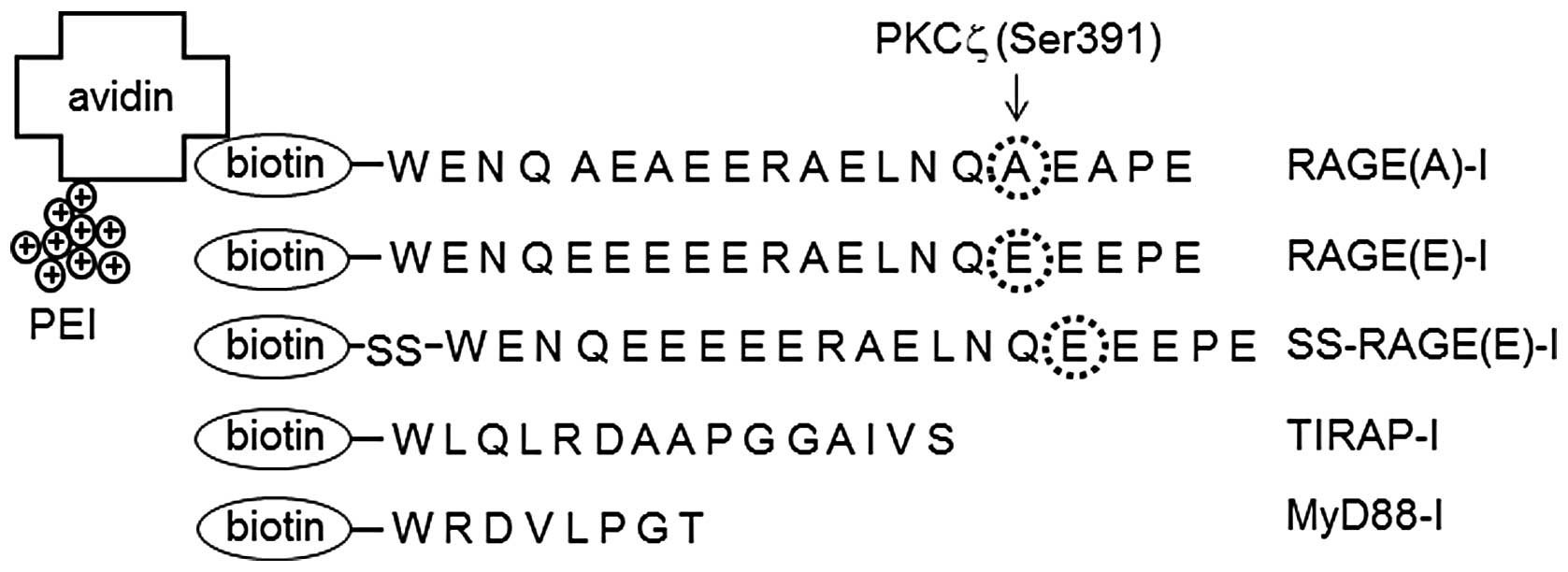
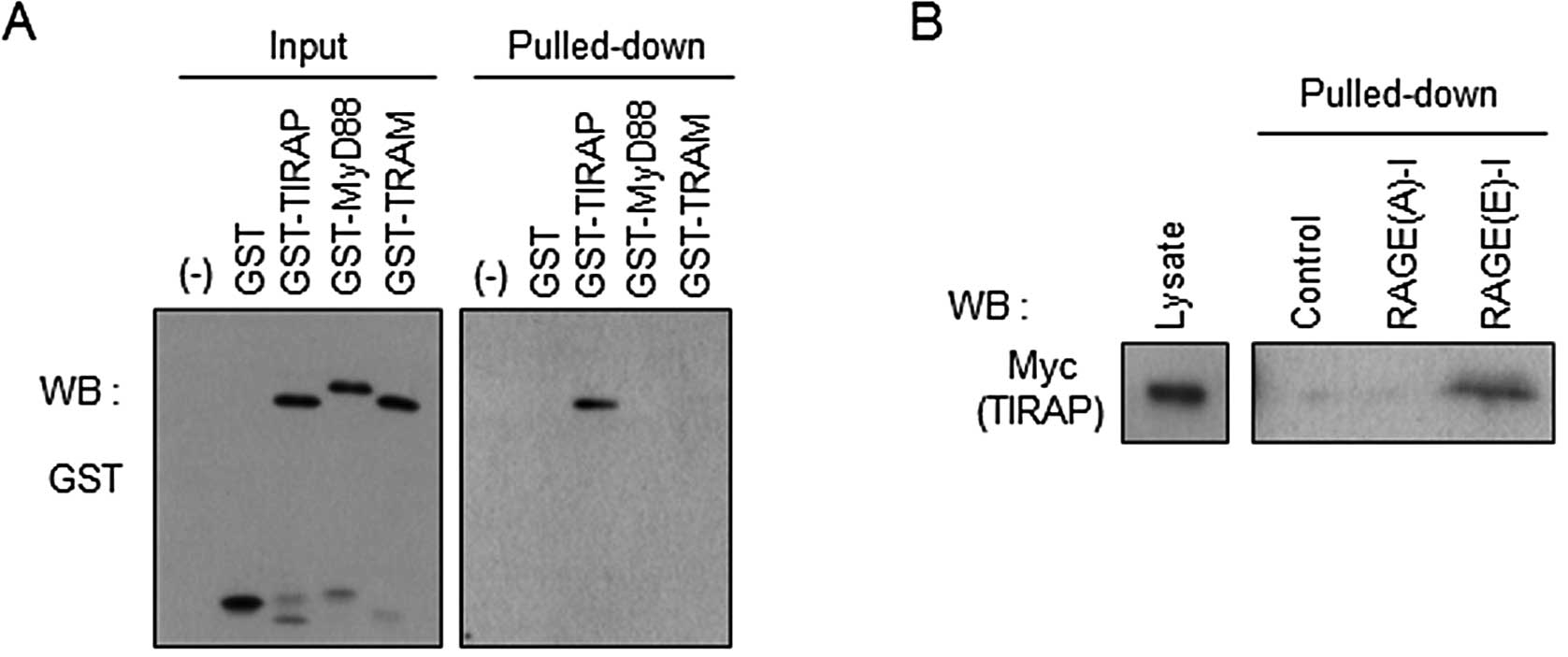
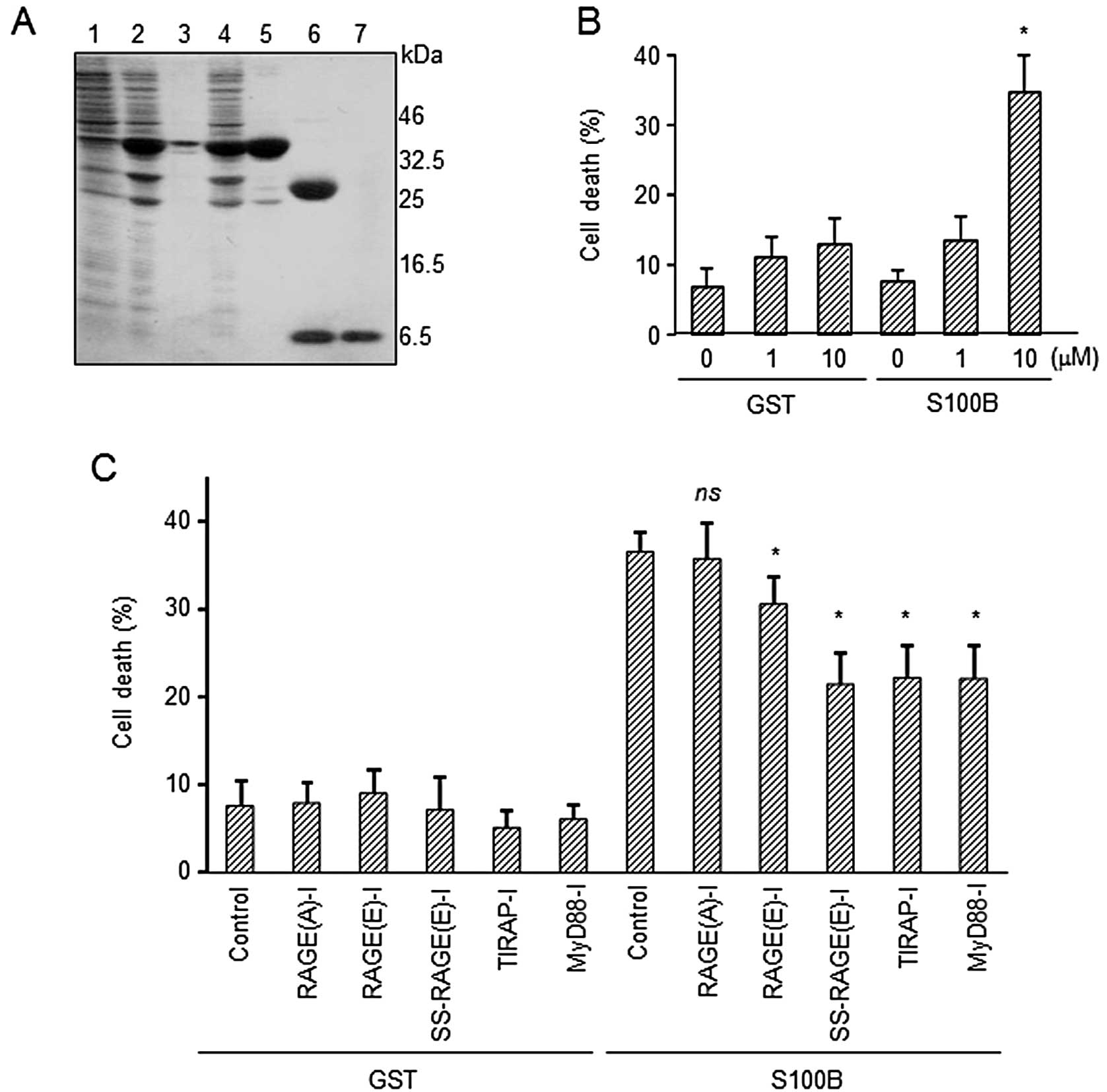
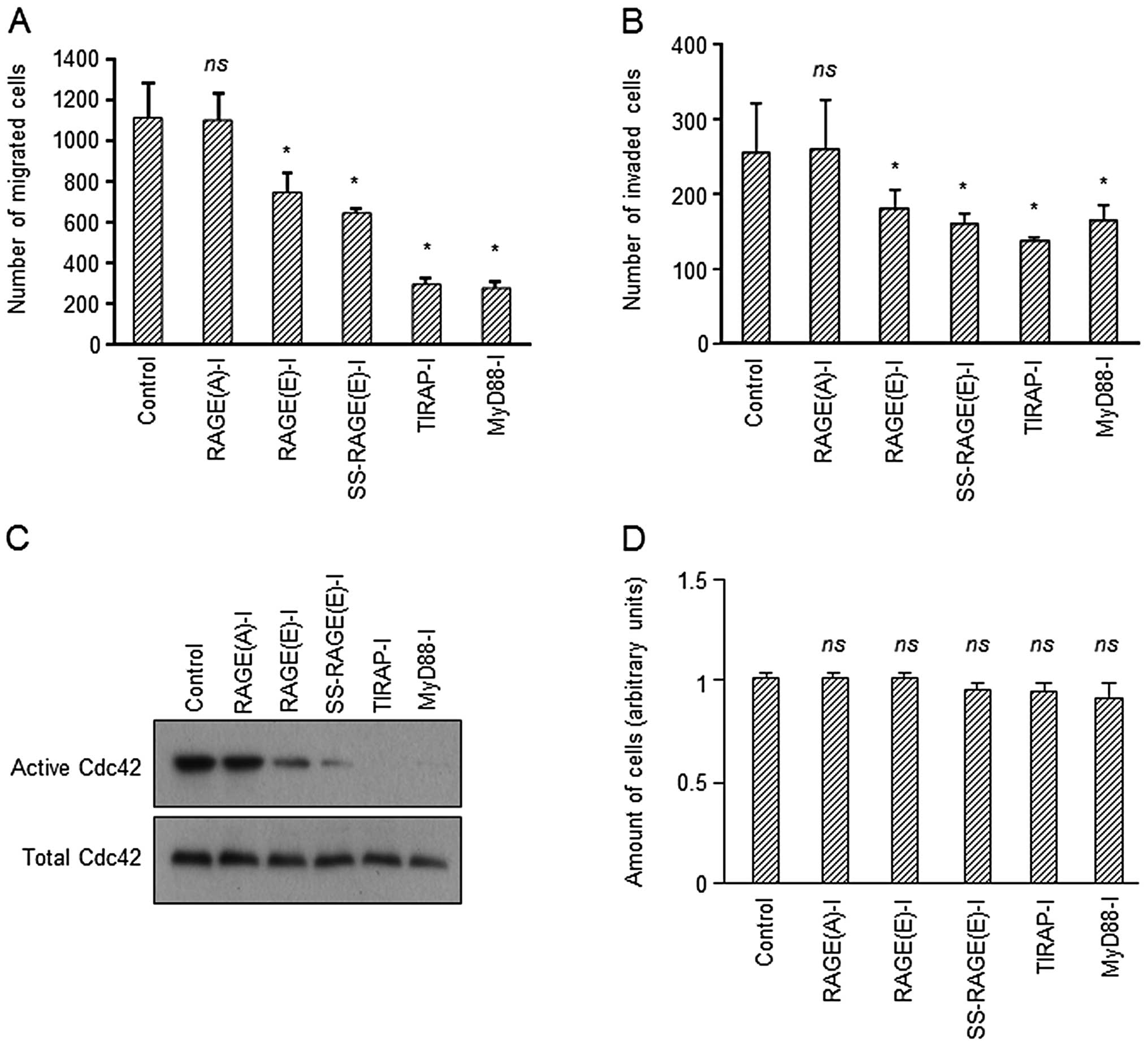
The receptor for advanced glycation end products (RAGE) is a multi‑ligand cell surface receptor and a member of the immunoglobulin superfamily. RAGE is involved in a wide range of inflammatory, degenerative and hyper‑proliferative disorders which span over different organs by engaging diverse ligands, including advanced glycation end products, S100 family proteins, high‑mobility group protein B1 (HMGB1) and amyloid β. We previously demonstrated that the cytoplasmic domain of RAGE is phosphorylated upon the binding of ligands, enabling the recruitment of two distinct pairs of adaptor proteins, Toll‑interleukin 1 receptor domain‑containing adaptor protein (TIRAP) and myeloid differentiation protein 88 (MyD88). This engagement allows the activation of downstream effector molecules, and thereby mediates a wide variety of cellular processes, such as inflammatory responses, apoptotic cell death, migration and cell growth. Therefore, inhibition of the binding of TIRAP to RAGE may abrogate intracellular signaling from ligand‑activated RAGE. In the present study, we developed inhibitor peptides for RAGE signaling (RAGE‑I) by mimicking the phosphorylatable cytosolic domain of RAGE. RAGE‑I was efficiently delivered into the cells by polyethylenimine (PEI) cationization. We demonstrated that RAGE‑I specifically bound to TIRAP and abrogated the activation of Cdc42 induced by ligand‑activated RAGE. Furthermore, we were able to reduce neuronal cell death induced by an excess amount of S100B and to inhibit the migration and invasion of glioma cells in vitro. Our results indicate that RAGE‑I provides a powerful tool for therapeutics to block RAGE‑mediated multiple signaling.
View Figures

Figure 1

Figure 2

Figure 3

Figure 4

Figure 5

View References

1 

Neeper M, Schmidt AM, Brett J, et al: Cloning and expression of a cell surface receptor for advanced glycosylation end products of proteins. J Biol Chem. 267:14998–15004. 1992.PubMed/NCBI

2 

Schmidt AM, Yan SD, Yan SF and Stern DM: The biology of the receptor for advanced glycation end products and its ligands. Biochim Biophys Acta. 1498:99–111. 2000. View Article : Google Scholar : PubMed/NCBI

3 

Schmidt AM, Mora R, Cao R, et al: The endothelial cell binding site for advanced glycation end products consists of a complex: an integral membrane protein and a lactoferrin-like polypeptide. J Biol Chem. 269:9882–9888. 1994.PubMed/NCBI

4 

Hofmann MA, Drury S, Fu C, et al: RAGE mediates a novel proinflammatory axis: a central cell surface receptor for S100/calgranulin polypeptides. Cell. 97:889–901. 1999. View Article : Google Scholar : PubMed/NCBI

5 

Huttunen HJ, Kuja-Panula J, Sorci G, Agneletti AL, Donato R and Rauvala H: Coregulation of neurite outgrowth and cell survival by amphoterin and S100 proteins through receptor for advanced glycation end products (RAGE) activation. J Biol Chem. 275:40096–40105. 2000. View Article : Google Scholar : PubMed/NCBI

6 

Leclerc E, Fritz G, Weibel M, Heizmann CW and Galichet A: S100B and S100A6 differentially modulate cell survival by interacting with distinct RAGE (receptor for advanced glycation end products) immunoglobulin domains. J Biol Chem. 282:31317–31331. 2007. View Article : Google Scholar

7 

Li J, Qu X and Schmidt AM: Sp1-binding elements in the promoter of RAGE are essential for amphoterin-mediated gene expression in cultured neuroblastoma cells. J Biol Chem. 273:30870–30878. 1998. View Article : Google Scholar : PubMed/NCBI

8 

Yan SD, Chen X, Fu J, et al: RAGE and amyloid-beta peptide neurotoxicity in Alzheimer’s disease. Nature. 382:685–691. 1996.

9 

Huang JS, Guh JY, Chen HC, Hung WC, Lai YH and Chuang LY: Role of receptor for advanced glycation end-product (RAGE) and the JAK/STAT-signaling pathway in AGE-induced collagen production in NRK-49F cells. J Cell Biochem. 81:102–113. 2001. View Article : Google Scholar

10 

Yeh CH, Sturgis L, Haidacher J, et al: Requirement for p38 and p44/p42 mitogen-activated protein kinases in RAGE-mediated nuclear factor-kappaB transcriptional activation and cytokine secretion. Diabetes. 50:1495–1504. 2001. View Article : Google Scholar

11 

Lander HM, Tauras JM, Ogiste JS, Hori O, Moss RA and Schmidt AM: Activation of the receptor for advanced glycation end products triggers a p21(ras)-dependent mitogen-activated protein kinase pathway regulated by oxidant stress. J Biol Chem. 272:17810–17814. 1997. View Article : Google Scholar

12 

Huttunen HJ, Kuja-Panula J and Rauvala H: Receptor for advanced glycation end products (RAGE) signaling induces CREB-dependent chromogranin expression during neuronal differentiation. J Biol Chem. 277:38635–38646. 2002. View Article : Google Scholar

13 

Brett J, Schmidt AM, Yan SD, et al: Survey of the distribution of a newly characterized receptor for advanced glycation end products in tissues. Am J Pathol. 143:1699–1712. 1993.PubMed/NCBI

14 

Beccafico S, Riuzzi F, Puglielli C, et al: Human muscle satellite cells show age-related differential expression of S100B protein and RAGE. Age. 33:523–541. 2011. View Article : Google Scholar : PubMed/NCBI

15 

Srikanth V, Maczurek A, Phan T, et al: Advanced glycation endproducts and their receptor RAGE in Alzheimer’s disease. Neurobiol Aging. 32:763–777. 2011.

16 

Maczurek A, Shanmugam K and Münch G: Inflammation and the redox-sensitive AGE-RAGE pathway as a therapeutic target in Alzheimer’s disease. Ann NY Acad Sci. 1126:147–151. 2008.PubMed/NCBI

17 

Koyama H and Nishizawa Y: AGEs/RAGE in CKD: irreversible metabolic memory road toward CVD? Eur J Clin Invest. 40:623–635. 2010. View Article : Google Scholar : PubMed/NCBI

18 

Reiniger N, Lau K, McCalla D, et al: Deletion of the receptor for advanced glycation end products reduces glomerulosclerosis and preserves renal function in the diabetic OVE26 mouse. Diabetes. 59:2043–2054. 2010. View Article : Google Scholar : PubMed/NCBI

19 

Wu L, Ma L, Nicholson LF and Black PN: Advanced glycation end products and its receptor (RAGE) are increased in patients with COPD. Respir Med. 105:329–336. 2011. View Article : Google Scholar : PubMed/NCBI

20 

Ramasamy R, Yan SF and Schmidt AM: Receptor for AGE (RAGE): signaling mechanisms in the pathogenesis of diabetes and its complications. Ann NY Acad Sci. 1243:88–102. 2011. View Article : Google Scholar : PubMed/NCBI

21 

Su XD, Li SS, Tian YQ, Zhang ZY, Zhang GZ and Wang LX: Elevated serum levels of advanced glycation end products and their monocyte receptors in patients with type 2 diabetes. Arch Med Res. 42:596–601. 2011. View Article : Google Scholar : PubMed/NCBI

22 

Leclerc E, Heizmann CW and Vetter SW: RAGE and S100 protein transcription levels are highly variable in human melanoma tumors and cells. Gen Physiol Biophys. 28:F65–F75. 2009.PubMed/NCBI

23 

Huttunen HJ, Fages C, Kuja-Panula J, Ridley AJ and Rauvala H: Receptor for advanced glycation end products-binding COOH-terminal motif of amphoterin inhibits invasive migration and metastasis. Cancer Res. 62:4805–4811. 2002.PubMed/NCBI

24 

Arumugam T, Ramachandran V, Gomez SB, Schmidt AM and Logsdon CD: S100P-derived RAGE antagonistic peptide reduces tumor growth and metastasis. Clin Cancer Res. 18:4356–4364. 2012. View Article : Google Scholar : PubMed/NCBI

25 

Abe R, Shimizu T, Sugawara H, et al: Regulation of human melanoma growth and metastasis by AGE-AGE receptor interactions. J Invest Dermatol. 122:461–467. 2004. View Article : Google Scholar : PubMed/NCBI

26 

Arumugam T, Ramachandran V and Logsdon CD: Effect of cromolyn on S100P interactions with RAGE and pancreatic cancer growth and invasion in mouse models. J Natl Cancer Inst. 98:1806–1818. 2006. View Article : Google Scholar : PubMed/NCBI

27 

Sakaguchi M, Murata H, Yamamoto K, et al: TIRAP, an adaptor protein for TLR2/4, transduces a signal from RAGE phosphorylated upon ligand binding. PLoS One. 6:e231322011. View Article : Google Scholar : PubMed/NCBI

28 

Kitazoe M, Murata H, Futami J, et al: Protein transduction assisted by polyethylenimine-cationized carrier proteins. J Biochem. 137:693–701. 2005. View Article : Google Scholar : PubMed/NCBI

29 

Murata H, Sakaguchi M, Futami J, et al: Denatured and reversibly cationized p53 readily enters cells and simultaneously folds to the functional protein in the cells. Biochemistry. 45:6124–6132. 2006. View Article : Google Scholar : PubMed/NCBI

30 

Futami M, Watanabe Y, Asama T, et al: Uniformly cationized protein efficiently reaches the cytosol of mammalian cells. Bioconjug Chem. 23:2025–2031. 2012. View Article : Google Scholar : PubMed/NCBI

31 

Schilling D, Thomas K, Nixdorff K, Vogel SN and Fenton MJ: Toll-like receptor 4 and Toll-IL-1 receptor domain-containing adapter protein (TIRAP)/myeloid differentiation protein 88 adapter-like (Mal) contribute to maximal IL-6 expression in macrophages. J Immunol. 169:5874–5880. 2002. View Article : Google Scholar

32 

Loiarro M, Sette C, Gallo G, et al: Peptide-mediated interference of TIR domain dimerization in MyD88 inhibits interleukin-1-dependent activation of NF-{kappa}B. J Biol Chem. 280:15809–15814. 2005.PubMed/NCBI

33 

Kaplan IM, Wadia JS and Dowdy SF: Cationic TAT peptide transduction domain enters cells by macropinocytosis. J Control Release. 102:247–253. 2005. View Article : Google Scholar : PubMed/NCBI

34 

Bassi R, Giussani P, Anelli V, et al: HMGB1 as an autocrine stimulus in human T98G glioblastoma cells: role in cell growth and migration. J Neurooncol. 87:23–33. 2008. View Article : Google Scholar : PubMed/NCBI

35 

Kataoka K, Ono T, Murata H, et al: S100A7 promotes the migration and invasion of osteosarcoma cells via the receptor for advanced glycation end products. Oncol Lett. 3:1149–1153. 2012.PubMed/NCBI

36 

Hudson BI, Kalea AZ, Del Mar Arriero M, et al: Interaction of the RAGE cytoplasmic domain with diaphanous-1 is required for ligand-stimulated cellular migration through activation of Rac1 and Cdc42. J Biol Chem. 283:34457–34468. 2008. View Article : Google Scholar : PubMed/NCBI

37 

Yamamoto K, Murata H, Putranto EW, et al: DOCK7 is a critical regulator of the RAGE-Cdc42 signaling axis that induces formation of dendritic pseudopodia in human cancer cells. Oncol Rep. 29:1073–1079. 2013.PubMed/NCBI

38 

Deane R, Singh I, Sagare AP, et al: A multimodal RAGE-specific inhibitor reduces amyloid β-mediated brain disorder in a mouse model of Alzheimer disease. J Clin Invest. 122:1377–1392. 2012.PubMed/NCBI

39 

Griffin WS, Sheng JG, McKenzie JE, et al: Life-long overexpression of S100beta in Down’s syndrome: implications for Alzheimer pathogenesis. Neurobiol Aging. 19:401–405. 1998.PubMed/NCBI

40 

Mrak RE and Griffinbc WS: The role of activated astrocytes and of the neurotrophic cytokine S100B in the pathogenesis of Alzheimer’s disease. Neurobiol Aging. 22:915–922. 2001.PubMed/NCBI

Related Articles

  • Abstract
  • View
  • Download
  • Twitter
Copy and paste a formatted citation
Spandidos Publications style
Putranto EW, Murata H, Yamamoto KI, Kataoka K, Yamada H, Futami JI, Sakaguchi M and Huh NH: Inhibition of RAGE signaling through the intracellular delivery of inhibitor peptides by PEI cationization. Int J Mol Med 32: 938-944, 2013.
APA
Putranto, E.W., Murata, H., Yamamoto, K., Kataoka, K., Yamada, H., Futami, J. ... Huh, N. (2013). Inhibition of RAGE signaling through the intracellular delivery of inhibitor peptides by PEI cationization. International Journal of Molecular Medicine, 32, 938-944. https://doi.org/10.3892/ijmm.2013.1467
MLA
Putranto, E. W., Murata, H., Yamamoto, K., Kataoka, K., Yamada, H., Futami, J., Sakaguchi, M., Huh, N."Inhibition of RAGE signaling through the intracellular delivery of inhibitor peptides by PEI cationization". International Journal of Molecular Medicine 32.4 (2013): 938-944.
Chicago
Putranto, E. W., Murata, H., Yamamoto, K., Kataoka, K., Yamada, H., Futami, J., Sakaguchi, M., Huh, N."Inhibition of RAGE signaling through the intracellular delivery of inhibitor peptides by PEI cationization". International Journal of Molecular Medicine 32, no. 4 (2013): 938-944. https://doi.org/10.3892/ijmm.2013.1467
Copy and paste a formatted citation
x
Spandidos Publications style
Putranto EW, Murata H, Yamamoto KI, Kataoka K, Yamada H, Futami JI, Sakaguchi M and Huh NH: Inhibition of RAGE signaling through the intracellular delivery of inhibitor peptides by PEI cationization. Int J Mol Med 32: 938-944, 2013.
APA
Putranto, E.W., Murata, H., Yamamoto, K., Kataoka, K., Yamada, H., Futami, J. ... Huh, N. (2013). Inhibition of RAGE signaling through the intracellular delivery of inhibitor peptides by PEI cationization. International Journal of Molecular Medicine, 32, 938-944. https://doi.org/10.3892/ijmm.2013.1467
MLA
Putranto, E. W., Murata, H., Yamamoto, K., Kataoka, K., Yamada, H., Futami, J., Sakaguchi, M., Huh, N."Inhibition of RAGE signaling through the intracellular delivery of inhibitor peptides by PEI cationization". International Journal of Molecular Medicine 32.4 (2013): 938-944.
Chicago
Putranto, E. W., Murata, H., Yamamoto, K., Kataoka, K., Yamada, H., Futami, J., Sakaguchi, M., Huh, N."Inhibition of RAGE signaling through the intracellular delivery of inhibitor peptides by PEI cationization". International Journal of Molecular Medicine 32, no. 4 (2013): 938-944. https://doi.org/10.3892/ijmm.2013.1467
Follow us
  • Twitter
  • LinkedIn
  • Facebook
About
  • Spandidos Publications
  • Careers
  • Cookie Policy
  • Privacy Policy
How can we help?
  • Help
  • Live Chat
  • Contact
  • Email to our Support Team