Spandidos Publications Logo
  • About
    • About Spandidos
    • Aims and Scopes
    • Abstracting and Indexing
    • Editorial Policies
    • Reprints and Permissions
    • Job Opportunities
    • Terms and Conditions
    • Contact
  • Journals
    • All Journals
    • Oncology Letters
      • Oncology Letters
      • Information for Authors
      • Editorial Policies
      • Editorial Board
      • Aims and Scope
      • Abstracting and Indexing
      • Bibliographic Information
      • Archive
    • International Journal of Oncology
      • International Journal of Oncology
      • Information for Authors
      • Editorial Policies
      • Editorial Board
      • Aims and Scope
      • Abstracting and Indexing
      • Bibliographic Information
      • Archive
    • Molecular and Clinical Oncology
      • Molecular and Clinical Oncology
      • Information for Authors
      • Editorial Policies
      • Editorial Board
      • Aims and Scope
      • Abstracting and Indexing
      • Bibliographic Information
      • Archive
    • Experimental and Therapeutic Medicine
      • Experimental and Therapeutic Medicine
      • Information for Authors
      • Editorial Policies
      • Editorial Board
      • Aims and Scope
      • Abstracting and Indexing
      • Bibliographic Information
      • Archive
    • International Journal of Molecular Medicine
      • International Journal of Molecular Medicine
      • Information for Authors
      • Editorial Policies
      • Editorial Board
      • Aims and Scope
      • Abstracting and Indexing
      • Bibliographic Information
      • Archive
    • Biomedical Reports
      • Biomedical Reports
      • Information for Authors
      • Editorial Policies
      • Editorial Board
      • Aims and Scope
      • Abstracting and Indexing
      • Bibliographic Information
      • Archive
    • Oncology Reports
      • Oncology Reports
      • Information for Authors
      • Editorial Policies
      • Editorial Board
      • Aims and Scope
      • Abstracting and Indexing
      • Bibliographic Information
      • Archive
    • Molecular Medicine Reports
      • Molecular Medicine Reports
      • Information for Authors
      • Editorial Policies
      • Editorial Board
      • Aims and Scope
      • Abstracting and Indexing
      • Bibliographic Information
      • Archive
    • World Academy of Sciences Journal
      • World Academy of Sciences Journal
      • Information for Authors
      • Editorial Policies
      • Editorial Board
      • Aims and Scope
      • Abstracting and Indexing
      • Bibliographic Information
      • Archive
    • International Journal of Functional Nutrition
      • International Journal of Functional Nutrition
      • Information for Authors
      • Editorial Policies
      • Editorial Board
      • Aims and Scope
      • Abstracting and Indexing
      • Bibliographic Information
      • Archive
    • International Journal of Epigenetics
      • International Journal of Epigenetics
      • Information for Authors
      • Editorial Policies
      • Editorial Board
      • Aims and Scope
      • Abstracting and Indexing
      • Bibliographic Information
      • Archive
    • Medicine International
      • Medicine International
      • Information for Authors
      • Editorial Policies
      • Editorial Board
      • Aims and Scope
      • Abstracting and Indexing
      • Bibliographic Information
      • Archive
  • Articles
  • Information
    • Information for Authors
    • Information for Reviewers
    • Information for Librarians
    • Information for Advertisers
    • Conferences
  • Language Editing
Spandidos Publications Logo
  • About
    • About Spandidos
    • Aims and Scopes
    • Abstracting and Indexing
    • Editorial Policies
    • Reprints and Permissions
    • Job Opportunities
    • Terms and Conditions
    • Contact
  • Journals
    • All Journals
    • Biomedical Reports
      • Information for Authors
      • Editorial Policies
      • Editorial Board
      • Aims and Scope
      • Abstracting and Indexing
      • Bibliographic Information
      • Archive
    • Experimental and Therapeutic Medicine
      • Information for Authors
      • Editorial Policies
      • Editorial Board
      • Aims and Scope
      • Abstracting and Indexing
      • Bibliographic Information
      • Archive
    • International Journal of Epigenetics
      • Information for Authors
      • Editorial Policies
      • Editorial Board
      • Aims and Scope
      • Abstracting and Indexing
      • Bibliographic Information
      • Archive
    • International Journal of Functional Nutrition
      • Information for Authors
      • Editorial Policies
      • Editorial Board
      • Aims and Scope
      • Abstracting and Indexing
      • Bibliographic Information
      • Archive
    • International Journal of Molecular Medicine
      • Information for Authors
      • Editorial Policies
      • Editorial Board
      • Aims and Scope
      • Abstracting and Indexing
      • Bibliographic Information
      • Archive
    • International Journal of Oncology
      • Information for Authors
      • Editorial Policies
      • Editorial Board
      • Aims and Scope
      • Abstracting and Indexing
      • Bibliographic Information
      • Archive
    • Medicine International
      • Information for Authors
      • Editorial Policies
      • Editorial Board
      • Aims and Scope
      • Abstracting and Indexing
      • Bibliographic Information
      • Archive
    • Molecular and Clinical Oncology
      • Information for Authors
      • Editorial Policies
      • Editorial Board
      • Aims and Scope
      • Abstracting and Indexing
      • Bibliographic Information
      • Archive
    • Molecular Medicine Reports
      • Information for Authors
      • Editorial Policies
      • Editorial Board
      • Aims and Scope
      • Abstracting and Indexing
      • Bibliographic Information
      • Archive
    • Oncology Letters
      • Information for Authors
      • Editorial Policies
      • Editorial Board
      • Aims and Scope
      • Abstracting and Indexing
      • Bibliographic Information
      • Archive
    • Oncology Reports
      • Information for Authors
      • Editorial Policies
      • Editorial Board
      • Aims and Scope
      • Abstracting and Indexing
      • Bibliographic Information
      • Archive
    • World Academy of Sciences Journal
      • Information for Authors
      • Editorial Policies
      • Editorial Board
      • Aims and Scope
      • Abstracting and Indexing
      • Bibliographic Information
      • Archive
  • Articles
  • Information
    • For Authors
    • For Reviewers
    • For Librarians
    • For Advertisers
    • Conferences
  • Language Editing
Login Register Submit
  • This site uses cookies
  • You can change your cookie settings at any time by following the instructions in our Cookie Policy. To find out more, you may read our Privacy Policy.

    I agree
Search articles by DOI, keyword, author or affiliation
Search
Advanced Search
presentation
International Journal of Molecular Medicine
Join Editorial Board Propose a Special Issue
Print ISSN: 1107-3756 Online ISSN: 1791-244X
Journal Cover
2014-March Volume 33 Issue 3

Full Size Image

Sign up for eToc alerts
Recommend to Library

Journals

International Journal of Molecular Medicine

International Journal of Molecular Medicine

International Journal of Molecular Medicine is an international journal devoted to molecular mechanisms of human disease.

International Journal of Oncology

International Journal of Oncology

International Journal of Oncology is an international journal devoted to oncology research and cancer treatment.

Molecular Medicine Reports

Molecular Medicine Reports

Covers molecular medicine topics such as pharmacology, pathology, genetics, neuroscience, infectious diseases, molecular cardiology, and molecular surgery.

Oncology Reports

Oncology Reports

Oncology Reports is an international journal devoted to fundamental and applied research in Oncology.

Experimental and Therapeutic Medicine

Experimental and Therapeutic Medicine

Experimental and Therapeutic Medicine is an international journal devoted to laboratory and clinical medicine.

Oncology Letters

Oncology Letters

Oncology Letters is an international journal devoted to Experimental and Clinical Oncology.

Biomedical Reports

Biomedical Reports

Explores a wide range of biological and medical fields, including pharmacology, genetics, microbiology, neuroscience, and molecular cardiology.

Molecular and Clinical Oncology

Molecular and Clinical Oncology

International journal addressing all aspects of oncology research, from tumorigenesis and oncogenes to chemotherapy and metastasis.

World Academy of Sciences Journal

World Academy of Sciences Journal

Multidisciplinary open-access journal spanning biochemistry, genetics, neuroscience, environmental health, and synthetic biology.

International Journal of Functional Nutrition

International Journal of Functional Nutrition

Open-access journal combining biochemistry, pharmacology, immunology, and genetics to advance health through functional nutrition.

International Journal of Epigenetics

International Journal of Epigenetics

Publishes open-access research on using epigenetics to advance understanding and treatment of human disease.

Medicine International

Medicine International

An International Open Access Journal Devoted to General Medicine.

Journal Cover
2014-March Volume 33 Issue 3

Full Size Image

Sign up for eToc alerts
Recommend to Library

  • Article
  • Citations
    • Cite This Article
    • Download Citation
    • Create Citation Alert
    • Remove Citation Alert
    • Cited By
  • Similar Articles
    • Related Articles (in Spandidos Publications)
    • Similar Articles (Google Scholar)
    • Similar Articles (PubMed)
  • Download PDF
  • Download XML
  • View XML
Article

Formation of a salsolinol-like compound, the neurotoxin, 1-acetyl-6,7-dihydroxy-1,2,3,4-tetrahydroisoquinoline, in a cellular model of hyperglycemia and a rat model of diabetes

  • Authors:
    • De-Wei Song
    • Nian Xin
    • Bing-Jie Xie
    • Yu-Juan Li
    • Ling-Yan Meng
    • Hong-Mei Li
    • Michael Schläppi
    • Yu-Lin Deng
  • View Affiliations / Copyright

    Affiliations: Division of Chemical Metrology and Analytical Science, National Institute of Metrology, Beijing 100013, P.R. China, School of Life Science, Beijing Institute of Technology, Beijing 100081, P.R. China, Marquette University, Milwaukee, WI 53233, USA
  • Pages: 736-742
    |
    Published online on: December 24, 2013
       https://doi.org/10.3892/ijmm.2013.1604
  • Expand metrics +
Metrics: Total Views: 0 (Spandidos Publications: | PMC Statistics: )
Metrics: Total PDF Downloads: 0 (Spandidos Publications: | PMC Statistics: )
Cited By (CrossRef): 0 citations Loading Articles...

This article is mentioned in:


Abstract

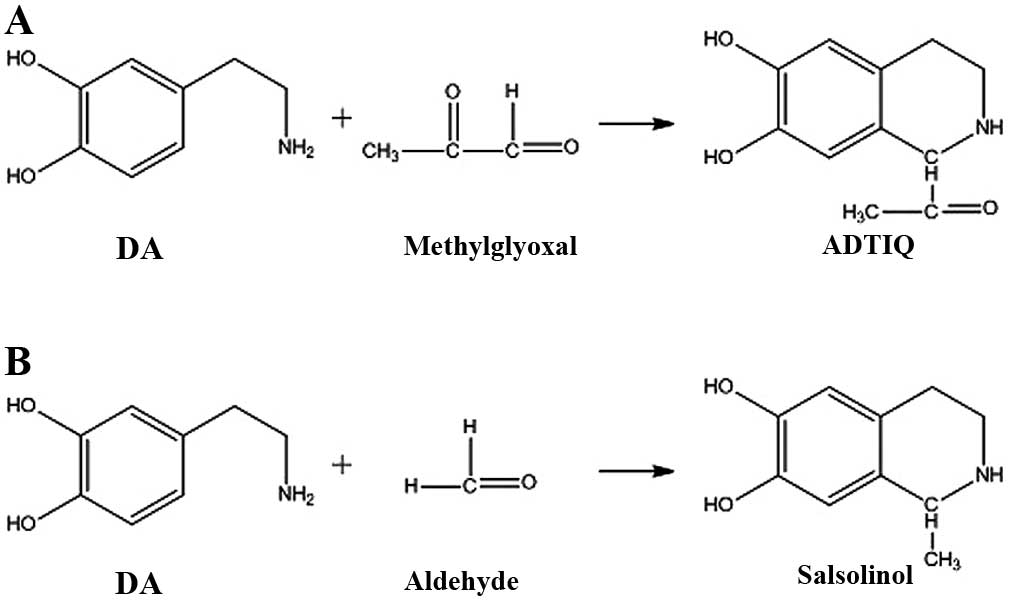
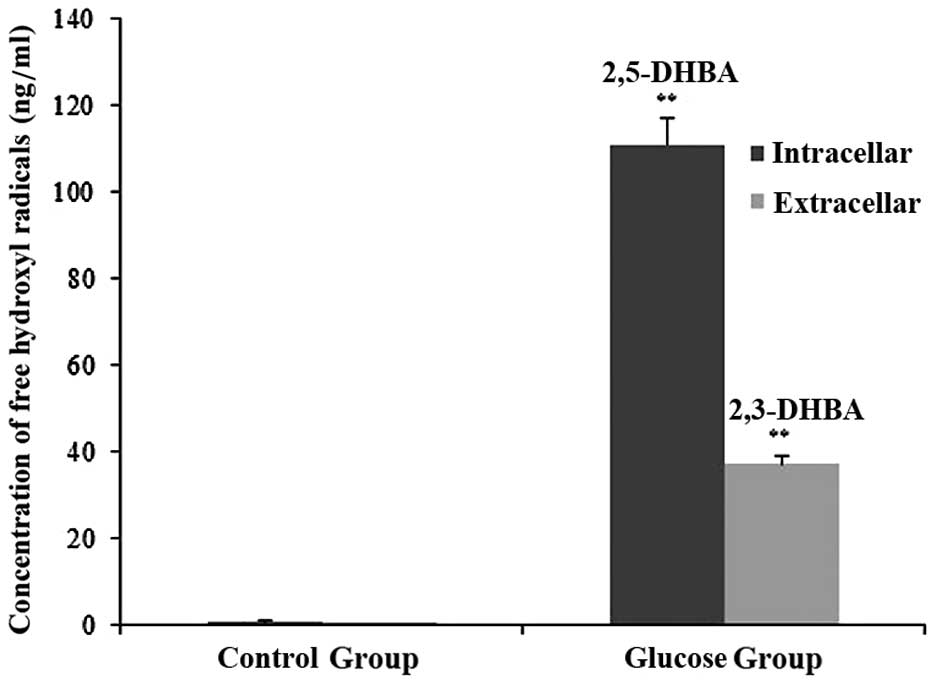
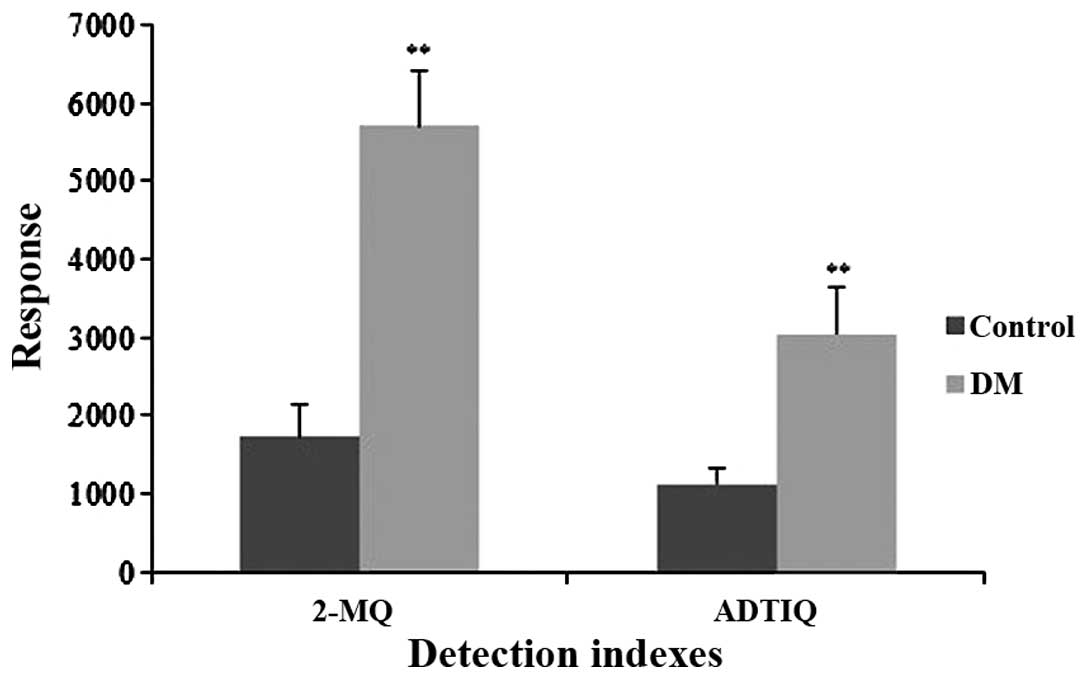
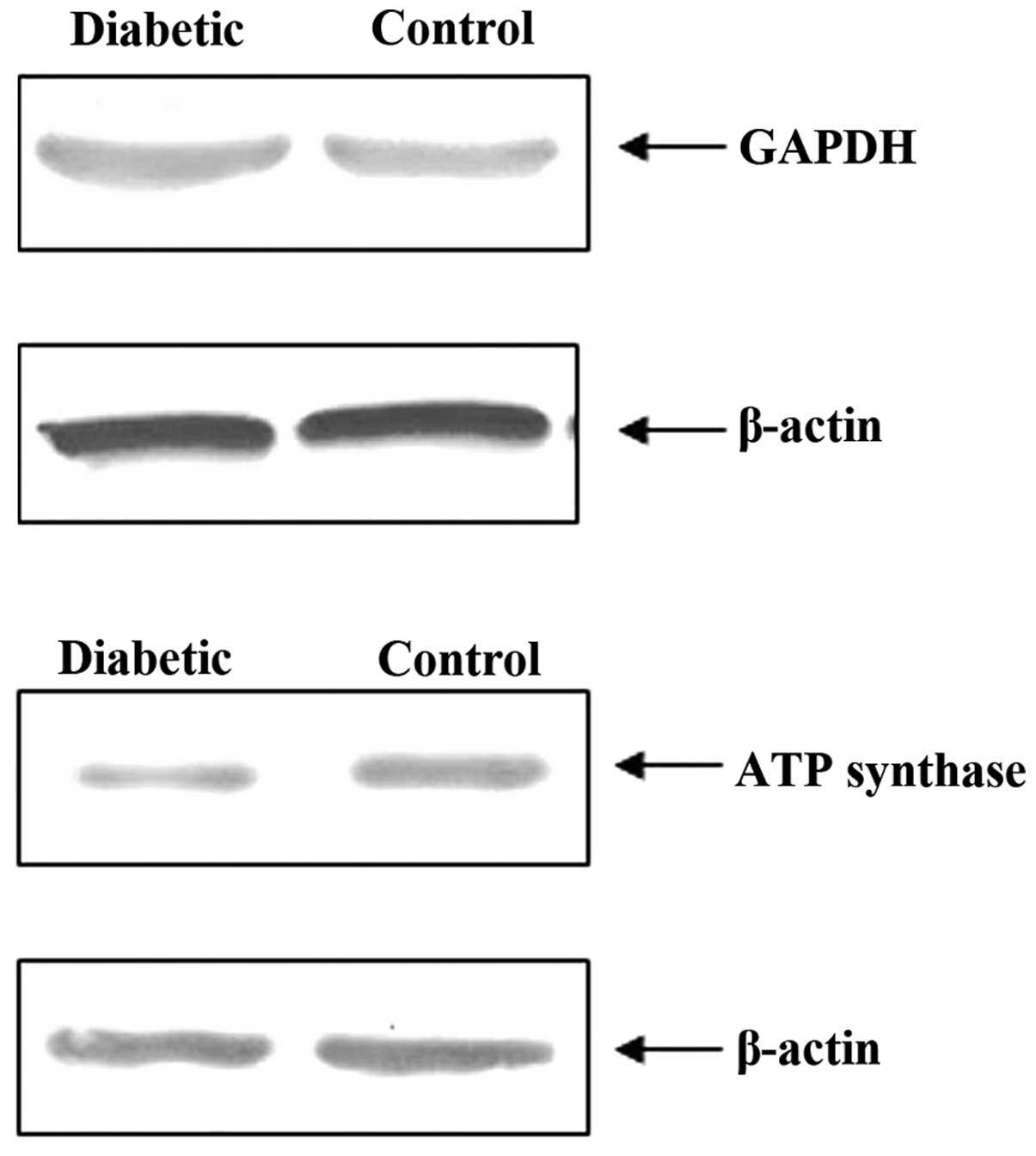
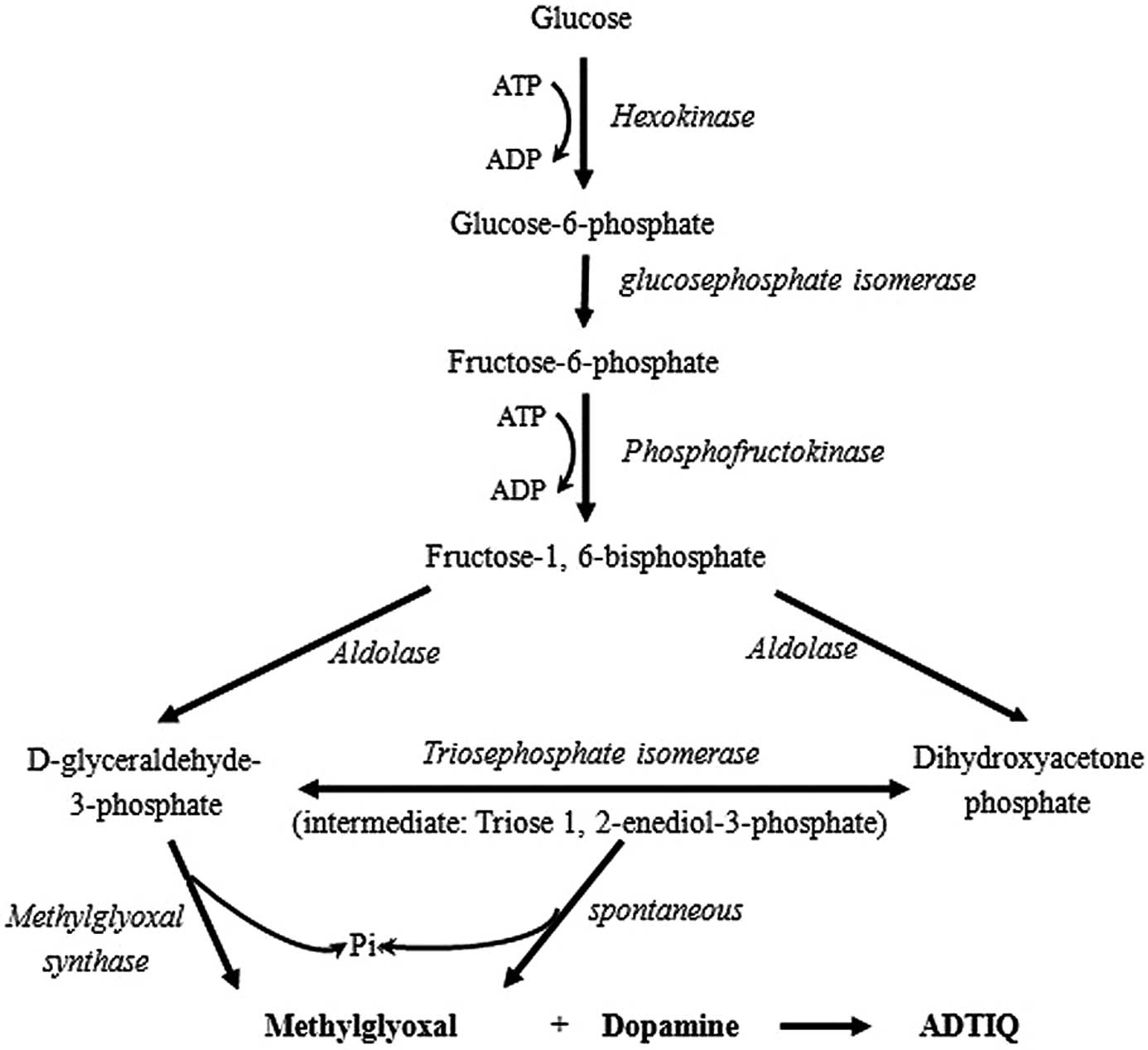
There are statistical data indicating that diabetes is a risk factor for Parkinson's disease (PD). Methylglyoxal (MG), a biologically reactive byproduct of glucose metabolism, the levels of which have been shown to be increase in diabetes, reacts with dopamine to form 1-acetyl-6,7-dihydroxy-1,2,3,4-tetrahydroisoquinoline (ADTIQ); this formation may provide further insight into the connection between PD and diabetes. In this study, we investigated the role of ADTIQ in these two diseases to determine in an aim to enhance our understanding of the link between PD and diabetes. To this end, a cell model of hyperglycemia and a rat model of diabetes were established. In the cell model of hyperglycemia, compared with the control group, the elevated glucose levels promoted free hydroxyl radical formation (p<0.01). An ADTIQ assay was successfully developed and ADTIQ levels were detected and quantified. The levels of its precursors, MG and dopamine (DA), were determined in both the cell model of hyperglycemia and the rat model of diabetes. The proteins related to glucose metabolism were also assayed. Compared with the control group, ADTIQ and MG levels were significantly elevated not only in the cell model of hyperglycemia, but also in the brains of rats with diabetes (p<0.01). Seven key enzymes from the glycolytic pathway were found to be significantly more abundant in the brains of rats with diabetes. Moreover, it was found that adenosine triphosphate (ATP) synthase and superoxide dismutase (SOD) expression levels were markedly decreased in the rats with diabetes compared with the control group. Therefore, ADTIQ expression levels were found to be elevated under hyperglycemic conditions. The results reported herein demonstrate that ADTIQ, which is derived from MG, the levels of which areincreased in diabetes, may serve as a neurotoxin to dopaminergic neurons, eventually leading to PD.
View Figures

Figure 1

Figure 2

Figure 3

Figure 4

Figure 5

Figure 6

View References

1 

Xu Q, Park Y, Huang X, Hollenbeck A, Blair A, Schatzkin A and Chen H: Diabetes and Risk of Parkinson’s Disease. Diabetes Care. 34:910–915. 2011.

2 

Schernhammer E, Hansen J, Rugbjerg K, Wermuth L and Ritz B: Diabetes and the risk of developing Parkinson’s disease in Denmark. Diabetes Care. 34:1102–1108. 2011.

3 

Arvanitakis Z, Wilson RS, Schneider JA, Bienias JL, Evans DA and Bennett DA: Diabetes mellitus and progression of rigidity and gait disturbance in older persons. Neurology. 63:996–1001. 2004. View Article : Google Scholar : PubMed/NCBI

4 

Deng YL, Zhang YQ, Li YJ, Xiao SY, Song DW, Qing H, Li Q and Rajput AH: Occurrence and distribution of salsolinol-like compound, 1-acetyl-6,7-dihydroxy-1,2,3,4-tetrahydroisoquinoline (ADTIQ) in parkinsonian brains. J Neural Transm. 119:435–441. 2012. View Article : Google Scholar : PubMed/NCBI

5 

Ristow M: Neurodegenerative disorders associated with diabetes mellitus. J Mol Med (Berl). 82:510–529. 2004. View Article : Google Scholar : PubMed/NCBI

6 

Deng YL and Rajput AM: 126th Annual Meeting, American Neurological Association: Abstracts: Plenary Session: Epilepsy. Ann Neurol. 50(Suppl 1): S19–S22. 2001. View Article : Google Scholar

7 

Haik GM Jr, Lo TW and Thornalley PJ: Methylglyoxal concentration and glyoxalase activities in the human lens. Exp Eye Res. 59:497–500. 1994. View Article : Google Scholar : PubMed/NCBI

8 

Zhu W, Wang D, Zheng J, An Y, Wang Q, Zhang W, Jin L, Gao H and Lin L: Effect of (R)-salsolinol and N-methyl-(R)-salsolinol on the balance impairment between dopamine and acetylcholine in rat brain: involvement in pathogenesis of Parkinson disease. Clin Chem. 54:705–712. 2008. View Article : Google Scholar : PubMed/NCBI

9 

Zhang Y, Xiao S, Wang L, Wang H, Zhu Y, Li Y and Deng Y: Absolute quantification of semicarbazide-sensitive amine oxidase in human umbilical artery by single-reaction monitoring with electrospray tandem mass spectrometry. Anal Bioanal Chem. 397:709–715. 2010. View Article : Google Scholar

10 

Wang R, Qing H, Liu XQ, Zheng XL and Deng YL: Iron contributes to the formation of catechol isoquinolines and oxidative toxicity induced by overdose dopamine in dopaminergic SH-SY5Y cells. Neurosci Bull. 24:125–132. 2008. View Article : Google Scholar : PubMed/NCBI

11 

Song DW, Du HQ, Wang L, Hu GF and Deng YL: Analysis of catechol quinoline substance in corpus striatum and hippocampus from brains of diabetic rat models by HPLC-MS. Chemistry. 11:1049–1052. 2010.

12 

Song DW, Hu GF, Zhou Y, Wang HB, Wang L, Zhu Y and Deng YL: Proteomic analysis of proteins related to Parkinson’s disease in the corpus striatum and hippocampus of diabetes rat model. Chemistry. 6:430–434. 2008.

13 

Kuhla B, Loske C, Garcia De Arriba S, Schinzel R, Huber J and Münch G: Differential effects of ‘Advanced glycation endproducts’ and beta-amyloid peptide on glucose utilization and ATP levels in the neuronal cell line SH-SY5Y. J Neural Transm. 11:427–439. 2004.

14 

Emdadul Haque M, Asanuma M, Higashi Y, Miyazaki I, Tanaka K and Ogawa N: Apoptosis-inducing neurotoxicity of dopamine and its metabolites via reactive quinone generation in neuroblastoma cells. Biochim Biophys Acta. 1619:39–52. 2003.PubMed/NCBI

15 

Collins MO, Yu L, Coba MP, Husi H, Campuzano I, Blackstock WP, Choudhary JS and Grant SGN: Proteomic analysis of in vivo phosphorylated synaptic proteins. J Biol Chem. 280:5972–5982. 2005. View Article : Google Scholar : PubMed/NCBI

16 

Song DW, Li Q, Luan YJ, Niu LY, Qing H and Deng YL: Comparative proteomic analysis of neural stem cells between differentiating and undifferentiating to dopaminergic neuron. Complex Medical Engineering (CME). In: IEEE/ICME International Conference, 1817–1823; 2007

17 

Diez L, Livertoux MH, Stark AA, Wellman-Rousseau M and Leroy P: High-performance liquid chromatographic assay of hydroxyl free radical using salicylic acid hydroxylation during in vitro experiments involving thiols. J Chromatogr B Biomed Sci Appl. 763:185–193. 2001. View Article : Google Scholar

18 

Ferger B, Spratt C, Earl CD, Teismann P, Oertel WH and Kuschinsky K: Effects of nicotine on hydroxyl free radical formation in vitro and on MPTP-induced neurotoxicity in vivo. Naunyn Schmiedebergs Arch Pharmacol. 358:351–359. 1998. View Article : Google Scholar : PubMed/NCBI

19 

Copeland RL Jr, Das JR, Kanaan YM, Taylor RE and Tizabi Y: Antiapoptotic effects of nicotine in its protection against salsolinol-induced cytotoxicity. Neurotox Res. 12:61–69. 2007. View Article : Google Scholar : PubMed/NCBI

20 

Yi H, Maruyama W, Akao Y, Takahashi T, Iwasa K, Youdim MB and Naoi M: N-Propargylamine protects SH-SY5Y cells from apoptosis induced by an endogenous neurotoxin, N-methyl(R)salsolinol, through stabilization of mitochondrial membrane and induction of anti-apoptotic Bcl-2. J Neural Transm. 113:21–32. 2006. View Article : Google Scholar

21 

Maruyama W, Akao Y, Youdim MB, Davis BA and Naoi M: Transfection-enforced Bcl-2 overexpression and an anti-Parkinson drug, rasagiline, prevent nuclear accumulation of glyceraldehyde-3-phosphate dehydrogenase induced by an endogenous dopaminergic neurotoxin, N-methyl(R)salsolinol. J Neurochem. 78:727–735. 2001. View Article : Google Scholar

22 

Wanpen S, Kooncumchoo P, Shavali S, Govitrapong P and Ebadi M: Salsolinol, an endogenous neurotoxin, activates JNK and NF-kappaB signaling pathways in human neuroblastoma cells. Neurochem Res. 32:443–450. 2007. View Article : Google Scholar : PubMed/NCBI

23 

Kheradpezhouh M, Shavali S and Ebadi M: Salsolinol causing parkinsonism activates endoplasmic reticulum-stress signaling pathways in human dopaminergic SK-N-SH cells. Neurosignals. 12:315–324. 2003. View Article : Google Scholar

24 

Thornalley PJ, Jahan I and Ng R: Suppression of the accumulation of triosephosphates and increased formation of methylglyoxal in human red blood cells during hyperglycaemia by thiamine in vitro. J Biochem. 129:543–549. 2001. View Article : Google Scholar : PubMed/NCBI

25 

Dmitriev LF and Dugin SF: Aldehydes and disturbance of carbohydrate metabolism: some consequences and possible approaches to its normalization. Arch Physiol Biochem. 113:87–95. 2007. View Article : Google Scholar : PubMed/NCBI

26 

Sheu KF, Ho HT, Nolan LD, Markovitz P, Richard JP, Utter MF and Frey PA: Stereochemical course of thiophosphoryl group transfer catalyzed by mitochondrial phosphoenolpyruvate carboxykinase. Biochemistry. 23:1779–1783. 1984. View Article : Google Scholar

27 

Richard JP: Mechanism for the formation of methylglyoxal from triosephosphates. Biochem Soc Trans. 21:549–553. 1993.PubMed/NCBI

28 

Han YC, Randell E, Vasdev S, Gill V, Gadag V, Newhook LA, Grant M and Hagerty D: Plasma methylglyoxal and glyoxal are elevated and related to early membrane alteration in young, complication-free patients with Type 1 diabetes. Mol Cell Biochem. 305:123–131. 2007. View Article : Google Scholar : PubMed/NCBI

29 

MacDonald MJ, Chaplen FWR, Triplett CK, Gong Q and Drought H: Stimulation of insulin release by glyceraldehyde may not be similar to glucose. Arch Biochem Biophys. 447:118–126. 2006. View Article : Google Scholar : PubMed/NCBI

30 

Caccese D, Pratico D, Ghiselli A, Natoli S, Pignatelli P, Sanguigni V, Luliano L and Violi F: Superoxide anion and hydroxyl radical release by collagen-induced platelet aggregation - role of arachidonic acid metabolism. Thromb Haemost. 83:485–490. 2000.PubMed/NCBI

31 

Shi HL and Liu KJ: Effects of glucose concentration on redox status in rat primary cortical neurons under hypoxia. Neurosci Lett. 410:57–61. 2006. View Article : Google Scholar : PubMed/NCBI

32 

Adam W, Kurz A and Saha-Möller CR: Peroxidase-catalyzed oxidative damage of DNA and 2′-deoxyguanosine by model compounds of lipid hydroperoxides: involvement of peroxyl radicals. Chem Res Toxicol. 13:1199–1207. 2000.

33 

Hong JH, Kim MJ, Park MR, Kwag OG, Lee IS, Byun BH, Lee SC, Lee KB and Rhee SJ: Effects of vitamin E on oxidative stress and membrane fluidity in brain of streptozotocin-induced diabetic rats. Clin Chim Acta. 340:107–115. 2004. View Article : Google Scholar : PubMed/NCBI

34 

Sima AAF and Li ZG: The effect of C-peptide on cognitive dysfunction and hippocampal apoptosis in type 1 diabetic rats. Diabetes. 54:1497–1505. 2005. View Article : Google Scholar : PubMed/NCBI

35 

Stevens MJ, Zhang W, Li F and Sima AA: C-peptide corrects endoneurial blood flow but not oxidative stress in type 1 BB/Wor rats. Am J Physiol Endocrinol Metab. 287:E497–E505. 2004. View Article : Google Scholar : PubMed/NCBI

Related Articles

  • Abstract
  • View
  • Download
  • Twitter
Copy and paste a formatted citation
Spandidos Publications style
Song D, Xin N, Xie B, Li Y, Meng L, Li H, Schläppi M and Deng Y: Formation of a salsolinol-like compound, the neurotoxin, 1-acetyl-6,7-dihydroxy-1,2,3,4-tetrahydroisoquinoline, in a cellular model of hyperglycemia and a rat model of diabetes. Int J Mol Med 33: 736-742, 2014.
APA
Song, D., Xin, N., Xie, B., Li, Y., Meng, L., Li, H. ... Deng, Y. (2014). Formation of a salsolinol-like compound, the neurotoxin, 1-acetyl-6,7-dihydroxy-1,2,3,4-tetrahydroisoquinoline, in a cellular model of hyperglycemia and a rat model of diabetes. International Journal of Molecular Medicine, 33, 736-742. https://doi.org/10.3892/ijmm.2013.1604
MLA
Song, D., Xin, N., Xie, B., Li, Y., Meng, L., Li, H., Schläppi, M., Deng, Y."Formation of a salsolinol-like compound, the neurotoxin, 1-acetyl-6,7-dihydroxy-1,2,3,4-tetrahydroisoquinoline, in a cellular model of hyperglycemia and a rat model of diabetes". International Journal of Molecular Medicine 33.3 (2014): 736-742.
Chicago
Song, D., Xin, N., Xie, B., Li, Y., Meng, L., Li, H., Schläppi, M., Deng, Y."Formation of a salsolinol-like compound, the neurotoxin, 1-acetyl-6,7-dihydroxy-1,2,3,4-tetrahydroisoquinoline, in a cellular model of hyperglycemia and a rat model of diabetes". International Journal of Molecular Medicine 33, no. 3 (2014): 736-742. https://doi.org/10.3892/ijmm.2013.1604
Copy and paste a formatted citation
x
Spandidos Publications style
Song D, Xin N, Xie B, Li Y, Meng L, Li H, Schläppi M and Deng Y: Formation of a salsolinol-like compound, the neurotoxin, 1-acetyl-6,7-dihydroxy-1,2,3,4-tetrahydroisoquinoline, in a cellular model of hyperglycemia and a rat model of diabetes. Int J Mol Med 33: 736-742, 2014.
APA
Song, D., Xin, N., Xie, B., Li, Y., Meng, L., Li, H. ... Deng, Y. (2014). Formation of a salsolinol-like compound, the neurotoxin, 1-acetyl-6,7-dihydroxy-1,2,3,4-tetrahydroisoquinoline, in a cellular model of hyperglycemia and a rat model of diabetes. International Journal of Molecular Medicine, 33, 736-742. https://doi.org/10.3892/ijmm.2013.1604
MLA
Song, D., Xin, N., Xie, B., Li, Y., Meng, L., Li, H., Schläppi, M., Deng, Y."Formation of a salsolinol-like compound, the neurotoxin, 1-acetyl-6,7-dihydroxy-1,2,3,4-tetrahydroisoquinoline, in a cellular model of hyperglycemia and a rat model of diabetes". International Journal of Molecular Medicine 33.3 (2014): 736-742.
Chicago
Song, D., Xin, N., Xie, B., Li, Y., Meng, L., Li, H., Schläppi, M., Deng, Y."Formation of a salsolinol-like compound, the neurotoxin, 1-acetyl-6,7-dihydroxy-1,2,3,4-tetrahydroisoquinoline, in a cellular model of hyperglycemia and a rat model of diabetes". International Journal of Molecular Medicine 33, no. 3 (2014): 736-742. https://doi.org/10.3892/ijmm.2013.1604
Follow us
  • Twitter
  • LinkedIn
  • Facebook
About
  • Spandidos Publications
  • Careers
  • Cookie Policy
  • Privacy Policy
How can we help?
  • Help
  • Live Chat
  • Contact
  • Email to our Support Team