Spandidos Publications Logo
  • About
    • About Spandidos
    • Aims and Scopes
    • Abstracting and Indexing
    • Editorial Policies
    • Reprints and Permissions
    • Job Opportunities
    • Terms and Conditions
    • Contact
  • Journals
    • All Journals
    • Oncology Letters
      • Oncology Letters
      • Information for Authors
      • Editorial Policies
      • Editorial Board
      • Aims and Scope
      • Abstracting and Indexing
      • Bibliographic Information
      • Archive
    • International Journal of Oncology
      • International Journal of Oncology
      • Information for Authors
      • Editorial Policies
      • Editorial Board
      • Aims and Scope
      • Abstracting and Indexing
      • Bibliographic Information
      • Archive
    • Molecular and Clinical Oncology
      • Molecular and Clinical Oncology
      • Information for Authors
      • Editorial Policies
      • Editorial Board
      • Aims and Scope
      • Abstracting and Indexing
      • Bibliographic Information
      • Archive
    • Experimental and Therapeutic Medicine
      • Experimental and Therapeutic Medicine
      • Information for Authors
      • Editorial Policies
      • Editorial Board
      • Aims and Scope
      • Abstracting and Indexing
      • Bibliographic Information
      • Archive
    • International Journal of Molecular Medicine
      • International Journal of Molecular Medicine
      • Information for Authors
      • Editorial Policies
      • Editorial Board
      • Aims and Scope
      • Abstracting and Indexing
      • Bibliographic Information
      • Archive
    • Biomedical Reports
      • Biomedical Reports
      • Information for Authors
      • Editorial Policies
      • Editorial Board
      • Aims and Scope
      • Abstracting and Indexing
      • Bibliographic Information
      • Archive
    • Oncology Reports
      • Oncology Reports
      • Information for Authors
      • Editorial Policies
      • Editorial Board
      • Aims and Scope
      • Abstracting and Indexing
      • Bibliographic Information
      • Archive
    • Molecular Medicine Reports
      • Molecular Medicine Reports
      • Information for Authors
      • Editorial Policies
      • Editorial Board
      • Aims and Scope
      • Abstracting and Indexing
      • Bibliographic Information
      • Archive
    • World Academy of Sciences Journal
      • World Academy of Sciences Journal
      • Information for Authors
      • Editorial Policies
      • Editorial Board
      • Aims and Scope
      • Abstracting and Indexing
      • Bibliographic Information
      • Archive
    • International Journal of Functional Nutrition
      • International Journal of Functional Nutrition
      • Information for Authors
      • Editorial Policies
      • Editorial Board
      • Aims and Scope
      • Abstracting and Indexing
      • Bibliographic Information
      • Archive
    • International Journal of Epigenetics
      • International Journal of Epigenetics
      • Information for Authors
      • Editorial Policies
      • Editorial Board
      • Aims and Scope
      • Abstracting and Indexing
      • Bibliographic Information
      • Archive
    • Medicine International
      • Medicine International
      • Information for Authors
      • Editorial Policies
      • Editorial Board
      • Aims and Scope
      • Abstracting and Indexing
      • Bibliographic Information
      • Archive
  • Articles
  • Information
    • Information for Authors
    • Information for Reviewers
    • Information for Librarians
    • Information for Advertisers
    • Conferences
  • Language Editing
Spandidos Publications Logo
  • About
    • About Spandidos
    • Aims and Scopes
    • Abstracting and Indexing
    • Editorial Policies
    • Reprints and Permissions
    • Job Opportunities
    • Terms and Conditions
    • Contact
  • Journals
    • All Journals
    • Biomedical Reports
      • Information for Authors
      • Editorial Policies
      • Editorial Board
      • Aims and Scope
      • Abstracting and Indexing
      • Bibliographic Information
      • Archive
    • Experimental and Therapeutic Medicine
      • Information for Authors
      • Editorial Policies
      • Editorial Board
      • Aims and Scope
      • Abstracting and Indexing
      • Bibliographic Information
      • Archive
    • International Journal of Epigenetics
      • Information for Authors
      • Editorial Policies
      • Editorial Board
      • Aims and Scope
      • Abstracting and Indexing
      • Bibliographic Information
      • Archive
    • International Journal of Functional Nutrition
      • Information for Authors
      • Editorial Policies
      • Editorial Board
      • Aims and Scope
      • Abstracting and Indexing
      • Bibliographic Information
      • Archive
    • International Journal of Molecular Medicine
      • Information for Authors
      • Editorial Policies
      • Editorial Board
      • Aims and Scope
      • Abstracting and Indexing
      • Bibliographic Information
      • Archive
    • International Journal of Oncology
      • Information for Authors
      • Editorial Policies
      • Editorial Board
      • Aims and Scope
      • Abstracting and Indexing
      • Bibliographic Information
      • Archive
    • Medicine International
      • Information for Authors
      • Editorial Policies
      • Editorial Board
      • Aims and Scope
      • Abstracting and Indexing
      • Bibliographic Information
      • Archive
    • Molecular and Clinical Oncology
      • Information for Authors
      • Editorial Policies
      • Editorial Board
      • Aims and Scope
      • Abstracting and Indexing
      • Bibliographic Information
      • Archive
    • Molecular Medicine Reports
      • Information for Authors
      • Editorial Policies
      • Editorial Board
      • Aims and Scope
      • Abstracting and Indexing
      • Bibliographic Information
      • Archive
    • Oncology Letters
      • Information for Authors
      • Editorial Policies
      • Editorial Board
      • Aims and Scope
      • Abstracting and Indexing
      • Bibliographic Information
      • Archive
    • Oncology Reports
      • Information for Authors
      • Editorial Policies
      • Editorial Board
      • Aims and Scope
      • Abstracting and Indexing
      • Bibliographic Information
      • Archive
    • World Academy of Sciences Journal
      • Information for Authors
      • Editorial Policies
      • Editorial Board
      • Aims and Scope
      • Abstracting and Indexing
      • Bibliographic Information
      • Archive
  • Articles
  • Information
    • For Authors
    • For Reviewers
    • For Librarians
    • For Advertisers
    • Conferences
  • Language Editing
Login Register Submit
  • This site uses cookies
  • You can change your cookie settings at any time by following the instructions in our Cookie Policy. To find out more, you may read our Privacy Policy.

    I agree
Search articles by DOI, keyword, author or affiliation
Search
Advanced Search
presentation
International Journal of Molecular Medicine
Join Editorial Board Propose a Special Issue
Print ISSN: 1107-3756 Online ISSN: 1791-244X
Journal Cover
2014-April Volume 33 Issue 4

Full Size Image

Sign up for eToc alerts
Recommend to Library

Journals

International Journal of Molecular Medicine

International Journal of Molecular Medicine

International Journal of Molecular Medicine is an international journal devoted to molecular mechanisms of human disease.

International Journal of Oncology

International Journal of Oncology

International Journal of Oncology is an international journal devoted to oncology research and cancer treatment.

Molecular Medicine Reports

Molecular Medicine Reports

Covers molecular medicine topics such as pharmacology, pathology, genetics, neuroscience, infectious diseases, molecular cardiology, and molecular surgery.

Oncology Reports

Oncology Reports

Oncology Reports is an international journal devoted to fundamental and applied research in Oncology.

Experimental and Therapeutic Medicine

Experimental and Therapeutic Medicine

Experimental and Therapeutic Medicine is an international journal devoted to laboratory and clinical medicine.

Oncology Letters

Oncology Letters

Oncology Letters is an international journal devoted to Experimental and Clinical Oncology.

Biomedical Reports

Biomedical Reports

Explores a wide range of biological and medical fields, including pharmacology, genetics, microbiology, neuroscience, and molecular cardiology.

Molecular and Clinical Oncology

Molecular and Clinical Oncology

International journal addressing all aspects of oncology research, from tumorigenesis and oncogenes to chemotherapy and metastasis.

World Academy of Sciences Journal

World Academy of Sciences Journal

Multidisciplinary open-access journal spanning biochemistry, genetics, neuroscience, environmental health, and synthetic biology.

International Journal of Functional Nutrition

International Journal of Functional Nutrition

Open-access journal combining biochemistry, pharmacology, immunology, and genetics to advance health through functional nutrition.

International Journal of Epigenetics

International Journal of Epigenetics

Publishes open-access research on using epigenetics to advance understanding and treatment of human disease.

Medicine International

Medicine International

An International Open Access Journal Devoted to General Medicine.

Journal Cover
2014-April Volume 33 Issue 4

Full Size Image

Sign up for eToc alerts
Recommend to Library

  • Article
  • Citations
    • Cite This Article
    • Download Citation
    • Create Citation Alert
    • Remove Citation Alert
    • Cited By
  • Similar Articles
    • Related Articles (in Spandidos Publications)
    • Similar Articles (Google Scholar)
    • Similar Articles (PubMed)
  • Download PDF
  • Download XML
  • View XML
Article

Corosolic acid induces apoptotic cell death in HCT116 human colon cancer cells through a caspase-dependent pathway

  • Authors:
    • Bokyung Sung
    • Yong Jung Kang
    • Dong Hwan Kim
    • Seong Yeon Hwang
    • Yujin Lee
    • Minjeong Kim
    • Jeong-Hyun Yoon
    • Cheol Min Kim
    • Hae Young Chung
    • Nam Deuk Kim
  • View Affiliations / Copyright

    Affiliations: Department of Pharmacy, Molecular Inflammation Research Center for Aging Intervention (MRCA), Pusan National University, Busan 609‑735, Republic of Korea, Research Center for Anti‑Aging Technology Development, Pusan National University, Busan 609‑735, Republic of Korea
  • Pages: 943-949
    |
    Published online on: January 29, 2014
       https://doi.org/10.3892/ijmm.2014.1639
  • Expand metrics +
Metrics: Total Views: 0 (Spandidos Publications: | PMC Statistics: )
Metrics: Total PDF Downloads: 0 (Spandidos Publications: | PMC Statistics: )
Cited By (CrossRef): 0 citations Loading Articles...

This article is mentioned in:


Abstract

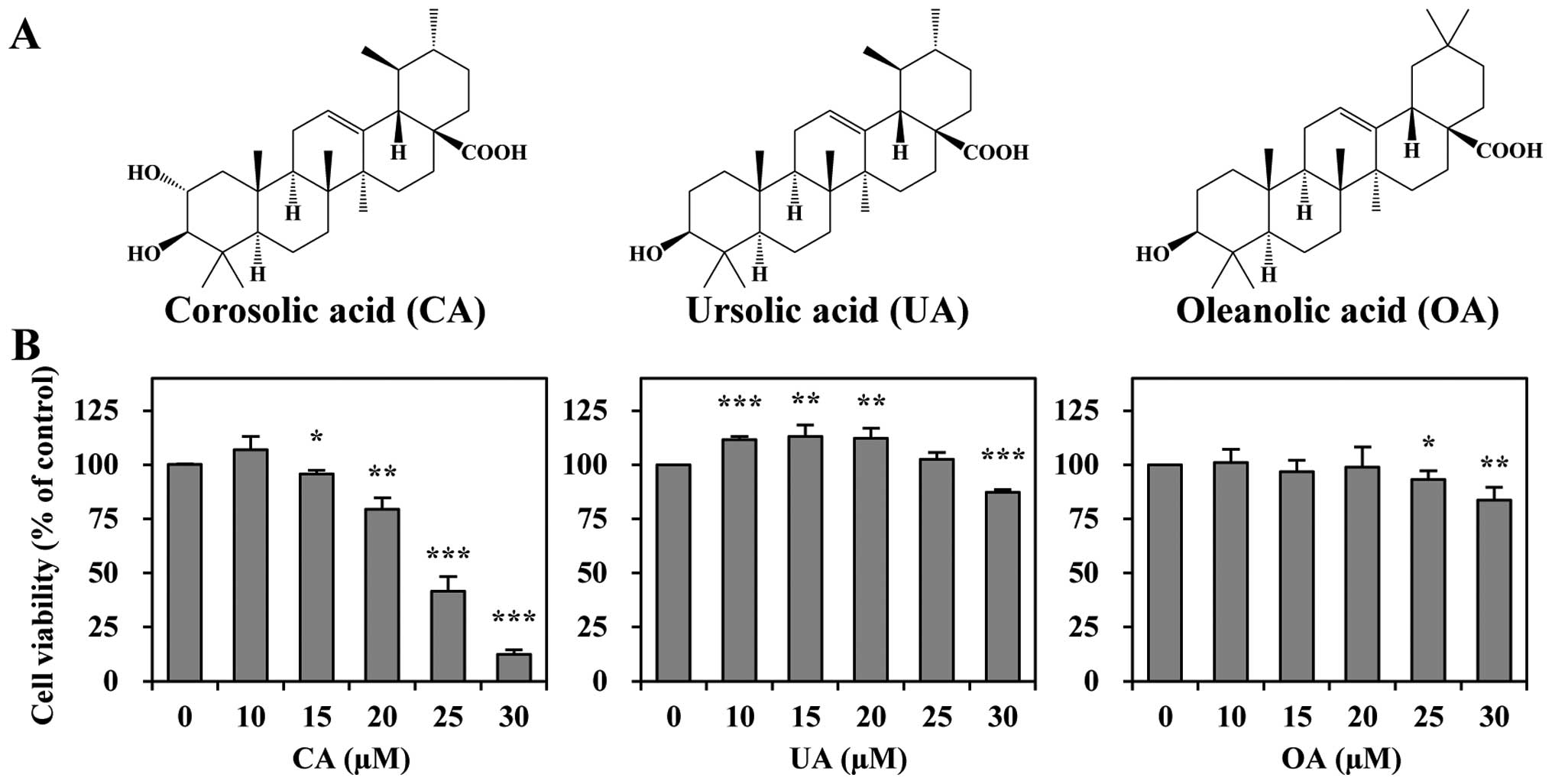
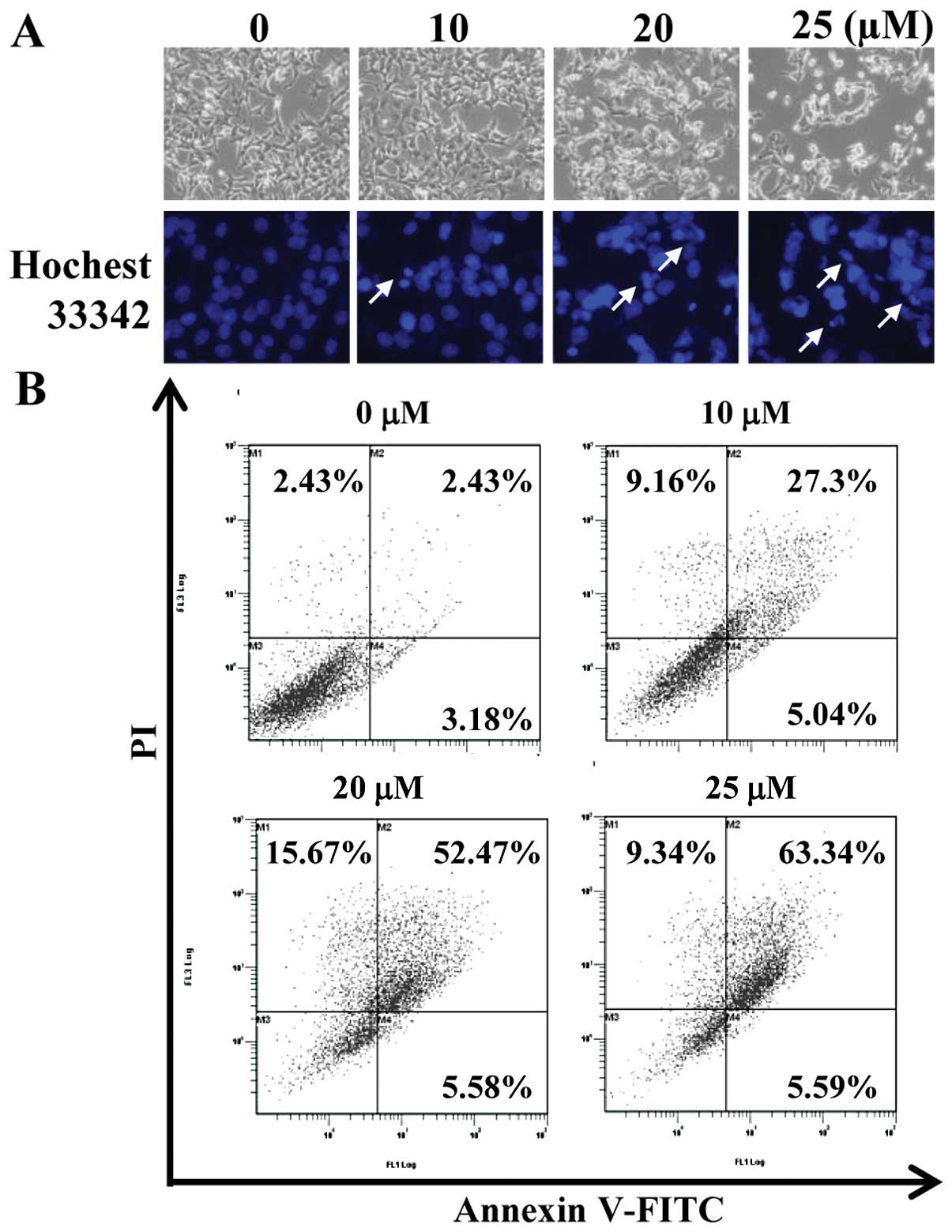
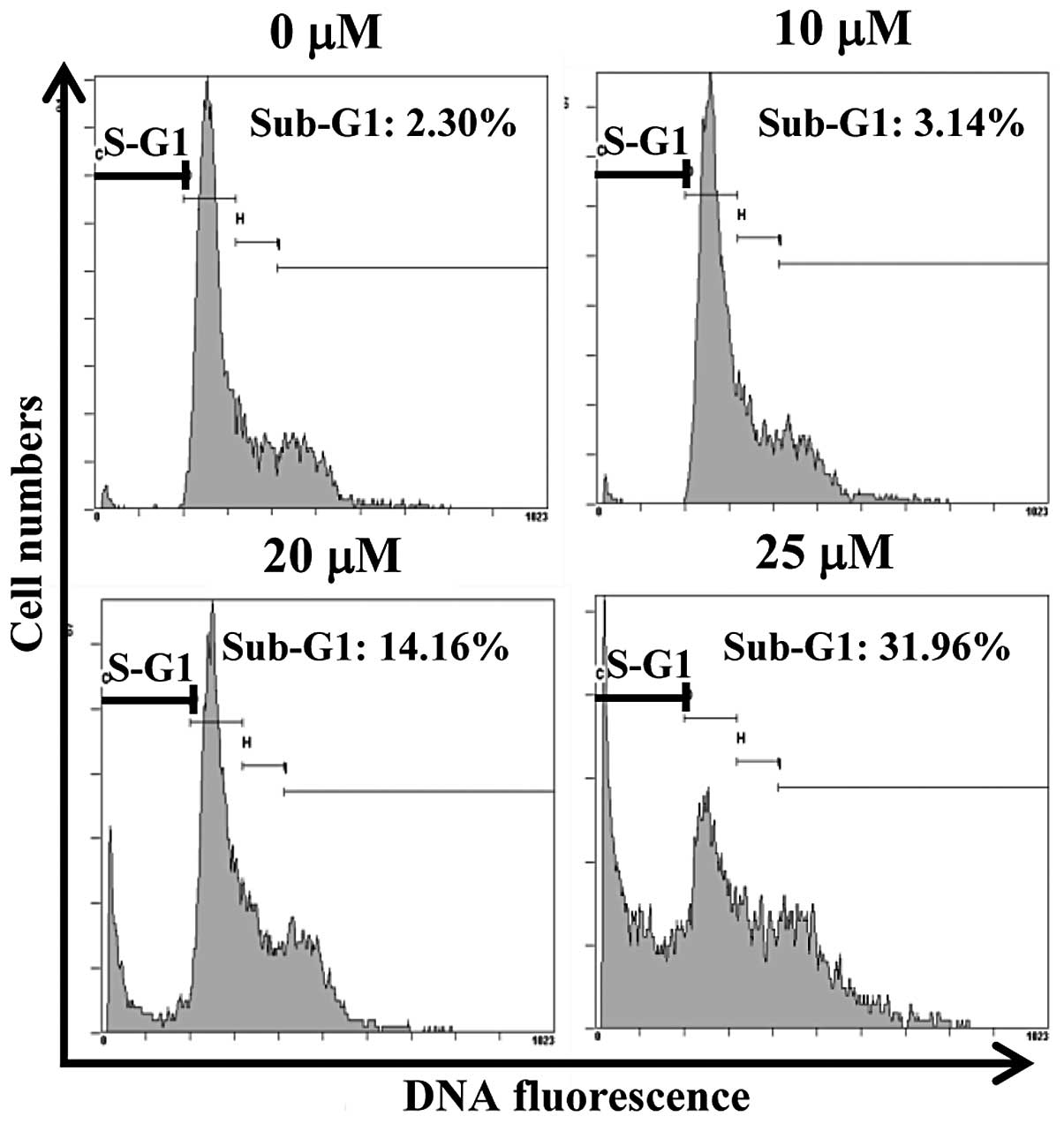
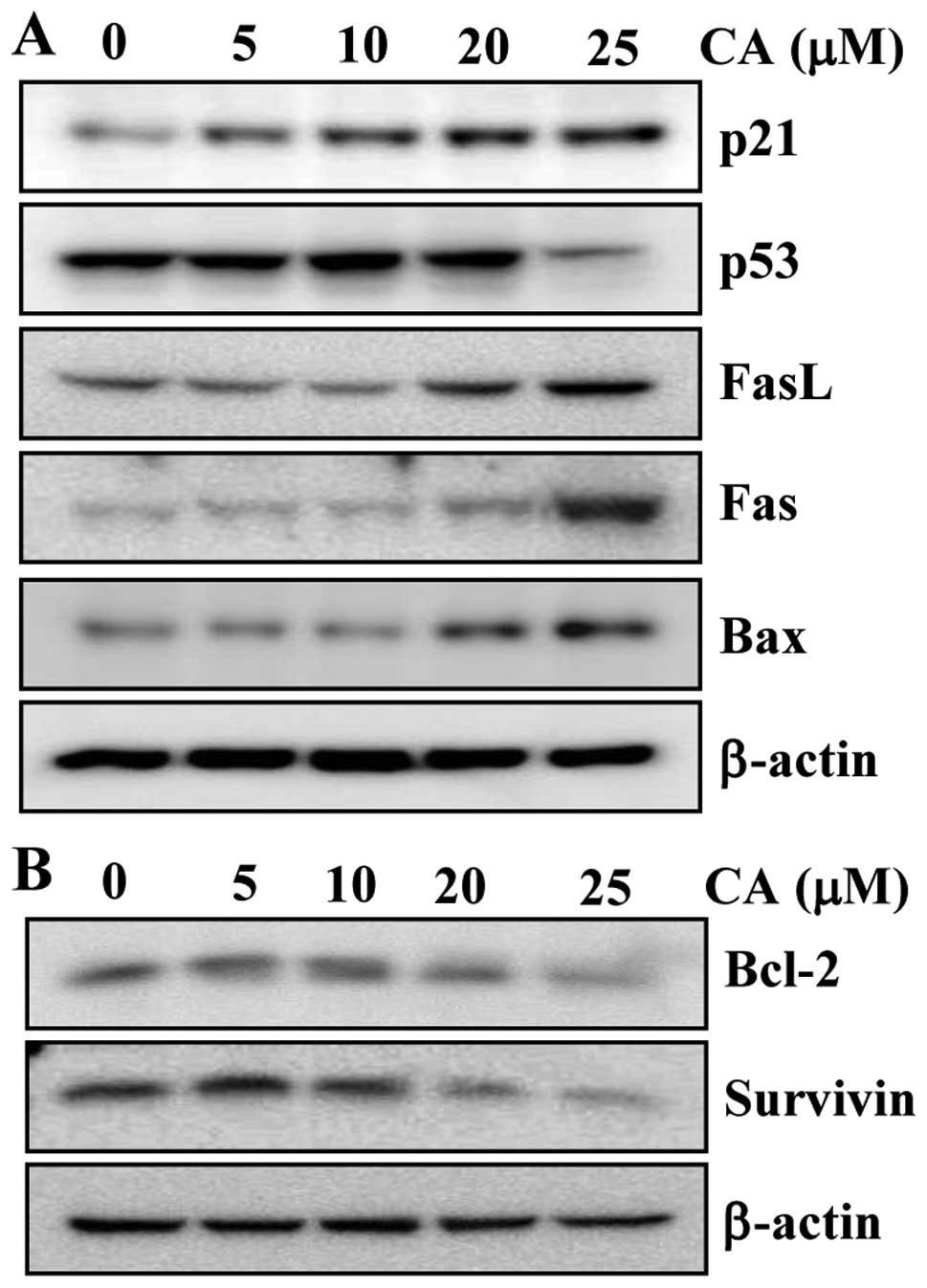
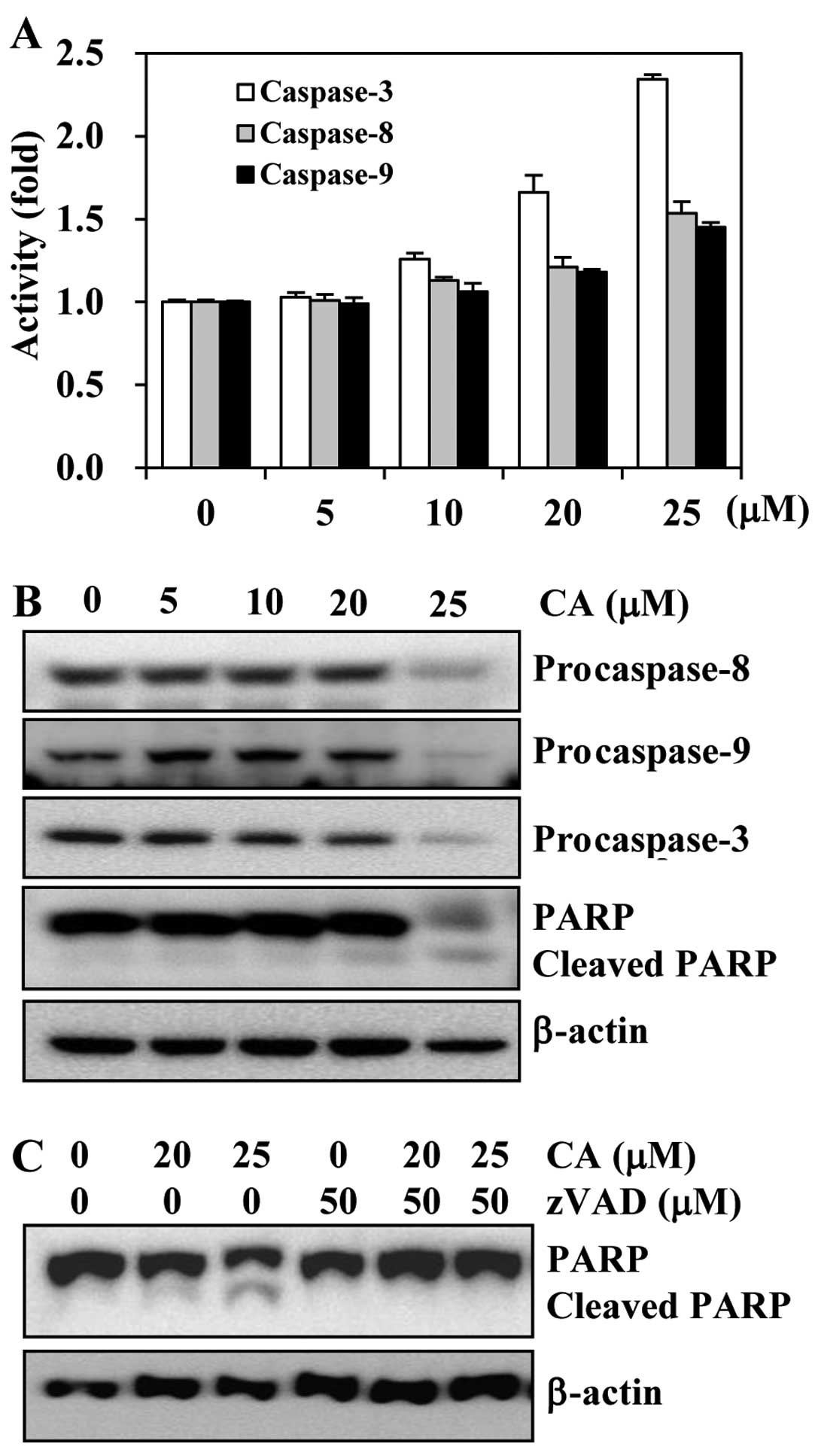
Corosolic acid (CA), a pentacyclic triterpene isolated from Lagerstroemia speciosa L. (also known as Banaba), has been shown to exhibit anticancer properties in various cancer cell lines. However, the anticancer activity of CA on human colorectal cancer cells and the underlying mechanisms remain to be elucidated. In this study, we investigated the effects of CA on cell viability and apoptosis in HCT116 human colon cancer cells. CA dose-dependently inhibited the viability of HCT116 cells. The typical hallmarks of apoptosis, such as chromatin condensation, a sub-G1 peak and phosphatidylserine externalization were detected by Hoechst 33342 staining, flow cytometry and Annexin V staining following treatment with CA. Western blot analysis revealed that CA induced a decrease in the levels of procaspase-8, -9 and -3 and the cleavage of poly(ADP-ribose) polymerase (PARP). The apoptotic cell death induced by CA was accompanied by the activation of caspase-8, -9 and -3, which was completely abrogated by the pan-caspase inhibitor, z-VAD‑FMK. Furthermore, CA upregulated the levels of pro-apoptotic proteins, such as Bax, Fas and FasL and downregulated the levels of anti-apoptotic proteins, such as Bcl-2 and survivin. Taken together, our data provide insight into the molecular mechanisms of CA-induced apoptosis in colorectal cancer (CRC), rendering this compound a potential anticancer agent for the treatment of CRC.
View Figures

Figure 1

Figure 2

Figure 3

Figure 4

Figure 5

Figure 6

View References

1 

Bray F, Jemal A, Grey N, Ferlay J and Forman D: Global cancer transitions according to the Human Development Index (2008–2030): a population-based study. Lancet Oncol. 13:790–801. 2012.PubMed/NCBI

2 

Jung KW, Won YJ, Kong HJ, Oh CM, Seo HG and Lee JS: Cancer statistics in Korea: incidence, mortality, survival and prevalence in 2010. Cancer Res Treat. 45:1–14. 2013. View Article : Google Scholar : PubMed/NCBI

3 

Kanwar SS, Poolla A and Majumdar AP: Regulation of colon cancer recurrence and development of therapeutic strategies. World J Gastrointest Pathophysiol. 3:1–9. 2012. View Article : Google Scholar : PubMed/NCBI

4 

Thompson CB: Apoptosis in the pathogenesis and treatment of disease. Science. 267:1456–1462. 1995. View Article : Google Scholar : PubMed/NCBI

5 

Lowe SW and Lin AW: Apoptosis in cancer. Carcinogenesis. 21:485–495. 2000. View Article : Google Scholar

6 

Newman DJ, Cragg GM and Snader KM: Natural products as sources of new drugs over the period 1981–2002. J Nat Prod. 66:1022–1037. 2003.PubMed/NCBI

7 

Ahn KS, Hahm MS, Park EJ, Lee HK and Kim IH: Corosolic acid isolated from the fruit of Crataegus pinnatifida var. psilosa is a protein kinase C inhibitor as well as a cytotoxic agent. Planta Med. 64:468–470. 1998.PubMed/NCBI

8 

Li B, Meng X, Zhu L, Jiao X and Zhang J: Application of high-speed counter-current chromatography for isolation of triterpenes from Schisandra chinensis (Turcz.) Baill and induction apoptosis mechanism of HSC-T6. Biomed Mater Eng. 24:969–977. 2013.PubMed/NCBI

9 

Uto T, Sakamoto A, Tung NH, et al: Anti-proliferative activities and apoptosis induction by triterpenes derived from Eriobotrya japonica in human leukemia cell lines. Int J Mol Sci. 14:4106–4120. 2013. View Article : Google Scholar : PubMed/NCBI

10 

Miura T, Takagi S and Ishida T: Management of diabetes and its complications with banaba (Lagerstroemia speciosa L.) and corosolic acid. Evid Based Complement Alternat Med. 2012:8714952012.PubMed/NCBI

11 

Caligiani A, Malavasi G, Palla G, Marseglia A, Tognolini M and Bruni R: A simple GC-MS method for the screening of betulinic, corosolic, maslinic, oleanolic and ursolic acid contents in commercial botanicals used as food supplement ingredients. Food Chem. 136:735–741. 2013. View Article : Google Scholar : PubMed/NCBI

12 

Lee MS, Lee CM, Cha EY, et al: Activation of AMP-activated protein kinase on human gastric cancer cells by apoptosis induced by corosolic acid isolated from Weigela subsessilis. Phytother Res. 24:1857–1861. 2010. View Article : Google Scholar : PubMed/NCBI

13 

Rao AR, Veeresham C and Asres K: In vitro and in vivo inhibitory activities of four Indian medicinal plant extracts and their major components on rat aldose reductase and generation of advanced glycation endproducts. Phytother Res. 27:753–760. 2013. View Article : Google Scholar

14 

Yin MC, Lin MC, Mong MC and Lin CY: Bioavailability, distribution, and antioxidative effects of selected triterpenes in mice. J Agric Food Chem. 60:7697–7701. 2012. View Article : Google Scholar : PubMed/NCBI

15 

Chen H, Yang J, Zhang Q, Chen LH and Wang Q: Corosolic acid ameliorates atherosclerosis in apolipoprotein E-deficient mice by regulating the nuclear factor-κB signaling pathway and inhibiting monocyte chemoattractant protein-1 expression. Circ J. 76:995–1003. 2012.PubMed/NCBI

16 

Takagi S, Miura T, Ishihara E, Ishida T and Chinzei Y: Effect of corosolic acid on dietary hypercholesterolemia and hepatic steatosis in KK-Ay diabetic mice. Biomed Res. 31:213–218. 2010. View Article : Google Scholar : PubMed/NCBI

17 

Klein G, Kim J, Himmeldirk K, Cao Y and Chen X: Antidiabetes and anti-obesity activity of Lagerstroemia speciosa. Evid Based Complement Alternat Med. 4:401–407. 2007. View Article : Google Scholar

18 

Aguirre MC, Delporte C, Backhouse N, et al: Topical anti-inflammatory activity of 2alpha-hydroxy pentacyclic triterpene acids from the leaves of Ugni molinae. Bioorg Med Chem. 14:5673–5677. 2006. View Article : Google Scholar : PubMed/NCBI

19 

Nho KJ, Chun JM and Kim HK: Corosolic acid induces apoptotic cell death in human lung adenocarcinoma A549 cells in vitro. Food Chem Toxicol. 56:8–17. 2013. View Article : Google Scholar : PubMed/NCBI

20 

Horlad H, Fujiwara Y, Takemura K, et al: Corosolic acid impairs tumor development and lung metastasis by inhibiting the immunosuppressive activity of myeloid-derived suppressor cells. Mol Nutr Food Res. 57:1046–1054. 2013. View Article : Google Scholar : PubMed/NCBI

21 

Cai X, Zhang H, Tong D, et al: Corosolic acid triggers mitochondria and caspase-dependent apoptotic cell death in osteosarcoma MG-63 cells. Phytother Res. Feb 21–2011.(Epub ahead of print).

22 

Fujiwara Y, Komohara Y, Ikeda T and Takeya M: Corosolic acid inhibits glioblastoma cell proliferation by suppressing the activation of signal transducer and activator of transcription-3 and nuclear factor-kappa B in tumor cells and tumor-associated macrophages. Cancer Sci. 102:206–211. 2011. View Article : Google Scholar

23 

Xu Y, Ge R, Du J, et al: Corosolic acid induces apoptosis through mitochondrial pathway and caspase activation in human cervix adenocarcinoma HeLa cells. Cancer Lett. 284:229–237. 2009. View Article : Google Scholar : PubMed/NCBI

24 

Lee MS, Cha EY, Thuong PT, Kim JY, Ahn MS and Sul JY: Down-regulation of human epidermal growth factor receptor 2/neu oncogene by corosolic acid induces cell cycle arrest and apoptosis in NCI-N87 human gastric cancer cells. Biol Pharm Bull. 33:931–937. 2010. View Article : Google Scholar : PubMed/NCBI

25 

Miura T, Itoh Y, Kaneko T, et al: Corosolic acid induces GLUT4 translocation in genetically type 2 diabetic mice. Biol Pharm Bull. 27:1103–1105. 2004. View Article : Google Scholar : PubMed/NCBI

26 

Wen X, Xia J, Cheng K, et al: Pentacyclic triterpenes. Part 5: synthesis and SAR study of corosolic acid derivatives as inhibitors of glycogen phosphorylases. Bioorg Med Chem Lett. 17:5777–5782. 2007. View Article : Google Scholar : PubMed/NCBI

27 

Shi L, Zhang W, Zhou YY, et al: Corosolic acid stimulates glucose uptake via enhancing insulin receptor phosphorylation. Eur J Pharmacol. 584:21–29. 2008. View Article : Google Scholar : PubMed/NCBI

28 

Vermeulen K, Berneman ZN and Van Bockstaele DR: Cell cycle and apoptosis. Cell Prolif. 36:165–175. 2003. View Article : Google Scholar

29 

Weitz J, Koch M, Debus J, Höhler T, Galle PR and Buchler MW: Colorectal cancer. Lancet. 365:153–165. 2005. View Article : Google Scholar

30 

Mazumder K, Tanaka K and Fukase K: Cytotoxic activity of ursolic acid derivatives obtained by isolation and oxidative derivatization. Molecules. 18:8929–8944. 2013. View Article : Google Scholar : PubMed/NCBI

31 

Chang HY and Yang X: Proteases for cell suicide: functions and regulation of caspases. Microbiol Mol Biol Rev. 64:821–846. 2000. View Article : Google Scholar : PubMed/NCBI

32 

Kischkel FC, Hellbardt S, Behrmann I, et al: Cytotoxicity-dependent APO-1 (Fas/CD95)-associated proteins form a death-inducing signaling complex (DISC) with the receptor. EMBO J. 14:5579–5588. 1995.PubMed/NCBI

33 

Li Y, Xing D, Chen Q and Chen WR: Enhancement of chemotherapeutic agent-induced apoptosis by inhibition of NF-kappaB using ursolic acid. Int J Cancer. 127:462–473. 2010.PubMed/NCBI

34 

Hsu YL, Kuo PL and Lin CC: The proliferative inhibition and apoptotic mechanism of Saikosaponin D in human non-small cell lung cancer A549 cells. Life Sci. 75:1231–1242. 2004. View Article : Google Scholar : PubMed/NCBI

35 

Kim JS, Joo EJ, Chun J, et al: Induction of apoptosis by ginsenoside Rk1 in SK-MEL-2-human melanoma. Arch Pharm Res. 35:717–722. 2012. View Article : Google Scholar : PubMed/NCBI

36 

Hengartner MO: The biochemistry of apoptosis. Nature. 407:770–776. 2000. View Article : Google Scholar : PubMed/NCBI

37 

Mizutani Y, Hongo F, Sato N, Ogawa O, Yoshida O and Miki T: Significance of serum soluble Fas ligand in patients with bladder carcinoma. Cancer. 92:287–293. 2001. View Article : Google Scholar : PubMed/NCBI

38 

Osorio LM, Aguilar-Santelises M, De Santiago A, Hachiya T, Mellstedt H and Jondal M: Increased serum levels of soluble Fas in progressive B-CLL. Eur J Haematol. 66:342–346. 2001. View Article : Google Scholar : PubMed/NCBI

39 

Khong HT and Restifo NP: Natural selection of tumor variants in the generation of ‘tumor escape’ phenotypes. Nat Immunol. 3:999–1005. 2002.

40 

Zhu Q, Liu JY, Yang CM, et al: Influence of antitumor drugs on the expression of Fas system in SW480 colon cancer cells. Eur J Gastroenterol Hepatol. 18:1071–1077. 2006. View Article : Google Scholar : PubMed/NCBI

Related Articles

  • Abstract
  • View
  • Download
  • Twitter
Copy and paste a formatted citation
Spandidos Publications style
Sung B, Kang YJ, Kim DH, Hwang SY, Lee Y, Kim M, Yoon J, Kim CM, Chung HY, Kim ND, Kim ND, et al: Corosolic acid induces apoptotic cell death in HCT116 human colon cancer cells through a caspase-dependent pathway. Int J Mol Med 33: 943-949, 2014.
APA
Sung, B., Kang, Y.J., Kim, D.H., Hwang, S.Y., Lee, Y., Kim, M. ... Kim, N.D. (2014). Corosolic acid induces apoptotic cell death in HCT116 human colon cancer cells through a caspase-dependent pathway. International Journal of Molecular Medicine, 33, 943-949. https://doi.org/10.3892/ijmm.2014.1639
MLA
Sung, B., Kang, Y. J., Kim, D. H., Hwang, S. Y., Lee, Y., Kim, M., Yoon, J., Kim, C. M., Chung, H. Y., Kim, N. D."Corosolic acid induces apoptotic cell death in HCT116 human colon cancer cells through a caspase-dependent pathway". International Journal of Molecular Medicine 33.4 (2014): 943-949.
Chicago
Sung, B., Kang, Y. J., Kim, D. H., Hwang, S. Y., Lee, Y., Kim, M., Yoon, J., Kim, C. M., Chung, H. Y., Kim, N. D."Corosolic acid induces apoptotic cell death in HCT116 human colon cancer cells through a caspase-dependent pathway". International Journal of Molecular Medicine 33, no. 4 (2014): 943-949. https://doi.org/10.3892/ijmm.2014.1639
Copy and paste a formatted citation
x
Spandidos Publications style
Sung B, Kang YJ, Kim DH, Hwang SY, Lee Y, Kim M, Yoon J, Kim CM, Chung HY, Kim ND, Kim ND, et al: Corosolic acid induces apoptotic cell death in HCT116 human colon cancer cells through a caspase-dependent pathway. Int J Mol Med 33: 943-949, 2014.
APA
Sung, B., Kang, Y.J., Kim, D.H., Hwang, S.Y., Lee, Y., Kim, M. ... Kim, N.D. (2014). Corosolic acid induces apoptotic cell death in HCT116 human colon cancer cells through a caspase-dependent pathway. International Journal of Molecular Medicine, 33, 943-949. https://doi.org/10.3892/ijmm.2014.1639
MLA
Sung, B., Kang, Y. J., Kim, D. H., Hwang, S. Y., Lee, Y., Kim, M., Yoon, J., Kim, C. M., Chung, H. Y., Kim, N. D."Corosolic acid induces apoptotic cell death in HCT116 human colon cancer cells through a caspase-dependent pathway". International Journal of Molecular Medicine 33.4 (2014): 943-949.
Chicago
Sung, B., Kang, Y. J., Kim, D. H., Hwang, S. Y., Lee, Y., Kim, M., Yoon, J., Kim, C. M., Chung, H. Y., Kim, N. D."Corosolic acid induces apoptotic cell death in HCT116 human colon cancer cells through a caspase-dependent pathway". International Journal of Molecular Medicine 33, no. 4 (2014): 943-949. https://doi.org/10.3892/ijmm.2014.1639
Follow us
  • Twitter
  • LinkedIn
  • Facebook
About
  • Spandidos Publications
  • Careers
  • Cookie Policy
  • Privacy Policy
How can we help?
  • Help
  • Live Chat
  • Contact
  • Email to our Support Team