Spandidos Publications Logo
  • About
    • About Spandidos
    • Aims and Scopes
    • Abstracting and Indexing
    • Editorial Policies
    • Reprints and Permissions
    • Job Opportunities
    • Terms and Conditions
    • Contact
  • Journals
    • All Journals
    • Oncology Letters
      • Oncology Letters
      • Information for Authors
      • Editorial Policies
      • Editorial Board
      • Aims and Scope
      • Abstracting and Indexing
      • Bibliographic Information
      • Archive
    • International Journal of Oncology
      • International Journal of Oncology
      • Information for Authors
      • Editorial Policies
      • Editorial Board
      • Aims and Scope
      • Abstracting and Indexing
      • Bibliographic Information
      • Archive
    • Molecular and Clinical Oncology
      • Molecular and Clinical Oncology
      • Information for Authors
      • Editorial Policies
      • Editorial Board
      • Aims and Scope
      • Abstracting and Indexing
      • Bibliographic Information
      • Archive
    • Experimental and Therapeutic Medicine
      • Experimental and Therapeutic Medicine
      • Information for Authors
      • Editorial Policies
      • Editorial Board
      • Aims and Scope
      • Abstracting and Indexing
      • Bibliographic Information
      • Archive
    • International Journal of Molecular Medicine
      • International Journal of Molecular Medicine
      • Information for Authors
      • Editorial Policies
      • Editorial Board
      • Aims and Scope
      • Abstracting and Indexing
      • Bibliographic Information
      • Archive
    • Biomedical Reports
      • Biomedical Reports
      • Information for Authors
      • Editorial Policies
      • Editorial Board
      • Aims and Scope
      • Abstracting and Indexing
      • Bibliographic Information
      • Archive
    • Oncology Reports
      • Oncology Reports
      • Information for Authors
      • Editorial Policies
      • Editorial Board
      • Aims and Scope
      • Abstracting and Indexing
      • Bibliographic Information
      • Archive
    • Molecular Medicine Reports
      • Molecular Medicine Reports
      • Information for Authors
      • Editorial Policies
      • Editorial Board
      • Aims and Scope
      • Abstracting and Indexing
      • Bibliographic Information
      • Archive
    • World Academy of Sciences Journal
      • World Academy of Sciences Journal
      • Information for Authors
      • Editorial Policies
      • Editorial Board
      • Aims and Scope
      • Abstracting and Indexing
      • Bibliographic Information
      • Archive
    • International Journal of Functional Nutrition
      • International Journal of Functional Nutrition
      • Information for Authors
      • Editorial Policies
      • Editorial Board
      • Aims and Scope
      • Abstracting and Indexing
      • Bibliographic Information
      • Archive
    • International Journal of Epigenetics
      • International Journal of Epigenetics
      • Information for Authors
      • Editorial Policies
      • Editorial Board
      • Aims and Scope
      • Abstracting and Indexing
      • Bibliographic Information
      • Archive
    • Medicine International
      • Medicine International
      • Information for Authors
      • Editorial Policies
      • Editorial Board
      • Aims and Scope
      • Abstracting and Indexing
      • Bibliographic Information
      • Archive
  • Articles
  • Information
    • Information for Authors
    • Information for Reviewers
    • Information for Librarians
    • Information for Advertisers
    • Conferences
  • Language Editing
Spandidos Publications Logo
  • About
    • About Spandidos
    • Aims and Scopes
    • Abstracting and Indexing
    • Editorial Policies
    • Reprints and Permissions
    • Job Opportunities
    • Terms and Conditions
    • Contact
  • Journals
    • All Journals
    • Biomedical Reports
      • Information for Authors
      • Editorial Policies
      • Editorial Board
      • Aims and Scope
      • Abstracting and Indexing
      • Bibliographic Information
      • Archive
    • Experimental and Therapeutic Medicine
      • Information for Authors
      • Editorial Policies
      • Editorial Board
      • Aims and Scope
      • Abstracting and Indexing
      • Bibliographic Information
      • Archive
    • International Journal of Epigenetics
      • Information for Authors
      • Editorial Policies
      • Editorial Board
      • Aims and Scope
      • Abstracting and Indexing
      • Bibliographic Information
      • Archive
    • International Journal of Functional Nutrition
      • Information for Authors
      • Editorial Policies
      • Editorial Board
      • Aims and Scope
      • Abstracting and Indexing
      • Bibliographic Information
      • Archive
    • International Journal of Molecular Medicine
      • Information for Authors
      • Editorial Policies
      • Editorial Board
      • Aims and Scope
      • Abstracting and Indexing
      • Bibliographic Information
      • Archive
    • International Journal of Oncology
      • Information for Authors
      • Editorial Policies
      • Editorial Board
      • Aims and Scope
      • Abstracting and Indexing
      • Bibliographic Information
      • Archive
    • Medicine International
      • Information for Authors
      • Editorial Policies
      • Editorial Board
      • Aims and Scope
      • Abstracting and Indexing
      • Bibliographic Information
      • Archive
    • Molecular and Clinical Oncology
      • Information for Authors
      • Editorial Policies
      • Editorial Board
      • Aims and Scope
      • Abstracting and Indexing
      • Bibliographic Information
      • Archive
    • Molecular Medicine Reports
      • Information for Authors
      • Editorial Policies
      • Editorial Board
      • Aims and Scope
      • Abstracting and Indexing
      • Bibliographic Information
      • Archive
    • Oncology Letters
      • Information for Authors
      • Editorial Policies
      • Editorial Board
      • Aims and Scope
      • Abstracting and Indexing
      • Bibliographic Information
      • Archive
    • Oncology Reports
      • Information for Authors
      • Editorial Policies
      • Editorial Board
      • Aims and Scope
      • Abstracting and Indexing
      • Bibliographic Information
      • Archive
    • World Academy of Sciences Journal
      • Information for Authors
      • Editorial Policies
      • Editorial Board
      • Aims and Scope
      • Abstracting and Indexing
      • Bibliographic Information
      • Archive
  • Articles
  • Information
    • For Authors
    • For Reviewers
    • For Librarians
    • For Advertisers
    • Conferences
  • Language Editing
Login Register Submit
  • This site uses cookies
  • You can change your cookie settings at any time by following the instructions in our Cookie Policy. To find out more, you may read our Privacy Policy.

    I agree
Search articles by DOI, keyword, author or affiliation
Search
Advanced Search
presentation
International Journal of Molecular Medicine
Join Editorial Board Propose a Special Issue
Print ISSN: 1107-3756 Online ISSN: 1791-244X
Journal Cover
2014-April Volume 33 Issue 4

Full Size Image

Sign up for eToc alerts
Recommend to Library

Journals

International Journal of Molecular Medicine

International Journal of Molecular Medicine

International Journal of Molecular Medicine is an international journal devoted to molecular mechanisms of human disease.

International Journal of Oncology

International Journal of Oncology

International Journal of Oncology is an international journal devoted to oncology research and cancer treatment.

Molecular Medicine Reports

Molecular Medicine Reports

Covers molecular medicine topics such as pharmacology, pathology, genetics, neuroscience, infectious diseases, molecular cardiology, and molecular surgery.

Oncology Reports

Oncology Reports

Oncology Reports is an international journal devoted to fundamental and applied research in Oncology.

Experimental and Therapeutic Medicine

Experimental and Therapeutic Medicine

Experimental and Therapeutic Medicine is an international journal devoted to laboratory and clinical medicine.

Oncology Letters

Oncology Letters

Oncology Letters is an international journal devoted to Experimental and Clinical Oncology.

Biomedical Reports

Biomedical Reports

Explores a wide range of biological and medical fields, including pharmacology, genetics, microbiology, neuroscience, and molecular cardiology.

Molecular and Clinical Oncology

Molecular and Clinical Oncology

International journal addressing all aspects of oncology research, from tumorigenesis and oncogenes to chemotherapy and metastasis.

World Academy of Sciences Journal

World Academy of Sciences Journal

Multidisciplinary open-access journal spanning biochemistry, genetics, neuroscience, environmental health, and synthetic biology.

International Journal of Functional Nutrition

International Journal of Functional Nutrition

Open-access journal combining biochemistry, pharmacology, immunology, and genetics to advance health through functional nutrition.

International Journal of Epigenetics

International Journal of Epigenetics

Publishes open-access research on using epigenetics to advance understanding and treatment of human disease.

Medicine International

Medicine International

An International Open Access Journal Devoted to General Medicine.

Journal Cover
2014-April Volume 33 Issue 4

Full Size Image

Sign up for eToc alerts
Recommend to Library

  • Article
  • Citations
    • Cite This Article
    • Download Citation
    • Create Citation Alert
    • Remove Citation Alert
    • Cited By
  • Similar Articles
    • Related Articles (in Spandidos Publications)
    • Similar Articles (Google Scholar)
    • Similar Articles (PubMed)
  • Download PDF
  • Download XML
  • View XML
Article

7,8-Dihydroxyflavone protects human keratinocytes against oxidative stress-induced cell damage via the ERK and PI3K/Akt-mediated Nrf2/HO-1 signaling pathways

  • Authors:
    • Min Ju Ryu
    • Kyoung Ah Kang
    • Mei Jing Piao
    • Ki Cheon Kim
    • Jian Zheng
    • Cheng Wen Yao
    • Ji Won Cha
    • Ha Sook Chung
    • Sang Cheol Kim
    • Eunsun Jung
    • Deokhoon Park
    • Sungwook Chae
    • Jin Won Hyun
  • View Affiliations / Copyright

    Affiliations: Food and Nutrition, Duksung Women's University, Seoul 132-714, Republic of Korea, School of Medicine and Institute for Nuclear Science and Technology, Jeju National University, Jeju 690-756, Republic of Korea, Biospectrum Life Science Institute, Seongnam, Gyunggi Do 442‑13, Republic of Korea, Aging Research Center, Korea Institute of Oriental Medicine, Daejeon 305-811, Republic of Korea
  • Pages: 964-970
    |
    Published online on: February 4, 2014
       https://doi.org/10.3892/ijmm.2014.1643
  • Expand metrics +
Metrics: Total Views: 0 (Spandidos Publications: | PMC Statistics: )
Metrics: Total PDF Downloads: 0 (Spandidos Publications: | PMC Statistics: )
Cited By (CrossRef): 0 citations Loading Articles...

This article is mentioned in:


Abstract

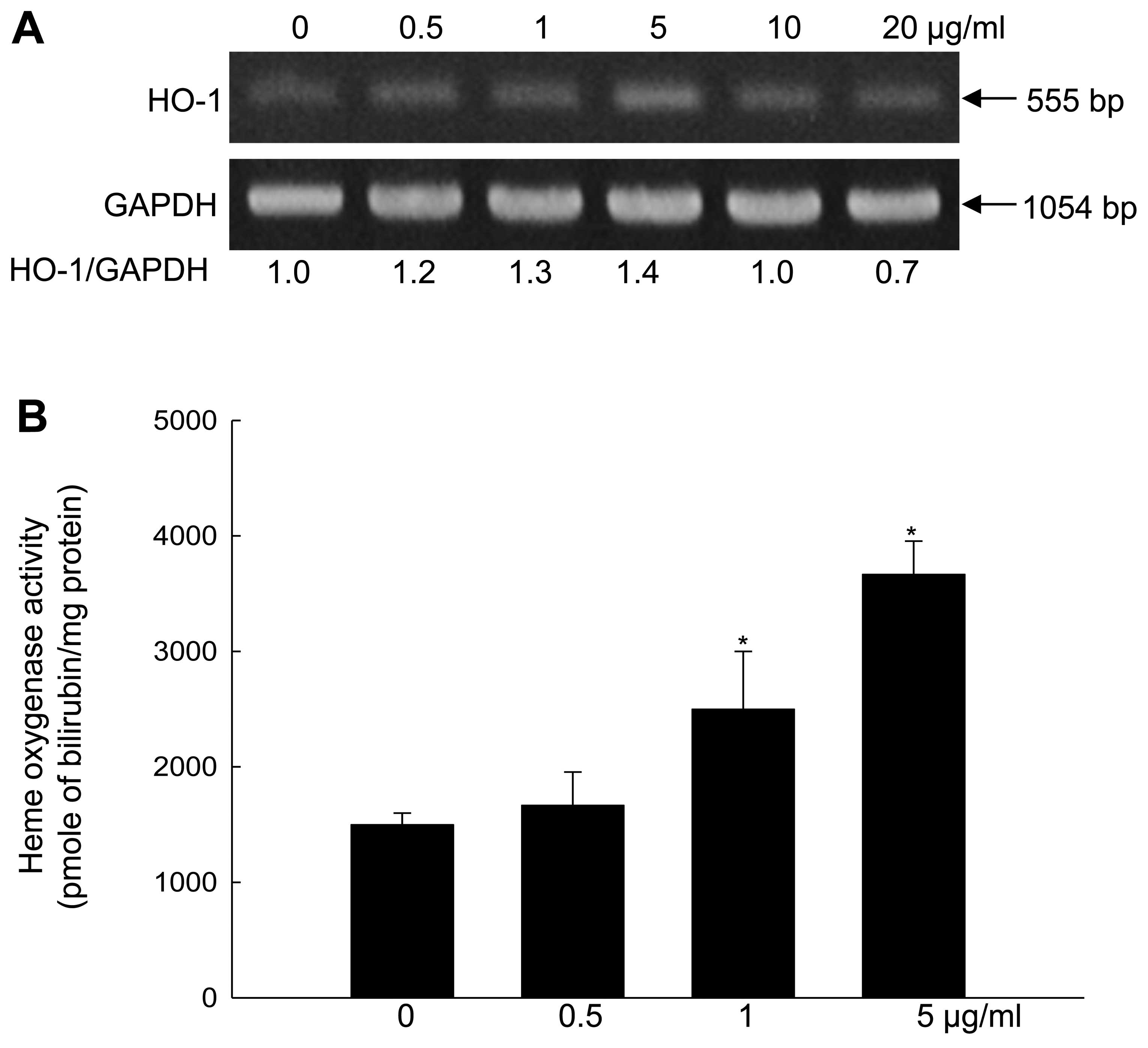
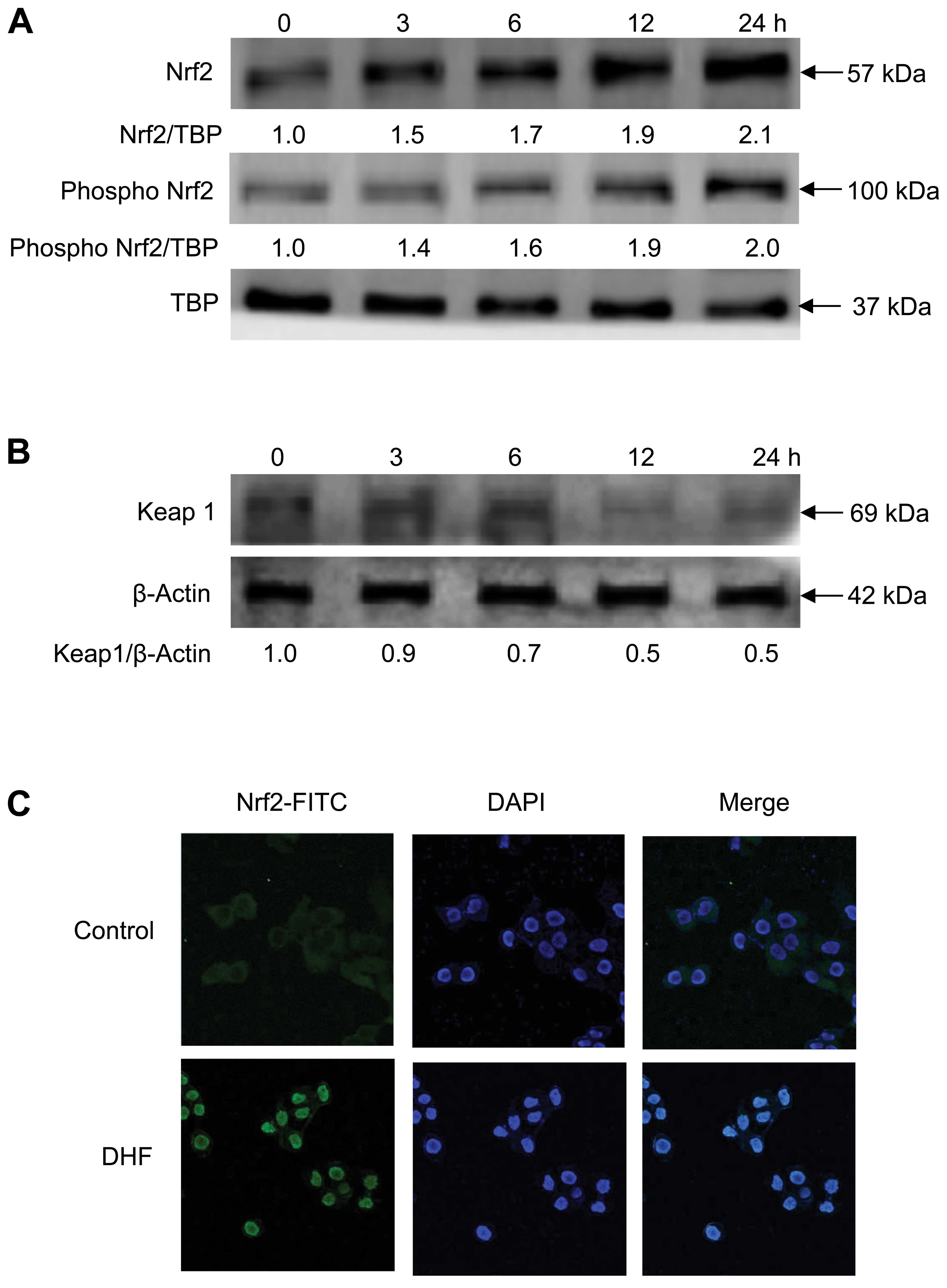
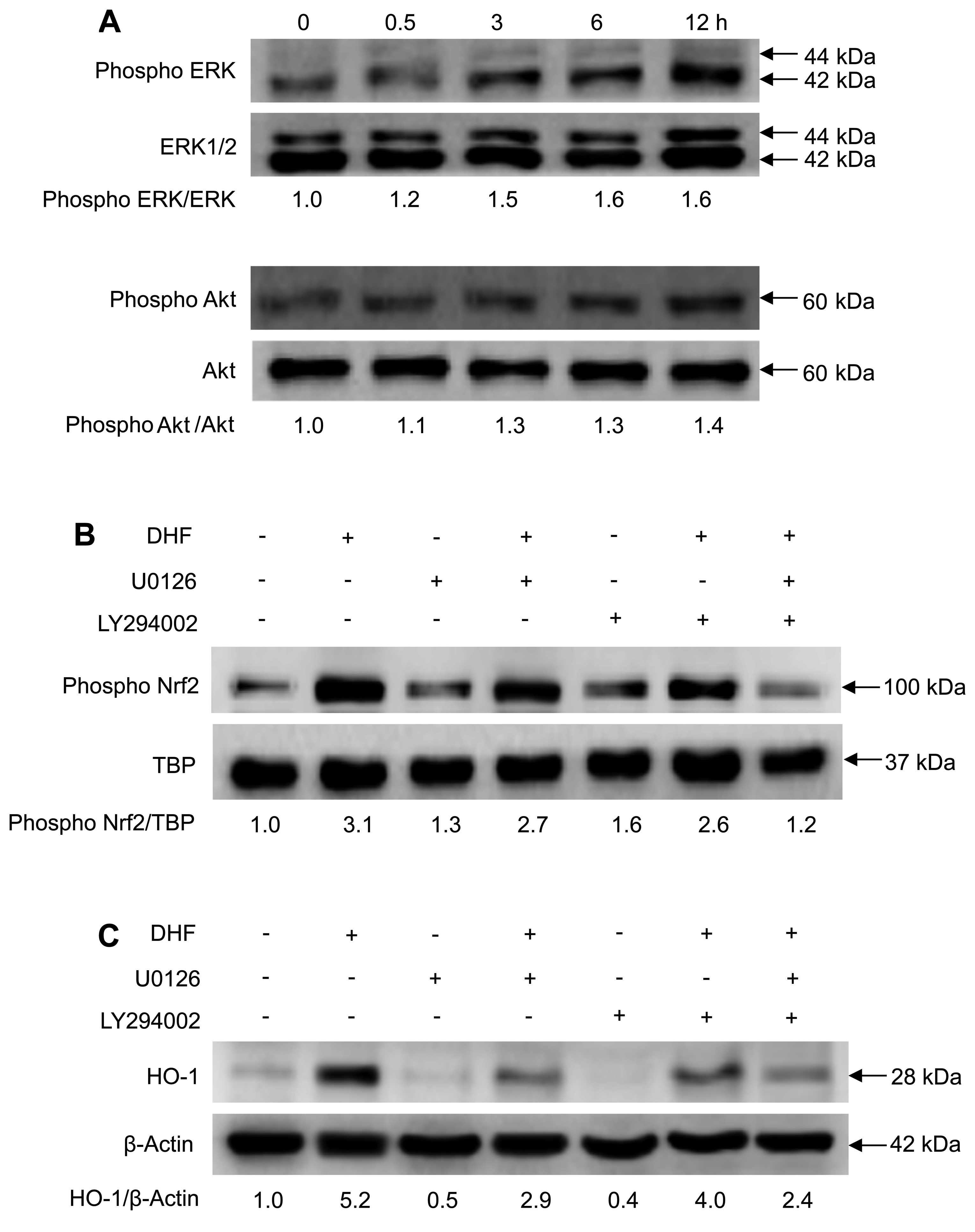
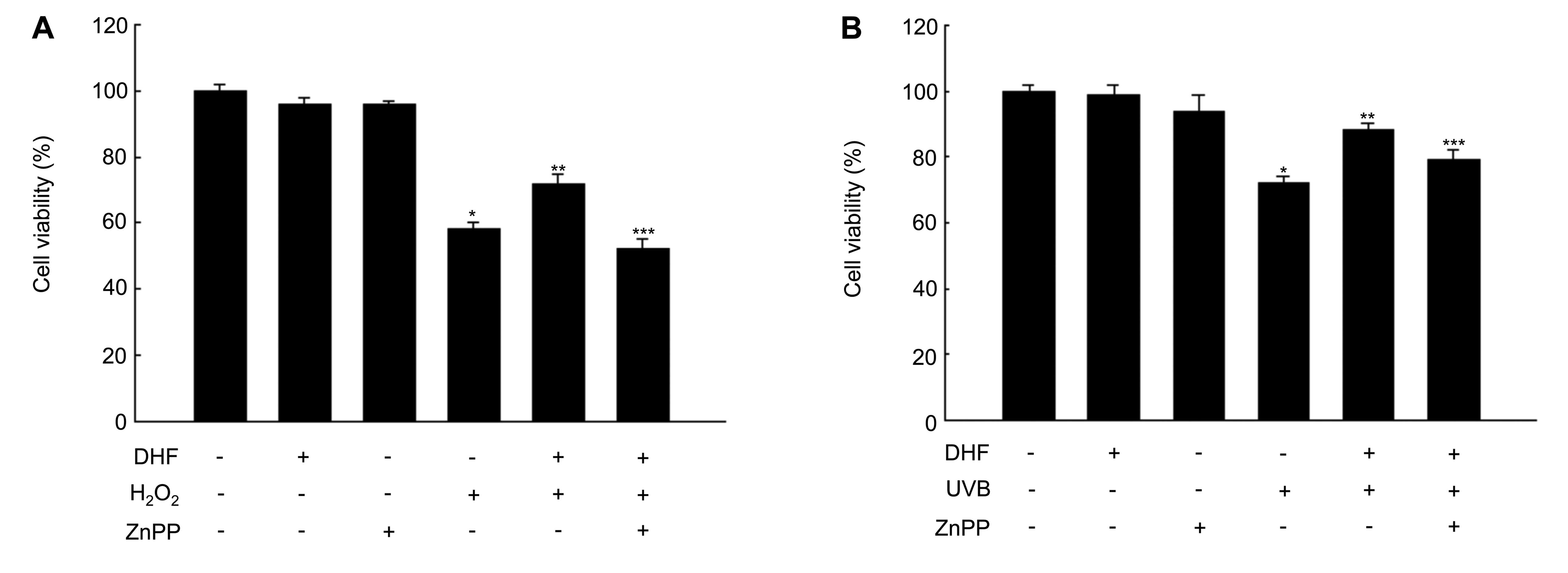
This study investigated the effect of 7,8-dihydroxyflavone (DHF) on the expression and activity of heme oxygenase-1 (HO-1), an enzyme with potent antioxidant properties, as well as the molecular mechanisms involved. DHF markedly upregulated HO-1 mRNA and protein expression in human keratinocytes (HaCaT cells), resulting in increased HO-1 activity. DHF also increased the protein level of transcription factor nuclear factor erythroid 2-related factor 2 (Nrf2), which regulates HO-1 expression by binding to the antioxidant response element (ARE) within the HO-1 gene promoter, in a time‑dependent manner. Moreover, DHF decreased the expression of Kelch-like ECH-associated protein 1, a repressor of Nrf2 activity, and induced the translocation of Nrf2 from the cytosol into the nucleus, thereby allowing its association with the ARE site. DHF activated extracellular-regulated kinase (ERK) and protein kinase B (PKB, Akt) in keratinocytes, while the ERK and Akt inhibitors attenuated DHF-enhanced Nrf2 and HO-1 expression. DHF also protected the keratinocytes against hydrogen peroxide- and ultraviolet B-induced oxidative damage, while HO-1, ERK and Akt inhibitors markedly suppressed DHF-mediated cytoprotection. Taken together, the results suggested that DHF activates ERK- and Akt-Nrf2 signaling cascades in HaCaT cells, leading to the upregulation of HO-1 and cytoprotection against oxidative stress.
View Figures

Figure 1

Figure 2

Figure 3

Figure 4

View References

1 

Ismail NS, Pravda EA, Li D, Shih SC and Dallabrida SM: Angiopoietin-1 reduces H(2)O(2)-induced increases in reactive oxygen species and oxidative damage to skin cells. J Invest Dermatol. 130:1307–1317. 2010. View Article : Google Scholar : PubMed/NCBI

2 

Okayama Y: Oxidative stress in allergic and inflammatory skin diseases. Curr Drug Targets Inflamm Allergy. 4:517–519. 2005. View Article : Google Scholar : PubMed/NCBI

3 

Black HS: Potential involvement of free radical reactions in ultraviolet light-mediated cutaneous damage. Photochem Photobiol. 46:213–221. 1987. View Article : Google Scholar : PubMed/NCBI

4 

Cerutti PA: Prooxidant states and tumor promotion. Science. 227:375–381. 1985. View Article : Google Scholar : PubMed/NCBI

5 

Harman D: Free radical theory of aging: an update: increasing the functional life span. Ann NY Acad Sci. 1067:10–21. 2006. View Article : Google Scholar : PubMed/NCBI

6 

Ryter SW, Alam J and Choi AM: Hemeoxygenase-1/carbon monoxide: from basic science to therapeutic applications. Physiol Rev. 86:583–650. 2006. View Article : Google Scholar : PubMed/NCBI

7 

Tenhunen R, Marver HS and Schmid R: The enzymatic conversion of heme to bilirubin by microsomal heme oxygenase. Proc Natl Acad Sci USA. 61:748–755. 1968. View Article : Google Scholar : PubMed/NCBI

8 

Maines MD: Heme oxygenase: function, multiplicity, regulatory mechanisms, and clinical applications. FASEB J. 2:2557–2568. 1988.PubMed/NCBI

9 

Ryter SW and Choi AM: Heme oxygenase-1: molecular mechanisms of gene expression in oxygen-related stress. Antioxid Redox Signal. 4:625–632. 2002. View Article : Google Scholar : PubMed/NCBI

10 

Otterbein LE, Soares MP, Yamashita K and Bach FH: Heme oxygenase-1: unleashing the protective properties of heme. Trends Immunol. 24:449–455. 2003. View Article : Google Scholar : PubMed/NCBI

11 

Li MH, Cha YN and Surh YJ: Peroxynitrite induces HO-1 expression via PI3K/Akt-dependent activation of NF-E2-related factor 2 in PC12 cells. Free Radic Biol Med. 41:1079–1091. 2006. View Article : Google Scholar : PubMed/NCBI

12 

Khor TO, Huang MT, Kwon KH, Chan JY, Reddy BS and Kong AN: Nrf2-deficient mice have an increased susceptibility to dextran sulfate sodium-induced colitis. Cancer Res. 66:11580–11584. 2006. View Article : Google Scholar : PubMed/NCBI

13 

Alam J and Cook JL: Transcriptional regulation of the heme oxygenase-1 gene via the stress response element pathway. Curr Pharm Des. 9:2499–2511. 2003. View Article : Google Scholar : PubMed/NCBI

14 

Itoh K, Wakabayashi N, Katoh Y, Ishii T, Igarashi K, Engel JD and Yamamoto M: Keap1 represses nuclear activation of antioxidant responsive elements by Nrf2 through binding to the amino-terminal Neh2 domain. Genes Dev. 13:76–86. 1999. View Article : Google Scholar : PubMed/NCBI

15 

Yu S, Khor TO, Cheung KL, Li W, Wu TY, Huang Y, Foster BA, Kan YW and Kong AN: Nrf2 expression is regulated by epigenetic mechanisms in prostate cancer of TRAMP mice. PLoS One. 5:e85792010. View Article : Google Scholar : PubMed/NCBI

16 

Li MH, Jang JH, Na HK, Cha YN and Surh YJ: Carbon monoxide produced by heme oxygenase-1 in response to nitrosative stress induces expression of glutamate-cysteine ligase in PC12 cells via activation of phosphatidylinositol 3-kinase and Nrf2 signaling. J Biol Chem. 282:28577–28586. 2007. View Article : Google Scholar : PubMed/NCBI

17 

Yu R, Chen C, Mo YY, Hebbar V, Owuor ED, Tan TH and Kong AN: Activation of mitogen-activated protein kinase pathways induces antioxidant response element-mediated gene expression via a Nrf2-dependent mechanism. J Biol Chem. 275:39907–39913. 2000. View Article : Google Scholar : PubMed/NCBI

18 

Silva MM, Santos MR, Caroco G, Rocha R, Justino G and Mira L: Structure-antioxidant activity relationships of flavonoids: a re-examination. Free Radic Res. 36:1219–1227. 2002. View Article : Google Scholar : PubMed/NCBI

19 

Melidou M, Riganakos K and Galaris D: Protection against nuclear DNA damage offered by flavonoids in cells exposed to hydrogen peroxide: the role of iron chelation. Free Radic Biol Med. 39:1591–1600. 2005. View Article : Google Scholar : PubMed/NCBI

20 

Williams RJ, Spencer JP and Rice-Evans C: Flavonoids: antioxidants or signaling molecules? Free Radic Biol Med. 36:838–849. 2004. View Article : Google Scholar : PubMed/NCBI

21 

Moridani MY, Pourahmad J, Bui H, Siraki A and O’Brien PJ: Dietary flavonoid iron complexes as cytoprotective superoxide radical scavengers. Free Radic Biol Med. 34:243–253. 2003. View Article : Google Scholar : PubMed/NCBI

22 

Zhang R, Kang KA, Piao MJ, Ko DO, Wang ZH, Chang WY, You HJ, Lee IK, Kim BJ, Kang SS and Hyun JW: Preventive effect of 7,8-dihydroxyflavone against oxidative stress-induced genotoxicity. Biol Pharm Bull. 32:166–171. 2009. View Article : Google Scholar : PubMed/NCBI

23 

Kutty RK and Maines MO: Oxidation of heme c derivatives by purified heme oxygenase. Evidence for the presence of one molecular species of heme oxygenase in the rat liver. J Biol Chem. 257:9944–9952. 1982.PubMed/NCBI

24 

Carmichael J, DeGraff WG, Gazdar AF, Minna JD and Mtchell JB: Evaluation of a tetrazolium-based semiautomated colorimetric assay: assessment of chemosensitivity testing. Cancer Res. 47:936–942. 1987.PubMed/NCBI

25 

Cullinan SB and Diehl JA: PERK-dependent activation of Nrf2 contributes to redox homeostasis and cell survival following endoplasmic reticulum stress. J Biol Chem. 279:20108–20117. 2004. View Article : Google Scholar : PubMed/NCBI

26 

Bloom DA and Jaiswal AK: Phosphorylation of Nrf2 at Ser40 by protein kinase C in response to antioxidants leads to the release of Nrf2 from INrf2, but is not required for Nrf2 stabilization/accumulation in the nucleus and transcriptional activation of antioxidant response element-mediated NAD(P)H: quinone oxidoreductase-1 gene expression. J Biol Chem. 278:44675–44682. 2003.

27 

Hwang YP and Jeong HG: Ginsenoside Rb1 protects against 6-hydroxydopamine-induced oxidative stress by increasing heme oxygenase-1 expression through an estrogen receptor-related PI3K/Akt/Nrf2-dependent pathway in human dopaminergic cell. Toxicol Appl Pharmacol. 242:18–28. 2010. View Article : Google Scholar

28 

Chan K, Han XD and Kan YW: An important function of Nrf2 in combating oxidative stress: detoxification of acetaminophen. Proc Natl Acad Sci USA. 98:4611–4616. 2001. View Article : Google Scholar : PubMed/NCBI

29 

Kim YC, Masutani H, Yamaguchi Y, Itoh K, Yamamoto M and Yodoi J: Hemin-induced activation of the thioredoxin gene by Nrf2. A differential regulation of the antioxidant responsive element by a switch of its binding factors. J Biol Chem. 276:18399–18406. 2001. View Article : Google Scholar : PubMed/NCBI

30 

Kwak MK, Itoh K, Yamamoto M and Kensler TW: Enhanced expression of the transcription factor Nrf2 by cancer chemopreventive agents: role of antioxidant response element-like sequences in the nrf2 promoter. Mol Cell Biol. 22:2883–2892. 2002. View Article : Google Scholar : PubMed/NCBI

31 

Na HK, Kim EH, Jung JH, Lee HH, Hyun JW and Surh YJ: (-)-Epigallocatechin gallate induces Nrf2-mediated antioxidant enzyme expression via activation of PI3K and ERK in human mammary epithelial cells. Arch Biochem Biophys. 476:171–177. 2008. View Article : Google Scholar : PubMed/NCBI

32 

Kim KC, Kang KA, Zhang R, Piao MJ, Kim GY, Kang MY, Lee SJ, Lee NH, Surh YJ and Hyun JW: Up-regulation of Nrf2-mediated heme oxygenase-1 expression by eckol, a phlorotannin compound, through activation of Erk and PI3K/Akt. Int J Biochem Cell Biol. 42:297–305. 2010. View Article : Google Scholar : PubMed/NCBI

33 

Zhang Z, Cui W, Li G, Yuan S, Xu D, Hoi MP, Lin Z, Dou J, Han Y and Lee SM: Baicalein protects against 6-OHDA-induced neurotoxicity through activation of Keap1/Nrf2/HO-1 and involving PKCα and PI3K/AKT signaling pathways. J Agric Food Chem. 60:8171–8182. 2012.PubMed/NCBI

34 

Jang SW, Liu X, Yepes M, Shepherd KR, Miller GW, Liu Y, Wilson WD, Xiao G, Blanchi B, Sun YE and Ye K: A selective TrkB agonist with potent neurotrophic activities by 7,8-dihydroxyflavone. Proc Natl Acad Sci USA. 107:2687–2692. 2010. View Article : Google Scholar : PubMed/NCBI

35 

Kobayashi M and Yamamoto M: Molecular mechanisms activating the Nrf2-Keap1 pathway of antioxidant gene regulation. Antioxid Redox Signal. 7:385–394. 2005. View Article : Google Scholar : PubMed/NCBI

36 

Jain AK, Mahajan S and Jaiswal AK: Phosphorylation and dephosphorylation of tyrosine 141 regulate stability and degradation of INrf2: a novel mechanism in Nrf2 activation. J Biol Chem. 283:17712–17720. 2008. View Article : Google Scholar : PubMed/NCBI

37 

Lee OH, Jain AK, Papusha V and Jaiswal AK: An auto-regulatory loop between stress sensors INrf2 and Nrf2 controls their cellular abundance. J Biol Chem. 282:36412–36420. 2007. View Article : Google Scholar : PubMed/NCBI

Related Articles

  • Abstract
  • View
  • Download
  • Twitter
Copy and paste a formatted citation
Spandidos Publications style
Ryu MJ, Kang KA, Piao MJ, Kim KC, Zheng J, Yao CW, Cha JW, Chung HS, Kim SC, Jung E, Jung E, et al: 7,8-Dihydroxyflavone protects human keratinocytes against oxidative stress-induced cell damage via the ERK and PI3K/Akt-mediated Nrf2/HO-1 signaling pathways. Int J Mol Med 33: 964-970, 2014.
APA
Ryu, M.J., Kang, K.A., Piao, M.J., Kim, K.C., Zheng, J., Yao, C.W. ... Hyun, J.W. (2014). 7,8-Dihydroxyflavone protects human keratinocytes against oxidative stress-induced cell damage via the ERK and PI3K/Akt-mediated Nrf2/HO-1 signaling pathways. International Journal of Molecular Medicine, 33, 964-970. https://doi.org/10.3892/ijmm.2014.1643
MLA
Ryu, M. J., Kang, K. A., Piao, M. J., Kim, K. C., Zheng, J., Yao, C. W., Cha, J. W., Chung, H. S., Kim, S. C., Jung, E., Park, D., Chae, S., Hyun, J. W."7,8-Dihydroxyflavone protects human keratinocytes against oxidative stress-induced cell damage via the ERK and PI3K/Akt-mediated Nrf2/HO-1 signaling pathways". International Journal of Molecular Medicine 33.4 (2014): 964-970.
Chicago
Ryu, M. J., Kang, K. A., Piao, M. J., Kim, K. C., Zheng, J., Yao, C. W., Cha, J. W., Chung, H. S., Kim, S. C., Jung, E., Park, D., Chae, S., Hyun, J. W."7,8-Dihydroxyflavone protects human keratinocytes against oxidative stress-induced cell damage via the ERK and PI3K/Akt-mediated Nrf2/HO-1 signaling pathways". International Journal of Molecular Medicine 33, no. 4 (2014): 964-970. https://doi.org/10.3892/ijmm.2014.1643
Copy and paste a formatted citation
x
Spandidos Publications style
Ryu MJ, Kang KA, Piao MJ, Kim KC, Zheng J, Yao CW, Cha JW, Chung HS, Kim SC, Jung E, Jung E, et al: 7,8-Dihydroxyflavone protects human keratinocytes against oxidative stress-induced cell damage via the ERK and PI3K/Akt-mediated Nrf2/HO-1 signaling pathways. Int J Mol Med 33: 964-970, 2014.
APA
Ryu, M.J., Kang, K.A., Piao, M.J., Kim, K.C., Zheng, J., Yao, C.W. ... Hyun, J.W. (2014). 7,8-Dihydroxyflavone protects human keratinocytes against oxidative stress-induced cell damage via the ERK and PI3K/Akt-mediated Nrf2/HO-1 signaling pathways. International Journal of Molecular Medicine, 33, 964-970. https://doi.org/10.3892/ijmm.2014.1643
MLA
Ryu, M. J., Kang, K. A., Piao, M. J., Kim, K. C., Zheng, J., Yao, C. W., Cha, J. W., Chung, H. S., Kim, S. C., Jung, E., Park, D., Chae, S., Hyun, J. W."7,8-Dihydroxyflavone protects human keratinocytes against oxidative stress-induced cell damage via the ERK and PI3K/Akt-mediated Nrf2/HO-1 signaling pathways". International Journal of Molecular Medicine 33.4 (2014): 964-970.
Chicago
Ryu, M. J., Kang, K. A., Piao, M. J., Kim, K. C., Zheng, J., Yao, C. W., Cha, J. W., Chung, H. S., Kim, S. C., Jung, E., Park, D., Chae, S., Hyun, J. W."7,8-Dihydroxyflavone protects human keratinocytes against oxidative stress-induced cell damage via the ERK and PI3K/Akt-mediated Nrf2/HO-1 signaling pathways". International Journal of Molecular Medicine 33, no. 4 (2014): 964-970. https://doi.org/10.3892/ijmm.2014.1643
Follow us
  • Twitter
  • LinkedIn
  • Facebook
About
  • Spandidos Publications
  • Careers
  • Cookie Policy
  • Privacy Policy
How can we help?
  • Help
  • Live Chat
  • Contact
  • Email to our Support Team