Spandidos Publications Logo
  • About
    • About Spandidos
    • Aims and Scopes
    • Abstracting and Indexing
    • Editorial Policies
    • Reprints and Permissions
    • Job Opportunities
    • Terms and Conditions
    • Contact
  • Journals
    • All Journals
    • Oncology Letters
      • Oncology Letters
      • Information for Authors
      • Editorial Policies
      • Editorial Board
      • Aims and Scope
      • Abstracting and Indexing
      • Bibliographic Information
      • Archive
    • International Journal of Oncology
      • International Journal of Oncology
      • Information for Authors
      • Editorial Policies
      • Editorial Board
      • Aims and Scope
      • Abstracting and Indexing
      • Bibliographic Information
      • Archive
    • Molecular and Clinical Oncology
      • Molecular and Clinical Oncology
      • Information for Authors
      • Editorial Policies
      • Editorial Board
      • Aims and Scope
      • Abstracting and Indexing
      • Bibliographic Information
      • Archive
    • Experimental and Therapeutic Medicine
      • Experimental and Therapeutic Medicine
      • Information for Authors
      • Editorial Policies
      • Editorial Board
      • Aims and Scope
      • Abstracting and Indexing
      • Bibliographic Information
      • Archive
    • International Journal of Molecular Medicine
      • International Journal of Molecular Medicine
      • Information for Authors
      • Editorial Policies
      • Editorial Board
      • Aims and Scope
      • Abstracting and Indexing
      • Bibliographic Information
      • Archive
    • Biomedical Reports
      • Biomedical Reports
      • Information for Authors
      • Editorial Policies
      • Editorial Board
      • Aims and Scope
      • Abstracting and Indexing
      • Bibliographic Information
      • Archive
    • Oncology Reports
      • Oncology Reports
      • Information for Authors
      • Editorial Policies
      • Editorial Board
      • Aims and Scope
      • Abstracting and Indexing
      • Bibliographic Information
      • Archive
    • Molecular Medicine Reports
      • Molecular Medicine Reports
      • Information for Authors
      • Editorial Policies
      • Editorial Board
      • Aims and Scope
      • Abstracting and Indexing
      • Bibliographic Information
      • Archive
    • World Academy of Sciences Journal
      • World Academy of Sciences Journal
      • Information for Authors
      • Editorial Policies
      • Editorial Board
      • Aims and Scope
      • Abstracting and Indexing
      • Bibliographic Information
      • Archive
    • International Journal of Functional Nutrition
      • International Journal of Functional Nutrition
      • Information for Authors
      • Editorial Policies
      • Editorial Board
      • Aims and Scope
      • Abstracting and Indexing
      • Bibliographic Information
      • Archive
    • International Journal of Epigenetics
      • International Journal of Epigenetics
      • Information for Authors
      • Editorial Policies
      • Editorial Board
      • Aims and Scope
      • Abstracting and Indexing
      • Bibliographic Information
      • Archive
    • Medicine International
      • Medicine International
      • Information for Authors
      • Editorial Policies
      • Editorial Board
      • Aims and Scope
      • Abstracting and Indexing
      • Bibliographic Information
      • Archive
  • Articles
  • Information
    • Information for Authors
    • Information for Reviewers
    • Information for Librarians
    • Information for Advertisers
    • Conferences
  • Language Editing
Spandidos Publications Logo
  • About
    • About Spandidos
    • Aims and Scopes
    • Abstracting and Indexing
    • Editorial Policies
    • Reprints and Permissions
    • Job Opportunities
    • Terms and Conditions
    • Contact
  • Journals
    • All Journals
    • Biomedical Reports
      • Information for Authors
      • Editorial Policies
      • Editorial Board
      • Aims and Scope
      • Abstracting and Indexing
      • Bibliographic Information
      • Archive
    • Experimental and Therapeutic Medicine
      • Information for Authors
      • Editorial Policies
      • Editorial Board
      • Aims and Scope
      • Abstracting and Indexing
      • Bibliographic Information
      • Archive
    • International Journal of Epigenetics
      • Information for Authors
      • Editorial Policies
      • Editorial Board
      • Aims and Scope
      • Abstracting and Indexing
      • Bibliographic Information
      • Archive
    • International Journal of Functional Nutrition
      • Information for Authors
      • Editorial Policies
      • Editorial Board
      • Aims and Scope
      • Abstracting and Indexing
      • Bibliographic Information
      • Archive
    • International Journal of Molecular Medicine
      • Information for Authors
      • Editorial Policies
      • Editorial Board
      • Aims and Scope
      • Abstracting and Indexing
      • Bibliographic Information
      • Archive
    • International Journal of Oncology
      • Information for Authors
      • Editorial Policies
      • Editorial Board
      • Aims and Scope
      • Abstracting and Indexing
      • Bibliographic Information
      • Archive
    • Medicine International
      • Information for Authors
      • Editorial Policies
      • Editorial Board
      • Aims and Scope
      • Abstracting and Indexing
      • Bibliographic Information
      • Archive
    • Molecular and Clinical Oncology
      • Information for Authors
      • Editorial Policies
      • Editorial Board
      • Aims and Scope
      • Abstracting and Indexing
      • Bibliographic Information
      • Archive
    • Molecular Medicine Reports
      • Information for Authors
      • Editorial Policies
      • Editorial Board
      • Aims and Scope
      • Abstracting and Indexing
      • Bibliographic Information
      • Archive
    • Oncology Letters
      • Information for Authors
      • Editorial Policies
      • Editorial Board
      • Aims and Scope
      • Abstracting and Indexing
      • Bibliographic Information
      • Archive
    • Oncology Reports
      • Information for Authors
      • Editorial Policies
      • Editorial Board
      • Aims and Scope
      • Abstracting and Indexing
      • Bibliographic Information
      • Archive
    • World Academy of Sciences Journal
      • Information for Authors
      • Editorial Policies
      • Editorial Board
      • Aims and Scope
      • Abstracting and Indexing
      • Bibliographic Information
      • Archive
  • Articles
  • Information
    • For Authors
    • For Reviewers
    • For Librarians
    • For Advertisers
    • Conferences
  • Language Editing
Login Register Submit
  • This site uses cookies
  • You can change your cookie settings at any time by following the instructions in our Cookie Policy. To find out more, you may read our Privacy Policy.

    I agree
Search articles by DOI, keyword, author or affiliation
Search
Advanced Search
presentation
International Journal of Molecular Medicine
Join Editorial Board Propose a Special Issue
Print ISSN: 1107-3756 Online ISSN: 1791-244X
Journal Cover
May-2014 Volume 33 Issue 5

Full Size Image

Sign up for eToc alerts
Recommend to Library

Journals

International Journal of Molecular Medicine

International Journal of Molecular Medicine

International Journal of Molecular Medicine is an international journal devoted to molecular mechanisms of human disease.

International Journal of Oncology

International Journal of Oncology

International Journal of Oncology is an international journal devoted to oncology research and cancer treatment.

Molecular Medicine Reports

Molecular Medicine Reports

Covers molecular medicine topics such as pharmacology, pathology, genetics, neuroscience, infectious diseases, molecular cardiology, and molecular surgery.

Oncology Reports

Oncology Reports

Oncology Reports is an international journal devoted to fundamental and applied research in Oncology.

Experimental and Therapeutic Medicine

Experimental and Therapeutic Medicine

Experimental and Therapeutic Medicine is an international journal devoted to laboratory and clinical medicine.

Oncology Letters

Oncology Letters

Oncology Letters is an international journal devoted to Experimental and Clinical Oncology.

Biomedical Reports

Biomedical Reports

Explores a wide range of biological and medical fields, including pharmacology, genetics, microbiology, neuroscience, and molecular cardiology.

Molecular and Clinical Oncology

Molecular and Clinical Oncology

International journal addressing all aspects of oncology research, from tumorigenesis and oncogenes to chemotherapy and metastasis.

World Academy of Sciences Journal

World Academy of Sciences Journal

Multidisciplinary open-access journal spanning biochemistry, genetics, neuroscience, environmental health, and synthetic biology.

International Journal of Functional Nutrition

International Journal of Functional Nutrition

Open-access journal combining biochemistry, pharmacology, immunology, and genetics to advance health through functional nutrition.

International Journal of Epigenetics

International Journal of Epigenetics

Publishes open-access research on using epigenetics to advance understanding and treatment of human disease.

Medicine International

Medicine International

An International Open Access Journal Devoted to General Medicine.

Journal Cover
May-2014 Volume 33 Issue 5

Full Size Image

Sign up for eToc alerts
Recommend to Library

  • Article
  • Citations
    • Cite This Article
    • Download Citation
    • Create Citation Alert
    • Remove Citation Alert
    • Cited By
  • Similar Articles
    • Related Articles (in Spandidos Publications)
    • Similar Articles (Google Scholar)
    • Similar Articles (PubMed)
  • Download PDF
  • Download XML
  • View XML
Article

Inhibition of high glucose-induced apoptosis by uncoupling protein 2 in human umbilical vein endothelial cells

  • Authors:
    • Ying He
    • Ning Wang
    • Yinchen Shen
    • Zhi Zheng
    • Xun Xu
  • View Affiliations / Copyright

    Affiliations: Division of Opthalmology, Shanghai First People's Hospital, Shanghai Jiao Tong University School of Medicine, Shanghai 200080, P.R. China
  • Pages: 1275-1281
    |
    Published online on: February 27, 2014
       https://doi.org/10.3892/ijmm.2014.1676
  • Expand metrics +
Metrics: Total Views: 0 (Spandidos Publications: | PMC Statistics: )
Metrics: Total PDF Downloads: 0 (Spandidos Publications: | PMC Statistics: )
Cited By (CrossRef): 0 citations Loading Articles...

This article is mentioned in:


Abstract

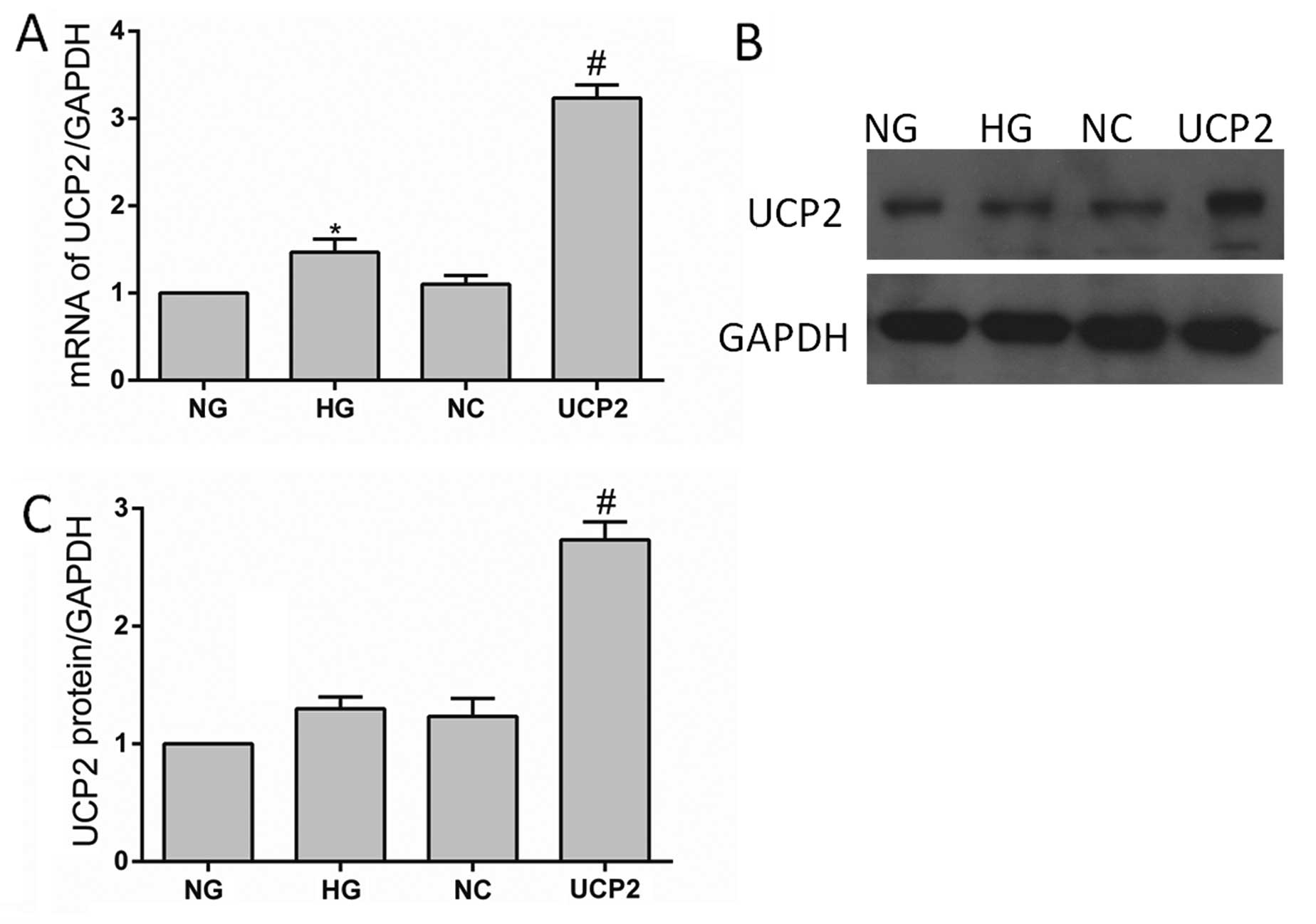
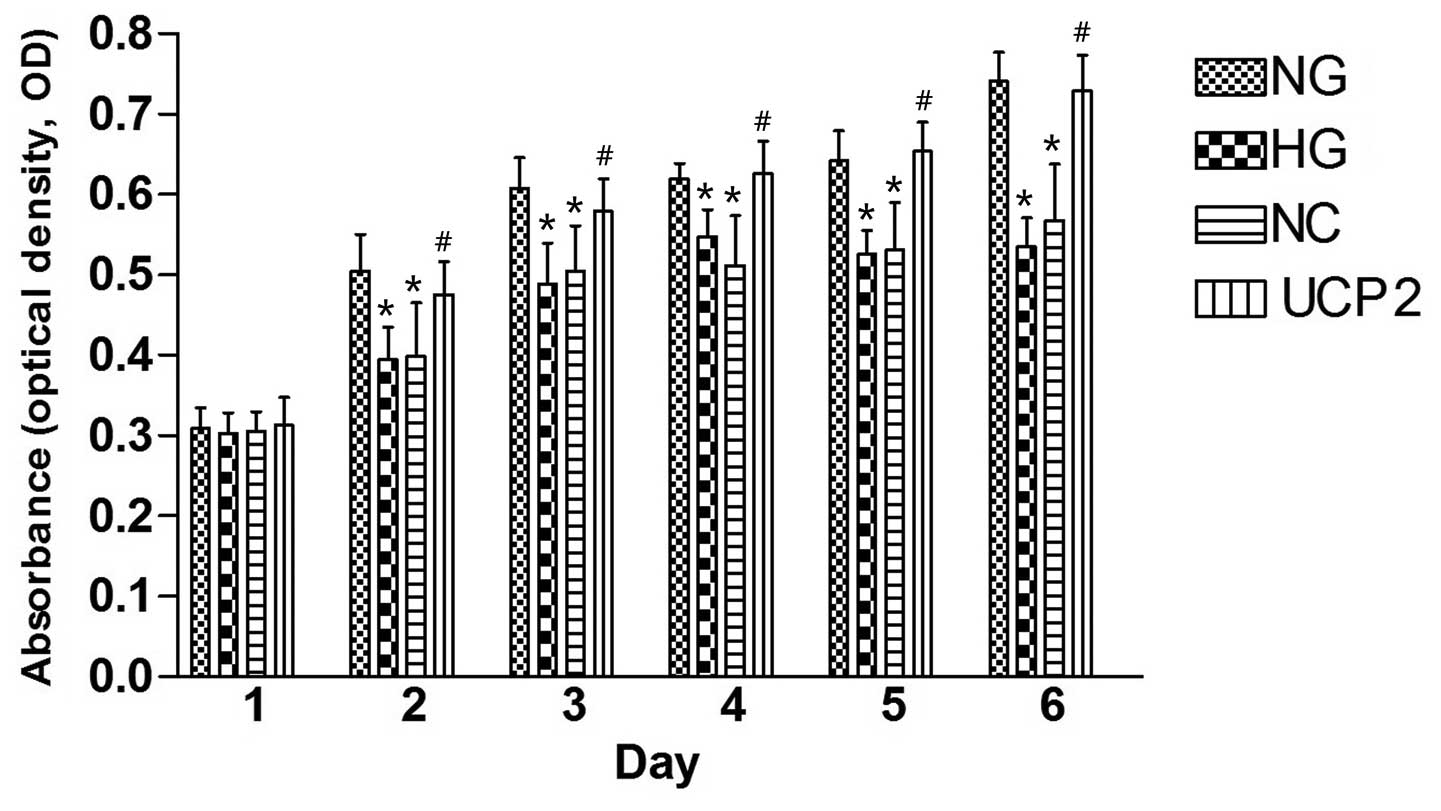
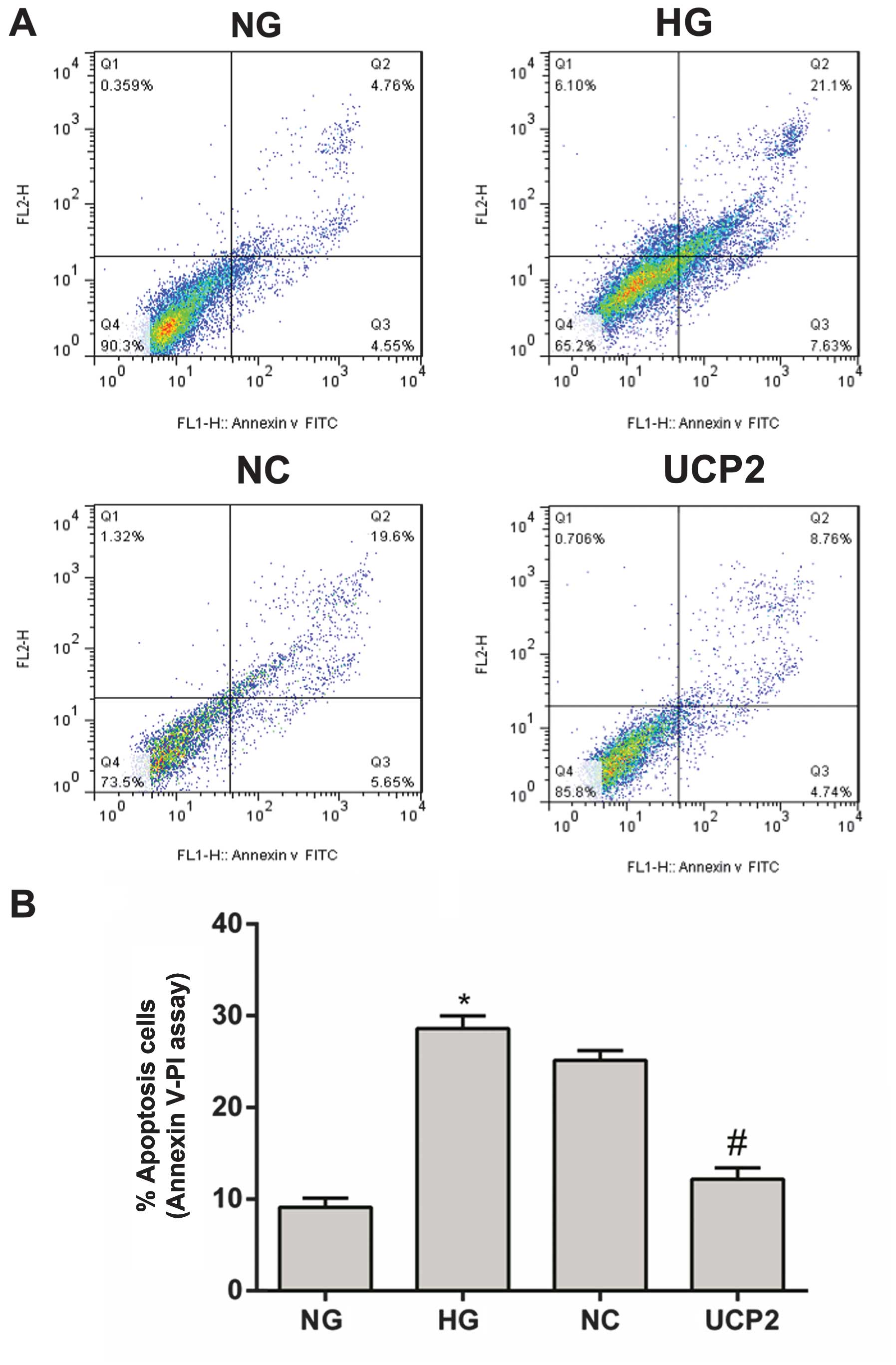
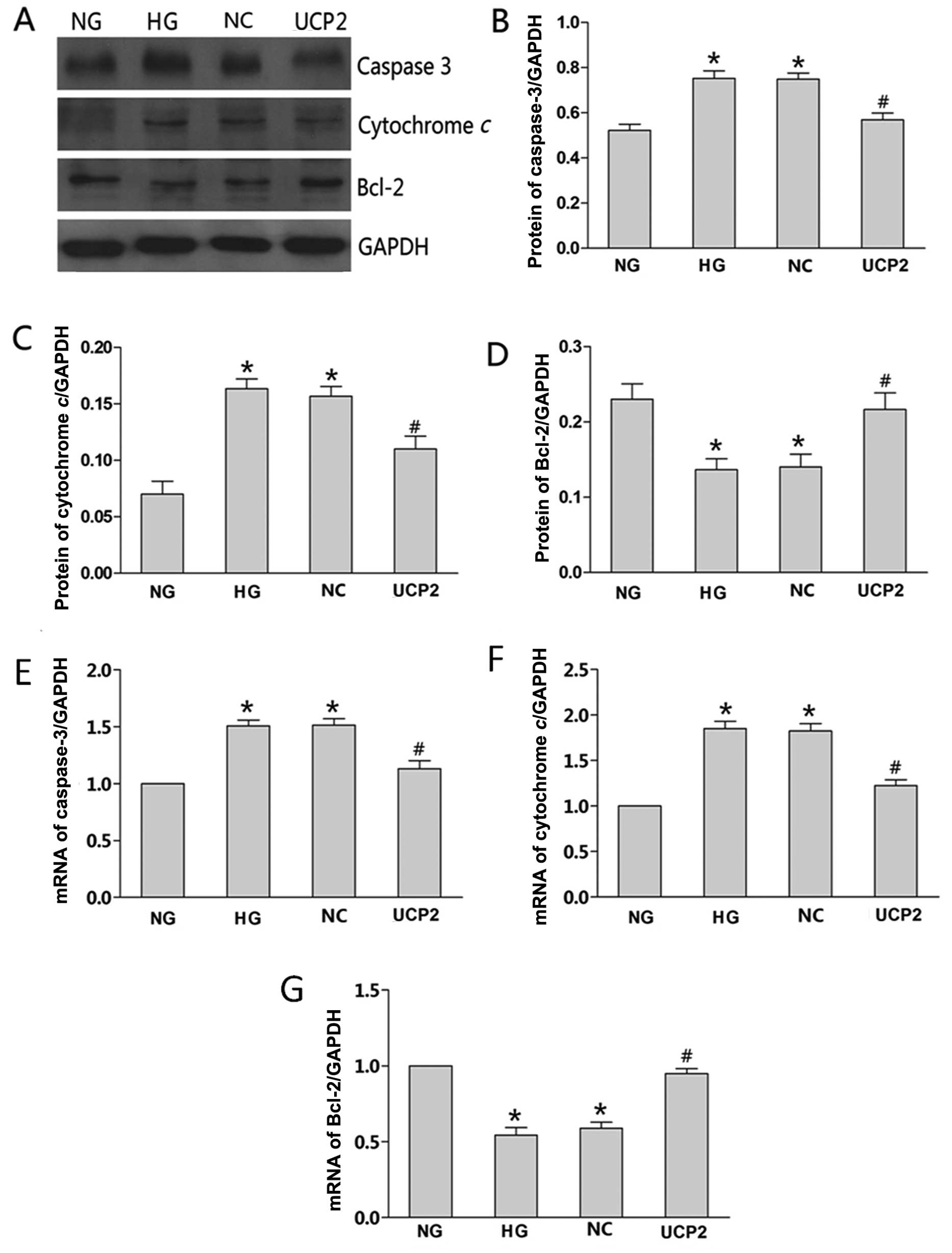
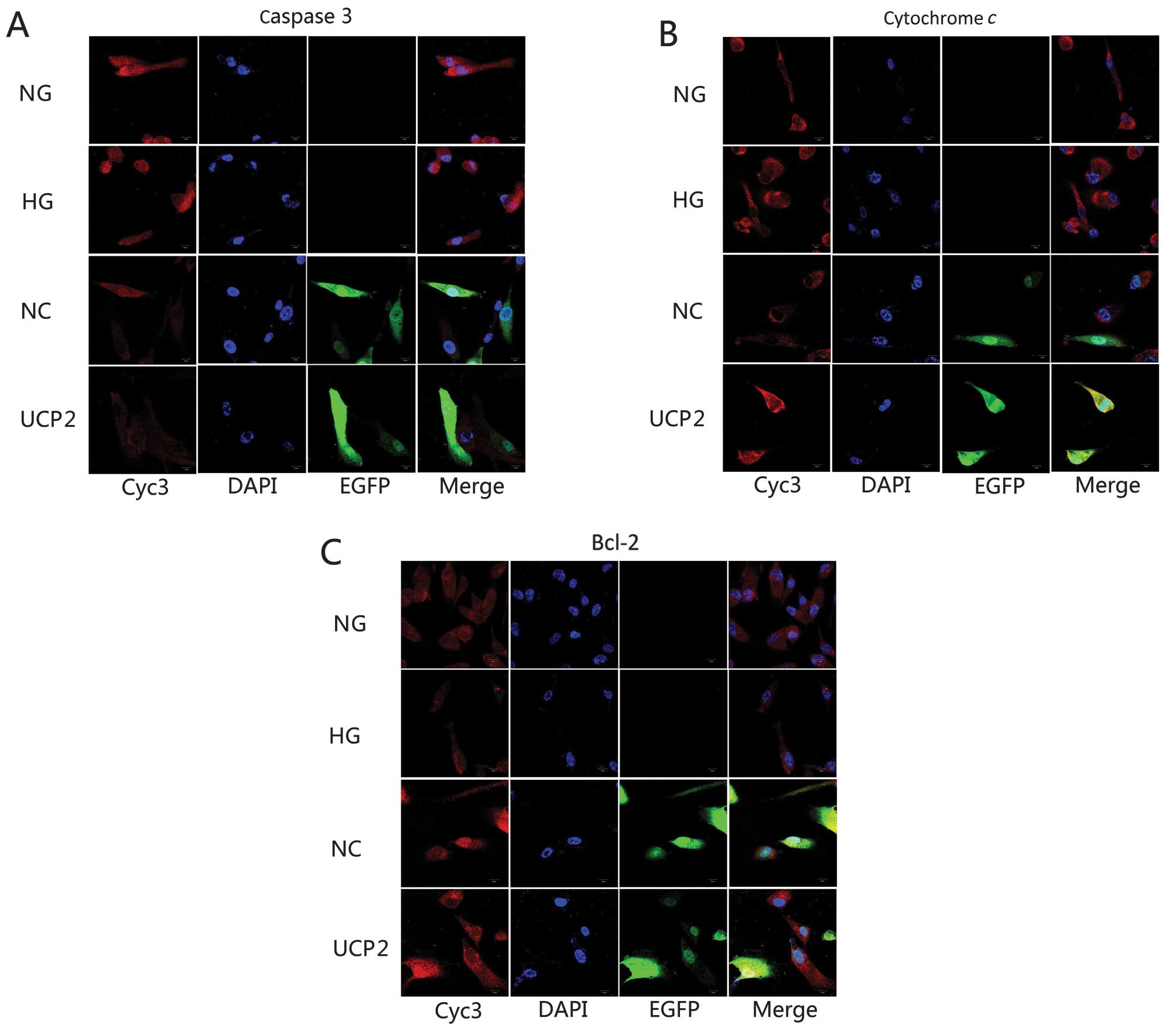
Studies have shown that an overproduction of mitochondrial reactive oxygen species (ROS) is an initiating cause in the pathogenesis of diabetic complications. However, uncoupling protein 2 (UCP2) can protect retinal vascular endothelial cells from damage by inhibiting the overproduction of mitochondrial ROS, although the protective mechanism involved is not completely clear. This study aimed to assess the effect and mechanism of UCP2 on the apoptosis of human umbilical vein endothelial cells (HUVECs). HUVECs were cultured in normal glucose (NG, 5.5 mmol/l) or high glucose (HG, 30 mmol/l) medium in the presence or absence of UCP2+/+ lentiviral transfection. Lentivirus-mediated UCP2 overexpression inhibited the apoptosis of HUVECs induced by HG. Treatment with HG resulted in the upregulation of caspase-3 and cytochrome c and the downregulation of Bcl-2 in vitro. Furthermore, compared with the NG group, the rate of apoptosis was significantly increased in the HG group. On day two post-infection, NG cells showed significantly greater HUVEC cell proliferation than HG cells. Notably, UCP2 overexpression inhibited these processes. Taken together, these results suggest that UCP2 promotes cell proliferation and inhibits HG-induced apoptosis in HUVECs via the Bcl-2 up‑ and downregulation of caspase-3 and cytochrome c in vitro. This may provide experimental evidence for the application of UCP2 as a new protective factor for diabetic complications, such as diabetic retinopathy.
View Figures

Figure 1

Figure 2

Figure 3

Figure 4

Figure 5

View References

1 

Forbes JM, Coughlan MT and Cooper ME: Oxidative stress as a major culprit in kidney disease in diabetes. Diabetes. 57:1446–1454. 2008. View Article : Google Scholar : PubMed/NCBI

2 

Brownlee M: Biochemistry and molecular cell biology of diabetic complications. Nature. 414:813–820. 2001. View Article : Google Scholar : PubMed/NCBI

3 

Brownlee M: The pathobiology of diabetic complications: a unifying mechanism. Diabetes. 54:1615–1625. 2005. View Article : Google Scholar : PubMed/NCBI

4 

Zheng Z, Chen H, Ke G, Fan Y, Zou H, et al: Protective effect of perindopril on diabetic retinopathy is associated with decreased vascular endothelial growth factor-to-pigment epithelium-derived factor ratio: involvement of a mitochondria-reactive oxygen species pathway. Diabetes. 58:954–964. 2009. View Article : Google Scholar

5 

Mattson MP and Kroemer G: Mitochondria in cell death: novel targets for neuroprotection and cardioprotection. Trends Mol Med. 9:196–205. 2003. View Article : Google Scholar : PubMed/NCBI

6 

Mattson MP and Liu D: Mitochondrial potassium channels and uncoupling proteins in synaptic plasticity and neuronal cell death. Biochem Biophys Res Commun. 304:539–549. 2003. View Article : Google Scholar : PubMed/NCBI

7 

Cui Y, Xu X, Bi H, Wu J, et al: Expression modification of uncoupling proteins and MnSOD in retinal endothelial cells and pericytes induced by high glucose: the role of reactive oxygen species in diabetic retinopathy. Exp Eye Res. 83:807–816. 2001. View Article : Google Scholar

8 

Fleury C, Neverova M, Collins S, Raimbault S, et al: Uncoupling protein-2: a novel gene linked to obesity and hyperinsulinemia. Nat Genet. 15:269–272. 1997. View Article : Google Scholar : PubMed/NCBI

9 

Pecqueur C, Couplan E, Bouillaud F and Ricquier D: Genetic and physiological analysis of the role of uncoupling proteins in human energy homeostasis. J Mol Med. 79:48–56. 2001. View Article : Google Scholar

10 

Pecqueur C, Alves-Guerra MC, Gelly C, Levi-Meyrueis C, Couplan E, et al: Uncoupling protein 2, in vivo distribution, induction upon oxidative stress, and evidence for translational regulation. J Biol Chem. 276:8705–8712. 2001. View Article : Google Scholar : PubMed/NCBI

11 

Couplan E, del Mar Gonzalez-Barroso M, Alves-Guerra MC, Ricquier D, Goubern M and Bouillaud F: No evidence for a basal, retinoic, or superoxide-induced uncoupling activity of the uncoupling protein 2 present in spleen or lung mitochondria. J Biol Chem. 277:26268–26275. 2002. View Article : Google Scholar : PubMed/NCBI

12 

Zhang CY, Baffy G, Perret P, Krauss S, Peroni O, et al: Uncoupling protein-2 negatively regulates insulin secretion and is a major link between obesity, beta cell dysfunction, and type 2 diabetes. Cell. 105:745–755. 2001. View Article : Google Scholar : PubMed/NCBI

13 

Krauss S, Brand MD and Buttgereit F: Signaling takes a breath - new quantitative perspectives on bioenergetics and signal transduction. Immunity. 15:497–502. 2001. View Article : Google Scholar : PubMed/NCBI

14 

Krauss S, Zhang CY, Scorrano L, Dalgaard LT, St-Pierre J, et al: Superoxide-mediated activation of uncoupling protein 2 causes pancreatic beta cell dysfunction. J Clin Invest. 112:1831–1842. 2003. View Article : Google Scholar : PubMed/NCBI

15 

Turner JD, Gaspers LD, Wang G and Thomas AP: Uncoupling protein-2 modulates myocardial excitation-contraction coupling. Circ Res. 106:730–738. 2010. View Article : Google Scholar : PubMed/NCBI

16 

Horvath TL, Warden CH, Hajos M, Lombardi A, Goglia F, et al: Brain uncoupling protein 2: uncoupled neuronal mitochondria predict thermal synapses in homeostatic centers. J Neurosci. 19:10417–10427. 1999.PubMed/NCBI

17 

Liu Y, Chen L, Xu X, Vicaut E and Sercombe R: Both ischemic preconditioning and ghrelin administration protect hippocampus from ischemia/reperfusion and upregulate uncoupling protein-2. BMC Physiol. 9:172009. View Article : Google Scholar : PubMed/NCBI

18 

Della-Morte D, Dave KR, DeFazio RA, Bao YC, Raval AP, et al: Resveratrol pretreatment protects rat brain from cerebral ischemic damage via a sirtuin 1-uncoupling protein 2 pathway. Neuroscience. 159:993–1002. 2009. View Article : Google Scholar

19 

Arsenijevic D, Onuma H, Pecqueur C, Ricquier D, et al: Disruption of the uncoupling protein-2 gene in mice reveals a role in immunity and reactive oxygen species production. Nat Genet. 26:435–439. 2000. View Article : Google Scholar : PubMed/NCBI

20 

Nègre-Salvayre A, Hirtz C, Carrera G, Casteilla L, et al: A role for uncoupling protein-2 as a regulator of mitochondrial hydrogen peroxide generation. FASEB J. 11:809–815. 1997.PubMed/NCBI

21 

Li LX, Skorpen F, Egeberg K, Jørgensen IH and Grill V: Uncoupling protein-2 participates in cellular defense against oxidative stress in clonal beta-cells. Biochem Biophys Res Commun. 282:273–277. 2001. View Article : Google Scholar : PubMed/NCBI

22 

Bai Y, Onuma H, Bai X, Medvedev AV, Collins S, et al: Persistent nuclear factor-kappa B activation in Ucp2−/− mice leads to enhanced nitric oxide and inflammatory cytokine production. J Biol Chem. 280:19062–19069. 2005.

23 

Nishio K, Qiao S and Yamashita H: Characterization of the differential expression of uncoupling protein 2 and ROS production in differentiated mouse macrophage-cells (Mm1) and the progenitor cells (M1). J Mol Histol. 36:35–44. 2005. View Article : Google Scholar

24 

Brand MD, Affourtit C, Esteves TC, Parker N, et al: Mitochondrial superoxide: production, biological effects, and activation of uncoupling proteins. Free Radic Biol Med. 37:755–767. 2004. View Article : Google Scholar : PubMed/NCBI

25 

Conti B, Sugama S, Lucero J, Bartfai T, et al: Uncoupling protein 2 protects dopaminergic neurons from acute 1,2,3,6-methyl-phenyl-tetrahydropyridine toxicity. J Neurochem. 93:493–501. 2005. View Article : Google Scholar

26 

Mattiasson G, Shamloo M, Gido G, Wieloch T, et al: Uncoupling protein-2 prevents neuronal death and diminishes brain dysfunction after stroke and brain trauma. Nat Med. 9:1062–1068. 2003. View Article : Google Scholar : PubMed/NCBI

27 

Paradis E, Clavel S, Bouillaud F, Ricquier D and Richard D: Uncoupling protein 2: a novel player in neuroprotection. Trends Mol Med. 9:522–525. 2003. View Article : Google Scholar : PubMed/NCBI

28 

Richard D, Clavel S, Huang Q, Sanchis D and Ricquier D: Uncoupling protein 2 in the brain: distribution and function. Biochem Soc Trans. 29:812–817. 2001. View Article : Google Scholar : PubMed/NCBI

29 

Blanc J, Alves-Guerra MC, Esposito B, Rousset S, Mallat Z, et al: Protective role of uncoupling protein 2 in atherosclerosis. Circulation. 107:388–390. 2003. View Article : Google Scholar : PubMed/NCBI

30 

Teshima Y, Akao M, Jones SP and Marbán E: Uncoupling protein-2 overexpression inhibits mitochondrial death pathway in cardiomyocytes. Circ Res. 93:192–200. 2003. View Article : Google Scholar : PubMed/NCBI

31 

Polonsky KS and Semenkovich CF: The pancreatic beta cell heats up: UCP2 and insulin secretion in diabetes. Cell. 105:705–707. 2001. View Article : Google Scholar : PubMed/NCBI

32 

Suh YH, Kim SY, Lee HY, Song DK, et al: Overexpression of short heterodimer partner recovers impaired glucose-stimulated insulin secretion of pancreatic beta-cells overexpressing UCP2. J Endocrinol. 183:133–144. 2004. View Article : Google Scholar

33 

Sayeed A, Meng Z, Luciani G, Dairkee SH, et al: Negative regulation of UCP2 by TGFβ signaling characterizes low and intermediate-grade primary breast cancer. Cell Death Dis. 1:e532010.

34 

Beltramo E, Berrone E, Buttiglieri S and Porta M: Thiamine and benfotiamine prevent increased apoptosis in endothelial cells and pericytes cultured in high glucose. Diabetes Metab Res Rev. 20:330–336. 2004. View Article : Google Scholar : PubMed/NCBI

35 

Li W, Liu X, He Z, Yanoff M, Jian B and Ye X: Expression of apoptosis regulatory genes by retinal pericytes after rapid glucose reduction. Invest Ophthalmol Vis Sci. 39:1535–1543. 1998.PubMed/NCBI

36 

Naruse K, Nakamura J, Hamada Y, Nakayama M, Chava S, Komori T, Kato K, Kasuya Y, Miwa K and Hotta N: Aldose reductase inhibition prevents glucose-induced apoptosis in cultured bovine retinal microvascular pericytes. Exp Eye Res. 71:309–315. 2000. View Article : Google Scholar

37 

Romeo G, Liu WH, Asnaghi V, Kern TS and Lorenzi M: Activation of nuclear factor-kappaB induced by diabetes and high glucose regulates a proapoptotic program in retinal pericytes. Diabetes. 51:2241–2248. 2002. View Article : Google Scholar : PubMed/NCBI

38 

Elorza A, Hyde B, Mikkola HK, Collins S and Shirihai OS: UCP2 modulates cell proliferation through the MAPK/ERK pathway during erythropoiesis and has no effect on heme biosynthesis. J Biol Chem. 283:30461–30470. 2008. View Article : Google Scholar : PubMed/NCBI

39 

Pecqueur C, Bui T, Gelly C, Tompson CB, et al: Uncoupling protein-2 controls proliferation by promoting fatty acid oxidation and limiting glycolysis-derived pyruvate utilization. FASEB J. 22:9–18. 2008. View Article : Google Scholar : PubMed/NCBI

40 

Sears RC and Nevins JR: Signaling networks that link cell proliferation and cell fate. J Biol Chem. 277:11617–11620. 2002. View Article : Google Scholar : PubMed/NCBI

Related Articles

  • Abstract
  • View
  • Download
  • Twitter
Copy and paste a formatted citation
Spandidos Publications style
He Y, Wang N, Shen Y, Zheng Z and Xu X: Inhibition of high glucose-induced apoptosis by uncoupling protein 2 in human umbilical vein endothelial cells. Int J Mol Med 33: 1275-1281, 2014.
APA
He, Y., Wang, N., Shen, Y., Zheng, Z., & Xu, X. (2014). Inhibition of high glucose-induced apoptosis by uncoupling protein 2 in human umbilical vein endothelial cells. International Journal of Molecular Medicine, 33, 1275-1281. https://doi.org/10.3892/ijmm.2014.1676
MLA
He, Y., Wang, N., Shen, Y., Zheng, Z., Xu, X."Inhibition of high glucose-induced apoptosis by uncoupling protein 2 in human umbilical vein endothelial cells". International Journal of Molecular Medicine 33.5 (2014): 1275-1281.
Chicago
He, Y., Wang, N., Shen, Y., Zheng, Z., Xu, X."Inhibition of high glucose-induced apoptosis by uncoupling protein 2 in human umbilical vein endothelial cells". International Journal of Molecular Medicine 33, no. 5 (2014): 1275-1281. https://doi.org/10.3892/ijmm.2014.1676
Copy and paste a formatted citation
x
Spandidos Publications style
He Y, Wang N, Shen Y, Zheng Z and Xu X: Inhibition of high glucose-induced apoptosis by uncoupling protein 2 in human umbilical vein endothelial cells. Int J Mol Med 33: 1275-1281, 2014.
APA
He, Y., Wang, N., Shen, Y., Zheng, Z., & Xu, X. (2014). Inhibition of high glucose-induced apoptosis by uncoupling protein 2 in human umbilical vein endothelial cells. International Journal of Molecular Medicine, 33, 1275-1281. https://doi.org/10.3892/ijmm.2014.1676
MLA
He, Y., Wang, N., Shen, Y., Zheng, Z., Xu, X."Inhibition of high glucose-induced apoptosis by uncoupling protein 2 in human umbilical vein endothelial cells". International Journal of Molecular Medicine 33.5 (2014): 1275-1281.
Chicago
He, Y., Wang, N., Shen, Y., Zheng, Z., Xu, X."Inhibition of high glucose-induced apoptosis by uncoupling protein 2 in human umbilical vein endothelial cells". International Journal of Molecular Medicine 33, no. 5 (2014): 1275-1281. https://doi.org/10.3892/ijmm.2014.1676
Follow us
  • Twitter
  • LinkedIn
  • Facebook
About
  • Spandidos Publications
  • Careers
  • Cookie Policy
  • Privacy Policy
How can we help?
  • Help
  • Live Chat
  • Contact
  • Email to our Support Team