Spandidos Publications Logo
  • About
    • About Spandidos
    • Aims and Scopes
    • Abstracting and Indexing
    • Editorial Policies
    • Reprints and Permissions
    • Job Opportunities
    • Terms and Conditions
    • Contact
  • Journals
    • All Journals
    • Oncology Letters
      • Oncology Letters
      • Information for Authors
      • Editorial Policies
      • Editorial Board
      • Aims and Scope
      • Abstracting and Indexing
      • Bibliographic Information
      • Archive
    • International Journal of Oncology
      • International Journal of Oncology
      • Information for Authors
      • Editorial Policies
      • Editorial Board
      • Aims and Scope
      • Abstracting and Indexing
      • Bibliographic Information
      • Archive
    • Molecular and Clinical Oncology
      • Molecular and Clinical Oncology
      • Information for Authors
      • Editorial Policies
      • Editorial Board
      • Aims and Scope
      • Abstracting and Indexing
      • Bibliographic Information
      • Archive
    • Experimental and Therapeutic Medicine
      • Experimental and Therapeutic Medicine
      • Information for Authors
      • Editorial Policies
      • Editorial Board
      • Aims and Scope
      • Abstracting and Indexing
      • Bibliographic Information
      • Archive
    • International Journal of Molecular Medicine
      • International Journal of Molecular Medicine
      • Information for Authors
      • Editorial Policies
      • Editorial Board
      • Aims and Scope
      • Abstracting and Indexing
      • Bibliographic Information
      • Archive
    • Biomedical Reports
      • Biomedical Reports
      • Information for Authors
      • Editorial Policies
      • Editorial Board
      • Aims and Scope
      • Abstracting and Indexing
      • Bibliographic Information
      • Archive
    • Oncology Reports
      • Oncology Reports
      • Information for Authors
      • Editorial Policies
      • Editorial Board
      • Aims and Scope
      • Abstracting and Indexing
      • Bibliographic Information
      • Archive
    • Molecular Medicine Reports
      • Molecular Medicine Reports
      • Information for Authors
      • Editorial Policies
      • Editorial Board
      • Aims and Scope
      • Abstracting and Indexing
      • Bibliographic Information
      • Archive
    • World Academy of Sciences Journal
      • World Academy of Sciences Journal
      • Information for Authors
      • Editorial Policies
      • Editorial Board
      • Aims and Scope
      • Abstracting and Indexing
      • Bibliographic Information
      • Archive
    • International Journal of Functional Nutrition
      • International Journal of Functional Nutrition
      • Information for Authors
      • Editorial Policies
      • Editorial Board
      • Aims and Scope
      • Abstracting and Indexing
      • Bibliographic Information
      • Archive
    • International Journal of Epigenetics
      • International Journal of Epigenetics
      • Information for Authors
      • Editorial Policies
      • Editorial Board
      • Aims and Scope
      • Abstracting and Indexing
      • Bibliographic Information
      • Archive
    • Medicine International
      • Medicine International
      • Information for Authors
      • Editorial Policies
      • Editorial Board
      • Aims and Scope
      • Abstracting and Indexing
      • Bibliographic Information
      • Archive
  • Articles
  • Information
    • Information for Authors
    • Information for Reviewers
    • Information for Librarians
    • Information for Advertisers
    • Conferences
  • Language Editing
Spandidos Publications Logo
  • About
    • About Spandidos
    • Aims and Scopes
    • Abstracting and Indexing
    • Editorial Policies
    • Reprints and Permissions
    • Job Opportunities
    • Terms and Conditions
    • Contact
  • Journals
    • All Journals
    • Biomedical Reports
      • Information for Authors
      • Editorial Policies
      • Editorial Board
      • Aims and Scope
      • Abstracting and Indexing
      • Bibliographic Information
      • Archive
    • Experimental and Therapeutic Medicine
      • Information for Authors
      • Editorial Policies
      • Editorial Board
      • Aims and Scope
      • Abstracting and Indexing
      • Bibliographic Information
      • Archive
    • International Journal of Epigenetics
      • Information for Authors
      • Editorial Policies
      • Editorial Board
      • Aims and Scope
      • Abstracting and Indexing
      • Bibliographic Information
      • Archive
    • International Journal of Functional Nutrition
      • Information for Authors
      • Editorial Policies
      • Editorial Board
      • Aims and Scope
      • Abstracting and Indexing
      • Bibliographic Information
      • Archive
    • International Journal of Molecular Medicine
      • Information for Authors
      • Editorial Policies
      • Editorial Board
      • Aims and Scope
      • Abstracting and Indexing
      • Bibliographic Information
      • Archive
    • International Journal of Oncology
      • Information for Authors
      • Editorial Policies
      • Editorial Board
      • Aims and Scope
      • Abstracting and Indexing
      • Bibliographic Information
      • Archive
    • Medicine International
      • Information for Authors
      • Editorial Policies
      • Editorial Board
      • Aims and Scope
      • Abstracting and Indexing
      • Bibliographic Information
      • Archive
    • Molecular and Clinical Oncology
      • Information for Authors
      • Editorial Policies
      • Editorial Board
      • Aims and Scope
      • Abstracting and Indexing
      • Bibliographic Information
      • Archive
    • Molecular Medicine Reports
      • Information for Authors
      • Editorial Policies
      • Editorial Board
      • Aims and Scope
      • Abstracting and Indexing
      • Bibliographic Information
      • Archive
    • Oncology Letters
      • Information for Authors
      • Editorial Policies
      • Editorial Board
      • Aims and Scope
      • Abstracting and Indexing
      • Bibliographic Information
      • Archive
    • Oncology Reports
      • Information for Authors
      • Editorial Policies
      • Editorial Board
      • Aims and Scope
      • Abstracting and Indexing
      • Bibliographic Information
      • Archive
    • World Academy of Sciences Journal
      • Information for Authors
      • Editorial Policies
      • Editorial Board
      • Aims and Scope
      • Abstracting and Indexing
      • Bibliographic Information
      • Archive
  • Articles
  • Information
    • For Authors
    • For Reviewers
    • For Librarians
    • For Advertisers
    • Conferences
  • Language Editing
Login Register Submit
  • This site uses cookies
  • You can change your cookie settings at any time by following the instructions in our Cookie Policy. To find out more, you may read our Privacy Policy.

    I agree
Search articles by DOI, keyword, author or affiliation
Search
Advanced Search
presentation
International Journal of Molecular Medicine
Join Editorial Board Propose a Special Issue
Print ISSN: 1107-3756 Online ISSN: 1791-244X
Journal Cover
June-2014 Volume 33 Issue 6

Full Size Image

Sign up for eToc alerts
Recommend to Library

Journals

International Journal of Molecular Medicine

International Journal of Molecular Medicine

International Journal of Molecular Medicine is an international journal devoted to molecular mechanisms of human disease.

International Journal of Oncology

International Journal of Oncology

International Journal of Oncology is an international journal devoted to oncology research and cancer treatment.

Molecular Medicine Reports

Molecular Medicine Reports

Covers molecular medicine topics such as pharmacology, pathology, genetics, neuroscience, infectious diseases, molecular cardiology, and molecular surgery.

Oncology Reports

Oncology Reports

Oncology Reports is an international journal devoted to fundamental and applied research in Oncology.

Experimental and Therapeutic Medicine

Experimental and Therapeutic Medicine

Experimental and Therapeutic Medicine is an international journal devoted to laboratory and clinical medicine.

Oncology Letters

Oncology Letters

Oncology Letters is an international journal devoted to Experimental and Clinical Oncology.

Biomedical Reports

Biomedical Reports

Explores a wide range of biological and medical fields, including pharmacology, genetics, microbiology, neuroscience, and molecular cardiology.

Molecular and Clinical Oncology

Molecular and Clinical Oncology

International journal addressing all aspects of oncology research, from tumorigenesis and oncogenes to chemotherapy and metastasis.

World Academy of Sciences Journal

World Academy of Sciences Journal

Multidisciplinary open-access journal spanning biochemistry, genetics, neuroscience, environmental health, and synthetic biology.

International Journal of Functional Nutrition

International Journal of Functional Nutrition

Open-access journal combining biochemistry, pharmacology, immunology, and genetics to advance health through functional nutrition.

International Journal of Epigenetics

International Journal of Epigenetics

Publishes open-access research on using epigenetics to advance understanding and treatment of human disease.

Medicine International

Medicine International

An International Open Access Journal Devoted to General Medicine.

Journal Cover
June-2014 Volume 33 Issue 6

Full Size Image

Sign up for eToc alerts
Recommend to Library

  • Article
  • Citations
    • Cite This Article
    • Download Citation
    • Create Citation Alert
    • Remove Citation Alert
    • Cited By
  • Similar Articles
    • Related Articles (in Spandidos Publications)
    • Similar Articles (Google Scholar)
    • Similar Articles (PubMed)
  • Download PDF
  • Download XML
  • View XML
Review

Perspectives on the therapeutic modulation of an alternative cell death, programmed necrosis (Review)

  • Authors:
    • Young Sik Cho
  • View Affiliations / Copyright

    Affiliations: College of Pharmacy, Keimyung University, Dalseo-gu, Daegu 704-701, Republic of Korea
  • Pages: 1401-1406
    |
    Published online on: March 27, 2014
       https://doi.org/10.3892/ijmm.2014.1716
  • Expand metrics +
Metrics: Total Views: 0 (Spandidos Publications: | PMC Statistics: )
Metrics: Total PDF Downloads: 0 (Spandidos Publications: | PMC Statistics: )
Cited By (CrossRef): 0 citations Loading Articles...

This article is mentioned in:


Abstract

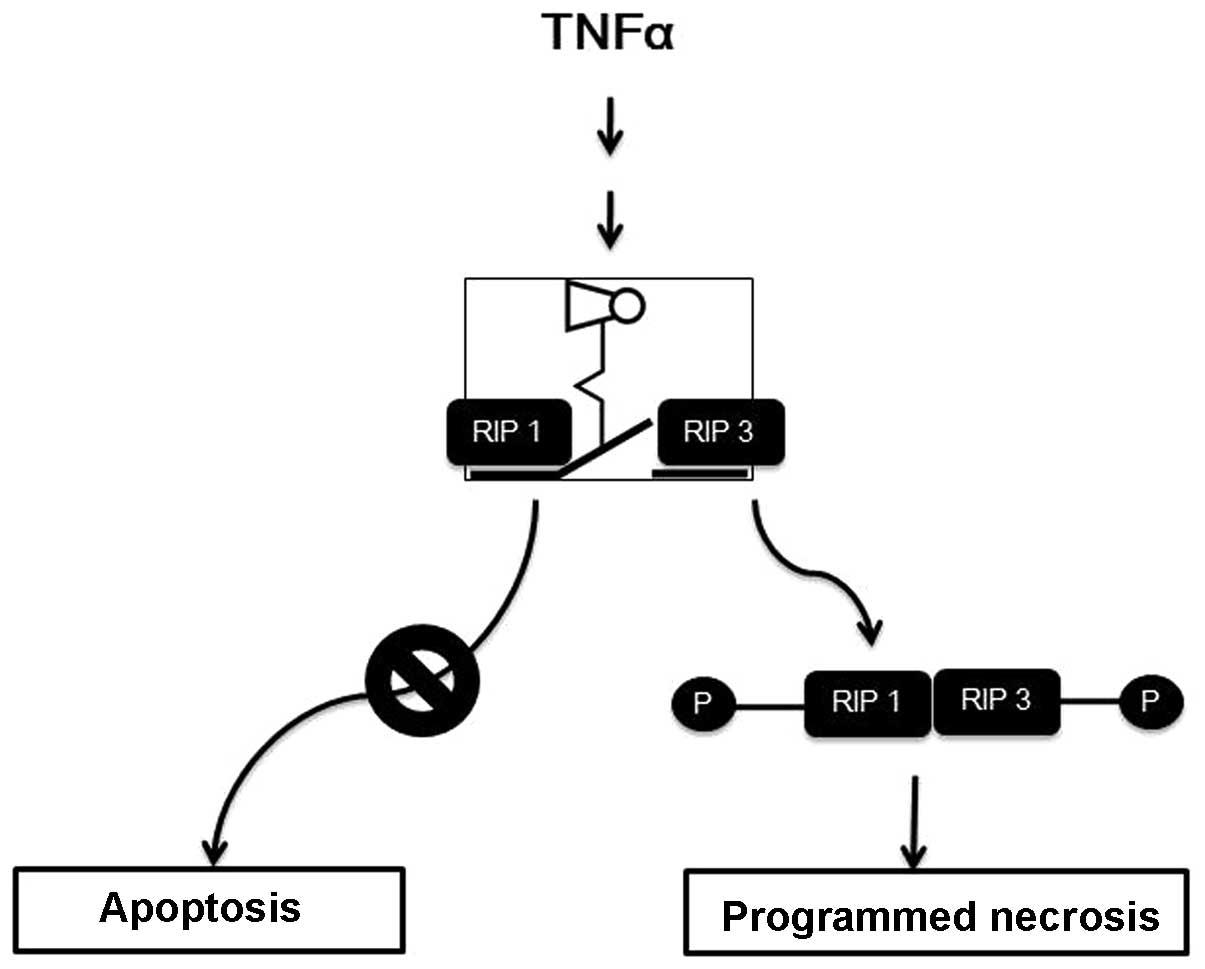
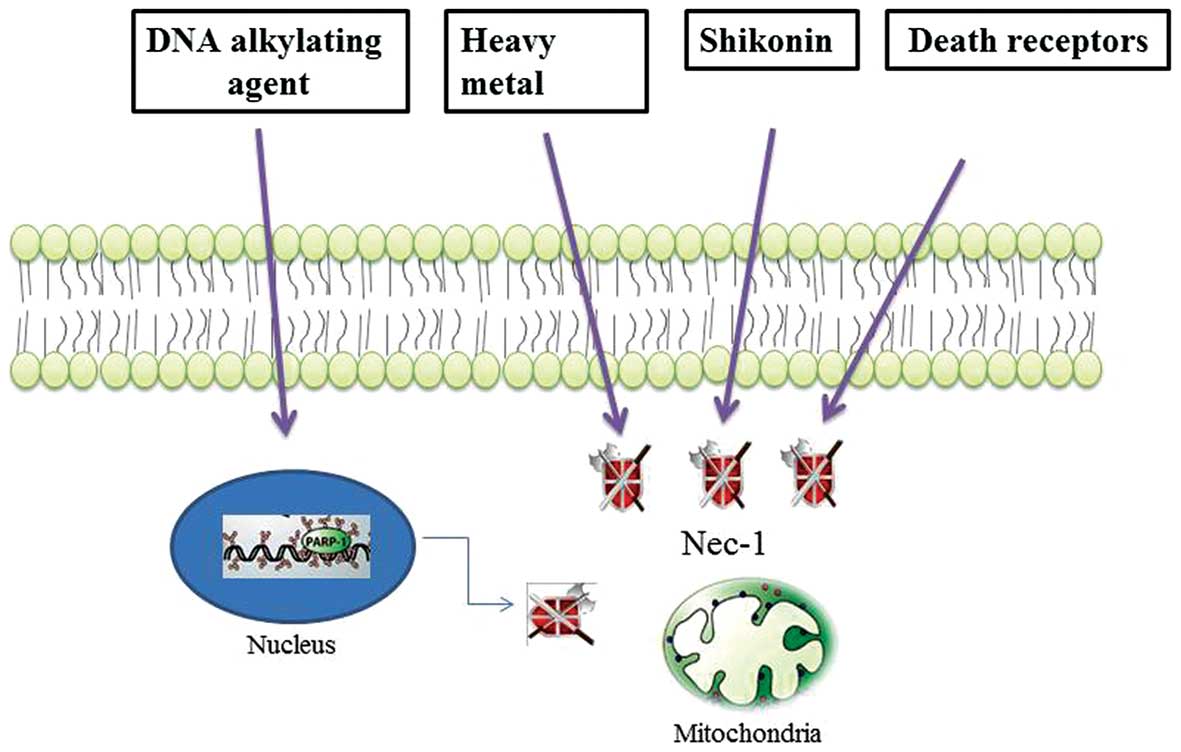
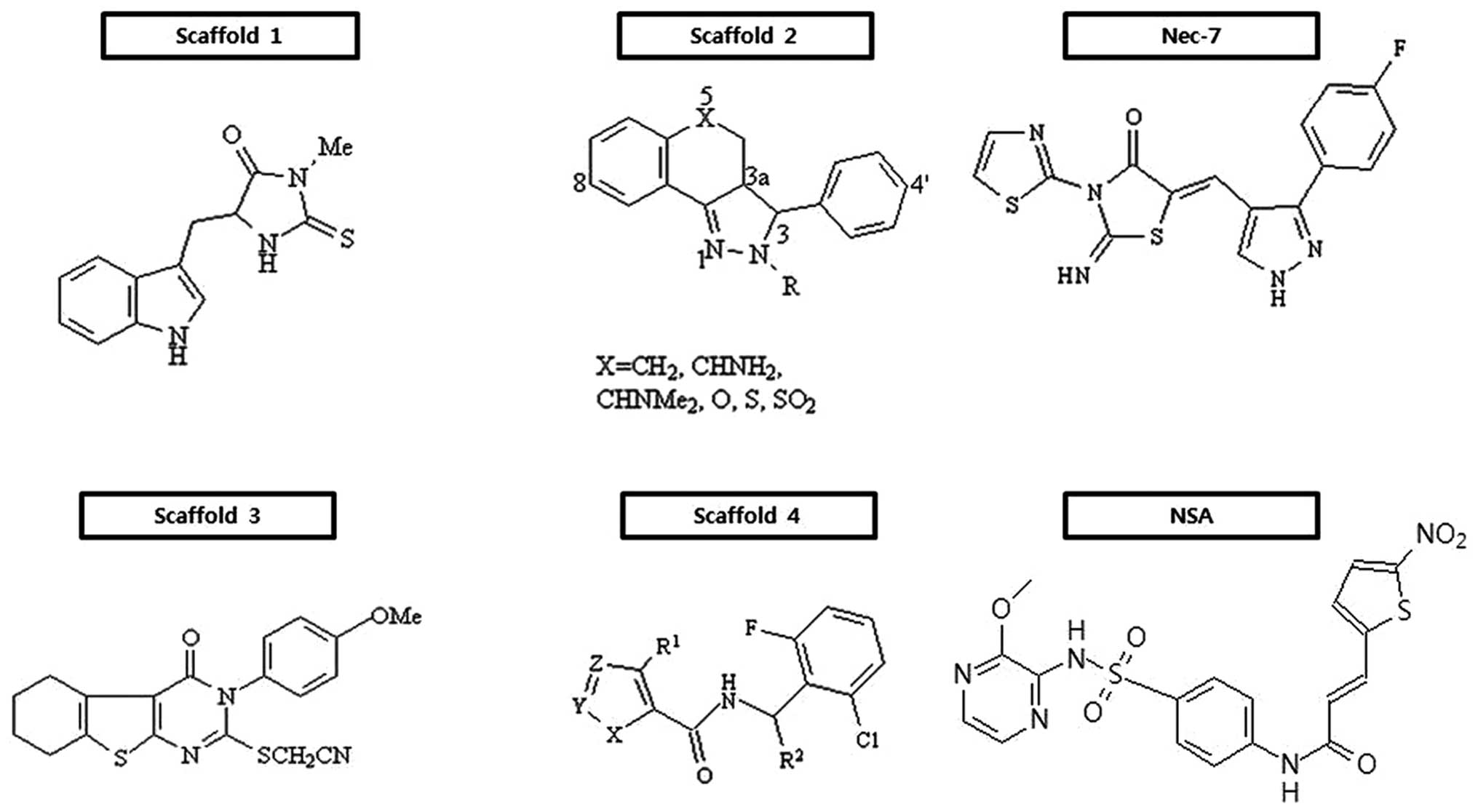
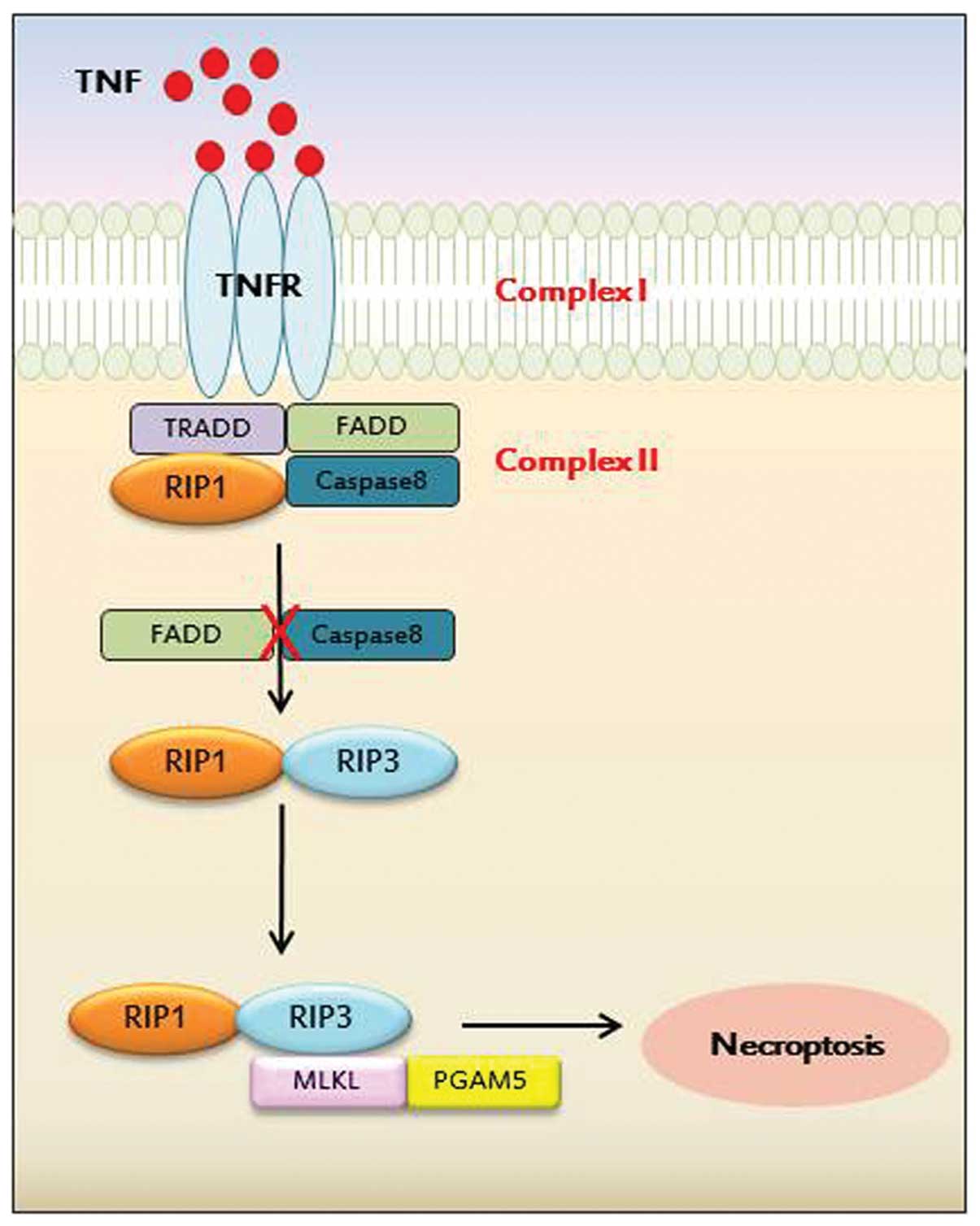
In response to overwhelming external stimuli, cells are forced to die in different ways. By default, cells are prone to apoptosis, a programmed cell death through the activation of the caspase cascade. However, this process would be blocked if one of the proteins involved in executing apoptosis was genetically impaired or chemically inhibited, or if the apoptotic machinery was not properly operated under specific conditions, such as ischemia and microbial infection. To address these issues, the paradigm of programmed cell death needs to be revised; thus, an alternative form of cell death, programmed necrosis (termed necroptosis, through the caspase-independent pathway), which is distinct from apoptosis in many aspects, has recently been adopted. There is much interest in programmed necrosis as it is very closely associated with pathophysiological conditions, such as stroke, heart attack and septic shock. In an effort to identify target molecules of small compounds interfering with the signaling downstream of tumor necrosis factor-α (TNF-α), necrostatin-1 (Nec-1) was first identified to be a selective allosteric inhibitor of the death domain receptor-associated adaptor kinase, receptor interacting protein 1 (RIP1) in vitro. Since then, some novel scaffolds with selective and distinctive activity have been proposed. In this review, the significant advancement and state-of-art direction for the development of small molecules that can control programmed necrosis is discussed. Furthermore, the perspectives on novel strategies harnessing therapeutic targets identified thus far, are also discussed.
View Figures

Figure 1

Figure 2

Figure 3

Figure 4

View References

1 

Iyer SS, Pulskens WP, Sadler JJ, et al: Necrotic cells trigger a sterile inflammatory response through the Nlrp3 inflammasome. Proc Natl Acad Sci USA. 106:20388–20393. 2009. View Article : Google Scholar : PubMed/NCBI

2 

Xu Y, Huang S, Liu ZG and Han J: Poly(ADP-ribose) polymerase-1 signaling to mitochondria in necrotic cell death requires RIP1/TRAF2-mediated JNK1 activation. J Biol Chem. 281:8788–8795. 2006. View Article : Google Scholar : PubMed/NCBI

3 

Petit F, Arnoult D, Viollet L and Estaquier J: Intrinsic and extrinsic pathways signaling during HIV-1 mediated cell death. Biochimie. 85:795–811. 2003. View Article : Google Scholar : PubMed/NCBI

4 

Cho YS, Park SY, Shin HS and Chan FK: Physiological consequences of programmed necrosis, an alternative form of cell demise. Mol Cells. 29:327–332. 2010. View Article : Google Scholar : PubMed/NCBI

5 

Rangamani P and Sirovich L: Survival and apoptotic pathways initiated by TNF-α: modeling and predictions. Biotechnol Bioeng. 97:1216–1229. 2007.

6 

Lamkanfi M, Festjens N, Declercq W, Vanden Berghe T and Vandenabeele P: Caspases in cell survival, proliferation and differentiation. Cell Death Differ. 14:44–55. 2007. View Article : Google Scholar : PubMed/NCBI

7 

Li Y, Yang X, Ma C, Qiao J and Zhang C: Necroptosis contributes to the NMDA-induced excitotoxicity in rat’s cultured cortical neurons. Neurosci Lett. 447:120–123. 2008.PubMed/NCBI

8 

Scholz C, Wieder T, Stärck L, et al: Arsenic trioxide triggers a regulated form of caspase-independent necrotic cell death via the mitochondrial death pathway. Oncogene. 24:1904–1913. 2005. View Article : Google Scholar : PubMed/NCBI

9 

Krumschnabel G, Ebner HL, Hess MW and Villunger A: Apoptosis and necroptosis are induced in rainbow trout cell lines exposed to cadmium. Aquat Toxicol. 99:73–85. 2010. View Article : Google Scholar : PubMed/NCBI

10 

Hitomi J, Christofferson DE, Ng A, et al: Identification of a molecular signaling network that regulates a cellular necrotic cell death pathway. Cell. 135:1311–1323. 2008. View Article : Google Scholar : PubMed/NCBI

11 

Baritaud M, Cabon L, Delavallée L, et al: AIF-mediated caspase-independent necroptosis requires ATM and DNA-PK-induced histone H2AX Ser139 phosphorylation. Cell Death Dis. 3:e3902012. View Article : Google Scholar : PubMed/NCBI

12 

Park S, Shin H and Cho Y: Shikonin induces programmed necrosis-like cell death through the formation of receptor interacting protein 1 and 3 complex. Food Chem Toxicol. 55:36–41. 2013. View Article : Google Scholar : PubMed/NCBI

13 

Hsu TS, Yang PM, Tsai JS and Lin LY: Attenuation of cadmium-induced necrotic cell death by necrostatin-1: potential necrostatin-1 acting sites. Toxicol Appl Pharmacol. 235:153–162. 2009. View Article : Google Scholar : PubMed/NCBI

14 

De Murcia G, Schreiber V, Molinete M, et al: Structure and function of poly(ADP-ribose) polymerase. Mol Cell Biochem. 138:15–24. 1994.

15 

Lautier D, Lagueux J, Thibodeau J, Ménard L and Poirier GG: Molecular and biochemical features of poly (ADP-ribose) metabolism. Mol Cell Biochem. 122:171–193. 1993. View Article : Google Scholar

16 

Gobeil S, Boucher CC, Nadeau D and Poirier GG: Characterization of the necrotic cleavage of poly(ADP-ribose) polymerase (PARP-1): implication of lysosomal proteases. Cell Death Differ. 8:588–594. 2001. View Article : Google Scholar : PubMed/NCBI

17 

Holler N, Zaru R, Micheau O, et al: Fas triggers an alternative, caspase-8-independent cell death pathway using the kinase RIP as effector molecule. Nat Immunol. 1:489–495. 2000. View Article : Google Scholar : PubMed/NCBI

18 

Cho YS, Challa S, Moquin D, et al: Phosphorylation-driven assembly of the RIP1-RIP3 complex regulates programmed necrosis and virus-induced inflammation. Cell. 137:1112–1123. 2009. View Article : Google Scholar : PubMed/NCBI

19 

He S, Wang L, Miao L, et al: Receptor interacting protein kinase-3 determines cellular necrotic response to TNF-α. Cell. 137:1100–1111. 2009.PubMed/NCBI

20 

Zhang DW, Shao J, Lin J, et al: RIP3, an energy metabolism regulator that switches TNF-induced cell death from apoptosis to necrosis. Science. 325:332–336. 2009. View Article : Google Scholar : PubMed/NCBI

21 

Narayan N, Lee IH, Borenstein R, et al: The NAD-dependent deacetylase SIRT2 is required for programmed necrosis. Nature. 492:199–204. 2012. View Article : Google Scholar : PubMed/NCBI

22 

Sun L, Wang H, Wang Z, et al: Mixed lineage kinase domain-like protein mediates necrosis signaling downstream of RIP3 kinase. Cell. 148:213–227. 2012. View Article : Google Scholar : PubMed/NCBI

23 

Galluzzi L and Kroemer G: Necroptosis: a specialized pathway of programmed necrosis. Cell. 135:1161–1163. 2008. View Article : Google Scholar : PubMed/NCBI

24 

Baines CP: Role of the mitochondrion in programmed necrosis. Front Physiol. 1:1562010. View Article : Google Scholar : PubMed/NCBI

25 

Wang Z, Jiang H, Chen S, Du F and Wang X: The mitochondrial phosphatase PGAM5 functions at the convergence point of multiple necrotic death pathways. Cell. 148:228–243. 2012. View Article : Google Scholar : PubMed/NCBI

26 

Teng X, Degterev A, Jagtap P, et al: Structure-activity relationship study of novel necroptosis inhibitors. Bioorg Med Chem Lett. 15:5039–5044. 2005. View Article : Google Scholar : PubMed/NCBI

27 

Degterev A, Huang Z, Boyce M, et al: Chemical inhibitor of nonapoptotic cell death with therapeutic potential for ischemic brain injury. Nat Chem Biol. 1:112–119. 2005. View Article : Google Scholar : PubMed/NCBI

28 

Degterev A, Hitomi J, Germscheid M, et al: Identification of RIP1 kinase as a specific cellular target of necrostatins. Nat Chem Biol. 4:313–321. 2008. View Article : Google Scholar : PubMed/NCBI

29 

Jagtap PG, Degterev A, Choi S, Keys H, Yuan J and Cuny GD: Structure-activity relationship study of tricyclic necroptosis inhibitors. J Med Chem. 50:1886–1895. 2007. View Article : Google Scholar : PubMed/NCBI

30 

Wang K, Li J, Degterev A, Hsu E, Yuan J and Yuan C: Structure-activity relationship analysis of a novel necroptosis inhibitor, necrostatin-5. Bioorg Med Chem Lett. 17:1455–1465. 2007. View Article : Google Scholar : PubMed/NCBI

31 

Teng X, Keys H, Jeevanandam A, et al: Structure-activity relationship study of [1,2,3]thiadiazole necroptosis inhibitors. Bioorg Med Chem Lett. 17:6836–6840. 2007.

32 

Zheng W, Degterev A, Hsu E, Yuan J and Yuan C: Structure-activity relationship study of a novel necroptosis inhibitor, necrostatin-7. Bioorg Med Chem Lett. 18:4932–4935. 2008. View Article : Google Scholar : PubMed/NCBI

33 

Smith CC, Davidson SM, Lim SY, Simpkin JC, Hothersall JS and Yellon DM: Necrostatin: a potentially novel cardioprotective agent? Cardiovasc Drugs Ther. 21:227–233. 2007. View Article : Google Scholar : PubMed/NCBI

34 

You Z, Yang J, Takahashi K, et al: Reduced tissue damage and improved recovery of motor function after traumatic brain injury in mice deficient in complement component C4. J Cereb Blood Flow Metab. 27:1954–1964. 2007. View Article : Google Scholar : PubMed/NCBI

35 

Choi JM, Park KM, Kim SH, et al: Effect of necrosis modulator necrox-7 on hepatic ischemia-reperfusion injury in beagle dogs. Transplant Proc. 42:3414–3421. 2010. View Article : Google Scholar : PubMed/NCBI

36 

Gorman AM: Neuronal cell death in neurodegenerative diseases: recurring themes around protein handling. J Cell Mol Med. 12:2263–2280. 2008. View Article : Google Scholar : PubMed/NCBI

37 

Gukovskaya AS, Mareninova OA, Odinokova IV, et al: Cell death in pancreatitis: effects of alcohol. J Gastroenterol Hepatol. 21(Suppl 3): S10–S13. 2006. View Article : Google Scholar

38 

Mareninova OA, Sung KF, Hong P, et al: Cell death in pancreatitis: caspases protect from necrotizing pancreatitis. J Biol Chem. 281:3370–3381. 2006. View Article : Google Scholar : PubMed/NCBI

39 

Kennedy CL, Smith DJ, Lyras D, Chakravorty A and Rood JI: Programmed cellular necrosis mediated by the pore-forming α-toxin from clostridium septicum. PLoS Pathog. 5:e10005162009.

40 

Yuan J: Neuroprotective strategies targeting apoptotic and necrotic cell death for stroke. Apoptosis. 14:469–477. 2009. View Article : Google Scholar : PubMed/NCBI

Related Articles

  • Abstract
  • View
  • Download
  • Twitter
Copy and paste a formatted citation
Spandidos Publications style
Cho YS: Perspectives on the therapeutic modulation of an alternative cell death, programmed necrosis (Review). Int J Mol Med 33: 1401-1406, 2014.
APA
Cho, Y.S. (2014). Perspectives on the therapeutic modulation of an alternative cell death, programmed necrosis (Review). International Journal of Molecular Medicine, 33, 1401-1406. https://doi.org/10.3892/ijmm.2014.1716
MLA
Cho, Y. S."Perspectives on the therapeutic modulation of an alternative cell death, programmed necrosis (Review)". International Journal of Molecular Medicine 33.6 (2014): 1401-1406.
Chicago
Cho, Y. S."Perspectives on the therapeutic modulation of an alternative cell death, programmed necrosis (Review)". International Journal of Molecular Medicine 33, no. 6 (2014): 1401-1406. https://doi.org/10.3892/ijmm.2014.1716
Copy and paste a formatted citation
x
Spandidos Publications style
Cho YS: Perspectives on the therapeutic modulation of an alternative cell death, programmed necrosis (Review). Int J Mol Med 33: 1401-1406, 2014.
APA
Cho, Y.S. (2014). Perspectives on the therapeutic modulation of an alternative cell death, programmed necrosis (Review). International Journal of Molecular Medicine, 33, 1401-1406. https://doi.org/10.3892/ijmm.2014.1716
MLA
Cho, Y. S."Perspectives on the therapeutic modulation of an alternative cell death, programmed necrosis (Review)". International Journal of Molecular Medicine 33.6 (2014): 1401-1406.
Chicago
Cho, Y. S."Perspectives on the therapeutic modulation of an alternative cell death, programmed necrosis (Review)". International Journal of Molecular Medicine 33, no. 6 (2014): 1401-1406. https://doi.org/10.3892/ijmm.2014.1716
Follow us
  • Twitter
  • LinkedIn
  • Facebook
About
  • Spandidos Publications
  • Careers
  • Cookie Policy
  • Privacy Policy
How can we help?
  • Help
  • Live Chat
  • Contact
  • Email to our Support Team