Spandidos Publications Logo
  • About
    • About Spandidos
    • Aims and Scopes
    • Abstracting and Indexing
    • Editorial Policies
    • Reprints and Permissions
    • Job Opportunities
    • Terms and Conditions
    • Contact
  • Journals
    • All Journals
    • Oncology Letters
      • Oncology Letters
      • Information for Authors
      • Editorial Policies
      • Editorial Board
      • Aims and Scope
      • Abstracting and Indexing
      • Bibliographic Information
      • Archive
    • International Journal of Oncology
      • International Journal of Oncology
      • Information for Authors
      • Editorial Policies
      • Editorial Board
      • Aims and Scope
      • Abstracting and Indexing
      • Bibliographic Information
      • Archive
    • Molecular and Clinical Oncology
      • Molecular and Clinical Oncology
      • Information for Authors
      • Editorial Policies
      • Editorial Board
      • Aims and Scope
      • Abstracting and Indexing
      • Bibliographic Information
      • Archive
    • Experimental and Therapeutic Medicine
      • Experimental and Therapeutic Medicine
      • Information for Authors
      • Editorial Policies
      • Editorial Board
      • Aims and Scope
      • Abstracting and Indexing
      • Bibliographic Information
      • Archive
    • International Journal of Molecular Medicine
      • International Journal of Molecular Medicine
      • Information for Authors
      • Editorial Policies
      • Editorial Board
      • Aims and Scope
      • Abstracting and Indexing
      • Bibliographic Information
      • Archive
    • Biomedical Reports
      • Biomedical Reports
      • Information for Authors
      • Editorial Policies
      • Editorial Board
      • Aims and Scope
      • Abstracting and Indexing
      • Bibliographic Information
      • Archive
    • Oncology Reports
      • Oncology Reports
      • Information for Authors
      • Editorial Policies
      • Editorial Board
      • Aims and Scope
      • Abstracting and Indexing
      • Bibliographic Information
      • Archive
    • Molecular Medicine Reports
      • Molecular Medicine Reports
      • Information for Authors
      • Editorial Policies
      • Editorial Board
      • Aims and Scope
      • Abstracting and Indexing
      • Bibliographic Information
      • Archive
    • World Academy of Sciences Journal
      • World Academy of Sciences Journal
      • Information for Authors
      • Editorial Policies
      • Editorial Board
      • Aims and Scope
      • Abstracting and Indexing
      • Bibliographic Information
      • Archive
    • International Journal of Functional Nutrition
      • International Journal of Functional Nutrition
      • Information for Authors
      • Editorial Policies
      • Editorial Board
      • Aims and Scope
      • Abstracting and Indexing
      • Bibliographic Information
      • Archive
    • International Journal of Epigenetics
      • International Journal of Epigenetics
      • Information for Authors
      • Editorial Policies
      • Editorial Board
      • Aims and Scope
      • Abstracting and Indexing
      • Bibliographic Information
      • Archive
    • Medicine International
      • Medicine International
      • Information for Authors
      • Editorial Policies
      • Editorial Board
      • Aims and Scope
      • Abstracting and Indexing
      • Bibliographic Information
      • Archive
  • Articles
  • Information
    • Information for Authors
    • Information for Reviewers
    • Information for Librarians
    • Information for Advertisers
    • Conferences
  • Language Editing
Spandidos Publications Logo
  • About
    • About Spandidos
    • Aims and Scopes
    • Abstracting and Indexing
    • Editorial Policies
    • Reprints and Permissions
    • Job Opportunities
    • Terms and Conditions
    • Contact
  • Journals
    • All Journals
    • Biomedical Reports
      • Information for Authors
      • Editorial Policies
      • Editorial Board
      • Aims and Scope
      • Abstracting and Indexing
      • Bibliographic Information
      • Archive
    • Experimental and Therapeutic Medicine
      • Information for Authors
      • Editorial Policies
      • Editorial Board
      • Aims and Scope
      • Abstracting and Indexing
      • Bibliographic Information
      • Archive
    • International Journal of Epigenetics
      • Information for Authors
      • Editorial Policies
      • Editorial Board
      • Aims and Scope
      • Abstracting and Indexing
      • Bibliographic Information
      • Archive
    • International Journal of Functional Nutrition
      • Information for Authors
      • Editorial Policies
      • Editorial Board
      • Aims and Scope
      • Abstracting and Indexing
      • Bibliographic Information
      • Archive
    • International Journal of Molecular Medicine
      • Information for Authors
      • Editorial Policies
      • Editorial Board
      • Aims and Scope
      • Abstracting and Indexing
      • Bibliographic Information
      • Archive
    • International Journal of Oncology
      • Information for Authors
      • Editorial Policies
      • Editorial Board
      • Aims and Scope
      • Abstracting and Indexing
      • Bibliographic Information
      • Archive
    • Medicine International
      • Information for Authors
      • Editorial Policies
      • Editorial Board
      • Aims and Scope
      • Abstracting and Indexing
      • Bibliographic Information
      • Archive
    • Molecular and Clinical Oncology
      • Information for Authors
      • Editorial Policies
      • Editorial Board
      • Aims and Scope
      • Abstracting and Indexing
      • Bibliographic Information
      • Archive
    • Molecular Medicine Reports
      • Information for Authors
      • Editorial Policies
      • Editorial Board
      • Aims and Scope
      • Abstracting and Indexing
      • Bibliographic Information
      • Archive
    • Oncology Letters
      • Information for Authors
      • Editorial Policies
      • Editorial Board
      • Aims and Scope
      • Abstracting and Indexing
      • Bibliographic Information
      • Archive
    • Oncology Reports
      • Information for Authors
      • Editorial Policies
      • Editorial Board
      • Aims and Scope
      • Abstracting and Indexing
      • Bibliographic Information
      • Archive
    • World Academy of Sciences Journal
      • Information for Authors
      • Editorial Policies
      • Editorial Board
      • Aims and Scope
      • Abstracting and Indexing
      • Bibliographic Information
      • Archive
  • Articles
  • Information
    • For Authors
    • For Reviewers
    • For Librarians
    • For Advertisers
    • Conferences
  • Language Editing
Login Register Submit
  • This site uses cookies
  • You can change your cookie settings at any time by following the instructions in our Cookie Policy. To find out more, you may read our Privacy Policy.

    I agree
Search articles by DOI, keyword, author or affiliation
Search
Advanced Search
presentation
International Journal of Molecular Medicine
Join Editorial Board Propose a Special Issue
Print ISSN: 1107-3756 Online ISSN: 1791-244X
Journal Cover
August-2014 Volume 34 Issue 2

Full Size Image

Sign up for eToc alerts
Recommend to Library

Journals

International Journal of Molecular Medicine

International Journal of Molecular Medicine

International Journal of Molecular Medicine is an international journal devoted to molecular mechanisms of human disease.

International Journal of Oncology

International Journal of Oncology

International Journal of Oncology is an international journal devoted to oncology research and cancer treatment.

Molecular Medicine Reports

Molecular Medicine Reports

Covers molecular medicine topics such as pharmacology, pathology, genetics, neuroscience, infectious diseases, molecular cardiology, and molecular surgery.

Oncology Reports

Oncology Reports

Oncology Reports is an international journal devoted to fundamental and applied research in Oncology.

Experimental and Therapeutic Medicine

Experimental and Therapeutic Medicine

Experimental and Therapeutic Medicine is an international journal devoted to laboratory and clinical medicine.

Oncology Letters

Oncology Letters

Oncology Letters is an international journal devoted to Experimental and Clinical Oncology.

Biomedical Reports

Biomedical Reports

Explores a wide range of biological and medical fields, including pharmacology, genetics, microbiology, neuroscience, and molecular cardiology.

Molecular and Clinical Oncology

Molecular and Clinical Oncology

International journal addressing all aspects of oncology research, from tumorigenesis and oncogenes to chemotherapy and metastasis.

World Academy of Sciences Journal

World Academy of Sciences Journal

Multidisciplinary open-access journal spanning biochemistry, genetics, neuroscience, environmental health, and synthetic biology.

International Journal of Functional Nutrition

International Journal of Functional Nutrition

Open-access journal combining biochemistry, pharmacology, immunology, and genetics to advance health through functional nutrition.

International Journal of Epigenetics

International Journal of Epigenetics

Publishes open-access research on using epigenetics to advance understanding and treatment of human disease.

Medicine International

Medicine International

An International Open Access Journal Devoted to General Medicine.

Journal Cover
August-2014 Volume 34 Issue 2

Full Size Image

Sign up for eToc alerts
Recommend to Library

  • Article
  • Citations
    • Cite This Article
    • Download Citation
    • Create Citation Alert
    • Remove Citation Alert
    • Cited By
  • Similar Articles
    • Related Articles (in Spandidos Publications)
    • Similar Articles (Google Scholar)
    • Similar Articles (PubMed)
  • Download PDF
  • Download XML
  • View XML
Article

Axl receptor tyrosine kinase is a novel target of apigenin for the inhibition of cell proliferation

  • Authors:
    • Kyung-Chan Kim
    • Eun-Ha Choi
    • Chuhee Lee
  • View Affiliations / Copyright

    Affiliations: Department of Internal Medicine, College of Medicine, Catholic University of Daegu, Daegu 705-718, Republic of Korea, Department of Biochemistry and Molecular Biology, School of Medicine, Yeungnam University, Daegu 705-717, Republic of Korea
  • Pages: 592-598
    |
    Published online on: June 13, 2014
       https://doi.org/10.3892/ijmm.2014.1804
  • Expand metrics +
Metrics: Total Views: 0 (Spandidos Publications: | PMC Statistics: )
Metrics: Total PDF Downloads: 0 (Spandidos Publications: | PMC Statistics: )
Cited By (CrossRef): 0 citations Loading Articles...

This article is mentioned in:


Abstract

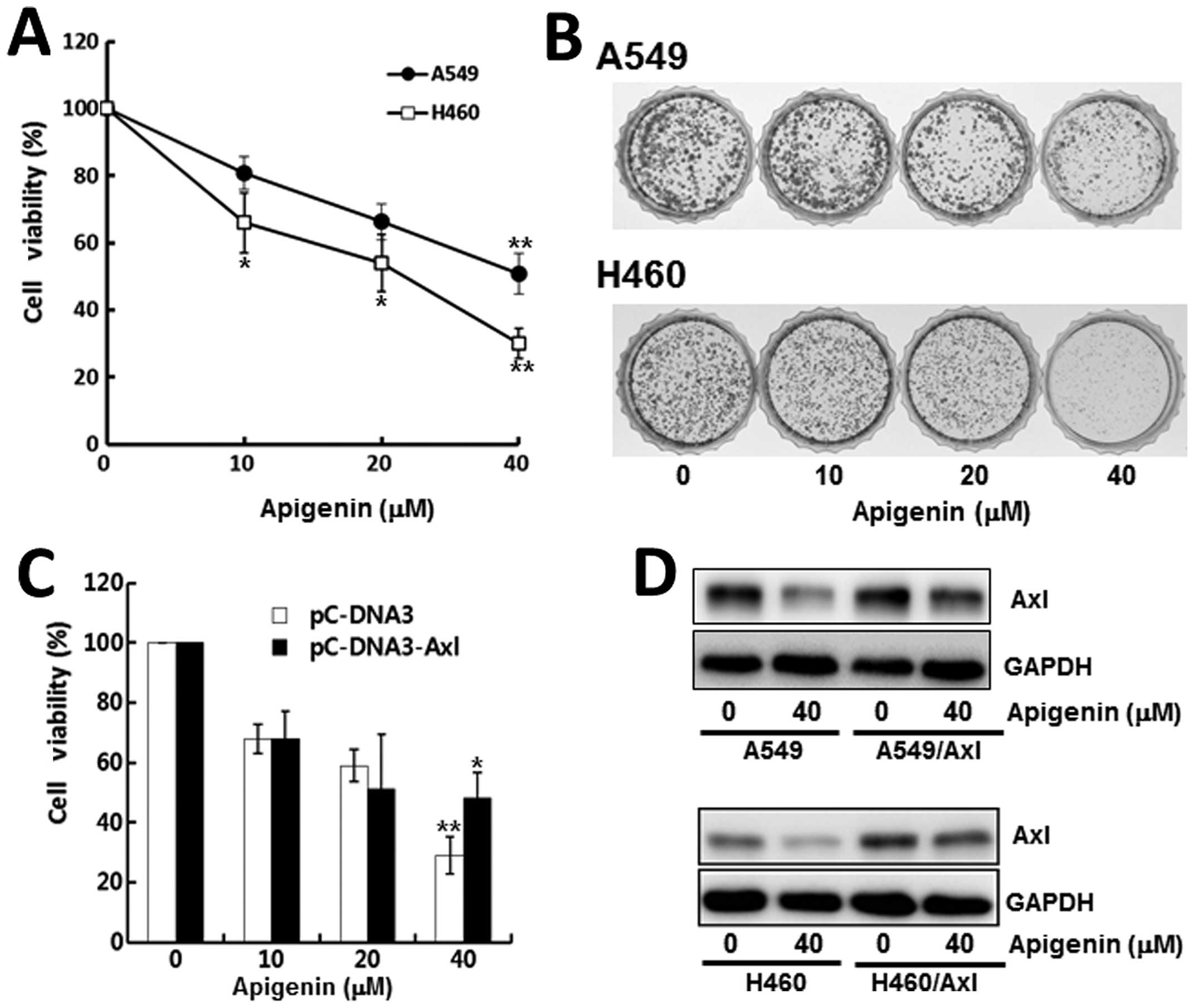
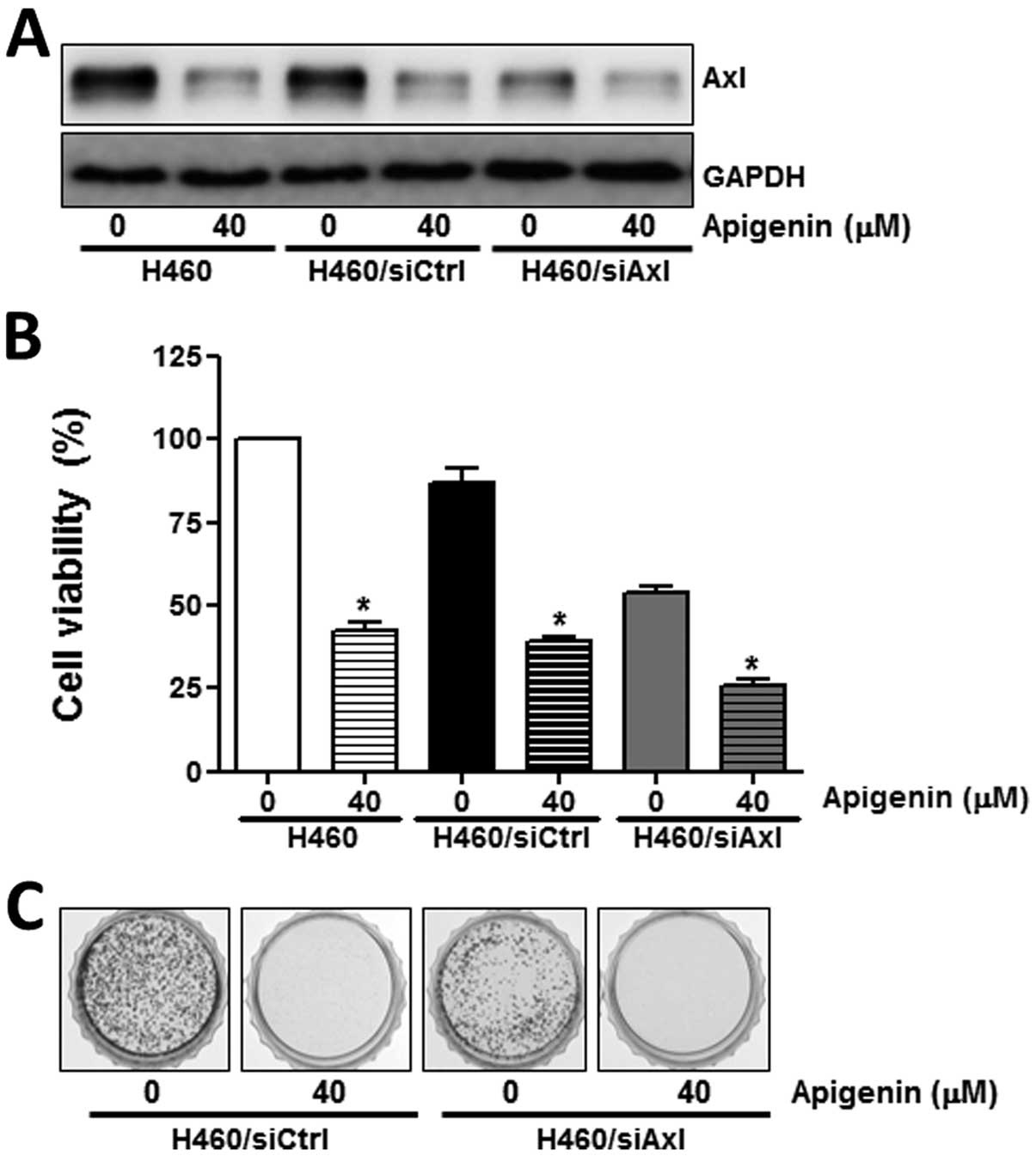
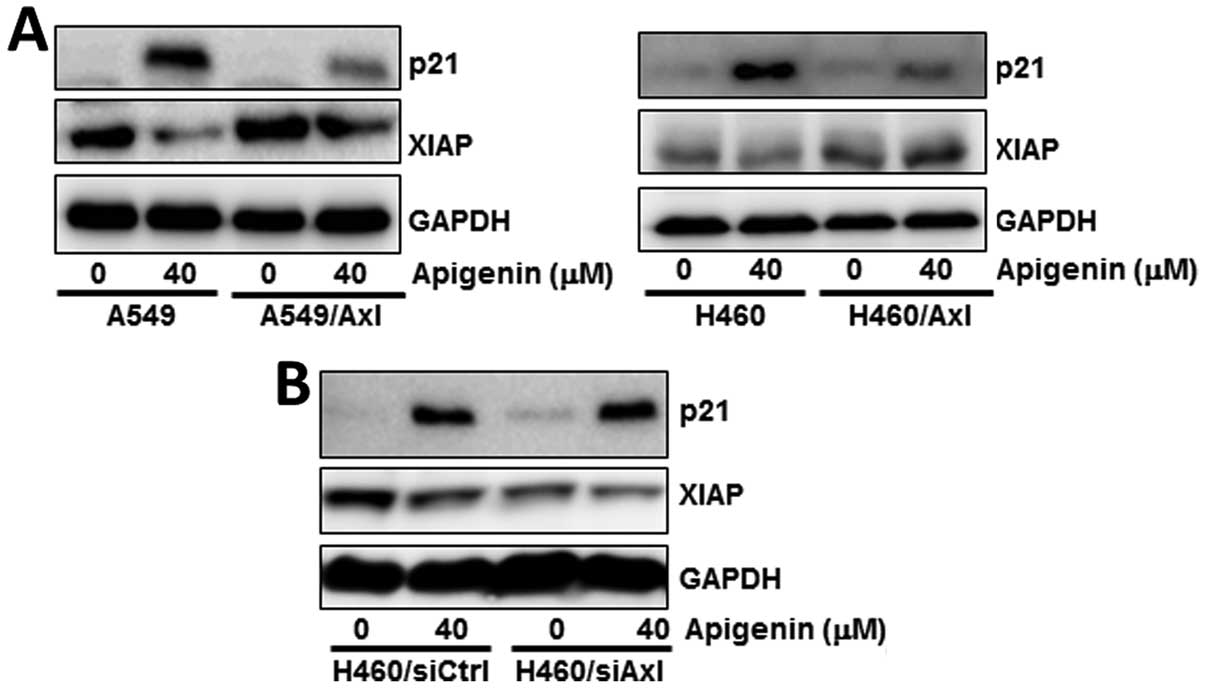
The Axl receptor tyrosine kinase (RTK), along with Tyro 3 and Mer, belongs to the TAM subfamily that promotes survival, stimulates proliferation and/or inhibits apoptosis. In various types of human cancer, including breast, lung and prostate cancer, Axl expression is increased and correlates with an advanced clinical stage. In this study, we examined whether apigenin has an effect on Axl expression, which in turn can affect cell proliferation. The treatment of the non‑small cell lung cancer (NSCLC) cells, A549 and H460, with apigenin decreased Axl mRNA and protein expression in a dose‑dependent manner. Axl promoter activity was also inhibited by apigenin, indicating that apigenin suppressed Axl expression at the transcriptional level. Upon treatment with apigenin, the viability of both the A549 and H460 cells was gradually decreased and the anti-proliferative effects were further confirmed by the dose‑dependent decrease in the clonogenic ability of the apigenin‑treated cells. Subsequently, we found that the viability and clonogenic ability of the cells treated with apigenin was less or more affected by transfection of the cells with a Axl-expressing plasmid or Axl targeting siRNA, compared to transfection with the empty vector or control siRNA, respectively. In addition, apigenin increased the expression of p21, a cyclin-dependent kinase inhibitor, but reduced the expression of X-linked inhibitor of apoptosis protein (XIAP). These cell cycle arrest and pro-apoptotic effects of apigenin were also attenuated or augmented by the up- or downregulation of Axl expression, respectively, which suggests that Axl is a novel target of apigenin through which it exerts its inhibitory effects on cell proliferation. Taken together, our data indicate that apigenin downregulates Axl expression, which subsequently results in the inhibition of NSCLC cell proliferation through the increase and decrease of p21 and XIAP expression, respectively.
View Figures

Figure 1

Figure 2

Figure 3

Figure 4

View References

1 

Liu C, Tu FX and Chen X: Neuroprotective effects of apigenin on acute transient focal cerebral ischemia-reperfusion injury in rats. Zhong Yao Cai. 31:870–873. 2008.(In Chinese).

2 

Svehliková V, Bennett RN, Mellon FA, et al: Isolation, identification and stability of acylated derivatives of apigenin 7-O-glucoside from chamomile (Chamomilla recutita [L.] Rauschert). Phytochemistry. 65:2323–2332. 2004.PubMed/NCBI

3 

Birt DF, Hendrich S and Wang W: Dietary agents in cancer prevention: flavonoids and isoflavonoids. Pharmacol Ther. 90:157–177. 2001. View Article : Google Scholar : PubMed/NCBI

4 

Surh YJ: Cancer chemoprevention with dietary phytochemicals. Nat Rev Cancer. 3:768–780. 2003. View Article : Google Scholar : PubMed/NCBI

5 

Manach C, Scalbert A, Morand C, Rémésy C and Jiménez L: Polyphenols: food sources and bioavailability. Am J Clin Nutr. 79:727–747. 2004.PubMed/NCBI

6 

Yang CS, Landau JM, Huang MT and Newmark HL: Inhibition of carcinogenesis by dietary polyphenolic compounds. Annu Rev Nutr. 21:381–406. 2001. View Article : Google Scholar : PubMed/NCBI

7 

Bevilacqua L, Buiarelli F, Coccioli F and Jasionowska R: Identification of compounds in wine by HPLC-tandem mass spectrometry. Ann Chim. 94:679–689. 2004. View Article : Google Scholar : PubMed/NCBI

8 

Zheng PW, Chiang LC and Lin CC: Apigenin induced apoptosis through p53-dependent pathway in human cervical carcinoma cells. Life Sci. 76:1367–1379. 2005. View Article : Google Scholar : PubMed/NCBI

9 

Lu HF, Chie YJ, Yang MS, et al: Apigenin induces apoptosis in human lung cancer H460 cells through caspase- and mitochondria-dependent pathways. Hum Exp Toxicol. 30:1053–1061. 2011. View Article : Google Scholar : PubMed/NCBI

10 

Zhong Y, Krisanapun C, Lee SH, et al: Molecular targets of apigenin in colorectal cancer cells: involvement of p21, NAG-1 and p53. Eur J Cancer. 46:3365–3374. 2010. View Article : Google Scholar : PubMed/NCBI

11 

Ruela-de-Sousa RR, Fuhler GM, Blom N, Ferreira CV, Aoyama H and Peppelenbosch MP: Cytotoxicity of apigenin on leukemia cell lines: implications for prevention and therapy. Cell Death Dis. 1:e192010. View Article : Google Scholar : PubMed/NCBI

12 

Li ZD, Hu XW, Wang YT and Fang J: Apigenin inhibits proliferation of ovarian cancer A2780 cells through Id1. FEBS Lett. 583:1999–2003. 2009. View Article : Google Scholar : PubMed/NCBI

13 

Shukla S, MacLennan GT, Flask CA, et al: Blockade of beta-catenin signaling by plant flavonoid apigenin suppresses prostate carcinogenesis in TRAMP mice. Cancer Res. 67:6925–6935. 2007. View Article : Google Scholar : PubMed/NCBI

14 

Liu LZ, Fang J, Zhou Q, Hu X, Shi X and Jiang BH: Apigenin inhibits expression of vascular endothelial growth factor and angiogenesis in human lung cancer cells: implication of chemoprevention of lung cancer. Mol Pharmacol. 68:635–643. 2005.PubMed/NCBI

15 

Fang J, Xia C, Cao Z, Zheng JZ, Reed E and Jiang BH: Apigenin inhibits VEGF and HIF-1 expression via PI3K/AKT/p70S6K1 and HDM2/p53 pathways. FASEB J. 19:342–353. 2005. View Article : Google Scholar : PubMed/NCBI

16 

Mirzoeva S, Kim ND, Chiu K, Franzen CA, Bergan RC and Pelling JC: Inhibition of HIF-1 alpha and VEGF expression by the chemopreventive bioflavonoid apigenin is accompanied by Akt inhibition in human prostate carcinoma PC3-M cells. Mol Carcinog. 47:686–700. 2008. View Article : Google Scholar : PubMed/NCBI

17 

Liu E, Hjelle B and Bishop JM: Transforming genes in chronic myelogenous leukemia. Proc Natl Acad Sci USA. 85:1952–1956. 1988. View Article : Google Scholar

18 

O’Bryan JP, Frye RA, Cogswell PC, et al: axl, a transforming gene isolated from primary human myeloid leukemia cells, encodes a novel receptor tyrosine kinase. Mol Cell Biol. 11:5016–5031. 1991.PubMed/NCBI

19 

Rochlitz C, Lohri A, Bacchi M, et al: Axl expression is associated with adverse prognosis and with expression of Bcl-2 and CD34 in de novo acute myeloid leukemia (AML): results from a multicenter trial of the Swiss Group for Clinical Cancer Research (SAKK). Leukemia. 13:1352–1358. 1999. View Article : Google Scholar : PubMed/NCBI

20 

Berclaz G, Altermatt HJ, Rohrbach V, Kieffer I, Dreher E and Andres AC: Estrogen dependent expression of the receptor tyrosine kinase axl in normal and malignant human breast. Ann Oncol. 12:819–824. 2001. View Article : Google Scholar : PubMed/NCBI

21 

Craven RJ, Xu LH, Weiner TM, et al: Receptor tyrosine kinases expressed in metastatic colon cancer. Int J Cancer. 60:791–797. 1995. View Article : Google Scholar : PubMed/NCBI

22 

Ito T, Ito M, Naito S, et al: Expression of the Axl receptor tyrosine kinase in human thyroid carcinoma. Thyroid. 9:563–567. 1999. View Article : Google Scholar : PubMed/NCBI

23 

Nemoto T, Ohashi K, Akashi T, Johnson JD and Hirokawa K: Overexpression of protein tyrosine kinases in human esophageal cancer. Pathobiology. 65:195–203. 1997. View Article : Google Scholar : PubMed/NCBI

24 

Shieh YS, Lai CY, Kao YR, et al: Expression of axl in lung adenocarcinoma and correlation with tumor progression. Neoplasia. 7:1058–1064. 2005. View Article : Google Scholar : PubMed/NCBI

25 

Hutterer M, Knyazev P, Abate A, et al: Axl and growth arrest-specific gene 6 are frequently overexpressed in human gliomas and predict poor prognosis in patients with glioblastoma multiforme. Clin Cancer Res. 14:130–138. 2008. View Article : Google Scholar : PubMed/NCBI

26 

Sun WS, Fujimoto J and Tamaya T: Coexpression of growth arrest-specific gene 6 and receptor tyrosine kinases Axl and Sky in human uterine endometrial cancers. Ann Oncol. 14:898–906. 2003. View Article : Google Scholar

27 

Gustafsson A, Martuszewska D, Johansson M, et al: Differential expression of Axl and Gas6 in renal cell carcinoma reflecting tumor advancement and survival. Clin Cancer Res. 15:4742–4749. 2009. View Article : Google Scholar : PubMed/NCBI

28 

Byers LA, Diao L, Wang J, et al: An epithelial-mesenchymal transition gene signature predicts resistance to EGFR and PI3K inhibitors and identifies Axl as a therapeutic target for overcoming EGFR inhibitor resistance. Clin Cancer Res. 19:279–290. 2013. View Article : Google Scholar : PubMed/NCBI

29 

Liu L, Greger J, Shi H, et al: Novel mechanism of lapatinib resistance in HER2-positive breast tumor cells: activation of AXL. Cancer Res. 69:6871–6878. 2009. View Article : Google Scholar : PubMed/NCBI

30 

Holland SJ, Powell MJ, Franci C, et al: Multiple roles for the receptor tyrosine kinase axl in tumor formation. Cancer Res. 65:9294–9303. 2005. View Article : Google Scholar : PubMed/NCBI

31 

Giles KM, Kalinowski FC, Candy PA, et al: Axl mediates acquired resistance of head and neck cancer cells to the epidermal growth factor receptor inhibitor erlotinib. Mol Cancer Ther. 12:2541–2558. 2013. View Article : Google Scholar : PubMed/NCBI

32 

Birt DF, Walker B, Tibbels MG and Bresnick E: Anti-mutagenesis and anti-promotion by apigenin, robinetin and indole-3-carbinol. Carcinogenesis. 7:959–963. 1986. View Article : Google Scholar

33 

Liang YC, Huang YT, Tsai SH, Lin-Shiau SY, Chen CF and Lin JK: Suppression of inducible cyclooxygenase and inducible nitric oxide synthase by apigenin and related flavonoids in mouse macrophages. Carcinogenesis. 20:1945–1952. 1999. View Article : Google Scholar : PubMed/NCBI

34 

Choi JS, Choi YJ, Park SH, Kang JS and Kang YH: Flavones mitigate tumor necrosis factor-alpha-induced adhesion molecule upregulation in cultured human endothelial cells: role of nuclear factor-kappa B. J Nutr. 134:1013–1019. 2004.

35 

Plaumann B, Fritsche M, Rimpler H, Brandner G and Hess RD: Flavonoids activate wild-type p53. Oncogene. 13:1605–1614. 1996.PubMed/NCBI

36 

Lepley DM and Pelling JC: Induction of p21/WAF1 and G1 cell-cycle arrest by the chemopreventive agent apigenin. Mol Carcinog. 19:74–82. 1997. View Article : Google Scholar : PubMed/NCBI

37 

Shukla S and Gupta S: Molecular mechanisms for apigenin-induced cell-cycle arrest and apoptosis of hormone refractory human prostate carcinoma DU145 cells. Mol Carcinog. 39:114–126. 2004. View Article : Google Scholar : PubMed/NCBI

38 

Li Y, Ye X, Tan C, et al: Axl as a potential therapeutic target in cancer: role of Axl in tumor growth, metastasis and angiogenesis. Oncogene. 28:3442–3455. 2009. View Article : Google Scholar : PubMed/NCBI

39 

Ye X, Li Y, Stawicki S, et al: An anti-Axl monoclonal antibody attenuates xenograft tumor growth and enhances the effect of multiple anticancer therapies. Oncogene. 29:5254–5264. 2010. View Article : Google Scholar : PubMed/NCBI

40 

Gusenbauer S, Vlaicu P and Ullrich A: HGF induces novel EGFR functions involved in resistance formation to tyrosine kinase inhibitors. Oncogene. 32:3846–3856. 2013. View Article : Google Scholar : PubMed/NCBI

41 

Zhang Z, Lee JC, Lin L, et al: Activation of the AXL kinase causes resistance to EGFR-targeted therapy in lung cancer. Nat Genet. 44:852–860. 2012. View Article : Google Scholar : PubMed/NCBI

42 

Postel-Vinay S and Ashworth A: AXL and acquired resistance to EGFR inhibitors. Nat Genet. 44:835–836. 2012. View Article : Google Scholar : PubMed/NCBI

43 

Dufies M, Jacquel A, Belhacene N, et al: Mechanisms of AXL overexpression and function in Imatinib-resistant chronic myeloid leukemia cells. Oncotarget. 2:874–885. 2011.PubMed/NCBI

44 

Mahadevan D, Cooke L, Riley C, et al: A novel tyrosine kinase switch is a mechanism of imatinib resistance in gastrointestinal stromal tumors. Oncogene. 26:3909–3919. 2007. View Article : Google Scholar : PubMed/NCBI

45 

Hong J and Belkhiri A: AXL mediates TRAIL resistance in esophageal adenocarcinoma. Neoplasia. 15:296–304. 2013.PubMed/NCBI

Related Articles

  • Abstract
  • View
  • Download
  • Twitter
Copy and paste a formatted citation
Spandidos Publications style
Kim K, Choi E and Lee C: Axl receptor tyrosine kinase is a novel target of apigenin for the inhibition of cell proliferation. Int J Mol Med 34: 592-598, 2014.
APA
Kim, K., Choi, E., & Lee, C. (2014). Axl receptor tyrosine kinase is a novel target of apigenin for the inhibition of cell proliferation. International Journal of Molecular Medicine, 34, 592-598. https://doi.org/10.3892/ijmm.2014.1804
MLA
Kim, K., Choi, E., Lee, C."Axl receptor tyrosine kinase is a novel target of apigenin for the inhibition of cell proliferation". International Journal of Molecular Medicine 34.2 (2014): 592-598.
Chicago
Kim, K., Choi, E., Lee, C."Axl receptor tyrosine kinase is a novel target of apigenin for the inhibition of cell proliferation". International Journal of Molecular Medicine 34, no. 2 (2014): 592-598. https://doi.org/10.3892/ijmm.2014.1804
Copy and paste a formatted citation
x
Spandidos Publications style
Kim K, Choi E and Lee C: Axl receptor tyrosine kinase is a novel target of apigenin for the inhibition of cell proliferation. Int J Mol Med 34: 592-598, 2014.
APA
Kim, K., Choi, E., & Lee, C. (2014). Axl receptor tyrosine kinase is a novel target of apigenin for the inhibition of cell proliferation. International Journal of Molecular Medicine, 34, 592-598. https://doi.org/10.3892/ijmm.2014.1804
MLA
Kim, K., Choi, E., Lee, C."Axl receptor tyrosine kinase is a novel target of apigenin for the inhibition of cell proliferation". International Journal of Molecular Medicine 34.2 (2014): 592-598.
Chicago
Kim, K., Choi, E., Lee, C."Axl receptor tyrosine kinase is a novel target of apigenin for the inhibition of cell proliferation". International Journal of Molecular Medicine 34, no. 2 (2014): 592-598. https://doi.org/10.3892/ijmm.2014.1804
Follow us
  • Twitter
  • LinkedIn
  • Facebook
About
  • Spandidos Publications
  • Careers
  • Cookie Policy
  • Privacy Policy
How can we help?
  • Help
  • Live Chat
  • Contact
  • Email to our Support Team