Spandidos Publications Logo
  • About
    • About Spandidos
    • Aims and Scopes
    • Abstracting and Indexing
    • Editorial Policies
    • Reprints and Permissions
    • Job Opportunities
    • Terms and Conditions
    • Contact
  • Journals
    • All Journals
    • Oncology Letters
      • Oncology Letters
      • Information for Authors
      • Editorial Policies
      • Editorial Board
      • Aims and Scope
      • Abstracting and Indexing
      • Bibliographic Information
      • Archive
    • International Journal of Oncology
      • International Journal of Oncology
      • Information for Authors
      • Editorial Policies
      • Editorial Board
      • Aims and Scope
      • Abstracting and Indexing
      • Bibliographic Information
      • Archive
    • Molecular and Clinical Oncology
      • Molecular and Clinical Oncology
      • Information for Authors
      • Editorial Policies
      • Editorial Board
      • Aims and Scope
      • Abstracting and Indexing
      • Bibliographic Information
      • Archive
    • Experimental and Therapeutic Medicine
      • Experimental and Therapeutic Medicine
      • Information for Authors
      • Editorial Policies
      • Editorial Board
      • Aims and Scope
      • Abstracting and Indexing
      • Bibliographic Information
      • Archive
    • International Journal of Molecular Medicine
      • International Journal of Molecular Medicine
      • Information for Authors
      • Editorial Policies
      • Editorial Board
      • Aims and Scope
      • Abstracting and Indexing
      • Bibliographic Information
      • Archive
    • Biomedical Reports
      • Biomedical Reports
      • Information for Authors
      • Editorial Policies
      • Editorial Board
      • Aims and Scope
      • Abstracting and Indexing
      • Bibliographic Information
      • Archive
    • Oncology Reports
      • Oncology Reports
      • Information for Authors
      • Editorial Policies
      • Editorial Board
      • Aims and Scope
      • Abstracting and Indexing
      • Bibliographic Information
      • Archive
    • Molecular Medicine Reports
      • Molecular Medicine Reports
      • Information for Authors
      • Editorial Policies
      • Editorial Board
      • Aims and Scope
      • Abstracting and Indexing
      • Bibliographic Information
      • Archive
    • World Academy of Sciences Journal
      • World Academy of Sciences Journal
      • Information for Authors
      • Editorial Policies
      • Editorial Board
      • Aims and Scope
      • Abstracting and Indexing
      • Bibliographic Information
      • Archive
    • International Journal of Functional Nutrition
      • International Journal of Functional Nutrition
      • Information for Authors
      • Editorial Policies
      • Editorial Board
      • Aims and Scope
      • Abstracting and Indexing
      • Bibliographic Information
      • Archive
    • International Journal of Epigenetics
      • International Journal of Epigenetics
      • Information for Authors
      • Editorial Policies
      • Editorial Board
      • Aims and Scope
      • Abstracting and Indexing
      • Bibliographic Information
      • Archive
    • Medicine International
      • Medicine International
      • Information for Authors
      • Editorial Policies
      • Editorial Board
      • Aims and Scope
      • Abstracting and Indexing
      • Bibliographic Information
      • Archive
  • Articles
  • Information
    • Information for Authors
    • Information for Reviewers
    • Information for Librarians
    • Information for Advertisers
    • Conferences
  • Language Editing
Spandidos Publications Logo
  • About
    • About Spandidos
    • Aims and Scopes
    • Abstracting and Indexing
    • Editorial Policies
    • Reprints and Permissions
    • Job Opportunities
    • Terms and Conditions
    • Contact
  • Journals
    • All Journals
    • Biomedical Reports
      • Information for Authors
      • Editorial Policies
      • Editorial Board
      • Aims and Scope
      • Abstracting and Indexing
      • Bibliographic Information
      • Archive
    • Experimental and Therapeutic Medicine
      • Information for Authors
      • Editorial Policies
      • Editorial Board
      • Aims and Scope
      • Abstracting and Indexing
      • Bibliographic Information
      • Archive
    • International Journal of Epigenetics
      • Information for Authors
      • Editorial Policies
      • Editorial Board
      • Aims and Scope
      • Abstracting and Indexing
      • Bibliographic Information
      • Archive
    • International Journal of Functional Nutrition
      • Information for Authors
      • Editorial Policies
      • Editorial Board
      • Aims and Scope
      • Abstracting and Indexing
      • Bibliographic Information
      • Archive
    • International Journal of Molecular Medicine
      • Information for Authors
      • Editorial Policies
      • Editorial Board
      • Aims and Scope
      • Abstracting and Indexing
      • Bibliographic Information
      • Archive
    • International Journal of Oncology
      • Information for Authors
      • Editorial Policies
      • Editorial Board
      • Aims and Scope
      • Abstracting and Indexing
      • Bibliographic Information
      • Archive
    • Medicine International
      • Information for Authors
      • Editorial Policies
      • Editorial Board
      • Aims and Scope
      • Abstracting and Indexing
      • Bibliographic Information
      • Archive
    • Molecular and Clinical Oncology
      • Information for Authors
      • Editorial Policies
      • Editorial Board
      • Aims and Scope
      • Abstracting and Indexing
      • Bibliographic Information
      • Archive
    • Molecular Medicine Reports
      • Information for Authors
      • Editorial Policies
      • Editorial Board
      • Aims and Scope
      • Abstracting and Indexing
      • Bibliographic Information
      • Archive
    • Oncology Letters
      • Information for Authors
      • Editorial Policies
      • Editorial Board
      • Aims and Scope
      • Abstracting and Indexing
      • Bibliographic Information
      • Archive
    • Oncology Reports
      • Information for Authors
      • Editorial Policies
      • Editorial Board
      • Aims and Scope
      • Abstracting and Indexing
      • Bibliographic Information
      • Archive
    • World Academy of Sciences Journal
      • Information for Authors
      • Editorial Policies
      • Editorial Board
      • Aims and Scope
      • Abstracting and Indexing
      • Bibliographic Information
      • Archive
  • Articles
  • Information
    • For Authors
    • For Reviewers
    • For Librarians
    • For Advertisers
    • Conferences
  • Language Editing
Login Register Submit
  • This site uses cookies
  • You can change your cookie settings at any time by following the instructions in our Cookie Policy. To find out more, you may read our Privacy Policy.

    I agree
Search articles by DOI, keyword, author or affiliation
Search
Advanced Search
presentation
International Journal of Molecular Medicine
Join Editorial Board Propose a Special Issue
Print ISSN: 1107-3756 Online ISSN: 1791-244X
Journal Cover
June-2015 Volume 35 Issue 6

Full Size Image

Sign up for eToc alerts
Recommend to Library

Journals

International Journal of Molecular Medicine

International Journal of Molecular Medicine

International Journal of Molecular Medicine is an international journal devoted to molecular mechanisms of human disease.

International Journal of Oncology

International Journal of Oncology

International Journal of Oncology is an international journal devoted to oncology research and cancer treatment.

Molecular Medicine Reports

Molecular Medicine Reports

Covers molecular medicine topics such as pharmacology, pathology, genetics, neuroscience, infectious diseases, molecular cardiology, and molecular surgery.

Oncology Reports

Oncology Reports

Oncology Reports is an international journal devoted to fundamental and applied research in Oncology.

Experimental and Therapeutic Medicine

Experimental and Therapeutic Medicine

Experimental and Therapeutic Medicine is an international journal devoted to laboratory and clinical medicine.

Oncology Letters

Oncology Letters

Oncology Letters is an international journal devoted to Experimental and Clinical Oncology.

Biomedical Reports

Biomedical Reports

Explores a wide range of biological and medical fields, including pharmacology, genetics, microbiology, neuroscience, and molecular cardiology.

Molecular and Clinical Oncology

Molecular and Clinical Oncology

International journal addressing all aspects of oncology research, from tumorigenesis and oncogenes to chemotherapy and metastasis.

World Academy of Sciences Journal

World Academy of Sciences Journal

Multidisciplinary open-access journal spanning biochemistry, genetics, neuroscience, environmental health, and synthetic biology.

International Journal of Functional Nutrition

International Journal of Functional Nutrition

Open-access journal combining biochemistry, pharmacology, immunology, and genetics to advance health through functional nutrition.

International Journal of Epigenetics

International Journal of Epigenetics

Publishes open-access research on using epigenetics to advance understanding and treatment of human disease.

Medicine International

Medicine International

An International Open Access Journal Devoted to General Medicine.

Journal Cover
June-2015 Volume 35 Issue 6

Full Size Image

Sign up for eToc alerts
Recommend to Library

  • Article
  • Citations
    • Cite This Article
    • Download Citation
    • Create Citation Alert
    • Remove Citation Alert
    • Cited By
  • Similar Articles
    • Related Articles (in Spandidos Publications)
    • Similar Articles (Google Scholar)
    • Similar Articles (PubMed)
  • Download PDF
  • Download XML
  • View XML
Article Open Access

Silencing of uncoupling protein 2 by small interfering RNA aggravates mitochondrial dysfunction in cardiomyocytes under septic conditions

  • Authors:
    • Guilang Zheng
    • Juanjuan Lyu
    • Shu Liu
    • Jinda Huang
    • Cui Liu
    • Dan Xiang
    • Meiyan Xie
    • Qiyi Zeng
  • View Affiliations / Copyright

    Affiliations: Department of Pediatrics, Zhujiang Hospital, Southern Medical University, Guangzhou, Guangdong 510282, P.R. China
    Copyright: © Zheng et al. This is an open access article distributed under the terms of Creative Commons Attribution License [CC BY_NC 3.0].
  • Pages: 1525-1536
    |
    Published online on: April 9, 2015
       https://doi.org/10.3892/ijmm.2015.2177
  • Expand metrics +
Metrics: Total Views: 0 (Spandidos Publications: | PMC Statistics: )
Metrics: Total PDF Downloads: 0 (Spandidos Publications: | PMC Statistics: )
Cited By (CrossRef): 0 citations Loading Articles...

This article is mentioned in:


Abstract

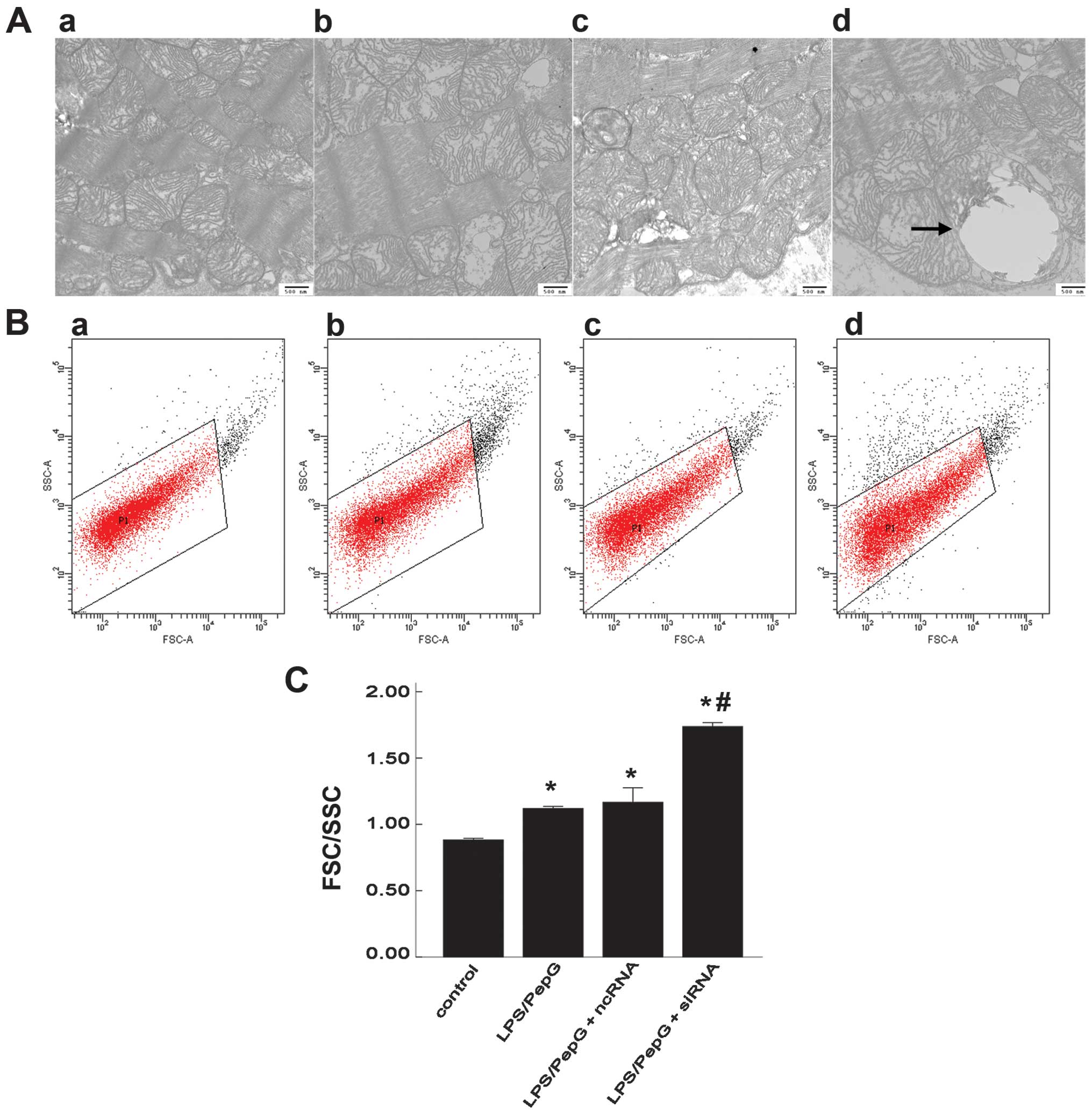
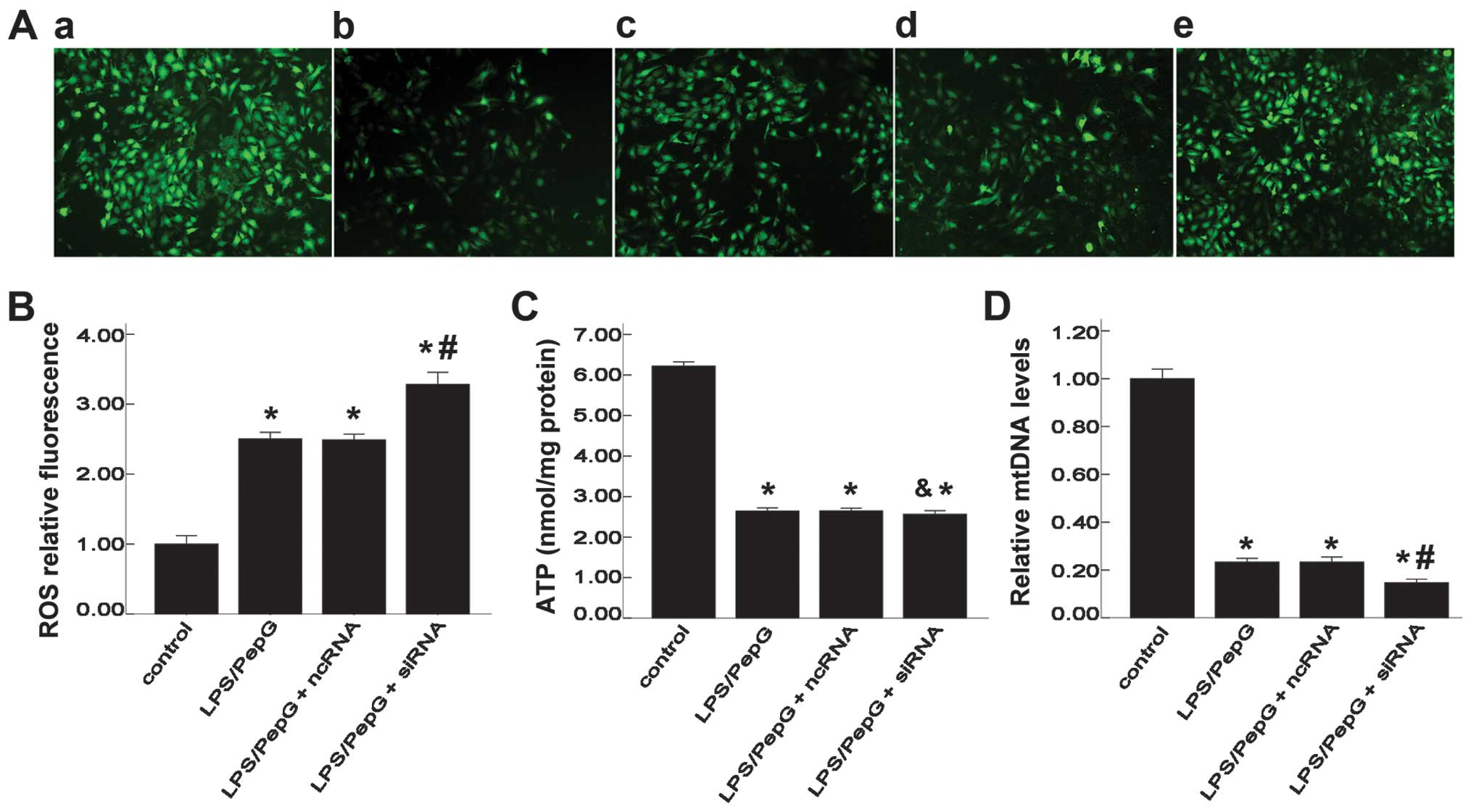
Uncoupling protein 2 (UCP2) regulates the production of mitochondrial reactive oxygen species (ROS) and cellular energy transduction under physiological or pathological conditions. In this study, we aimed to determine whether mitochondrial UCP2 plays a protective role in cardiomyocytes under septic conditions. In order to mimic the septic condition, rat embryonic cardiomyoblast‑derived H9C2 cells were cultured in the presence of lipopolysaccharide (LPS) plus peptidoglycan G (PepG) and small interfering RNA (siRNA) against UCP2 (siUCP2) was used to suppress UCP2 expression. Reverse transcription quantitative-polymerase chain reaction (RT‑qPCR), western blot analysis, transmission electron microscopy (TEM), confocal microscopy and flow cytometry (FCM) were used to detect the mRNA levels, protein levels, mitochondrial morphology and mitochondrial membrane potential (MMP or ΔΨm) in qualitative and quantitative analyses, respectively. Indicators of cell damage [lactate dehydrogenase (LDH), creatine kinase (CK), interleukin (IL)‑6 and tumor necrosis factor (TNF)‑α in the culture supernatant] and mitochondrial function [ROS, adenosine triphosphate (ATP) and mitochondrial DNA (mtDNA)] were detected. Sepsis enhanced the mRNA and protein expression of UCP2 in the H9C2 cells, damaged the mitochondrial ultrastructure, increased the forward scatter (FSC)/side scatter (SSC) ratio, increased the CK, LDH, TNF‑α and IL‑6 levels, and lead to the dissipation of MMP, as well as the overproduction of ROS; in addition, the induction of sepsis led to a decrease in ATP levels and the deletion of mtDNA. The silencing of UCP2 aggravated H9C2 cell damage and mitochondrial dysfunction. In conclusion, our data demonstrate that mitochondrial morphology and funtion are damaged in cardiomyocytes under septic conditions, while the silencing of UCP2 using siRNA aggravated this process, indicating that UCP2 may play a protective role in cardiomyocytes under septic conditions.
View Figures

Figure 1

Figure 2

Figure 3

Figure 4

Figure 5

Figure 6

View References

1 

Weycker D, Akhras KS, Edelsberg J, Angus DC and Oster G: Long-term mortality and medical care charges in patients with severe sepsis. Crit Care Med. 31:2316–2323. 2003. View Article : Google Scholar : PubMed/NCBI

2 

Fernandes CJ Jr, Akamine N and Knobel E: Cardiac troponin: A new serum marker of myocardial injury in sepsis. Intensive Care Med. 25:1165–1168. 1999. View Article : Google Scholar : PubMed/NCBI

3 

Blanco J, Muriel-Bombín A, Sagredo V, Taboada F, Gandía F, Tamayo L, Collado J, García-Labattut A, Carriedo D, Valledor M, et al Grupo de Estudios y Análisis en Cuidados Intensivos (G.R.E.C.I.A.): Incidence, organ dysfunction and mortality in severe sepsis: A Spanish multicentre study. Crit Care. 12:R1582008. View Article : Google Scholar : PubMed/NCBI

4 

Soriano FG, Nogueira AC, Caldini EG, Lins MH, Teixeira AC, Cappi SB, Lotufo PA, Bernik MM, Zsengellér Z, Chen M and Szabó C: Potential role of poly(adenosine 5′-diphosphate-ribose) polymerase activation in the pathogenesis of myocardial contractile dysfunction associated with human septic shock. Crit Care Med. 34:1073–1079. 2006. View Article : Google Scholar : PubMed/NCBI

5 

Romero-Bermejo FJ, Ruiz-Bailen M, Gil-Cebrian J and Huertos-Ranchal MJ: Sepsis-induced cardiomyopathy. Curr Cardiol Rev. 7:163–183. 2011. View Article : Google Scholar

6 

Parrillo JE, Parker MM, Natanson C, Suffredini AF, Danner RL, Cunnion RE and Ognibene FP: Septic shock in humans. Advances in the understanding of pathogenesis, cardiovascular dysfunction, and therapy. Ann Intern Med. 113:227–242. 1990. View Article : Google Scholar : PubMed/NCBI

7 

Levy RJ: Mitochondrial dysfunction, bioenergetic impairment, and metabolic down-regulation in sepsis. Shock. 28:24–28. 2007. View Article : Google Scholar : PubMed/NCBI

8 

Watts JA, Kline JA, Thornton LR, Grattan RM and Brar SS: Metabolic dysfunction and depletion of mitochondria in hearts of septic rats. J Mol Cell Cardiol. 36:141–150. 2004. View Article : Google Scholar : PubMed/NCBI

9 

Arsenijevic D, Onuma H, Pecqueur C, Raimbault S, Manning BS, Miroux B, Couplan E, Alves-Guerra MC, Goubern M, Surwit R, et al: Disruption of the uncoupling protein-2 gene in mice reveals a role in immunity and reactive oxygen species production. Nat Genet. 26:435–439. 2000. View Article : Google Scholar : PubMed/NCBI

10 

Krauss S, Zhang CY and Lowell BB: A significant portion of mitochondrial proton leak in intact thymocytes depends on expression of UCP2. Proc Natl Acad Sci USA. 99:118–122. 2002. View Article : Google Scholar : PubMed/NCBI

11 

Diano S, Matthews RT, Patrylo P, Yang L, Beal MF, Barnstable CJ and Horvath TL: Uncoupling protein 2 prevents neuronal death including that occurring during seizures: A mechanism for preconditioning. Endocrinology. 144:5014–5021. 2003. View Article : Google Scholar : PubMed/NCBI

12 

Mattiasson G, Shamloo M, Gido G, Mathi K, Tomasevic G, Yi S, Warden CH, Castilho RF, Melcher T, Gonzalez-Zulueta M, et al: Uncoupling protein-2 prevents neuronal death and diminishes brain dysfunction after stroke and brain trauma. Nat Med. 9:1062–1068. 2003. View Article : Google Scholar : PubMed/NCBI

13 

Conti B, Sugama S, Lucero J, Winsky-Sommerer R, Wirz SA, Maher P, Andrews Z, Barr AM, Morale MC, Paneda C, et al: Uncoupling protein 2 protects dopaminergic neurons from acute 1,2,3,6-methyl-phenyl-tetrahydropyridine toxicity. J Neurochem. 93:493–501. 2005. View Article : Google Scholar : PubMed/NCBI

14 

Donadelli M, Dando I, Fiorini C and Palmieri M: UCP2, a mitochondrial protein regulated at multiple levels. Cell Mol Life Sci. 71:1171–1190. 2014. View Article : Google Scholar

15 

Le Minh K, Kuhla A, Abshagen K, Minor T, Stegemann J, Ibrahim S, Eipel C and Vollmar B: Uncoupling protein-2 deficiency provides protection in a murine model of endotoxemic acute liver failure. Crit Care Med. 37:215–222. 2009. View Article : Google Scholar

16 

Carrión J, Abengozar MA, Fernández-Reyes M, Sánchez-Martín C, Rial E, Domínguez-Bernal G and González-Barroso MM: UCP2 deficiency helps to restrict the pathogenesis of experimental cutaneous and visceral leishmaniosis in mice. PLoS Negl Trop Dis. 7:e20772013. View Article : Google Scholar : PubMed/NCBI

17 

Faggioni R, Shigenaga J, Moser A, Feingold KR and Grunfeld C: Induction of UCP2 gene expression by LPS: A potential mechanism for increased thermogenesis during infection. Biochem Biophys Res Commun. 244:75–78. 1998. View Article : Google Scholar : PubMed/NCBI

18 

Roshon MJ, Kline JA, Thornton LR and Watts JA: Cardiac UCP2 expression and myocardial oxidative metabolism during acute septic shock in the rat. Shock. 19:570–576. 2003. View Article : Google Scholar : PubMed/NCBI

19 

Lecoeur H, Langonné A, Baux L, Rebouillat D, Rustin P, Prévost MC, Brenner C, Edelman L and Jacotot E: Real-time flow cytometry analysis of permeability transition in isolated mitochondria. Exp Cell Res. 294:106–117. 2004. View Article : Google Scholar : PubMed/NCBI

20 

Han XZ, Gao S, Cheng YN, Sun YZ, Liu W, et al: Protective effect of naringenin-7-O-glucoside against oxidative stress induced by doxorubicin in H9c2 cardiomyocytes. Biosci Trends. 6:19–25. 2012.PubMed/NCBI

21 

Zhu L, Wei T, Chang X, He H, Gao J, et al: Effects of salidroside on myocardial injury in vivo in vitro via regulation of Nox/NF-kappaB/AP1 pathway. Inflammation. Feb 15–2015.Epub ahead of print. View Article : Google Scholar

22 

Wang SG, Xu Y, Xie H, Wang W and Chen XH: Astragaloside IV prevents lipopolysaccharide-induced injury in H9C2 cardiomyocytes. Chin J Nat Med. 13:127–132. PubMed/NCBI

23 

Wray GM, Foster SJ, Hinds CJ and Thiemermann C: A cell wall component from pathogenic and non-pathogenic gram-positive bacteria (peptidoglycan) synergises with endotoxin to cause the release of tumour necrosis factor-alpha, nitric oxide production, shock, and multiple organ injury/dysfunction in the rat. Shock. 15:135–142. 2001. View Article : Google Scholar : PubMed/NCBI

24 

Lowes DA, Thottakam BM, Webster NR, Murphy MP and Galley HF: The mitochondria-targeted antioxidant MitoQ protects against organ damage in a lipopolysaccharide-peptido-glycan model of sepsis. Free Radic Biol Med. 45:1559–1565. 2008. View Article : Google Scholar : PubMed/NCBI

25 

Lowes DA, Almawash AM, Webster NR, Reid VL and Galley HF: Melatonin and structurally similar compounds have differing effects on inflammation and mitochondrial function in endothelial cells under conditions mimicking sepsis. Br J Anaesth. 107:193–201. 2011. View Article : Google Scholar : PubMed/NCBI

26 

Cregan SP, Dawson VL and Slack RS: Role of AIF in caspase-dependent and caspase-independent cell death. Oncogene. 23:2785–2796. 2004. View Article : Google Scholar : PubMed/NCBI

27 

Kim YC, Song SB, Lee MH, Kang KI, Lee H, Paik SG, Kim KE and Kim YS: Simvastatin induces caspase-independent apoptosis in LPS-activated RAW264.7 macrophage cells. Biochem Biophys Res Commun. 339:1007–1014. 2006. View Article : Google Scholar

28 

Pak O, Sommer N, Hoeres T, Bakr A, Waisbrod S, Sydykov A, Haag D, Esfandiary A, Kojonazarov B, Veit F, et al: Mitochondrial hyperpolarization in pulmonary vascular remodeling. Mitochondrial uncoupling protein deficiency as disease model. Am J Respir Cell Mol Biol. 49:358–367. 2013. View Article : Google Scholar : PubMed/NCBI

29 

Chu AC, Ho PW, Kwok KH, Ho JW, Chan KH, Liu HF, Kung MH, Ramsden DB and Ho SL: Mitochondrial UCP4 attenuates MPP+ - and dopamine-induced oxidative stress, mitochondrial depolarization, and ATP deficiency in neurons and is interlinked with UCP2 expression. Free Radic Biol Med. 46:810–820. 2009. View Article : Google Scholar : PubMed/NCBI

30 

Kwok KH, Ho PW, Chu AC, Ho JW, Liu HF, Yiu DC, Chan KH, Kung MH, Ramsden DB and Ho SL: Mitochondrial UCP5 is neuroprotective by preserving mitochondrial membrane potential, ATP levels, and reducing oxidative stress in MPP+ and dopamine toxicity. Free Radic Biol Med. 49:1023–1035. 2010. View Article : Google Scholar : PubMed/NCBI

31 

Halestrap AP, Clarke SJ and Khaliulin I: The role of mitochondria in protection of the heart by preconditioning. Biochim Biophys Acta. 1767:1007–1031. 2007. View Article : Google Scholar : PubMed/NCBI

32 

Korshunov SS, Skulachev VP and Starkov AA: High protonic potential actuates a mechanism of production of reactive oxygen species in mitochondria. FEBS Lett. 416:15–18. 1997. View Article : Google Scholar : PubMed/NCBI

33 

Kowaltowski AJ, Castilho RF and Vercesi AE: Mitochondrial permeability transition and oxidative stress. FEBS Lett. 495:12–15. 2001. View Article : Google Scholar : PubMed/NCBI

34 

Brookes PS: Mitochondrial H(+) leak and ROS generation: An odd couple. Free Radic Biol Med. 38:12–23. 2005. View Article : Google Scholar

35 

Lambert AJ and Brand MD: Superoxide production by NADH:ubiquinone oxidoreductase (complex I) depends on the pH gradient across the mitochondrial inner membrane. Biochem J. 382:511–517. 2004. View Article : Google Scholar : PubMed/NCBI

36 

Andrews ZB, Horvath B, Barnstable CJ, Elsworth J, Yang L, Beal MF, Roth RH, Matthews RT and Horvath TL: Uncoupling protein-2 is critical for nigral dopamine cell survival in a mouse model of Parkinson’s disease. J Neurosci. 25:184–191. 2005. View Article : Google Scholar : PubMed/NCBI

37 

Yakes FM and Van Houten B: Mitochondrial DNA damage is more extensive and persists longer than nuclear DNA damage in human cells following oxidative stress. Proc Natl Acad Sci USA. 94:514–519. 1997. View Article : Google Scholar : PubMed/NCBI

38 

Wieland P and Lauterburg BH: Oxidation of mitochondrial proteins and DNA following administration of ethanol. Biochem Biophys Res Commun. 213:815–819. 1995. View Article : Google Scholar : PubMed/NCBI

39 

Larosche I, Lettéron P, Berson A, Fromenty B, Huang TT, Moreau R, Pessayre D and Mansouri A: Hepatic mitochondrial DNA depletion after an alcohol binge in mice: Probable role of peroxynitrite and modulation by manganese superoxide dismutase. J Pharmacol Exp Ther. 332:886–897. 2010. View Article : Google Scholar

40 

Coleman WB and Cunningham CC: Effects of chronic ethanol consumption on the synthesis of polypeptides encoded by the hepatic mitochondrial genome. Biochim Biophys Acta. 1019:142–150. 1990. View Article : Google Scholar : PubMed/NCBI

41 

Choumar A, Tarhuni A, Lettéron P, Reyl-Desmars F, Dauhoo N, Damasse J, Vadrot N, Nahon P, Moreau R, Pessayre D and Mansouri A: Lipopolysaccharide-induced mitochondrial DNA depletion. Antioxid Redox Signal. 15:2837–2854. 2011. View Article : Google Scholar : PubMed/NCBI

42 

Zhang Q, Raoof M, Chen Y, Sumi Y, Sursal T, Junger W, Brohi K, Itagaki K and Hauser CJ: Circulating mitochondrial DAMPs cause inflammatory responses to injury. Nature. 464:104–107. 2010. View Article : Google Scholar : PubMed/NCBI

43 

Kohler C, Radpour R, Barekati Z, Asadollahi R, Bitzer J, Wight E, Bürki N, Diesch C, Holzgreve W and Zhong XY: Levels of plasma circulating cell free nuclear and mitochondrial DNA as potential biomarkers for breast tumors. Mol Cancer. 8:1052009. View Article : Google Scholar : PubMed/NCBI

44 

Cossarizza A, Pinti M, Nasi M, Gibellini L, Manzini S, Roat E, De Biasi S, Bertoncelli L, Montagna JP, Bisi L, et al: Increased plasma levels of extracellular mitochondrial DNA during HIV infection: A new role for mitochondrial damage-associated molecular patterns during inflammation. Mitochondrion. 11:750–755. 2011. View Article : Google Scholar : PubMed/NCBI

45 

Hosler JP, Ferguson-Miller S and Mills DA: Energy transduction: Proton transfer through the respiratory complexes. Annu Rev Biochem. 75:165–187. 2006. View Article : Google Scholar : PubMed/NCBI

46 

Parton LE, Ye CP, Coppari R, Enriori PJ, Choi B, Zhang CY, Xu C, Vianna CR, Balthasar N, Lee CE, et al: Glucose sensing by POMC neurons regulates glucose homeostasis and is impaired in obesity. Nature. 449:228–232. 2007. View Article : Google Scholar : PubMed/NCBI

47 

Chavin KD, Yang S, Lin HZ, Chatham J, Chacko VP, Hoek JB, Walajtys-Rode E, Rashid A, Chen CH, Huang CC, et al: Obesity induces expression of uncoupling protein-2 in hepatocytes and promotes liver ATP depletion. J Biol Chem. 274:5692–5700. 1999. View Article : Google Scholar : PubMed/NCBI

48 

Serviddio G, Bellanti F, Tamborra R, et al: HNE induces UCP2 expression and proton leak to limit oxidative stress but reduces ATP synthesis in non-alcoholic steatohepatitis. Free Radic Res. 41:S55. 2007.

49 

Brar SS and Martin WJ II: Bleomycin upregulates UCP2 mRNA expression, decreases ATP levels and induces apoptosis in alveolar epithelial cells. American Thoracic Society International Conference Abstracts 179: C68; Alveolar Epithelium. abs. A5002. 2009

50 

Andrews ZB, Diano S and Horvath TL: Mitochondrial uncoupling proteins in the CNS: In support of function and survival. Nat Rev Neurosci. 6:829–840. 2005. View Article : Google Scholar : PubMed/NCBI

51 

Andrews ZB, Liu ZW, Walllingford N, Erion DM, Borok E, Friedman JM, Tschöp MH, Shanabrough M, Cline G, Shulman GI, et al: UCP2 mediates ghrelin’s action on NPY/AgRP neurons by lowering free radicals. Nature. 454:846–851. 2008. View Article : Google Scholar : PubMed/NCBI

52 

Cheng G, Polito CC, Haines JK, Shafizadeh SF, Fiorini RN, Zhou X, Schmidt MG and Chavin KD: Decrease of intracellular ATP content downregulated UCP2 expression in mouse hepatocytes. Biochem Biophys Res Commun. 308:573–580. 2003. View Article : Google Scholar : PubMed/NCBI

53 

Di Lisa F, Menabò R, Canton M, Barile M and Bernardi P: Opening of the mitochondrial permeability transition pore causes depletion of mitochondrial and cytosolic NAD+ and is a causative event in the death of myocytes in postischemic reperfusion of the heart. J Biol Chem. 276:2571–2575. 2001. View Article : Google Scholar

54 

Hunter FE Jr, Gebicki JM, Hoffsten PE, Weinstein J and Scott A: Swelling and lysis of rat liver mitochondria induced by ferrous ions. J Biol Chem. 238:828–835. 1963.PubMed/NCBI

55 

Baines CP, Song CX, Zheng YT, Wang GW, Zhang J, Wang OL, Guo Y, Bolli R, Cardwell EM and Ping P: Protein kinase Cepsilon interacts with and inhibits the permeability transition pore in cardiac mitochondria. Circ Res. 92:873–880. 2003. View Article : Google Scholar : PubMed/NCBI

56 

Clarke SJ, McStay GP and Halestrap AP: Sanglifehrin A acts as a potent inhibitor of the mitochondrial permeability transition and reperfusion injury of the heart by binding to cyclophilin-D at a different site from cyclosporin A. J Biol Chem. 277:34793–34799. 2002. View Article : Google Scholar : PubMed/NCBI

Related Articles

  • Abstract
  • View
  • Download
  • Twitter
Copy and paste a formatted citation
Spandidos Publications style
Zheng G, Lyu J, Liu S, Huang J, Liu C, Xiang D, Xie M and Zeng Q: Silencing of uncoupling protein 2 by small interfering RNA aggravates mitochondrial dysfunction in cardiomyocytes under septic conditions. Int J Mol Med 35: 1525-1536, 2015.
APA
Zheng, G., Lyu, J., Liu, S., Huang, J., Liu, C., Xiang, D. ... Zeng, Q. (2015). Silencing of uncoupling protein 2 by small interfering RNA aggravates mitochondrial dysfunction in cardiomyocytes under septic conditions. International Journal of Molecular Medicine, 35, 1525-1536. https://doi.org/10.3892/ijmm.2015.2177
MLA
Zheng, G., Lyu, J., Liu, S., Huang, J., Liu, C., Xiang, D., Xie, M., Zeng, Q."Silencing of uncoupling protein 2 by small interfering RNA aggravates mitochondrial dysfunction in cardiomyocytes under septic conditions". International Journal of Molecular Medicine 35.6 (2015): 1525-1536.
Chicago
Zheng, G., Lyu, J., Liu, S., Huang, J., Liu, C., Xiang, D., Xie, M., Zeng, Q."Silencing of uncoupling protein 2 by small interfering RNA aggravates mitochondrial dysfunction in cardiomyocytes under septic conditions". International Journal of Molecular Medicine 35, no. 6 (2015): 1525-1536. https://doi.org/10.3892/ijmm.2015.2177
Copy and paste a formatted citation
x
Spandidos Publications style
Zheng G, Lyu J, Liu S, Huang J, Liu C, Xiang D, Xie M and Zeng Q: Silencing of uncoupling protein 2 by small interfering RNA aggravates mitochondrial dysfunction in cardiomyocytes under septic conditions. Int J Mol Med 35: 1525-1536, 2015.
APA
Zheng, G., Lyu, J., Liu, S., Huang, J., Liu, C., Xiang, D. ... Zeng, Q. (2015). Silencing of uncoupling protein 2 by small interfering RNA aggravates mitochondrial dysfunction in cardiomyocytes under septic conditions. International Journal of Molecular Medicine, 35, 1525-1536. https://doi.org/10.3892/ijmm.2015.2177
MLA
Zheng, G., Lyu, J., Liu, S., Huang, J., Liu, C., Xiang, D., Xie, M., Zeng, Q."Silencing of uncoupling protein 2 by small interfering RNA aggravates mitochondrial dysfunction in cardiomyocytes under septic conditions". International Journal of Molecular Medicine 35.6 (2015): 1525-1536.
Chicago
Zheng, G., Lyu, J., Liu, S., Huang, J., Liu, C., Xiang, D., Xie, M., Zeng, Q."Silencing of uncoupling protein 2 by small interfering RNA aggravates mitochondrial dysfunction in cardiomyocytes under septic conditions". International Journal of Molecular Medicine 35, no. 6 (2015): 1525-1536. https://doi.org/10.3892/ijmm.2015.2177
Follow us
  • Twitter
  • LinkedIn
  • Facebook
About
  • Spandidos Publications
  • Careers
  • Cookie Policy
  • Privacy Policy
How can we help?
  • Help
  • Live Chat
  • Contact
  • Email to our Support Team