Spandidos Publications Logo
  • About
    • About Spandidos
    • Aims and Scopes
    • Abstracting and Indexing
    • Editorial Policies
    • Reprints and Permissions
    • Job Opportunities
    • Terms and Conditions
    • Contact
  • Journals
    • All Journals
    • Oncology Letters
      • Oncology Letters
      • Information for Authors
      • Editorial Policies
      • Editorial Board
      • Aims and Scope
      • Abstracting and Indexing
      • Bibliographic Information
      • Archive
    • International Journal of Oncology
      • International Journal of Oncology
      • Information for Authors
      • Editorial Policies
      • Editorial Board
      • Aims and Scope
      • Abstracting and Indexing
      • Bibliographic Information
      • Archive
    • Molecular and Clinical Oncology
      • Molecular and Clinical Oncology
      • Information for Authors
      • Editorial Policies
      • Editorial Board
      • Aims and Scope
      • Abstracting and Indexing
      • Bibliographic Information
      • Archive
    • Experimental and Therapeutic Medicine
      • Experimental and Therapeutic Medicine
      • Information for Authors
      • Editorial Policies
      • Editorial Board
      • Aims and Scope
      • Abstracting and Indexing
      • Bibliographic Information
      • Archive
    • International Journal of Molecular Medicine
      • International Journal of Molecular Medicine
      • Information for Authors
      • Editorial Policies
      • Editorial Board
      • Aims and Scope
      • Abstracting and Indexing
      • Bibliographic Information
      • Archive
    • Biomedical Reports
      • Biomedical Reports
      • Information for Authors
      • Editorial Policies
      • Editorial Board
      • Aims and Scope
      • Abstracting and Indexing
      • Bibliographic Information
      • Archive
    • Oncology Reports
      • Oncology Reports
      • Information for Authors
      • Editorial Policies
      • Editorial Board
      • Aims and Scope
      • Abstracting and Indexing
      • Bibliographic Information
      • Archive
    • Molecular Medicine Reports
      • Molecular Medicine Reports
      • Information for Authors
      • Editorial Policies
      • Editorial Board
      • Aims and Scope
      • Abstracting and Indexing
      • Bibliographic Information
      • Archive
    • World Academy of Sciences Journal
      • World Academy of Sciences Journal
      • Information for Authors
      • Editorial Policies
      • Editorial Board
      • Aims and Scope
      • Abstracting and Indexing
      • Bibliographic Information
      • Archive
    • International Journal of Functional Nutrition
      • International Journal of Functional Nutrition
      • Information for Authors
      • Editorial Policies
      • Editorial Board
      • Aims and Scope
      • Abstracting and Indexing
      • Bibliographic Information
      • Archive
    • International Journal of Epigenetics
      • International Journal of Epigenetics
      • Information for Authors
      • Editorial Policies
      • Editorial Board
      • Aims and Scope
      • Abstracting and Indexing
      • Bibliographic Information
      • Archive
    • Medicine International
      • Medicine International
      • Information for Authors
      • Editorial Policies
      • Editorial Board
      • Aims and Scope
      • Abstracting and Indexing
      • Bibliographic Information
      • Archive
  • Articles
  • Information
    • Information for Authors
    • Information for Reviewers
    • Information for Librarians
    • Information for Advertisers
    • Conferences
  • Language Editing
Spandidos Publications Logo
  • About
    • About Spandidos
    • Aims and Scopes
    • Abstracting and Indexing
    • Editorial Policies
    • Reprints and Permissions
    • Job Opportunities
    • Terms and Conditions
    • Contact
  • Journals
    • All Journals
    • Biomedical Reports
      • Information for Authors
      • Editorial Policies
      • Editorial Board
      • Aims and Scope
      • Abstracting and Indexing
      • Bibliographic Information
      • Archive
    • Experimental and Therapeutic Medicine
      • Information for Authors
      • Editorial Policies
      • Editorial Board
      • Aims and Scope
      • Abstracting and Indexing
      • Bibliographic Information
      • Archive
    • International Journal of Epigenetics
      • Information for Authors
      • Editorial Policies
      • Editorial Board
      • Aims and Scope
      • Abstracting and Indexing
      • Bibliographic Information
      • Archive
    • International Journal of Functional Nutrition
      • Information for Authors
      • Editorial Policies
      • Editorial Board
      • Aims and Scope
      • Abstracting and Indexing
      • Bibliographic Information
      • Archive
    • International Journal of Molecular Medicine
      • Information for Authors
      • Editorial Policies
      • Editorial Board
      • Aims and Scope
      • Abstracting and Indexing
      • Bibliographic Information
      • Archive
    • International Journal of Oncology
      • Information for Authors
      • Editorial Policies
      • Editorial Board
      • Aims and Scope
      • Abstracting and Indexing
      • Bibliographic Information
      • Archive
    • Medicine International
      • Information for Authors
      • Editorial Policies
      • Editorial Board
      • Aims and Scope
      • Abstracting and Indexing
      • Bibliographic Information
      • Archive
    • Molecular and Clinical Oncology
      • Information for Authors
      • Editorial Policies
      • Editorial Board
      • Aims and Scope
      • Abstracting and Indexing
      • Bibliographic Information
      • Archive
    • Molecular Medicine Reports
      • Information for Authors
      • Editorial Policies
      • Editorial Board
      • Aims and Scope
      • Abstracting and Indexing
      • Bibliographic Information
      • Archive
    • Oncology Letters
      • Information for Authors
      • Editorial Policies
      • Editorial Board
      • Aims and Scope
      • Abstracting and Indexing
      • Bibliographic Information
      • Archive
    • Oncology Reports
      • Information for Authors
      • Editorial Policies
      • Editorial Board
      • Aims and Scope
      • Abstracting and Indexing
      • Bibliographic Information
      • Archive
    • World Academy of Sciences Journal
      • Information for Authors
      • Editorial Policies
      • Editorial Board
      • Aims and Scope
      • Abstracting and Indexing
      • Bibliographic Information
      • Archive
  • Articles
  • Information
    • For Authors
    • For Reviewers
    • For Librarians
    • For Advertisers
    • Conferences
  • Language Editing
Login Register Submit
  • This site uses cookies
  • You can change your cookie settings at any time by following the instructions in our Cookie Policy. To find out more, you may read our Privacy Policy.

    I agree
Search articles by DOI, keyword, author or affiliation
Search
Advanced Search
presentation
International Journal of Molecular Medicine
Join Editorial Board Propose a Special Issue
Print ISSN: 1107-3756 Online ISSN: 1791-244X
Journal Cover
September-2015 Volume 36 Issue 3

Full Size Image

Sign up for eToc alerts
Recommend to Library

Journals

International Journal of Molecular Medicine

International Journal of Molecular Medicine

International Journal of Molecular Medicine is an international journal devoted to molecular mechanisms of human disease.

International Journal of Oncology

International Journal of Oncology

International Journal of Oncology is an international journal devoted to oncology research and cancer treatment.

Molecular Medicine Reports

Molecular Medicine Reports

Covers molecular medicine topics such as pharmacology, pathology, genetics, neuroscience, infectious diseases, molecular cardiology, and molecular surgery.

Oncology Reports

Oncology Reports

Oncology Reports is an international journal devoted to fundamental and applied research in Oncology.

Experimental and Therapeutic Medicine

Experimental and Therapeutic Medicine

Experimental and Therapeutic Medicine is an international journal devoted to laboratory and clinical medicine.

Oncology Letters

Oncology Letters

Oncology Letters is an international journal devoted to Experimental and Clinical Oncology.

Biomedical Reports

Biomedical Reports

Explores a wide range of biological and medical fields, including pharmacology, genetics, microbiology, neuroscience, and molecular cardiology.

Molecular and Clinical Oncology

Molecular and Clinical Oncology

International journal addressing all aspects of oncology research, from tumorigenesis and oncogenes to chemotherapy and metastasis.

World Academy of Sciences Journal

World Academy of Sciences Journal

Multidisciplinary open-access journal spanning biochemistry, genetics, neuroscience, environmental health, and synthetic biology.

International Journal of Functional Nutrition

International Journal of Functional Nutrition

Open-access journal combining biochemistry, pharmacology, immunology, and genetics to advance health through functional nutrition.

International Journal of Epigenetics

International Journal of Epigenetics

Publishes open-access research on using epigenetics to advance understanding and treatment of human disease.

Medicine International

Medicine International

An International Open Access Journal Devoted to General Medicine.

Journal Cover
September-2015 Volume 36 Issue 3

Full Size Image

Sign up for eToc alerts
Recommend to Library

  • Article
  • Citations
    • Cite This Article
    • Download Citation
    • Create Citation Alert
    • Remove Citation Alert
    • Cited By
  • Similar Articles
    • Related Articles (in Spandidos Publications)
    • Similar Articles (Google Scholar)
    • Similar Articles (PubMed)
  • Download PDF
  • Download XML
  • View XML
Article

Resveratrol prevents doxorubicin-induced cardiotoxicity in H9c2 cells through the inhibition of endoplasmic reticulum stress and the activation of the Sirt1 pathway

  • Authors:
    • Yu Lou
    • Zhen Wang
    • Yi Xu
    • Ping Zhou
    • Junxian Cao
    • Yuanshi Li
    • Yeping Chen
    • Junfeng Sun
    • Lu Fu
  • View Affiliations / Copyright

    Affiliations: Department of Cardiovascular Medicine, The First Affiliated Hospital, Harbin Medical University, Harbin, Heilongjiang 150001, P.R. China, Department of Neurology, The First Affiliated Hospital, Harbin Medical University, Harbin, Heilongjiang 150001, P.R. China, Department of Cardiovascular Medicine, The Second Affiliated Hospital, Harbin Medical University, Harbin, Heilongjiang 150001, P.R. China, Department of Cardiovascular Medicine, The Fourth Affiliated Hospital, Harbin Medical University, Harbin, Heilongjiang 150001, P.R. China
  • Pages: 873-880
    |
    Published online on: July 20, 2015
       https://doi.org/10.3892/ijmm.2015.2291
  • Expand metrics +
Metrics: Total Views: 0 (Spandidos Publications: | PMC Statistics: )
Metrics: Total PDF Downloads: 0 (Spandidos Publications: | PMC Statistics: )
Cited By (CrossRef): 0 citations Loading Articles...

This article is mentioned in:


Abstract

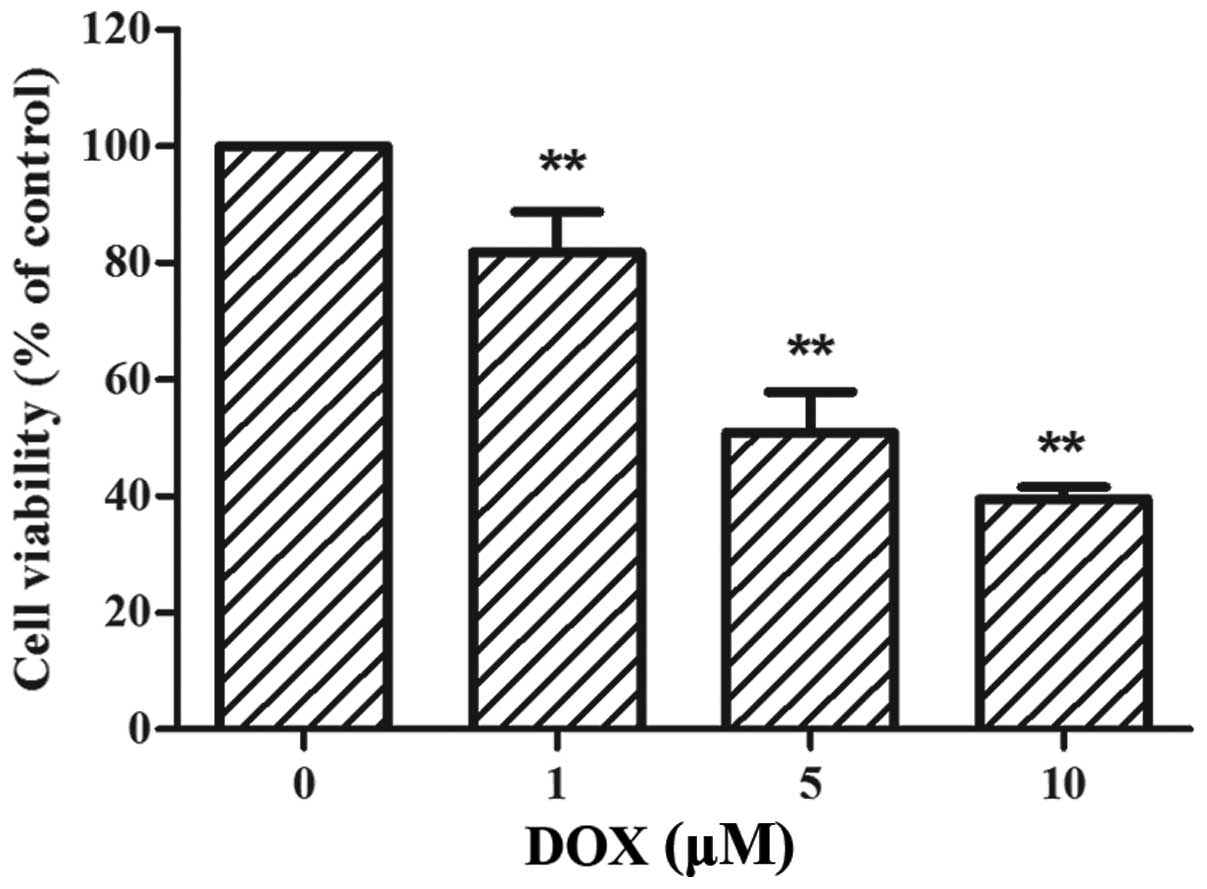
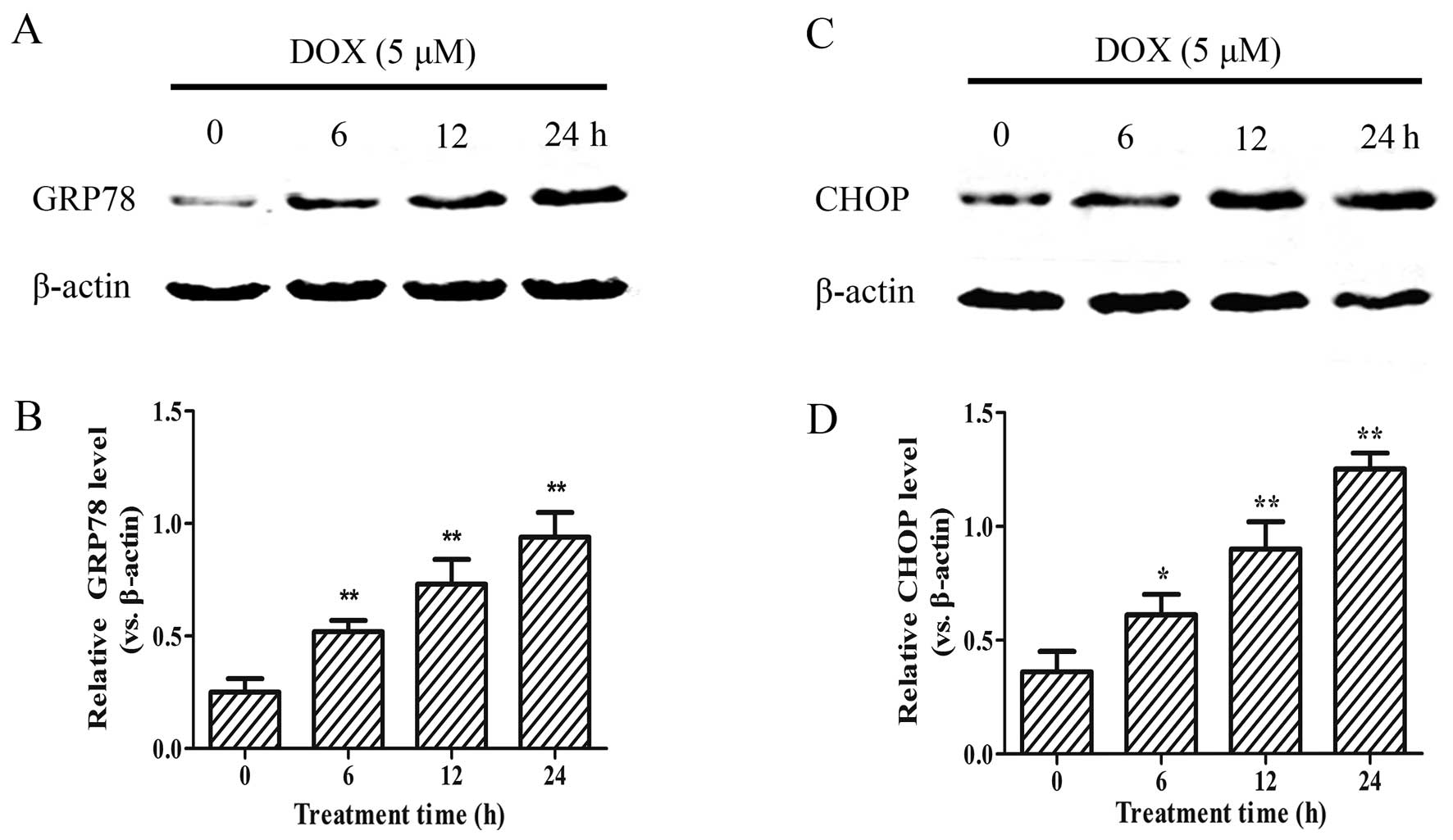
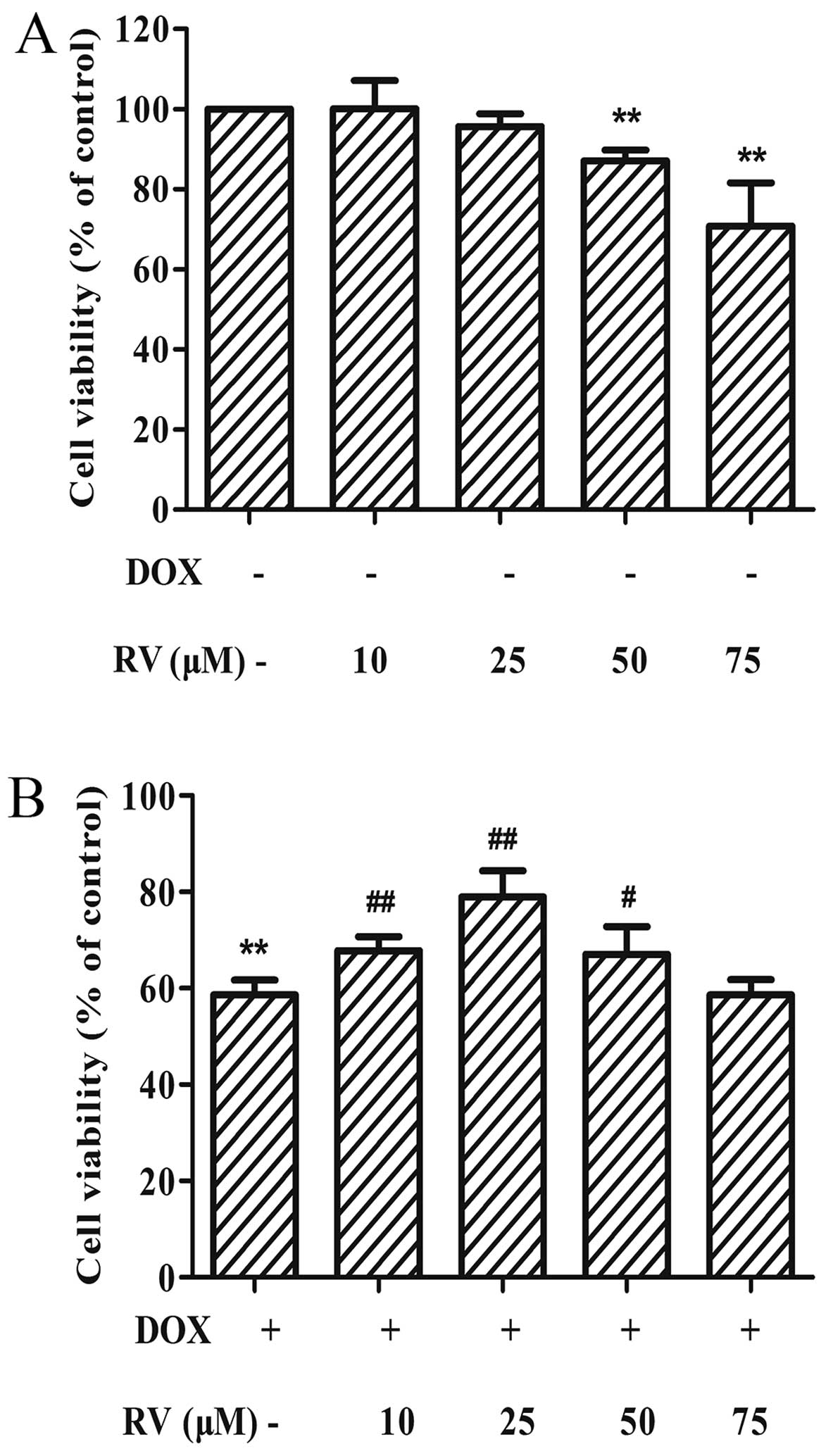
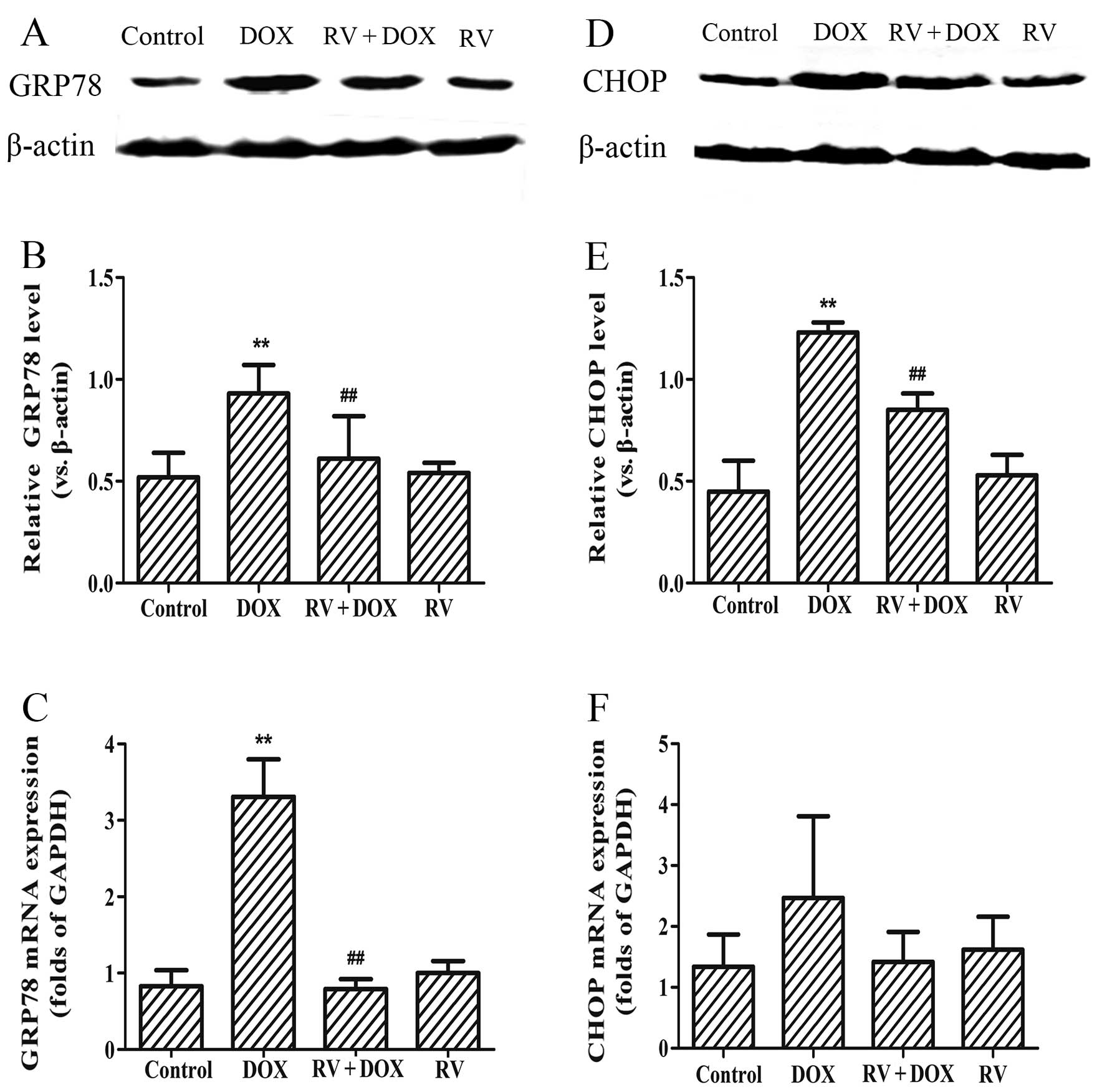
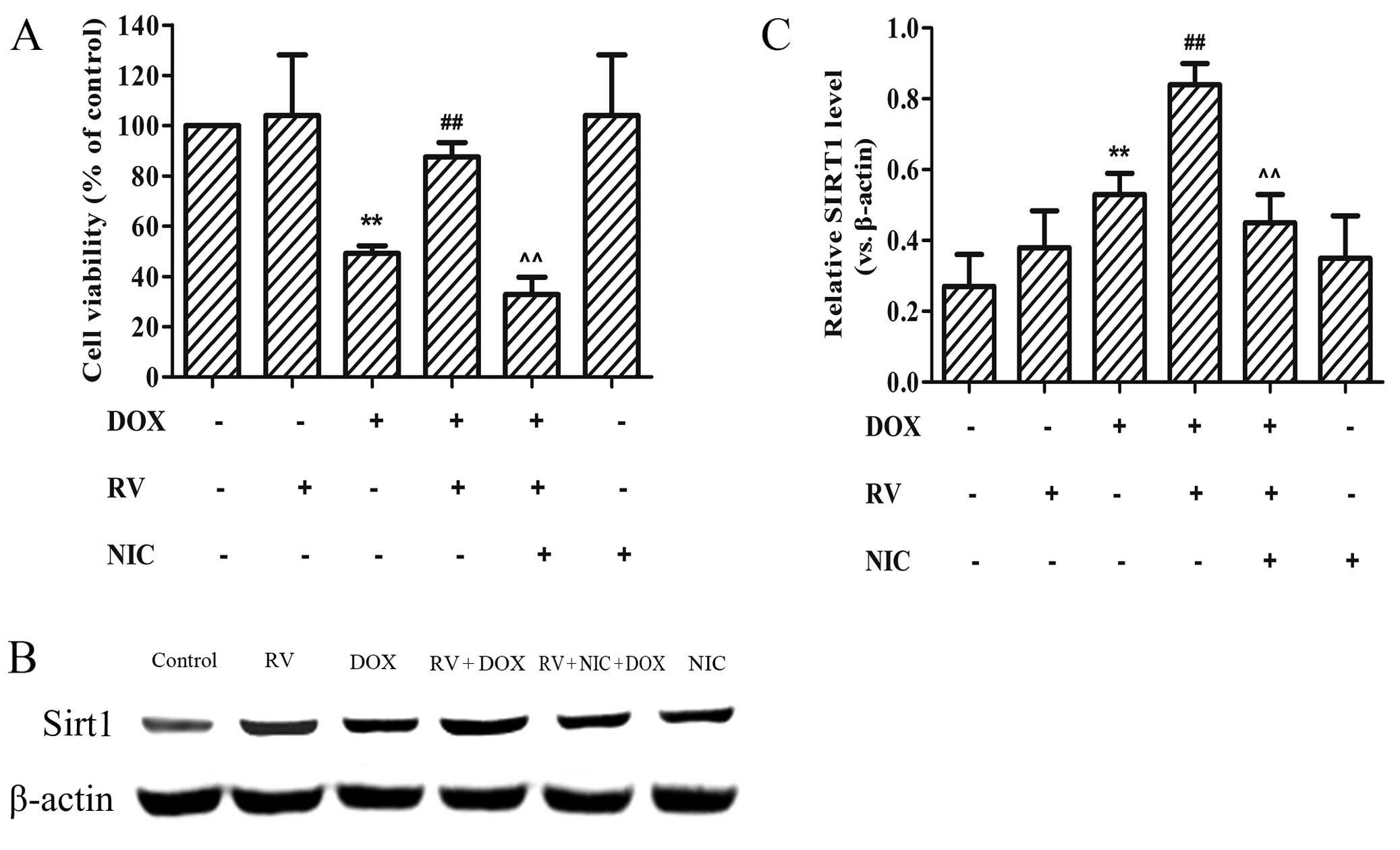
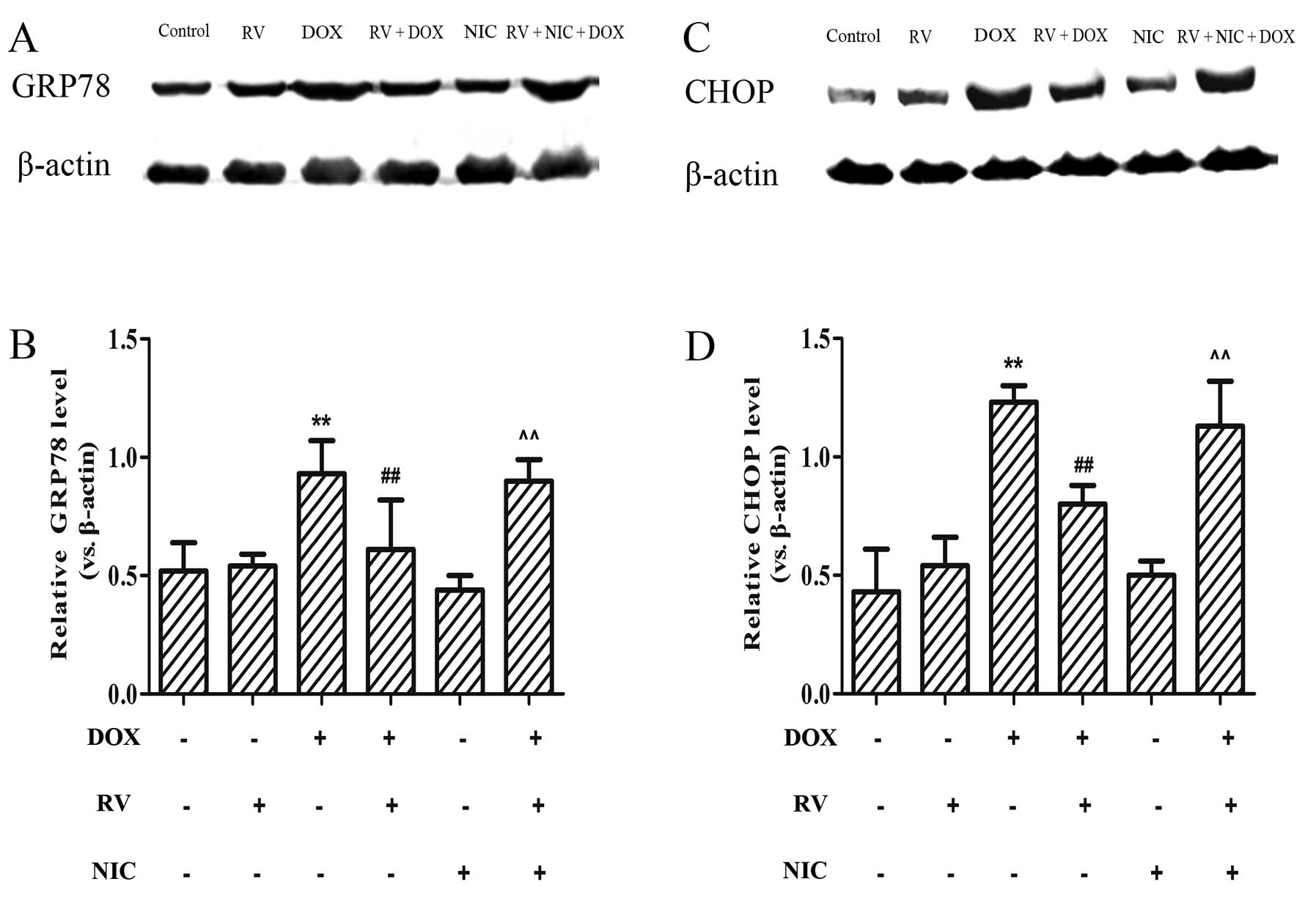
Treatment with doxorubicin (DOX) is one of the major causes of chemotherapy-induced cardiotoxicity and is therefore, the principal limiting factor in the effectiveness of chemotherapy for cancer patients. DOX‑induced heart failure is thought to result from endoplasmic reticulum (ER) stress and cardiomyocyte apoptosis. Resveratrol (RV), a polyphenol antioxidant found in red wine, has been shown to play a cardioprotective role. The aim of the present study was to examine the effects of RV on DOX‑induced cardiotoxicity in H9c2 cells. We hypothesized that RV would protect H9c2 cells against DOX‑induced ER stress and subsequent cell death through the activation of the Sirt1 pathway. Our results demonstrated that the decrease observed in the viability of the H9c2 cells following exposure to DOX was accompanied by a significant increase in the expression of the ER stress‑related proteins, glucose‑regulated protein 78 (GRP78) and C/EBP homologous protein (CHOP). However, we found that RV downregulated the expression of ER stress marker protein in the presence of DOX and restored the viability of the H9c2 cells. Exposure to RV or DOX alone only slightly increased the protein expression of Sirt1, whereas a significant increase in Sirt1 protein levels was observed in the cells treated with both RV and DOX. The Sirt1 inhibitor, nicotinamide (NIC), partially neutralized the effects of RV on the expression of Sirt1 in the DOX‑treated cells and completely abolished the effects of RV on the expression of GRP78 and CHOP. The findings of our study suggest that RV protects H9c2 cells against DOX‑induced ER stress through ER stabilization, and more specifically through the activation of the Sirt1 pathway, thereby leading to cardiac cell survival.
View Figures

Figure 1

Figure 2

Figure 3

Figure 4

Figure 5

Figure 6

View References

1 

Muggia FM and Green MD: New anthracycline antitumor antibiotics. Crit Rev Oncol Hematol. 11:43–64. 1991. View Article : Google Scholar : PubMed/NCBI

2 

Weiss RB: The anthracyclines: Will we ever find a better doxorubicin? Semin Oncol. 19:670–686. 1992.PubMed/NCBI

3 

Lipshultz SE, Colan SD, Gelber RD, Perez-Atayde AR, Sallan SE and Sanders SP: Late cardiac effects of doxorubicin therapy for acute lymphoblastic leukemia in childhood. New Engl J Med. 324:808–815. 1991. View Article : Google Scholar : PubMed/NCBI

4 

Shan K, Lincoff AM and Young JB: Anthracycline-induced cardiotoxicity. Ann Intern Med. 125:47–58. 1996. View Article : Google Scholar : PubMed/NCBI

5 

Doroshow JH: Effect of anthracycline antibiotics on oxygen radical formation in rat heart. Cancer Res. 43:460–472. 1983.PubMed/NCBI

6 

Olson RD and Mushlin PS: Doxorubicin cardiotoxicity: Analysis of prevailing hypotheses. FASEB J. 4:3076–3086. 1990.PubMed/NCBI

7 

Danz ED, Skramsted J, Henry N, Bennett JA and Keller RS: Resveratrol prevents doxorubicin cardiotoxicity through mitochondrial stabilization and the Sirt1 pathway. Free Radic Biol Med. 46:1589–1597. 2009. View Article : Google Scholar : PubMed/NCBI

8 

Dirks-Naylor AJ: The role of autophagy in doxorubicin-induced cardiotoxicity. Life Sci. 93:913–916. 2013. View Article : Google Scholar

9 

Rasheva VI and Domingos PM: Cellular responses to endoplasmic reticulum stress and apoptosis. Apoptosis. 14:996–1007. 2009. View Article : Google Scholar : PubMed/NCBI

10 

Oyadomari S and Mori M: Roles of CHOP/GADD153 in endoplasmic reticulum stress. Cell Death Differ. 11:381–389. 2004. View Article : Google Scholar

11 

Zinszner H, Kuroda M, Wang X, Batchvarova N, Lightfoot RT, Remotti H, Stevens JL and Ron D: CHOP is implicated in programmed cell death in response to impaired function of the endoplasmic reticulum. Genes Dev. 12:982–995. 1998. View Article : Google Scholar : PubMed/NCBI

12 

Ron D and Walter P: Signal integration in the endoplasmic reticulum unfolded protein response. Nat Rev Mol Cell Biol. 8:519–529. 2007. View Article : Google Scholar : PubMed/NCBI

13 

Schröder M: The unfolded protein response. Mol Biotechnol. 34:279–290. 2006. View Article : Google Scholar : PubMed/NCBI

14 

Zu K, Bihani T, Lin A, Park YM, Mori K and Ip C: Enhanced selenium effect on growth arrest by Bip/GRP78 knockdown in p53-null human prostate cancer cells. Oncogene. 25:546–554. 2006.

15 

Xu C, Bailly-Maitre B and Reed JC: Endoplasmic reticulum stress: cell life and death decisions. J Clin Invest. 115:2656–2664. 2005. View Article : Google Scholar : PubMed/NCBI

16 

Liu J, Mao W, Iwai C, Fukuoka S, Vulapalli R, Huang H, Wang T, Sharma VK, Sheu SS, Fu M and Liang CS: Adoptive passive transfer of rabbit beta1-adrenoceptor peptide immune cardiomyopathy into the Rag2-/- mouse: Participation of the ER stress. J Mol Cell Cardiol. 44:304–314. 2008. View Article : Google Scholar

17 

Mandl J and Bánhegyi G: Endoplasmic reticulum stress - common pathomechanism of different diseases? Orv Hetil. 148:1779–1785. 2007.In Hungarian. View Article : Google Scholar : PubMed/NCBI

18 

Chua CC, Liu X, Gao J, Hamdy RC and Chua BH: Multiple actions of pifithrin-alpha on doxorubicin-induced apoptosis in rat myoblastic H9c2 cells. Am J Physiol Heart Circ Phys. 290:H2606–H2613. 2006. View Article : Google Scholar

19 

Lai HC, Yeh YC, Ting CT, Lee WL, Lee HW, Wang LC, Wang KY, Lai HC, Wu A and Liu TJ: Doxycycline suppresses doxorubicin-induced oxidative stress and cellular apoptosis in mouse hearts. Eur J Pharmacol. 644:176–187. 2010. View Article : Google Scholar : PubMed/NCBI

20 

Reeve JL, Szegezdi E, Logue SE, Ní Chonghaile T, O'Brien T, Ritter T and Samali A: Distinct mechanisms of cardiomyocyte apoptosis induced by doxorubicin and hypoxia converge on mitochondria and are inhibited by Bcl-xL. J Cell Mol Med. 11:509–520. 2007. View Article : Google Scholar : PubMed/NCBI

21 

Lu M, Merali S, Gordon R, Jiang J, Li Y, Mandeli J, Duan X, Fallon J and Holland JF: Prevention of Doxorubicin cardiopathic changes by a benzyl styryl sulfone in mice. Genes Cancer. 2:985–992. 2011. View Article : Google Scholar

22 

Das DK, Sato M, Ray PS, Maulik G, Engelman RM, Bertelli AA and Bertelli A: Cardioprotection of red wine: Role of polyphenolic antioxidants. Drugs Exp Clin Res. 25:115–120. 1999.PubMed/NCBI

23 

Orallo F, Alvarez E, Camiña M, Leiro JM, Gómez E and Fernández P: The possible implication of trans-Resveratrol in the cardioprotective effects of long-term moderate wine consumption. Mol Pharmacol. 61:294–302. 2002. View Article : Google Scholar : PubMed/NCBI

24 

Sabe AA, Sadek AA, Elmadhun NY, Dalal RS, Robich MP, Bianchi C and Sellke FW: Investigating the effects of resveratrol on chronically ischemic myocardium in a Swine model of metabolic syndrome: A proteomics analysis. J Med Food. 18:60–66. 2015. View Article : Google Scholar

25 

Gu XS, Wang ZB, Ye Z, Lei JP, Li L, Su DF and Zheng X: Resveratrol, an activator of SIRT1, upregulates AMPK and improves cardiac function in heart failure. Genet Mol Res. 13:323–335. 2014. View Article : Google Scholar : PubMed/NCBI

26 

Dolinsky VW, Rogan KJ, Sung MM, Zordoky BN, Haykowsky MJ, Young ME, Jones LW and Dyck JR: Both aerobic exercise and resveratrol supplementation attenuate doxorubicin-induced cardiac injury in mice. Am J Physiol Endocrinol Metab. 305:E243–E253. 2013. View Article : Google Scholar : PubMed/NCBI

27 

Brachmann CB, Sherman JM, Devine SE, Cameron EE, Pillus L and Boeke JD: The SIR2 gene family, conserved from bacteria to humans, functions in silencing, cell cycle progression, and chromosome stability. Genes Dev. 9:2888–2902. 1995. View Article : Google Scholar : PubMed/NCBI

28 

Bitterman KJ, Anderson RM, Cohen HY, Latorre-Esteves M and Sinclair DA: Inhibition of silencing and accelerated aging by nicotinamide, a putative negative regulator of yeast sir2 and human SIRT1. J Biol Chem. 277:45099–45107. 2002. View Article : Google Scholar : PubMed/NCBI

29 

Blander G and Guarente L: The Sir2 family of protein deacetylases. Ann Rev Biochem. 73:417–435. 2004. View Article : Google Scholar : PubMed/NCBI

30 

Brunet A, Sweeney LB, Sturgill JF, Chua KF, Greer PL, Lin Y, Tran H, Ross SE, Mostoslavsky R, Cohen HY, et al: Stress-dependent regulation of FOXO transcription factors by the SIRT1 deacetylase. Science. 303:2011–2015. 2004. View Article : Google Scholar : PubMed/NCBI

31 

Chen CJ, Yu W, Fu YC, Wang X, Li JL and Wang W: Resveratrol protects cardiomyocytes from hypoxia-induced apoptosis through the SIRT1-FoxO1 pathway. Biochem Biophys Res Commun. 378:389–393. 2009. View Article : Google Scholar

32 

Hsu CP, Zhai P, Yamamoto T, Maejima Y, Matsushima S, Hariharan N, Shao D, Takagi H, Oka S and Sadoshima J: Silent information regulator 1 protects the heart from ischemia/reperfusion. Circulation. 122:2170–2182. 2010. View Article : Google Scholar : PubMed/NCBI

33 

Alcendor RR, Gao S, Zhai P, Zablocki D, Holle E, Yu X, Tian B, Wagner T, Vatner SF and Sadoshima J: Sirt1 regulates aging and resistance to oxidative stress in the heart. Circ Res. 100:1512–1521. 2007. View Article : Google Scholar : PubMed/NCBI

34 

Howitz KT, Bitterman KJ, Cohen HY, Lamming DW, Lavu S, Wood JG, Zipkin RE, Chung P, Kisielewski A, Zhang LL, et al: Small molecule activators of sirtuins extend Saccharomyces cerevisiae lifespan. Nature. 425:191–196. 2003. View Article : Google Scholar : PubMed/NCBI

35 

Lagouge M, Argmann C, Gerhart-Hines Z, Meziane H, Lerin C, Daussin F, Messadeq N, Milne J, Lambert P, Elliott P, et al: Resveratrol improves mitochondrial function and protects against metabolic disease by activating SIRT1 and PGC-1alpha. Cell. 127:1109–1122. 2006. View Article : Google Scholar : PubMed/NCBI

36 

Wood JG, Rogina B, Lavu S, Howitz K, Helfand SL, Tatar M and Sinclair D: Sirtuin activators mimic caloric restriction and delay ageing in metazoans. Nature. 430:686–689. 2004. View Article : Google Scholar : PubMed/NCBI

37 

Liu LQ, Fan ZQ, Tang YF and Ke ZJ: The resveratrol attenuates ethanol-induced hepatocyte apoptosis via inhibiting ER-related caspase-12 activation and PDE activity in vitro. Alcohol Clin Exp Res. 38:683–693. 2014. View Article : Google Scholar

38 

Li YG, Zhu W, Tao JP, Xin P, Liu MY, Li JB and Wei M: Resveratrol protects cardiomyocytes from oxidative stress through SIRT1 and mitochondrial biogenesis signaling pathways. Biochem Biophys Res Commun. 438:270–276. 2013. View Article : Google Scholar : PubMed/NCBI

39 

Chen B, Xue J, Meng X, Slutzky JL, Calvert AE and Chicoine LG: Resveratrol prevents hypoxia-induced arginase II expression and proliferation of human pulmonary artery smooth muscle cells via Akt-dependent signaling. Am J Physiol Lung Cell Mol Physiol. 307:L317–L325. 2014. View Article : Google Scholar : PubMed/NCBI

40 

Arafa MH, Mohammad NS, Atteia HH and Abd-Elaziz HR: Protective effect of resveratrol against doxorubicin-induced cardiac toxicity and fibrosis in male experimental rats. J Physiol Biochem. 70:701–711. 2014. View Article : Google Scholar : PubMed/NCBI

41 

Huang JP, Huang SS, Deng JY, Chang CC, Day YJ and Hung LM: Insulin and resveratrol act synergistically, preventing cardiac dysfunction in diabetes, but the advantage of resveratrol in diabetics with acute heart attack is antagonized by insulin. Free Radic Biol Med. 49:1710–1721. 2010. View Article : Google Scholar : PubMed/NCBI

42 

Yang DL, Zhang HG, Xu YL, Gao YH, Yang XJ, Hao XQ and Li XH: Resveratrol inhibits right ventricular hypertrophy induced by monocrotaline in rats. Clin Exp Pharmacol Physiol. 37:150–155. 2010. View Article : Google Scholar

43 

Chen YR, Yi FF, Li XY, Wang CY, Chen L, Yang XC, Su PX and Cai J: Resveratrol attenuates ventricular arrhythmias and improves the long-term survival in rats with myocardial infarction. Cardiovasc Drugs Ther. 22:479–485. 2008. View Article : Google Scholar : PubMed/NCBI

44 

Wang XY, Yang CT, Zheng DD, Mo LQ, Lan AP, Yang ZL, Hu F, Chen PX, Liao XX and Feng JQ: Hydrogen sulfide protects H9c2 cells against doxorubicin-induced cardiotoxicity through inhibition of endoplasmic reticulum stress. Mol Cell Biochem. 363:419–426. 2012. View Article : Google Scholar

45 

Zhang C, Feng Y, Qu S, Wei X, Zhu H, Luo Q, Liu M, Chen G and Xiao X: Resveratrol attenuates doxorubicin-induced cardiomyocyte apoptosis in mice through SIRT1-mediated deacetylation of p53. Cardiovasc Res. 90:538–545. 2011. View Article : Google Scholar : PubMed/NCBI

46 

Ueno M, Kakinuma Y, Yuhki K, Murakoshi N, Iemitsu M, Miyauchi T and Yamaguchi I: Doxorubicin induces apoptosis by activation of caspase-3 in cultured cardiomyocytes in vitro and rat cardiac ventricles in vivo. J Pharmacol Sci. 101:151–158. 2006. View Article : Google Scholar : PubMed/NCBI

47 

Sishi BJ, Loos B, van Rooyen J and Engelbrecht AM: Doxorubicin induces protein ubiquitination and inhibits proteasome activity during cardiotoxicity. Toxicology. 309:23–29. 2013. View Article : Google Scholar : PubMed/NCBI

48 

Lv XC and Zhou HY: Resveratrol protects H9c2 embryonic rat heart derived cells from oxidative stress by inducing autophagy: Role of p38 mitogen-activated protein kinase. Can J Physiol Pharmacol. 90:655–662. 2012. View Article : Google Scholar : PubMed/NCBI

49 

Lekli I, Szabo G, Juhasz B, Das S, Das M, Varga E, Szendrei L, Gesztelyi R, Varadi J, Bak I, et al: Protective mechanisms of resveratrol against ischemia-reperfusion-induced damage in hearts obtained from Zucker obese rats: The role of GLUT-4 and endothelin. Am J Physiol Heart Circ Physiol. 294:H859–H866. 2008. View Article : Google Scholar

50 

Das S, Falchi M, Bertelli A, Maulik N and Das DK: Attenuation of ischemia/reperfusion injury in rats by the anti-inflammatory action of resveratrol. Arzneimittelforschung. 56:700–706. 2006.

51 

Goh SS, Woodman OL, Pepe S, Cao AH, Qin C and Ritchie RH: The red wine antioxidant resveratrol prevents cardiomyocyte injury following ischemia-reperfusion via multiple sites and mechanisms. Antioxid Redox Signal. 9:101–113. 2007. View Article : Google Scholar

52 

Hung LM, Su MJ, Chu WK, Chiao CW, Chan WF and Chen JK: The protective effect of resveratrols on ischaemia-reperfusion injuries of rat hearts is correlated with antioxidant efficacy. Br J Pharmacol. 135:1627–1633. 2002. View Article : Google Scholar : PubMed/NCBI

53 

El-Mowafy AM and White RE: Resveratrol inhibits MAPK activity and nuclear translocation in coronary artery smooth muscle: Reversal of endothelin-1 stimulatory effects. FEBS Lett. 451:63–67. 1999. View Article : Google Scholar : PubMed/NCBI

54 

Yamamoto H, Schoonjans K and Auwerx J: Sirtuin functions in health and disease. Mol Endocrinol. 21:1745–1755. 2007. View Article : Google Scholar : PubMed/NCBI

55 

Becatti M, Taddei N, Cecchi C, Nassi N, Nassi PA and Fiorillo C: SIRT1 modulates MAPK pathways in ischemic-reperfused cardiomyocytes. Cell Mol Life Sci. 69:2245–2260. 2012. View Article : Google Scholar : PubMed/NCBI

56 

Ungvari Z, Labinskyy N, Mukhopadhyay P, Pinto JT, Bagi Z, Ballabh P, Zhang C, Pacher P and Csiszar A: Resveratrol attenuates mitochondrial oxidative stress in coronary arterial endothelial cells. Am J Physiol Heart Circ Physiol. 297:H1876–H1881. 2009. View Article : Google Scholar : PubMed/NCBI

57 

Hsu CP, Odewale I, Alcendor RR and Sadoshima J: Sirt1 protects the heart from aging and stress. Biol Chem. 389:221–231. 2008. View Article : Google Scholar : PubMed/NCBI

58 

Viswanathan M, Kim SK, Berdichevsky A and Guarente L: A role for SIR-2.1 regulation of ER stress response genes in determining C. elegans life span. Dev Cell. 9:605–615. 2005. View Article : Google Scholar : PubMed/NCBI

59 

Li Y, Xu S, Giles A, Nakamura K, Lee JW, Hou X, Donmez G, Li J, Luo Z, Walsh K, et al: Hepatic overexpression of SIRT1 in mice attenuates endoplasmic reticulum stress and insulin resistance in the liver. FASEB J. 25:1664–1679. 2011. View Article : Google Scholar : PubMed/NCBI

60 

Jang M, Cai L, Udeani GO, Slowing KV, Thomas CF, Beecher CW, Fong HH, Farnsworth NR, Kinghorn AD, Mehta RG, et al: Cancer chemopreventive activity of resveratrol, a natural product derived from grapes. Science. 275:218–220. 1997. View Article : Google Scholar : PubMed/NCBI

61 

Rezk YA, Balulad SS, Keller RS and Bennett JA: Use of resveratrol to improve the effectiveness of cisplatin and doxorubicin: Study in human gynecologic cancer cell lines and in rodent heart. Am J Obstet Gynecol. 194:e23–e26. 2006. View Article : Google Scholar : PubMed/NCBI

Related Articles

  • Abstract
  • View
  • Download
  • Twitter
Copy and paste a formatted citation
Spandidos Publications style
Lou Y, Wang Z, Xu Y, Zhou P, Cao J, Li Y, Chen Y, Sun J and Fu L: Resveratrol prevents doxorubicin-induced cardiotoxicity in H9c2 cells through the inhibition of endoplasmic reticulum stress and the activation of the Sirt1 pathway. Int J Mol Med 36: 873-880, 2015.
APA
Lou, Y., Wang, Z., Xu, Y., Zhou, P., Cao, J., Li, Y. ... Fu, L. (2015). Resveratrol prevents doxorubicin-induced cardiotoxicity in H9c2 cells through the inhibition of endoplasmic reticulum stress and the activation of the Sirt1 pathway. International Journal of Molecular Medicine, 36, 873-880. https://doi.org/10.3892/ijmm.2015.2291
MLA
Lou, Y., Wang, Z., Xu, Y., Zhou, P., Cao, J., Li, Y., Chen, Y., Sun, J., Fu, L."Resveratrol prevents doxorubicin-induced cardiotoxicity in H9c2 cells through the inhibition of endoplasmic reticulum stress and the activation of the Sirt1 pathway". International Journal of Molecular Medicine 36.3 (2015): 873-880.
Chicago
Lou, Y., Wang, Z., Xu, Y., Zhou, P., Cao, J., Li, Y., Chen, Y., Sun, J., Fu, L."Resveratrol prevents doxorubicin-induced cardiotoxicity in H9c2 cells through the inhibition of endoplasmic reticulum stress and the activation of the Sirt1 pathway". International Journal of Molecular Medicine 36, no. 3 (2015): 873-880. https://doi.org/10.3892/ijmm.2015.2291
Copy and paste a formatted citation
x
Spandidos Publications style
Lou Y, Wang Z, Xu Y, Zhou P, Cao J, Li Y, Chen Y, Sun J and Fu L: Resveratrol prevents doxorubicin-induced cardiotoxicity in H9c2 cells through the inhibition of endoplasmic reticulum stress and the activation of the Sirt1 pathway. Int J Mol Med 36: 873-880, 2015.
APA
Lou, Y., Wang, Z., Xu, Y., Zhou, P., Cao, J., Li, Y. ... Fu, L. (2015). Resveratrol prevents doxorubicin-induced cardiotoxicity in H9c2 cells through the inhibition of endoplasmic reticulum stress and the activation of the Sirt1 pathway. International Journal of Molecular Medicine, 36, 873-880. https://doi.org/10.3892/ijmm.2015.2291
MLA
Lou, Y., Wang, Z., Xu, Y., Zhou, P., Cao, J., Li, Y., Chen, Y., Sun, J., Fu, L."Resveratrol prevents doxorubicin-induced cardiotoxicity in H9c2 cells through the inhibition of endoplasmic reticulum stress and the activation of the Sirt1 pathway". International Journal of Molecular Medicine 36.3 (2015): 873-880.
Chicago
Lou, Y., Wang, Z., Xu, Y., Zhou, P., Cao, J., Li, Y., Chen, Y., Sun, J., Fu, L."Resveratrol prevents doxorubicin-induced cardiotoxicity in H9c2 cells through the inhibition of endoplasmic reticulum stress and the activation of the Sirt1 pathway". International Journal of Molecular Medicine 36, no. 3 (2015): 873-880. https://doi.org/10.3892/ijmm.2015.2291
Follow us
  • Twitter
  • LinkedIn
  • Facebook
About
  • Spandidos Publications
  • Careers
  • Cookie Policy
  • Privacy Policy
How can we help?
  • Help
  • Live Chat
  • Contact
  • Email to our Support Team