Spandidos Publications Logo
  • About
    • About Spandidos
    • Aims and Scopes
    • Abstracting and Indexing
    • Editorial Policies
    • Reprints and Permissions
    • Job Opportunities
    • Terms and Conditions
    • Contact
  • Journals
    • All Journals
    • Oncology Letters
      • Oncology Letters
      • Information for Authors
      • Editorial Policies
      • Editorial Board
      • Aims and Scope
      • Abstracting and Indexing
      • Bibliographic Information
      • Archive
    • International Journal of Oncology
      • International Journal of Oncology
      • Information for Authors
      • Editorial Policies
      • Editorial Board
      • Aims and Scope
      • Abstracting and Indexing
      • Bibliographic Information
      • Archive
    • Molecular and Clinical Oncology
      • Molecular and Clinical Oncology
      • Information for Authors
      • Editorial Policies
      • Editorial Board
      • Aims and Scope
      • Abstracting and Indexing
      • Bibliographic Information
      • Archive
    • Experimental and Therapeutic Medicine
      • Experimental and Therapeutic Medicine
      • Information for Authors
      • Editorial Policies
      • Editorial Board
      • Aims and Scope
      • Abstracting and Indexing
      • Bibliographic Information
      • Archive
    • International Journal of Molecular Medicine
      • International Journal of Molecular Medicine
      • Information for Authors
      • Editorial Policies
      • Editorial Board
      • Aims and Scope
      • Abstracting and Indexing
      • Bibliographic Information
      • Archive
    • Biomedical Reports
      • Biomedical Reports
      • Information for Authors
      • Editorial Policies
      • Editorial Board
      • Aims and Scope
      • Abstracting and Indexing
      • Bibliographic Information
      • Archive
    • Oncology Reports
      • Oncology Reports
      • Information for Authors
      • Editorial Policies
      • Editorial Board
      • Aims and Scope
      • Abstracting and Indexing
      • Bibliographic Information
      • Archive
    • Molecular Medicine Reports
      • Molecular Medicine Reports
      • Information for Authors
      • Editorial Policies
      • Editorial Board
      • Aims and Scope
      • Abstracting and Indexing
      • Bibliographic Information
      • Archive
    • World Academy of Sciences Journal
      • World Academy of Sciences Journal
      • Information for Authors
      • Editorial Policies
      • Editorial Board
      • Aims and Scope
      • Abstracting and Indexing
      • Bibliographic Information
      • Archive
    • International Journal of Functional Nutrition
      • International Journal of Functional Nutrition
      • Information for Authors
      • Editorial Policies
      • Editorial Board
      • Aims and Scope
      • Abstracting and Indexing
      • Bibliographic Information
      • Archive
    • International Journal of Epigenetics
      • International Journal of Epigenetics
      • Information for Authors
      • Editorial Policies
      • Editorial Board
      • Aims and Scope
      • Abstracting and Indexing
      • Bibliographic Information
      • Archive
    • Medicine International
      • Medicine International
      • Information for Authors
      • Editorial Policies
      • Editorial Board
      • Aims and Scope
      • Abstracting and Indexing
      • Bibliographic Information
      • Archive
  • Articles
  • Information
    • Information for Authors
    • Information for Reviewers
    • Information for Librarians
    • Information for Advertisers
    • Conferences
  • Language Editing
Spandidos Publications Logo
  • About
    • About Spandidos
    • Aims and Scopes
    • Abstracting and Indexing
    • Editorial Policies
    • Reprints and Permissions
    • Job Opportunities
    • Terms and Conditions
    • Contact
  • Journals
    • All Journals
    • Biomedical Reports
      • Information for Authors
      • Editorial Policies
      • Editorial Board
      • Aims and Scope
      • Abstracting and Indexing
      • Bibliographic Information
      • Archive
    • Experimental and Therapeutic Medicine
      • Information for Authors
      • Editorial Policies
      • Editorial Board
      • Aims and Scope
      • Abstracting and Indexing
      • Bibliographic Information
      • Archive
    • International Journal of Epigenetics
      • Information for Authors
      • Editorial Policies
      • Editorial Board
      • Aims and Scope
      • Abstracting and Indexing
      • Bibliographic Information
      • Archive
    • International Journal of Functional Nutrition
      • Information for Authors
      • Editorial Policies
      • Editorial Board
      • Aims and Scope
      • Abstracting and Indexing
      • Bibliographic Information
      • Archive
    • International Journal of Molecular Medicine
      • Information for Authors
      • Editorial Policies
      • Editorial Board
      • Aims and Scope
      • Abstracting and Indexing
      • Bibliographic Information
      • Archive
    • International Journal of Oncology
      • Information for Authors
      • Editorial Policies
      • Editorial Board
      • Aims and Scope
      • Abstracting and Indexing
      • Bibliographic Information
      • Archive
    • Medicine International
      • Information for Authors
      • Editorial Policies
      • Editorial Board
      • Aims and Scope
      • Abstracting and Indexing
      • Bibliographic Information
      • Archive
    • Molecular and Clinical Oncology
      • Information for Authors
      • Editorial Policies
      • Editorial Board
      • Aims and Scope
      • Abstracting and Indexing
      • Bibliographic Information
      • Archive
    • Molecular Medicine Reports
      • Information for Authors
      • Editorial Policies
      • Editorial Board
      • Aims and Scope
      • Abstracting and Indexing
      • Bibliographic Information
      • Archive
    • Oncology Letters
      • Information for Authors
      • Editorial Policies
      • Editorial Board
      • Aims and Scope
      • Abstracting and Indexing
      • Bibliographic Information
      • Archive
    • Oncology Reports
      • Information for Authors
      • Editorial Policies
      • Editorial Board
      • Aims and Scope
      • Abstracting and Indexing
      • Bibliographic Information
      • Archive
    • World Academy of Sciences Journal
      • Information for Authors
      • Editorial Policies
      • Editorial Board
      • Aims and Scope
      • Abstracting and Indexing
      • Bibliographic Information
      • Archive
  • Articles
  • Information
    • For Authors
    • For Reviewers
    • For Librarians
    • For Advertisers
    • Conferences
  • Language Editing
Login Register Submit
  • This site uses cookies
  • You can change your cookie settings at any time by following the instructions in our Cookie Policy. To find out more, you may read our Privacy Policy.

    I agree
Search articles by DOI, keyword, author or affiliation
Search
Advanced Search
presentation
International Journal of Molecular Medicine
Join Editorial Board Propose a Special Issue
Print ISSN: 1107-3756 Online ISSN: 1791-244X
Journal Cover
February-2016 Volume 37 Issue 2

Full Size Image

Sign up for eToc alerts
Recommend to Library

Journals

International Journal of Molecular Medicine

International Journal of Molecular Medicine

International Journal of Molecular Medicine is an international journal devoted to molecular mechanisms of human disease.

International Journal of Oncology

International Journal of Oncology

International Journal of Oncology is an international journal devoted to oncology research and cancer treatment.

Molecular Medicine Reports

Molecular Medicine Reports

Covers molecular medicine topics such as pharmacology, pathology, genetics, neuroscience, infectious diseases, molecular cardiology, and molecular surgery.

Oncology Reports

Oncology Reports

Oncology Reports is an international journal devoted to fundamental and applied research in Oncology.

Experimental and Therapeutic Medicine

Experimental and Therapeutic Medicine

Experimental and Therapeutic Medicine is an international journal devoted to laboratory and clinical medicine.

Oncology Letters

Oncology Letters

Oncology Letters is an international journal devoted to Experimental and Clinical Oncology.

Biomedical Reports

Biomedical Reports

Explores a wide range of biological and medical fields, including pharmacology, genetics, microbiology, neuroscience, and molecular cardiology.

Molecular and Clinical Oncology

Molecular and Clinical Oncology

International journal addressing all aspects of oncology research, from tumorigenesis and oncogenes to chemotherapy and metastasis.

World Academy of Sciences Journal

World Academy of Sciences Journal

Multidisciplinary open-access journal spanning biochemistry, genetics, neuroscience, environmental health, and synthetic biology.

International Journal of Functional Nutrition

International Journal of Functional Nutrition

Open-access journal combining biochemistry, pharmacology, immunology, and genetics to advance health through functional nutrition.

International Journal of Epigenetics

International Journal of Epigenetics

Publishes open-access research on using epigenetics to advance understanding and treatment of human disease.

Medicine International

Medicine International

An International Open Access Journal Devoted to General Medicine.

Journal Cover
February-2016 Volume 37 Issue 2

Full Size Image

Sign up for eToc alerts
Recommend to Library

  • Article
  • Citations
    • Cite This Article
    • Download Citation
    • Create Citation Alert
    • Remove Citation Alert
    • Cited By
  • Similar Articles
    • Related Articles (in Spandidos Publications)
    • Similar Articles (Google Scholar)
    • Similar Articles (PubMed)
  • Download PDF
  • Download XML
  • View XML
Article

Damage to dopaminergic neurons is mediated by proliferating cell nuclear antigen through the p53 pathway under conditions of oxidative stress in a cell model of Parkinson's disease

  • Authors:
    • Da-Wei Li
    • Guang-Ren Li
    • Bei-Lin Zhang
    • Jing-Jing Feng
    • Hua Zhao
  • View Affiliations / Copyright

    Affiliations: Neuroscience Research Center, The First Hospital of Jilin University, Changchun, Jilin 130021, P.R. China, Department of Neurology, The Third Hospital of Jilin University, Changchun, Jilin 130021, P.R. China, Department of Physiology, College of Basic Medical Sciences, Jilin University, Changchun, Jilin 130021, P.R. China
  • Pages: 429-435
    |
    Published online on: December 10, 2015
       https://doi.org/10.3892/ijmm.2015.2430
  • Expand metrics +
Metrics: Total Views: 0 (Spandidos Publications: | PMC Statistics: )
Metrics: Total PDF Downloads: 0 (Spandidos Publications: | PMC Statistics: )
Cited By (CrossRef): 0 citations Loading Articles...

This article is mentioned in:


Abstract

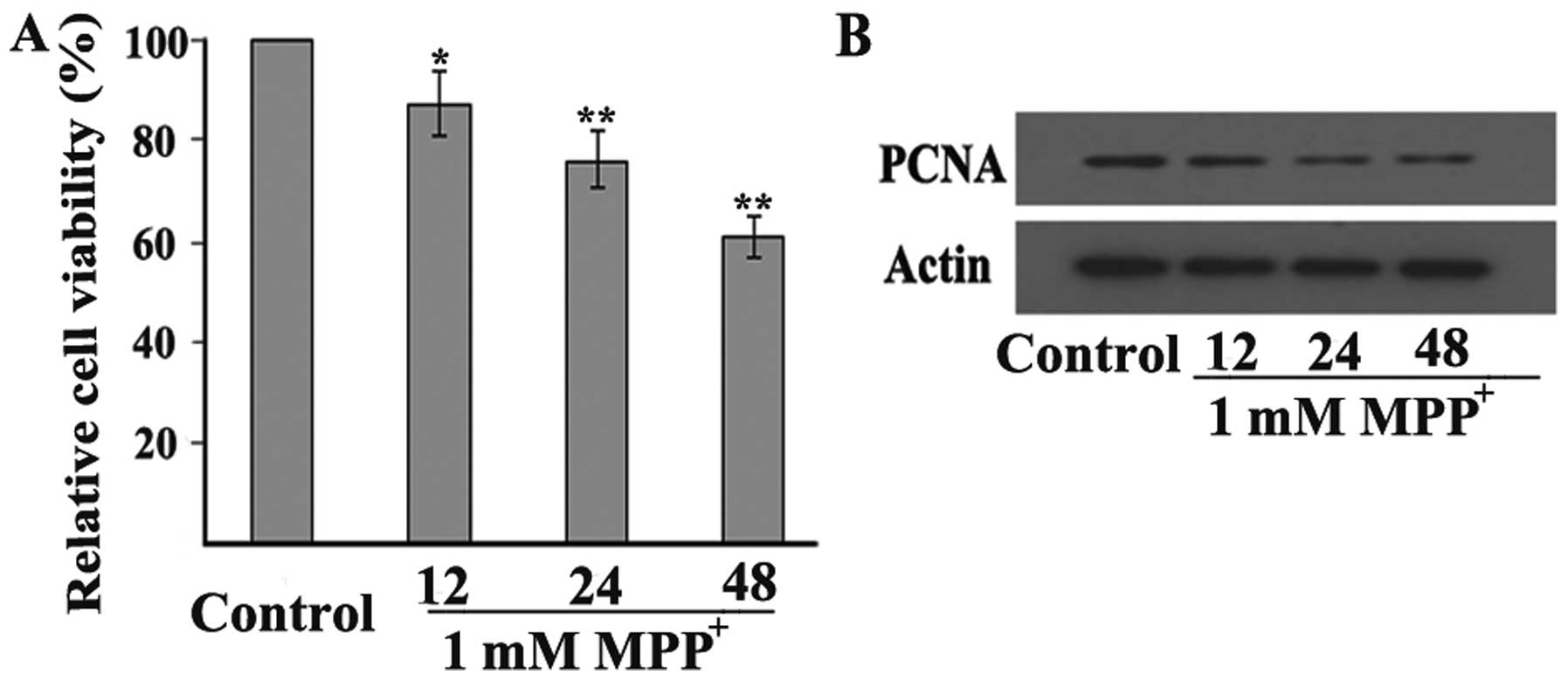
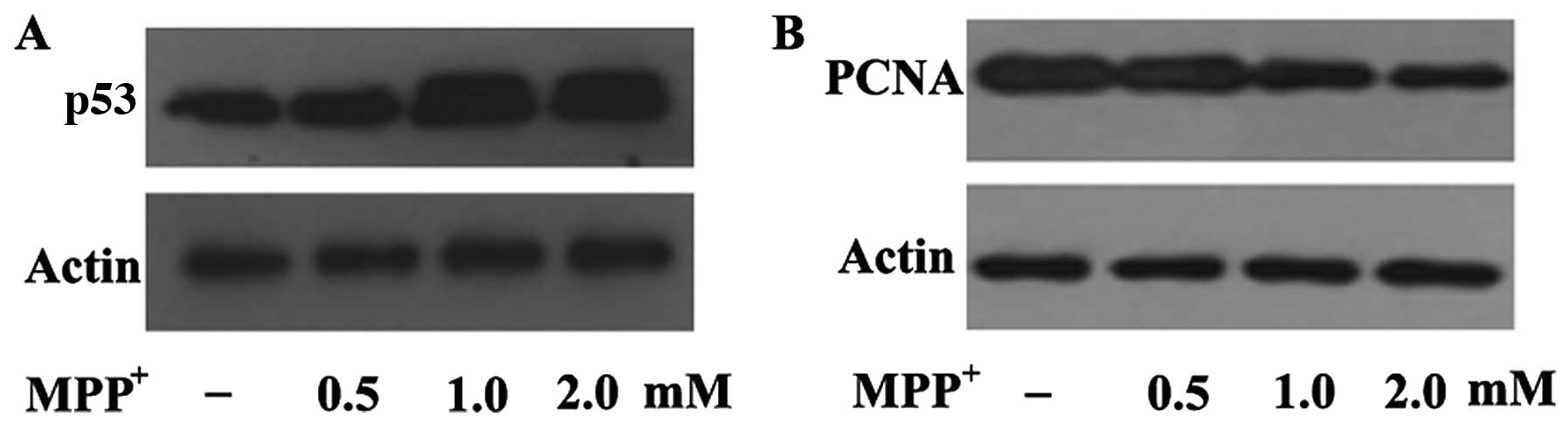
Oxidative stress is widely considered as a central event in the pathogenesis of Parkinson's disease (PD). The mechanisms underlying the oxidative damage-mediated loss of dopaminergic neurons in PD are not yet fully understood. Accumulating evidence has indicated that oxidative DNA damage plays a crucial role in programmed neuronal cell death, and is considered to be at least partly responsible for the degeneration of dopaminergic neurons in PD. This process involves a number of signaling cascades and molecular proteins. Proliferating cell nuclear antigen (PCNA) is a pleiotropic protein affecting a wide range of vital cellular processes, including chromatin remodelling, DNA repair and cell cycle control, by interacting with a number of enzymes and regulatory proteins. In the present study, the exposure of PC12 cells to 1-methyl-4-phenylpyridinium (MPP+) led to the loss of cell viability and decreased the expression levels of PCNA in a dose- and time-dependent manner, indicating that this protein may be involved in the neurotoxic actions of MPP+ in dopaminergic neuronal cells. In addition, a significant upregulation in p53 expression was also observed in this cellular model of PD. p53 is an upstream inducer of PCNA and it has been recognized as a key contributor responsible for dopaminergic neuronal cell death in mouse models of 1-methyl-4-phenyl-1,2,3,6-tetrahydropyridine (MPTP)-induced PD. This indicates that MPP+-induced oxidative damage is mediated by the downregulation of PCNA through the p53 pathway in a cellular model of PD. Thus, our results may provide some novel insight into the molecular mechanisms responsible for the development of PD and provide new possible therapeutic targets for the treatment of PD.
View Figures

Figure 1

Figure 2

Figure 3

Figure 4

Figure 5

Figure 6

View References

1 

Forno LS: Neuropathology of Parkinson's disease. J Neuropathol Exp Neurol. 55:259–272. 1996. View Article : Google Scholar : PubMed/NCBI

2 

Langston JW and Irwin I: MPTP: Current concepts and controversies. Clin Neuropharmacol. 9:485–507. 1986. View Article : Google Scholar : PubMed/NCBI

3 

Kopin IJ and Markey SP: MPTP toxicity: implications for research in Parkinson's disease. Annu Rev Neurosci. 11:81–96. 1988. View Article : Google Scholar : PubMed/NCBI

4 

Heikkila RE, Sieber BA, Manzino L and Sonsalla PK: Some features of the nigrostriatal dopaminergic neurotoxin 1-methyl-4-phenyl-1,2,3,6-tetrahydropyridine (MPTP) in the mouse. Mol Chem Neuropathol. 10:171–183. 1989. View Article : Google Scholar : PubMed/NCBI

5 

Calon F, Lavertu N, Lemieux AM, Morissette M, Goulet M, Grondin R, Blanchet PJ, Bédard PJ and Di Paolo T: Effect of MPTP-induced denervation on basal ganglia GABA(B) receptors: correlation with dopamine concentrations and dopamine transporter. Synapse. 40:225–234. 2001. View Article : Google Scholar : PubMed/NCBI

6 

Chiba K, Trevor A and Castagnoli N Jr: Metabolism of the neurotoxic tertiary amine, MPTP, by brain monoamine oxidase. Biochem Biophys Res Commun. 120:574–578. 1984. View Article : Google Scholar : PubMed/NCBI

7 

Javitch JA, D'Amato RJ, Strittmatter SM and Snyder SH: Parkinsonism-inducing neurotoxin, N-methyl-4-phenyl-1,2,3,6-tetrahydropyridine: uptake of the metabolite N-methyl-4-phenylpyridine by dopamine neurons explains selective toxicity. Proc Natl Acad Sci USA. 82:2173–2177. 1985. View Article : Google Scholar

8 

Akaneya Y, Takahashi M and Hatanaka H: Involvement of free radicals in MPP+ neurotoxicity against rat dopaminergic neurons in culture. Neurosci Lett. 193:53–56. 1995. View Article : Google Scholar : PubMed/NCBI

9 

Jenner P: Oxidative mechanisms in nigral cell death in Parkinson's disease. Mov Disord. 13(Suppl 1): 24–34. 1998.PubMed/NCBI

10 

Przedborski S and Vila M: The 1-methyl-4-phenyl-1,2,3,6-tetra-hydropyridine mouse model: a tool to explore the pathogenesis of Parkinson's disease. Ann N Y Acad Sci. 991:189–198. 2003. View Article : Google Scholar : PubMed/NCBI

11 

Segura Aguilar J and Kostrzewa RM: Neurotoxins and neurotoxic species implicated in neurodegeneration. Neurotox Res. 6:615–630. 2004. View Article : Google Scholar

12 

Schapira AH and Jenner P: Etiology and pathogenesis of Parkinson's disease. Mov Disord. 26:1049–1055. 2011. View Article : Google Scholar : PubMed/NCBI

13 

Zhu J and Chu CT: Mitochondrial dysfunction in Parkinson's disease. J Alzheimers Dis. 20(Suppl 2): S325–S334. 2010.PubMed/NCBI

14 

Parker WD Jr, Parks JK and Swerdlow RH: Complex I deficiency in Parkinson's disease frontal cortex. Brain Res. 1189:215–218. 2008. View Article : Google Scholar

15 

Jenner P and Olanow CW: The pathogenesis of cell death in Parkinson's disease. Neurology. 66(Suppl 4): S24–S36. 2006. View Article : Google Scholar : PubMed/NCBI

16 

Jenner P: Oxidative stress in Parkinson's disease. Ann Neurol. 53(Suppl 3): S26–S38. 2003. View Article : Google Scholar : PubMed/NCBI

17 

Yoritaka A, Hattori N, Uchida K, Tanaka M, Stadtman ER and Mizuno Y: Immunohistochemical detection of 4-hydroxynonenal protein adducts in Parkinson disease. Proc Natl Acad Sci USA. 93:2696–2701. 1996. View Article : Google Scholar : PubMed/NCBI

18 

Floor E and Wetzel MG: Increased protein oxidation in human substantia nigra pars compacta in comparison with basal ganglia and prefrontal cortex measured with an improved dinitrophenyl-hydrazine assay. J Neurochem. 70:268–275. 1998. View Article : Google Scholar : PubMed/NCBI

19 

Callio J, Oury TD and Chu CT: Manganese superoxide dismutase protects against 6-hydroxydopamine injury in mouse brains. J Biol Chem. 280:18536–18542. 2005. View Article : Google Scholar : PubMed/NCBI

20 

Vila M and Przedborski S: Targeting programmed cell death in neurodegenerative diseases. Nat Rev Neurosci. 4:365–375. 2003. View Article : Google Scholar : PubMed/NCBI

21 

Perier C, Bové J, Vila M and Przedborski S: The rotenone model of Parkinson's disease. Trends Neurosci. 26:345–346. 2003. View Article : Google Scholar : PubMed/NCBI

22 

Sun SY, An CN and Pu XP: DJ-1 protein protects dopaminergic neurons against 6-OHDA/MG-132-induced neurotoxicity in rats. Brain Res Bull. 88:609–616. 2012. View Article : Google Scholar : PubMed/NCBI

23 

Heikkila RE, Hess A and Duvoisin RC: Dopaminergic neurotoxicity of 1-methyl-4-phenyl-1,2,5,6-tetrahydropyridine in mice. Science. 224:1451–1453. 1984. View Article : Google Scholar : PubMed/NCBI

24 

Mattson MP: Apoptosis in neurodegenerative disorders. Nat Rev Mol Cell Biol. 1:120–129. 2000. View Article : Google Scholar

25 

Alam ZI, Jenner A, Daniel SE, Lees AJ, Cairns N, Marsden CD, Jenner P and Halliwell B: Oxidative DNA damage in the parkinsonian brain: an apparent selective increase in 8-hydroxyguanine levels in substantia nigra. J Neurochem. 69:1196–1203. 1997. View Article : Google Scholar : PubMed/NCBI

26 

Zhang J, Perry G, Smith MA, Robertson D, Olson SJ, Graham DG and Montine TJ: Parkinson's disease is associated with oxidative damage to cytoplasmic DNA and RNA in substantia nigra neurons. Am J Pathol. 154:1423–1429. 1999. View Article : Google Scholar : PubMed/NCBI

27 

Mandir AS, Przedborski S, Jackson-Lewis V, Wang ZQ, Simbulan-Rosenthal CM, Smulson ME, Hoffman BE, Guastella DB, Dawson VL and Dawson TM: Poly(ADP-ribose) polymerase activation mediates 1-methyl-4-phenyl-1, 2,3,6-tetra-hydropyridine (MPTP)-induced parkinsonism. Proc Natl Acad Sci USA. 96:5774–5779. 1999. View Article : Google Scholar

28 

Tan CK, Castillo C, So AG and Downey KM: An auxiliary protein for DNA polymerase-delta from fetal calf thymus. J Biol Chem. 261:12310–12316. 1986.PubMed/NCBI

29 

Prelich G, Tan CK, Kostura M, Mathews MB, So AG, Downey KM and Stillman B: Functional identity of proliferating cell nuclear antigen and a DNA polymerase-delta auxiliary protein. Nature. 326:517–520. 1987. View Article : Google Scholar : PubMed/NCBI

30 

Burkovics P, Hajdú I, Szukacsov V, Unk I and Haracska L: Role of PCNA-dependent stimulation of 3′-phosphodiesterase and 3′-5′ exonuclease activities of human Ape2 in repair of oxidative DNA damage. Nucleic Acids Res. 37:4247–4255. 2009. View Article : Google Scholar : PubMed/NCBI

31 

Amoroso A, Concia L, Maggio C, Raynaud C, Bergounioux C, Crespan E, Cella R and Maga G: Oxidative DNA damage bypass in Arabidopsis thaliana requires DNA polymerase λ and proliferating cell nuclear antigen 2. Plant Cell. 23:806–822. 2011. View Article : Google Scholar : PubMed/NCBI

32 

Hirata H and Cadet JL: p53-knockout mice are protected against the long-term effects of methamphetamine on dopaminergic terminals and cell bodies. J Neurochem. 69:780–790. 1997. View Article : Google Scholar : PubMed/NCBI

33 

Duan W, Zhu X, Ladenheim B, Yu QS, Guo Z, Oyler J, Cutler RG, Cadet JL, Greig NH and Mattson MP: p53 inhibitors preserve dopamine neurons and motor function in experimental parkinsonism. Ann Neurol. 52:597–606. 2002. View Article : Google Scholar : PubMed/NCBI

34 

Trimmer PA, Smith TS, Jung AB and Bennett JP Jr: Dopamine neurons from transgenic mice with a knockout of the p53 gene resist MPTP neurotoxicity. Neurodegeneration. 5:233–239. 1996. View Article : Google Scholar : PubMed/NCBI

35 

Moldovan GL, Pfander B and Jentsch S: PCNA, the maestro of the replication fork. Cell. 129:665–679. 2007. View Article : Google Scholar : PubMed/NCBI

36 

Samii A, Nutt JG and Ransom BR: Parkinson's disease. Lancet. 363:1783–1793. 2004. View Article : Google Scholar : PubMed/NCBI

37 

Li DW, Yao M, Dong YH, Tang MN, Chen W, Li GR and Sun BQ: Guanosine exerts neuroprotective effects by reversing mitochondrial dysfunction in a cellular model of Parkinson's disease. Int J Mol Med. 34:1358–1364. 2014.PubMed/NCBI

38 

Trachootham D, Alexandre J and Huang P: Targeting cancer cells by ROS-mediated mechanisms: a radical therapeutic approach? Nat Rev Drug Discov. 8:579–591. 2009. View Article : Google Scholar : PubMed/NCBI

39 

Martinon F: Signaling by ROS drives inflammasome activation. Eur J Immunol. 40:616–619. 2010. View Article : Google Scholar : PubMed/NCBI

40 

Bhat AH, Dar KB, Anees S, Zargar MA, Masood A, Sofi MA and Ganie SA: Oxidative stress, mitochondrial dysfunction and neurodegenerative diseases; a mechanistic insight. Biomed Pharmacother. 74:101–110. 2015. View Article : Google Scholar : PubMed/NCBI

41 

He F and Zuo L: Redox roles of reactive oxygen species in cardiovascular diseases. Int J Mol Sci. 16:27770–27780. 2015. View Article : Google Scholar : PubMed/NCBI

42 

Lotharius J and Brundin P: Pathogenesis of Parkinson's disease: dopamine, vesicles and alpha-synuclein. Nat Rev Neurosci. 3:932–942. 2002. View Article : Google Scholar : PubMed/NCBI

43 

Montine KS, Quinn JF, Zhang J, Fessel JP, Roberts LJ II, Morrow JD and Montine TJ: Isoprostanes and related products of lipid peroxidation in neurodegenerative diseases. Chem Phys Lipids. 128:117–124. 2004. View Article : Google Scholar : PubMed/NCBI

44 

Nagatsu T and Sawada M: Molecular mechanism of the relation of monoamine oxidase B and its inhibitors to Parkinson's disease: possible implications of glial cells. J Neural Transm Suppl. 71:53–65. 2006. View Article : Google Scholar

45 

Kumar MJ and Andersen JK: Perspectives on MAO-B in aging and neurological disease: where do we go from here? Mol Neurobiol. 30:77–89. 2004. View Article : Google Scholar : PubMed/NCBI

46 

Norris EH, Giasson BI, Hodara R, Xu S, Trojanowski JQ, Ischiropoulos H and Lee VM: Reversible inhibition of alpha-synuclein fibrillization by dopaminochrome-mediated conformational alterations. J Biol Chem. 280:21212–21219. 2005. View Article : Google Scholar : PubMed/NCBI

47 

Zecca L, Wilms H, Geick S, Claasen JH, Brandenburg LO, Holzknecht C, Panizza ML, Zucca FA, Deuschl G, Sievers J and Lucius R: Human neuromelanin induces neuroinflammation and neurodegeneration in the rat substantia nigra: implications for Parkinson's disease. Acta Neuropathol. 116:47–55. 2008. View Article : Google Scholar : PubMed/NCBI

48 

Sadrzadeh SM and Saffari Y: Iron and brain disorders. Am J Clin Pathol. 121(Suppl): S64–S70. 2004.PubMed/NCBI

49 

Jomova K and Valko M: Advances in metal-induced oxidative stress and human disease. Toxicology. 283:65–87. 2011. View Article : Google Scholar : PubMed/NCBI

50 

Núñez MT, Urrutia P, Mena N, Aguirre P, Tapia V and Salazar J: Iron toxicity in neurodegeneration. Biometals. 25:761–776. 2012. View Article : Google Scholar : PubMed/NCBI

51 

Lan J and Jiang DH: Desferrioxamine and vitamin E protect against iron and MPTP-induced neurodegeneration in mice. J Neural Transm. 104:469–481. 1997. View Article : Google Scholar : PubMed/NCBI

52 

Fang J, Seki T and Maeda H: Therapeutic strategies by modulating oxygen stress in cancer and inflammation. Adv Drug Deliv Rev. 61:290–302. 2009. View Article : Google Scholar : PubMed/NCBI

53 

Fruehauf JP and Meyskens FL Jr: Reactive oxygen species: a breath of life or death? Clin Cancer Res. 13:789–794. 2007. View Article : Google Scholar : PubMed/NCBI

54 

Day BJ: Catalytic antioxidants: A radical approach to new therapeutics. Drug Discov Today. 9:557–566. 2004. View Article : Google Scholar : PubMed/NCBI

55 

Nikitaki Z, Hellweg CE, Georgakilas AG and Ravanat JL: Stress-induced DNA damage biomarkers: applications and limitations. Front Chem. 3:352015. View Article : Google Scholar : PubMed/NCBI

56 

Aziz K, Nowsheen S, Pantelias G, Iliakis G, Gorgoulis VG and Georgakilas AG: Targeting DNA damage and repair: embracing the pharmacological era for successful cancer therapy. Pharmacol Ther. 133:334–350. 2012. View Article : Google Scholar

57 

Smolarz B, Wilczyński J and Nowakowska D: DNA repair mechanisms and human cytomegalovirus (HCMV) infection. Folia Microbiol (Praha). 60:199–209. 2015. View Article : Google Scholar

58 

Mailand N, Gibbs-Seymour I and Bekker-Jensen S: Regulation of PCNA-protein interactions for genome stability. Nat Rev Mol Cell Biol. 14:269–282. 2013. View Article : Google Scholar : PubMed/NCBI

59 

Koundrioukoff S, Jónsson ZO, Hasan S, de Jong RN, van der Vliet PC, Hottiger MO and Hübscher U: A direct interaction between proliferating cell nuclear antigen (PCNA) and Cdk2 targets PCNA-interacting proteins for phosphorylation. J Biol Chem. 275:22882–22887. 2000. View Article : Google Scholar : PubMed/NCBI

60 

Waga S, Hannon GJ, Beach D and Stillman B: The p21 inhibitor of cyclin-dependent kinases controls DNA replication by interaction with PCNA. Nature. 369:574–578. 1994. View Article : Google Scholar : PubMed/NCBI

61 

Witko-Sarsat V, Mocek J, Bouayad D, Tamassia N, Ribeil JA, Candalh C, Davezac N, Reuter N, Mouthon L, Hermine O, et al: Proliferating cell nuclear antigen acts as a cytoplasmic platform controlling human neutrophil survival. J Exp Med. 207:2631–2645. 2010. View Article : Google Scholar : PubMed/NCBI

62 

Polyak K, Xia Y, Zweier JL, Kinzler KW and Vogelstein B: A model for p53-induced apoptosis. Nature. 389:300–305. 1997. View Article : Google Scholar : PubMed/NCBI

63 

Mirza A, Wu Q, Wang L, McClanahan T, Bishop WR, Gheyas F, Ding W, Hutchins B, Hockenberry T, Kirschmeier P, et al: Global transcriptional program of p53 target genes during the process of apoptosis and cell cycle progression. Oncogene. 22:3645–3654. 2003. View Article : Google Scholar : PubMed/NCBI

64 

Vogelstein B, Lane D and Levine AJ: Surfing the p53 network. Nature. 408:307–310. 2000. View Article : Google Scholar : PubMed/NCBI

65 

Zhao R, Gish K, Murphy M, Yin Y, Notterman D, Hoffman WH, Tom E, Mack DH and Levine AJ: Analysis of p53-regulated gene expression patterns using oligonucleotide arrays. Genes Dev. 14:981–993. 2000.PubMed/NCBI

66 

Chipuk JE and Green DR: Dissecting p53-dependent apoptosis. Cell Death Differ. 13:994–1002. 2006. View Article : Google Scholar : PubMed/NCBI

67 

Culmsee C and Mattson MP: p53 in neuronal apoptosis. Biochem Biophys Res Commun. 331:761–777. 2005. View Article : Google Scholar : PubMed/NCBI

68 

Morris GF, Bischoff JR and Mathews MB: Transcriptional activation of the human proliferating-cell nuclear antigen promoter by p53. Proc Natl Acad Sci USA. 93:895–899. 1996. View Article : Google Scholar : PubMed/NCBI

69 

Shivakumar CV, Brown DR, Deb S and Deb SP: Wild-type human p53 transactivates the human proliferating cell nuclear antigen promoter. Mol Cell Biol. 15:6785–6793. 1995z. View Article : Google Scholar

Related Articles

  • Abstract
  • View
  • Download
  • Twitter
Copy and paste a formatted citation
Spandidos Publications style
Li D, Li G, Zhang B, Feng J and Zhao H: Damage to dopaminergic neurons is mediated by proliferating cell nuclear antigen through the p53 pathway under conditions of oxidative stress in a cell model of Parkinson's disease. Int J Mol Med 37: 429-435, 2016.
APA
Li, D., Li, G., Zhang, B., Feng, J., & Zhao, H. (2016). Damage to dopaminergic neurons is mediated by proliferating cell nuclear antigen through the p53 pathway under conditions of oxidative stress in a cell model of Parkinson's disease. International Journal of Molecular Medicine, 37, 429-435. https://doi.org/10.3892/ijmm.2015.2430
MLA
Li, D., Li, G., Zhang, B., Feng, J., Zhao, H."Damage to dopaminergic neurons is mediated by proliferating cell nuclear antigen through the p53 pathway under conditions of oxidative stress in a cell model of Parkinson's disease". International Journal of Molecular Medicine 37.2 (2016): 429-435.
Chicago
Li, D., Li, G., Zhang, B., Feng, J., Zhao, H."Damage to dopaminergic neurons is mediated by proliferating cell nuclear antigen through the p53 pathway under conditions of oxidative stress in a cell model of Parkinson's disease". International Journal of Molecular Medicine 37, no. 2 (2016): 429-435. https://doi.org/10.3892/ijmm.2015.2430
Copy and paste a formatted citation
x
Spandidos Publications style
Li D, Li G, Zhang B, Feng J and Zhao H: Damage to dopaminergic neurons is mediated by proliferating cell nuclear antigen through the p53 pathway under conditions of oxidative stress in a cell model of Parkinson's disease. Int J Mol Med 37: 429-435, 2016.
APA
Li, D., Li, G., Zhang, B., Feng, J., & Zhao, H. (2016). Damage to dopaminergic neurons is mediated by proliferating cell nuclear antigen through the p53 pathway under conditions of oxidative stress in a cell model of Parkinson's disease. International Journal of Molecular Medicine, 37, 429-435. https://doi.org/10.3892/ijmm.2015.2430
MLA
Li, D., Li, G., Zhang, B., Feng, J., Zhao, H."Damage to dopaminergic neurons is mediated by proliferating cell nuclear antigen through the p53 pathway under conditions of oxidative stress in a cell model of Parkinson's disease". International Journal of Molecular Medicine 37.2 (2016): 429-435.
Chicago
Li, D., Li, G., Zhang, B., Feng, J., Zhao, H."Damage to dopaminergic neurons is mediated by proliferating cell nuclear antigen through the p53 pathway under conditions of oxidative stress in a cell model of Parkinson's disease". International Journal of Molecular Medicine 37, no. 2 (2016): 429-435. https://doi.org/10.3892/ijmm.2015.2430
Follow us
  • Twitter
  • LinkedIn
  • Facebook
About
  • Spandidos Publications
  • Careers
  • Cookie Policy
  • Privacy Policy
How can we help?
  • Help
  • Live Chat
  • Contact
  • Email to our Support Team