Spandidos Publications Logo
  • About
    • About Spandidos
    • Aims and Scopes
    • Abstracting and Indexing
    • Editorial Policies
    • Reprints and Permissions
    • Job Opportunities
    • Terms and Conditions
    • Contact
  • Journals
    • All Journals
    • Oncology Letters
      • Oncology Letters
      • Information for Authors
      • Editorial Policies
      • Editorial Board
      • Aims and Scope
      • Abstracting and Indexing
      • Bibliographic Information
      • Archive
    • International Journal of Oncology
      • International Journal of Oncology
      • Information for Authors
      • Editorial Policies
      • Editorial Board
      • Aims and Scope
      • Abstracting and Indexing
      • Bibliographic Information
      • Archive
    • Molecular and Clinical Oncology
      • Molecular and Clinical Oncology
      • Information for Authors
      • Editorial Policies
      • Editorial Board
      • Aims and Scope
      • Abstracting and Indexing
      • Bibliographic Information
      • Archive
    • Experimental and Therapeutic Medicine
      • Experimental and Therapeutic Medicine
      • Information for Authors
      • Editorial Policies
      • Editorial Board
      • Aims and Scope
      • Abstracting and Indexing
      • Bibliographic Information
      • Archive
    • International Journal of Molecular Medicine
      • International Journal of Molecular Medicine
      • Information for Authors
      • Editorial Policies
      • Editorial Board
      • Aims and Scope
      • Abstracting and Indexing
      • Bibliographic Information
      • Archive
    • Biomedical Reports
      • Biomedical Reports
      • Information for Authors
      • Editorial Policies
      • Editorial Board
      • Aims and Scope
      • Abstracting and Indexing
      • Bibliographic Information
      • Archive
    • Oncology Reports
      • Oncology Reports
      • Information for Authors
      • Editorial Policies
      • Editorial Board
      • Aims and Scope
      • Abstracting and Indexing
      • Bibliographic Information
      • Archive
    • Molecular Medicine Reports
      • Molecular Medicine Reports
      • Information for Authors
      • Editorial Policies
      • Editorial Board
      • Aims and Scope
      • Abstracting and Indexing
      • Bibliographic Information
      • Archive
    • World Academy of Sciences Journal
      • World Academy of Sciences Journal
      • Information for Authors
      • Editorial Policies
      • Editorial Board
      • Aims and Scope
      • Abstracting and Indexing
      • Bibliographic Information
      • Archive
    • International Journal of Functional Nutrition
      • International Journal of Functional Nutrition
      • Information for Authors
      • Editorial Policies
      • Editorial Board
      • Aims and Scope
      • Abstracting and Indexing
      • Bibliographic Information
      • Archive
    • International Journal of Epigenetics
      • International Journal of Epigenetics
      • Information for Authors
      • Editorial Policies
      • Editorial Board
      • Aims and Scope
      • Abstracting and Indexing
      • Bibliographic Information
      • Archive
    • Medicine International
      • Medicine International
      • Information for Authors
      • Editorial Policies
      • Editorial Board
      • Aims and Scope
      • Abstracting and Indexing
      • Bibliographic Information
      • Archive
  • Articles
  • Information
    • Information for Authors
    • Information for Reviewers
    • Information for Librarians
    • Information for Advertisers
    • Conferences
  • Language Editing
Spandidos Publications Logo
  • About
    • About Spandidos
    • Aims and Scopes
    • Abstracting and Indexing
    • Editorial Policies
    • Reprints and Permissions
    • Job Opportunities
    • Terms and Conditions
    • Contact
  • Journals
    • All Journals
    • Biomedical Reports
      • Information for Authors
      • Editorial Policies
      • Editorial Board
      • Aims and Scope
      • Abstracting and Indexing
      • Bibliographic Information
      • Archive
    • Experimental and Therapeutic Medicine
      • Information for Authors
      • Editorial Policies
      • Editorial Board
      • Aims and Scope
      • Abstracting and Indexing
      • Bibliographic Information
      • Archive
    • International Journal of Epigenetics
      • Information for Authors
      • Editorial Policies
      • Editorial Board
      • Aims and Scope
      • Abstracting and Indexing
      • Bibliographic Information
      • Archive
    • International Journal of Functional Nutrition
      • Information for Authors
      • Editorial Policies
      • Editorial Board
      • Aims and Scope
      • Abstracting and Indexing
      • Bibliographic Information
      • Archive
    • International Journal of Molecular Medicine
      • Information for Authors
      • Editorial Policies
      • Editorial Board
      • Aims and Scope
      • Abstracting and Indexing
      • Bibliographic Information
      • Archive
    • International Journal of Oncology
      • Information for Authors
      • Editorial Policies
      • Editorial Board
      • Aims and Scope
      • Abstracting and Indexing
      • Bibliographic Information
      • Archive
    • Medicine International
      • Information for Authors
      • Editorial Policies
      • Editorial Board
      • Aims and Scope
      • Abstracting and Indexing
      • Bibliographic Information
      • Archive
    • Molecular and Clinical Oncology
      • Information for Authors
      • Editorial Policies
      • Editorial Board
      • Aims and Scope
      • Abstracting and Indexing
      • Bibliographic Information
      • Archive
    • Molecular Medicine Reports
      • Information for Authors
      • Editorial Policies
      • Editorial Board
      • Aims and Scope
      • Abstracting and Indexing
      • Bibliographic Information
      • Archive
    • Oncology Letters
      • Information for Authors
      • Editorial Policies
      • Editorial Board
      • Aims and Scope
      • Abstracting and Indexing
      • Bibliographic Information
      • Archive
    • Oncology Reports
      • Information for Authors
      • Editorial Policies
      • Editorial Board
      • Aims and Scope
      • Abstracting and Indexing
      • Bibliographic Information
      • Archive
    • World Academy of Sciences Journal
      • Information for Authors
      • Editorial Policies
      • Editorial Board
      • Aims and Scope
      • Abstracting and Indexing
      • Bibliographic Information
      • Archive
  • Articles
  • Information
    • For Authors
    • For Reviewers
    • For Librarians
    • For Advertisers
    • Conferences
  • Language Editing
Login Register Submit
  • This site uses cookies
  • You can change your cookie settings at any time by following the instructions in our Cookie Policy. To find out more, you may read our Privacy Policy.

    I agree
Search articles by DOI, keyword, author or affiliation
Search
Advanced Search
presentation
International Journal of Molecular Medicine
Join Editorial Board Propose a Special Issue
Print ISSN: 1107-3756 Online ISSN: 1791-244X
Journal Cover
February-2016 Volume 37 Issue 2

Full Size Image

Sign up for eToc alerts
Recommend to Library

Journals

International Journal of Molecular Medicine

International Journal of Molecular Medicine

International Journal of Molecular Medicine is an international journal devoted to molecular mechanisms of human disease.

International Journal of Oncology

International Journal of Oncology

International Journal of Oncology is an international journal devoted to oncology research and cancer treatment.

Molecular Medicine Reports

Molecular Medicine Reports

Covers molecular medicine topics such as pharmacology, pathology, genetics, neuroscience, infectious diseases, molecular cardiology, and molecular surgery.

Oncology Reports

Oncology Reports

Oncology Reports is an international journal devoted to fundamental and applied research in Oncology.

Experimental and Therapeutic Medicine

Experimental and Therapeutic Medicine

Experimental and Therapeutic Medicine is an international journal devoted to laboratory and clinical medicine.

Oncology Letters

Oncology Letters

Oncology Letters is an international journal devoted to Experimental and Clinical Oncology.

Biomedical Reports

Biomedical Reports

Explores a wide range of biological and medical fields, including pharmacology, genetics, microbiology, neuroscience, and molecular cardiology.

Molecular and Clinical Oncology

Molecular and Clinical Oncology

International journal addressing all aspects of oncology research, from tumorigenesis and oncogenes to chemotherapy and metastasis.

World Academy of Sciences Journal

World Academy of Sciences Journal

Multidisciplinary open-access journal spanning biochemistry, genetics, neuroscience, environmental health, and synthetic biology.

International Journal of Functional Nutrition

International Journal of Functional Nutrition

Open-access journal combining biochemistry, pharmacology, immunology, and genetics to advance health through functional nutrition.

International Journal of Epigenetics

International Journal of Epigenetics

Publishes open-access research on using epigenetics to advance understanding and treatment of human disease.

Medicine International

Medicine International

An International Open Access Journal Devoted to General Medicine.

Journal Cover
February-2016 Volume 37 Issue 2

Full Size Image

Sign up for eToc alerts
Recommend to Library

  • Article
  • Citations
    • Cite This Article
    • Download Citation
    • Create Citation Alert
    • Remove Citation Alert
    • Cited By
  • Similar Articles
    • Related Articles (in Spandidos Publications)
    • Similar Articles (Google Scholar)
    • Similar Articles (PubMed)
  • Download PDF
  • Download XML
  • View XML
Article Open Access

Inhibition of mTOR sensitizes breast cancer stem cells to radiation-induced repression of self-renewal through the regulation of MnSOD and Akt

  • Authors:
    • Yuanhui Lai
    • Xinpei Yu
    • Xiaohong Lin
    • Shanyang He
  • View Affiliations / Copyright

    Affiliations: Department of Thyroid and Breast Surgery, The First Affiliated Hospital of Sun Yat-sen University, Guangzhou, Guangdong 510700, P.R. China, Department of Geriatric Infection and Organ Function Support Laboratory, Guangzhou General Hospital of Guangzhou Military Command, Guangzhou, Guangdong 510010, P.R. China, Department of Obstetrics and Gynecology, The First Affiliated Hospital, Sun Yat-sen University, Guangzhou, Guangdong 510700, P.R. China
    Copyright: © Lai et al. This is an open access article distributed under the terms of Creative Commons Attribution License.
  • Pages: 369-377
    |
    Published online on: December 21, 2015
       https://doi.org/10.3892/ijmm.2015.2441
  • Expand metrics +
Metrics: Total Views: 0 (Spandidos Publications: | PMC Statistics: )
Metrics: Total PDF Downloads: 0 (Spandidos Publications: | PMC Statistics: )
Cited By (CrossRef): 0 citations Loading Articles...

This article is mentioned in:


Abstract

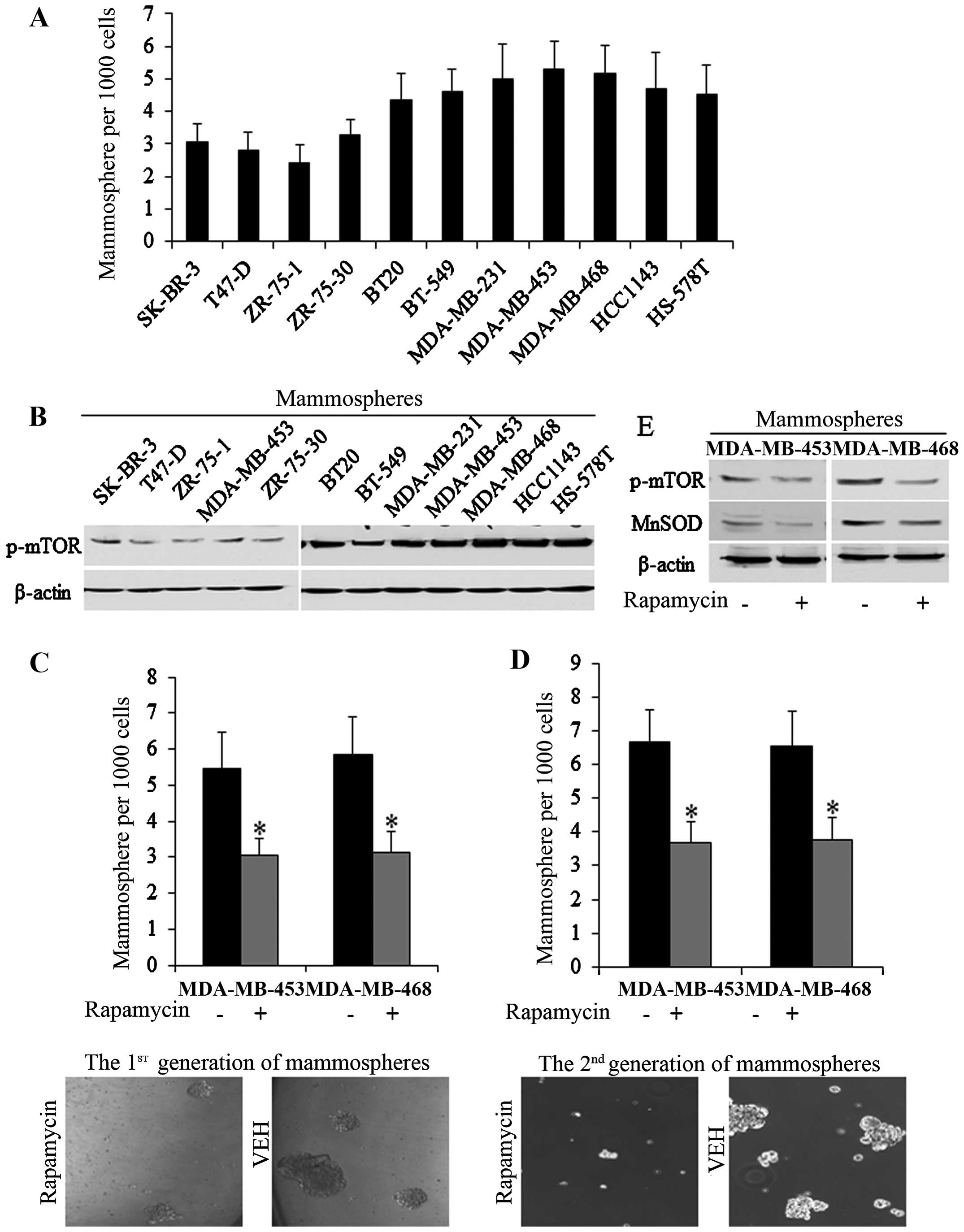
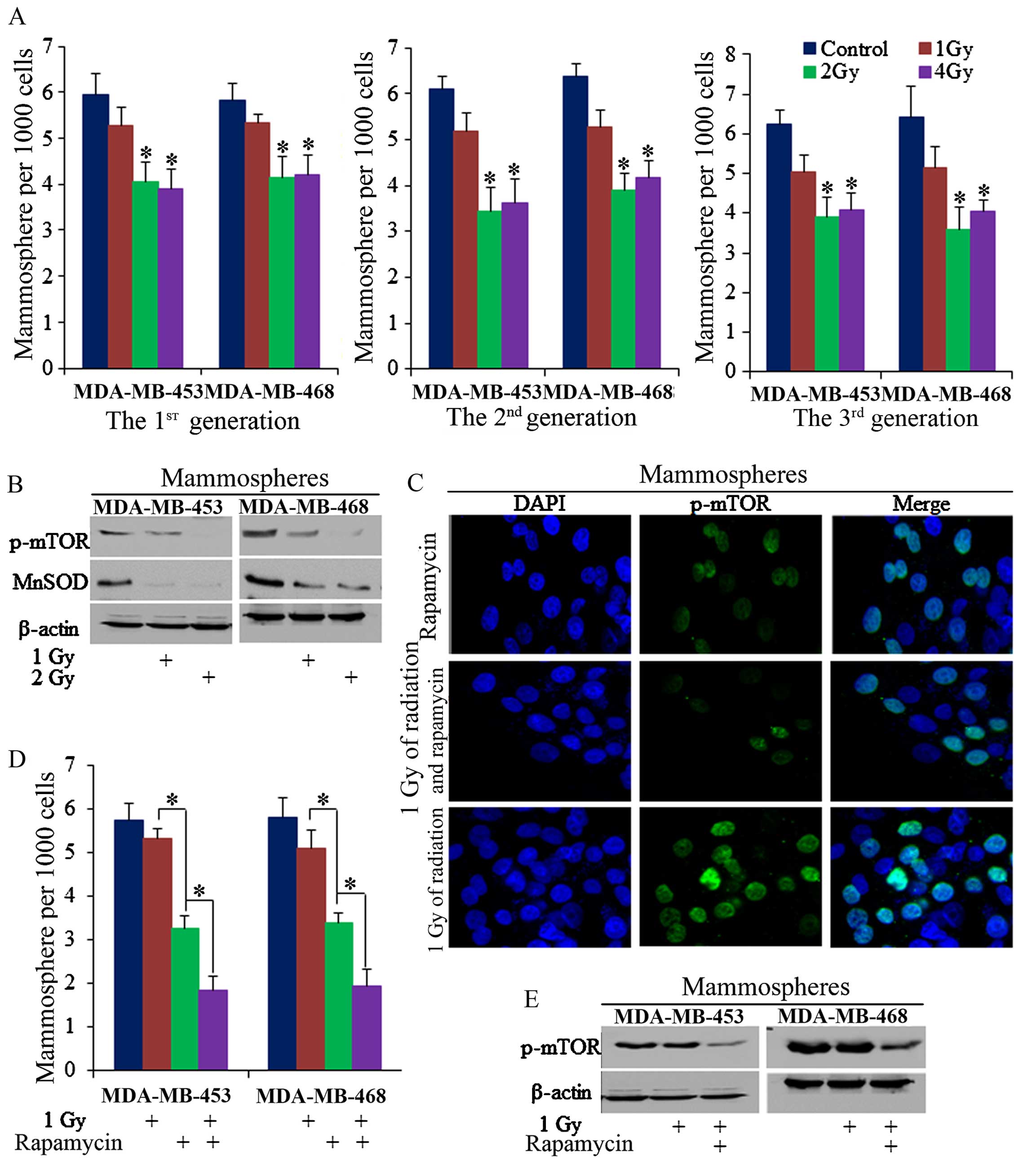
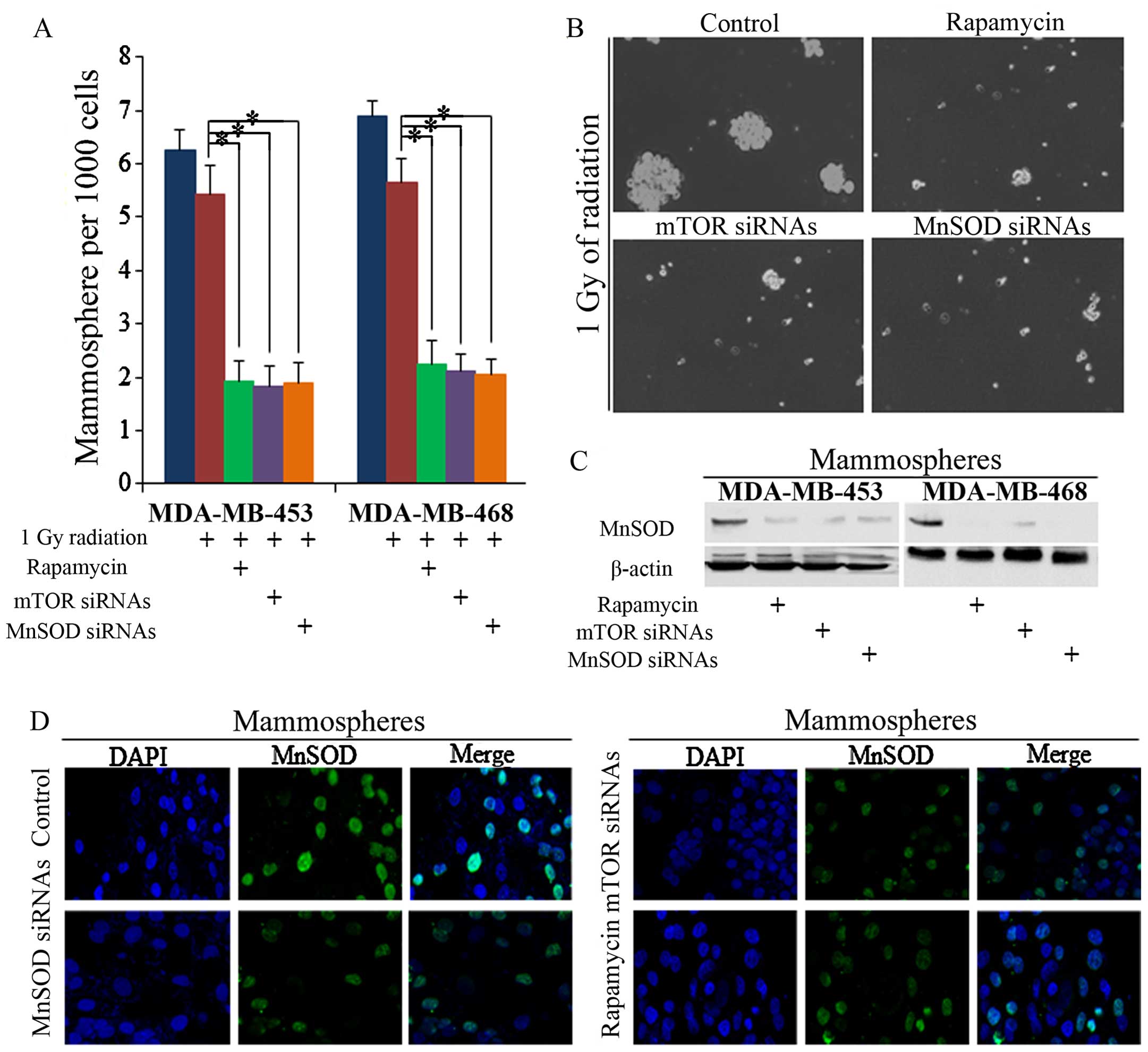
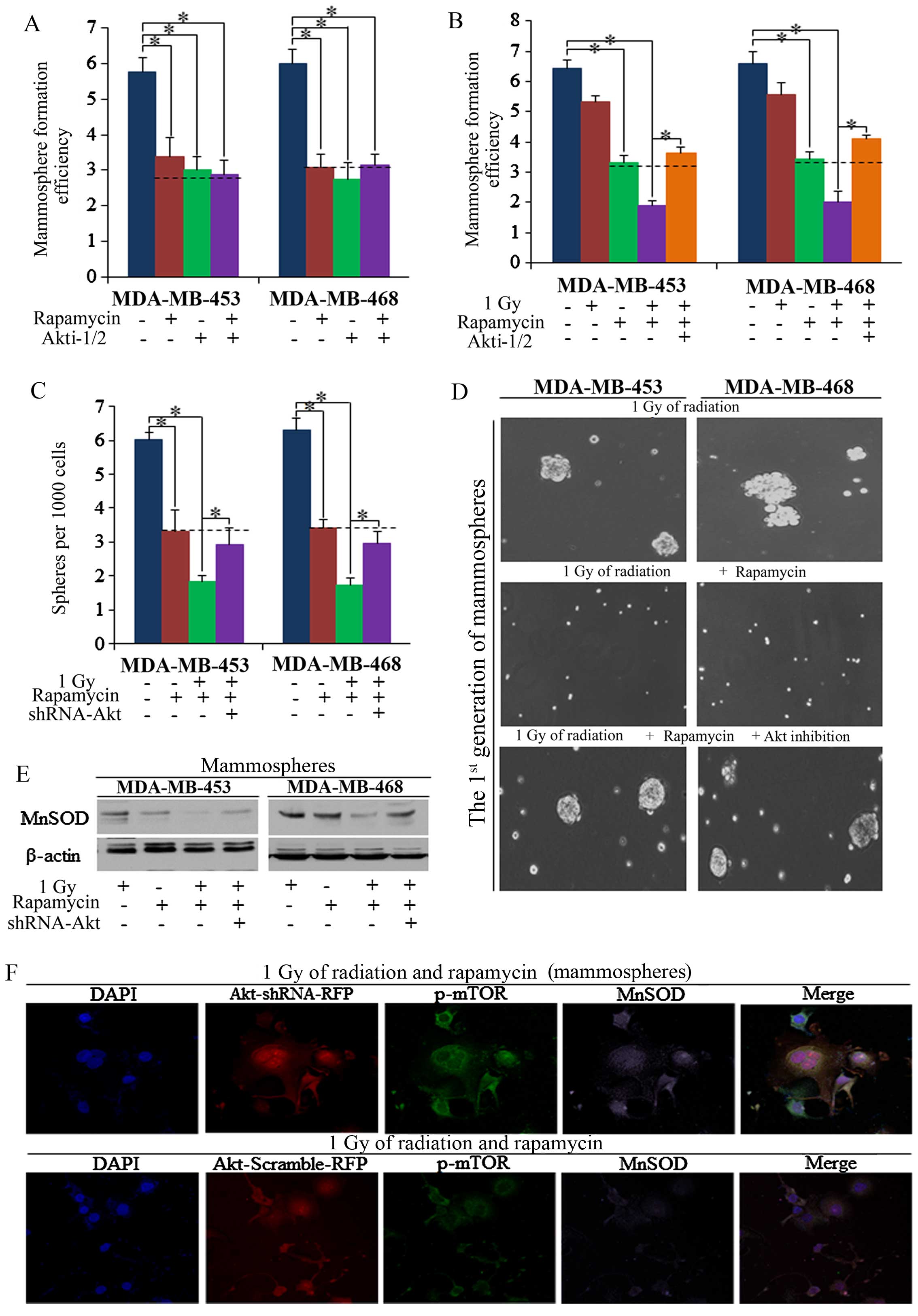
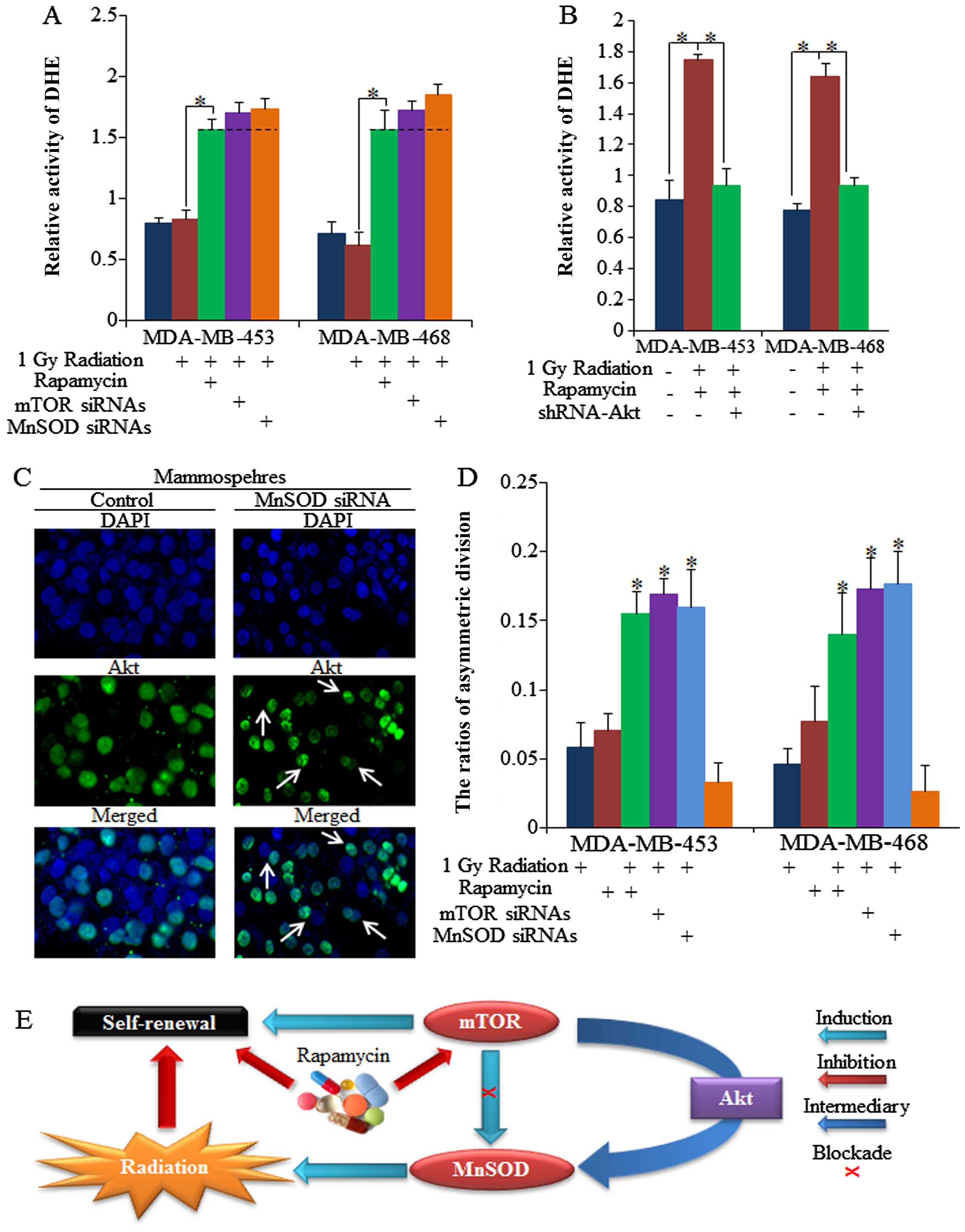
The sensitization of breast cancer stem cells (BrCSCs) to the inhibitive effects of radiotherapy through adjuvant therapy which targets oncogenic pathways represents a prospective strategy for improving the effect of radiation in patients with triple-negative breast cancer (TNBC). Mammalian target of rapamycin (mTOR) activation is one of the most frequent events in human malignancies, and is critical for sustaining the self‑renewing ability of cancer stem cells (CSCs); inhibition by rapamycin is an effective and promising strategy in anticancer treatments. In the present study, we found that mTOR activity was closely related to the self-renewal ability of BrCSCs, and in triple negative MDA-MB-453 and MDA-MB‑468 cells, rapamycin repression of mTOR phosphorylation decreased the number of mammospheres and helped to sensitize the resistant CSCs to low-dose radiation therapy. By inhibiting mTOR and mitochondrial manganese superoxide dismutase (MnSOD), we confirmed that rapamycin functioned through the mTOR/MnSOD/reactive oxygen species (ROS) signaling pathway, and the existence of Akt governed the rapamycin‑induced asymmetric division (AD) of stem cells in cases of radiation‑treated breast cancer. The synergic effects of rapamycin and low-dose radiation induced the AD of stem cells, which then resulted in a decrease in the number of mammospheres, and both were mediated by MnSOD. Governed by Akt, the consequent inhibition of ROS formation and oxidative stress preserved the AD mode of stem cells, which is critical for an improved radiotherapy response in clinical treatment, as the tumor group is thus easier to eliminate with radiation therapy. We posit that an in-depth understanding of the interaction of radiation with CSCs has enormous potential and will make radiation even better and more effective.
View Figures

Figure 1

Figure 2

Figure 3

Figure 4

Figure 5

View References

1 

Kanavos P: The rising burden of cancer in the developing world. Ann Oncol Suppl. 8:viii15–viii23

2 

Sun X, Qin S, Fan C, Xu C, Du N and Ren H: Let-7: A regulator of the ERα signaling pathway in human breast tumors and breast cancer stem cells. Oncol Rep. 29:2079–2087. 2013.PubMed/NCBI

3 

Assi HA, Khoury KE, Dbouk H, Khalil LE, Mouhieddine TH and El Saghir NS: Epidemiology and prognosis of breast cancer in young women. J Thorac Dis. 5(Suppl 1): S2–S8. 2013.PubMed/NCBI

4 

Ohno S, Takanashi M, Sudo K, Ueda S, Ishikawa A, Matsuyama N, Fujita K, Mizutani T, Ohgi T, Ochiya T, et al: Systemically injected exosomes targeted to EGFR deliver antitumor microRNA to breast cancer cells. Mol Ther. 21:185–191. 2013. View Article : Google Scholar :

5 

Yao Y, Hu J, Shen Z, Yao R, Liu S, Li Y, Cong H, Wang X, Qiu W and Yue L: MiR-200b expression in breast cancer: a prognostic marker and act on cell proliferation and apoptosis by targeting Sp1. J Cell Mol Med. 19:760–769. 2015. View Article : Google Scholar : PubMed/NCBI

6 

Liu FJ, Wang XB and Cao AG: Screening and functional analysis of a differential protein profile of human breast cancer. Oncol Lett. 7:1851–1856. 2014.PubMed/NCBI

7 

Iglesias-Bartolome R, Patel V, Cotrim A, Leelahavanichkul K, Molinolo AA, Mitchell JB and Gutkind JS: mTOR inhibition prevents epithelial stem cell senescence and protects from radiation-induced mucositis. Cell Stem Cell. 11:401–414. 2012. View Article : Google Scholar : PubMed/NCBI

8 

Castilho RM, Squarize CH, Chodosh LA, Williams BO and Gutkind JS: mTOR mediates Wnt-induced epidermal stem cell exhaustion and aging. Cell Stem Cell. 5:279–289. 2009. View Article : Google Scholar : PubMed/NCBI

9 

Martelli AM, Evangelisti C, Follo MY, Ramazzotti G, Fini M, Giardino R, Manzoli L, McCubrey JA and Cocco L: Targeting the phosphatidylinositol 3-kinase/Akt/mammalian target of rapamycin signaling network in cancer stem cells. Curr Med Chem. 18:2715–2726. 2011. View Article : Google Scholar : PubMed/NCBI

10 

Matsubara S, Ding Q, Miyazaki Y, Kuwahata T, Tsukasa K and Takao S: mTOR plays critical roles in pancreatic cancer stem cells through specific and stemness-related functions. Sci Rep. 3:32302013. View Article : Google Scholar : PubMed/NCBI

11 

Sun X, Jiao X, Pestell TG, Fan C, Qin S, Mirabelli E, Ren H and Pestell RG: MicroRNAs and cancer stem cells: the sword and the shield. Oncogene. 33:4967–4977. 2014. View Article : Google Scholar

12 

Hart PC, Mao M, de Abreu ALP, Ansenberger-Fricano K, Ekoue DN, Ganini D, Kajdacsy-Balla A, Diamond AM, Minshall RD, Consolaro ME, et al: MnSOD upregulation sustains the Warburg effect via mitochondrial ROS and AMPK-dependent signalling in cancer. Nat Commun. 6:60532015. View Article : Google Scholar : PubMed/NCBI

13 

Dhar SK, Tangpong J, Chaiswing L, Oberley TD and St Clair DK: Manganese superoxide dismutase is a p53-regulated gene that switches cancers between early and advanced stages. Cancer Res. 71:6684–6695. 2011. View Article : Google Scholar : PubMed/NCBI

14 

Hirsch HA, Iliopoulos D and Struhl K: Metformin inhibits the inflammatory response associated with cellular transformation and cancer stem cell growth. Proc Natl Acad Sci USA. 110:972–977. 2013. View Article : Google Scholar : PubMed/NCBI

15 

Rupaimoole R, Han HD, Lopez-Berestein G and Sood AK: MicroRNA therapeutics: principles, expectations, and challenges. Chin J Cancer. 30:368–370. 2011. View Article : Google Scholar : PubMed/NCBI

16 

Bao S, Wu Q, McLendon RE, Hao Y, Shi Q, Hjelmeland AB, Dewhirst MW, Bigner DD and Rich JN: Glioma stem cells promote radioresistance by preferential activation of the DNA damage response. Nature. 444:756–760. 2006. View Article : Google Scholar : PubMed/NCBI

17 

Phillips TM, McBride WH and Pajonk F: The response of CD24−/low/CD44+ breast cancer-initiating cells to radiation. J Natl Cancer Inst. 98:1777–1785. 2006. View Article : Google Scholar : PubMed/NCBI

18 

Woodward WA, Chen MS, Behbod F, Alfaro MP, Buchholz TA and Rosen JM: WNT/beta-catenin mediates radiation resistance of mouse mammary progenitor cells. Proc Natl Acad Sci USA. 104:618–623. 2007. View Article : Google Scholar : PubMed/NCBI

19 

Zielske SP, Spalding AC, Wicha MS and Lawrence TS: Ablation of breast cancer stem cells with radiation. Transl Oncol. 4:227–233. 2011. View Article : Google Scholar : PubMed/NCBI

20 

Diehn M, Cho RW, Lobo NA, Kalisky T, Dorie MJ, Kulp AN, Qian D, Lam JS, Ailles LE, Wong M, et al: Association of reactive oxygen species levels and radioresistance in cancer stem cells. Nature. 458:780–783. 2009. View Article : Google Scholar : PubMed/NCBI

21 

Dey-Guha I, Wolfer A, Yeh ACG, G Albeck J, Darp R, Leon E, Wulfkuhle J, Petricoin EF III, Wittner BS and Ramaswamy S: Asymmetric cancer cell division regulated by AKT. Proc Natl Acad Sci USA. 108:12845–12850. 2011. View Article : Google Scholar : PubMed/NCBI

22 

Pajonk F, Vlashi E and McBride WH: Radiation resistance of cancer stem cells: the 4 R's of radiobiology revisited. Stem Cells. 28:639–648. 2010. View Article : Google Scholar : PubMed/NCBI

23 

Rycaj K and Tang DG: Cancer stem cells and radioresistance. Int J Radiat Biol. 90:615–621. 2014. View Article : Google Scholar : PubMed/NCBI

24 

Delort L, Perrier S, Dubois V, Billard H, Mracek T, Bing C, Vasson MP and Caldefie-Chézet F: Zinc-α2-glycoprotein: a proliferative factor for breast cancer? In vitro study and molecular mechanisms. Oncol Rep. 29:2025–2029. 2013.PubMed/NCBI

25 

Sun X, Tang SC, Xu C, Wang C, Qin S, Du N, Liu J, Zhang Y, Li X, Luo G, et al: DICER1 regulated let-7 expression levels in p53-induced cancer repression requires cyclin D1. J Cell Mol Med. 19:1357–1365. 2015. View Article : Google Scholar : PubMed/NCBI

26 

Oliveras-Ferraros C, Cufí S, Vazquez-Martin A, Torres-Garcia VZ, Del Barco S, Martin-Castillo B and Menendez JA: Micro(mi) RNA expression profile of breast cancer epithelial cells treated with the anti-diabetic drug metformin: induction of the tumor suppressor miRNA let-7a and suppression of the TGFβ-induced oncomiR miRNA-181a. Cell Cycle. 10:1144–1151. 2011. View Article : Google Scholar : PubMed/NCBI

27 

Sun Y, Wang Y, Fan C, Gao P, Wang X, Wei G and Wei J: Estrogen promotes stemness and invasiveness of ER-positive breast cancer cells through Gli1 activation. Mol Cancer. 13:1372014. View Article : Google Scholar : PubMed/NCBI

28 

Henle SJ, Wang G, Liang E, Wu M, Poo MM and Henley JR: Asymmetric PI(3,4,5)P3 and Akt signaling mediates chemotaxis of axonal growth cones. J Neurosci. 31:7016–7027. 2011. View Article : Google Scholar : PubMed/NCBI

29 

Chung CY, Potikyan G and Firtel RA: Control of cell polarity and chemotaxis by Akt/PKB and PI3 kinase through the regulation of PAKa. Mol Cell. 7:937–947. 2001. View Article : Google Scholar : PubMed/NCBI

30 

Chavez KJ, Garimella SV and Lipkowitz S: Triple negative breast cancer cell lines: one tool in the search for better treatment of triple negative breast cancer. Breast Dis. 32:35–48. 2010.

31 

Mirzayans R, Andrais B, Scott A, Wang YW and Murray D: Ionizing radiation-induced responses in human cells with differing TP53 status. Int J Mol Sci. 14:22409–22435. 2013. View Article : Google Scholar : PubMed/NCBI

32 

Cataldi A, Di Giacomo V, Rapino M, Zara S and Rana RA: Ionizing radiation induces apoptotic signal through protein kinase Cδ (delta) and survival signal through Akt and cyclic-nucleotide response element-binding protein (CREB) in Jurkat T cells. Biol Bull. 217:202–212. 2009.PubMed/NCBI

33 

Landsverk KS, Lyng H and Stokke T: The response of malignant B lymphocytes to ionizing radiation: cell cycle arrest, apoptosis and protection against the cytotoxic effects of the mitotic inhibitor nocodazole. Radiat Res. 162:405–415. 2004. View Article : Google Scholar : PubMed/NCBI

34 

McDermott SP and Wicha MS: Targeting breast cancer stem cells. Mol Oncol. 4:404–419. 2010. View Article : Google Scholar : PubMed/NCBI

35 

Suman S, Das TP and Damodaran C: Silencing NOTCH signaling causes growth arrest in both breast cancer stem cells and breast cancer cells. Br J Cancer. 109:2587–2596. 2013. View Article : Google Scholar : PubMed/NCBI

36 

Lombardo Y, Filipović A, Molyneux G, Periyasamy M, Giamas G, Hu Y, Trivedi PS, Wang J, Yagüe E, Michel L and Coombes RC: Nicastrin regulates breast cancer stem cell properties and tumor growth in vitro and in vivo. Proc Natl Acad Sci USA. 109:16558–16563. 2012. View Article : Google Scholar : PubMed/NCBI

37 

Li Z, Shi K, Guan L, Cao T, Jiang Q, Yang Y and Xu C: ROS leads to MnSOD upregulation through ERK2 translocation and p53 activation in selenite-induced apoptosis of NB4 cells. FEBS Lett. 584:2291–2297. 2010. View Article : Google Scholar : PubMed/NCBI

38 

Shi X, Zhang Y, Zheng J and Pan J: Reactive oxygen species in cancer stem cells. Antioxid Redox Signal. 16:1215–1228. 2012. View Article : Google Scholar : PubMed/NCBI

39 

Ito K and Suda T: Metabolic requirements for the maintenance of self-renewing stem cells. Nat Rev Mol Cell Biol. 15:243–256. 2014. View Article : Google Scholar : PubMed/NCBI

40 

Neumüller RA and Knoblich JA: Dividing cellular asymmetry: asymmetric cell division and its implications for stem cells and cancer. Genes Dev. 23:2675–2699. 2009. View Article : Google Scholar : PubMed/NCBI

41 

Dey-Guha I, Alves CP, Yeh AC, Salony, Sole X, Darp R and Ramaswamy S: A mechanism for asymmetric cell division resulting in proliferative asynchronicity. Mol Cancer Res. 13:223–230. 2015. View Article : Google Scholar : PubMed/NCBI

42 

Jemal A, Bray F, Center MM, Ferlay J, Ward E and Forman D: Global cancer statistics. CA Cancer J Clin. 61:69–90. 2011. View Article : Google Scholar : PubMed/NCBI

43 

Lagadec C, Vlashi E, Della Donna L, Dekmezian C and Pajonk F: Radiation-induced reprogramming of breast cancer cells. Stem Cells. 30:833–844. 2012. View Article : Google Scholar : PubMed/NCBI

44 

Printz C: Radiation treatment generates therapy-resistant cancer stem cells from less aggressive breast cancer cells. Cancer. 118:32252012.PubMed/NCBI

45 

Wu L, Shao L, Li M, Zheng J, Wang J, Feng W, Chang J, Wang Y, Hauer-Jensen M and Zhou D: BMS-345541 sensitizes MCF-7 breast cancer cells to ionizing radiation by selective inhibition of homologous recombinational repair of DNA double-strand breaks. Radiat Res. 179:160–170. 2013. View Article : Google Scholar :

46 

Lai CH, Chang CS, Liu HH, Tsai YS, Hsu FM, Yu YL, Lai CK, Gandee L, Pong RC, Hsu HW, et al: Sensitization of radio-resistant prostate cancer cells with a unique cytolethal distending toxin. Oncotarget. 5:5523–5534. 2014. View Article : Google Scholar : PubMed/NCBI

47 

Gu Q, He Y, Ji J, Yao Y, Shen W, Luo J, Zhu W, Cao H, Geng Y, Xu J, et al: Hypoxia-inducible factor 1α (HIF-1α) and reactive oxygen species (ROS) mediates radiation-induced invasiveness through the SDF-1α/CXCR4 pathway in non-small cell lung carcinoma cells. Oncotarget. 6:10893–10907. 2015. View Article : Google Scholar : PubMed/NCBI

48 

Sun X, Jiang S, Liu J, Wang H, Zhang Y, Tang SC, Wang J, Du N, Xu C, Wang C, et al: MiR-208a stimulates the cocktail of SOX2 and β-catenin to inhibit the let-7 induction of self-renewal repression of breast cancer stem cells and formed miR208a/let-7 feedback loop via LIN28 and DICER1. Oncotarget. 6:32944–32954. 2015.PubMed/NCBI

49 

Cruceru ML, Neagu M, Demoulin J-B and Constantinescu SN: Therapy targets in glioblastoma and cancer stem cells: lessons from haematopoietic neoplasms. J Cell Mol Med. 17:1218–1235. 2013. View Article : Google Scholar : PubMed/NCBI

50 

Bartalucci N, Tozzi L, Bogani C, Martinelli S, Rotunno G, Villeval JL and Vannucchi AM: Co-targeting the PI3K/mTOR and JAK2 signalling pathways produces synergistic activity against myeloproliferative neoplasms. J Cell Mol Med. 17:1385–1396. 2013. View Article : Google Scholar : PubMed/NCBI

51 

Rosner M, Hanneder M, Siegel N, Valli A, Fuchs C and Hengstschlager M: The mTOR pathway and its role in human genetic diseases. Mutat Res. 659:284–292. 2008. View Article : Google Scholar : PubMed/NCBI

52 

Britschgi A, Bill A, Brinkhaus H, Rothwell C, Clay I, Duss S, Rebhan M, Raman P, Guy CT, Wetzel K, et al: Calcium-activated chloride channel ANO1 promotes breast cancer progression by activating EGFR and CAMK signaling. Proc Natl Acad Sci USA. 110:E1026–E1034. 2013. View Article : Google Scholar : PubMed/NCBI

53 

Zhou D, Shao L and Spitz DR: Reactive oxygen species in normal and tumor stem cells. Adv Cancer Res. 122:1–67. 2014. View Article : Google Scholar : PubMed/NCBI

Related Articles

  • Abstract
  • View
  • Download
  • Twitter
Copy and paste a formatted citation
Spandidos Publications style
Lai Y, Yu X, Lin X and He S: Inhibition of mTOR sensitizes breast cancer stem cells to radiation-induced repression of self-renewal through the regulation of MnSOD and Akt. Int J Mol Med 37: 369-377, 2016.
APA
Lai, Y., Yu, X., Lin, X., & He, S. (2016). Inhibition of mTOR sensitizes breast cancer stem cells to radiation-induced repression of self-renewal through the regulation of MnSOD and Akt. International Journal of Molecular Medicine, 37, 369-377. https://doi.org/10.3892/ijmm.2015.2441
MLA
Lai, Y., Yu, X., Lin, X., He, S."Inhibition of mTOR sensitizes breast cancer stem cells to radiation-induced repression of self-renewal through the regulation of MnSOD and Akt". International Journal of Molecular Medicine 37.2 (2016): 369-377.
Chicago
Lai, Y., Yu, X., Lin, X., He, S."Inhibition of mTOR sensitizes breast cancer stem cells to radiation-induced repression of self-renewal through the regulation of MnSOD and Akt". International Journal of Molecular Medicine 37, no. 2 (2016): 369-377. https://doi.org/10.3892/ijmm.2015.2441
Copy and paste a formatted citation
x
Spandidos Publications style
Lai Y, Yu X, Lin X and He S: Inhibition of mTOR sensitizes breast cancer stem cells to radiation-induced repression of self-renewal through the regulation of MnSOD and Akt. Int J Mol Med 37: 369-377, 2016.
APA
Lai, Y., Yu, X., Lin, X., & He, S. (2016). Inhibition of mTOR sensitizes breast cancer stem cells to radiation-induced repression of self-renewal through the regulation of MnSOD and Akt. International Journal of Molecular Medicine, 37, 369-377. https://doi.org/10.3892/ijmm.2015.2441
MLA
Lai, Y., Yu, X., Lin, X., He, S."Inhibition of mTOR sensitizes breast cancer stem cells to radiation-induced repression of self-renewal through the regulation of MnSOD and Akt". International Journal of Molecular Medicine 37.2 (2016): 369-377.
Chicago
Lai, Y., Yu, X., Lin, X., He, S."Inhibition of mTOR sensitizes breast cancer stem cells to radiation-induced repression of self-renewal through the regulation of MnSOD and Akt". International Journal of Molecular Medicine 37, no. 2 (2016): 369-377. https://doi.org/10.3892/ijmm.2015.2441
Follow us
  • Twitter
  • LinkedIn
  • Facebook
About
  • Spandidos Publications
  • Careers
  • Cookie Policy
  • Privacy Policy
How can we help?
  • Help
  • Live Chat
  • Contact
  • Email to our Support Team