Spandidos Publications Logo
  • About
    • About Spandidos
    • Aims and Scopes
    • Abstracting and Indexing
    • Editorial Policies
    • Reprints and Permissions
    • Job Opportunities
    • Terms and Conditions
    • Contact
  • Journals
    • All Journals
    • Oncology Letters
      • Oncology Letters
      • Information for Authors
      • Editorial Policies
      • Editorial Board
      • Aims and Scope
      • Abstracting and Indexing
      • Bibliographic Information
      • Archive
    • International Journal of Oncology
      • International Journal of Oncology
      • Information for Authors
      • Editorial Policies
      • Editorial Board
      • Aims and Scope
      • Abstracting and Indexing
      • Bibliographic Information
      • Archive
    • Molecular and Clinical Oncology
      • Molecular and Clinical Oncology
      • Information for Authors
      • Editorial Policies
      • Editorial Board
      • Aims and Scope
      • Abstracting and Indexing
      • Bibliographic Information
      • Archive
    • Experimental and Therapeutic Medicine
      • Experimental and Therapeutic Medicine
      • Information for Authors
      • Editorial Policies
      • Editorial Board
      • Aims and Scope
      • Abstracting and Indexing
      • Bibliographic Information
      • Archive
    • International Journal of Molecular Medicine
      • International Journal of Molecular Medicine
      • Information for Authors
      • Editorial Policies
      • Editorial Board
      • Aims and Scope
      • Abstracting and Indexing
      • Bibliographic Information
      • Archive
    • Biomedical Reports
      • Biomedical Reports
      • Information for Authors
      • Editorial Policies
      • Editorial Board
      • Aims and Scope
      • Abstracting and Indexing
      • Bibliographic Information
      • Archive
    • Oncology Reports
      • Oncology Reports
      • Information for Authors
      • Editorial Policies
      • Editorial Board
      • Aims and Scope
      • Abstracting and Indexing
      • Bibliographic Information
      • Archive
    • Molecular Medicine Reports
      • Molecular Medicine Reports
      • Information for Authors
      • Editorial Policies
      • Editorial Board
      • Aims and Scope
      • Abstracting and Indexing
      • Bibliographic Information
      • Archive
    • World Academy of Sciences Journal
      • World Academy of Sciences Journal
      • Information for Authors
      • Editorial Policies
      • Editorial Board
      • Aims and Scope
      • Abstracting and Indexing
      • Bibliographic Information
      • Archive
    • International Journal of Functional Nutrition
      • International Journal of Functional Nutrition
      • Information for Authors
      • Editorial Policies
      • Editorial Board
      • Aims and Scope
      • Abstracting and Indexing
      • Bibliographic Information
      • Archive
    • International Journal of Epigenetics
      • International Journal of Epigenetics
      • Information for Authors
      • Editorial Policies
      • Editorial Board
      • Aims and Scope
      • Abstracting and Indexing
      • Bibliographic Information
      • Archive
    • Medicine International
      • Medicine International
      • Information for Authors
      • Editorial Policies
      • Editorial Board
      • Aims and Scope
      • Abstracting and Indexing
      • Bibliographic Information
      • Archive
  • Articles
  • Information
    • Information for Authors
    • Information for Reviewers
    • Information for Librarians
    • Information for Advertisers
    • Conferences
  • Language Editing
Spandidos Publications Logo
  • About
    • About Spandidos
    • Aims and Scopes
    • Abstracting and Indexing
    • Editorial Policies
    • Reprints and Permissions
    • Job Opportunities
    • Terms and Conditions
    • Contact
  • Journals
    • All Journals
    • Biomedical Reports
      • Information for Authors
      • Editorial Policies
      • Editorial Board
      • Aims and Scope
      • Abstracting and Indexing
      • Bibliographic Information
      • Archive
    • Experimental and Therapeutic Medicine
      • Information for Authors
      • Editorial Policies
      • Editorial Board
      • Aims and Scope
      • Abstracting and Indexing
      • Bibliographic Information
      • Archive
    • International Journal of Epigenetics
      • Information for Authors
      • Editorial Policies
      • Editorial Board
      • Aims and Scope
      • Abstracting and Indexing
      • Bibliographic Information
      • Archive
    • International Journal of Functional Nutrition
      • Information for Authors
      • Editorial Policies
      • Editorial Board
      • Aims and Scope
      • Abstracting and Indexing
      • Bibliographic Information
      • Archive
    • International Journal of Molecular Medicine
      • Information for Authors
      • Editorial Policies
      • Editorial Board
      • Aims and Scope
      • Abstracting and Indexing
      • Bibliographic Information
      • Archive
    • International Journal of Oncology
      • Information for Authors
      • Editorial Policies
      • Editorial Board
      • Aims and Scope
      • Abstracting and Indexing
      • Bibliographic Information
      • Archive
    • Medicine International
      • Information for Authors
      • Editorial Policies
      • Editorial Board
      • Aims and Scope
      • Abstracting and Indexing
      • Bibliographic Information
      • Archive
    • Molecular and Clinical Oncology
      • Information for Authors
      • Editorial Policies
      • Editorial Board
      • Aims and Scope
      • Abstracting and Indexing
      • Bibliographic Information
      • Archive
    • Molecular Medicine Reports
      • Information for Authors
      • Editorial Policies
      • Editorial Board
      • Aims and Scope
      • Abstracting and Indexing
      • Bibliographic Information
      • Archive
    • Oncology Letters
      • Information for Authors
      • Editorial Policies
      • Editorial Board
      • Aims and Scope
      • Abstracting and Indexing
      • Bibliographic Information
      • Archive
    • Oncology Reports
      • Information for Authors
      • Editorial Policies
      • Editorial Board
      • Aims and Scope
      • Abstracting and Indexing
      • Bibliographic Information
      • Archive
    • World Academy of Sciences Journal
      • Information for Authors
      • Editorial Policies
      • Editorial Board
      • Aims and Scope
      • Abstracting and Indexing
      • Bibliographic Information
      • Archive
  • Articles
  • Information
    • For Authors
    • For Reviewers
    • For Librarians
    • For Advertisers
    • Conferences
  • Language Editing
Login Register Submit
  • This site uses cookies
  • You can change your cookie settings at any time by following the instructions in our Cookie Policy. To find out more, you may read our Privacy Policy.

    I agree
Search articles by DOI, keyword, author or affiliation
Search
Advanced Search
presentation
International Journal of Molecular Medicine
Join Editorial Board Propose a Special Issue
Print ISSN: 1107-3756 Online ISSN: 1791-244X
Journal Cover
March-2016 Volume 37 Issue 3

Full Size Image

Sign up for eToc alerts
Recommend to Library

Journals

International Journal of Molecular Medicine

International Journal of Molecular Medicine

International Journal of Molecular Medicine is an international journal devoted to molecular mechanisms of human disease.

International Journal of Oncology

International Journal of Oncology

International Journal of Oncology is an international journal devoted to oncology research and cancer treatment.

Molecular Medicine Reports

Molecular Medicine Reports

Covers molecular medicine topics such as pharmacology, pathology, genetics, neuroscience, infectious diseases, molecular cardiology, and molecular surgery.

Oncology Reports

Oncology Reports

Oncology Reports is an international journal devoted to fundamental and applied research in Oncology.

Experimental and Therapeutic Medicine

Experimental and Therapeutic Medicine

Experimental and Therapeutic Medicine is an international journal devoted to laboratory and clinical medicine.

Oncology Letters

Oncology Letters

Oncology Letters is an international journal devoted to Experimental and Clinical Oncology.

Biomedical Reports

Biomedical Reports

Explores a wide range of biological and medical fields, including pharmacology, genetics, microbiology, neuroscience, and molecular cardiology.

Molecular and Clinical Oncology

Molecular and Clinical Oncology

International journal addressing all aspects of oncology research, from tumorigenesis and oncogenes to chemotherapy and metastasis.

World Academy of Sciences Journal

World Academy of Sciences Journal

Multidisciplinary open-access journal spanning biochemistry, genetics, neuroscience, environmental health, and synthetic biology.

International Journal of Functional Nutrition

International Journal of Functional Nutrition

Open-access journal combining biochemistry, pharmacology, immunology, and genetics to advance health through functional nutrition.

International Journal of Epigenetics

International Journal of Epigenetics

Publishes open-access research on using epigenetics to advance understanding and treatment of human disease.

Medicine International

Medicine International

An International Open Access Journal Devoted to General Medicine.

Journal Cover
March-2016 Volume 37 Issue 3

Full Size Image

Sign up for eToc alerts
Recommend to Library

  • Article
  • Citations
    • Cite This Article
    • Download Citation
    • Create Citation Alert
    • Remove Citation Alert
    • Cited By
  • Similar Articles
    • Related Articles (in Spandidos Publications)
    • Similar Articles (Google Scholar)
    • Similar Articles (PubMed)
  • Download PDF
  • Download XML
  • View XML
Article

ATP-sensitive K+ channels contribute to the protective effects of exogenous hydrogen sulfide against high glucose-induced injury in H9c2 cardiac cells

  • Authors:
    • Weijie Liang
    • Jingfu Chen
    • Liqiu Mo
    • Xiao Ke
    • Wenzhu Zhang
    • Dongdan Zheng
    • Wanying Pan
    • Shaoyun Wu
    • Jianqiang Feng
    • Mingcai Song
    • Xinxue Liao
  • View Affiliations / Copyright

    Affiliations: Department of Cardiology, Central Hospital of Panyu District, Guangzhou, Guangdong 511400, P.R. China, Department of Cardiac Care Unit, Huangpu Division of The First Affiliated Hospital, Sun Yat‑sen University, Guangzhou, Guangdong 510080, P.R. China, Department of Anesthesiology, Huangpu Division of The First Affiliated Hospital, Sun Yat‑sen University, Guangzhou, Guangdong 510080, P.R. China, Department of Cardiology, Sun Yat-sen Memorial Hospital, Sun Yat‑sen University, Guangzhou, Guangdong 510080, P.R. China, Department of Cardiac Catheterization, The First Affiliated Hospital, Sun Yat‑sen University, P.R. China, Department of Cardiology, The First Affiliated Hospital, Sun Yat-sun University, Guangzhou, Guangdong 510080, P.R. China
  • Pages: 763-772
    |
    Published online on: January 25, 2016
       https://doi.org/10.3892/ijmm.2016.2467
  • Expand metrics +
Metrics: Total Views: 0 (Spandidos Publications: | PMC Statistics: )
Metrics: Total PDF Downloads: 0 (Spandidos Publications: | PMC Statistics: )
Cited By (CrossRef): 0 citations Loading Articles...

This article is mentioned in:


Abstract

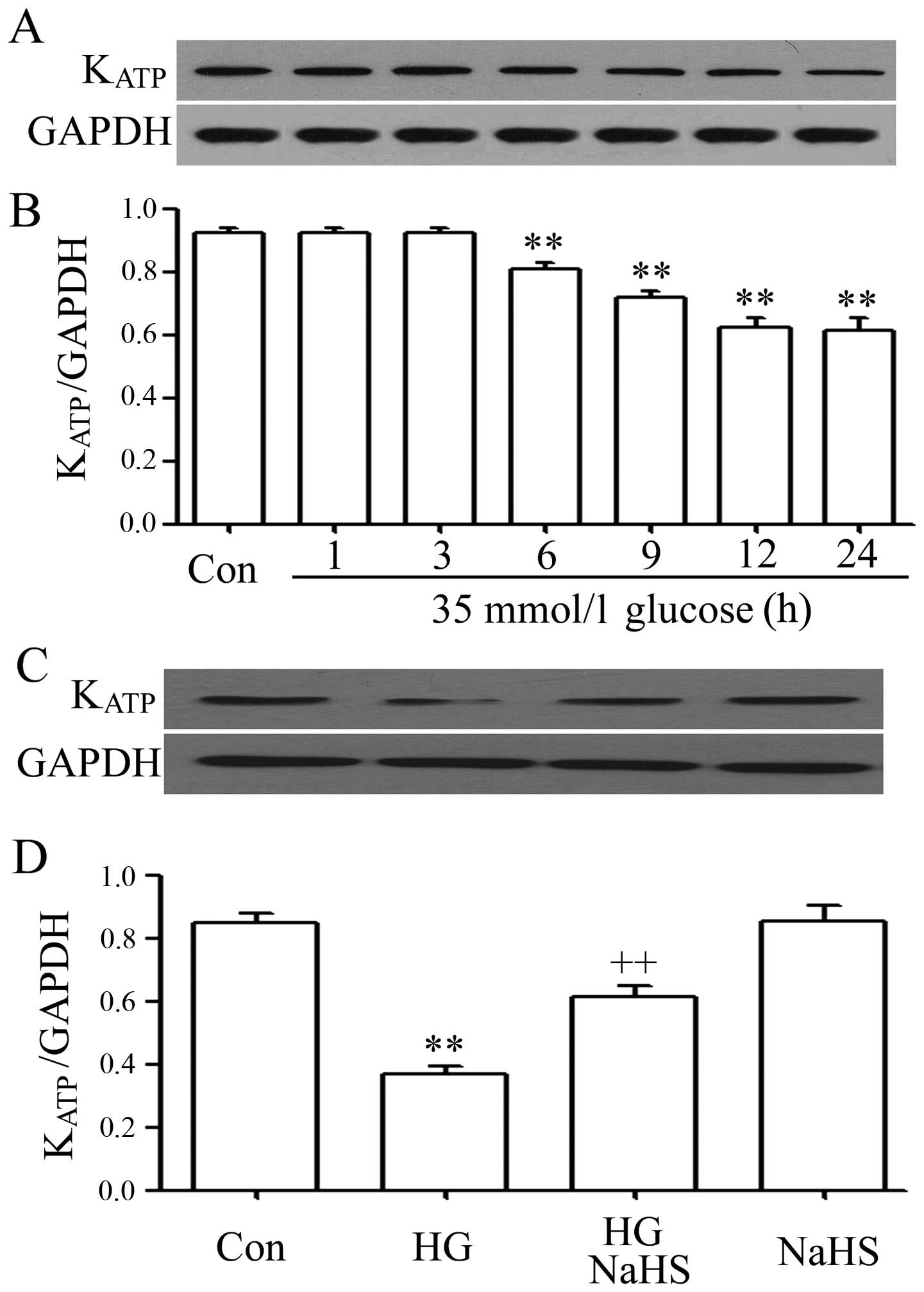
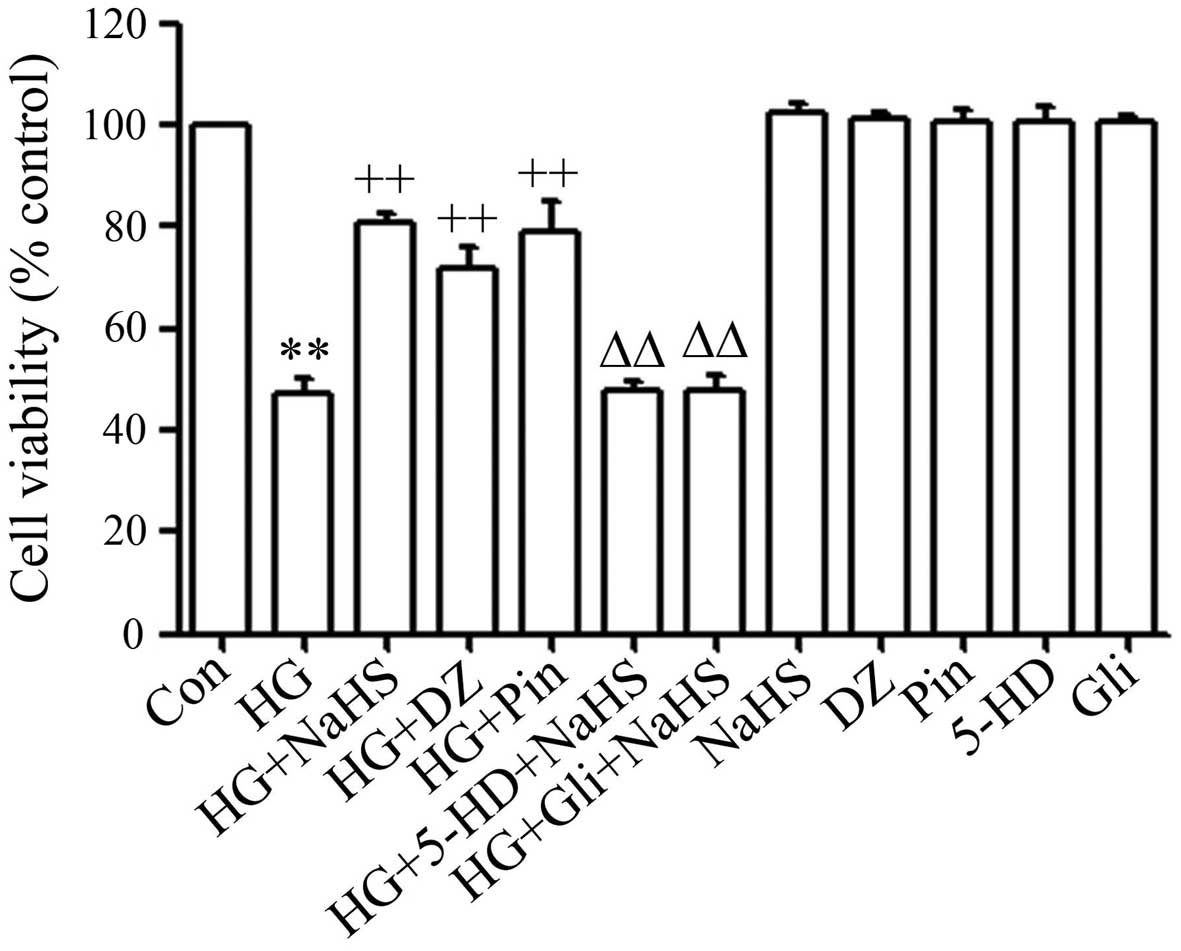
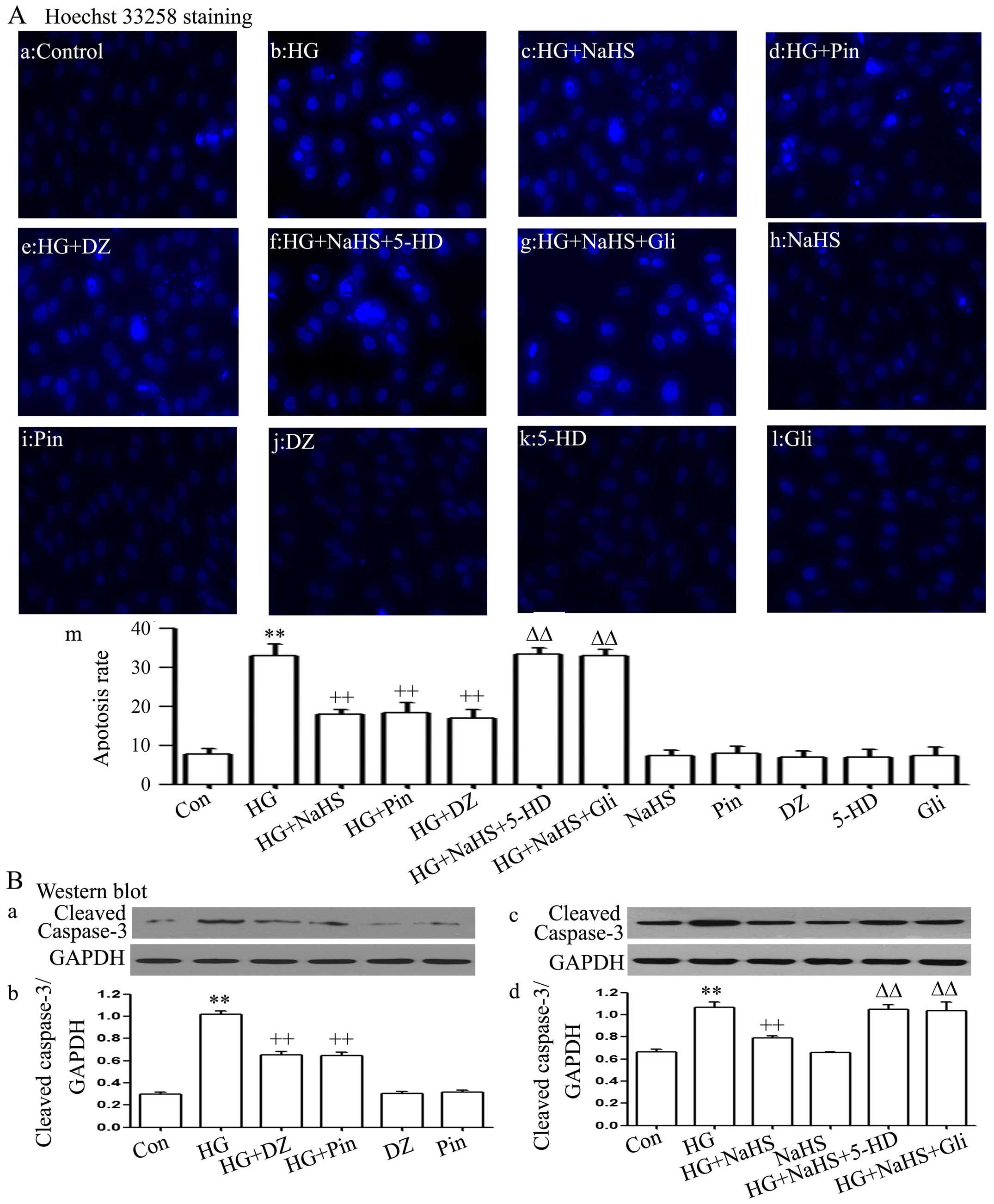
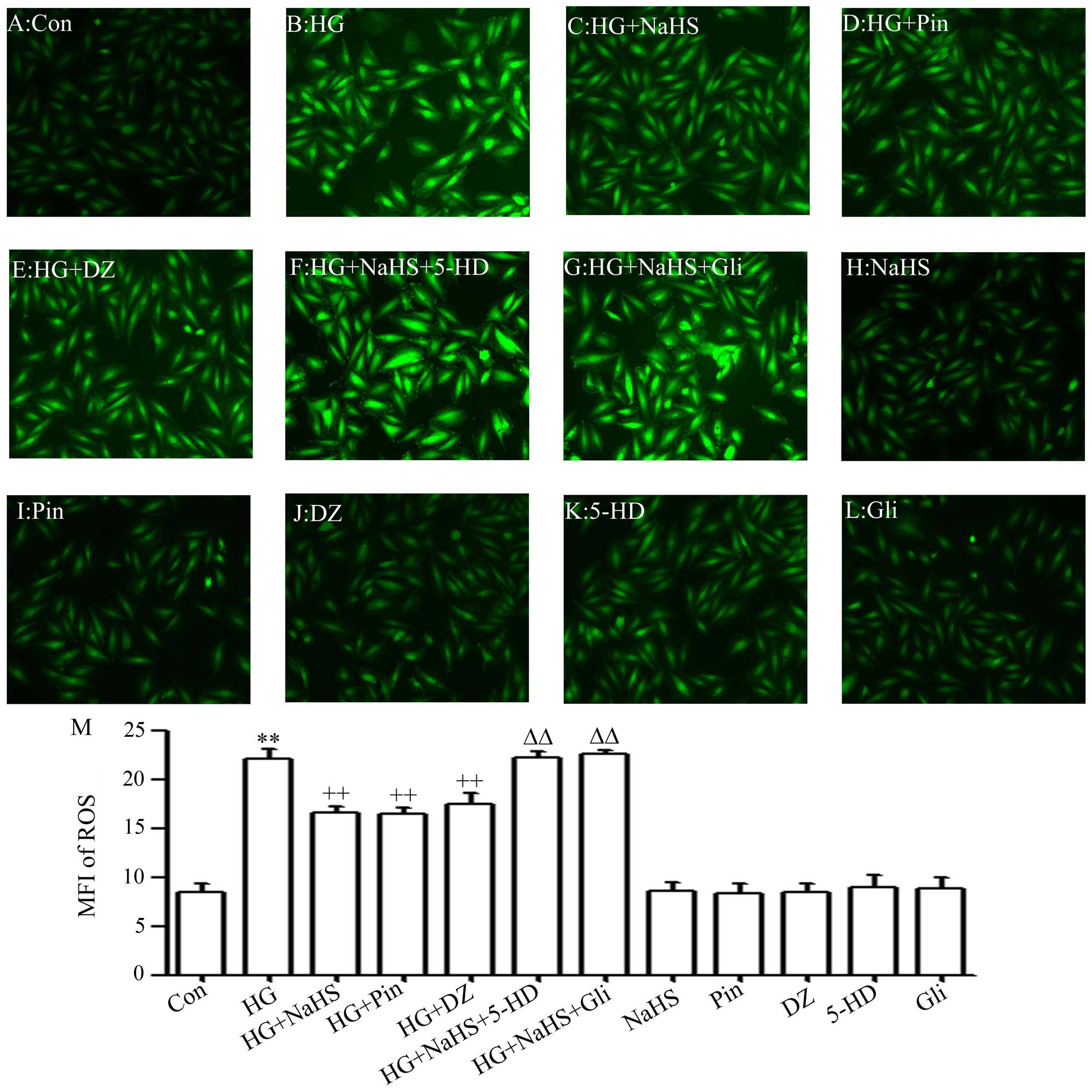
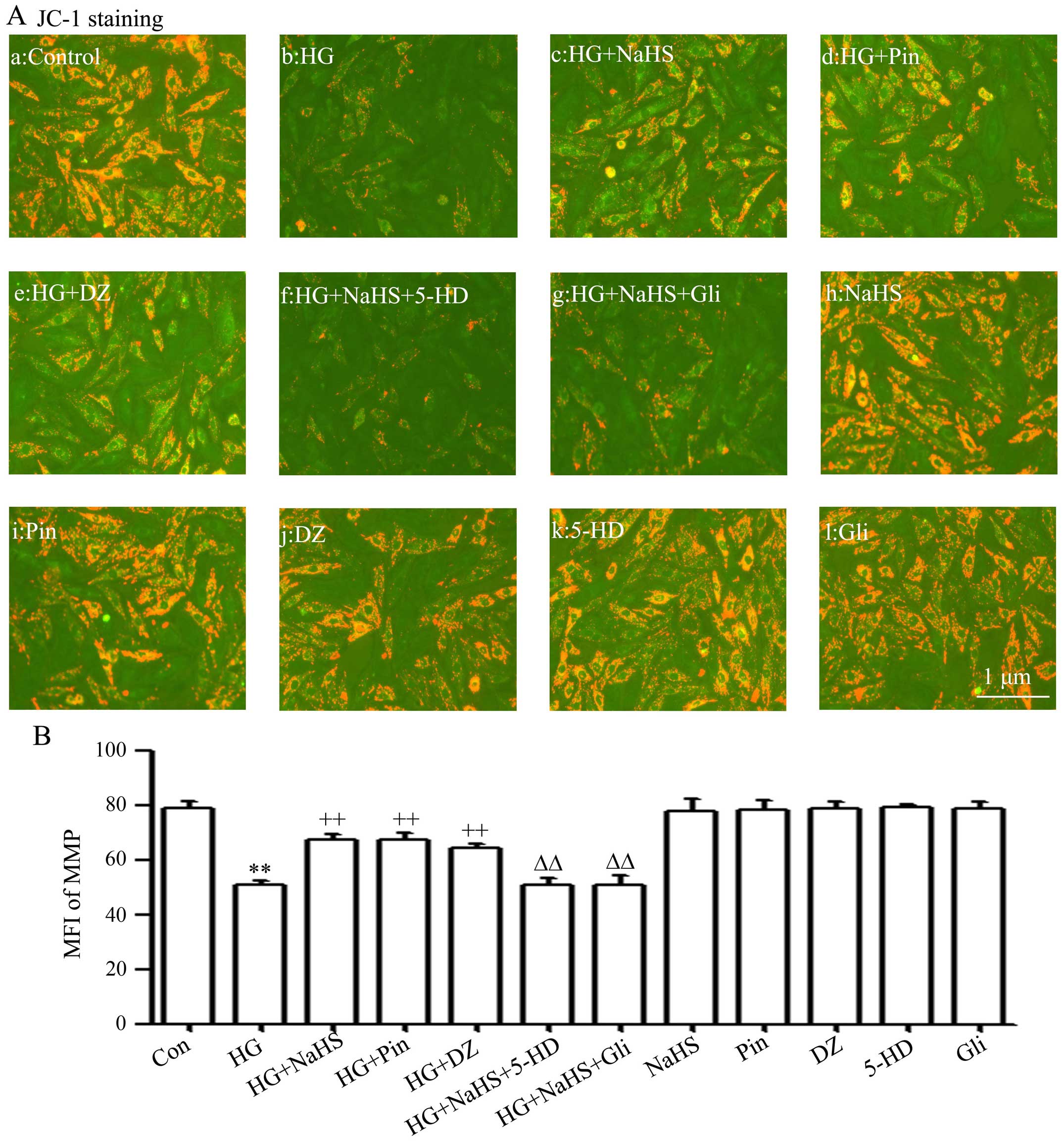
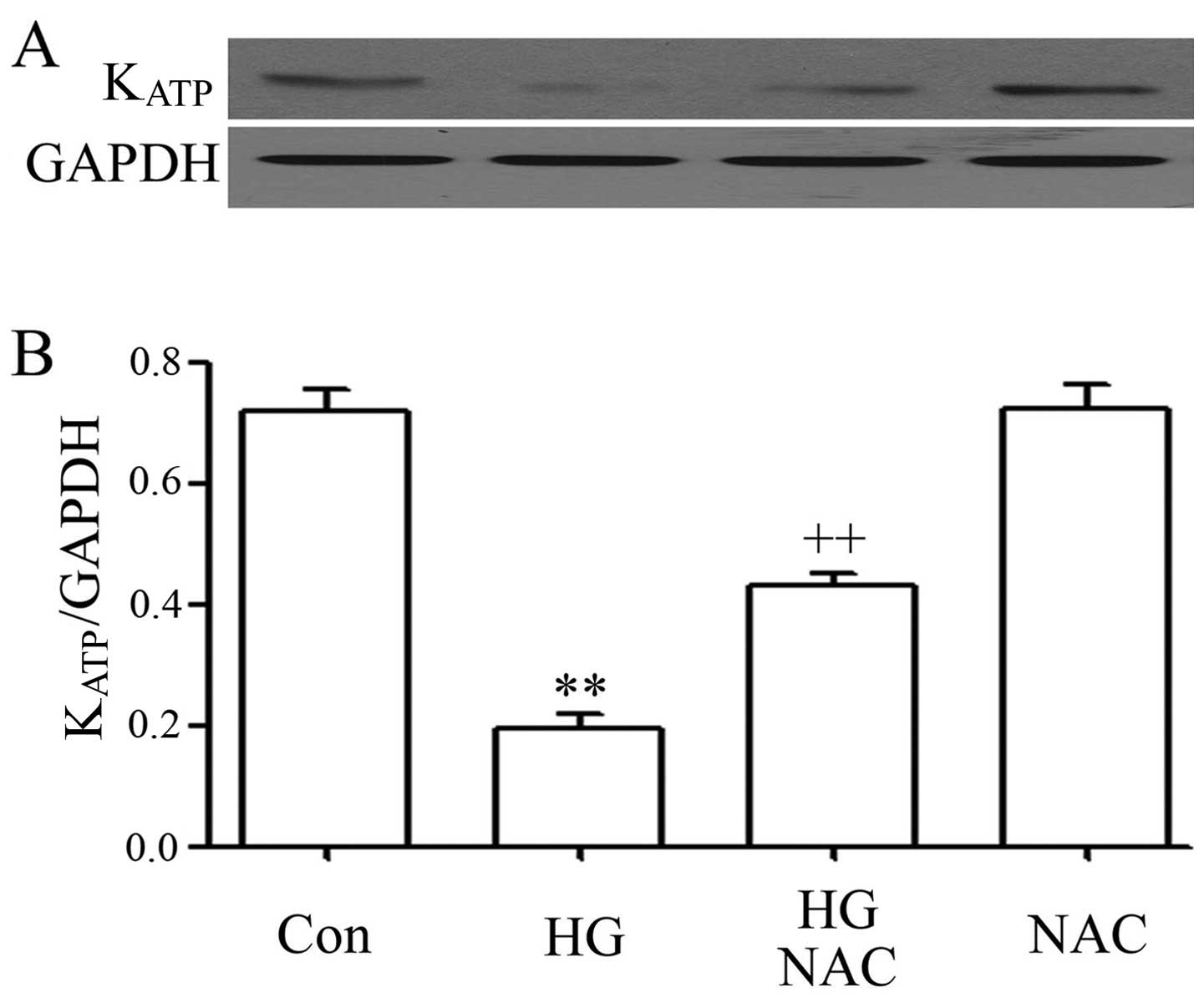
Hyperglycemia, as well as diabetes mellitus, has been shown to impair ATP-sensitive K+ (KATP) channels in human vascular smooth muscle cells. Hydrogen sulfide (H2S) is also known to be an opener of KATP channels. We previously demonstrated the cardioprotective effects exerted by H2S against high-glucose (HG, 35 mM glucose)-induced injury in H9c2 cardiac cells. As such, we hypothesized that KATP channels play a role in the cardioprotective effects of H2S against HG-induced injury. In this study, to examine this hypothesis, H9c2 cardiac cells were treated with HG for 24 h to establish a model of HG-induced insults. Our findings revealed that treatment of the cells with HG markedly decreased the expression level of KATP channels. However, the decreased expression of KATP channels was reversed by the treatment of the cells with 400 µM sodium hydrogen sulfide (NaHS, a donor of H2S) for 30 min prior to exposure to HG. Additionally, the HG-induced cardiomyocyte injuries, including cytotoxicity, apoptosis, oxidative stress and mitochondrial damage, were ameliorated by treatment with NaHS or 100 µM diazoxide (a mitochondrial KATP channel opener) or 50 µM pinacidil (a non-selective KATP channel opener) for 30 min prior to exposure to HG, as indicated by an increase in cell viability, as well as a decrease in the number of apoptotic cells, the expression of cleaved caspase-3, the generation of reactive oxygen species (ROS) and the dissipation of mitochondrial membrane potential (MMP). Notably, treatment of the H9c2 cardiac cells with 100 µM 5-hydroxydecanoic acid (5-HD, a mitochondrial KATP channel blocker) or 1 mM glibenclamide (Gli, a non-selective KATP channel blocker) for 30 min prior to treatment with NaHS and exposure to HG significantly attenuated the above-mentioned cardioprotective effects exerted by NaHS. Notably, treatment of the cells with 500 µM N-acetyl‑L‑cysteine (NAC, a scavenger of ROS) for 60 min prior to exposure to HG markedly reduced the HG-induced inhibitory effect on the expression of KATP channels. Taken together, our results suggest that KATP channels play an important role in the cardioprotective effects of exogenous H2S against HG-induced injury. This study also provides novel data demonstraring that there is an antagonistic interaction between ROS and KATP channels in HG-exposed H9c2 cardiac cells.
View Figures

Figure 1

Figure 2

Figure 3

Figure 4

Figure 5

Figure 6

View References

1 

Wang R: Two's company, three's a crowd: can H2S be the third endogenous gaseous transmitter? FASEB J. 16:1792–1798. 2002. View Article : Google Scholar : PubMed/NCBI

2 

Fiorucci S, Distrutti E, Cirino G and Wallace JL: The emerging roles of hydrogen sulfide in the gastrointestinal tract and liver. Gastroenterology. 131:259–271. 2006. View Article : Google Scholar : PubMed/NCBI

3 

Szabo C: Hydrogen sulphide and its therapeutic potential. Nat Rev Drug Discov. 6:917–935. 2007. View Article : Google Scholar : PubMed/NCBI

4 

Li L and Moore PK: Putative biological roles of hydrogen sulfide in health and disease: a breath of not so fresh air? Trends Pharmacol Sci. 29:84–90. 2008. View Article : Google Scholar : PubMed/NCBI

5 

Jain SK, Bull R, Rains JL, Bass PF, Levine SN, Reddy S, McVie R and Bocchini JA Jr: Low levels of hydrogen sulfide in the blood of diabetes patients and streptozotocin-treated rats causes vascular inflammation? Antioxid Redox Signal. 12:1333–1337. 2010. View Article : Google Scholar : PubMed/NCBI

6 

Whiteman M, Gooding KM, Whatmore JL, Ball CI, Mawson D, Skinner K, Tooke JE and Shore AC: Adiposity is a major determinant of plasma levels of the novel vasodilator hydrogen sulphide. Diabetologia. 53:1722–1726. 2010. View Article : Google Scholar : PubMed/NCBI

7 

Calvert JW, Elston M, Nicholson CK, Gundewar S, Jha S, Elrod JW, Ramachandran A and Lefer DJ: Genetic and pharmacologic hydrogen sulfide therapy attenuates ischemia-induced heart failure in mice. Circulation. 122:11–19. 2010. View Article : Google Scholar : PubMed/NCBI

8 

Wang X, Wang Q, Guo W and Zhu YZ: Hydrogen sulfide attenuates cardiac dysfunction in a rat model of heart failure: a mechanism through cardiac mitochondrial protection. Biosci Rep. 31:87–98. 2011. View Article : Google Scholar

9 

Zhang Y, Tang ZH, Ren Z, Qu SL, Liu MH, Liu LS and Jiang ZS: Hydrogen sulfide, the next potent preventive and therapeutic agent in aging and age-associated diseases. Mol Cell Biol. 33:1104–1113. 2013. View Article : Google Scholar : PubMed/NCBI

10 

Chen SL, Yang CT, Yang ZL, Guo RX, Meng JL, Cui Y, Lan AP, Chen PX and Feng JQ: Hydrogen sulphide protects H9c2 cells against chemical hypoxia-induced injury. Clin Exp Pharmacol Physiol. 37:316–321. 2010. View Article : Google Scholar

11 

Yang Z, Yang C, Xiao L, Liao X, Lan A, Wang X, Guo R, Chen P, Hu C and Feng J: Novel insights into the role of HSP90 in cytoprotection of H2S against chemical hypoxia-induced injury in H9c2 cardiac myocytes. Int J Mol Med. 28:397–403. 2011.PubMed/NCBI

12 

Wang XY, Yang CT, Zheng DD, Mo LQ, Lan AP, Yang ZL, Hu F, Chen PX, Liao XX and Feng JQ: Hydrogen sulfide protects H9c2 cells against doxorubicin-induced cardiotoxicity through inhibition of endoplasmic reticulum stress. Mol Cell Biochem. 363:419–426. 2012. View Article : Google Scholar

13 

Guo R, Lin J, Xu W, Shen N, Mo L, Zhang C and Feng J: Hydrogen sulfide attenuates doxorubicin-induced cardiotoxicity by inhibition of the p38 MAPK pathway in H9c2 cells. Int J Mol Med. 31:644–650. 2013.PubMed/NCBI

14 

Guo R, Wu K, Chen J, Mo L, Hua X, Zheng D, Chen P, Chen G, Xu W and Feng J: Exogenous hydrogen sulfide protects against doxorubicin-induced inflammation and cytotoxicity by inhibiting p38MAPK/NF-κB pathway in H9c2 cardiac cells. Cell Physiol Biochem. 32:1668–1680. 2013.

15 

Suzuki K, Olah G, Modis K, Coletta C, Kulp G, Gero D, Szoleczky P, Chang T, Zhou Z, Wu L, et al: Hydrogen sulfide replacement therapy protects the vascular endothelium in hyperglycemia by preserving mitochondrial function. Proc Natl Acad Sci USA. 108:13829–13834. 2011. View Article : Google Scholar : PubMed/NCBI

16 

Ahmad FU, Sattar MA, Rathore HA, Abdullah MH, Tan S, Abdullah NA and Johns EJ: Exogenous hydrogen sulfide (H2S) reduces blood pressure and prevents the progression of diabetic nephropathy in spontaneously hypertensive rats. Ren Fail. 34:203–210. 2012. View Article : Google Scholar

17 

Peake BF, Nicholson CK, Lambert JP, Hood RL, Amin H, Amin S and Calvert JW: Hydrogen sulfide preconditions the db/db diabetic mouse heart against ischemia-reperfusion injury by activating Nrf2 signaling in an Erk-dependent manner. Am J Physiol Heart Circ Physiol. 304:H1215–H1224. 2013. View Article : Google Scholar : PubMed/NCBI

18 

Gao Y, Yao X, Zhang Y, Li W, Kang K, Sun L and Sun X: The protective role of hydrogen sulfide in myocardial ischemia-reperfusion-induced injury in diabetic rats. Int J Cardiol. 152:177–183. 2011. View Article : Google Scholar : PubMed/NCBI

19 

Xu W, Wu W, Chen J, Guo R, Lin J, Liao X and Feng J: Exogenous hydrogen sulfide protects H9c2 cardiac cells against high glucose-induced injury by inhibiting the activities of the p38 MAPK and ERK1/2 pathways. Int J Mol Med. 32:917–925. 2013.PubMed/NCBI

20 

Zhuang XD, Hu X, Long M, Dong XB, Liu DH and Liao XX: Exogenous hydrogen sulfide alleviates high glucose-induced cardiotoxicity via inhibition of leptin signaling in H9c2 cells. Mol Cell Biochem. 391:147–155. 2014. View Article : Google Scholar : PubMed/NCBI

21 

Xu W, Chen J, Lin J, Liu D, Mo L, Pan W, Feng J, Wu W and Zheng D: Exogenous H2S protects H9c2 cardiac cells against high glucose-induced injury and inflammation by inhibiting the activation of the NF-κB and IL-1β pathways. Int J Mol Med. 35:177–186. 2015.

22 

Geng B, Yang J, Qi Y, Zhao J, Pang Y, Du J and Tang C: H2S generated by heart in rat and its effects on cardiac function. Biochem Biophys Res Commun. 313:362–368. 2004. View Article : Google Scholar

23 

Bian JS, Yong QC, Pan TT, Feng ZN, Ali MY, Zhou S and Moore PK: Role of hydrogen sulfide in the cardioprotection caused by ischemic preconditioning in the rat heart and cardiac myocytes. J Pharmacol Exp Ther. 316:670–678. 2006. View Article : Google Scholar

24 

Zhao W, Zhang J, Lu Y and Wang R: The vasorelaxant effect of H(2)S as a novel endogenous gaseous K(ATP) channel opener. EMBO J. 20:6008–6016. 2001. View Article : Google Scholar : PubMed/NCBI

25 

Eisen A, Fisman EZ, Rubenfire M, Freimark D, McKechnie R, Tenenbaum A, Motro M and Adler Y: Ischemic preconditioning: nearly two decades of research. A comprehensive review. Atherosclerosis. 172:201–210. 2004. View Article : Google Scholar : PubMed/NCBI

26 

Akao M, Ohler A, O'Rourke B and Marban E: Mitochondrial ATP-sensitive potassium channels inhibit apoptosis induced by oxidative stress in cardiac cells. Circ Res. 88:1267–1275. 2001. View Article : Google Scholar : PubMed/NCBI

27 

Yamada S, Kane GC, Behfar A, Liu XK, Dyer RB, Faustino RS, Miki T, Seino S and Terzic A: Protection conferred by myocardial ATP-sensitive K+ channels in pressure overload-induced congestive heart failure revealed in KCNJ11 Kir6.2-null mutant. J Physiol. 577:1053–1065. 2006. View Article : Google Scholar : PubMed/NCBI

28 

Zingman LV, Alekseev AE, Hodgson-Zingman DM and Terzic A: ATP-sensitive potassium channels: Metabolic sensing and cardioprotection. J Appl Physiol. 103:1888–1893. 2007. View Article : Google Scholar : PubMed/NCBI

29 

Sierra A, Zhu Z, Sapay N, Sharotri V, Kline CF, Luczak ED, Subbotina E, Sivaprasadarao A, Snyder PM, Mohler PJ, et al: Regulation of cardiac ATP-sensitive potassium channel surface expression by calcium/calmodulin-dependent protein kinase II. J Biol Chem. 288:1568–1581. 2013. View Article : Google Scholar :

30 

Nichols CG and Lederer WJ: Adenosine triphosphate-sensitive potassium channels in the cardiovascular system. Am J Physiol. 261:H1675–H1686. 1991.PubMed/NCBI

31 

Noma A: ATP-regulated K+ channels in cardiac muscle. Nature. 305:147–148. 1983. View Article : Google Scholar : PubMed/NCBI

32 

Garlid KD, Paucek P, Yarov-Yarovoy V, Sun X and Schindler PA: The mitochondrial KATP channel as a receptor for potassium channel openers. Biol Chem. 271:8796–8799. 1996. View Article : Google Scholar

33 

Liu Y, Sato T, O'Rourke B and Marban E: Mitochondrial ATP-dependent potassium channels: novel effectors of cardioprotection? Circulation. 97:2463–2469. 1998. View Article : Google Scholar : PubMed/NCBI

34 

Findlay I: Interactive regulation of the ATP-sensitive potassium channel of cardiac muscle. J Cardiovasc Pharmacol. 24:S6–S11. 1994.PubMed/NCBI

35 

López JR, Ghanbari RA and Terzic A: A KATP channel opener protects cardiomyocytes from Ca2 waves: a laser confocal microscopy study. Am J Physiol. 270:H1384–H1389. 1996.

36 

Grover GJ: Pharmacology of ATP-sensitive potassium channel (KATP) openers in models of myocardial ischemia and reperfusion. Can J Physiol Pharmacol. 75:309–315. 1997. View Article : Google Scholar : PubMed/NCBI

37 

Holmuhamedov EL, Jovanović S, Dzeja PP, Jovanović A and Terzic A: Mitochondrial ATP-sensitive K+ channels modulate cardiac mitochondrial function. Am J Physiol. 275:H1567–H1576. 1998.PubMed/NCBI

38 

Yellon DM and Downey JM: Preconditioning the myocardium: from cellular physiology to clinical cardiology. Physiol Rev. 83:1113–1151. 2003. View Article : Google Scholar : PubMed/NCBI

39 

Gross GJ and Peart JN: KATP channels and myocardial preconditioning: an update. Am J Physiol Heart Circ Physiol. 285:H921–H930. 2003. View Article : Google Scholar : PubMed/NCBI

40 

Weintraub NL: Impaired hypoxic coronary vasodilation and ATP-sensitive potassium channel function: a manifestation of diabetic microangiopathy in humans? Circ Res. 92:127–129. 2003. View Article : Google Scholar : PubMed/NCBI

41 

Miura H, Wachtel RE, Loberiza FR Jr, Saito T, Miura M, Nicolosi AC and Gutterman DD: Diabetes mellitus impairs vasodilation to hypoxia in human coronary arterioles: reduced activity of ATP-sensitive potassium channels. Circ Res. 92:151–158. 2003. View Article : Google Scholar : PubMed/NCBI

42 

Kinoshita H, Azma T, Nakahata K, Iranami H, Kimoto Y, Dojo M, Yuge O and Hatano Y: Inhibitory effect of high concentration of glucose on relaxations to activation of ATP-sensitive K+ channels in human omental artery. Arterioscler Thromb Vasc Biol. 24:2290–2295. 2004. View Article : Google Scholar : PubMed/NCBI

43 

Kinoshita H, Azma T, Iranami H, Nakahata K, Kimoto Y, Dojo M, Yuge O and Hatano Y: Synthetic peroxisome proliferator-activated receptor-gamma agonists restore impaired vasorelaxation via ATP-sensitive K+ channels by high glucose. J Pharmacol Exp Ther. 318:312–318. 2006. View Article : Google Scholar : PubMed/NCBI

44 

Seino S and Miki T: Physiological and pathophysiological roles of ATP-sensitive K+ channels. Prog Biophys Mol Biol. 81:133–176. 2003. View Article : Google Scholar : PubMed/NCBI

45 

Flagg TP, Enkvetchakul D, Koster JC and Nichols CG: Muscle KATP channels: recent insights to energy sensing and myoprotection. Physiol Rev. 90:799–829. 2010. View Article : Google Scholar : PubMed/NCBI

46 

Zingman LV, Zhu Z, Sierra A, Stepniak E, Burnett CM, Maksymov G, Anderson ME, Coetzee WA and Hodgson-Zingman DM: Exercise-induced expression of cardiac ATP-sensitive potassium channels promotes action potential shortening and energy conservation. J Mol Cell Cardiol. 51:72–81. 2011. View Article : Google Scholar : PubMed/NCBI

47 

Zhu Z, Burnett CM, Maksymov G, Stepniak E, Sierra A, Subbotina E, Anderson ME, Coetzee WA, Hodgson-Zingman DM and Zingman LV: Reduction in number of sarcolemmal KATP channels slows cardiac action potential duration shortening under hypoxia. Biochem Biophys Res Commun. 415:637–641. 2011. View Article : Google Scholar : PubMed/NCBI

48 

Pearson ER, Flechtner I, Njølstad PR, Malecki MT, Flanagan SE, Larkin B, Ashcroft FM, Klimes I, Codner E, Iotova V, et al: Switching from insulin to oral sulfonylureas in patients with diabetes due to Kir6.2 mutations. N Engl J Med. 355:467–477. 2006. View Article : Google Scholar : PubMed/NCBI

49 

Zhang Y, Han H, Wang J, Wang H, Yang B and Wang Z: Impairment of human ether-à-go-go-related gene (HERG) K+ channel function by hypoglycemia and hyperglycemia. Similar phenotypes but different mechanisms. J Biol Chem. 278:10417–10426. 2003. View Article : Google Scholar : PubMed/NCBI

50 

Smogorzewski M, Galfayan V and Massry SG: High glucose concentration causes a rise in [Ca2+]i of cardiac myocytes. Kidney Int. 53:1237–1243. 1998. View Article : Google Scholar : PubMed/NCBI

51 

Gribble FM and Reimann F: Sulphonylurea action revisited: the post-cloning era. Diabetologia. 46:875–891. 2003. View Article : Google Scholar : PubMed/NCBI

52 

Trube G, Rorsman P and Ohno-Shosaku T: Opposite effects of tolbutamide and diazoxide on the ATP-dependent K+ channel in mouse pancreatic beta-cells. Pflugers Arch. 407:493–499. 1986. View Article : Google Scholar : PubMed/NCBI

53 

Ozcan C, Bienengraeber M, Dzeja PP and Terzic A: Potassium channel openers protect cardiac mitochondria by attenuating oxidant stress at reoxygenation. Am J Physiol Heart Circ Physiol. 282:H531–H539. 2002. View Article : Google Scholar : PubMed/NCBI

Related Articles

  • Abstract
  • View
  • Download
  • Twitter
Copy and paste a formatted citation
Spandidos Publications style
Liang W, Chen J, Mo L, Ke X, Zhang W, Zheng D, Pan W, Wu S, Feng J, Song M, Song M, et al: ATP-sensitive K+ channels contribute to the protective effects of exogenous hydrogen sulfide against high glucose-induced injury in H9c2 cardiac cells. Int J Mol Med 37: 763-772, 2016.
APA
Liang, W., Chen, J., Mo, L., Ke, X., Zhang, W., Zheng, D. ... Liao, X. (2016). ATP-sensitive K+ channels contribute to the protective effects of exogenous hydrogen sulfide against high glucose-induced injury in H9c2 cardiac cells. International Journal of Molecular Medicine, 37, 763-772. https://doi.org/10.3892/ijmm.2016.2467
MLA
Liang, W., Chen, J., Mo, L., Ke, X., Zhang, W., Zheng, D., Pan, W., Wu, S., Feng, J., Song, M., Liao, X."ATP-sensitive K+ channels contribute to the protective effects of exogenous hydrogen sulfide against high glucose-induced injury in H9c2 cardiac cells". International Journal of Molecular Medicine 37.3 (2016): 763-772.
Chicago
Liang, W., Chen, J., Mo, L., Ke, X., Zhang, W., Zheng, D., Pan, W., Wu, S., Feng, J., Song, M., Liao, X."ATP-sensitive K+ channels contribute to the protective effects of exogenous hydrogen sulfide against high glucose-induced injury in H9c2 cardiac cells". International Journal of Molecular Medicine 37, no. 3 (2016): 763-772. https://doi.org/10.3892/ijmm.2016.2467
Copy and paste a formatted citation
x
Spandidos Publications style
Liang W, Chen J, Mo L, Ke X, Zhang W, Zheng D, Pan W, Wu S, Feng J, Song M, Song M, et al: ATP-sensitive K+ channels contribute to the protective effects of exogenous hydrogen sulfide against high glucose-induced injury in H9c2 cardiac cells. Int J Mol Med 37: 763-772, 2016.
APA
Liang, W., Chen, J., Mo, L., Ke, X., Zhang, W., Zheng, D. ... Liao, X. (2016). ATP-sensitive K+ channels contribute to the protective effects of exogenous hydrogen sulfide against high glucose-induced injury in H9c2 cardiac cells. International Journal of Molecular Medicine, 37, 763-772. https://doi.org/10.3892/ijmm.2016.2467
MLA
Liang, W., Chen, J., Mo, L., Ke, X., Zhang, W., Zheng, D., Pan, W., Wu, S., Feng, J., Song, M., Liao, X."ATP-sensitive K+ channels contribute to the protective effects of exogenous hydrogen sulfide against high glucose-induced injury in H9c2 cardiac cells". International Journal of Molecular Medicine 37.3 (2016): 763-772.
Chicago
Liang, W., Chen, J., Mo, L., Ke, X., Zhang, W., Zheng, D., Pan, W., Wu, S., Feng, J., Song, M., Liao, X."ATP-sensitive K+ channels contribute to the protective effects of exogenous hydrogen sulfide against high glucose-induced injury in H9c2 cardiac cells". International Journal of Molecular Medicine 37, no. 3 (2016): 763-772. https://doi.org/10.3892/ijmm.2016.2467
Follow us
  • Twitter
  • LinkedIn
  • Facebook
About
  • Spandidos Publications
  • Careers
  • Cookie Policy
  • Privacy Policy
How can we help?
  • Help
  • Live Chat
  • Contact
  • Email to our Support Team