Spandidos Publications Logo
  • About
    • About Spandidos
    • Aims and Scopes
    • Abstracting and Indexing
    • Editorial Policies
    • Reprints and Permissions
    • Job Opportunities
    • Terms and Conditions
    • Contact
  • Journals
    • All Journals
    • Oncology Letters
      • Oncology Letters
      • Information for Authors
      • Editorial Policies
      • Editorial Board
      • Aims and Scope
      • Abstracting and Indexing
      • Bibliographic Information
      • Archive
    • International Journal of Oncology
      • International Journal of Oncology
      • Information for Authors
      • Editorial Policies
      • Editorial Board
      • Aims and Scope
      • Abstracting and Indexing
      • Bibliographic Information
      • Archive
    • Molecular and Clinical Oncology
      • Molecular and Clinical Oncology
      • Information for Authors
      • Editorial Policies
      • Editorial Board
      • Aims and Scope
      • Abstracting and Indexing
      • Bibliographic Information
      • Archive
    • Experimental and Therapeutic Medicine
      • Experimental and Therapeutic Medicine
      • Information for Authors
      • Editorial Policies
      • Editorial Board
      • Aims and Scope
      • Abstracting and Indexing
      • Bibliographic Information
      • Archive
    • International Journal of Molecular Medicine
      • International Journal of Molecular Medicine
      • Information for Authors
      • Editorial Policies
      • Editorial Board
      • Aims and Scope
      • Abstracting and Indexing
      • Bibliographic Information
      • Archive
    • Biomedical Reports
      • Biomedical Reports
      • Information for Authors
      • Editorial Policies
      • Editorial Board
      • Aims and Scope
      • Abstracting and Indexing
      • Bibliographic Information
      • Archive
    • Oncology Reports
      • Oncology Reports
      • Information for Authors
      • Editorial Policies
      • Editorial Board
      • Aims and Scope
      • Abstracting and Indexing
      • Bibliographic Information
      • Archive
    • Molecular Medicine Reports
      • Molecular Medicine Reports
      • Information for Authors
      • Editorial Policies
      • Editorial Board
      • Aims and Scope
      • Abstracting and Indexing
      • Bibliographic Information
      • Archive
    • World Academy of Sciences Journal
      • World Academy of Sciences Journal
      • Information for Authors
      • Editorial Policies
      • Editorial Board
      • Aims and Scope
      • Abstracting and Indexing
      • Bibliographic Information
      • Archive
    • International Journal of Functional Nutrition
      • International Journal of Functional Nutrition
      • Information for Authors
      • Editorial Policies
      • Editorial Board
      • Aims and Scope
      • Abstracting and Indexing
      • Bibliographic Information
      • Archive
    • International Journal of Epigenetics
      • International Journal of Epigenetics
      • Information for Authors
      • Editorial Policies
      • Editorial Board
      • Aims and Scope
      • Abstracting and Indexing
      • Bibliographic Information
      • Archive
    • Medicine International
      • Medicine International
      • Information for Authors
      • Editorial Policies
      • Editorial Board
      • Aims and Scope
      • Abstracting and Indexing
      • Bibliographic Information
      • Archive
  • Articles
  • Information
    • Information for Authors
    • Information for Reviewers
    • Information for Librarians
    • Information for Advertisers
    • Conferences
  • Language Editing
Spandidos Publications Logo
  • About
    • About Spandidos
    • Aims and Scopes
    • Abstracting and Indexing
    • Editorial Policies
    • Reprints and Permissions
    • Job Opportunities
    • Terms and Conditions
    • Contact
  • Journals
    • All Journals
    • Biomedical Reports
      • Information for Authors
      • Editorial Policies
      • Editorial Board
      • Aims and Scope
      • Abstracting and Indexing
      • Bibliographic Information
      • Archive
    • Experimental and Therapeutic Medicine
      • Information for Authors
      • Editorial Policies
      • Editorial Board
      • Aims and Scope
      • Abstracting and Indexing
      • Bibliographic Information
      • Archive
    • International Journal of Epigenetics
      • Information for Authors
      • Editorial Policies
      • Editorial Board
      • Aims and Scope
      • Abstracting and Indexing
      • Bibliographic Information
      • Archive
    • International Journal of Functional Nutrition
      • Information for Authors
      • Editorial Policies
      • Editorial Board
      • Aims and Scope
      • Abstracting and Indexing
      • Bibliographic Information
      • Archive
    • International Journal of Molecular Medicine
      • Information for Authors
      • Editorial Policies
      • Editorial Board
      • Aims and Scope
      • Abstracting and Indexing
      • Bibliographic Information
      • Archive
    • International Journal of Oncology
      • Information for Authors
      • Editorial Policies
      • Editorial Board
      • Aims and Scope
      • Abstracting and Indexing
      • Bibliographic Information
      • Archive
    • Medicine International
      • Information for Authors
      • Editorial Policies
      • Editorial Board
      • Aims and Scope
      • Abstracting and Indexing
      • Bibliographic Information
      • Archive
    • Molecular and Clinical Oncology
      • Information for Authors
      • Editorial Policies
      • Editorial Board
      • Aims and Scope
      • Abstracting and Indexing
      • Bibliographic Information
      • Archive
    • Molecular Medicine Reports
      • Information for Authors
      • Editorial Policies
      • Editorial Board
      • Aims and Scope
      • Abstracting and Indexing
      • Bibliographic Information
      • Archive
    • Oncology Letters
      • Information for Authors
      • Editorial Policies
      • Editorial Board
      • Aims and Scope
      • Abstracting and Indexing
      • Bibliographic Information
      • Archive
    • Oncology Reports
      • Information for Authors
      • Editorial Policies
      • Editorial Board
      • Aims and Scope
      • Abstracting and Indexing
      • Bibliographic Information
      • Archive
    • World Academy of Sciences Journal
      • Information for Authors
      • Editorial Policies
      • Editorial Board
      • Aims and Scope
      • Abstracting and Indexing
      • Bibliographic Information
      • Archive
  • Articles
  • Information
    • For Authors
    • For Reviewers
    • For Librarians
    • For Advertisers
    • Conferences
  • Language Editing
Login Register Submit
  • This site uses cookies
  • You can change your cookie settings at any time by following the instructions in our Cookie Policy. To find out more, you may read our Privacy Policy.

    I agree
Search articles by DOI, keyword, author or affiliation
Search
Advanced Search
presentation
International Journal of Molecular Medicine
Join Editorial Board Propose a Special Issue
Print ISSN: 1107-3756 Online ISSN: 1791-244X
Journal Cover
April-2017 Volume 39 Issue 4

Full Size Image

Sign up for eToc alerts
Recommend to Library

Journals

International Journal of Molecular Medicine

International Journal of Molecular Medicine

International Journal of Molecular Medicine is an international journal devoted to molecular mechanisms of human disease.

International Journal of Oncology

International Journal of Oncology

International Journal of Oncology is an international journal devoted to oncology research and cancer treatment.

Molecular Medicine Reports

Molecular Medicine Reports

Covers molecular medicine topics such as pharmacology, pathology, genetics, neuroscience, infectious diseases, molecular cardiology, and molecular surgery.

Oncology Reports

Oncology Reports

Oncology Reports is an international journal devoted to fundamental and applied research in Oncology.

Experimental and Therapeutic Medicine

Experimental and Therapeutic Medicine

Experimental and Therapeutic Medicine is an international journal devoted to laboratory and clinical medicine.

Oncology Letters

Oncology Letters

Oncology Letters is an international journal devoted to Experimental and Clinical Oncology.

Biomedical Reports

Biomedical Reports

Explores a wide range of biological and medical fields, including pharmacology, genetics, microbiology, neuroscience, and molecular cardiology.

Molecular and Clinical Oncology

Molecular and Clinical Oncology

International journal addressing all aspects of oncology research, from tumorigenesis and oncogenes to chemotherapy and metastasis.

World Academy of Sciences Journal

World Academy of Sciences Journal

Multidisciplinary open-access journal spanning biochemistry, genetics, neuroscience, environmental health, and synthetic biology.

International Journal of Functional Nutrition

International Journal of Functional Nutrition

Open-access journal combining biochemistry, pharmacology, immunology, and genetics to advance health through functional nutrition.

International Journal of Epigenetics

International Journal of Epigenetics

Publishes open-access research on using epigenetics to advance understanding and treatment of human disease.

Medicine International

Medicine International

An International Open Access Journal Devoted to General Medicine.

Journal Cover
April-2017 Volume 39 Issue 4

Full Size Image

Sign up for eToc alerts
Recommend to Library

  • Article
  • Citations
    • Cite This Article
    • Download Citation
    • Create Citation Alert
    • Remove Citation Alert
    • Cited By
  • Similar Articles
    • Related Articles (in Spandidos Publications)
    • Similar Articles (Google Scholar)
    • Similar Articles (PubMed)
  • Download PDF
  • Download XML
  • View XML
Article Open Access

Homemade-device-induced negative pressure promotes wound healing more efficiently than VSD-induced positive pressure by regulating inflammation, proliferation and remodeling

  • Authors:
    • Jinyan Liu
    • Feng Hu
    • Jintian Tang
    • Shijie Tang
    • Kun Xia
    • Song Wu
    • Chaoqi Yin
    • Shaohua Wang
    • Quanyong He
    • Huiqing Xie
    • Jianda Zhou
  • View Affiliations / Copyright

    Affiliations: Department of Nuclear Medicine, The First Xiangya Hospital of Central South University, Changsha, Hunan 410008, P.R. China, Department of Plastic Surgery, The Third Xiangya Hospital of Central South University, Changsha, Hunan 410013, P.R. China, Institute of Medical Physics and Engineering, Tsinghua University, Beijing 100084, P.R. China, Cleft Lip and Palate Treatment Center, Second Affiliated Hospital, Shantou University Medical College, Shantou, Guangdong 515041, P.R. China, Key Laboratory of Medical Information Research, Central South University, Changsha, Hunan, 410013, P.R. China, Department of Orthopedics, The Third Xiangya Hospital of Central South University, Changsha, Hunan 410013, P.R. China, Department of Rehabilitation Medicine, The Third Xiangya Hospital of Central South University, Changsha, Hunan 410013, P.R. China
    Copyright: © Liu et al. This is an open access article distributed under the terms of Creative Commons Attribution License.
  • Pages: 879-888
    |
    Published online on: March 13, 2017
       https://doi.org/10.3892/ijmm.2017.2919
  • Expand metrics +
Metrics: Total Views: 0 (Spandidos Publications: | PMC Statistics: )
Metrics: Total PDF Downloads: 0 (Spandidos Publications: | PMC Statistics: )
Cited By (CrossRef): 0 citations Loading Articles...

This article is mentioned in:


Abstract

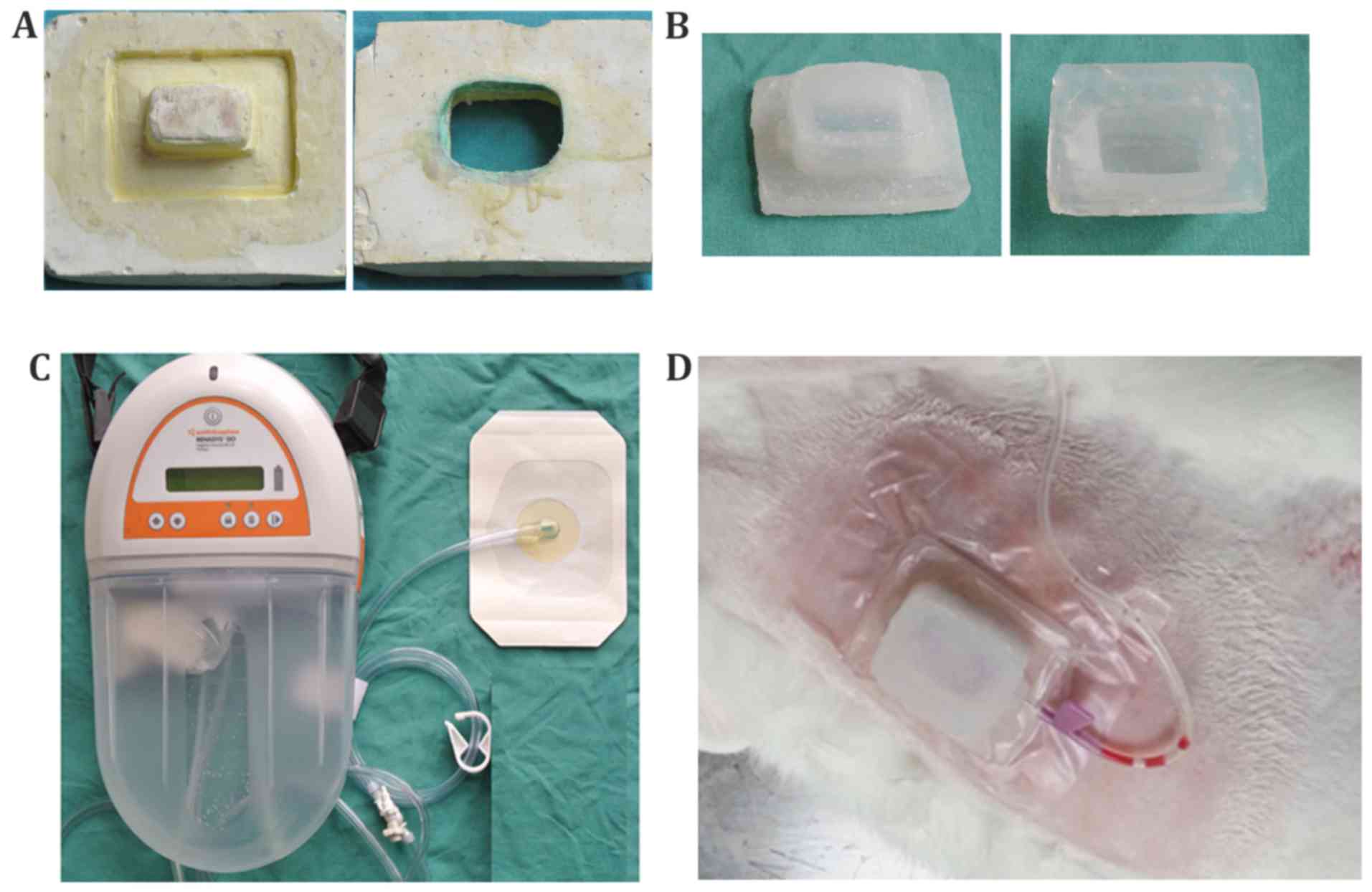
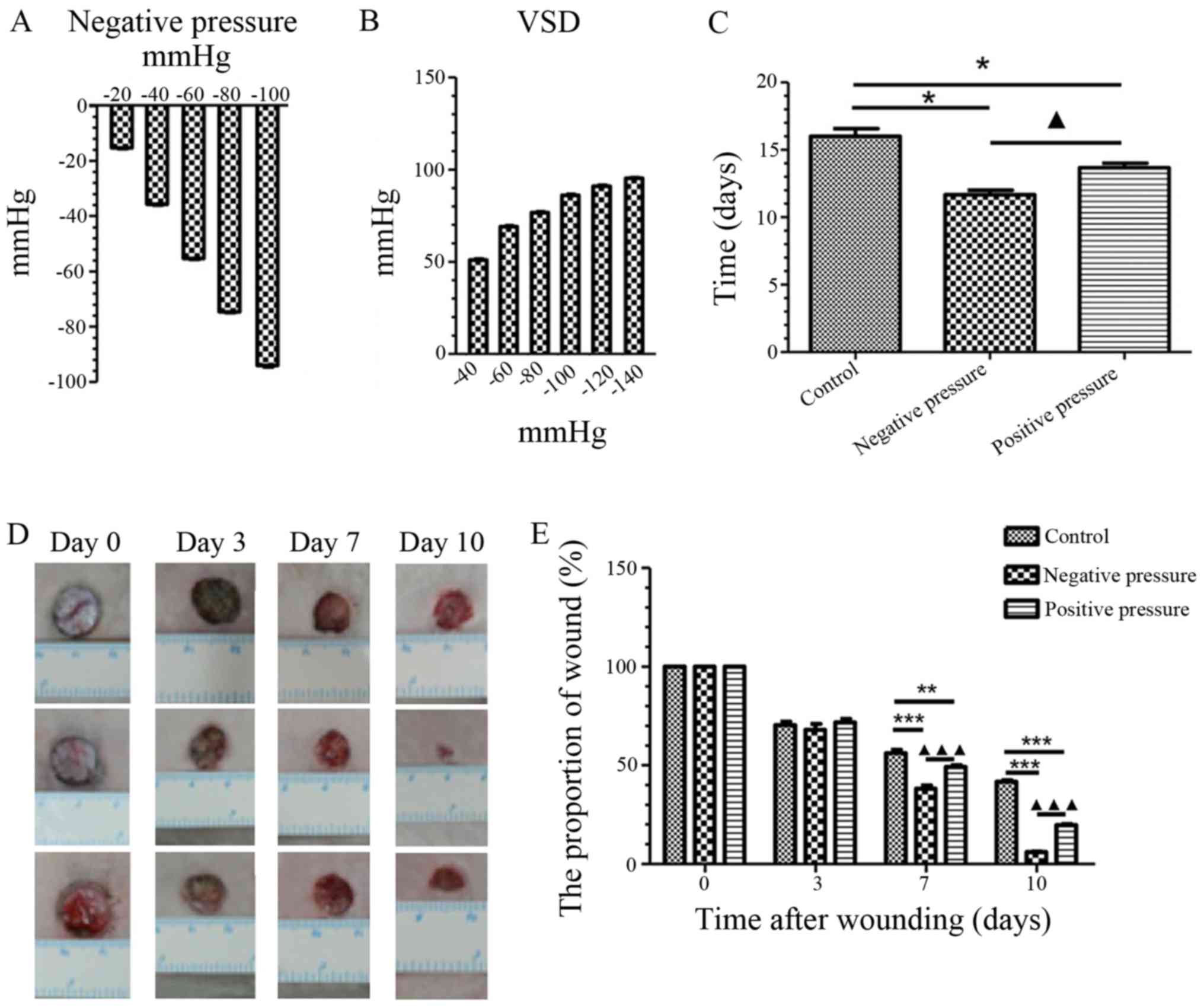
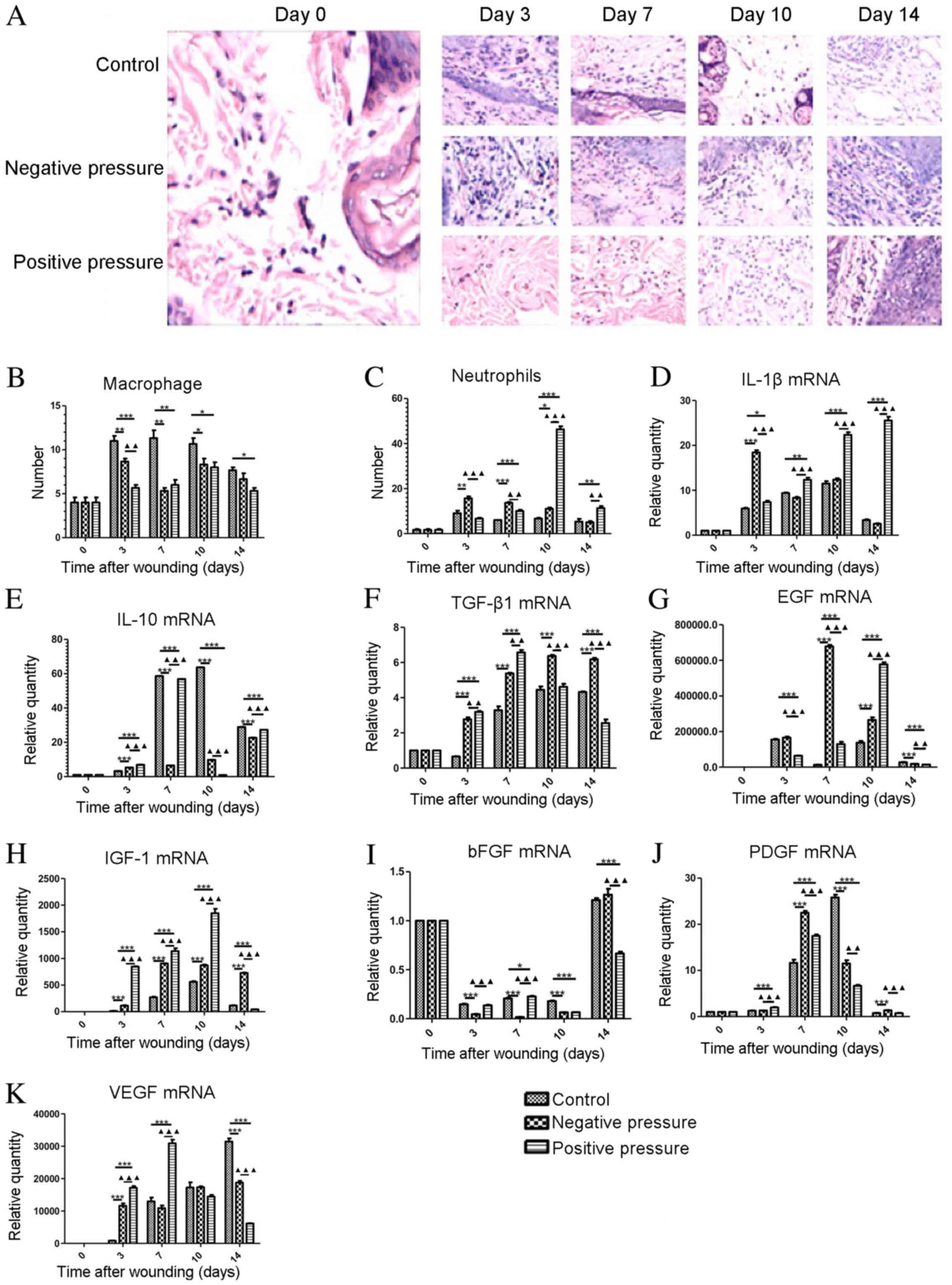
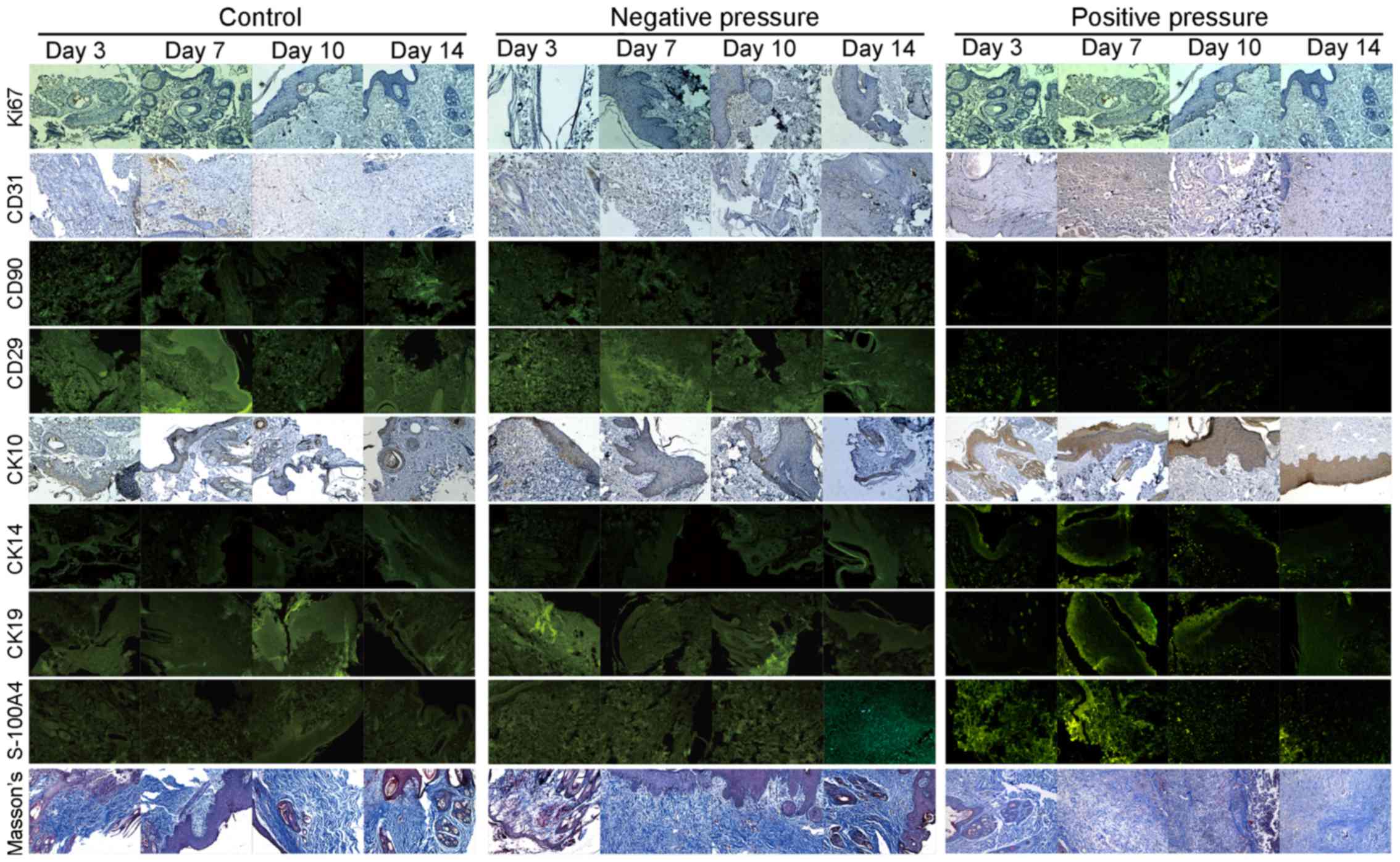
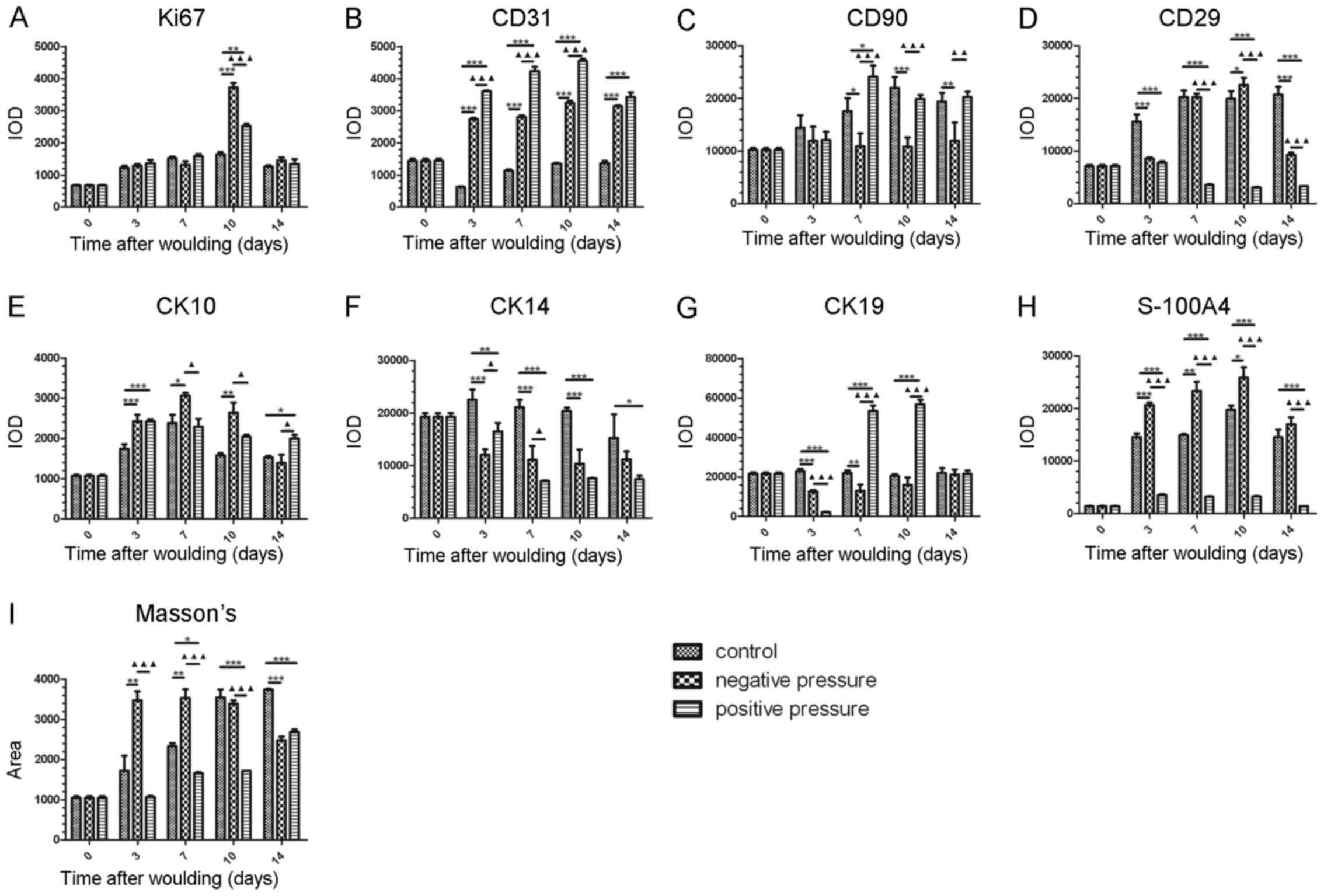
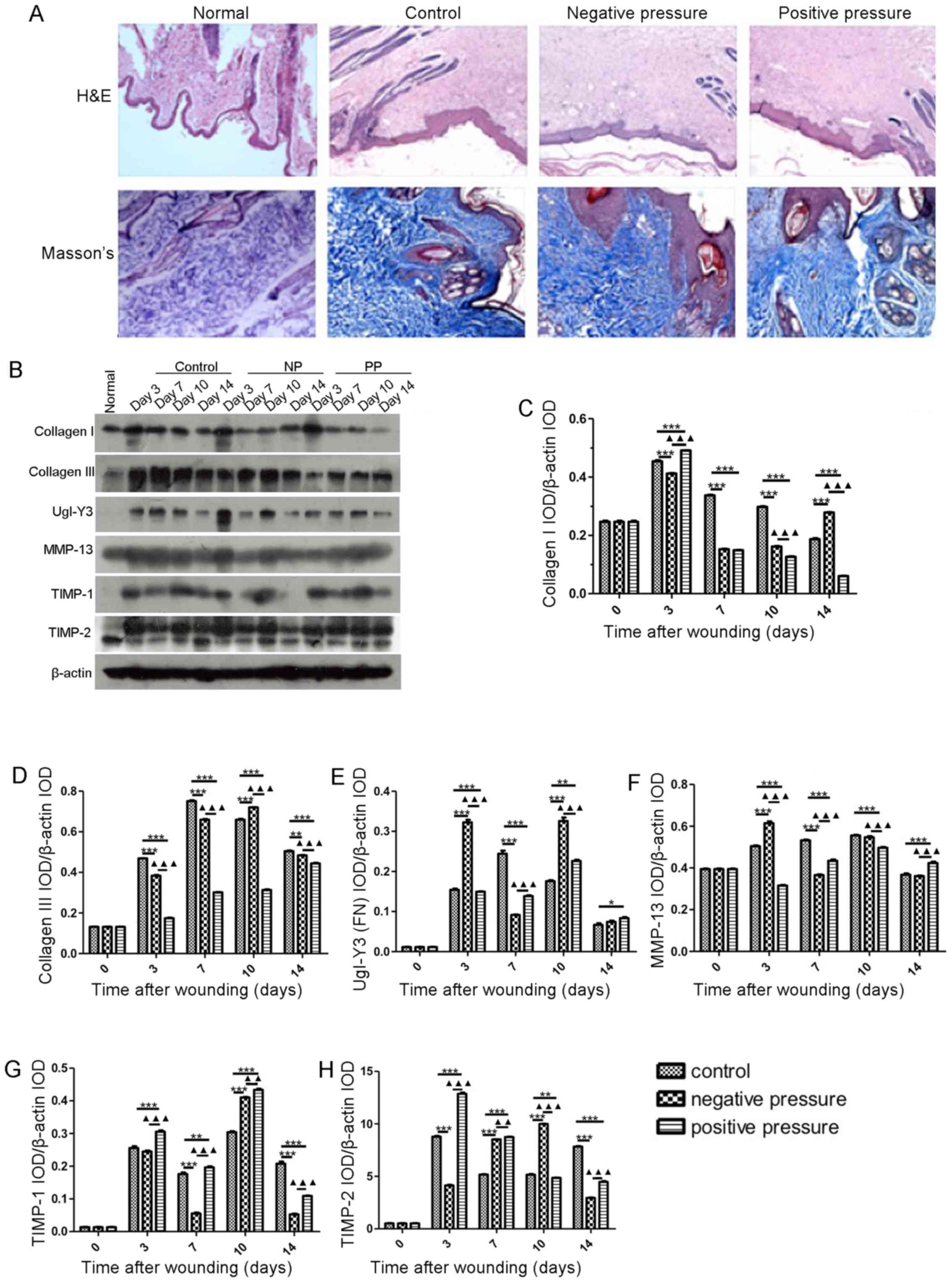
Vacuum sealing drainage (VSD) is an effective technique used to promote wound healing. However, recent studies have shown that it exerts positive pressure (PP) rather than negative pressure (NP) on skin. In this study, we created a homemade device that could maintain NP on the wound, and compared the therapeutic effects of VSD-induced PP to those of our homemade device which induced NP on wound healing. The NP induced by our device required less time for wound healing and decreased the wound area more efficiently than the PP induced by VSD. NP and PP both promoted the inflammatory response by upregulating neutrophil infiltration and interleukin (IL)‑1β expression, and downregulating IL‑10 expression. Higher levels of epidermal growth factor (EGF), transforming growth factor (TGF)‑β and platelet-derived growth factor (PDGF), and lower levels of basic fibroblast growth factor (bFGF) were observed in the wound tissue treated with NP compared to the wound tissue exposed to PP. Proliferation in the wound tissue exposed to NP on day 10 was significantly higher than that in wound tissue exposed to PP. NP generated more fibroblasts, keratinized stratified epithelium, and less epithelia with stemness than PP. The levels of ccollagen Ⅰ and Ⅲ were both decreased in both the NP and PP groups. NP induced a statistically significant increase in the expression of fibronectin (FN) on days 3 and 10 compared to PP. Furthermore, the level of matrix metalloproteinase (MMP)‑13 increased in the NP group, but decreased in the PP group on day 3. NP also induced a decrease in the levels of tissue inhibitor of metalloproteinase (TIMP)‑1 and TIMP‑2 during the early stages of wound healing, which was significantly different from the increasing effect of PP on TIMP‑1 and TIMP‑2 levels at the corresponding time points. On the whole, our data indicate that our homemade device which induced NP, was more efficient than VSD‑induced PP on wound healing by regulating inflammation, secretion, proliferation and the distribution of different cells in wound tissue.
View Figures

Figure 1

Figure 2

Figure 3

Figure 4

Figure 5

Figure 6

View References

1 

Watterson KR, Lanning DA, Diegelmann RF and Spiegel S: Regulation of fibroblast functions by lysophospholipid mediators: Potential roles in wound healing. Wound Repair Regen. 15:607–616. 2007. View Article : Google Scholar : PubMed/NCBI

2 

Ko SH, Nauta A, Wong V, Glotzbach J, Gurtner GC and Longaker MT: The role of stem cells in cutaneous wound healing: What do we really know? Plast Reconstr Surg. 127(Suppl 1): 10S–20S. 2011. View Article : Google Scholar : PubMed/NCBI

3 

Evans ND, Oreffo RO, Healy E, Thurner PJ and Man YH: Epithelial mechanobiology, skin wound healing, and the stem cell niche. J Mech Behav Biomed Mater. 28:397–409. 2013. View Article : Google Scholar : PubMed/NCBI

4 

Maxson S, Lopez EA, Yoo D, Danilkovitch-Miagkova A and Leroux MA: Concise review: Role of mesenchymal stem cells in wound repair. Stem Cells Transl Med. 1:142–149. 2012. View Article : Google Scholar : PubMed/NCBI

5 

Darby IA and Hewitson TD: Fibroblast differentiation in wound healing and fibrosis. Int Rev Cytol. 257:143–179. 2007. View Article : Google Scholar : PubMed/NCBI

6 

Nuschke A: Activity of mesenchymal stem cells in therapies for chronic skin wound healing. Organogenesis. 10:29–37. 2014. View Article : Google Scholar :

7 

Shi J, Xi W, Yi C, Wang Z, Guo S and Han Y: Vacuum sealing drainage promotes experimental pig explosive abdomen wound healing. Xi Bao Yu Fen Zi Mian Yi Xue Za Zhi. 30:312–315. 2014.In Chinese. PubMed/NCBI

8 

Argenta LC, Morykwas MJ, Marks MW, DeFranzo AJ, Molnar JA and David LR: Vacuum-assisted closure: State of clinic art. Plast Reconstr Surg. 117(Suppl): 127S–142S. 2006. View Article : Google Scholar : PubMed/NCBI

9 

Banwell P and Téot L: Topical negative pressure (TNP): The evolution of a novel wound therapy. J Tissue Viability. 16:16–24. 2006. View Article : Google Scholar : PubMed/NCBI

10 

Morykwas MJ, Simpson J, Punger K, Argenta A, Kremers L and Argenta J: Vacuum-assisted closure: State of basic research and physiologic foundation. Plast Reconstr Surg. 117(Suppl): 121S–126S. 2006. View Article : Google Scholar : PubMed/NCBI

11 

Banwell PE: Topical negative pressure therapy in wound care. J Wound Care. 8:79–84. 1999. View Article : Google Scholar : PubMed/NCBI

12 

Fonder MA, Lazarus GS, Cowan DA, Aronson-Cook B, Kohli AR and Mamelak AJ: Treating the chronic wound: A practical approach to the care of nonhealing wounds and wound care dressings. J Am Acad Dermatol. 58:185–206. 2008. View Article : Google Scholar : PubMed/NCBI

13 

Hunter JE, Teot L, Horch R and Banwell PE: Evidence-based medicine: Vacuum-assisted closure in wound care management. Int Wound J. 4:256–269. 2007. View Article : Google Scholar : PubMed/NCBI

14 

Chen SZ, Li J, Li XY and Xu LS: Effects of vacuum-assisted closure on wound microcirculation: An experimental study. Asian J Surg. 28:211–217. 2005. View Article : Google Scholar : PubMed/NCBI

15 

Evans D and Land L: Topical negative pressure for treating chronic wounds: A systematic review. Br J Plast Surg. 54:238–242. 2001. View Article : Google Scholar : PubMed/NCBI

16 

Kairinos N, Solomons M and Hudson DA: The paradox of negative pressure wound therapy - in vitro studies. J Plast Reconstr Aesthet Surg. 63:174–179. 2010. View Article : Google Scholar

17 

Muller MJ, Hollyoak MA, Moaveni Z, Brown TL, Herndon DN and Heggers JP: Retardation of wound healing by silver sulfadiazine is reversed by Aloe vera and nystatin. Burns. 29:834–836. 2003. View Article : Google Scholar : PubMed/NCBI

18 

Greenhalgh DG: The role of apoptosis in wound healing. Int J Biochem Cell Biol. 30:1019–1030. 1998. View Article : Google Scholar : PubMed/NCBI

19 

Nuutila K, Siltanen A, Peura M, Harjula A, Nieminen T, Vuola J, Kankuri E and Aarnio P: Gene expression profiling of negative-pressure-treated skin graft donor site wounds. Burns. 39:687–693. 2013. View Article : Google Scholar

20 

Baldwin C, Potter M, Clayton E, Irvine L and Dye J: Topical negative pressure stimulates endothelial migration and proliferation: A suggested mechanism for improved integration of Integra. Ann Plast Surg. 62:92–96. 2009. View Article : Google Scholar : PubMed/NCBI

21 

Potter MJ, Banwell P, Baldwin C, Clayton E, Irvine L, Linge C, Grobbelaar AO, Sanders R and Dye JF: In vitro optimisation of topical negative pressure regimens for angiogenesis into synthetic dermal replacements. Burns. 34:164–174. 2008. View Article : Google Scholar : PubMed/NCBI

22 

McNulty AK, Schmidt M, Feeley T and Kieswetter K: Effects of negative pressure wound therapy on fibroblast viability, chemotactic signaling, and proliferation in a provisional wound (fibrin) matrix. Wound Repair Regen. 15:838–846. 2007. View Article : Google Scholar : PubMed/NCBI

23 

Lu F, Ogawa R, Nguyen DT, Chen B, Guo D, Helm DL, Zhan Q, Murphy GF and Orgill DP: Microdeformation of three-dimensional cultured fibroblasts induces gene expression and morphological changes. Ann Plast Surg. 66:296–300. 2011. View Article : Google Scholar : PubMed/NCBI

24 

Michel M, Török N, Godbout MJ, Lussier M, Gaudreau P, Royal A and Germain L: Keratin 19 as a biochemical marker of skin stem cells in vivo and in vitro: Keratin 19 expressing cells are differentially localized in function of anatomic sites, and their number varies with donor age and culture stage. J Cell Sci. 109:1017–1028. 1996.PubMed/NCBI

25 

Balaji S, Keswani SG and Crombleholme TM: The role of mesenchymal stem cells in the regenerative wound healing phenotype. Adv Wound Care (New Rochelle). 1:159–165. 2012. View Article : Google Scholar

26 

Ankrum J and Karp JM: Mesenchymal stem cell therapy: Two steps forward, one step back. Trends Mol Med. 16:203–209. 2010. View Article : Google Scholar : PubMed/NCBI

27 

Huang C, Leavitt T, Bayer LR and Orgill DP: Effect of negative pressure wound therapy on wound healing. Curr Probl Surg. 51:301–331. 2014. View Article : Google Scholar : PubMed/NCBI

Related Articles

  • Abstract
  • View
  • Download
  • Twitter
Copy and paste a formatted citation
Spandidos Publications style
Liu J, Hu F, Tang J, Tang S, Xia K, Wu S, Yin C, Wang S, He Q, Xie H, Xie H, et al: Homemade-device-induced negative pressure promotes wound healing more efficiently than VSD-induced positive pressure by regulating inflammation, proliferation and remodeling. Int J Mol Med 39: 879-888, 2017.
APA
Liu, J., Hu, F., Tang, J., Tang, S., Xia, K., Wu, S. ... Zhou, J. (2017). Homemade-device-induced negative pressure promotes wound healing more efficiently than VSD-induced positive pressure by regulating inflammation, proliferation and remodeling. International Journal of Molecular Medicine, 39, 879-888. https://doi.org/10.3892/ijmm.2017.2919
MLA
Liu, J., Hu, F., Tang, J., Tang, S., Xia, K., Wu, S., Yin, C., Wang, S., He, Q., Xie, H., Zhou, J."Homemade-device-induced negative pressure promotes wound healing more efficiently than VSD-induced positive pressure by regulating inflammation, proliferation and remodeling". International Journal of Molecular Medicine 39.4 (2017): 879-888.
Chicago
Liu, J., Hu, F., Tang, J., Tang, S., Xia, K., Wu, S., Yin, C., Wang, S., He, Q., Xie, H., Zhou, J."Homemade-device-induced negative pressure promotes wound healing more efficiently than VSD-induced positive pressure by regulating inflammation, proliferation and remodeling". International Journal of Molecular Medicine 39, no. 4 (2017): 879-888. https://doi.org/10.3892/ijmm.2017.2919
Copy and paste a formatted citation
x
Spandidos Publications style
Liu J, Hu F, Tang J, Tang S, Xia K, Wu S, Yin C, Wang S, He Q, Xie H, Xie H, et al: Homemade-device-induced negative pressure promotes wound healing more efficiently than VSD-induced positive pressure by regulating inflammation, proliferation and remodeling. Int J Mol Med 39: 879-888, 2017.
APA
Liu, J., Hu, F., Tang, J., Tang, S., Xia, K., Wu, S. ... Zhou, J. (2017). Homemade-device-induced negative pressure promotes wound healing more efficiently than VSD-induced positive pressure by regulating inflammation, proliferation and remodeling. International Journal of Molecular Medicine, 39, 879-888. https://doi.org/10.3892/ijmm.2017.2919
MLA
Liu, J., Hu, F., Tang, J., Tang, S., Xia, K., Wu, S., Yin, C., Wang, S., He, Q., Xie, H., Zhou, J."Homemade-device-induced negative pressure promotes wound healing more efficiently than VSD-induced positive pressure by regulating inflammation, proliferation and remodeling". International Journal of Molecular Medicine 39.4 (2017): 879-888.
Chicago
Liu, J., Hu, F., Tang, J., Tang, S., Xia, K., Wu, S., Yin, C., Wang, S., He, Q., Xie, H., Zhou, J."Homemade-device-induced negative pressure promotes wound healing more efficiently than VSD-induced positive pressure by regulating inflammation, proliferation and remodeling". International Journal of Molecular Medicine 39, no. 4 (2017): 879-888. https://doi.org/10.3892/ijmm.2017.2919
Follow us
  • Twitter
  • LinkedIn
  • Facebook
About
  • Spandidos Publications
  • Careers
  • Cookie Policy
  • Privacy Policy
How can we help?
  • Help
  • Live Chat
  • Contact
  • Email to our Support Team