Spandidos Publications Logo
  • About
    • About Spandidos
    • Aims and Scopes
    • Abstracting and Indexing
    • Editorial Policies
    • Reprints and Permissions
    • Job Opportunities
    • Terms and Conditions
    • Contact
  • Journals
    • All Journals
    • Oncology Letters
      • Oncology Letters
      • Information for Authors
      • Editorial Policies
      • Editorial Board
      • Aims and Scope
      • Abstracting and Indexing
      • Bibliographic Information
      • Archive
    • International Journal of Oncology
      • International Journal of Oncology
      • Information for Authors
      • Editorial Policies
      • Editorial Board
      • Aims and Scope
      • Abstracting and Indexing
      • Bibliographic Information
      • Archive
    • Molecular and Clinical Oncology
      • Molecular and Clinical Oncology
      • Information for Authors
      • Editorial Policies
      • Editorial Board
      • Aims and Scope
      • Abstracting and Indexing
      • Bibliographic Information
      • Archive
    • Experimental and Therapeutic Medicine
      • Experimental and Therapeutic Medicine
      • Information for Authors
      • Editorial Policies
      • Editorial Board
      • Aims and Scope
      • Abstracting and Indexing
      • Bibliographic Information
      • Archive
    • International Journal of Molecular Medicine
      • International Journal of Molecular Medicine
      • Information for Authors
      • Editorial Policies
      • Editorial Board
      • Aims and Scope
      • Abstracting and Indexing
      • Bibliographic Information
      • Archive
    • Biomedical Reports
      • Biomedical Reports
      • Information for Authors
      • Editorial Policies
      • Editorial Board
      • Aims and Scope
      • Abstracting and Indexing
      • Bibliographic Information
      • Archive
    • Oncology Reports
      • Oncology Reports
      • Information for Authors
      • Editorial Policies
      • Editorial Board
      • Aims and Scope
      • Abstracting and Indexing
      • Bibliographic Information
      • Archive
    • Molecular Medicine Reports
      • Molecular Medicine Reports
      • Information for Authors
      • Editorial Policies
      • Editorial Board
      • Aims and Scope
      • Abstracting and Indexing
      • Bibliographic Information
      • Archive
    • World Academy of Sciences Journal
      • World Academy of Sciences Journal
      • Information for Authors
      • Editorial Policies
      • Editorial Board
      • Aims and Scope
      • Abstracting and Indexing
      • Bibliographic Information
      • Archive
    • International Journal of Functional Nutrition
      • International Journal of Functional Nutrition
      • Information for Authors
      • Editorial Policies
      • Editorial Board
      • Aims and Scope
      • Abstracting and Indexing
      • Bibliographic Information
      • Archive
    • International Journal of Epigenetics
      • International Journal of Epigenetics
      • Information for Authors
      • Editorial Policies
      • Editorial Board
      • Aims and Scope
      • Abstracting and Indexing
      • Bibliographic Information
      • Archive
    • Medicine International
      • Medicine International
      • Information for Authors
      • Editorial Policies
      • Editorial Board
      • Aims and Scope
      • Abstracting and Indexing
      • Bibliographic Information
      • Archive
  • Articles
  • Information
    • Information for Authors
    • Information for Reviewers
    • Information for Librarians
    • Information for Advertisers
    • Conferences
  • Language Editing
Spandidos Publications Logo
  • About
    • About Spandidos
    • Aims and Scopes
    • Abstracting and Indexing
    • Editorial Policies
    • Reprints and Permissions
    • Job Opportunities
    • Terms and Conditions
    • Contact
  • Journals
    • All Journals
    • Biomedical Reports
      • Information for Authors
      • Editorial Policies
      • Editorial Board
      • Aims and Scope
      • Abstracting and Indexing
      • Bibliographic Information
      • Archive
    • Experimental and Therapeutic Medicine
      • Information for Authors
      • Editorial Policies
      • Editorial Board
      • Aims and Scope
      • Abstracting and Indexing
      • Bibliographic Information
      • Archive
    • International Journal of Epigenetics
      • Information for Authors
      • Editorial Policies
      • Editorial Board
      • Aims and Scope
      • Abstracting and Indexing
      • Bibliographic Information
      • Archive
    • International Journal of Functional Nutrition
      • Information for Authors
      • Editorial Policies
      • Editorial Board
      • Aims and Scope
      • Abstracting and Indexing
      • Bibliographic Information
      • Archive
    • International Journal of Molecular Medicine
      • Information for Authors
      • Editorial Policies
      • Editorial Board
      • Aims and Scope
      • Abstracting and Indexing
      • Bibliographic Information
      • Archive
    • International Journal of Oncology
      • Information for Authors
      • Editorial Policies
      • Editorial Board
      • Aims and Scope
      • Abstracting and Indexing
      • Bibliographic Information
      • Archive
    • Medicine International
      • Information for Authors
      • Editorial Policies
      • Editorial Board
      • Aims and Scope
      • Abstracting and Indexing
      • Bibliographic Information
      • Archive
    • Molecular and Clinical Oncology
      • Information for Authors
      • Editorial Policies
      • Editorial Board
      • Aims and Scope
      • Abstracting and Indexing
      • Bibliographic Information
      • Archive
    • Molecular Medicine Reports
      • Information for Authors
      • Editorial Policies
      • Editorial Board
      • Aims and Scope
      • Abstracting and Indexing
      • Bibliographic Information
      • Archive
    • Oncology Letters
      • Information for Authors
      • Editorial Policies
      • Editorial Board
      • Aims and Scope
      • Abstracting and Indexing
      • Bibliographic Information
      • Archive
    • Oncology Reports
      • Information for Authors
      • Editorial Policies
      • Editorial Board
      • Aims and Scope
      • Abstracting and Indexing
      • Bibliographic Information
      • Archive
    • World Academy of Sciences Journal
      • Information for Authors
      • Editorial Policies
      • Editorial Board
      • Aims and Scope
      • Abstracting and Indexing
      • Bibliographic Information
      • Archive
  • Articles
  • Information
    • For Authors
    • For Reviewers
    • For Librarians
    • For Advertisers
    • Conferences
  • Language Editing
Login Register Submit
  • This site uses cookies
  • You can change your cookie settings at any time by following the instructions in our Cookie Policy. To find out more, you may read our Privacy Policy.

    I agree
Search articles by DOI, keyword, author or affiliation
Search
Advanced Search
presentation
International Journal of Molecular Medicine
Join Editorial Board Propose a Special Issue
Print ISSN: 1107-3756 Online ISSN: 1791-244X
Journal Cover
November-2017 Volume 40 Issue 5

Full Size Image

Sign up for eToc alerts
Recommend to Library

Journals

International Journal of Molecular Medicine

International Journal of Molecular Medicine

International Journal of Molecular Medicine is an international journal devoted to molecular mechanisms of human disease.

International Journal of Oncology

International Journal of Oncology

International Journal of Oncology is an international journal devoted to oncology research and cancer treatment.

Molecular Medicine Reports

Molecular Medicine Reports

Covers molecular medicine topics such as pharmacology, pathology, genetics, neuroscience, infectious diseases, molecular cardiology, and molecular surgery.

Oncology Reports

Oncology Reports

Oncology Reports is an international journal devoted to fundamental and applied research in Oncology.

Experimental and Therapeutic Medicine

Experimental and Therapeutic Medicine

Experimental and Therapeutic Medicine is an international journal devoted to laboratory and clinical medicine.

Oncology Letters

Oncology Letters

Oncology Letters is an international journal devoted to Experimental and Clinical Oncology.

Biomedical Reports

Biomedical Reports

Explores a wide range of biological and medical fields, including pharmacology, genetics, microbiology, neuroscience, and molecular cardiology.

Molecular and Clinical Oncology

Molecular and Clinical Oncology

International journal addressing all aspects of oncology research, from tumorigenesis and oncogenes to chemotherapy and metastasis.

World Academy of Sciences Journal

World Academy of Sciences Journal

Multidisciplinary open-access journal spanning biochemistry, genetics, neuroscience, environmental health, and synthetic biology.

International Journal of Functional Nutrition

International Journal of Functional Nutrition

Open-access journal combining biochemistry, pharmacology, immunology, and genetics to advance health through functional nutrition.

International Journal of Epigenetics

International Journal of Epigenetics

Publishes open-access research on using epigenetics to advance understanding and treatment of human disease.

Medicine International

Medicine International

An International Open Access Journal Devoted to General Medicine.

Journal Cover
November-2017 Volume 40 Issue 5

Full Size Image

Sign up for eToc alerts
Recommend to Library

  • Article
  • Citations
    • Cite This Article
    • Download Citation
    • Create Citation Alert
    • Remove Citation Alert
    • Cited By
  • Similar Articles
    • Related Articles (in Spandidos Publications)
    • Similar Articles (Google Scholar)
    • Similar Articles (PubMed)
  • Download PDF
  • Download XML
  • View XML
Article Open Access

Androgen-independent LNCaP cells are a subline of LNCaP cells with a more aggressive phenotype and androgen suppresses their growth by inducing cell cycle arrest at the G1 phase

  • Authors:
    • Pan Yu
    • Xiuzhi Duan
    • Yue Cheng
    • Chunhua Liu
    • Yuhua Chen
    • Weiwei Liu
    • Binbin Yin
    • Xuchu Wang
    • Zhihua Tao
  • View Affiliations / Copyright

    Affiliations: Department of Laboratory Medicine, The Second Affiliated Hospital of Zhejiang University School of Medicine, Hangzhou, Zhejiang 310009, P.R. China
    Copyright: © Yu et al. This is an open access article distributed under the terms of Creative Commons Attribution License.
  • Pages: 1426-1434
    |
    Published online on: September 7, 2017
       https://doi.org/10.3892/ijmm.2017.3125
  • Expand metrics +
Metrics: Total Views: 0 (Spandidos Publications: | PMC Statistics: )
Metrics: Total PDF Downloads: 0 (Spandidos Publications: | PMC Statistics: )
Cited By (CrossRef): 0 citations Loading Articles...

This article is mentioned in:


Abstract

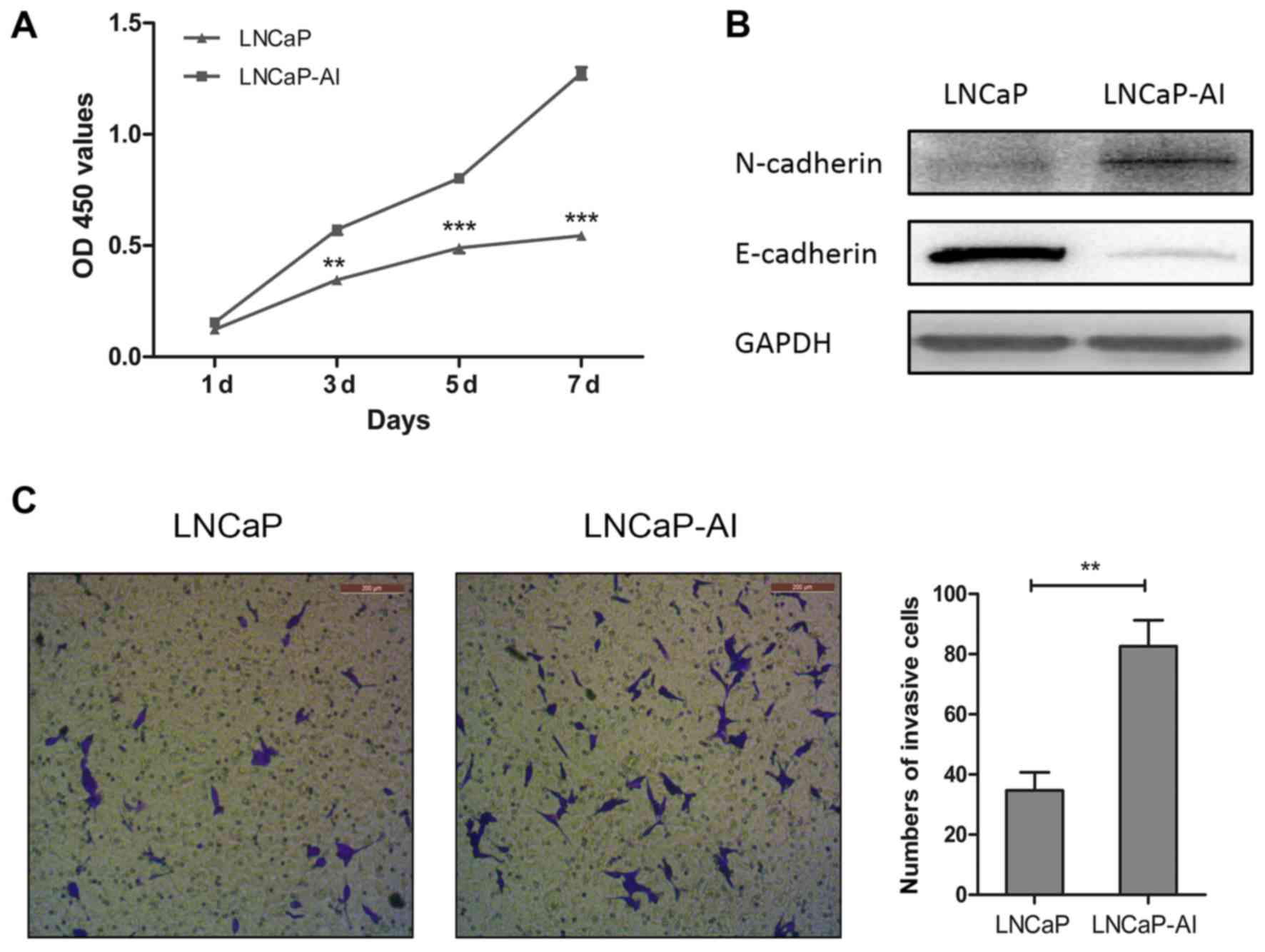
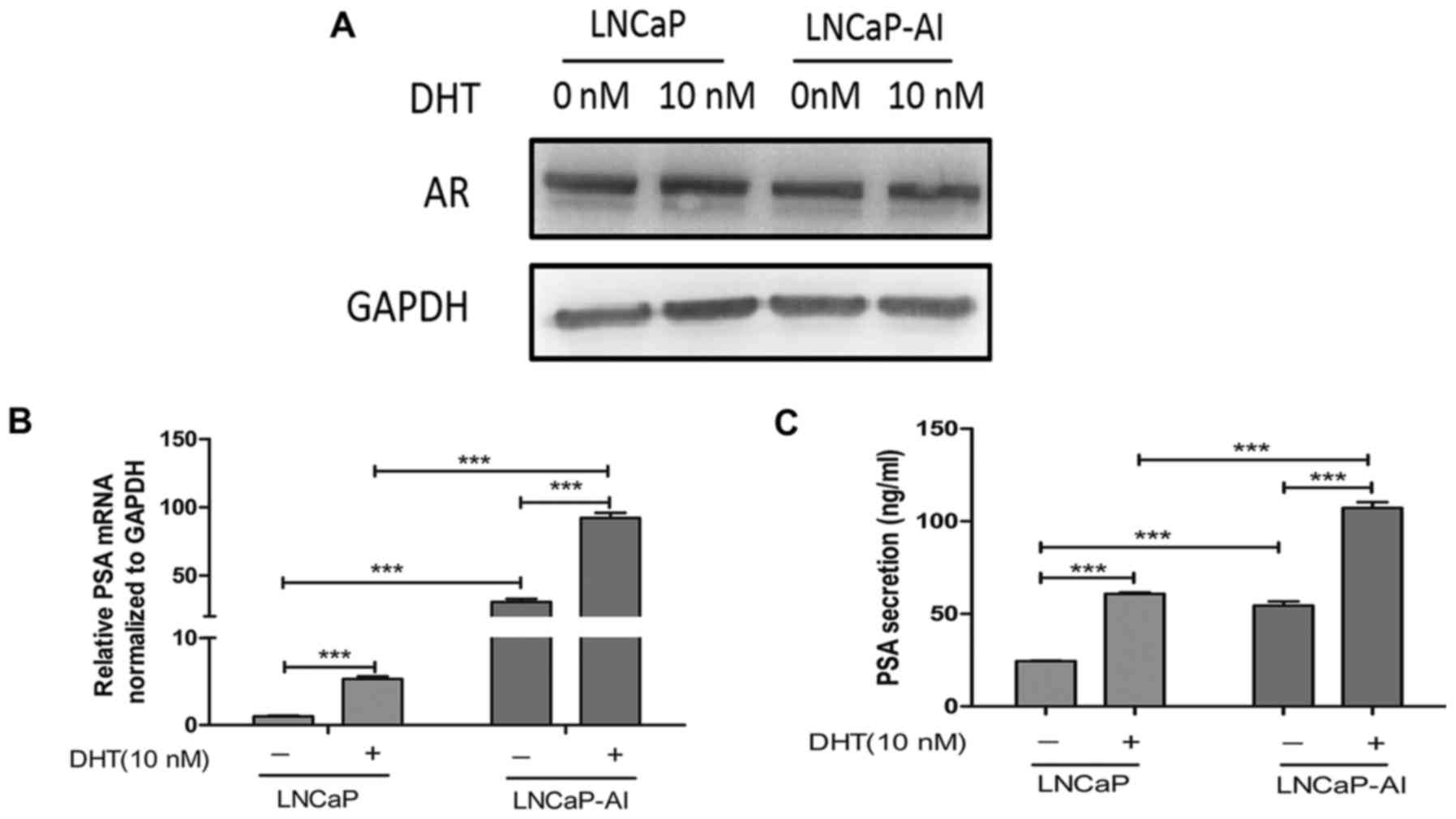
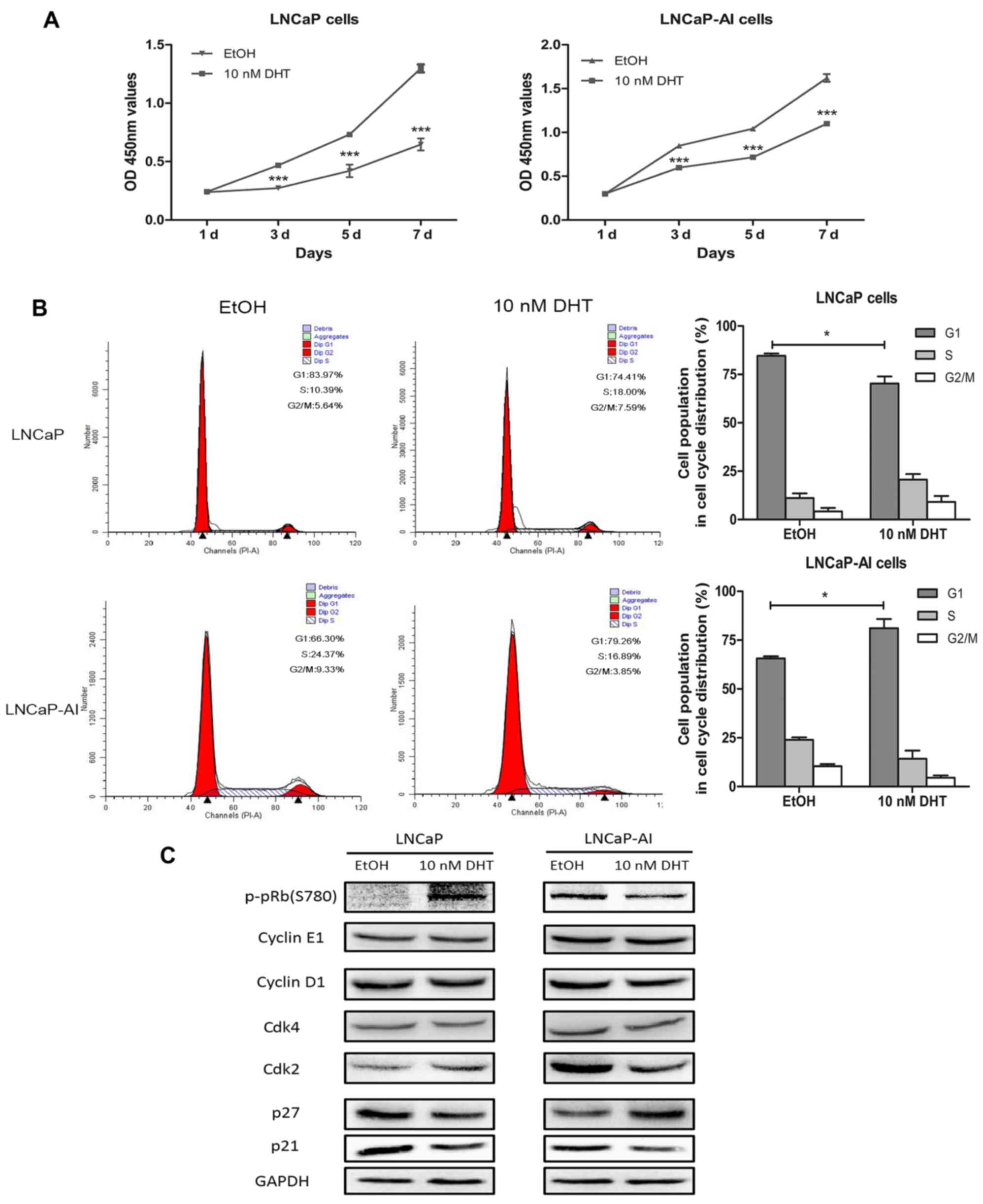
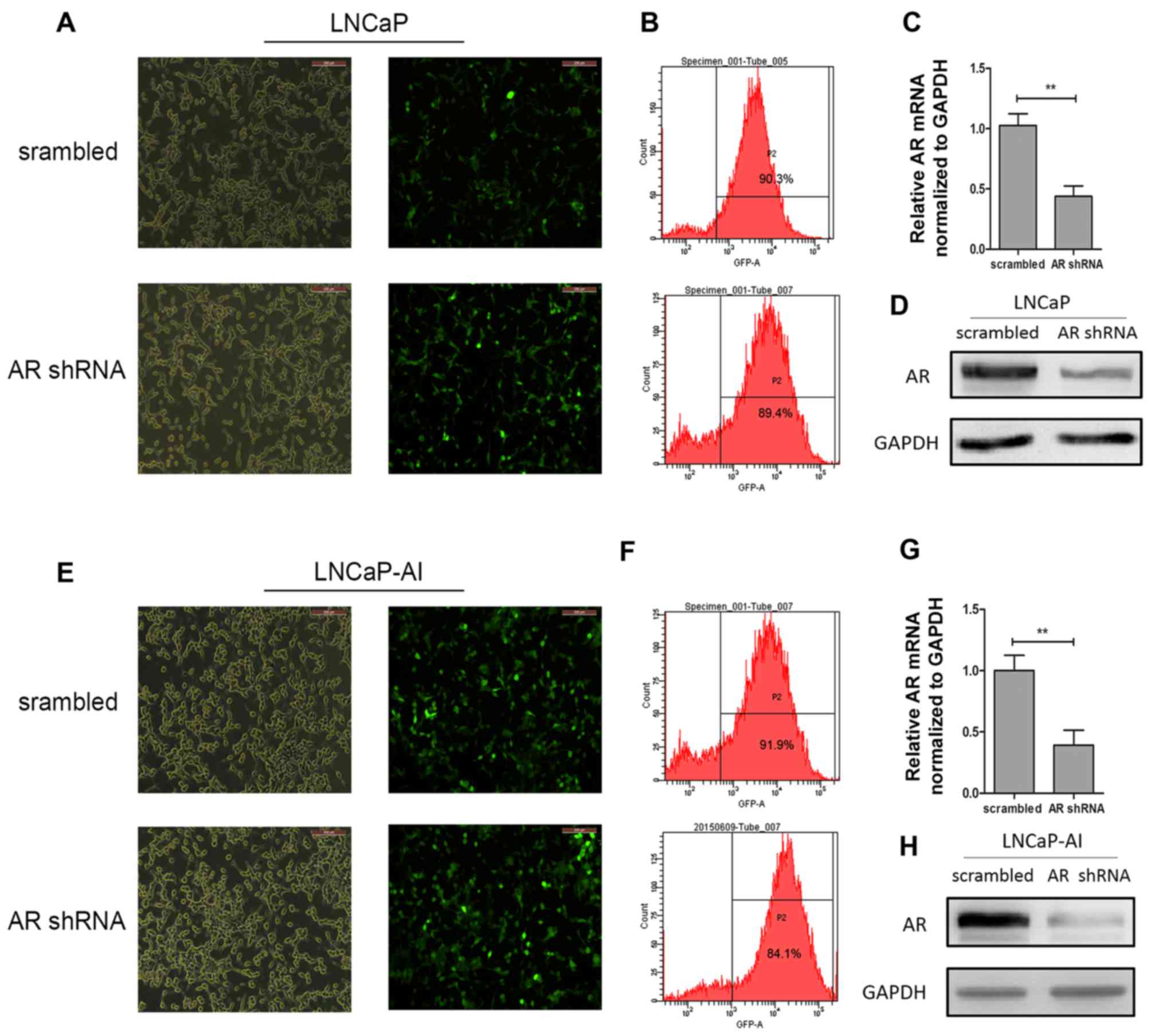
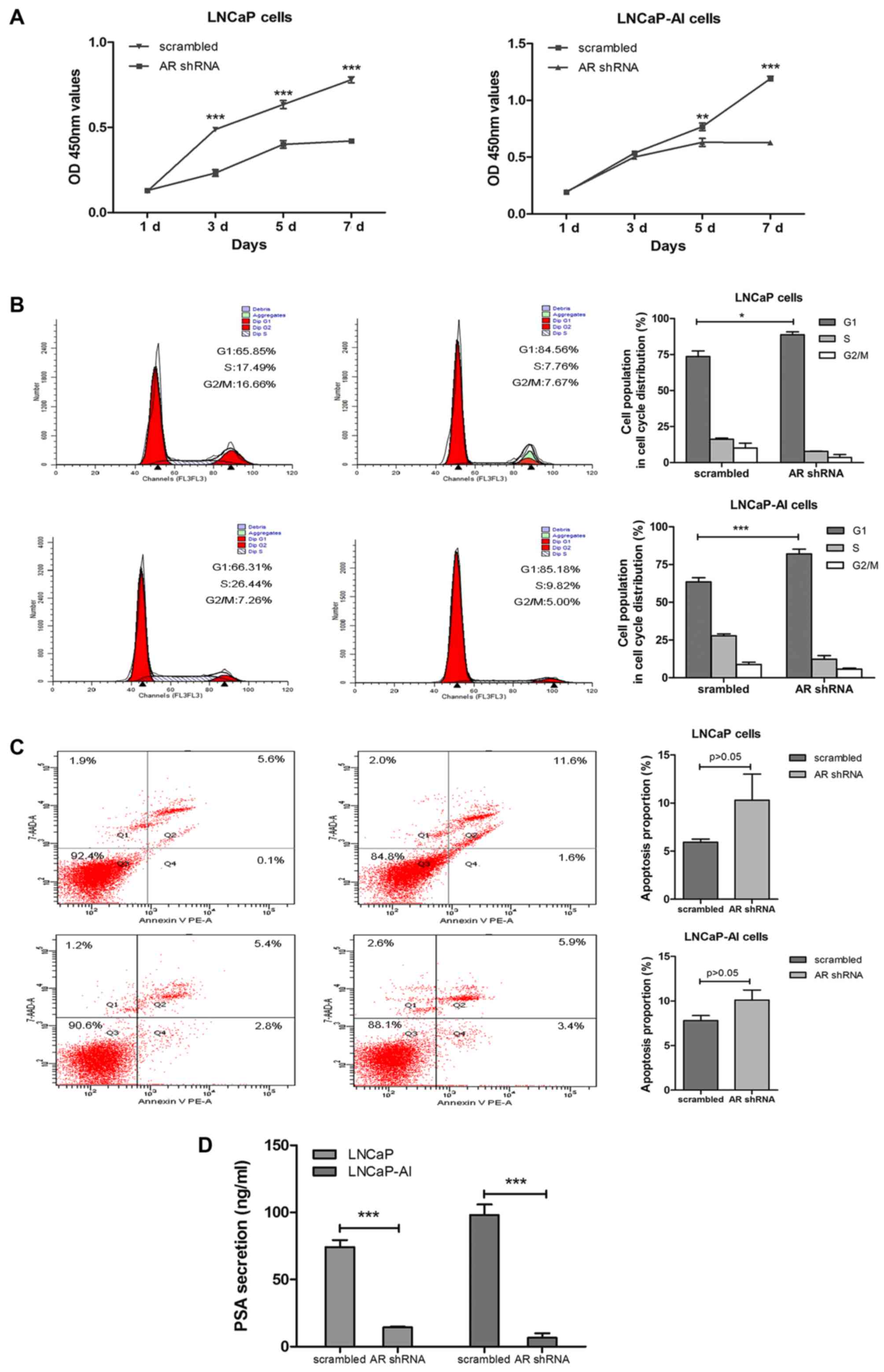
Androgen deprivation therapy (ADT, surgical or chemical castration) is the mainstay treatment for metastatic prostate cancer (PCa); however, patients ineluctably relapse despite extremely low androgen levels. This evolution of PCa indicates its lethal progression. In this study, to mimic the traits of clinical PCa progression in vitro, we investigated the alterations in the cell biological characteristics in androgen-independent LNCaP cells (LNCaP-AI cells) compared with LNCaP cells. We also examined the effects of androgen on LNCaP and LNCaP-AI cell proliferation, androgen receptor (AR) expression and prostate-specific antigen (PSA) secretion. Furthermore, AR was silenced in the LNCaP and LNCaP-AI cells to detect the roles taht AR plays in cell growth, apoptosis and PSA secretion. We found that prolonged androgen ablation increased the LNCaP-AI cell growth rate and cell invasiveness, and induced epithelial-mesenchymal transition in the LNCaP-AI cells. Moreover, despite the fact that the LNCaP and LNCaP-AI cells expressed equal amounts of AR protein, androgen induced a greater secretion of PSA in the LNCaP-AI cells than in the LNCaP cells. The proliferation of the LNCaP-AI cells was not dependent on, but was suppressed by androgen, which led to arrest at the G1 phase. Conversely, androgen significantly increased LNCaP cell proliferation by promoting the G1-S transition. Moreover, the silencing of AR suppressed LNCaP and LNCaP-AI cell growth by inducing cell cycle arrest at the G1 phase rather than promoting apoptosis, and reduced PSA secretion. On the whole, our data suggest that LNCaP-AI cells have a more more aggressive phenotype compared with the LNCaP cells; AR remains a critical factor in the LNCaP-AI cells, and androgen suppresses LNCaP-AI cell growth by blocking the cell cycle at the G1 phase.
View Figures

Figure 1

Figure 2

Figure 3

Figure 4

Figure 5

View References

1 

Attar RM, Takimoto CH and Gottardis MM: Castration-resistant prostate cancer: locking up the molecular escape routes. Clin Cancer Res. 15:3251–3255. 2009. View Article : Google Scholar : PubMed/NCBI

2 

Sharifi N, Kawasaki BT, Hurt EM and Farrar WL: Stem cells in prostate cancer: Resolving the castrate-resistant conundrum and implications for hormonal therapy. Cancer Biol Ther. 5:901–906. 2006. View Article : Google Scholar : PubMed/NCBI

3 

Damber JE and Aus G: Prostate cancer. Lancet. 371:1710–1721. 2008. View Article : Google Scholar : PubMed/NCBI

4 

Feldman BJ and Feldman D: The development of androgen-independent prostate cancer. Nat Rev Cancer. 1:34–45. 2001. View Article : Google Scholar

5 

Ryan CJ, Smith A, Lal P, Satagopan J, Reuter V, Scardino P, Gerald W and Scher HI: Persistent prostate-specific antigen expression after neoadjuvant androgen depletion: An early predictor of relapse or incomplete androgen suppression. Urology. 68:834–839. 2006. View Article : Google Scholar : PubMed/NCBI

6 

Tan MH, Li J, Xu HE, Melcher K and Yong EL: Androgen receptor: structure, role in prostate cancer and drug discovery. Acta Pharmacol Sin. 36:3–23. 2015. View Article : Google Scholar :

7 

Heinlein CA and Chang C: Androgen receptor in prostate cancer. Endocr Rev. 25:276–308. 2004. View Article : Google Scholar : PubMed/NCBI

8 

Tsihlias J, Zhang W, Bhattacharya N, Flanagan M, Klotz L and Slingerland J: Involvement of p27Kip1 in G1 arrest by high dose 5 alpha-dihydrotestosterone in LNCaP human prostate cancer cells. Oncogene. 19:670–679. 2000. View Article : Google Scholar : PubMed/NCBI

9 

Hofman K, Swinnen JV, Verhoeven G and Heyns W: E2F activity is biphasically regulated by androgens in LNCaP cells. Biochem Biophys Res Commun. 283:97–101. 2001. View Article : Google Scholar : PubMed/NCBI

10 

Akakura K, Bruchovsky N, Goldenberg SL, Rennie PS, Buckley AR and Sullivan LD: Effects of intermittent androgen suppression on androgen-dependent tumors. Apoptosis and serum prostate-specific antigen. Cancer. 71:2782–2790. 1993. View Article : Google Scholar : PubMed/NCBI

11 

Sciarra A, Abrahamsson PA, Brausi M, Galsky M, Mottet N, Sartor O, Tammela TL and Calais da Silva F: Intermittent androgen-deprivation therapy in prostate cancer: A critical review focused on phase 3 trials. Eur Urol. 64:722–730. 2013. View Article : Google Scholar : PubMed/NCBI

12 

Horoszewicz JS, Leong SS, Chu TM, Wajsman ZL, Friedman M, Papsidero L, Kim U, Chai LS, Kakati S, Arya SK, et al: The LNCaP cell line - a new model for studies on human prostatic carcinoma. Prog Clin biol Res. 37:115–132. 1980.

13 

Xu G, Wu J, Zhou L, Chen B, Sun Z, Zhao F and Tao Z: Characterization of the small RNA transcriptomes of androgen dependent and independent prostate cancer cell line by deep sequencing. PLoS One. 5:e155192010. View Article : Google Scholar : PubMed/NCBI

14 

Lu S, Tsai SY and Tsai MJ: Molecular mechanisms of androgen-independent growth of human prostate cancer LNCaP-AI cells. Endocrinology. 140:5054–5059. 1999. View Article : Google Scholar : PubMed/NCBI

15 

Loblaw DA, Mendelson DS, Talcott JA, Virgo KS, Somerfield MR, Ben-Josef E, Middleton R, Porterfield H, Sharp SA, Smith TJ, et al American Society of Clinical Oncology: American Society of Clinical Oncology recommendations for the initial hormonal management of androgen-sensitive metastatic, recurrent, or progressive prostate cancer. J Clin Oncol. 22:2927–2941. 2004. View Article : Google Scholar : PubMed/NCBI

16 

Sowery RD, So AI and Gleave ME: Therapeutic options in advanced prostate cancer: Present and future. Curr Urol Rep. 8:53–59. 2007. View Article : Google Scholar : PubMed/NCBI

17 

Debes JD and Tindall DJ: Mechanisms of androgen-refractory prostate cancer. N Engl J Med. 351:1488–1490. 2004. View Article : Google Scholar : PubMed/NCBI

18 

Wang Q, Li W, Zhang Y, Yuan X, Xu K, Yu J, Chen Z, Beroukhim R, Wang H, Lupien M, et al: Androgen receptor regulates a distinct transcription program in androgen-independent prostate cancer. Cell. 138:245–256. 2009. View Article : Google Scholar : PubMed/NCBI

19 

Chuu CP, Kokontis JM, Hiipakka RA, Fukuchi J, Lin HP, Lin CY, Huo C, Su LC and Liao S: Androgen suppresses proliferation of castration-resistant LNCaP 104-R2 prostate cancer cells through androgen receptor, Skp2, and c-Myc. Cancer Sci. 102:2022–2028. 2011. View Article : Google Scholar : PubMed/NCBI

20 

Sun Y, Wang BE, Leong KG, Yue P, Li L, Jhunjhunwala S, Chen D, Seo K, Modrusan Z, Gao WQ, et al: Androgen deprivation causes epithelial-mesenchymal transition in the prostate: Implications for androgen-deprivation therapy. Cancer Res. 72:527–536. 2012. View Article : Google Scholar

21 

Chen CD, Welsbie DS, Tran C, Baek SH, Chen R, Vessella R, Rosenfeld MG and Sawyers CL: Molecular determinants of resistance to antiandrogen therapy. Nat Med. 10:33–39. 2004. View Article : Google Scholar : PubMed/NCBI

22 

Scher HI, Buchanan G, Gerald W, Butler LM and Tilley WD: Targeting the androgen receptor: Improving outcomes for castration-resistant prostate cancer. Endocr Relat Cancer. 11:459–476. 2004. View Article : Google Scholar : PubMed/NCBI

23 

Scher HI and Sawyers CL: Biology of progressive, castration-resistant prostate cancer: Directed therapies targeting the androgen-receptor signaling axis. J Clin Oncol. 23:8253–8261. 2005. View Article : Google Scholar : PubMed/NCBI

24 

Lonergan PE and Tindall DJ: Androgen receptor signaling in prostate cancer development and progression. J Carcinog. 10:202011. View Article : Google Scholar : PubMed/NCBI

25 

Kokontis JM, Hay N and Liao S: Progression of LNCaP prostate tumor cells during androgen deprivation: Hormone-independent growth, repression of proliferation by androgen, and role for p27Kip1 in androgen-induced cell cycle arrest. Mol Endocrinol. 12:941–953. 1998. View Article : Google Scholar : PubMed/NCBI

26 

Knudsen KE, Arden KC and Cavenee WK: Multiple G1 regulatory elements control the androgen-dependent proliferation of prostatic carcinoma cells. J Biol Chem. 273:20213–20222. 1998. View Article : Google Scholar : PubMed/NCBI

27 

Xu Y, Chen SY, Ross KN and Balk SP: Androgens induce prostate cancer cell proliferation through mammalian target of rapamycin activation and post-transcriptional increases in cyclin D proteins. Cancer Res. 66:7783–7792. 2006. View Article : Google Scholar : PubMed/NCBI

28 

Kokontis JM, Lin HP, Jiang SS, Lin CY, Fukuchi J, Hiipakka RA, Chung CJ, Chan TM, Liao S, Chang CH, et al: Androgen suppresses the proliferation of androgen receptor-positive castration-resistant prostate cancer cells via inhibition of Cdk2, CyclinA, and Skp2. PLoS One. 9:e1091702014. View Article : Google Scholar : PubMed/NCBI

29 

Vidal A and Koff A: Cell-cycle inhibitors: Three families united by a common cause. Gene. 247:1–15. 2000. View Article : Google Scholar : PubMed/NCBI

30 

Gartel AL, Serfas MS and Tyner AL: p21- negative regulator of the cell cycle. Proc Soc Exp Biol Med. 213:138–149. 1996. View Article : Google Scholar : PubMed/NCBI

31 

Labaer J, Garrett MD, Stevenson LF, Slingerland JM, Sandhu C, Chou HS, Fattaey A and Harlow E: New functional activities for the p21 family of CDK inhibitors. Genes Dev. 11:847–862. 1997. View Article : Google Scholar : PubMed/NCBI

32 

Sherr CJ and Roberts JM: CDK inhibitors: Positive and negative regulators of G1-phase progression. Genes Dev. 13:1501–1512. 1999. View Article : Google Scholar : PubMed/NCBI

33 

Cheng M, Olivier P, Diehl JA, Fero M, Roussel MF, Roberts JM and Sherr CJ: The p21 (Cip1) and p27 (Kip1) CDK 'inhibitors' are essential activators of cyclin D-dependent kinases in murine fibroblasts. EMBO J. 18:1571–1583. 1999. View Article : Google Scholar : PubMed/NCBI

34 

Alt JR, Gladden AB and Diehl JA: p21(Cip1) promotes cyclin D1 nuclear accumulation via direct inhibition of nuclear export. J Biol Chem. 277:8517–8523. 2002. View Article : Google Scholar

35 

Zegarra-Moro OL, Schmidt LJ, Huang H and Tindall DJ: Disruption of androgen receptor function inhibits proliferation of androgen-refractory prostate cancer cells. Cancer Res. 62:1008–1013. 2002.PubMed/NCBI

36 

Li TH, Zhao H, Peng Y, Beliakoff J, Brooks JD and Sun Z: A promoting role of androgen receptor in androgen-sensitive and -insensitive prostate cancer cells. Nucleic Acids Res. 35:2767–2776. 2007. View Article : Google Scholar : PubMed/NCBI

37 

Snoek R, Cheng H, Margiotti K, Wafa LA, Wong CA, Wong EC, Fazli L, Nelson CC, Gleave ME and Rennie PS: In vivo knockdown of the androgen receptor results in growth inhibition and regression of well-established, castration-resistant prostate tumors. Clin Cancer Res. 15:39–47. 2009. View Article : Google Scholar : PubMed/NCBI

38 

Comstock CE and Knudsen KE: The complex role of AR signaling after cytotoxic insult: Implications for cell-cycle-based chemotherapeutics. Cell Cycle. 6:1307–1313. 2007. View Article : Google Scholar : PubMed/NCBI

39 

Liao X, Tang S, Thrasher JB, Griebling TL and Li B: Small-interfering RNA-induced androgen receptor silencing leads to apoptotic cell death in prostate cancer. Mol Cancer Ther. 4:505–515. 2005. View Article : Google Scholar : PubMed/NCBI

40 

Yang Q, Fung KM, Day WV, Kropp BP and Lin HK: Androgen receptor signaling is required for androgen-sensitive human prostate cancer cell proliferation and survival. Cancer Cell Int. 5:82005. View Article : Google Scholar : PubMed/NCBI

41 

Yuan X, Li T, Wang H, Zhang T, Barua M, Borgesi RA, Bubley GJ, Lu ML and Balk SP: Androgen receptor remains critical for cell-cycle progression in androgen-independent CWR22 prostate cancer cells. Am J Pathol. 169:682–696. 2006. View Article : Google Scholar : PubMed/NCBI

Related Articles

  • Abstract
  • View
  • Download
  • Twitter
Copy and paste a formatted citation
Spandidos Publications style
Yu P, Duan X, Cheng Y, Liu C, Chen Y, Liu W, Yin B, Wang X and Tao Z: Androgen-independent LNCaP cells are a subline of LNCaP cells with a more aggressive phenotype and androgen suppresses their growth by inducing cell cycle arrest at the G1 phase. Int J Mol Med 40: 1426-1434, 2017.
APA
Yu, P., Duan, X., Cheng, Y., Liu, C., Chen, Y., Liu, W. ... Tao, Z. (2017). Androgen-independent LNCaP cells are a subline of LNCaP cells with a more aggressive phenotype and androgen suppresses their growth by inducing cell cycle arrest at the G1 phase. International Journal of Molecular Medicine, 40, 1426-1434. https://doi.org/10.3892/ijmm.2017.3125
MLA
Yu, P., Duan, X., Cheng, Y., Liu, C., Chen, Y., Liu, W., Yin, B., Wang, X., Tao, Z."Androgen-independent LNCaP cells are a subline of LNCaP cells with a more aggressive phenotype and androgen suppresses their growth by inducing cell cycle arrest at the G1 phase". International Journal of Molecular Medicine 40.5 (2017): 1426-1434.
Chicago
Yu, P., Duan, X., Cheng, Y., Liu, C., Chen, Y., Liu, W., Yin, B., Wang, X., Tao, Z."Androgen-independent LNCaP cells are a subline of LNCaP cells with a more aggressive phenotype and androgen suppresses their growth by inducing cell cycle arrest at the G1 phase". International Journal of Molecular Medicine 40, no. 5 (2017): 1426-1434. https://doi.org/10.3892/ijmm.2017.3125
Copy and paste a formatted citation
x
Spandidos Publications style
Yu P, Duan X, Cheng Y, Liu C, Chen Y, Liu W, Yin B, Wang X and Tao Z: Androgen-independent LNCaP cells are a subline of LNCaP cells with a more aggressive phenotype and androgen suppresses their growth by inducing cell cycle arrest at the G1 phase. Int J Mol Med 40: 1426-1434, 2017.
APA
Yu, P., Duan, X., Cheng, Y., Liu, C., Chen, Y., Liu, W. ... Tao, Z. (2017). Androgen-independent LNCaP cells are a subline of LNCaP cells with a more aggressive phenotype and androgen suppresses their growth by inducing cell cycle arrest at the G1 phase. International Journal of Molecular Medicine, 40, 1426-1434. https://doi.org/10.3892/ijmm.2017.3125
MLA
Yu, P., Duan, X., Cheng, Y., Liu, C., Chen, Y., Liu, W., Yin, B., Wang, X., Tao, Z."Androgen-independent LNCaP cells are a subline of LNCaP cells with a more aggressive phenotype and androgen suppresses their growth by inducing cell cycle arrest at the G1 phase". International Journal of Molecular Medicine 40.5 (2017): 1426-1434.
Chicago
Yu, P., Duan, X., Cheng, Y., Liu, C., Chen, Y., Liu, W., Yin, B., Wang, X., Tao, Z."Androgen-independent LNCaP cells are a subline of LNCaP cells with a more aggressive phenotype and androgen suppresses their growth by inducing cell cycle arrest at the G1 phase". International Journal of Molecular Medicine 40, no. 5 (2017): 1426-1434. https://doi.org/10.3892/ijmm.2017.3125
Follow us
  • Twitter
  • LinkedIn
  • Facebook
About
  • Spandidos Publications
  • Careers
  • Cookie Policy
  • Privacy Policy
How can we help?
  • Help
  • Live Chat
  • Contact
  • Email to our Support Team