Spandidos Publications Logo
  • About
    • About Spandidos
    • Aims and Scopes
    • Abstracting and Indexing
    • Editorial Policies
    • Reprints and Permissions
    • Job Opportunities
    • Terms and Conditions
    • Contact
  • Journals
    • All Journals
    • Oncology Letters
      • Oncology Letters
      • Information for Authors
      • Editorial Policies
      • Editorial Board
      • Aims and Scope
      • Abstracting and Indexing
      • Bibliographic Information
      • Archive
    • International Journal of Oncology
      • International Journal of Oncology
      • Information for Authors
      • Editorial Policies
      • Editorial Board
      • Aims and Scope
      • Abstracting and Indexing
      • Bibliographic Information
      • Archive
    • Molecular and Clinical Oncology
      • Molecular and Clinical Oncology
      • Information for Authors
      • Editorial Policies
      • Editorial Board
      • Aims and Scope
      • Abstracting and Indexing
      • Bibliographic Information
      • Archive
    • Experimental and Therapeutic Medicine
      • Experimental and Therapeutic Medicine
      • Information for Authors
      • Editorial Policies
      • Editorial Board
      • Aims and Scope
      • Abstracting and Indexing
      • Bibliographic Information
      • Archive
    • International Journal of Molecular Medicine
      • International Journal of Molecular Medicine
      • Information for Authors
      • Editorial Policies
      • Editorial Board
      • Aims and Scope
      • Abstracting and Indexing
      • Bibliographic Information
      • Archive
    • Biomedical Reports
      • Biomedical Reports
      • Information for Authors
      • Editorial Policies
      • Editorial Board
      • Aims and Scope
      • Abstracting and Indexing
      • Bibliographic Information
      • Archive
    • Oncology Reports
      • Oncology Reports
      • Information for Authors
      • Editorial Policies
      • Editorial Board
      • Aims and Scope
      • Abstracting and Indexing
      • Bibliographic Information
      • Archive
    • Molecular Medicine Reports
      • Molecular Medicine Reports
      • Information for Authors
      • Editorial Policies
      • Editorial Board
      • Aims and Scope
      • Abstracting and Indexing
      • Bibliographic Information
      • Archive
    • World Academy of Sciences Journal
      • World Academy of Sciences Journal
      • Information for Authors
      • Editorial Policies
      • Editorial Board
      • Aims and Scope
      • Abstracting and Indexing
      • Bibliographic Information
      • Archive
    • International Journal of Functional Nutrition
      • International Journal of Functional Nutrition
      • Information for Authors
      • Editorial Policies
      • Editorial Board
      • Aims and Scope
      • Abstracting and Indexing
      • Bibliographic Information
      • Archive
    • International Journal of Epigenetics
      • International Journal of Epigenetics
      • Information for Authors
      • Editorial Policies
      • Editorial Board
      • Aims and Scope
      • Abstracting and Indexing
      • Bibliographic Information
      • Archive
    • Medicine International
      • Medicine International
      • Information for Authors
      • Editorial Policies
      • Editorial Board
      • Aims and Scope
      • Abstracting and Indexing
      • Bibliographic Information
      • Archive
  • Articles
  • Information
    • Information for Authors
    • Information for Reviewers
    • Information for Librarians
    • Information for Advertisers
    • Conferences
  • Language Editing
Spandidos Publications Logo
  • About
    • About Spandidos
    • Aims and Scopes
    • Abstracting and Indexing
    • Editorial Policies
    • Reprints and Permissions
    • Job Opportunities
    • Terms and Conditions
    • Contact
  • Journals
    • All Journals
    • Biomedical Reports
      • Information for Authors
      • Editorial Policies
      • Editorial Board
      • Aims and Scope
      • Abstracting and Indexing
      • Bibliographic Information
      • Archive
    • Experimental and Therapeutic Medicine
      • Information for Authors
      • Editorial Policies
      • Editorial Board
      • Aims and Scope
      • Abstracting and Indexing
      • Bibliographic Information
      • Archive
    • International Journal of Epigenetics
      • Information for Authors
      • Editorial Policies
      • Editorial Board
      • Aims and Scope
      • Abstracting and Indexing
      • Bibliographic Information
      • Archive
    • International Journal of Functional Nutrition
      • Information for Authors
      • Editorial Policies
      • Editorial Board
      • Aims and Scope
      • Abstracting and Indexing
      • Bibliographic Information
      • Archive
    • International Journal of Molecular Medicine
      • Information for Authors
      • Editorial Policies
      • Editorial Board
      • Aims and Scope
      • Abstracting and Indexing
      • Bibliographic Information
      • Archive
    • International Journal of Oncology
      • Information for Authors
      • Editorial Policies
      • Editorial Board
      • Aims and Scope
      • Abstracting and Indexing
      • Bibliographic Information
      • Archive
    • Medicine International
      • Information for Authors
      • Editorial Policies
      • Editorial Board
      • Aims and Scope
      • Abstracting and Indexing
      • Bibliographic Information
      • Archive
    • Molecular and Clinical Oncology
      • Information for Authors
      • Editorial Policies
      • Editorial Board
      • Aims and Scope
      • Abstracting and Indexing
      • Bibliographic Information
      • Archive
    • Molecular Medicine Reports
      • Information for Authors
      • Editorial Policies
      • Editorial Board
      • Aims and Scope
      • Abstracting and Indexing
      • Bibliographic Information
      • Archive
    • Oncology Letters
      • Information for Authors
      • Editorial Policies
      • Editorial Board
      • Aims and Scope
      • Abstracting and Indexing
      • Bibliographic Information
      • Archive
    • Oncology Reports
      • Information for Authors
      • Editorial Policies
      • Editorial Board
      • Aims and Scope
      • Abstracting and Indexing
      • Bibliographic Information
      • Archive
    • World Academy of Sciences Journal
      • Information for Authors
      • Editorial Policies
      • Editorial Board
      • Aims and Scope
      • Abstracting and Indexing
      • Bibliographic Information
      • Archive
  • Articles
  • Information
    • For Authors
    • For Reviewers
    • For Librarians
    • For Advertisers
    • Conferences
  • Language Editing
Login Register Submit
  • This site uses cookies
  • You can change your cookie settings at any time by following the instructions in our Cookie Policy. To find out more, you may read our Privacy Policy.

    I agree
Search articles by DOI, keyword, author or affiliation
Search
Advanced Search
presentation
International Journal of Molecular Medicine
Join Editorial Board Propose a Special Issue
Print ISSN: 1107-3756 Online ISSN: 1791-244X
Journal Cover
July-2018 Volume 42 Issue 1

Full Size Image

Sign up for eToc alerts
Recommend to Library

Journals

International Journal of Molecular Medicine

International Journal of Molecular Medicine

International Journal of Molecular Medicine is an international journal devoted to molecular mechanisms of human disease.

International Journal of Oncology

International Journal of Oncology

International Journal of Oncology is an international journal devoted to oncology research and cancer treatment.

Molecular Medicine Reports

Molecular Medicine Reports

Covers molecular medicine topics such as pharmacology, pathology, genetics, neuroscience, infectious diseases, molecular cardiology, and molecular surgery.

Oncology Reports

Oncology Reports

Oncology Reports is an international journal devoted to fundamental and applied research in Oncology.

Experimental and Therapeutic Medicine

Experimental and Therapeutic Medicine

Experimental and Therapeutic Medicine is an international journal devoted to laboratory and clinical medicine.

Oncology Letters

Oncology Letters

Oncology Letters is an international journal devoted to Experimental and Clinical Oncology.

Biomedical Reports

Biomedical Reports

Explores a wide range of biological and medical fields, including pharmacology, genetics, microbiology, neuroscience, and molecular cardiology.

Molecular and Clinical Oncology

Molecular and Clinical Oncology

International journal addressing all aspects of oncology research, from tumorigenesis and oncogenes to chemotherapy and metastasis.

World Academy of Sciences Journal

World Academy of Sciences Journal

Multidisciplinary open-access journal spanning biochemistry, genetics, neuroscience, environmental health, and synthetic biology.

International Journal of Functional Nutrition

International Journal of Functional Nutrition

Open-access journal combining biochemistry, pharmacology, immunology, and genetics to advance health through functional nutrition.

International Journal of Epigenetics

International Journal of Epigenetics

Publishes open-access research on using epigenetics to advance understanding and treatment of human disease.

Medicine International

Medicine International

An International Open Access Journal Devoted to General Medicine.

Journal Cover
July-2018 Volume 42 Issue 1

Full Size Image

Sign up for eToc alerts
Recommend to Library

  • Article
  • Citations
    • Cite This Article
    • Download Citation
    • Create Citation Alert
    • Remove Citation Alert
    • Cited By
  • Similar Articles
    • Related Articles (in Spandidos Publications)
    • Similar Articles (Google Scholar)
    • Similar Articles (PubMed)
  • Download PDF
  • Download XML
  • View XML
Article Open Access

PFK15, a PFKFB3 antagonist, inhibits autophagy and proliferation in rhabdomyosarcoma cells

  • Authors:
    • Chunhui Wang
    • Jianghong Qu
    • Siyuan Yan
    • Quan Gao
    • Sibin Hao
    • Dongsheng Zhou
  • View Affiliations / Copyright

    Affiliations: Department of Orthopedics, Shandong Provincial Hospital Affiliated to Shandong University, Jinan, Shandong 250021, P.R. China, Department of Gynecology, Zhangqiu People's Hospital, Jinan, Shandong 250200, P.R. China, State Key Laboratory of Mycology, Institute of Microbiology, Chinese Academy of Sciences, Beijing 100101, P.R. China, Department of Orthopedics, Zhangqiu People's Hospital, Jinan, Shandong 250200, P.R. China
    Copyright: © Wang et al. This is an open access article distributed under the terms of Creative Commons Attribution License.
  • Pages: 359-367
    |
    Published online on: March 29, 2018
       https://doi.org/10.3892/ijmm.2018.3599
  • Expand metrics +
Metrics: Total Views: 0 (Spandidos Publications: | PMC Statistics: )
Metrics: Total PDF Downloads: 0 (Spandidos Publications: | PMC Statistics: )
Cited By (CrossRef): 0 citations Loading Articles...

This article is mentioned in:


Abstract

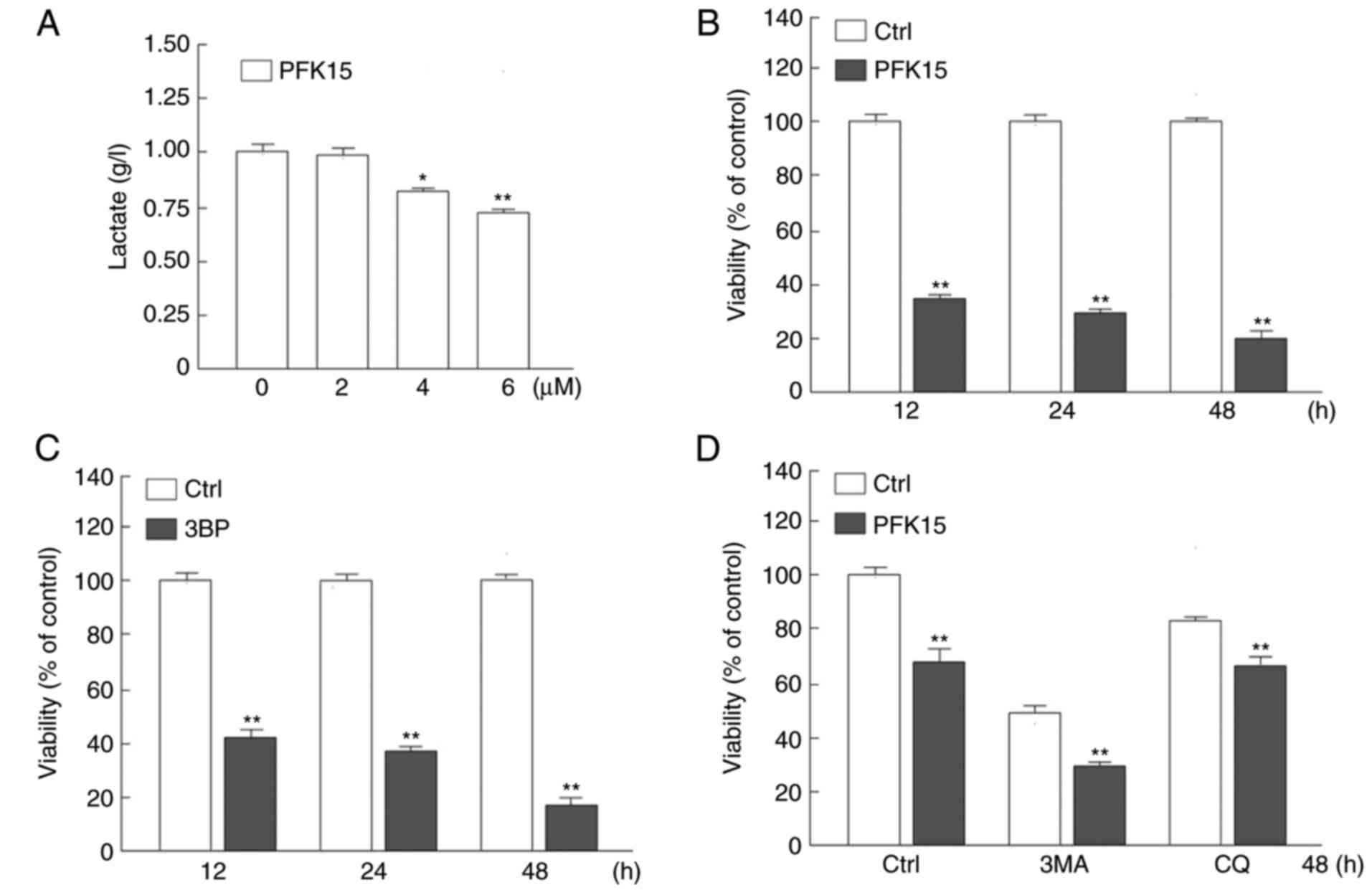
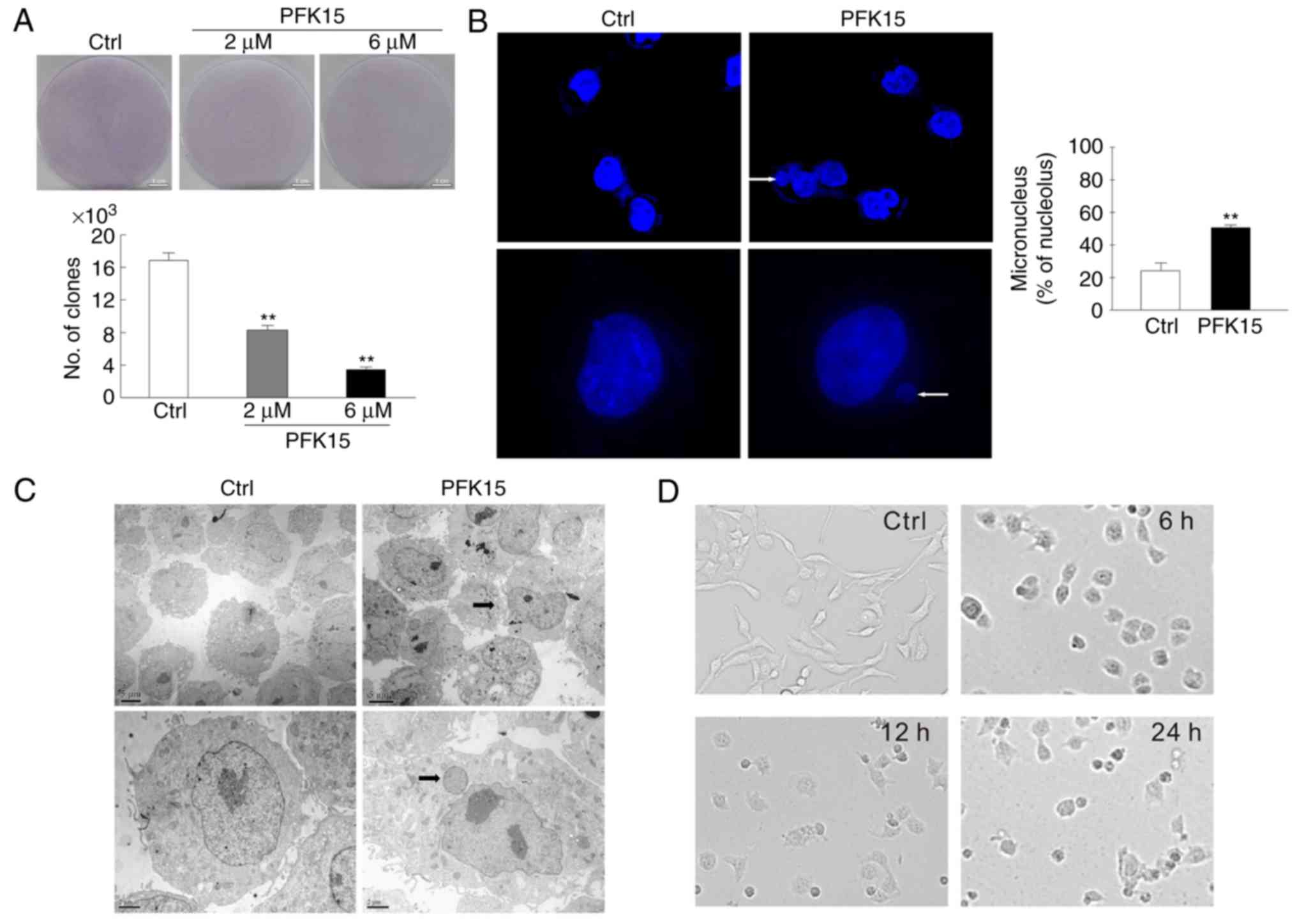
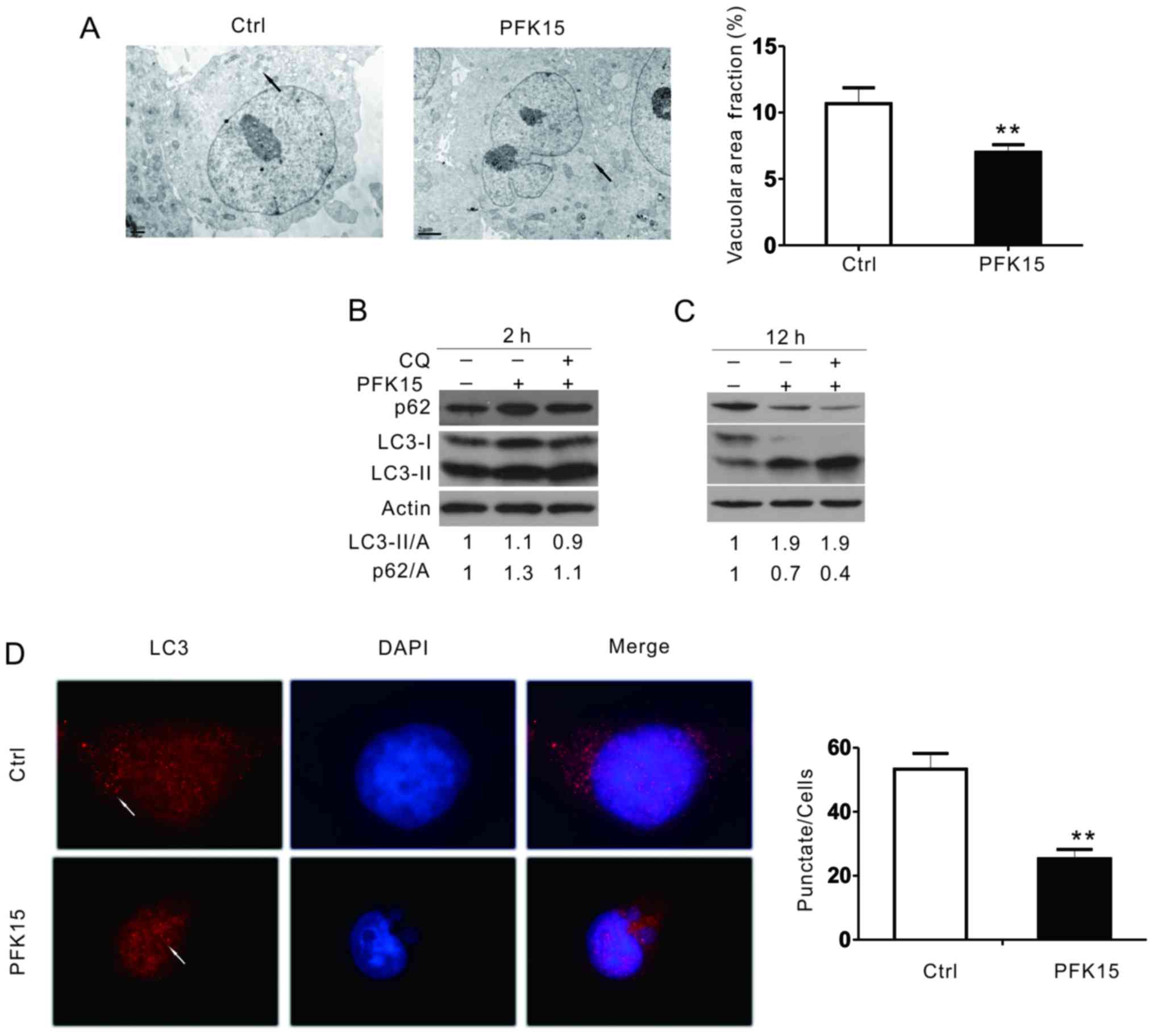
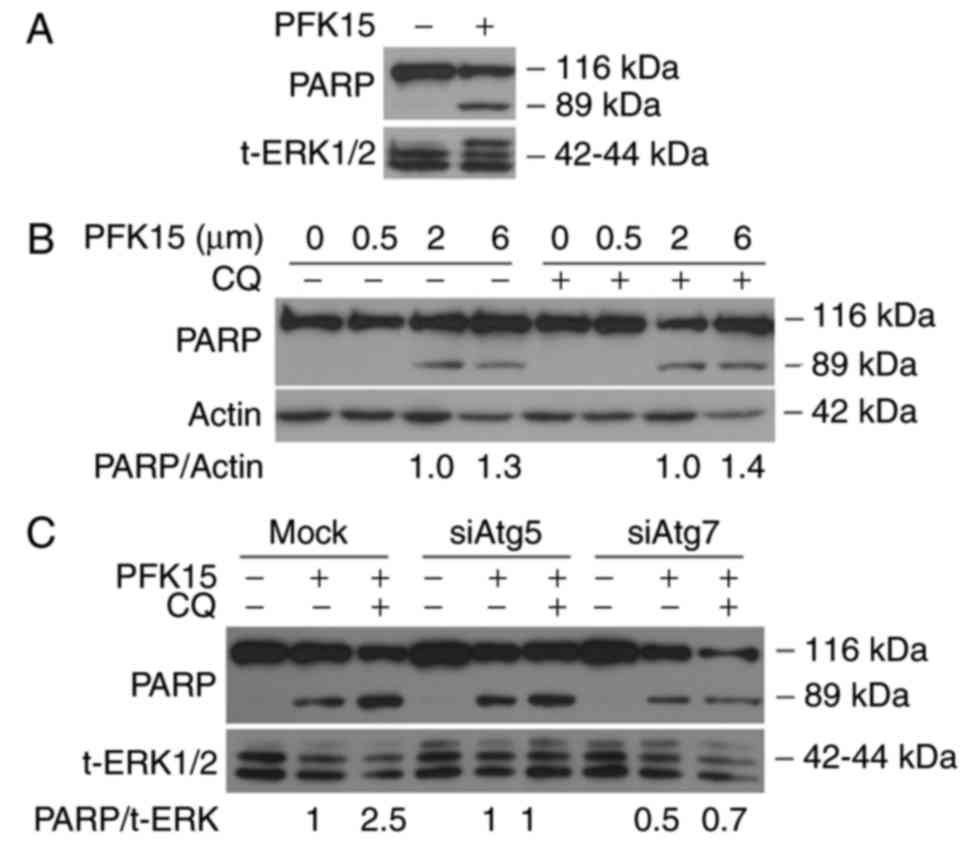
Due to the high-level of metastatic and relapsed rates, rhabdomyosarcoma (RD) patients have a poor prognosis, and novel treatment strategies are required. Thereby, the present study evaluated the efficacy of PFK15, a PFKFB3 inhibitor, in RD cells to explore its potential underlying mechanism on the regulation of autophagy and proliferation in these cells. The effects of PFK15 on cell viability loss and cell death in different treatment groups, were evaluated by MTS assay, colony growth assay and immunoblotting, respectively. In addition, the autophagy levels were detected by electron microscopy, fluorescence microscopy and immunoblotting following PFK15 treatment, and the autophagic flux was analyzed with the addition of chloroquine diphosphate salt or by monitoring the level of p62. PFK15 was observed to evidently decrease the viability of RD cells, inhibit the colony growth and cause abnormal nuclear morphology. Furthermore, PFK15 inhibited the autophagic flux and cell proliferation, as well as induced apoptotic cell death in RD cells through downregulation of the adenosine monophosphate‑activated protein kinase (AMPK) signaling pathway. An AMPK agonist rescued the inhibited cell proliferation and autophagy induced by PFK15. In conclusion, PFK15 inhibits autophagy and cell proliferation via downregulating the AMPK signaling pathway in RD cells.
View Figures

Figure 1

Figure 2

Figure 3

Figure 4

Figure 5

Figure 6

View References

1 

Huh WW and Skapek SX: Childhood rhabdomyosarcoma: New insight on biology and treatment. Curr Oncol Rep. 12:402–410. 2010. View Article : Google Scholar : PubMed/NCBI

2 

Leaphart C and Rodeberg D: Pediatric surgical oncology: Management of rhabdomyosarcoma. Surg Oncol. 16:173–185. 2007. View Article : Google Scholar : PubMed/NCBI

3 

Xia SJ, Pressey JG and Barr FG: Molecular pathogenesis of rhabdomyosarcoma. Cancer Biol Ther. 1:97–104. 2002. View Article : Google Scholar : PubMed/NCBI

4 

Keller C and Guttridge DC: Mechanisms of impaired differentiation in rhabdomyosarcoma. FEBS J. 280:4323–4334. 2013. View Article : Google Scholar : PubMed/NCBI

5 

Malempati S and Hawkins DS: Rhabdomyosarcoma: Review of the Children's Oncology Group (COG) soft-tissue sarcoma committee experience and rationale for current COG studies. Pediatr Blood Cancer. 59:5–10. 2012. View Article : Google Scholar : PubMed/NCBI

6 

Van Schaftingen E, Jett MF, Hue L and Hers HG: Control of liver 6-phosphofructokinase by fructose 2,6-bisphosphate and other effectors. Proc Natl Acad Sci USA. 78:3483–3486. 1981. View Article : Google Scholar : PubMed/NCBI

7 

Atsumi T, Chesney J, Metz C, Leng L, Donnelly S, Makita Z, Mitchell R and Bucala R: High expression of inducible 6-phosphofructo-2-kinase/fructose-2,6-bisphosphatase (iPFK-2; PFKFB3) in human cancers. Cancer Res. 62:5881–5887. 2002.PubMed/NCBI

8 

Van Schaftingen E, Hue L and Hers HG: Fructose 2,6-bisphosphate, the probably structure of the glucose- and glucagon-sensitive stimulator of phosphofructokinase. Biochem J. 192:897–901. 1980. View Article : Google Scholar : PubMed/NCBI

9 

Miralpeix M, Azcon-Bieto J, Bartrons R and Argiles JM: The impairment of respiration by glycolysis in the Lewis lung carcinoma. Cancer Lett. 50:173–178. 1990. View Article : Google Scholar : PubMed/NCBI

10 

Bando H, Atsumi T, Nishio T, Niwa H, Mishima S, Shimizu C, Yoshioka N, Bucala R and Koike T: Phosphorylation of the 6-phosphofructo-2-kinase/fructose 2,6-bisphosphatase/PFKFB3 family of glycolytic regulators in human cancer. Clin Cancer Res. 11:5784–5792. 2005. View Article : Google Scholar : PubMed/NCBI

11 

Ros S and Schulze A: Balancing glycolytic flux: The role of 6-phosphofructo-2-kinase/fructose 2,6-bisphosphatases in cancer metabolism. Cancer Metab. 1:82013. View Article : Google Scholar : PubMed/NCBI

12 

Yalcin A, Telang S, Clem B and Chesney J: Regulation of glucose metabolism by 6-phosphofructo-2-kinase/fructose-2, 6-bisphosphatases in cancer. Exp Mol Pathol. 86:174–179. 2009. View Article : Google Scholar : PubMed/NCBI

13 

Ge X, Lyu P, Gu Y, Li L, Li J, Wang Y, Zhang L, Fu C and Cao Z: Sonic hedgehog stimulates glycolysis and proliferation of breast cancer cells: Modulation of PFKFB3 activation. Biochem Biophys Res Commun. 464:862–868. 2015. View Article : Google Scholar : PubMed/NCBI

14 

Zhu W, Ye L, Zhang J, Yu P, Wang H, Ye Z and Tian J: PFK15, a small molecule inhibitor of PFKFB3 induces cell cycle arrest, apoptosis and inhibits invasion in gastric cancer. PLoS One. 11:e01637682016. View Article : Google Scholar

15 

Hu KY, Wang de G, Liu PF, Cao YW, Wang YH, Yang XC, Hu CX, Sun LJ and Niu HT: Targeting of MCT1 and PFKFB3 influences cell proliferation and apoptosis in bladder cancer by altering the tumor microenvironment. Oncol Rep. 36:945–951. 2016. View Article : Google Scholar : PubMed/NCBI

16 

O'Neal J, Clem A, Reynolds L, Dougherty S, Imbert-Fernandez Y, Telang S, Chesney J and Clem BF: Inhibition of 6-phosphofructo-2-kinase (PFKFB3) suppresses glucose metabolism and the growth of HER2+ breast cancer. Breast Cancer Res Treat. 160:29–40. 2016. View Article : Google Scholar : PubMed/NCBI

17 

Feng Y and Wu L: mTOR up-regulation of PFKFB3 is essential for acute myeloid leukemia cell survival. Biochem Biophys Res Commun. 483:897–903. 2017. View Article : Google Scholar : PubMed/NCBI

18 

Li HM, Yang JG, Liu ZJ, Wang WM, Yu ZL, Ren JG, Chen G, Zhang W and Jia J: Blockage of glycolysis by targeting PFKFB3 suppresses tumor growth and metastasis in head and neck squamous cell carcinoma. J Exp Clin Cancer Res. 36:72017. View Article : Google Scholar : PubMed/NCBI

19 

Calvo MN, Bartrons R, Castaño E, Perales J, Navarro-Sabaté A and Manzano A: PFKFB3 gene silencing decreases glycolysis, induces cell-cycle delay and inhibits anchorage-independent growth in HeLa cells. FEBS Lett. 580:3308–3314. 2006. View Article : Google Scholar : PubMed/NCBI

20 

Lea MA, Guzman Y and Desbordes C: Inhibition of growth by combined treatment with inhibitors of lactate dehydrogenase and either phenformin or inhibitors of 6-phosphofructo-2-kinase/fructose-2,6-bis phosphatase 3. Anticancer Res. 36:1479–1488. 2016.PubMed/NCBI

21 

Clem BF, O'Neal J, Tapolsky G, Clem AL, Imbert-Fernandez Y, Kerr DA II, Klarer AC, Redman R, Miller DM, Trent JO, et al: Targeting 6-phosphofructo-2-kinase (PFKFB3) as a therapeutic strategy against cancer. Mol Cancer Ther. 12:1461–1470. 2013. View Article : Google Scholar : PubMed/NCBI

22 

Scagliusi SM, Jorge V and Hugo K: Cytopathology of callus cells infected with grapevine leafroll-associated virus 3. Trop Plant Pathol. 27:384–388. 2002.

23 

Liu D, Yang Y, Liu Q and Wang J: Inhibition of autophagy by 3-MA potentiates cisplatin-induced apoptosis in esophageal squamous cell carcinoma cells. Med Oncol. 28:105–111. 2011. View Article : Google Scholar

24 

Lucocq JM and Hacker C: Cutting a fine figure: On the use of thin sections in electron microscopy to quantify autophagy. Autophagy. 9:1443–1448. 2013. View Article : Google Scholar : PubMed/NCBI

25 

Klionsky DJ, Abdelmohsen K, Abe A, Abedin MJ, Abeliovich H, Acevedo Arozena A, Adachi H, Adams CM, Adams PD, Adeli K, et al: Guidelines for the use and interpretation of assays for monitoring autophagy (3rd edition). Autophagy. 12:1–222. 2016. View Article : Google Scholar : PubMed/NCBI

26 

Muñozgámez JA, Rodríguezvargas JM, Quilespérez R, Aguilar-Quesada R, Martín-Oliva D, de Murcia G, Menissier de Murcia J, Almendros A, Ruiz de Almodóvar M and Oliver FJ: PARP-1 is involved in autophagy induced by DNA damage. Autophagy. 5:61–74. 2009. View Article : Google Scholar

27 

Pham DL, Kim SH, Losol P, Yang EM, Shin YS, Ye YM and Park HS: Association of autophagy related gene polymorphisms with neutrophilic airway inflammation in adult asthma. Korean J Intern Med. 31:375–385. 2016. View Article : Google Scholar :

28 

Carling D: The AMP-activated protein kinase cascade-a unifying system for energy control. Trends Biochem Sci. 29:18–24. 2004. View Article : Google Scholar : PubMed/NCBI

29 

Novellasdemunt L, Obach M, Millán-Ariño L, Manzano A, Ventura F, Rosa JL, Jordan A, Navarro-Sabate A and Bartrons R: Progestins activate 6-phosphofructo-2-kinase/fructose-2,6-bisphosphatase 3 (PFKFB3) in breast cancer cells. Biochem J. 442:345–356. 2012. View Article : Google Scholar

30 

Telang S, Clem BF, Klarer AC, Clem AL, Trent JO, Bucala R and Chesney J: Small molecule inhibition of 6-phosphofructo-2-kinase suppresses t cell activation. J Transl Med. 10:952012. View Article : Google Scholar : PubMed/NCBI

31 

Hanahan D and Weinberg RA: Hallmarks of cancer: The next generation. Cell. 144:646–674. 2011. View Article : Google Scholar : PubMed/NCBI

32 

Mizushima N and Komatsu M: Autophagy: Renovation of cells and tissues. Cell. 147:728–741. 2011. View Article : Google Scholar : PubMed/NCBI

33 

White E, Mehnert JM and Chan CS: Autophagy, metabolism, and cancer. Clin Cancer Res. 21:5037–5046. 2015. View Article : Google Scholar : PubMed/NCBI

34 

Kim DK, Yang JS, Maiti K, Hwang JI, Kim K, Seen D, Ahn Y, Lee C, Kang BC, Kwon HB, et al: A gonadotropin-releasing hormone-II antagonist induces autophagy of prostate cancer cells. Cancer Res. 69:923–931. 2009. View Article : Google Scholar : PubMed/NCBI

35 

D'Amours D, Desnoyers S, D'Silva I and Poirier GG: Poly(ADP-ribosyl)ation reactions in the regulation of nuclear functions. Biochem J. 342:249–268. 1999. View Article : Google Scholar : PubMed/NCBI

36 

Andrabi SA, Kim NS, Yu SW, Wang H, Koh DW, Sasaki M, Klaus JA, Otsuka T, Zhang Z, Koehler RC, et al: Poly(ADP-ribose) (PAR) polymer is a death signal. Proc Natl Acad Sci USA. 103:18308–18313. 2006. View Article : Google Scholar : PubMed/NCBI

37 

Amé JC, Spenlehauer C and de Murcia G: The PARP super-family. Bioessays. 26:882–893. 2004. View Article : Google Scholar

38 

Kaufmann SH, Desnoyers S, Ottaviano Y, Davidson NE and Poirier GG: Specific proteolytic cleavage of poly(ADP-ribose) polymerase: An early marker of chemotherapy-induced apoptosis. Cancer Res. 53:3976–3985. 1993.PubMed/NCBI

39 

Xi X, Zhang X, Wang B, Wang T, Wang J, Huang H, Wang J, Jin Q and Zhao Z: The interplays between autophagy and apoptosis induced by enterovirus 71. PLoS One. 8:e569662013. View Article : Google Scholar : PubMed/NCBI

40 

Yokoyama T, Kondo Y, Bögler O and Kondo S: The role of autophagy and apoptosis in the drug resistance of cancer. Springer US, Drug Resistance in Cancer Cells. 53–71. 2009. View Article : Google Scholar

41 

Luo Z, Zang M and Guo W: AMPK as a metabolic tumor suppressor: Control of metabolism and cell growth. Future Oncol. 6:457–470. 2010. View Article : Google Scholar : PubMed/NCBI

42 

Okoshi R, Ozaki T, Yamamoto H, Ando K, Koida N, Ono S, Koda T, Kamijo T, Nakagawara A and Kizaki H: Activation of AMP-activated protein kinase induces p53-dependent apoptotic cell death in response to energetic stress. J Biol Chem. 283:3979–3987. 2008. View Article : Google Scholar

43 

Jose C, Hébert-Chatelain E, Bellance N, Larendra A, Su M, Nouette-Gaulain K and Rossignol R: AICAR inhibits cancer cell growth and triggers cell-type distinct effects on OXPHOS biogenesis, oxidative stress and Akt activation. Biochim Biophys Acta. 1807:707–718. 2011. View Article : Google Scholar : PubMed/NCBI

44 

Kasznicki J, Sliwinska A and Drzewoski J: Metformin in cancer prevention and therapy. Ann Transl Med. 2:572014.PubMed/NCBI

45 

Faubert B, Vincent EE, Poffenberger MC and Jones RG: The AMP-activated protein kinase (AMPK) and cancer: Many faces of a metabolic regulator. Cancer Lett. 356:165–170. 2015. View Article : Google Scholar

46 

Zadra G, Batista JL and Loda M: Dissecting the dual role of AMPK in cancer: From experimental to human studies. Mol Cancer Res. 13:1059–1072. 2015. View Article : Google Scholar : PubMed/NCBI

47 

Hadad SM, Baker L, Quinlan PR, Robertson KE, Bray SE, Thomson G, Kellock D, Jordan LB, Purdie CA, Hardie DG, et al: Histological evaluation of AMPK signalling in primary breast cancer. BMC Cancer. 9:3072009. View Article : Google Scholar : PubMed/NCBI

48 

Buzzai M, Jones RG, Amaravadi RK, Lum JJ, DeBerardinis RJ, Zhao F, Viollet B and Thompson CB: Systemic treatment with the antidiabetic drug metformin selectively impairs p53-deficient tumor cell growth. Cancer Res. 67:6745–6752. 2007. View Article : Google Scholar : PubMed/NCBI

Related Articles

  • Abstract
  • View
  • Download
  • Twitter
Copy and paste a formatted citation
Spandidos Publications style
Wang C, Qu J, Yan S, Gao Q, Hao S and Zhou D: PFK15, a PFKFB3 antagonist, inhibits autophagy and proliferation in rhabdomyosarcoma cells. Int J Mol Med 42: 359-367, 2018.
APA
Wang, C., Qu, J., Yan, S., Gao, Q., Hao, S., & Zhou, D. (2018). PFK15, a PFKFB3 antagonist, inhibits autophagy and proliferation in rhabdomyosarcoma cells. International Journal of Molecular Medicine, 42, 359-367. https://doi.org/10.3892/ijmm.2018.3599
MLA
Wang, C., Qu, J., Yan, S., Gao, Q., Hao, S., Zhou, D."PFK15, a PFKFB3 antagonist, inhibits autophagy and proliferation in rhabdomyosarcoma cells". International Journal of Molecular Medicine 42.1 (2018): 359-367.
Chicago
Wang, C., Qu, J., Yan, S., Gao, Q., Hao, S., Zhou, D."PFK15, a PFKFB3 antagonist, inhibits autophagy and proliferation in rhabdomyosarcoma cells". International Journal of Molecular Medicine 42, no. 1 (2018): 359-367. https://doi.org/10.3892/ijmm.2018.3599
Copy and paste a formatted citation
x
Spandidos Publications style
Wang C, Qu J, Yan S, Gao Q, Hao S and Zhou D: PFK15, a PFKFB3 antagonist, inhibits autophagy and proliferation in rhabdomyosarcoma cells. Int J Mol Med 42: 359-367, 2018.
APA
Wang, C., Qu, J., Yan, S., Gao, Q., Hao, S., & Zhou, D. (2018). PFK15, a PFKFB3 antagonist, inhibits autophagy and proliferation in rhabdomyosarcoma cells. International Journal of Molecular Medicine, 42, 359-367. https://doi.org/10.3892/ijmm.2018.3599
MLA
Wang, C., Qu, J., Yan, S., Gao, Q., Hao, S., Zhou, D."PFK15, a PFKFB3 antagonist, inhibits autophagy and proliferation in rhabdomyosarcoma cells". International Journal of Molecular Medicine 42.1 (2018): 359-367.
Chicago
Wang, C., Qu, J., Yan, S., Gao, Q., Hao, S., Zhou, D."PFK15, a PFKFB3 antagonist, inhibits autophagy and proliferation in rhabdomyosarcoma cells". International Journal of Molecular Medicine 42, no. 1 (2018): 359-367. https://doi.org/10.3892/ijmm.2018.3599
Follow us
  • Twitter
  • LinkedIn
  • Facebook
About
  • Spandidos Publications
  • Careers
  • Cookie Policy
  • Privacy Policy
How can we help?
  • Help
  • Live Chat
  • Contact
  • Email to our Support Team