Spandidos Publications Logo
  • About
    • About Spandidos
    • Aims and Scopes
    • Abstracting and Indexing
    • Editorial Policies
    • Reprints and Permissions
    • Job Opportunities
    • Terms and Conditions
    • Contact
  • Journals
    • All Journals
    • Oncology Letters
      • Oncology Letters
      • Information for Authors
      • Editorial Policies
      • Editorial Board
      • Aims and Scope
      • Abstracting and Indexing
      • Bibliographic Information
      • Archive
    • International Journal of Oncology
      • International Journal of Oncology
      • Information for Authors
      • Editorial Policies
      • Editorial Board
      • Aims and Scope
      • Abstracting and Indexing
      • Bibliographic Information
      • Archive
    • Molecular and Clinical Oncology
      • Molecular and Clinical Oncology
      • Information for Authors
      • Editorial Policies
      • Editorial Board
      • Aims and Scope
      • Abstracting and Indexing
      • Bibliographic Information
      • Archive
    • Experimental and Therapeutic Medicine
      • Experimental and Therapeutic Medicine
      • Information for Authors
      • Editorial Policies
      • Editorial Board
      • Aims and Scope
      • Abstracting and Indexing
      • Bibliographic Information
      • Archive
    • International Journal of Molecular Medicine
      • International Journal of Molecular Medicine
      • Information for Authors
      • Editorial Policies
      • Editorial Board
      • Aims and Scope
      • Abstracting and Indexing
      • Bibliographic Information
      • Archive
    • Biomedical Reports
      • Biomedical Reports
      • Information for Authors
      • Editorial Policies
      • Editorial Board
      • Aims and Scope
      • Abstracting and Indexing
      • Bibliographic Information
      • Archive
    • Oncology Reports
      • Oncology Reports
      • Information for Authors
      • Editorial Policies
      • Editorial Board
      • Aims and Scope
      • Abstracting and Indexing
      • Bibliographic Information
      • Archive
    • Molecular Medicine Reports
      • Molecular Medicine Reports
      • Information for Authors
      • Editorial Policies
      • Editorial Board
      • Aims and Scope
      • Abstracting and Indexing
      • Bibliographic Information
      • Archive
    • World Academy of Sciences Journal
      • World Academy of Sciences Journal
      • Information for Authors
      • Editorial Policies
      • Editorial Board
      • Aims and Scope
      • Abstracting and Indexing
      • Bibliographic Information
      • Archive
    • International Journal of Functional Nutrition
      • International Journal of Functional Nutrition
      • Information for Authors
      • Editorial Policies
      • Editorial Board
      • Aims and Scope
      • Abstracting and Indexing
      • Bibliographic Information
      • Archive
    • International Journal of Epigenetics
      • International Journal of Epigenetics
      • Information for Authors
      • Editorial Policies
      • Editorial Board
      • Aims and Scope
      • Abstracting and Indexing
      • Bibliographic Information
      • Archive
    • Medicine International
      • Medicine International
      • Information for Authors
      • Editorial Policies
      • Editorial Board
      • Aims and Scope
      • Abstracting and Indexing
      • Bibliographic Information
      • Archive
  • Articles
  • Information
    • Information for Authors
    • Information for Reviewers
    • Information for Librarians
    • Information for Advertisers
    • Conferences
  • Language Editing
Spandidos Publications Logo
  • About
    • About Spandidos
    • Aims and Scopes
    • Abstracting and Indexing
    • Editorial Policies
    • Reprints and Permissions
    • Job Opportunities
    • Terms and Conditions
    • Contact
  • Journals
    • All Journals
    • Biomedical Reports
      • Information for Authors
      • Editorial Policies
      • Editorial Board
      • Aims and Scope
      • Abstracting and Indexing
      • Bibliographic Information
      • Archive
    • Experimental and Therapeutic Medicine
      • Information for Authors
      • Editorial Policies
      • Editorial Board
      • Aims and Scope
      • Abstracting and Indexing
      • Bibliographic Information
      • Archive
    • International Journal of Epigenetics
      • Information for Authors
      • Editorial Policies
      • Editorial Board
      • Aims and Scope
      • Abstracting and Indexing
      • Bibliographic Information
      • Archive
    • International Journal of Functional Nutrition
      • Information for Authors
      • Editorial Policies
      • Editorial Board
      • Aims and Scope
      • Abstracting and Indexing
      • Bibliographic Information
      • Archive
    • International Journal of Molecular Medicine
      • Information for Authors
      • Editorial Policies
      • Editorial Board
      • Aims and Scope
      • Abstracting and Indexing
      • Bibliographic Information
      • Archive
    • International Journal of Oncology
      • Information for Authors
      • Editorial Policies
      • Editorial Board
      • Aims and Scope
      • Abstracting and Indexing
      • Bibliographic Information
      • Archive
    • Medicine International
      • Information for Authors
      • Editorial Policies
      • Editorial Board
      • Aims and Scope
      • Abstracting and Indexing
      • Bibliographic Information
      • Archive
    • Molecular and Clinical Oncology
      • Information for Authors
      • Editorial Policies
      • Editorial Board
      • Aims and Scope
      • Abstracting and Indexing
      • Bibliographic Information
      • Archive
    • Molecular Medicine Reports
      • Information for Authors
      • Editorial Policies
      • Editorial Board
      • Aims and Scope
      • Abstracting and Indexing
      • Bibliographic Information
      • Archive
    • Oncology Letters
      • Information for Authors
      • Editorial Policies
      • Editorial Board
      • Aims and Scope
      • Abstracting and Indexing
      • Bibliographic Information
      • Archive
    • Oncology Reports
      • Information for Authors
      • Editorial Policies
      • Editorial Board
      • Aims and Scope
      • Abstracting and Indexing
      • Bibliographic Information
      • Archive
    • World Academy of Sciences Journal
      • Information for Authors
      • Editorial Policies
      • Editorial Board
      • Aims and Scope
      • Abstracting and Indexing
      • Bibliographic Information
      • Archive
  • Articles
  • Information
    • For Authors
    • For Reviewers
    • For Librarians
    • For Advertisers
    • Conferences
  • Language Editing
Login Register Submit
  • This site uses cookies
  • You can change your cookie settings at any time by following the instructions in our Cookie Policy. To find out more, you may read our Privacy Policy.

    I agree
Search articles by DOI, keyword, author or affiliation
Search
Advanced Search
presentation
International Journal of Molecular Medicine
Join Editorial Board Propose a Special Issue
Print ISSN: 1107-3756 Online ISSN: 1791-244X
Journal Cover
September-2018 Volume 42 Issue 3

Full Size Image

Sign up for eToc alerts
Recommend to Library

Journals

International Journal of Molecular Medicine

International Journal of Molecular Medicine

International Journal of Molecular Medicine is an international journal devoted to molecular mechanisms of human disease.

International Journal of Oncology

International Journal of Oncology

International Journal of Oncology is an international journal devoted to oncology research and cancer treatment.

Molecular Medicine Reports

Molecular Medicine Reports

Covers molecular medicine topics such as pharmacology, pathology, genetics, neuroscience, infectious diseases, molecular cardiology, and molecular surgery.

Oncology Reports

Oncology Reports

Oncology Reports is an international journal devoted to fundamental and applied research in Oncology.

Experimental and Therapeutic Medicine

Experimental and Therapeutic Medicine

Experimental and Therapeutic Medicine is an international journal devoted to laboratory and clinical medicine.

Oncology Letters

Oncology Letters

Oncology Letters is an international journal devoted to Experimental and Clinical Oncology.

Biomedical Reports

Biomedical Reports

Explores a wide range of biological and medical fields, including pharmacology, genetics, microbiology, neuroscience, and molecular cardiology.

Molecular and Clinical Oncology

Molecular and Clinical Oncology

International journal addressing all aspects of oncology research, from tumorigenesis and oncogenes to chemotherapy and metastasis.

World Academy of Sciences Journal

World Academy of Sciences Journal

Multidisciplinary open-access journal spanning biochemistry, genetics, neuroscience, environmental health, and synthetic biology.

International Journal of Functional Nutrition

International Journal of Functional Nutrition

Open-access journal combining biochemistry, pharmacology, immunology, and genetics to advance health through functional nutrition.

International Journal of Epigenetics

International Journal of Epigenetics

Publishes open-access research on using epigenetics to advance understanding and treatment of human disease.

Medicine International

Medicine International

An International Open Access Journal Devoted to General Medicine.

Journal Cover
September-2018 Volume 42 Issue 3

Full Size Image

Sign up for eToc alerts
Recommend to Library

  • Article
  • Citations
    • Cite This Article
    • Download Citation
    • Create Citation Alert
    • Remove Citation Alert
    • Cited By
  • Similar Articles
    • Related Articles (in Spandidos Publications)
    • Similar Articles (Google Scholar)
    • Similar Articles (PubMed)
  • Download PDF
  • Download XML
  • View XML
Article Open Access

Telomerase reverse transcriptase interference synergistically promotes tumor necrosis factor‑related apoptosis‑inducing ligand‑induced oral squamous cell carcinoma apoptosis and suppresses proliferation in vitro and in vivo

  • Authors:
    • Xin Zhao
    • Cuicui Zhang
    • Zhiliang Le
    • Suyun Zeng
    • Chaobin Pan
    • Jianjie Shi
    • Jianguang Wang
    • Xiaopeng Zhao
  • View Affiliations / Copyright

    Affiliations: Department of Stomatology, The Third Affiliated Hospital of Guangzhou Medical University, Guangzhou, Guangdong 510150, P.R. China, Key Laboratory of Oral Medicine, Guangzhou Institute of Oral Disease, Stomatology Hospital of Guangzhou Medical University, Guangzhou, Guangdong 510140, P.R. China, Department of Stomatology, The Third Affiliated Hospital of Southern Medical University, Guangzhou, Guangdong 510635, P.R. China, Department of Periodontology, Hefei Stomatological Hospital, Hefei, Anhui 230001, P.R. China, Department of Oral and Maxillofacial Surgery, Sun Yat‑sen Memorial Hospital, Sun Yat‑sen University, Guangzhou, Guangdong 510120, P.R. China
    Copyright: © Zhao et al. This is an open access article distributed under the terms of Creative Commons Attribution License.
  • Pages: 1283-1294
    |
    Published online on: June 7, 2018
       https://doi.org/10.3892/ijmm.2018.3721
  • Expand metrics +
Metrics: Total Views: 0 (Spandidos Publications: | PMC Statistics: )
Metrics: Total PDF Downloads: 0 (Spandidos Publications: | PMC Statistics: )
Cited By (CrossRef): 0 citations Loading Articles...

This article is mentioned in:


Abstract

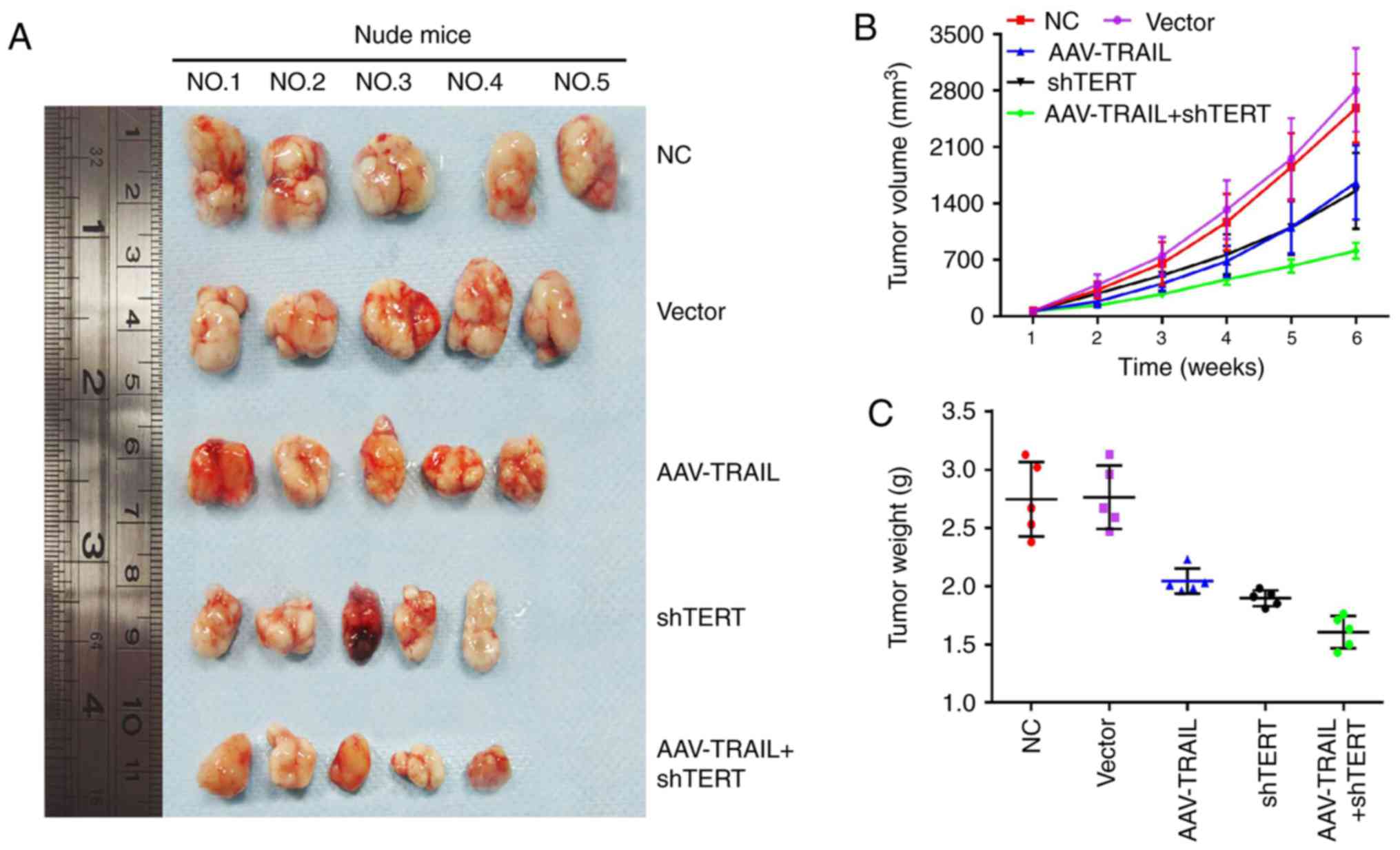
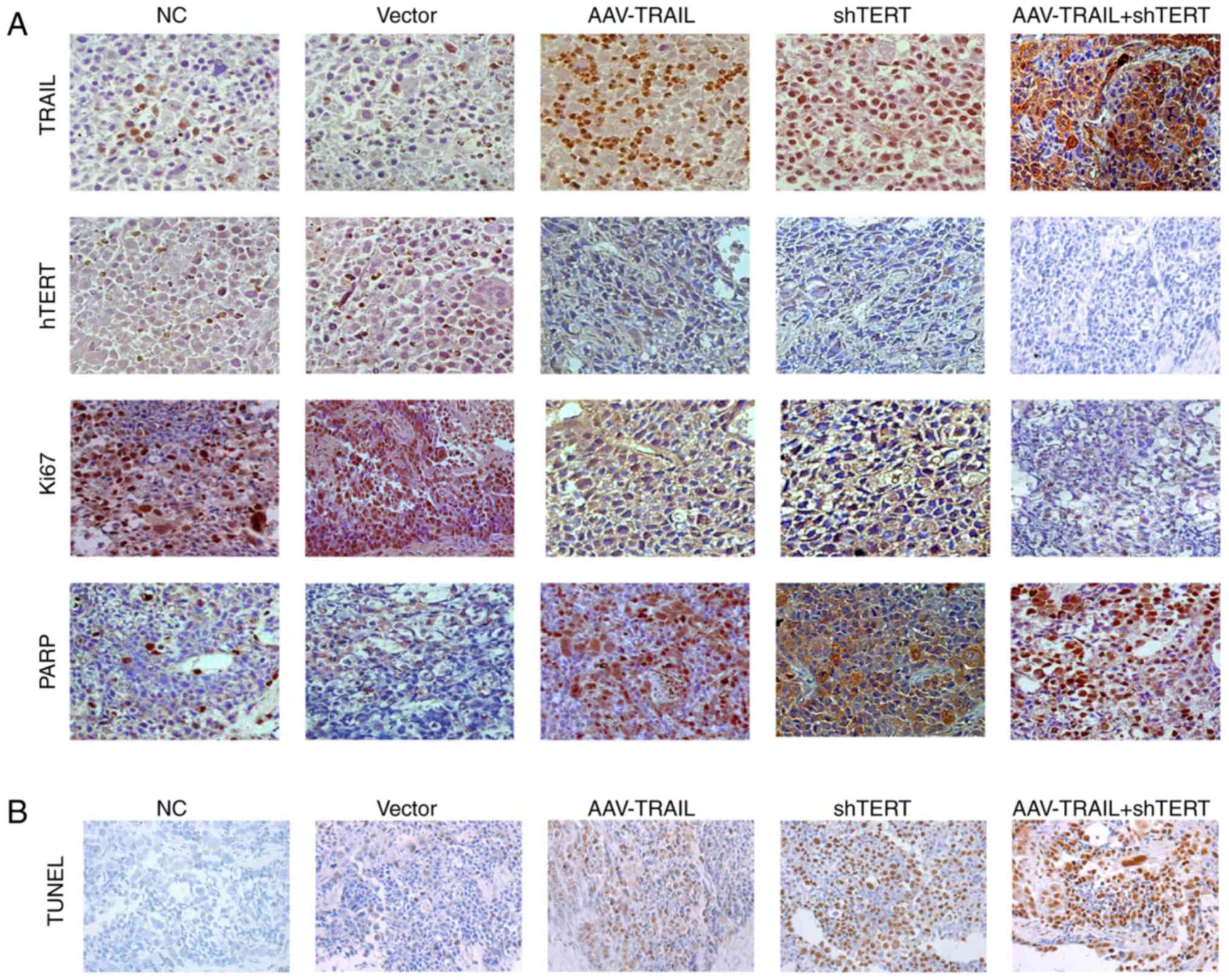
Tumor necrosis factor‑related apoptosis‑inducing ligand (TRAIL) is known to induce cell apoptosis in many types of cancer cells. However, some malignant cells still exhibit anti‑apoptosis features induced by TRAIL; thus the underlying mechanisms that regulate sensitivity and resistance of tumor cells to TRAIL‑induced apoptosis remain unclear. Human telomerase reverse transcriptase (hTERT) is overexpressed in most types of human tumors and is mostly inactive in somatic cells. The present study aimed to investigate the endogenous effects and mechanisms of hTERT inhibition and TRAIL overexpression on TRAIL‑induced apoptosis of human oral squamous cell carcinoma (OSCC) cells. The effects of adeno‑associated virus (AAV)‑mediated TRAIL and hTERT gene silencing by RNA interference were investigated on the proliferation and apoptosis of human OSCC cells in vitro and in vivo. The present results suggest that knockdown of hTERT expression accelerated TRAIL‑resistant OSCC cells to TRAIL‑induced apoptosis and impaired OSCC cell proliferation. In addition, this process is accompanied by the upregulation of caspase‑3, caspase‑8 and caspase‑9, and downregulation of B cell lymphoma‑2. Additionally, the possible mechanisms underlying the association between TRAIL expression and hTERT silencing were explored. The results demonstrated that TRAIL expression levels were elevated when the hTERT gene was silenced, and notable anti‑tumor effects were observed when TRAIL upregulation and hTERT gene silencing were carried out simultaneously. The present findings provide experimental evidence for the combined use of TRAIL and hTERT as a possible gene therapy strategy in oral cancer.
View Figures

Figure 1

Figure 2

Figure 3

Figure 4

Figure 5

Figure 6

View References

1 

Siegel RL, Miller KD and Jemal A: Cancer statistics, 2017. CA Cancer J Clin. 67:7–30. 2017. View Article : Google Scholar : PubMed/NCBI

2 

Chen W, Zheng R, Baade PD, Zhang S, Zeng H, Bray F, Jemal A, Yu XQ and He J: Cancer statistics in China, 2015. CA Cancer J Clin. 66:115–132. 2016. View Article : Google Scholar : PubMed/NCBI

3 

Torre LA, Bray F, Siegel RL, Ferlay J, Lortet-Tieulent J and Jemal A: Global cancer statistics, 2012. CA Cancer J Clin. 65:87–108. 2015. View Article : Google Scholar : PubMed/NCBI

4 

Lo Muzio L, Sartini D, Santarelli A, Rocchetti R, Morganti S, Pozzi V, Rubini C, Bambini F and Emanuelli M: Expression and prognostic significance of apoptotic genes in oral squamous cell carcinoma. Mol Carcinog. 53:264–271. 2014. View Article : Google Scholar

5 

Yanamoto S, Yamada S, Takahashi H, Yoshitomi I, Kawasaki G, Ikeda H, Minamizato T, Shiraishi T, Fujita S, Ikeda T, et al: Clinicopathological risk factors for local recurrence in oral squamous cell carcinoma. Int J Oral Maxillofac Surg. 41:1195–1200. 2012. View Article : Google Scholar : PubMed/NCBI

6 

Zhong LP, Zhang CP, Ren GX, Guo W, William WN Jr, Sun J, Zhu HG, Tu WY, Li J, Cai YL, et al: Randomized phase III trial of induction chemotherapy with docetaxel, cisplatin, and fluorouracil followed by surgery versus up-front surgery in locally advanced resectable oral squamous cell carcinoma. J Clin Oncol. 31:744–751. 2013. View Article : Google Scholar

7 

Yajima T, Ochiai H, Uchiyama T, Takano N, Shibahara T and Azuma T: Resistance to cytotoxic chemotherapy-induced apoptosis in side population cells of human oral squamous cell carcinoma cell line Ho-1-N-1. Int J Oncol. 35:273–280. 2009.PubMed/NCBI

8 

Jiang G, Li J, Zeng Z and Xian L: Lentivirus-mediated gene therapy by suppressing survivin in BALB/c nude mice bearing oral squamous cell carcinoma. Cancer Biol Ther. 5:435–440. 2006. View Article : Google Scholar : PubMed/NCBI

9 

Fang L, Wang H, Zhou L and Yu D: Akt-FOXO3a signaling axis dysregulation in human oral squamous cell carcinoma and potent efficacy of FOXO3a-targeted gene therapy. Oral Oncol. 47:16–21. 2011. View Article : Google Scholar

10 

Wajant H, Pfizenmaier K and Scheurich P: TNF-related apoptosis inducing ligand (TRAIL) and its receptors in tumor surveillance and cancer therapy. Apoptosis. 7:449–459. 2002. View Article : Google Scholar : PubMed/NCBI

11 

Wang S: The promise of cancer therapeutics targeting the TNF-related apoptosis-inducing ligand and TRAIL receptor pathway. Oncogene. 27:6207–6215. 2008. View Article : Google Scholar : PubMed/NCBI

12 

McLornan DP, Barrett HL, Cummins R, McDermott U, McDowell C, Conlon SJ, Coyle VM, Van Schaeybroeck S, Wilson R, Kay EW, et al: Prognostic significance of TRAIL signaling molecules in stage II and III colorectal cancer. Clin Cancer Res. 16:3442–3451. 2010. View Article : Google Scholar : PubMed/NCBI

13 

Polanski R, Vincent J, Polanska UM, Petreus T and Tang EK: Caspase-8 activation by TRAIL monotherapy predicts responses to IAPi and TRAIL combination treatment in breast cancer cell lines. Cell Death Dis. 6:e18932015. View Article : Google Scholar : PubMed/NCBI

14 

Kim K, Nakagawa H, Fei P, Rustgi AK and El-Deiry WS: Targeting Bcl-xL in esophageal squamous cancer to sensitize to chemotherapy plus TRAIL-induced apoptosis while normal epithelial cells are protected by blockade of caspase 9. Cell Death Differ. 11:583–587. 2004. View Article : Google Scholar : PubMed/NCBI

15 

Chen M, Wang X, Zha D, Cai F, Zhang W, He Y, Huang Q, Zhuang H and Hua ZC: Apigenin potentiates TRAIL therapy of non-small cell lung cancer via upregulating DR4/DR5 expression in a p53-dependent manner. Sci Rep. 6:354682016. View Article : Google Scholar : PubMed/NCBI

16 

Li L, Wen XZ, Bu ZD, Cheng XJ, Xing XF, Wang XH, Zhang LH, Guo T, Du H, Hu Y, et al: Paclitaxel enhances tumoricidal potential of TRAIL via inhibition of MAPK in resistant gastric cancer cells. Oncol Rep. 35:3009–3017. 2016. View Article : Google Scholar : PubMed/NCBI

17 

Piras-Straub K, Khairzada K, Trippler M, Baba HA, Kaiser GM, Paul A, Canbay A, Weber F, Gerken G and Herzer K: TRAIL expression levels in human hepatocellular carcinoma have implications for tumor growth, recurrence and survival. Int J Cancer. 136:E154–E160. 2015. View Article : Google Scholar

18 

Holoch PA and Griffith TS: TNF-related apoptosis-inducing ligand (TRAIL): A new path to anti-cancer therapies. Eur J Pharmacol. 625:63–72. 2009. View Article : Google Scholar : PubMed/NCBI

19 

Yu ST, Chen L, Wang HJ, Tang XD, Fang DC and Yang SM: hTERT promotes the invasion of telomerase-negative tumor cells in vitro. Int J Oncol. 35:329–336. 2009.PubMed/NCBI

20 

Xi L and Cech TR: Inventory of telomerase components in human cells reveals multiple subpopulations of hTR and hTERT. Nucleic Acids Res. 42:8565–8577. 2014. View Article : Google Scholar : PubMed/NCBI

21 

Lü MH, Liao ZL, Zhao XY, Fan YH, Lin XL, Fang DC, Guo H and Yang SM: hTERT-based therapy: A universal anticancer approach (Review). Oncol Rep. 28:1945–1952. 2012. View Article : Google Scholar : PubMed/NCBI

22 

Xu L, Yin S, Banerjee S, Sarkar F and Reddy KB: Enhanced anticancer effect of the combination of cisplatin and TRAIL in triple-negative breast tumor cells. Mol Cancer Ther. 10:550–557. 2011. View Article : Google Scholar : PubMed/NCBI

23 

Wang WB, Zhou YL, Heng DF, Miao CH and Cao YL: Combination of tumor necrosis factor-related apoptosis-inducing ligand (TRAIL) and canstatin gene suppression therapy on breast tumor xenograft growth in mice. Breast Cancer Res Treat. 110:283–295. 2008. View Article : Google Scholar

24 

Livak KJ and Schmittgen TD: Analysis of relative gene expression data using real-time quantitative PCR and the 2(−Delta Delta C(T)) method. Methods. 25:402–408. 2001. View Article : Google Scholar

25 

O’Neill PM, Amewu RK, Charman SA, Sabbani S, Gnädig NF, Straimer J, Fidock DA, Shore ER, Roberts NL, Wong MH, et al: A tetraoxane-based antimalarial drug candidate that overcomes PfK13-C580Y dependent artemisinin resistance. Nat Commun. 8:151592017. View Article : Google Scholar : PubMed/NCBI

26 

Zhang Y, Ma H, Zhang J, Liu S, Liu Y and Zheng D: AAV-mediated TRAIL gene expression driven by hTERT promoter suppressed human hepatocellular carcinoma growth in mice. Life Sci. 82:1154–1161. 2008. View Article : Google Scholar : PubMed/NCBI

27 

Kuo WT, Lee TC, Yang HY, Chen CY, Au YC, Lu YZ, Wu LL, Wei SC, Ni YH, Lin BR, et al: LPS receptor subunits have antagonistic roles in epithelial apoptosis and colonic carcinogenesis. Cell Death Differ. 22:1590–1604. 2015. View Article : Google Scholar : PubMed/NCBI

28 

Wang K, Kievit FM, Jeon M, Silber JR, Ellenbogen RG and Zhang M: Nanoparticle-mediated target delivery of TRAIL as gene therapy for glioblastoma. Adv Healthc Mater. 4:2719–2726. 2015. View Article : Google Scholar : PubMed/NCBI

29 

Wang Y, Li L, Shao N, Hu Z, Chen H, Xu L, Wang C, Cheng Y and Xiao J: Triazine-modified dendrimer for efficient TRAIL gene therapy in osteosarcoma. Acta Biomater. 17:115–124. 2015. View Article : Google Scholar : PubMed/NCBI

30 

Abe K, Kurakin A, Mohseni-Maybodi M, Kay B and Khosravi-Far R: The complexity of TNF-related apoptosis-inducing ligand. Ann N Y Acad Sci. 926:52–63. 2000. View Article : Google Scholar

31 

Kojima Y, Nakayama M, Nishina T, Nakano H, Koyanagi M, Takeda K, Okumura K and Yagita H: Importin β1 protein-mediated nuclear localization of death receptor 5 (DR5) limits DR5/tumor necrosis factor (TNF)-related apoptosis-inducing ligand (TRAIL)-induced cell death of human tumor cells. J Biol Chem. 286:43383–43393. 2011. View Article : Google Scholar : PubMed/NCBI

32 

Valley CC, Lewis AK, Mudaliar DJ, Perlmutter JD, Braun AR, Karim CB, Thomas DD, Brody JR and Sachs JN: Tumor necrosis factor-related apoptosis-inducing ligand (TRAIL) induces death receptor 5 networks that are highly organized. J Biol Chem. 287:21265–21278. 2012. View Article : Google Scholar : PubMed/NCBI

33 

Vizetto-Duarte C, Custódio L, Gangadhar KN, Lago JH, Dias C, Matos AM, Neng N, Nogueira JM, Barreira L, Albericio F, et al: Isololiolide, a carotenoid metabolite isolated from the brown alga Cystoseira tamariscifolia, is cytotoxic and able to induce apoptosis in hepatocarcinoma cells through caspase-3 activation, decreased Bcl-2 levels, increased p53 expression and PARP cleavage. Phytomedicine. 23:550–557. 2016. View Article : Google Scholar : PubMed/NCBI

34 

Xu P, Cai X, Zhang W, Li Y, Qiu P, Lu D and He X: Flavonoids of Rosa roxburghii Tratt exhibit radioprotection and anti-apoptosis properties via the Bcl-2(Ca(2+))/Caspase-3/PARP-1 pathway. Apoptosis. 21:1125–1143. 2016. View Article : Google Scholar : PubMed/NCBI

35 

Dudognon C, Pendino F, Hillion J, Saumet A, Lanotte M and Ségal-Bendirdjian E: Death receptor signaling regulatory function for telomerase: hTERT abolishes TRAIL-induced apoptosis, independently of telomere maintenance. Oncogene. 23:7469–7474. 2004. View Article : Google Scholar : PubMed/NCBI

36 

Luiten RM, Pene J, Yssel H and Spits H: Ectopic hTERT expression extends the life span of human CD4+ helper and regulatory T-cell clones and confers resistance to oxidative stress-induced apoptosis. Blood. 101:4512–4519. 2003. View Article : Google Scholar : PubMed/NCBI

37 

Dômont J, Pawlik TM, Boige V, Rose M, Weber JC, Hoff PM, Brown TD, Zorzi D, Morat L, Pignon JP, et al: Catalytic subunit of human telomerase reverse transcriptase is an independent predictor of survival in patients undergoing curative resection of hepatic colorectal metastases: A multicenter analysis. J Clin Oncol. 23:3086–3093. 2005. View Article : Google Scholar : PubMed/NCBI

38 

Liu Z, Li Q, Li K, Chen L, Li W, Hou M, Liu T, Yang J, Lindvall C, Björkholm M, et al: Telomerase reverse transcriptase promotes epithelial-mesenchymal transition and stem cell-like traits in cancer cells. Oncogene. 32:4203–4213. 2013. View Article : Google Scholar

39 

Zhao T, Hu F, Qiao B, Chen Z and Tao Q: Telomerase reverse transcriptase potentially promotes the progression of oral squamous cell carcinoma through induction of epithelial-mesenchymal transition. Int J Oncol. 46:2205–2215. 2015. View Article : Google Scholar : PubMed/NCBI

40 

Choi MJ, Cho KH, Lee S, Bae YJ, Jeong KJ, Rha SY, Choi EJ, Park JH, Kim JM, Lee JS, et al: hTERT mediates norepinephrine-induced Slug expression and ovarian cancer aggressiveness. Oncogene. 34:3402–3412. 2015. View Article : Google Scholar

41 

Qin YZ, Xie XC, Liu HZ, Lai H, Qiu H and Ge LY: Screening and preliminary validation of miRNAs with the regulation of hTERT in colorectal cancer. Oncol Rep. 33:2728–2736. 2015. View Article : Google Scholar : PubMed/NCBI

42 

Wennerberg E, Sarhan D, Carlsten M, Kaminskyy VO, D’Arcy P, Zhivotovsky B, Childs R and Lundqvist A: Doxorubicin sensitizes human tumor cells to NK cell- and T-cell-mediated killing by augmented TRAIL receptor signaling. Int J Cancer. 133:1643–1652. 2013. View Article : Google Scholar : PubMed/NCBI

43 

Kahana S, Finniss S, Cazacu S, Xiang C, Lee HK, Brodie S, Goldstein RS, Roitman V, Slavin S, Mikkelsen T and Brodie C: Proteasome inhibitors sensitize glioma cells and glioma stem cells to TRAIL-induced apoptosis by PKCepsilon-dependent downregulation of AKT and XIAP expressions. Cell Signal. 23:1348–1357. 2011. View Article : Google Scholar : PubMed/NCBI

44 

Dhandapani L, Yue P, Ramalingam SS, Khuri FR and Sun SY: Retinoic acid enhances TRAIL-induced apoptosis in cancer cells by upregulating TRAIL receptor 1 expression. Cancer Res. 71:5245–5254. 2011. View Article : Google Scholar : PubMed/NCBI

45 

Lin T, Huang X, Gu J, Zhang L, Roth JA, Xiong M, Curley SA, Yu Y, Hunt KK and Fang B: Long-term tumor-free survival from treatment with the GFP-TRAIL fusion gene expressed from the hTERT promoter in breast cancer cells. Oncogene. 21:8020–8028. 2002. View Article : Google Scholar : PubMed/NCBI

46 

Jacob D, Bahra M, Schumacher G, Neuhaus P and Fang B: Gene therapy in colon cancer cells with a fiber-modified adenovector expressing the TRAIL gene driven by the hTERT promoter. Anticancer Res. 24:3075–3079. 2004.PubMed/NCBI

47 

Zhang RG, Zhao JJ, Yang LQ, Yang SM, Wang RQ, Chen WS, Peng GY and Fang DC: RNA interference-mediated hTERT inhibition enhances TRAIL-induced apoptosis in resistant hepatocellular carcinoma cells. Oncol Rep. 23:1013–1019. 2010.PubMed/NCBI

48 

Chen L, Lü MH, Zhang D, Hao NB, Fan YH, Wu YY, Wang SM, Xie R, Fang DC, Zhang H, et al: miR-1207 5p and miR-1266 suppress gastric cancer growth and invasion by targeting telomerase reverse transcriptase. Cell Death Dis. 5:e10342014. View Article : Google Scholar

49 

Zang G, Miao L, Mu Y, Qiao C, Liu J, Ke X, Zheng C and Sun H: Adenoviral mediated transduction of adenoid cystic carcinoma by human TRAIL gene driven with hTERT tumor specific promoter induces apoptosis. Cancer Biol Ther. 8:966–972. 2009. View Article : Google Scholar : PubMed/NCBI

50 

Wirth T, Kühnel F, Fleischmann-Mundt B, Woller N, Djojosubroto M, Rudolph KL, Manns M, Zender L and Kubicka S: Telomerase-dependent virotherapy overcomes resistance of hepatocellular carcinomas against chemotherapy and tumor necrosis factor-related apoptosis-inducing ligand by elimination of Mcl-1. Cancer Res. 65:7393–7402. 2005. View Article : Google Scholar : PubMed/NCBI

Related Articles

  • Abstract
  • View
  • Download
  • Twitter
Copy and paste a formatted citation
Spandidos Publications style
Zhao X, Zhang C, Le Z, Zeng S, Pan C, Shi J, Wang J and Zhao X: Telomerase reverse transcriptase interference synergistically promotes tumor necrosis factor‑related apoptosis‑inducing ligand‑induced oral squamous cell carcinoma apoptosis and suppresses proliferation in vitro and in vivo. Int J Mol Med 42: 1283-1294, 2018.
APA
Zhao, X., Zhang, C., Le, Z., Zeng, S., Pan, C., Shi, J. ... Zhao, X. (2018). Telomerase reverse transcriptase interference synergistically promotes tumor necrosis factor‑related apoptosis‑inducing ligand‑induced oral squamous cell carcinoma apoptosis and suppresses proliferation in vitro and in vivo. International Journal of Molecular Medicine, 42, 1283-1294. https://doi.org/10.3892/ijmm.2018.3721
MLA
Zhao, X., Zhang, C., Le, Z., Zeng, S., Pan, C., Shi, J., Wang, J., Zhao, X."Telomerase reverse transcriptase interference synergistically promotes tumor necrosis factor‑related apoptosis‑inducing ligand‑induced oral squamous cell carcinoma apoptosis and suppresses proliferation in vitro and in vivo". International Journal of Molecular Medicine 42.3 (2018): 1283-1294.
Chicago
Zhao, X., Zhang, C., Le, Z., Zeng, S., Pan, C., Shi, J., Wang, J., Zhao, X."Telomerase reverse transcriptase interference synergistically promotes tumor necrosis factor‑related apoptosis‑inducing ligand‑induced oral squamous cell carcinoma apoptosis and suppresses proliferation in vitro and in vivo". International Journal of Molecular Medicine 42, no. 3 (2018): 1283-1294. https://doi.org/10.3892/ijmm.2018.3721
Copy and paste a formatted citation
x
Spandidos Publications style
Zhao X, Zhang C, Le Z, Zeng S, Pan C, Shi J, Wang J and Zhao X: Telomerase reverse transcriptase interference synergistically promotes tumor necrosis factor‑related apoptosis‑inducing ligand‑induced oral squamous cell carcinoma apoptosis and suppresses proliferation in vitro and in vivo. Int J Mol Med 42: 1283-1294, 2018.
APA
Zhao, X., Zhang, C., Le, Z., Zeng, S., Pan, C., Shi, J. ... Zhao, X. (2018). Telomerase reverse transcriptase interference synergistically promotes tumor necrosis factor‑related apoptosis‑inducing ligand‑induced oral squamous cell carcinoma apoptosis and suppresses proliferation in vitro and in vivo. International Journal of Molecular Medicine, 42, 1283-1294. https://doi.org/10.3892/ijmm.2018.3721
MLA
Zhao, X., Zhang, C., Le, Z., Zeng, S., Pan, C., Shi, J., Wang, J., Zhao, X."Telomerase reverse transcriptase interference synergistically promotes tumor necrosis factor‑related apoptosis‑inducing ligand‑induced oral squamous cell carcinoma apoptosis and suppresses proliferation in vitro and in vivo". International Journal of Molecular Medicine 42.3 (2018): 1283-1294.
Chicago
Zhao, X., Zhang, C., Le, Z., Zeng, S., Pan, C., Shi, J., Wang, J., Zhao, X."Telomerase reverse transcriptase interference synergistically promotes tumor necrosis factor‑related apoptosis‑inducing ligand‑induced oral squamous cell carcinoma apoptosis and suppresses proliferation in vitro and in vivo". International Journal of Molecular Medicine 42, no. 3 (2018): 1283-1294. https://doi.org/10.3892/ijmm.2018.3721
Follow us
  • Twitter
  • LinkedIn
  • Facebook
About
  • Spandidos Publications
  • Careers
  • Cookie Policy
  • Privacy Policy
How can we help?
  • Help
  • Live Chat
  • Contact
  • Email to our Support Team