Spandidos Publications Logo
  • About
    • About Spandidos
    • Aims and Scopes
    • Abstracting and Indexing
    • Editorial Policies
    • Reprints and Permissions
    • Job Opportunities
    • Terms and Conditions
    • Contact
  • Journals
    • All Journals
    • Oncology Letters
      • Oncology Letters
      • Information for Authors
      • Editorial Policies
      • Editorial Board
      • Aims and Scope
      • Abstracting and Indexing
      • Bibliographic Information
      • Archive
    • International Journal of Oncology
      • International Journal of Oncology
      • Information for Authors
      • Editorial Policies
      • Editorial Board
      • Aims and Scope
      • Abstracting and Indexing
      • Bibliographic Information
      • Archive
    • Molecular and Clinical Oncology
      • Molecular and Clinical Oncology
      • Information for Authors
      • Editorial Policies
      • Editorial Board
      • Aims and Scope
      • Abstracting and Indexing
      • Bibliographic Information
      • Archive
    • Experimental and Therapeutic Medicine
      • Experimental and Therapeutic Medicine
      • Information for Authors
      • Editorial Policies
      • Editorial Board
      • Aims and Scope
      • Abstracting and Indexing
      • Bibliographic Information
      • Archive
    • International Journal of Molecular Medicine
      • International Journal of Molecular Medicine
      • Information for Authors
      • Editorial Policies
      • Editorial Board
      • Aims and Scope
      • Abstracting and Indexing
      • Bibliographic Information
      • Archive
    • Biomedical Reports
      • Biomedical Reports
      • Information for Authors
      • Editorial Policies
      • Editorial Board
      • Aims and Scope
      • Abstracting and Indexing
      • Bibliographic Information
      • Archive
    • Oncology Reports
      • Oncology Reports
      • Information for Authors
      • Editorial Policies
      • Editorial Board
      • Aims and Scope
      • Abstracting and Indexing
      • Bibliographic Information
      • Archive
    • Molecular Medicine Reports
      • Molecular Medicine Reports
      • Information for Authors
      • Editorial Policies
      • Editorial Board
      • Aims and Scope
      • Abstracting and Indexing
      • Bibliographic Information
      • Archive
    • World Academy of Sciences Journal
      • World Academy of Sciences Journal
      • Information for Authors
      • Editorial Policies
      • Editorial Board
      • Aims and Scope
      • Abstracting and Indexing
      • Bibliographic Information
      • Archive
    • International Journal of Functional Nutrition
      • International Journal of Functional Nutrition
      • Information for Authors
      • Editorial Policies
      • Editorial Board
      • Aims and Scope
      • Abstracting and Indexing
      • Bibliographic Information
      • Archive
    • International Journal of Epigenetics
      • International Journal of Epigenetics
      • Information for Authors
      • Editorial Policies
      • Editorial Board
      • Aims and Scope
      • Abstracting and Indexing
      • Bibliographic Information
      • Archive
    • Medicine International
      • Medicine International
      • Information for Authors
      • Editorial Policies
      • Editorial Board
      • Aims and Scope
      • Abstracting and Indexing
      • Bibliographic Information
      • Archive
  • Articles
  • Information
    • Information for Authors
    • Information for Reviewers
    • Information for Librarians
    • Information for Advertisers
    • Conferences
  • Language Editing
Spandidos Publications Logo
  • About
    • About Spandidos
    • Aims and Scopes
    • Abstracting and Indexing
    • Editorial Policies
    • Reprints and Permissions
    • Job Opportunities
    • Terms and Conditions
    • Contact
  • Journals
    • All Journals
    • Biomedical Reports
      • Information for Authors
      • Editorial Policies
      • Editorial Board
      • Aims and Scope
      • Abstracting and Indexing
      • Bibliographic Information
      • Archive
    • Experimental and Therapeutic Medicine
      • Information for Authors
      • Editorial Policies
      • Editorial Board
      • Aims and Scope
      • Abstracting and Indexing
      • Bibliographic Information
      • Archive
    • International Journal of Epigenetics
      • Information for Authors
      • Editorial Policies
      • Editorial Board
      • Aims and Scope
      • Abstracting and Indexing
      • Bibliographic Information
      • Archive
    • International Journal of Functional Nutrition
      • Information for Authors
      • Editorial Policies
      • Editorial Board
      • Aims and Scope
      • Abstracting and Indexing
      • Bibliographic Information
      • Archive
    • International Journal of Molecular Medicine
      • Information for Authors
      • Editorial Policies
      • Editorial Board
      • Aims and Scope
      • Abstracting and Indexing
      • Bibliographic Information
      • Archive
    • International Journal of Oncology
      • Information for Authors
      • Editorial Policies
      • Editorial Board
      • Aims and Scope
      • Abstracting and Indexing
      • Bibliographic Information
      • Archive
    • Medicine International
      • Information for Authors
      • Editorial Policies
      • Editorial Board
      • Aims and Scope
      • Abstracting and Indexing
      • Bibliographic Information
      • Archive
    • Molecular and Clinical Oncology
      • Information for Authors
      • Editorial Policies
      • Editorial Board
      • Aims and Scope
      • Abstracting and Indexing
      • Bibliographic Information
      • Archive
    • Molecular Medicine Reports
      • Information for Authors
      • Editorial Policies
      • Editorial Board
      • Aims and Scope
      • Abstracting and Indexing
      • Bibliographic Information
      • Archive
    • Oncology Letters
      • Information for Authors
      • Editorial Policies
      • Editorial Board
      • Aims and Scope
      • Abstracting and Indexing
      • Bibliographic Information
      • Archive
    • Oncology Reports
      • Information for Authors
      • Editorial Policies
      • Editorial Board
      • Aims and Scope
      • Abstracting and Indexing
      • Bibliographic Information
      • Archive
    • World Academy of Sciences Journal
      • Information for Authors
      • Editorial Policies
      • Editorial Board
      • Aims and Scope
      • Abstracting and Indexing
      • Bibliographic Information
      • Archive
  • Articles
  • Information
    • For Authors
    • For Reviewers
    • For Librarians
    • For Advertisers
    • Conferences
  • Language Editing
Login Register Submit
  • This site uses cookies
  • You can change your cookie settings at any time by following the instructions in our Cookie Policy. To find out more, you may read our Privacy Policy.

    I agree
Search articles by DOI, keyword, author or affiliation
Search
Advanced Search
presentation
International Journal of Molecular Medicine
Join Editorial Board Propose a Special Issue
Print ISSN: 1107-3756 Online ISSN: 1791-244X
Journal Cover
December-2018 Volume 42 Issue 6

Full Size Image

Sign up for eToc alerts
Recommend to Library

Journals

International Journal of Molecular Medicine

International Journal of Molecular Medicine

International Journal of Molecular Medicine is an international journal devoted to molecular mechanisms of human disease.

International Journal of Oncology

International Journal of Oncology

International Journal of Oncology is an international journal devoted to oncology research and cancer treatment.

Molecular Medicine Reports

Molecular Medicine Reports

Covers molecular medicine topics such as pharmacology, pathology, genetics, neuroscience, infectious diseases, molecular cardiology, and molecular surgery.

Oncology Reports

Oncology Reports

Oncology Reports is an international journal devoted to fundamental and applied research in Oncology.

Experimental and Therapeutic Medicine

Experimental and Therapeutic Medicine

Experimental and Therapeutic Medicine is an international journal devoted to laboratory and clinical medicine.

Oncology Letters

Oncology Letters

Oncology Letters is an international journal devoted to Experimental and Clinical Oncology.

Biomedical Reports

Biomedical Reports

Explores a wide range of biological and medical fields, including pharmacology, genetics, microbiology, neuroscience, and molecular cardiology.

Molecular and Clinical Oncology

Molecular and Clinical Oncology

International journal addressing all aspects of oncology research, from tumorigenesis and oncogenes to chemotherapy and metastasis.

World Academy of Sciences Journal

World Academy of Sciences Journal

Multidisciplinary open-access journal spanning biochemistry, genetics, neuroscience, environmental health, and synthetic biology.

International Journal of Functional Nutrition

International Journal of Functional Nutrition

Open-access journal combining biochemistry, pharmacology, immunology, and genetics to advance health through functional nutrition.

International Journal of Epigenetics

International Journal of Epigenetics

Publishes open-access research on using epigenetics to advance understanding and treatment of human disease.

Medicine International

Medicine International

An International Open Access Journal Devoted to General Medicine.

Journal Cover
December-2018 Volume 42 Issue 6

Full Size Image

Sign up for eToc alerts
Recommend to Library

  • Article
  • Citations
    • Cite This Article
    • Download Citation
    • Create Citation Alert
    • Remove Citation Alert
    • Cited By
  • Similar Articles
    • Related Articles (in Spandidos Publications)
    • Similar Articles (Google Scholar)
    • Similar Articles (PubMed)
  • Download PDF
  • Download XML
  • View XML
Article

Adjudin delays cellular senescence through Sirt3‑mediated attenuation of ROS production

  • Authors:
    • Keyi Geng
    • Ningzhen Fu
    • Xiao Yang
    • Weiliang Xia
  • View Affiliations / Copyright

    Affiliations: State Key Laboratory of Oncogenes and Related Genes, School of Biomedical Engineering, Shanghai Jiao Tong University, Shanghai 200030, P.R. China
  • Pages: 3522-3529
    |
    Published online on: October 8, 2018
       https://doi.org/10.3892/ijmm.2018.3917
  • Expand metrics +
Metrics: Total Views: 0 (Spandidos Publications: | PMC Statistics: )
Metrics: Total PDF Downloads: 0 (Spandidos Publications: | PMC Statistics: )
Cited By (CrossRef): 0 citations Loading Articles...

This article is mentioned in:


Abstract

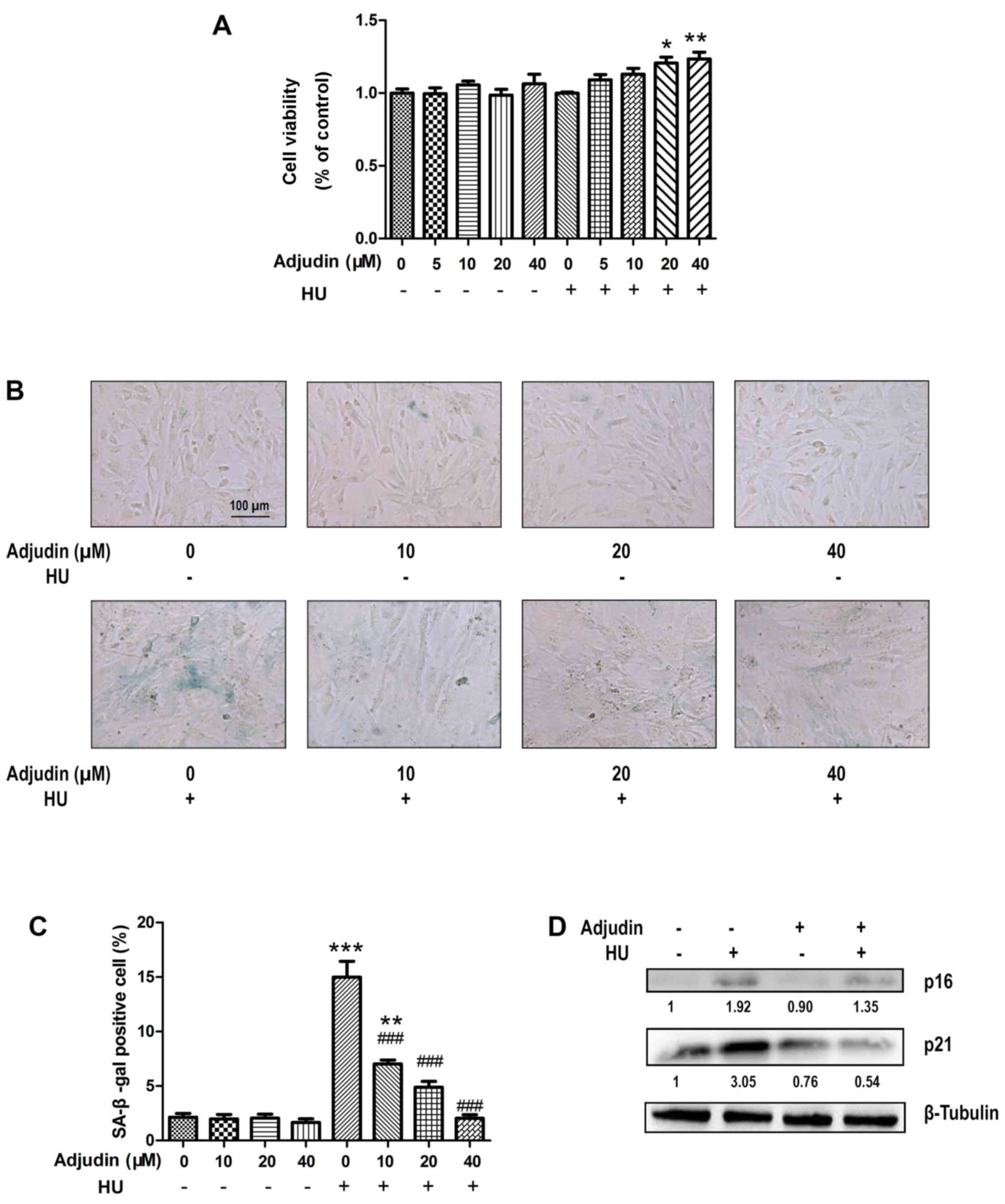
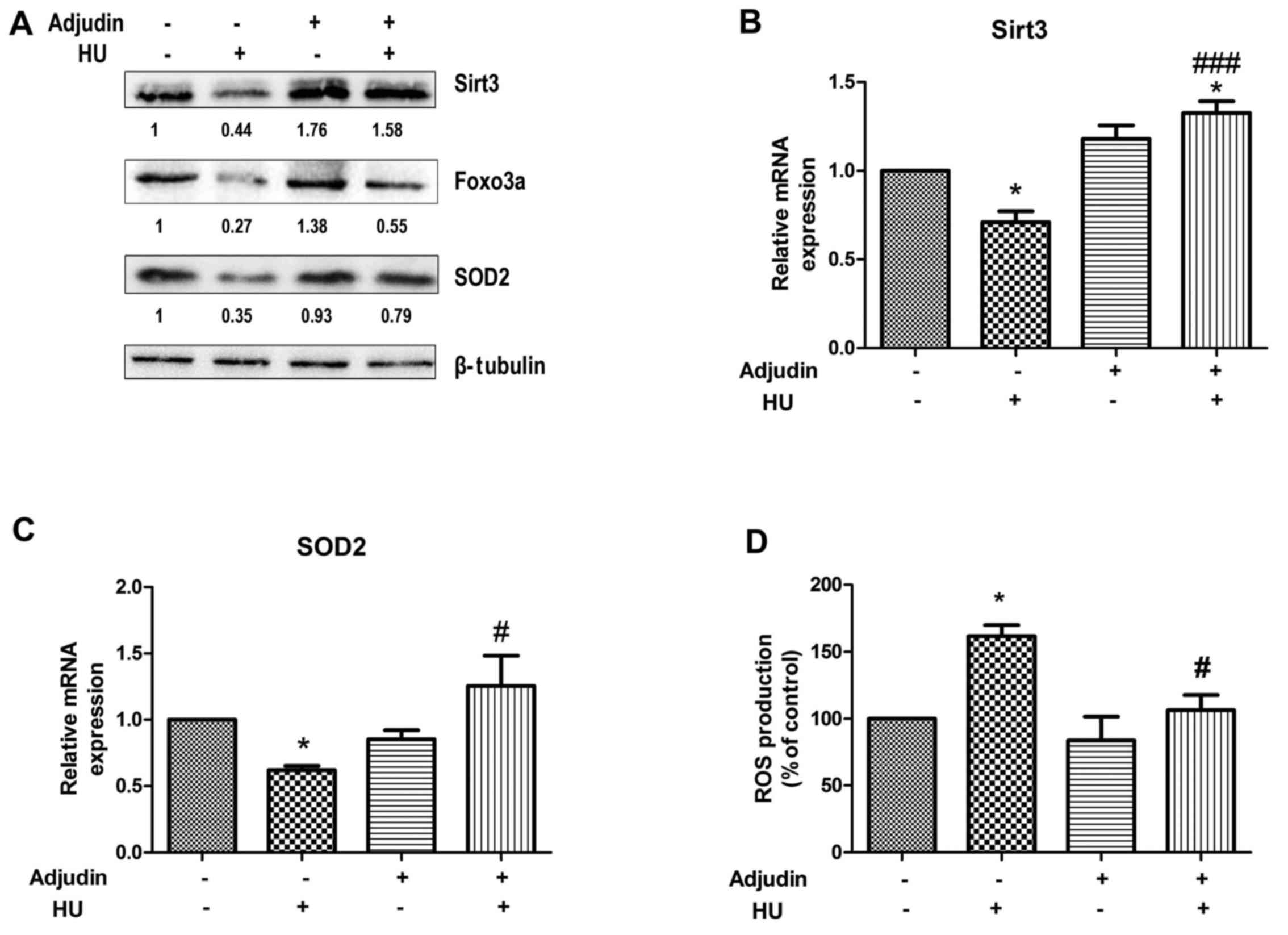
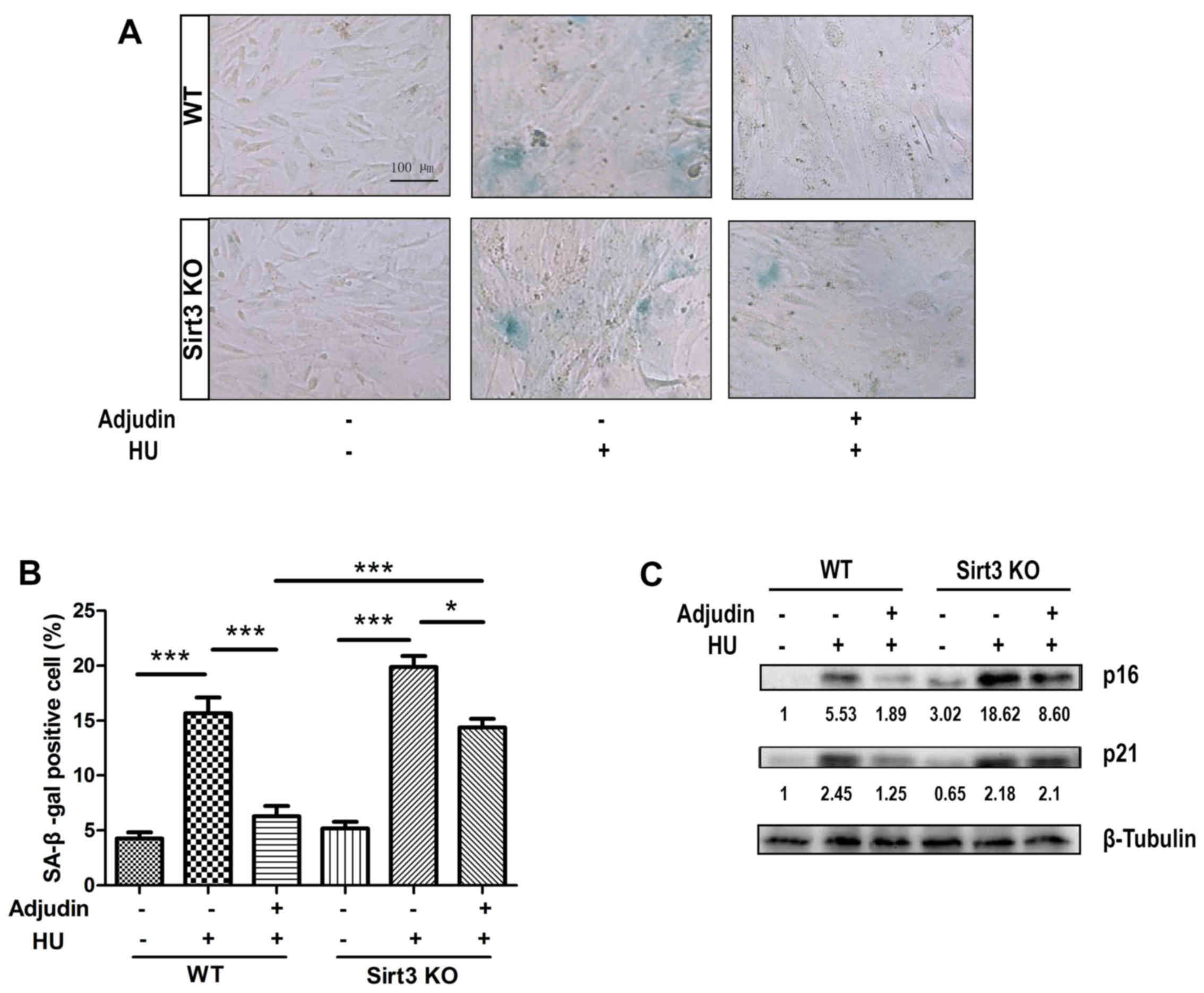
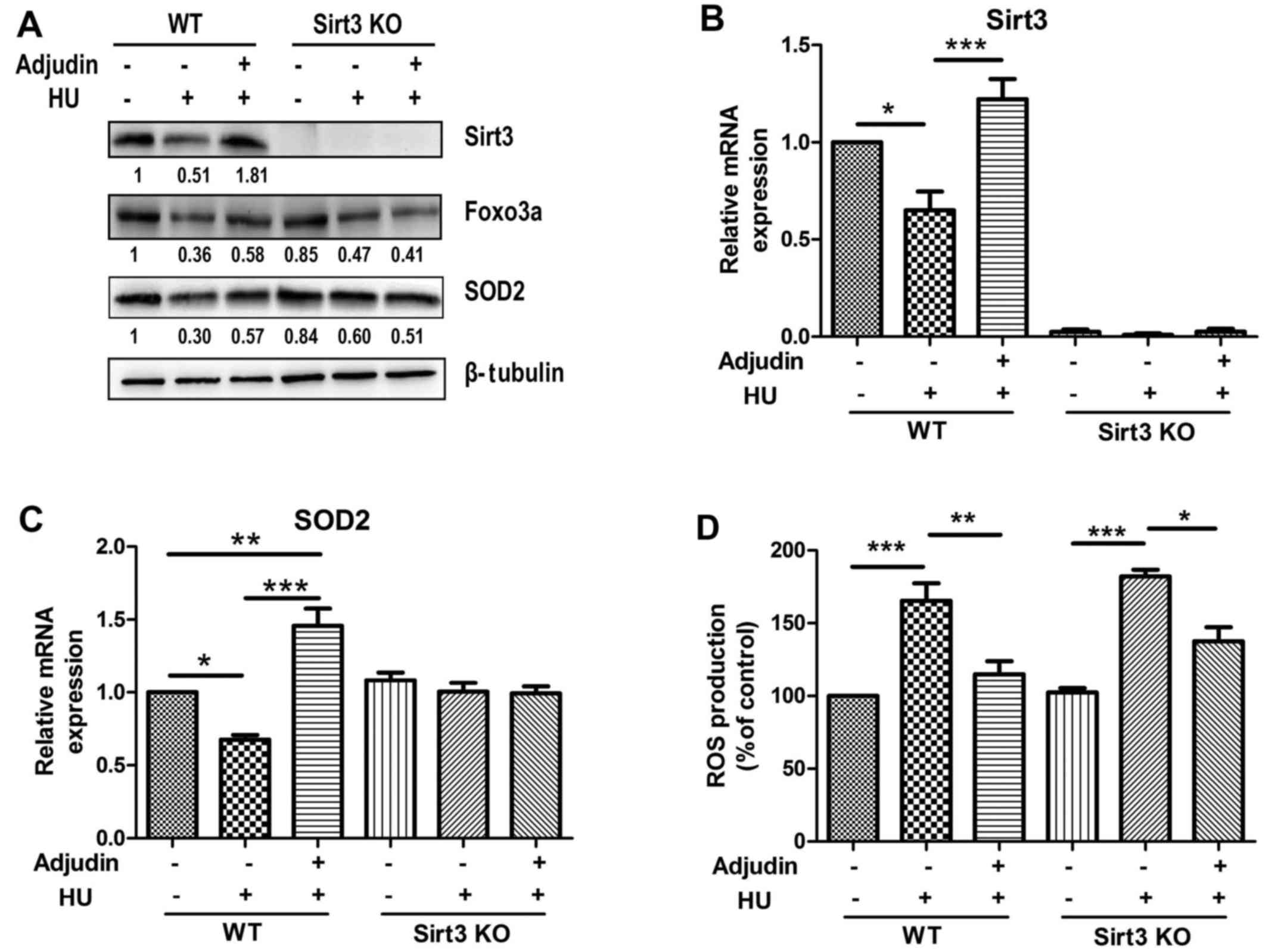
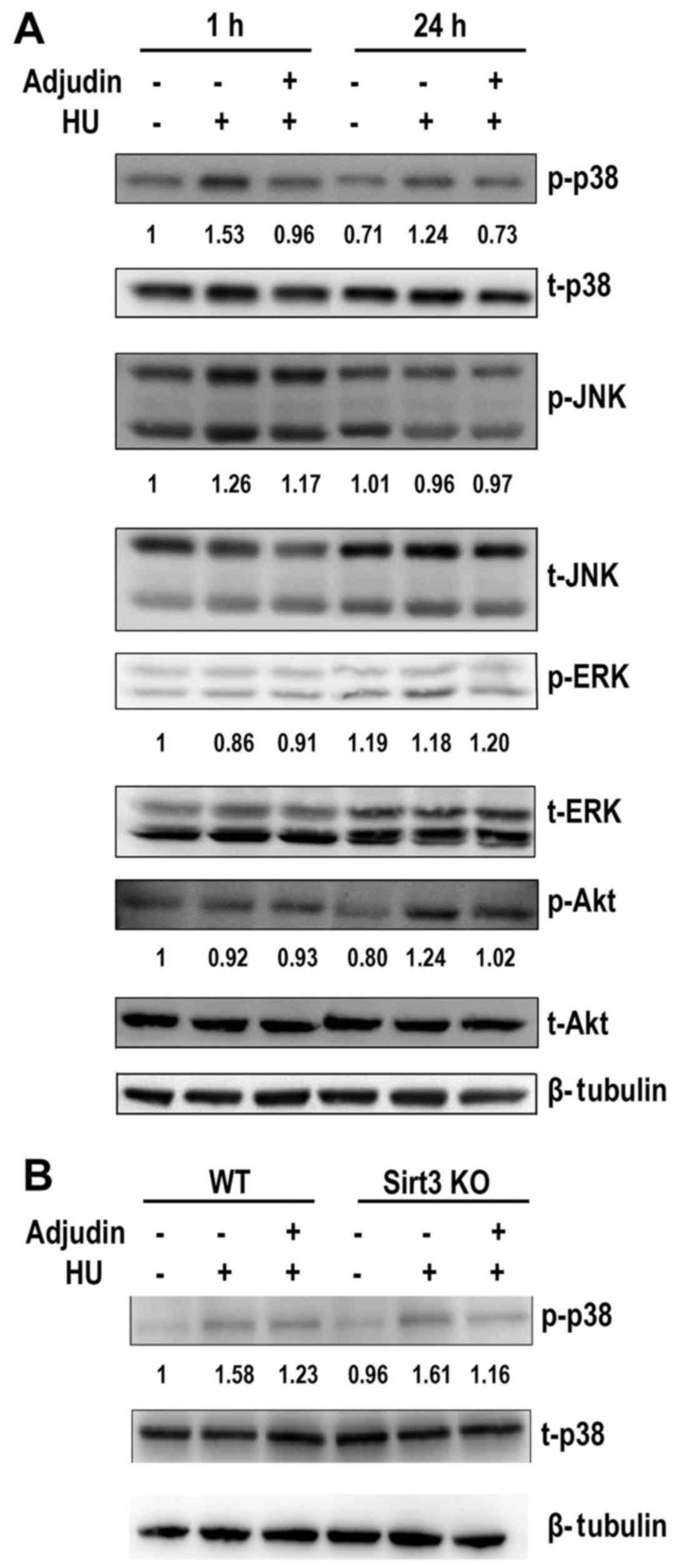
Aging, marked by the physical and functional decline in numerous biological processes, is associated with multiple pathologies including cancer, neurodegenerative diseases and cardiocerebral vascular diseases. The accumulation of reactive oxygen species (ROS) production is considered one of the major causes of aging‑associated diseases and a major therapeutic target. Hydroxyurea has been widely used for cellular senescence model. The expression level of cell cycle-related protein, ROS production and senescence-associated β-galactosidase are considered to be markers of cellular senescence. Strategies to slow senescence may be beneficial for various aging‑associated diseases. The results of the current study indicated that adjudin, a multi‑functional small molecule compound, delayed hydroxyurea‑induced senescence in mouse embryo fibroblasts (MEFs). Adjudin reduced the proportion of senescence‑associated β‑galactosidase‑positive cells and decreased the expression levels of senescence‑associated markers, p16 and p21. Mechanistically, adjudin exerted its anti‑senescence effect by elevating the expression level of sirtuin 3 (Sirt3), which attenuated ROS production through the regulation of forkhead box O3a and manganese superoxide dismutase expression. Furthermore, by comparing wild‑type and Sirt3‑knockout MEFs, it was demonstrated that Sirt3 mediated the anti‑senescence effect of adjudin. Taken together, the findings indicated that adjudin has anti‑aging properties that may be exploited to treat aging‑associated diseases.
View Figures

Figure 1

Figure 2

Figure 3

Figure 4

Figure 5

View References

1 

Flatt T: A new definition of aging? Front Genet. 3:1482012. View Article : Google Scholar : PubMed/NCBI

2 

Liao CY and Kennedy BK: SIRT6, oxidative stress, and aging. Cell Res. 26:143–144. 2016. View Article : Google Scholar : PubMed/NCBI

3 

López-Otín C, Blasco MA, Partridge L, Serrano M and Kroemer G: The hallmarks of aging. Cell. 153:1194–1217. 2013. View Article : Google Scholar : PubMed/NCBI

4 

Childs BG, Durik M, Baker DJ and van Deursen JM: Cellular senescence in aging and age-related disease: From mechanisms to therapy. Nat Med. 21:1424–1435. 2015. View Article : Google Scholar : PubMed/NCBI

5 

Campisi J: Aging, cellular senescence, and cancer. Annu Rev Physiol. 75:685–705. 2013. View Article : Google Scholar

6 

Harman D: The biologic clock: The mitochondria? J Am Geriatr Soc. 20:145–147. 1972. View Article : Google Scholar : PubMed/NCBI

7 

Lin MT and Beal MF: Mitochondrial dysfunction and oxidative stress in neurodegenerative diseases. Nature. 443:787–795. 2006. View Article : Google Scholar : PubMed/NCBI

8 

Frye RA: Characterization of five human cDNAs with homology to the yeast SIR2 gene: Sir2-like proteins (sirtuins) metabolize NAD and may have protein ADP-ribosyltransferase activity. Biochem Biophys Res Commun. 260:273–279. 1999. View Article : Google Scholar : PubMed/NCBI

9 

Kaeberlein M, McVey M and Guarente L: The SIR2/3/4 complex and SIR2 alone promote longevity in Saccharomyces cerevisiae by two different mechanisms. Genes Dev. 13:2570–2580. 1999. View Article : Google Scholar : PubMed/NCBI

10 

Lombard DB, Alt FW, Cheng HL, Bunkenborg J, Streeper RS, Mostoslavsky R, Kim J, Yancopoulos G, Valenzuela D, Murphy A, et al: Mammalian Sir2 homolog SIRT3 regulates global mitochondrial lysine acetylation. Mol Cell Biol. 27:8807–8814. 2007. View Article : Google Scholar : PubMed/NCBI

11 

Ahn BH, Kim HS, Song S, Lee IH, Liu J, Vassilopoulos A, Deng CX and Finkel T: A role for the mitochondrial deacetylase Sirt3 in regulating energy homeostasis. Proc Natl Acad Sci USA. 105:14447–14452. 2008. View Article : Google Scholar : PubMed/NCBI

12 

Samant SA, Zhang HJ, Hong Z, Pillai VB, Sundaresan NR, Wolfgeher D, Archer SL, Chan DC and Gupta MP: SIRT3 deacetylates and activates OPA1 to regulate mitochondrial dynamics during stress. Mol Cell Biol. 34:807–819. 2014. View Article : Google Scholar :

13 

Hirschey MD, Shimazu T, Goetzman E, Jing E, Schwer B, Lombard DB, Grueter CA, Harris C, Biddinger S, Ilkayeva OR, et al: SIRT3 regulates mitochondrial fatty-acid oxidation by reversible enzyme deacetylation. Nature. 464:121–125. 2010. View Article : Google Scholar : PubMed/NCBI

14 

Jing E, O'Neill BT, Rardin MJ, Kleinridders A, Ilkeyeva OR, Ussar S, Bain JR, Lee KY, Verdin EM, Newgard CB, et al: Sirt3 regulates metabolic flexibility of skeletal muscle through reversible enzymatic deacetylation. Diabetes. 62:3404–3417. 2013. View Article : Google Scholar : PubMed/NCBI

15 

Papa L and Germain D: SirT3 regulates the mitochondrial unfolded protein response. Mol Cell Biol. 34:699–710. 2014. View Article : Google Scholar :

16 

Onyango P, Celic I, McCaffery JM, Boeke JD and Feinberg AP: SIRT3, a human SIR2 homologue, is an NAD-dependent deacetylase localized to mitochondria. Proc Natl Acad Sci USA. 99:13653–13658. 2002. View Article : Google Scholar : PubMed/NCBI

17 

Feldman JL, Baeza J and Denu JM: Activation of the protein deacetylase SIRT6 by long-chain fatty acids and widespread deacylation by mammalian sirtuins. J Biol Chem. 288:31350–31356. 2013. View Article : Google Scholar : PubMed/NCBI

18 

Bao X, Wang Y, Li X, Li XM, Liu Z, Yang T, Wong CF, Zhang J, Hao Q and Li XD: Identification of ‘erasers’ for lysine crotonylated histone marks using a chemical proteomics approach. eLife. Nov 4–2014. View Article : Google Scholar

19 

Kim SC, Sprung R, Chen Y, Xu Y, Ball H, Pei J, Cheng T, Kho Y, Xiao H, Xiao L, et al: Substrate and functional diversity of lysine acetylation revealed by a proteomics survey. Mol Cell. 23:607–618. 2006. View Article : Google Scholar : PubMed/NCBI

20 

Floridi A, Paggi MG, D'Atri S, De Martino C, Marcante ML, Silvestrini B and Caputo A: Effect of lonidamine on the energy metabolism of Ehrlich ascites tumor cells. Cancer Res. 41:4661–4666. 1981.PubMed/NCBI

21 

Cheng CY, Silvestrini B, Grima J, Mo MY, Zhu LJ, Johansson E, Saso L, Leone MG, Palmery M and Mruk D: Two new male contraceptives exert their effects by depleting germ cells prematurely from the testis. Biol Reprod. 65:449–461. 2001. View Article : Google Scholar : PubMed/NCBI

22 

Xia W and Geng K: A sirtuin activator and an anti-inflammatory molecule-multifaceted roles of adjudin and its potential applications for aging-related diseases. Semin Cell Dev Biol. 59:71–78. 2016. View Article : Google Scholar : PubMed/NCBI

23 

Shao J, Liu T, Xie QR, Zhang T, Yu H, Wang B, Ying W, Mruk DD, Silvestrini B, Cheng CY, et al: Adjudin attenuates lipopolysaccharide (LPS)- and ischemia-induced microglial activation. J Neuroimmunol. 254:83–90. 2013. View Article : Google Scholar

24 

Quan Y, Xia L, Shao J, Yin S, Cheng CY, Xia W and Gao WQ: Adjudin protects rodent cochlear hair cells against gentamicin ototoxicity via the SIRT3-ROS pathway. Sci Rep. 5:81812015. View Article : Google Scholar : PubMed/NCBI

25 

Xia W, Mruk DD and Cheng CY: C-type natriuretic peptide regulates blood-testis barrier dynamics in adult rat testes. Proc Natl Acad Sci USA. 104:3841–3846. 2007. View Article : Google Scholar : PubMed/NCBI

26 

Krakoff IH, Brown NC and Reichard P: Inhibition of ribonu-cleoside diphosphate reductase by hydroxyurea. Cancer Res. 28:1559–1565. 1968.PubMed/NCBI

27 

Moore EC and Hurlbert RB: The inhibition of ribonucleoside diphosphate reductase by hydroxyurea, guanazole and pyrazolo-imidazole (IMPY). Pharmacol Ther. 27:167–196. 1985. View Article : Google Scholar

28 

Yeo EJ, Hwang YC, Kang CM, Kim IH, Kim DI, Parka JS, Choy HE, Park WY and Park SC: Senescence-like changes induced by hydroxyurea in human diploid fibroblasts. Exp Gerontol. 35:553–571. 2000. View Article : Google Scholar : PubMed/NCBI

29 

Park MS, Choi JS, Lee W, Yang YJ, Kim J, Lee GJ, Kim SS, Park SH, Kim SC, et al: Pharmacogenomic analysis indicates potential of 1,5-isoquinolinediol as a universal anti-aging agent for different tissues. Oncotarget. 6:17251–17260. 2015.PubMed/NCBI

30 

Dong CM, Wang XL, Wang GM, Zhang WJ, Zhu L, Gao S, Yang DJ, Qin Y, Liang QJ, et al: A stress-induced cellular aging model with postnatal neural stem cells. Cell Death Dis. 5:e11162014. View Article : Google Scholar : PubMed/NCBI

31 

Min JN, Tian Y, Xiao Y, Wu L, Li L and Chang S: The mINO80 chromatin remodeling complex is required for efficient telomere replication and maintenance of genome stability. Cell Res. 23:1396–1413. 2013. View Article : Google Scholar : PubMed/NCBI

32 

Moiseeva O, Mallette FA, Mukhopadhyay UK, Moores A and Ferbeyre G: DNA damage signaling and p53-dependent senescence after prolonged beta-interferon stimulation. Mol Biol Cell. 17:1583–1592. 2006. View Article : Google Scholar : PubMed/NCBI

33 

Stewart SA, Ben-Porath I, Carey VJ, O'Connor BF, Hahn WC and Weinberg RA: Erosion of the telomeric single-strand overhang at replicative senescence. Nat Genet. 33:492–496. 2003. View Article : Google Scholar : PubMed/NCBI

34 

Di Micco R, Sulli G, Dobreva M, Liontos M, Botrugno OA, Gargiulo G, dal Zuffo R, Matti V, d'Ario G, et al: Interplay between oncogene-induced DNA damage response and heterochromatin in senescence and cancer. Nat Cell Biol. 13:292–302. 2011. View Article : Google Scholar : PubMed/NCBI

35 

Kim WY and Sharpless NE: The regulation of INK4/ARF in cancer and aging. Cell. 127:265–275. 2006. View Article : Google Scholar : PubMed/NCBI

36 

Herbig U, Jobling WA, Chen BP, Chen DJ and Sedivy JM: Telomere shortening triggers senescence of human cells through a pathway involving ATM, p53, and p21(CIP1), but not p16(INK4a). Mol Cell. 14:501–513. 2004. View Article : Google Scholar : PubMed/NCBI

37 

Baur JA, Ungvari Z, Minor RK, Le Couteur DG and de Cabo R: Are sirtuins viable targets for improving healthspan and lifespan? Nat Rev Drug Discov. 11:443–461. 2012. View Article : Google Scholar : PubMed/NCBI

38 

McDonnell E, Peterson BS, Bomze HM and Hirschey MD: SIRT3 regulates progression and development of diseases of aging. Trends Endocrinol Metab. 26:486–492. 2015. View Article : Google Scholar : PubMed/NCBI

39 

Sundaresan NR, Bindu S, Pillai VB, Samant S, Pan Y, Huang JY, Gupta M, Nagalingam RS, Wolfgeher D, Verdin E, et al: SIRT3 blocks aging-associated tissue fibrosis in mice by deacetylating and activating glycogen synthase kinase 3β. Mol Cell Biol. 36:678–692. 2015. View Article : Google Scholar : PubMed/NCBI

40 

Someya S, Yu W, Hallows WC, Xu J, Vann JM, Leeuwenburgh C, Tanokura M, Denu JM and Prolla TA: Sirt3 mediates reduction of oxidative damage and prevention of age-related hearing loss under caloric restriction. Cell. 143:802–812. 2010. View Article : Google Scholar : PubMed/NCBI

41 

Jacobs KM, Pennington JD, Bisht KS, Aykin-Burns N, Kim HS, Mishra M, Sun L, Nguyen P, Ahn BH, Leclerc J, et al: SIRT3 interacts with the daf-16 homolog FOXO3a in the mitochondria, as well as increases FOXO3a dependent gene expression. Int J Biol Sci. 4:291–299. 2008. View Article : Google Scholar : PubMed/NCBI

42 

Tseng AH, Shieh SS and Wang DL: SIRT3 deacetylates FOXO3 to protect mitochondria against oxidative damage. Free Radic Biol Med. 63:222–234. 2013. View Article : Google Scholar : PubMed/NCBI

43 

Qiu X, Brown K, Hirschey MD, Verdin E and Chen D: Calorie restriction reduces oxidative stress by SIRT3-mediated SOD2 activation. Cell Metab. 12:662–667. 2010. View Article : Google Scholar : PubMed/NCBI

44 

Tao R, Vassilopoulos A, Parisiadou L, Yan Y and Gius D: Regulation of MnSOD enzymatic activity by Sirt3 connects the mitochondrial acetylome signaling networks to aging and carcinogenesis. Antioxid Redox Signal. 20:1646–1654. 2014. View Article : Google Scholar :

45 

Salminen A, Ojala J, Kaarniranta K and Kauppinen A: Mitochondrial dysfunction and oxidative stress activate inflam-masomes: Impact on the aging process and age-related diseases. Cell Mol Life Sci. 69:2999–3013. 2012. View Article : Google Scholar : PubMed/NCBI

46 

Sena LA and Chandel NS: Physiological roles of mitochondrial reactive oxygen species. Mol Cell. 48:158–167. 2012. View Article : Google Scholar : PubMed/NCBI

47 

Li X, Fang P, Mai J, Choi ET, Wang H and Yang XF: Targeting mitochondrial reactive oxygen species as novel therapy for inflammatory diseases and cancers. J Hematol Oncol. 6:192013. View Article : Google Scholar : PubMed/NCBI

48 

Freund A, Patil CK and Campisi J: p38MAPK is a novel DNA damage response-independent regulator of the senescence-associated secretory phenotype. EMBO J. 30:1536–1548. 2011. View Article : Google Scholar : PubMed/NCBI

49 

Bakunina N, Pariante CM and Zunszain PA: Immune mechanisms linked to depression via oxidative stress and neuroprogression. Immunology. 144:365–373. 2015. View Article : Google Scholar : PubMed/NCBI

50 

Hawkes HJ, Karlenius TC and Tonissen KF: Regulation of the human thioredoxin gene promoter and its key substrates: A study of functional and putative regulatory elements. Biochim Biophys Acta. 1840:303–314. 2014. View Article : Google Scholar

Related Articles

  • Abstract
  • View
  • Download
  • Twitter
Copy and paste a formatted citation
Spandidos Publications style
Geng K, Fu N, Yang X and Xia W: Adjudin delays cellular senescence through Sirt3‑mediated attenuation of ROS production. Int J Mol Med 42: 3522-3529, 2018.
APA
Geng, K., Fu, N., Yang, X., & Xia, W. (2018). Adjudin delays cellular senescence through Sirt3‑mediated attenuation of ROS production. International Journal of Molecular Medicine, 42, 3522-3529. https://doi.org/10.3892/ijmm.2018.3917
MLA
Geng, K., Fu, N., Yang, X., Xia, W."Adjudin delays cellular senescence through Sirt3‑mediated attenuation of ROS production". International Journal of Molecular Medicine 42.6 (2018): 3522-3529.
Chicago
Geng, K., Fu, N., Yang, X., Xia, W."Adjudin delays cellular senescence through Sirt3‑mediated attenuation of ROS production". International Journal of Molecular Medicine 42, no. 6 (2018): 3522-3529. https://doi.org/10.3892/ijmm.2018.3917
Copy and paste a formatted citation
x
Spandidos Publications style
Geng K, Fu N, Yang X and Xia W: Adjudin delays cellular senescence through Sirt3‑mediated attenuation of ROS production. Int J Mol Med 42: 3522-3529, 2018.
APA
Geng, K., Fu, N., Yang, X., & Xia, W. (2018). Adjudin delays cellular senescence through Sirt3‑mediated attenuation of ROS production. International Journal of Molecular Medicine, 42, 3522-3529. https://doi.org/10.3892/ijmm.2018.3917
MLA
Geng, K., Fu, N., Yang, X., Xia, W."Adjudin delays cellular senescence through Sirt3‑mediated attenuation of ROS production". International Journal of Molecular Medicine 42.6 (2018): 3522-3529.
Chicago
Geng, K., Fu, N., Yang, X., Xia, W."Adjudin delays cellular senescence through Sirt3‑mediated attenuation of ROS production". International Journal of Molecular Medicine 42, no. 6 (2018): 3522-3529. https://doi.org/10.3892/ijmm.2018.3917
Follow us
  • Twitter
  • LinkedIn
  • Facebook
About
  • Spandidos Publications
  • Careers
  • Cookie Policy
  • Privacy Policy
How can we help?
  • Help
  • Live Chat
  • Contact
  • Email to our Support Team