Spandidos Publications Logo
  • About
    • About Spandidos
    • Aims and Scopes
    • Abstracting and Indexing
    • Editorial Policies
    • Reprints and Permissions
    • Job Opportunities
    • Terms and Conditions
    • Contact
  • Journals
    • All Journals
    • Oncology Letters
      • Oncology Letters
      • Information for Authors
      • Editorial Policies
      • Editorial Board
      • Aims and Scope
      • Abstracting and Indexing
      • Bibliographic Information
      • Archive
    • International Journal of Oncology
      • International Journal of Oncology
      • Information for Authors
      • Editorial Policies
      • Editorial Board
      • Aims and Scope
      • Abstracting and Indexing
      • Bibliographic Information
      • Archive
    • Molecular and Clinical Oncology
      • Molecular and Clinical Oncology
      • Information for Authors
      • Editorial Policies
      • Editorial Board
      • Aims and Scope
      • Abstracting and Indexing
      • Bibliographic Information
      • Archive
    • Experimental and Therapeutic Medicine
      • Experimental and Therapeutic Medicine
      • Information for Authors
      • Editorial Policies
      • Editorial Board
      • Aims and Scope
      • Abstracting and Indexing
      • Bibliographic Information
      • Archive
    • International Journal of Molecular Medicine
      • International Journal of Molecular Medicine
      • Information for Authors
      • Editorial Policies
      • Editorial Board
      • Aims and Scope
      • Abstracting and Indexing
      • Bibliographic Information
      • Archive
    • Biomedical Reports
      • Biomedical Reports
      • Information for Authors
      • Editorial Policies
      • Editorial Board
      • Aims and Scope
      • Abstracting and Indexing
      • Bibliographic Information
      • Archive
    • Oncology Reports
      • Oncology Reports
      • Information for Authors
      • Editorial Policies
      • Editorial Board
      • Aims and Scope
      • Abstracting and Indexing
      • Bibliographic Information
      • Archive
    • Molecular Medicine Reports
      • Molecular Medicine Reports
      • Information for Authors
      • Editorial Policies
      • Editorial Board
      • Aims and Scope
      • Abstracting and Indexing
      • Bibliographic Information
      • Archive
    • World Academy of Sciences Journal
      • World Academy of Sciences Journal
      • Information for Authors
      • Editorial Policies
      • Editorial Board
      • Aims and Scope
      • Abstracting and Indexing
      • Bibliographic Information
      • Archive
    • International Journal of Functional Nutrition
      • International Journal of Functional Nutrition
      • Information for Authors
      • Editorial Policies
      • Editorial Board
      • Aims and Scope
      • Abstracting and Indexing
      • Bibliographic Information
      • Archive
    • International Journal of Epigenetics
      • International Journal of Epigenetics
      • Information for Authors
      • Editorial Policies
      • Editorial Board
      • Aims and Scope
      • Abstracting and Indexing
      • Bibliographic Information
      • Archive
    • Medicine International
      • Medicine International
      • Information for Authors
      • Editorial Policies
      • Editorial Board
      • Aims and Scope
      • Abstracting and Indexing
      • Bibliographic Information
      • Archive
  • Articles
  • Information
    • Information for Authors
    • Information for Reviewers
    • Information for Librarians
    • Information for Advertisers
    • Conferences
  • Language Editing
Spandidos Publications Logo
  • About
    • About Spandidos
    • Aims and Scopes
    • Abstracting and Indexing
    • Editorial Policies
    • Reprints and Permissions
    • Job Opportunities
    • Terms and Conditions
    • Contact
  • Journals
    • All Journals
    • Biomedical Reports
      • Information for Authors
      • Editorial Policies
      • Editorial Board
      • Aims and Scope
      • Abstracting and Indexing
      • Bibliographic Information
      • Archive
    • Experimental and Therapeutic Medicine
      • Information for Authors
      • Editorial Policies
      • Editorial Board
      • Aims and Scope
      • Abstracting and Indexing
      • Bibliographic Information
      • Archive
    • International Journal of Epigenetics
      • Information for Authors
      • Editorial Policies
      • Editorial Board
      • Aims and Scope
      • Abstracting and Indexing
      • Bibliographic Information
      • Archive
    • International Journal of Functional Nutrition
      • Information for Authors
      • Editorial Policies
      • Editorial Board
      • Aims and Scope
      • Abstracting and Indexing
      • Bibliographic Information
      • Archive
    • International Journal of Molecular Medicine
      • Information for Authors
      • Editorial Policies
      • Editorial Board
      • Aims and Scope
      • Abstracting and Indexing
      • Bibliographic Information
      • Archive
    • International Journal of Oncology
      • Information for Authors
      • Editorial Policies
      • Editorial Board
      • Aims and Scope
      • Abstracting and Indexing
      • Bibliographic Information
      • Archive
    • Medicine International
      • Information for Authors
      • Editorial Policies
      • Editorial Board
      • Aims and Scope
      • Abstracting and Indexing
      • Bibliographic Information
      • Archive
    • Molecular and Clinical Oncology
      • Information for Authors
      • Editorial Policies
      • Editorial Board
      • Aims and Scope
      • Abstracting and Indexing
      • Bibliographic Information
      • Archive
    • Molecular Medicine Reports
      • Information for Authors
      • Editorial Policies
      • Editorial Board
      • Aims and Scope
      • Abstracting and Indexing
      • Bibliographic Information
      • Archive
    • Oncology Letters
      • Information for Authors
      • Editorial Policies
      • Editorial Board
      • Aims and Scope
      • Abstracting and Indexing
      • Bibliographic Information
      • Archive
    • Oncology Reports
      • Information for Authors
      • Editorial Policies
      • Editorial Board
      • Aims and Scope
      • Abstracting and Indexing
      • Bibliographic Information
      • Archive
    • World Academy of Sciences Journal
      • Information for Authors
      • Editorial Policies
      • Editorial Board
      • Aims and Scope
      • Abstracting and Indexing
      • Bibliographic Information
      • Archive
  • Articles
  • Information
    • For Authors
    • For Reviewers
    • For Librarians
    • For Advertisers
    • Conferences
  • Language Editing
Login Register Submit
  • This site uses cookies
  • You can change your cookie settings at any time by following the instructions in our Cookie Policy. To find out more, you may read our Privacy Policy.

    I agree
Search articles by DOI, keyword, author or affiliation
Search
Advanced Search
presentation
International Journal of Molecular Medicine
Join Editorial Board Propose a Special Issue
Print ISSN: 1107-3756 Online ISSN: 1791-244X
Journal Cover
February-2019 Volume 43 Issue 2

Full Size Image

Sign up for eToc alerts
Recommend to Library

Journals

International Journal of Molecular Medicine

International Journal of Molecular Medicine

International Journal of Molecular Medicine is an international journal devoted to molecular mechanisms of human disease.

International Journal of Oncology

International Journal of Oncology

International Journal of Oncology is an international journal devoted to oncology research and cancer treatment.

Molecular Medicine Reports

Molecular Medicine Reports

Covers molecular medicine topics such as pharmacology, pathology, genetics, neuroscience, infectious diseases, molecular cardiology, and molecular surgery.

Oncology Reports

Oncology Reports

Oncology Reports is an international journal devoted to fundamental and applied research in Oncology.

Experimental and Therapeutic Medicine

Experimental and Therapeutic Medicine

Experimental and Therapeutic Medicine is an international journal devoted to laboratory and clinical medicine.

Oncology Letters

Oncology Letters

Oncology Letters is an international journal devoted to Experimental and Clinical Oncology.

Biomedical Reports

Biomedical Reports

Explores a wide range of biological and medical fields, including pharmacology, genetics, microbiology, neuroscience, and molecular cardiology.

Molecular and Clinical Oncology

Molecular and Clinical Oncology

International journal addressing all aspects of oncology research, from tumorigenesis and oncogenes to chemotherapy and metastasis.

World Academy of Sciences Journal

World Academy of Sciences Journal

Multidisciplinary open-access journal spanning biochemistry, genetics, neuroscience, environmental health, and synthetic biology.

International Journal of Functional Nutrition

International Journal of Functional Nutrition

Open-access journal combining biochemistry, pharmacology, immunology, and genetics to advance health through functional nutrition.

International Journal of Epigenetics

International Journal of Epigenetics

Publishes open-access research on using epigenetics to advance understanding and treatment of human disease.

Medicine International

Medicine International

An International Open Access Journal Devoted to General Medicine.

Journal Cover
February-2019 Volume 43 Issue 2

Full Size Image

Sign up for eToc alerts
Recommend to Library

  • Article
  • Citations
    • Cite This Article
    • Download Citation
    • Create Citation Alert
    • Remove Citation Alert
    • Cited By
  • Similar Articles
    • Related Articles (in Spandidos Publications)
    • Similar Articles (Google Scholar)
    • Similar Articles (PubMed)
  • Download PDF
  • Download XML
  • View XML
Article Open Access

Attenuation of autophagy flux by 6-shogaol sensitizes human liver cancer cells to TRAIL-induced apoptosis via p53 and ROS

  • Authors:
    • Uddin Md. Nazim
    • Sang‑Youel Park
  • View Affiliations / Copyright

    Affiliations: Department of Biochemistry, College of Veterinary Medicine, Chonbuk National University, Iksan, Jeonbuk 54596, Republic of Korea
    Copyright: © Nazim et al. This is an open access article distributed under the terms of Creative Commons Attribution License.
  • Pages: 701-708
    |
    Published online on: November 21, 2018
       https://doi.org/10.3892/ijmm.2018.3994
  • Expand metrics +
Metrics: Total Views: 0 (Spandidos Publications: | PMC Statistics: )
Metrics: Total PDF Downloads: 0 (Spandidos Publications: | PMC Statistics: )
Cited By (CrossRef): 0 citations Loading Articles...

This article is mentioned in:


Abstract

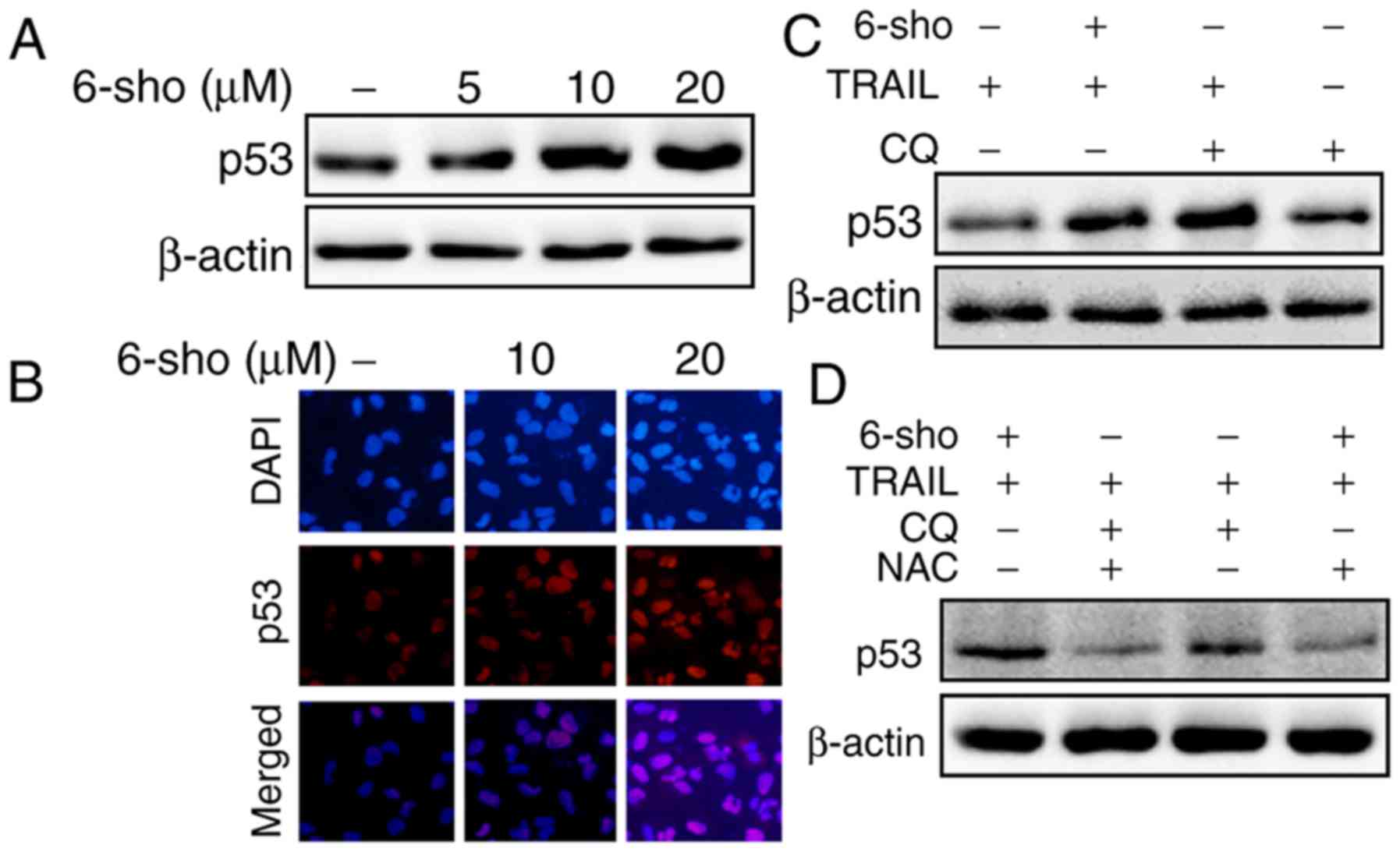
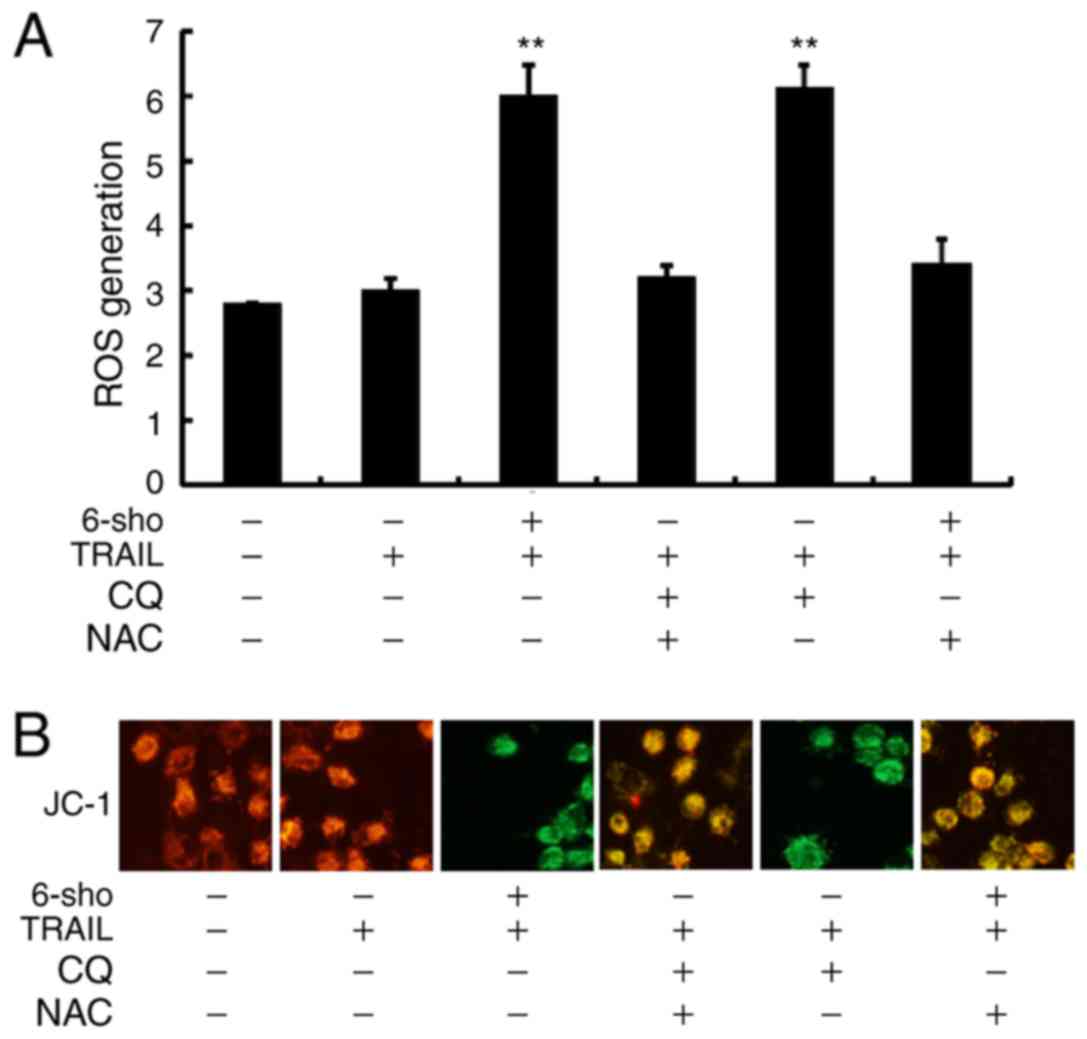
Tumor necrosis factor (TNF)‑related apoptosis‑inducing ligand (TRAIL) is a member of the TNF superfamily and is an antitumor drug that induces apoptosis in tumor cells with minimal or no effects on normal cells. Here, it is demonstrated that 6‑shogaol (6‑sho), a bioactive component of ginger, exerted anti‑inflammatory and anticancer properties, attenuated tumor cell propagation and induced TRAIL‑mediated cell death in liver cancer cells. The current study identified a potential pathway by revealing that TRAIL and 6‑sho or chloroquine acted together to trigger reactive oxygen species (ROS) production, to upregulate tumor‑suppressor protein 53 (p53) expression and to change the mitochondrial transmembrane potential (MTP). Treatment with N‑acetyl‑L‑cysteine reversed these effects, restoring the MTP and attenuated ROS production and p53 expression. Interestingly, treatment with 6‑sho increased p62 and microtubule‑associated proteins 1A/1B light chain 3B‑II levels, indicating an inhibited autophagy flux. In conclusion, attenuation of 6‑sho‑induced autophagy flux sensitized cells to TRAIL‑induced apoptosis via p53 and ROS, suggesting that the administration of TRAIL in combination with 6‑sho may be a suitable therapeutic method for the treatment of TRAIL‑resistant Huh7 liver cells.
View Figures

Figure 1

Figure 2

Figure 3

Figure 4

Figure 5

Figure 6

View References

1 

Dhanasekaran R, Limaye A and Cabrera R: Hepatocellular carcinoma: Current trends in worldwide epidemiology, risk factors, diagnosis, and therapeutics. Hepat Med. 4:19–37. 2012.PubMed/NCBI

2 

Chi HC, Chen SL, Cheng YH, Lin TK, Tsai CY, Tsai MM, Lin YH, Huang YH and Lin KH: Chemotherapy resistance and metastasis-promoting effects of thyroid hormone in hepatocarcinoma cells are mediated by suppression of FoxO1 and Bim pathway. Cell Death Dis. 7:e23242016. View Article : Google Scholar : PubMed/NCBI

3 

Wei F, Jiang X, Gao HY and Gao SH: Liquiritin induces apoptosis and autophagy in cisplatin (DDP)-resistant gastric cancer cells in vitro and xenograft nude mic in vivo. Int J Oncol. 51:1383–1394. 2017. View Article : Google Scholar : PubMed/NCBI

4 

Helmy SA, El-Mesery M, El-Karef A, Eissa LA and El Gayar AM: Chloroquine upregulates TRAIL/TRAILR2 expression and potentiates doxorubicin anti-tumor activity in thioacetamide-induced hepatocellular carcinoma model. Chem Biol Interact. 279:84–94. 2018. View Article : Google Scholar

5 

Falschlehner C, Emmerich CH, Gerlach B and Walczak H: TRAIL signalling: Decisions between life and death. Int J Biochem Cell Biol. 39:1462–1475. 2007. View Article : Google Scholar : PubMed/NCBI

6 

Trivedi R and Mishra DP: Trailing TRAIL resistance: Novel targets for TRAIL sensitization in cancer cells. Front Oncol. 5:692015. View Article : Google Scholar : PubMed/NCBI

7 

Zhang L and Fang B: Mechanisms of resistance to TRAIL-induced apoptosis in cancer. Cancer Gene Ther. 12:228–237. 2005. View Article : Google Scholar

8 

Zhang Y and Zhang B: TRAIL resistance of breast cancer cells is associated with constitutive endocytosis of death receptors 4 and 5. Mol Cancer Res. 6:1861–1871. 2008. View Article : Google Scholar : PubMed/NCBI

9 

Ozoren N, Fisher MJ, Kim K, Liu CX, Genin A, Shifman Y, Dicker DT, Spinner NB, Lisitsyn NA and El-Deiry WS: Homozygous deletion of the death receptor DR4 gene in a naso-pharyngeal cancer cell line is associated with TRAIL resistance. Int J Oncol. 16:917–925. 2000.

10 

Sanlioglu AD, Dirice E, Aydin C, Erin N, Koksoy S and Sanlioglu S: Surface TRAIL decoy receptor-4 expression is correlated with TRAIL resistance in MCF7 breast cancer cells. BMC Cancer. 5:542005. View Article : Google Scholar : PubMed/NCBI

11 

Ali BH, Blunden G, Tanira MO and Nemmar A: Some phytochemical, pharmacological and toxicological properties of ginger (Zingiber officinale Roscoe): A review of recent research. Food Chem Toxicol. 46:409–420. 2008. View Article : Google Scholar

12 

Haniadka R, Rajeev AG, Palatty PL, Arora R and Baliga MS: Zingiber officinale (ginger) as an anti-emetic in cancer chemotherapy: A review. J Altern Complement Med. 18:440–444. 2012. View Article : Google Scholar : PubMed/NCBI

13 

Li F, Nitteranon V, Tang X, Liang J, Zhang G, Parkin KL and Hu Q: In vitro antioxidant and anti-inflammatory activities of 1-dehydro-[6]-gingerdione, 6-shogaol, 6-dehydroshogaol and hexahydrocurcumin. Food Chem. 135:332–337. 2012. View Article : Google Scholar : PubMed/NCBI

14 

Dugasani S, Pichika MR, Nadarajah VD, Balijepalli MK, Tandra S and Korlakunta JN: Comparative antioxidant and anti-inflammatory effects of [6]-gingerol, [8]-gingerol, [10]-gingerol and [6]-shogaol. J Ethnopharmacol. 127:515–520. 2010. View Article : Google Scholar

15 

Chen CY, Liu TZ, Liu YW, Tseng WC, Liu RH, Lu FJ, Lin YS, Kuo SH and Chen CH: 6-shogaol (alkanone from ginger) induces apoptotic cell death of human hepatoma p53 mutant Mahlavu subline via an oxidative stress-mediated caspase-dependent mechanism. J Agric Food Chem. 55:948–954. 2007. View Article : Google Scholar : PubMed/NCBI

16 

Hu R, Zhou P, Peng YB, Xu X, Ma J, Liu Q, Zhang L, Wen XD, Qi LW, Gao N and Li P: 6-Shogaol induces apoptosis in human hepatocellular carcinoma cells and exhibits anti-tumor activity in vivo through endoplasmic reticulum stress. PLoS One. 7:e396642012. View Article : Google Scholar : PubMed/NCBI

17 

Pan MH, Hsieh MC, Kuo JM, Lai CS, Wu H, Sang S and Ho CT: 6-Shogaol induces apoptosis in human colorectal carcinoma cells via ROS production, caspase activation, and GADD 153 expression. Mol Nutr Food Res. 52:527–537. 2008. View Article : Google Scholar : PubMed/NCBI

18 

Liu Q, Peng YB, Zhou P, Qi LW, Zhang M, Gao N, Liu EH and Li P: 6-Shogaol induces apoptosis in human leukemia cells through a process involving caspase-mediated cleavage of eIF2α. Mol Cancer. 12:1352013. View Article : Google Scholar

19 

Kim MO, Lee MH, Oi N, Kim SH, Bae KB, Huang Z, Kim DJ, Reddy K, Lee SY, Park SJ, et al: [6]-shogaol inhibits growth and induces apoptosis of non-small cell lung cancer cells by directly regulating Akt1/2. Carcinogenesis. 35:683–691. 2014. View Article : Google Scholar

20 

Levine B and Klionsky DJ: Development by self-digestion: Molecular mechanisms and biological functions of autophagy. Dev Cell. 6:463–477. 2004. View Article : Google Scholar : PubMed/NCBI

21 

Mizushima N: Autophagy: Process and function. Genes Dev. 21:2861–2873. 2007. View Article : Google Scholar : PubMed/NCBI

22 

Bergmann A: Autophagy and cell death: No longer at odds. Cell. 131:1032–1034. 2007. View Article : Google Scholar : PubMed/NCBI

23 

Maiuri MC, Zalckvar E, Kimchi A and Kroemer G: Self-eating and self-killing: Crosstalk between autophagy and apoptosis. Nat Rev Mol Cell Biol. 8:741–752. 2007. View Article : Google Scholar : PubMed/NCBI

24 

Codogno P, Mehrpour M and Proikas-Cezanne T: Canonical and non-canonical autophagy: Variations on a common theme of self-eating. Nat Rev Mol Cell Biol. 13:7–12. 2011. View Article : Google Scholar : PubMed/NCBI

25 

Kimura T, Takabatake Y, Takahashi A and Isaka Y: Chloroquine in cancer therapy: A double-edged sword of autophagy. Cancer Res. 73:3–7. 2013. View Article : Google Scholar : PubMed/NCBI

26 

Chiu HW, Su YC and Hong JR: Betanodavirus B2 protein triggers apoptosis and necroptosis in lung cancer cells that suppresses autophagy. Oncotarget. 8:94129–94141. 2017.PubMed/NCBI

27 

Kruse JP and Gu W: Modes of p53 regulation. Cell. 137:609–622. 2009. View Article : Google Scholar : PubMed/NCBI

28 

Toledo F and Wahl GM: Regulating the p53 pathway: In vitro hypotheses, in vivo veritas. Nat Rev Cancer. 6:909–923. 2006. View Article : Google Scholar : PubMed/NCBI

29 

Di J, Huang H, Qu D, Tang J, Cao W, Lu Z, Cheng Q, Yang J, Bai J, Zhang Y and Zheng J: Rap2B promotes proliferation, migration, and invasion of human breast cancer through calcium-related ERK1/2 signaling pathway. Sci Rep. 5:123632015. View Article : Google Scholar : PubMed/NCBI

30 

Zhao J, Zhang L, Li J, Wu T, Wang M, Xu G, Zhang F, Liu L, Yang J and Sun S: A novel pyrazolone-based derivative induces apoptosis in human esophageal cells via reactive oxygen species (ROS) generation and caspase-dependent mitochondria-mediated pathway. Chem Biol Interact. 231:1–9. 2015. View Article : Google Scholar : PubMed/NCBI

31 

Menzies FM, Fleming A and Rubinsztein DC: Compromised autophagy and neurodegenerative diseases. Nat Rev Neurosci. 16:345–357. 2015. View Article : Google Scholar : PubMed/NCBI

32 

Nazim UM, Moon JH, Lee JH, Lee YJ, Seol JW, Eo SK, Lee JH and Park SY: Activation of autophagy flux by metformin down-regulates cellular FLICE-like inhibitory protein and enhances TRAIL- induced apoptosis. Oncotarget. 7:23468–23481. 2016. View Article : Google Scholar : PubMed/NCBI

33 

Nazim UM, Moon JH, Lee YJ, Seol JW and Park SY: PPARγ activation by troglitazone enhances human lung cancer cells to TRAIL-induced apoptosis via autophagy flux. Oncotarget. 8:26819–26831. 2017.PubMed/NCBI

34 

Ashkenazi A, Pai RC, Fong S, Leung S, Lawrence DA, Marsters SA, Blackie C, Chang L, McMurtrey AE, Hebert A, et al: Safety and antitumor activity of recombinant soluble Apo2 ligand. J Clin Invest. 104:155–162. 1999. View Article : Google Scholar : PubMed/NCBI

35 

Wang S and El-Deiry WS: TRAIL and apoptosis induction by TNF-family death receptors. Oncogene. 22:8628–8633. 2003. View Article : Google Scholar : PubMed/NCBI

36 

Falschlehner C, Ganten TM, Koschny R, Schaefer U and Walczak H: TRAIL and other TRAIL receptor agonists as novel cancer therapeutics. Adv Exp Med Biol. 647:195–206. 2009. View Article : Google Scholar : PubMed/NCBI

37 

Green KL, Brown C, Roeder GE, Southgate TD and Gaston K: A cancer cell-specific inducer of apoptosis. Hum Gene Ther. 18:547–561. 2007. View Article : Google Scholar : PubMed/NCBI

38 

Han MA, Woo SM, Min KJ, Kim S, Park JW, Kim DE, Kim SH, Choi YH and Kwon TK: 6-Shogaol enhances renal carcinoma Caki cells to TRAIL-induced apoptosis through reactive oxygen species-mediated cytochrome c release and down-regulation of c-FLIP(L) expression. Chem Biol Interact. 228:69–78. 2015. View Article : Google Scholar : PubMed/NCBI

39 

Ferraro E and Cecconi F: Autophagic and apoptotic response to stress signals in mammalian cells. Arch Biochem Biophys. 462:210–219. 2007. View Article : Google Scholar : PubMed/NCBI

40 

Xie Z and Klionsky DJ: Autophagosome formation: Core machinery and adaptations. Nat Cell Biol. 9:1102–1109. 2007. View Article : Google Scholar : PubMed/NCBI

41 

Ohsumi Y and Mizushima N: Two ubiquitin-like conjugation systems essential for autophagy. Semin Cell Dev Biol. 15:231–236. 2004. View Article : Google Scholar : PubMed/NCBI

42 

Jia L, Macey MG, Yin Y, Newland AC and Kelsey SM: Subcellular distribution and redistribution of Bcl-2 family proteins in human leukemia cells undergoing apoptosis. Blood. 93:2353–2359. 1999.PubMed/NCBI

43 

Chen L, Xiong YQ, Xu J, Wang JP, Meng ZL and Hong YQ: Juglanin inhibits lung cancer by regulation of apoptosis, ROS and autophagy induction. Oncotarget. 8:93878–93898. 2017.PubMed/NCBI

44 

Park SY and Kim Y: Surfactin inhibits immunostimulatory function of macrophages through blocking NK-kappaB, MAPK and Akt pathway. Int Immunopharmacol. 9:886–893. 2009. View Article : Google Scholar : PubMed/NCBI

45 

Yang TC, Lai CC, Shiu SL, Chuang PH, Tzou BC, Lin YY, Tsai FJ and Lin CW: Japanese encephalitis virus down-regulates thioredoxin and induces ROS-mediated ASK1-ERK/p38 MAPK activation in human promonocyte cells. Microbes Infect. 12:643–651. 2010. View Article : Google Scholar : PubMed/NCBI

46 

Son Y, Cheong YK, Kim NH, Chung HT, Kang DG and Pae HO: Mitogen-activated protein kinases and reactive oxygen species: How can ROS activate MAPK pathways. J Signal Transduct. 2011:7926392011. View Article : Google Scholar

47 

Yamanaka T, Shiraki K, Sugimoto K, Ito T, Fujikawa K, Ito M, Takase K, Moriyama M, Nakano T and Suzuki A: Chemotherapeutic agents augment TRAIL-induced apoptosis in human hepatocellular carcinoma cell lines. Hepatology. 32:482–490. 2000. View Article : Google Scholar : PubMed/NCBI

48 

Shankar S and Srivastava RK: Enhancement of therapeutic potential of TRAIL by cancer chemotherapy and irradiation: Mechanisms and clinical implications. Drug Resist Updat. 7:139–156. 2004. View Article : Google Scholar : PubMed/NCBI

49 

Hung JY, Hsu YL, Li CT, Ko YC, Ni WC, Huang MS and Kuo PL: 6-Shogaol, an active constituent of dietary ginger, induces autophagy by inhibiting the AKT/mTOR pathway in human non-small cell lung cancer A549 cells. J Agric Food Chem. 57:9809–9816. 2009. View Article : Google Scholar : PubMed/NCBI

50 

Amaravadi RK, Yu D, Lum JJ, Bui T, Christophorou MA, Evan GI, Thomas-Tikhonenko A and Thompson CB: Autophagy inhibition enhances therapy-induced apoptosis in a Myc-induced model of lymphoma. J Clin Invest. 117:326–336. 2007. View Article : Google Scholar : PubMed/NCBI

51 

Saleem A, Dvorzhinski D, Santanam U, Mathew R, Bray K, Stein M, White E and DiPaola RS: Effect of dual inhibition of apoptosis and autophagy in prostate cancer. Prostate. 72:1374–1381. 2012. View Article : Google Scholar : PubMed/NCBI

Related Articles

  • Abstract
  • View
  • Download
  • Twitter
Copy and paste a formatted citation
Spandidos Publications style
Nazim UM and Park SY: Attenuation of autophagy flux by 6-shogaol sensitizes human liver cancer cells to TRAIL-induced apoptosis via p53 and ROS. Int J Mol Med 43: 701-708, 2019.
APA
Nazim, U.M., & Park, S. (2019). Attenuation of autophagy flux by 6-shogaol sensitizes human liver cancer cells to TRAIL-induced apoptosis via p53 and ROS. International Journal of Molecular Medicine, 43, 701-708. https://doi.org/10.3892/ijmm.2018.3994
MLA
Nazim, U. M., Park, S."Attenuation of autophagy flux by 6-shogaol sensitizes human liver cancer cells to TRAIL-induced apoptosis via p53 and ROS". International Journal of Molecular Medicine 43.2 (2019): 701-708.
Chicago
Nazim, U. M., Park, S."Attenuation of autophagy flux by 6-shogaol sensitizes human liver cancer cells to TRAIL-induced apoptosis via p53 and ROS". International Journal of Molecular Medicine 43, no. 2 (2019): 701-708. https://doi.org/10.3892/ijmm.2018.3994
Copy and paste a formatted citation
x
Spandidos Publications style
Nazim UM and Park SY: Attenuation of autophagy flux by 6-shogaol sensitizes human liver cancer cells to TRAIL-induced apoptosis via p53 and ROS. Int J Mol Med 43: 701-708, 2019.
APA
Nazim, U.M., & Park, S. (2019). Attenuation of autophagy flux by 6-shogaol sensitizes human liver cancer cells to TRAIL-induced apoptosis via p53 and ROS. International Journal of Molecular Medicine, 43, 701-708. https://doi.org/10.3892/ijmm.2018.3994
MLA
Nazim, U. M., Park, S."Attenuation of autophagy flux by 6-shogaol sensitizes human liver cancer cells to TRAIL-induced apoptosis via p53 and ROS". International Journal of Molecular Medicine 43.2 (2019): 701-708.
Chicago
Nazim, U. M., Park, S."Attenuation of autophagy flux by 6-shogaol sensitizes human liver cancer cells to TRAIL-induced apoptosis via p53 and ROS". International Journal of Molecular Medicine 43, no. 2 (2019): 701-708. https://doi.org/10.3892/ijmm.2018.3994
Follow us
  • Twitter
  • LinkedIn
  • Facebook
About
  • Spandidos Publications
  • Careers
  • Cookie Policy
  • Privacy Policy
How can we help?
  • Help
  • Live Chat
  • Contact
  • Email to our Support Team