Spandidos Publications Logo
  • About
    • About Spandidos
    • Aims and Scopes
    • Abstracting and Indexing
    • Editorial Policies
    • Reprints and Permissions
    • Job Opportunities
    • Terms and Conditions
    • Contact
  • Journals
    • All Journals
    • Oncology Letters
      • Oncology Letters
      • Information for Authors
      • Editorial Policies
      • Editorial Board
      • Aims and Scope
      • Abstracting and Indexing
      • Bibliographic Information
      • Archive
    • International Journal of Oncology
      • International Journal of Oncology
      • Information for Authors
      • Editorial Policies
      • Editorial Board
      • Aims and Scope
      • Abstracting and Indexing
      • Bibliographic Information
      • Archive
    • Molecular and Clinical Oncology
      • Molecular and Clinical Oncology
      • Information for Authors
      • Editorial Policies
      • Editorial Board
      • Aims and Scope
      • Abstracting and Indexing
      • Bibliographic Information
      • Archive
    • Experimental and Therapeutic Medicine
      • Experimental and Therapeutic Medicine
      • Information for Authors
      • Editorial Policies
      • Editorial Board
      • Aims and Scope
      • Abstracting and Indexing
      • Bibliographic Information
      • Archive
    • International Journal of Molecular Medicine
      • International Journal of Molecular Medicine
      • Information for Authors
      • Editorial Policies
      • Editorial Board
      • Aims and Scope
      • Abstracting and Indexing
      • Bibliographic Information
      • Archive
    • Biomedical Reports
      • Biomedical Reports
      • Information for Authors
      • Editorial Policies
      • Editorial Board
      • Aims and Scope
      • Abstracting and Indexing
      • Bibliographic Information
      • Archive
    • Oncology Reports
      • Oncology Reports
      • Information for Authors
      • Editorial Policies
      • Editorial Board
      • Aims and Scope
      • Abstracting and Indexing
      • Bibliographic Information
      • Archive
    • Molecular Medicine Reports
      • Molecular Medicine Reports
      • Information for Authors
      • Editorial Policies
      • Editorial Board
      • Aims and Scope
      • Abstracting and Indexing
      • Bibliographic Information
      • Archive
    • World Academy of Sciences Journal
      • World Academy of Sciences Journal
      • Information for Authors
      • Editorial Policies
      • Editorial Board
      • Aims and Scope
      • Abstracting and Indexing
      • Bibliographic Information
      • Archive
    • International Journal of Functional Nutrition
      • International Journal of Functional Nutrition
      • Information for Authors
      • Editorial Policies
      • Editorial Board
      • Aims and Scope
      • Abstracting and Indexing
      • Bibliographic Information
      • Archive
    • International Journal of Epigenetics
      • International Journal of Epigenetics
      • Information for Authors
      • Editorial Policies
      • Editorial Board
      • Aims and Scope
      • Abstracting and Indexing
      • Bibliographic Information
      • Archive
    • Medicine International
      • Medicine International
      • Information for Authors
      • Editorial Policies
      • Editorial Board
      • Aims and Scope
      • Abstracting and Indexing
      • Bibliographic Information
      • Archive
  • Articles
  • Information
    • Information for Authors
    • Information for Reviewers
    • Information for Librarians
    • Information for Advertisers
    • Conferences
  • Language Editing
Spandidos Publications Logo
  • About
    • About Spandidos
    • Aims and Scopes
    • Abstracting and Indexing
    • Editorial Policies
    • Reprints and Permissions
    • Job Opportunities
    • Terms and Conditions
    • Contact
  • Journals
    • All Journals
    • Biomedical Reports
      • Information for Authors
      • Editorial Policies
      • Editorial Board
      • Aims and Scope
      • Abstracting and Indexing
      • Bibliographic Information
      • Archive
    • Experimental and Therapeutic Medicine
      • Information for Authors
      • Editorial Policies
      • Editorial Board
      • Aims and Scope
      • Abstracting and Indexing
      • Bibliographic Information
      • Archive
    • International Journal of Epigenetics
      • Information for Authors
      • Editorial Policies
      • Editorial Board
      • Aims and Scope
      • Abstracting and Indexing
      • Bibliographic Information
      • Archive
    • International Journal of Functional Nutrition
      • Information for Authors
      • Editorial Policies
      • Editorial Board
      • Aims and Scope
      • Abstracting and Indexing
      • Bibliographic Information
      • Archive
    • International Journal of Molecular Medicine
      • Information for Authors
      • Editorial Policies
      • Editorial Board
      • Aims and Scope
      • Abstracting and Indexing
      • Bibliographic Information
      • Archive
    • International Journal of Oncology
      • Information for Authors
      • Editorial Policies
      • Editorial Board
      • Aims and Scope
      • Abstracting and Indexing
      • Bibliographic Information
      • Archive
    • Medicine International
      • Information for Authors
      • Editorial Policies
      • Editorial Board
      • Aims and Scope
      • Abstracting and Indexing
      • Bibliographic Information
      • Archive
    • Molecular and Clinical Oncology
      • Information for Authors
      • Editorial Policies
      • Editorial Board
      • Aims and Scope
      • Abstracting and Indexing
      • Bibliographic Information
      • Archive
    • Molecular Medicine Reports
      • Information for Authors
      • Editorial Policies
      • Editorial Board
      • Aims and Scope
      • Abstracting and Indexing
      • Bibliographic Information
      • Archive
    • Oncology Letters
      • Information for Authors
      • Editorial Policies
      • Editorial Board
      • Aims and Scope
      • Abstracting and Indexing
      • Bibliographic Information
      • Archive
    • Oncology Reports
      • Information for Authors
      • Editorial Policies
      • Editorial Board
      • Aims and Scope
      • Abstracting and Indexing
      • Bibliographic Information
      • Archive
    • World Academy of Sciences Journal
      • Information for Authors
      • Editorial Policies
      • Editorial Board
      • Aims and Scope
      • Abstracting and Indexing
      • Bibliographic Information
      • Archive
  • Articles
  • Information
    • For Authors
    • For Reviewers
    • For Librarians
    • For Advertisers
    • Conferences
  • Language Editing
Login Register Submit
  • This site uses cookies
  • You can change your cookie settings at any time by following the instructions in our Cookie Policy. To find out more, you may read our Privacy Policy.

    I agree
Search articles by DOI, keyword, author or affiliation
Search
Advanced Search
presentation
International Journal of Molecular Medicine
Join Editorial Board Propose a Special Issue
Print ISSN: 1107-3756 Online ISSN: 1791-244X
Journal Cover
September-2019 Volume 44 Issue 3

Full Size Image

Sign up for eToc alerts
Recommend to Library

Journals

International Journal of Molecular Medicine

International Journal of Molecular Medicine

International Journal of Molecular Medicine is an international journal devoted to molecular mechanisms of human disease.

International Journal of Oncology

International Journal of Oncology

International Journal of Oncology is an international journal devoted to oncology research and cancer treatment.

Molecular Medicine Reports

Molecular Medicine Reports

Covers molecular medicine topics such as pharmacology, pathology, genetics, neuroscience, infectious diseases, molecular cardiology, and molecular surgery.

Oncology Reports

Oncology Reports

Oncology Reports is an international journal devoted to fundamental and applied research in Oncology.

Experimental and Therapeutic Medicine

Experimental and Therapeutic Medicine

Experimental and Therapeutic Medicine is an international journal devoted to laboratory and clinical medicine.

Oncology Letters

Oncology Letters

Oncology Letters is an international journal devoted to Experimental and Clinical Oncology.

Biomedical Reports

Biomedical Reports

Explores a wide range of biological and medical fields, including pharmacology, genetics, microbiology, neuroscience, and molecular cardiology.

Molecular and Clinical Oncology

Molecular and Clinical Oncology

International journal addressing all aspects of oncology research, from tumorigenesis and oncogenes to chemotherapy and metastasis.

World Academy of Sciences Journal

World Academy of Sciences Journal

Multidisciplinary open-access journal spanning biochemistry, genetics, neuroscience, environmental health, and synthetic biology.

International Journal of Functional Nutrition

International Journal of Functional Nutrition

Open-access journal combining biochemistry, pharmacology, immunology, and genetics to advance health through functional nutrition.

International Journal of Epigenetics

International Journal of Epigenetics

Publishes open-access research on using epigenetics to advance understanding and treatment of human disease.

Medicine International

Medicine International

An International Open Access Journal Devoted to General Medicine.

Journal Cover
September-2019 Volume 44 Issue 3

Full Size Image

Sign up for eToc alerts
Recommend to Library

  • Article
  • Citations
    • Cite This Article
    • Download Citation
    • Create Citation Alert
    • Remove Citation Alert
    • Cited By
  • Similar Articles
    • Related Articles (in Spandidos Publications)
    • Similar Articles (Google Scholar)
    • Similar Articles (PubMed)
  • Download PDF
  • Download XML
  • View XML

  • Supplementary Files
    • Supplementary_Data.pdf
Article Open Access

Mechanism of cell death induced by silica nanoparticles in hepatocyte cells is by apoptosis

  • Authors:
    • Ye Yang
    • Xinjing Du
    • Qiang Wang
    • Jianwei Liu
    • Enguo Zhang
    • Linlin Sai
    • Cheng Peng
    • Martin F. Lavin
    • Abrey Jie Yeo
    • Xu Yang
    • Hua Shao
    • Zhongjun Du
  • View Affiliations / Copyright

    Affiliations: School of Medicine and Life Sciences, University of Jinan‑Shandong Academy of Medical Sciences, Jinan, Shandong 250062, P.R. China, Department of Preventive Medicine and Public Health Laboratory Science, School of Medicine, Jiangsu University, Zhenjiang, Jiangsu 212013, P.R. China, Radiation Protection Safety Institute, Shandong Center for Disease Control and Prevention, Jinan, Shandong 250014, P.R. China, Department of Toxicology, Shandong Academy of Occupational Health and Occupational Medicine, Shandong Academy of Medical Sciences, Jinan, Shandong 250062, P.R. China
    Copyright: © Yang et al. This is an open access article distributed under the terms of Creative Commons Attribution License.
  • Pages: 903-912
    |
    Published online on: July 5, 2019
       https://doi.org/10.3892/ijmm.2019.4265
  • Expand metrics +
Metrics: Total Views: 0 (Spandidos Publications: | PMC Statistics: )
Metrics: Total PDF Downloads: 0 (Spandidos Publications: | PMC Statistics: )
Cited By (CrossRef): 0 citations Loading Articles...

This article is mentioned in:


Abstract

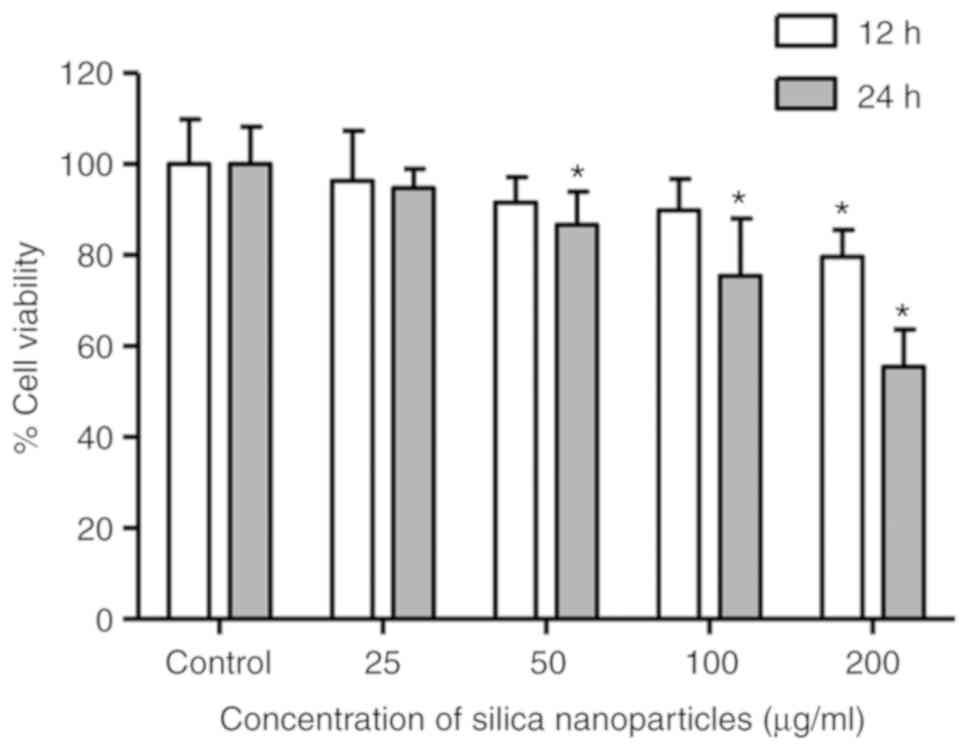
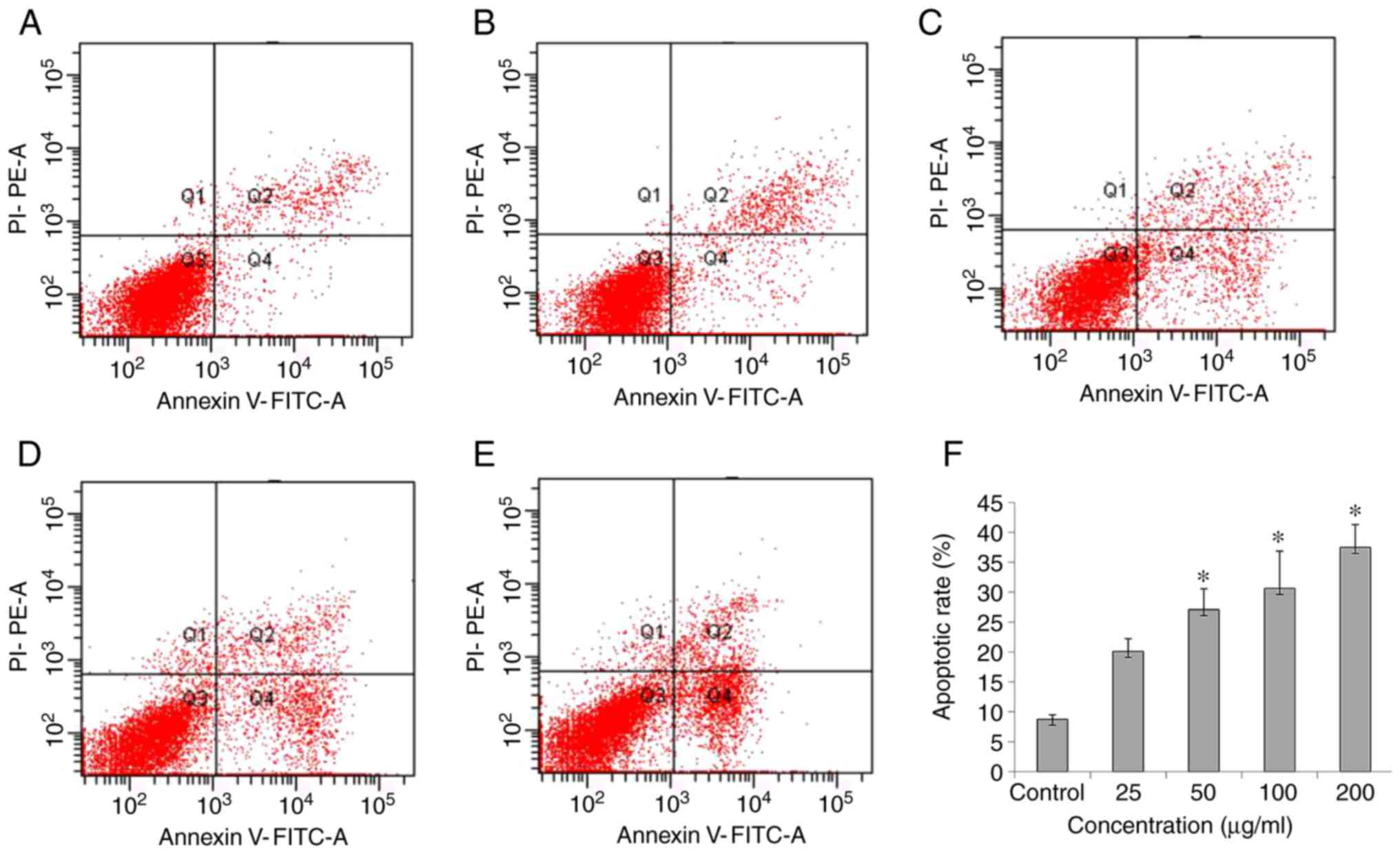
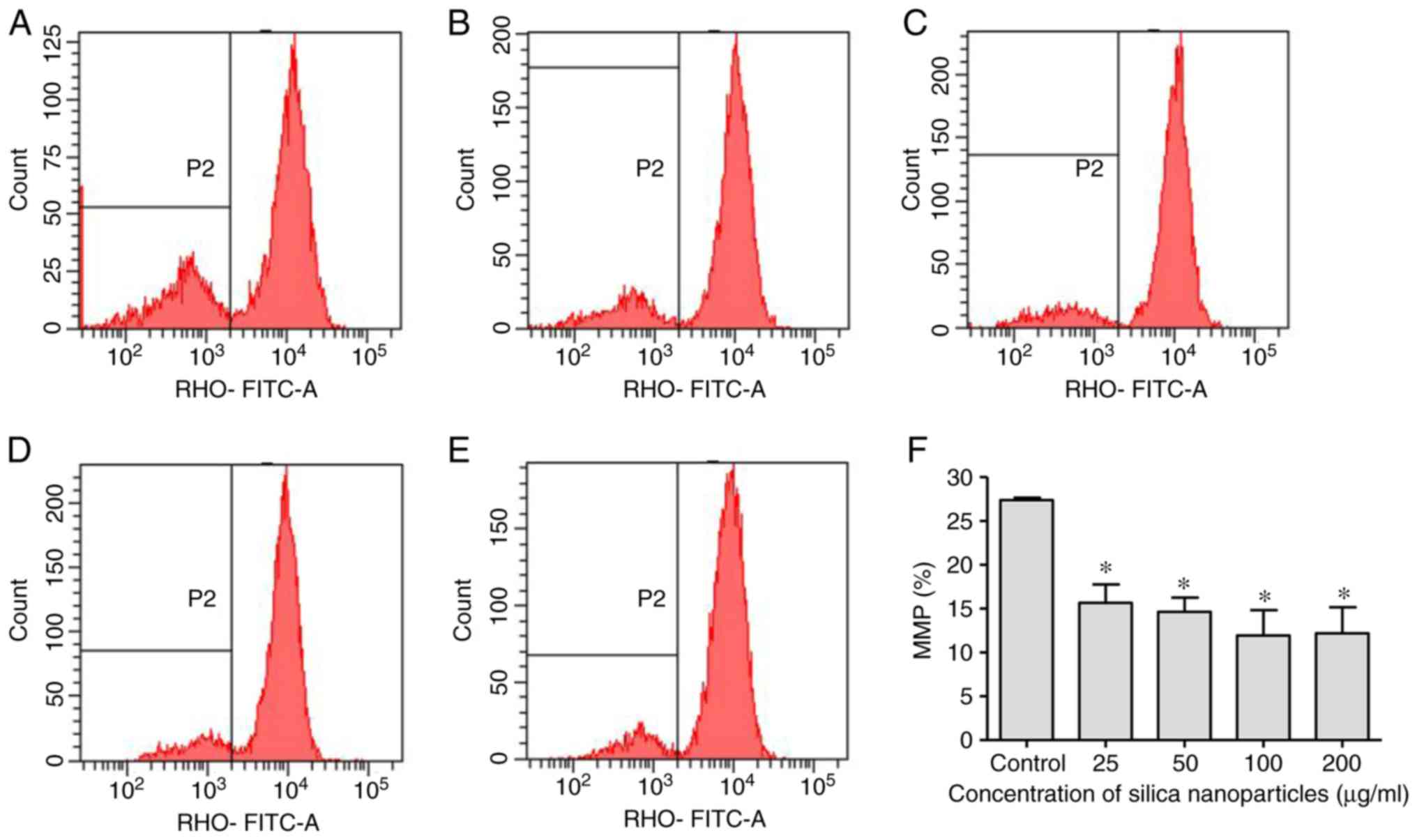
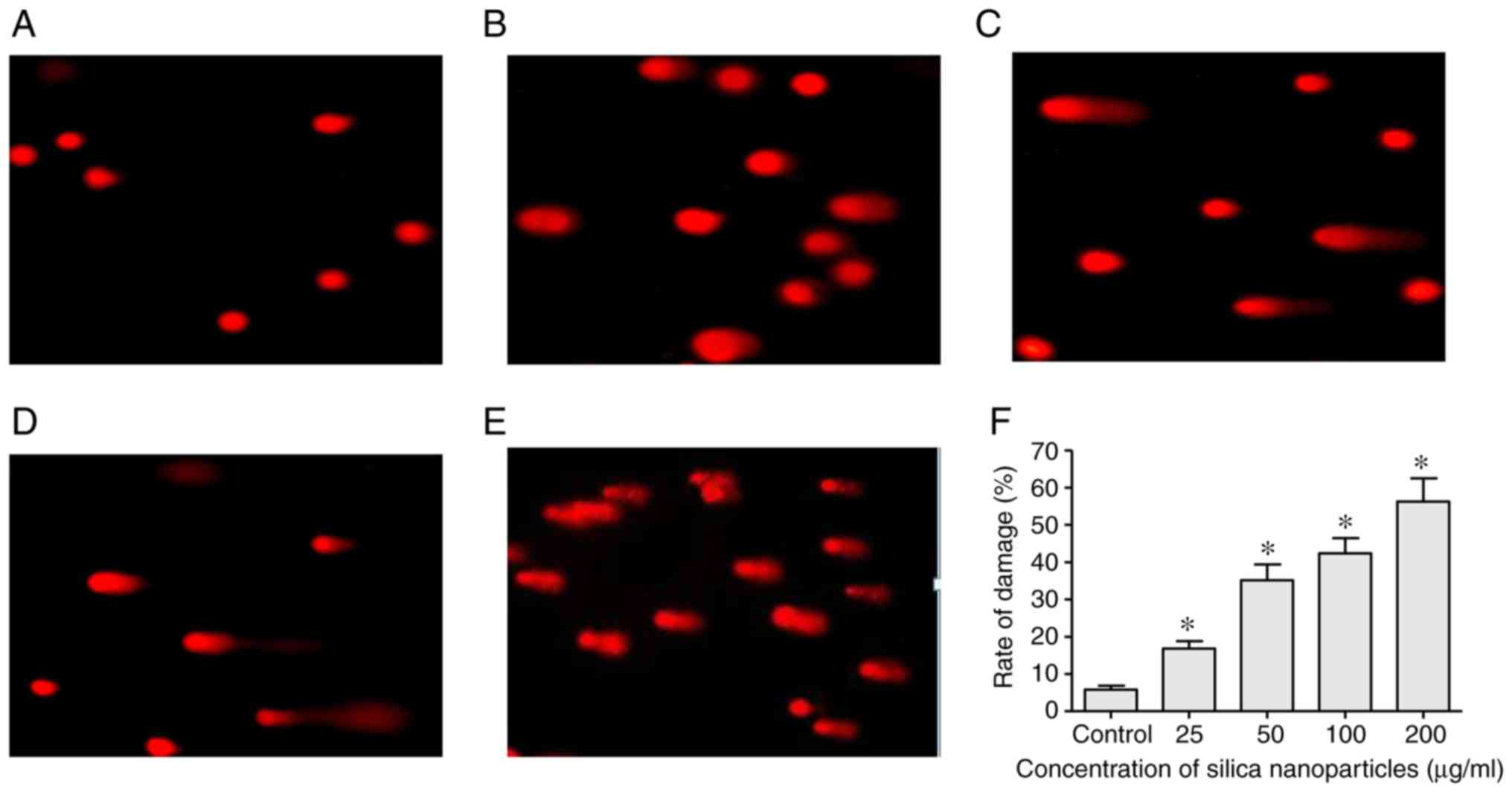
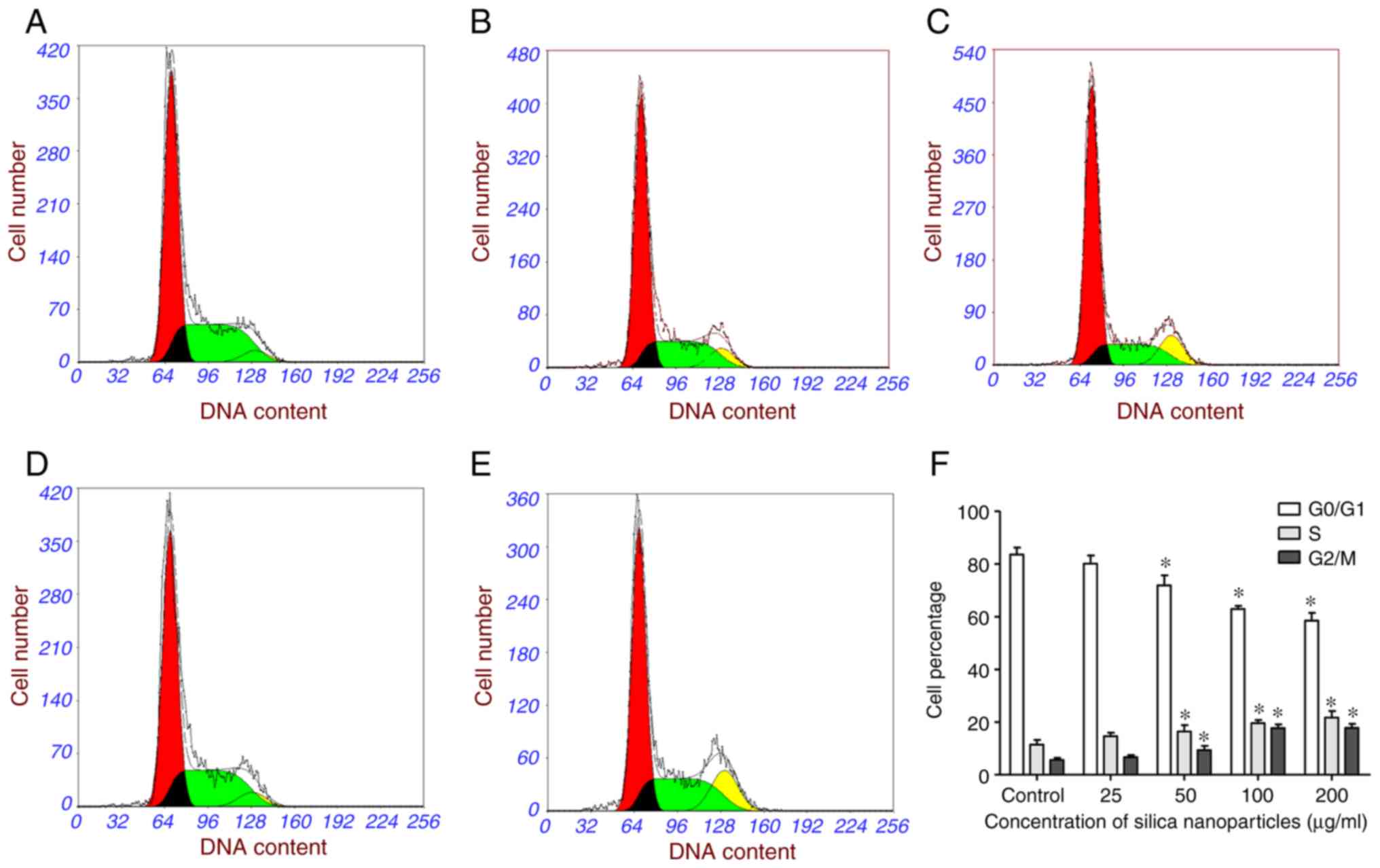
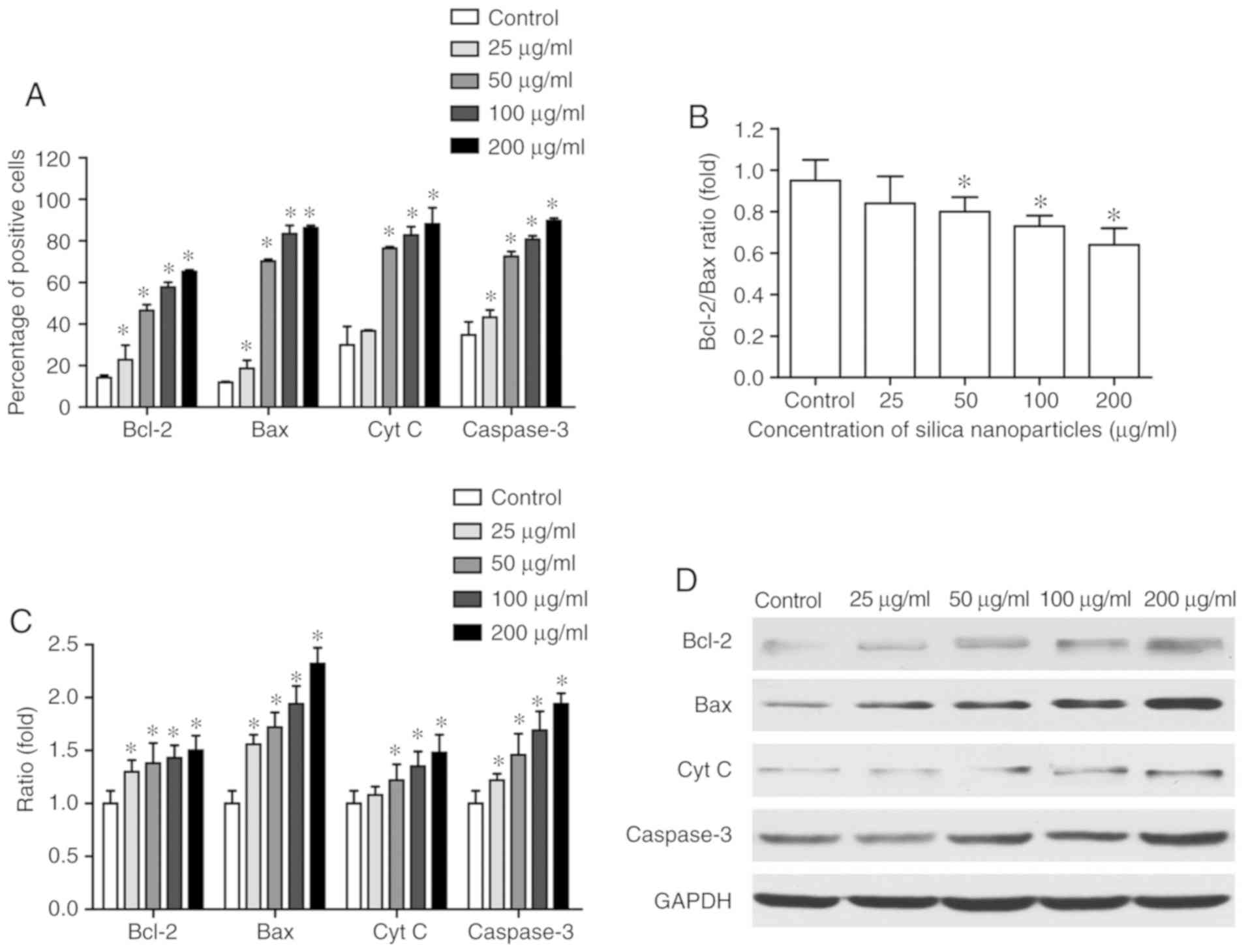
Silicon is one of the most widely used chemical materials, and the increasing use of silica nanoparticles (SNs) highlights the requirement for safety and biological toxicity studies. The damaging and adverse effects of SNs on human hepatocytes remain largely unknown, as do the mechanisms involved. In the present study, the mechanisms underlying SN‑induced toxicity in the human hepatocyte cell line HL‑7702 were investigated. An MTT assay revealed that following exposure to SNs in the concentration range of 25‑200 µg/ml, the viability of HL‑7702 cells decreased, and the viability decreased further with increasing exposure time. SNs induced a delay in the S and G2/M phases of the cell cycle, and also induced DNA damage in these cells. Western blot and flow cytometry analyses revealed that cell death was mediated by mitochondrial damage and the upregulated expression of a number of pro‑apoptotic proteins. In conclusion, exposure to SNs led to mitochondrial and DNA damage, resulting in apoptosis‑mediated HL‑7702 cell death. The study provided evidence for the cellular toxicity of SNs, and added to the growing body of evidence regarding the potential damaging effects of nanoparticles, indicating that caution should be exercised in their widespread usage.
View Figures

Figure 1

Figure 2

Figure 3

Figure 4

Figure 5

Figure 6

Figure 7

View References

1 

Powers KW, Brown SC, Krishna VB, Wasdo SC, Moudgil BM and Roberts SM: Research strategies for safety evaluation of nanomaterials. Part VI. Characterization of nanoscale particles for toxicological evaluation. Toxicol Sci. 90:296–303. 2006. View Article : Google Scholar : PubMed/NCBI

2 

Lu X, Qian J, Zhou H, Gan Q, Tang W, Lu J, Yuan Y and Liu C: In vitro cytotoxicity and induction of apoptosis by silica nanoparticles in human HepG2 hepatoma cells. Int J Nanomedicine. 6:1889–1901. 2011.PubMed/NCBI

3 

Kumar P, Tambe P, Paknikar KM and Gajbhiye V: Mesoporous silica nanoparticles as cutting-edge theranostics: Advancement from merely a carrier to tailor-made smart delivery platform. J Control Release. 287:35–57. 2018. View Article : Google Scholar : PubMed/NCBI

4 

Park JH, Dumani DS, Arsiwala A, Emelianov S and Kane RS: Tunable aggregation of gold-silica janus nanoparticles to enable contrast-enhanced multiwavelength photoacoustic imaging in vivo. Nanoscale. 10:15365–15370. 2018. View Article : Google Scholar : PubMed/NCBI

5 

Müller K, Fedosov D and Gompper G: Margination of micro- and nano‑particles in blood flow and its effect on drug delivery. Sci Rep. 4:48712014. View Article : Google Scholar

6 

Mebert AM, Baglole CJ, Desimone MF and Maysinger D: Nanoengineered silica: Properties, applications and toxicity. Food Chem Toxicol. 31:753–770. 2017. View Article : Google Scholar

7 

Pietroiusti A, Stockmann-Juvala H, Lucaroni F and Savolainen K: Nanomaterial exposure, toxicity, and impact on human health. Wiley Interdiscip Rev Nanomed Nanobiotechnol. Feb 23–2018.Epub ahead of print. View Article : Google Scholar : PubMed/NCBI

8 

Laux P, Tentschert J, Riebeling C, Braeuning A, Creutzenberg O, Epp A, Fessard V, Haas KH, Haase A, Hund-Rinke K, et al: Nanomaterials: Certain aspects of application, risk assessment and risk communication. Arch Toxicol. 92:121–141. 2018. View Article : Google Scholar :

9 

Guo M, Xu X, Yan X, Wang S, Gao S and Zhu S: In vivo biodistribution and synergistic toxicity of silica nanoparticles and cadmium chloride in mice. J Hazard Mater. 260:780–788. 2013. View Article : Google Scholar : PubMed/NCBI

10 

Chen N, Song ZM, Tang H, Xi WS, Cao A, Liu Y and Wang H: Toxicological effects of Caco-2 cells following short-term and long-term exposure to Ag nanoparticles. Int J Mol Sci. 17:pii: E974. 2016

11 

Ahamed M: Silica nanoparticles-induced cytotoxicity, oxidative stress and apoptosis in cultured A431 and A549 cells. Hum Exp Toxicol. 32:186–195. 2013. View Article : Google Scholar : PubMed/NCBI

12 

Lewinski N, Colvin V and Drezek R: Cytotoxicity of nanoparticles. Small. 4:26–49. 2008. View Article : Google Scholar : PubMed/NCBI

13 

Oberdörster G, Oberdörster E and Oberdörster J: Nanotoxicology: An emerging discipline evolving from studies of ultrafine particles. Environ Health Perspect. 123:823–839. 2005. View Article : Google Scholar

14 

Yoshida T, Yoshioka Y, Tochigi S, Hirai T, Uji M, Ichihashi K, Nagano K, Abe Y, Kamada H, Tsunoda S, et al: Intranasal exposure to amorphous nanosilica particles could activate intrinsic coagulation cascade and platelets in mice. Part Fibre Toxicol. 10:412013. View Article : Google Scholar : PubMed/NCBI

15 

Du Z, Zhao D, Jing L, Cui G, Jin M, Li Y, Liu X, Liu Y, Du H, Guo C, et al: Cardiovascular toxicity of different sizes amorphous silica nanoparticles in rats after intratracheal instillation. Cardiovasc Toxicol. 13:194–207. 2013. View Article : Google Scholar : PubMed/NCBI

16 

Lin W, Huang YW, Zhou XD and Ma Y: In vitro toxicity of silica nanoparticles in human lung cancer cells. Toxicol Appl Pharmacol. 217:252–259. 2006. View Article : Google Scholar : PubMed/NCBI

17 

Kim JS, Yoon TJ, Yu KN, Kim BG, Park SJ, Kim HW, Lee KH, Park SB, Lee JK and Cho MH: Toxicity and tissue distribution of magnetic nanoparticles in mice. Toxicol Sci. 89:338–347. 2006. View Article : Google Scholar

18 

Wu J, Wang C, Sun J and Xue Y: Neurotoxicity of silica nanoparticles: Brain localization and dopaminergic neurons damage pathways. ACS Nano. 5:4476–4489. 2011. View Article : Google Scholar : PubMed/NCBI

19 

Erren TC, Glende CB, Morfeld P and Piekarski C: Is exposure to silica associated with lung cancer in the absence of silicosis? A meta-analytical approach to an important public health question. Int Arch Occup Environ Health. 82:997–1004. 2009. View Article : Google Scholar

20 

Mignotte B and Vayssiere JL: Mitochondria and apoptosis. Eur J Biochem. 252:1–15. 1998. View Article : Google Scholar : PubMed/NCBI

21 

Ahmad J, Ahamed M, Akhtar MJ, Alrokayan SA, Siddiqui MA, Musarrat J and Al-Khedhairy AA: Apoptosis induction by silica nanoparticles mediated through reactive oxygen species in human liver cell line HepG2. Toxicol Appl Pharmacol. 259:160–168. 2012. View Article : Google Scholar : PubMed/NCBI

22 

Gopinath P, Gogoi SK, Sanpui P, Paul A, Chattopadhyay A and Ghosh SS: Signaling gene cascade in silver nanoparticle induced apoptosis. Colloids Surf B Biointerfaces. 77:240–245. 2010. View Article : Google Scholar : PubMed/NCBI

23 

Katiyar SK, Roy AM and Baliga MS: Silymarin induces apoptosis primarily through a p53-dependent pathway involving Bcl-2/Bax, cytochrome c release, and caspase activation. Mol Cancer Ther. 4:207–216. 2005.PubMed/NCBI

24 

Korsmeyer SJ, Shutter JR, Veis DJ, Merry DE and Oltvai ZN: Bcl-2/Bax: A rheostat that regulates an anti-oxidant pathway and cell death. Semin Cancer Biol. 4:327–332. 1993.PubMed/NCBI

25 

Mariño G, Niso-Santano M, Baehrecke E and Kroemer G: Self-consumption: The interplay of autophagy and apoptosis. Nat Rev Mol Cell Biol. 15:81–94. 2014. View Article : Google Scholar : PubMed/NCBI

26 

Yu Y, Duan J, Yu Y, Li Y, Liu X, Zhou X, Ho KF, Tian L and Sun Z: Silica nanoparticles induce autophagy and autophagic cell death in HepG2 cells triggered by reactive oxygen species. J Hazard Mater. 270:176–186. 2004. View Article : Google Scholar

27 

Buratti S and Lavine JE: Drugs and the liver: Advances in metabolism, toxicity, and therapeutics. Curr Opin Pediatr. 14:601–607. 2002. View Article : Google Scholar : PubMed/NCBI

28 

Liu T, Li L, Teng X, Huang X, Liu H, Chen D, Ren J, He J and Tang F: Single and repeated dose toxicity of mesoporous hollow silica nanoparticles in intravenously exposed mice. Biomaterials. 32:1657–1668. 2011. View Article : Google Scholar

29 

Yoshida T, Yoshioka Y, Matsuyama K, Nakazato Y, Tochigi S, Hirai T, Kondoh S, Nagano K, Abe Y, Kamada H, et al: Surface modification of amorphous nanosilica particles suppresses nano-silica-induced cytotoxicity, ROS generation, and DNA damage in various mammalian cells. Biochem Biophys Res Commun. 427:748–752. 2012. View Article : Google Scholar : PubMed/NCBI

30 

Sun L, Li Y, Liu X, Jin M, Zhang L, Du Z, Guo C, Huang P and Sun Z: Cytotoxicity and mitochondrial damage caused by silica nanoparticles. Toxicol In Vitro. 25:1619–1629. 2011. View Article : Google Scholar : PubMed/NCBI

31 

Chen Q, Xue Y and Sun J: Kupffer cell-mediated hepatic injury induced by silica nanoparticles in vitro and in vivo. Int J Nanomedicine. 8:1129–1140. 2013.PubMed/NCBI

32 

Li N, Duan Y, Hong M, Zheng L, Fei M, Zhao X, Wang J, Cui Y, Liu H, Cai J, et al: Spleen injury and apoptotic pathway in mice caused by titanium dioxide nanoparticules. Toxicol Lett. 195:161–168. 2010. View Article : Google Scholar : PubMed/NCBI

33 

Isoda K, Tetsuka E, Shimizu Y, Saitoh K, Ishida I and Tezuka M: Liver injury induced by thirty‑ and fifty‑nanometer‑diameter silica nanoparticles. Biol Pharm Bull. 36:370–375. 2013. View Article : Google Scholar

34 

Zhu Z, Li E, Liu Y, Gao Y, Sun H, Ma G, Wang Z, Liu X, Wang Q, Qu X, et al: Inhibition of Jak-STAT3 pathway enhances bufalin-induced apoptosis in colon cancer SW620 cells. World J Surg Oncol. 10:2282012. View Article : Google Scholar : PubMed/NCBI

35 

Nel A, Xia T, Mädler L and Li N: Toxic potential of materials at the nanolevel. Science. 311:622–627. 2006. View Article : Google Scholar : PubMed/NCBI

36 

Kipen HM and Laskin DL: Smaller is not always better: Nanotechnology yields nanotoxicology. Am J Physiol Lung Cell Mol Physiol. 289:L696–L697. 2005. View Article : Google Scholar : PubMed/NCBI

37 

Zhang Y, Hu L, Yu D and Gao C: Influence of silica particle internalization on adhesion and migration of human dermal fibroblasts. Biomaterials. 31:pp. 8465pp. 84742010, View Article : Google Scholar : PubMed/NCBI

38 

Ryman-Rasmussen JP, Riviere JE and Monteiro-Riviere NA: Surface coatings determine cytotoxicity and irritation potential of quantum dot nanoparticles in epidermal keratinocytes. J Invest Dermatol. 127:143–153. 2007. View Article : Google Scholar

39 

Chan WT, Liu CC, Chiang Chiau JS, Tsai ST, Liang CK, Cheng ML, Lee HC, Yeung CY and Hou SY: In vivo toxicologic study of larger silica nanoparticles in mice. Int J Nanomedicine. 12:3421–3432. 2017. View Article : Google Scholar : PubMed/NCBI

40 

Cui W, Li J, Zhang Y, Rong H, Lu W and Jiang L: Effects of aggregation and the surface properties of gold nanoparticles on cytotoxicity and cell growth. Nanomedicine. 8:46–53. 2012. View Article : Google Scholar

41 

Guo C, Ma R, Liu X, Chen T, Li Y, Yu Y, Duan J, Zhou X, Li Y and Sun Z: Silica nanoparticles promote oxLDL-induced macrophage lipid accumulation and apoptosis via endoplasmic reticulum stress signaling. Sci Total Environ. 631-632:570–579. 2018. View Article : Google Scholar : PubMed/NCBI

42 

Nishimori H, Kondoh M, Isoda K, Tsunoda S, Tsutsumi Y and Yagi K: Silica nanoparticles as hepatotoxicants. Eur J Pharm Biopharm. 72:496–501. 2009. View Article : Google Scholar : PubMed/NCBI

43 

Nishimori H, Kondoh M, Isoda K, Tsunoda S, Tsutsumi Y and Yagi K: Histological analysis of 70-nm silica particles-induced chronic toxicity in mice. Eur J Pharm Biopharm. 72:626–629. 2009. View Article : Google Scholar : PubMed/NCBI

44 

So SJ, Jang IS and Han CS: Effect of micro/nano silica particle feeding for mice. J Nanosci Nanotechnol. 8:5367–5371. 2008. View Article : Google Scholar

45 

Yu Y, Duan J, Yu Y, Li Y, Zou Y, Yang Y, Jiang L, Li Q and Sun Z: Autophagy and autophagy dysfunction contribute to apoptosis in HepG2 cells exposed to nanosilica. Toxicol Res (Camb). 5:871–882. 2016. View Article : Google Scholar

46 

Duan J, Yu Y, Li Y, Yu Y, Li Y, Zhou X, Huang P and Sun Z: Toxic effect of silica nanoparticles on endothelial cells through DNA damage response via Chk1-dependent G2/M checkpoint. PLoS One. 8:pp. e620872013, View Article : Google Scholar : PubMed/NCBI

47 

Vermeulen K, Berneman ZN and Van Bockstaele DR: Cell cycle and apoptosis. Cell Prolif. 36:165–175. 2003. View Article : Google Scholar : PubMed/NCBI

48 

Stark GR and Taylor WR: Analyzing the G2/M checkpoint. Methods Mol Biol. 280:51–82. 2004.PubMed/NCBI

49 

Cuddihy AR and O'Connell MJ: Cell-cycle responses to DNA damage in G2. Int Rev Cytol. 222:99–140. 2003. View Article : Google Scholar

50 

Ly JD, Grubb R and Lawen A: The mitochondrial membrane potential (deltapsi(m)) in apoptosis; an update. Apoptosis. 8:115–128. 2003. View Article : Google Scholar : PubMed/NCBI

51 

Green DR and Kroemer G: The pathophysiology of mitochondrial cell death. Science. 305:626–629. 2004. View Article : Google Scholar : PubMed/NCBI

52 

Li Y, Sun L, Jin M, Du Z, Liu X, Guo C, Li Y, Huang P and Sun Z: Size-dependent cytotoxicity of amorphous silica nanoparticles in human hepatoma HepG2 cells. Toxicol In Vitro. 25:1343–1352. 2011. View Article : Google Scholar : PubMed/NCBI

53 

Pucci B, Adams CS, Fertala J, Snyder BC, Mansfield KD, Tafani M, Freeman T and Shapiro IM: Development of the terminally differentiated state sensitizes epiphyseal chondrocytes to apoptosis through caspase-3 activation. J Cell Physiol. 210:609–615. 2007. View Article : Google Scholar

54 

Krętowski R, Kusaczuk M, Naumowicz M, Kotyńska J, Szynaka B and Cechowska-Pasko M: The effects of silica nanoparticles on apoptosis and autophagy of glioblastoma cell lines. Nanomaterials (Basel). 7. pii: E230. 2017, View Article : Google Scholar

55 

Gross A, Mcdonnell JM and Korsmeyer SJ: BCL-2 family members and the mitochondria in apoptosis. Genes Dev. 13:1899–1911. 1999. View Article : Google Scholar : PubMed/NCBI

56 

Brenner C, Cadiou H, Vieira HL, Zamzami N, Marzo I, Xie Z, Leber B, Andrews D, Duclohier H, Reed JC and Kroemer G: Bcl-2 and Bax regulate the channel activity of the mitochondrial adenine nucleotide translocator. Oncogene. 19:329–336. 2000. View Article : Google Scholar : PubMed/NCBI

57 

Gao C and Wang AY: Significance of increased apoptosis and Bax expression in human small intestinal adenocarcinoma. J Histochem Cytochem. 57:1139–1148. 2009. View Article : Google Scholar : PubMed/NCBI

Related Articles

  • Abstract
  • View
  • Download
  • Twitter
Copy and paste a formatted citation
Spandidos Publications style
Yang Y, Du X, Wang Q, Liu J, Zhang E, Sai L, Peng C, Lavin MF, Yeo AJ, Yang X, Yang X, et al: Mechanism of cell death induced by silica nanoparticles in hepatocyte cells is by apoptosis. Int J Mol Med 44: 903-912, 2019.
APA
Yang, Y., Du, X., Wang, Q., Liu, J., Zhang, E., Sai, L. ... Du, Z. (2019). Mechanism of cell death induced by silica nanoparticles in hepatocyte cells is by apoptosis. International Journal of Molecular Medicine, 44, 903-912. https://doi.org/10.3892/ijmm.2019.4265
MLA
Yang, Y., Du, X., Wang, Q., Liu, J., Zhang, E., Sai, L., Peng, C., Lavin, M. F., Yeo, A. J., Yang, X., Shao, H., Du, Z."Mechanism of cell death induced by silica nanoparticles in hepatocyte cells is by apoptosis". International Journal of Molecular Medicine 44.3 (2019): 903-912.
Chicago
Yang, Y., Du, X., Wang, Q., Liu, J., Zhang, E., Sai, L., Peng, C., Lavin, M. F., Yeo, A. J., Yang, X., Shao, H., Du, Z."Mechanism of cell death induced by silica nanoparticles in hepatocyte cells is by apoptosis". International Journal of Molecular Medicine 44, no. 3 (2019): 903-912. https://doi.org/10.3892/ijmm.2019.4265
Copy and paste a formatted citation
x
Spandidos Publications style
Yang Y, Du X, Wang Q, Liu J, Zhang E, Sai L, Peng C, Lavin MF, Yeo AJ, Yang X, Yang X, et al: Mechanism of cell death induced by silica nanoparticles in hepatocyte cells is by apoptosis. Int J Mol Med 44: 903-912, 2019.
APA
Yang, Y., Du, X., Wang, Q., Liu, J., Zhang, E., Sai, L. ... Du, Z. (2019). Mechanism of cell death induced by silica nanoparticles in hepatocyte cells is by apoptosis. International Journal of Molecular Medicine, 44, 903-912. https://doi.org/10.3892/ijmm.2019.4265
MLA
Yang, Y., Du, X., Wang, Q., Liu, J., Zhang, E., Sai, L., Peng, C., Lavin, M. F., Yeo, A. J., Yang, X., Shao, H., Du, Z."Mechanism of cell death induced by silica nanoparticles in hepatocyte cells is by apoptosis". International Journal of Molecular Medicine 44.3 (2019): 903-912.
Chicago
Yang, Y., Du, X., Wang, Q., Liu, J., Zhang, E., Sai, L., Peng, C., Lavin, M. F., Yeo, A. J., Yang, X., Shao, H., Du, Z."Mechanism of cell death induced by silica nanoparticles in hepatocyte cells is by apoptosis". International Journal of Molecular Medicine 44, no. 3 (2019): 903-912. https://doi.org/10.3892/ijmm.2019.4265
Follow us
  • Twitter
  • LinkedIn
  • Facebook
About
  • Spandidos Publications
  • Careers
  • Cookie Policy
  • Privacy Policy
How can we help?
  • Help
  • Live Chat
  • Contact
  • Email to our Support Team