Spandidos Publications Logo
  • About
    • About Spandidos
    • Aims and Scopes
    • Abstracting and Indexing
    • Editorial Policies
    • Reprints and Permissions
    • Job Opportunities
    • Terms and Conditions
    • Contact
  • Journals
    • All Journals
    • Oncology Letters
      • Oncology Letters
      • Information for Authors
      • Editorial Policies
      • Editorial Board
      • Aims and Scope
      • Abstracting and Indexing
      • Bibliographic Information
      • Archive
    • International Journal of Oncology
      • International Journal of Oncology
      • Information for Authors
      • Editorial Policies
      • Editorial Board
      • Aims and Scope
      • Abstracting and Indexing
      • Bibliographic Information
      • Archive
    • Molecular and Clinical Oncology
      • Molecular and Clinical Oncology
      • Information for Authors
      • Editorial Policies
      • Editorial Board
      • Aims and Scope
      • Abstracting and Indexing
      • Bibliographic Information
      • Archive
    • Experimental and Therapeutic Medicine
      • Experimental and Therapeutic Medicine
      • Information for Authors
      • Editorial Policies
      • Editorial Board
      • Aims and Scope
      • Abstracting and Indexing
      • Bibliographic Information
      • Archive
    • International Journal of Molecular Medicine
      • International Journal of Molecular Medicine
      • Information for Authors
      • Editorial Policies
      • Editorial Board
      • Aims and Scope
      • Abstracting and Indexing
      • Bibliographic Information
      • Archive
    • Biomedical Reports
      • Biomedical Reports
      • Information for Authors
      • Editorial Policies
      • Editorial Board
      • Aims and Scope
      • Abstracting and Indexing
      • Bibliographic Information
      • Archive
    • Oncology Reports
      • Oncology Reports
      • Information for Authors
      • Editorial Policies
      • Editorial Board
      • Aims and Scope
      • Abstracting and Indexing
      • Bibliographic Information
      • Archive
    • Molecular Medicine Reports
      • Molecular Medicine Reports
      • Information for Authors
      • Editorial Policies
      • Editorial Board
      • Aims and Scope
      • Abstracting and Indexing
      • Bibliographic Information
      • Archive
    • World Academy of Sciences Journal
      • World Academy of Sciences Journal
      • Information for Authors
      • Editorial Policies
      • Editorial Board
      • Aims and Scope
      • Abstracting and Indexing
      • Bibliographic Information
      • Archive
    • International Journal of Functional Nutrition
      • International Journal of Functional Nutrition
      • Information for Authors
      • Editorial Policies
      • Editorial Board
      • Aims and Scope
      • Abstracting and Indexing
      • Bibliographic Information
      • Archive
    • International Journal of Epigenetics
      • International Journal of Epigenetics
      • Information for Authors
      • Editorial Policies
      • Editorial Board
      • Aims and Scope
      • Abstracting and Indexing
      • Bibliographic Information
      • Archive
    • Medicine International
      • Medicine International
      • Information for Authors
      • Editorial Policies
      • Editorial Board
      • Aims and Scope
      • Abstracting and Indexing
      • Bibliographic Information
      • Archive
  • Articles
  • Information
    • Information for Authors
    • Information for Reviewers
    • Information for Librarians
    • Information for Advertisers
    • Conferences
  • Language Editing
Spandidos Publications Logo
  • About
    • About Spandidos
    • Aims and Scopes
    • Abstracting and Indexing
    • Editorial Policies
    • Reprints and Permissions
    • Job Opportunities
    • Terms and Conditions
    • Contact
  • Journals
    • All Journals
    • Biomedical Reports
      • Information for Authors
      • Editorial Policies
      • Editorial Board
      • Aims and Scope
      • Abstracting and Indexing
      • Bibliographic Information
      • Archive
    • Experimental and Therapeutic Medicine
      • Information for Authors
      • Editorial Policies
      • Editorial Board
      • Aims and Scope
      • Abstracting and Indexing
      • Bibliographic Information
      • Archive
    • International Journal of Epigenetics
      • Information for Authors
      • Editorial Policies
      • Editorial Board
      • Aims and Scope
      • Abstracting and Indexing
      • Bibliographic Information
      • Archive
    • International Journal of Functional Nutrition
      • Information for Authors
      • Editorial Policies
      • Editorial Board
      • Aims and Scope
      • Abstracting and Indexing
      • Bibliographic Information
      • Archive
    • International Journal of Molecular Medicine
      • Information for Authors
      • Editorial Policies
      • Editorial Board
      • Aims and Scope
      • Abstracting and Indexing
      • Bibliographic Information
      • Archive
    • International Journal of Oncology
      • Information for Authors
      • Editorial Policies
      • Editorial Board
      • Aims and Scope
      • Abstracting and Indexing
      • Bibliographic Information
      • Archive
    • Medicine International
      • Information for Authors
      • Editorial Policies
      • Editorial Board
      • Aims and Scope
      • Abstracting and Indexing
      • Bibliographic Information
      • Archive
    • Molecular and Clinical Oncology
      • Information for Authors
      • Editorial Policies
      • Editorial Board
      • Aims and Scope
      • Abstracting and Indexing
      • Bibliographic Information
      • Archive
    • Molecular Medicine Reports
      • Information for Authors
      • Editorial Policies
      • Editorial Board
      • Aims and Scope
      • Abstracting and Indexing
      • Bibliographic Information
      • Archive
    • Oncology Letters
      • Information for Authors
      • Editorial Policies
      • Editorial Board
      • Aims and Scope
      • Abstracting and Indexing
      • Bibliographic Information
      • Archive
    • Oncology Reports
      • Information for Authors
      • Editorial Policies
      • Editorial Board
      • Aims and Scope
      • Abstracting and Indexing
      • Bibliographic Information
      • Archive
    • World Academy of Sciences Journal
      • Information for Authors
      • Editorial Policies
      • Editorial Board
      • Aims and Scope
      • Abstracting and Indexing
      • Bibliographic Information
      • Archive
  • Articles
  • Information
    • For Authors
    • For Reviewers
    • For Librarians
    • For Advertisers
    • Conferences
  • Language Editing
Login Register Submit
  • This site uses cookies
  • You can change your cookie settings at any time by following the instructions in our Cookie Policy. To find out more, you may read our Privacy Policy.

    I agree
Search articles by DOI, keyword, author or affiliation
Search
Advanced Search
presentation
International Journal of Molecular Medicine
Join Editorial Board Propose a Special Issue
Print ISSN: 1107-3756 Online ISSN: 1791-244X
Journal Cover
October-2019 Volume 44 Issue 4

Full Size Image

Sign up for eToc alerts
Recommend to Library

Journals

International Journal of Molecular Medicine

International Journal of Molecular Medicine

International Journal of Molecular Medicine is an international journal devoted to molecular mechanisms of human disease.

International Journal of Oncology

International Journal of Oncology

International Journal of Oncology is an international journal devoted to oncology research and cancer treatment.

Molecular Medicine Reports

Molecular Medicine Reports

Covers molecular medicine topics such as pharmacology, pathology, genetics, neuroscience, infectious diseases, molecular cardiology, and molecular surgery.

Oncology Reports

Oncology Reports

Oncology Reports is an international journal devoted to fundamental and applied research in Oncology.

Experimental and Therapeutic Medicine

Experimental and Therapeutic Medicine

Experimental and Therapeutic Medicine is an international journal devoted to laboratory and clinical medicine.

Oncology Letters

Oncology Letters

Oncology Letters is an international journal devoted to Experimental and Clinical Oncology.

Biomedical Reports

Biomedical Reports

Explores a wide range of biological and medical fields, including pharmacology, genetics, microbiology, neuroscience, and molecular cardiology.

Molecular and Clinical Oncology

Molecular and Clinical Oncology

International journal addressing all aspects of oncology research, from tumorigenesis and oncogenes to chemotherapy and metastasis.

World Academy of Sciences Journal

World Academy of Sciences Journal

Multidisciplinary open-access journal spanning biochemistry, genetics, neuroscience, environmental health, and synthetic biology.

International Journal of Functional Nutrition

International Journal of Functional Nutrition

Open-access journal combining biochemistry, pharmacology, immunology, and genetics to advance health through functional nutrition.

International Journal of Epigenetics

International Journal of Epigenetics

Publishes open-access research on using epigenetics to advance understanding and treatment of human disease.

Medicine International

Medicine International

An International Open Access Journal Devoted to General Medicine.

Journal Cover
October-2019 Volume 44 Issue 4

Full Size Image

Sign up for eToc alerts
Recommend to Library

  • Article
  • Citations
    • Cite This Article
    • Download Citation
    • Create Citation Alert
    • Remove Citation Alert
    • Cited By
  • Similar Articles
    • Related Articles (in Spandidos Publications)
    • Similar Articles (Google Scholar)
    • Similar Articles (PubMed)
  • Download PDF
  • Download XML
  • View XML
Article Open Access

Dissociation of HKII in retinal epithelial cells induces oxidative stress injury in the retina

  • Authors:
    • Liqun Chu
    • Lin Xiao
    • Bing Xu
    • Jingmei Xu
  • View Affiliations / Copyright

    Affiliations: Department of Ophthalmology, Xiyuan Hospital, China Academy of Traditional Chinese Medicine, Beijing 100091, P.R. China, Department of Ophthalmology, Beijing Shijitan Hospital, CMU, Beijing 100038, P.R. China
    Copyright: © Chu et al. This is an open access article distributed under the terms of Creative Commons Attribution License.
  • Pages: 1377-1387
    |
    Published online on: August 6, 2019
       https://doi.org/10.3892/ijmm.2019.4304
  • Expand metrics +
Metrics: Total Views: 0 (Spandidos Publications: | PMC Statistics: )
Metrics: Total PDF Downloads: 0 (Spandidos Publications: | PMC Statistics: )
Cited By (CrossRef): 0 citations Loading Articles...

This article is mentioned in:


Abstract

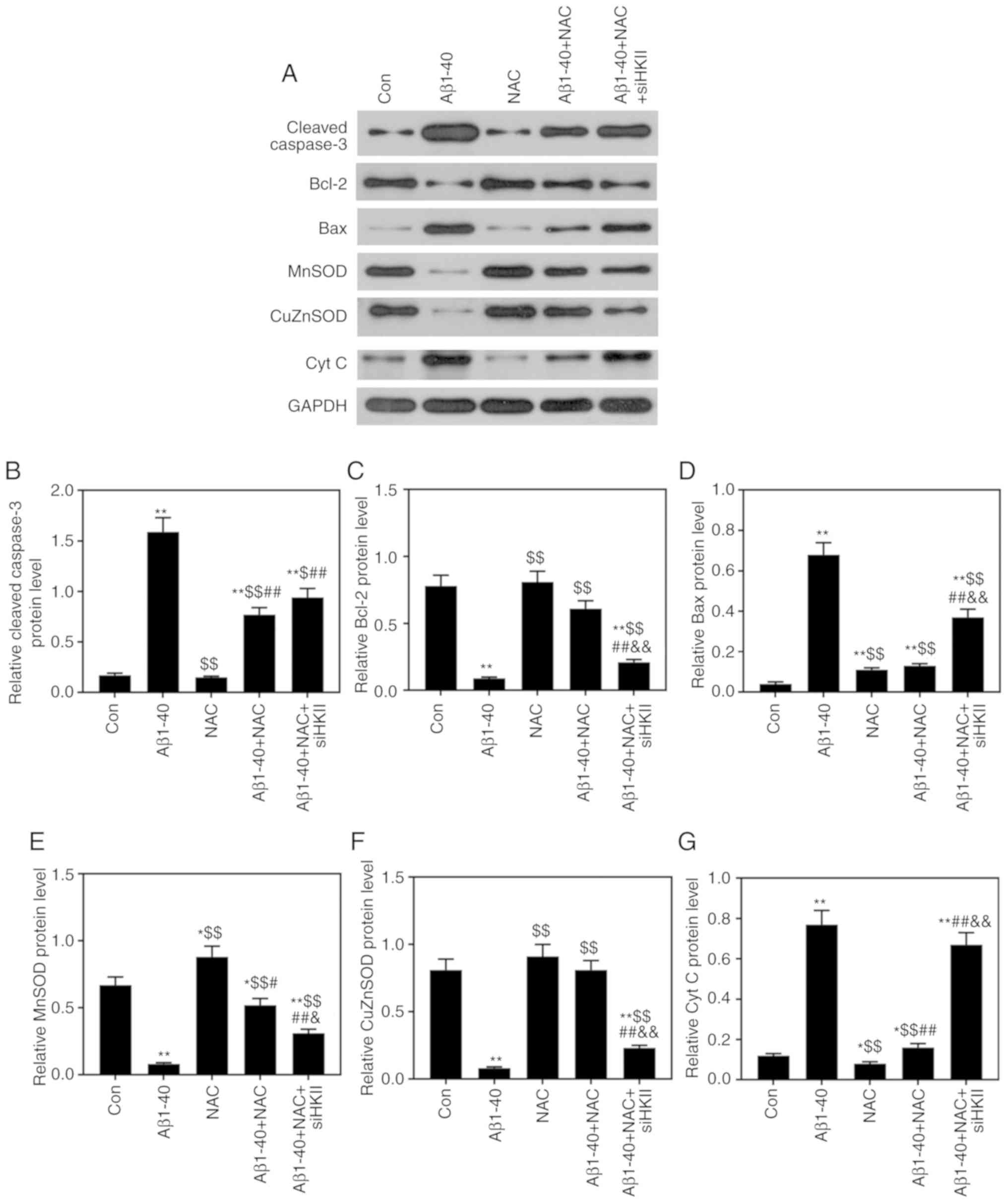
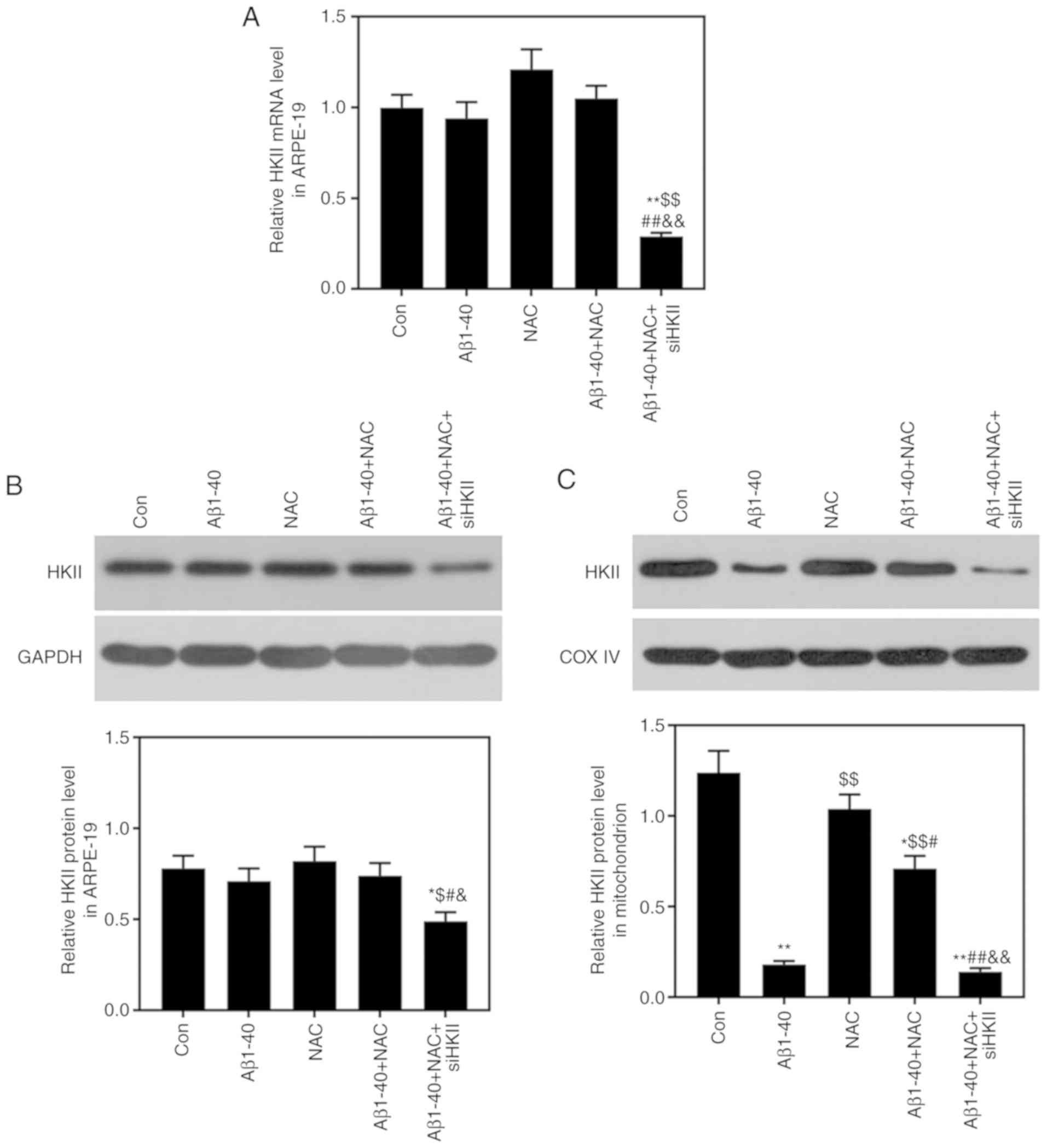
The retina is sensitive to injury resulting from oxidative stress (OS) due to its high oxygen consumption. Patients with retinitis pigmentosa suffer from excessive OS. N‑acetylcysteine (NAC) is used as a mucolytic agent for the clinical treatment of disorders, such as chronic bronchitis and other pulmonary diseases. The aim of the present study was to investigate the role of hexokinase 2 (HKII) in retinal OS injury. Amyloid β (Aβ)1‑40 was used to establish a cellular model of OS. Cell viability was measured with a Cell Counting Kit‑8 assay, and the apoptosis, reactive oxygen species (ROS) and mitochondrial membrane potential (MMP) of cells were analyzed via flow cytometry with corresponding kits. The mRNA and protein levels were detected by reverse transcription‑quantitative PCR and western blot analyses, respectively. It was observed that Aβ1‑40 reduced the expression of HKII in the mitochondria of retinal pigment epithelial ARPE cells and impaired mitochondrial antioxidant functions. Additionally, knockdown of HKII promoted apoptosis, and increased ROS levels and the MMP. NAC attenuated the inhibition of mitochondrial functions induced by Aβ1‑40. The knockdown of HKII was revealed to decrease the levels of Bcl‑2, manganese superoxide dismutase (SOD) and copper‑zinc‑SOD, and increase the levels of cleaved caspase‑3, Bax and cytochrome c. The present findings suggested that the dissociation of HKII induced by OS induces apoptosis and mitochondrial damage. This study provided improved understanding of the mechanisms underlying the effects of OS on retinal epithelial cells.
View Figures

Figure 1

Figure 2

Figure 3

Figure 4

Figure 5

Figure 6

Figure 7

Figure 8

View References

1 

Wei EP, Christman CW, Kontos HA and Povlishock JT: Effects of oxygen radicals on cerebral arterioles. Am J Physiol. 248:H157–H162. 1985.PubMed/NCBI

2 

Sies H: Oxidative stress: A concept in redox biology and medicine. Redox Biol. 4:180–183. 2015. View Article : Google Scholar : PubMed/NCBI

3 

Russell EG and Cotter TG: New insight into the role of reactive oxygen species (ROS) in cellular signal-transduction processes. Int Rev Cell Mol Biol. 319:221–254. 2015. View Article : Google Scholar : PubMed/NCBI

4 

Lushchak VI: Free radicals, reactive oxygen species, oxidative stress and its classification. Chem Biol Interact. 224:164–175. 2014. View Article : Google Scholar : PubMed/NCBI

5 

Kruk J, Kubasik-Kladna K and Aboul-Enein HY: The role oxidative stress in the pathogenesis of eye diseases: Current status and a dual role of physical activity. Mini Rev Med Chem. 16:241–257. 2015. View Article : Google Scholar : PubMed/NCBI

6 

Ames A III: Energy requirements of CNS cells as related to their function and to their vulnerability to ischemia: A commentary based on studies on retina. Can J Physiol Pharmacol. (70 Suppl): S158–S164. 1992. View Article : Google Scholar : PubMed/NCBI

7 

Guo X, Dason ES, Zanon-Moreno V, Jiang Q, Nahirnyj A, Chan D, Flanagan JG and Sivak JM: PGC-1α signaling coordinates susceptibility to metabolic and oxidative injury in the inner retina. Am J Pathol. 184:1017–1029. 2014. View Article : Google Scholar : PubMed/NCBI

8 

Moreno ML, Mérida S, Bosch-Morell F, Miranda M and Villar VM: Autophagy dysfunction and oxidative stress, two related mechanisms implicated in retinitis pigmentosa. Front Physiol. 9:10082018. View Article : Google Scholar : PubMed/NCBI

9 

Wang K, Zhu X, Zhang K, Yao Y, Zhuang M, Tan C, Zhou F and Zhu L: Puerarin inhibits amyloid β-induced NLRP3 inflammasome activation in retinal pigment epithelial cells via suppressing ROS-dependent oxidative and endoplasmic reticulum stresses. Exp Cell Res. 357:335–340. 2017. View Article : Google Scholar : PubMed/NCBI

10 

Briyal S, Shepard C and Gulati A: Endothelin receptor type B agonist, IRL-1620, prevents beta amyloid (Aβ) induced oxidative stress and cognitive impairment in normal and diabetic rats. Pharmacol Biochem Behav. 120:65–72. 2014. View Article : Google Scholar : PubMed/NCBI

11 

Yang R, Wang Q, Min L, Sui R, Li J and Liu X: Monosialoanglioside improves memory deficits and relieves oxidative stress in the hippocampus of rat model of Alzheimer's disease. Neurol Sci. 34:1447–1451. 2013. View Article : Google Scholar

12 

Yoshida T, Ohno-Matsui K, Ichinose S, Sato T, Iwata N, Saido TC, Hisatomi T, Mochizuki M and Morita I: The potential role of amyloid beta in the pathogenesis of age-related macular degeneration. J Clin Invest. 115:2793–2800. 2005. View Article : Google Scholar : PubMed/NCBI

13 

Wilson JE: Hexokinases. Rev Physiol Biochem Pharmacol. 126:65–198. 1995. View Article : Google Scholar : PubMed/NCBI

14 

Wilson JE: Isozymes of mammalian hexokinase: Structure, subcellular localization and metabolic function. J Exp Biol. 206:2049–2057. 2003. View Article : Google Scholar : PubMed/NCBI

15 

Ardehali H, Printz RL, Whitesell RR, May JM and Granner DK: Functional interaction between the N- and C-terminal halves of human hexokinase II. J Biol Chem. 274:15986–15989. 1999. View Article : Google Scholar : PubMed/NCBI

16 

Robey RB and Hay N: Mitochondrial hexokinases, novel mediators of the antiapoptotic effects of growth factors and Akt. Oncogene. 25:4683–4696. 2006. View Article : Google Scholar : PubMed/NCBI

17 

Pedersen PL: Warburg, me and Hexokinase 2: Multiple discoveries of key molecular events underlying one of cancers' most common phenotypes, the 'Warburg Effect', i.e., elevated glycolysis in the presence of oxygen. J Bioenerg Biomembr. 39:211–222. 2007. View Article : Google Scholar : PubMed/NCBI

18 

Heikkinen S, Suppola S, Malkki M, Deeb SS, Jänne J and Laakso M: Mouse hexokinase II gene: Structure, cDNA, promoter analysis, and expression pattern. Mamm Genome. 11:91–96. 2000. View Article : Google Scholar : PubMed/NCBI

19 

Roberts DJ, Tan-Sah VP, Smith JM and Miyamoto S: Akt phosphorylates HK-II at Thr-473 and increases mitochondrial HK-II association to protect cardiomyocytes. J Biol Chem. 288:23798–23806. 2013. View Article : Google Scholar : PubMed/NCBI

20 

Majewski N, Nogueira V, Bhaskar P, Coy PE, Skeen JE, Gottlob K, Chandel NS, Thompson CB, Robey RB and Hay N: Hexokinase-mitochondria interaction mediated by Akt is required to inhibit apoptosis in the presence or absence of Bax and Bak. Mol Cell. 16:819–830. 2004. View Article : Google Scholar : PubMed/NCBI

21 

Pastorino JG, Shulga N and Hoek JB: Mitochondrial binding of hexokinase II inhibits Bax-induced cytochrome c release and apoptosis. J Biol Chem. 277:7610–7618. 2002. View Article : Google Scholar

22 

Das S, Steenbergen C and Murphy E: Does the voltage dependent anion channel modulate cardiac ischemia-reperfusion injury? Biochim Biophys Acta. 1818:1451–1456. 2012. View Article : Google Scholar :

23 

Pasdois P, Parker JE and Halestrap AP: Extent of mitochondrial hexokinase II dissociation during ischemia correlates with mitochondrial cytochrome c release, reactive oxygen species production, and infarct size on reperfusion. J Am Heart Assoc. 2:e0056452012.PubMed/NCBI

24 

Calmettes G, John SA, Weiss JN and Ribalet B: Hexokinase-mitochondrial interactions regulate glucose metabolism differentially in adult and neonatal cardiac myocytes. J Gen Physiol. 142:425–436. 2013. View Article : Google Scholar : PubMed/NCBI

25 

Samuni Y, Goldstein S, Dean OM and Berk M: The chemistry and biological activities of N-acetylcysteine. Biochim Biophys Acta. 1830:4117–4129. 2013. View Article : Google Scholar : PubMed/NCBI

26 

Rushworth GF and Megson IL: Existing and potential therapeutic uses for N-acetylcysteine: The need for conversion to intracellular glutathione for antioxidant benefits. Pharmacol Ther. 141:150–159. 2014. View Article : Google Scholar

27 

Garner DL and Thomas CA: Organelle-specific probe JC-1 identifies membrane potential differences in the mitochondrial function of bovine sperm. Mol Reprod Dev. 53:222–229. 1999. View Article : Google Scholar : PubMed/NCBI

28 

Livak KJ and Schmittgen TD: Analysis of relative gene expression data using real-time quantitative PCR and the 2(-Delta Delta C(T)) Method. Methods. 25:402–408. 2001. View Article : Google Scholar

29 

Wert KJ, Lin JH and Tsang SH: General pathophysiology in retinal degeneration. Dev Ophthalmol. 53:33–43. 2014. View Article : Google Scholar : PubMed/NCBI

30 

Geerlings MJ, de Jong EK and den Hollander AI: The complement system in age-related macular degeneration: A review of rare genetic variants and implications for personalized treatment. Mol Immunol. 84:65–76. 2017. View Article : Google Scholar :

31 

Petit L and Punzo C: mTORC1 sustains vision in retinitis pigmentosa. Oncotarget. 6:16786–16787. 2015. View Article : Google Scholar : PubMed/NCBI

32 

Campochiaro PA, Strauss RW, Lu L, Hafiz G, Wolfson Y, Shah SM, Sophie R, Mir TA and Scholl HP: Is there excess oxidative stress and damage in eyes of patients with retinitis pigmentosa? Antioxid Redox Signal. 23:643–648. 2015. View Article : Google Scholar : PubMed/NCBI

33 

Mitra RN, Conley SM and Naash MI: Therapeutic approach of nanotechnology for oxidative stress induced ocular neurodegenerative diseases. Adv Exp Med Biol. 854:463–469. 2016. View Article : Google Scholar

34 

Li Y, Li J, Li S, Li Y, Wang X, Liu B, Fu Q and Ma S: Curcumin attenuates glutamate neurotoxicity in the hippocampus by suppression of ER stress-associated TXNIP/NLRP3 inflammasome activation in a manner dependent on AMPK. Toxicol Appl Pharmacol. 286:53–63. 2015. View Article : Google Scholar : PubMed/NCBI

35 

Shimizu S, Ide T, Yanagida T and Tsujimoto Y: Electrophysiological study of a novel large pore formed by Bax and the voltage-dependent anion channel that is permeable to cytochrome c. J Biol Chem. 275:12321–12325. 2000. View Article : Google Scholar : PubMed/NCBI

36 

Banerjee J and Ghosh S: Phosphorylation of rat brain mitochondrial voltage-dependent anion as a potential tool to control leakage of cytochrome c. J Neurochem. 98:670–676. 2006. View Article : Google Scholar : PubMed/NCBI

37 

Sun L, Shukair S, Naik TJ, Moazed F and Ardehali H: Glucose phosphorylation and mitochondrial binding are required for the protective effects of hexokinases I and II. Mol Cell Biol. 28:1007–1017. 2008. View Article : Google Scholar :

38 

Chiara F, Castellaro D, Marin O, Petronilli V, Brusilow WS, Juhaszova M, Sollott SJ, Forte M, Bernardi P and Rasola A: Hexokinase II detachment from mitochondria triggers apoptosis through the permeability transition pore independent of voltage-dependent anion channels. PLoS One. 3:e18522008. View Article : Google Scholar : PubMed/NCBI

39 

Mathupala SP, Ko YH and Pedersen PL: Hexokinase II: Cancer's double-edged sword acting as both facilitator and gatekeeper of malignancy when bound to mitochondria. Oncogene. 25:4777–4786. 2006. View Article : Google Scholar : PubMed/NCBI

40 

Halestrap AP, McStay GP and Clarke SJ: The permeability transition pore complex: Another view. Biochimie. 84:153–166. 2002. View Article : Google Scholar : PubMed/NCBI

41 

Woldetsadik AD, Vogel MC, Rabeh WM and Magzoub M: Hexokinase II-derived cell-penetrating peptide targets mitochondria and triggers apoptosis in cancer cells. FASEB J. 31:2168–2184. 2017. View Article : Google Scholar : PubMed/NCBI

42 

Moreira PI, Santos MS, Moreno A, Rego AC and Oliveira C: Effect of amyloid beta-peptide on permeability transition pore: A comparative study. J Neurosci Res. 69:257–267. 2002. View Article : Google Scholar : PubMed/NCBI

43 

Gottlieb RA: Mitochondria: Execution central. FEBS Lett. 482:6–12. 2000. View Article : Google Scholar : PubMed/NCBI

44 

Gottlieb E, Armour SM, Harris MH and Thompson CB: Mitochondrial membrane potential regulates matrix configuration and cytochrome c release during apoptosis. Cell Death Differ. 10:709–717. 2003. View Article : Google Scholar : PubMed/NCBI

45 

Birkinshaw RW and Czabotar PE: The BCL-2 family of proteins and mitochondrial outer membrane permeabilisation. Semin Cell Dev Biol. 72:152–162. 2017. View Article : Google Scholar : PubMed/NCBI

46 

Lee SY, Usui S, Zafar AB, Oveson BC, Jo YJ, Lu L, Masoudi S and Campochiaro PA: N-Acetylcysteine promotes long-term survival of cones in a model of retinitis pigmentosa. J Cell Physiol. 226:1843–1849. 2011. View Article : Google Scholar : PubMed/NCBI

47 

McCommis KS, Douglas DL, Krenz M and Baines CP: Cardiac-specific hexokinase 2 overexpression attenuates hypertrophy by increasing pentose phosphate pathway flux. J Am Heart Assoc. 2:e0003552013. View Article : Google Scholar : PubMed/NCBI

48 

Corona JC, Gimenez-Cassina A, Lim F and Diaz-Nido J: Hexokinase II gene transfer protects against neurodegeneration in the rotenone and MPTP mouse models of Parkinson's disease. J Neurosci Res. 88:1943–1950. 2010.PubMed/NCBI

49 

Abeyrathna P and Su Y: The critical role of Akt in cardiovascular function. Vascul Pharmacol. 74:38–48. 2015. View Article : Google Scholar : PubMed/NCBI

50 

Zhuo B, Li Y, Li Z, Qin H, Sun Q, Zhang F, Shen Y, Shi Y and Wang R: PI3K/Akt signaling mediated Hexokinase-2 expression inhibits cell apoptosis and promotes tumor growth in pediatric osteosarcoma. Biochem Biophys Res Commun. 464:401–406. 2015. View Article : Google Scholar : PubMed/NCBI

51 

Hyun S, Kim MS, Song YS, Bak Y, Ham SY, Lee DH, Hong J and Yoon DY: Peroxisome proliferator-activated receptor-gamma agonist 4-O-methylhonokiol induces apoptosis by triggering the intrinsic apoptosis pathway and inhibiting the PI3K/Akt survival pathway in SiHa human cervical cancer cells. J Microbiol Biotechnol. 25:334–342. 2015. View Article : Google Scholar : PubMed/NCBI

52 

Sun D, Sawada A, Nakashima M, Kobayashi T, Ogawa O and Matsui Y: MK2206 potentiates cisplatin-induced cytotoxicity and apoptosis through an interaction of inactivated Akt signaling pathway. Urol Oncol. 33:111.e17–e26. 2015. View Article : Google Scholar

53 

Duan WR, Garner DS, Williams SD, Funckes-Shippy CL, Spath IS and Blomme EA: Comparison of immunohistochemistry for activated caspase-3 and cleaved cytokeratin 18 with the TUNEL method for quantification of apoptosis in histological sections of PC-3 subcutaneous xenografts. J Pathol. 199:221–228. 2003. View Article : Google Scholar : PubMed/NCBI

54 

Liu YQ, Liu YF, Ma XM, Xiao YD, Wang YB, Zhang MZ, Cheng AX, Wang TT, Li JL, Zhao PX, et al: Hydrogen-rich saline attenuates skin ischemia/reperfusion induced apoptosis via regulating Bax/Bcl-2 ratio and ASK-1/JNK pathway. J Plast Reconstr Aesthet Surg. 68:e147–e156. 2015. View Article : Google Scholar : PubMed/NCBI

55 

Liang S, Sun K, Wang Y, Dong S, Wang C, Liu L and Wu Y: Role of Cyt-C/caspases-9,3, Bax/Bcl-2 and the FAS death receptor pathway in apoptosis induced by zinc oxide nanoparticles in human aortic endothelial cells and the protective effect by alpha-lipoic acid. Chem Biol Interact. 258:40–51. 2016. View Article : Google Scholar : PubMed/NCBI

56 

Gottlob K, Majewski N, Kennedy S, Kandel E, Robey RB and Hay N: Inhibition of early apoptotic events by Akt/PKB is dependent on the first committed step of glycolysis and mitochondrial hexokinase. Genes Dev. 15:1406–1418. 2001. View Article : Google Scholar : PubMed/NCBI

57 

Lobanova EG and Kondrat'eva EV: Measurement of mitochondrial membrane potential in leukocyte suspension by fluorescent spectroscopy. Bull Exp Biol Med. 157:288–290. 2014. View Article : Google Scholar : PubMed/NCBI

58 

Tian Q and Zang YH: Antiproliferative and apoptotic effects of the ethanolic herbal extract of Achillea falcata in human cervical cancer cells are mediated via cell cycle arrest and mitochondrial membrane potential loss. J BUON. 20:1487–1496. 2015.

59 

Lu X, Wang C and Liu B: The role of Cu/Zn-SOD and Mn-SOD in the immune response to oxidative stress and pathogen challenge in the clam Meretrix meretrix. Fish Shellfish Immunol. 42:58–65. 2015. View Article : Google Scholar

Related Articles

  • Abstract
  • View
  • Download
  • Twitter
Copy and paste a formatted citation
Spandidos Publications style
Chu L, Xiao L, Xu B and Xu J: Dissociation of HKII in retinal epithelial cells induces oxidative stress injury in the retina. Int J Mol Med 44: 1377-1387, 2019.
APA
Chu, L., Xiao, L., Xu, B., & Xu, J. (2019). Dissociation of HKII in retinal epithelial cells induces oxidative stress injury in the retina. International Journal of Molecular Medicine, 44, 1377-1387. https://doi.org/10.3892/ijmm.2019.4304
MLA
Chu, L., Xiao, L., Xu, B., Xu, J."Dissociation of HKII in retinal epithelial cells induces oxidative stress injury in the retina". International Journal of Molecular Medicine 44.4 (2019): 1377-1387.
Chicago
Chu, L., Xiao, L., Xu, B., Xu, J."Dissociation of HKII in retinal epithelial cells induces oxidative stress injury in the retina". International Journal of Molecular Medicine 44, no. 4 (2019): 1377-1387. https://doi.org/10.3892/ijmm.2019.4304
Copy and paste a formatted citation
x
Spandidos Publications style
Chu L, Xiao L, Xu B and Xu J: Dissociation of HKII in retinal epithelial cells induces oxidative stress injury in the retina. Int J Mol Med 44: 1377-1387, 2019.
APA
Chu, L., Xiao, L., Xu, B., & Xu, J. (2019). Dissociation of HKII in retinal epithelial cells induces oxidative stress injury in the retina. International Journal of Molecular Medicine, 44, 1377-1387. https://doi.org/10.3892/ijmm.2019.4304
MLA
Chu, L., Xiao, L., Xu, B., Xu, J."Dissociation of HKII in retinal epithelial cells induces oxidative stress injury in the retina". International Journal of Molecular Medicine 44.4 (2019): 1377-1387.
Chicago
Chu, L., Xiao, L., Xu, B., Xu, J."Dissociation of HKII in retinal epithelial cells induces oxidative stress injury in the retina". International Journal of Molecular Medicine 44, no. 4 (2019): 1377-1387. https://doi.org/10.3892/ijmm.2019.4304
Follow us
  • Twitter
  • LinkedIn
  • Facebook
About
  • Spandidos Publications
  • Careers
  • Cookie Policy
  • Privacy Policy
How can we help?
  • Help
  • Live Chat
  • Contact
  • Email to our Support Team