Spandidos Publications Logo
  • About
    • About Spandidos
    • Aims and Scopes
    • Abstracting and Indexing
    • Editorial Policies
    • Reprints and Permissions
    • Job Opportunities
    • Terms and Conditions
    • Contact
  • Journals
    • All Journals
    • Oncology Letters
      • Oncology Letters
      • Information for Authors
      • Editorial Policies
      • Editorial Board
      • Aims and Scope
      • Abstracting and Indexing
      • Bibliographic Information
      • Archive
    • International Journal of Oncology
      • International Journal of Oncology
      • Information for Authors
      • Editorial Policies
      • Editorial Board
      • Aims and Scope
      • Abstracting and Indexing
      • Bibliographic Information
      • Archive
    • Molecular and Clinical Oncology
      • Molecular and Clinical Oncology
      • Information for Authors
      • Editorial Policies
      • Editorial Board
      • Aims and Scope
      • Abstracting and Indexing
      • Bibliographic Information
      • Archive
    • Experimental and Therapeutic Medicine
      • Experimental and Therapeutic Medicine
      • Information for Authors
      • Editorial Policies
      • Editorial Board
      • Aims and Scope
      • Abstracting and Indexing
      • Bibliographic Information
      • Archive
    • International Journal of Molecular Medicine
      • International Journal of Molecular Medicine
      • Information for Authors
      • Editorial Policies
      • Editorial Board
      • Aims and Scope
      • Abstracting and Indexing
      • Bibliographic Information
      • Archive
    • Biomedical Reports
      • Biomedical Reports
      • Information for Authors
      • Editorial Policies
      • Editorial Board
      • Aims and Scope
      • Abstracting and Indexing
      • Bibliographic Information
      • Archive
    • Oncology Reports
      • Oncology Reports
      • Information for Authors
      • Editorial Policies
      • Editorial Board
      • Aims and Scope
      • Abstracting and Indexing
      • Bibliographic Information
      • Archive
    • Molecular Medicine Reports
      • Molecular Medicine Reports
      • Information for Authors
      • Editorial Policies
      • Editorial Board
      • Aims and Scope
      • Abstracting and Indexing
      • Bibliographic Information
      • Archive
    • World Academy of Sciences Journal
      • World Academy of Sciences Journal
      • Information for Authors
      • Editorial Policies
      • Editorial Board
      • Aims and Scope
      • Abstracting and Indexing
      • Bibliographic Information
      • Archive
    • International Journal of Functional Nutrition
      • International Journal of Functional Nutrition
      • Information for Authors
      • Editorial Policies
      • Editorial Board
      • Aims and Scope
      • Abstracting and Indexing
      • Bibliographic Information
      • Archive
    • International Journal of Epigenetics
      • International Journal of Epigenetics
      • Information for Authors
      • Editorial Policies
      • Editorial Board
      • Aims and Scope
      • Abstracting and Indexing
      • Bibliographic Information
      • Archive
    • Medicine International
      • Medicine International
      • Information for Authors
      • Editorial Policies
      • Editorial Board
      • Aims and Scope
      • Abstracting and Indexing
      • Bibliographic Information
      • Archive
  • Articles
  • Information
    • Information for Authors
    • Information for Reviewers
    • Information for Librarians
    • Information for Advertisers
    • Conferences
  • Language Editing
Spandidos Publications Logo
  • About
    • About Spandidos
    • Aims and Scopes
    • Abstracting and Indexing
    • Editorial Policies
    • Reprints and Permissions
    • Job Opportunities
    • Terms and Conditions
    • Contact
  • Journals
    • All Journals
    • Biomedical Reports
      • Information for Authors
      • Editorial Policies
      • Editorial Board
      • Aims and Scope
      • Abstracting and Indexing
      • Bibliographic Information
      • Archive
    • Experimental and Therapeutic Medicine
      • Information for Authors
      • Editorial Policies
      • Editorial Board
      • Aims and Scope
      • Abstracting and Indexing
      • Bibliographic Information
      • Archive
    • International Journal of Epigenetics
      • Information for Authors
      • Editorial Policies
      • Editorial Board
      • Aims and Scope
      • Abstracting and Indexing
      • Bibliographic Information
      • Archive
    • International Journal of Functional Nutrition
      • Information for Authors
      • Editorial Policies
      • Editorial Board
      • Aims and Scope
      • Abstracting and Indexing
      • Bibliographic Information
      • Archive
    • International Journal of Molecular Medicine
      • Information for Authors
      • Editorial Policies
      • Editorial Board
      • Aims and Scope
      • Abstracting and Indexing
      • Bibliographic Information
      • Archive
    • International Journal of Oncology
      • Information for Authors
      • Editorial Policies
      • Editorial Board
      • Aims and Scope
      • Abstracting and Indexing
      • Bibliographic Information
      • Archive
    • Medicine International
      • Information for Authors
      • Editorial Policies
      • Editorial Board
      • Aims and Scope
      • Abstracting and Indexing
      • Bibliographic Information
      • Archive
    • Molecular and Clinical Oncology
      • Information for Authors
      • Editorial Policies
      • Editorial Board
      • Aims and Scope
      • Abstracting and Indexing
      • Bibliographic Information
      • Archive
    • Molecular Medicine Reports
      • Information for Authors
      • Editorial Policies
      • Editorial Board
      • Aims and Scope
      • Abstracting and Indexing
      • Bibliographic Information
      • Archive
    • Oncology Letters
      • Information for Authors
      • Editorial Policies
      • Editorial Board
      • Aims and Scope
      • Abstracting and Indexing
      • Bibliographic Information
      • Archive
    • Oncology Reports
      • Information for Authors
      • Editorial Policies
      • Editorial Board
      • Aims and Scope
      • Abstracting and Indexing
      • Bibliographic Information
      • Archive
    • World Academy of Sciences Journal
      • Information for Authors
      • Editorial Policies
      • Editorial Board
      • Aims and Scope
      • Abstracting and Indexing
      • Bibliographic Information
      • Archive
  • Articles
  • Information
    • For Authors
    • For Reviewers
    • For Librarians
    • For Advertisers
    • Conferences
  • Language Editing
Login Register Submit
  • This site uses cookies
  • You can change your cookie settings at any time by following the instructions in our Cookie Policy. To find out more, you may read our Privacy Policy.

    I agree
Search articles by DOI, keyword, author or affiliation
Search
Advanced Search
presentation
International Journal of Molecular Medicine
Join Editorial Board Propose a Special Issue
Print ISSN: 1107-3756 Online ISSN: 1791-244X
Journal Cover
August-2020 Volume 46 Issue 2

Full Size Image

Sign up for eToc alerts
Recommend to Library

Journals

International Journal of Molecular Medicine

International Journal of Molecular Medicine

International Journal of Molecular Medicine is an international journal devoted to molecular mechanisms of human disease.

International Journal of Oncology

International Journal of Oncology

International Journal of Oncology is an international journal devoted to oncology research and cancer treatment.

Molecular Medicine Reports

Molecular Medicine Reports

Covers molecular medicine topics such as pharmacology, pathology, genetics, neuroscience, infectious diseases, molecular cardiology, and molecular surgery.

Oncology Reports

Oncology Reports

Oncology Reports is an international journal devoted to fundamental and applied research in Oncology.

Experimental and Therapeutic Medicine

Experimental and Therapeutic Medicine

Experimental and Therapeutic Medicine is an international journal devoted to laboratory and clinical medicine.

Oncology Letters

Oncology Letters

Oncology Letters is an international journal devoted to Experimental and Clinical Oncology.

Biomedical Reports

Biomedical Reports

Explores a wide range of biological and medical fields, including pharmacology, genetics, microbiology, neuroscience, and molecular cardiology.

Molecular and Clinical Oncology

Molecular and Clinical Oncology

International journal addressing all aspects of oncology research, from tumorigenesis and oncogenes to chemotherapy and metastasis.

World Academy of Sciences Journal

World Academy of Sciences Journal

Multidisciplinary open-access journal spanning biochemistry, genetics, neuroscience, environmental health, and synthetic biology.

International Journal of Functional Nutrition

International Journal of Functional Nutrition

Open-access journal combining biochemistry, pharmacology, immunology, and genetics to advance health through functional nutrition.

International Journal of Epigenetics

International Journal of Epigenetics

Publishes open-access research on using epigenetics to advance understanding and treatment of human disease.

Medicine International

Medicine International

An International Open Access Journal Devoted to General Medicine.

Journal Cover
August-2020 Volume 46 Issue 2

Full Size Image

Sign up for eToc alerts
Recommend to Library

  • Article
  • Citations
    • Cite This Article
    • Download Citation
    • Create Citation Alert
    • Remove Citation Alert
    • Cited By
  • Similar Articles
    • Related Articles (in Spandidos Publications)
    • Similar Articles (Google Scholar)
    • Similar Articles (PubMed)
  • Download PDF
  • Download XML
  • View XML
Article Open Access

Inhibition of autophagy flux by sertraline attenuates TRAIL resistance in lung cancer via death receptor 5 upregulation

  • Authors:
    • Kazi Mohammad Ali Zinnah
    • Jae‑Won Seol
    • Sang‑Youel Park
  • View Affiliations / Copyright

    Affiliations: Biosafety Research Institute, College of Veterinary Medicine, Jeonbuk National University, Iksan, Jeonbuk 54596, Republic of Korea
    Copyright: © Zinnah et al. This is an open access article distributed under the terms of Creative Commons Attribution License.
  • Pages: 795-805
    |
    Published online on: June 5, 2020
       https://doi.org/10.3892/ijmm.2020.4635
  • Expand metrics +
Metrics: Total Views: 0 (Spandidos Publications: | PMC Statistics: )
Metrics: Total PDF Downloads: 0 (Spandidos Publications: | PMC Statistics: )
Cited By (CrossRef): 0 citations Loading Articles...

This article is mentioned in:


Abstract

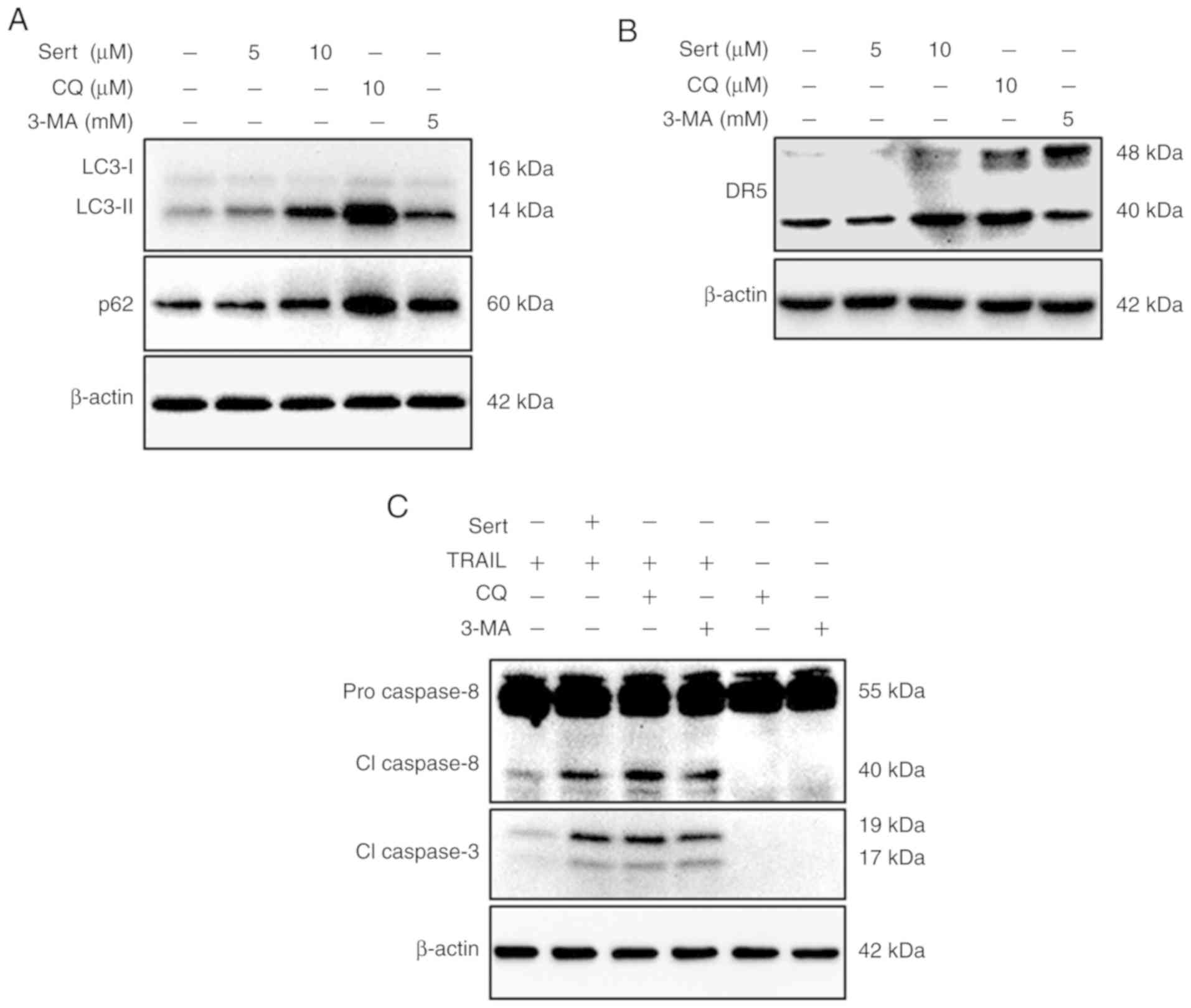
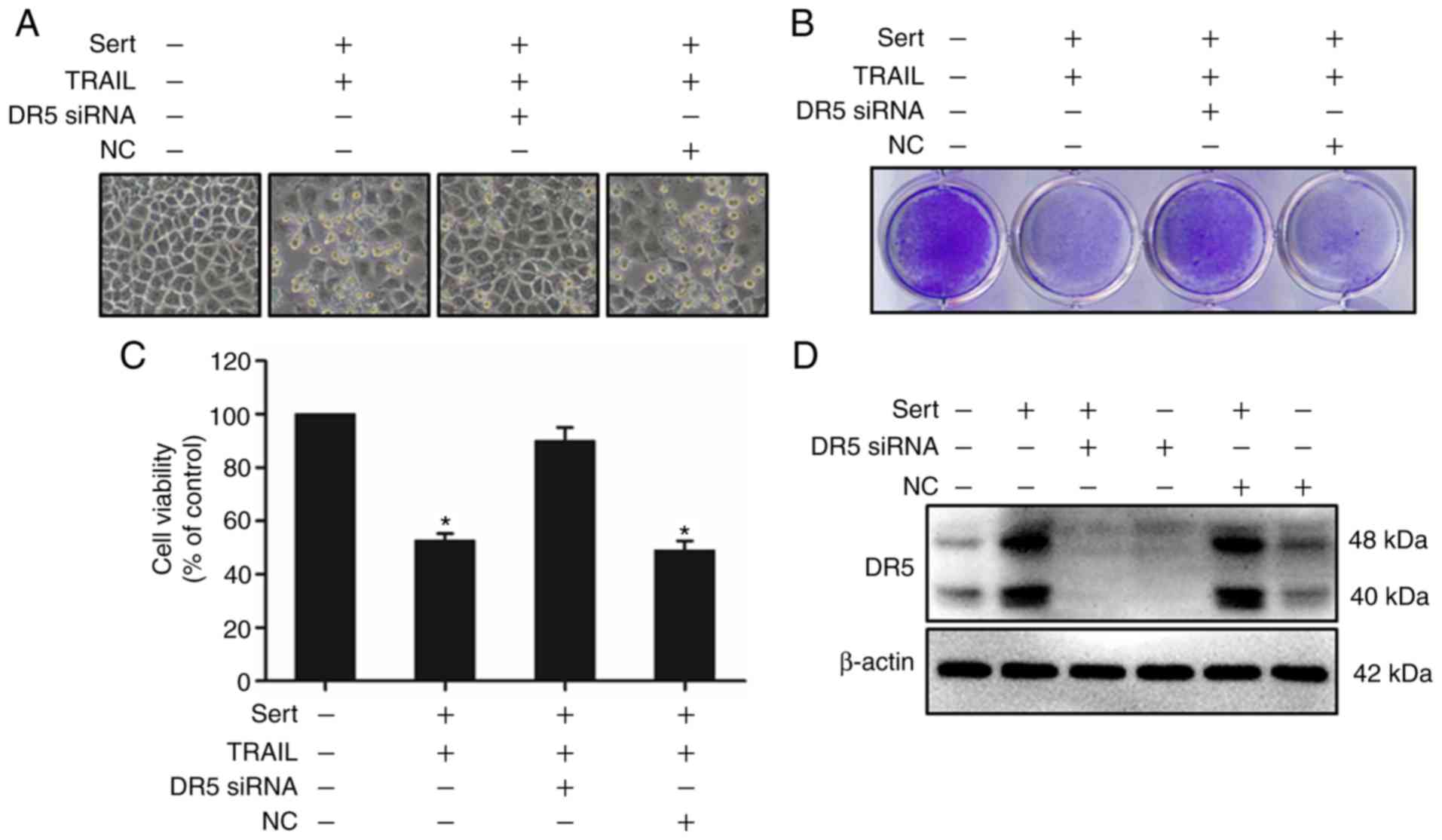
Tumor necrosis factor‑related apoptosis‑inducing ligand (TRAIL) is a potential target for cancer therapy, owing to its ability to selectively kill cancer cells without causing significant toxicity to normal cells. However, due to the lack of death receptor expression, cancer cells can become highly resistant to TRAIL. Hence, it is vital to develop agents that restore TRAIL efficacy. Sertraline is an antidepressant drug with anticancer properties. To the best of our knowledge, this is the first study to demonstrate that sertraline inhibits autophagic flux and increases the expression of death receptor 5 (DR5) on TRAIL‑resistant lung cancer cells. Inhibition of autophagy using autophagy inhibitors 3‑methyladenine and chloroquine upregulated the expression of DR5 and enhanced TRAIL‑induced apoptosis, as confirmed by the increase of pro‑apoptotic proteins caspase‑8 and caspase‑3. Silencing DR5 expression using DR5 small interfering RNA prevented sertraline‑induced TRAIL‑mediated apoptosis, indicating the role of DR5 in TRAIL‑mediated apoptosis. Overall, sertraline enhanced TRAIL‑mediated apoptosis via the downregulation of AMP‑activated protein kinase phosphorylation, resulting in the inhibition of autophagic flux, upregulation of DR5 expression, and activation of the apoptotic caspase cascade. These data suggested that sertraline could be used to sensitize human lung cancer cells to TRAIL, while also serving as a therapeutic option in cancer patients with depression.
View Figures

Figure 1

Figure 2

Figure 3

Figure 4

Figure 5

Figure 6

View References

1 

Bray F, Ferlay J, Soerjomataram I, Siegel RL, Torre LA and Jemal A: Global cancer statistics 2018: GLOBOCAN estimates of incidence and mortality worldwide for 36 cancers in 185 countries. CA Cancer J Clin. 68:394–424. 2018. View Article : Google Scholar : PubMed/NCBI

2 

Zingone A, Brown D, Bowman ED, Vidal O, Sage J, Neal J and Ryan BM: Relationship between anti-depressant use and lung cancer survival. Cancer Treat Res Commun. 10:33–39. 2017. View Article : Google Scholar : PubMed/NCBI

3 

Schelhaas S, Held A, Wachsmuth L, Hermann S, Honess DJ, Heinzmann K, Smith DM, Griffiths JR, Faber C and Jacobs AH: Gemcitabine mechanism of action confounds early assessment of treatment response by 3′-Deoxy-3′-[18F]Fluorothymidine in preclinical models of lung cancer. Cancer Res. 76:7096–7105. 2016. View Article : Google Scholar : PubMed/NCBI

4 

Garcia G and Odaimi M: Systemic combination chemotherapy in elderly pancreatic cancer: A review. J Gastrointest Cancer. 48:121–128. 2017. View Article : Google Scholar : PubMed/NCBI

5 

Sun W, Sanderson PE and Zheng W: Drug combination therapy increases successful drug repositioning. Drug Discov Today. 21:1189–1195. 2016. View Article : Google Scholar : PubMed/NCBI

6 

Uchibori K, Inase N, Araki M, Kamada M, Sato S, Okuno Y, Fujita N and Katayama R: Brigatinib combined with anti-EGFR antibody overcomes osimertinib resistance in EGFR-mutated non-small-cell lung cancer. Nat Commun. 8:147682017. View Article : Google Scholar : PubMed/NCBI

7 

Aggarwal BB: Signalling pathways of the TNF superfamily: A double-edged sword. Nat Rev Immunol. 3:745–756. 2003. View Article : Google Scholar : PubMed/NCBI

8 

Mellier G, Huang S, Shenoy K and Pervaiz S: TRAILing death in cancer. Mol Aspects Med. 31:93–112. 2010. View Article : Google Scholar

9 

Nazim UM, Rasheduzzaman M, Lee YJ, Seol DW and Park SY: Enhancement of TRAIL-induced apoptosis by 5-fluorouracil requires activating Bax and p53 pathways in TRAIL-resistant lung cancers. Oncotarget. 8:18095–18105. 2017. View Article : Google Scholar : PubMed/NCBI

10 

O'Leary L, van der Sloot AM, Reis CR, Deegan S, Ryan AE, Dhami SPS, Murillo LS, Cool RH, Sampaio PC, Thompson K, et al: Decoy receptors block TRAIL sensitivity at a supracellular level: The role of stromal cells in controlling tumour TRAIL sensitivity. Oncogene. 35:1261–1270. 2016. View Article : Google Scholar

11 

Wang S and El-Deiry WS: TRAIL and apoptosis induction by TNF-family death receptors. Oncogene. 22:8628–8633. 2003. View Article : Google Scholar : PubMed/NCBI

12 

Wang S: The promise of cancer therapeutics targeting the TNF-related apoptosis-inducing ligand and TRAIL receptor pathway. Oncogene. 27:6207–6215. 2008. View Article : Google Scholar : PubMed/NCBI

13 

Wu GS: TRAIL as a target in anti-cancer therapy. Cancer Lett. 285:1–5. 2009. View Article : Google Scholar : PubMed/NCBI

14 

Jin CY, Park C, Hwang HJ, Kim GY, Choi BT, Kim WJ and Choi YH: Naringenin up-regulates the expression of death receptor 5 and enhances TRAIL-induced apoptosis in human lung cancer A549 cells. Mol Nutr Food Res. 55:300–309. 2011. View Article : Google Scholar

15 

Dai X, Zhang J, Arfuso F, Chinnathambi A, Zayed ME, Alharbi SA, Kumar AP, Ahn KS and Sethi G: Targeting TNF-related apoptosis-inducing ligand (TRAIL) receptor by natural products as a potential therapeutic approach for cancer therapy. Exp Biol Med (Maywood). 240:760–773. 2015. View Article : Google Scholar

16 

Ding J, Polier G, Köhler R, Giaisi M, Krammer PH and Li-Weber M: Wogonin and related natural flavones overcome tumor necrosis factor-related apoptosis-inducing ligand (TRAIL) protein resistance of tumors by down-regulation of c-FLIP protein and up-regulation of TRAIL receptor 2 expression. J Biol Chem. 287:641–649. 2012. View Article : Google Scholar :

17 

Mizushima N, Yoshimori T and Levine B: Methods in mammalian autophagy research. Cell. 140:313–326. 2010. View Article : Google Scholar : PubMed/NCBI

18 

Tanida I, Minematsu-Ikeguchi N, Ueno T and Kominami E: Lysosomal turnover, but not a cellular level, of endogenous LC3 is a marker for autophagy. Autophagy. 1:84–91. 2005. View Article : Google Scholar

19 

Gómez-Sánchez R, Yakhine-Diop SMS, Rodríguez-Arribas M, Pedro JMB, Martínez-Chacón G, Uribe-Carretero E, de Castro DCJ, Pizarro-Estrella E, Fuentes JM and González-Polo RA: mRNA and protein dataset of autophagy markers (LC3 and p62) in several cell lines. Data Brief. 7:641–647. 2016. View Article : Google Scholar : PubMed/NCBI

20 

Boya P, González-Polo R, Casares N, Perfettini J, Dessen P, Larochette N, Métivier D, Meley D, Souquere S, Yoshimori T, et al: Inhibition of macroautophagy triggers apoptosis. Mol Cell Biol. 25:1025–1040. 2005. View Article : Google Scholar : PubMed/NCBI

21 

Mauthe M, Orhon I, Rocchi C, Zhou X, Luhr M, Hijlkema K, Coppes RP, Engedal N, Mari M and Reggiori F: Chloroquine inhibits autophagic flux by decreasing autophagosome-lysosome fusion. Autophagy. 14:1435–1455. 2018. View Article : Google Scholar : PubMed/NCBI

22 

Heckmann BL, Yang X, Zhang X and Liu J: The autophagic inhibitor 3-methyladenine potently stimulates PKA-dependent lipolysis in adipocytes. Br J Pharmacol. 168:163–171. 2013. View Article : Google Scholar :

23 

Kahn BB, Alquier T, Carling D and Hardie DG: AMP-activated protein kinase: Ancient energy gauge provides clues to modern understanding of metabolism. Cell Metab. 1:15–25. 2005. View Article : Google Scholar : PubMed/NCBI

24 

Zhou C, Gu J, Zhang G, Dong D, Yang Q, Chen M and Xu D: AMPK-autophagy inhibition sensitizes icaritin-induced anti-colorectal cancer cell activity. Oncotarget. 8:14736–14747. 2017. View Article : Google Scholar : PubMed/NCBI

25 

Cho SW, Na W, Choi M, Kang SJ, Lee S and Choi CY: Autophagy inhibits cell death induced by the anti-cancer drug morusin. Am J Cancer Res. 7:518–530. 2017.PubMed/NCBI

26 

Laoutidis ZG and Mathiak K: Antidepressants in the treatment of depression/depressive symptoms in cancer patients: A systematic review and meta-analysis. BMC Psychiatry. 13:1402013. View Article : Google Scholar : PubMed/NCBI

27 

Serafin MB, Bottega A, da Rosa TF, Machado CS, Foletto VS, Coelho SS, da Mota AD and Hörner R: Drug repositioning in oncology. Am J Ther. 2019. View Article : Google Scholar

28 

Xia D, Zhang Y, Xu G, Yan W, Pan X and Tong J: Sertraline exerts its antitumor functions through both apoptosis and autophagy pathways in acute myeloid leukemia cells. Leuk Lymphoma. 58:1–10. 2017. View Article : Google Scholar : PubMed/NCBI

29 

Alers S, Löffler AS, Wesselborg S and Stork B: Role of AMPK-mTOR-Ulk1/2 in the regulation of autophagy: Cross talk, shortcuts, and feedbacks. Mol Cell Biol. 32:2–11. 2012. View Article : Google Scholar :

30 

Di Rosso ME, Sterle HA, Cremaschi GA and Genaro AM: Beneficial effect of fluoxetine and sertraline on chronic stress-induced tumor growth and cell dissemination in a mouse model of lymphoma: Crucial role of antitumor immunity. Front Immunol. 9:13412018. View Article : Google Scholar : PubMed/NCBI

31 

Dhabhar FS, Saul AN, Holmes TH, Daugherty C, Neri E, Tillie JM, Kusewitt D and Oberyszyn TM: High-anxious individuals show increased chronic stress burden, decreased protective immunity, and increased cancer progression in a mouse model of squamous cell carcinoma. PLoS One. 7:e330692012. View Article : Google Scholar : PubMed/NCBI

32 

Thaker PH, Han LY, Kamat AA, Arevalo JM, Takahashi R, Lu C, Jennings NB, Armaiz-Pena G, Bankson JA, Ravoori M, et al: Chronic stress promotes tumor growth and angiogenesis in a mouse model of ovarian carcinoma. Nat Med. 12:939–944. 2006. View Article : Google Scholar : PubMed/NCBI

33 

Kim-Fuchs C, Le CP, Pimentel MA, Shackleford D, Ferrari D, Angst E, Hollande F and Sloan EK: Chronic stress accelerates pancreatic cancer growth and invasion: A critical role for beta-adrenergic signaling in the pancreatic microenvironment. Brain Behav Immun. 40:40–47. 2014. View Article : Google Scholar : PubMed/NCBI

34 

Hassan S, Karpova Y, Baiz D, Yancey D, Pullikuth A, Flores A, Register T, Cline JM, D'Agostino Jr, Danial N, et al: Behavioral stress accelerates prostate cancer development in mice. J Clin Invest. 123:874–886. 2013.PubMed/NCBI

35 

Sloan EK, Priceman SJ, Cox BF, Yu S, Pimentel MA, Tangkanangnukul V, Arevalo JMG, Morizono K, Karanikolas BDW, Wu L, et al: The sympathetic nervous system induces a metastatic switch in primary breast cancer. Cancer Res. 70:7042–7052. 2010. View Article : Google Scholar : PubMed/NCBI

36 

Hasegawa H and Saiki I: Psychosocial stress augments tumor development through beta-adrenergic activation in mice. Jpn J Cancer Res. 93:729–735. 2002. View Article : Google Scholar : PubMed/NCBI

37 

Toh S, Rodríguez LAG and Hernández-Díaz S: Use of antidepressants and risk of lung cancer. Cancer Causes Control. 18:1055–1064. 2007. View Article : Google Scholar : PubMed/NCBI

38 

Chou CT, He S and Jan CR: Paroxetine-induced apoptosis in human osteosarcoma cells: Activation of p38 MAP kinase and caspase-3 pathways without involvement of [Ca2+]i elevation. Toxicol Appl Pharmacol. 218:265–273. 2007. View Article : Google Scholar

39 

Abdul M, Logothetis CJ and Hoosein NM: Growth-inhibitory effects of serotonin uptake inhibitors on human prostate carcinoma cell lines. J Urol. 154:247–250. 1995. View Article : Google Scholar : PubMed/NCBI

40 

Spanová A, Kovárů H, Lisá V, Lukásová E and Rittich B: Estimation of apoptosis in C6 glioma cells treated with antidepressants. Physiol Res. 46:161–164. 1997.PubMed/NCBI

41 

Amit BH, Gil-Ad I, Taler M, Bar M, Zolokov A and Weizman A: Proapoptotic and chemosensitizing effects of selective serotonin reuptake inhibitors on T cell lymphoma/leukemia (Jurkat) in vitro. Eur Neuropsychopharmacol. 19:726–734. 2009. View Article : Google Scholar : PubMed/NCBI

42 

LeBlanc H, Lawrence D, Varfolomeev E, Totpal K, Morlan J, Schow P, Fong S, Schwall R, Sinicropi D and Ashkenazi A: Tumor-cell resistance to death receptor-induced apoptosis through mutational inactivation of the proapoptotic Bcl-2 homolog Bax. Nat Med. 8:274–281. 2002. View Article : Google Scholar : PubMed/NCBI

43 

Srivastava RK: TRAIL/Apo-2L: Mechanisms and clinical applications in cancer. Neoplasia. 3:535–546. 2001. View Article : Google Scholar

44 

Bellail AC, Qi L, Mulligan P, Chhabra V and Hao C: TRAIL agonists on clinical trials for cancer therapy: The promises and the challenges. Rev Recent Clin Trials. 4:34–41. 2009. View Article : Google Scholar : PubMed/NCBI

45 

Walczak H, Miller RE, Ariail K, Gliniak B, Griffith TS, Kubin M, Chin W, Jones J, Woodward A, Le T, et al: Tumoricidal activity of tumor necrosis factor-related apoptosis-inducing ligand in vivo. Nat Med. 5:157–163. 1999. View Article : Google Scholar : PubMed/NCBI

46 

Klionsky DJ: Autophagy: From phenomenology to molecular understanding in less than a decade. Nat Rev Mol Cell Biol. 8:931–937. 2007. View Article : Google Scholar : PubMed/NCBI

47 

Shimizu S, Kanaseki T, Mizushima N, Mizuta T, Arakawa-Kobayashi S, Thompson CB and Tsujimoto Y: Role of Bcl-2 family proteins in a non-apoptotic programmed cell death dependent on autophagy genes. Nat Cell Biol. 6:1221–1228. 2004. View Article : Google Scholar : PubMed/NCBI

48 

Glick D, Barth S and Macleod KF: Autophagy: Cellular and molecular mechanisms. J Pathol. 221:3–12. 2010. View Article : Google Scholar : PubMed/NCBI

49 

Park EJ, Min K, Choi KS, Kubatka P, Kruzliak P, Kim DE and Kwon TK: Chloroquine enhances TRAIL-mediated apoptosis through up-regulation of DR5 by stabilization of mRNA and protein in cancer cells. Sci Rep. 6:229212016. View Article : Google Scholar : PubMed/NCBI

50 

Liu X, Chhipa RR, Nakano I and Dasgupta B: The AMPK inhibitor compound C is a potent AMPK-independent antiglioma agent. Mol Cancer Ther. 13:596–605. 2014. View Article : Google Scholar : PubMed/NCBI

51 

Zinnah KMA and Park SY: Duloxetine enhances TRAIL-mediated apoptosis via AMPK-mediated Inhibition of autophagy flux in lung cancer cells. Anticancer Res. 39:6621–6633. 2019. View Article : Google Scholar : PubMed/NCBI

52 

Yang Y, Hu L, Zheng H, Mao C, Hu W, Xiong K, Wang F and Liu C: Application and interpretation of current autophagy inhibitors and activators. Acta Pharmacol Sin. 34:625–635. 2013. View Article : Google Scholar : PubMed/NCBI

53 

Hu X, Shi S, Wang H, Yu X, Wang Q, Jiang S, Ju D, Ye L and Feng M: Blocking autophagy improves the anti-tumor activity of afatinib in lung adenocarcinoma with activating EGFR mutations in vitro and in vivo. Sci Rep. 7:45592017. View Article : Google Scholar : PubMed/NCBI

54 

Lin YC, Lin JF, Wen SI, Yang SC, Tsai TF, Chen HE, Chou KY and Hwang TI: Chloroquine and hydroxychloroquine inhibit bladder cancer cell growth by targeting basal autophagy and enhancing apoptosis. Kaohsiung J Med Sci. 33:215–223. 2017. View Article : Google Scholar : PubMed/NCBI

Related Articles

  • Abstract
  • View
  • Download
  • Twitter
Copy and paste a formatted citation
Spandidos Publications style
Zinnah KM, Seol JW and Park SY: Inhibition of autophagy flux by sertraline attenuates TRAIL resistance in lung cancer via death receptor 5 upregulation. Int J Mol Med 46: 795-805, 2020.
APA
Zinnah, K.M., Seol, J., & Park, S. (2020). Inhibition of autophagy flux by sertraline attenuates TRAIL resistance in lung cancer via death receptor 5 upregulation. International Journal of Molecular Medicine, 46, 795-805. https://doi.org/10.3892/ijmm.2020.4635
MLA
Zinnah, K. M., Seol, J., Park, S."Inhibition of autophagy flux by sertraline attenuates TRAIL resistance in lung cancer via death receptor 5 upregulation". International Journal of Molecular Medicine 46.2 (2020): 795-805.
Chicago
Zinnah, K. M., Seol, J., Park, S."Inhibition of autophagy flux by sertraline attenuates TRAIL resistance in lung cancer via death receptor 5 upregulation". International Journal of Molecular Medicine 46, no. 2 (2020): 795-805. https://doi.org/10.3892/ijmm.2020.4635
Copy and paste a formatted citation
x
Spandidos Publications style
Zinnah KM, Seol JW and Park SY: Inhibition of autophagy flux by sertraline attenuates TRAIL resistance in lung cancer via death receptor 5 upregulation. Int J Mol Med 46: 795-805, 2020.
APA
Zinnah, K.M., Seol, J., & Park, S. (2020). Inhibition of autophagy flux by sertraline attenuates TRAIL resistance in lung cancer via death receptor 5 upregulation. International Journal of Molecular Medicine, 46, 795-805. https://doi.org/10.3892/ijmm.2020.4635
MLA
Zinnah, K. M., Seol, J., Park, S."Inhibition of autophagy flux by sertraline attenuates TRAIL resistance in lung cancer via death receptor 5 upregulation". International Journal of Molecular Medicine 46.2 (2020): 795-805.
Chicago
Zinnah, K. M., Seol, J., Park, S."Inhibition of autophagy flux by sertraline attenuates TRAIL resistance in lung cancer via death receptor 5 upregulation". International Journal of Molecular Medicine 46, no. 2 (2020): 795-805. https://doi.org/10.3892/ijmm.2020.4635
Follow us
  • Twitter
  • LinkedIn
  • Facebook
About
  • Spandidos Publications
  • Careers
  • Cookie Policy
  • Privacy Policy
How can we help?
  • Help
  • Live Chat
  • Contact
  • Email to our Support Team