Spandidos Publications Logo
  • About
    • About Spandidos
    • Aims and Scopes
    • Abstracting and Indexing
    • Editorial Policies
    • Reprints and Permissions
    • Job Opportunities
    • Terms and Conditions
    • Contact
  • Journals
    • All Journals
    • Oncology Letters
      • Oncology Letters
      • Information for Authors
      • Editorial Policies
      • Editorial Board
      • Aims and Scope
      • Abstracting and Indexing
      • Bibliographic Information
      • Archive
    • International Journal of Oncology
      • International Journal of Oncology
      • Information for Authors
      • Editorial Policies
      • Editorial Board
      • Aims and Scope
      • Abstracting and Indexing
      • Bibliographic Information
      • Archive
    • Molecular and Clinical Oncology
      • Molecular and Clinical Oncology
      • Information for Authors
      • Editorial Policies
      • Editorial Board
      • Aims and Scope
      • Abstracting and Indexing
      • Bibliographic Information
      • Archive
    • Experimental and Therapeutic Medicine
      • Experimental and Therapeutic Medicine
      • Information for Authors
      • Editorial Policies
      • Editorial Board
      • Aims and Scope
      • Abstracting and Indexing
      • Bibliographic Information
      • Archive
    • International Journal of Molecular Medicine
      • International Journal of Molecular Medicine
      • Information for Authors
      • Editorial Policies
      • Editorial Board
      • Aims and Scope
      • Abstracting and Indexing
      • Bibliographic Information
      • Archive
    • Biomedical Reports
      • Biomedical Reports
      • Information for Authors
      • Editorial Policies
      • Editorial Board
      • Aims and Scope
      • Abstracting and Indexing
      • Bibliographic Information
      • Archive
    • Oncology Reports
      • Oncology Reports
      • Information for Authors
      • Editorial Policies
      • Editorial Board
      • Aims and Scope
      • Abstracting and Indexing
      • Bibliographic Information
      • Archive
    • Molecular Medicine Reports
      • Molecular Medicine Reports
      • Information for Authors
      • Editorial Policies
      • Editorial Board
      • Aims and Scope
      • Abstracting and Indexing
      • Bibliographic Information
      • Archive
    • World Academy of Sciences Journal
      • World Academy of Sciences Journal
      • Information for Authors
      • Editorial Policies
      • Editorial Board
      • Aims and Scope
      • Abstracting and Indexing
      • Bibliographic Information
      • Archive
    • International Journal of Functional Nutrition
      • International Journal of Functional Nutrition
      • Information for Authors
      • Editorial Policies
      • Editorial Board
      • Aims and Scope
      • Abstracting and Indexing
      • Bibliographic Information
      • Archive
    • International Journal of Epigenetics
      • International Journal of Epigenetics
      • Information for Authors
      • Editorial Policies
      • Editorial Board
      • Aims and Scope
      • Abstracting and Indexing
      • Bibliographic Information
      • Archive
    • Medicine International
      • Medicine International
      • Information for Authors
      • Editorial Policies
      • Editorial Board
      • Aims and Scope
      • Abstracting and Indexing
      • Bibliographic Information
      • Archive
  • Articles
  • Information
    • Information for Authors
    • Information for Reviewers
    • Information for Librarians
    • Information for Advertisers
    • Conferences
  • Language Editing
Spandidos Publications Logo
  • About
    • About Spandidos
    • Aims and Scopes
    • Abstracting and Indexing
    • Editorial Policies
    • Reprints and Permissions
    • Job Opportunities
    • Terms and Conditions
    • Contact
  • Journals
    • All Journals
    • Biomedical Reports
      • Information for Authors
      • Editorial Policies
      • Editorial Board
      • Aims and Scope
      • Abstracting and Indexing
      • Bibliographic Information
      • Archive
    • Experimental and Therapeutic Medicine
      • Information for Authors
      • Editorial Policies
      • Editorial Board
      • Aims and Scope
      • Abstracting and Indexing
      • Bibliographic Information
      • Archive
    • International Journal of Epigenetics
      • Information for Authors
      • Editorial Policies
      • Editorial Board
      • Aims and Scope
      • Abstracting and Indexing
      • Bibliographic Information
      • Archive
    • International Journal of Functional Nutrition
      • Information for Authors
      • Editorial Policies
      • Editorial Board
      • Aims and Scope
      • Abstracting and Indexing
      • Bibliographic Information
      • Archive
    • International Journal of Molecular Medicine
      • Information for Authors
      • Editorial Policies
      • Editorial Board
      • Aims and Scope
      • Abstracting and Indexing
      • Bibliographic Information
      • Archive
    • International Journal of Oncology
      • Information for Authors
      • Editorial Policies
      • Editorial Board
      • Aims and Scope
      • Abstracting and Indexing
      • Bibliographic Information
      • Archive
    • Medicine International
      • Information for Authors
      • Editorial Policies
      • Editorial Board
      • Aims and Scope
      • Abstracting and Indexing
      • Bibliographic Information
      • Archive
    • Molecular and Clinical Oncology
      • Information for Authors
      • Editorial Policies
      • Editorial Board
      • Aims and Scope
      • Abstracting and Indexing
      • Bibliographic Information
      • Archive
    • Molecular Medicine Reports
      • Information for Authors
      • Editorial Policies
      • Editorial Board
      • Aims and Scope
      • Abstracting and Indexing
      • Bibliographic Information
      • Archive
    • Oncology Letters
      • Information for Authors
      • Editorial Policies
      • Editorial Board
      • Aims and Scope
      • Abstracting and Indexing
      • Bibliographic Information
      • Archive
    • Oncology Reports
      • Information for Authors
      • Editorial Policies
      • Editorial Board
      • Aims and Scope
      • Abstracting and Indexing
      • Bibliographic Information
      • Archive
    • World Academy of Sciences Journal
      • Information for Authors
      • Editorial Policies
      • Editorial Board
      • Aims and Scope
      • Abstracting and Indexing
      • Bibliographic Information
      • Archive
  • Articles
  • Information
    • For Authors
    • For Reviewers
    • For Librarians
    • For Advertisers
    • Conferences
  • Language Editing
Login Register Submit
  • This site uses cookies
  • You can change your cookie settings at any time by following the instructions in our Cookie Policy. To find out more, you may read our Privacy Policy.

    I agree
Search articles by DOI, keyword, author or affiliation
Search
Advanced Search
presentation
International Journal of Molecular Medicine
Join Editorial Board Propose a Special Issue
Print ISSN: 1107-3756 Online ISSN: 1791-244X
Journal Cover
December-2020 Volume 46 Issue 6

Full Size Image

Sign up for eToc alerts
Recommend to Library

Journals

International Journal of Molecular Medicine

International Journal of Molecular Medicine

International Journal of Molecular Medicine is an international journal devoted to molecular mechanisms of human disease.

International Journal of Oncology

International Journal of Oncology

International Journal of Oncology is an international journal devoted to oncology research and cancer treatment.

Molecular Medicine Reports

Molecular Medicine Reports

Covers molecular medicine topics such as pharmacology, pathology, genetics, neuroscience, infectious diseases, molecular cardiology, and molecular surgery.

Oncology Reports

Oncology Reports

Oncology Reports is an international journal devoted to fundamental and applied research in Oncology.

Experimental and Therapeutic Medicine

Experimental and Therapeutic Medicine

Experimental and Therapeutic Medicine is an international journal devoted to laboratory and clinical medicine.

Oncology Letters

Oncology Letters

Oncology Letters is an international journal devoted to Experimental and Clinical Oncology.

Biomedical Reports

Biomedical Reports

Explores a wide range of biological and medical fields, including pharmacology, genetics, microbiology, neuroscience, and molecular cardiology.

Molecular and Clinical Oncology

Molecular and Clinical Oncology

International journal addressing all aspects of oncology research, from tumorigenesis and oncogenes to chemotherapy and metastasis.

World Academy of Sciences Journal

World Academy of Sciences Journal

Multidisciplinary open-access journal spanning biochemistry, genetics, neuroscience, environmental health, and synthetic biology.

International Journal of Functional Nutrition

International Journal of Functional Nutrition

Open-access journal combining biochemistry, pharmacology, immunology, and genetics to advance health through functional nutrition.

International Journal of Epigenetics

International Journal of Epigenetics

Publishes open-access research on using epigenetics to advance understanding and treatment of human disease.

Medicine International

Medicine International

An International Open Access Journal Devoted to General Medicine.

Journal Cover
December-2020 Volume 46 Issue 6

Full Size Image

Sign up for eToc alerts
Recommend to Library

  • Article
  • Citations
    • Cite This Article
    • Download Citation
    • Create Citation Alert
    • Remove Citation Alert
    • Cited By
  • Similar Articles
    • Related Articles (in Spandidos Publications)
    • Similar Articles (Google Scholar)
    • Similar Articles (PubMed)
  • Download PDF
Article Open Access

Epigallocatechin‑3‑gallate inhibits self‑renewal ability of lung cancer stem‑like cells through inhibition of CLOCK

  • Authors:
    • Pan Jiang
    • Chuyue Xu
    • Pengpeng Zhang
    • Jianglei Ren
    • Fatima Mageed
    • Xiaoyue Wu
    • Lijun Chen
    • Falak Zeb
    • Qing Feng
    • Shanqun Li
  • View Affiliations / Copyright

    Affiliations: Department of Respiratory Medicine, Zhongshan Hospital, Fudan University, Shanghai 200030, P.R. China, Department of Nutrition and Food Hygiene, Key Laboratory of Toxicology, School of Public Health, Nanjing Medical University, Nanjing, Jiangsu 211100, P.R. China
    Copyright: © Jiang et al. This is an open access article distributed under the terms of Creative Commons Attribution License.
  • Pages: 2216-2224
    |
    Published online on: October 14, 2020
       https://doi.org/10.3892/ijmm.2020.4758
  • Expand metrics +
Metrics: Total Views: 0 (Spandidos Publications: | PMC Statistics: )
Metrics: Total PDF Downloads: 0 (Spandidos Publications: | PMC Statistics: )
Cited By (CrossRef): 0 citations Loading Articles...

This article is mentioned in:


Abstract

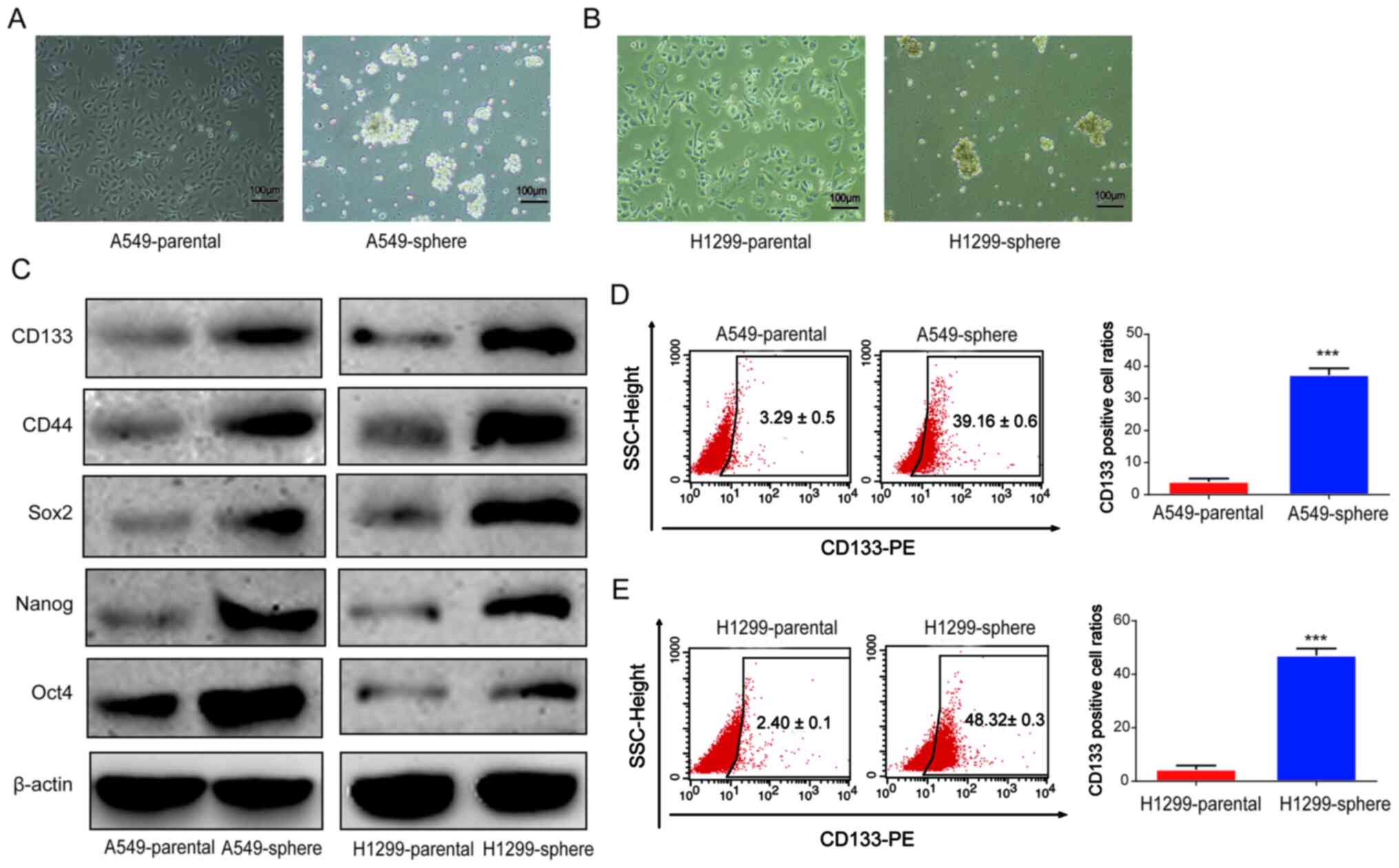
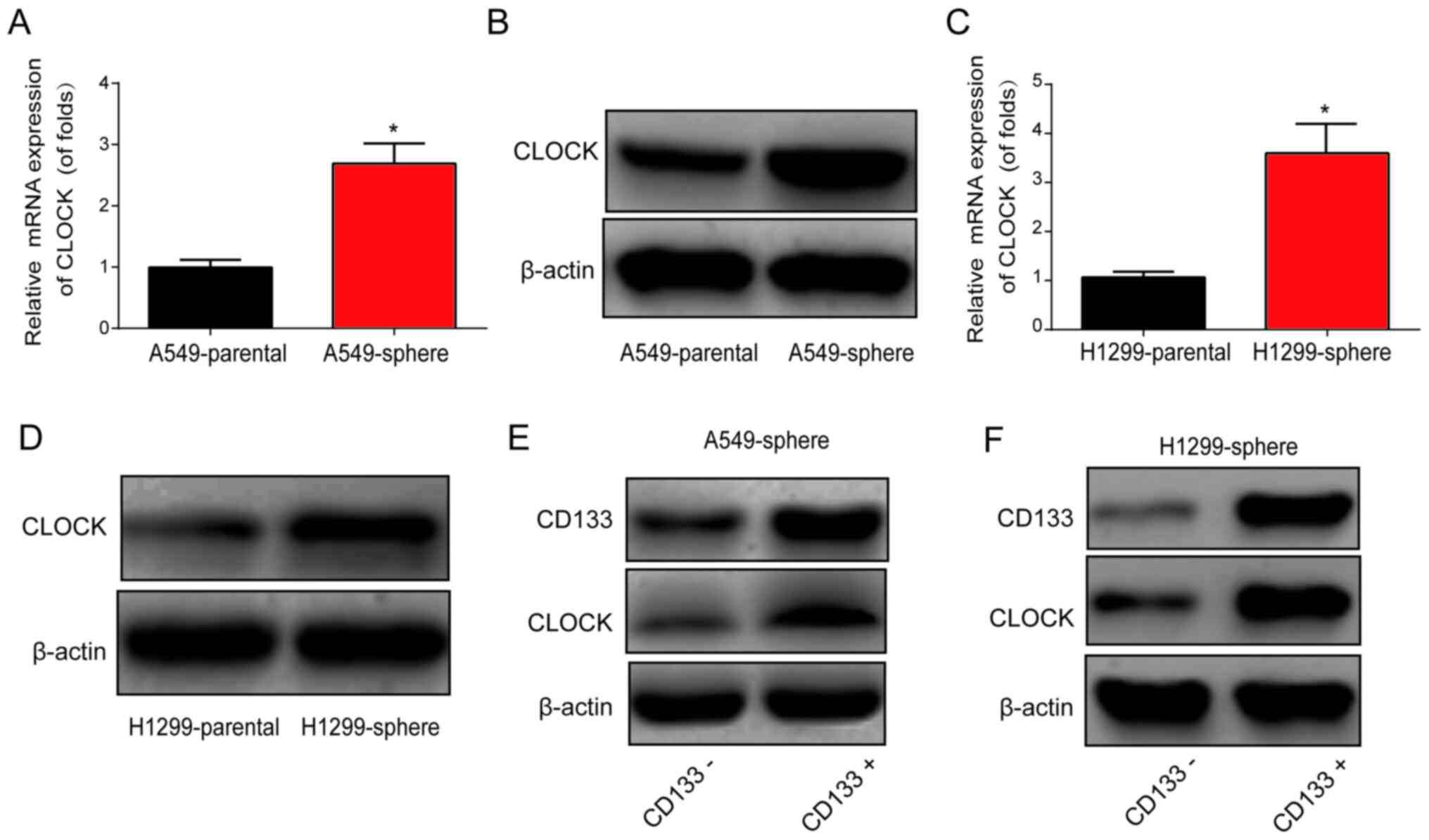
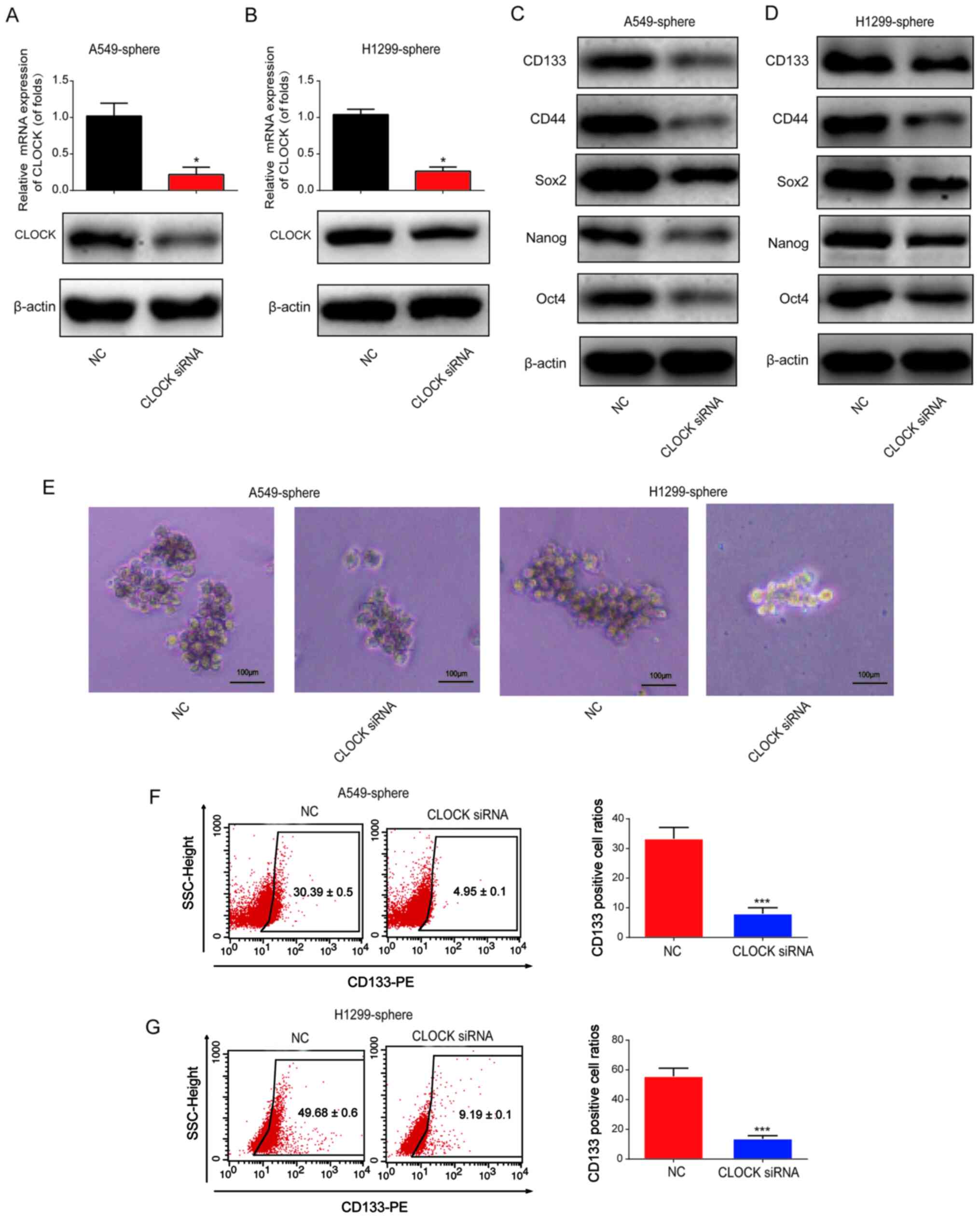
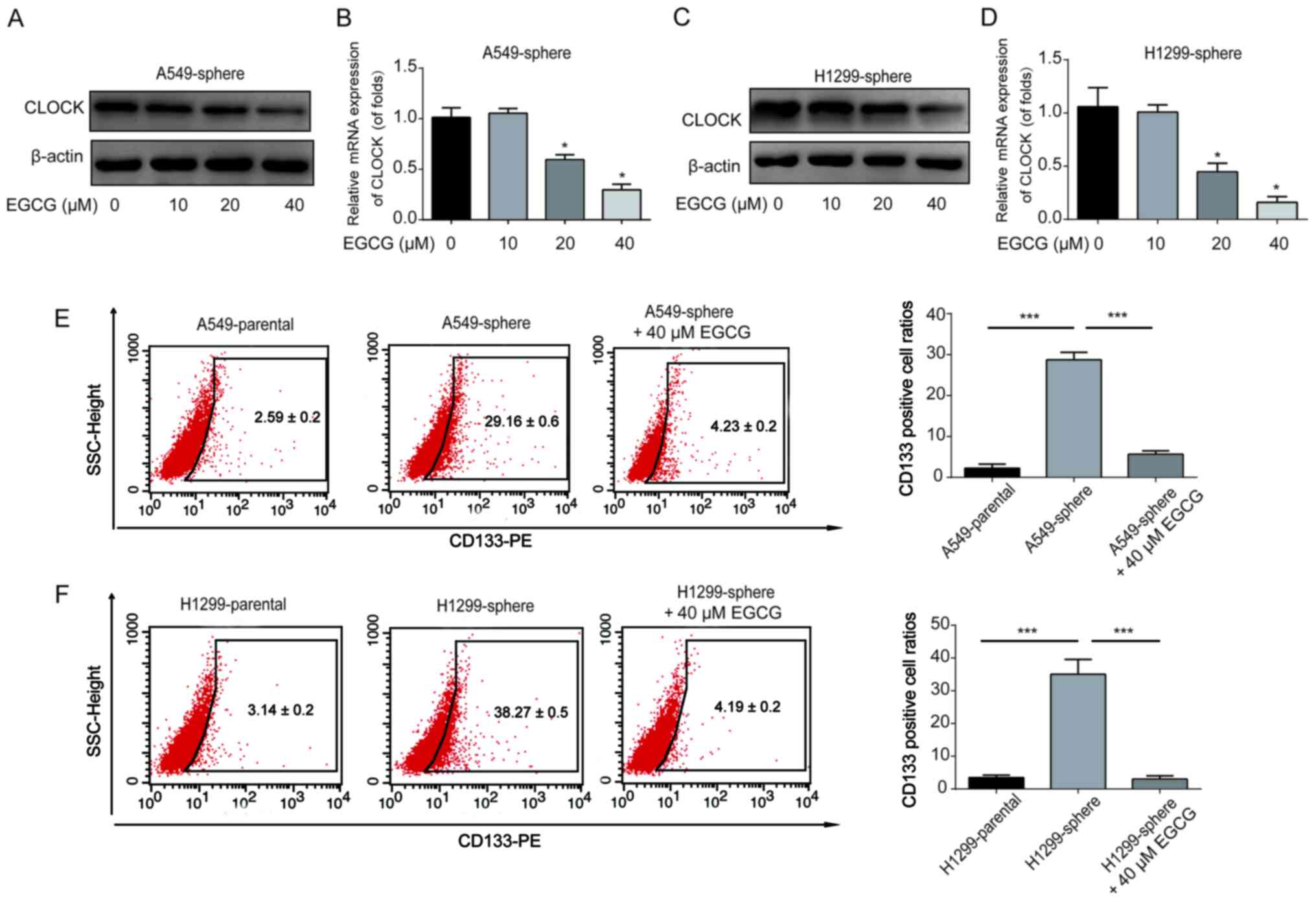
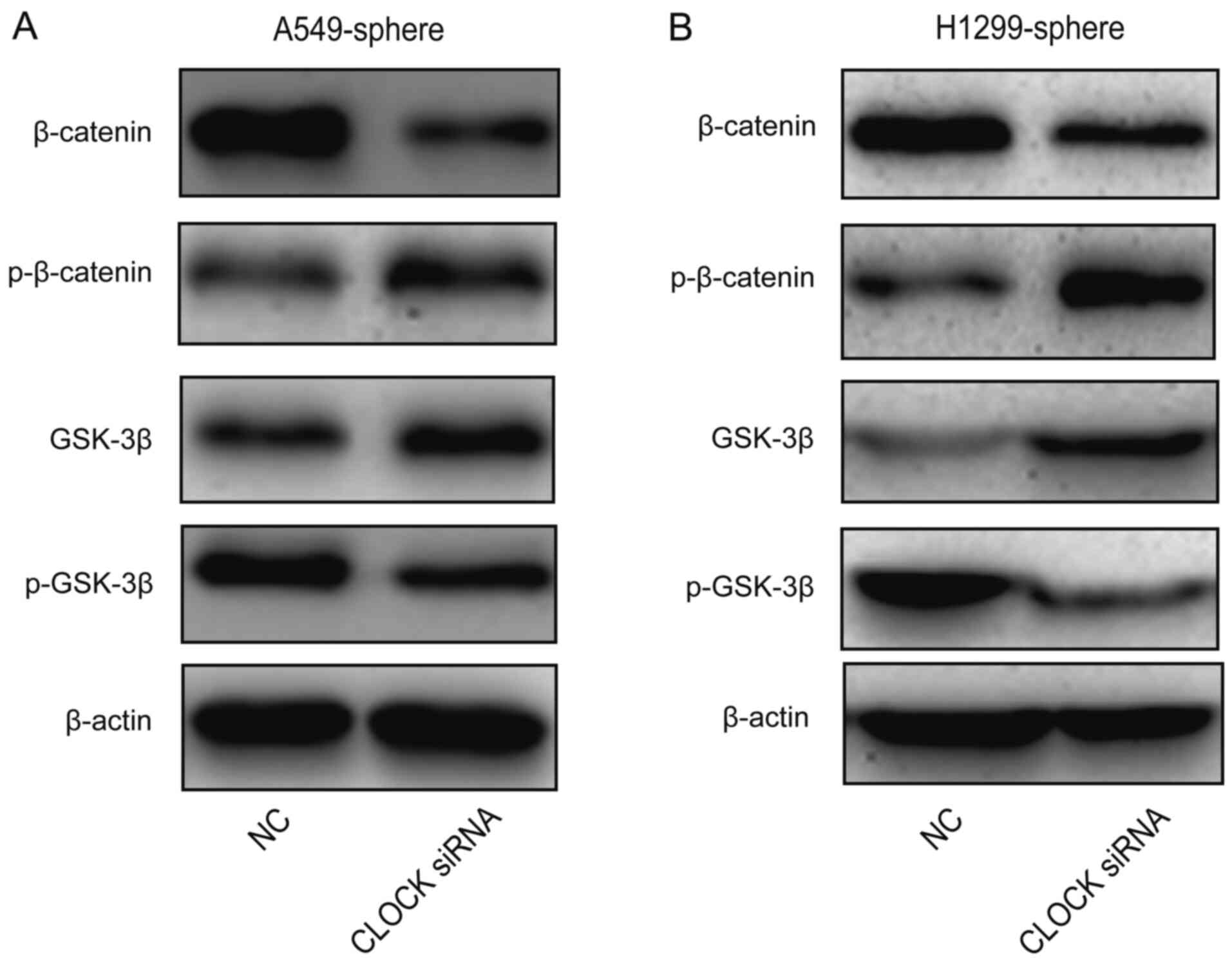
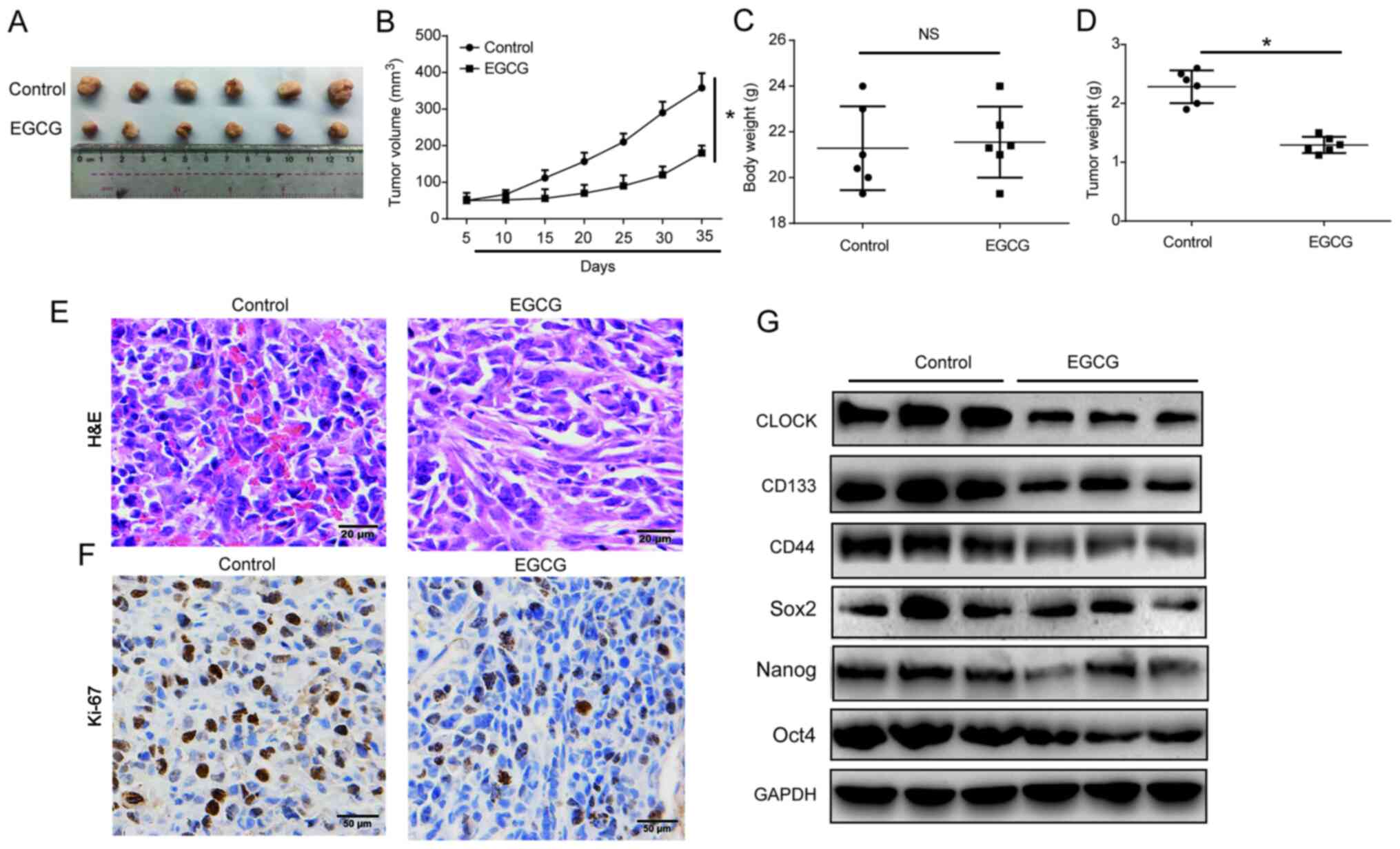
Circadian rhythm plays an important role in diverse physiological processes. Abnormal expression of circadian rhythm genes is associated with increased risk of disease, including different types of cancer. The cancer stem cell (CSC) hypothesis suggests that there is a small subset of stem‑like cells within tumors that are responsible for tumor initiation. However, the biological effect of circadian rhythm on CSCs remains largely unknown. Studies have highlighted that the circadian rhythm protein CLOCK controls key aspects of various diseases. In the present study, lung cancer stem‑like cells were successfully enriched using a sphere formation assay. Next, it was observed that CLOCK mRNA and protein expression levels in the A549 and H1299 sphere cells were notably increased compared with those in the corresponding parental cells. In addition, flow cytometry was performed to isolate CD133+ cells and, consistently, CLOCK expression was also found to be markedly upregulated in CD133+ lung cancer cells. Subsequently, to determine the effect of CLOCK on lung cancer stem cells in detail, CLOCK was knocked down using targeted short inhibiting RNA and the results demonstrated that the sphere‑forming ability of the A549 and H1299 cell lines was reduced. In addition, CSC‑like properties, including the expression of CD133, CD44, sex determining region Y‑box 2, Nanog and octamer‑binding transcription factor 4, were markedly decreased in the A549 and H1299 sphere cells following knockdown of CLOCK. Epigallocatechin‑3‑gallate (EGCG), a green tea polyphenol, has been reported to be a potential anticancer phytochemical. EGCG was found to repress CLOCK expression in A549 and H1299 sphere cells. In addition, EGCG also decreased the ratio of CD133+ cells. The Wnt/β‑catenin pathway was notably inactivated by the knockdown of CLOCK in A549 and H1299 sphere cells. Subsequently, using a xenograft model, it was demonstrated that EGCG suppressed the CSC‑like characteristics of lung cancer cells by targeting CLOCK. In conclusion, the present study demonstrated that EGCG inhibited the self‑renewal ability of lung cancer stem‑like cells by targeting CLOCK.
View Figures

Figure 1

Figure 2

Figure 3

Figure 4

Figure 5

Figure 6

View References

1 

DeSantis CE, Lin CC, Mariotto AB, Siegel RL, Stein KD, Kramer JL, Alteri R, Robbins AS and Jemal A: Cancer treatment and survivorship statistics, 2014. CA Cancer J Clin. 64:252–271. 2014. View Article : Google Scholar : PubMed/NCBI

2 

Szakács G, Paterson JK, Ludwig JA, Booth-Genthe C and Gottesman MM: Targeting multidrug resistance in cancer. Nat Rev Drug Discov. 5:219–234. 2006. View Article : Google Scholar : PubMed/NCBI

3 

Hansen J: Increased breast cancer risk among women who work predominantly at night. Epidemiology. 12:74–77. 2001. View Article : Google Scholar : PubMed/NCBI

4 

Kloog I, Haim A, Stevens RG and Portnov BA: Global co-distribution of light at night (LAN) and cancers of prostate, colon, and lung in men. Chronobiol Int. 26:108–125. 2009. View Article : Google Scholar : PubMed/NCBI

5 

Viswanathan AN, Hankinson SE and Schernhammer ES: Night shift work and the risk of endometrial cancer. Cancer Res. 67:10618–10622. 2007. View Article : Google Scholar : PubMed/NCBI

6 

Bass J and Takahashi JS: Circadian integration of metabolism and energetics. Science. 330:1349–1354. 2010. View Article : Google Scholar : PubMed/NCBI

7 

Hanahan D and Weinberg RA: Hallmarks of cancer: The next generation. Cell. 144:646–674. 2011. View Article : Google Scholar : PubMed/NCBI

8 

Masri S, Papagiannakopoulos T, Kinouchi K, Liu Y, Cervantes M, Baldi P, Jacks T and Sassone-Corsi P: Lung adenocarcinoma distally rewires hepatic circadian homeostasis. Cell. 165:896–909. 2016. View Article : Google Scholar : PubMed/NCBI

9 

Puram RV, Kowalczyk MS, de Boer CG, Schneider RK, Miller PG, McConkey M, Tothova Z, Tejero H, Heckl D, Järås M, et al: Core circadian clock genes regulate leukemia stem cells in AML. Cell. 165:303–316. 2016. View Article : Google Scholar : PubMed/NCBI

10 

Van Dycke KC, Rodenburg W, van Oostrom CT, van Kerkhof LW, Pennings JL, Roenneberg T, van Steeg H and van der Horst GT: Chronically alternating light cycles increase breast cancer risk in mice. Curr Biol. 25:1932–1937. 2015. View Article : Google Scholar : PubMed/NCBI

11 

Reppert SM and Weaver DR: Coordination of circadian timing in mammals. Nature. 418:935–941. 2002. View Article : Google Scholar : PubMed/NCBI

12 

Schibler U and Sassone-Corsi P: A web of circadian pacemakers. Cell. 111:919–922. 2002. View Article : Google Scholar

13 

Li A, Lin X, Tan X, Yin B, Han W, Zhao J, Yuan J, Qiang B and Peng X: Circadian gene Clock contributes to cell proliferation and migration of glioma and is directly regulated by tumor-suppressive miR-124. FEBS Lett. 587:2455–2460. 2013. View Article : Google Scholar : PubMed/NCBI

14 

Ghotra VP, Puigvert JC and Danen EH: The cancer stem cell microenvironment and anti-cancer therapy. Int J Radiat Biol. 85:955–962. 2009. View Article : Google Scholar : PubMed/NCBI

15 

Kreso A and Dick JE: Evolution of the cancer stem cell model. Cell Stem Cell. 14:275–291. 2014. View Article : Google Scholar : PubMed/NCBI

16 

Florian S, Sonneck K, Hauswirth AW, Krauth MT, Schernthaner GH, Sperr WR and Valent P: Detection of molecular targets on the surface of CD34+/CD38-stem cells in various myeloid malignancies. Leuk Lymphoma. 47:207–222. 2006. View Article : Google Scholar

17 

Al-Hajj M, Wicha MS, Benito-Hernandez A, Morrison SJ and Clarke MF: Prospective identification of tumorigenic breast cancer cells. Proc Natl Acad Sci USA. 100:3983–3988. 2003. View Article : Google Scholar : PubMed/NCBI

18 

Matsunaga N, Ogino T, Hara Y, Tanaka T, Koyanagi S and Ohdo S: Optimized dosing schedule based on circadian dynamics of mouse breast cancer stem cells improves the antitumor effects of aldehyde dehydrogenase inhibitor. Cancer Res. 78:3698–3708. 2018.PubMed/NCBI

19 

Dong Z, Zhang G, Qu M, Gimple RC, Wu Q, Qiu Z, Prager BC, Wang X, Kim LJY, Morton AR, et al: Targeting glioblastoma stem cells through disruption of the circadian clock. Cancer Discov. 9:1556–1573. 2019. View Article : Google Scholar : PubMed/NCBI

20 

Livak KJ and Schmittgen TD: Analysis of relative gene expression data using real-time quantitative PCR and the 2(-Delta Delta C(T)) method. Methods. 25:402–408. 2001. View Article : Google Scholar

21 

Zhang DG, Jiang AG, Lu HY, Zhang LX and Gao XY: Isolation, cultivation and identification of human lung adenocarcinoma stem cells. Oncol Lett. 9:47–54. 2015. View Article : Google Scholar

22 

Nguyen LV, Vanner R, Dirks P and Eaves CJ: Cancer stem cells: An evolving concept. Nat Rev Cancer. 12:133–13. 2012. View Article : Google Scholar : PubMed/NCBI

23 

Leon G, MacDonagh L, Finn SP, Cuffe S and Barr MP: Cancer stem cells in drug resistant lung cancer: Targeting cell surface markers and signaling pathways. Pharmacol Ther. 158:71–90. 2016. View Article : Google Scholar

24 

Suresh R, Ali S, Ahmad A, Philip PA and Sarkar FH: The role of cancer stem cells in recurrent and drug-resistant lung cancer. Adv Exp Med Biol. 890:57–74. 2016. View Article : Google Scholar

25 

Eramo A, Lotti F, Sette G, Pilozzi E, Biffoni M, Di Virgilio A, Conticello C, Ruco L, Peschle C and De Maria R: Identification and expansion of the tumorigenic lung cancer stem cell population. Cell Death Differ. 15:504–114. 2008. View Article : Google Scholar

26 

Dierickx P, Van Laake LW and Geijsen N: Circadian clocks: From stem cells to tissue homeostasis and regeneration. EMBO Rep. 19:18–28. 2018. View Article : Google Scholar :

27 

Zhang F, Sun H, Zhang S, Yang X, Zhang G and Su T: Overexpression of PER3 inhibits self-renewal capability and chemoresistance of colorectal cancer stem-like cells via inhibition of notch and β-catenin signaling. Oncol Res. 25:709–719. 2017. View Article : Google Scholar

28 

Okazaki F, Matsunaga N, Okazaki H, Azuma H, Hamamura K, Tsuruta A, Tsurudome Y, Ogino T, Hara Y, Suzuki T, et al: Circadian clock in a mouse colon tumor regulates intracellular iron levels to promote tumor progression. J Biol Chem. 291:7017–1028. 2016. View Article : Google Scholar : PubMed/NCBI

29 

Sun Y, Jin L, Sui YX, Han LL and Liu JH: Circadian gene CLOCK affects drug-resistant gene expression and cell proliferation in ovarian cancer SKOV3/DDP cell lines through autophagy. Cancer Biother Radiopharm. 32:139–16. 2017. View Article : Google Scholar : PubMed/NCBI

30 

Zaveri NT: Green tea and its polyphenolic catechins: Medicinal uses in cancer and noncancer applications. Life sci. 78:2073–2080. 2006. View Article : Google Scholar : PubMed/NCBI

31 

Kweon MH, Adhami VM, Lee JS and Mukhtar H: Constitutive overexpression of Nrf2-dependent heme oxygenase-1 in A549 cells contributes to resistance to apoptosis induced by epigallocatechin 3-gallate. J Biol Chem. 281:33761–33772. 2006. View Article : Google Scholar : PubMed/NCBI

32 

Jiang P, Xu C, Chen L, Chen A, Wu X, Zhou M, Haq IU, Mariyam Z and Feng Q: Epigallocatechin-3-gallate inhibited cancer stem cell-like properties by targeting hsa-mir-485-5p/RXRα in lung cancer. J Cell Biochem. 119:8623–8635. 2018. View Article : Google Scholar : PubMed/NCBI

33 

Jiang P, Xu C, Chen L, Chen A, Wu X, Zhou M, Haq IU, Mariyam Z and Feng Q: EGCG inhibits CSC-like properties through targeting miR-485/CD44 axis in A549-cisplatin resistant cells. Mol Carcinog. 57:1835–1844. 2018. View Article : Google Scholar : PubMed/NCBI

34 

Jang GB, Kim JY, Cho SD, Park KS, Jung JY, Lee HY, Hong IS and Nam JS: Blockade of Wnt/β-catenin signaling suppresses breast cancer metastasis by inhibiting CSC-like phenotype. Sci Rep. 5:124652015. View Article : Google Scholar

35 

Shapiro M, Akiri G, Chin C, Wisnivesky JP, Beasley MB, Weiser TS, Swanson SJ and Aaronson SA: Wnt pathway activation predicts increased risk of tumor recurrence in patients with stage I nonsmall cell lung cancer. Ann Surg. 257:548–554. 2013. View Article : Google Scholar :

36 

Jiang HL, Jiang LM and Han WD: Wnt/β-catenin signaling pathway in lung cancer stem cells is a potential target for the development of novel anticancer drugs. J BUON. 20:1094–1100. 2015.PubMed/NCBI

37 

Zhu J, Jiang Y, Yang X, Wang S, Xie C, Li X, Li Y, Chen Y, Wang X, Meng Y, et al: Wnt/β-catenin pathway mediates (-)-Epigallocatechin-3-gallate (EGCG) inhibition of lung cancer stem cells. Biochem Biophys Res Commun. 482:15–21. 2017. View Article : Google Scholar

38 

Zhang X, Lou Y, Zheng X, Wang H, Sun J, Dong Q and Han B: Wnt blockers inhibit the proliferation of lung cancer stem cells. Drug Des Devel Ther. 9:2399–2407. 2015.PubMed/NCBI

Related Articles

  • Abstract
  • View
  • Download
  • Twitter
Copy and paste a formatted citation
Spandidos Publications style
Jiang P, Xu C, Zhang P, Ren J, Mageed F, Wu X, Chen L, Zeb F, Feng Q, Li S, Li S, et al: Epigallocatechin‑3‑gallate inhibits self‑renewal ability of lung cancer stem‑like cells through inhibition of CLOCK. Int J Mol Med 46: 2216-2224, 2020.
APA
Jiang, P., Xu, C., Zhang, P., Ren, J., Mageed, F., Wu, X. ... Li, S. (2020). Epigallocatechin‑3‑gallate inhibits self‑renewal ability of lung cancer stem‑like cells through inhibition of CLOCK. International Journal of Molecular Medicine, 46, 2216-2224. https://doi.org/10.3892/ijmm.2020.4758
MLA
Jiang, P., Xu, C., Zhang, P., Ren, J., Mageed, F., Wu, X., Chen, L., Zeb, F., Feng, Q., Li, S."Epigallocatechin‑3‑gallate inhibits self‑renewal ability of lung cancer stem‑like cells through inhibition of CLOCK". International Journal of Molecular Medicine 46.6 (2020): 2216-2224.
Chicago
Jiang, P., Xu, C., Zhang, P., Ren, J., Mageed, F., Wu, X., Chen, L., Zeb, F., Feng, Q., Li, S."Epigallocatechin‑3‑gallate inhibits self‑renewal ability of lung cancer stem‑like cells through inhibition of CLOCK". International Journal of Molecular Medicine 46, no. 6 (2020): 2216-2224. https://doi.org/10.3892/ijmm.2020.4758
Copy and paste a formatted citation
x
Spandidos Publications style
Jiang P, Xu C, Zhang P, Ren J, Mageed F, Wu X, Chen L, Zeb F, Feng Q, Li S, Li S, et al: Epigallocatechin‑3‑gallate inhibits self‑renewal ability of lung cancer stem‑like cells through inhibition of CLOCK. Int J Mol Med 46: 2216-2224, 2020.
APA
Jiang, P., Xu, C., Zhang, P., Ren, J., Mageed, F., Wu, X. ... Li, S. (2020). Epigallocatechin‑3‑gallate inhibits self‑renewal ability of lung cancer stem‑like cells through inhibition of CLOCK. International Journal of Molecular Medicine, 46, 2216-2224. https://doi.org/10.3892/ijmm.2020.4758
MLA
Jiang, P., Xu, C., Zhang, P., Ren, J., Mageed, F., Wu, X., Chen, L., Zeb, F., Feng, Q., Li, S."Epigallocatechin‑3‑gallate inhibits self‑renewal ability of lung cancer stem‑like cells through inhibition of CLOCK". International Journal of Molecular Medicine 46.6 (2020): 2216-2224.
Chicago
Jiang, P., Xu, C., Zhang, P., Ren, J., Mageed, F., Wu, X., Chen, L., Zeb, F., Feng, Q., Li, S."Epigallocatechin‑3‑gallate inhibits self‑renewal ability of lung cancer stem‑like cells through inhibition of CLOCK". International Journal of Molecular Medicine 46, no. 6 (2020): 2216-2224. https://doi.org/10.3892/ijmm.2020.4758
Follow us
  • Twitter
  • LinkedIn
  • Facebook
About
  • Spandidos Publications
  • Careers
  • Cookie Policy
  • Privacy Policy
How can we help?
  • Help
  • Live Chat
  • Contact
  • Email to our Support Team