Spandidos Publications Logo
  • About
    • About Spandidos
    • Aims and Scopes
    • Abstracting and Indexing
    • Editorial Policies
    • Reprints and Permissions
    • Job Opportunities
    • Terms and Conditions
    • Contact
  • Journals
    • All Journals
    • Oncology Letters
      • Oncology Letters
      • Information for Authors
      • Editorial Policies
      • Editorial Board
      • Aims and Scope
      • Abstracting and Indexing
      • Bibliographic Information
      • Archive
    • International Journal of Oncology
      • International Journal of Oncology
      • Information for Authors
      • Editorial Policies
      • Editorial Board
      • Aims and Scope
      • Abstracting and Indexing
      • Bibliographic Information
      • Archive
    • Molecular and Clinical Oncology
      • Molecular and Clinical Oncology
      • Information for Authors
      • Editorial Policies
      • Editorial Board
      • Aims and Scope
      • Abstracting and Indexing
      • Bibliographic Information
      • Archive
    • Experimental and Therapeutic Medicine
      • Experimental and Therapeutic Medicine
      • Information for Authors
      • Editorial Policies
      • Editorial Board
      • Aims and Scope
      • Abstracting and Indexing
      • Bibliographic Information
      • Archive
    • International Journal of Molecular Medicine
      • International Journal of Molecular Medicine
      • Information for Authors
      • Editorial Policies
      • Editorial Board
      • Aims and Scope
      • Abstracting and Indexing
      • Bibliographic Information
      • Archive
    • Biomedical Reports
      • Biomedical Reports
      • Information for Authors
      • Editorial Policies
      • Editorial Board
      • Aims and Scope
      • Abstracting and Indexing
      • Bibliographic Information
      • Archive
    • Oncology Reports
      • Oncology Reports
      • Information for Authors
      • Editorial Policies
      • Editorial Board
      • Aims and Scope
      • Abstracting and Indexing
      • Bibliographic Information
      • Archive
    • Molecular Medicine Reports
      • Molecular Medicine Reports
      • Information for Authors
      • Editorial Policies
      • Editorial Board
      • Aims and Scope
      • Abstracting and Indexing
      • Bibliographic Information
      • Archive
    • World Academy of Sciences Journal
      • World Academy of Sciences Journal
      • Information for Authors
      • Editorial Policies
      • Editorial Board
      • Aims and Scope
      • Abstracting and Indexing
      • Bibliographic Information
      • Archive
    • International Journal of Functional Nutrition
      • International Journal of Functional Nutrition
      • Information for Authors
      • Editorial Policies
      • Editorial Board
      • Aims and Scope
      • Abstracting and Indexing
      • Bibliographic Information
      • Archive
    • International Journal of Epigenetics
      • International Journal of Epigenetics
      • Information for Authors
      • Editorial Policies
      • Editorial Board
      • Aims and Scope
      • Abstracting and Indexing
      • Bibliographic Information
      • Archive
    • Medicine International
      • Medicine International
      • Information for Authors
      • Editorial Policies
      • Editorial Board
      • Aims and Scope
      • Abstracting and Indexing
      • Bibliographic Information
      • Archive
  • Articles
  • Information
    • Information for Authors
    • Information for Reviewers
    • Information for Librarians
    • Information for Advertisers
    • Conferences
  • Language Editing
Spandidos Publications Logo
  • About
    • About Spandidos
    • Aims and Scopes
    • Abstracting and Indexing
    • Editorial Policies
    • Reprints and Permissions
    • Job Opportunities
    • Terms and Conditions
    • Contact
  • Journals
    • All Journals
    • Biomedical Reports
      • Information for Authors
      • Editorial Policies
      • Editorial Board
      • Aims and Scope
      • Abstracting and Indexing
      • Bibliographic Information
      • Archive
    • Experimental and Therapeutic Medicine
      • Information for Authors
      • Editorial Policies
      • Editorial Board
      • Aims and Scope
      • Abstracting and Indexing
      • Bibliographic Information
      • Archive
    • International Journal of Epigenetics
      • Information for Authors
      • Editorial Policies
      • Editorial Board
      • Aims and Scope
      • Abstracting and Indexing
      • Bibliographic Information
      • Archive
    • International Journal of Functional Nutrition
      • Information for Authors
      • Editorial Policies
      • Editorial Board
      • Aims and Scope
      • Abstracting and Indexing
      • Bibliographic Information
      • Archive
    • International Journal of Molecular Medicine
      • Information for Authors
      • Editorial Policies
      • Editorial Board
      • Aims and Scope
      • Abstracting and Indexing
      • Bibliographic Information
      • Archive
    • International Journal of Oncology
      • Information for Authors
      • Editorial Policies
      • Editorial Board
      • Aims and Scope
      • Abstracting and Indexing
      • Bibliographic Information
      • Archive
    • Medicine International
      • Information for Authors
      • Editorial Policies
      • Editorial Board
      • Aims and Scope
      • Abstracting and Indexing
      • Bibliographic Information
      • Archive
    • Molecular and Clinical Oncology
      • Information for Authors
      • Editorial Policies
      • Editorial Board
      • Aims and Scope
      • Abstracting and Indexing
      • Bibliographic Information
      • Archive
    • Molecular Medicine Reports
      • Information for Authors
      • Editorial Policies
      • Editorial Board
      • Aims and Scope
      • Abstracting and Indexing
      • Bibliographic Information
      • Archive
    • Oncology Letters
      • Information for Authors
      • Editorial Policies
      • Editorial Board
      • Aims and Scope
      • Abstracting and Indexing
      • Bibliographic Information
      • Archive
    • Oncology Reports
      • Information for Authors
      • Editorial Policies
      • Editorial Board
      • Aims and Scope
      • Abstracting and Indexing
      • Bibliographic Information
      • Archive
    • World Academy of Sciences Journal
      • Information for Authors
      • Editorial Policies
      • Editorial Board
      • Aims and Scope
      • Abstracting and Indexing
      • Bibliographic Information
      • Archive
  • Articles
  • Information
    • For Authors
    • For Reviewers
    • For Librarians
    • For Advertisers
    • Conferences
  • Language Editing
Login Register Submit
  • This site uses cookies
  • You can change your cookie settings at any time by following the instructions in our Cookie Policy. To find out more, you may read our Privacy Policy.

    I agree
Search articles by DOI, keyword, author or affiliation
Search
Advanced Search
presentation
International Journal of Molecular Medicine
Join Editorial Board Propose a Special Issue
Print ISSN: 1107-3756 Online ISSN: 1791-244X
Journal Cover
December-2025 Volume 56 Issue 6

Full Size Image

Sign up for eToc alerts
Recommend to Library

Journals

International Journal of Molecular Medicine

International Journal of Molecular Medicine

International Journal of Molecular Medicine is an international journal devoted to molecular mechanisms of human disease.

International Journal of Oncology

International Journal of Oncology

International Journal of Oncology is an international journal devoted to oncology research and cancer treatment.

Molecular Medicine Reports

Molecular Medicine Reports

Covers molecular medicine topics such as pharmacology, pathology, genetics, neuroscience, infectious diseases, molecular cardiology, and molecular surgery.

Oncology Reports

Oncology Reports

Oncology Reports is an international journal devoted to fundamental and applied research in Oncology.

Experimental and Therapeutic Medicine

Experimental and Therapeutic Medicine

Experimental and Therapeutic Medicine is an international journal devoted to laboratory and clinical medicine.

Oncology Letters

Oncology Letters

Oncology Letters is an international journal devoted to Experimental and Clinical Oncology.

Biomedical Reports

Biomedical Reports

Explores a wide range of biological and medical fields, including pharmacology, genetics, microbiology, neuroscience, and molecular cardiology.

Molecular and Clinical Oncology

Molecular and Clinical Oncology

International journal addressing all aspects of oncology research, from tumorigenesis and oncogenes to chemotherapy and metastasis.

World Academy of Sciences Journal

World Academy of Sciences Journal

Multidisciplinary open-access journal spanning biochemistry, genetics, neuroscience, environmental health, and synthetic biology.

International Journal of Functional Nutrition

International Journal of Functional Nutrition

Open-access journal combining biochemistry, pharmacology, immunology, and genetics to advance health through functional nutrition.

International Journal of Epigenetics

International Journal of Epigenetics

Publishes open-access research on using epigenetics to advance understanding and treatment of human disease.

Medicine International

Medicine International

An International Open Access Journal Devoted to General Medicine.

Journal Cover
December-2025 Volume 56 Issue 6

Full Size Image

Sign up for eToc alerts
Recommend to Library

  • Article
  • Citations
    • Cite This Article
    • Download Citation
    • Create Citation Alert
    • Remove Citation Alert
    • Cited By
  • Similar Articles
    • Related Articles (in Spandidos Publications)
    • Similar Articles (Google Scholar)
    • Similar Articles (PubMed)
  • Download PDF
  • Download XML
  • View XML

  • Supplementary Files
    • Supplementary_Data1.pdf
    • Supplementary_Data2.xlsx
Article Open Access

CDC5L binds to ELAVL1 to inhibit pyroptosis in hepatocellular carcinoma through the Caspase 3/GSDME signaling pathway

  • Authors:
    • Shuai Liang
    • Zhongcheng Zhu
    • Yangshuo Tang
    • Shuhua Zhou
    • Moyan Xiao
    • Xuejun Gong
    • Ke Ye
  • View Affiliations / Copyright

    Affiliations: Department of Bile and Pancreatic Surgery, Xiangya Hospital, Central South University, Changsha, Hunan 410008, P.R. China, Department of Ultrasound Medicine, Xiangya Hospital, Central South University, Changsha, Hunan 410008, P.R. China, Comprehensive Surgery, Xiangya Boai Rehabilitation Hospital, Changsha, Hunan 410100, P.R. China, Department of Hepatology, Xiangya Hospital, Central South University, Changsha, Hunan 410008, P.R. China
    Copyright: © Liang et al. This is an open access article distributed under the terms of Creative Commons Attribution License.
  • Article Number: 198
    |
    Published online on: September 12, 2025
       https://doi.org/10.3892/ijmm.2025.5639
  • Expand metrics +
Metrics: Total Views: 0 (Spandidos Publications: | PMC Statistics: )
Metrics: Total PDF Downloads: 0 (Spandidos Publications: | PMC Statistics: )
Cited By (CrossRef): 0 citations Loading Articles...

This article is mentioned in:


Abstract

Hepatocellular carcinoma (HCC) is associated with elevated rates of illness and mortality, posing a significant challenge to global health. Elevated levels of cell division cycle 5 like (CDC5L) in HCC predict a poor prognosis. The present study aimed to elucidate the role of CDC5L in HCC. First, CDC5L expression was detected using bioinformatics analysis and validated on clinical samples and cells. Next, CDC5L was knocked down and overexpressed. CDC5L and Caspase 3 knockdown was conducted to explore the effect on pyroptosis in HCC. The mechanisms of HCC pyroptosis were investigated by interfering with and overexpressing ELAV like RNA binding protein 1 (ELAVL1), as well as interfering with CDC5L and overexpressing ELAVL1. Finally, the role of CDC5L/ELAVL1 in regulating Caspase 3/Caspase 3‑­gasdermin E (GSDME) in HCC pyroptosis was validated through cellular and animal experiments. It was found that CDC5L expression was increased in HCC. Elevated CDC5L levels were linked to adverse outcomes in HCC. Suppressing CDC5L expression reduced cell viability, curbed cell proliferation and diminished cell migration and invasion capabilities, while simultaneously enhancing pyroptosis. Additionally, CDC5L knockdown resulted in a progressive decline in tumor volume and a decrease in tumor size and weight. CDC5L overexpression exerted an opposite effect. Moreover, regulating pyroptosis in HCC by CDC5L was dependent on Caspase family. Following CDC5L knockdown, tumor volume steadily diminished, tumor mass shrank and tumor weight was correspondingly reduced. ELAVL1 overexpression reversed these effects. CDC5L competitively bound to ELAVL1 to inhibit the binding of ELAVL1 with Caspase 3 mRNA, thereby regulating HCC pyroptosis. Finally, cellular and animal experiments confirmed that silencing CDC5L/ELAVL1 regulated Caspase 3/GSDME to promote HCC pyroptosis and inhibit tumor progression. In conclusion, CDC5L bound to ELAVL1 to inhibit pyroptosis in HCC through Caspase 3/GSDME signaling pathway, offering a promising therapeutic strategy for improving the prognosis and treatment of HCC.
View Figures

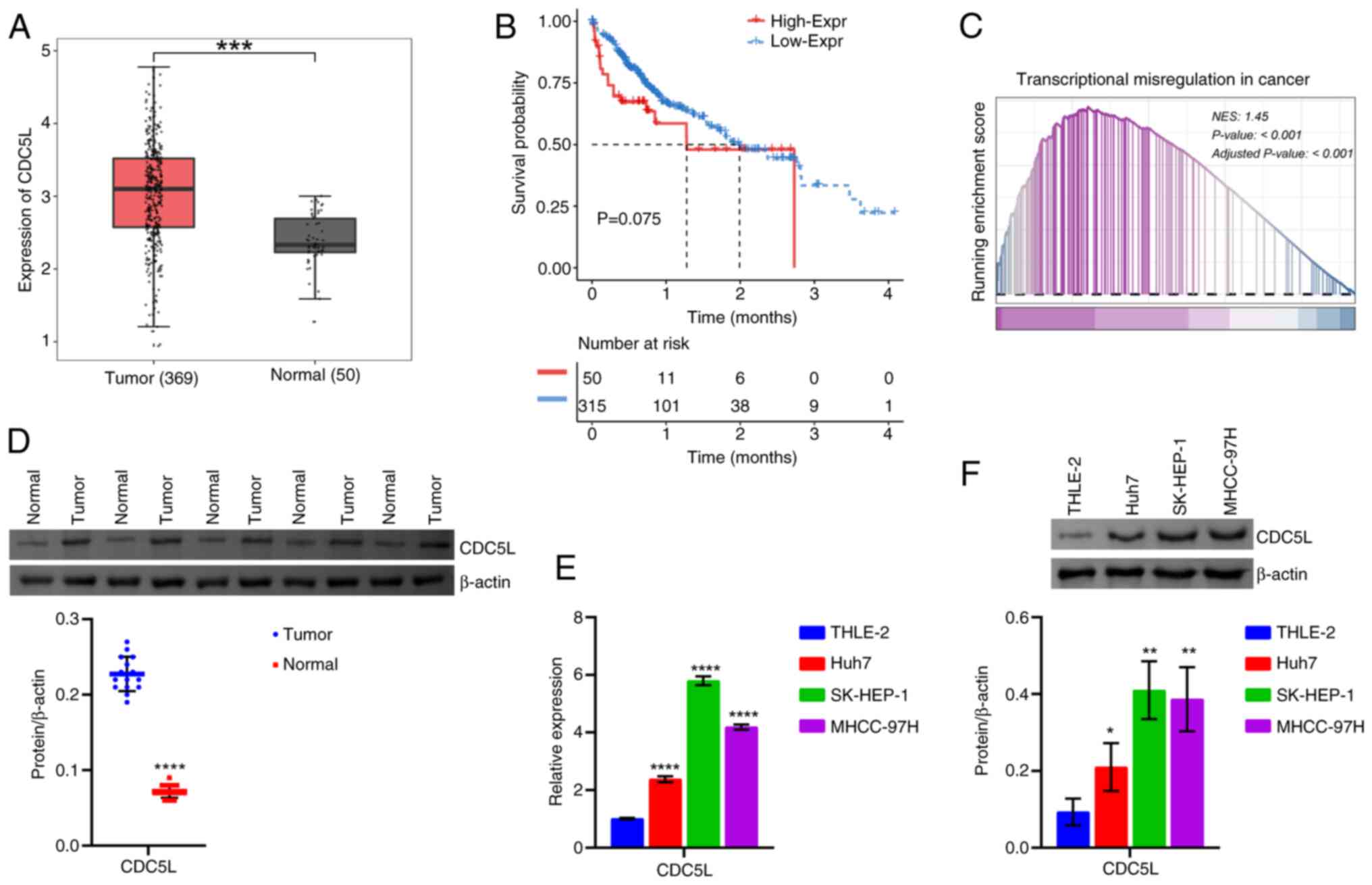
Figure 1

CDC5L expression is elevated in HCC.
(A) Analysis of CDC5L expression in HCC using TCGA database.
***P<0.001 vs. Normal. (B) Survival prognosis
analysis of CDC5L in HCC. (C) GSEA analysis of the functional
pathways of CDC5L. (D) Western blot analysis of CDC5L levels.
****P<0.0001 vs. Normal. (E) RT-qPCR and (F) western
blot analysis of CDC5L levels. *P<0.05,
**P<0.01 and ****P<0.0001 vs. THLE-2.
CDC5L, cell division cycle 5 like; HCC, hepatocellular carcinoma;
TCGA, The Cancer Genome Atlas; GSEA, Gene Set Enrichment Analysis;
RT-qPCR, reverse transcription-quantitative PCR; THLE-2,
transformed human liver epithelial-2.

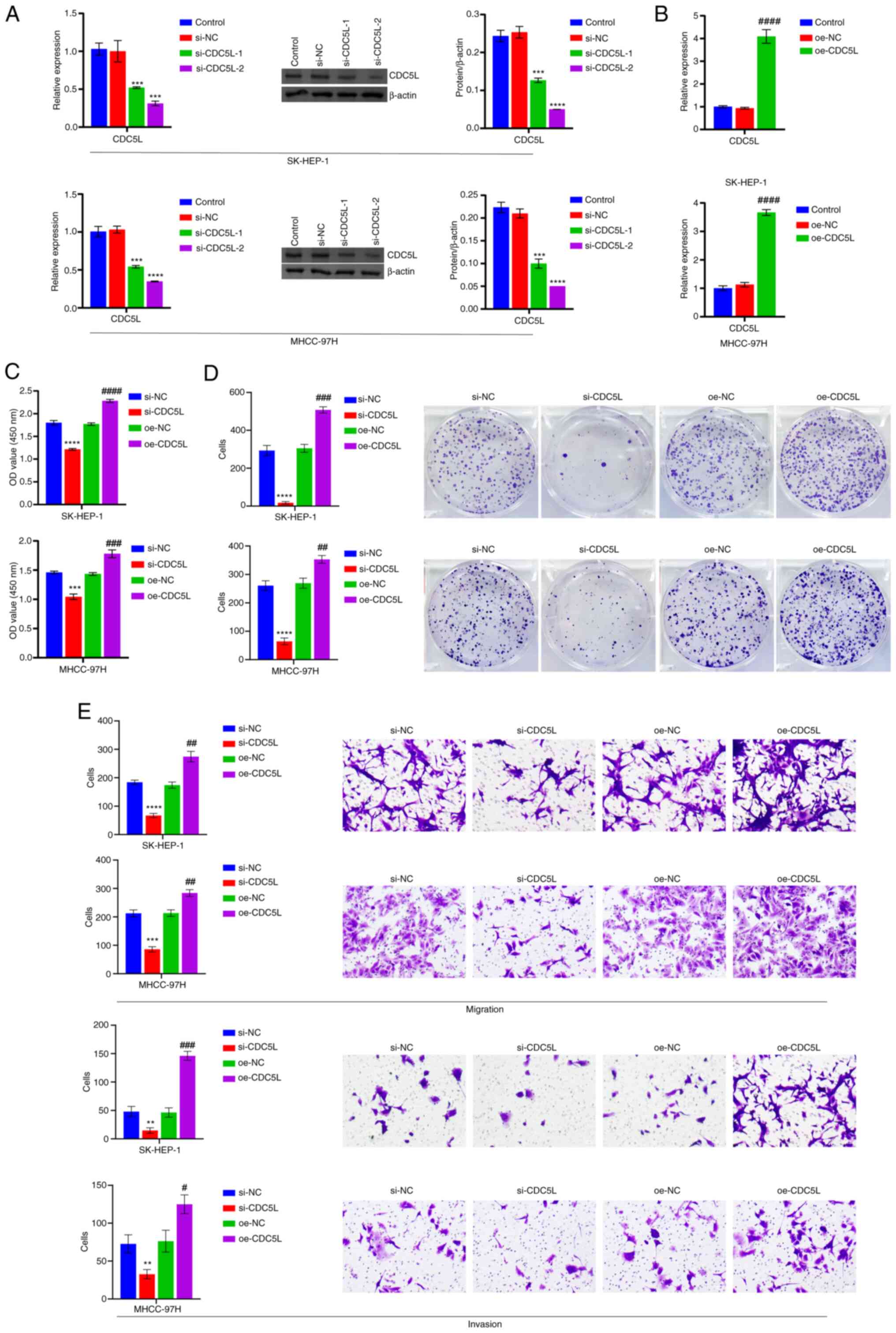
Figure 2

CDC5L regulates HCC pyroptosis. (A)
RT-qPCR and western blot analysis of CDC5L expression.
***P<0.001 and ****P<0.0001 vs. si-NC.
(B) Detection of CDC5L mRNA expression after oe-CDC5L
transfection by RT-qPCR. (C) Measurement of cell viability by CCK-8
assay. (D) Evaluation of cell proliferation via clone formation
assays. (E) Analysis of cell migration and invasion through
Transwell assays. Scale bar, 100 μm, magnification, ×100.
**P<0.01, ***P<0.001 and
****P<0.0001 vs. si-NC; #P<0.05,
##P<0.01, ###P<0.001 and
####P<0.0001 vs. oe-NC. CDC5L, cell division cycle 5
like; HCC, hepatocellular carcinoma; RT-qPCR, reverse transcription
quantitative PCR; CCK-8, Cell Counting Kit-8; si, short
interfering; si-NC, negative control siRNA; si-CDC5L,
CDC5L-specific siRNA; oe-NC, negative control overexpression
vector; oe-CDC5L, CDC5L overexpression vector.

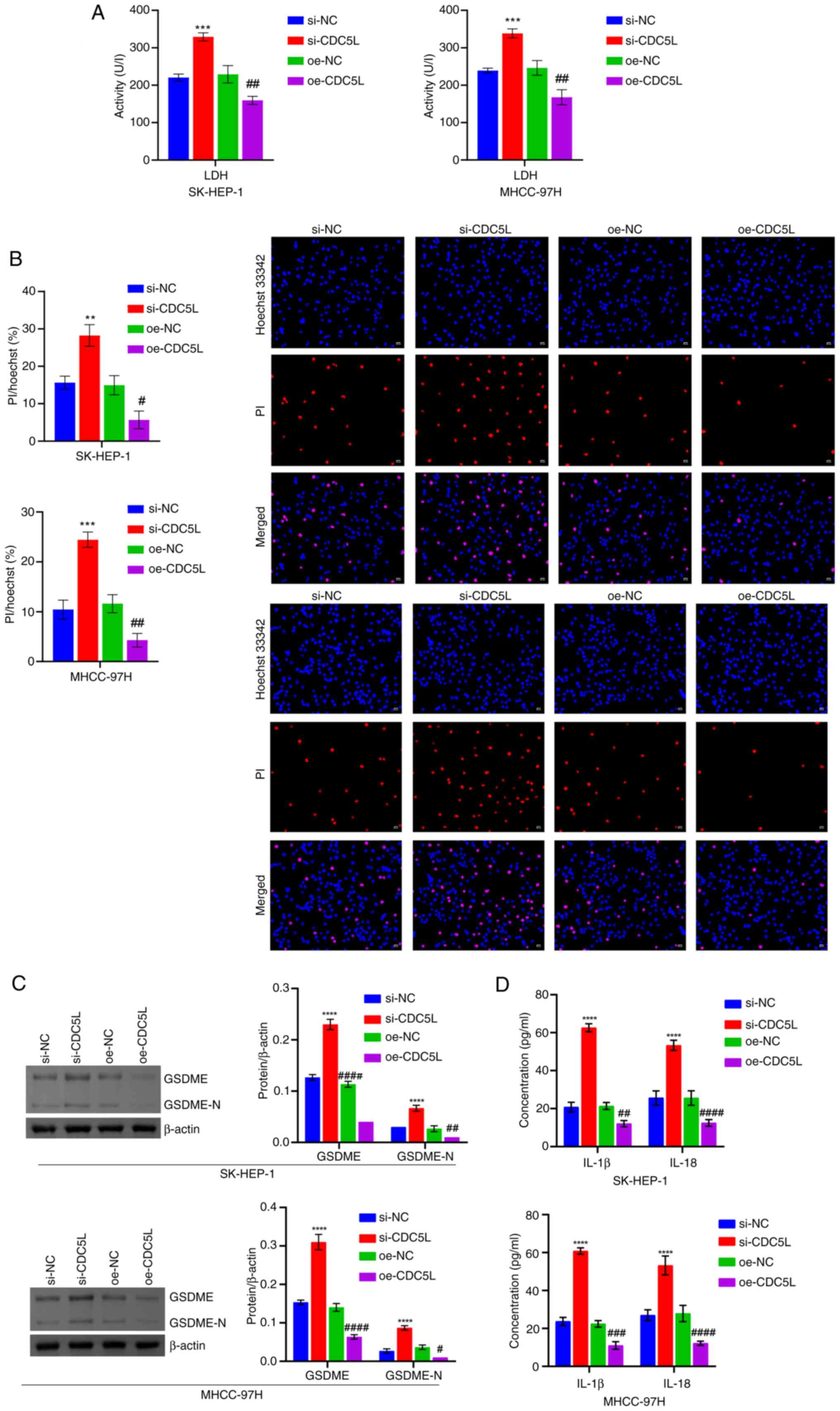
Figure 3

Detection of pyroptosis-related
levels. (A) LDH level in cell supernatant. (B) Hoechst 33342 and PI
staining of pyroptosis. Scale bar, 50 μm, magnification,
×200. (C) Western blot analysis of GSDME and GSDME-N levels. (D)
IL-18 and IL-1β levels were assessed. **P<0.01,
***P<0.001 and ****P<0.0001 vs. si-NC;
#P<0.05, ##P<0.01,
###P<0.001 and ####P<0.0001 vs. oe-NC.
LDH, lactate dehydrogenase; PI, propidium iodide; GSDME, Caspase
3/Caspase 3-gasdermin E; GSDME-N, Gasdermin E N-terminal fragment;
si, short interfering; si-NC, negative control siRNA;
si-CDC5L, CDC5L-specific siRNA; oe-NC, negative
control overexpression vector; oe-CDC5L, CDC5L
overexpression vector.

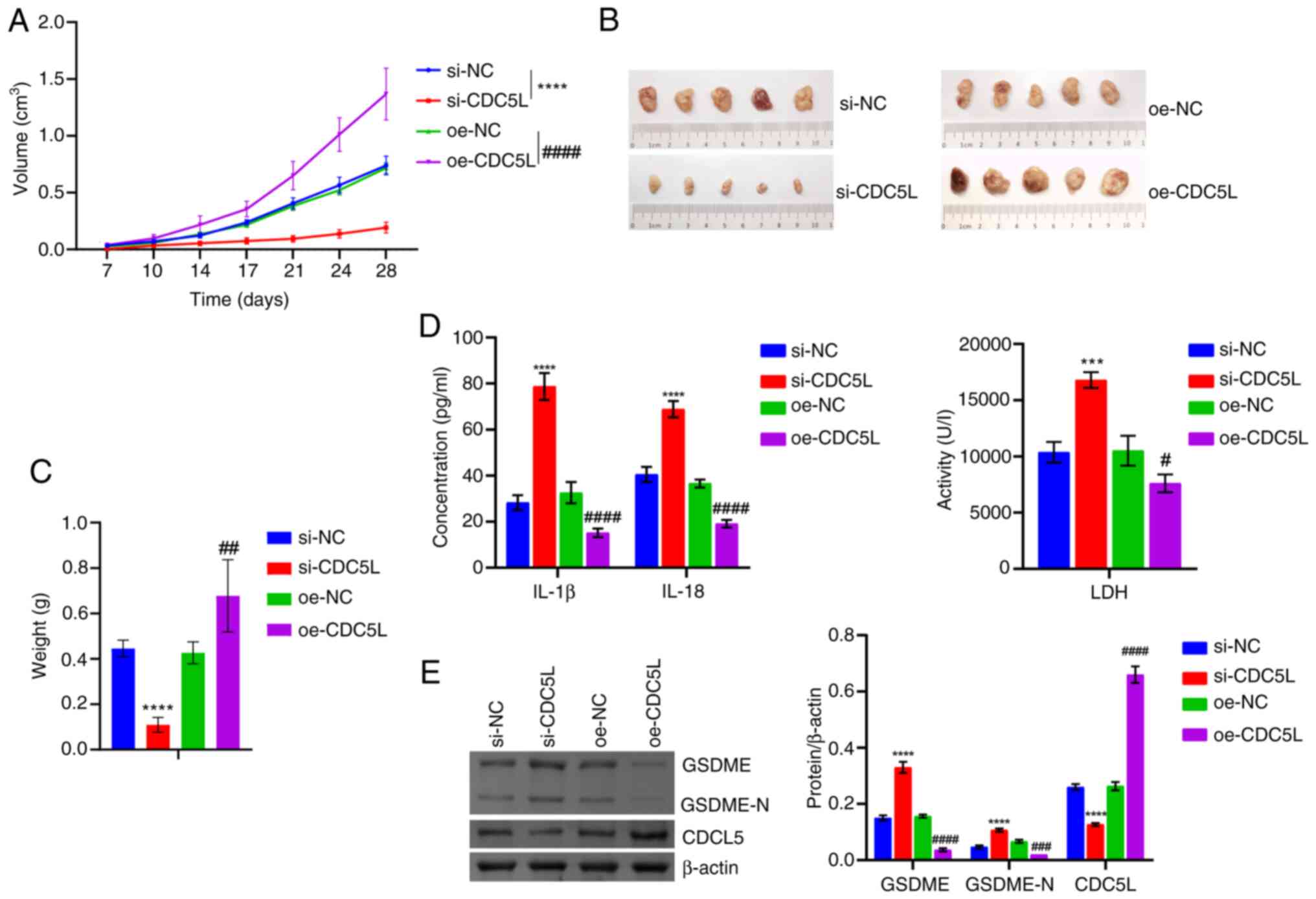
Figure 4

Validation at the animal level that
CDC5L regulates pyroptosis in HCC. (A) Tumor volume. (B) Tumor
images. (C) Tumor weight. (D) IL-18, IL-1β and LDH levels in tissue
supernatants. (E) Western blot analysis of CDC5L, GSDME and GSDME-N
levels in the tumor tissue. ***P<0.001 and
****P<0.0001 vs. si-NC; #P<0.05,
##P<0.01, ###P<0.001 and
####P<0.0001 vs. oe-NC. LDH, lactate dehydrogenase;
CDC5L, cell division cycle 5 like; GSDME, Caspase 3/Caspase
3-gasdermin E; GSDME-N, Gasdermin E N-terminal fragment; si, short
interfering; si-NC, negative control siRNA; si-CDC5L,
CDC5L-specific siRNA; oe-NC, negative control overexpression
vector; oe-CDC5L, CDC5L overexpression vector.

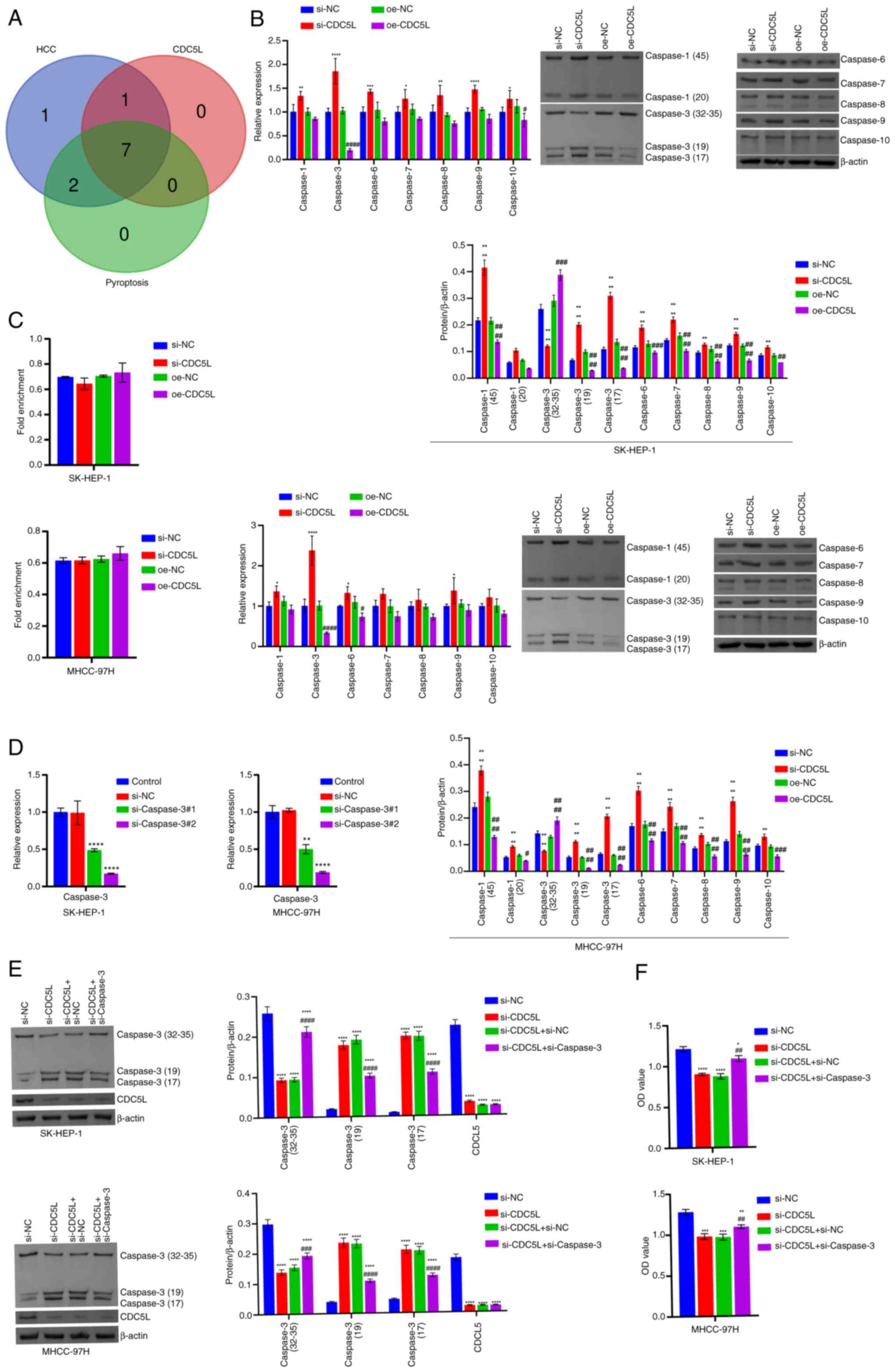
Figure 5

The regulation of CDC5L on pyroptosis
of HCC depends on the Caspase family. (A) Bioinformatics analysis
of the expression of Caspases 1, 3, 6, 7, 8, 9 and 10 levels in
HCC. (B) RT-qPCR and western blot analysis of Caspases 1, 3, 6, 7,
8, 9 and 10 levels. *P<0.05, **P<0.01,
***P<0.001 and ****P<0.0001 vs. si-NC;
#P<0.05, ##P<0.01,
###P<0.001 and ####P<0.0001 vs. oe-NC.
(C) Detection of the binding of CDC5L to Caspase 3 mRNA by
RIP. (D) Detection of Caspase 3 mRNA expression after si-Caspase
3 transfection by RT-qPCR. (E) Western blot analysis of CDC5L
and Caspase 3 levels. (F) Assessment of cell viability using the
CCK-8 assay. *P<0.05, **P<0.01,
***P<0.001 and ****P<0.0001 vs. si-NC;
##P<0.01, ###P<0.001 and
####P<0.0001 vs. si-CDC5L+si-NC. CDC5L, cell
division cycle 5 like; HCC, hepatocellular carcinoma; RIP, RNA
immunoprecipitation; RT-qPCR, reverse transcription
quantitative PCR; CCK-8, Cell Counting Kit-8; si, short
interfering; si-NC, negative control siRNA; si-CDC5L,
CDC5L-specific siRNA; oe-NC, negative control overexpression
vector; oe-CDC5L, CDC5L overexpression vector.

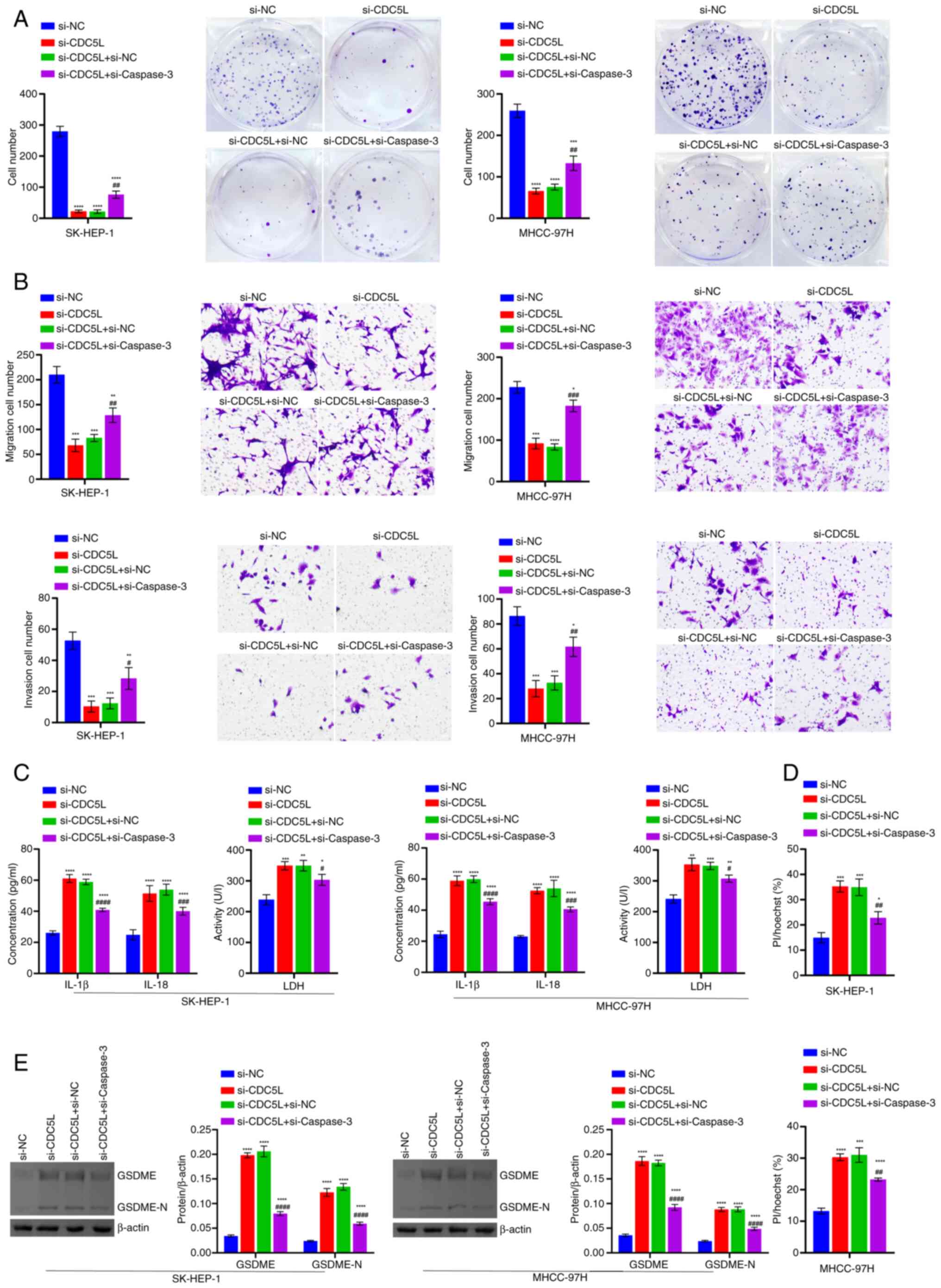
Figure 6

Detection of cell function and
pyroptosis-related levels. (A) Evaluation of cell proliferation
through clone formation assays. (B) Analysis of cell migration and
invasion through Transwell assays. Scale bar, 100 μm,
magnification, ×100. (C) LDH, IL-18 and IL-1β levels in the cell
supernatant. (D) Results of Hoechst 33342 and PI staining of
pyroptosis. Scale bar, 50 μm, ×200. (E) Western blot
analysis of GSDME and GSDME-N levels. *P<0.05,
**P<0.01, ***P<0.001 and
****P<0.0001 vs. si-NC; #P<0.05,
##P<0.01, ###P<0.001 and
####P<0.0001 vs. si-CDC5L+si-NC. LDH, lactate
dehydrogenase; PI, propidium iodide; GSDME, Caspase 3/Caspase
3-gasdermin E; GSDME-N, Gasdermin E N-terminal fragment; si, short
interfering; si-NC, negative control siRNA; si-CDC5L,
CDC5L-specific siRNA; si-Caspase 3, Caspase
3-specific siRNA.

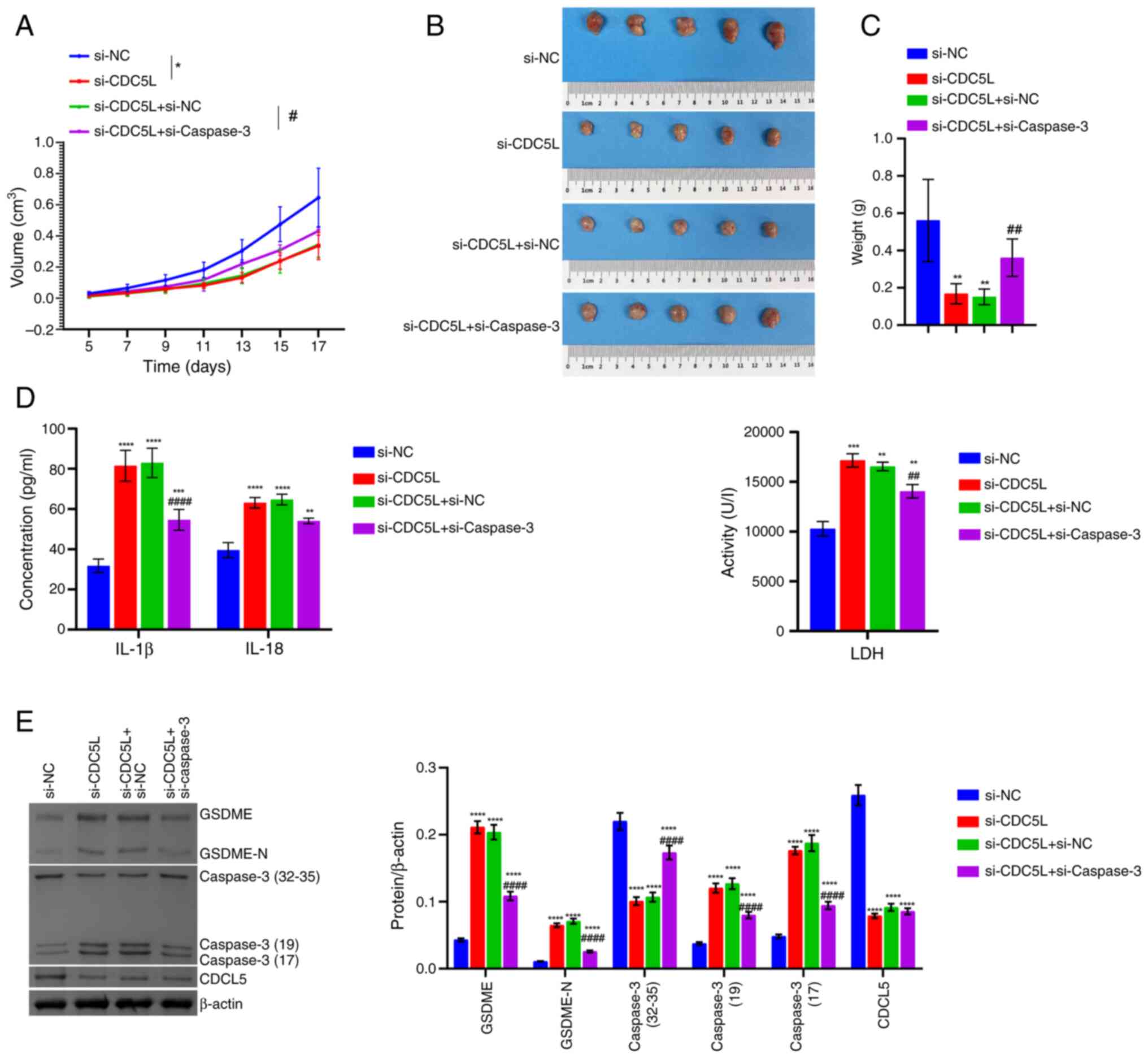
Figure 7

Validation at the animal level that
the regulation of pyroptosis in HCC by CDC5L depends on the Caspase
family. (A) Tumor volume. (B) Tumor images. (C) Tumor weight. (D)
IL-18, IL-1β and LDH levels in the tissue supernatants. (E) Western
blot analysis of CDC5L, GSDME, Caspase 3 and GSDME-N levels in the
tumor tissue. *P<0.05, **P<0.01,
***P<0.001 and ****P<0.0001 vs. si-NC;
#P<0.05, ##P<0.01 and
####P<0.0001 vs. si-CDC5L+si-NC. LDH, lactate
dehydrogenase; CDC5L, cell division cycle 5 like; GSDME, Caspase
3/Caspase 3-gasdermin E; GSDME-N, Gasdermin E N-terminal fragment;
si, short interfering; si-NC, negative control siRNA;
si-CDC5L, CDC5L-specific siRNA; si-Caspase 3,
Caspase 3-specific siRNA.

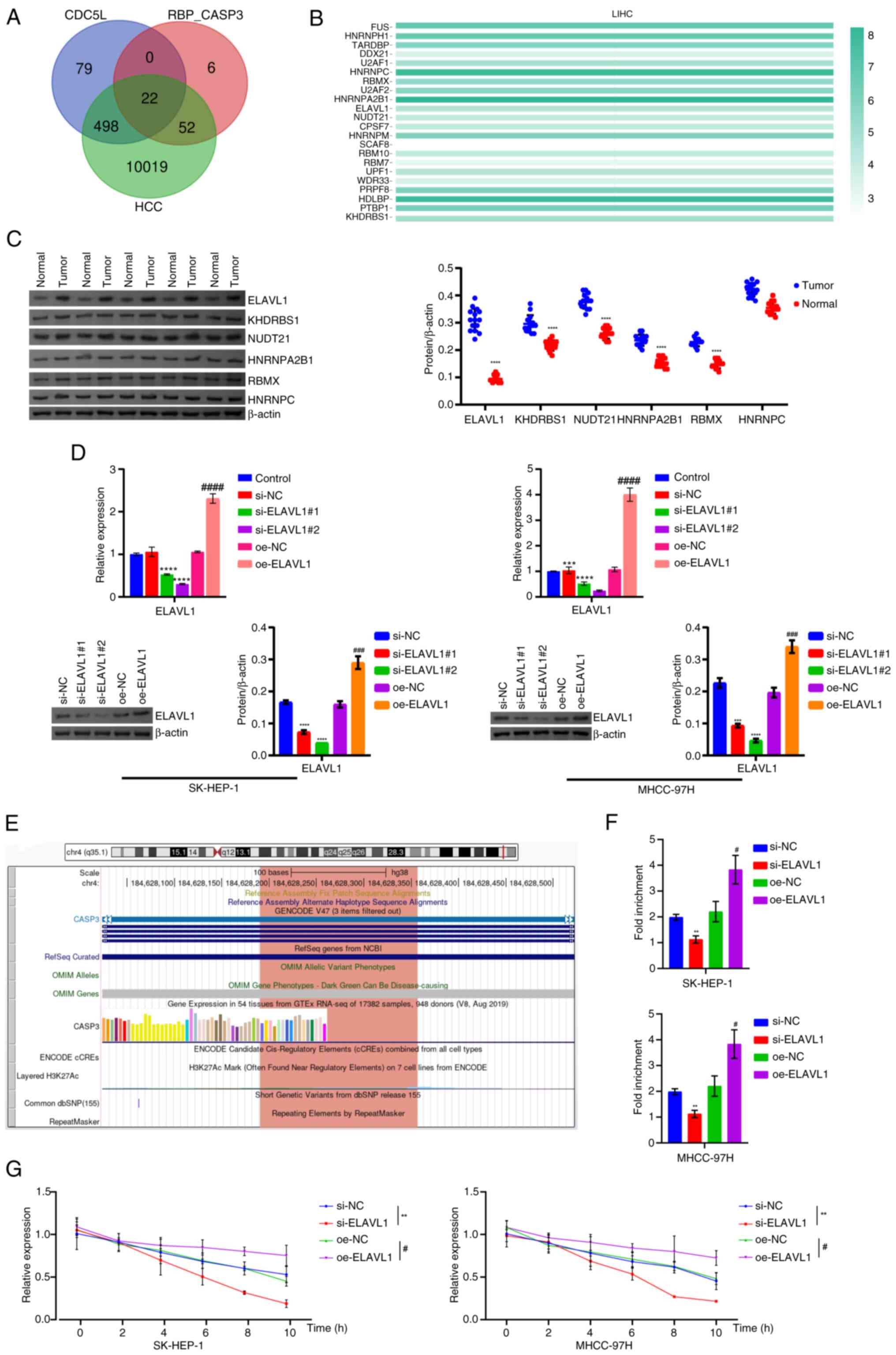
Figure 8

Mechanism of knockdown and
overexpression of ELAVL1 in pyroptosis in HCC. (A) Venn diagram
showing the intersection of CDC5L binding proteins and Caspase 3
interacting RBPs, with a total of 22. (B) Bioinformatics analysis
of the expression of these 22 RBPs in HCC was conducted to screen
significant RBPs. (C) Western blot analysis of RBP protein levels.
(D) Western blot analysis of ELAVL1 levels. (E) UCSC Genome Browser
showed that ELAVL1 binds with Caspase 3. (F) RIP detection
of the binding of ELAVL1 to Caspase 3 mRNA in cells. (G) RT-qPCR
detection of the half-life of Caspase 3 mRNA in cells
overexpressing/silencing ELAVL1 following treatment with 5
μg/ml Act D for 0, 2, 4, 6, 8 and 10 h.
**P<0.01, ***P<0.001 and
****P<0.0001 vs. si-NC; #P<0.05,
###P<0.001 and ####P<0.0001 vs. oe-NC.
ELAVL1, ELAV like RNA binding protein 1; HCC, hepatocellular
carcinoma; CDC5L, cell division cycle 5 like; RBPs, RNA-binding
proteins; UCSC, University of California, Santa Cruz; RIP, RNA
immunoprecipitation; si, short interfering; si-NC, negative control
siRNA; si-ELAVL1, ELAVL1-specific siRNA; oe-NC,
negative control overexpression vector; oe-ELAVL1,
ELAVL1 overexpression vector.

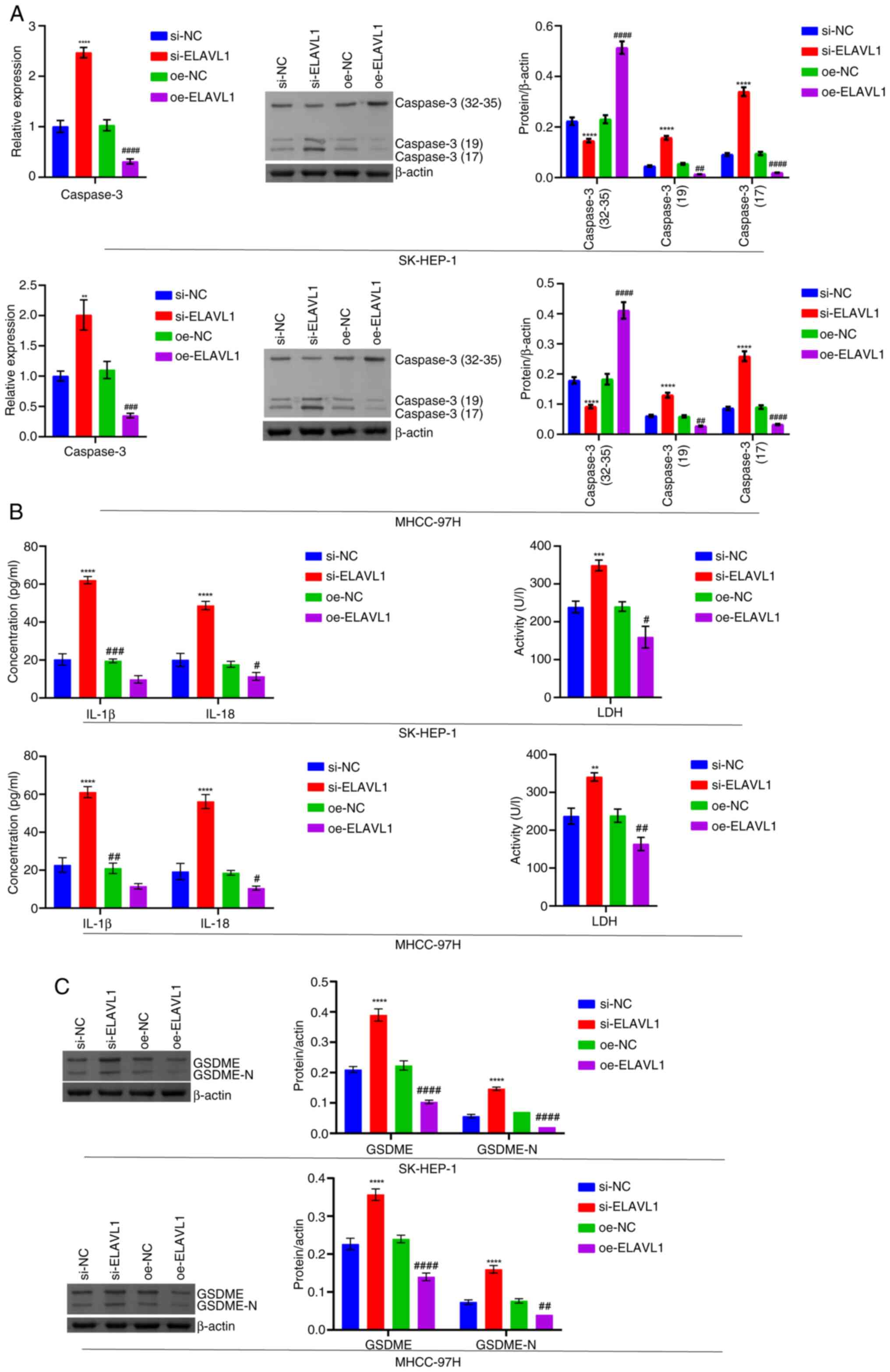
Figure 9

Detection of pyroptosis-related
levels following knockdown and overexpression of ELAVL1. (A)
RT-qPCR and western blot analysis of Caspase 3 levels. (B) LDH,
IL-1β and IL-18 levels in the cell supernatant. (C) Western blot
analysis of GSDME and GSDME-N levels. **P<0.01,
***P<0.001 and ****P<0.0001 vs. si-NC;
#P<0.05, ##P<0.01,
###P<0.001 and ####P<0.0001 vs. oe-NC.
RT-qPCR, reverse transcription-quantitative PCR; LDH, lactate
dehydrogenase; GSDME, Caspase 3/Caspase 3-gasdermin E; GSDME-N,
Gasdermin E N-terminal fragment; si, short interfering; si-NC,
negative control siRNA; si-ELAVL1, ELAVL1-specific
siRNA; oe-NC, negative control overexpression vector;
oe-ELAVL1, ELAVL1 overexpression vector.

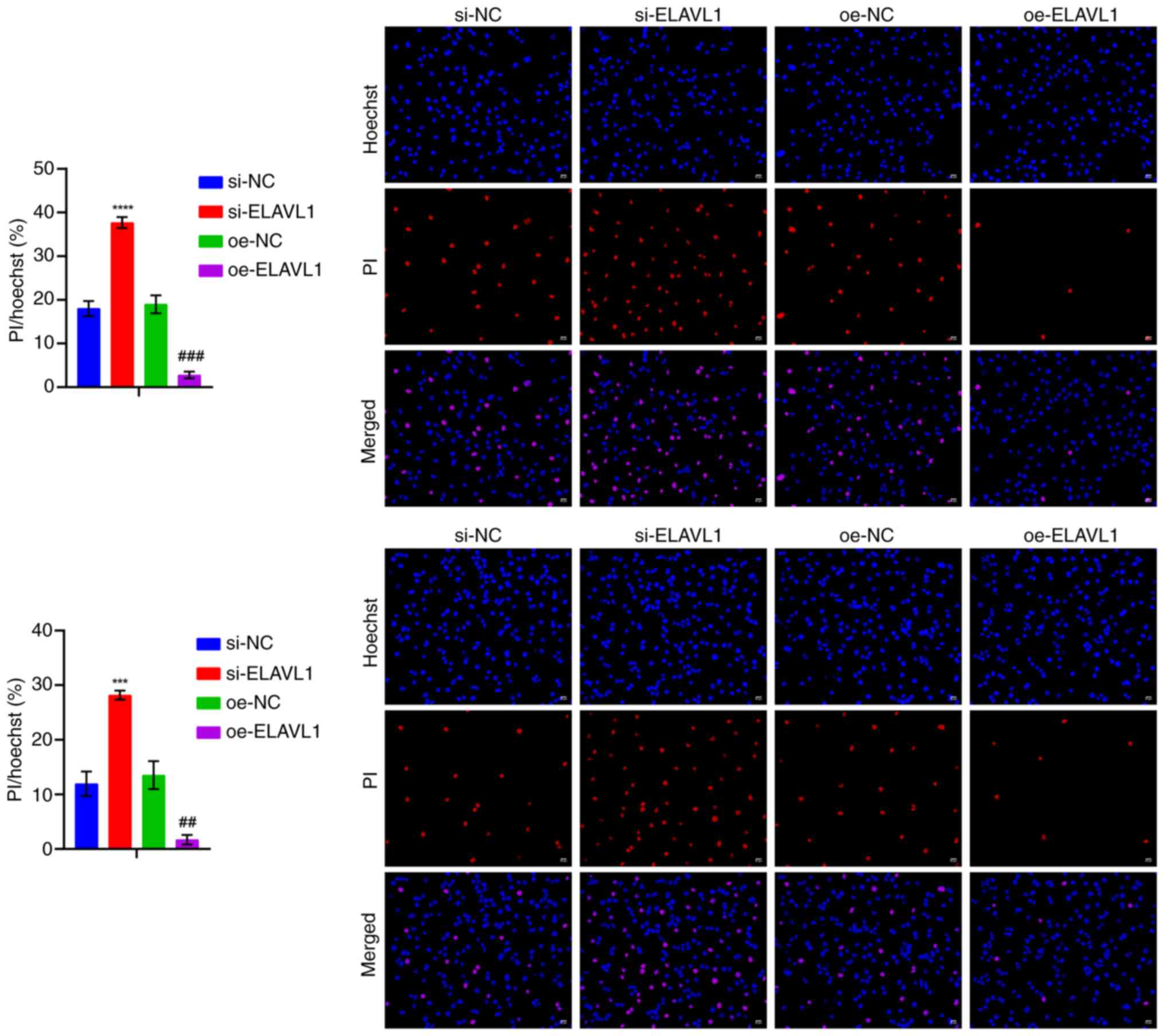
Figure 10

Hoechst 33342 and PI staining of
pyroptosis. Scale bar, 50 μm, magnification, ×200.
***P<0.001 and ****P<0.0001 vs. si-NC;
##P<0.01 and ###P<0.001 vs. oe-NC. PI,
propidium iodide; si, short interfering; si-NC, negative control
siRNA; si-ELAVL1, ELAVL1-specific siRNA; oe-NC,
negative control overexpression vector; oe-ELAVL1,
ELAVL1 overexpression vector.

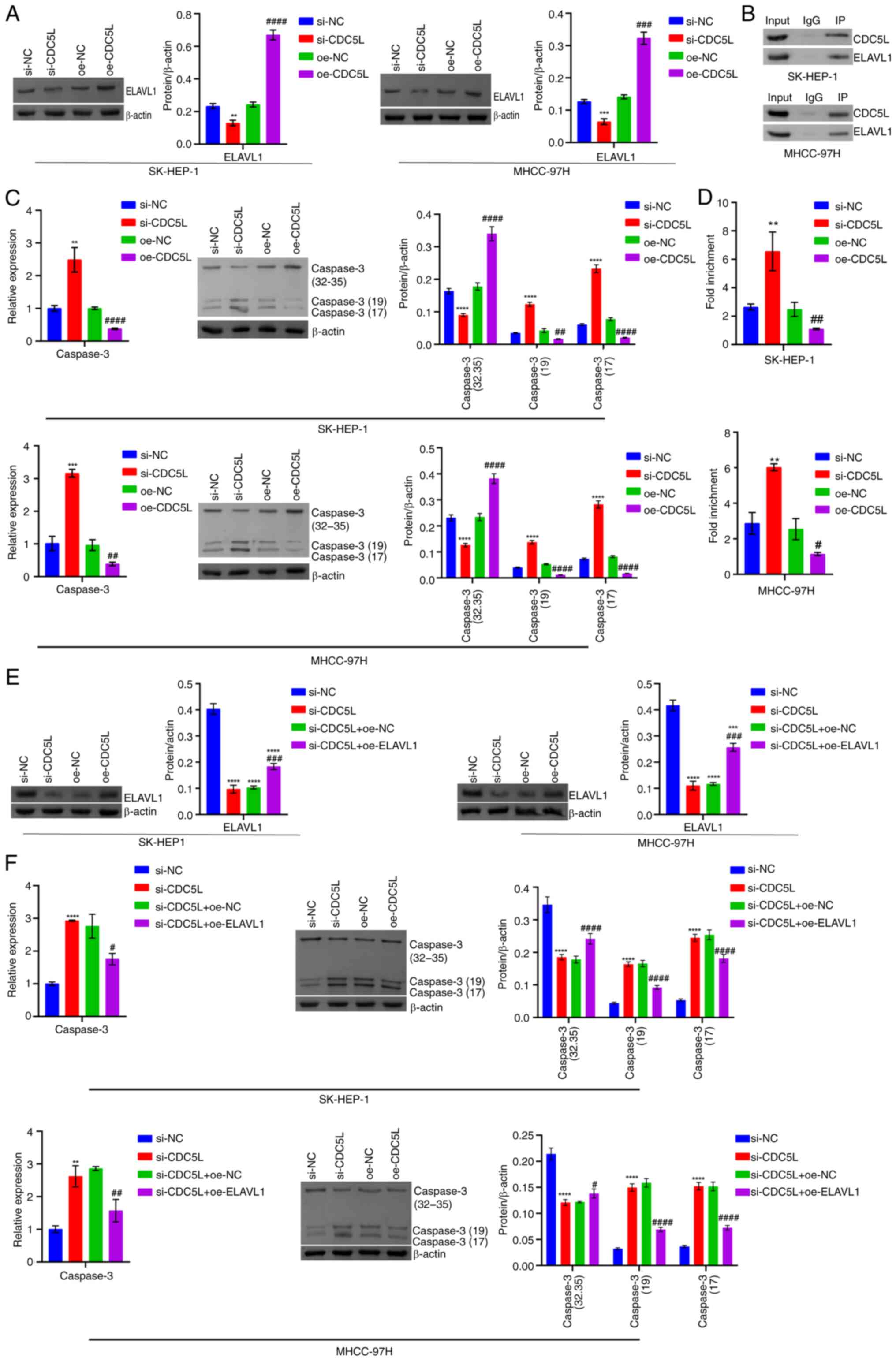
Figure 11

Mechanism of CDC5L knockdown and
overexpression of ELAVL1 in pyroptosis in HCC. (A) Western blot
analysis of ELAVL1 levels. (B) Co-IP validation of interaction
between CDC5L and ELAVL1 protein. (C) RT-qPCR and western blot
analysis of Caspase 3 levels. (D) RIP verification of the binding
of ELAVL1 to Caspase 3 mRNA in cells. **P<0.01,
***P<0.001 and ****P<0.0001 vs. si-NC;
#P<0.05, ##P<0.01,
###P<0.001 and ####P<0.0001 vs. oe-NC.
(E) Western blot analysis of ELAVL1 levels. (F) RT-qPCR and western
blot analysis of Caspase 3 levels. **P<0.01,
***P<0.001 and ****P<0.0001 vs. si-NC;
#P<0.05, ##P<0.01,
###P<0.001 and ####P<0.0001 vs.
si-CDC5L+oe-NC. CDC5L, cell division cycle 5 like; ELAVL1,
ELAV like RNA binding protein 1; HCC, hepatocellular carcinoma;
Co-IP, Co-immunoprecipitation; RT-qPCR, reverse
transcription-quantitative PCR; RIP, RNA immunoprecipitation; si,
short interfering; si-NC, negative control siRNA; si-CDC5L,
CDC5L-specific siRNA; oe-NC, negative control overexpression
vector; oe-CDC5L, CDC5L overexpression vector;
oe-ELAVL1, ELAVL1 overexpression vector.

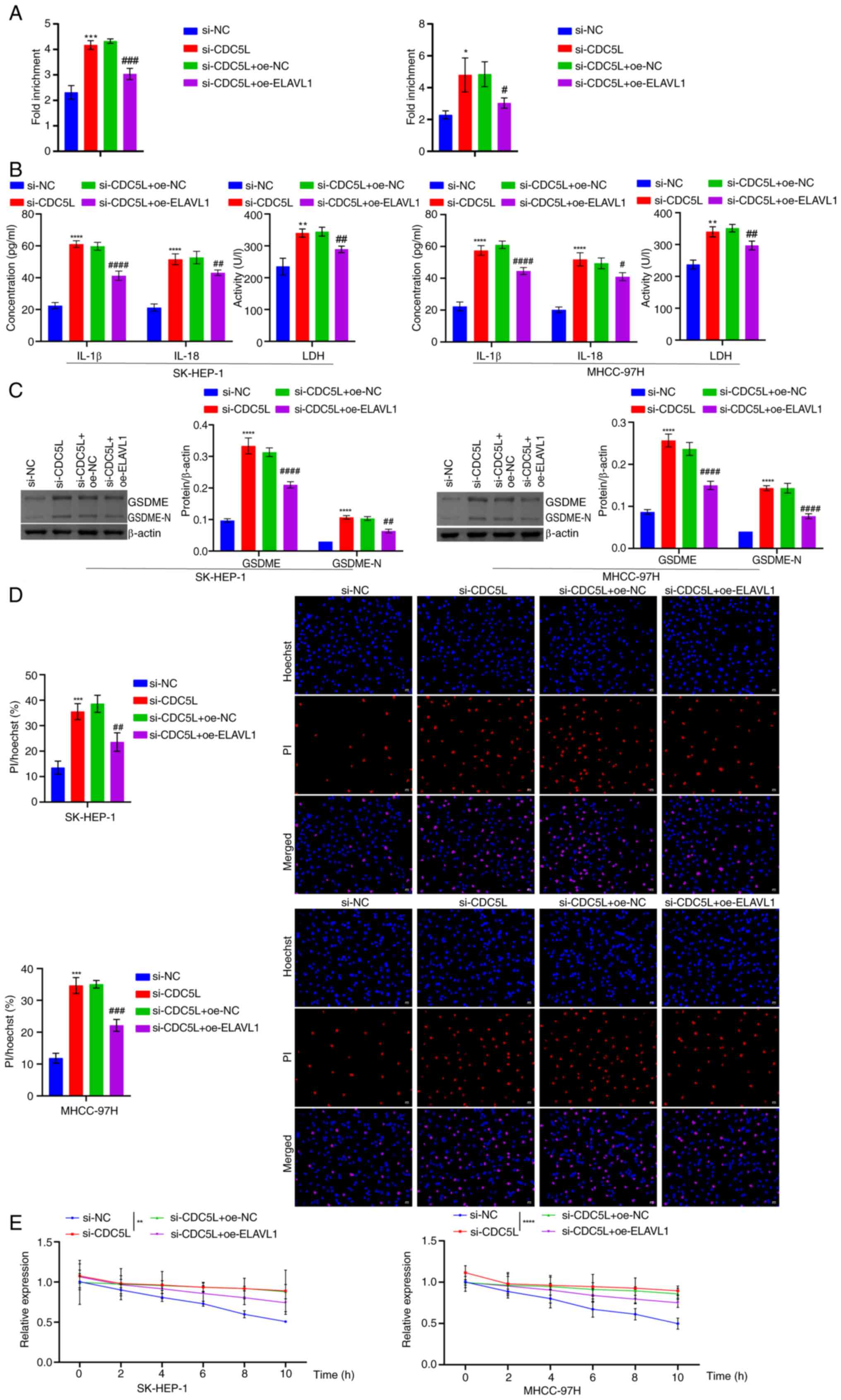
Figure 12

Detection of pyroptosis-related
levels following CDC5L knockdown and overexpression of ELAVL1. (A)
RIP detection of the binding stability of ELAVL1 protein to Caspase
3 mRNA. (B) LDH, IL-1β and IL-18 levels in the cell supernatant.
(C) Western blot analysis of GSDME and GSDME-N levels. (D) Hoechst
33342 and PI staining of pyroptosis. Scale bar, 50 μm,
magnification, ×200. (E) Following treatment with 5 μg/ml
Act D for 0, 2, 4, 6, 8 and 10 h, the expression of Caspase
3 mRNA was measured using RT-qPCR and the half-life of
Caspase 3 mRNA was assessed. *P<0.05,
**P<0.01, ***P<0.001 and
****P<0.0001 vs. si-NC; #P<0.05,
##P<0.01, ###P<0.001 and
####P<0.0001 vs. si-CDC5L+oe-NC. CDC5L, cell
division cycle 5 like; ELAVL1, ELAV like RNA binding protein 1;
RIP, RNA immunoprecipitation; LDH, lactate dehydrogenase; GSDME,
Caspase 3/Caspase 3-gasdermin E; GSDME-N, Gasdermin E N-terminal
fragment; PI, propidium iodide; RT-qPCR, reverse
transcription-quantitative PCR; si, short interfering; si-NC,
negative control siRNA; si-CDC5L, CDC5L-specific
siRNA; oe-NC, negative control overexpression vector;
oe-CDC5L, CDC5L overexpression vector;
oe-ELAVL1, ELAVL1 overexpression vector.

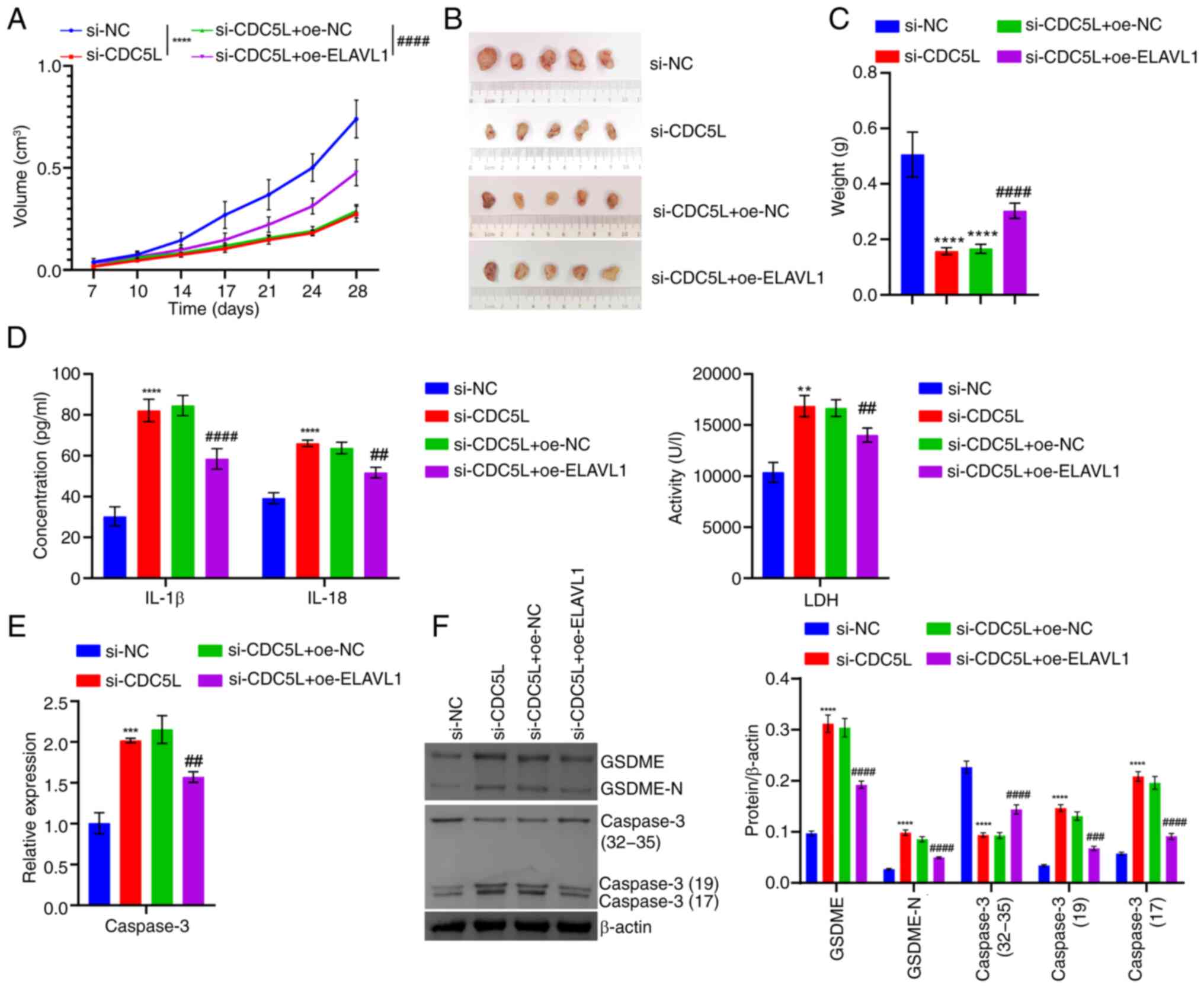
Figure 13

Validation of the mechanism of CDC5L
knockdown and overexpression of ELAVL1 in pyroptosis in HCC at the
animal level. (A) Tumor volume. (B) Tumor images. (C) Tumor weight.
(D) IL-18, IL-1β and LDH levels in tissue supernatants. (E) RT-qPCR
determination of Caspase 3 levels in tumor tissue. (F)
Western blot analysis of Caspase 3, GSDME and GSDME-N levels in the
tumor tissue. **P<0.01, ***P<0.001 and
****P<0.0001 vs. si-NC; ##P<0.01,
###P<0.001 and ####P<0.0001 vs.
si-CDC5L+oe-NC. CDC5L, cell division cycle 5 like; ELAVL1,
ELAV like RNA binding protein 1; LDH, lactate dehydrogenase;
RT-qPCR, reverse transcription-quantitative PCR; GSDME, Caspase
3/Caspase 3-gasdermin E; GSDME-N, Gasdermin E N-terminal fragment;
si, short interfering; si-NC, negative control siRNA;
si-CDC5L, CDC5L-specific siRNA; oe-NC, negative
control overexpression vector; oe-CDC5L, CDC5L
overexpression vector; oe-ELAVL1, ELAVL1
overexpression vector.

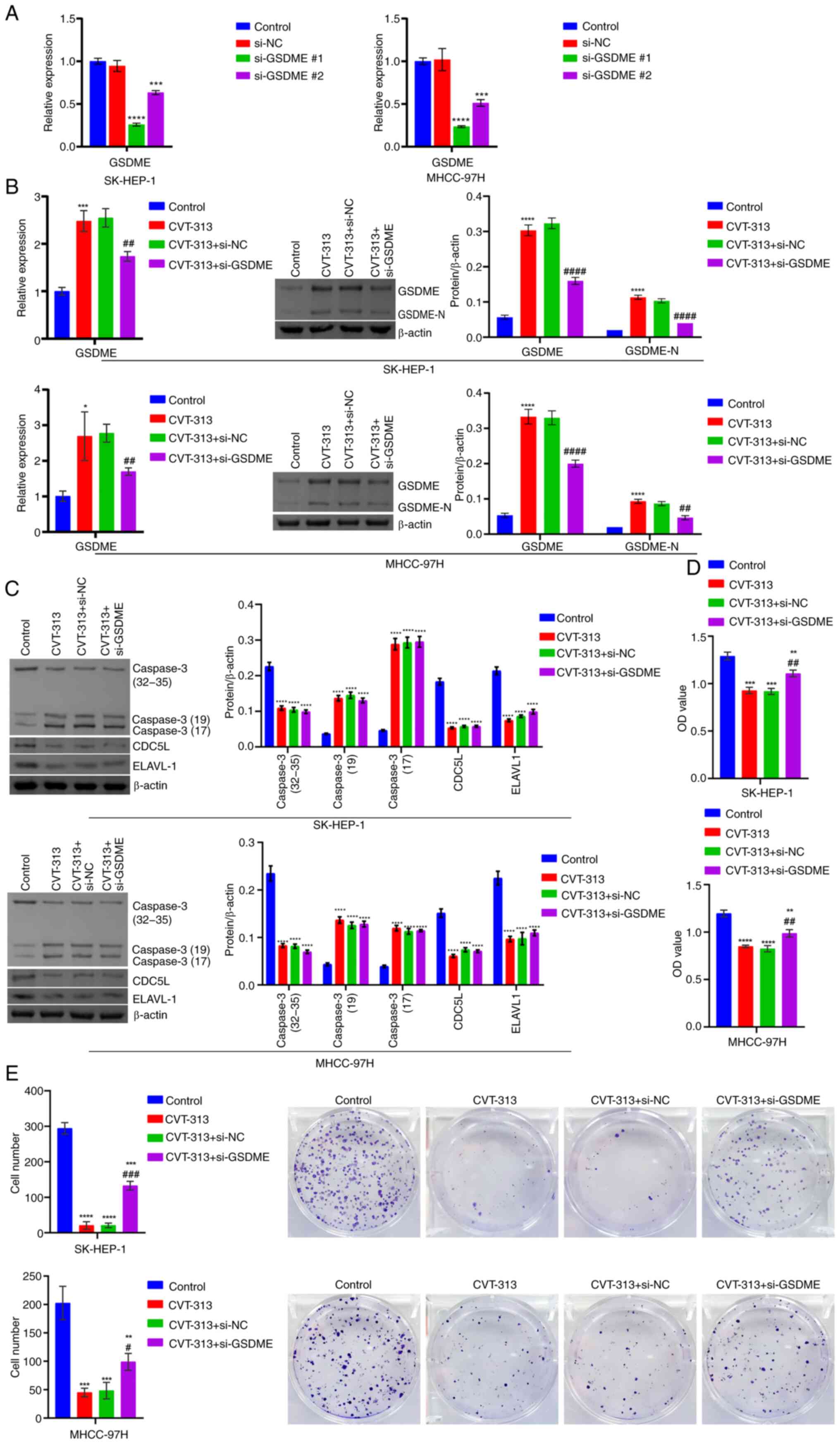
Figure 14

The silencing of CDC5L/ELAVL1
regulated Caspase 3/GSDME. (A) Detection of GSDME mRNA
expression after si-GSDME transfection by RT-qPCR. (B)
RT-qPCR and western blot analysis of GSDME levels. (C) Western blot
analysis of CDC5L, ELAVL1 and Caspase 3 levels. (D) Evaluation of
cell viability by CCK-8 assay. (E) Assessment of cell proliferation
through clone formation experiments. *P<0.05,
**P<0.01, ***P<0.001 and
****P<0.0001 vs. Control; #P<0.05,
##P<0.01, ###P<0.001 and
####P<0.0001 vs. CVT-313 + si-NC. CDC5L, cell
division cycle 5 like; ELAVL1, ELAV like RNA binding protein 1;
GSDME, Caspase 3/Caspase 3-gasdermin E; si, short interfering; HCC,
hepatocellular carcinoma; RT-qPCR, reverse
transcription-quantitative PCR; CCK-8, Cell Counting Kit-8; si,
short interfering; si-NC, Negative control siRNA; si-GSDME,
GSDME-specific siRNA.

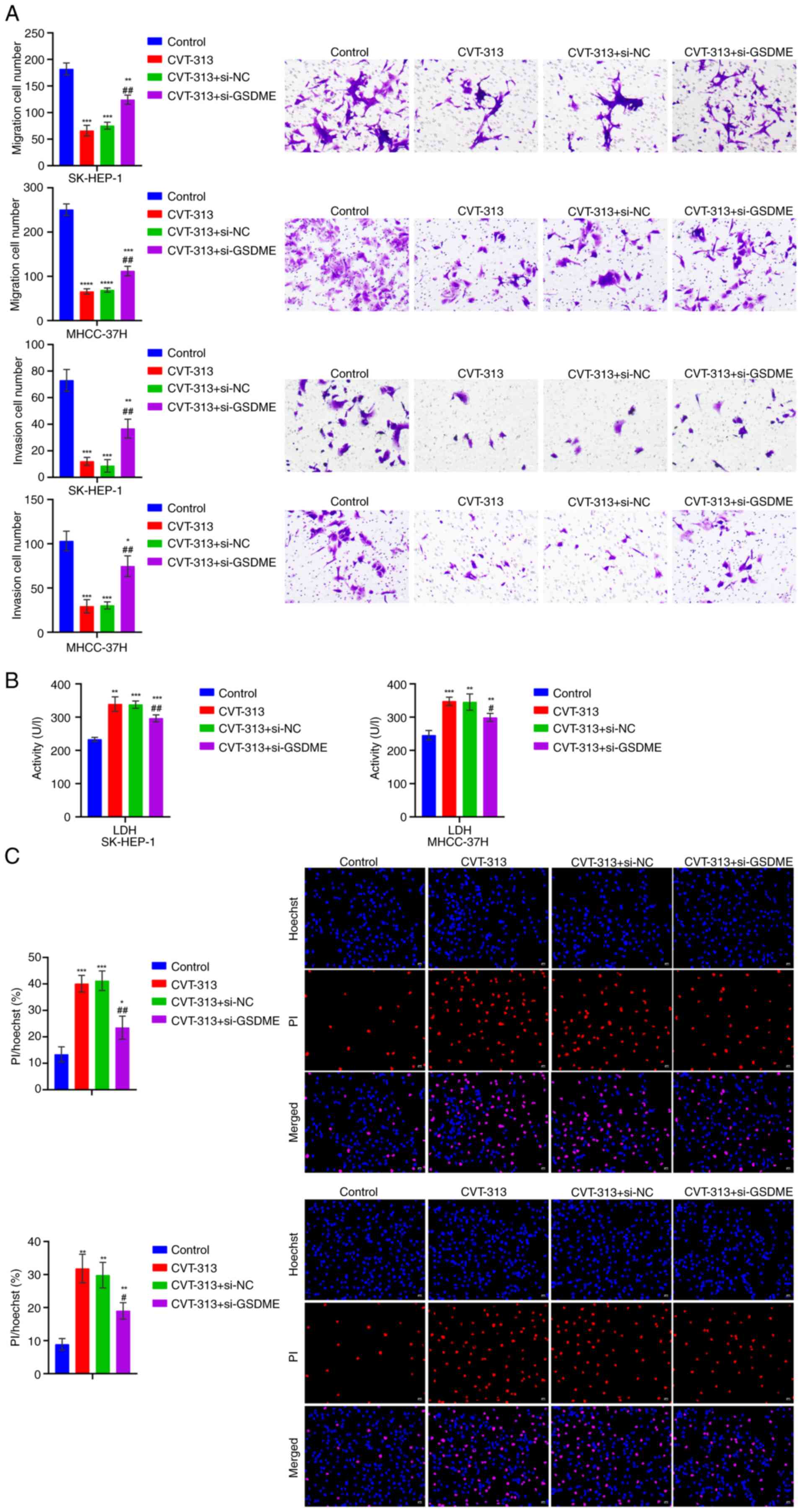
Figure 15

The silencing of CDC5L/ELAVL1
regulated Caspase 3/GSDME to promote pyroptosis in HCC. (A)
Examination of cell migration and invasion using Transwell assays.
Scale bar, 100 μm, magnification, ×100. (B) LDH level in
cell supernatant. (C) Hoechst 33342 and PI staining for the
detection of pyroptosis. Scale bar, 50 μm, magnification,
×200. *P<0.05, **P<0.01,
***P<0.001 and ****P<0.0001 vs.
Control; #P<0.05 and ##P<0.01 vs.
CVT-313 + si-NC. LDH, lactate dehydrogenase; PI, propidium iodide;
si, short interfering; si-NC, negative control siRNA;
si-GSDME, GSDME-specific siRNA.

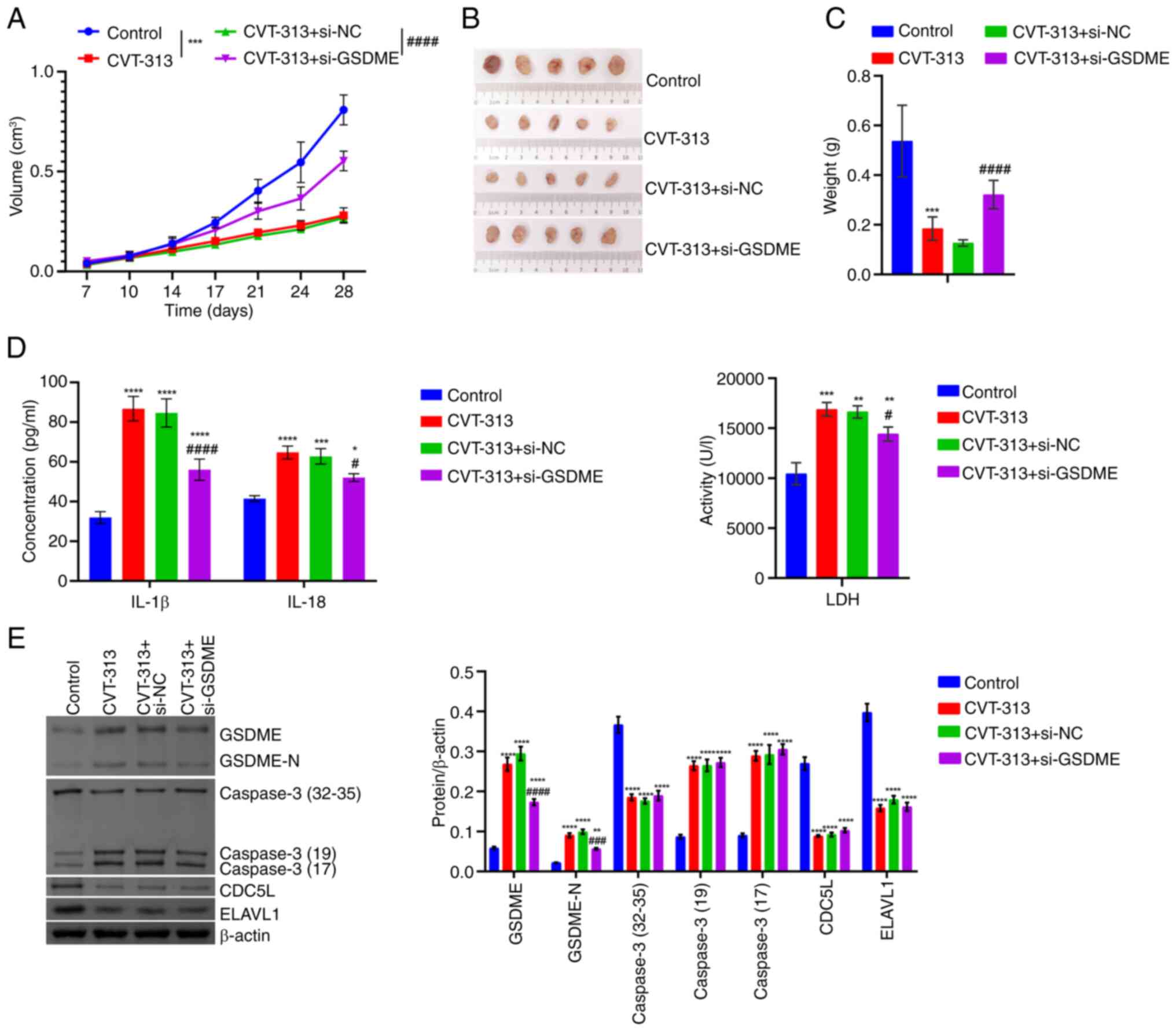
Figure 16

The silencing of CDC5L/ELAVL1
regulated Caspase 3/GSDME to inhibit tumor progression in HCC. (A)
Tumor volume. (B) Tumor images. (C) Tumor weight. (D) IL-1β, IL-18
and LDH levels in tissue supernatants. (E) Western blot analysis of
CDC5L, ELAVL1, Caspase 3 and GSDME levels in tumor tissue.
*P<0.05, **P<0.01,
***P<0.001 and ****P<0.0001 vs.
Control; #P<0.05, ###P<0.001 and
####P<0.0001 vs. CVT-313 + si-NC. CDC5L, cell
division cycle 5 like; ELAVL1, ELAV like RNA binding protein 1;
LDH, lactate dehydrogenase; GSDME, Caspase 3/Caspase 3-gasdermin E;
si, short interfering; si-NC, negative control siRNA;
si-GSDME, GSDME-specific siRNA.
View References

1 

Wang W, Zhou Y, Li W, Quan C and Li Y: Claudins and hepatocellular carcinoma. Biomed Pharmacother. 171:1161092024. View Article : Google Scholar : PubMed/NCBI

2 

Mo Y, Zou Z and Chen E: Targeting ferroptosis in hepatocellular carcinoma. Hepatol Int. 18:32–49. 2024. View Article : Google Scholar

3 

Sankar K, Gong J, Osipov A, Miles SA, Kosari K, Nissen NN, Hendifar AE, Koltsova EK and Yang JD: Recent advances in the management of hepatocellular carcinoma. Clin Mol Hepatol. 30:1–15. 2024. View Article : Google Scholar :

4 

Butaye E, Somers N, Grossar L, Pauwels N, Lefere S, Devisscher L, Raevens S, Geerts A, Meuris L, Callewaert N, et al: Systematic review: Glycomics as diagnostic markers for hepatocellular carcinoma. Aliment Pharmacol Ther. 59:23–38. 2024. View Article : Google Scholar

5 

Llovet JM, Pinyol R, Yarchoan M, Singal AG, Marron TU, Schwartz M, Pikarsky E, Kudo M and Finn RS: Adjuvant and neoadjuvant immunotherapies in hepatocellular carcinoma. Nat Rev Clin Oncol. 21:294–311. 2024. View Article : Google Scholar : PubMed/NCBI

6 

Chen X, Kou L, Xie X, Su S, Li J and Li Y: Prognostic biomarkers associated with immune checkpoint inhibitors in hepatocellular carcinoma. Immunology. 172:21–45. 2024. View Article : Google Scholar : PubMed/NCBI

7 

Zhang N, Kaur R, Akhter S and Legerski RJ: Cdc5L interacts with ATR and is required for the S-phase cell-cycle checkpoint. EMBO Rep. 10:1029–1035. 2009. View Article : Google Scholar : PubMed/NCBI

8 

Zhang Z, Mao W, Wang L, Liu M, Zhang W, Wu Y, Zhang J, Mao S, Geng J and Yao X: Depletion of CDC5L inhibits bladder cancer tumorigenesis. J Cancer. 11:353–363. 2020. View Article : Google Scholar : PubMed/NCBI

9 

Huang R, Xue R, Qu D, Yin J and Shen XZ: Prp19 arrests cell cycle via Cdc5L in hepatocellular carcinoma cells. Int J Mol Sci. 18:7782017. View Article : Google Scholar : PubMed/NCBI

10 

Qiu H, Zhang X, Ni W, Shi W, Fan H, Xu J, Chen Y, Ni R and Tao T: Expression and clinical role of Cdc5L as a novel cell cycle protein in hepatocellular carcinoma. Dig Dis Sci. 61:795–805. 2016. View Article : Google Scholar

11 

Tian M, Cheng H, Wang Z, Su N, Liu Z, Sun C, Zhen B, Hong X, Xue Y and Xu P: Phosphoproteomic analysis of the highly-metastatic hepatocellular carcinoma cell line, MHCC97-H. Int J Mol Sci. 16:4209–4225. 2015. View Article : Google Scholar : PubMed/NCBI

12 

Ma Q, Lu Q, Lei X, Zhao J, Sun W, Huang D, Zhu Q and Xu Q: Relationship between HuR and tumor drug resistance. Clin Transl Oncol. 25:1999–2014. 2023. View Article : Google Scholar : PubMed/NCBI

13 

Liu R, Wu K, Li Y, Sun R and Li X: Human antigen R: A potential therapeutic target for liver diseases. Pharmacol Res. 155:1046842020. View Article : Google Scholar : PubMed/NCBI

14 

Papatheofani V, Levidou G, Sarantis P, Koustas E, Karamouzis MV, Pergaris A, Kouraklis G and Theocharis S: HuR protein in hepatocellular carcinoma: Implications in development, prognosis and treatment. Biomedicines. 9:1192021. View Article : Google Scholar : PubMed/NCBI

15 

Imre G: Pyroptosis in health and disease. Am J Physiol Cell Physiol. 326:C784–C794. 2024. View Article : Google Scholar : PubMed/NCBI

16 

Chao L, Zhang W, Feng Y, Gao P and Ma J: Pyroptosis: A new insight into intestinal inflammation and cancer. Front Immunol. 15:13649112024. View Article : Google Scholar : PubMed/NCBI

17 

Wen J, Xuan B, Liu Y, Wang L, He L, Meng X, Zhou T and Wang Y: NLRP3 inflammasome-induced pyroptosis in digestive system tumors. Front Immunol. 14:10746062023. View Article : Google Scholar : PubMed/NCBI

18 

Wallace HL and Russell RS: Inflammatory consequences: Hepatitis C virus-induced inflammasome activation and pyroptosis. Viral Immunol. 37:126–138. 2024. View Article : Google Scholar : PubMed/NCBI

19 

Zou Z, Zhao M, Yang Y, Xie Y, Li Z, Zhou L, Shang R and Zhou P: The role of pyroptosis in hepatocellular carcinoma. Cell Oncol (Dordr). 46:811–823. 2023. View Article : Google Scholar : PubMed/NCBI

20 

Zhao H, Liu H, Yang Y and Wang H: The role of autophagy and pyroptosis in liver disorders. Int J Mol Sci. 23:62082022. View Article : Google Scholar : PubMed/NCBI

21 

Cheng C, Hsu SK, Chen YC, Liu W, Shu ED, Chien CM, Chiu CC and Chang WT: Burning down the house: Pyroptosis in the tumor microenvironment of hepatocellular carcinoma. Life Sci. 347:1226272024. View Article : Google Scholar : PubMed/NCBI

22 

Jiang M, Qi L, Li L and Li Y: The caspase-3/GSDME signal pathway as a switch between apoptosis and pyroptosis in cancer. Cell Death Discov. 6:1122020. View Article : Google Scholar : PubMed/NCBI

23 

Lorente L, Rodriguez ST, Sanz P, González-Rivero AF, Pérez-Cejas A, Padilla J, Díaz D, González A, Martín MM, Jiménez A, et al: High serum caspase-3 levels in hepatocellular carcinoma prior to liver transplantation and high mortality risk during the first year after liver transplantation. Expert Rev Mol Diagn. 19:635–640. 2019. View Article : Google Scholar : PubMed/NCBI

24 

Shang N, Bank T, Ding X, Breslin P, Li J, Shi B and Qiu W: Caspase-3 suppresses diethylnitrosamine-induced hepatocyte death, compensatory proliferation and hepatocarcinogenesis through inhibiting p38 activation. Cell Death Dis. 9:5582018. View Article : Google Scholar : PubMed/NCBI

25 

Song A, Ding T, Wei N, Yang J, Ma M, Zheng S and Jin H: Schisandrin B induces HepG2 cells pyroptosis by activating NK cells mediated anti-tumor immunity. Toxicol Appl Pharmacol. 472:1165742023. View Article : Google Scholar : PubMed/NCBI

26 

Zhang X, Zhang P, An L, Sun N, Peng L, Tang W, Ma D and Chen J: Miltirone induces cell death in hepatocellular carcinoma cell through GSDME-dependent pyroptosis. Acta Pharm Sin B. 10:1397–1413. 2020. View Article : Google Scholar : PubMed/NCBI

27 

Gräub R, Lancero H, Pedersen A, Chu M, Padmanabhan K, Xu XQ, Spitz P, Chalkley R, Burlingame AL, Stokoe D and Bernstein HS: Cell cycle-dependent phosphorylation of human CDC5 regulates RNA processing. Cell Cycle. 7:1795–1803. 2008. View Article : Google Scholar : PubMed/NCBI

28 

Du F, Zhao X and Fan D: Tumorigenicity assay in nude mice. Bio Protoc. 7:e23642017. View Article : Google Scholar : PubMed/NCBI

29 

Somarelli JA, Roghani RS, Moghaddam AS, Thomas BC, Rupprecht G, Ware KE, Altunel E, Mantyh JB, Kim SY, McCall SJ, et al: A precision medicine drug discovery pipeline identifies combined CDK2 and 9 inhibition as a novel therapeutic strategy in colorectal cancer. Mol Cancer Ther. 19:2516–2527. 2020. View Article : Google Scholar : PubMed/NCBI

30 

Ashall VD, Morton D and Clutton E: A declaration of helsinki for animals. Vet Anaesth Analg. 50:309–314. 2023. View Article : Google Scholar : PubMed/NCBI

31 

He GN, Bao NR, Wang S, Xi M, Zhang TH and Chen FS: Ketamine induces ferroptosis of liver cancer cells by targeting lncRNA PVT1/miR-214-3p/GPX4. Drug Des Devel Ther. 15:3965–3978. 2021. View Article : Google Scholar : PubMed/NCBI

32 

Shang A, Gu C, Wang W, Wang X, Sun J, Zeng B, Chen C, Chang W, Ping Y, Ji P, et al: Exosomal circPACRGL promotes progression of colorectal cancer via the miR-142-3p/miR-506-3p-TGF-β1 axis. Mol Cancer. 19:1172020. View Article : Google Scholar

33 

Livak KJ and Schmittgen TD: Analysis of relative gene expression data using real-time quantitative PCR and the 2(-Delta Delta C(T)) method. Methods. 25:402–408. 2001. View Article : Google Scholar

34 

Bhat AA, Thapa R, Afzal O, Agrawal N, Almalki WH, Kazmi I, Alzarea SI, Altamimi ASA, Prasher P, Singh SK, et al: The pyroptotic role of Caspase-3/GSDME signalling pathway among various cancer: A review. Int J Biol Macromol. 242:1248322023. View Article : Google Scholar : PubMed/NCBI

35 

Lehrich BM and Delgado ER: Lipid nanovesicle platforms for hepatocellular carcinoma precision medicine therapeutics: Progress and perspectives. Organogenesis. 20:23136962024. View Article : Google Scholar : PubMed/NCBI

36 

Akbulut Z, Aru B, Aydın F and Demirel GY: Immune checkpoint inhibitors in the treatment of hepatocellular carcinoma. Front Immunol. 15:13796222024. View Article : Google Scholar : PubMed/NCBI

37 

Hu Y, Chen D, Hong M, Liu J, Li Y, Hao J, Lu L, Yin Z and Wu Y: Apoptosis, pyroptosis, and ferroptosis conspiringly induce immunosuppressive hepatocellular carcinoma microenvironment and γδ T-Cell imbalance. Front Immunol. 13:8459742022. View Article : Google Scholar

38 

Xin X, Cheng X, Zeng F, Xu Q and Hou L: The role of TGF-β/SMAD signaling in hepatocellular carcinoma: From mechanism to therapy and prognosis. Int J Biol Sci. 20:1436–1451. 2024. View Article : Google Scholar :

39 

Li J, Zhang N, Zhang R, Sun L, Yu W, Guo W, Gao Y, Li M, Liu W, Liang P, et al: CDC5L promotes hTERT expression and colorectal tumor growth. Cell Physiol Biochem. 41:2475–2488. 2017. View Article : Google Scholar : PubMed/NCBI

40 

Zhen L, Ning G, Wu L, Zheng Y, Yang F, Chen T, Xu W, Liu Y, Xie C and Peng L: Prognostic value of aberrantly expressed methylation genes in human hepatocellular carcinoma. Biosci Rep. 40:BSR201925932020. View Article : Google Scholar : PubMed/NCBI

41 

Tong X, Tang R, Xiao M, Xu J, Wang W, Zhang B, Liu J, Yu X and Shi S: Targeting cell death pathways for cancer therapy: Recent developments in necroptosis, pyroptosis, ferroptosis, and cuproptosis research. J Hematol Oncol. 15:1742022. View Article : Google Scholar : PubMed/NCBI

42 

Khan M, Ai M, Du K, Song J, Wang B, Lin J, Ren A, Chen C, Huang Z, Qiu W, et al: Pyroptosis relates to tumor microenvironment remodeling and prognosis: A pan-cancer perspective. Front Immunol. 13:10622252022. View Article : Google Scholar

43 

Yang F, Bettadapura SN, Smeltzer MS, Zhu H and Wang S: Pyroptosis and pyroptosis-inducing cancer drugs. Acta Pharmacol Sin. 43:2462–2473. 2022. View Article : Google Scholar : PubMed/NCBI

44 

Zheng Y, Yang S, Dai W, Wang J, Bi S, Zhang X, Zheng Z, Sun Y, Wu S and Kong J: CHMP3 promotes the progression of hepatocellular carcinoma by inhibiting caspase-1-dependent pyroptosis. Int J Oncol. 64:82024. View Article : Google Scholar

45 

Xiao C, Gong J, Jie Y, Liang W, Tai Y, Qin W, Lu T, Chong Y, Hei Z, Hu B and Zhang Q: E2F1-mediated up-regulation of NCAPG promotes hepatocellular carcinoma development by inhibiting pyroptosis. J Clin Transl Hepatol. 12:25–35. 2024. View Article : Google Scholar : PubMed/NCBI

46 

Wu PP, Shen XJ and Zheng SS: Cisplatin induces acute liver injury by triggering caspase-3/GSDME-mediated cell pyroptosis. Hepatobiliary Pancreatic Dis Int. 24:177–187. 2024. View Article : Google Scholar

47 

Sun X, Zhong X, Ma W, Feng W, Huang Q, Ma M, Lv M, Hu R, Han Z, Li J and Zhou X: Germacrone induces caspase-3/GSDME activation and enhances ROS production, causing HepG2 pyroptosis. Exp Ther Med. 24:4562022. View Article : Google Scholar : PubMed/NCBI

48 

Rothamel K, Arcos S, Kim B, Reasoner C, Lisy S, Mukherjee N and Ascano M: ELAVL1 primarily couples mRNA stability with the 3' UTRs of interferon-stimulated genes. Cell Rep. 35:1091782021. View Article : Google Scholar : PubMed/NCBI

49 

Lachiondo-Ortega S, Delgado TC, Baños-Jaime B, Velázquez-Cruz A, Díaz-Moreno I and Martínez-Chantar ML: Hu Antigen R (HuR) protein structure, function and regulation in hepatobiliary tumors. Cancers (Basel). 14:26662022. View Article : Google Scholar : PubMed/NCBI

50 

Fernández-Ramos D and Martínez-Chantar ML: NEDDylation in liver cancer: The regulation of the RNA binding protein Hu antigen R. Pancreatology. 15(4 Suppl): S49–S54. 2015. View Article : Google Scholar : PubMed/NCBI

51 

Subramanian P, Gargani S, Palladini A, Chatzimike M, Grzybek M, Peitzsch M, Papanastasiou AD, Pyrina I, Ntafis V, Gercken B, et al: The RNA binding protein human antigen R is a gatekeeper of liver homeostasis. Hepatology. 75:881–897. 2022. View Article : Google Scholar

52 

Kanzaki H, Chiba T, Kaneko T, Ao J, Kan M, Muroyama R, Nakamoto S, Kanda T, Maruyama H, Kato J, et al: The RNA-Binding protein ELAVL1 regulates hepatitis B Virus replication and growth of hepatocellular carcinoma cells. Int J Mol Sci. 23:78782022. View Article : Google Scholar : PubMed/NCBI

53 

Shi J, Guo C and Ma J: CCAT2 enhances autophagy-related invasion and metastasis via regulating miR-4496 and ELAVL1 in hepatocellular carcinoma. J Cell Mol Med. 25:8985–8996. 2021. View Article : Google Scholar : PubMed/NCBI

54 

Zhu B, He J, Ye X, Pei X, Bai Y, Gao F, Guo L, Yong H and Zhao W: Role of cisplatin in inducing acute kidney injury and pyroptosis in mice via the exosome miR-122/ELAVL1 regulatory axis. Physiol Res. 72:753–765. 2023. View Article : Google Scholar

55 

Janakiraman H, House RP, Talwar S, Courtney SM, Hazard ES, Hardiman G, Mehrotra S, Howe PH, Gangaraju V and Palanisamy V: Repression of caspase-3 and RNA-binding protein HuR cleavage by cyclooxygenase-2 promotes drug resistance in oral squamous cell carcinoma. Oncogene. 36:3137–3148. 2017. View Article : Google Scholar :

56 

Qiu S, Wang F, Gao X, Guan W, Dai T, Yin L, Wang F, Sun J, Guo P, Wu H, et al: Prp19/CDC5L promotes gastric cancer via activation of the MAPK pathway-mediated homologous recombination. Int J Biol Sci. 21:1603–1618. 2025. View Article : Google Scholar : PubMed/NCBI

57 

Xu J, Wang Y, Ren L, Li P and Liu P: IGF2BP1 promotes multiple myeloma with chromosome 1q gain via increasing CDC5L expression in an m6A-dependent manner. Genes Dis. 12:1012142025. View Article : Google Scholar

58 

Jokoji G, Maeda S, Oishi K, Ijuin T, Nakajima M, Tawaratsumida H, Kawamura I, Tominaga H, Taketomi E, Ikegawa S and Taniguchi N: CDC5L promotes early chondrocyte differentiation and proliferation by modulating pre-mRNA splicing of SOX9, COL2A1, and WEE1. J Biol Chem. 297:1009942021. View Article : Google Scholar : PubMed/NCBI

59 

Xu JF, Wang YP, Zhang SJ, Chen Y, Gu HF, Dou XF, Xia B, Bi Q and Fan SW: Exosomes containing differential expression of microRNA and mRNA in osteosarcoma that can predict response to chemotherapy. Oncotarget. 8:75968–75978. 2017. View Article : Google Scholar : PubMed/NCBI

60 

Lan J, Huang J, Tao X, Gao Y, Zhang L, Huang W, Luo J, Liu C, Deng Y, Liu L and Liu X: Evaluation of the TRIP13 level in breast cancer and insights into potential molecular pathways. J Cell Mol Med. 26:2673–2685. 2022. View Article : Google Scholar : PubMed/NCBI

61 

Yu N, Wu Y, Wei Q, Li X, Li M and Wu W: m6A modification of CDC5L promotes lung adenocarcinoma progression through transcriptionally regulating WNT7B expression. Am J Cancer Res. 14:3565–3583. 2024. View Article : Google Scholar :

62 

Li C, Liu X, Huang Z, Zhai Y, Li H and Wu J: Lactoferrin alleviates lipopolysaccharide-induced infantile intestinal immune barrier damage by regulating an ELAVL1-related signaling pathway. Int J Mol Sci. 23:137192022. View Article : Google Scholar : PubMed/NCBI

Related Articles

  • Abstract
  • View
  • Download
  • Twitter
Copy and paste a formatted citation
Spandidos Publications style
Liang S, Zhu Z, Tang Y, Zhou S, Xiao M, Gong X and Ye K: CDC5L binds to ELAVL1 to inhibit pyroptosis in hepatocellular carcinoma through the Caspase 3/GSDME signaling pathway. Int J Mol Med 56: 198, 2025.
APA
Liang, S., Zhu, Z., Tang, Y., Zhou, S., Xiao, M., Gong, X., & Ye, K. (2025). CDC5L binds to ELAVL1 to inhibit pyroptosis in hepatocellular carcinoma through the Caspase 3/GSDME signaling pathway. International Journal of Molecular Medicine, 56, 198. https://doi.org/10.3892/ijmm.2025.5639
MLA
Liang, S., Zhu, Z., Tang, Y., Zhou, S., Xiao, M., Gong, X., Ye, K."CDC5L binds to ELAVL1 to inhibit pyroptosis in hepatocellular carcinoma through the Caspase 3/GSDME signaling pathway". International Journal of Molecular Medicine 56.6 (2025): 198.
Chicago
Liang, S., Zhu, Z., Tang, Y., Zhou, S., Xiao, M., Gong, X., Ye, K."CDC5L binds to ELAVL1 to inhibit pyroptosis in hepatocellular carcinoma through the Caspase 3/GSDME signaling pathway". International Journal of Molecular Medicine 56, no. 6 (2025): 198. https://doi.org/10.3892/ijmm.2025.5639
Copy and paste a formatted citation
x
Spandidos Publications style
Liang S, Zhu Z, Tang Y, Zhou S, Xiao M, Gong X and Ye K: CDC5L binds to ELAVL1 to inhibit pyroptosis in hepatocellular carcinoma through the Caspase 3/GSDME signaling pathway. Int J Mol Med 56: 198, 2025.
APA
Liang, S., Zhu, Z., Tang, Y., Zhou, S., Xiao, M., Gong, X., & Ye, K. (2025). CDC5L binds to ELAVL1 to inhibit pyroptosis in hepatocellular carcinoma through the Caspase 3/GSDME signaling pathway. International Journal of Molecular Medicine, 56, 198. https://doi.org/10.3892/ijmm.2025.5639
MLA
Liang, S., Zhu, Z., Tang, Y., Zhou, S., Xiao, M., Gong, X., Ye, K."CDC5L binds to ELAVL1 to inhibit pyroptosis in hepatocellular carcinoma through the Caspase 3/GSDME signaling pathway". International Journal of Molecular Medicine 56.6 (2025): 198.
Chicago
Liang, S., Zhu, Z., Tang, Y., Zhou, S., Xiao, M., Gong, X., Ye, K."CDC5L binds to ELAVL1 to inhibit pyroptosis in hepatocellular carcinoma through the Caspase 3/GSDME signaling pathway". International Journal of Molecular Medicine 56, no. 6 (2025): 198. https://doi.org/10.3892/ijmm.2025.5639
Follow us
  • Twitter
  • LinkedIn
  • Facebook
About
  • Spandidos Publications
  • Careers
  • Cookie Policy
  • Privacy Policy
How can we help?
  • Help
  • Live Chat
  • Contact
  • Email to our Support Team