Spandidos Publications Logo
  • About
    • About Spandidos
    • Aims and Scopes
    • Abstracting and Indexing
    • Editorial Policies
    • Reprints and Permissions
    • Job Opportunities
    • Terms and Conditions
    • Contact
  • Journals
    • All Journals
    • Oncology Letters
      • Oncology Letters
      • Information for Authors
      • Editorial Policies
      • Editorial Board
      • Aims and Scope
      • Abstracting and Indexing
      • Bibliographic Information
      • Archive
    • International Journal of Oncology
      • International Journal of Oncology
      • Information for Authors
      • Editorial Policies
      • Editorial Board
      • Aims and Scope
      • Abstracting and Indexing
      • Bibliographic Information
      • Archive
    • Molecular and Clinical Oncology
      • Molecular and Clinical Oncology
      • Information for Authors
      • Editorial Policies
      • Editorial Board
      • Aims and Scope
      • Abstracting and Indexing
      • Bibliographic Information
      • Archive
    • Experimental and Therapeutic Medicine
      • Experimental and Therapeutic Medicine
      • Information for Authors
      • Editorial Policies
      • Editorial Board
      • Aims and Scope
      • Abstracting and Indexing
      • Bibliographic Information
      • Archive
    • International Journal of Molecular Medicine
      • International Journal of Molecular Medicine
      • Information for Authors
      • Editorial Policies
      • Editorial Board
      • Aims and Scope
      • Abstracting and Indexing
      • Bibliographic Information
      • Archive
    • Biomedical Reports
      • Biomedical Reports
      • Information for Authors
      • Editorial Policies
      • Editorial Board
      • Aims and Scope
      • Abstracting and Indexing
      • Bibliographic Information
      • Archive
    • Oncology Reports
      • Oncology Reports
      • Information for Authors
      • Editorial Policies
      • Editorial Board
      • Aims and Scope
      • Abstracting and Indexing
      • Bibliographic Information
      • Archive
    • Molecular Medicine Reports
      • Molecular Medicine Reports
      • Information for Authors
      • Editorial Policies
      • Editorial Board
      • Aims and Scope
      • Abstracting and Indexing
      • Bibliographic Information
      • Archive
    • World Academy of Sciences Journal
      • World Academy of Sciences Journal
      • Information for Authors
      • Editorial Policies
      • Editorial Board
      • Aims and Scope
      • Abstracting and Indexing
      • Bibliographic Information
      • Archive
    • International Journal of Functional Nutrition
      • International Journal of Functional Nutrition
      • Information for Authors
      • Editorial Policies
      • Editorial Board
      • Aims and Scope
      • Abstracting and Indexing
      • Bibliographic Information
      • Archive
    • International Journal of Epigenetics
      • International Journal of Epigenetics
      • Information for Authors
      • Editorial Policies
      • Editorial Board
      • Aims and Scope
      • Abstracting and Indexing
      • Bibliographic Information
      • Archive
    • Medicine International
      • Medicine International
      • Information for Authors
      • Editorial Policies
      • Editorial Board
      • Aims and Scope
      • Abstracting and Indexing
      • Bibliographic Information
      • Archive
  • Articles
  • Information
    • Information for Authors
    • Information for Reviewers
    • Information for Librarians
    • Information for Advertisers
    • Conferences
  • Language Editing
Spandidos Publications Logo
  • About
    • About Spandidos
    • Aims and Scopes
    • Abstracting and Indexing
    • Editorial Policies
    • Reprints and Permissions
    • Job Opportunities
    • Terms and Conditions
    • Contact
  • Journals
    • All Journals
    • Biomedical Reports
      • Information for Authors
      • Editorial Policies
      • Editorial Board
      • Aims and Scope
      • Abstracting and Indexing
      • Bibliographic Information
      • Archive
    • Experimental and Therapeutic Medicine
      • Information for Authors
      • Editorial Policies
      • Editorial Board
      • Aims and Scope
      • Abstracting and Indexing
      • Bibliographic Information
      • Archive
    • International Journal of Epigenetics
      • Information for Authors
      • Editorial Policies
      • Editorial Board
      • Aims and Scope
      • Abstracting and Indexing
      • Bibliographic Information
      • Archive
    • International Journal of Functional Nutrition
      • Information for Authors
      • Editorial Policies
      • Editorial Board
      • Aims and Scope
      • Abstracting and Indexing
      • Bibliographic Information
      • Archive
    • International Journal of Molecular Medicine
      • Information for Authors
      • Editorial Policies
      • Editorial Board
      • Aims and Scope
      • Abstracting and Indexing
      • Bibliographic Information
      • Archive
    • International Journal of Oncology
      • Information for Authors
      • Editorial Policies
      • Editorial Board
      • Aims and Scope
      • Abstracting and Indexing
      • Bibliographic Information
      • Archive
    • Medicine International
      • Information for Authors
      • Editorial Policies
      • Editorial Board
      • Aims and Scope
      • Abstracting and Indexing
      • Bibliographic Information
      • Archive
    • Molecular and Clinical Oncology
      • Information for Authors
      • Editorial Policies
      • Editorial Board
      • Aims and Scope
      • Abstracting and Indexing
      • Bibliographic Information
      • Archive
    • Molecular Medicine Reports
      • Information for Authors
      • Editorial Policies
      • Editorial Board
      • Aims and Scope
      • Abstracting and Indexing
      • Bibliographic Information
      • Archive
    • Oncology Letters
      • Information for Authors
      • Editorial Policies
      • Editorial Board
      • Aims and Scope
      • Abstracting and Indexing
      • Bibliographic Information
      • Archive
    • Oncology Reports
      • Information for Authors
      • Editorial Policies
      • Editorial Board
      • Aims and Scope
      • Abstracting and Indexing
      • Bibliographic Information
      • Archive
    • World Academy of Sciences Journal
      • Information for Authors
      • Editorial Policies
      • Editorial Board
      • Aims and Scope
      • Abstracting and Indexing
      • Bibliographic Information
      • Archive
  • Articles
  • Information
    • For Authors
    • For Reviewers
    • For Librarians
    • For Advertisers
    • Conferences
  • Language Editing
Login Register Submit
  • This site uses cookies
  • You can change your cookie settings at any time by following the instructions in our Cookie Policy. To find out more, you may read our Privacy Policy.

    I agree
Search articles by DOI, keyword, author or affiliation
Search
Advanced Search
presentation
International Journal of Molecular Medicine
Join Editorial Board Propose a Special Issue
Print ISSN: 1107-3756 Online ISSN: 1791-244X
Journal Cover
December-2025 Volume 56 Issue 6

Full Size Image

Sign up for eToc alerts
Recommend to Library

Journals

International Journal of Molecular Medicine

International Journal of Molecular Medicine

International Journal of Molecular Medicine is an international journal devoted to molecular mechanisms of human disease.

International Journal of Oncology

International Journal of Oncology

International Journal of Oncology is an international journal devoted to oncology research and cancer treatment.

Molecular Medicine Reports

Molecular Medicine Reports

Covers molecular medicine topics such as pharmacology, pathology, genetics, neuroscience, infectious diseases, molecular cardiology, and molecular surgery.

Oncology Reports

Oncology Reports

Oncology Reports is an international journal devoted to fundamental and applied research in Oncology.

Experimental and Therapeutic Medicine

Experimental and Therapeutic Medicine

Experimental and Therapeutic Medicine is an international journal devoted to laboratory and clinical medicine.

Oncology Letters

Oncology Letters

Oncology Letters is an international journal devoted to Experimental and Clinical Oncology.

Biomedical Reports

Biomedical Reports

Explores a wide range of biological and medical fields, including pharmacology, genetics, microbiology, neuroscience, and molecular cardiology.

Molecular and Clinical Oncology

Molecular and Clinical Oncology

International journal addressing all aspects of oncology research, from tumorigenesis and oncogenes to chemotherapy and metastasis.

World Academy of Sciences Journal

World Academy of Sciences Journal

Multidisciplinary open-access journal spanning biochemistry, genetics, neuroscience, environmental health, and synthetic biology.

International Journal of Functional Nutrition

International Journal of Functional Nutrition

Open-access journal combining biochemistry, pharmacology, immunology, and genetics to advance health through functional nutrition.

International Journal of Epigenetics

International Journal of Epigenetics

Publishes open-access research on using epigenetics to advance understanding and treatment of human disease.

Medicine International

Medicine International

An International Open Access Journal Devoted to General Medicine.

Journal Cover
December-2025 Volume 56 Issue 6

Full Size Image

Sign up for eToc alerts
Recommend to Library

  • Article
  • Citations
    • Cite This Article
    • Download Citation
    • Create Citation Alert
    • Remove Citation Alert
    • Cited By
  • Similar Articles
    • Related Articles (in Spandidos Publications)
    • Similar Articles (Google Scholar)
    • Similar Articles (PubMed)
  • Download PDF
  • Download XML
  • View XML

  • Supplementary Files
    • Supplementary_Data1.pdf
    • Supplementary_Data2.pdf
Article Open Access

Cynarin as a potent anti‑osteolytic agent: Targeting MAPK and Nrf2‑Keap1 pathways for osteoclast inhibition and bone protection

  • Authors:
    • Rui Chao
    • Yexin Wang
    • Zhan Liu
    • Tianhao Wan
    • Yi Mao
    • Xinru Xie
    • Lei Sun
    • Weifeng Xu
    • Xuzhuo Chen
    • Shanyong Zhang
  • View Affiliations / Copyright

    Affiliations: Department of Oral Surgery, Shanghai Ninth People's Hospital, Shanghai Jiao Tong University School of Medicine, Shanghai 200011, P.R. China, Department of Stomatology, The Second Affiliated Hospital of Anhui Medical University, Hefei, Anhui 230601, P.R. China
    Copyright: © Chao et al. This is an open access article distributed under the terms of Creative Commons Attribution License.
  • Article Number: 206
    |
    Published online on: September 25, 2025
       https://doi.org/10.3892/ijmm.2025.5647
  • Expand metrics +
Metrics: Total Views: 0 (Spandidos Publications: | PMC Statistics: )
Metrics: Total PDF Downloads: 0 (Spandidos Publications: | PMC Statistics: )
Cited By (CrossRef): 0 citations Loading Articles...

This article is mentioned in:


Abstract

Inflammatory bone resorption, especially bone loss caused by the abnormal activation of osteoclasts (OCs), has become an increasing health concern. As a natural anti‑inflammatory compound, cynarin has shown potential in the treatment of various inflammatory diseases; however, its role in inflammatory bone resorption remains to be investigated. The present study aimed to explore the therapeutic potential of cynarin in inflammatory bone resorption by focusing on its regulatory effects on OC differentiation, inflammatory responses and related signalling pathways. Our results showed that cynarin significantly inhibited bone resorption, reduced tartrate‑resistant acid phosphatase activity, and downregulated key OC differentiation markers (Atp6v0d2, Nfatc1, Dcstamp and Ctsk). RNA sequencing and western blot analyses revealed that cynarin inhibited mitogen‑activated protein kinase (MAPK) pathway activation, and that the MAPK‑specific activator anisomycin reversed this inhibitory effect. In addition, cynarin alleviated the inflammatory response by reducing reactive oxygen species levels and inhibiting the expression of inflammatory cytokines. More importantly, cynarin activated Nrf2 and enhanced the expression of antioxidant genes (Hmox and Cat). Micro‑computed tomography analysis revealed that cynarin significantly enhanced the bone structure in mice, as indicated by increased bone volume and trabecular number, and trabecular thickness. Histological analysis confirmed that cynarin inhibited the expression of OC markers (tartrate‑resistant acid phosphatase, receptor activator of nuclear factor κB and cathepsin K) and inflammatory factors (tumor necrosis factor‑alpha and inducible nitric oxide synthase), while promoting osteogenic markers (osteocalcin and RUNX2). Finally, cynarin‑treated mice showed enhanced Nrf2 nuclear translocation and inhibition of MAPK signalling. These findings revealed the multiple roles of cynarin in the treatment of inflammatory osteolysis and provided insights into its potential therapeutic mechanisms and targets.
View Figures

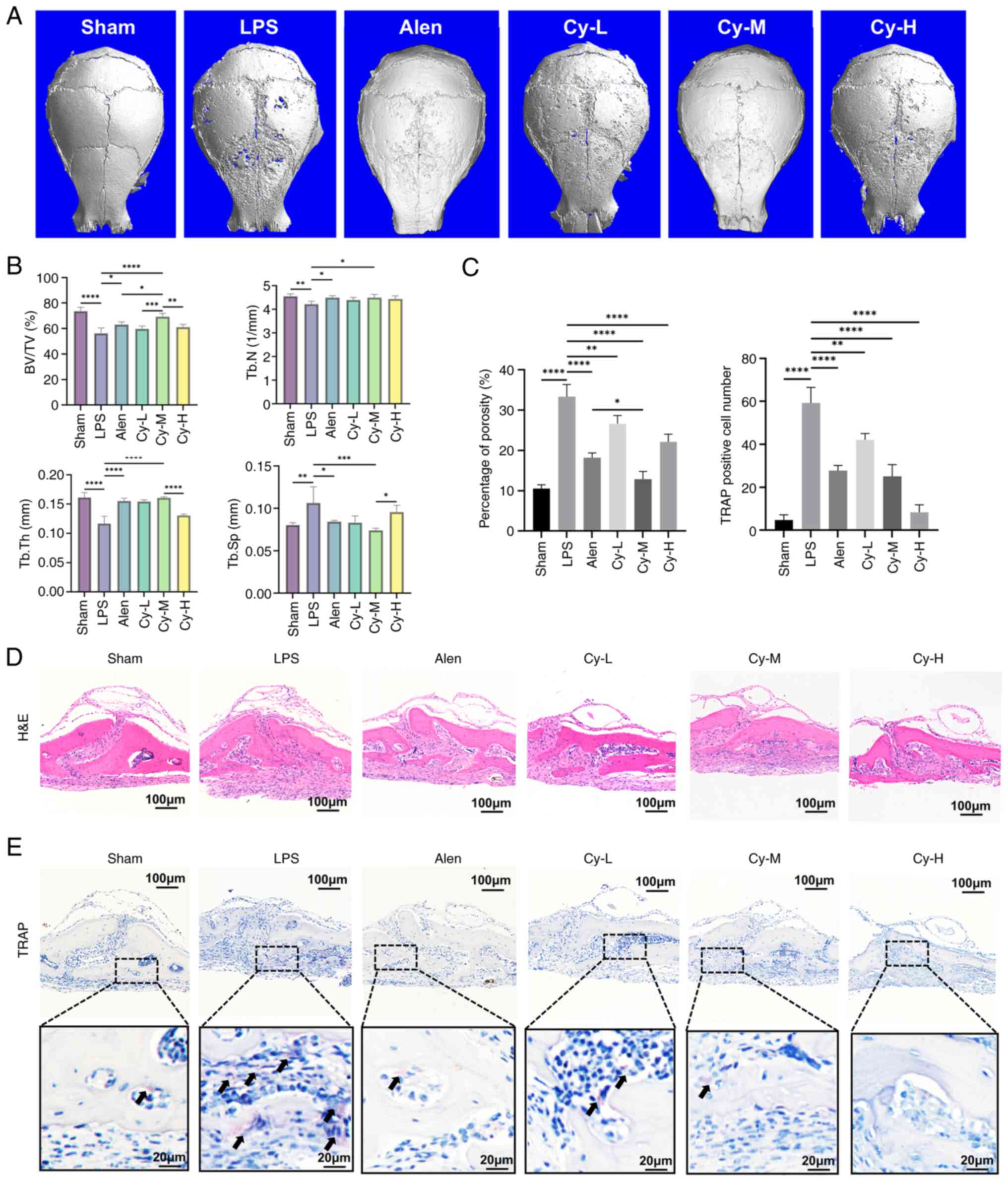
Figure 1

Cynarin shows therapeutic efficacy
comparable to alendronate in murine model of LPS-induced
osteolysis. (A) The micro-computed tomography reconstructions of
each group's murine calvaria. 6 weeks old C57/B6 mice were used to
establish model and were administrated by cynarin in indicated dose
for 10 days. (B) BV/TV, Tb.N, Tb.Th and Tb.Sp were evaluated by
quantitative analysis. (C) Quantitative analysis of porosity
percentage in H&E staining and TRAP positive cells number in
TRAP staining. (D) Representative images of calvarial histology
stained with H&E (magnification, ×100). (E) Representative
images of calvarial histology stained with TRAP (magnification,
×100). TRAP-positive cells are shown by black arrows. Animals were
randomly assigned to each group using a computer-generated
sequence. Histological scoring was conducted by an investigator who
was blinded to the treatment groups. All experiments were performed
with three independent biological replicates (n=3). The data are
presented as the mean ± SD. *P<0.05,
**P<0.01, ***P<0.001 and
****P<0.0001 vs. Sham and LPS group separately. LPS,
lipopolysaccharide; BV/TV, bone volume to total volume ratio; Tb.N,
trabecular number; Tb.Th, trabecular thickness; Tb.Sp, trabecular
separation; TRAP, tartrate-resistant acid phosphatase; Alen,
alendronate; Cy-M, medium-dose cynarin.

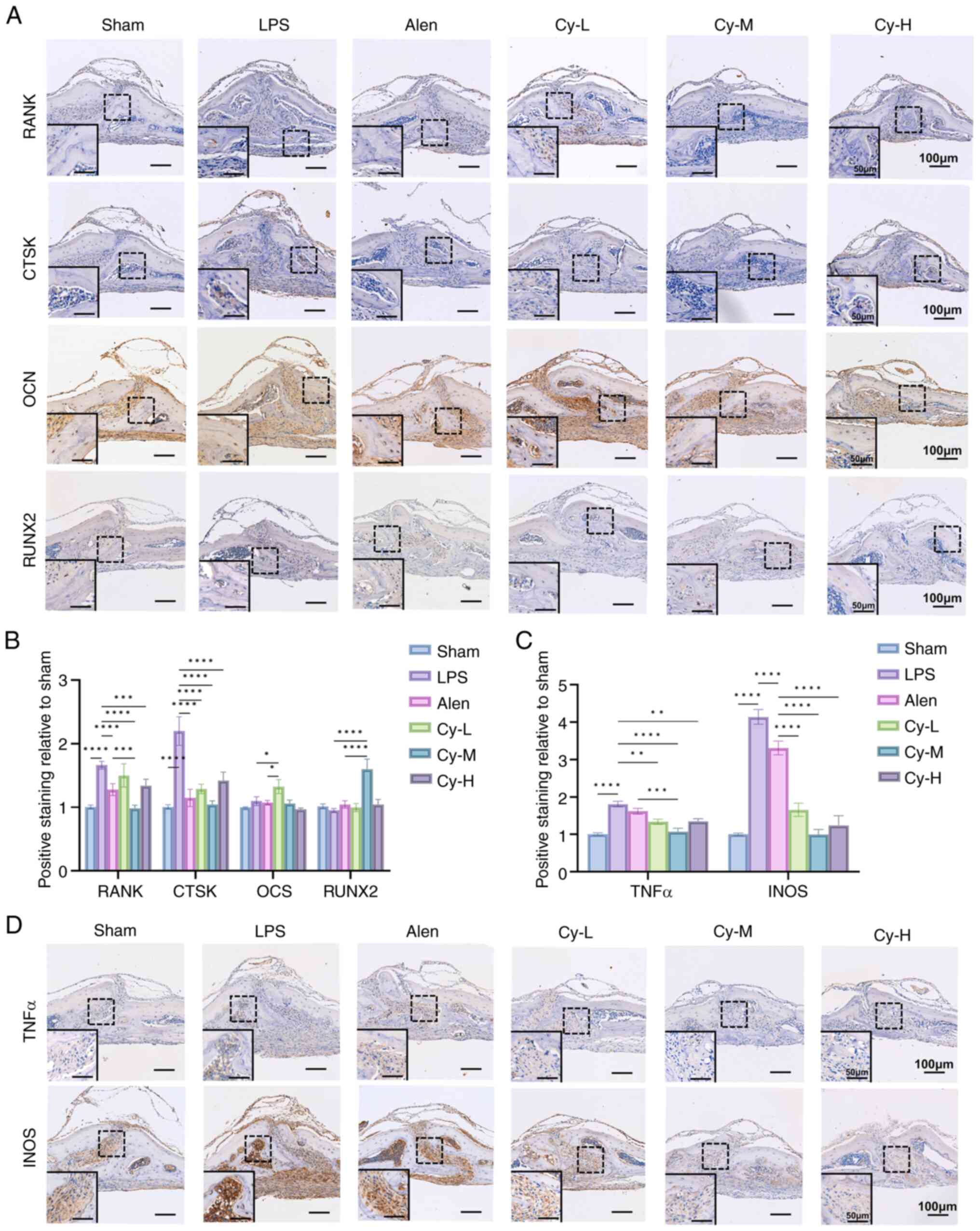
Figure 2

Cynarin exerts a more potent effect
in inhibiting osteoclast differentiation and reducing inflammation
in vivo. (A) Representative images of calvarial histology
stained with RANK, CTSK, OCN and RUNX2 (magnification, ×100). (B)
Quantitative analysis of the expression of RANK, CTSK, OCN and
RUNX2 in the IHC staining. (C) Quantitative analysis of the
expression of TNFα and iNOS in the IHC staining. (D) Representative
images of calvarial histology stained with TNFα and iNOS
(magnification, ×100). All experiments were performed with three
independent biological replicates (n=3). The data are presented as
the mean ± SD. *P<0.05, **P<0.01,
***P<0.001 and ****P<0.0001 vs. Sham,
LPS and Alen group separately. RANK, receptor activator of nuclear
factor κB; CTSK, cathepsin K; OCN, osteocalcin; IHC,
immunohistochemical; iNOS; inducible nitric oxide synthase; LPS,
lipopolysaccharide; Alen, alendronate; Cy-M, medium-dose
cynarin.

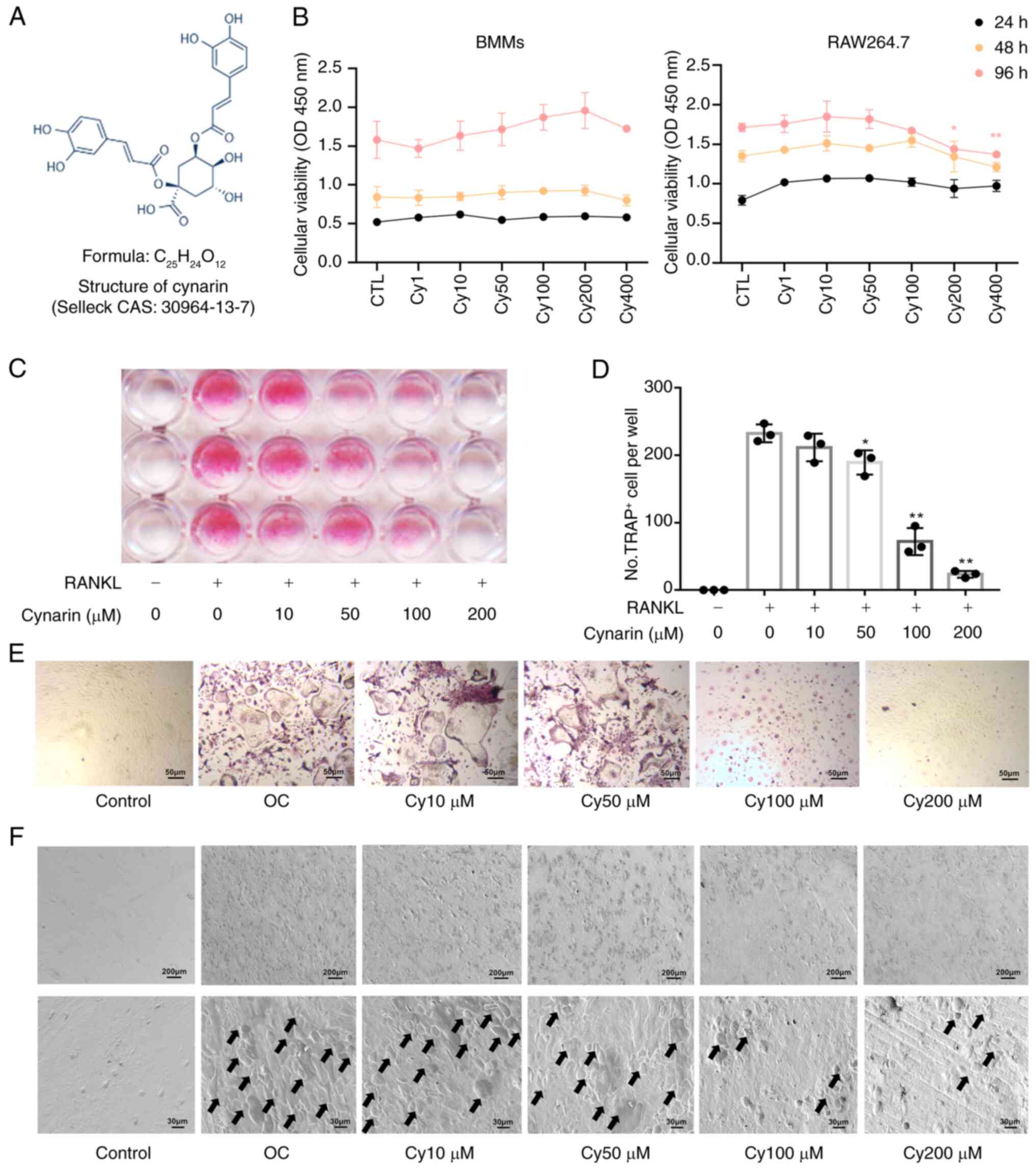
Figure 3

Cynarin restrains RANKL-induced OC
differentiation in vitro. (A) Chemical formula for cynarin.
(B) BMMs and RAW264.7 cells were treated with gradient
concentrations of cynarin for 24, 48 and 96 h, after which cells
proliferation and viability were detected by Cell Counting Kit-8
assay (n=3). *P<0.05 and **P<0.01 vs.
CTL group. (C) BMMs were incubated with gradient concentrations of
cynarin for 5-7 days. Cells were stained for TRAP staining. Scan of
a 96-well plate after TRAP staining (n=3). (D) The count of
TRAP+ OCs per well was determined (n=3).
*P<0.05 and **P<0.01 vs. RANKL (+) and
Cynarin (-) group. (E) Representative images of TRAP staining
(magnification, ×200; (n=3). (F) BMMs were incubated with gradient
concentrations of cynarin for 9 days. The bone slides were
visualised under the scanning electron microscope (magnification,
×50, first row; ×300, second row). Black arrows indicate
osteoclastic absorption pits (n=3). The data are presented as the
mean ± SD. RANKL, receptor activator of nuclear factor κB ligand;
OC, osteoclast; BMMs, bone marrow-derived macrophages; TRAP,
tartrate-resistant acid phosphatase.

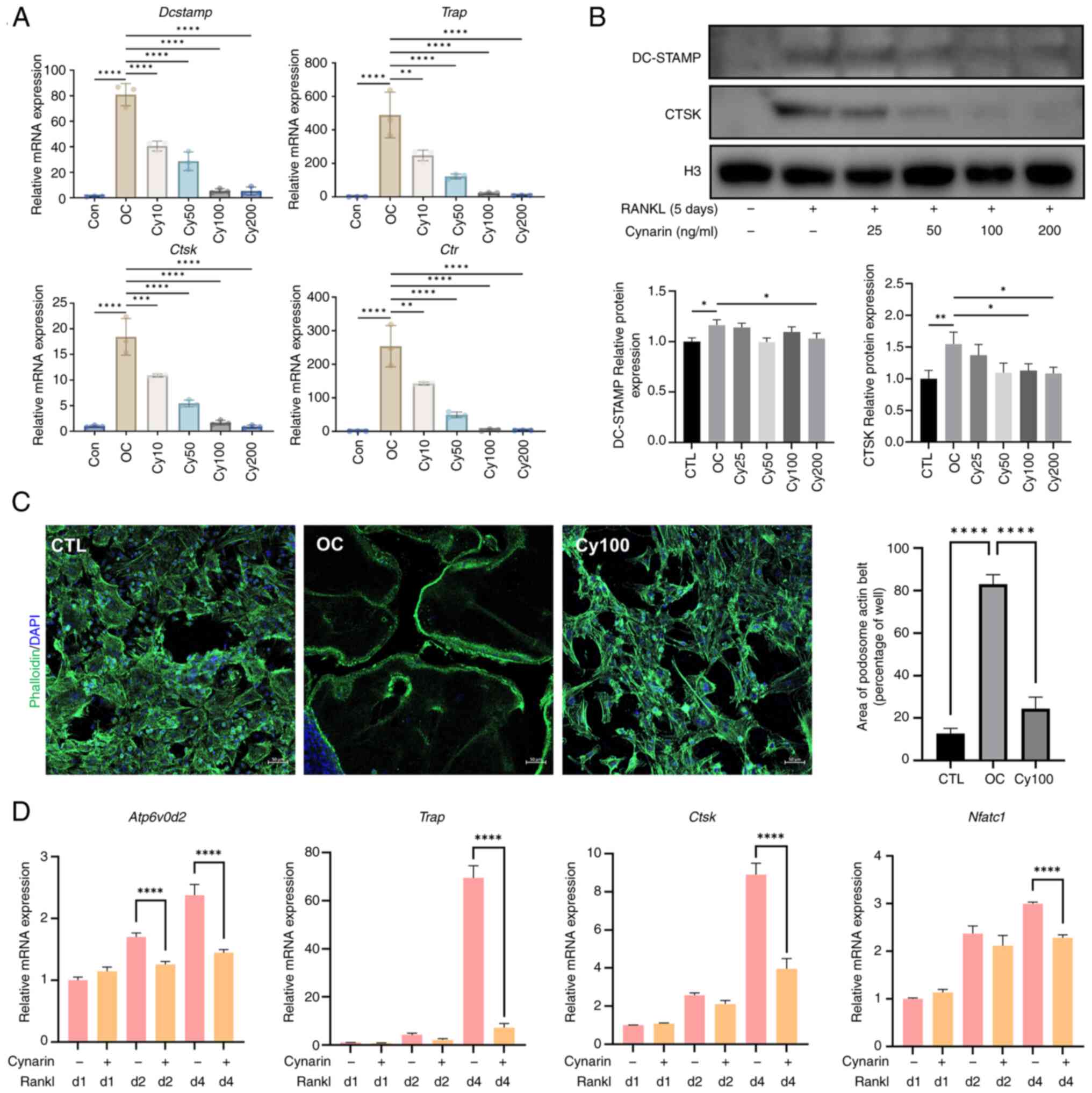
Figure 4

Cynarin downregulates
osteoclast-specific genes and proteins during osteoclastogenesis.
(A) RAW264.7 cells were treated with RANKL and gradient
concentrations of cynarin for 5 days. Dcstamp, Trap,
Ctsk and Ctr expression levels were normalised to
Gapdh expression by RT-qPCR (n=3). (B) RAW264.7 cells were
treated with RANKL and gradient concentrations of cynarin for 5
days. Expression levels of DC-STAMP and CTSK were detected by
western blotting. Quantitative densitometric analysis was performed
to normalize DC-STAMP and CTSK (n=3). (C) After 5 days of
macrophage colony-stimulating factor and RANKL induction, bone
marrow-derived macrophages were stained for immunofluorescence
analysis of podosome actin belt (magnification, ×200; (n=3). (D)
RAW264.7 cells were incubated with or without 100 μM cynarin
for 1, 2 and 4 days. Atp6v0d2, Trap, Ctsk, and
Nfatc1 expression levels were normalised to GAPDH
expression by RT-qPCR (n=3). The data are presented as the mean ±
SD. *P<0.05, **P<0.01,
***P<0.001 and ****P<0.0001. RANKL,
receptor activator of nuclear factor κB ligand; RT-qPCR, reverse
transcription-quantitative PCR; CTSK, cathepsin K; TRAP,
tartrate-resistant acid phosphatase; OC, osteoclast.

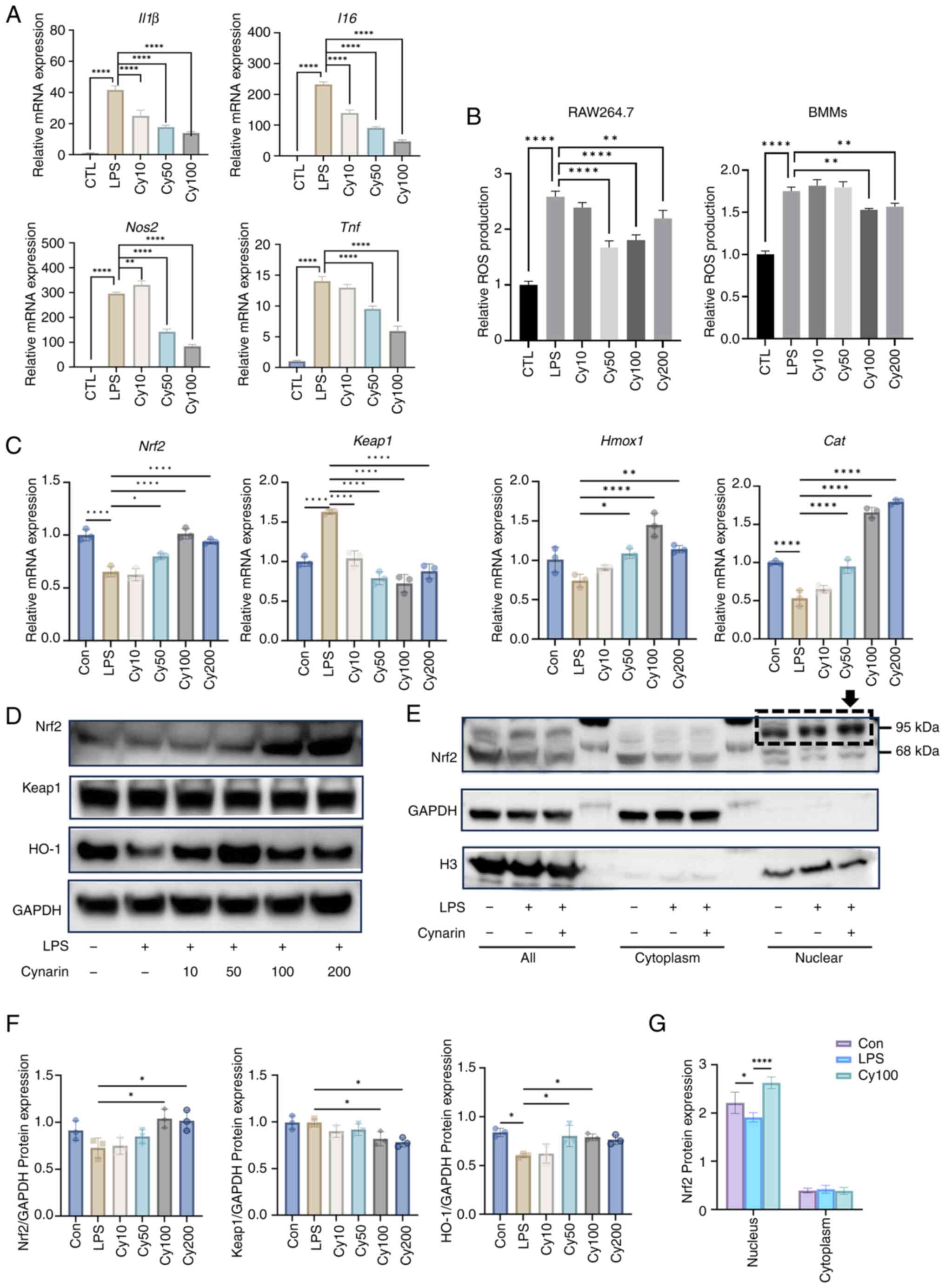
Figure 5

Cynarin suppresses
macrophage-mediated inflammation through activation of the
Nrf2-Keap1 signalling pathway. (A) RAW264.7 cells were exposed to
cynarin (10, 50 or 100 μM) for 24 h and then treated with
LPS (1 μg/ml) for 12 h. Expression levels of IL1β,
IL6, Nos2 and Tnf were detected by RT-qPCR
(n=3). (B) RAW264.7 cells and bone marrow-derived macrophages were
exposed to cynarin (10, 50, 100 or 200 μM) for 24 h and then
treated with LPS (1 μg/ml) for 12 h. Intracellular ROS
levels were measured with a ROS assay kit (n=3). (C) RAW264.7 cells
were exposed to cynarin (10, 50, 100 or 200 μM) for 6 h and
then treated with LPS (1 μg/ml) for 12 h. Expression levels
of Nrf2, Keap1, Hmox1 and Cat were
detected by RT-qPCR (n=3). (D) RAW264.7 cells were exposed to
cynarin (10, 50, 100 or 200 μM) for 24 h and then treated
with LPS (1 μg/ml) for 24 h. Expression levels of Nrf2,
Keap1 and HO-1 were detected by WB. (E) RAW264.7 cells were exposed
to 100 μM cynarin for 24 h and then treated with LPS (1
μg/ml) for 24 h. Nuclear extracts and cytoplasmic extracts
were used to test expression of Nrf2 by WB. (F) Quantitative
densitometric analysis was performed to normalize Nrf2, Keap1 and
HO-1 expression levels from D (n=3). (G) Quantitative densitometric
analysis was performed to normalize Nrf2 expression levels from E
(n=3). The data are presented as the mean ± SD.
*P<0.05, **P<0.01 and
****P<0.0001 vs. CTL and LPS group separately. LPS,
lipopolysaccharide; RT-qPCR, reverse transcription-quantitative
PCR; ROS, reactive oxygen species; HO-1, heme oxygenase-1; WB,
western blotting.

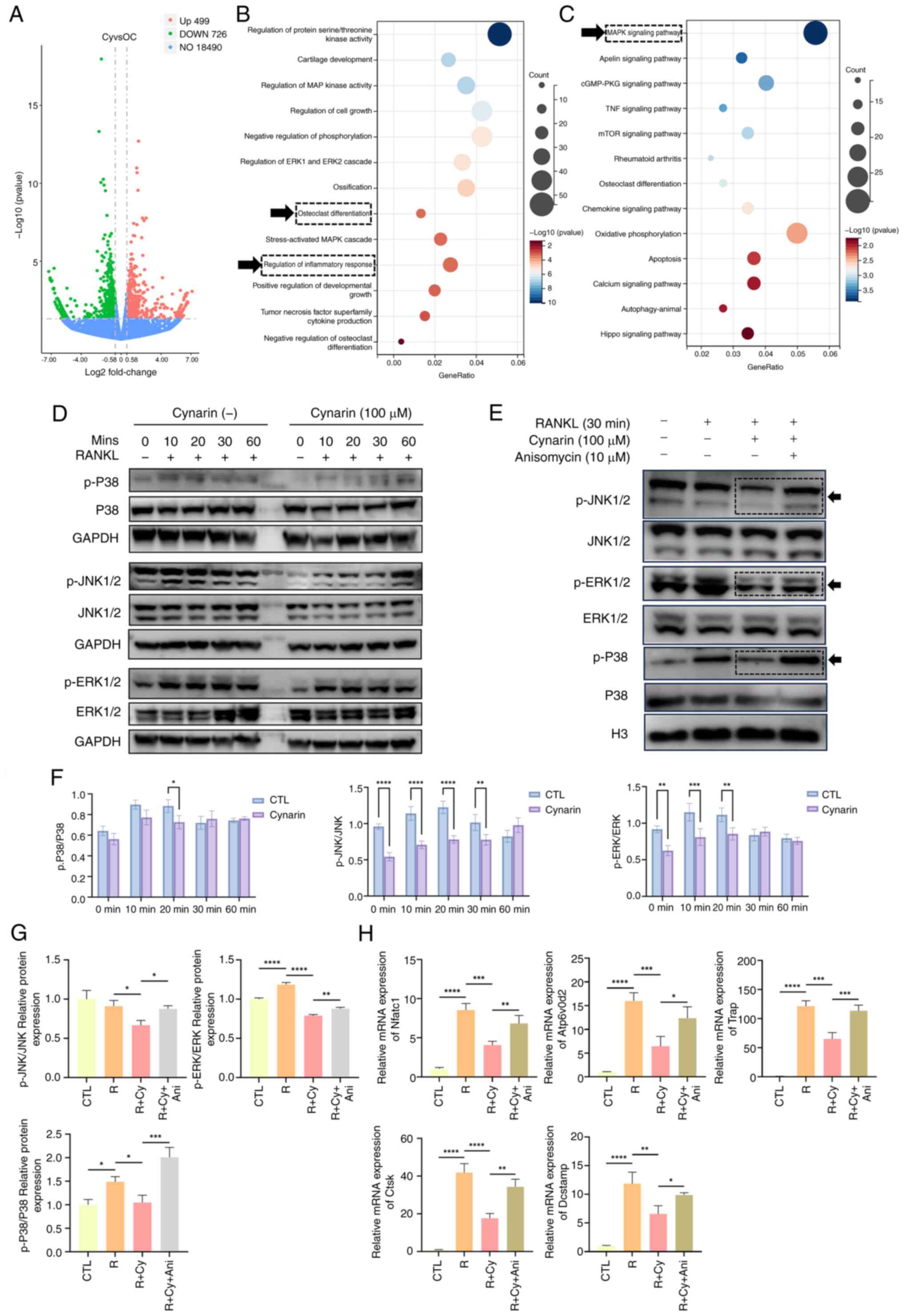
Figure 6

Cynarin suppresses the MAPK
signalling pathway in RANKL-induced osteoclastogenesis. (A) RANKL
induced RAW264.7 cells for 5 days with or without 100 μM
cynarin. Total RNA was extracted and sent for RNA sequencing. Genes
exhibiting |Log2FC|≥0.58 (FC ≥1.5) and unadjusted P≤0.05
were considered to be differentially expressed. Volcano plot of the
distinct upregulated and downregulated genes of Cy vs. OC (n=3).
(B) Gene Ontology enrichment analysis of differential genes of Cy
vs. OC (n=3). (C) Kyoto Encyclopedia of Genes and Genomes pathway
analysis of differential genes of Cy vs. OC (n=3). (D) RAW264,7
cells were pretreated with 100 μM cynarin for 6 h and
stimulated with 50 ng/ml RANKL for 10 to 60 min. Expression levels
of total and phosphorylated forms of JNK, ERK, and P38 were
detected by WB. (E) RAW264.7 cells were treated with 100 μM
cynarin, 10 μM anisomycin for 30 min and stimulated with 50
ng/ml RANKL for 30 min. The ratio of phosphorylated JNK to JNK,
p-ERK to ERK and p-P38 to P38 were quantitatively determined by WB.
(F) Quantitative densitometric analysis was performed to normalize
p-JNK/JNK, p-ERK/ERK and p-P38/P38 expression levels from D (n=3).
(G) Quantitative densitometric analysis was performed to normalize
p-JNK/JNK, p-ERK/ERK and p-P38/P38 expression from E (n=3). (H)
RAW264,7 cells were treated with 100 μM cynarin, 10
μM anisomycin for 4 days in RANKL-induced
osteoclastogenesis. Expression levels of OC-specific genes were
detected by reverse transcription-quantitative PCR (n=3). The data
are presented as the mean ± SD. *P<0.05,
**P<0.01, ***P<0.001 and
****P<0.0001. RANKL, receptor activator of nuclear
factor κB ligand; OC, osteoclast; p-, phosphorylated; WB, western
blotting; Ani, anisomycin.

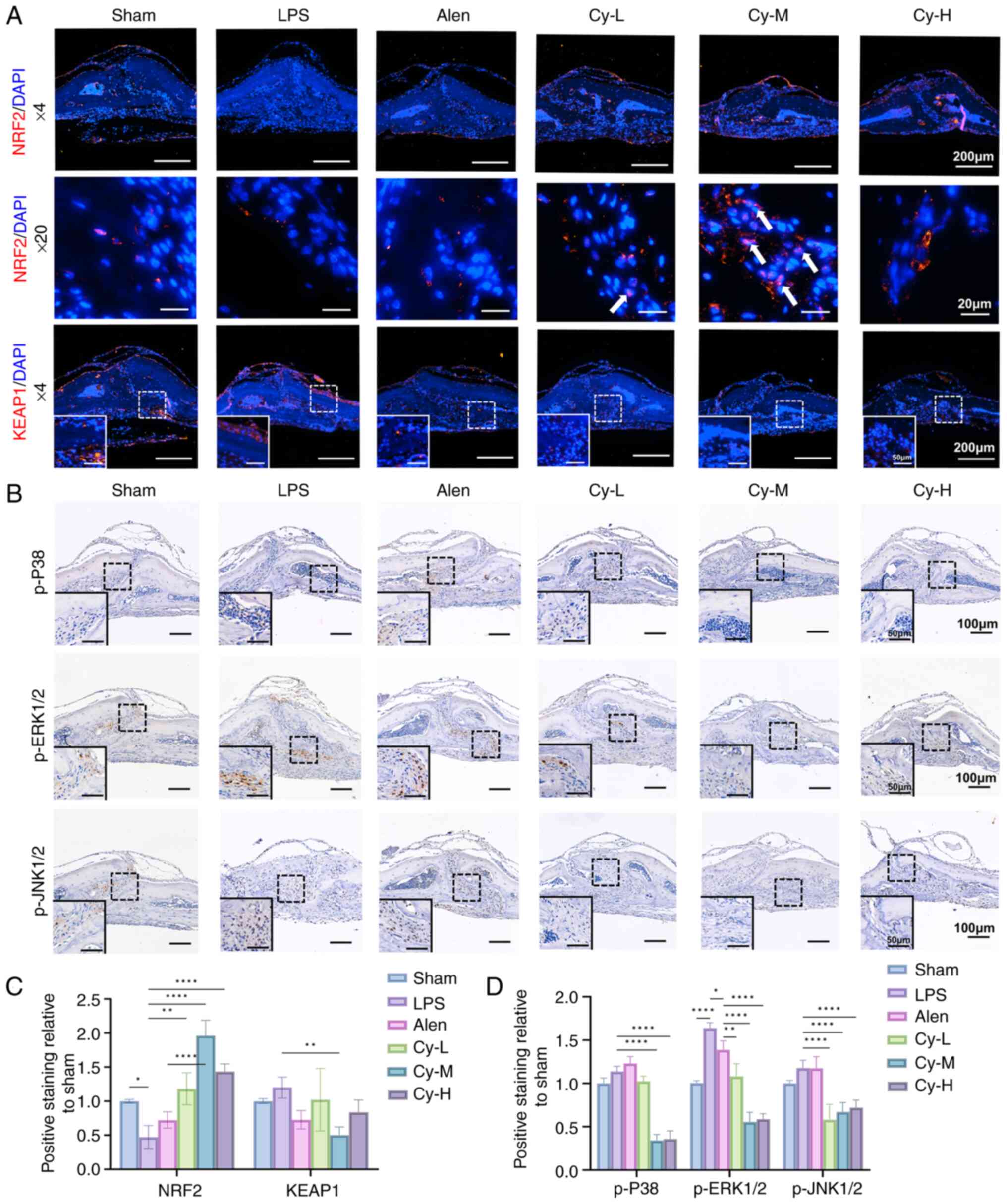
Figure 7

Cynarin suppresses osteoclastogenesis
and inflammation via the MAPK and Nrf2-Keap1 pathways in
inflammatory bone resorption. (A) Representative images of
calvarial histology stained with Nrf2 and Keap1 (magnification,
×40, first row; ×200, second row; ×40, third row). (B)
Representative images of calvarial histology stained with p-ERK1/2,
p-JNK1/2 and p-P38 (magnification, ×100). (C) Quantitative analysis
of the expression of Nrf2 and Keap1 in the immunofluorescence
staining. (D) Quantitative analysis of the expression of p-ERK1/2,
p-JNK1/2 and p-P38 in the immunohistochemical staining. All
experiments were performed with three independent biological
replicates (n=3). The data are presented as the mean ± SD.
*P<0.05, **P<0.01 and
****P<0.0001. p-, phosphorylated; Cy-M, medium-dose
cynarin; LPS, lipopolysaccharide; Alen, alendronate.

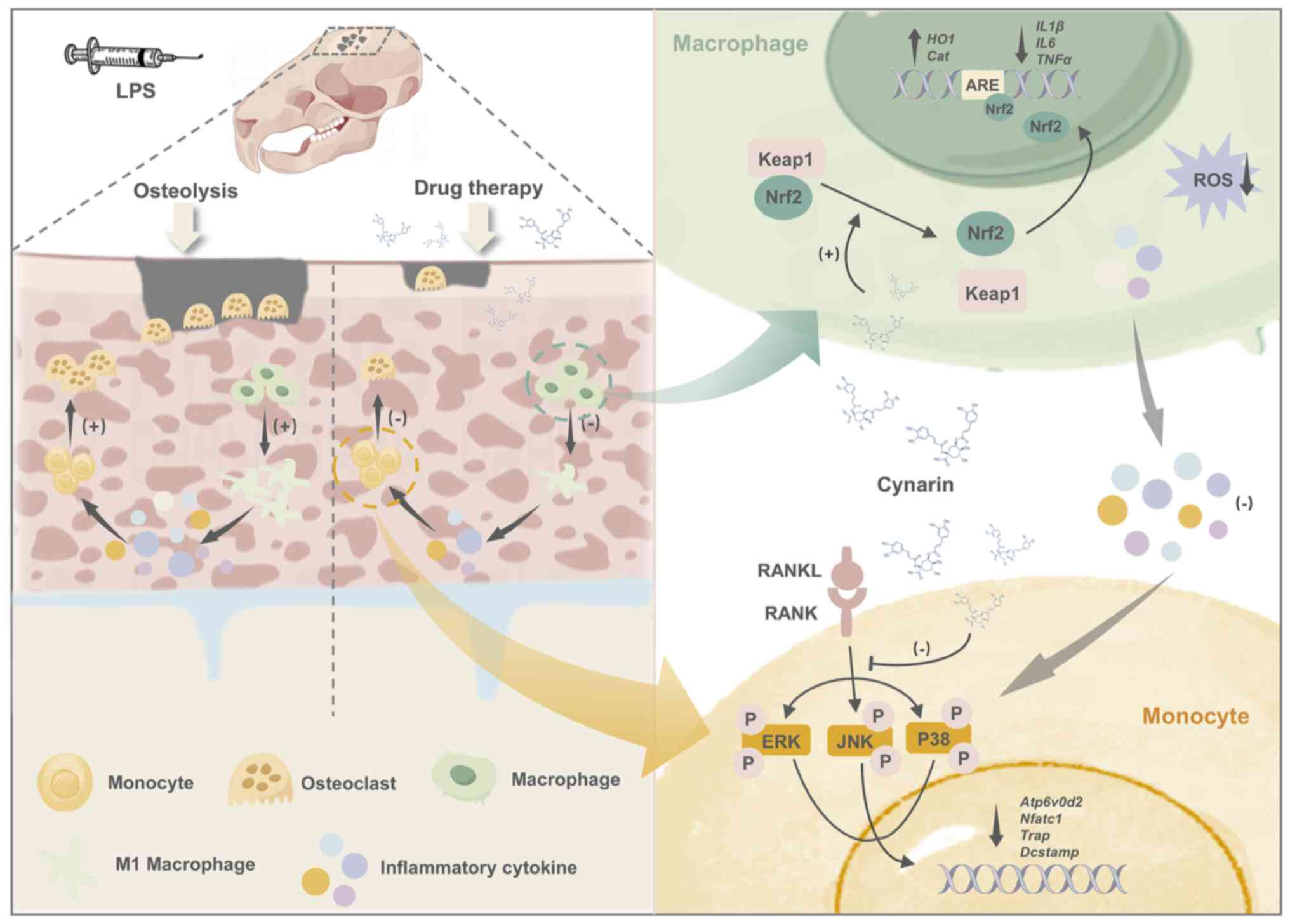
Figure 8

Schematic representation of the
mechanism by which cynarin inhibits bone loss. RANK, receptor
activator of nuclear factor κB; RANKL, RANK ligand; LPS,
lipopolysaccharide; ROS, reactive oxygen species.
View References

1 

Nakano S, Inoue K, Xu C, Deng Z, Syrovatkina V, Vitone G, Zhao L, Huang XY and Zhao B: G-protein Gα13 functions as a cytoskeletal and mitochondrial regulator to restrain osteoclast function. Sci Rep. 9:42362019. View Article : Google Scholar

2 

Udagawa N, Koide M, Nakamura M, Nakamichi Y, Yamashita T, Uehara S, Kobayashi Y, Furuya Y, Yasuda H, Fukuda C and Tsuda E: Osteoclast differentiation by RANKL and OPG signaling pathways. J Bone Miner Metab. 39:19–26. 2021. View Article : Google Scholar

3 

Park-Min KH, Lim E, Lee MJ, Park SH, Giannopoulou E, Yarilina A, van der Meulen M, Zhao B, Smithers N, Witherington J, et al: Inhibition of osteoclastogenesis and inflammatory bone resorption by targeting BET proteins and epigenetic regulation. Nat Commun. 5:54182014. View Article : Google Scholar : PubMed/NCBI

4 

Boyce BF, Li J, Yao Z and Xing L: Nuclear factor-kappa B regulation of osteoclastogenesis and osteoblastogenesis. Endocrinol Metab (Seoul). 38:504–521. 2023. View Article : Google Scholar : PubMed/NCBI

5 

Guo Q, Jin Y, Chen X, Ye X, Shen X, Lin M, Zeng C, Zhou T and Zhang J: NF-κB in biology and targeted therapy: New insights and translational implications. Signal Transduct Target Ther. 9:532024. View Article : Google Scholar

6 

Liu L, Geng H, Mei C and Chen L: Zoledronic acid enhanced the antitumor effect of cisplatin on orthotopic osteosarcoma by ROS-PI3K/AKT signaling and attenuated osteolysis. Oxid Med Cell Longev. 2021:66615342021. View Article : Google Scholar : PubMed/NCBI

7 

Place DE, Malireddi RKS, Kim J, Vogel P, Yamamoto M and Kanneganti TD: Osteoclast fusion and bone loss are restricted by interferon inducible guanylate binding proteins. Nat Commun. 12:4962021. View Article : Google Scholar : PubMed/NCBI

8 

Cauley JA, Barbour KE, Harrison SL, Cloonan YK, Danielson ME, Ensrud KE, Fink HA, Orwoll ES and Boudreau R: Inflammatory markers and the risk of hip and vertebral fractures in men: The osteoporotic fractures in men (MrOS). J Bone Miner Res. 31:2129–2138. 2016. View Article : Google Scholar : PubMed/NCBI

9 

Domazetovic V, Marcucci G, Iantomasi T, Brandi ML and Vincenzini MT: Oxidative stress in bone remodeling: Role of antioxidants. Clin Cases Miner Bone Metab. 14:209–216. 2017. View Article : Google Scholar : PubMed/NCBI

10 

Moreau MF, Guillet C, Massin P, Chevalier S, Gascan H, Baslé MF and Chappard D: Comparative effects of five bisphosphonates on apoptosis of macrophage cells in vitro. Biochem Pharmacol. 73:718–723. 2007. View Article : Google Scholar

11 

Kimachi K, Kajiya H, Nakayama S, Ikebe T and Okabe K: Zoledronic acid inhibits RANK expression and migration of osteoclast precursors during osteoclastogenesis. Naunyn Schmiedebergs Arch Pharmacol. 383:297–308. 2011. View Article : Google Scholar : PubMed/NCBI

12 

Sakaguchi O, Kokuryo S, Tsurushima H, Tanaka J, Habu M, Uehara M, Nishihara T and Tominaga K: Lipopolysaccharide aggravates bisphosphonate-induced osteonecrosis in rats. Int J Oral Maxillofac Surg. 44:528–534. 2015. View Article : Google Scholar

13 

Cohen SB, Dore RK, Lane NE, Ory PA, Peterfy CG, Sharp JT, van der Heijde D, Zhou L, Tsuji W and Newmark R; Denosumab Rheumatoid Arthritis Study Group: Denosumab treatment effects on structural damage, bone mineral density, and bone turnover in rheumatoid arthritis: A twelve-month, multicenter, randomized, double-blind, placebo-controlled, phase II clinical trial. Arthritis Rheum. 58:1299–1309. 2008. View Article : Google Scholar : PubMed/NCBI

14 

Adzet T, Camarasa J and Laguna JC: Hepatoprotective activity of polyphenolic compounds from Cynara scolymus against CCl4 toxicity in isolated rat hepatocytes. J Nat Prod. 50:612–617. 1987. View Article : Google Scholar : PubMed/NCBI

15 

Topal M, Gocer H, Topal F, Kalin P, Köse LP, Gülçin İ, Çakmak KC, Küçük M, Durmaz L, Gören AC and Alwasel SH: Antioxidant, antiradical, and anticholinergic properties of cynarin purified from the Illyrian thistle (Onopordum illyricum L.). J Enzyme Inhib Med Chem. 31:266–275. 2016. View Article : Google Scholar

16 

Wu C, Chen S, Liu Y, Kong B, Yan W, Jiang T, Tian H, Liu Z, Shi Q, Wang Y, et al: Cynarin suppresses gouty arthritis induced by monosodium urate crystals. Bioengineered. 13:11782–11793. 2022. View Article : Google Scholar : PubMed/NCBI

17 

Chen S, Tang S, Zhang C and Li Y: Cynarin ameliorates dextran sulfate sodium-induced acute colitis in mice through the STAT3/NF-κB pathway. Immunopharmacol Immunotoxicol. 46:107–116. 2024. View Article : Google Scholar

18 

Rucci N, Zallone A and Teti A: Isolation and generation of osteoclasts. Methods Mol Biol. 1914:3–19. 2019. View Article : Google Scholar : PubMed/NCBI

19 

Mao Y, Xie X, Sun G, Yu S, Ma M, Chao R, Wan T, Xu W, Chen X, Sun L and Zhang S: Multifunctional prosthesis surface: modification of titanium with cinnamaldehyde-loaded hierarchical titanium dioxide nanotubes. Adv Healthc Mater. 13:e23033742024. View Article : Google Scholar : PubMed/NCBI

20 

Livak KJ and Schmittgen TD: Analysis of relative gene expression data using real-time quantitative PCR and the 2(-Delta Delta C(T)) method. Methods. 25:402–408. 2001. View Article : Google Scholar

21 

Chen X, Li C, Cao X, Jia X, Chen X, Wang Z, Xu W, Dai F and Zhang S: Mitochondria-targeted supramolecular coordination container encapsulated with exogenous itaconate for synergistic therapy of joint inflammation. Theranostics. 12:3251–3272. 2022. View Article : Google Scholar : PubMed/NCBI

22 

Chen X, Chen X, Zhou Z, Mao Y, Wang Y, Ma Z, Xu W, Qin A and Zhang S: Nirogacestat suppresses RANKL-Induced osteoclast formation in vitro and attenuates LPS-Induced bone resorption in vivo. Exp Cell Res. 382:1114702019. View Article : Google Scholar : PubMed/NCBI

23 

Chen X, Chen X, Zhou Z, Qin A, Wang Y, Fan B, Xu W and Zhang S: LY411575, a potent γ-secretase inhibitor, suppresses osteoclastogenesis in vitro and LPS-induced calvarial osteolysis in vivo. J Cell Physiol. 234:20944–20956. 2019. View Article : Google Scholar : PubMed/NCBI

24 

Schwarz EM, Benz EB, Lu AP, Goater JJ, Mollano AV, Rosier RN, Puzas JE and Okeefe RJ: Quantitative small-animal surrogate to evaluate drug efficacy in preventing wear debris-induced osteolysis. J Orthop Res. 18:849–855. 2000. View Article : Google Scholar

25 

Tsutsumi R, Hock C, Bechtold CD, Proulx ST, Bukata SV, Ito H, Awad HA, Nakamura T, O'Keefe RJ and Schwarz EM: Differential effects of biologic versus bisphosphonate inhibition of wear debris-induced osteolysis assessed by longitudinal micro-CT. J Orthop Res. 26:1340–1346. 2008. View Article : Google Scholar : PubMed/NCBI

26 

Inchingolo AD, Inchingolo AM, Malcangi G, Avantario P, Azzollini D, Buongiorno S, Viapiano F, Campanelli M, Ciocia AM, De Leonardis N, et al: Effects of resveratrol, curcumin and quercetin supplementation on bone metabolism-a systematic review. Nutrients. 14:35192022. View Article : Google Scholar : PubMed/NCBI

27 

Wu L, Guo Q, Yang J and Ni B: Tumor necrosis factor alpha promotes osteoclast formation via PI3K/Akt pathway-mediated blimp1 expression upregulation. J Cell Biochem. 118:1308–1315. 2017. View Article : Google Scholar

28 

Lin TH, Tamaki Y, Pajarinen J, Waters HA, Woo DK, Yao Z and Goodman SB: Chronic inflammation in biomaterial-induced periprosthetic osteolysis: NF-κB as a therapeutic target. Acta Biomater. 10:1–10. 2014. View Article : Google Scholar

29 

Sakai E and Tsukuba T: Transcriptomic characterization reveals mitochondrial involvement in Nrf2/Keap1-mediated osteoclastogenesis. Antioxidants (Basel). 13:15752024. View Article : Google Scholar

30 

Dong Y, Kang H, Peng R, Liu Z, Liao F, Hu SA, Ding W, Wang P, Yang P, Zhu M, et al: A clinical-stage Nrf2 activator suppresses osteoclast differentiation via the iron-ornithine axis. Cell Metab. 36:1679–1695.e6. 2024. View Article : Google Scholar : PubMed/NCBI

31 

Baird L and Dinkova-Kostova AT: The cytoprotective role of the Keap1-Nrf2 pathway. Arch Toxicol. 85:241–272. 2011. View Article : Google Scholar : PubMed/NCBI

32 

Tao H, Ge G, Liang X, Zhang W, Sun H, Li M and Geng D: ROS signaling cascades: Dual regulations for osteoclast and osteoblast. Acta Biochim Biophys Sin (Shanghai). 52:1055–1062. 2020. View Article : Google Scholar : PubMed/NCBI

33 

Joo JH, Huh JE, Lee JH, Park DR, Lee Y, Lee SG, Choi S, Lee HJ, Song SW, Jeong Y, et al: A novel pyrazole derivative protects from ovariectomy-induced osteoporosis through the inhibition of NADPH oxidase. Sci Rep. 6:223892016. View Article : Google Scholar : PubMed/NCBI

34 

Li X, Chen Y, Mao Y, Dai P, Sun X, Zhang X, Cheng H, Wang Y, Banda I, Wu G, et al: Curcumin protects osteoblasts from oxidative stress-induced dysfunction via GSK3β-Nrf2 signaling pathway. Front Bioeng Biotechnol. 8:6252020. View Article : Google Scholar

35 

Saha S, Buttari B, Panieri E, Profumo E and Saso L: An overview of Nrf2 signaling pathway and its role in inflammation. Molecules. 25:54742020. View Article : Google Scholar : PubMed/NCBI

36 

Xu H, Liu T, Jia Y, Li J, Jiang L, Hu C, Wang X and Sheng J: (-)-Epigallocatechin-3-gallate inhibits osteoclastogenesis by blocking RANKL-RANK interaction and suppressing NF-κB and MAPK signaling pathways. Int Immunopharmacol. 95:1074642021. View Article : Google Scholar

37 

Cargnello M and Roux PP: Activation and function of the MAPKs and their substrates, the MAPK-activated protein kinases. Microbiol Mol Biol Rev. 75:50–83. 2011. View Article : Google Scholar : PubMed/NCBI

38 

Morrison DK: MAP kinase pathways. Cold Spring Harb Perspect Biol. 4:a0112542012. View Article : Google Scholar : PubMed/NCBI

39 

Liu Y, Li J, Zhang Z, Li Q, Tian Y, Wang S, Shi C and Sun H: Echinococcus granulosus promotes MAPK pathway-mediated osteoclast differentiation by inhibiting Nrf2 in osseous echinococcosis. Vet Res. 56:812025. View Article : Google Scholar : PubMed/NCBI

40 

Thummuri D, Naidu VGM and Chaudhari P: Carnosic acid attenuates RANKL-induced oxidative stress and osteoclastogenesis via induction of Nrf2 and suppression of NF-κB and MAPK signalling. J Mol Med (Berl). 95:1065–1076. 2017. View Article : Google Scholar : PubMed/NCBI

41 

Antonino M, Nicolò M, Jerome Renee L, Federico M, Chiara V, Stefano S, Maria S, Salvatore C, Antonio B, Calvo-Henriquez C, et al: Single-nucleotide polymorphism in chronic rhinosinusitis: A systematic review. Clin Otolaryngol. 47:14–23. 2022. View Article : Google Scholar

Related Articles

  • Abstract
  • View
  • Download
  • Twitter
Copy and paste a formatted citation
Spandidos Publications style
Chao R, Wang Y, Liu Z, Wan T, Mao Y, Xie X, Sun L, Xu W, Chen X, Zhang S, Zhang S, et al: Cynarin as a potent anti‑osteolytic agent: Targeting MAPK and Nrf2‑Keap1 pathways for osteoclast inhibition and bone protection. Int J Mol Med 56: 206, 2025.
APA
Chao, R., Wang, Y., Liu, Z., Wan, T., Mao, Y., Xie, X. ... Zhang, S. (2025). Cynarin as a potent anti‑osteolytic agent: Targeting MAPK and Nrf2‑Keap1 pathways for osteoclast inhibition and bone protection. International Journal of Molecular Medicine, 56, 206. https://doi.org/10.3892/ijmm.2025.5647
MLA
Chao, R., Wang, Y., Liu, Z., Wan, T., Mao, Y., Xie, X., Sun, L., Xu, W., Chen, X., Zhang, S."Cynarin as a potent anti‑osteolytic agent: Targeting MAPK and Nrf2‑Keap1 pathways for osteoclast inhibition and bone protection". International Journal of Molecular Medicine 56.6 (2025): 206.
Chicago
Chao, R., Wang, Y., Liu, Z., Wan, T., Mao, Y., Xie, X., Sun, L., Xu, W., Chen, X., Zhang, S."Cynarin as a potent anti‑osteolytic agent: Targeting MAPK and Nrf2‑Keap1 pathways for osteoclast inhibition and bone protection". International Journal of Molecular Medicine 56, no. 6 (2025): 206. https://doi.org/10.3892/ijmm.2025.5647
Copy and paste a formatted citation
x
Spandidos Publications style
Chao R, Wang Y, Liu Z, Wan T, Mao Y, Xie X, Sun L, Xu W, Chen X, Zhang S, Zhang S, et al: Cynarin as a potent anti‑osteolytic agent: Targeting MAPK and Nrf2‑Keap1 pathways for osteoclast inhibition and bone protection. Int J Mol Med 56: 206, 2025.
APA
Chao, R., Wang, Y., Liu, Z., Wan, T., Mao, Y., Xie, X. ... Zhang, S. (2025). Cynarin as a potent anti‑osteolytic agent: Targeting MAPK and Nrf2‑Keap1 pathways for osteoclast inhibition and bone protection. International Journal of Molecular Medicine, 56, 206. https://doi.org/10.3892/ijmm.2025.5647
MLA
Chao, R., Wang, Y., Liu, Z., Wan, T., Mao, Y., Xie, X., Sun, L., Xu, W., Chen, X., Zhang, S."Cynarin as a potent anti‑osteolytic agent: Targeting MAPK and Nrf2‑Keap1 pathways for osteoclast inhibition and bone protection". International Journal of Molecular Medicine 56.6 (2025): 206.
Chicago
Chao, R., Wang, Y., Liu, Z., Wan, T., Mao, Y., Xie, X., Sun, L., Xu, W., Chen, X., Zhang, S."Cynarin as a potent anti‑osteolytic agent: Targeting MAPK and Nrf2‑Keap1 pathways for osteoclast inhibition and bone protection". International Journal of Molecular Medicine 56, no. 6 (2025): 206. https://doi.org/10.3892/ijmm.2025.5647
Follow us
  • Twitter
  • LinkedIn
  • Facebook
About
  • Spandidos Publications
  • Careers
  • Cookie Policy
  • Privacy Policy
How can we help?
  • Help
  • Live Chat
  • Contact
  • Email to our Support Team