Spandidos Publications Logo
  • About
    • About Spandidos
    • Aims and Scopes
    • Abstracting and Indexing
    • Editorial Policies
    • Reprints and Permissions
    • Job Opportunities
    • Terms and Conditions
    • Contact
  • Journals
    • All Journals
    • Oncology Letters
      • Oncology Letters
      • Information for Authors
      • Editorial Policies
      • Editorial Board
      • Aims and Scope
      • Abstracting and Indexing
      • Bibliographic Information
      • Archive
    • International Journal of Oncology
      • International Journal of Oncology
      • Information for Authors
      • Editorial Policies
      • Editorial Board
      • Aims and Scope
      • Abstracting and Indexing
      • Bibliographic Information
      • Archive
    • Molecular and Clinical Oncology
      • Molecular and Clinical Oncology
      • Information for Authors
      • Editorial Policies
      • Editorial Board
      • Aims and Scope
      • Abstracting and Indexing
      • Bibliographic Information
      • Archive
    • Experimental and Therapeutic Medicine
      • Experimental and Therapeutic Medicine
      • Information for Authors
      • Editorial Policies
      • Editorial Board
      • Aims and Scope
      • Abstracting and Indexing
      • Bibliographic Information
      • Archive
    • International Journal of Molecular Medicine
      • International Journal of Molecular Medicine
      • Information for Authors
      • Editorial Policies
      • Editorial Board
      • Aims and Scope
      • Abstracting and Indexing
      • Bibliographic Information
      • Archive
    • Biomedical Reports
      • Biomedical Reports
      • Information for Authors
      • Editorial Policies
      • Editorial Board
      • Aims and Scope
      • Abstracting and Indexing
      • Bibliographic Information
      • Archive
    • Oncology Reports
      • Oncology Reports
      • Information for Authors
      • Editorial Policies
      • Editorial Board
      • Aims and Scope
      • Abstracting and Indexing
      • Bibliographic Information
      • Archive
    • Molecular Medicine Reports
      • Molecular Medicine Reports
      • Information for Authors
      • Editorial Policies
      • Editorial Board
      • Aims and Scope
      • Abstracting and Indexing
      • Bibliographic Information
      • Archive
    • World Academy of Sciences Journal
      • World Academy of Sciences Journal
      • Information for Authors
      • Editorial Policies
      • Editorial Board
      • Aims and Scope
      • Abstracting and Indexing
      • Bibliographic Information
      • Archive
    • International Journal of Functional Nutrition
      • International Journal of Functional Nutrition
      • Information for Authors
      • Editorial Policies
      • Editorial Board
      • Aims and Scope
      • Abstracting and Indexing
      • Bibliographic Information
      • Archive
    • International Journal of Epigenetics
      • International Journal of Epigenetics
      • Information for Authors
      • Editorial Policies
      • Editorial Board
      • Aims and Scope
      • Abstracting and Indexing
      • Bibliographic Information
      • Archive
    • Medicine International
      • Medicine International
      • Information for Authors
      • Editorial Policies
      • Editorial Board
      • Aims and Scope
      • Abstracting and Indexing
      • Bibliographic Information
      • Archive
  • Articles
  • Information
    • Information for Authors
    • Information for Reviewers
    • Information for Librarians
    • Information for Advertisers
    • Conferences
  • Language Editing
Spandidos Publications Logo
  • About
    • About Spandidos
    • Aims and Scopes
    • Abstracting and Indexing
    • Editorial Policies
    • Reprints and Permissions
    • Job Opportunities
    • Terms and Conditions
    • Contact
  • Journals
    • All Journals
    • Biomedical Reports
      • Information for Authors
      • Editorial Policies
      • Editorial Board
      • Aims and Scope
      • Abstracting and Indexing
      • Bibliographic Information
      • Archive
    • Experimental and Therapeutic Medicine
      • Information for Authors
      • Editorial Policies
      • Editorial Board
      • Aims and Scope
      • Abstracting and Indexing
      • Bibliographic Information
      • Archive
    • International Journal of Epigenetics
      • Information for Authors
      • Editorial Policies
      • Editorial Board
      • Aims and Scope
      • Abstracting and Indexing
      • Bibliographic Information
      • Archive
    • International Journal of Functional Nutrition
      • Information for Authors
      • Editorial Policies
      • Editorial Board
      • Aims and Scope
      • Abstracting and Indexing
      • Bibliographic Information
      • Archive
    • International Journal of Molecular Medicine
      • Information for Authors
      • Editorial Policies
      • Editorial Board
      • Aims and Scope
      • Abstracting and Indexing
      • Bibliographic Information
      • Archive
    • International Journal of Oncology
      • Information for Authors
      • Editorial Policies
      • Editorial Board
      • Aims and Scope
      • Abstracting and Indexing
      • Bibliographic Information
      • Archive
    • Medicine International
      • Information for Authors
      • Editorial Policies
      • Editorial Board
      • Aims and Scope
      • Abstracting and Indexing
      • Bibliographic Information
      • Archive
    • Molecular and Clinical Oncology
      • Information for Authors
      • Editorial Policies
      • Editorial Board
      • Aims and Scope
      • Abstracting and Indexing
      • Bibliographic Information
      • Archive
    • Molecular Medicine Reports
      • Information for Authors
      • Editorial Policies
      • Editorial Board
      • Aims and Scope
      • Abstracting and Indexing
      • Bibliographic Information
      • Archive
    • Oncology Letters
      • Information for Authors
      • Editorial Policies
      • Editorial Board
      • Aims and Scope
      • Abstracting and Indexing
      • Bibliographic Information
      • Archive
    • Oncology Reports
      • Information for Authors
      • Editorial Policies
      • Editorial Board
      • Aims and Scope
      • Abstracting and Indexing
      • Bibliographic Information
      • Archive
    • World Academy of Sciences Journal
      • Information for Authors
      • Editorial Policies
      • Editorial Board
      • Aims and Scope
      • Abstracting and Indexing
      • Bibliographic Information
      • Archive
  • Articles
  • Information
    • For Authors
    • For Reviewers
    • For Librarians
    • For Advertisers
    • Conferences
  • Language Editing
Login Register Submit
  • This site uses cookies
  • You can change your cookie settings at any time by following the instructions in our Cookie Policy. To find out more, you may read our Privacy Policy.

    I agree
Search articles by DOI, keyword, author or affiliation
Search
Advanced Search
presentation
International Journal of Molecular Medicine
Join Editorial Board Propose a Special Issue
Print ISSN: 1107-3756 Online ISSN: 1791-244X
Journal Cover
December-2025 Volume 56 Issue 6

Full Size Image

Sign up for eToc alerts
Recommend to Library

Journals

International Journal of Molecular Medicine

International Journal of Molecular Medicine

International Journal of Molecular Medicine is an international journal devoted to molecular mechanisms of human disease.

International Journal of Oncology

International Journal of Oncology

International Journal of Oncology is an international journal devoted to oncology research and cancer treatment.

Molecular Medicine Reports

Molecular Medicine Reports

Covers molecular medicine topics such as pharmacology, pathology, genetics, neuroscience, infectious diseases, molecular cardiology, and molecular surgery.

Oncology Reports

Oncology Reports

Oncology Reports is an international journal devoted to fundamental and applied research in Oncology.

Experimental and Therapeutic Medicine

Experimental and Therapeutic Medicine

Experimental and Therapeutic Medicine is an international journal devoted to laboratory and clinical medicine.

Oncology Letters

Oncology Letters

Oncology Letters is an international journal devoted to Experimental and Clinical Oncology.

Biomedical Reports

Biomedical Reports

Explores a wide range of biological and medical fields, including pharmacology, genetics, microbiology, neuroscience, and molecular cardiology.

Molecular and Clinical Oncology

Molecular and Clinical Oncology

International journal addressing all aspects of oncology research, from tumorigenesis and oncogenes to chemotherapy and metastasis.

World Academy of Sciences Journal

World Academy of Sciences Journal

Multidisciplinary open-access journal spanning biochemistry, genetics, neuroscience, environmental health, and synthetic biology.

International Journal of Functional Nutrition

International Journal of Functional Nutrition

Open-access journal combining biochemistry, pharmacology, immunology, and genetics to advance health through functional nutrition.

International Journal of Epigenetics

International Journal of Epigenetics

Publishes open-access research on using epigenetics to advance understanding and treatment of human disease.

Medicine International

Medicine International

An International Open Access Journal Devoted to General Medicine.

Journal Cover
December-2025 Volume 56 Issue 6

Full Size Image

Sign up for eToc alerts
Recommend to Library

  • Article
  • Citations
    • Cite This Article
    • Download Citation
    • Create Citation Alert
    • Remove Citation Alert
    • Cited By
  • Similar Articles
    • Related Articles (in Spandidos Publications)
    • Similar Articles (Google Scholar)
    • Similar Articles (PubMed)
  • Download PDF
  • Download XML
  • View XML
Article Open Access

Calycosin attenuates mitochondrial damage and pyroptosis in heart failure via the Nrf2/ROS/TXNIP pathway

  • Authors:
    • Hua-Jing Yuan
    • Quan-Cheng Han
    • Yi-Ding Yu
    • Hui Yu
    • Xiu-Juan Liu
    • Yi-Tao Xue
    • Yan Li
  • View Affiliations / Copyright

    Affiliations: The First Clinical Medical College, Shandong University of Traditional Chinese Medicine, Jinan, Shandong 250014, P.R. China, Department of Cardiology, Affiliated Hospital of Shandong University of Traditional Chinese Medicine, Jinan, Shandong 250014, P.R. China
    Copyright: © Yuan et al. This is an open access article distributed under the terms of Creative Commons Attribution License.
  • Article Number: 212
    |
    Published online on: September 30, 2025
       https://doi.org/10.3892/ijmm.2025.5653
  • Expand metrics +
Metrics: Total Views: 0 (Spandidos Publications: | PMC Statistics: )
Metrics: Total PDF Downloads: 0 (Spandidos Publications: | PMC Statistics: )
Cited By (CrossRef): 0 citations Loading Articles...

This article is mentioned in:


Abstract

Heart failure (HF) is a key public health concern worldwide due to its high morbidity and mortality rates. Calycosin (CA) is a flavonoid natural product that effectively treats HF with cardioprotective effects; however, its mechanism of action remains unclear. The present study aimed to investigate the therapeutic effect of CA on HF and its mechanism through in vivo and in vitro experiments, and to reveal the roles of pyroptosis and mitochondrial dysfunction in the pathophysiology of HF. The HF model was constructed 4 weeks after ligation of the left anterior descending artery in rats. Myocardial ischemia‑reperfusion injury was simulated using a hypoxia‑reoxygenation model and nuclear factor erythroid 2‑related factor (Nrf2) was silenced by transfection using small interfering RNA to further explore the therapeutic mechanism of CA. The results revealed that CA treatment improved cardiac function and myocardial injury, suppressed oxidative stress levels and improved mitochondrial ultrastructure in HF‑induced rats. CA downregulated the expression of relevant pyroptosis proteins via the Nrf2/reactive oxygen species (ROS)/thioredoxin‑interacting protein (TXNIP) pathway. In vitro experiments demonstrated consistent results confirming that CA ameliorated mitochondrial damage by reducing levels of ROS and inhibiting mitochondrial gasdermin D N‑terminal fragments activation. Silencing Nrf2 partially reversed the cardioprotective effects of CA, confirming the key therapeutic role of CA in Nrf2‑mediated anti‑pyroptosis. In conclusion, CA inhibits pyroptosis and improves mitochondrial damage in HF through the Nrf2/ROS/TXNIP pathway, which may disrupt the crosstalk between mitochondrial damage and pyroptosis, thereby exerting cardioprotective effects.
View Figures

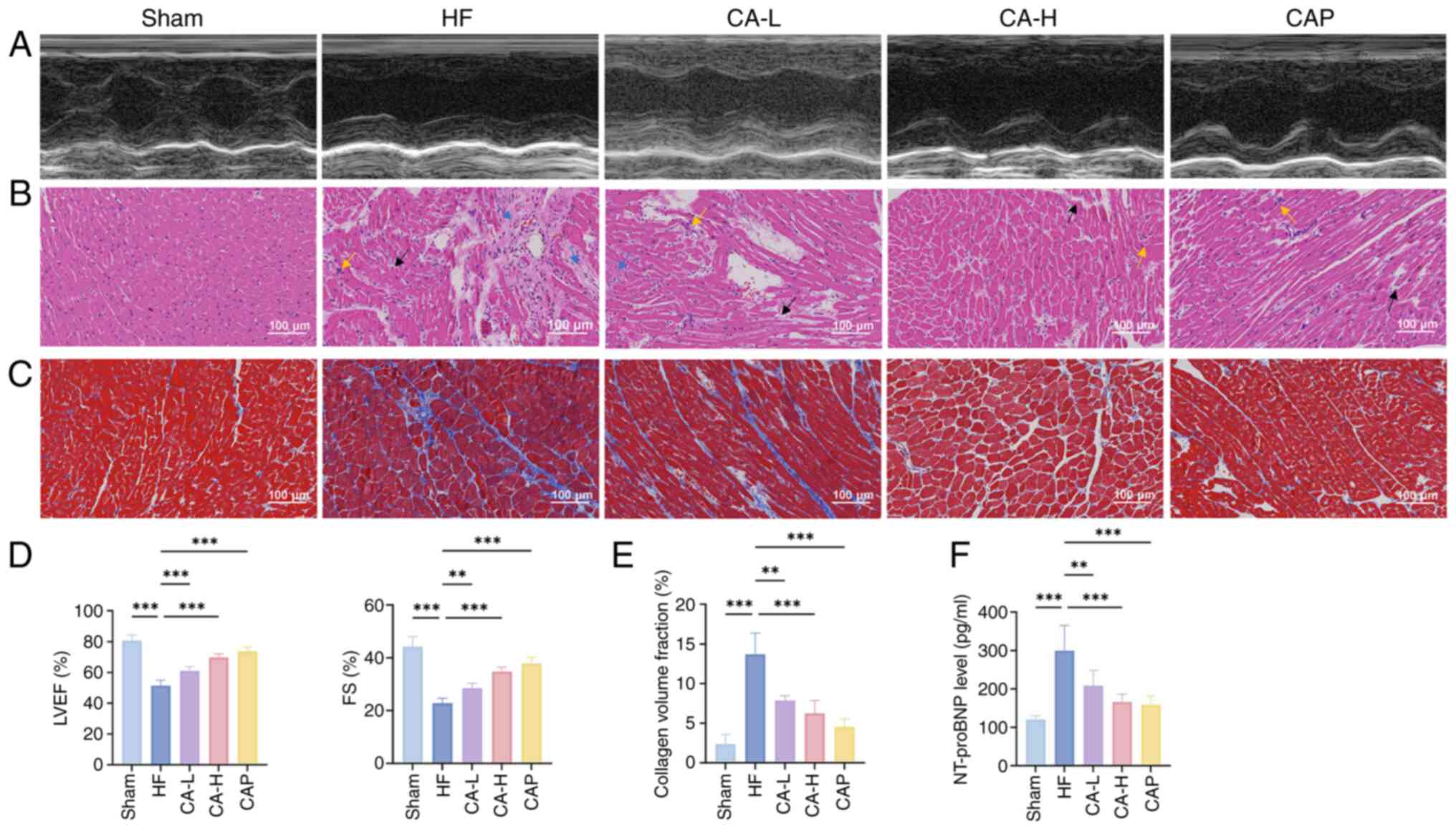
Figure 1

CA effectively improves cardiac
function in HF. (A) Representative echocardiography, (B) H&E
staining and (C) Masson's trichrome staining images of each group.
In H&E staining, the yellow arrows indicate inflammatory
infiltration, the black arrows indicate loss of myocardial cells
and the blue arrows indicate interstitial fibrosis. (D) Statistical
analysis of LVEF and FS of rats in each group, as determined by
echocardiography (n=5). (E) Quantitative analysis of Masson's
trichrome staining (n=3). (F) Serum NT-proBNP levels in rats of
each group (n=5). Data are presented as the mean ± SD,
**P<0.01, ***P<0.001. CA, calycosin;
HF, heart failure; LVEF, left ventricular ejection fraction; FS,
fractional shortening; NT-proBNP, N-terminal pro B-type natriuretic
peptide; CA-L, calycosin low-dose; CA-H, calycosin high-dose; CAP,
captopril.

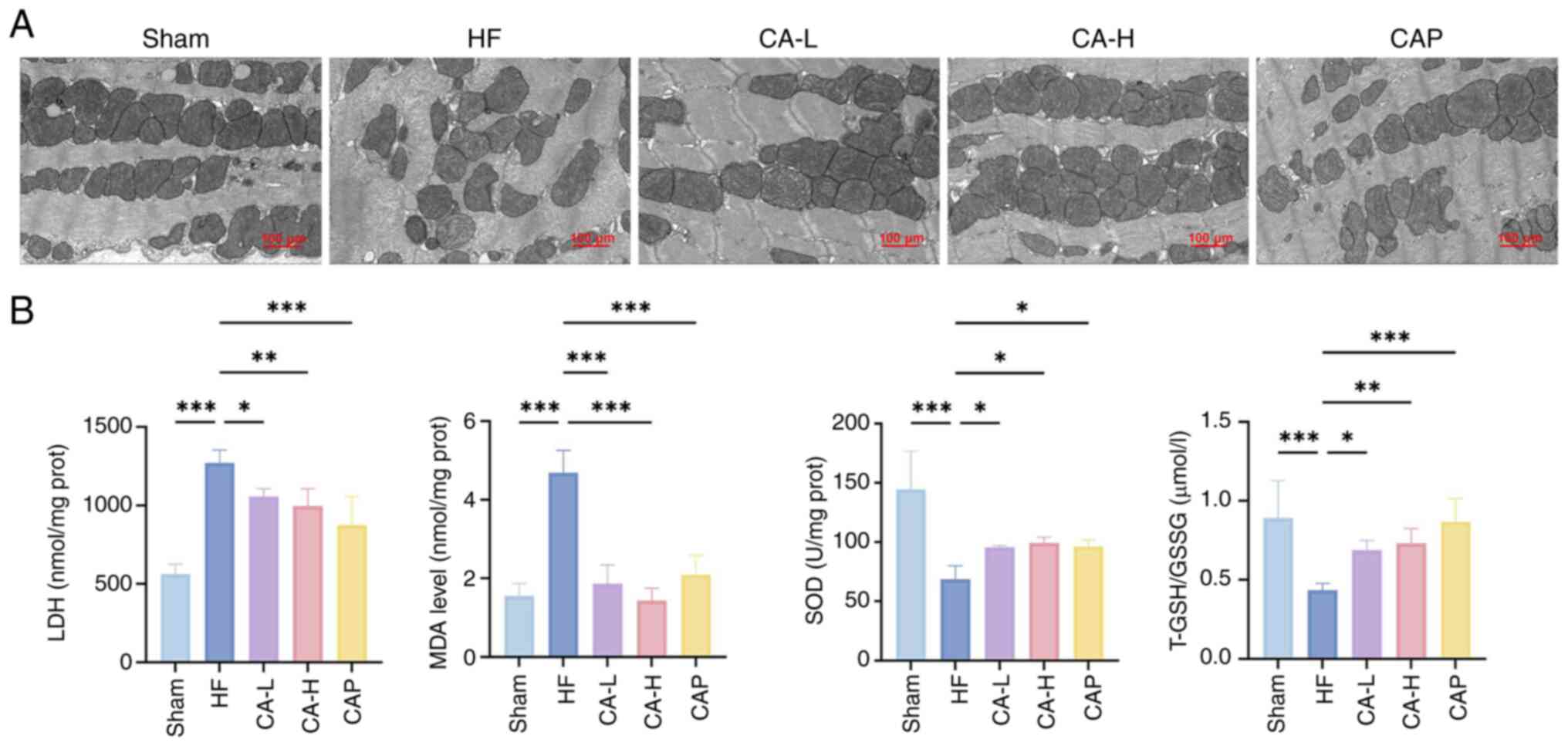
Figure 2

CA effectively improves mitochondrial
damage and cardiac oxidative stress in HF. (A) Representative
transmission electron microscopy images of rats in each group. (B)
Levels of oxidative stress-related indicators (n=5). Data are
presented as the mean ± SD, *P<0.05,
**P<0.01, ***P<0.001. CA, calycosin;
HF, heart failure; CA-L, calycosin low-dose; CA-H, calycosin
high-dose; CAP, captopril; LDH, lactate dehydrogenase; MDA,
malondialdehyde; SOD, superoxide dismutase; GSH, glutathione; GSSG,
GSH disulfide.

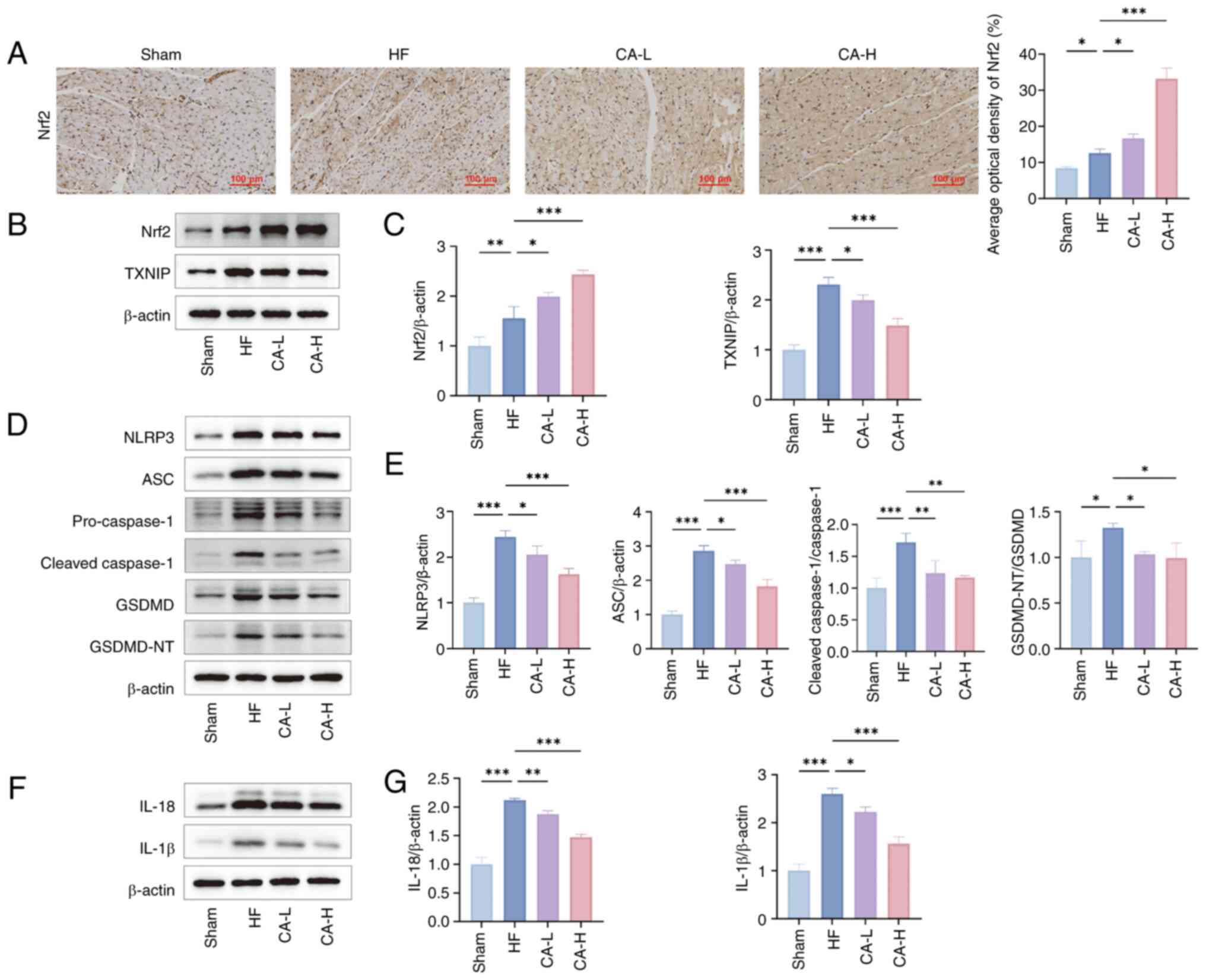
Figure 3

CA improves pyroptosis in HF through
the Nrf2/ROS/TXNIP pathway. (A) Representative Nrf2
immunohistochemistry images of each group and their quantitative
analysis (n=3). (B) Representative images of the expression levels
of Nrf2 and TXNIP in myocardial tissue of Wistar rats assessed by
western blotting. (C) Semi-quantitative analysis of Nrf2 and TXNIP
expressions (n=3). (D) Representative images of the expression
levels of NLRP3, ASC, pro- and cleaved-caspase-1, GSDMD, GSDMD-NT
in myocardial tissue of Wistar rats by western blotting. (E)
Semi-quantitative analysis of NLRP3, ASC, pro- and
cleaved-caspase-1, GSDMD, GSDMD-NT expressions (n=3). (F)
Representative images of the expression levels of IL-18 and IL-1β
in myocardial tissue of Wistar rats by western blotting. (G)
Semi-quantitative analysis of IL-18 and IL-1β expressions (n=3).
Data are presented as the mean ± SD, *P<0.05,
**P<0.01, ***P<0.001. CA, calycosin;
HF, heart failure; Nrf2, nuclear factor erythroid 2-related factor;
ROS, reactive oxygen species; TXNIP, thioredoxin-interacting
protein; CA-L, calycosin low-dose; CA-H, calycosin high-dose; ASC,
apoptosis-associated speck-like protein containing a CARD; GSDMD,
gasdermin D; GSDMD-NT, GSDMD N-terminal fragments.

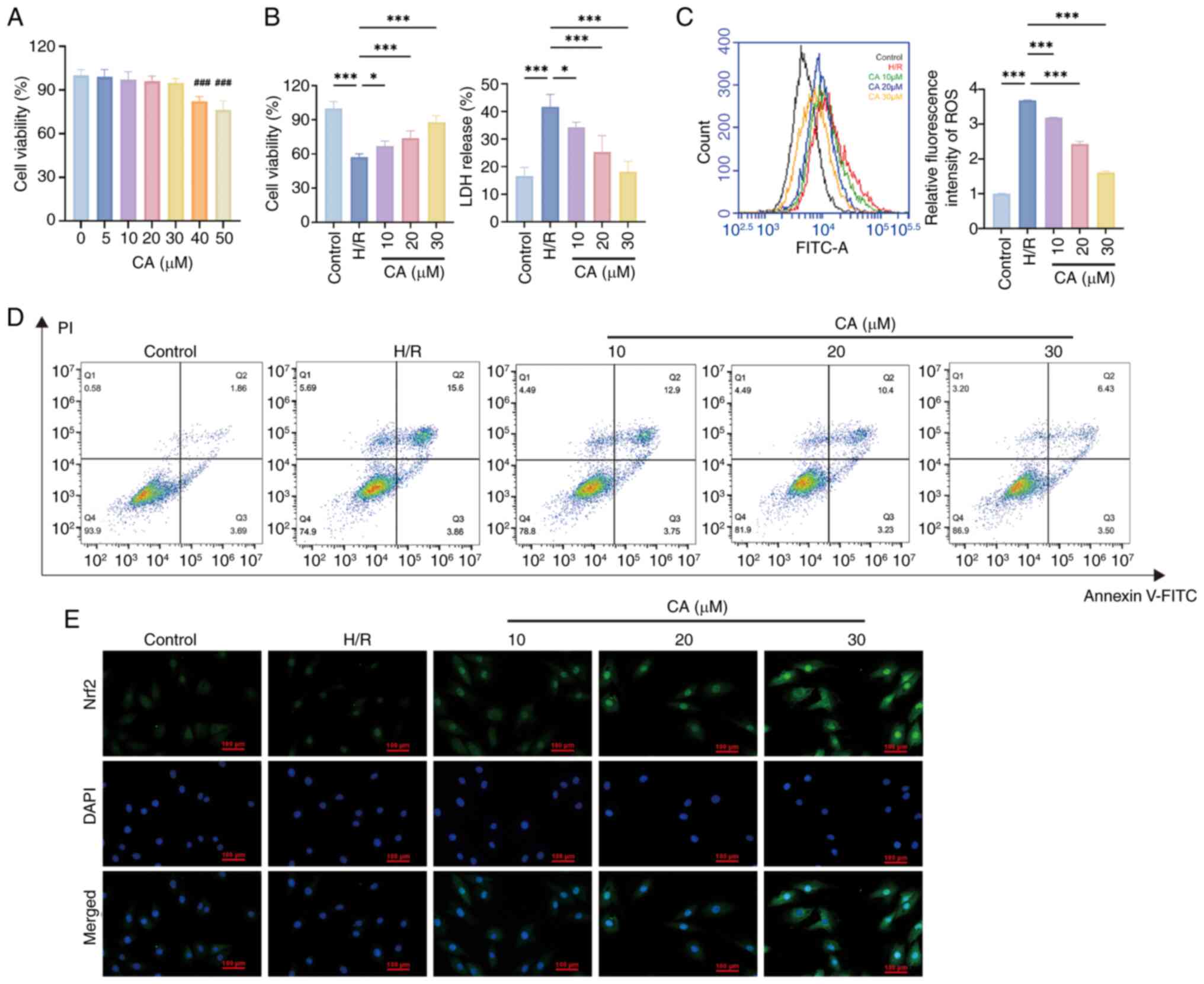
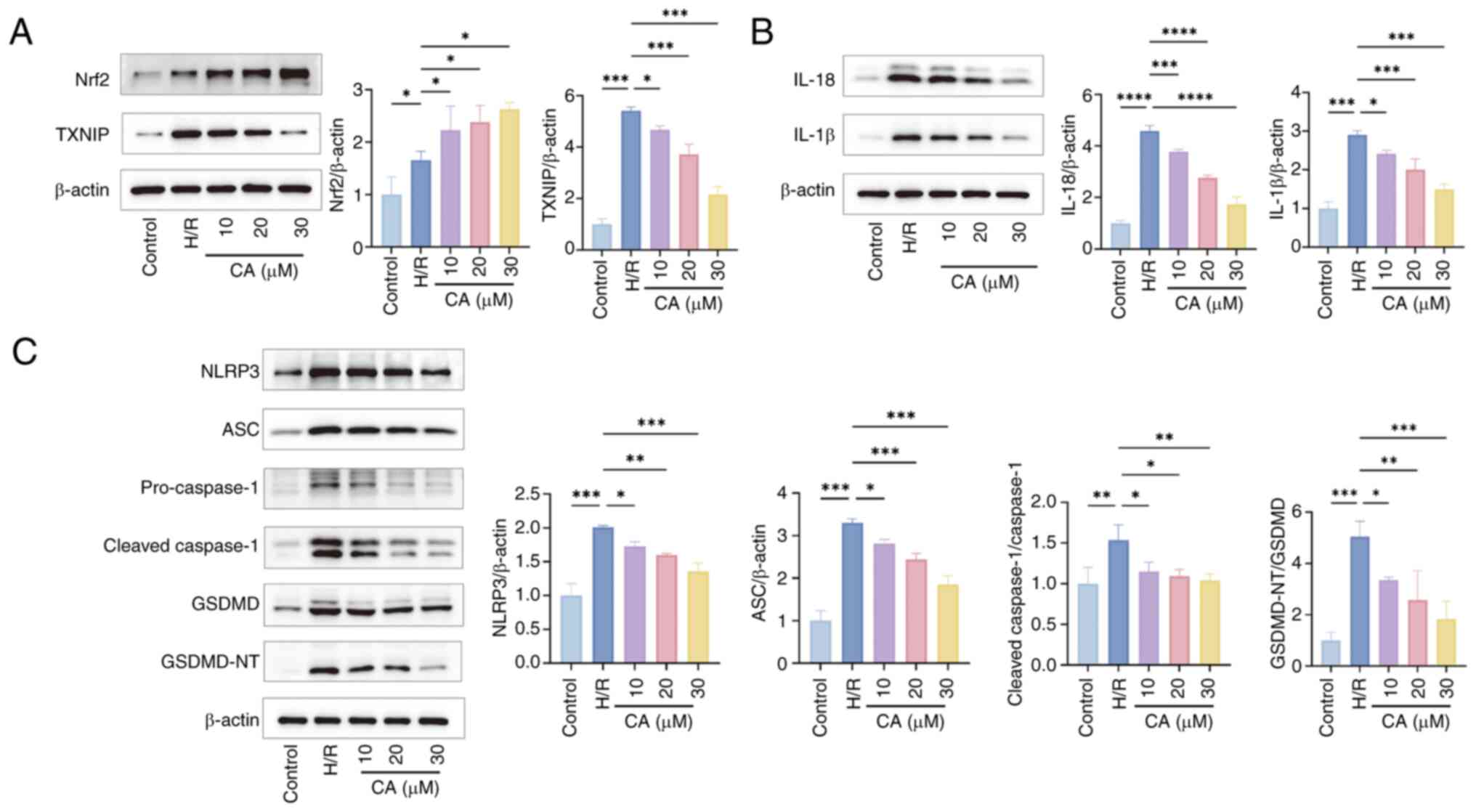
Figure 4

CA protects cardiomyocytes and
inhibits pyroptosis. (A) Detection of CA cytotoxicity using a Cell
Counting Kit-8 assay (n=3). ###P<0.001, compared with
0, 5, 10, 20, 30 μM groups. (B) Cardiomyocyte protective
effects of CA (n=3). (C) Flow cytometric analysis of cell death
with Annexin V-FITC/PI staining. (D) Immunofluorescence staining of
cardiomyocytes for Nrf2. (E) Detection of intracellular ROS levels
in cardiomyocytes (n=3). Data are presented as the mean ± SD,
*P<0.05, ***P<0.001. CA, calycosin;
Nrf2, nuclear factor erythroid 2-related factor; ROS, reactive
oxygen species; H/R, hypoxia-reperfusion; LDH, lactate
dehydrogenase.

Figure 5

CA inhibits pyroptosis via the
Nrf2/reactive oxygen species/TXNIP pathway (n=3). (A)
Representative images of the expression levels and
semi-quantitative analysis of Nrf2 and TXNIP in cells by western
blotting (n=3). (B) and semi-quantitative analysis and
semi-quantitative analysis of IL-18 and IL-1β in cells by western
blotting and (n=3). (C) and semi-quantitative analysis and
semi-quantitative analysis of levels of NLRP3, ASC, pro- and
cleaved-caspase-1, GSDMD, GSDMD-NT in cells by western blotting
(n=3). Data are presented as the mean ± SD, *P<0.05,
**P<0.01, ***P<0.001. CA, calycosin;
Nrf2, nuclear factor erythroid 2-related factor; TXNIP,
thioredoxin-interacting protein; H/R, hypoxia-reperfusion, ASC,
apoptosis-associated speck-like protein containing a CARD; GSDMD,
gasdermin D; GSDMD-NT, GSDMD N-terminal fragments; NLRP3, NLR
family pyrin domain-containing protein 3.

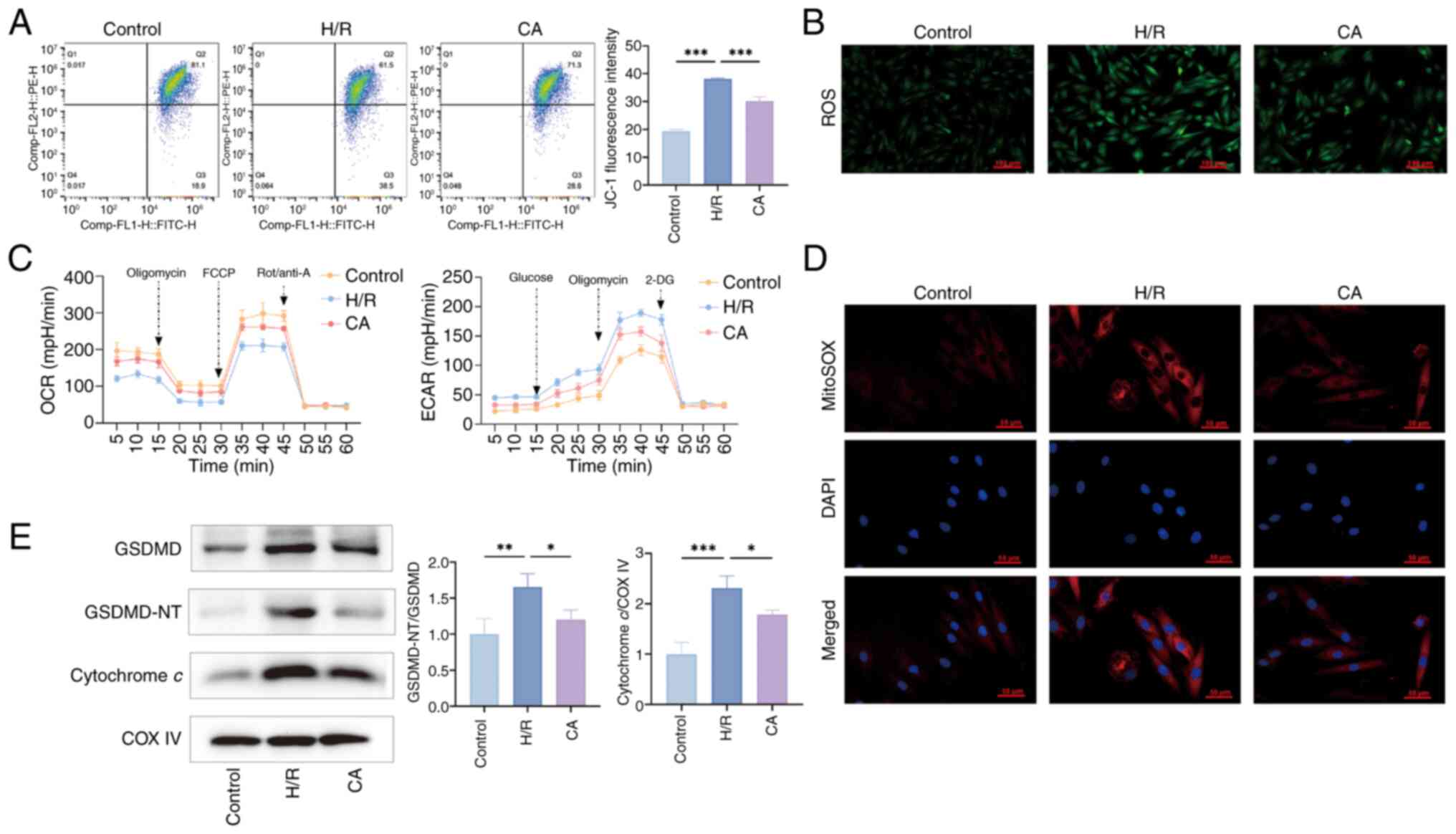
Figure 6

CA improves mitochondrial damage in
cardiomyocytes. (A) Flow cytometric analysis of JC-1 staining was
used to detect changes in mitochondrial membrane potential (n=3).
(B) Representative intracellular ROS staining images of each group.
(C) Representative mitochondrial ROS staining images of each group.
(D) ECAR and OCR of cardiomyocytes were assessed (n=3). (E)
Expression levels of GSDMD, GSDMD-NT and cytochrome c
proteins were examined by western blotting (n=3). COX IV was used
as a loading control in mitochondria. Data are presented as the
mean ± SD, *P<0.05, **P<0.01,
***P<0.001. CA, calycosin; ROS, reactive oxygen
species; ECAR, extracellular acidification rate; OCR, oxygen
consumption rate; FCCP, Trifluoromethoxy carbonylcyanide
phenylhydrazone, Carbonyl cyanide
4-(trifluoromethoxy)phenylhydrazone; Rot/anti-A, rotenone/antimycin
A; GSDMD, gasdermin D; GSDMD-NT, GSDMD N-terminal fragments; H/R,
hypoxia-reperfusion.

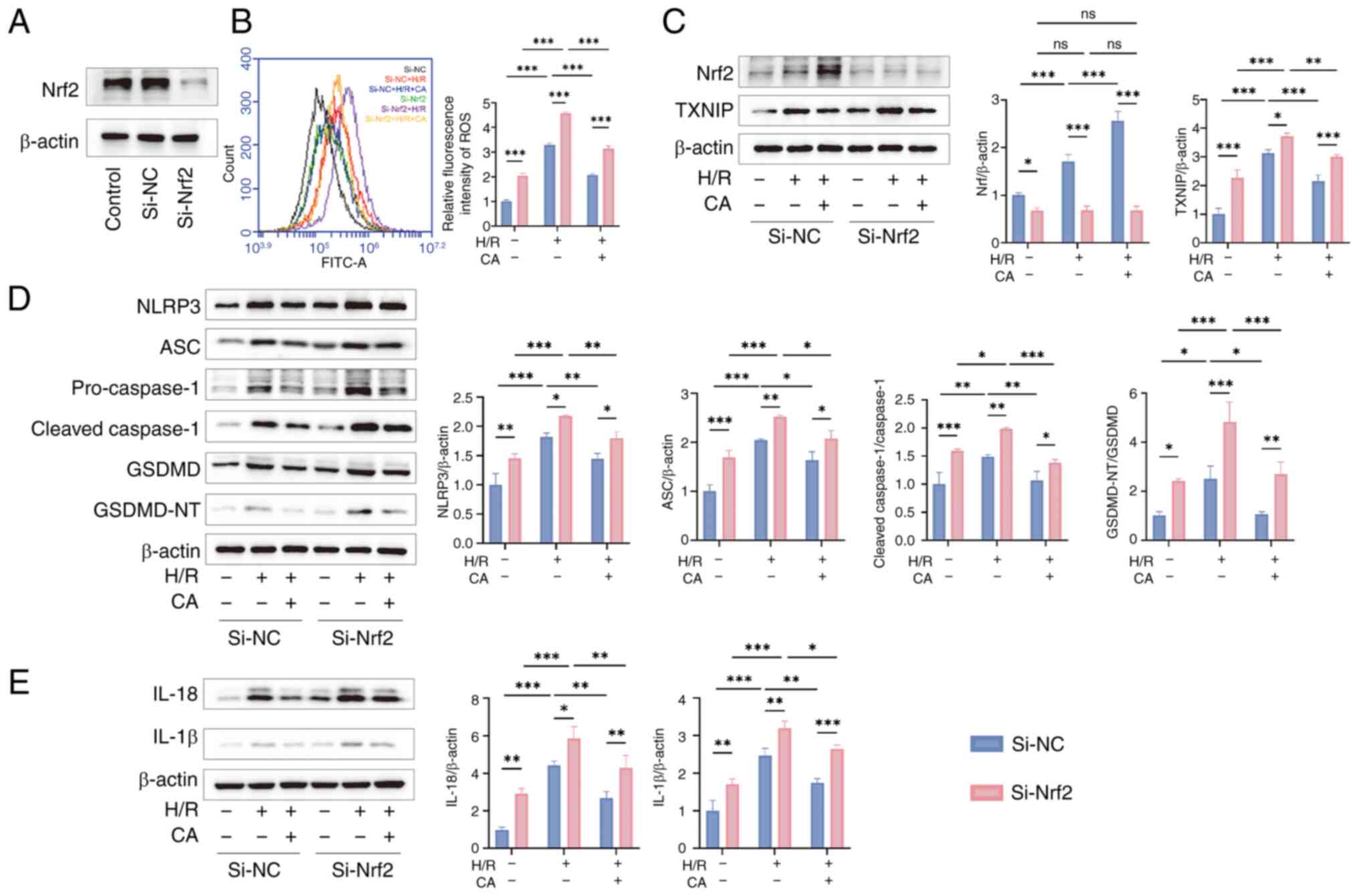
Figure 7

Silencing Nrf2 inhibits the
therapeutic effects of CA. (A) Transfection efficiency of si-Nrf2.
(B) Detection of intracellular ROS levels in each group (n=3). (C)
Representative images and semi-quantitative analysis of Nrf2 and
TXNIP in cells by western blotting (n=3). (D) Representative images
and semi-quantitative analysis of NLRP3, ASC, pro- and
cleaved-caspase-1, GSDMD, GSDMD-NT in cells by western blotting
(n=3). (E) Representative images and semi-quantitative analysis
levels of IL-18 and IL-1β in cells by western blotting (n=3). Data
are presented as the mean ± SD, *P<0.05,
**P<0.01, ***P<0.001, ns, no
significance. si, small interfering; CA, calycosin; Nrf2, nuclear
factor erythroid 2-related factor; ROS, reactive oxygen species;
TXNIP, thioredoxin-interacting protein; ASC, apoptosis-associated
speck-like protein containing a CARD; NLRP3, NLR family pyrin
domain-containing protein 3; GSDMD, gasdermin D; GSDMD-NT, GSDMD
N-terminal fragments; H/R, hypoxia-reperfusion; NC, negative
control.

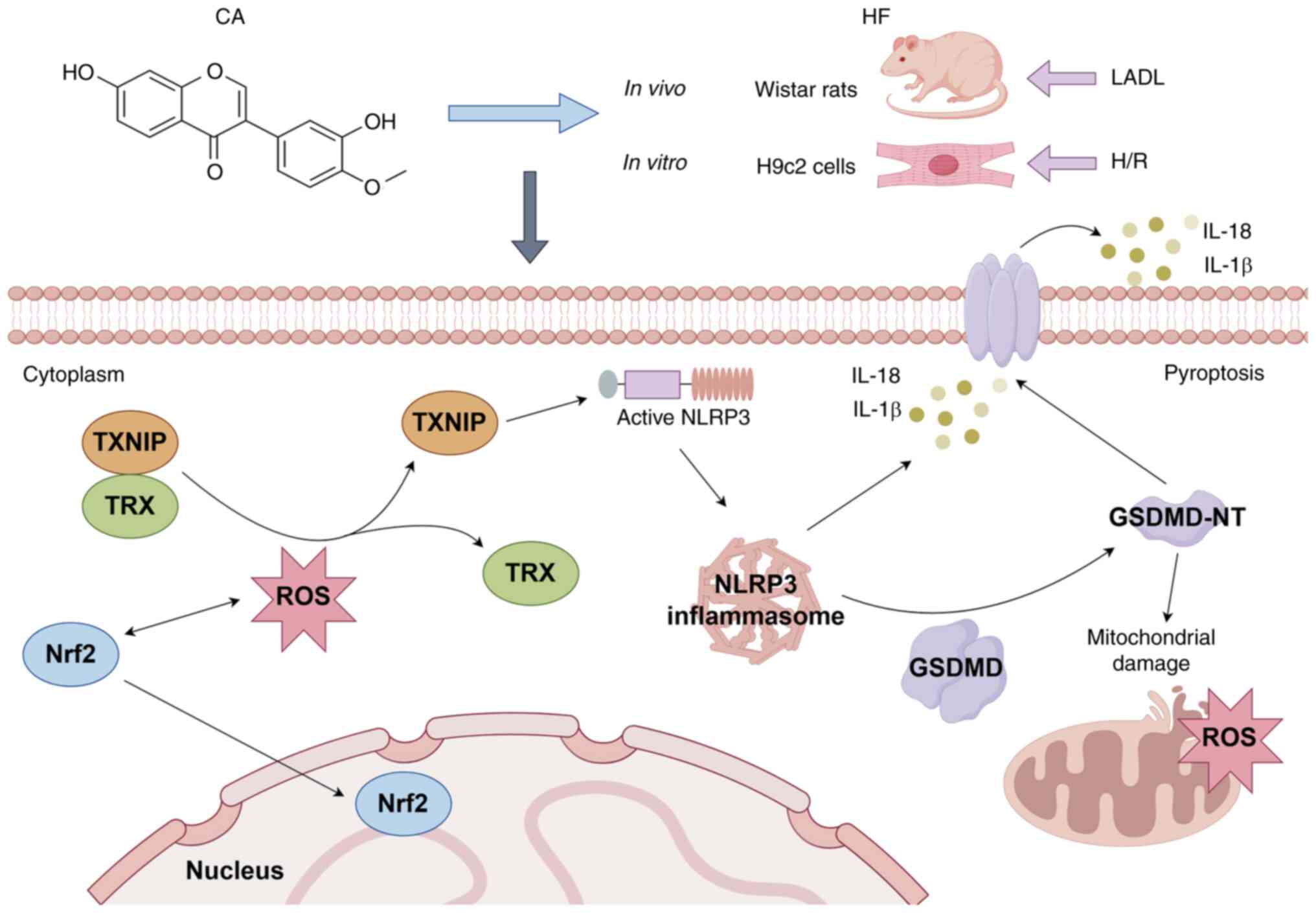
Figure 8

Molecular mechanisms of CA treatment
for HF. CA promotes Nrf2 expression and its nuclear translocation,
thereby alleviating mitochondrial damage and pyroptosis in HF via
the Nrf2/ROS/TXNIP pathway. This figure was generated by FigDraw.
CA, calycosin; HF, heart failure; LADL, left anterior descending
ligation; Nrf2, nuclear factor erythroid 2-related factor; ROS,
reactive oxygen species; TRX, thioredoxin; TXNIP,
thioredoxin-interacting protein; H/R, hypoxia-reoxygenation; NLRP3,
NLR family pyrin domain-containing protein 3; GSDMD, gasdermin D;
GSDMD-NT, GSDMD N-terminal fragments.
View References

1 

Tsao CW, Aday AW, Almarzooq ZI, Anderson CAM, Arora P, Avery CL, Baker-Smith CM, Beaton AZ, Boehme AK, Buxton AE, et al: Heart disease and stroke statistics-2023 update: A report from the American heart association. Circulation. 147:e93–e621. 2023. View Article : Google Scholar : PubMed/NCBI

2 

Khan MS, Shahid I, Bennis A, Rakisheva A, Metra M and Butler J: Global epidemiology of heart failure. Nat Rev Cardiol. 21:717–734. 2024. View Article : Google Scholar : PubMed/NCBI

3 

Bozkurt B, Fonarow GC, Goldberg LR, Guglin M, Josephson RA, Forman DE, Lin G, Lindenfeld J, O'Connor C, Panjrath G, et al: Cardiac rehabilitation for patients with heart failure: JACC expert panel. J Am Coll Cardiol. 77:1454–1469. 2021. View Article : Google Scholar : PubMed/NCBI

4 

Zannad F, O'Connor CM, Butler J, McMullan CJ, Anstrom KJ, Barash I, Bonaca MP, Borentain M, Corda S, Gates D, et al: Vericiguat for patients with heart failure and reduced ejection fraction across the risk spectrum: An individual participant data analysis of the VICTORIA and VICTOR trials. Lancet. August 30–2025.Epub ahead of print. View Article : Google Scholar

5 

Cools JMT, Goovaerts BK, Feyen E, Van den Bogaert S, Fu Y, Civati C, Van Fraeyenhove J, Tubeeckx MRL, Ott J, Nguyen L, et al: Small-molecule-induced ERBB4 activation to treat heart failure. Nat Commun. 16:5762025. View Article : Google Scholar : PubMed/NCBI

6 

Rossignol P, Hernandez AF, Solomon SD and Zannad F: Heart failure drug treatment. Lancet. 393:1034–1044. 2019. View Article : Google Scholar : PubMed/NCBI

7 

Brown DA, Perry JB, Allen ME, Sabbah HN, Stauffer BL, Shaikh SR, Cleland JG, Colucci WS, Butler J, Voors AA, et al: Expert consensus document: Mitochondrial function as a therapeutic target in heart failure. Nat Rev Cardiol. 14:238–250. 2017. View Article : Google Scholar

8 

van der Pol A, van Gilst WH, Voors AA and van der Meer P: Treating oxidative stress in heart failure: Past, present and future. Eur J Heart Fail. 21:425–435. 2019. View Article : Google Scholar

9 

Dridi H, Kushnir A, Zalk R, Yuan Q, Melville Z and Marks AR: Intracellular calcium leak in heart failure and atrial fibrillation: A unifying mechanism and therapeutic target. Nat Rev Cardiol. 17:732–747. 2020. View Article : Google Scholar : PubMed/NCBI

10 

Xiang Q, Yi X, Zhu XH, Wei X and Jiang DS: Regulated cell death in myocardial ischemia-reperfusion injury. Trends Endocrinol Metab. 35:219–234. 2024. View Article : Google Scholar

11 

Zhang Z, Yang Z, Wang S, Wang X and Mao J: Overview of pyroptosis mechanism and in-depth analysis of cardiomyocyte pyroptosis mediated by NF-κB pathway in heart failure. Biomed Pharmacother. 179:1173672024. View Article : Google Scholar

12 

Shi J, Zhao Y, Wang K, Shi X, Wang Y, Huang H, Zhuang Y, Cai T, Wang F and Shao F: Cleavage of GSDMD by inflammatory caspases determines pyroptotic cell death. Nature. 526:660–665. 2015. View Article : Google Scholar : PubMed/NCBI

13 

Miao R, Jiang C, Chang WY, Zhang H, An J, Ho F, Chen P, Zhang H, Junqueira C, Amgalan D, et al: Gasdermin D permeabilization of mitochondrial inner and outer membranes accelerates and enhances pyroptosis. Immunity. 56:2523–2541.e8. 2023. View Article : Google Scholar : PubMed/NCBI

14 

Zhou R, Tardivel A, Thorens B, Choi I and Tschopp J: Thioredoxin-interacting protein links oxidative stress to inflammasome activation. Nat Immunol. 11:136–140. 2010. View Article : Google Scholar

15 

Morgenstern C, Lastres-Becker I, Demirdöğen BC, Costa VM, Daiber A, Foresti R, Motterlini R, Kalyoncu S, Arioz BI, Genc S, et al: Biomarkers of NRF2 signalling: Current status and future challenges. Redox Biol. 72:1031342024. View Article : Google Scholar : PubMed/NCBI

16 

Sies H and Jones DP: Reactive oxygen species (ROS) as pleiotropic physiological signalling agents. Nat Rev Mol Cell Biol. 21:363–383. 2020. View Article : Google Scholar : PubMed/NCBI

17 

Deng M, Chen H, Long J, Song J, Xie L and Li X: Calycosin: A review of its pharmacological effects and application prospects. Expert Rev Anti Infect Ther. 19:911–925. 2021. View Article : Google Scholar

18 

Ding WJ, Chen GH, Deng SH, Zeng KF, Lin KL, Deng B, Zhang SW, Tan ZB, Xu YC, Chen S, et al: Calycosin protects against oxidative stress-induced cardiomyocyte apoptosis by activating aldehyde dehydrogenase 2. Phytother Res. 37:35–49. 2023. View Article : Google Scholar

19 

Wang X, Li W, Zhang Y, Sun Q, Cao J, Tan N, Yang S, Lu L, Zhang Q, Wei P, et al: Calycosin as a Novel PI3K activator reduces inflammation and fibrosis in heart failure through AKT-IKK/STAT3 axis. Front Pharmacol. 13:8280612022. View Article : Google Scholar : PubMed/NCBI

20 

Chen G, Xu H, Xu T, Ding W, Zhang G, Hua Y, Wu Y, Han X, Xie L, Liu B and Zhou Y: Calycosin reduces myocardial fibrosis and improves cardiac function in post-myocardial infarction mice by suppressing TGFBR1 signaling pathways. Phytomedicine. 104:1542772022. View Article : Google Scholar : PubMed/NCBI

21 

Zhang L, Fan C, Jiao HC, Zhang Q, Jiang YH, Cui J, Liu Y, Jiang YH, Zhang J, Yang MQ, et al: Calycosin alleviates doxorubicin-induced cardiotoxicity and pyroptosis by inhibiting NLRP3 inflammasome activation. Oxid Med Cell Longev. 2022:17338342022. View Article : Google Scholar : PubMed/NCBI

22 

Yuan HJ, Han QC, Yu H, Yu YD, Liu XJ, Xue YT and Li Y: Calycosin treats acute myocardial infarction via NLRP3 inflammasome: Bioinformatics, network pharmacology and experimental validation. Eur J Pharmacol. 997:1776212025. View Article : Google Scholar : PubMed/NCBI

23 

Han Q, Shi J, Yu Y, Yuan H, Guo Y, Liu X, Xue Y and Li Y: Calycosin alleviates ferroptosis and attenuates doxorubicin-induced myocardial injury via the Nrf2/SLC7A11/GPX4 signaling pathway. Front Pharmacol. 15:14977332024. View Article : Google Scholar : PubMed/NCBI

24 

Xu S, Huang P, Yang J, Du H, Wan H and He Y: Calycosin alleviates cerebral ischemia/reperfusion injury by repressing autophagy via STAT3/FOXO3a signaling pathway. Phytomedicine. 115:1548452023. View Article : Google Scholar : PubMed/NCBI

25 

Jiang Q, Chen X, Gong K, Xu Z, Chen L and Zhang F: M6a demethylase FTO regulates the oxidative stress, mitochondrial biogenesis of cardiomyocytes and PGC-1a stability in myocardial ischemia-reperfusion injury. Redox Rep. 30:24548922025. View Article : Google Scholar : PubMed/NCBI

26 

Del Re DP, Amgalan D, Linkermann A, Liu Q and Kitsis RN: Fundamental mechanisms of regulated cell death and implications for heart disease. Physiol Rev. 99:1765–1817. 2019. View Article : Google Scholar : PubMed/NCBI

27 

Evavold CL, Hafner-Bratkovič I, Devant P, D'Andrea JM, Ngwa EM, Boršić E, Doench JG, LaFleur MW, Sharpe AH, Thiagarajah JR and Kagan JC: Control of gasdermin D oligomerization and pyroptosis by the ragulator-Rag-mTORC1 pathway. Cell. 184:4495–4511.e19. 2021. View Article : Google Scholar : PubMed/NCBI

28 

Qi XM, Zhang WZ, Zuo YQ, Qiao YB, Zhang YL, Ren JH and Li QS: Nrf2/NRF1 signaling activation and crosstalk amplify mitochondrial biogenesis in the treatment of triptolide-induced cardiotoxicity using calycosin. Cell Biol Toxicol. 41:22024. View Article : Google Scholar : PubMed/NCBI

29 

Lu CY, Day CH, Kuo CH, Wang TF, Ho TJ, Lai PF, Chen RJ, Yao CH, Viswanadha VP, Kuo WW and Huang CY: Calycosin alleviates H2 O2-induced astrocyte injury by restricting oxidative stress through the Akt/Nrf2/HO-1 signaling pathway. Environ Toxicol. 37:858–867. 2022. View Article : Google Scholar : PubMed/NCBI

30 

Kobayashi EH, Suzuki T, Funayama R, Nagashima T, Hayashi M, Sekine H, Tanaka N, Moriguchi T, Motohashi H, Nakayama K and Yamamoto M: Nrf2 suppresses macrophage inflammatory response by blocking proinflammatory cytokine transcription. Nat Commun. 7:116242016. View Article : Google Scholar : PubMed/NCBI

31 

Zhang J, Li X, Han X, Liu R and Fang J: Targeting the thioredoxin system for cancer therapy. Trends Pharmacol Sci. 38:794–808. 2017. View Article : Google Scholar : PubMed/NCBI

32 

Chen Y, Cao X, Pan B, Du H, Li B, Yang X, Chen X, Wang X, Zhou T, Qin A, et al: Verapamil attenuates intervertebral disc degeneration by suppressing ROS overproduction and pyroptosis via targeting the Nrf2/TXNIP/NLRP3 axis in four-week puncture-induced rat models both in vivo and in vitro. Int Immunopharmacol. 123:1107892023. View Article : Google Scholar : PubMed/NCBI

33 

Choi EH and Park SJ: TXNIP: A key protein in the cellular stress response pathway and a potential therapeutic target. Exp Mol Med. 55:1348–1356. 2023. View Article : Google Scholar : PubMed/NCBI

34 

Abderrazak A, Syrovets T, Couchie D, El Hadri K, Friguet B, Simmet T and Rouis M: NLRP3 inflammasome: From a danger signal sensor to a regulatory node of oxidative stress and inflammatory diseases. Redox Biol. 4:296–307. 2015. View Article : Google Scholar : PubMed/NCBI

35 

Lu Y, An L, Taylor MRG and Chen QM: Nrf2 signaling in heart failure: Expression of Nrf2, Keap1, antioxidant, and detoxification genes in dilated or ischemic cardiomyopathy. Physiol Genomics. 54:115–127. 2022. View Article : Google Scholar : PubMed/NCBI

36 

Wang B, Jin Y, Liu J, Liu Q, Shen Y, Zuo S and Yu Y: EP1 activation inhibits doxorubicin-cardiomyocyte ferroptosis via Nrf2. Redox Biol. 65:1028252023. View Article : Google Scholar : PubMed/NCBI

37 

Zhou P, Yang L, Li R, Yin Y, Xie G, Liu X, Shi L, Tao K and Zhang P: IRG1/itaconate alleviates acute liver injury in septic mice by suppressing NLRP3 expression and its mediated macrophage pyroptosis via regulation of the Nrf2 pathway. Int Immunopharmacol. 135:1122772024. View Article : Google Scholar : PubMed/NCBI

38 

Zhan Y, Xu D, Tian Y, Qu X, Sheng M, Lin Y, Ke M, Jiang L, Xia Q, Kaldas FM, et al: Novel role of macrophage TXNIP-mediated CYLD-NRF2-OASL1 axis in stress-induced liver inflammation and cell death. JHEP Rep. 4:1005322022. View Article : Google Scholar : PubMed/NCBI

39 

Devant P and Kagan JC: Molecular mechanisms of gasdermin D pore-forming activity. Nat Immunol. 24:1064–1075. 2023. View Article : Google Scholar : PubMed/NCBI

40 

Wu C, Zhang Z, Zhang W and Liu X: Mitochondrial dysfunction and mitochondrial therapies in heart failure. Pharmacol Res. 175:1060382022. View Article : Google Scholar

41 

Sunagawa Y, Iwashimizu S, Ono M, Mochizuki S, Iwashita K, Sato R, Shimizu S, Funamoto M, Shimizu K, Hamabe-Horiike T, et al: The citrus flavonoid nobiletin prevents the development of doxorubicin-induced heart failure by inhibiting apoptosis. J Pharmacol Sci. 158:84–94. 2025. View Article : Google Scholar : PubMed/NCBI

42 

Wu Y, Huang X, He Y, Chang J, Fang X, Kang P, Feng N, Liu R, Xiao P, Shi D, et al: Mechanism of puerarin alleviating myocardial remodeling through NSUN2-mediated m5C methylation modification. Phytomedicine. 143:1568492025. View Article : Google Scholar : PubMed/NCBI

43 

Sun SN, Liu X, Chen XL, Liang SL, Li J, Liao HL, Fang HC, Ni SH, Li Y, Lu L, et al: Calycosin alleviates myocardial fibrosis after myocardial infarction by restoring fatty acid metabolism homeostasis through inhibiting FAP. Phytomedicine. 145:1570452025. View Article : Google Scholar : PubMed/NCBI

44 

Bai Y, Chen Q, Sun YP, Wang X, Lv L, Zhang LP, Liu JS, Zhao S and Wang XL: Sulforaphane protection against the development of doxorubicin-induced chronic heart failure is associated with Nrf2 upregulation. Cardiovasc Ther. 35:2017. View Article : Google Scholar : PubMed/NCBI

45 

Jiang S, Han J, Li T, Xin Z, Ma Z, Di W, Hu W, Gong B, Di S, Wang D and Yang Y: Curcumin as a potential protective compound against cardiac diseases. Pharmacol Res. 119:373–383. 2017. View Article : Google Scholar : PubMed/NCBI

46 

Saeidinia A, Keihanian F, Butler AE, Bagheri RK, Atkin SL and Sahebkar A: Curcumin in heart failure: A choice for complementary therapy? Pharmacol Res. 131:112–119. 2018. View Article : Google Scholar : PubMed/NCBI

47 

Pan Y, Zhu G, Wang Y, Cai L, Cai Y, Hu J, Li Y, Yan Y, Wang Z, Li X, et al: Attenuation of high-glucose-induced inflammatory response by a novel curcumin derivative B06 contributes to its protection from diabetic pathogenic changes in rat kidney and heart. J Nutr Biochem. 24:146–155. 2013. View Article : Google Scholar

48 

Grilo GA, Munoz J Jr, Lee DH, Hossain S, Ma Y, Kain V, Lindsey ML and Halade GV: Macro- and microinjury define the heart failure progression after permanent coronary ligation or ischemia-reperfusion in young healthy mice. Am J Physiol Heart Circ Physiol. 329:H521–H533. 2025. View Article : Google Scholar : PubMed/NCBI

49 

Heusch G: Molecular basis of cardioprotection: Signal transduction in ischemic pre-, post-, and remote conditioning. Circ Res. 116:674–699. 2015. View Article : Google Scholar : PubMed/NCBI

50 

Laudette M, Lindbom M, Cinato M, Bergh PO, Skålén K, Arif M, Miljanovic A, Czuba T, Perkins R, Smith JG, et al: PCSK9 regulates cardiac mitochondrial cholesterol by promoting TSPO degradation. Circ Res. 136:924–942. 2025. View Article : Google Scholar : PubMed/NCBI

51 

Khodade VS, Liu Q, Zhang C, Keceli G, Paolocci N and Toscano JP: Arylsulfonothioates: Thiol-activated donors of hydropersulfides which are excreted to maintain cellular redox homeostasis or retained to counter oxidative stress. J Am Chem Soc. 147:7765–7776. 2025. View Article : Google Scholar : PubMed/NCBI

52 

Zhao ST, Qiu ZC, Xu ZQ, Tao ED, Qiu RB, Peng HZ, Zhou LF, Zeng RY, Lai SQ and Wan L: Curcumin attenuates myocardial ischemia-reperfusion-induced autophagy-dependent ferroptosis via Sirt1/AKT/FoxO3a signaling. Int J Mol Med. 55:512025. View Article : Google Scholar :

Related Articles

  • Abstract
  • View
  • Download
  • Twitter
Copy and paste a formatted citation
Spandidos Publications style
Yuan H, Han Q, Yu Y, Yu H, Liu X, Xue Y and Li Y: Calycosin attenuates mitochondrial damage and pyroptosis in heart failure via the Nrf2/ROS/TXNIP pathway. Int J Mol Med 56: 212, 2025.
APA
Yuan, H., Han, Q., Yu, Y., Yu, H., Liu, X., Xue, Y., & Li, Y. (2025). Calycosin attenuates mitochondrial damage and pyroptosis in heart failure via the Nrf2/ROS/TXNIP pathway. International Journal of Molecular Medicine, 56, 212. https://doi.org/10.3892/ijmm.2025.5653
MLA
Yuan, H., Han, Q., Yu, Y., Yu, H., Liu, X., Xue, Y., Li, Y."Calycosin attenuates mitochondrial damage and pyroptosis in heart failure via the Nrf2/ROS/TXNIP pathway". International Journal of Molecular Medicine 56.6 (2025): 212.
Chicago
Yuan, H., Han, Q., Yu, Y., Yu, H., Liu, X., Xue, Y., Li, Y."Calycosin attenuates mitochondrial damage and pyroptosis in heart failure via the Nrf2/ROS/TXNIP pathway". International Journal of Molecular Medicine 56, no. 6 (2025): 212. https://doi.org/10.3892/ijmm.2025.5653
Copy and paste a formatted citation
x
Spandidos Publications style
Yuan H, Han Q, Yu Y, Yu H, Liu X, Xue Y and Li Y: Calycosin attenuates mitochondrial damage and pyroptosis in heart failure via the Nrf2/ROS/TXNIP pathway. Int J Mol Med 56: 212, 2025.
APA
Yuan, H., Han, Q., Yu, Y., Yu, H., Liu, X., Xue, Y., & Li, Y. (2025). Calycosin attenuates mitochondrial damage and pyroptosis in heart failure via the Nrf2/ROS/TXNIP pathway. International Journal of Molecular Medicine, 56, 212. https://doi.org/10.3892/ijmm.2025.5653
MLA
Yuan, H., Han, Q., Yu, Y., Yu, H., Liu, X., Xue, Y., Li, Y."Calycosin attenuates mitochondrial damage and pyroptosis in heart failure via the Nrf2/ROS/TXNIP pathway". International Journal of Molecular Medicine 56.6 (2025): 212.
Chicago
Yuan, H., Han, Q., Yu, Y., Yu, H., Liu, X., Xue, Y., Li, Y."Calycosin attenuates mitochondrial damage and pyroptosis in heart failure via the Nrf2/ROS/TXNIP pathway". International Journal of Molecular Medicine 56, no. 6 (2025): 212. https://doi.org/10.3892/ijmm.2025.5653
Follow us
  • Twitter
  • LinkedIn
  • Facebook
About
  • Spandidos Publications
  • Careers
  • Cookie Policy
  • Privacy Policy
How can we help?
  • Help
  • Live Chat
  • Contact
  • Email to our Support Team