Spandidos Publications Logo
  • About
    • About Spandidos
    • Aims and Scopes
    • Abstracting and Indexing
    • Editorial Policies
    • Reprints and Permissions
    • Job Opportunities
    • Terms and Conditions
    • Contact
  • Journals
    • All Journals
    • Oncology Letters
      • Oncology Letters
      • Information for Authors
      • Editorial Policies
      • Editorial Board
      • Aims and Scope
      • Abstracting and Indexing
      • Bibliographic Information
      • Archive
    • International Journal of Oncology
      • International Journal of Oncology
      • Information for Authors
      • Editorial Policies
      • Editorial Board
      • Aims and Scope
      • Abstracting and Indexing
      • Bibliographic Information
      • Archive
    • Molecular and Clinical Oncology
      • Molecular and Clinical Oncology
      • Information for Authors
      • Editorial Policies
      • Editorial Board
      • Aims and Scope
      • Abstracting and Indexing
      • Bibliographic Information
      • Archive
    • Experimental and Therapeutic Medicine
      • Experimental and Therapeutic Medicine
      • Information for Authors
      • Editorial Policies
      • Editorial Board
      • Aims and Scope
      • Abstracting and Indexing
      • Bibliographic Information
      • Archive
    • International Journal of Molecular Medicine
      • International Journal of Molecular Medicine
      • Information for Authors
      • Editorial Policies
      • Editorial Board
      • Aims and Scope
      • Abstracting and Indexing
      • Bibliographic Information
      • Archive
    • Biomedical Reports
      • Biomedical Reports
      • Information for Authors
      • Editorial Policies
      • Editorial Board
      • Aims and Scope
      • Abstracting and Indexing
      • Bibliographic Information
      • Archive
    • Oncology Reports
      • Oncology Reports
      • Information for Authors
      • Editorial Policies
      • Editorial Board
      • Aims and Scope
      • Abstracting and Indexing
      • Bibliographic Information
      • Archive
    • Molecular Medicine Reports
      • Molecular Medicine Reports
      • Information for Authors
      • Editorial Policies
      • Editorial Board
      • Aims and Scope
      • Abstracting and Indexing
      • Bibliographic Information
      • Archive
    • World Academy of Sciences Journal
      • World Academy of Sciences Journal
      • Information for Authors
      • Editorial Policies
      • Editorial Board
      • Aims and Scope
      • Abstracting and Indexing
      • Bibliographic Information
      • Archive
    • International Journal of Functional Nutrition
      • International Journal of Functional Nutrition
      • Information for Authors
      • Editorial Policies
      • Editorial Board
      • Aims and Scope
      • Abstracting and Indexing
      • Bibliographic Information
      • Archive
    • International Journal of Epigenetics
      • International Journal of Epigenetics
      • Information for Authors
      • Editorial Policies
      • Editorial Board
      • Aims and Scope
      • Abstracting and Indexing
      • Bibliographic Information
      • Archive
    • Medicine International
      • Medicine International
      • Information for Authors
      • Editorial Policies
      • Editorial Board
      • Aims and Scope
      • Abstracting and Indexing
      • Bibliographic Information
      • Archive
  • Articles
  • Information
    • Information for Authors
    • Information for Reviewers
    • Information for Librarians
    • Information for Advertisers
    • Conferences
  • Language Editing
Spandidos Publications Logo
  • About
    • About Spandidos
    • Aims and Scopes
    • Abstracting and Indexing
    • Editorial Policies
    • Reprints and Permissions
    • Job Opportunities
    • Terms and Conditions
    • Contact
  • Journals
    • All Journals
    • Biomedical Reports
      • Information for Authors
      • Editorial Policies
      • Editorial Board
      • Aims and Scope
      • Abstracting and Indexing
      • Bibliographic Information
      • Archive
    • Experimental and Therapeutic Medicine
      • Information for Authors
      • Editorial Policies
      • Editorial Board
      • Aims and Scope
      • Abstracting and Indexing
      • Bibliographic Information
      • Archive
    • International Journal of Epigenetics
      • Information for Authors
      • Editorial Policies
      • Editorial Board
      • Aims and Scope
      • Abstracting and Indexing
      • Bibliographic Information
      • Archive
    • International Journal of Functional Nutrition
      • Information for Authors
      • Editorial Policies
      • Editorial Board
      • Aims and Scope
      • Abstracting and Indexing
      • Bibliographic Information
      • Archive
    • International Journal of Molecular Medicine
      • Information for Authors
      • Editorial Policies
      • Editorial Board
      • Aims and Scope
      • Abstracting and Indexing
      • Bibliographic Information
      • Archive
    • International Journal of Oncology
      • Information for Authors
      • Editorial Policies
      • Editorial Board
      • Aims and Scope
      • Abstracting and Indexing
      • Bibliographic Information
      • Archive
    • Medicine International
      • Information for Authors
      • Editorial Policies
      • Editorial Board
      • Aims and Scope
      • Abstracting and Indexing
      • Bibliographic Information
      • Archive
    • Molecular and Clinical Oncology
      • Information for Authors
      • Editorial Policies
      • Editorial Board
      • Aims and Scope
      • Abstracting and Indexing
      • Bibliographic Information
      • Archive
    • Molecular Medicine Reports
      • Information for Authors
      • Editorial Policies
      • Editorial Board
      • Aims and Scope
      • Abstracting and Indexing
      • Bibliographic Information
      • Archive
    • Oncology Letters
      • Information for Authors
      • Editorial Policies
      • Editorial Board
      • Aims and Scope
      • Abstracting and Indexing
      • Bibliographic Information
      • Archive
    • Oncology Reports
      • Information for Authors
      • Editorial Policies
      • Editorial Board
      • Aims and Scope
      • Abstracting and Indexing
      • Bibliographic Information
      • Archive
    • World Academy of Sciences Journal
      • Information for Authors
      • Editorial Policies
      • Editorial Board
      • Aims and Scope
      • Abstracting and Indexing
      • Bibliographic Information
      • Archive
  • Articles
  • Information
    • For Authors
    • For Reviewers
    • For Librarians
    • For Advertisers
    • Conferences
  • Language Editing
Login Register Submit
  • This site uses cookies
  • You can change your cookie settings at any time by following the instructions in our Cookie Policy. To find out more, you may read our Privacy Policy.

    I agree
Search articles by DOI, keyword, author or affiliation
Search
Advanced Search
presentation
International Journal of Molecular Medicine
Join Editorial Board Propose a Special Issue
Print ISSN: 1107-3756 Online ISSN: 1791-244X
Journal Cover
December-2025 Volume 56 Issue 6

Full Size Image

Sign up for eToc alerts
Recommend to Library

Journals

International Journal of Molecular Medicine

International Journal of Molecular Medicine

International Journal of Molecular Medicine is an international journal devoted to molecular mechanisms of human disease.

International Journal of Oncology

International Journal of Oncology

International Journal of Oncology is an international journal devoted to oncology research and cancer treatment.

Molecular Medicine Reports

Molecular Medicine Reports

Covers molecular medicine topics such as pharmacology, pathology, genetics, neuroscience, infectious diseases, molecular cardiology, and molecular surgery.

Oncology Reports

Oncology Reports

Oncology Reports is an international journal devoted to fundamental and applied research in Oncology.

Experimental and Therapeutic Medicine

Experimental and Therapeutic Medicine

Experimental and Therapeutic Medicine is an international journal devoted to laboratory and clinical medicine.

Oncology Letters

Oncology Letters

Oncology Letters is an international journal devoted to Experimental and Clinical Oncology.

Biomedical Reports

Biomedical Reports

Explores a wide range of biological and medical fields, including pharmacology, genetics, microbiology, neuroscience, and molecular cardiology.

Molecular and Clinical Oncology

Molecular and Clinical Oncology

International journal addressing all aspects of oncology research, from tumorigenesis and oncogenes to chemotherapy and metastasis.

World Academy of Sciences Journal

World Academy of Sciences Journal

Multidisciplinary open-access journal spanning biochemistry, genetics, neuroscience, environmental health, and synthetic biology.

International Journal of Functional Nutrition

International Journal of Functional Nutrition

Open-access journal combining biochemistry, pharmacology, immunology, and genetics to advance health through functional nutrition.

International Journal of Epigenetics

International Journal of Epigenetics

Publishes open-access research on using epigenetics to advance understanding and treatment of human disease.

Medicine International

Medicine International

An International Open Access Journal Devoted to General Medicine.

Journal Cover
December-2025 Volume 56 Issue 6

Full Size Image

Sign up for eToc alerts
Recommend to Library

  • Article
  • Citations
    • Cite This Article
    • Download Citation
    • Create Citation Alert
    • Remove Citation Alert
    • Cited By
  • Similar Articles
    • Related Articles (in Spandidos Publications)
    • Similar Articles (Google Scholar)
    • Similar Articles (PubMed)
  • Download PDF
  • Download XML
  • View XML

  • Supplementary Files
    • Supplementary_Data.pdf
Article Open Access

Changes in the endoplasmic reticulum‑mitochondria communication in dermal fibroblasts from early‑stage bipolar disorder patients: Skin‑brain axis as a new route to understand the pathophysiology of mental illness?

  • Authors:
    • Ana Catarina Pereira
    • Ana Patrícia Marques
    • Rosa Resende
    • Laura Serrano‑cuñarro
    • Margarida Caldeira
    • Tânia Fernandes
    • Mariana Batista
    • António Macedo
    • Joana Barbosa De Melo
    • Nuno Madeira
    • Cláudia Cavadas
    • Maria Teresa Cruz
    • Cláudia Fragão Pereira
  • View Affiliations / Copyright

    Affiliations: Center for Neuroscience and Cell Biology (CNC‑UC), Center for Innovative Biomedicine and Biotechnology (CiBB), University of Coimbra, 3004‑504 Coimbra, Portugal, Clinical and Academic Center of Coimbra (CACC), 3004‑561 Coimbra, Portugal, Faculty of Medicine, University of Coimbra, 3000‑370 Coimbra, Portugal
    Copyright: © Pereira et al. This is an open access article distributed under the terms of Creative Commons Attribution License.
  • Article Number: 213
    |
    Published online on: September 30, 2025
       https://doi.org/10.3892/ijmm.2025.5654
  • Expand metrics +
Metrics: Total Views: 0 (Spandidos Publications: | PMC Statistics: )
Metrics: Total PDF Downloads: 0 (Spandidos Publications: | PMC Statistics: )
Cited By (CrossRef): 0 citations Loading Articles...

This article is mentioned in:


Abstract

Compromised cellular resilience in bipolar disorder (BD) has been associated with structural brain changes and cognitive deficits caused by perturbation of redox status, endoplasmic reticulum (ER) stress and innate immunity. These crucial cellular events are regulated by the ER‑mitochondria close contacts at mitochondria‑associated membranes (MAM) through Ca2+ transfer and lipids exchange between these organelles. The present study aimed to investigate the structural and functional alterations in MAM during BD early stages using patient‑ and control‑derived cellular models, namely dermal fibroblasts. Morphological alterations in close ER‑mitochondria contacts at MAM occur in BD cells and correlate with functional changes, as shown by lipid droplets accumulation. The MAM dysfunction in BD cells parallels changes in Ca2+ homeostasis, namely inhibition of store‑operated Ca2+ entry (SOCE), ER Ca2+ depletion and attenuation of ER‑mitochondria Ca2+ transfer, as well as enhanced ER and oxidative stress and NOD‑like receptor family pyrin domain‑containing 3 (NLRP3) inflammasome activation leading to sterile inflammation. The absence of inflammasome activation upon lipopolysaccharide exposure supports the compromised ability of BD cells (fibroblasts as well as monocytes) to deal with stressful conditions. In conclusion, MAM disruption is highlighted as a potential pathophysiological mechanism driving impaired cellular resilience in BD. Skin fibroblasts are a particularly attractive cellular model for studying mental illnesses, such as BD, due to the shared developmental origin of epidermal and neural tissues. The ectodermal origins of the skin‑brain axis have been proposed as a novel route for understanding brain development, neurodevelopmental conditions and behavior modulation. 
View Figures

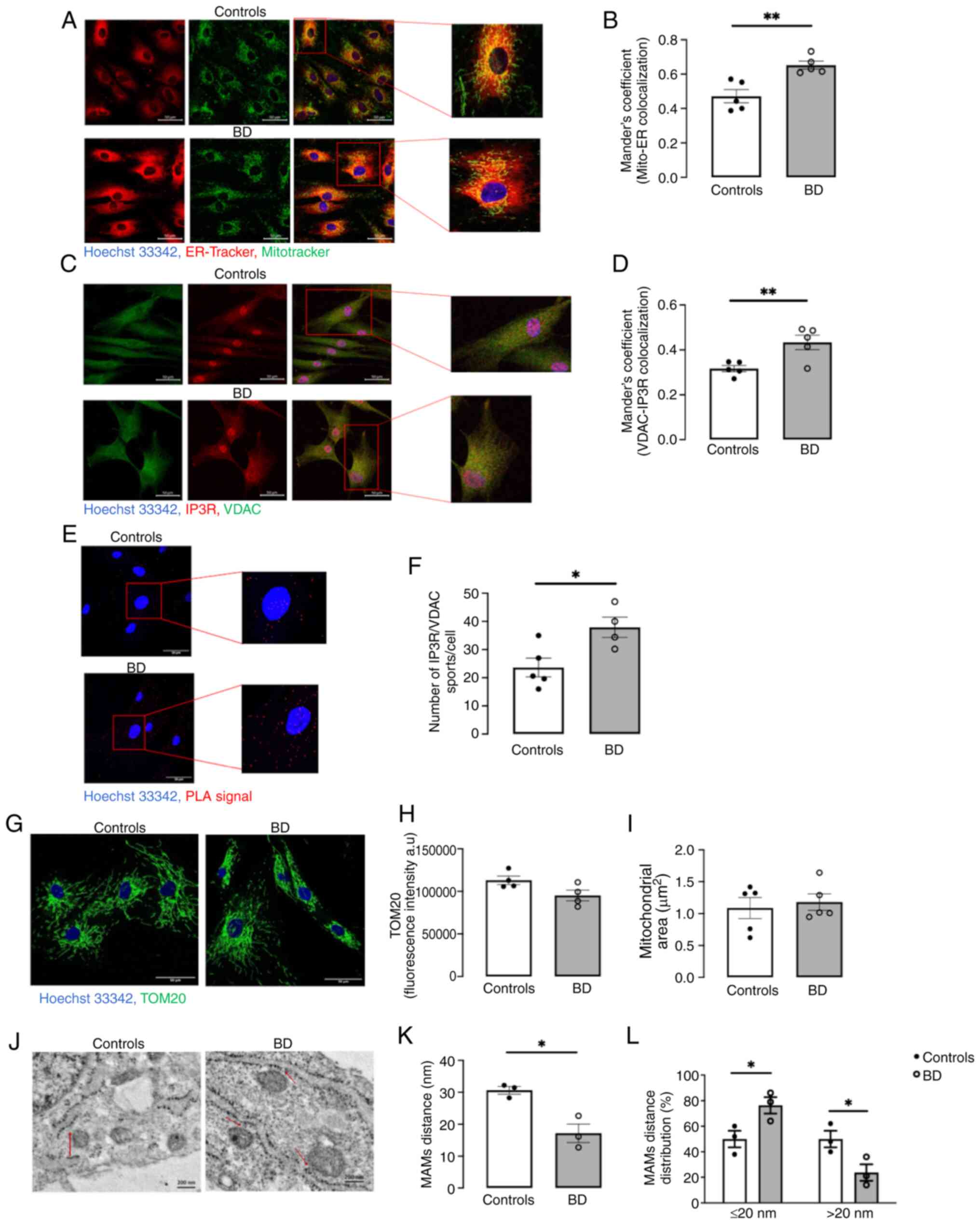
Figure 1

ER-mitochondria contacts in primary
fibroblasts derived from patients with BD and healthy controls.
Colocalization of Mitotracker and ER-Tracker fluorescent probes was
evaluated by live cell imaging. (A) Representative confocal
microscopy images of Mitotracker (green) and ER-Tracker (red)
immunoreactivity and nuclei labelling with Hoechst 33342 (blue;
scale bar, 50 μm). (B) The mitochondrial fraction
(Mitotracker) that colocalizes with the ER (ER-Tracker) was
measured with the Mander's coefficient of colocalization using the
ImageJ software. Colocalization of the IP3R (ER marker) and the
VDAC (mitochondrial marker) was evaluated by immunocytochemistry.
(C) Representative confocal microscopy images of VDAC (green) and
IP3R (red) immunoreactivity and nuclei labelling with Hoechst 33342
(blue; scale bar, 50 μm). (D) The mitochondrial fraction
(VDAC) that colocalizes with the ER (IP3R) was measured with the
Mander's coefficient of colocalization (ImageJ software). Data
represent the means ± standard error of the mean of results
obtained by the analysis of five images from five participants per
group. The number of IP3R/VDAC dots per cell was determined by the
PLA. (E) Representative confocal microscopy images of PLA signal
IP3R/VDAC dots (red) and nuclei labelling with Hoechst 33342 (blue;
scale bar, 50 μm). (F) PLA fluorescent quantification was
performed using the Particle Analysis function of ImageJ software.
Data represent the means ± standard error of the mean of results
obtained by the analysis of five images from five controls and four
patients. The mitochondrial network was analyzed by
immunocytochemistry. (G) Representative confocal microscopy images
of TOM20 immunoreactivity (green) and Hoechst 33342-stained nuclei
(blue; scale bar, 50 μm). (H) TOM20 staining was analyzed
using the ImageJ software. Data represent the means ± standard
error of the mean of results obtained by the analysis of five
images collected from four participants per group. (I) The
mitochondrial area was quantified in the confocal images of
Mitotracker (Fig. 1A) using a
macro designed in the ImageJ software. Statistical significance of
differences between experimental groups was determined by unpaired
Student's t-test. The ER-mitochondria contacts were evaluated by
transmission electron microscopy. (J) Representative images of the
ER-mitochondria contacts (arrow; scale bar, 200 nm). (K)
ER-mitochondria distance was measured using the ImageJ software.
(L) Distribution of the ER-mitochondria contacts: close contacts
(≤20 nm; MAM) and large contacts (>20 nm). Data represent the
means ± standard error of the mean of results obtained by the
analysis of at least five images collected from three participants
per group. Statistical significance between groups was determined
using the unpaired Student's t-test *P<0.05,
**P<0.01; and the comparison of close (≤20 nm) and
large contacts (>20 nm) between the two groups was obtained
using the two-way ANOVA test, followed by the Sidak's post hoc
test: *P<0.05. ER, endoplasmic reticulum; BD, bipolar
disorder; IP3R, inositol trisphosphate receptor; VDAC,
voltage-dependent anion channel; PLA, proximity ligation assay;
TOM20, translocase of outer mitochondrial membrane 20; MAM,
mitochondria-associated membranes.

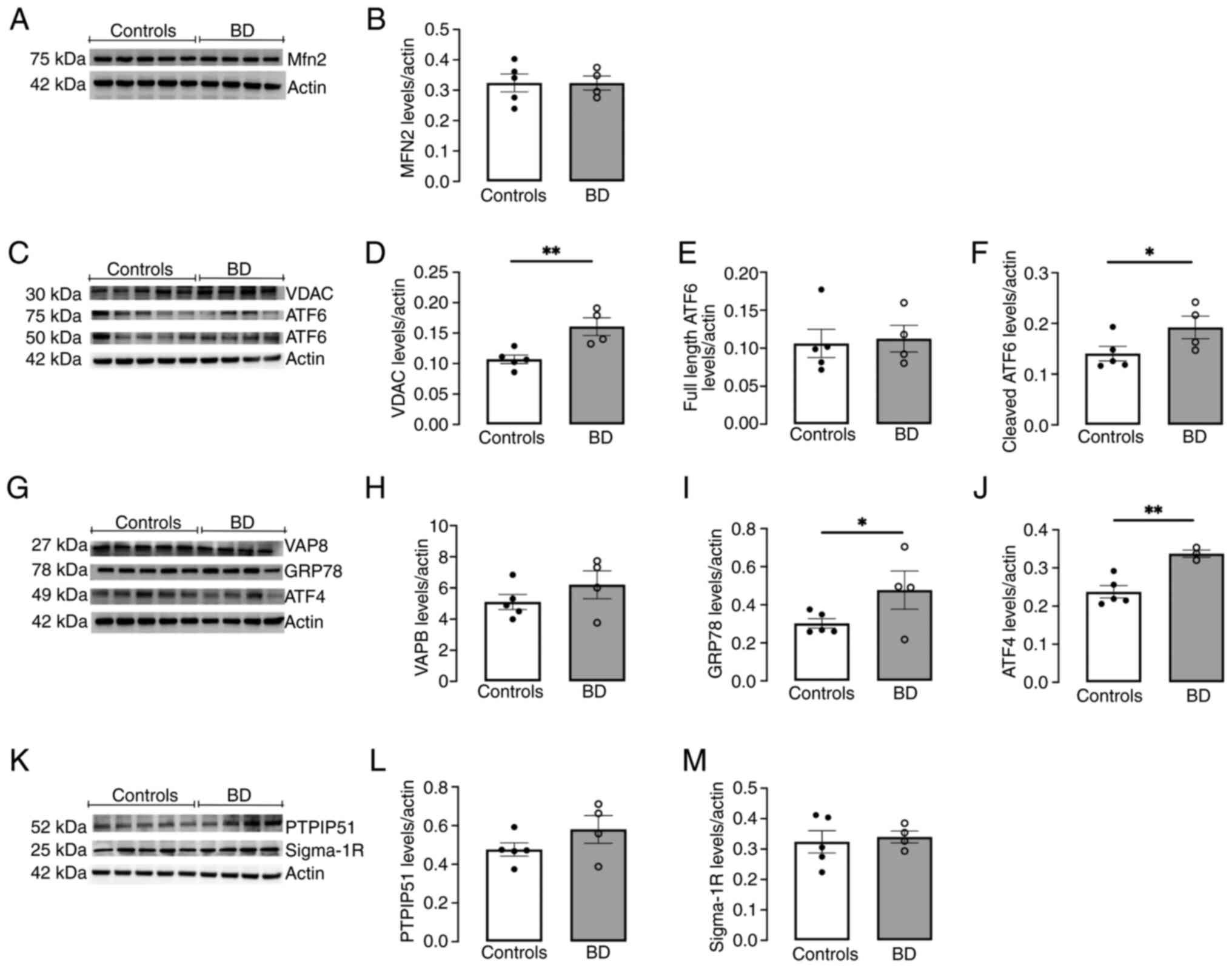
Figure 2

Levels of components of
ER-mitochondria contacts (Mfn2, VDAC, VAPB, PTPIP51 and Sigma-1R)
and ER stress-induced UPR markers (GRP78, ATF4 and ATF6) in primary
fibroblasts derived from patients with BD and healthy controls.
Protein levels of (A and B) Mfn2, (C and D) VDAC, (C, E and F)
ATF6, (G and H) VAPB, (G and I) GRP78, (G and J) ATF4, (K and L)
PTPIP51 and (K and M) Sigma-1R, were quantified by western blotting
in total cellular extracts obtained from primary fibroblasts
derived from patients with BD and healthy controls. β-actin was
used to control protein loading and to normalize the levels of the
proteins of interest. Data represent the means ± standard error of
the mean of results obtained in samples from five healthy controls
and four patients with BD. Statistical differences between
fibroblasts from patients with BD and healthy controls were
analyzed using the unpaired Student's t-test:
*P<0.05, **P<0.01. (A) The Mfn2
antibody was incubated in the first western blotting. VDAC and ATF6
antibodies were both incubated in the second western blotting. (C)
The ATF6 antibody, which recognizes both full-length (75 kDa) and
cleaved protein (50 kDa), was incubated on the VDAC western
blotting membrane, after a stripping procedure. (G) The VAPB, GRP78
and ATF4 antibodies were labelled on the third western blotting.
Upon incubation with the VAPB antibody, the western blotting
membrane was then incubated with ATF4 and GRP78, after a stripping.
(K) PTPIP51 and Sigma-1R antibodies were both incubated in the
fourth western blotting. The Sigma-1R antibody was incubated on the
PTPIP51 western blotting membrane, after a stripping. ER,
endoplasmic reticulum; UPR, unfolded protein response; BD, bipolar
disorder; MAM, mitochondria-associated membranes; Mfn2, Mitofusin
2; VDAC, voltage-dependent anion channel; VAPB, vesicle-associated
membrane protein associated protein B; PTPIP51, protein tyrosine
phosphatase-interacting protein-51; GRP78, glucose-regulated
protein 78; ATF4. activating transcription factor 4;
ATF6-activating transcription factor 6.

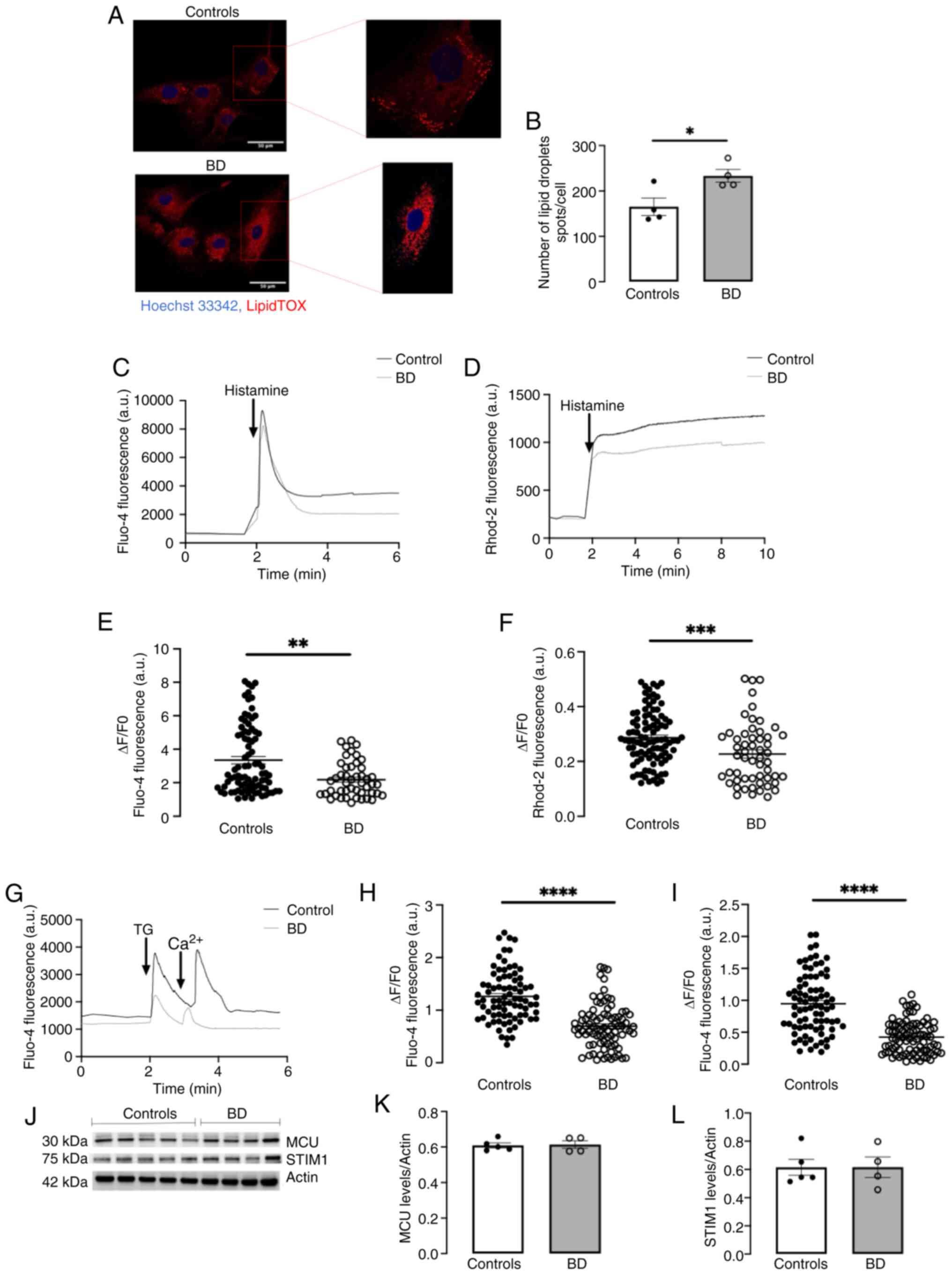
Figure 3

Lipid droplets accumulation and
Ca2+ dynamics in primary fibroblasts derived from
patients with BD and healthy controls. The number of lipid droplets
per cell was determined using the LipidTOX fluorescent probe. (A)
Representative confocal microscopy images of lipid droplets spots
(red) and nuclei labelling with Hoechst 33342 (blue; scale bar, 50
μm). (B) Quantification of LipidTOX fluorescent was
performed using the Spot function of Imaris Microscopy Image
Analysis Software. Data represent the means ± standard error of the
mean of results obtained by the analysis of at least five images
collected from four participants per group. IP3R-mediated ER
Ca2+ efflux and its influx into mitochondria were
measured by SCCI with the fluorescent probes (C) Fluo-4 and (D)
Rhod-2, respectively, after treatment with histamine (100
μM). (E and F) The SCCI results were baseline-corrected and
normalized to calculate the normalized fluorescent calcium signals.
Data were expressed as ΔF/F0, where ΔF=F-F0. F represents the
highest post-stimulus value and F0 the mean baseline level. Data
represent the means ± standard error of the mean of results
obtained from 15-30 cells from each of the four participants per
group. (G) SOCE was evaluated by measuring Ca2+
oscillations with Fluo-4 after thapsigargin (1 μM,
TG)-induced ER Ca2+ depletion in Ca2+-free
medium and after addition of 2 mM CaCl2 to the
extracellular medium. (H and I) The SCCI results were
baseline-corrected and normalized to calculate the normalized
fluorescent calcium signals. Data were expressed as ΔF/F0, where
ΔF=F-F0. F represents the highest post-stimulus value and F0 the
mean baseline level. Data represent the means ± standard error of
the mean of results obtained from 15-30 cells from each of the four
participants per group. (J and K) MCU and (J and L) STIM1 protein
levels were evaluated in total cellular extracts obtained from
control and BD fibroblasts through western blotting. β-actin was
used to control protein loading and to normalize the levels of the
proteins of interest. Data represent the means ± standard error of
the mean of results obtained in samples from five healthy controls
and four patients with BD. The STIM1 antibody was incubated on the
Sigma-1R western blotting membrane, after a stripping. Statistical
difference between groups was evaluated with unpaired Student's
t-test (B, D, H, I and L) or with Mann-Whitney non-parametric test
(F and K): *P<0.05; **P<0.01;
***P<0.001; ****P<0.0001. BD, bipolar
disorder; IP3R, inositol trisphosphate receptor; ER, endoplasmic
reticulum; SCCI, single cell calcium imaging; STIM1, stromal
interaction molecule 1; MCU, mitochondrial Ca2+
uniporter protein.

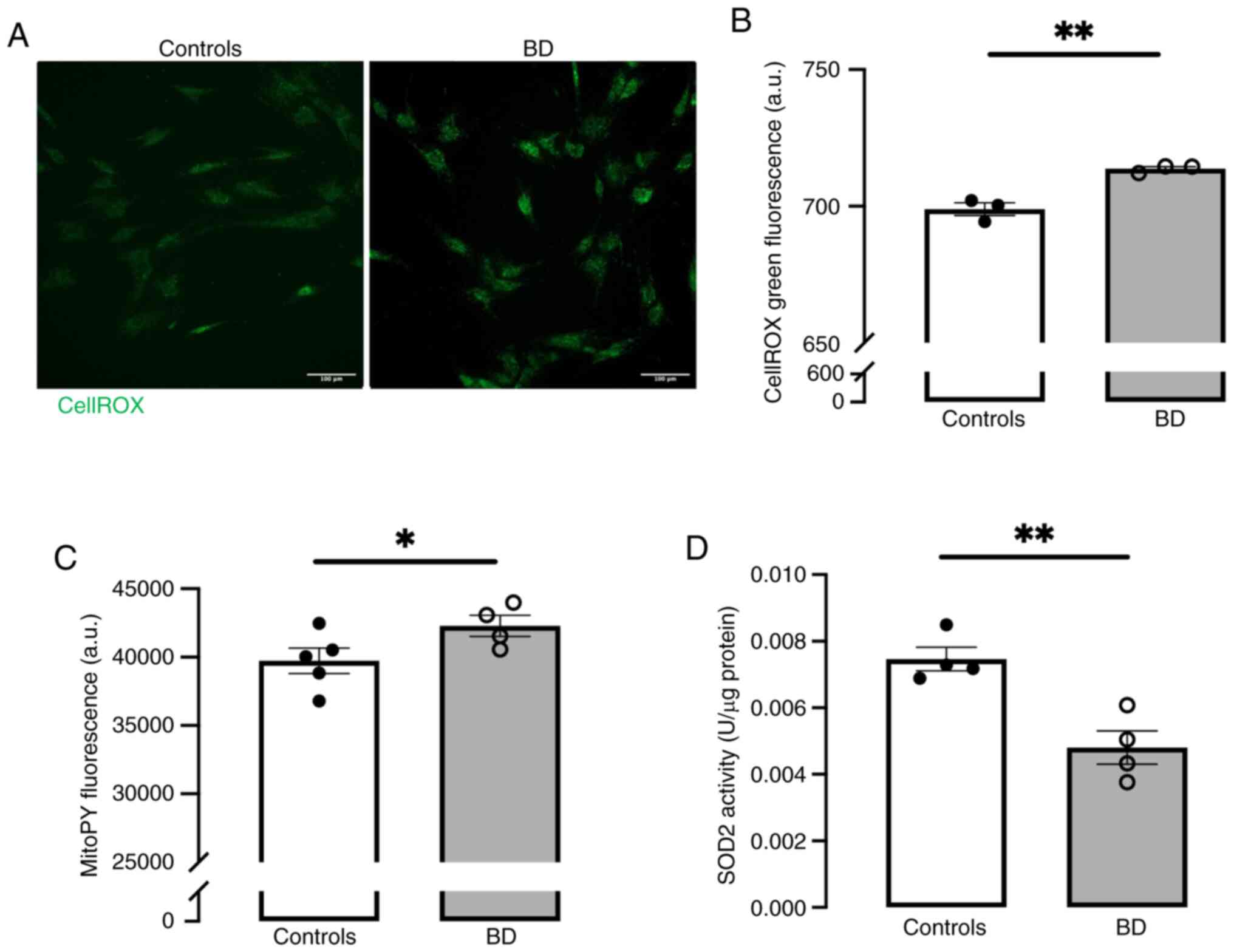
Figure 4

Redox state in primary fibroblasts
derived from patients with BD and healthy controls. The
accumulation of ROS in control and BD fibroblasts was assessed
using the CellROX fluorescent probe. (A) Representative microscopy
images of CellROX immunoreactivity (green; scale bar, 100
μm). (B) Quantification of the CellROX green staining using
ImageJ software. Data represent the means ± standard error of the
mean of results obtained in cells from three participants per
group. At least five images from each participant were analyzed.
(C) The levels of mitochondrial ROS were measured by using the
MitoPY fluorescent probe. Data represent the means ± standard error
of the mean of results obtained in cells from five healthy controls
and four patients with BD. (D) The activity of SOD2 mitochondrial
antioxidant enzyme was analyzed in primary fibroblasts derived from
patients with BD and healthy controls by using a commercial kit.
Data represent the means ± standard error of the mean of results
obtained in total lysates obtained from cells isolated from four
participants per group. The statistical significance of differences
between control and BD fibroblasts was determined using the
unpaired Student's t-test: *P<0.05;
**P<0.01. BD, bipolar disorder; ROS, reactive oxygen
species; SOD2, superoxide dismutase 2.

Figure 5

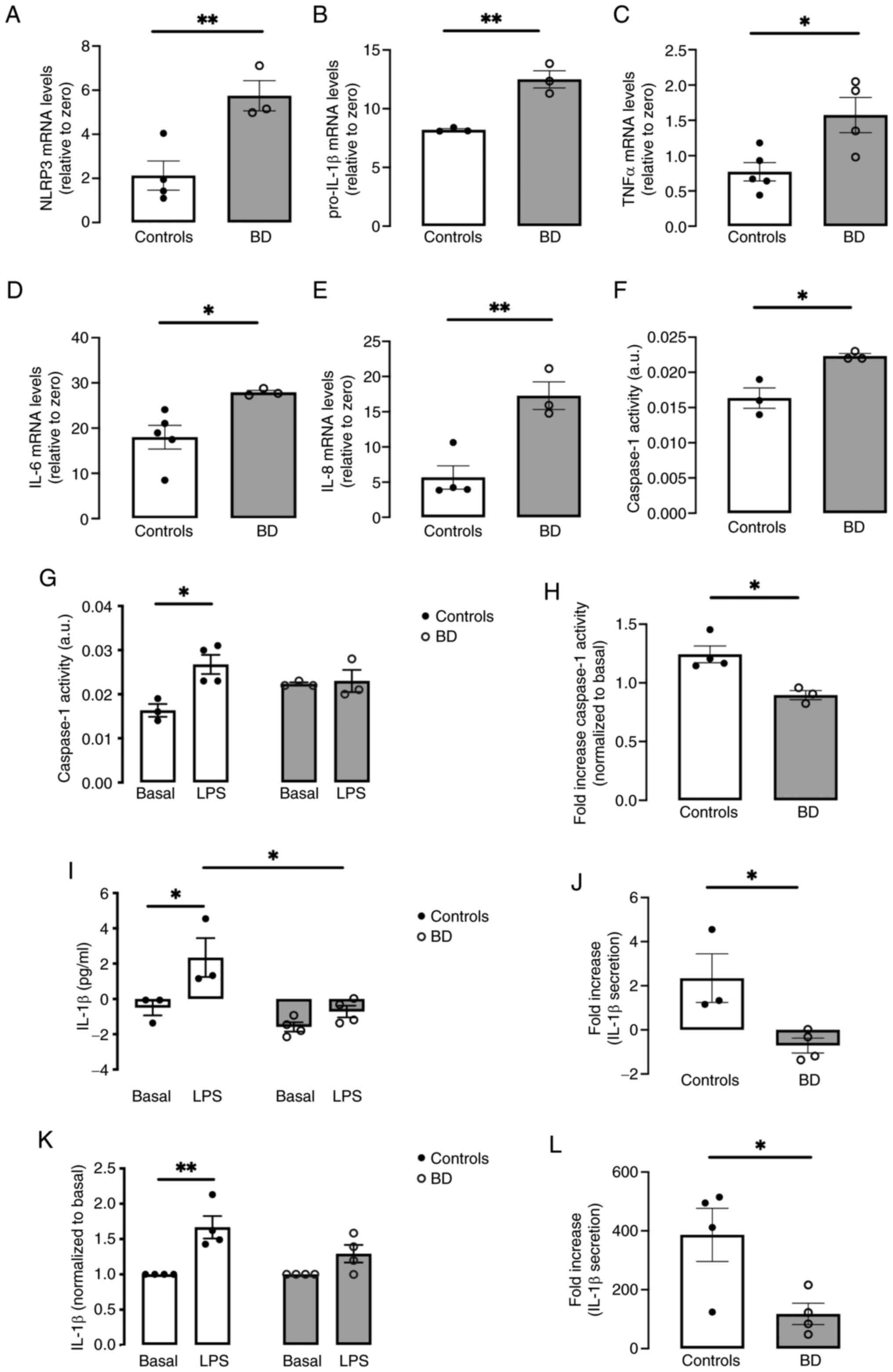
NLRP3 inflammasome activity and
inflammatory status in primary fibroblasts and monocytes derived
from patients with BD and healthy controls. Basal mRNA levels of
(A) NLRP3 and pro-inflammatory cytokines (B) pro-IL-1β, (C) TNFα,
(D) IL-6 and (E) IL-8 were evaluated by reverse
transcription-quantitative PCR in fibroblasts from patients with BD
and healthy controls. (F) Baseline levels of caspase-1 activity in
control and BD fibroblasts. (G) Caspase-1 activity was analyzed in
total extracts from control and BD fibroblasts treated in the
absence or presence of 5 μg/ml LPS for 32 h. (H) Fold
increase of caspase-1 activity was calculated by normalizing the
levels of caspase-1 activity in control and BD fibroblasts treated
with LPS to the baseline values. Data represent the means ±
standard error of the mean of results obtained in cells from 3-5
participants per group. (I) IL-1β levels in supernatants from
control and BD fibroblasts incubated in the presence or absence of
5 μg/ml LPS for 32 h, were quantified using an ELISA kit an
expressed as pg/ml. (J) Fold increase of IL-1β secretion was
calculated by the difference between LPS-treated and basal values.
Data represent the means ± standard error of the mean of results
obtained in cells from three controls and four patients with BD.
(K) IL-1β levels in supernatants from primary monocytes derived
from healthy controls and patients with BD incubated in the
presence or absence of 1 μg/ml LPS for 32 h, were quantified
by ELISA. Results were normalized to the basal levels and represent
the means ± standard error of the mean of results obtained in cells
from four participants per group. (L) IL-1β secretion in monocytes
was also calculated as the fold increase observed upon LPS
treatment. Data represent means ± standard error of the mean of
results obtained in cells from four participants per group.
Statistical significance of differences between groups was
determined by the unpaired Student's t-test (A-F, H, J and L):
*P>0.05; **P>0.01; significance between
both basal and LPS-treated cells within each experimental group and
between the two groups were obtained using the two-way ANOVA test,
followed by the Tukey's post hoc test (G, I and K):
*P>0.05; **P>0.01. NLRP3, NOD-like
receptor family pyrin domain-containing 3; BD, bipolar disorder;
LPS, lipopolysaccharide.

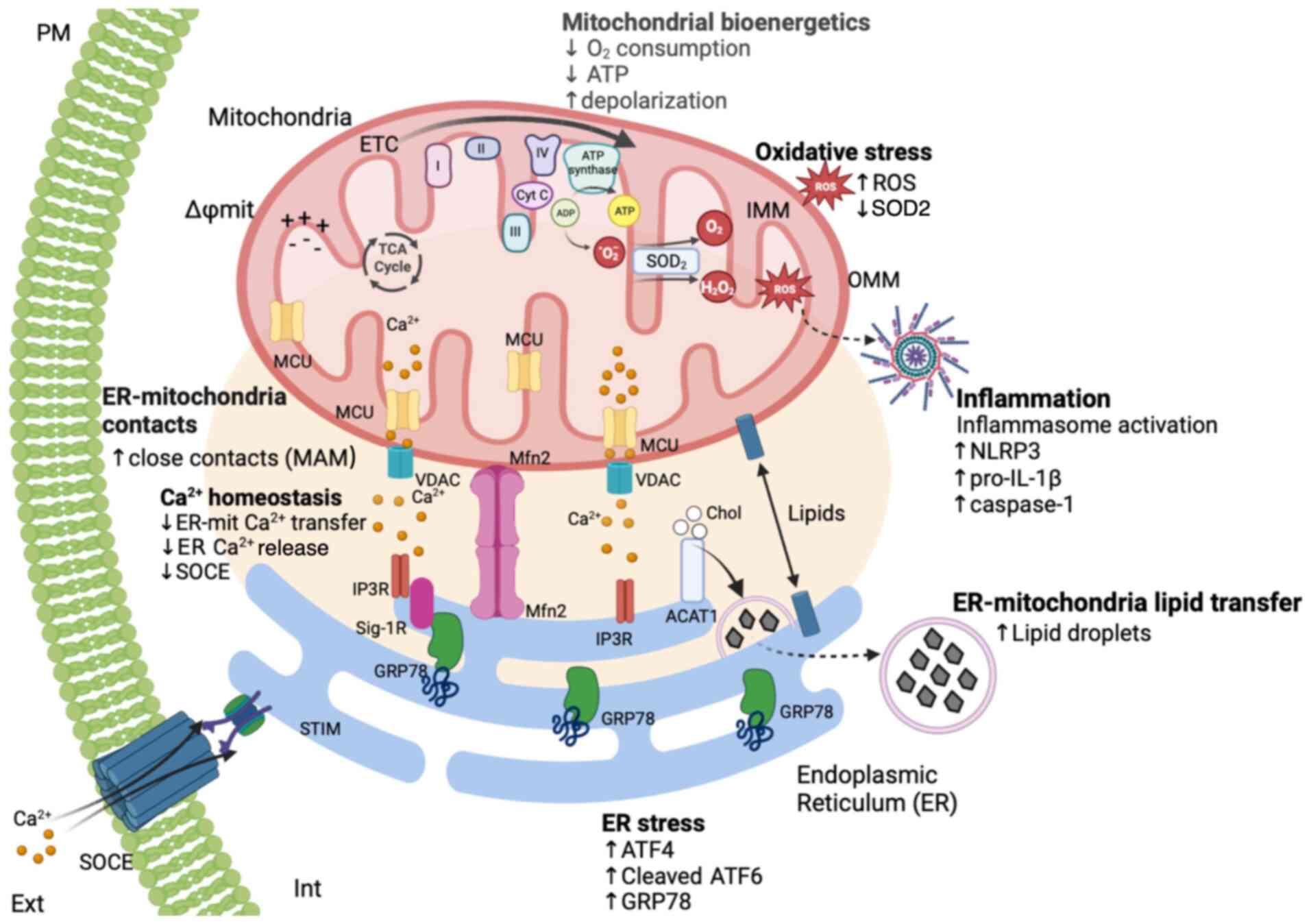
Figure 6

The MAM hypothesis for BD.
Fibroblasts derived from patients diagnosed with BD exhibit
increased ER-mitochondria apposition and markedly higher percentage
of close ER-mitochondria contacts sites (MAM) in comparison with
healthy controls, in particular those <20 nm. This structural
alteration in the ER-mitochondria juxtaposition directly affects
the main functions of MAM, which are the inter-organelle transfer
of Ca2+ and lipids. As a consequence, ER-mitochondria
lipids transfer is enhanced increasing the formation of lipid
droplets while Ca2+ transfer is inhibited.
Concomitantly, BD fibroblasts exhibit lower SOCE and higher
oxidative stress levels due to the inhibition of SOD2 mitochondrial
antioxidant enzyme and accumulation of ROS in the cytosol and in
the mitochondria. In addition to these alterations in
Ca2+ and redox homeostasis as well as in lipid
metabolism, BD-specific changes in MAM are also associated with
induction of ER stress and sterile inflammation. A basal
pro-inflammatory status in BD is supported by the upregulation of
pro-inflammatory cytokines, which seems to be implicated in the
diminished susceptibility of both fibroblasts and monocytes derived
from patients with BD to inflammatory stimuli, as shown by the
lower activation of the NLRP3 inflammasome in response to LPS. PM,
plasma membrane; MAM, mitochondria-associated membranes; BD,
bipolar disorder; MCU, mitochondrial calcium uniport; Cyt C,
cytochrome c; TCA cycle, tricarboxylic acid cycle; ADP,
adenosine diphosphate; ATP, adenosine triphosphate; O2,
superoxide anion; O2, oxygen;
H2O2, hydrogen peroxide; SOD2, superoxide
dismutase 2; ROS, reactive oxygen species; VDAC, voltage-dependent
anion channels; Mfn2, mitofusin 2; IP3R, inositol trisphosphate
receptor; Sig-1R, sigma-1 receptor; ACAT1, Acetyl-CoA
acetyltransferase 1; CE, cholesterol ester; SOCE, store-operated
calcium entry; STIM1, stromal interaction molecule 1; UPR, unfolded
protein response; ER, endoplasmic reticulum; NLRP3, NOD-like
receptor family pyrin domain-containing 3; BD, bipolar disorder;
LPS, lipopolysaccharide.
View References

1 

Csordás G, Renken C, Várnai P, Walter L, Weaver D, Buttle KF, Balla T, Mannella CA and Hajnóczky G: Structural and functional features and significance of the physical linkage between ER and mitochondria. J Cell Biol. 174:915–921. 2006. View Article : Google Scholar : PubMed/NCBI

2 

Filadi R, Theurey P and Pizzo P: The endoplasmic reticulum-mitochondria coupling in health and disease: Molecules, functions and significance. Cell Calcium. 62:1–15. 2017. View Article : Google Scholar : PubMed/NCBI

3 

Wang X, Wen Y, Dong J, Cao C and Yuan S: Systematic In-depth proteomic analysis of Mitochondria-associated endoplasmic reticulum membranes in mouse and human testes. Proteomics. 18:e17004782018. View Article : Google Scholar : PubMed/NCBI

4 

Rowland AA and Voeltz GK: Endoplasmic reticulum-mitochondria contacts: Function of the junction. Nat Rev Mol Cell Biol. 13:607–625. 2012. View Article : Google Scholar : PubMed/NCBI

5 

de Brito OM and Scorrano L: Mitofusin-2 regulates mitochondrial and endoplasmic reticulum morphology and tethering: The role of Ras. Mitochondrion. 9:222–226. 2009. View Article : Google Scholar : PubMed/NCBI

6 

Casellas-D Iaz S, Larramona-Arcas R, Riqu E-Pujol G, Tena-Morraja P, Müller-Sánchez C, Segarra-Mondejar M, Gavaldà-Navarro A, Villarroya F, Reina M, Martínez-Estrada OM and Soriano FX: Mfn2 localization in the ER is necessary for its bioenergetic function and neuritic development. EMBO Rep. 22:e519542021. View Article : Google Scholar

7 

Yang S, Zhou R, Zhang C, He S and Su Z: Mitochondria-associated endoplasmic reticulum membranes in the pathogenesis of type 2 diabetes mellitus. Front Cell Dev Biol. 8:5715542020. View Article : Google Scholar : PubMed/NCBI

8 

Gómez-Suaga P, Pérez-Nievas BG, Glennon EB, Lau DHW, Paillusson S, Mórotz GM, Calì T, Pizzo P, Noble W and Miller CCJ: The VAPB-PTPIP51 endoplasmic reticulum-mitochondria tethering proteins are present in neuronal synapses and regulate synaptic activity. Acta Neuropathol Commun. 7:352019. View Article : Google Scholar : PubMed/NCBI

9 

Xu H, Guan N, Ren YL, Wei QJ, Tao YH, Yang GS, Liu XY, Bu DF, Zhang Y and Zhu SN: IP3R-Grp75-VDAC1-MCU calcium regulation axis antagonists protect podocytes from apoptosis and decrease proteinuria in an Adriamycin nephropathy rat model. BMC Nephrol. 19:1402018. View Article : Google Scholar :

10 

Area-Gomez E, Del Carmen Lara Castillo M, Tambini MD, Guardia-Laguarta C, de Groof AJ, Madra M, Ikenouchi J, Umeda M, Bird TD, Sturley SL and Schon EA: Upregulated function of mitochondria-associated ER membranes in Alzheimer disease. EMBO J. 31:4106–4123. 2012. View Article : Google Scholar : PubMed/NCBI

11 

Raturi A and Simmen T: Where the endoplasmic reticulum and the mitochondrion tie the knot: The mitochondria-associated membrane (MAM). Biochimica et Biophysica Acta (BBA)-Mol Cell Res. 1833:213–224. 2013. View Article : Google Scholar

12 

van Vliet AR, Verfaillie T and Agostinis P: New functions of mitochondria associated membranes in cellular signaling. Biochim Biophys Acta. 1843:2253–2262. 2014. View Article : Google Scholar : PubMed/NCBI

13 

Zhou R, Yazdi AS, Menu P and Tschopp J: A role for mitochondria in NLRP3 inflammasome activation. Nature. 469:221–225. 2011. View Article : Google Scholar

14 

Kelley N, Jeltema D, Duan Y and He Y: The NLRP3 inflammasome: An overview of mechanisms of activation and regulation. Int J Mol Sci. 20:33282019. View Article : Google Scholar : PubMed/NCBI

15 

Missiroli S, Patergnani S, Caroccia N, Pedriali G, Perrone M, Previati M, Wieckowski MR and Giorgi C: Mitochondria-associated membranes (MAMs) and inflammation. Cell Death Dis. 9:3292018. View Article : Google Scholar : PubMed/NCBI

16 

Filadi R, Greotti E and Pizzo P: Highlighting the endoplasmic reticulum-mitochondria connection: Focus on Mitofusin 2. Pharmacol Res. 128:42–51. 2018. View Article : Google Scholar : PubMed/NCBI

17 

Area-Gomez E, de Groof A, Bonilla E, Montesinos J, Tanji K, Boldogh I, Pon L and Schon EA: A key role for MAM in mediating mitochondrial dysfunction in Alzheimer disease. Cell Death Dis. 9:3352018. View Article : Google Scholar : PubMed/NCBI

18 

Resende R, Fernandes T, Pereira AC, Marques AP and Pereira CF: Endoplasmic Reticulum-mitochondria contacts modulate reactive oxygen Species-mediated signaling and oxidative stress in brain disorders: The key role of Sigma-1 receptor. Antioxid Redox Signal. 37:758–780. 2022. View Article : Google Scholar : PubMed/NCBI

19 

Elsayed OH, Ercis M, Pahwa M and Singh B: Treatment-resistant bipolar depression: Therapeutic trends, challenges and future directions. Neuropsychiatr Dis Treat. 18:2927–2943. 2022. View Article : Google Scholar : PubMed/NCBI

20 

Huang Y, Zhang Z, Lin S, Zhou H and Xu G: Cognitive impairment mechanism in patients with bipolar disorder. Neuropsychiatr Dis Treat. 19:361–366. 2023. View Article : Google Scholar : PubMed/NCBI

21 

Sampogna G, Janiri D, Albert U, Caraci F, Martinotti G, Serafini G, Tortorella A, Zuddas A, Sani G and Fiorillo A: Why lithium should be used in patients with bipolar disorder? A scoping review and an expert opinion paper. Expert Rev Neurother. 22:923–934. 2022. View Article : Google Scholar : PubMed/NCBI

22 

Hu X, Yu C, Dong T, Yang Z, Fang Y and Jiang Z: Biomarkers and detection methods of bipolar disorder. Biosens Bioelectron. 220:1148422023. View Article : Google Scholar

23 

Pereira AC, Resende R, Morais S, Madeira N and Fragão Pereira C: The ups and downs of cellular stress: The 'MAM hypothesis' for Bipolar disorder pathophysiology. International J Clin Neurosciences Mental Health. S042017. View Article : Google Scholar

24 

Pereira AC, Oliveira J, Silva S, Madeira N, Pereira CMF and Cruz MT: Inflammation in bipolar disorder (BD): Identification of new therapeutic targets. Pharmacol Res. 163:1053252021. View Article : Google Scholar

25 

Resende R, Fernandes T, Pereira AC, De Pascale J, Marques AP, Oliveira P, Morais S, Santos V, Madeira N, Pereira CF and Moreira PI: Mitochondria, endoplasmic reticulum and innate immune dysfunction in mood disorders: Do Mitochondria-associated Membranes (MAMs) play a role? Biochim Biophys Acta Mol Basis Dis. 1866:1657522020. View Article : Google Scholar : PubMed/NCBI

26 

Kim HK, Andreazza AC, Elmi N, Chen W and Young LT: Nod-like receptor pyrin containing 3 (NLRP3) in the post-mortem frontal cortex from patients with bipolar disorder: A potential mediator between mitochondria and immune-activation. J Psychiatr Res. 72:43–50. 2016. View Article : Google Scholar

27 

Viswanath B, Jose SP, Squassina A, Thirthalli J, Purushottam M, Mukherjee O, Vladimirov V, Patrinos GP, Del Zompo M and Jain S: Cellular models to study bipolar disorder: A systematic review. J Affect Disord. 184:36–50. 2015. View Article : Google Scholar : PubMed/NCBI

28 

Johnston JA, Cowburn RF, Norgren S, Wiehager B, Venizelos N, Winblad B, Vigo-Pelfrey C, Schenk D, Lannfelt L and O'Neill C: Increased β-amyloid release and levels of amyloid precursor protein (APP) in fibroblast cell lines from family members with the Swedish Alzheimer's disease APP670/671 mutation. FEBS Lett. 354:274–278. 1994. View Article : Google Scholar : PubMed/NCBI

29 

Hoepken HH, Gispert S, Azizov M, Klinkenberg M, Ricciardi F, Kurz A, Morales-Gordo B, Bonin M, Riess O, Gasser T, et al: Parkinson patient fibroblasts show increased alpha-synuclein expression. Exp Neurol. 212:307–313. 2008. View Article : Google Scholar : PubMed/NCBI

30 

Onofre I, Mendonça N, Lopes S, Nobre R, de Melo JB, Carreira IM, Januário C, Gonçalves AF and de Almeida LP: Fibroblasts of machado joseph disease patients reveal autophagy impairment. Sci Rep. 6:282202016. View Article : Google Scholar : PubMed/NCBI

31 

Oliveira NC, Russo FB and Beltrão-Braga PCB: Differentiation of peripheral sensory neurons from iPSCs derived from stem cells from human exfoliated deciduous teeth (SHED). Front Cell Dev Biol. 11:12035032023. View Article : Google Scholar : PubMed/NCBI

32 

Kálmán S, Garbett KA, Janka Z and Mirnics K: Human dermal fibroblasts in psychiatry research. Neuroscience. 320:105–121. 2016. View Article : Google Scholar : PubMed/NCBI

33 

Etemadikhah M, Niazi A, Wetterberg L and Feuk L: Transcriptome analysis of fibroblasts from schizophrenia patients reveals differential expression of schizophrenia-related genes. Sci Rep. 10:6302020. View Article : Google Scholar : PubMed/NCBI

34 

Akin D, Manier DH, Sanders-Bush E and Shelton RC: Decreased serotonin 5-HT2A receptor-stimulated phosphoinositide signalling in fibroblasts from melancholic deppresed patients. Neuropsychopharmacology. 29:2081–2087. 2004. View Article : Google Scholar : PubMed/NCBI

35 

Jameson C, Boulton KA, Silove N, Nanan R and Guastella AJ: Ectodermal origins of the skin-brain axis: A novel model for the developing brain, inflammation, and neurodevelopmental conditions. Mol Psychiatry. 28:108–117. 2023. View Article : Google Scholar :

36 

Kim HS, Jung H, Park YH, Heo SH, Kim S and Moon M: Skin-brain axis in Alzheimer's disease-Pathologic, diagnostic, and therapeutic implications: A hypothetical review. Aging Dis. 16:901–916. 2024. View Article : Google Scholar : PubMed/NCBI

37 

Yang J, Zhang S, Wu Q, Chen P, Dai Y, Long J, Wu Y and Lin Y: T cell-mediated skin-brain axis: Bridging the gap between psoriasis and psychiatric comorbidities. J Autoimmun. 144:1031762024. View Article : Google Scholar : PubMed/NCBI

38 

Berk M, Post R, Ratheesh A, Gliddon E, Singh A, Vieta E, Carvalho AF, Ashton MM, Berk L, Cotton SM, et al: Staging in bipolar disorder: From theoretical framework to clinical utility. World Psychiatry. 16:236–244. 2017. View Article : Google Scholar : PubMed/NCBI

39 

American Psychiatric Association: Diagnostic and Statistical Manual of Mental Disorders. Diagnostic and Statistical Manual of Mental Disorders. 2013.

40 

Martins MJ, Palmeira L, Xavier A, Castilho P, Macedo A, Pereira AT, Pinto AM, Carreiras D and Barreto-Carvalho C: The clinical interview for psychotic disorders (CIPD): Preliminary results on interrater agreement, reliability and qualitative feedback. Psychiatry Res. 272:723–729. 2019. View Article : Google Scholar : PubMed/NCBI

41 

Marques AP, Resende R, Silva DF, Batista M, Pereira D, Wildenberg B, Morais S, Macedo A, Pais C, Melo JB, et al: Mitochondrial alterations in fibroblasts of early stage bipolar disorder patients. Biomedicines. 9:5222021. View Article : Google Scholar : PubMed/NCBI

42 

Pereira AC, De Pascale J, Resende R, Cardoso S, Ferreira I, Neves BM, Carrascal MA, Zuzarte M, Madeira N, Morais S, et al: ER-mitochondria communication is involved in NLRP3 inflammasome activation under stress conditions in the innate immune system. Cell Mol Life Sci. 79:2132022. View Article : Google Scholar : PubMed/NCBI

43 

Pereira AC, Madeira N, Morais S, Macedo A, Cruz MT and Pereira CMF: Mitochondria fusion upon SERCA inhibition prevents activation of the NLRP3 inflammasome in human monocytes. Cells. 11:4332022. View Article : Google Scholar : PubMed/NCBI

44 

Bolte S and Cordelières FP: A guided tour into subcellular colocalization analysis in light microscopy. J Microsc. 224:213–232. 2006. View Article : Google Scholar

45 

Tiscione SA, Vivas O, Ginsburg KS, Bers DM, Ory DS, Santana LF, Dixon RE and Dickson EJ: Disease-associated mutations in Niemann-Pick type C1 alter ER calcium signaling and neuronal plasticity. J Cell Biol. 218:4141–4156. 2019. View Article : Google Scholar : PubMed/NCBI

46 

Moreira P, Sousa FJ, Matos P, Brites GS, Gonçalves MJ, Cavaleiro C, Figueirinha A, Salgueiro L, Batista MT, Branco PC, et al: Chemical composition and effect against skin alterations of bioactive extracts obtained by the hydrodistillation of eucalyptus globulus leaves. Pharmaceutics. 14:5612022. View Article : Google Scholar : PubMed/NCBI

47 

Livak KJ and Schmittgen TD: Analysis of relative gene expression data using real-time quantitative PCR and the 2(-Delta Delta C(T)) method. Methods. 25:402–408. 2001. View Article : Google Scholar

48 

Hayashi A, Kasahara T, Kametani M, Toyota T, Yoshikawa T and Kato T: Aberrant endoplasmic reticulum stress response in lymphoblastoid cells from patients with bipolar disorder. Int J Neuropsychopharmacol. 12:33–43. 2009. View Article : Google Scholar

49 

Seegren PV, Harper LR, Downs TK, Zhao XY, Viswanathan SB, Stremska ME, Olson RJ, Kennedy J, Ewald SE, Kumar P and Desai BN: Reduced mitochondrial calcium uptake in macrophages is a major driver of inflammaging. Nat Aging. 3:796–812. 2023. View Article : Google Scholar : PubMed/NCBI

50 

Nan J, Li J, Lin Y, Saif Ur Rahman M, Li Z and Zhu L: The interplay between mitochondria and store-operated Ca2+ entry: Emerging insights into cardiac diseases. J Cell Mol Med. 25:9496–9512. 2021. View Article : Google Scholar : PubMed/NCBI

51 

Zhao J, Li J, Li G and Chen M: The role of mitochondria-associated membranes mediated ROS on NLRP3 inflammasome in cardiovascular diseases. Front Cardiovasc Med. 9:10595762022. View Article : Google Scholar :

52 

van Vliet AR and Agostinis P: Mitochondria-associated membranes and ER stress. Curr Top Microbiol Immunol. 414:73–102. 2018.

53 

Guo H, Callaway JB and Ting JPY: Inflammasomes: Mechanism of action, role in disease, and therapeutics. Nat Med. 21:677–687. 2015. View Article : Google Scholar : PubMed/NCBI

54 

Walsh JG, Muruve DA and Power C: Inflammasomes in the CNS. Nat Rev Neurosci. 15:84–97. 2014. View Article : Google Scholar : PubMed/NCBI

55 

He Y, Hara H and Núñez G: Mechanism and regulation of NLRP3 inflammasome activation. Trends Biochem Sci. 41:1012–1021. 2016. View Article : Google Scholar : PubMed/NCBI

56 

Davidson S, Coles M, Thomas T, Kollias G, Ludewig B, Turley S, Brenner M and Buckley CD: Fibroblasts as immune regulators in infection, inflammation and cancer. Nat Rev Immunol. 21:704–717. 2021. View Article : Google Scholar : PubMed/NCBI

57 

Fernandes T, Resende R, Silva DF, Marques AP, Santos AE, Cardoso SM, Domingues MR, Moreira PI and Pereira CF: Structural and functional alterations in mitochondria-associated membranes (MAMs) and in mitochondria activate stress response mechanisms in an in vitro model of Alzheimer's disease. Biomedicines. 9:8812021. View Article : Google Scholar : PubMed/NCBI

58 

Kathuria A, Lopez-Lengowski K, Vater M, McPhie D, Cohen BM and Karmacharya R: Transcriptome analysis and functional characterization of cerebral organoids in bipolar disorder. Genome Med. 12:342020. View Article : Google Scholar : PubMed/NCBI

59 

Rich-Edwards JW, Kaiser UB, Chen GL, Manson JAE and Goldstein JM: Sex and gender differences research design for basic, clinical, and population studies: Essentials for investigators. Endocr Rev. 39:424–439. 2018. View Article : Google Scholar : PubMed/NCBI

60 

Trebak M and Putney JW Jr: ORAI Calcium channels. Physiology. 32:332–342. 2017. View Article : Google Scholar : PubMed/NCBI

61 

Nunes P and Demaurex N: Redox regulation of store-operated Ca2+ entry. Antioxid Redox Signal. 21:915–932. 2014. View Article : Google Scholar :

62 

Hewitt T, Alural B, Tilak M, Wang J, Becke N, Chartley E, Perreault M, Haggarty SJ, Sheridan SD, Perlis RH, et al: Bipolar disorder-iPSC derived neural progenitor cells exhibit dysregulation of store-operated Ca2+ entry and accelerated differentiation. Mol Psychiatry. 28:5237–5250. 2023. View Article : Google Scholar : PubMed/NCBI

63 

Nurnberger JI Jr, Koller DL, Jung J, Edenberg HJ, Foroud T, Guella I, Vawter MP and Kelsoe JR; Psychiatric Genomics Consortium Bipolar Group: Identification of pathways for bipolar disorder: A meta-analysis. JAMA Psychiatry. 71:657–664. 2014. View Article : Google Scholar : PubMed/NCBI

64 

Weng TY, Tsai SYA and Su TP: Roles of sigma-1 receptors on mitochondrial functions relevant to neurodegenerative diseases. J Biomed Sci. 24:742017. View Article : Google Scholar : PubMed/NCBI

65 

Mandelli L, Wang SM, Han C, Lee SJ, Patkar AA, Masand PS, Pae CU and Serretti A: The impact of a single nucleotide polymorphism in SIGMAR1 on depressive symptoms in major depressive disorder and bipolar disorder. Adv Ther. 34:713–724. 2017. View Article : Google Scholar : PubMed/NCBI

66 

Scola G, Versace A, Metherel AH, Monsalve-Castro LA, Phillips ML, Bazinet RP and Andreazza AC: Alterations in peripheral fatty acid composition in bipolar and unipolar depression. J Affect Disord. 233:86–91. 2018. View Article : Google Scholar : PubMed/NCBI

67 

Knowles EEM, Meikle PJ, Huynh K, Göring HH, Olvera RL, Mathias SR, Duggirala R, Almasy L, Blangero J, Curran JE and Glahn DC: Serum phosphatidylinositol as a biomarker for bipolar disorder liability. Bipolar Disord. 19:107–115. 2017. View Article : Google Scholar : PubMed/NCBI

68 

Ribeiro HC, Klassen A, Pedrini M, Carvalho MS, Rizzo LB, Noto MN, Zeni-Graiff M, Sethi S, Fonseca FAH, Tasic L, et al: A preliminary study of bipolar disorder type I by mass spectrometry-based serum lipidomics. Psychiatry Res. 258:268–273. 2017. View Article : Google Scholar : PubMed/NCBI

69 

Guo L, Zhang T, Li R, Cui ZQ, Du J, Yang JB, Xue F, Chen YH, Tan QR and Peng ZW: Alterations in the plasma lipidome of adult women with bipolar disorder: A mass spectrometry-based lipidomics research. Front Psychiatry. 13:8027102022. View Article : Google Scholar : PubMed/NCBI

70 

Zhu Y, Chen CY, Li J, Cheng JX, Jang M and Kim KH: In vitro exploration of ACAT contributions to lipid droplet formation during adipogenesis. J Lipid Res. 59:820–829. 2018. View Article : Google Scholar : PubMed/NCBI

71 

Henne WM, Reese ML and Goodman JM: The assembly of lipid droplets and their roles in challenged cells. EMBO J. 37:e989472018. View Article : Google Scholar : PubMed/NCBI

72 

Olzmann JA and Carvalho P: Dynamics and functions of lipid droplets. Nat Rev Mol Cell Biol. 20:137–155. 2019. View Article : Google Scholar :

73 

Jarc E and Petan T: Lipid droplets and the management of cellular stress. Yale J Biol Med. 92:435–452. 2019.PubMed/NCBI

74 

Bengesser SA, Fuchs R, Lackner N, Birner A, Reininghaus B, Meier-Allard N, Stracke A, Kapfhammer HP, Reininghaus EZ and Wallner-Liebmann S: Endoplasmic reticulum stress and bipolar disorder-Almost forgotten therapeutic drug targets in the unfolded protein response pathway revisited. CNS Neurol Disord Drug Targets. 15:403–413. 2016. View Article : Google Scholar

75 

Bengesser SA, Reininghaus EZ, Dalkner N, Birner A, Hohenberger H, Queissner R, Fellendorf F, Platzer M, Pilz R, Hamm C, et al: Endoplasmic reticulum stress in bipolar disorder? -BiP and CHOP gene expression- and XBP1 splicing analysis in peripheral blood. Psychoneuroendocrinology. 95:13–119. 2018. View Article : Google Scholar

76 

Thoudam T, Jeon JH, Ha CM and Lee IK: Role of mitochondria-associated endoplasmic reticulum membrane in inflammation-mediated metabolic diseases. Mediators Inflamm. 2016:18514202016. View Article : Google Scholar

77 

Sayana P, Colpo GD, Simões LR, Giridharan VV, Teixeira AL, Quevedo J and Barichello T: A systemic review of evidence for the role of inflammatory biomarkers in bipolar patients. J Psychiatr Res. 92:160–182. 2017. View Article : Google Scholar : PubMed/NCBI

78 

Söderlund J, Olsson S, Samuelsson M, Walther-Jallow L, Johansson C, Erhardt S, Landén M and Engberg G: Elevation of cerebrospinal fluid interleukin-1β in bipolar disorder. J Psychiatry Neurosci. 36:114–118. 2011. View Article : Google Scholar

79 

Munkholm K, Jacoby AS, Lenskjold T, Bruunsgaard H, Vinberg M and Kessing LV: Leukocytes in peripheral blood in patients with bipolar disorder-Trait and state alterations and association with levels of cytokines and C-reactive protein. Psychiatry Res. 261:383–390. 2018. View Article : Google Scholar : PubMed/NCBI

80 

Barbosa IG, Rocha NP, Assis F, Vieira ELM, Soares JC, Bauer ME and Teixeira AL: Monocyte and lymphocyte activation in bipolar disorder: A new piece in the puzzle of immune dysfunction in mood disorders. Int J Neuropsychopharmacol. 18:pyu0212014. View Article : Google Scholar : PubMed/NCBI

81 

Magioncalda P, Martino M, Tardito S, Sterlini B, Conio B, Marozzi V, Adavastro G, Capobianco L, Russo D, Parodi A, et al: White matter microstructure alterations correlate with terminally differentiated CD8+ effector T cell depletion in the peripheral blood in mania: Combined DTI and immunological investigation in the different phases of bipolar disorder. Brain Behav Immun. 73:192–204. 2018. View Article : Google Scholar : PubMed/NCBI

82 

SayuriYamagata A, Brietzke E, Rosenblat JD, Kakar R and McIntyre RS: Medical comorbidity in bipolar disorder: The link with metabolic-inflammatory systems. J Affect Disord. 211:99–106. 2017. View Article : Google Scholar : PubMed/NCBI

83 

Chen M, Jiang Q and Zhang L: The prevalence of bipolar disorder in autoimmune disease: A systematic review and meta-analysis. Ann Palliat Med. 10:350–361. 2021. View Article : Google Scholar : PubMed/NCBI

84 

Lima DD, Cyrino LAR, Ferreira GK, Magro DDD, Calegari CR, Cabral H, Cavichioli N, Ramos SA, Ullmann OM, Mayer Y, et al: Neuroinflammation and neuroprogression produced by oxidative stress in euthymic bipolar patients with different onset disease times. Sci Rep. 12:167422022. View Article : Google Scholar : PubMed/NCBI

85 

Zhou Y, Tong Z, Jiang S, Zheng W, Zhao J and Zhou X: The roles of endoplasmic reticulum in NLRP3 inflammasome activation. Cells. 9:12192020. View Article : Google Scholar : PubMed/NCBI

86 

Kotzaeroglou A and Tsamesidis I: The role of equilibrium between free radicals and antioxidants in depression and bipolar disorder. Medicines (Basel). 9:572022.PubMed/NCBI

87 

Zou Y, Kennedy KG, Grigorian A, Fiksenbaum L, Freeman N, Zai CC, Kennedy JL, MacIntosh BJ and Goldstein BI: Antioxidative defense genes and brain structure in youth bipolar disorder. Int J Neuropsychopharmacol. 25:89–98. 2022. View Article : Google Scholar :

88 

Gallegos-Arreola MP, Ramírez-Patiño R, Sánchez-López JY, Zúñiga-González GM, Figuera LE, Delgado-Saucedo JI, Gómez-Meda BC, Rosales-Reynoso MA, Puebla-Pérez AM, Lemus-Varela ML, et al: SOD2 Gene Variants (rs4880 and rs5746136) and Their Association with Breast Cancer Risk. Curr Issues Mol Biol. 44:5221–5233. 2022. View Article : Google Scholar : PubMed/NCBI

89 

van Linthout S, Miteva K and Tschöpe C: Crosstalk between fibroblasts and inflammatory cells. Cardiovasc Res. 102:258–269. 2014. View Article : Google Scholar : PubMed/NCBI

90 

Sandanger Ø, Ranheim T, Vinge LE, Bliksøen M, Alfsnes K, Finsen AV, Dahl CP, Askevold ET, Florholmen G, Christensen G, et al: The NLRP3 inflammasome is up-regulated in cardiac fibroblasts and mediates myocardial ischaemia-reperfusion injury. Cardiovasc Res. 99:164–174. 2013. View Article : Google Scholar : PubMed/NCBI

91 

lo Monaco A, Gulinelli S, Castellino G, Solini A, Ferrari D, La Corte R, Trotta F and Di Virgilio F: Increased sensitivity to extracellular ATP of fibroblasts from patients affected by systemic sclerosis. Ann Rheum Dis. 66:1124–1125. 2007. View Article : Google Scholar : PubMed/NCBI

92 

Rosenblat JD and McIntyre RS: Bipolar disorder and immune dysfunction: Epidemiological findings, proposed pathophysiology and clinical implications. Brain Sci. 7:1442017. View Article : Google Scholar : PubMed/NCBI

Related Articles

  • Abstract
  • View
  • Download
  • Twitter
Copy and paste a formatted citation
Spandidos Publications style
Pereira AC, Marques AP, Resende R, Serrano‑cuñarro L, Caldeira M, Fernandes T, Batista M, Macedo A, De Melo JB, Madeira N, Madeira N, et al: Changes in the endoplasmic reticulum‑mitochondria communication in dermal fibroblasts from early‑stage bipolar disorder patients: Skin‑brain axis as a new route to understand the pathophysiology of mental illness?. Int J Mol Med 56: 213, 2025.
APA
Pereira, A.C., Marques, A.P., Resende, R., Serrano‑cuñarro, L., Caldeira, M., Fernandes, T. ... Pereira, C. (2025). Changes in the endoplasmic reticulum‑mitochondria communication in dermal fibroblasts from early‑stage bipolar disorder patients: Skin‑brain axis as a new route to understand the pathophysiology of mental illness?. International Journal of Molecular Medicine, 56, 213. https://doi.org/10.3892/ijmm.2025.5654
MLA
Pereira, A. C., Marques, A. P., Resende, R., Serrano‑cuñarro, L., Caldeira, M., Fernandes, T., Batista, M., Macedo, A., De Melo, J. B., Madeira, N., Cavadas, C., Cruz, M., Pereira, C."Changes in the endoplasmic reticulum‑mitochondria communication in dermal fibroblasts from early‑stage bipolar disorder patients: Skin‑brain axis as a new route to understand the pathophysiology of mental illness?". International Journal of Molecular Medicine 56.6 (2025): 213.
Chicago
Pereira, A. C., Marques, A. P., Resende, R., Serrano‑cuñarro, L., Caldeira, M., Fernandes, T., Batista, M., Macedo, A., De Melo, J. B., Madeira, N., Cavadas, C., Cruz, M., Pereira, C."Changes in the endoplasmic reticulum‑mitochondria communication in dermal fibroblasts from early‑stage bipolar disorder patients: Skin‑brain axis as a new route to understand the pathophysiology of mental illness?". International Journal of Molecular Medicine 56, no. 6 (2025): 213. https://doi.org/10.3892/ijmm.2025.5654
Copy and paste a formatted citation
x
Spandidos Publications style
Pereira AC, Marques AP, Resende R, Serrano‑cuñarro L, Caldeira M, Fernandes T, Batista M, Macedo A, De Melo JB, Madeira N, Madeira N, et al: Changes in the endoplasmic reticulum‑mitochondria communication in dermal fibroblasts from early‑stage bipolar disorder patients: Skin‑brain axis as a new route to understand the pathophysiology of mental illness?. Int J Mol Med 56: 213, 2025.
APA
Pereira, A.C., Marques, A.P., Resende, R., Serrano‑cuñarro, L., Caldeira, M., Fernandes, T. ... Pereira, C. (2025). Changes in the endoplasmic reticulum‑mitochondria communication in dermal fibroblasts from early‑stage bipolar disorder patients: Skin‑brain axis as a new route to understand the pathophysiology of mental illness?. International Journal of Molecular Medicine, 56, 213. https://doi.org/10.3892/ijmm.2025.5654
MLA
Pereira, A. C., Marques, A. P., Resende, R., Serrano‑cuñarro, L., Caldeira, M., Fernandes, T., Batista, M., Macedo, A., De Melo, J. B., Madeira, N., Cavadas, C., Cruz, M., Pereira, C."Changes in the endoplasmic reticulum‑mitochondria communication in dermal fibroblasts from early‑stage bipolar disorder patients: Skin‑brain axis as a new route to understand the pathophysiology of mental illness?". International Journal of Molecular Medicine 56.6 (2025): 213.
Chicago
Pereira, A. C., Marques, A. P., Resende, R., Serrano‑cuñarro, L., Caldeira, M., Fernandes, T., Batista, M., Macedo, A., De Melo, J. B., Madeira, N., Cavadas, C., Cruz, M., Pereira, C."Changes in the endoplasmic reticulum‑mitochondria communication in dermal fibroblasts from early‑stage bipolar disorder patients: Skin‑brain axis as a new route to understand the pathophysiology of mental illness?". International Journal of Molecular Medicine 56, no. 6 (2025): 213. https://doi.org/10.3892/ijmm.2025.5654
Follow us
  • Twitter
  • LinkedIn
  • Facebook
About
  • Spandidos Publications
  • Careers
  • Cookie Policy
  • Privacy Policy
How can we help?
  • Help
  • Live Chat
  • Contact
  • Email to our Support Team