Spandidos Publications Logo
  • About
    • About Spandidos
    • Aims and Scopes
    • Abstracting and Indexing
    • Editorial Policies
    • Reprints and Permissions
    • Job Opportunities
    • Terms and Conditions
    • Contact
  • Journals
    • All Journals
    • Oncology Letters
      • Oncology Letters
      • Information for Authors
      • Editorial Policies
      • Editorial Board
      • Aims and Scope
      • Abstracting and Indexing
      • Bibliographic Information
      • Archive
    • International Journal of Oncology
      • International Journal of Oncology
      • Information for Authors
      • Editorial Policies
      • Editorial Board
      • Aims and Scope
      • Abstracting and Indexing
      • Bibliographic Information
      • Archive
    • Molecular and Clinical Oncology
      • Molecular and Clinical Oncology
      • Information for Authors
      • Editorial Policies
      • Editorial Board
      • Aims and Scope
      • Abstracting and Indexing
      • Bibliographic Information
      • Archive
    • Experimental and Therapeutic Medicine
      • Experimental and Therapeutic Medicine
      • Information for Authors
      • Editorial Policies
      • Editorial Board
      • Aims and Scope
      • Abstracting and Indexing
      • Bibliographic Information
      • Archive
    • International Journal of Molecular Medicine
      • International Journal of Molecular Medicine
      • Information for Authors
      • Editorial Policies
      • Editorial Board
      • Aims and Scope
      • Abstracting and Indexing
      • Bibliographic Information
      • Archive
    • Biomedical Reports
      • Biomedical Reports
      • Information for Authors
      • Editorial Policies
      • Editorial Board
      • Aims and Scope
      • Abstracting and Indexing
      • Bibliographic Information
      • Archive
    • Oncology Reports
      • Oncology Reports
      • Information for Authors
      • Editorial Policies
      • Editorial Board
      • Aims and Scope
      • Abstracting and Indexing
      • Bibliographic Information
      • Archive
    • Molecular Medicine Reports
      • Molecular Medicine Reports
      • Information for Authors
      • Editorial Policies
      • Editorial Board
      • Aims and Scope
      • Abstracting and Indexing
      • Bibliographic Information
      • Archive
    • World Academy of Sciences Journal
      • World Academy of Sciences Journal
      • Information for Authors
      • Editorial Policies
      • Editorial Board
      • Aims and Scope
      • Abstracting and Indexing
      • Bibliographic Information
      • Archive
    • International Journal of Functional Nutrition
      • International Journal of Functional Nutrition
      • Information for Authors
      • Editorial Policies
      • Editorial Board
      • Aims and Scope
      • Abstracting and Indexing
      • Bibliographic Information
      • Archive
    • International Journal of Epigenetics
      • International Journal of Epigenetics
      • Information for Authors
      • Editorial Policies
      • Editorial Board
      • Aims and Scope
      • Abstracting and Indexing
      • Bibliographic Information
      • Archive
    • Medicine International
      • Medicine International
      • Information for Authors
      • Editorial Policies
      • Editorial Board
      • Aims and Scope
      • Abstracting and Indexing
      • Bibliographic Information
      • Archive
  • Articles
  • Information
    • Information for Authors
    • Information for Reviewers
    • Information for Librarians
    • Information for Advertisers
    • Conferences
  • Language Editing
Spandidos Publications Logo
  • About
    • About Spandidos
    • Aims and Scopes
    • Abstracting and Indexing
    • Editorial Policies
    • Reprints and Permissions
    • Job Opportunities
    • Terms and Conditions
    • Contact
  • Journals
    • All Journals
    • Biomedical Reports
      • Information for Authors
      • Editorial Policies
      • Editorial Board
      • Aims and Scope
      • Abstracting and Indexing
      • Bibliographic Information
      • Archive
    • Experimental and Therapeutic Medicine
      • Information for Authors
      • Editorial Policies
      • Editorial Board
      • Aims and Scope
      • Abstracting and Indexing
      • Bibliographic Information
      • Archive
    • International Journal of Epigenetics
      • Information for Authors
      • Editorial Policies
      • Editorial Board
      • Aims and Scope
      • Abstracting and Indexing
      • Bibliographic Information
      • Archive
    • International Journal of Functional Nutrition
      • Information for Authors
      • Editorial Policies
      • Editorial Board
      • Aims and Scope
      • Abstracting and Indexing
      • Bibliographic Information
      • Archive
    • International Journal of Molecular Medicine
      • Information for Authors
      • Editorial Policies
      • Editorial Board
      • Aims and Scope
      • Abstracting and Indexing
      • Bibliographic Information
      • Archive
    • International Journal of Oncology
      • Information for Authors
      • Editorial Policies
      • Editorial Board
      • Aims and Scope
      • Abstracting and Indexing
      • Bibliographic Information
      • Archive
    • Medicine International
      • Information for Authors
      • Editorial Policies
      • Editorial Board
      • Aims and Scope
      • Abstracting and Indexing
      • Bibliographic Information
      • Archive
    • Molecular and Clinical Oncology
      • Information for Authors
      • Editorial Policies
      • Editorial Board
      • Aims and Scope
      • Abstracting and Indexing
      • Bibliographic Information
      • Archive
    • Molecular Medicine Reports
      • Information for Authors
      • Editorial Policies
      • Editorial Board
      • Aims and Scope
      • Abstracting and Indexing
      • Bibliographic Information
      • Archive
    • Oncology Letters
      • Information for Authors
      • Editorial Policies
      • Editorial Board
      • Aims and Scope
      • Abstracting and Indexing
      • Bibliographic Information
      • Archive
    • Oncology Reports
      • Information for Authors
      • Editorial Policies
      • Editorial Board
      • Aims and Scope
      • Abstracting and Indexing
      • Bibliographic Information
      • Archive
    • World Academy of Sciences Journal
      • Information for Authors
      • Editorial Policies
      • Editorial Board
      • Aims and Scope
      • Abstracting and Indexing
      • Bibliographic Information
      • Archive
  • Articles
  • Information
    • For Authors
    • For Reviewers
    • For Librarians
    • For Advertisers
    • Conferences
  • Language Editing
Login Register Submit
  • This site uses cookies
  • You can change your cookie settings at any time by following the instructions in our Cookie Policy. To find out more, you may read our Privacy Policy.

    I agree
Search articles by DOI, keyword, author or affiliation
Search
Advanced Search
presentation
International Journal of Molecular Medicine
Join Editorial Board Propose a Special Issue
Print ISSN: 1107-3756 Online ISSN: 1791-244X
Journal Cover
December-2025 Volume 56 Issue 6

Full Size Image

Sign up for eToc alerts
Recommend to Library

Journals

International Journal of Molecular Medicine

International Journal of Molecular Medicine

International Journal of Molecular Medicine is an international journal devoted to molecular mechanisms of human disease.

International Journal of Oncology

International Journal of Oncology

International Journal of Oncology is an international journal devoted to oncology research and cancer treatment.

Molecular Medicine Reports

Molecular Medicine Reports

Covers molecular medicine topics such as pharmacology, pathology, genetics, neuroscience, infectious diseases, molecular cardiology, and molecular surgery.

Oncology Reports

Oncology Reports

Oncology Reports is an international journal devoted to fundamental and applied research in Oncology.

Experimental and Therapeutic Medicine

Experimental and Therapeutic Medicine

Experimental and Therapeutic Medicine is an international journal devoted to laboratory and clinical medicine.

Oncology Letters

Oncology Letters

Oncology Letters is an international journal devoted to Experimental and Clinical Oncology.

Biomedical Reports

Biomedical Reports

Explores a wide range of biological and medical fields, including pharmacology, genetics, microbiology, neuroscience, and molecular cardiology.

Molecular and Clinical Oncology

Molecular and Clinical Oncology

International journal addressing all aspects of oncology research, from tumorigenesis and oncogenes to chemotherapy and metastasis.

World Academy of Sciences Journal

World Academy of Sciences Journal

Multidisciplinary open-access journal spanning biochemistry, genetics, neuroscience, environmental health, and synthetic biology.

International Journal of Functional Nutrition

International Journal of Functional Nutrition

Open-access journal combining biochemistry, pharmacology, immunology, and genetics to advance health through functional nutrition.

International Journal of Epigenetics

International Journal of Epigenetics

Publishes open-access research on using epigenetics to advance understanding and treatment of human disease.

Medicine International

Medicine International

An International Open Access Journal Devoted to General Medicine.

Journal Cover
December-2025 Volume 56 Issue 6

Full Size Image

Sign up for eToc alerts
Recommend to Library

  • Article
  • Citations
    • Cite This Article
    • Download Citation
    • Create Citation Alert
    • Remove Citation Alert
    • Cited By
  • Similar Articles
    • Related Articles (in Spandidos Publications)
    • Similar Articles (Google Scholar)
    • Similar Articles (PubMed)
  • Download PDF
  • Download XML
  • View XML

  • Supplementary Files
    • Supplementary_Data1.pdf
    • Supplementary_Data2.xlsx
    • Supplementary_Data3.xlsx
Article Open Access

Suppression of tumor growth by GMI, an edible fungal immunomodulatory protein, is associated with targeting GSK3β‑mediated proteasomal degradation of PD‑L1

  • Authors:
    • Wei-Jyun Hua
    • Li-Chen Huang
    • Zhi-Hu Lin
    • Yi-Ru Ciou
    • Kai-Fan Lin
    • Li-Lan Liao
    • Wei-Hung Hsu
    • Tung-Yi Lin
  • View Affiliations / Copyright

    Affiliations: Institute of Traditional Medicine, National Yang Ming Chiao Tung University, Taipei 11221, Taiwan, R.O.C.
    Copyright: © Hua et al. This is an open access article distributed under the terms of Creative Commons Attribution License.
  • Article Number: 217
    |
    Published online on: October 7, 2025
       https://doi.org/10.3892/ijmm.2025.5658
  • Expand metrics +
Metrics: Total Views: 0 (Spandidos Publications: | PMC Statistics: )
Metrics: Total PDF Downloads: 0 (Spandidos Publications: | PMC Statistics: )
Cited By (CrossRef): 0 citations Loading Articles...

This article is mentioned in:


Abstract

Cancer cells evade T cell responses by exploiting programmed death‑ligand 1 (PD‑L1) in the tumor microenvironment, and oncogenic epidermal growth factor receptor (EGFR) signaling stabilizes PD‑L1 expression. Ganoderma microsporum immunomodulatory protein (GMI), a consumable mushroom‑derived dietary supplement, functions as an EGFR degrader targeting EGFR‑positive cancer cells. However, the role of GMI in regulating PD‑L1 and modulating antitumor immunity has not been fully elucidated. In the present study, functional enrichment analysis was first employed to investigate GMI‑regulated differentially expressed proteins. The findings indicated that GMI may modulate the PD‑L1 signaling pathway. GMI downregulated PD‑L1 expression by regulating both mRNA and protein stability, thereby suppressing PD‑L1‑positive lung cancer cells in vitro and in vivo. Functional studies further demonstrated that GMI promotes glycogen synthase kinase 3 beta (GSK3β)‑mediated proteasomal degradation of PD‑L1. Knockdown of GSK3β in lung cancer cells abolished the GMI‑induced reduction in PD‑L1 expression. Additionally, GMI inhibited tumor growth and reduced PD‑L1 levels in allograft mouse models. Importantly, GMI‑mediated PD‑L1 downregulation correlated with enhanced T cell‑mediated inhibition of lung cancer cells. These findings shed light on the potential of edible GMI to boost antitumor immunity.
View Figures

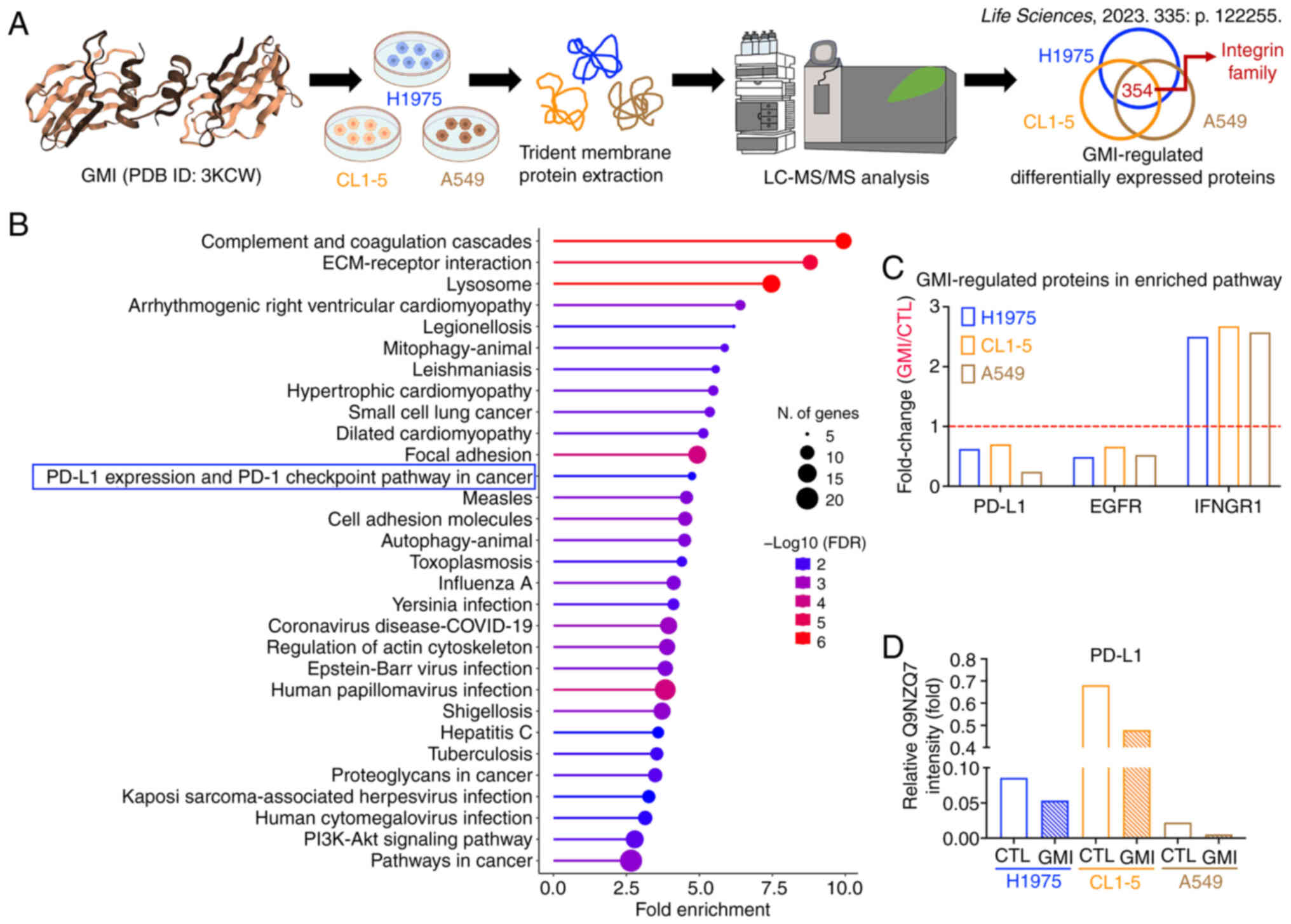
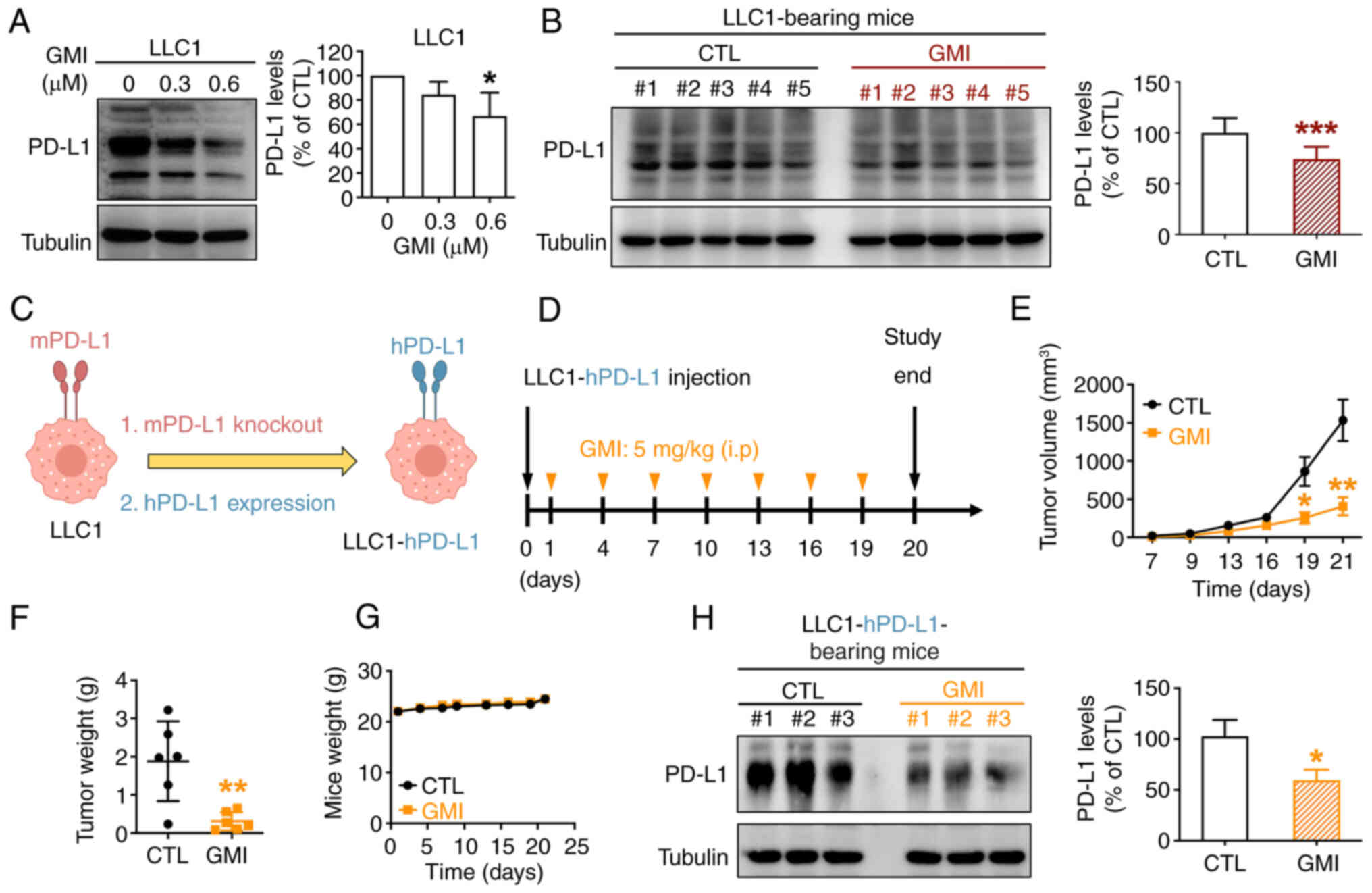
Figure 1

GMI regulates PD-L1 expression in
H1975, CL1-5 and A549 lung cancer cells. (A) Schematic workflow of
membrane protein extraction from GMI-treated cancer cells, followed
by liquid chromatography-mass spectrometry proteomic analysis to
identify GMI-regulated DEPs. (B) Kyoto Encyclopedia of Genes and
Genomes pathway enrichment analysis of GMI-regulated DEPs,
highlighting the top 30 significant pathways ranked by fold
enrichment. 'The PD-L1 expression and PD-1 checkpoint pathway in
cancer' is highlighted within the blue box. (C) Densitometric
analysis showing the fold changes (GMI/CTL) of proteins within the
enriched pathway, with two downregulated proteins (fold change
<0.75) and one upregulated protein (fold change >1.33). (D)
Bar graph depicting relative PD-L1 intensity in GMI-treated lung
cancer cells compared with untreated controls. GMI, Ganoderma
microsporum immunomodulatory protein; PD-L1, programmed
death-ligand 1; DEPs, differentially expressed proteins; PD-1,
programmed cell death protein-1.

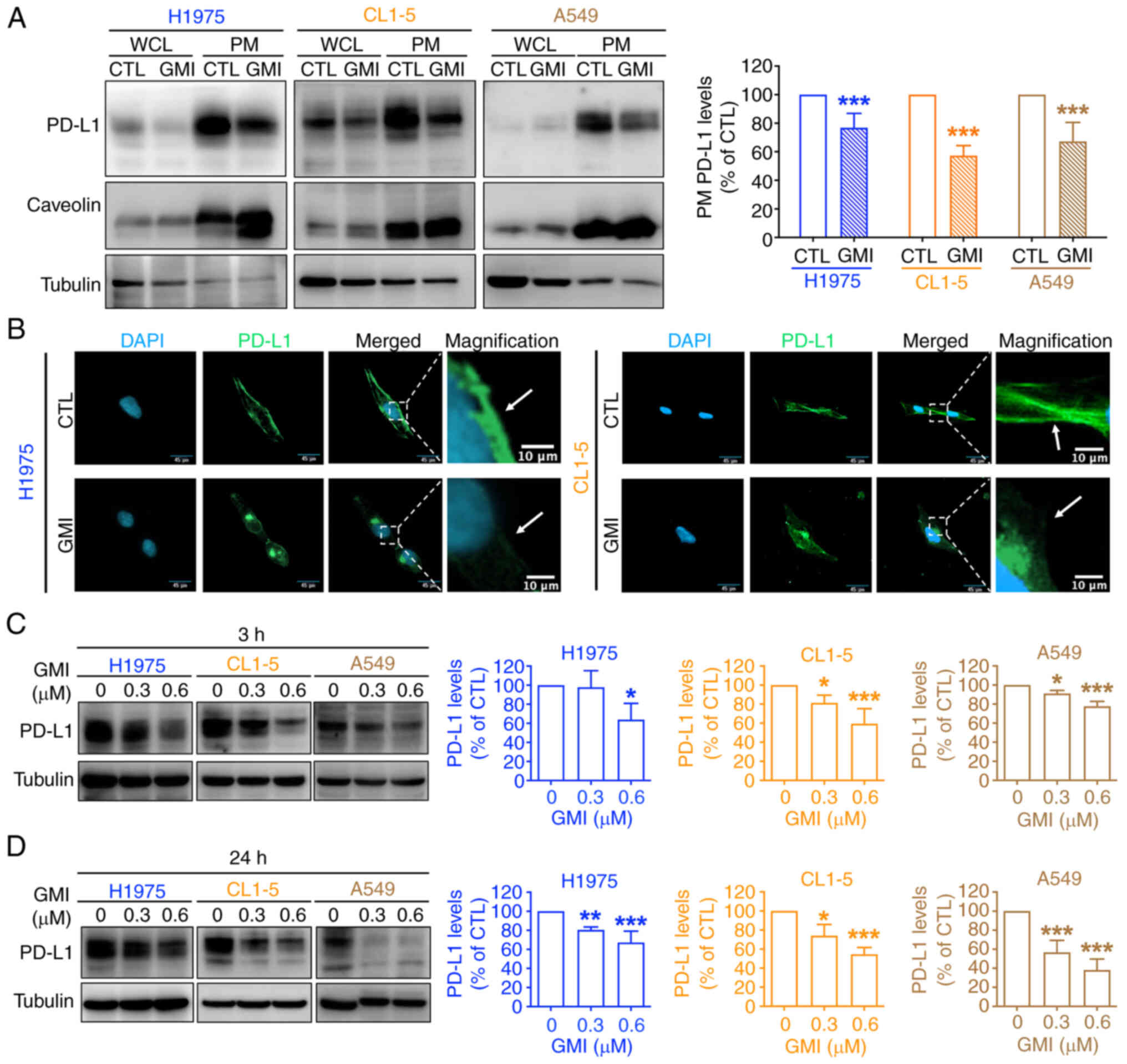
Figure 2

GMI reduces membrane PD-L1 protein
levels in lung cancer cells. (A) Left: Immunoblot analysis of PD-L1
in WCL and PM fractions isolated from H1975, CL1-5 and A549 cells
after 24 h treatment with 0.6 μM GMI. Caveolin and tubulin
were used as markers for PM and WCL fractions, respectively. Right:
quantification of PD-L1 levels in PM fractions normalized to
caveolin. (B) Immunofluorescence staining of PD-L1 (green) and
nuclei (DAPI, blue) in H1975 and CL1-5 cells treated with 0.6
μM GMI for 3 h. Scale bars, 45 μm (main images) and
10 μm (magnified insets). (C and D) Western blot analysis of
PD-L1 protein levels in H1975, CL1-5 and A549 cells treated with
indicated concentrations of GMI for 3 h (C) and 24 h (D). Tubulin
served as the loading control. Data are presented as the mean ±
standard deviation from three independent experiments.
*P<0.05, **P<0.01 and
***P<0.001. GMI, Ganoderma microsporum
immunomodulatory protein; PD-L1, programmed death-ligand 1; WCL,
whole-cell lysates; PM, plasma membrane.

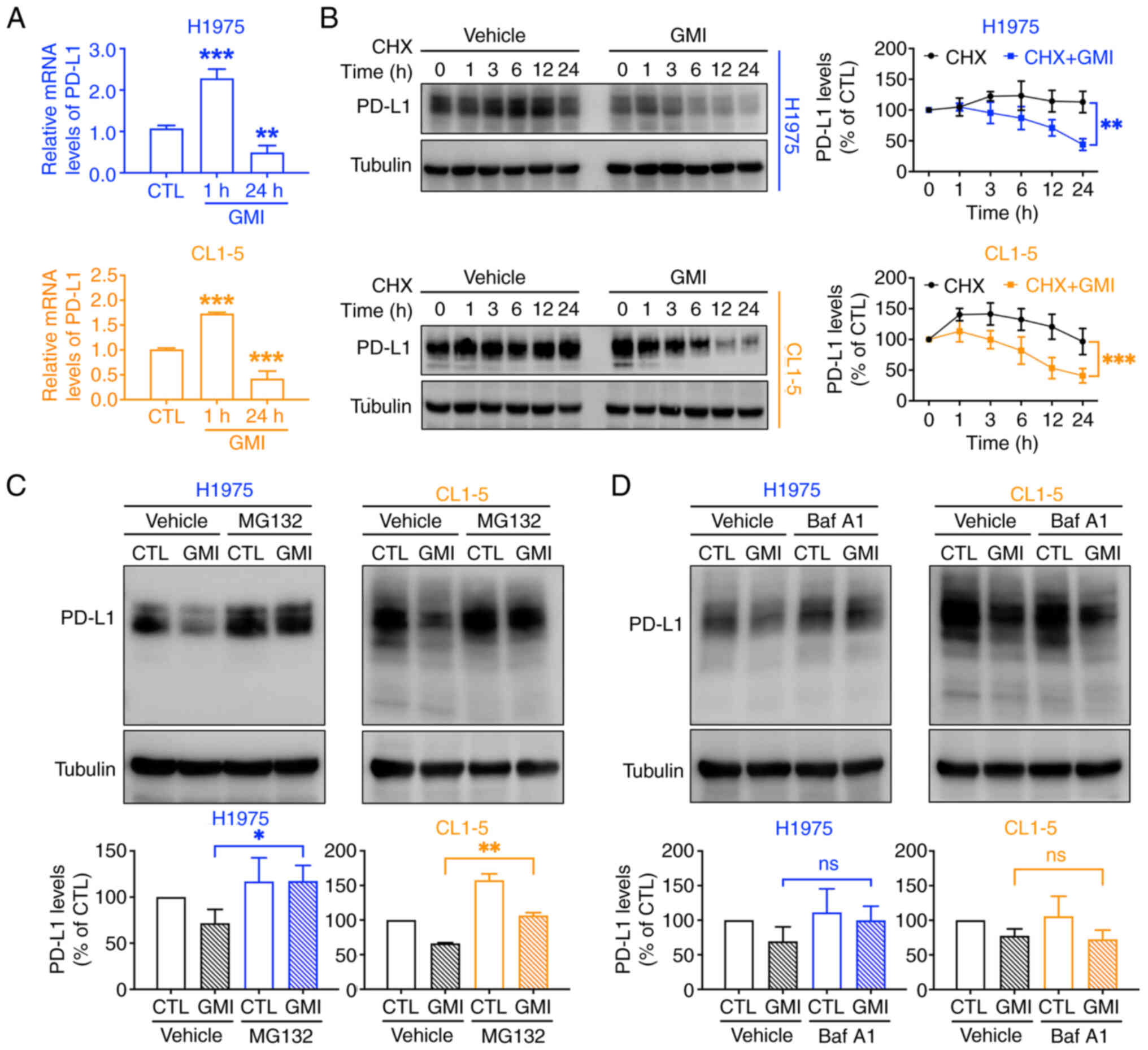
Figure 3

GMI induces proteasome-dependent
degradation of PD-L1. (A) Reverse transcription-quantitative PCR
analysis of PD-L1 mRNA expression in H1975 and CL1-5 cells
following treatment with 0.6 μM GMI for 1 and 24 h. (B) CHX
chase assay of H1975 and CL1-5 cells exposed to 200 μg/ml
CHX for 30 min, followed by incubation with or without 0.6
μM GMI for the indicated time points to assess PD-L1 protein
stability. (C and D) H1975 and CL1-5 cells were pretreated with 10
μM MG132 (C), a proteasome inhibitor, or 5 nM Baf A1 (D), a
lysosome inhibitor, and were then exposed to 0.6 μM GMI for
24 h. Data are presented as the mean ± standard deviation from
three independent experiments. *P<0.05,
**P<0.01 and ***P<0.001. GMI,
Ganoderma microsporum immunomodulatory protein; PD-L1,
programmed death-ligand 1; CHX, cycloheximide; Baf A1, bafilomycin
A1; ns, not significant.

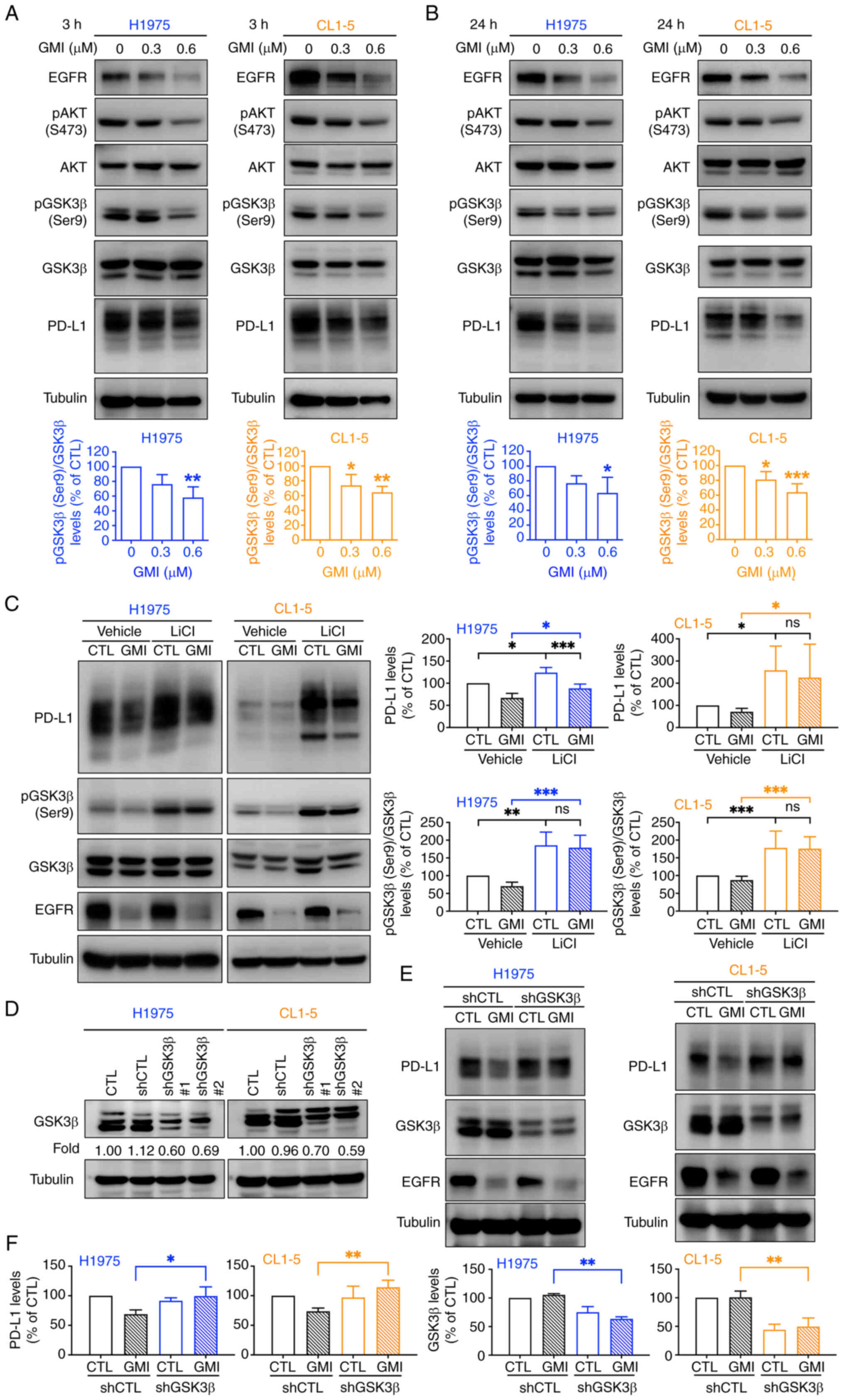
Figure 4

GMI facilitates PD-L1 degradation
through activation of GSK3β. (A and B) H1975 and CL1-5 cells were
treated with indicated concentrations of GMI for 3 h (A) and 24 h
(B). Protein expressions of EGFR, p-AKT (Ser473), p-GSK3β (Ser9)
and PD-L1 were analyzed by immunoblotting, with AKT, GSK3β and
tubulin as loading controls, and quantification of p-AKT and
p-GSK3β was performed relative to their corresponding total
proteins (AKT and GSK3β). (C) H1975 and CL1-5 cells were pretreated
with 25 mM LiCl, a GSK3β inhibitor, and were exposed to 0.6
μM GMI for 24 h. (D) Immunoblotting of GSK3β in H1975 and
CL1-5 cells expressing different GSK3β-targeting shRNAs. (E)
Immunoblotting analysis of PD-L1 and GSK3β in cancer cells
transduced with either GSK3β shRNA (shGSK3β#1) or control shRNA
(shCTL) lentiviruses and treated with or without 0.6 μM GMI
for 24 h. (F) Quantification of PD-L1 and GSK3β expression levels
shown in (E). Data are presented as the mean ± standard deviation
from three independent experiments. *P<0.05,
**P<0.01 and ***P<0.001. GMI,
Ganoderma microsporum immunomodulatory protein; PD-L1,
programmed death-ligand 1; p-, phosphorylated; LiCl, lithium
chloride; shRNA, short hairpin RNA; p-, phosphorylated; ns, not
significant.

Figure 5

GMI inhibits tumor growth and
downregulates PD-L1 in LLC1-hPD-L1 allograft models. (A) LLC1 cells
were treated with the indicated concentrations of GMI for 3 h.
PD-L1 protein levels were assessed by western blotting, with
tubulin as the loading control. Data are presented as the mean ±
standard deviation from three independent experiments. (B) Western
blot analysis of PD-L1 protein levels in tumor cells harvested from
CTL and GMI-treated groups. Quantitative data are shown. (C)
Schematic diagram illustrating the knockout of mouse PD-L1 and
replacement with human PD-L1 expression. (D) Treatment schedule of
LLC1-hPD-L1 syngeneic C57BL/6 mice. Mice were administered
intraperitoneal injections of GMI (5.0 mg/kg) every 3 days. (E-G)
Tumor volume (E), tumor weight (F) and body weight (G) were
measured at the indicated time points. Data are presented as the
mean ± SEM (n=6 mice per group). (H) PD-L1 protein levels in
excised tumors from CTL and GMI groups were analyzed by western
blotting (random samples from 3 mice per group).
*P<0.05, **P<0.01 and
***P<0.001. GMI, Ganoderma microsporum
immunomodulatory protein; PD-L1, programmed death-ligand 1; mPD-L1,
mouse PD-L1; hPD-L1, human PD-L1.

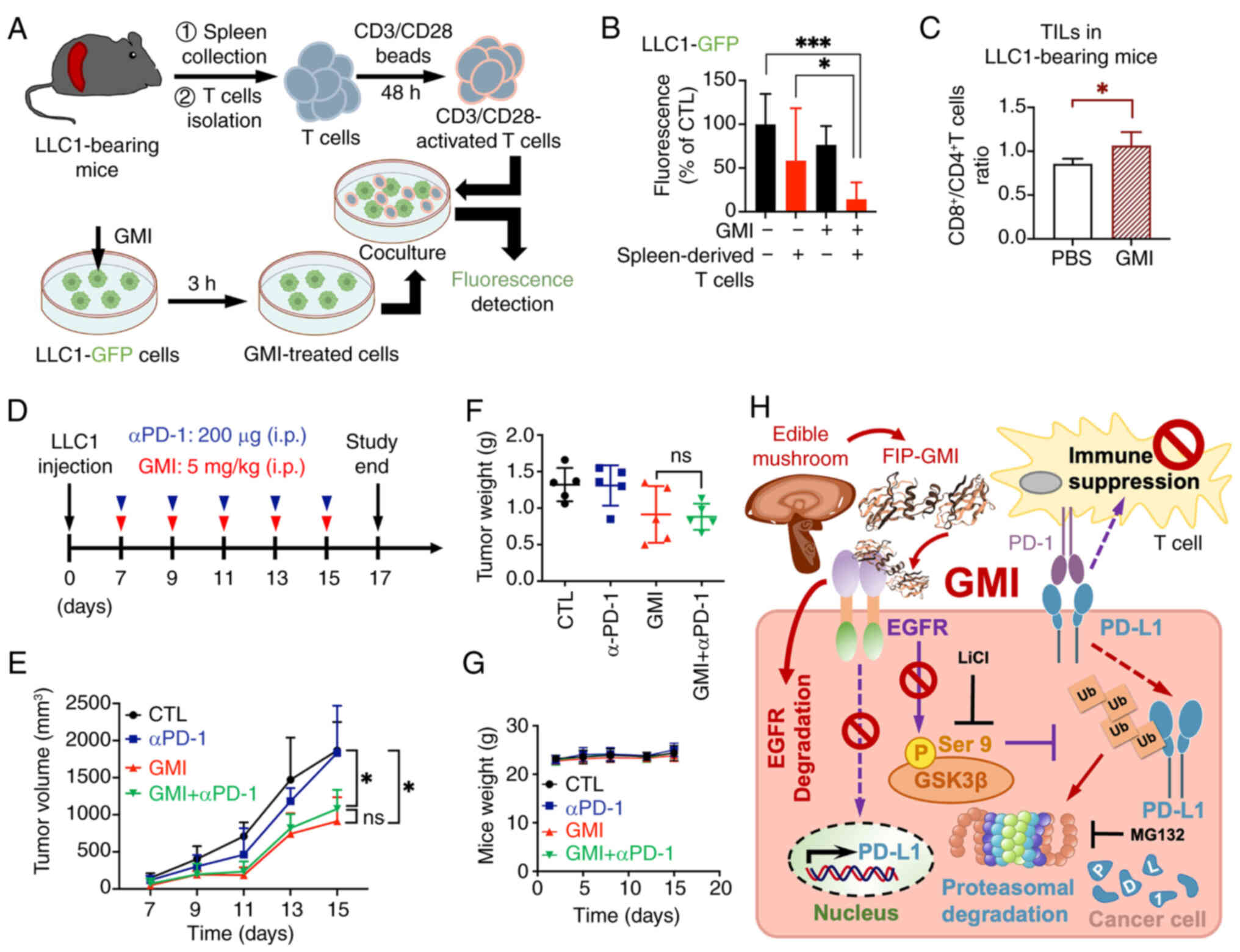
Figure 6

GMI regulates T cell-mediated
suppression of tumor cells ex vivo and promotes antitumor
immunity in vivo. (A) Schematic diagram illustrating the
co-culture protocol. Activated spleen-derived T cells isolated from
LLC1-bearing mice were co-cultured with LLC1-GFP cells pretreated
with 0.6 μM GMI for 3 h. After 72 h of co-culture, GFP
fluorescence in LLC1-GFP cells was analyzed. (B) Quantification of
GFP fluorescence intensity in LLC1-GFP cells following co-culture
with activated T cells. (C) Flow cytometric analysis of
tumor-infiltrating lymphocytes from LLC1-bearing mice treated with
control (PBS) or GMI (Fig. 5B).
The ratio of CD8+ to CD4+ T cells is shown.
(D) Treatment schedule for LLC1 syngeneic C57BL/6 mice receiving
intraperitoneal injections of GMI (5.0 mg/kg), anti-PD-1 antibody
(200 μg/mice), or their combination every 2 days. (E-G)
Tumor volume (E), tumor weight (F) and body weight (G) were
monitored at specified intervals throughout the experiment. Data
are presented as the mean ± SEM (n=5 mice per group). (H) Schematic
model illustrating how GMI enhances antitumor immunity by driving
PD-L1 breakdown. GMI, a FIP derived from an edible mushroom and
known as an EGFR degrader, reduces PD-L1 levels by downregulating
its mRNA expression and promoting GSK3β-mediated ubiquitination and
proteasomal degradation. This process further diminishes T cell
immune suppression and enhances antitumor immunity.
*P<0.05 and ***P<0.001. Ganoderma
microsporum immunomodulatory protein; GFP, green fluorescent
protein; PD-1, programmed cell death protein-1; FIPs, fungal
immunomodulatory proteins; LiCl, lithium chloride; ns, not
significant.
View References

1 

Zou W: Immunosuppressive networks in the tumour environment and their therapeutic relevance. Nat Rev Cancer. 5:263–274. 2005. View Article : Google Scholar : PubMed/NCBI

2 

Han Y, Liu D and Li L: PD-1/PD-L1 pathway: Current researches in cancer. Am J Cancer Res. 10:727–742. 2020.PubMed/NCBI

3 

Sun C, Mezzadra R and Schumacher TN: Regulation and function of the PD-L1 checkpoint. Immunity. 48:434–452. 2018. View Article : Google Scholar : PubMed/NCBI

4 

Iwai Y, Hamanishi J, Chamoto K and Honjo T: Cancer immunotherapies targeting the PD-1 signaling pathway. J Biomed Sci. 24:262017. View Article : Google Scholar : PubMed/NCBI

5 

Brahmer JR, Tykodi SS, Chow LQ, Hwu WJ, Topalian SL, Hwu P, Drake CG, Camacho LH, Kauh J, Odunsi K, et al: Safety and activity of anti-PD-L1 antibody in patients with advanced cancer. N Engl J Med. 366:2455–2465. 2012. View Article : Google Scholar : PubMed/NCBI

6 

Sharma P and Allison JP: Immune checkpoint targeting in cancer therapy: Toward combination strategies with curative potential. Cell. 161:205–214. 2015. View Article : Google Scholar : PubMed/NCBI

7 

Naidoo J, Page DB, Li BT, Connell LC, Schindler K, Lacouture ME, Postow MA and Wolchok JD: Toxicities of the anti-PD-1 and anti-PD-L1 immune checkpoint antibodies. Ann Oncol. 26:2375–2391. 2015. View Article : Google Scholar : PubMed/NCBI

8 

Zhang N, Dou Y, Liu L, Zhang X, Liu X, Zeng Q, Liu Y, Yin M, Liu X, Deng H and Song D: SA-49, a novel aloperine derivative, induces MITF-dependent lysosomal degradation of PD-L1. EBioMedicine. 40:151–162. 2019. View Article : Google Scholar : PubMed/NCBI

9 

Wang T, Cai S, Cheng Y, Zhang W, Wang M, Sun H, Guo B, Li Z, Xiao Y and Jiang S: Discovery of small-molecule inhibitors of the PD-1/PD-L1 axis that promote PD-L1 internalization and degradation. J Med Chem. 65:3879–3893. 2022. View Article : Google Scholar : PubMed/NCBI

10 

Cha JH, Chan LC, Li CW, Hsu JL and Hung MC: Mechanisms controlling PD-L1 expression in cancer. Mol Cell. 76:359–370. 2019. View Article : Google Scholar : PubMed/NCBI

11 

Hsu JM, Xia W, Hsu YH, Chan LC, Yu WH, Cha JH, Chen CT, Liao HW, Kuo CW, Khoo KH, et al: STT3-dependent PD-L1 accumulation on cancer stem cells promotes immune evasion. Nat Commun. 9:19082018. View Article : Google Scholar : PubMed/NCBI

12 

Li CW, Lim SO, Xia W, Lee HH, Chan LC, Kuo CW, Khoo KH, Chang SS, Cha JH, Kim T, et al: Glycosylation and stabilization of programmed death ligand-1 suppresses T-cell activity. Nat Commun. 7:126322016. View Article : Google Scholar : PubMed/NCBI

13 

Zhang J, Bu X, Wang H, Zhu Y, Geng Y, Nihira NT, Tan Y, Ci Y, Wu F, Dai X, et al: Cyclin D-CDK4 kinase destabilizes PD-L1 via cullin 3-SPOP to control cancer immune surveillance. Nature. 553:91–95. 2018. View Article : Google Scholar

14 

Qian G, Guo J, Vallega KA, Hu C, Chen Z, Deng Y, Wang Q, Fan S, Ramalingam SS, Owonikoko TK, et al: Membrane-associated RING-CH 8 functions as a novel PD-L1 E3 ligase to mediate PD-L1 degradation induced by EGFR inhibitors. Mol Cancer Res. 19:1622–1634. 2021. View Article : Google Scholar : PubMed/NCBI

15 

Su YW, Huang WY, Lin SH and Yang PS: Effects of reishimmune-S, a fungal immunomodulatory peptide supplement, on the quality of life and circulating natural killer cell profiles of patients with early breast cancer receiving adjuvant endocrine therapy. Integr Cancer Ther. 23:153473542412421202024. View Article : Google Scholar : PubMed/NCBI

16 

Lin TY, Hua WJ, Yeh H and Tseng AJ: Functional proteomic analysis reveals that fungal immunomodulatory protein reduced expressions of heat shock proteins correlates to apoptosis in lung cancer cells. Phytomedicine. 80:1533842021. View Article : Google Scholar

17 

Hua WJ, Hwang WL, Yeh H, Lin ZH, Hsu WH and Lin TY: Ganoderma microsporum immunomodulatory protein combined with KRAS(G12C) inhibitor impedes intracellular AKT/ERK network to suppress lung cancer cells with KRAS mutation. Int J Biol Macromol. 259:1292912024. View Article : Google Scholar : PubMed/NCBI

18 

Tseng AJ, Tu TH, Hua WJ, Yeh H, Chen CJ, Lin ZH, Hsu WH, Chen YL, Hsu CC and Lin TY: GMI, Ganoderma microsporum protein, suppresses cell mobility and increases temozolomide sensitivity through induction of Slug degradation in glioblastoma multiforme cells. Int J Biol Macromol. 219:940–948. 2022. View Article : Google Scholar : PubMed/NCBI

19 

Hua WJ, Yeh H, Lin ZH, Tseng AJ, Huang LC, Qiu WL, Tu TH, Wang DH, Hsu WH, Hwang WL and Lin TY: Ganoderma microsporum immunomodulatory protein as an extracellular epidermal growth factor receptor (EGFR) degrader for suppressing EGFR-positive lung cancer cells. Cancer Lett. 578:2164582023. View Article : Google Scholar : PubMed/NCBI

20 

Yeh H, Vo DNK, Lin ZH, Ho HPT, Hua WJ, Qiu WL, Tsai MH and Lin TY: GMI, a protein from Ganoderma microsporum, induces ACE2 degradation to alleviate infection of SARS-CoV-2 Spike-pseudotyped virus. Phytomedicine. 103:1542152022. View Article : Google Scholar : PubMed/NCBI

21 

Allen M, Bjerke M, Edlund H, Nelander S and Westermark B: Origin of the U87MG glioma cell line: Good news and bad news. Sci Transl Med. 8:354re3532016. View Article : Google Scholar

22 

Lo HC, Hua WJ, Yeh H, Lin ZH, Huang LC, Ciou YR, Ruan R, Lin KF, Tseng AJ, Wu ATH, et al: GMI, a Ganoderma microsporum protein, abolishes focal adhesion network to reduce cell migration and metastasis of lung cancer. Life Sci. 335:1222552023. View Article : Google Scholar : PubMed/NCBI

23 

Ge SX, Jung D and Yao R: ShinyGO: A graphical gene-set enrichment tool for animals and plants. Bioinformatics. 36:2628–2629. 2020. View Article : Google Scholar :

24 

Luo W and Brouwer C: Pathview: An R/Bioconductor package for pathway-based data integration and visualization. Bioinformatics. 29:1830–1831. 2013. View Article : Google Scholar : PubMed/NCBI

25 

Kanehisa M, Furumichi M, Sato Y, Ishiguro-Watanabe M and Tanabe M: KEGG: Integrating viruses and cellular organisms. Nucleic Acids Res. 49:D545–D551. 2021. View Article : Google Scholar :

26 

Hsu WH, Hua WJ, Qiu WL, Tseng AJ, Cheng HC and Lin TY: WSG, a glucose-enriched polysaccharide from Ganoderma lucidum, suppresses tongue cancer cells via inhibition of EGFR-mediated signaling and potentiates cisplatin-induced apoptosis. Int J Biol Macromol. 193:1201–1208. 2021. View Article : Google Scholar : PubMed/NCBI

27 

Livak KJ and Schmittgen TD: Analysis of relative gene expression data using real-time quantitative PCR and the 2(-Delta Delta C(T)) method. Methods. 25:402–408. 2001. View Article : Google Scholar

28 

Zhang Y, Huang Y, Yu D, Xu M, Hu H, Zhang Q, Cai M, Geng X, Zhang H, Xia J, et al: Demethylzeylasteral induces PD-L1 ubiquitin-proteasome degradation and promotes antitumor immunity via targeting USP22. Acta Pharm Sin B. 14:4312–4328. 2024. View Article : Google Scholar : PubMed/NCBI

29 

Lu CS, Lin CW, Chang YH, Chen HY, Chung WC, Lai WY, Ho CC, Wang TH, Chen CY, Yeh CL, et al: Antimetabolite pemetrexed primes a favorable tumor microenvironment for immune checkpoint blockade therapy. J Immunother Cancer. 8:e0013922020. View Article : Google Scholar : PubMed/NCBI

30 

He K, Barsoumian HB, Puebla-Osorio N, Hu Y, Sezen D, Wasley MD, Bertolet G, Zhang J, Leuschner C, Yang L, et al: Inhibition of STAT6 with antisense oligonucleotides enhances the systemic antitumor effects of radiotherapy and Anti-PD-1 in metastatic non-small cell lung cancer. Cancer Immunol Res. 11:486–500. 2023. View Article : Google Scholar : PubMed/NCBI

31 

Wang TY, Yu CC, Hsieh PL, Liao YW, Yu CH and Chou MY: GMI ablates cancer stemness and cisplatin resistance in oral carcinomas stem cells through IL-6/Stat3 signaling inhibition. Oncotarget. 8:70422–70430. 2017. View Article : Google Scholar : PubMed/NCBI

32 

Lin TY, Hsu HY, Sun WH, Wu TH and Tsao SM: Induction of Cbl-dependent epidermal growth factor receptor degradation in Ling Zhi-8 suppressed lung cancer. Int J Cancer. 140:2596–2607. 2017. View Article : Google Scholar : PubMed/NCBI

33 

Hsin IL, Chiu LY, Ou CC, Wu WJ, Sheu GT and Ko JL: CD133 inhibition via autophagic degradation in pemetrexed-resistant lung cancer cells by GMI, a fungal immunomodulatory protein from Ganoderma microsporum. Br J Cancer. 123:449–458. 2020. View Article : Google Scholar : PubMed/NCBI

34 

Lin PL, Wu TC, Wu DW, Wang L, Chen CY and Lee H: An increase in BAG-1 by PD-L1 confers resistance to tyrosine kinase inhibitor in non-small cell lung cancer via persistent activation of ERK signalling. Eur J Cancer. 85:95–105. 2017. View Article : Google Scholar : PubMed/NCBI

35 

Liu M, Wang X, Li W, Yu X, Flores-Villanueva P, Xu-Monette ZY, Li L, Zhang M, Young KH, Ma X and Li Y: Targeting PD-L1 in non-small cell lung cancer using CAR T cells. Oncogenesis. 9:722020. View Article : Google Scholar : PubMed/NCBI

36 

Lemma EY, Letian A, Altorki NK and McGraw TE: Regulation of PD-L1 trafficking from synthesis to degradation. Cancer Immunol Res. 11:866–874. 2023. View Article : Google Scholar : PubMed/NCBI

37 

Feng C, Zhang L, Chang X, Qin D and Zhang T: Regulation of post-translational modification of PD-L1 and advances in tumor immunotherapy. Front Immunol. 14:12301352023. View Article : Google Scholar : PubMed/NCBI

38 

Zuazo M, Gato-Cañas M, Llorente N, Ibañez-Vea M, Arasanz H, Kochan G and Escors D: Molecular mechanisms of programmed cell death-1 dependent T cell suppression: Relevance for immunotherapy. Ann Transl Med. 5:3852017. View Article : Google Scholar : PubMed/NCBI

39 

Ghosh C, Luong G and Sun Y: A snapshot of the PD-1/PD-L1 pathway. J Cancer. 12:2735–2746. 2021. View Article : Google Scholar : PubMed/NCBI

40 

Gou Q, Dong C, Xu H, Khan B, Jin J, Liu Q, Shi J and Hou Y: PD-L1 degradation pathway and immunotherapy for cancer. Cell Death Dis. 11:9552020. View Article : Google Scholar : PubMed/NCBI

41 

Venturella G, Ferraro V, Cirlincione F and Gargano ML: Medicinal Mushrooms: Bioactive Compounds, Use, and Clinical Trials. Int J Mol Sci. 22:2021. View Article : Google Scholar : PubMed/NCBI

42 

Casey SC, Tong L, Li Y, Do R, Walz S, Fitzgerald KN, Gouw AM, Baylot V, Gütgemann I, Eilers M and Felsher DW: MYC regulates the antitumor immune response through CD47 and PD-L1. Science. 352:227–231. 2016. View Article : Google Scholar : PubMed/NCBI

43 

Miao J, Hsu PC, Yang YL, Xu Z, Dai Y, Wang Y, Chan G, Huang Z, Hu B, Li H, et al: YAP regulates PD-L1 expression in human NSCLC cells. Oncotarget. 8:114576–114587. 2017. View Article : Google Scholar

44 

Zhang N, Zeng Y, Du W, Zhu J, Shen D, Liu Z and Huang JA: The EGFR pathway is involved in the regulation of PD-L1 expression via the IL-6/JAK/STAT3 signaling pathway in EGFR-mutated non-small cell lung cancer. Int J Oncol. 49:1360–1368. 2016. View Article : Google Scholar : PubMed/NCBI

45 

Jiang XM, Xu YL, Huang MY, Zhang LL, Su MX, Chen X and Lu JJ: Osimertinib (AZD9291) decreases programmed death ligand-1 in EGFR-mutated non-small cell lung cancer cells. Acta Pharmacol Sin. 38:1512–1520. 2017. View Article : Google Scholar : PubMed/NCBI

46 

Ota K, Azuma K, Kawahara A, Hattori S, Iwama E, Tanizaki J, Harada T, Matsumoto K, Takayama K, Takamori S, et al: Induction of PD-L1 expression by the EML4-ALK oncoprotein and downstream signaling pathways in non-small cell lung cancer. Clin Cancer Res. 21:4014–4021. 2015. View Article : Google Scholar : PubMed/NCBI

47 

Konen JM, Rodriguez BL, Fradette JJ, Gibson L, Davis D, Minelli R, Peoples MD, Kovacs J, Carugo A, Bristow C, et al: Ntrk1 promotes resistance to PD-1 checkpoint blockade in mesenchymal Kras/p53 mutant lung cancer. Cancers (Basel). 11:4622019. View Article : Google Scholar : PubMed/NCBI

48 

Lastwika KJ, Wilson W III, Li QK, Norris J, Xu H, Ghazarian SR, Kitagawa H, Kawabata S, Taube JM, Yao S, et al: Control of PD-L1 expression by oncogenic activation of the AKT-mTOR pathway in non-small cell lung cancer. Cancer Res. 76:227–238. 2016. View Article : Google Scholar

49 

Wu Y, Zhang C, Liu X, He Z, Shan B, Zeng Q, Zhao Q, Zhu H, Liao H, Cen X, et al: ARIH1 signaling promotes antitumor immunity by targeting PD-L1 for proteasomal degradation. Nat Commun. 12:23462021. View Article : Google Scholar

50 

Ren X, Wang L, Liu L and Liu J: PTMs of PD-1/PD-L1 and PROTACs application for improving cancer immunotherapy. Front Immunol. 15:13925462024. View Article : Google Scholar : PubMed/NCBI

51 

Zhang F, Jiang R, Sun S, Wu C, Yu Q, Awadasseid A, Wang J and Zhang W: Recent advances and mechanisms of action of PD-L1 degraders as potential therapeutic agents. Eur J Med Chem. 268:1162672024. View Article : Google Scholar : PubMed/NCBI

52 

Gao H, Sun X and Rao Y: PROTAC technology: Opportunities and challenges. ACS Med Chem Lett. 11:237–240. 2020. View Article : Google Scholar : PubMed/NCBI

53 

Fu HY and Hseu RS: Safety assessment of the fungal immunomodulatory protein from Ganoderma microsporum (GMI) derived from engineered Pichia pastoris: Genetic toxicology, a 13-week oral gavage toxicity study, and an embryo-fetal developmental toxicity study in Sprague-Dawley rats. Toxicol Rep. 9:1240–1254. 2022. View Article : Google Scholar :

54 

Spitzer MH, Carmi Y, Reticker-Flynn NE, Kwek SS, Madhireddy D, Martins MM, Gherardini PF, Prestwood TR, Chabon J, Bendall SC, et al: systemic immunity is required for effective cancer immunotherapy. Cell. 168:487–502. 2017. View Article : Google Scholar : PubMed/NCBI

55 

Yi M, Niu M, Xu L, Luo S and Wu K: Regulation of PD-L1 expression in the tumor microenvironment. J Hematol Oncol. 14:102021. View Article : Google Scholar : PubMed/NCBI

56 

Wang M, Guo H, Sun BB, Jie XL, Shi XY, Liu YQ, Shi XL, Ding LQ, Xue PH, Qiu F, et al: Centipeda minima and 6-O-angeloylplenolin enhance the efficacy of immune checkpoint inhibitors in non-small cell lung cancer. Phytomedicine. 132:1558252024. View Article : Google Scholar : PubMed/NCBI

57 

Wang Q, Wang J, Yu D, Zhang Q, Hu H, Xu M, Zhang H, Tian S, Zheng G, Lu D, et al: Benzosceptrin C induces lysosomal degradation of PD-L1 and promotes antitumor immunity by targeting DHHC3. Cell Rep Med. 5:1013572024. View Article : Google Scholar : PubMed/NCBI

58 

Li JP, Lee YP, Ma JC, Liu BR, Hsieh NT, Chen DC, Chu CL and You RI: The enhancing effect of fungal immunomodulatory protein-volvariella volvacea (FIP-vvo) on maturation and function of mouse dendritic cells. Life (Basel). 11:4712021.PubMed/NCBI

59 

Sharma P, Goswami S, Raychaudhuri D, Siddiqui BA, Singh P, Nagarajan A, Liu J, Subudhi SK, Poon C, Gant KL, et al: Immune checkpoint therapy-current perspectives and future directions. Cell. 186:1652–1669. 2023. View Article : Google Scholar : PubMed/NCBI

60 

Freed-Pastor WA, Lambert LJ, Ely ZA, Pattada NB, Bhutkar A, Eng G, Mercer KL, Garcia AP, Lin L, Rideout WM III, et al: The CD155/TIGIT axis promotes and maintains immune evasion in neoantigen-expressing pancreatic cancer. Cancer Cell. 39:1342–1360. 2021. View Article : Google Scholar : PubMed/NCBI

61 

Lin ZH, Yeh H, Lo HC, Hua WJ, Ni MY, Wang LK, Chang TT, Yang MH and Lin TY: GMI, a fungal immunomodulatory protein, ameliorates SARS-CoV-2 envelope protein-induced inflammation in macrophages via inhibition of MAPK pathway. Int J Biol Macromol. 241:1246482023. View Article : Google Scholar : PubMed/NCBI

62 

Almozyan S, Colak D, Mansour F, Alaiya A, Al-Harazi O, Qattan A, Al-Mohanna F, Al-Alwan M and Ghebeh H: PD-L1 promotes OCT4 and Nanog expression in breast cancer stem cells by sustaining PI3K/AKT pathway activation. Int J Cancer. 141:1402–1412. 2017. View Article : Google Scholar : PubMed/NCBI

63 

Gao L, Guo Q, Li X, Yang X, Ni H, Wang T, Zhao Q, Liu H, Xing Y, Xi T and Zheng L: MiR-873/PD-L1 axis regulates the stemness of breast cancer cells. EBioMedicine. 41:395–407. 2019. View Article : Google Scholar : PubMed/NCBI

64 

Jeong H, Koh J, Kim S, Song SG, Lee SH, Jeon Y, Lee CH, Keam B, Lee SH, Chung DH and Jeon YK: Epithelial-mesenchymal transition induced by tumor cell-intrinsic PD-L1 signaling predicts a poor response to immune checkpoint inhibitors in PD-L1-high lung cancer. Br J Cancer. 131:23–36. 2024. View Article : Google Scholar : PubMed/NCBI

65 

Chang CH, Qiu J, O'Sullivan D, Buck MD, Noguchi T, Curtis JD, Chen Q, Gindin M, Gubin MM, van der Windt GJ, et al: Metabolic competition in the tumor microenvironment is a driver of cancer progression. Cell. 162:1229–1241. 2015. View Article : Google Scholar : PubMed/NCBI

66 

Ghebeh H, Lehe C, Barhoush E, Al-Romaih K, Tulbah A, Al-Alwan M, Hendrayani SF, Manogaran P, Alaiya A, Al-Tweigeri T, et al: Doxorubicin downregulates cell surface B7-H1 expression and upregulates its nuclear expression in breast cancer cells: Role of B7-H1 as an anti-apoptotic molecule. Breast Cancer Res. 12:R482010. View Article : Google Scholar : PubMed/NCBI

67 

Liu S, Chen S, Yuan W, Wang H, Chen K and Li D and Li D: PD-1/PD-L1 interaction up-regulates MDR1/P-gp expression in breast cancer cells via PI3K/AKT and MAPK/ERK pathways. Oncotarget. 8:99901–99912. 2017. View Article : Google Scholar : PubMed/NCBI

68 

Zheng Y, Fang YC and Li J: PD-L1 expression levels on tumor cells affect their immunosuppressive activity. Oncol Lett. 18:5399–5407. 2019.PubMed/NCBI

Related Articles

  • Abstract
  • View
  • Download
  • Twitter
Copy and paste a formatted citation
Spandidos Publications style
Hua W, Huang L, Lin Z, Ciou Y, Lin K, Liao L, Hsu W and Lin T: Suppression of tumor growth by GMI, an edible fungal immunomodulatory protein, is associated with targeting GSK3&beta;‑mediated proteasomal degradation of PD‑L1. Int J Mol Med 56: 217, 2025.
APA
Hua, W., Huang, L., Lin, Z., Ciou, Y., Lin, K., Liao, L. ... Lin, T. (2025). Suppression of tumor growth by GMI, an edible fungal immunomodulatory protein, is associated with targeting GSK3&beta;‑mediated proteasomal degradation of PD‑L1. International Journal of Molecular Medicine, 56, 217. https://doi.org/10.3892/ijmm.2025.5658
MLA
Hua, W., Huang, L., Lin, Z., Ciou, Y., Lin, K., Liao, L., Hsu, W., Lin, T."Suppression of tumor growth by GMI, an edible fungal immunomodulatory protein, is associated with targeting GSK3&beta;‑mediated proteasomal degradation of PD‑L1". International Journal of Molecular Medicine 56.6 (2025): 217.
Chicago
Hua, W., Huang, L., Lin, Z., Ciou, Y., Lin, K., Liao, L., Hsu, W., Lin, T."Suppression of tumor growth by GMI, an edible fungal immunomodulatory protein, is associated with targeting GSK3&beta;‑mediated proteasomal degradation of PD‑L1". International Journal of Molecular Medicine 56, no. 6 (2025): 217. https://doi.org/10.3892/ijmm.2025.5658
Copy and paste a formatted citation
x
Spandidos Publications style
Hua W, Huang L, Lin Z, Ciou Y, Lin K, Liao L, Hsu W and Lin T: Suppression of tumor growth by GMI, an edible fungal immunomodulatory protein, is associated with targeting GSK3&beta;‑mediated proteasomal degradation of PD‑L1. Int J Mol Med 56: 217, 2025.
APA
Hua, W., Huang, L., Lin, Z., Ciou, Y., Lin, K., Liao, L. ... Lin, T. (2025). Suppression of tumor growth by GMI, an edible fungal immunomodulatory protein, is associated with targeting GSK3&beta;‑mediated proteasomal degradation of PD‑L1. International Journal of Molecular Medicine, 56, 217. https://doi.org/10.3892/ijmm.2025.5658
MLA
Hua, W., Huang, L., Lin, Z., Ciou, Y., Lin, K., Liao, L., Hsu, W., Lin, T."Suppression of tumor growth by GMI, an edible fungal immunomodulatory protein, is associated with targeting GSK3&beta;‑mediated proteasomal degradation of PD‑L1". International Journal of Molecular Medicine 56.6 (2025): 217.
Chicago
Hua, W., Huang, L., Lin, Z., Ciou, Y., Lin, K., Liao, L., Hsu, W., Lin, T."Suppression of tumor growth by GMI, an edible fungal immunomodulatory protein, is associated with targeting GSK3&beta;‑mediated proteasomal degradation of PD‑L1". International Journal of Molecular Medicine 56, no. 6 (2025): 217. https://doi.org/10.3892/ijmm.2025.5658
Follow us
  • Twitter
  • LinkedIn
  • Facebook
About
  • Spandidos Publications
  • Careers
  • Cookie Policy
  • Privacy Policy
How can we help?
  • Help
  • Live Chat
  • Contact
  • Email to our Support Team