Spandidos Publications Logo
  • About
    • About Spandidos
    • Aims and Scopes
    • Abstracting and Indexing
    • Editorial Policies
    • Reprints and Permissions
    • Job Opportunities
    • Terms and Conditions
    • Contact
  • Journals
    • All Journals
    • Oncology Letters
      • Oncology Letters
      • Information for Authors
      • Editorial Policies
      • Editorial Board
      • Aims and Scope
      • Abstracting and Indexing
      • Bibliographic Information
      • Archive
    • International Journal of Oncology
      • International Journal of Oncology
      • Information for Authors
      • Editorial Policies
      • Editorial Board
      • Aims and Scope
      • Abstracting and Indexing
      • Bibliographic Information
      • Archive
    • Molecular and Clinical Oncology
      • Molecular and Clinical Oncology
      • Information for Authors
      • Editorial Policies
      • Editorial Board
      • Aims and Scope
      • Abstracting and Indexing
      • Bibliographic Information
      • Archive
    • Experimental and Therapeutic Medicine
      • Experimental and Therapeutic Medicine
      • Information for Authors
      • Editorial Policies
      • Editorial Board
      • Aims and Scope
      • Abstracting and Indexing
      • Bibliographic Information
      • Archive
    • International Journal of Molecular Medicine
      • International Journal of Molecular Medicine
      • Information for Authors
      • Editorial Policies
      • Editorial Board
      • Aims and Scope
      • Abstracting and Indexing
      • Bibliographic Information
      • Archive
    • Biomedical Reports
      • Biomedical Reports
      • Information for Authors
      • Editorial Policies
      • Editorial Board
      • Aims and Scope
      • Abstracting and Indexing
      • Bibliographic Information
      • Archive
    • Oncology Reports
      • Oncology Reports
      • Information for Authors
      • Editorial Policies
      • Editorial Board
      • Aims and Scope
      • Abstracting and Indexing
      • Bibliographic Information
      • Archive
    • Molecular Medicine Reports
      • Molecular Medicine Reports
      • Information for Authors
      • Editorial Policies
      • Editorial Board
      • Aims and Scope
      • Abstracting and Indexing
      • Bibliographic Information
      • Archive
    • World Academy of Sciences Journal
      • World Academy of Sciences Journal
      • Information for Authors
      • Editorial Policies
      • Editorial Board
      • Aims and Scope
      • Abstracting and Indexing
      • Bibliographic Information
      • Archive
    • International Journal of Functional Nutrition
      • International Journal of Functional Nutrition
      • Information for Authors
      • Editorial Policies
      • Editorial Board
      • Aims and Scope
      • Abstracting and Indexing
      • Bibliographic Information
      • Archive
    • International Journal of Epigenetics
      • International Journal of Epigenetics
      • Information for Authors
      • Editorial Policies
      • Editorial Board
      • Aims and Scope
      • Abstracting and Indexing
      • Bibliographic Information
      • Archive
    • Medicine International
      • Medicine International
      • Information for Authors
      • Editorial Policies
      • Editorial Board
      • Aims and Scope
      • Abstracting and Indexing
      • Bibliographic Information
      • Archive
  • Articles
  • Information
    • Information for Authors
    • Information for Reviewers
    • Information for Librarians
    • Information for Advertisers
    • Conferences
  • Language Editing
Spandidos Publications Logo
  • About
    • About Spandidos
    • Aims and Scopes
    • Abstracting and Indexing
    • Editorial Policies
    • Reprints and Permissions
    • Job Opportunities
    • Terms and Conditions
    • Contact
  • Journals
    • All Journals
    • Biomedical Reports
      • Information for Authors
      • Editorial Policies
      • Editorial Board
      • Aims and Scope
      • Abstracting and Indexing
      • Bibliographic Information
      • Archive
    • Experimental and Therapeutic Medicine
      • Information for Authors
      • Editorial Policies
      • Editorial Board
      • Aims and Scope
      • Abstracting and Indexing
      • Bibliographic Information
      • Archive
    • International Journal of Epigenetics
      • Information for Authors
      • Editorial Policies
      • Editorial Board
      • Aims and Scope
      • Abstracting and Indexing
      • Bibliographic Information
      • Archive
    • International Journal of Functional Nutrition
      • Information for Authors
      • Editorial Policies
      • Editorial Board
      • Aims and Scope
      • Abstracting and Indexing
      • Bibliographic Information
      • Archive
    • International Journal of Molecular Medicine
      • Information for Authors
      • Editorial Policies
      • Editorial Board
      • Aims and Scope
      • Abstracting and Indexing
      • Bibliographic Information
      • Archive
    • International Journal of Oncology
      • Information for Authors
      • Editorial Policies
      • Editorial Board
      • Aims and Scope
      • Abstracting and Indexing
      • Bibliographic Information
      • Archive
    • Medicine International
      • Information for Authors
      • Editorial Policies
      • Editorial Board
      • Aims and Scope
      • Abstracting and Indexing
      • Bibliographic Information
      • Archive
    • Molecular and Clinical Oncology
      • Information for Authors
      • Editorial Policies
      • Editorial Board
      • Aims and Scope
      • Abstracting and Indexing
      • Bibliographic Information
      • Archive
    • Molecular Medicine Reports
      • Information for Authors
      • Editorial Policies
      • Editorial Board
      • Aims and Scope
      • Abstracting and Indexing
      • Bibliographic Information
      • Archive
    • Oncology Letters
      • Information for Authors
      • Editorial Policies
      • Editorial Board
      • Aims and Scope
      • Abstracting and Indexing
      • Bibliographic Information
      • Archive
    • Oncology Reports
      • Information for Authors
      • Editorial Policies
      • Editorial Board
      • Aims and Scope
      • Abstracting and Indexing
      • Bibliographic Information
      • Archive
    • World Academy of Sciences Journal
      • Information for Authors
      • Editorial Policies
      • Editorial Board
      • Aims and Scope
      • Abstracting and Indexing
      • Bibliographic Information
      • Archive
  • Articles
  • Information
    • For Authors
    • For Reviewers
    • For Librarians
    • For Advertisers
    • Conferences
  • Language Editing
Login Register Submit
  • This site uses cookies
  • You can change your cookie settings at any time by following the instructions in our Cookie Policy. To find out more, you may read our Privacy Policy.

    I agree
Search articles by DOI, keyword, author or affiliation
Search
Advanced Search
presentation
International Journal of Molecular Medicine
Join Editorial Board Propose a Special Issue
Print ISSN: 1107-3756 Online ISSN: 1791-244X
Journal Cover
January-2026 Volume 57 Issue 1

Full Size Image

Sign up for eToc alerts
Recommend to Library

Journals

International Journal of Molecular Medicine

International Journal of Molecular Medicine

International Journal of Molecular Medicine is an international journal devoted to molecular mechanisms of human disease.

International Journal of Oncology

International Journal of Oncology

International Journal of Oncology is an international journal devoted to oncology research and cancer treatment.

Molecular Medicine Reports

Molecular Medicine Reports

Covers molecular medicine topics such as pharmacology, pathology, genetics, neuroscience, infectious diseases, molecular cardiology, and molecular surgery.

Oncology Reports

Oncology Reports

Oncology Reports is an international journal devoted to fundamental and applied research in Oncology.

Experimental and Therapeutic Medicine

Experimental and Therapeutic Medicine

Experimental and Therapeutic Medicine is an international journal devoted to laboratory and clinical medicine.

Oncology Letters

Oncology Letters

Oncology Letters is an international journal devoted to Experimental and Clinical Oncology.

Biomedical Reports

Biomedical Reports

Explores a wide range of biological and medical fields, including pharmacology, genetics, microbiology, neuroscience, and molecular cardiology.

Molecular and Clinical Oncology

Molecular and Clinical Oncology

International journal addressing all aspects of oncology research, from tumorigenesis and oncogenes to chemotherapy and metastasis.

World Academy of Sciences Journal

World Academy of Sciences Journal

Multidisciplinary open-access journal spanning biochemistry, genetics, neuroscience, environmental health, and synthetic biology.

International Journal of Functional Nutrition

International Journal of Functional Nutrition

Open-access journal combining biochemistry, pharmacology, immunology, and genetics to advance health through functional nutrition.

International Journal of Epigenetics

International Journal of Epigenetics

Publishes open-access research on using epigenetics to advance understanding and treatment of human disease.

Medicine International

Medicine International

An International Open Access Journal Devoted to General Medicine.

Journal Cover
January-2026 Volume 57 Issue 1

Full Size Image

Sign up for eToc alerts
Recommend to Library

  • Article
  • Citations
    • Cite This Article
    • Download Citation
    • Create Citation Alert
    • Remove Citation Alert
    • Cited By
  • Similar Articles
    • Related Articles (in Spandidos Publications)
    • Similar Articles (Google Scholar)
    • Similar Articles (PubMed)
  • Download PDF
  • Download XML
  • View XML

  • Supplementary Files
    • Supplementary_Data.pdf
Article Open Access

Elevated FTO alleviates sepsis‑induced acute kidney injury by regulating macrophage inflammatory phenotypes

  • Authors:
    • Xiaona Chen
    • Ziqi Sun
    • Jiabo Chen
    • Jinquan Zhang
    • Zeyu Liu
    • Zhengzheng Yan
    • Quan Li
    • Zhixia Chen
  • View Affiliations / Copyright

    Affiliations: School of Medicine, Southern University of Science and Technology, Shenzhen, Guangdong 518055, P.R. China, Department of Anesthesiology, National Cancer Center/National Clinical Research Center for Cancer/ Cancer Hospital and Shenzhen Hospital, Chinese Academy of Medical Sciences and Peking Union Medical College, Shenzhen, Guangdong 518116, P.R. China, Department of Anesthesiology, The Tenth Affiliated Hospital, Southern Medical University (Dongguan People's Hospital), Dongguan, Guangdong 523000, P.R. China
    Copyright: © Chen et al. This is an open access article distributed under the terms of Creative Commons Attribution License.
  • Article Number: 18
    |
    Published online on: November 12, 2025
       https://doi.org/10.3892/ijmm.2025.5689
  • Expand metrics +
Metrics: Total Views: 0 (Spandidos Publications: | PMC Statistics: )
Metrics: Total PDF Downloads: 0 (Spandidos Publications: | PMC Statistics: )
Cited By (CrossRef): 0 citations Loading Articles...

This article is mentioned in:


Abstract

Studies have linked the dysregulation of N6‑methyladenosine (m6A) to sepsis‑induced acute kidney injury (SAKI), highlighting the persistent challenge of managing excessive proinflammatory cytokine production and subsequent organ dysfunction. The present study, by analyzing the GSE32707 and GSE69063 datasets, found that fat mass and obesity‑associated protein (FTO) was the sole m6A‑related gene markedly downregulated in the peripheral blood transcriptome of patients with sepsis. It further demonstrated that septic mice subjected to cecal ligation and puncture presented increased m6A modifications and reduced FTO expression in both renal tissues and peritoneal macrophages. The findings revealed that increased levels of FTO was associated with reduced mortality and kidney damage during sepsis and that the upregulation of FTO in lipopolysaccharide‑stimulated macrophages led to decreased production of proinflammatory cytokines. Mechanistically, through multiomic analysis of macrophages, the present study identified a novel mechanism involving matrix metalloproteinase 9 (MMP‑9) as a direct target of FTO, which positively affects its translation efficacy. Furthermore, both in vivo and in vitro data confirmed that reduced MMP‑9 levels exerted adverse effects on mitigating inflammatory responses and alleviating renal injury. Overall, the findings underscored the critical role of the FTO/m6A/MMP‑9 axis in the regulation of proinflammatory secretion and improved our understanding of the transcriptomic landscape during the progression of SAKI, suggesting that targeting the FTO/m6A/MMP‑9 axis may offer therapeutic potential for mitigating renal injury in septic patients.
View Figures

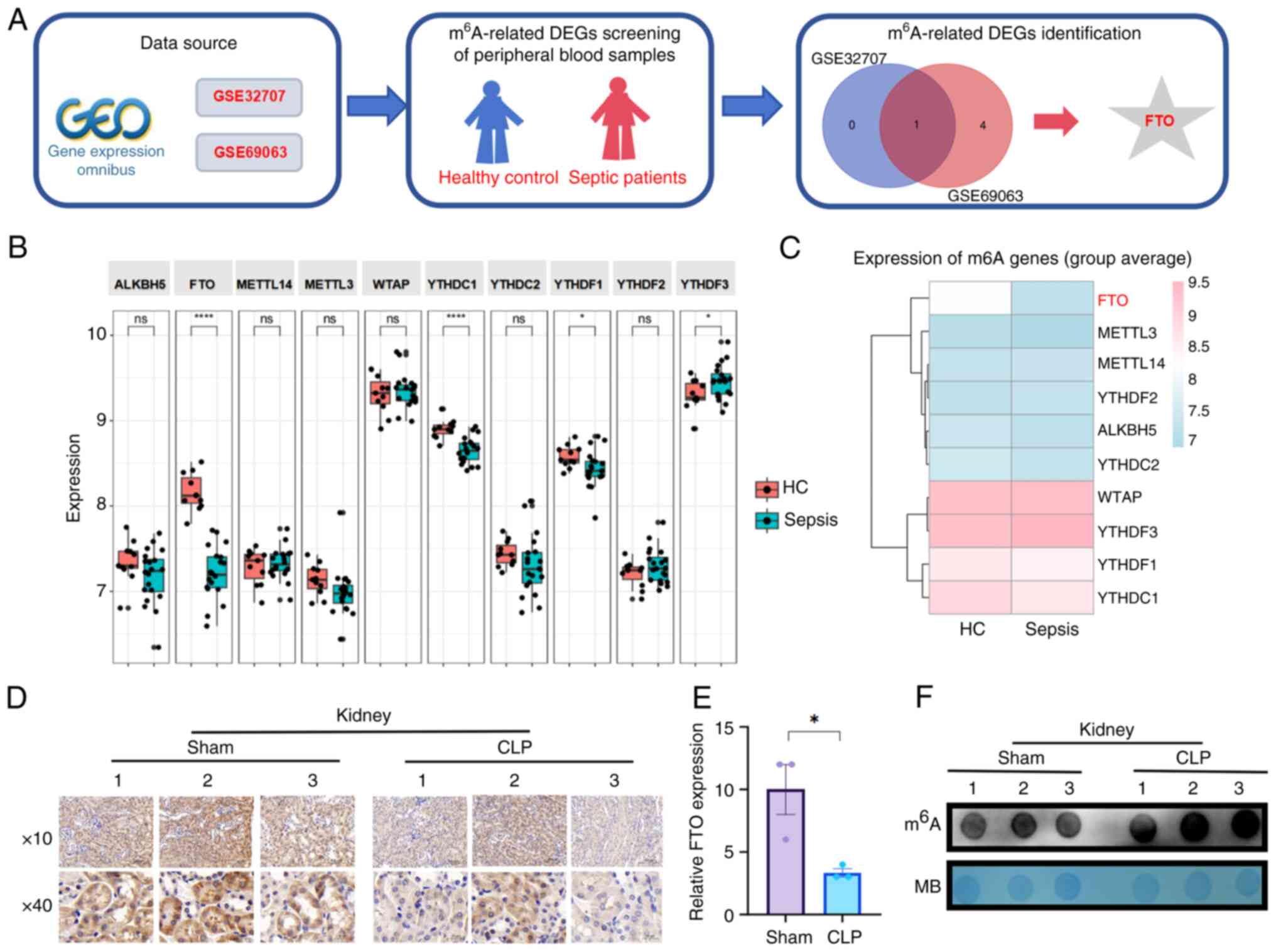
Figure 1

FTO expression is downregulated and
m6A methylation increased in SAKI. (A) Schematic
illustration of the screening process employed to identify key
genes associated with m6A modification in sepsis. (B)
Scatter plot depicting the differential expression of
m6A-related genes, highlighting FTO as the only gene
whose expression was markedly downregulated in the sepsis group
(Sepsis) compared with that in the NC goup in the GSE32707 dataset.
(C) Analysis of the GSE69063 dataset revealed decreased FTO
expression in the transcriptomes of m6A-related proteins
in peripheral blood samples from patients with sepsis (Sepsis)
compared with those from HCs. (D) Representative IHC staining and
(E) quantification of FTO expression in kidney tissues from
CLP-induced septic mice compared with those from sham-operated
controls (n=3; P<0.05). (F) Dot blot analysis revealed a
significant increase in the global m6A modification
level in the kidney tissues of CLP-induced septic mice (n=3;
P<0.05). All the data are presented as the mean±standard error
of the mean. Data (in D and F) were analyzed using an unpaired
two-tailed Student's t-test. *P<0.05. FTO, fat mass
and obesity-associated protein; m6A, N6-methyladenosine;
SAKI, sepsis-induced acute kidney injury; HCs healthy controls; NC,
negative control; IHC, immunohistochemistry; CLP, cecal ligation
and puncture.

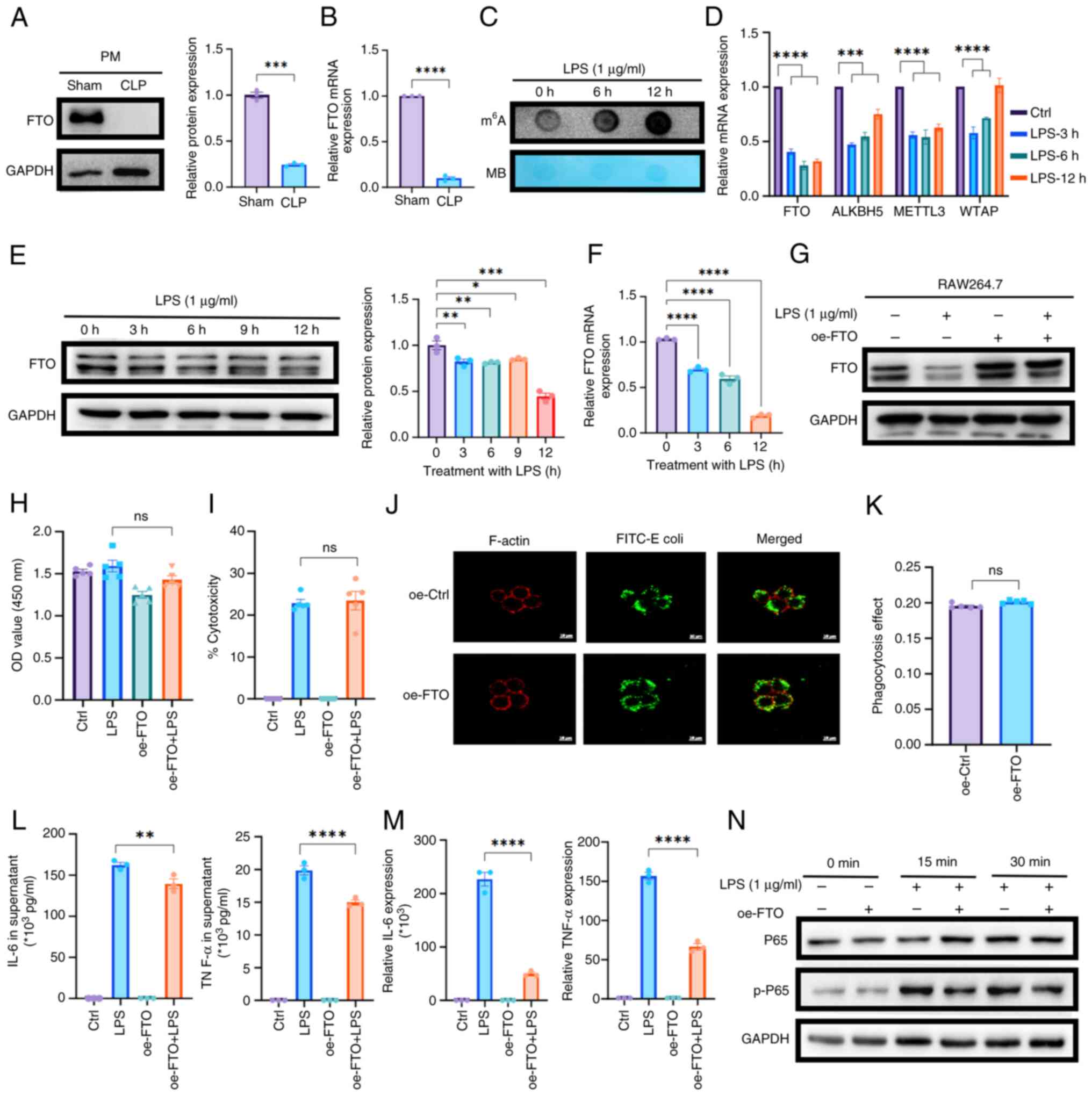
Figure 2

FTO modulates macrophage function and
inflammatory responses in SAKI. (A) Western blotting and (B) qPCR
revealed the downregulation of FTO expression in PMs isolated from
septic mice compared with those from sham-operated controls (n=3).
(C) Dot blot analysis revealed a time-dependent increase in
m6A methylation levels in RAW264.7 cells treated with
LPS (1 μg/ml) for 0, 6 and 12 h. (D) qPCR analysis of
m6A-related enzymes in LPS-treated macrophages. (E)
Western blotting and (F) qPCR demonstrated a time-dependent
reduction in FTO protein expression in LPS-treated RAW264.7 cells.
(G) Western blotting confirmed FTO overexpression in oe-FTO
macrophages with or without treatment with LPS for 12 h. (H) CCK-8
and (I) LDH assays revealed that FTO overexpression does not induce
cytotoxicity or affect macrophage proliferation. (J and K)
Phagocytosis assays demonstrated that compared with control
treatment, upregulation of FTO expression did not alter the
phagocytic capacity of macrophages (original magnification, ×63).
(L) ELISA revealed that overexpression of FTO expression markedly
inhibited the secretion of IL-6 and TNF-α. (M) qPCR experiments
confirmed the suppressive effect of FTO on the mRNA expression
levels of IL-6 and TNF-α. (N) Western blot analysis revealed that
FTO attenuated the activation of inflammatory pathways by
inhibiting NF-κB signaling. *P<0.05;
**P<0.01; ***P<0.001;
****P<0.0001; ns, not significant. FTO, fat mass and
obesity-associated protein; SAKI, sepsis-induced acute kidney
injury; qPCR, quantitative PCR; PMs, peritoneal macrophages; LPS,
lipopolysaccharide; m6A, N6-methyladenosine; oe, over
expression; LDH, lactate dehydrogenase; ELISA, enzyme-linked
immunosorbent assay.

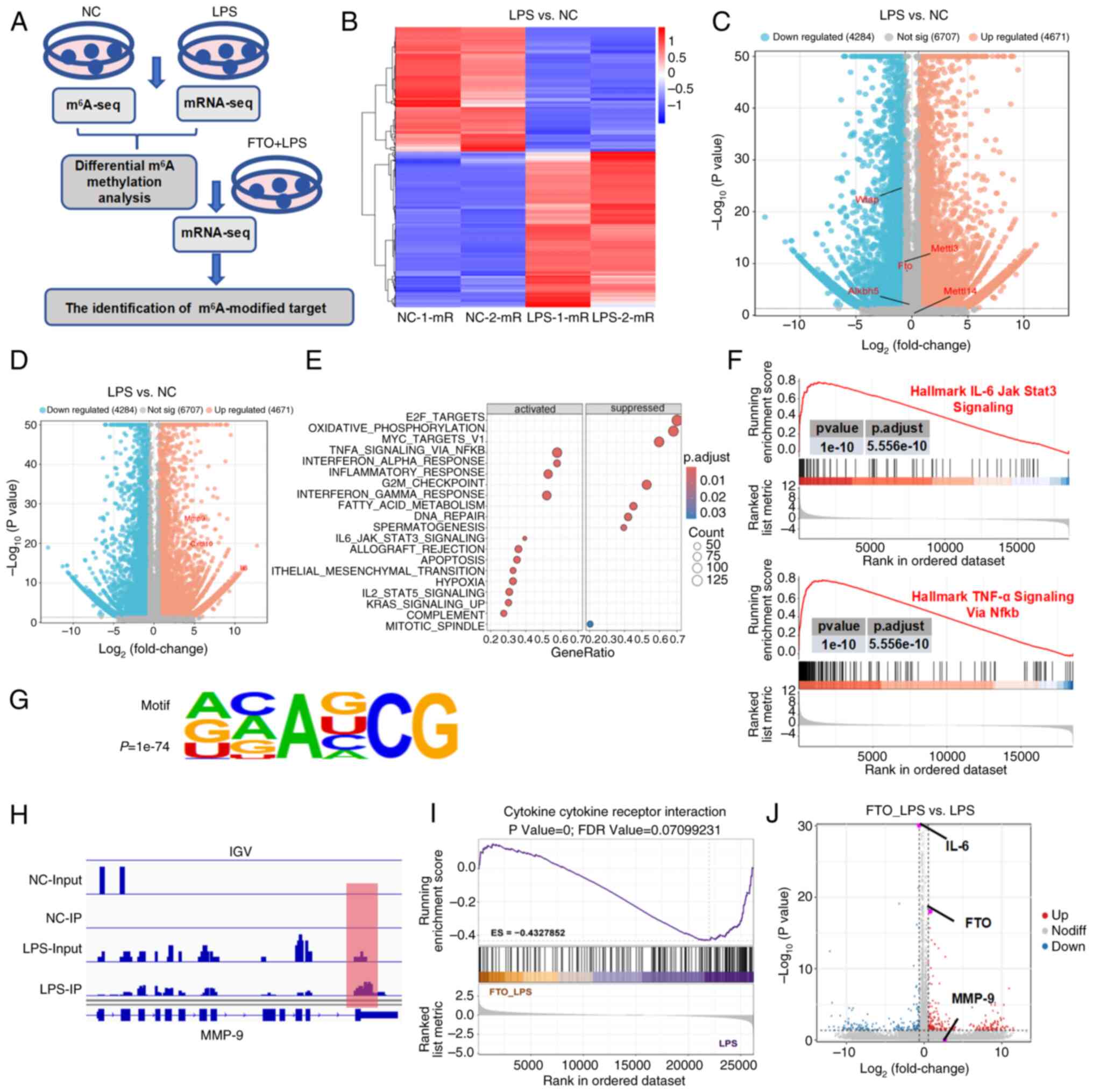
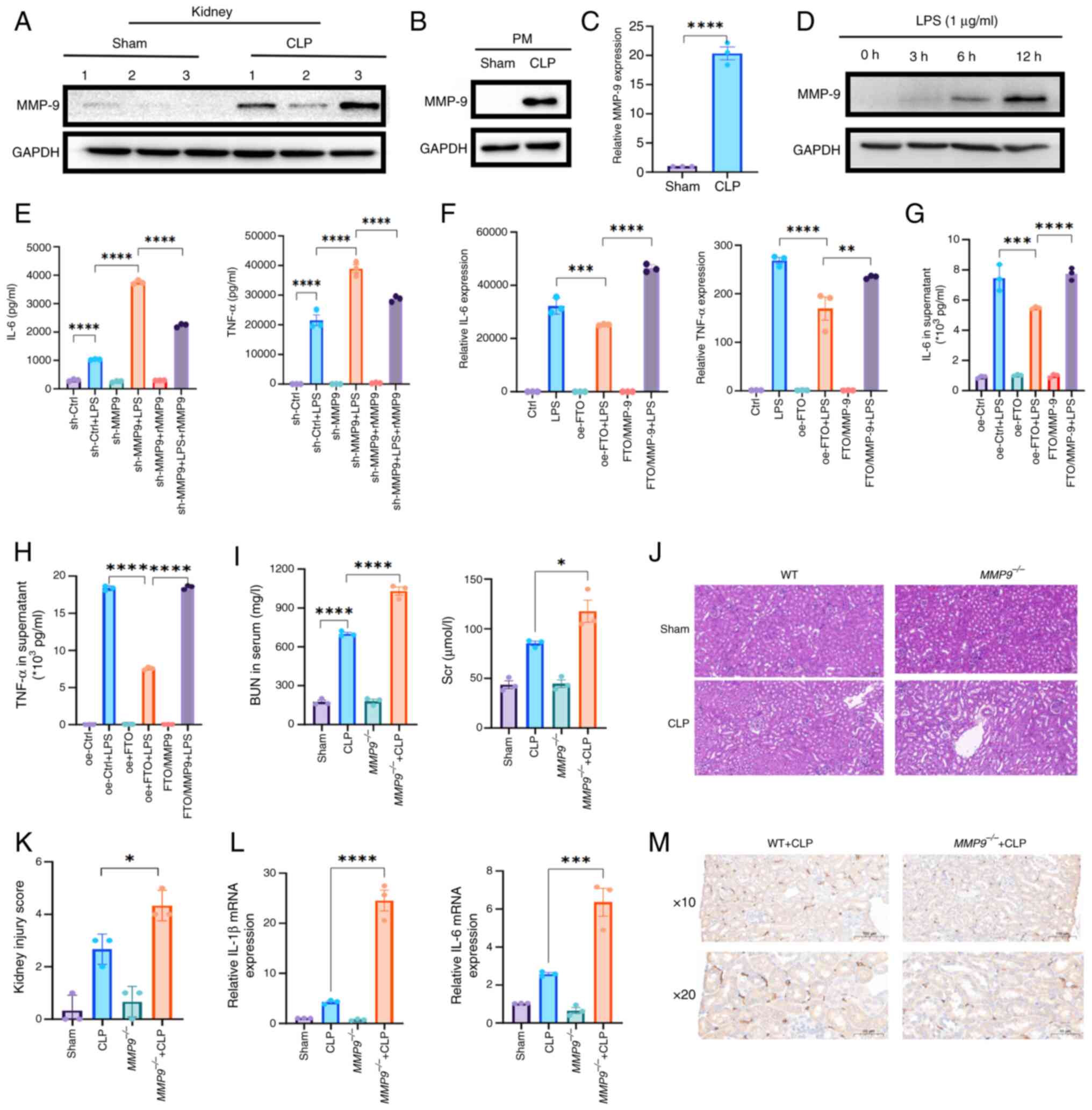
Figure 3

MMP-9 is the key target of
FTO-mediated m6A modification. (A) Flowchart of the
multiomics analysis of macrophages. (B) Hierarchical clustering of
differentially expressed genes in macrophages following LPS
treatment. Volcano plot showing (C) downregulated FTO expression
and (D) upregulated MMP-9 expression in LPS-induced macrophages
compared with NC. (E) GO analysis of the DEGs revealed that the
DEGs were enriched in immune response-related terms. (F) GSEA
revealed that key pathways, including the TNF-α signaling and
IL-6/JAK/STAT3 pathways, were markedly associated with the
inflammatory response in LPS-treated macrophages. (G) Motif
analysis of m6A methylomes in macrophages. (H)
Integrative Genomics Viewer image showing that the m6A
peaks of MMP-9 mRNA were near the 3'UTR. (I) mRNA-seq revealed that
DEGs associated with FTO overexpression in LPS-stimulated
macrophages were enriched in cytokine-cytokine receptor interaction
pathways. (J) Volcano plot showing that elevated FTO levels were
associated with increased MMP-9 expression. MMP-9, matrix
metalloproteinase 9; FTO, fat mass and obesity-associated protein;
m6A, N6-methyladenosine; LPS, lipopolysaccharide; NC,
negative control; GO, gene ontology; DEGs, differentially expressed
genes; gene set enrichment analysis; TNF-α, tumor necrosis
factor-α; IL-6, interleukin-6.

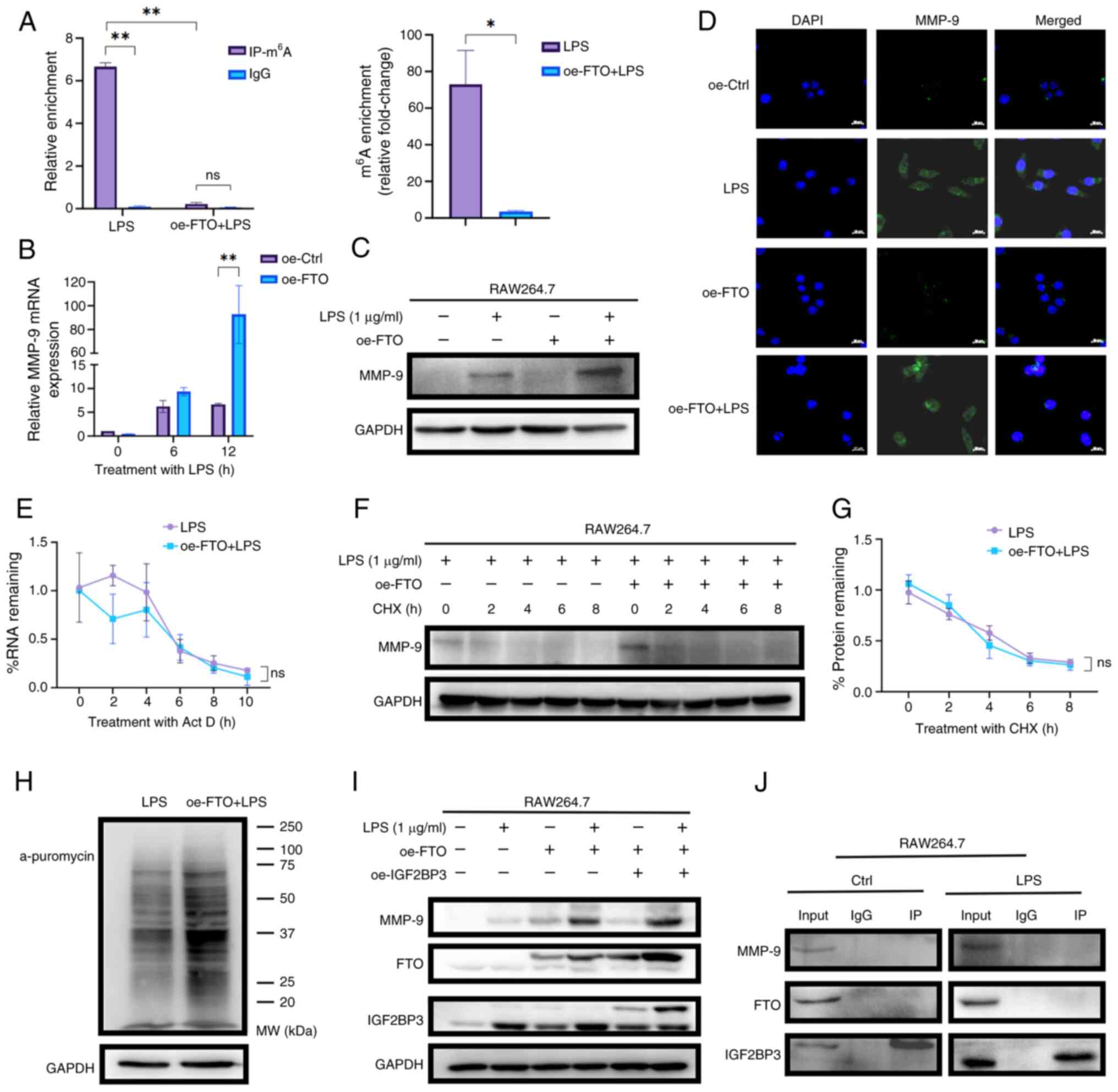
Figure 4

FTO upregulates MMP-9 expression in
an m6A-dependent manner in macrophages. (A) MeRIP-qPCR
confirmed the decreased level of m6A modification of
MMP-9 mRNA in LPS-treated macrophages overexpressing FTO. (B) qPCR
and (C) western blot analyses demonstrated that compared with
control macrophage treatment, LPS stimulation increased MMP-9
expression in FTO-overexpressing macrophages. (D)
Immunofluorescence assays confirmed that elevated FTO levels
upregulated MMP-9 protein expression in macrophages following LPS
treatment. (E) Actinomycin D treatment revealed that FTO-mediated
m6A modification did not markedly affect the mRNA
stability of MMP-9 in macrophages treated with LPS for 12 h. (F)
CHX treatment and (G) quantification demonstrated that FTO did not
markedly affect MMP-9 protein stability following LPS treatment.
(H) Puromycin labeling of nascent polypeptides revealed that FTO
enhanced protein synthesis in macrophages treated with LPS for 12
h. (I) overexpression of IGF2BP3 in FTO-overexpressing macrophages
led to the further upregulation of MMP-9. (J) Co-IP experiment
identified the IGF2BP3 did not co-precipitate either with FTO or
MMP9 in macrophages. *P<0.05; **P<0.01;
ns, not significant. FTO, fat mass and obesity-associated protein;
MMP-9, matrix metalloprot einase 9; m6A,
N6-methyladenosine; MeRIP-seq, methylated RNA immunoprecipitation
sequencing; qPCR, quantitative PCR; LPS, lipopolysaccharide; oe,
over expression; IGF2BP3, insulin-like growth factor 2 mRNA-binding
protein 3.

Figure 5

Depletion of MMP-9 increases the
release of proinflammatory factors and exacerbated renal injury in
SAKI model mice. (A) Western blot analysis revealed an increased
abundance of MMP-9 in the kidneys of mice with SAKI (n=3). (B)
Western blot and (C) qPCR analyses revealed an increased abundance
of MMP-9 in CLP-derived PMs (n=3). (D) Western blot analysis
revealed a time-dependent increase in the abundance of the MMP-9
protein in LPS-stimulated macrophages. (E) ELISA confirmed that
MMP-9 depletion markedly increased the production of IL-6 and
TNF-α. (F) qPCR analysis revealed markedly increased expression
levels of IL-6 and TNF-α in MMP-9-depleted oe-FTO macrophages
following LPS treatment. (G and H) ELISA confirmed that MMP-9
depletion markedly increased the production of TNF-α and IL-6 in
MMP-9-depleted oe-FTO macrophages following LPS treatment. (I) The
detection of BUN and Cr in the serum of MMP9−/−
mice revealed that kidney dysfunction was exacerbated 24 h post-CLP
(n=3). (J and K) H&E staining revealed more severe renal injury
in MMP9−/− mice than in wild-type controls
following CLP surgery (n=3, original magnification, ×10). (L) qPCR
analysis revealed that MMP-9 deletion increased the expression
levels of IL-1β and IL-6 in the kidneys of CLP-treated mice (n=3).
(M) IHC staining results showing the expression of F4/80 and
reduced infiltration of F4/80+ macrophages in the kidneys of
MMP9−/− mice after CLP surgery (n=3).
*P<0.05; **P<0.01;
***P<0.001; ****P<0.0001. MMP-9, matrix
metalloproteinase 9; SAKI, sepsis-induced acute kidney injury;
qPCR, quantitative PCR; CLP, cecal ligation and puncture; PMs,
peritoneal macrophages; LPS, lipopolysaccharide; ELISA,
enzyme-linked immunosorbent assay; oe, over expression; BUN, blood
urea nitrogen; Cr, creatinine; CLP, cecal ligation and puncture;
H&E, hematoxylin and eosin; WT, wild-type.

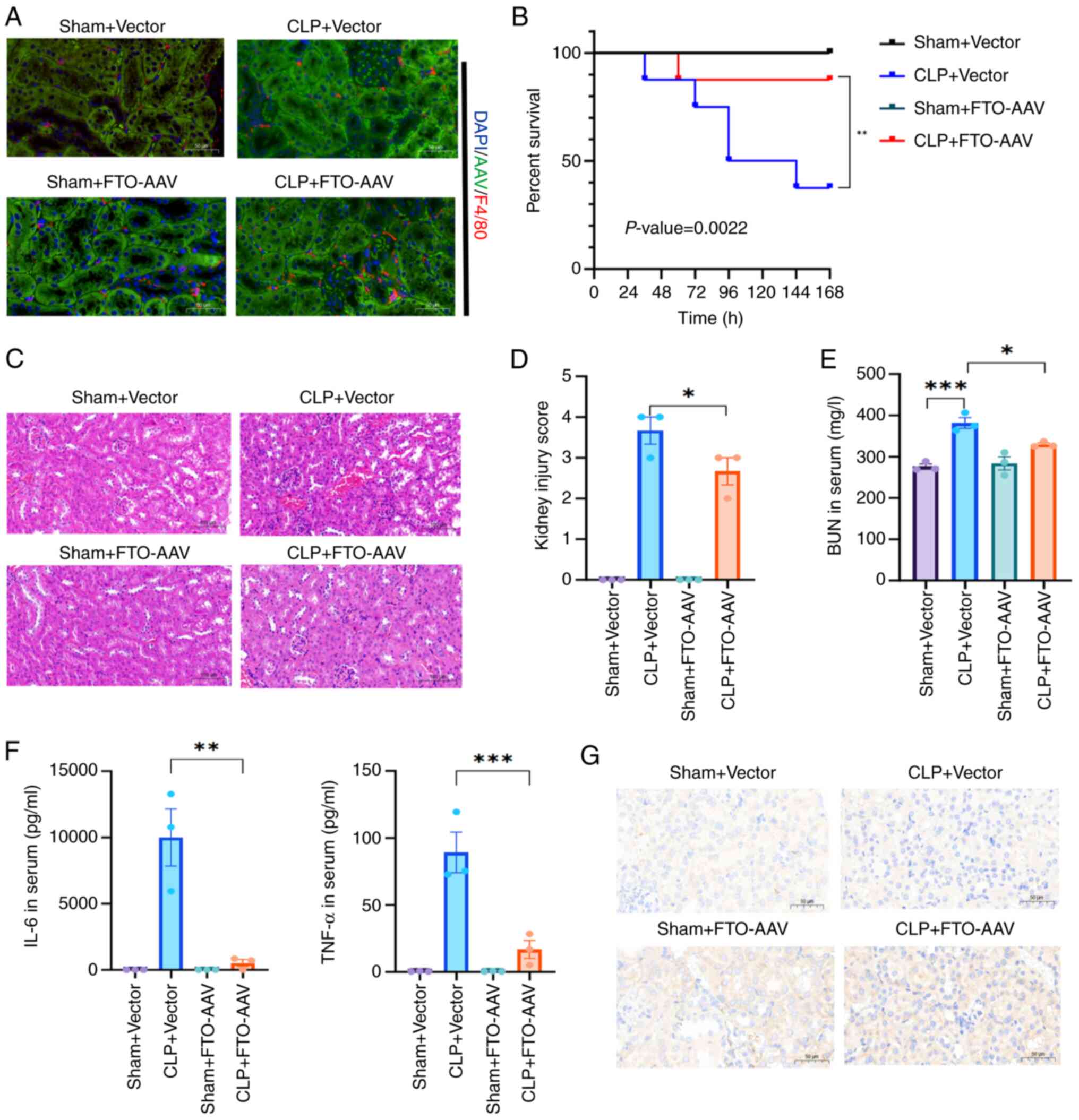
Figure 6

FTO overexpression ameliorated SAKI
and improved survival in CLP mice. (A) Representative IF images
showing successful overexpression of FTO in a murine model and the
expression of F4/80 (n=3). (B) Survival curve using the log-rank
test revealed a significant reduction in sepsis mortality in
FTO-overexpressing mice compared with vector control mice (n=8;
P=0.0022 <0.01). (C and D) H&E staining of kidney sections
revealed that FTO overexpression mitigated CLP-induced renal injury
(n=3). (E) Overexpression of FTO reduced the CLP-induced increase
in serum BUN levels (n=3). (F) ELISAs revealed that FTO
overexpression reduced serum IL-6 and TNF-α production (n=3). (G)
An IHC assay revealed increased MMP-9 abundance in the kidneys of
FTO-overexpressing mice after CLP surgery (n=3, original
magnification, ×20). *P<0.05 was considered to
indicate statistical significance; **P<0.01;
***P<0.001. FTO, fat mass and obesity-associated
protein; SAKI, sepsis-induced acute kidney injury; CLP, cecal
ligation and puncture; IF, immunofluorescence; H&E, hematoxylin
and eosin staining; BUN, blood urea nitrogen; ELISA, enzyme-linked
immunosorbent assay; IHC, immunohistochemistry.

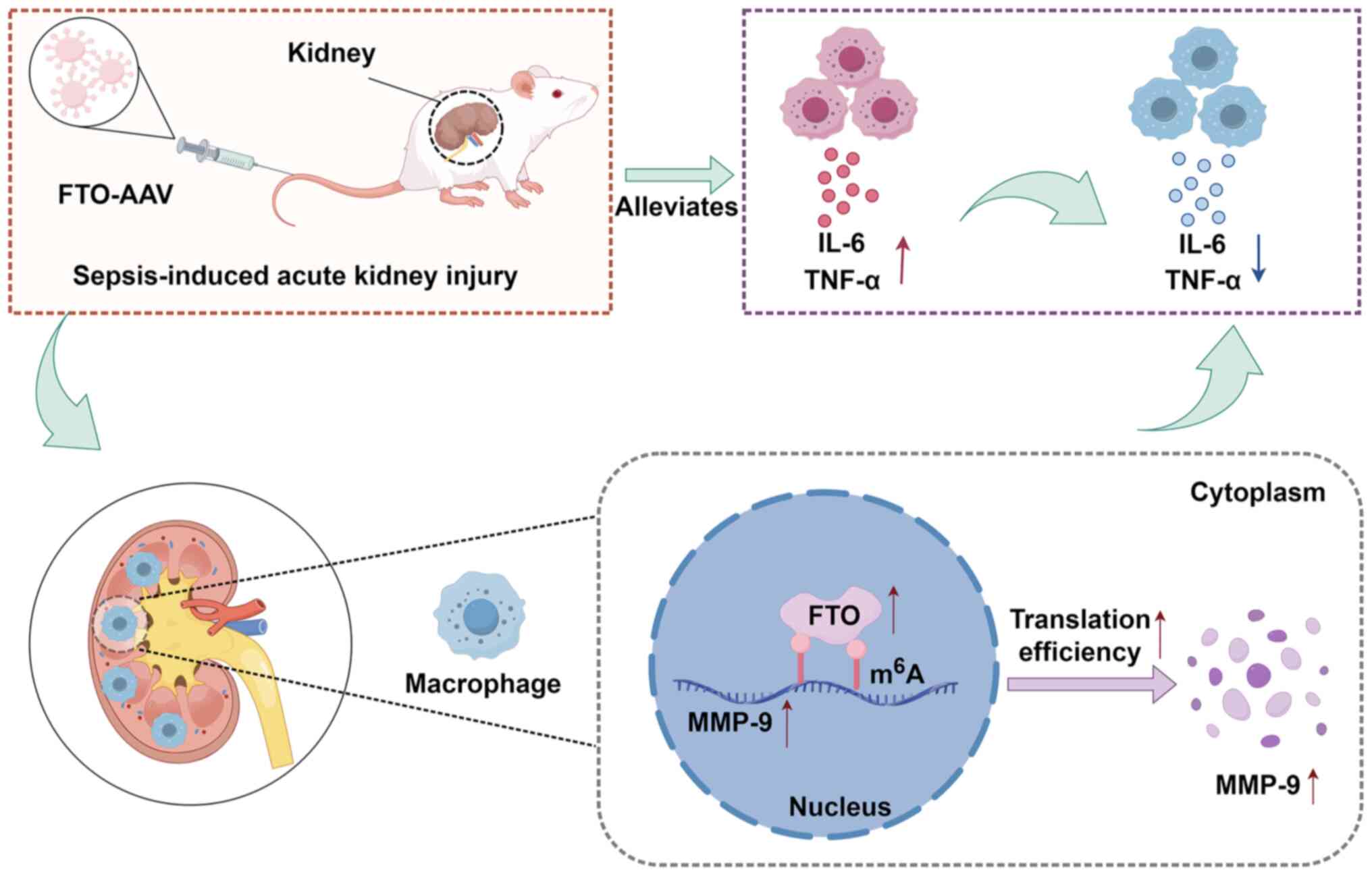
Figure 7

Graphical abstract generated by
Figdraw 2.0 (https://www.figdraw.com/static/index.html#/)
highlights the present study. FTO, fat mass and obesity-associated
protein; AAV, adeno-associated virus; IL-6, interleukin-6; TNF-α,
tumor necrosis factor-α; MMP-9, matrix metalloproteinase 9;
m6A, N6-methyladenosine.
View References

1 

Gao Q, Zheng Y, Wang H, Hou L and Hu X: circSTRN3 aggravates sepsis-induced acute kidney injury by regulating miR-578/toll like receptor 4 axis. Bioengineered. 13:11388–11401. 2022. View Article : Google Scholar : PubMed/NCBI

2 

Peerapornratana S, Manrique-Caballero CL, Gómez H and Kellum JA: Acute kidney injury from sepsis: Current concepts, epidemiology, pathophysiology, prevention and treatment. Kidney Int. 96:1083–1099. 2019. View Article : Google Scholar : PubMed/NCBI

3 

He J, Zheng F, Qiu L, Wang Y, Zhang J, Ye H and Zhang Q: Plasma neutrophil extracellular traps in patients with sepsis-induced acute kidney injury serve as a new biomarker to predict 28-day survival outcomes of disease. Front Med (Lausanne). 11:14969662024. View Article : Google Scholar : PubMed/NCBI

4 

Peng Y, Fang Y, Li Z, Liu C and Zhang W: Saa3 promotes pro-inflammatory macrophage differentiation and contributes to sepsis-induced AKI. Int Immunopharmacol. 127:1114172024. View Article : Google Scholar

5 

Han HI, Skvarca LB, Espiritu EB, Davidson AJ and Hukriede NA: The role of macrophages during acute kidney injury: Destruction and repair. Pediatr Nephrol. 34:561–569. 2019. View Article : Google Scholar

6 

He J, Zhao S and Duan M: The response of macrophages in sepsis-induced acute kidney injury. J Clin Med. 12:11012023. View Article : Google Scholar : PubMed/NCBI

7 

Karuppagounder V, Arumugam S, Thandavarayan RA, Sreedhar R, Giridharan VV, Afrin R, Harima M, Miyashita S, Hara M, Suzuki K, et al: Curcumin alleviates renal dysfunction and suppresses inflammation by shifting from M1 to M2 macrophage polarization in daunorubicin induced nephrotoxicity in rats. Cytokine. 84:1–9. 2016. View Article : Google Scholar : PubMed/NCBI

8 

Huen SC and Cantley LG: Macrophage-mediated injury and repair after ischemic kidney injury. Pediatr Nephrol. 30:199–209. 2015. View Article : Google Scholar

9 

Lee S, Huen S, Nishio H, Nishio S, Lee HK, Choi BS, Ruhrberg C and Cantley LG: Distinct macrophage phenotypes contribute to kidney injury and repair. J Am Soc Nephrol. 22:317–326. 2011. View Article : Google Scholar : PubMed/NCBI

10 

Pérez S and Rius-Pérez S: Macrophage polarization and reprogramming in acute inflammation: A redox perspective. Antioxidants (Basel). 11:13942022. View Article : Google Scholar : PubMed/NCBI

11 

Hu D, Wang Y, You Z, Lu Y and Liang C: lnc-MRGPRF-6:1 promotes M1 polarization of macrophage and inflammatory response through the TLR4-MyD88-MAPK pathway. Mediators Inflamm. 2022:69791172022. View Article : Google Scholar : PubMed/NCBI

12 

Zhu X, Tang H, Yang M and Yin K: N6-methyladenosine in macrophage function: A novel target for metabolic diseases. Trends Endocrinol Metab. 34:66–84. 2023. View Article : Google Scholar : PubMed/NCBI

13 

Hari Gopal S, Alenghat T and Pammi M: Early life epigenetics and childhood outcomes: A scoping review. Pediatr Res. 97:1305–1314. 2025. View Article : Google Scholar

14 

Harvey ZH, Chen Y and Jarosz DF: Protein-based inheritance: Epigenetics beyond the chromosome. Mol Cell. 69:195–202. 2018. View Article : Google Scholar

15 

Zhang L, Lu Q and Chang C: Epigenetics in health and disease. Adv Exp Med Biol. 1253:3–55. 2020. View Article : Google Scholar : PubMed/NCBI

16 

Liu Y, Yang D, Liu T, Chen J, Yu J and Yi P: N6-methyladenosine-mediated gene regulation and therapeutic implications. Trends Mol Med. 29:454–467. 2023. View Article : Google Scholar : PubMed/NCBI

17 

Mao Y, Jiang F, Xu XJ, Zhou LB, Jin R, Zhuang LL, Juan CX and Zhou GP: Inhibition of IGF2BP1 attenuates renal injury and inflammation by alleviating m6A modifications and E2F1/MIF pathway. Int J Biol Sci. 19:593–609. 2023. View Article : Google Scholar : PubMed/NCBI

18 

Zhao Y, Ding W, Cai Y, Li Q, Zhang W, Bai Y, Zhang Y, Xu Q and Feng Z: The m6A eraser FTO suppresses ferroptosis via mediating ACSL4 in LPS-induced macrophage inflammation. Biochim Biophys Acta Mol Basis Dis. 1870:1673542024. View Article : Google Scholar

19 

Cao F, Chen G, Xu Y, Wang X, Tang X, Zhang W, Song X, Yang X, Zeng W and Xie J: METTL14 contributes to acute lung injury by stabilizing NLRP3 expression in an IGF2BP2-dependent manner. Cell Death Dis. 15:432024. View Article : Google Scholar : PubMed/NCBI

20 

Dolinay T, Kim YS, Howrylak J, Hunninghake GM, An CH, Fredenburgh L, Massaro AF, Rogers A, Gazourian L, Nakahira K, et al: Inflammasome-regulated cytokines are critical mediators of acute lung injury. Am J Respir Crit Care Med. 185:1225–1234. 2012. View Article : Google Scholar : PubMed/NCBI

21 

McGrath FM, Francis A, Fatovich DM, Macdonald SP, Arendts G, Woo AJ and Bosio E: Genes involved in platelet aggregation and activation are downregulated during acute anaphylaxis in humans. Clin Transl Immunology. 11:e14352022. View Article : Google Scholar : PubMed/NCBI

22 

Yang H, Wang H, Shivalila CS, Cheng AW, Shi L and Jaenisch R: One-step generation of mice carrying reporter and conditional alleles by CRISPR/Cas-mediated genome engineering. CELL. 154:1370–1379. 2013. View Article : Google Scholar : PubMed/NCBI

23 

Rittirsch D, Huber-Lang MS, Flierl MA and Ward PA: Immunodesign of experimental sepsis by cecal ligation and puncture. Nat Protoc. 4:31–36. 2009. View Article : Google Scholar : PubMed/NCBI

24 

Liu Y, Song R, Zhao L, Lu Z, Li Y, Zhan X, Lu F, Yang J, Niu Y and Cao X: m6A demethylase ALKBH5 is required for antibacterial innate defense by intrinsic motivation of neutrophil migration. Signal Transduct Target Ther. 7:1942022. View Article : Google Scholar

25 

Aronoff GR, Sloan RS, Dinwiddie CJ Jr, Glant MD, Fineberg NS and Luft FC: Effects of vancomycin on renal function in rats. Antimicrob Agents Chemother. 19:306–308. 1981. View Article : Google Scholar : PubMed/NCBI

26 

Chen Y, Wei W, Fu J, Zhang T, Zhao J and Ma T: Forsythiaside A ameliorates sepsis-induced acute kidney injury via anti-inflammation and antiapoptotic effects by regulating endoplasmic reticulum stress. BMC Complement Med Ther. 23:352023. View Article : Google Scholar : PubMed/NCBI

27 

Livak KJ and Schmittgen TD: Analysis of relative gene expression data using real-time quantitative PCR and the 2(-Delta Delta C(T)) method. Methods. 25:402–408. 2001. View Article : Google Scholar

28 

Gallo-Oller G, Ordoñez R and Dotor J: A new background subtraction method for western blot densitometry band quantification through image analysis software. J Immunol Methods. 457:1–5. 2018. View Article : Google Scholar : PubMed/NCBI

29 

Carson WF, Cavassani KA, Dou Y and Kunkel SL: Epigenetic regulation of immune cell functions during post-septic immunosuppression. Epigenetics. 6:273–283. 2011. View Article : Google Scholar :

30 

Córneo EDS, Michels M and Dal-Pizzol F: Sepsis, immunosuppression and the role of epigenetic mechanisms. Expert Rev Clin Immunol. 17:169–176. 2021. View Article : Google Scholar : PubMed/NCBI

31 

Mu YF, Mao ZH, Pan SK, Liu DW, Liu ZS, Wu P and Gao ZX: Macrophage-driven inflammation in acute kidney injury: Therapeutic opportunities and challenges. Transl Res. 278:1–9. 2025. View Article : Google Scholar : PubMed/NCBI

32 

Li T, Qu J, Hu C, Pang J, Qian Y, Li Y and Peng Z: Macrophage migration inhibitory factor (MIF) suppresses mitophagy through disturbing the protein interaction of PINK1-Parkin in sepsis-associated acute kidney injury. Cell Death Dis. 15:4732024. View Article : Google Scholar : PubMed/NCBI

33 

Li B, Du M, Sun Q, Cao Z and He H: m6 A demethylase Fto regulates the TNF-α-induced inflammatory response in cementoblasts. Oral Dis. 29:2806–2815. 2023. View Article : Google Scholar

34 

Huang H: Matrix metalloproteinase-9 (MMP-9) as a cancer biomarker and MMP-9 biosensors: Recent advances. Sensors (Basel). 18:32492018. View Article : Google Scholar : PubMed/NCBI

35 

Privratsky JR, Ide S, Chen Y, Kitai H, Ren J, Fradin H, Lu X, Souma T and Crowley SD: A macrophage-endothelial immunoregulatory axis ameliorates septic acute kidney injury. Kidney Int. 103:514–528. 2023. View Article : Google Scholar :

36 

Wiener D and Schwartz S: The epitranscriptome beyond m6A. Nat Rev Genet. 22:119–131. 2021. View Article : Google Scholar

37 

Zhang Q, Bao X, Cui M, Wang C, Ji J, Jing J, Zhou X, Chen K and Tang L: Identification and validation of key biomarkers based on RNA methylation genes in sepsis. Front Immunol. 14:12318982023. View Article : Google Scholar : PubMed/NCBI

38 

Zeng H, Xu J, Wu R, Wang X, Jiang Y, Wang Q, Guo J and Xiao F: FTO alleviated ferroptosis in septic cardiomyopathy via mediating the m6A modification of BACH1. Biochim Biophys Acta Mol Basis Dis. 1870:1673072024. View Article : Google Scholar : PubMed/NCBI

39 

Siew ED, Hellwege JN, Hung AM, Birkelo BC, Vincz AJ, Parr SK, Denton J, Greevy RA, Robinson-Cohen C, Liu H, et al: Genome-wide association study of hospitalized patients and acute kidney injury. Kidney Int. 106:291–301. 2024. View Article : Google Scholar : PubMed/NCBI

40 

Flamand MN, Tegowski M and Meyer KD: The proteins of mRNA modification: Writers, readers, and erasers. Annu Rev Biochem. 92:145–173. 2023. View Article : Google Scholar : PubMed/NCBI

41 

Fedeles BI, Singh V, Delaney JC, Li D and Essigmann JM: The AlkB family of Fe(II)/α-Ketoglutarate-dependent dioxygenases: Repairing nucleic acid alkylation damage and beyond. J Biol Chem. 290:20734–20742. 2015. View Article : Google Scholar : PubMed/NCBI

42 

Li Y, Su R, Deng X, Chen Y and Chen J: FTO in cancer: Functions, molecular mechanisms, and therapeutic implications. Trends Cancer. 8:598–614. 2022. View Article : Google Scholar : PubMed/NCBI

43 

Reitz C, Tosto G, Mayeux R and Luchsinger JA; NIA-LOAD/NCRAD Family Study Group; Alzheimer's Disease Neuroimaging Initiative: Genetic variants in the fat and obesity associated (FTO) gene and risk of Alzheimer's disease. PLoS One. 7:e503542012. View Article : Google Scholar : PubMed/NCBI

44 

Dubey PK, Patil M, Singh S, Dubey S, Ahuja P, Verma SK and Krishnamurthy P: Increased m6A-RNA methylation and FTO suppression is associated with myocardial inflammation and dysfunction during endotoxemia in mice. Mol Cell Biochem. 477:129–141. 2022. View Article : Google Scholar :

45 

Luo J, Wang F, Sun F, Yue T, Zhou Q, Yang C, Rong S, Yang P, Xiong F, Yu Q, et al: Targeted inhibition of FTO demethylase protects mice against LPS-induced septic shock by suppressing NLRP3 inflammasome. Front Immunol. 12:6632952021. View Article : Google Scholar : PubMed/NCBI

46 

Bengatta S, Arnould C, Letavernier E, Monge M, de Préneuf HM, Werb Z, Ronco P and Lelongt B: MMP9 and SCF protect from apoptosis in acute kidney injury. J Am Soc Nephrol. 20:787–797. 2009. View Article : Google Scholar : PubMed/NCBI

47 

Liu J, Li Z, Lao Y, Jin X, Wang Y, Jiang B, He R and Yang S: Network pharmacology, molecular docking, and experimental verification reveal the mechanism of San-Huang decoction in treating acute kidney injury. Front Pharmacol. 14:10604642023. View Article : Google Scholar : PubMed/NCBI

48 

Lee SY, Hörbelt M, Mang HE, Knipe NL, Bacallao RL, Sado Y and Sutton TA: MMP-9 gene deletion mitigates microvascular loss in a model of ischemic acute kidney injury. Am J Physiol Renal Physiol. 301:F101–F109. 2011. View Article : Google Scholar : PubMed/NCBI

49 

Fiotti N, Mearelli F, Di Girolamo FG, Castello LM, Nunnari A, Di Somma S, Lupia E, Colonetti E, Muiesan ML, Montrucchio G, et al: Genetic variants of matrix metalloproteinase and sepsis: The need speed study. Biomolecules. 12:2792022. View Article : Google Scholar : PubMed/NCBI

50 

Maitra SR, Jacob A, Zhou M and Wang P: Modulation of matrix metalloproteinase-9 and tissue inhibitor of matrix metalloproteinase-1 in sepsis. Int J Clin Exp Med. 3:180–185. 2010.PubMed/NCBI

51 

Niño ME, Serrano SE, Niño DC, McCosham DM, Cardenas ME, Villareal VP, Lopez M, Pazin-Filho A, Jaimes FA, Cunha F, et al: TIMP1 and MMP9 are predictors of mortality in septic patients in the emergency department and intensive care unit unlike MMP9/TIMP1 ratio: Multivariate model. PLoS One. 12:e1711912017. View Article : Google Scholar

52 

Mizuno TM: Fat mass and obesity associated (FTO) gene and hepatic glucose and lipid metabolism. Nutrients. 10:16002018. View Article : Google Scholar : PubMed/NCBI

53 

Benak D, Sevcikova A, Holzerova K and Hlavackova M: FTO in health and disease. Front Cell Dev Biol. 12:15003942024. View Article : Google Scholar

54 

Zhang C, Guan G, Wang J, Wei H and Cai J: MicroRNA-192-5p downregulates fat mass and obesity-associated protein to aggravate renal ischemia/reperfusion injury. Ren Fail. 45:22858692023. View Article : Google Scholar : PubMed/NCBI

Related Articles

  • Abstract
  • View
  • Download
  • Twitter
Copy and paste a formatted citation
Spandidos Publications style
Chen X, Sun Z, Chen J, Zhang J, Liu Z, Yan Z, Li Q and Chen Z: Elevated FTO alleviates sepsis‑induced acute kidney injury by regulating macrophage inflammatory phenotypes. Int J Mol Med 57: 18, 2026.
APA
Chen, X., Sun, Z., Chen, J., Zhang, J., Liu, Z., Yan, Z. ... Chen, Z. (2026). Elevated FTO alleviates sepsis‑induced acute kidney injury by regulating macrophage inflammatory phenotypes. International Journal of Molecular Medicine, 57, 18. https://doi.org/10.3892/ijmm.2025.5689
MLA
Chen, X., Sun, Z., Chen, J., Zhang, J., Liu, Z., Yan, Z., Li, Q., Chen, Z."Elevated FTO alleviates sepsis‑induced acute kidney injury by regulating macrophage inflammatory phenotypes". International Journal of Molecular Medicine 57.1 (2026): 18.
Chicago
Chen, X., Sun, Z., Chen, J., Zhang, J., Liu, Z., Yan, Z., Li, Q., Chen, Z."Elevated FTO alleviates sepsis‑induced acute kidney injury by regulating macrophage inflammatory phenotypes". International Journal of Molecular Medicine 57, no. 1 (2026): 18. https://doi.org/10.3892/ijmm.2025.5689
Copy and paste a formatted citation
x
Spandidos Publications style
Chen X, Sun Z, Chen J, Zhang J, Liu Z, Yan Z, Li Q and Chen Z: Elevated FTO alleviates sepsis‑induced acute kidney injury by regulating macrophage inflammatory phenotypes. Int J Mol Med 57: 18, 2026.
APA
Chen, X., Sun, Z., Chen, J., Zhang, J., Liu, Z., Yan, Z. ... Chen, Z. (2026). Elevated FTO alleviates sepsis‑induced acute kidney injury by regulating macrophage inflammatory phenotypes. International Journal of Molecular Medicine, 57, 18. https://doi.org/10.3892/ijmm.2025.5689
MLA
Chen, X., Sun, Z., Chen, J., Zhang, J., Liu, Z., Yan, Z., Li, Q., Chen, Z."Elevated FTO alleviates sepsis‑induced acute kidney injury by regulating macrophage inflammatory phenotypes". International Journal of Molecular Medicine 57.1 (2026): 18.
Chicago
Chen, X., Sun, Z., Chen, J., Zhang, J., Liu, Z., Yan, Z., Li, Q., Chen, Z."Elevated FTO alleviates sepsis‑induced acute kidney injury by regulating macrophage inflammatory phenotypes". International Journal of Molecular Medicine 57, no. 1 (2026): 18. https://doi.org/10.3892/ijmm.2025.5689
Follow us
  • Twitter
  • LinkedIn
  • Facebook
About
  • Spandidos Publications
  • Careers
  • Cookie Policy
  • Privacy Policy
How can we help?
  • Help
  • Live Chat
  • Contact
  • Email to our Support Team