Spandidos Publications Logo
  • About
    • About Spandidos
    • Aims and Scopes
    • Abstracting and Indexing
    • Editorial Policies
    • Reprints and Permissions
    • Job Opportunities
    • Terms and Conditions
    • Contact
  • Journals
    • All Journals
    • Oncology Letters
      • Oncology Letters
      • Information for Authors
      • Editorial Policies
      • Editorial Board
      • Aims and Scope
      • Abstracting and Indexing
      • Bibliographic Information
      • Archive
    • International Journal of Oncology
      • International Journal of Oncology
      • Information for Authors
      • Editorial Policies
      • Editorial Board
      • Aims and Scope
      • Abstracting and Indexing
      • Bibliographic Information
      • Archive
    • Molecular and Clinical Oncology
      • Molecular and Clinical Oncology
      • Information for Authors
      • Editorial Policies
      • Editorial Board
      • Aims and Scope
      • Abstracting and Indexing
      • Bibliographic Information
      • Archive
    • Experimental and Therapeutic Medicine
      • Experimental and Therapeutic Medicine
      • Information for Authors
      • Editorial Policies
      • Editorial Board
      • Aims and Scope
      • Abstracting and Indexing
      • Bibliographic Information
      • Archive
    • International Journal of Molecular Medicine
      • International Journal of Molecular Medicine
      • Information for Authors
      • Editorial Policies
      • Editorial Board
      • Aims and Scope
      • Abstracting and Indexing
      • Bibliographic Information
      • Archive
    • Biomedical Reports
      • Biomedical Reports
      • Information for Authors
      • Editorial Policies
      • Editorial Board
      • Aims and Scope
      • Abstracting and Indexing
      • Bibliographic Information
      • Archive
    • Oncology Reports
      • Oncology Reports
      • Information for Authors
      • Editorial Policies
      • Editorial Board
      • Aims and Scope
      • Abstracting and Indexing
      • Bibliographic Information
      • Archive
    • Molecular Medicine Reports
      • Molecular Medicine Reports
      • Information for Authors
      • Editorial Policies
      • Editorial Board
      • Aims and Scope
      • Abstracting and Indexing
      • Bibliographic Information
      • Archive
    • World Academy of Sciences Journal
      • World Academy of Sciences Journal
      • Information for Authors
      • Editorial Policies
      • Editorial Board
      • Aims and Scope
      • Abstracting and Indexing
      • Bibliographic Information
      • Archive
    • International Journal of Functional Nutrition
      • International Journal of Functional Nutrition
      • Information for Authors
      • Editorial Policies
      • Editorial Board
      • Aims and Scope
      • Abstracting and Indexing
      • Bibliographic Information
      • Archive
    • International Journal of Epigenetics
      • International Journal of Epigenetics
      • Information for Authors
      • Editorial Policies
      • Editorial Board
      • Aims and Scope
      • Abstracting and Indexing
      • Bibliographic Information
      • Archive
    • Medicine International
      • Medicine International
      • Information for Authors
      • Editorial Policies
      • Editorial Board
      • Aims and Scope
      • Abstracting and Indexing
      • Bibliographic Information
      • Archive
  • Articles
  • Information
    • Information for Authors
    • Information for Reviewers
    • Information for Librarians
    • Information for Advertisers
    • Conferences
  • Language Editing
Spandidos Publications Logo
  • About
    • About Spandidos
    • Aims and Scopes
    • Abstracting and Indexing
    • Editorial Policies
    • Reprints and Permissions
    • Job Opportunities
    • Terms and Conditions
    • Contact
  • Journals
    • All Journals
    • Biomedical Reports
      • Information for Authors
      • Editorial Policies
      • Editorial Board
      • Aims and Scope
      • Abstracting and Indexing
      • Bibliographic Information
      • Archive
    • Experimental and Therapeutic Medicine
      • Information for Authors
      • Editorial Policies
      • Editorial Board
      • Aims and Scope
      • Abstracting and Indexing
      • Bibliographic Information
      • Archive
    • International Journal of Epigenetics
      • Information for Authors
      • Editorial Policies
      • Editorial Board
      • Aims and Scope
      • Abstracting and Indexing
      • Bibliographic Information
      • Archive
    • International Journal of Functional Nutrition
      • Information for Authors
      • Editorial Policies
      • Editorial Board
      • Aims and Scope
      • Abstracting and Indexing
      • Bibliographic Information
      • Archive
    • International Journal of Molecular Medicine
      • Information for Authors
      • Editorial Policies
      • Editorial Board
      • Aims and Scope
      • Abstracting and Indexing
      • Bibliographic Information
      • Archive
    • International Journal of Oncology
      • Information for Authors
      • Editorial Policies
      • Editorial Board
      • Aims and Scope
      • Abstracting and Indexing
      • Bibliographic Information
      • Archive
    • Medicine International
      • Information for Authors
      • Editorial Policies
      • Editorial Board
      • Aims and Scope
      • Abstracting and Indexing
      • Bibliographic Information
      • Archive
    • Molecular and Clinical Oncology
      • Information for Authors
      • Editorial Policies
      • Editorial Board
      • Aims and Scope
      • Abstracting and Indexing
      • Bibliographic Information
      • Archive
    • Molecular Medicine Reports
      • Information for Authors
      • Editorial Policies
      • Editorial Board
      • Aims and Scope
      • Abstracting and Indexing
      • Bibliographic Information
      • Archive
    • Oncology Letters
      • Information for Authors
      • Editorial Policies
      • Editorial Board
      • Aims and Scope
      • Abstracting and Indexing
      • Bibliographic Information
      • Archive
    • Oncology Reports
      • Information for Authors
      • Editorial Policies
      • Editorial Board
      • Aims and Scope
      • Abstracting and Indexing
      • Bibliographic Information
      • Archive
    • World Academy of Sciences Journal
      • Information for Authors
      • Editorial Policies
      • Editorial Board
      • Aims and Scope
      • Abstracting and Indexing
      • Bibliographic Information
      • Archive
  • Articles
  • Information
    • For Authors
    • For Reviewers
    • For Librarians
    • For Advertisers
    • Conferences
  • Language Editing
Login Register Submit
  • This site uses cookies
  • You can change your cookie settings at any time by following the instructions in our Cookie Policy. To find out more, you may read our Privacy Policy.

    I agree
Search articles by DOI, keyword, author or affiliation
Search
Advanced Search
presentation
International Journal of Molecular Medicine
Join Editorial Board Propose a Special Issue
Print ISSN: 1107-3756 Online ISSN: 1791-244X
Journal Cover
January-2026 Volume 57 Issue 1

Full Size Image

Sign up for eToc alerts
Recommend to Library

Journals

International Journal of Molecular Medicine

International Journal of Molecular Medicine

International Journal of Molecular Medicine is an international journal devoted to molecular mechanisms of human disease.

International Journal of Oncology

International Journal of Oncology

International Journal of Oncology is an international journal devoted to oncology research and cancer treatment.

Molecular Medicine Reports

Molecular Medicine Reports

Covers molecular medicine topics such as pharmacology, pathology, genetics, neuroscience, infectious diseases, molecular cardiology, and molecular surgery.

Oncology Reports

Oncology Reports

Oncology Reports is an international journal devoted to fundamental and applied research in Oncology.

Experimental and Therapeutic Medicine

Experimental and Therapeutic Medicine

Experimental and Therapeutic Medicine is an international journal devoted to laboratory and clinical medicine.

Oncology Letters

Oncology Letters

Oncology Letters is an international journal devoted to Experimental and Clinical Oncology.

Biomedical Reports

Biomedical Reports

Explores a wide range of biological and medical fields, including pharmacology, genetics, microbiology, neuroscience, and molecular cardiology.

Molecular and Clinical Oncology

Molecular and Clinical Oncology

International journal addressing all aspects of oncology research, from tumorigenesis and oncogenes to chemotherapy and metastasis.

World Academy of Sciences Journal

World Academy of Sciences Journal

Multidisciplinary open-access journal spanning biochemistry, genetics, neuroscience, environmental health, and synthetic biology.

International Journal of Functional Nutrition

International Journal of Functional Nutrition

Open-access journal combining biochemistry, pharmacology, immunology, and genetics to advance health through functional nutrition.

International Journal of Epigenetics

International Journal of Epigenetics

Publishes open-access research on using epigenetics to advance understanding and treatment of human disease.

Medicine International

Medicine International

An International Open Access Journal Devoted to General Medicine.

Journal Cover
January-2026 Volume 57 Issue 1

Full Size Image

Sign up for eToc alerts
Recommend to Library

  • Article
  • Citations
    • Cite This Article
    • Download Citation
    • Create Citation Alert
    • Remove Citation Alert
    • Cited By
  • Similar Articles
    • Related Articles (in Spandidos Publications)
    • Similar Articles (Google Scholar)
    • Similar Articles (PubMed)
  • Download PDF
  • Download XML
  • View XML

  • Supplementary Files
    • Supplementary_Data.pdf
Article Open Access

Targeting p38 MAPK signaling pathway: 
Quercetin as a novel therapy for TMJ synovitis

  • Authors:
    • Mosha Cheng
    • Yuhe Guan
    • Xiaotao Xin
    • Xin Yi
    • Yi Liu
  • View Affiliations / Copyright

    Affiliations: Department of Oral and Maxillofacial Surgery, School and Hospital of Stomatology, China Medical University, Liaoning Provincial Key Laboratory of Oral Disease, Shenyang, Liaoning 110002, P.R. China, Department of Stomatology, First Affiliated Hospital of Jinzhou Medical University, Jinzhou, Liaoning 121001, P.R. China, Department of Oral Anatomy and Physiology, School and Hospital of Stomatology, China Medical University, Liaoning Provincial Key Laboratory of Oral Disease, Shenyang, Liaoning 110002, P.R. China, School and Hospital of Stomatology, China Medical University, Liaoning Provincial Key Laboratory of Oral Disease, Shenyang, Liaoning 110002, P.R. China
    Copyright: © Cheng et al. This is an open access article distributed under the terms of Creative Commons Attribution License [CC BY_NC 4.0].
  • Article Number: 21
    |
    Published online on: November 13, 2025
       https://doi.org/10.3892/ijmm.2025.5692
  • Expand metrics +
Metrics: Total Views: 0 (Spandidos Publications: | PMC Statistics: )
Metrics: Total PDF Downloads: 0 (Spandidos Publications: | PMC Statistics: )
Cited By (CrossRef): 0 citations Loading Articles...

This article is mentioned in:


Abstract

Temporomandibular joint (TMJ) synovitis is a chronic inflammatory condition prevalent in temporoman-dibular disorders, characterized by synovial inflammation and bone degradation. Quercetin, a natural flavonoid with diverse bioactive properties, is investigated for its potential in ameliorating TMJ synovitis by targeting the p38 MAPK pathway. Using network pharmacology and in vitro and in vivo models, the effects of quercetin on synoviocytes and inflammatory responses were evaluated. Results showed quercetin's significant inhibition of synoviocyte proliferation, promotion of apoptosis and reduction of inflammatory cytokines. Moreover, quercetin demonstrated stability in binding to critical targets like MAPK14 and led to downregulation of phosphorylated p38 MAPK and JNK. In vivo, quercetin improved synovial tissue architecture and mitigated bone destruction. Mechanistic studies confirmed the dependency of effects of quercetin on the p38 MAPK pathway, supported by functional experiments using pathway agonists and inhibitors. The present study underscored the potential of quercetin in treating TMJ synovitis by modulating inflammatory signaling, promoting cell apoptosis and preserving bone integrity, thereby offering novel insights into therapeutic strategies for TMJ‑related synovitis.
View Figures

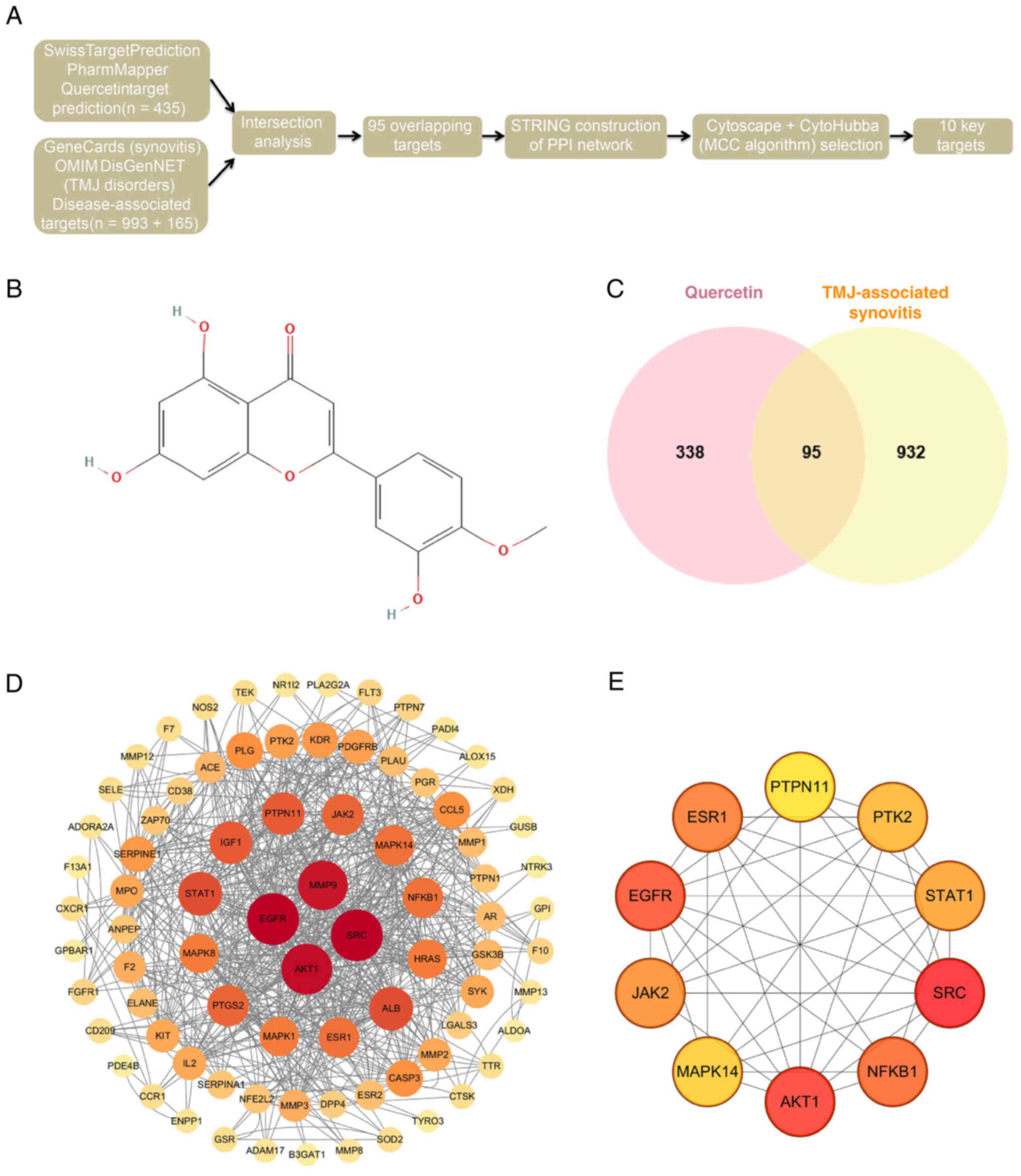
Figure 1

Network pharmacology analysis reveals
key signaling pathways and core target genes of quercetin in
synovitis. (A) Schematic workflow of network pharmacology analysis
for identifying core targets; (B) 2D chemical structure of
quercetin; (C) A total of 95 potential therapeutic targets were
identified by intersecting quercetin-predicted targets with
synovitis and TMJ disorder-related disease targets; (D) PPI network
of the 95 targets constructed using the STRING database. Node size
and color represent the degree of connectivity; (E) Top 10 hub
genes identified by the MCC algorithm, including MAPK14, MMP13 and
IL6. TMJ, temporomandibular joint; PPI, protein-protein
interaction; MCC, maximal clique centrality; MMP, matrix
metalloproteinase.

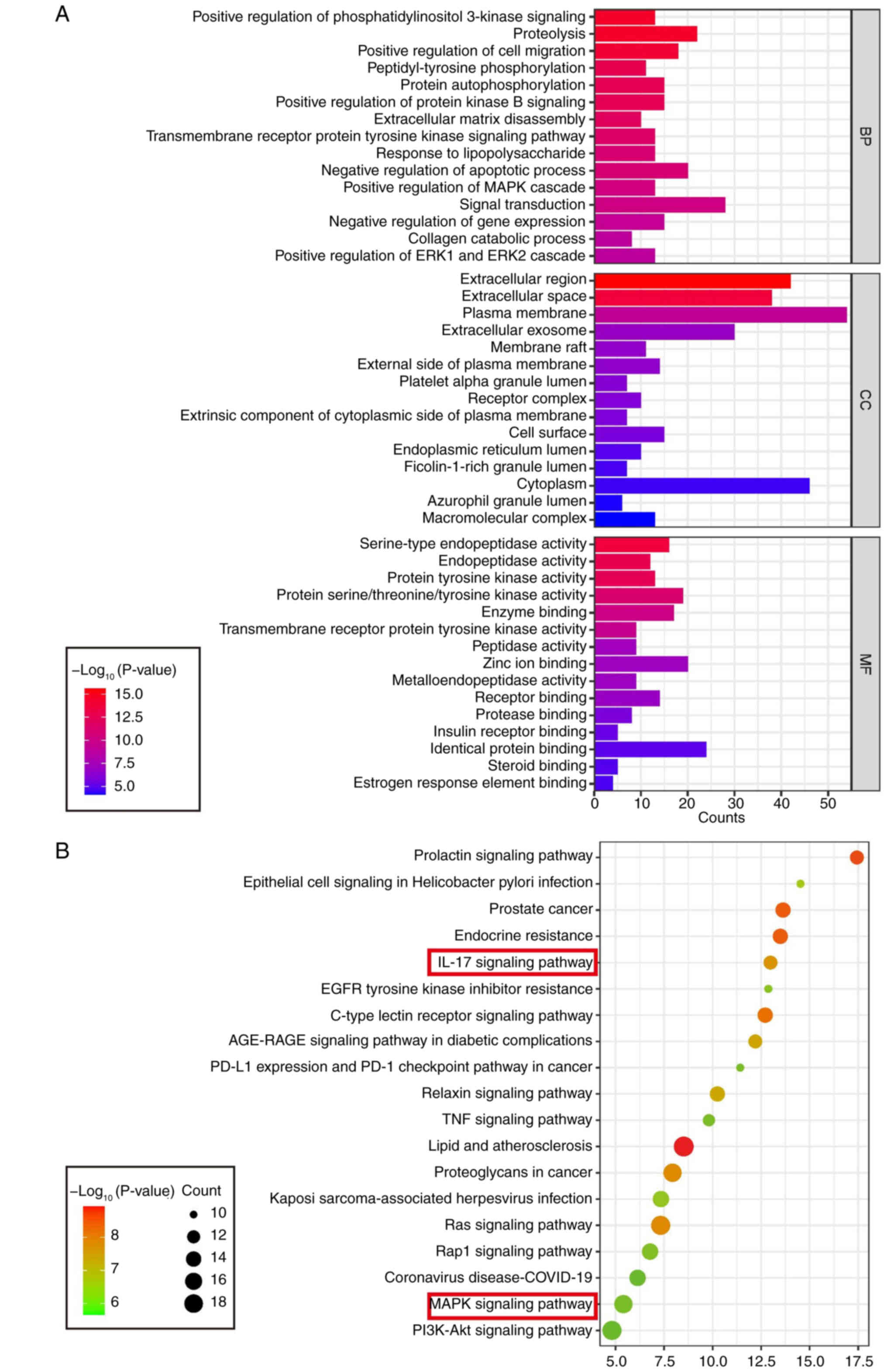
Figure 2

Identifying key signaling pathways
and MF enrichment patterns associated with quercetin in synovitis.
(A) GO enrichment analysis of potential of quercetin targets,
showing the top 15 markedly enriched terms across three categories:
BP, MF and CC; (B) KEGG pathway enrichment analysis of the
predicted targets, displaying the top 15 markedly enriched
signaling pathways. Notably, the IL-17, MAPK, TNF and PI3K-Akt
pathways were among the most markedly enriched, suggesting that
quercetin may exert anti-synovitis effects by modulating these
inflammation-related pathways. GO, Gene Ontology; BP, Biological
Process; MF, Molecular Function; CC, Cellular Component; KEGG,
Kyoto Encyclopedia of Genes and Genomes.

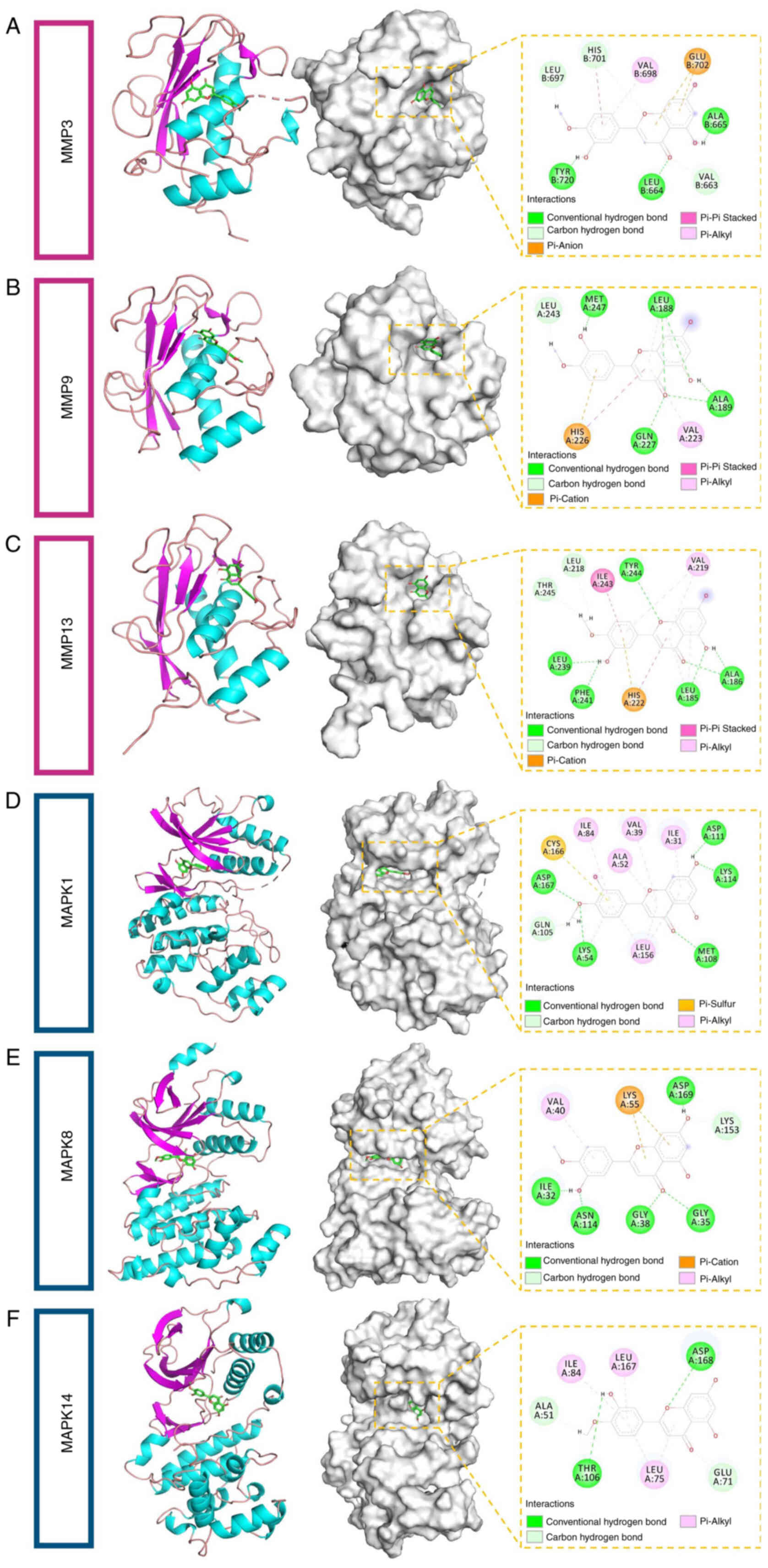
Figure 3

Molecular docking validation of
quercetin binding to key targets in the MAPK and IL-17 signaling
pathways. Binding modes of quercetin with (A) MMP3, (B) MMP9, (C)
MMP13, (D) MAPK1, (E) MAPK8 and (F) MAPK14. Each panel illustrates
the complex's three-dimensional structure, the protein's
electrostatic surface and the two-dimensional interaction map of
the protein-ligand complex.

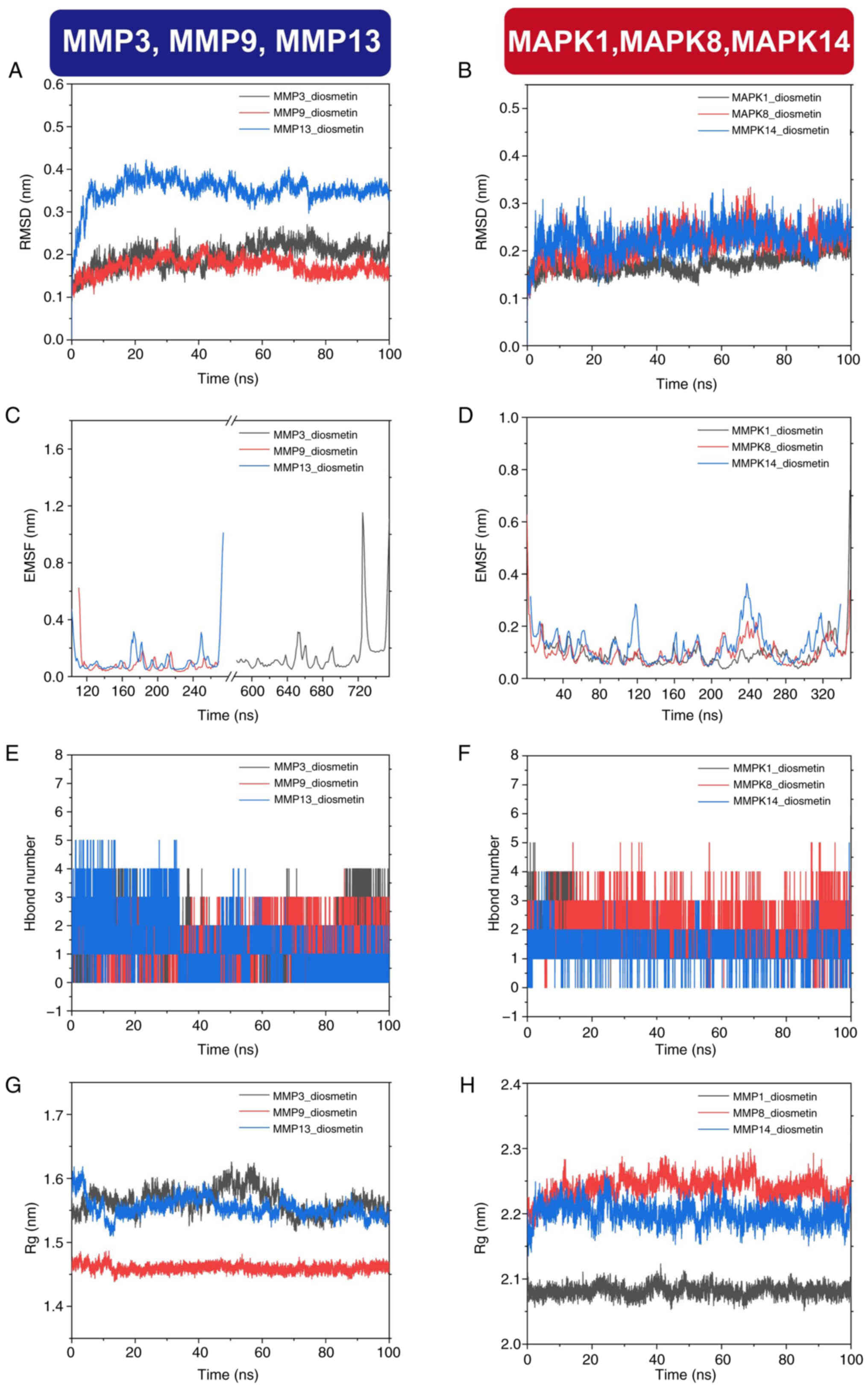
Figure 4

MD simulations evaluate the binding
stability of quercetin with key target proteins. (A and B) The RMSD
changes of each complex within 100 ns were evaluated to assess
their overall structural stability; (C and D) RMSF analysis showing
flexibility variations of individual protein residues; (E and F)
Time-dependent changes in the number of hydrogen bonds, reflecting
the physical stability of ligand binding; (G and H) Rg analysis
assessing the compactness of protein structures. The results
demonstrate that quercetin forms stable complexes with MMP and MAPK
family targets. MD, Molecular Dynamics; RMSD, root-mean-square
deviation; RMSF, root-mean-square fluctuation; Rg, radius of
gyration; MMP, matrix metalloproteinase.

Figure 5

Evaluation of the regulatory effects
of quercetin on synovial cell proliferation, apoptosis and
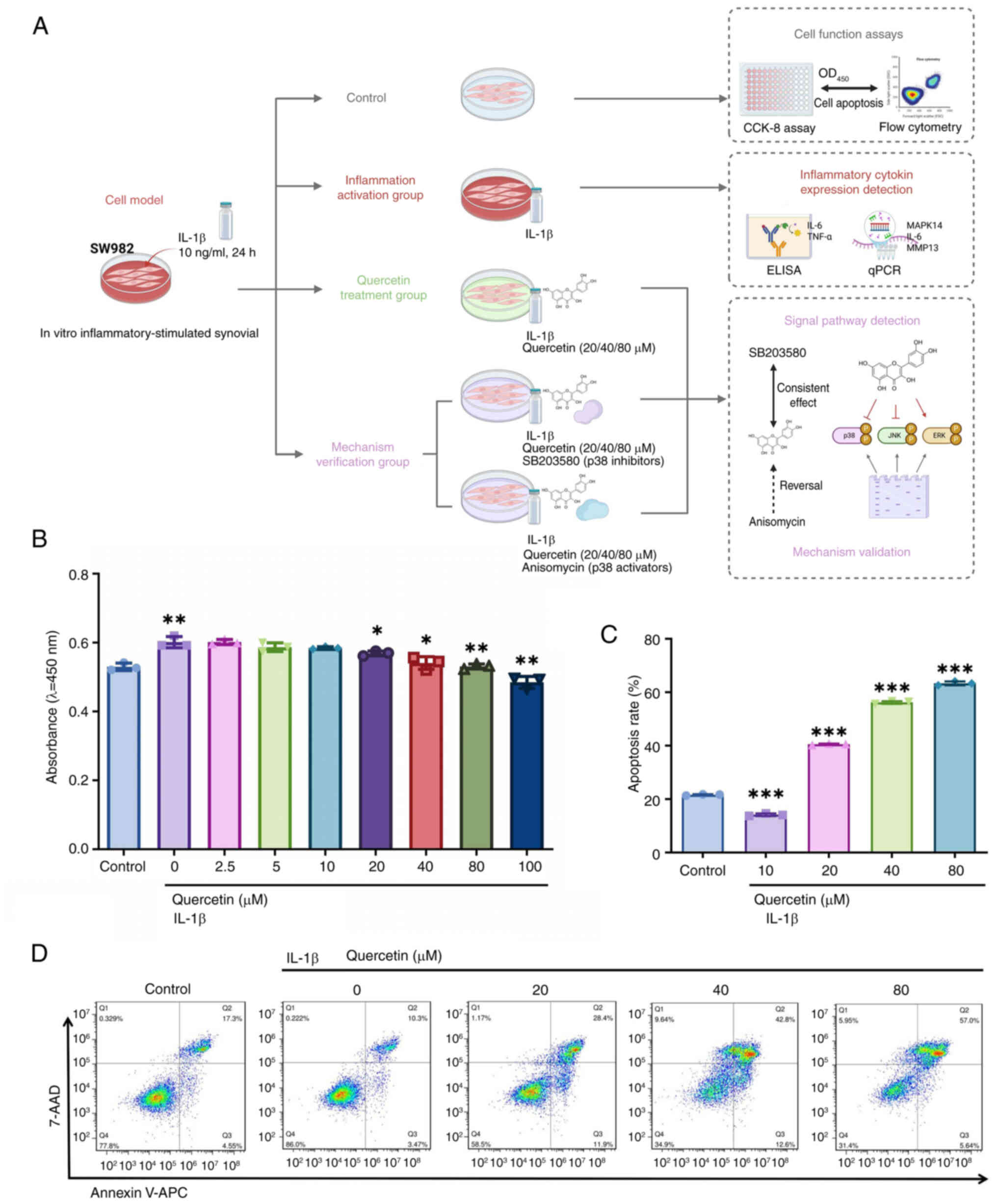
inflammatory cytokine expression under inflammatory stimulation.
(A) Schematic diagram of the in vitro experimental workflow.
(B) CCK-8 assay showing the proliferation activity of SW982
synoviocytes after treatment with various concentrations of
quercetin (0-100 μM) for 24 h. (C and D) Annexin V/7-AAD
dual-staining flow cytometry analysis of apoptosis, demonstrating a
concentration-dependent increase in apoptotic rate. All experiments
were performed in triplicate (n=3) and data are presented as mean ±
SD. Statistical comparisons between groups were conducted using
one-way ANOVA. Significance levels vs. the 0 μM group are
indicated as: *P<0.05, **P<0.01,
***P<0.001; ns: insignificant. CCK-8, Cell Counting
Kit-8.

Figure 6

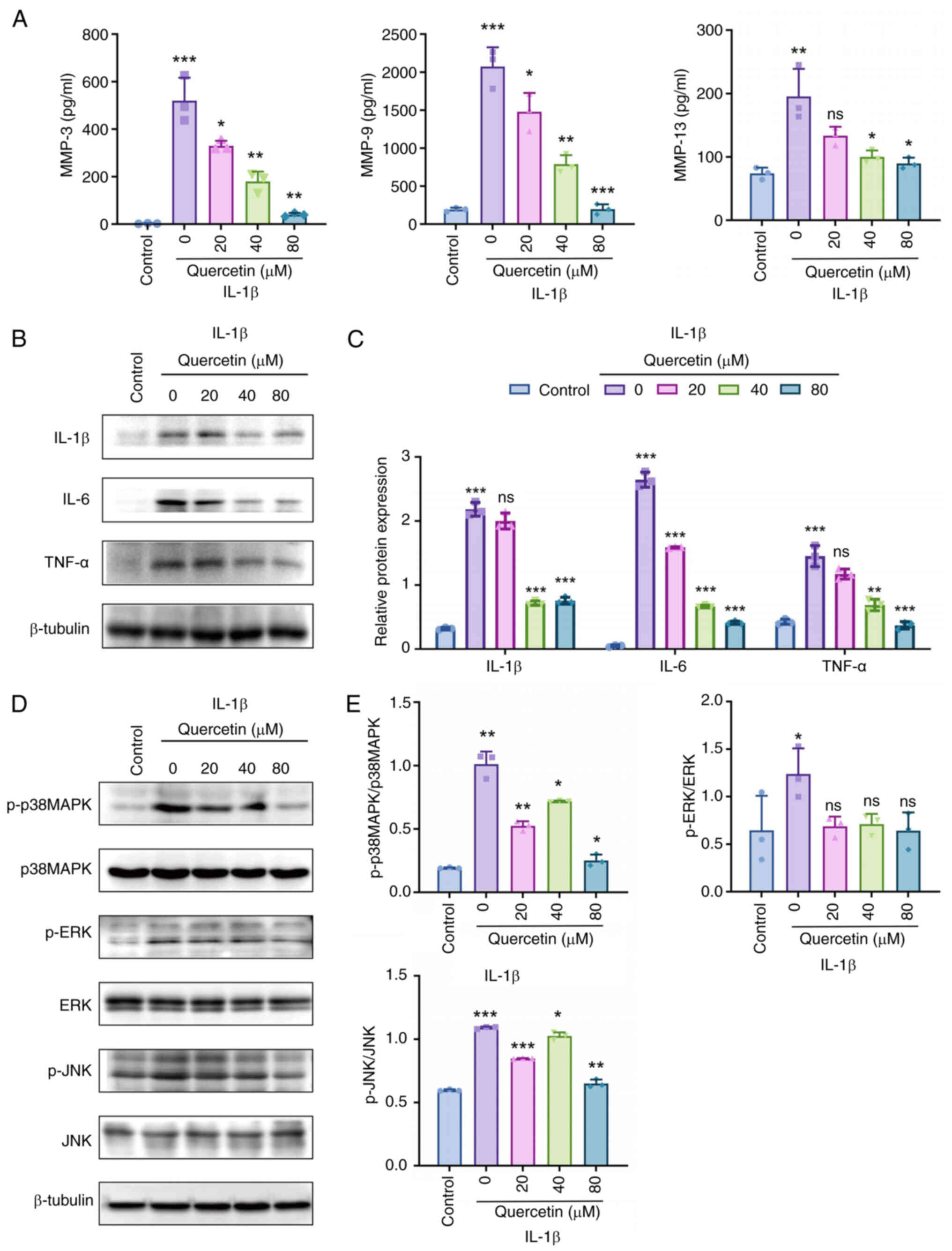
Multi-level validation of
quercetin-mediated regulation of inflammatory cytokines and MMPs
via inhibition of the p38 MAPK signaling pathway. (A) ELISA
analysis showing the effects of different concentrations of
quercetin on IL-1β-induced secretion of MMP3, MMP9 and MMP13 in
SW982 cells; (B) Western blot analysis of TNF-α, IL-1β and IL-6
protein expression levels, with β-tubulin as the internal control;
(C and D) Western blot analysis of phosphorylation levels of key
MAPK signaling molecules: p38, ERK1/2 and JNK; (E) Quantitative
analysis of phosphorylated proteins, showing that quercetin
markedly inhibited the expression of p-p38 and p-JNK, with no
significant effect on p-ERK1/2. All experiments were independently
repeated three times (n=3) and data are presented as mean ± SD.
Statistical comparisons were performed using one-way ANOVA.
Significance levels compared with the model group or 0 μM
group are indicated as: *P<0.05,
**P<0.01, ***P<0.001; ns:
insignificant. MMPs, matrix metalloproteinases; ELISA,
enzyme-linked immunosorbent assay; p-, phosphorylated.

Figure 7

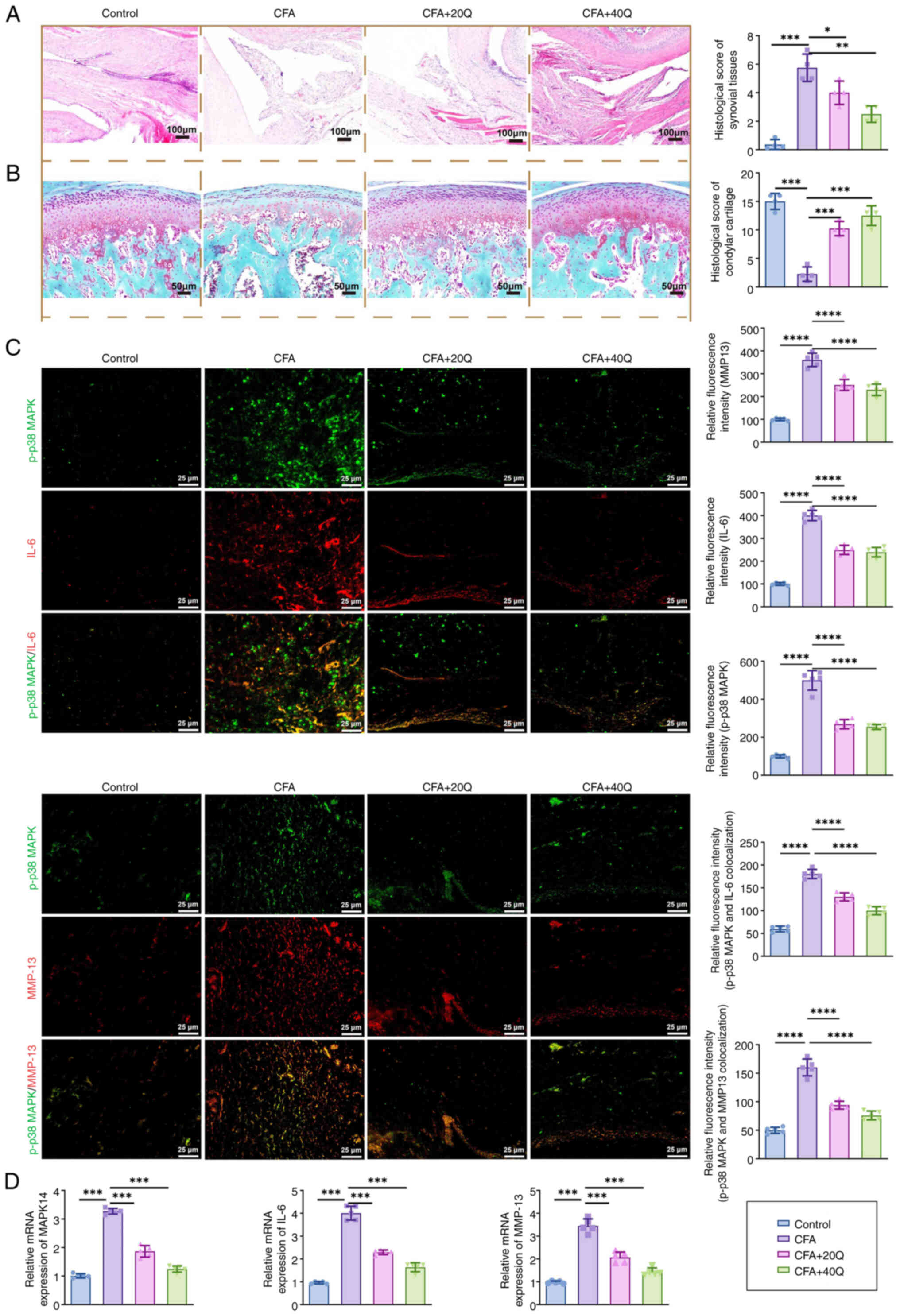
Multi-level analysis validates
quercetin's therapeutic effects on synovitis and its regulatory
role in inflammation-related signaling pathways. (A) H&E
staining assessing changes in synovial structure and inflammatory
cell infiltration. (B) Safranin O-Fast Green staining showing
alterations in proteoglycan distribution in condylar cartilage. (C)
Dual immunofluorescence staining analyzing the co-localization of
p-p38 MAPK (green) with IL-6 (red) and MMP13 (red) in synovial
tissue. (D) qPCR analysis of key gene expression levels, including
MAPK14, MAPKAPK2, DUSP1, IL-6, TNF-α and MMP13, in SW982 cells and
synovial tissues. All histological experiments were conducted with
five animals per group (n=5) and molecular experiments were
independently repeated three times (n=3). Data are presented as
mean ± SD. Statistical comparisons were performed using one-way
ANOVA. Significance levels: *P<0.05,
**P<0.01, ***P<0.001,
****P<0.0001; ns, insignificant. H&E, hematoxylin
and eosin; MMP, matrix metalloproteinase; qPCR, quantitative
PCR.

Figure 8

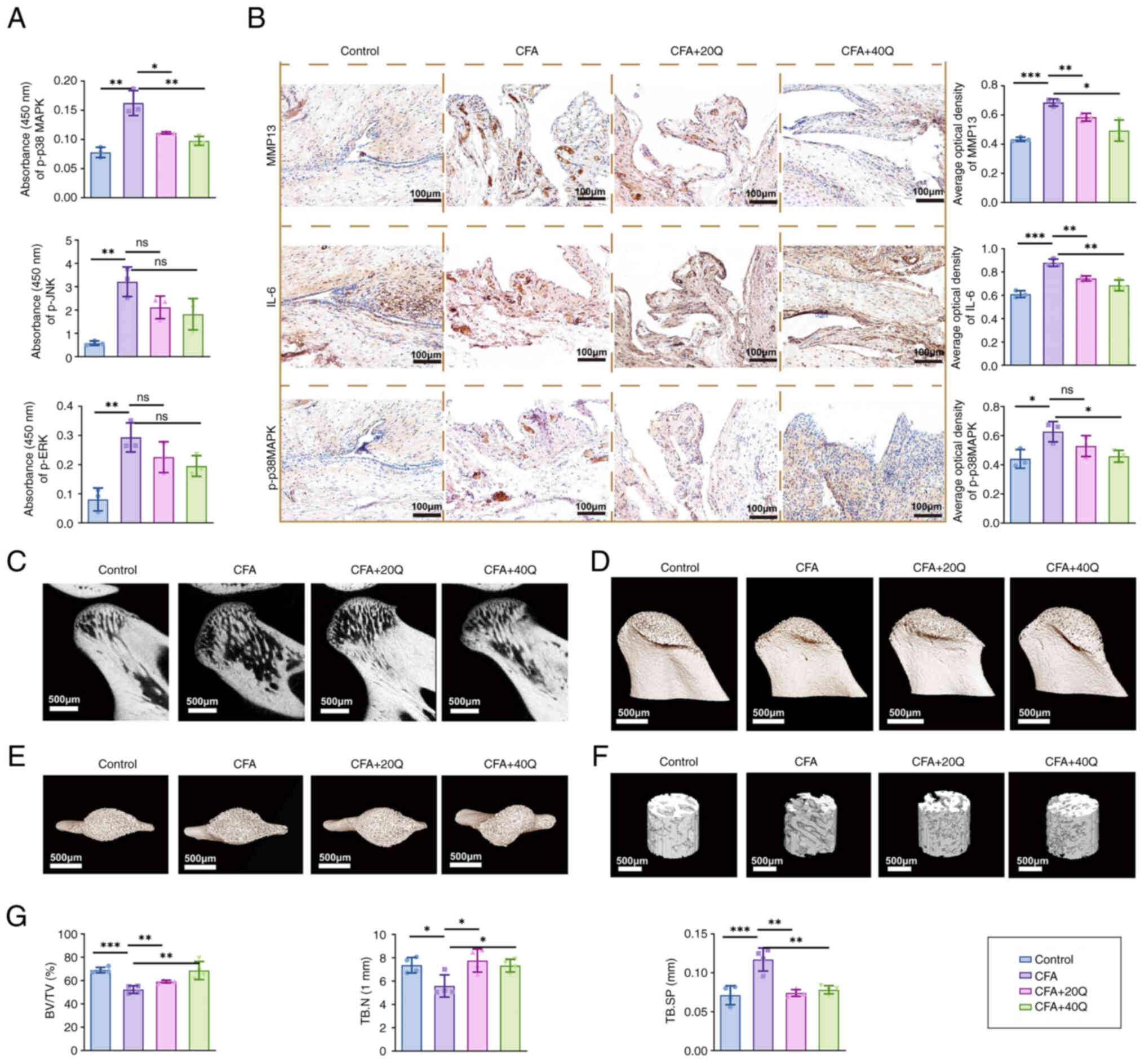
Quercetin alleviates inflammatory
cytokine expression and mitigates bone destruction by modulating
the p38 MAPK signaling pathway. (A) InstantOne ELISA analysis of
p-p38 MAPK, p-JNK and p-ERK levels in synovial tissue. (B) IHC
staining showing expression changes of MMP13, IL-6 and p-p38 MAPK
in synovial tissue. (C) Evaluation of subchondral bone destruction
using Micro-CT sagittal slices, (D and E) 3D reconstructions and
(F) cylindrical ROI of rat condylar bone. (G) Quantitative analysis
of BV/TV, Tb.N and Tb.Sp. Scale bar, 500 μm. Comparisons
were made against the CFA group. Each group included five rats
(n=5) and data are presented as mean ± SD. Statistical analysis was
performed using one-way ANOVA; *P<0.05,
**P<0.01, ***P<0.001. ELISA,
enzyme-linked immunosorbent assay; p-, phosphorylated; IHC,
immunohistochemistry; MMP, matrix metalloproteinase; Micro-CT,
micro-computed tomography; ROI, region of interest; BV/TV, bone
volume/tissue volume; Tb.N, trabecular number; Tb.Sp, trabecular
separation; CFA, Complete Freund's Adjuvant.

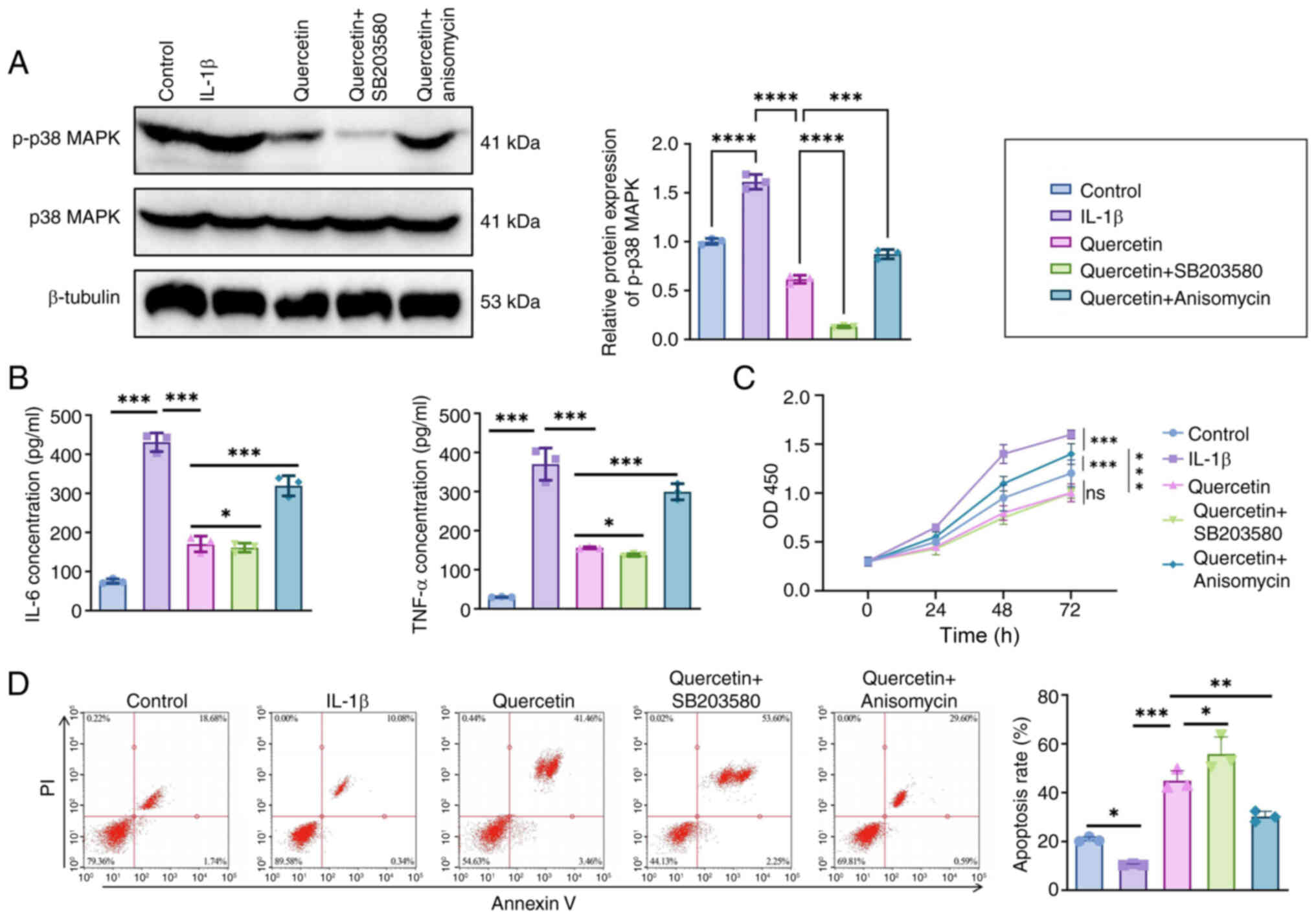
Figure 9

Agonist/inhibitor experiments confirm
that the anti-inflammatory mechanism of quercetin depends on the
p38 MAPK signaling pathway. (A) Western blot analysis of p-p38 MAPK
protein expression. (B) ELISA detection of IL-6 and TNF-α secretion
levels (pg/ml). (C) CCK-8 assay for evaluating cell proliferation
activity (OD450). (D) Annexin V/PI flow cytometry analysis of
apoptosis rate (%). Experimental groups included: Control, IL-1β,
IL-1β + quercetin, IL-1β + quercetin + SB203580 and IL-1β +
quercetin + anisomycin. All experiments were independently repeated
three times (n=3) and data are expressed as mean ± SD. Statistical
comparisons were performed using one-way ANOVA;
*P<0.05, **P<0.01,
***P<0.001 ****P<0.0001; ns:
insignificant. p-, phosphorylated; ELISA, enzyme-linked
immunosorbent assay; CCK-8, Cell Counting Kit-8; OD, optical
density.
View References

1 

Kapos FP, Exposto FG, Oyarzo JF and Durham J: Temporomandibular disorders: A review of current concepts in aetiology, diagnosis and management. Oral Surg. 13:321–334. 2020. View Article : Google Scholar

2 

Zieliński G, Pająk-Zielińska B and Ginszt M: A meta-analysis of the global prevalence of temporomandibular disorders. J Clin Med. 13:13652024. View Article : Google Scholar

3 

Zieliński G: Quo vadis temporomandibular disorders? By 2050, the global prevalence of TMD may approach 44%. J Clin Med. 14:44142025. View Article : Google Scholar

4 

Li DTS and Leung YY: Temporomandibular disorders: Current concepts and controversies in diagnosis and management. Diagnostics (Basel). 11:4592021. View Article : Google Scholar : PubMed/NCBI

5 

Wang XD, Zhang JN, Gan YH and Zhou YH: Current understanding of pathogenesis and treatment of TMJ osteoarthritis. J Dent Res. 94:666–673. 2015. View Article : Google Scholar : PubMed/NCBI

6 

Gil-Martinez A, Paris-Alemany A, López-de-Uralde-Villanueva I and La Touche R: Management of pain in patients with temporomandibular disorder (TMD): challenges and solutions. J Pain Res. 11:571–587. 2018. View Article : Google Scholar : PubMed/NCBI

7 

Andre A, Kang J and Dym H: Pharmacologic treatment for temporomandibular and temporomandibular joint disorders. Oral Maxillofac Surg Clin North Am. 34:49–59. 2022. View Article : Google Scholar

8 

Tamer TM: Hyaluronan and synovial joint: Function, distribution and healing. Interdiscip Toxicol. 6:111–125. 2013. View Article : Google Scholar

9 

Jerosch J: Effects of glucosamine and chondroitin sulfate on cartilage metabolism in OA: Outlook on other nutrient partners especially omega-3 fatty acids. Int J Rheumatol. 2011:1–17. 2011. View Article : Google Scholar

10 

Wujec M and Feldo M: Can we improve diosmetin activity? The state-of-the-art and promising research directions. Molecules. 28:79102023. View Article : Google Scholar : PubMed/NCBI

11 

Sun Z, Liu K, Liang C, Wen L, Wu J, Liu X and Li X: Diosmetin as a promising natural therapeutic agent: In vivo, in vitro mechanisms, and clinical studies. Phytother Res. 38:3660–3694. 2024. View Article : Google Scholar : PubMed/NCBI

12 

Aghababaei F and Hadidi M: Recent advances in potential health benefits of quercetin. Pharmaceuticals (Basel). 16:10202023. View Article : Google Scholar : PubMed/NCBI

13 

Wang G, Wang Y, Yao L, Gu W, Zhao S, Shen Z, Lin Z, Liu W and Yan T: Pharmacological activity of quercetin: An updated review. Evid Based Complement Alternat Med. 2022:1–12. 2022. View Article : Google Scholar

14 

Silva-Pinto PA, de Pontes JTC, Aguilar-Morón B, Canales CSC, Pavan FR and Roque-Borda CA: Phytochemical insights into flavonoids in cancer: Mechanisms, therapeutic potential, and the case of quercetin. Heliyon. 11:e426822025. View Article : Google Scholar : PubMed/NCBI

15 

Shabir I, Kumar Pandey V, Shams R, Dar AH, Dash KK, Khan SA, Bashir I, Jeevarathinam G, Rusu AV, Esatbeyoglu T and Pandiselvam R: Promising bioactive properties of quercetin for potential food applications and health benefits: A review. Front Nutr. 9:9997522022. View Article : Google Scholar : PubMed/NCBI

16 

Ding H, Ding H, Mu P, Lu X and Xu Z: Diosmetin inhibits subchondral bone loss and indirectly protects cartilage in a surgically-induced osteoarthritis mouse model. Chem Biol Interact. 370:1103112023. View Article : Google Scholar

17 

Zhao L, Zhang H, Li N, Chen J, Xu H, Wang Y and Liang Q: Network pharmacology, a promising approach to reveal the pharmacology mechanism of Chinese medicine formula. J Ethnopharmacol. 309:1163062023. View Article : Google Scholar : PubMed/NCBI

18 

Zhang P, Zhang D, Zhou W, Wang L, Wang B, Zhang T and Li S: Network pharmacology: Towards the artificial intelligence-based precision traditional Chinese medicine. Brief Bioinform. 25:bbad5182023. View Article : Google Scholar

19 

Bhoi A, Dwivedi SD, Singh D, Keshavkant S and Singh MR: Mechanistic prospective and pharmacological attributes of quercetin in attenuation of different types of arthritis. 3 Biotech. 13:3622023. View Article : Google Scholar : PubMed/NCBI

20 

Yang Y, Kim SC, Yu T, Yi YS, Rhee MH, Sung GH, Yoo BC and Cho JY: Functional roles of p38 mitogen-activated protein kinase in macrophage-mediated inflammatory responses. Mediator Inflamm. 2014:1–13. 2014.

21 

Kim AL, Labasi JM, Zhu Y, Tang X, McClure K, Gabel CA, Athar M and Bickers DR: Role of p38 MAPK in UVB-induced inflammatory responses in the skin of SKH-1 hairless mice. J Invest Dermatol. 124:1318–1325. 2005. View Article : Google Scholar : PubMed/NCBI

22 

Sui X, Kong N, Ye L, Han W, Zhou J, Zhang Q, He C and Pan H: p38 and JNK MAPK pathways control the balance of apoptosis and autophagy in response to chemotherapeutic agents. Cancer Lett. 344:174–179. 2014. View Article : Google Scholar

23 

Mathiessen A and Conaghan PG: Synovitis in osteoarthritis: Current understanding with therapeutic implications. Arthritis Res Ther. 19:182017. View Article : Google Scholar : PubMed/NCBI

24 

Bartels YL, van Lent PLEM, van der Kraan PM, Blom AB, Bonger KM and van den Bosch MHJ: Inhibition of TLR4 signalling to dampen joint inflammation in osteoarthritis. Rheumatology (Oxford). 63:608–618. 2023. View Article : Google Scholar : PubMed/NCBI

25 

Chin CH, Chen SH, Wu HH, Ho CW, Ko MT and Lin CY: CytoHubba: Identifying hub objects and sub-networks from complex interactome. BMC Syst Biol. 4:S4–S11. 2014.

26 

Bayly CI, Cieplak P, Cornell W and Kollman PA: A well-behaved electrostatic potential based method using charge restraints for deriving atomic charges: The RESP model. J Phys Chem. 97:10269–10280. 1993. View Article : Google Scholar

27 

Jorgensen WL, Chandrasekhar J, Madura JD, Impey RW and Klein ML: Comparison of simple potential functions for simulating liquid water. J Chem Phys. 79:926–935. 1983. View Article : Google Scholar

28 

Zakrzewska M, Opalinski L, Haugsten EM, Otlewski J and Wiedlocha A: Crosstalk between p38 and Erk 1/2 in downregulation of FGF1-induced signaling. IJMS. 20:18262019. View Article : Google Scholar : PubMed/NCBI

29 

Mei S, Gu H, Ward A, Yang X, Guo H, He K, Liu Z and Cao W: p38 Mitogen-activated protein kinase (MAPK) promotes cholesterol ester accumulation in macrophages through inhibition of macroautophagy. J Biol Chem. 287:11761–11768. 2012. View Article : Google Scholar : PubMed/NCBI

30 

National Research Council (US); Committee for the Update of the Guide for the Care Use of Laboratory Animals: Guide for the Care and Use of Laboratory Animals. 8th edition. National Academies Press (US); Washington, DC: 2011

31 

Hu S, Li H, Jiang H, Liu X, Ke J and Long X: Macrophage activation in synovitis and osteoarthritis of temporomandibular joint and its relationship with the progression of synovitis and bone remodeling. Am J Pathol. 194:296–306. 2024. View Article : Google Scholar : PubMed/NCBI

32 

Livak KJ and Schmittgen TD: Analysis of relative gene expression data using real-time quantitative PCR and the 2(−Delta Delta C(T)) method. Methods. 25:402–408. 2001. View Article : Google Scholar

33 

Gynther GW, Dijkgraaf LC, Reinholt FP, Holmlund AB, Liem RS and de Bont LG: Synovial inflammation in arthroscopically obtained biopsy specimens from the temporomandibular joint: A review of the literature and a proposed histologic grading system. J Oral Maxillofac Surg. 56:1281–1286. 1998. View Article : Google Scholar : PubMed/NCBI

34 

Cheng M, Yi X and Zhou Q: Overexpression of HIF-1alpha in bone marrow mesenchymal stem cells promote the repair of mandibular condylar osteochondral defect in a rabbit model. J Oral and Maxillofacial Surgery. 79:345.e1–345.e15. 2021. View Article : Google Scholar

35 

Chen Y, Wang Y, Liu M, Zhou B and Yang G: Diosmetin exhibits anti-proliferative and anti-inflammatory effects on TNF-α-stimulated human rheumatoid arthritis fibroblast-like synoviocytes through regulating the Akt and NF-κB signaling pathways. Phytotherapy Research. 34:1310–1319. 2019. View Article : Google Scholar

36 

Guo G and Dong J: Diosmetin attenuates oxidative stress-induced damage to lens epithelial cells via the mitogen-activated protein kinase (MAPK) pathway. Bioengineered. 13:11072–11081. 2022. View Article : Google Scholar : PubMed/NCBI

37 

Li Y, Yao J, Han C, Yang J, Chaudhry MT, Wang S, Liu H and Yin Y: Quercetin, inflammation and immunity. Nutrients. 8:1672016. View Article : Google Scholar : PubMed/NCBI

38 

Cheng S, Gao N, Zhang Z, Chen G, Budhraja A, Ke Z, Son YO, Wang X, Luo J and Shi X: Quercetin induces tumor-selective apoptosis through downregulation of Mcl-1 and activation of bax. Clin Cancer Res. 16:5679–5691. 2010. View Article : Google Scholar : PubMed/NCBI

Related Articles

  • Abstract
  • View
  • Download
  • Twitter
Copy and paste a formatted citation
Spandidos Publications style
Cheng M, Guan Y, Xin X, Yi X and Liu Y: Targeting p38 MAPK signaling pathway:&nbsp;<br />Quercetin as a novel therapy for TMJ synovitis. Int J Mol Med 57: 21, 2026.
APA
Cheng, M., Guan, Y., Xin, X., Yi, X., & Liu, Y. (2026). Targeting p38 MAPK signaling pathway:&nbsp;<br />Quercetin as a novel therapy for TMJ synovitis. International Journal of Molecular Medicine, 57, 21. https://doi.org/10.3892/ijmm.2025.5692
MLA
Cheng, M., Guan, Y., Xin, X., Yi, X., Liu, Y."Targeting p38 MAPK signaling pathway:&nbsp;<br />Quercetin as a novel therapy for TMJ synovitis". International Journal of Molecular Medicine 57.1 (2026): 21.
Chicago
Cheng, M., Guan, Y., Xin, X., Yi, X., Liu, Y."Targeting p38 MAPK signaling pathway:&nbsp;<br />Quercetin as a novel therapy for TMJ synovitis". International Journal of Molecular Medicine 57, no. 1 (2026): 21. https://doi.org/10.3892/ijmm.2025.5692
Copy and paste a formatted citation
x
Spandidos Publications style
Cheng M, Guan Y, Xin X, Yi X and Liu Y: Targeting p38 MAPK signaling pathway:&nbsp;<br />Quercetin as a novel therapy for TMJ synovitis. Int J Mol Med 57: 21, 2026.
APA
Cheng, M., Guan, Y., Xin, X., Yi, X., & Liu, Y. (2026). Targeting p38 MAPK signaling pathway:&nbsp;<br />Quercetin as a novel therapy for TMJ synovitis. International Journal of Molecular Medicine, 57, 21. https://doi.org/10.3892/ijmm.2025.5692
MLA
Cheng, M., Guan, Y., Xin, X., Yi, X., Liu, Y."Targeting p38 MAPK signaling pathway:&nbsp;<br />Quercetin as a novel therapy for TMJ synovitis". International Journal of Molecular Medicine 57.1 (2026): 21.
Chicago
Cheng, M., Guan, Y., Xin, X., Yi, X., Liu, Y."Targeting p38 MAPK signaling pathway:&nbsp;<br />Quercetin as a novel therapy for TMJ synovitis". International Journal of Molecular Medicine 57, no. 1 (2026): 21. https://doi.org/10.3892/ijmm.2025.5692
Follow us
  • Twitter
  • LinkedIn
  • Facebook
About
  • Spandidos Publications
  • Careers
  • Cookie Policy
  • Privacy Policy
How can we help?
  • Help
  • Live Chat
  • Contact
  • Email to our Support Team