Spandidos Publications Logo
  • About
    • About Spandidos
    • Aims and Scopes
    • Abstracting and Indexing
    • Editorial Policies
    • Reprints and Permissions
    • Job Opportunities
    • Terms and Conditions
    • Contact
  • Journals
    • All Journals
    • Oncology Letters
      • Oncology Letters
      • Information for Authors
      • Editorial Policies
      • Editorial Board
      • Aims and Scope
      • Abstracting and Indexing
      • Bibliographic Information
      • Archive
    • International Journal of Oncology
      • International Journal of Oncology
      • Information for Authors
      • Editorial Policies
      • Editorial Board
      • Aims and Scope
      • Abstracting and Indexing
      • Bibliographic Information
      • Archive
    • Molecular and Clinical Oncology
      • Molecular and Clinical Oncology
      • Information for Authors
      • Editorial Policies
      • Editorial Board
      • Aims and Scope
      • Abstracting and Indexing
      • Bibliographic Information
      • Archive
    • Experimental and Therapeutic Medicine
      • Experimental and Therapeutic Medicine
      • Information for Authors
      • Editorial Policies
      • Editorial Board
      • Aims and Scope
      • Abstracting and Indexing
      • Bibliographic Information
      • Archive
    • International Journal of Molecular Medicine
      • International Journal of Molecular Medicine
      • Information for Authors
      • Editorial Policies
      • Editorial Board
      • Aims and Scope
      • Abstracting and Indexing
      • Bibliographic Information
      • Archive
    • Biomedical Reports
      • Biomedical Reports
      • Information for Authors
      • Editorial Policies
      • Editorial Board
      • Aims and Scope
      • Abstracting and Indexing
      • Bibliographic Information
      • Archive
    • Oncology Reports
      • Oncology Reports
      • Information for Authors
      • Editorial Policies
      • Editorial Board
      • Aims and Scope
      • Abstracting and Indexing
      • Bibliographic Information
      • Archive
    • Molecular Medicine Reports
      • Molecular Medicine Reports
      • Information for Authors
      • Editorial Policies
      • Editorial Board
      • Aims and Scope
      • Abstracting and Indexing
      • Bibliographic Information
      • Archive
    • World Academy of Sciences Journal
      • World Academy of Sciences Journal
      • Information for Authors
      • Editorial Policies
      • Editorial Board
      • Aims and Scope
      • Abstracting and Indexing
      • Bibliographic Information
      • Archive
    • International Journal of Functional Nutrition
      • International Journal of Functional Nutrition
      • Information for Authors
      • Editorial Policies
      • Editorial Board
      • Aims and Scope
      • Abstracting and Indexing
      • Bibliographic Information
      • Archive
    • International Journal of Epigenetics
      • International Journal of Epigenetics
      • Information for Authors
      • Editorial Policies
      • Editorial Board
      • Aims and Scope
      • Abstracting and Indexing
      • Bibliographic Information
      • Archive
    • Medicine International
      • Medicine International
      • Information for Authors
      • Editorial Policies
      • Editorial Board
      • Aims and Scope
      • Abstracting and Indexing
      • Bibliographic Information
      • Archive
  • Articles
  • Information
    • Information for Authors
    • Information for Reviewers
    • Information for Librarians
    • Information for Advertisers
    • Conferences
  • Language Editing
Spandidos Publications Logo
  • About
    • About Spandidos
    • Aims and Scopes
    • Abstracting and Indexing
    • Editorial Policies
    • Reprints and Permissions
    • Job Opportunities
    • Terms and Conditions
    • Contact
  • Journals
    • All Journals
    • Biomedical Reports
      • Information for Authors
      • Editorial Policies
      • Editorial Board
      • Aims and Scope
      • Abstracting and Indexing
      • Bibliographic Information
      • Archive
    • Experimental and Therapeutic Medicine
      • Information for Authors
      • Editorial Policies
      • Editorial Board
      • Aims and Scope
      • Abstracting and Indexing
      • Bibliographic Information
      • Archive
    • International Journal of Epigenetics
      • Information for Authors
      • Editorial Policies
      • Editorial Board
      • Aims and Scope
      • Abstracting and Indexing
      • Bibliographic Information
      • Archive
    • International Journal of Functional Nutrition
      • Information for Authors
      • Editorial Policies
      • Editorial Board
      • Aims and Scope
      • Abstracting and Indexing
      • Bibliographic Information
      • Archive
    • International Journal of Molecular Medicine
      • Information for Authors
      • Editorial Policies
      • Editorial Board
      • Aims and Scope
      • Abstracting and Indexing
      • Bibliographic Information
      • Archive
    • International Journal of Oncology
      • Information for Authors
      • Editorial Policies
      • Editorial Board
      • Aims and Scope
      • Abstracting and Indexing
      • Bibliographic Information
      • Archive
    • Medicine International
      • Information for Authors
      • Editorial Policies
      • Editorial Board
      • Aims and Scope
      • Abstracting and Indexing
      • Bibliographic Information
      • Archive
    • Molecular and Clinical Oncology
      • Information for Authors
      • Editorial Policies
      • Editorial Board
      • Aims and Scope
      • Abstracting and Indexing
      • Bibliographic Information
      • Archive
    • Molecular Medicine Reports
      • Information for Authors
      • Editorial Policies
      • Editorial Board
      • Aims and Scope
      • Abstracting and Indexing
      • Bibliographic Information
      • Archive
    • Oncology Letters
      • Information for Authors
      • Editorial Policies
      • Editorial Board
      • Aims and Scope
      • Abstracting and Indexing
      • Bibliographic Information
      • Archive
    • Oncology Reports
      • Information for Authors
      • Editorial Policies
      • Editorial Board
      • Aims and Scope
      • Abstracting and Indexing
      • Bibliographic Information
      • Archive
    • World Academy of Sciences Journal
      • Information for Authors
      • Editorial Policies
      • Editorial Board
      • Aims and Scope
      • Abstracting and Indexing
      • Bibliographic Information
      • Archive
  • Articles
  • Information
    • For Authors
    • For Reviewers
    • For Librarians
    • For Advertisers
    • Conferences
  • Language Editing
Login Register Submit
  • This site uses cookies
  • You can change your cookie settings at any time by following the instructions in our Cookie Policy. To find out more, you may read our Privacy Policy.

    I agree
Search articles by DOI, keyword, author or affiliation
Search
Advanced Search
presentation
International Journal of Molecular Medicine
Join Editorial Board Propose a Special Issue
Print ISSN: 1107-3756 Online ISSN: 1791-244X
Journal Cover
January-2026 Volume 57 Issue 1

Full Size Image

Sign up for eToc alerts
Recommend to Library

Journals

International Journal of Molecular Medicine

International Journal of Molecular Medicine

International Journal of Molecular Medicine is an international journal devoted to molecular mechanisms of human disease.

International Journal of Oncology

International Journal of Oncology

International Journal of Oncology is an international journal devoted to oncology research and cancer treatment.

Molecular Medicine Reports

Molecular Medicine Reports

Covers molecular medicine topics such as pharmacology, pathology, genetics, neuroscience, infectious diseases, molecular cardiology, and molecular surgery.

Oncology Reports

Oncology Reports

Oncology Reports is an international journal devoted to fundamental and applied research in Oncology.

Experimental and Therapeutic Medicine

Experimental and Therapeutic Medicine

Experimental and Therapeutic Medicine is an international journal devoted to laboratory and clinical medicine.

Oncology Letters

Oncology Letters

Oncology Letters is an international journal devoted to Experimental and Clinical Oncology.

Biomedical Reports

Biomedical Reports

Explores a wide range of biological and medical fields, including pharmacology, genetics, microbiology, neuroscience, and molecular cardiology.

Molecular and Clinical Oncology

Molecular and Clinical Oncology

International journal addressing all aspects of oncology research, from tumorigenesis and oncogenes to chemotherapy and metastasis.

World Academy of Sciences Journal

World Academy of Sciences Journal

Multidisciplinary open-access journal spanning biochemistry, genetics, neuroscience, environmental health, and synthetic biology.

International Journal of Functional Nutrition

International Journal of Functional Nutrition

Open-access journal combining biochemistry, pharmacology, immunology, and genetics to advance health through functional nutrition.

International Journal of Epigenetics

International Journal of Epigenetics

Publishes open-access research on using epigenetics to advance understanding and treatment of human disease.

Medicine International

Medicine International

An International Open Access Journal Devoted to General Medicine.

Journal Cover
January-2026 Volume 57 Issue 1

Full Size Image

Sign up for eToc alerts
Recommend to Library

  • Article
  • Citations
    • Cite This Article
    • Download Citation
    • Create Citation Alert
    • Remove Citation Alert
    • Cited By
  • Similar Articles
    • Related Articles (in Spandidos Publications)
    • Similar Articles (Google Scholar)
    • Similar Articles (PubMed)
  • Download PDF
  • Download XML
  • View XML

  • Supplementary Files
    • Supplementary_Data.pdf
Article Open Access

MOTS‑c protects against placental injury via Nrf2 activation in hypoxia‑induced intrauterine growth restriction mice

  • Authors:
    • Dan Chen
    • Hui-Min Zhao
    • Xiao-Lin Sun
    • Zhi-Xuan Xing
    • Sheng-Peng Li
    • Shuai-Chao Li
    • Ya-Xian Wu
    • Qing-Feng Pang
    • Jian-Feng Huang
  • View Affiliations / Copyright

    Affiliations: Department of Physiopathology, Wuxi School of Medicine, Jiangnan University, Wuxi, Jiangsu 214122, P.R. China, Department of Neonatology, Maternal and Child Health Hospital of Linyi, Linyi, Shandong 276000, P.R. China, Department of Radiation Oncology, Affiliated Hospital of Jiangnan University, Wuxi, Jiangsu 214122, P.R. China
    Copyright: © Chen et al. This is an open access article distributed under the terms of Creative Commons Attribution License.
  • Article Number: 26
    |
    Published online on: November 18, 2025
       https://doi.org/10.3892/ijmm.2025.5697
  • Expand metrics +
Metrics: Total Views: 0 (Spandidos Publications: | PMC Statistics: )
Metrics: Total PDF Downloads: 0 (Spandidos Publications: | PMC Statistics: )
Cited By (CrossRef): 0 citations Loading Articles...

This article is mentioned in:


Abstract

Intrauterine growth restriction (IUGR) is a leading cause of perinatal morbidity and mortality. Oxidative stress is a key factor in the pathogenesis of IUGR. The transcription factor nuclear factor erythroid 2‑related factor 2 (Nrf2) is a key regulator of the cellular antioxidant response. MOTS‑c, a 16‑amino acid peptide derived from the mitochondria, regulates oxidative stress related pathways. However, the effects of MOTS‑c on IUGR remain unclear. The present study aimed to investigate the role of MOTS‑c in hypoxia‑induced placental restriction and IUGR and its underlying mechanisms. Wild‑type and Nrf2 knockout (KO) maternal mice were exposed to hypoxia from gestational days 11 to 17.5 to establish the IUGR model. Human umbilical vein endothelial cells (HUVECs) were used for in vitro assays. Maternal serum and placenta MOTS‑c concentration were measured using an enzyme‑linked immunosorbent assay. Hematoxylin and eosin staining, reverse transcription‑quantitative PCR, western blotting, immunohistochemistry and immunofluorescence techniques were employed to evaluate the effects of MOTS‑c treatment on IUGR. It was found that reduced placental content of MOTS‑c was positively correlated with low fetal weight in mice with hypoxia‑induced IUGR. The administration of MOTS‑c (5 mg/kg) significantly attenuated hypoxia‑induced IUGR by promoting placental angiogenesis and inhibiting oxidative stress‑mediated placental dysfunction. Furthermore, these protective effects exerted by MOTS‑c were dependent on Nrf2 activation, as administration of MOTS‑c had no protective role in Nrf2 KO mice or HUVECs pre‑treated with ML385, a Nrf2 inhibitor. Taken together, the present study demonstrated that MOTS‑c mitigated placental injury in hypoxia‑induced IUGR by activation of the Nrf2 signaling pathway, thus potentially identifying a novel therapeutic strategy for hypoxia‑induced IUGR.
View Figures

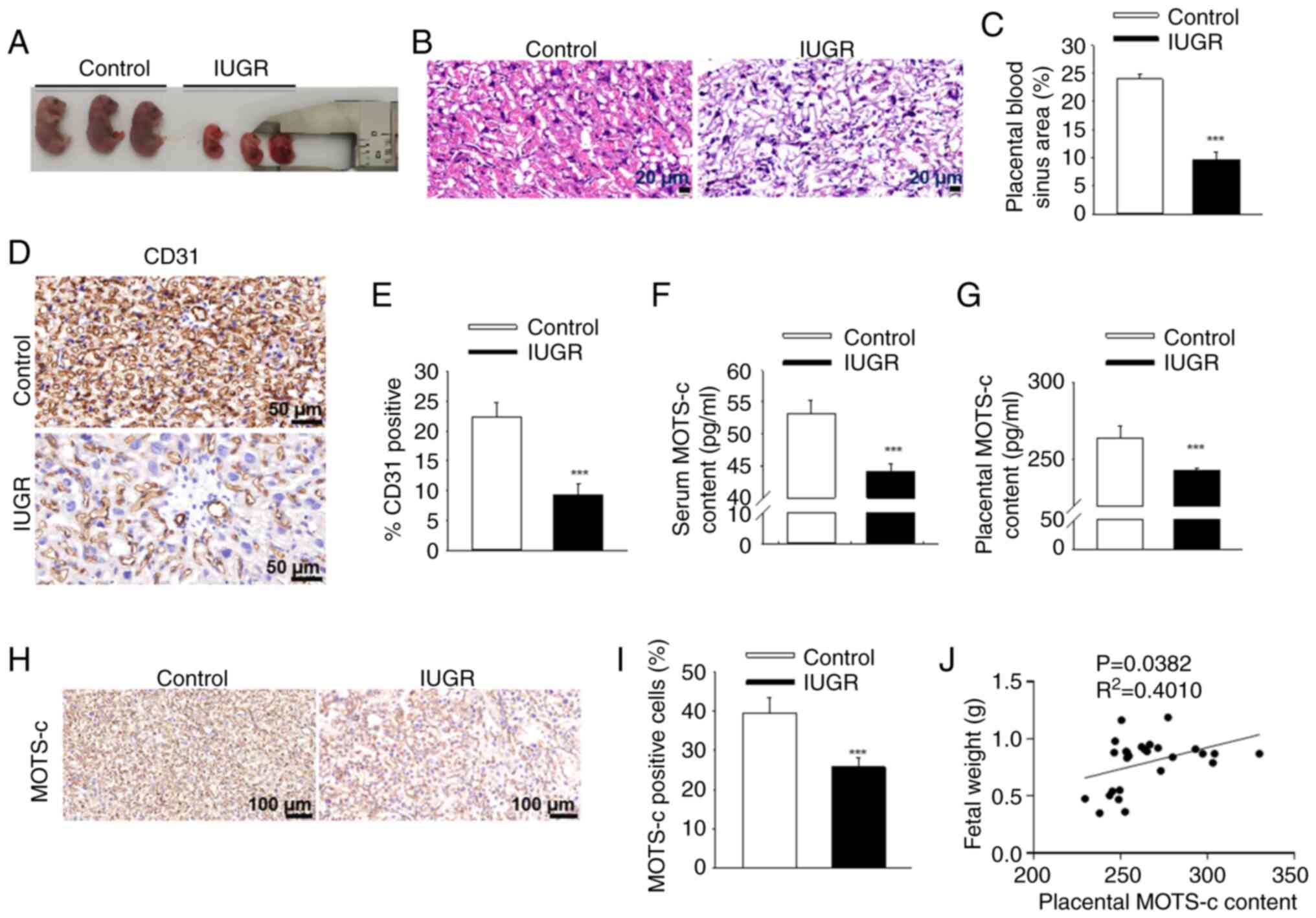
Figure 1

Decreased MOTS-c expression levels
are associated with low fetal weight in hypoxia-induced IUGR mice.
(A) Morphology of normal and IUGR fetal mice on GD17.5. (B)
Representative images of H&E staining of placental tissues.
Scale bar, 20 μm. (C) Quantification of placental blood
sinus area. (D) Representative IHC images of CD31. Scale bar, 50
μm. (E) Quantification of the CD31 positive area of IHC
images. (F) Maternal serum MOTS-c content and (G) Placental MOTS-c
content. (H) Representative IHC images of MOTS-c in placenta. Scale
bar, 100 μm. (I) Quantification of the MOTS-c positive area
of IHC images. (J) Pearson's correlation coefficient analysis of
the MOTS-c content with fetal mouse weight. Data are expressed as
the mean ± SD, n=6. ***P<0.001 vs. Control. IUGR, intrauterine
growth restriction; GD, gestational day; IHC,
immunohistochemistry.

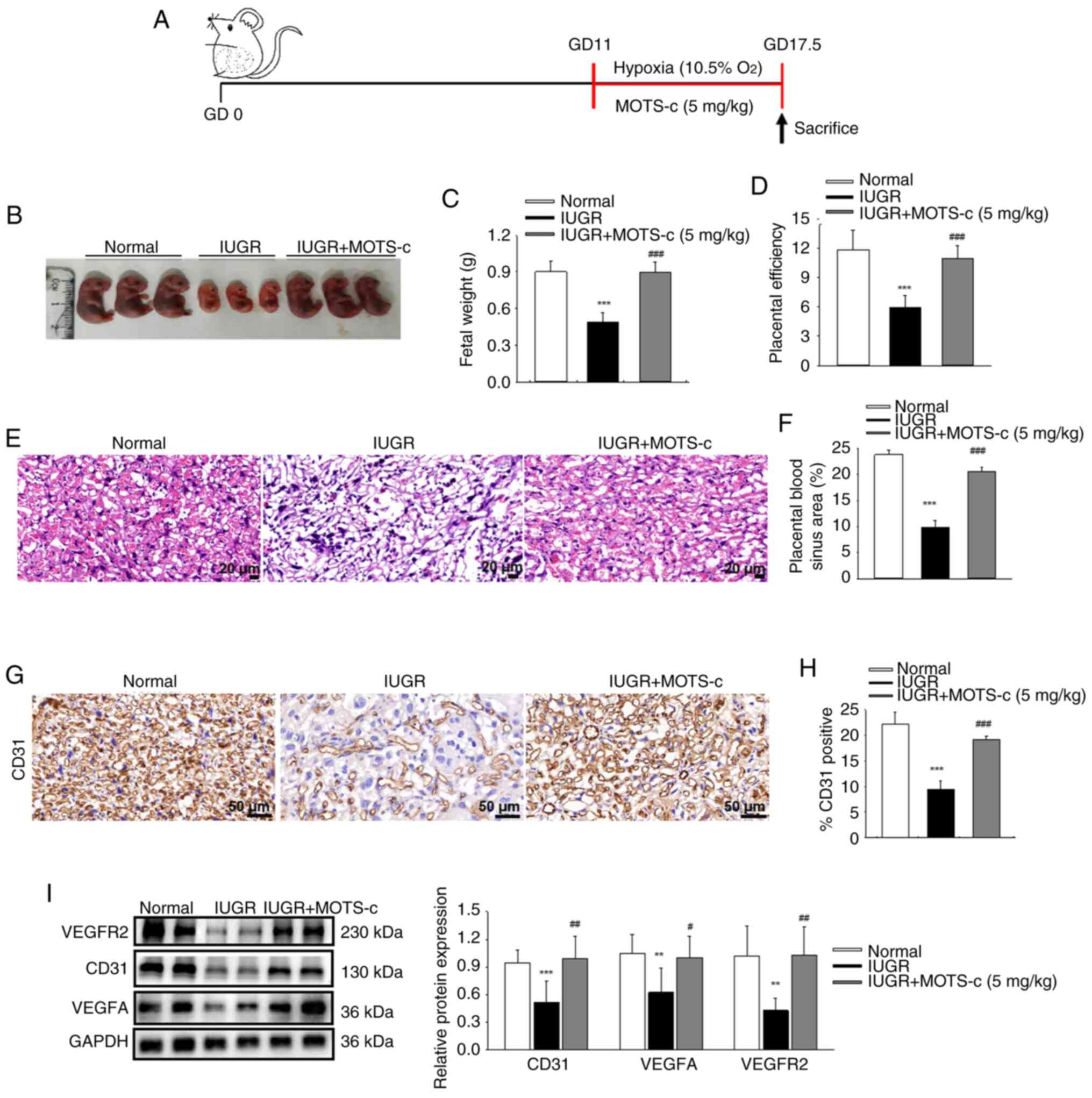
Figure 2

MOTS-c administration protects
against hypoxia-induced fetal growth restriction. (A) Schematic
timeline of the experimental setup. (B) Morphology of fetal mice on
GD17.5. (C) Mean fetal weights within each litter. (D) Placental
efficiency, which represents the ratio of fetal to placenta weight.
(E) Representative images of H&E staining of placental tissues.
Scale bar, 20 μm. (F) Quantification of placental blood
sinus area. (G) Representative IHC images CD31. Scale bar, 50
μm. (H) Quantification of CD31 positive area. (I) Western
blotting analysis of CD31, VEGFA and VEGFR2 protein expression in
placenta. Data are expressed as the mean ± SD. Normal, n=6; IUGR,
n=6; IUGR + MOTS-c, n=5. **P<0.01 vs. normal,
***P<0.001 vs. normal; #P<0.05 vs.
IUGR; ##P<0.01 vs. IUGR; ###P<0.001 vs.
IUGR. IUGR, intrauterine growth restriction; GD, gestational day;
VEGFA, vascular endothelial growth factor A; VEGFR2, VEGF receptor
2.

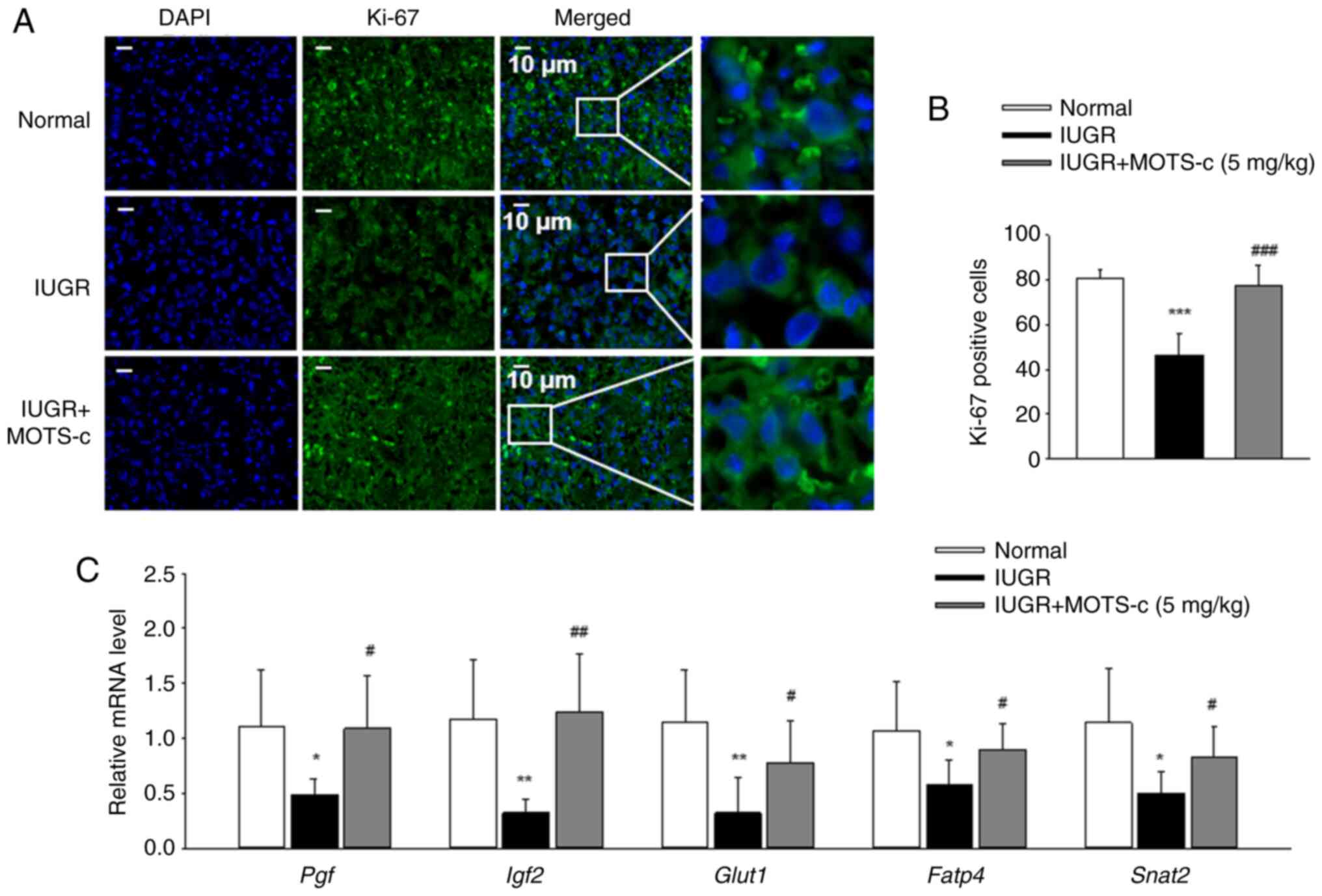
Figure 3

Administration of MOTS-c improves
placental injury. (A) Representative immunofluorescence images of
Ki-67 in placental tissues. Scale bar, 10 μm. (B)
Qualification of Ki-67 positive cells. (C) Relative mRNA expression
levels of Pgf, Igf2, Glut1, Fatp4 and
Snat2 in placenta. Data are expressed as the mean ± SD.
Normal, n=6; IUGR, n=6; IUGR + MOTS-c, n=5. *P<0.05
vs. normal, **P<0.01 vs. normal,
***P<0.001 vs. normal; #P<0.05 vs.
IUGR; ##P<0.01 vs. IUGR; ###P<0.001 vs.
IUGR. IUGR, intrauterine growth restriction; Pgf, placental growth
factor; Igf2, insulin-like growth factor 2; Glut1, glucose
transporter type 1; Fatp4, fatty acid transporter 4; Snat2,
sodium-dependent neutral amino acid transporter-2.

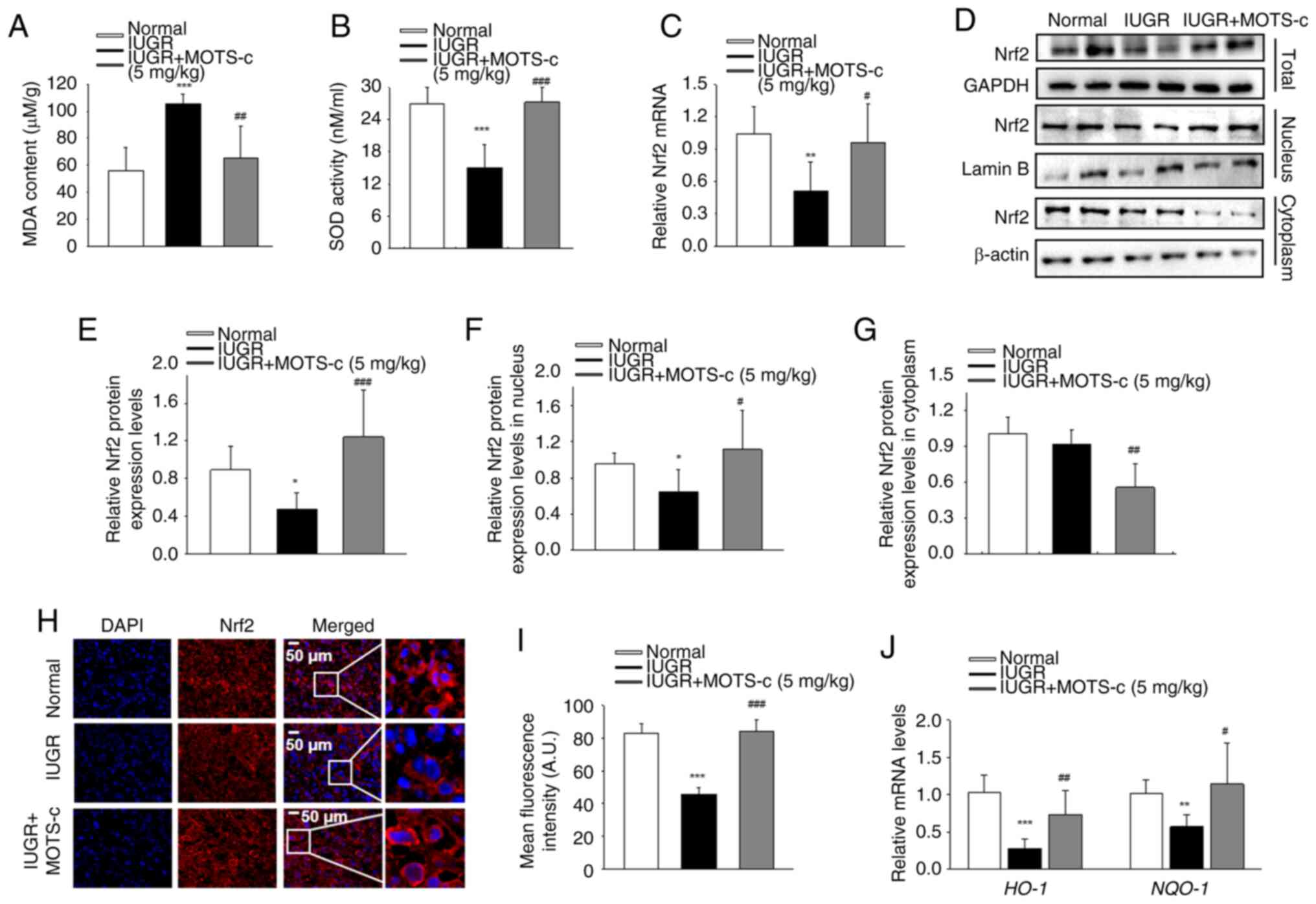
Figure 4

MOTS-c mitigates hypoxia-mediated
oxidative stress in placenta. (A) MDA content in placenta. (B) SOD
activity in placenta. (C) Nrf2 mRNA expression levels in placenta.
(D) Representative western blotting images. (E) Total Nrf2
expression in placental tissues. (F) Nuclear Nrf2 expression in
placental tissues. (G) Nrf2 expression in cytoplasm of placental
tissues. (H) Representative immunofluorescence images and (I)
quantification of Nrf2 in placenta. Scale bar, 50 μm. (J)
Relative mRNA expression levels of HO-1 and NQO-1. Data are
expressed as the mean ± SD. Normal, n=6; IUGR, n=6; IUGR + MOTS-c,
n=5. *P<0.05 vs. normal, **P<0.01 vs.
normal, ***P<0.001 vs. normal; #P<0.05
vs. IUGR; ##P<0.01 vs. IUGR; ###P<0.001
vs. IUGR. IUGR, intrauterine growth restriction; SOD, superoxide
dismutase; MDA, malondialdehyde; Nrf2, nuclear factor erythroid
2-related factor 2; HO-1, heme oxygenase 1; NQO-1, NAD(P)H quinone
dehydrogenase 1.

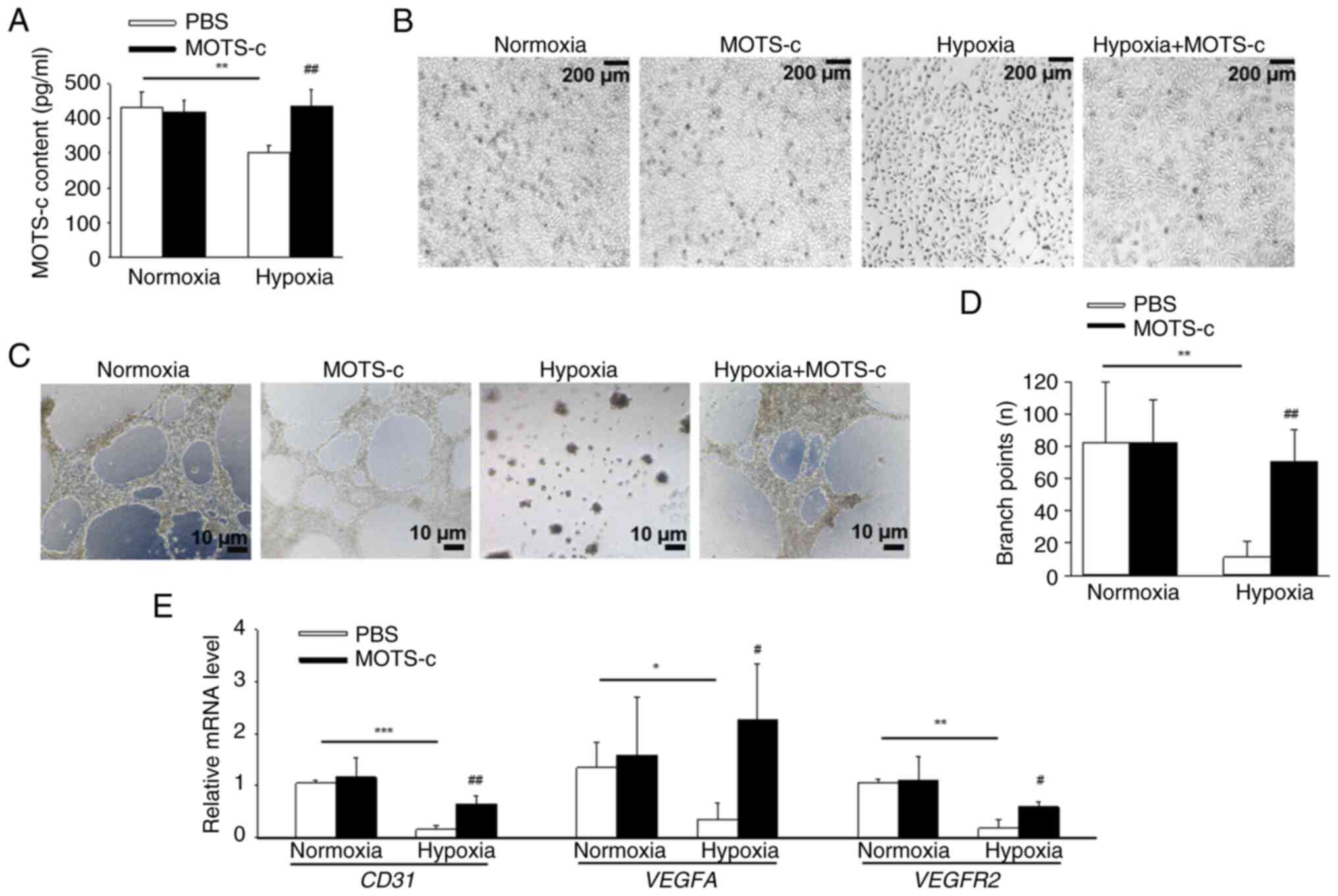
Figure 5

MOTS-c exposure promotes angiogenesis
in HUVECs. (A) MOTS-c content in HUVECs. (B) Cell morphology under
white light. Scale bar, 200 μm. (C) Representative images
and (D) quantitative analysis of the in vitro tube
formation. Scale bar, 10 μm. (E) Relative mRNA expression
levels of CD31, VEGFA and VEGFR2 in HUVECs.
Results are representative of three independent experiments. Data
are expressed as mean ± SD, n=4. *P<0.05,
**P<0.01, ***P<0.001;
#P<0.05 vs. PBS under hypoxic conditions,
##P<0.01 vs. PBS under hypoxic conditions. VEGFA,
vascular endothelial growth factor A; VEGFR2, VEGF receptor 2.

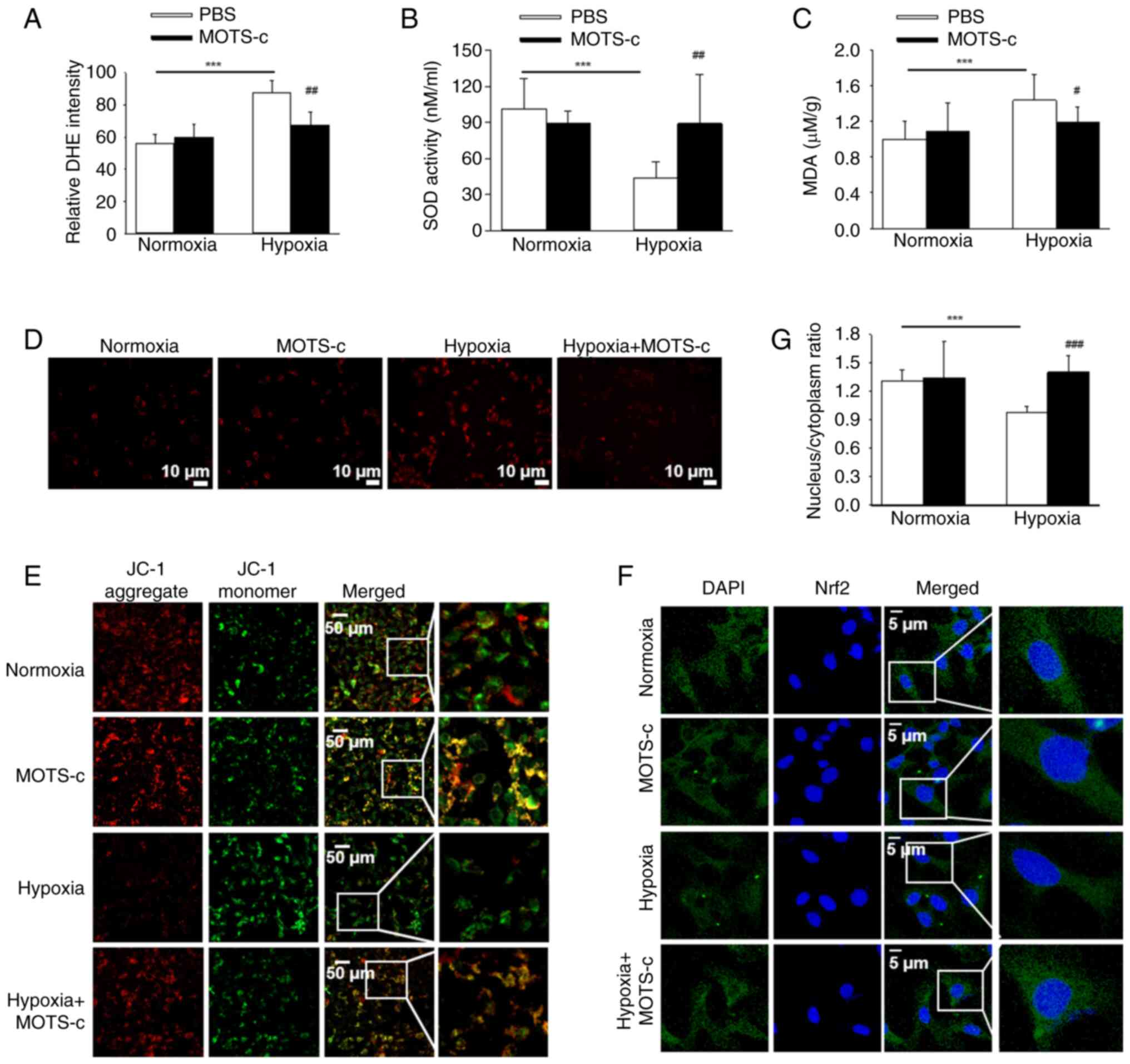
Figure 6

MOTS-c exposure attenuates oxidative
stress in HUVECs. (A) Relative intensity of DCFH-DA staining. (B)
Cellular SOD activity. (C) Cellular MDA content. (D) Representative
images of MitoSOX staining. Scale bar, 10 μm. (E)
Representative images of JC-1 staining. Scale bar, 50 μm.
(F) Representative immunofluorescence images of Nrf2 in HUVECs.
Scale bar, 5 μm. (G) Relative nuclear to cytoplasm
fluorescence ratio. Results are representative of three independent
experiments. Data are expressed as the mean ± SD, n=4.
***P<0.001, #P<0.05 vs. PBS under
hypoxic conditions, ##P<0.01 vs. PBS under hypoxic
conditions; ###P<0.001 vs. PBS under hypoxic
conditions. SOD, superoxide dismutase; MDA, malondialdehyde;
DCFH-DA,2'7'-dichlorodihydro fluorescein diacetate ; Nrf2, nuclear
factor erythroid 2-related factor 2.

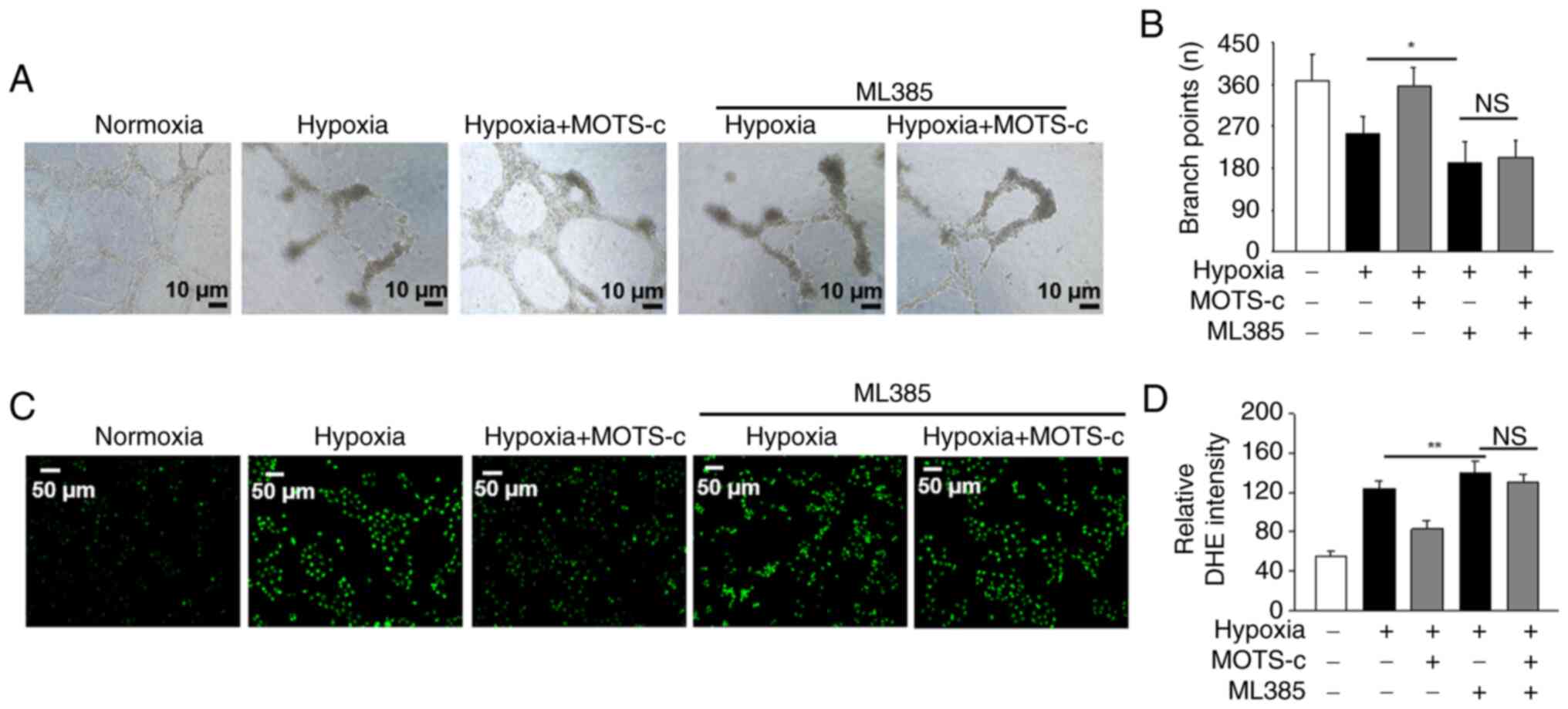
Figure 7

Nrf2 inhibitor ML385 offset the
protective effect of MOTS-c against hypoxia-induced dysregulated
angiogenesis and oxidative stress in HUVECs. (A) Representative
images and (B) quantitative analysis of the in vitro tube
formation. Scale bar, 10 μm. (C) Representative images of
DCFH-DA staining and (D) quantification of cellular ROS. Scale bar,
50 μm. Results are representative of three independent
experiments. Data are expressed as the mean ± SD.
*P<0.05, **P<0.01. NS, not significant;
DCFH-DA,2',7'-dichlorodihydro fluorescein diacetate; Nrf2, nuclear
factor erythroid 2-related factor 2.

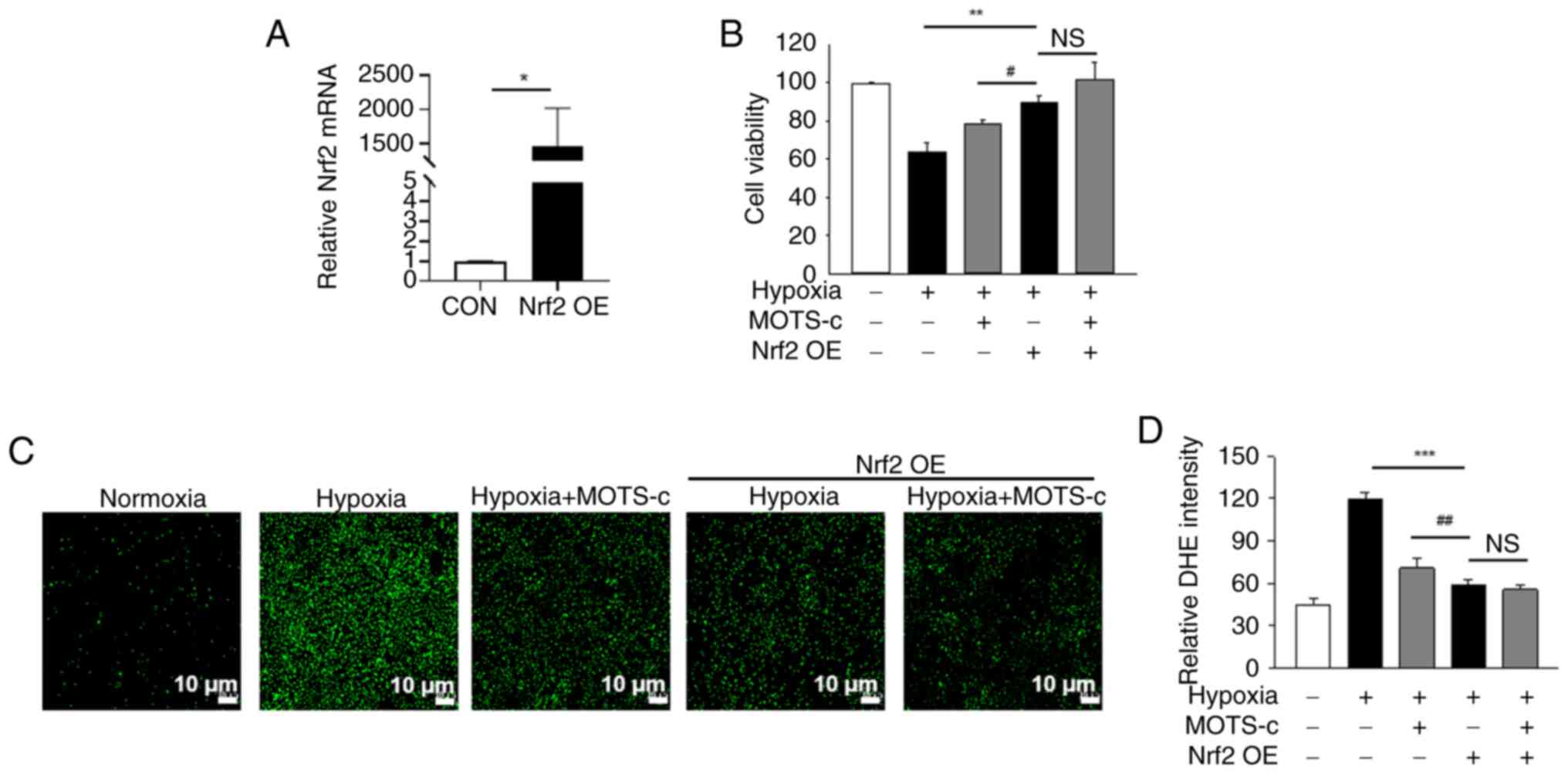
Figure 8

Nrf2 overexpression does not enhance
the beneficial effects of MOTS-c on hypoxia-stimulated HUVECs. (A)
Relative Nrf2 mRNA expression levels. (B) Cell viability. (C).
Representative images of DCFH-DA staining and (D) quantification of
cellular ROS. Scale bar, 10 μm. Data are expressed as the
mean ± SD. *P<0.05, **P<0.01,
***P<0.001, #P<0.05,
##P<0.01. NS, not significant; Nrf2, nuclear factor
erythroid 2-related factor 2; ROS, reactive oxygen species; OE,
overexpression; DCFH-DA, 2',7'-dichlorodihydro fluorescein
diacetate.

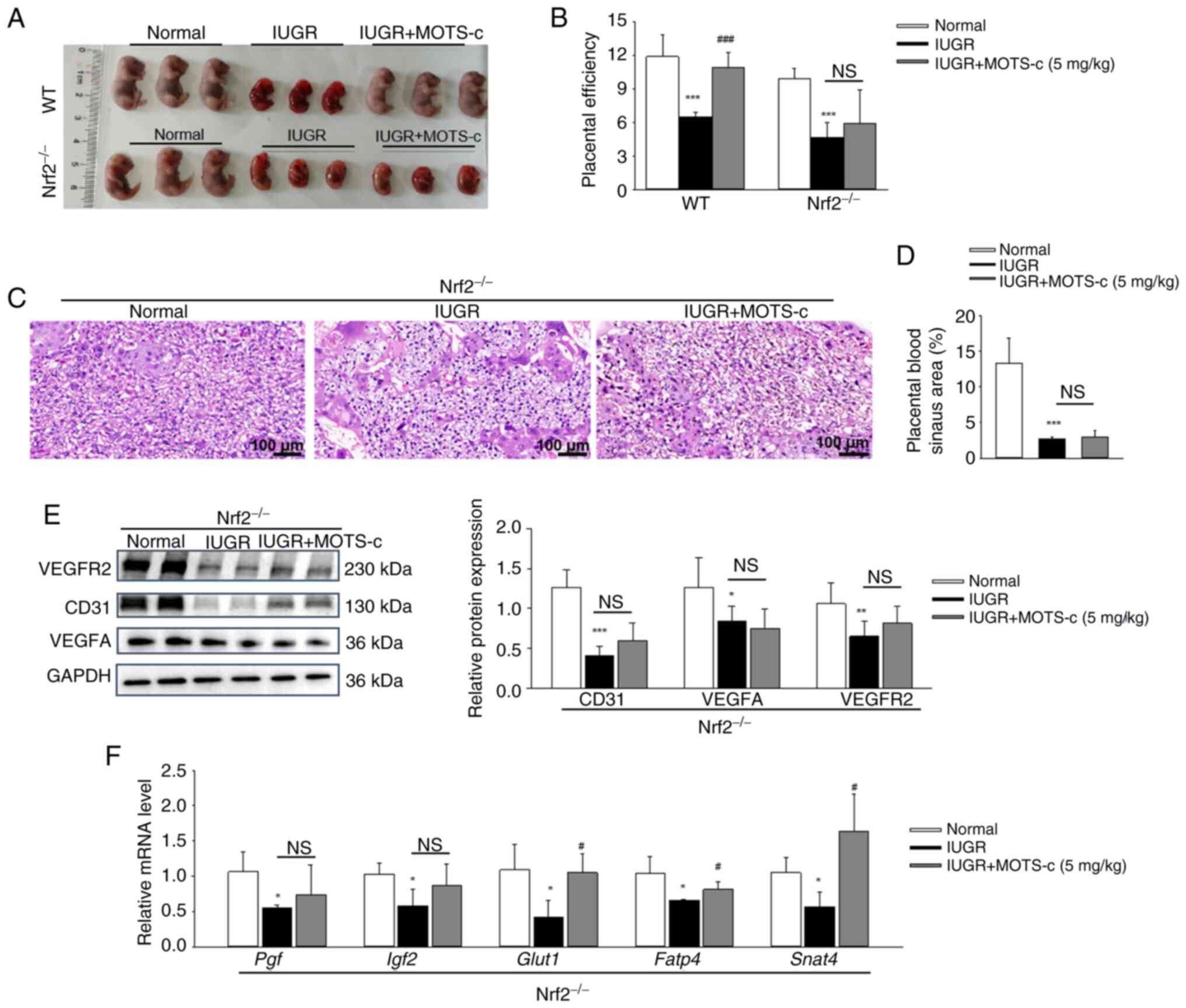
Figure 9

MOTS-c protects against
hypoxia-induced placental insufficiency in an Nrf2-dependent
manner. (A) Morphology of fetal mice on GD17.5 in WT and Nrf2 KO
mice. (B) Placental efficiency, which represents the ratio of fetal
to placenta weight. (C) Representative images of H&E staining
of placental tissues. Scale bar, 100 μm. (D) Quantification
of the placental blood sinus area. (E) Western blotting analysis of
CD31, VEGFA and VEGFR2 protein expression levels in placenta. (F)
Relative mRNA expression levels of Pgf, Igf2,
Glut1, Fatp4 and Snat2 in placenta. Data are
expressed as mean ± SD. n=4-6. *P<0.05 vs. normal,
**P<0.01 vs. normal, ***P<0.001 vs.
normal, #P<0.05 vs. IUGR, ###P<0.001
vs. IUGR.. NS, not significant; IUGR, intrauterine growth
restriction; GD, gestational day; Pgf, placental growth factor;
Nrf2, nuclear factor erythroid 2-related factor 2; Igf2,
insulin-like growth factor 2; Glut1, glucose transporter type 1;
Fatp4, fatty acid transporter 4; Snat2, sodium-dependent neutral
amino acid transporter-2; VEGFA, vascular endothelial growth factor
A; VEGFR2, VEGF receptor 2.
View References

1 

Ahmadzadeh E, Polglase GR, Stojanovska V, Herlenius E, Walker DW, Miller SL and Allison BJ: Does fetal growth restriction induce neuropathology within the developing brainstem? J Physiol. 601:4667–4689. 2023. View Article : Google Scholar : PubMed/NCBI

2 

Lawn JE, Ohuma EO, Bradley E, Idueta LS, Hazel E, Okwaraji YB, Erchick DJ, Yargawa J, Katz J, Lee ACC, et al: Small babies, big risks: Global estimates of prevalence and mortality for vulnerable newborns to accelerate change and improve counting. Lancet. 401:1707–1719. 2023. View Article : Google Scholar : PubMed/NCBI

3 

Jardine J, Walker K, Gurol-Urganci I, Webster K, Muller P, Hawdon J, Khalil A, Harris T and van der Meulen J; National Maternity Perinatal Audit Project Team: Adverse pregnancy outcomes attributable to socioeconomic and ethnic inequalities in England: A national cohort study. Lancet. 398:1905–1912. 2021. View Article : Google Scholar : PubMed/NCBI

4 

Reynolds LP, Borowicz PP, Caton JS, Crouse MS, Dahlen CR and Ward AK: Developmental programming of fetal growth and development. Vet Clin North Am Food Anim Pract. 35:229–247. 2019. View Article : Google Scholar : PubMed/NCBI

5 

Hendrix MLE, Bons JA, Alers NO, Severens-Rijvers CAH, Spaanderman MEA and Al-Nasiry S: Maternal vascular malformation in the placenta is an indicator for fetal growth restriction irrespective of neonatal birthweight. Placenta. 87:8–15. 2019. View Article : Google Scholar : PubMed/NCBI

6 

Zur RL, Kingdom JC, Parks WT and Hobson SR: The placental basis of fetal growth restriction. Obstet Gynecol Clin North Am. 47:81–98. 2020. View Article : Google Scholar : PubMed/NCBI

7 

D'Agostin M, Di Sipio Morgia C, Vento G and Nobile S: Long-term implications of fetal growth restriction. World J Clin Cases. 11:2855–2863. 2023. View Article : Google Scholar : PubMed/NCBI

8 

Perez M, Robbins ME, Revhaug C and Saugstad OD: Oxygen radical disease in the newborn, revisited: Oxidative stress and disease in the newborn period. Free Radic Biol Med. 142:61–72. 2019. View Article : Google Scholar : PubMed/NCBI

9 

Joo EH, Kim YR, Kim N, Jung JE, Han SH and Cho HY: Effect of endogenic and exogenic oxidative stress triggers on adverse pregnancy outcomes: Preeclampsia, fetal growth restriction, gestational diabetes mellitus and preterm birth. Int J Mol Sci. 22:101222021. View Article : Google Scholar : PubMed/NCBI

10 

Lee C, Zeng J, Drew BG, Sallam T, Martin-Montalvo A, Wan J, Kim SJ, Mehta H, Hevener AL, de Cabo R and Cohen P: The mitochondrial-derived peptide MOTS-c promotes metabolic homeostasis and reduces obesity and insulin resistance. Cell Metab. 21:443–454. 2015. View Article : Google Scholar : PubMed/NCBI

11 

Kim KH, Son JM, Benayoun BA and Lee C: The mitochondrial-encoded peptide MOTS-c translocates to the nucleus to regulate nuclear gene expression in response to metabolic stress. Cell Metab. 28:516–524.e7. 2018. View Article : Google Scholar : PubMed/NCBI

12 

Shen C, Wang J, Feng M, Peng J, Du X, Chu H and Chen X: The mitochondrial-derived peptide MOTS-c attenuates oxidative stress injury and the inflammatory response of H9c2 cells through the Nrf2/ARE and NF-κB pathways. Cardiovasc Eng Technol. 13:651–661. 2022. View Article : Google Scholar

13 

Xiao J, Zhang Q, Shan Y, Ye F, Zhang X, Cheng J, Wang X, Zhao Y, Dan G, Chen M and Sai Y: The mitochondrial-derived peptide (MOTS-c) interacted with Nrf2 to defend the antioxidant system to protect dopaminergic neurons against rotenone exposure. Mol Neurobiol. 60:5915–5930. 2023. View Article : Google Scholar : PubMed/NCBI

14 

Kim SJ, Miller B, Kumagai H, Silverstein AR, Flores M and Yen K: Mitochondrial-derived peptides in aging and age-related diseases. Geroscience. 43:1113–1121. 2021. View Article : Google Scholar :

15 

Li Y, Li Z, Ren Y, Lei Y, Yang S, Shi Y, Peng H, Yang W, Guo T, Yu Y and Xiong Y: Mitochondrial-derived peptides in cardiovascular disease: Novel insights and therapeutic opportunities. J Adv Res. 64:99–115. 2024. View Article : Google Scholar :

16 

Wu N, Shen C, Wang J, Chen X and Zhong P: MOTS-c peptide attenuated diabetic cardiomyopathy in STZ-induced type 1 diabetic mouse model. Cardiovasc Drugs Ther. 39:491–498. 2025. View Article : Google Scholar

17 

Yang M, Chen W, He L, Wang X, Liu D, Xiao L and Sun L: The role of mitokines in diabetic nephropathy. Curr Med Chem. 32:1276–1287. 2025. View Article : Google Scholar

18 

Itoh K, Chiba T, Takahashi S, Ishii T, Igarashi K, Katoh Y, Oyake T, Hayashi N, Satoh K and Hatayama I: An Nrf2/small Maf heterodimer mediates the induction of phase II detoxifying enzyme genes through antioxidant response elements. Biochem Biophys Res Commun. 236:313–322. 1997. View Article : Google Scholar : PubMed/NCBI

19 

Ulasov AV, Rosenkranz AA, Georgiev GP and Sobolev AS: Nrf2/Keap1/ARE signaling: Towards specific regulation. Life Sci. 291:1201112022. View Article : Google Scholar

20 

Fasipe B, Li S and Laher I: Exercise and vascular function in sedentary lifestyles in humans. Pflugers Arch. 475:845–856. 2023. View Article : Google Scholar : PubMed/NCBI

21 

Wang DD, Xu B, Sun JJ, Sui M, Li SP, Chen YJ, Zhang YL, Wu JB, Teng SY, Pang QF and Hu CX: MOTS-c mimics remote ischemic preconditioning in protecting against lung ischemia-reperfusion injury by alleviating endothelial barrier dysfunction. Free Radic Biol Med. 229:127–138. 2025. View Article : Google Scholar : PubMed/NCBI

22 

Zhang Y, Huang J, Zhang Y, Jiang F, Li S, He S, Sun J, Chen D, Tong Y, Pang Q and Wu Y: The mitochondrial-derived peptide MOTS-c alleviates radiation pneumonitis via an Nrf2-dependent mechanism. Antioxidants (Basel). 13:6132024. View Article : Google Scholar : PubMed/NCBI

23 

Lamberto F, Peral-Sanchez I, Muenthaisong S, Zana M, Willaime-Morawek S and Dinnyés A: Environmental alterations during embryonic development: Studying the impact of stressors on pluripotent stem cell-derived cardiomyocytes. Genes (Basel). 12:15642021. View Article : Google Scholar : PubMed/NCBI

24 

Kweider N, Huppertz B, Rath W, Lambertz J, Caspers R, ElMoursi M, Pecks U, Kadyrov M, Fragoulis A, Pufe T and Wruck CJ: The effects of Nrf2 deletion on placental morphology and exchange capacity in the mouse. J Matern Fetal Neonatal Med. 30:2068–2073. 2017. View Article : Google Scholar

25 

The American Association for: Accreditation of Laboratory Animal Care. JAMA. 207:17071969. View Article : Google Scholar

26 

Wang KCW, Larcombe AN, Berry LJ, Morton JS, Davidge ST, James AL and Noble PB: Foetal growth restriction in mice modifies postnatal airway responsiveness in an age and sex-dependent manner. Clin Sci (Lond). 132:273–284. 2018. View Article : Google Scholar

27 

Kalotas JO, Wang CJ, Noble PB and Wang KCW: Intrauterine growth restriction promotes postnatal airway hyperresponsiveness independent of allergic disease. Front Med (Lausanne). 8:6743242021. View Article : Google Scholar : PubMed/NCBI

28 

Chen D, Wang YY, Li SP, Zhao HM, Jiang FJ, Wu YX, Tong Y and Pang QF: Maternal propionate supplementation ameliorates glucose and lipid metabolic disturbance in hypoxia-induced fetal growth restriction. Food Funct. 13:10724–10736. 2022. View Article : Google Scholar : PubMed/NCBI

29 

Chen D, Man LY, Wang YY, Zhu WY, Zhao HM, Li SP, Zhang YL, Li SC, Wu YX, Ling-Ai and Pang QF: Nrf2 deficiency exacerbated pulmonary pyroptosis in maternal hypoxia-induced intrauterine growth restriction offspring mice. Reprod Toxicol. 129:1086712024. View Article : Google Scholar : PubMed/NCBI

30 

Lu H, Tang S, Xue C, Liu Y, Wang J, Zhang W, Luo W and Chen J: Mitochondrial-derived peptide MOTS-c increases adipose thermogenic activation to promote cold adaptation. Int J Mol Sci. 20:24562019. View Article : Google Scholar : PubMed/NCBI

31 

Tang M, Su Q, Duan Y, Fu Y, Liang M, Pan Y, Yuan J, Wang M, Pang X, Ma J, et al: The role of MOTS-c-mediated antioxidant defense in aerobic exercise alleviating diabetic myocardial injury. Sci Rep. 13:197812023. View Article : Google Scholar : PubMed/NCBI

32 

Li Z, LoBue A, Heuser SK, Li J, Engelhardt E, Papapetropoulos A, Patel HH, Lilley E, Ferdinandy P, Schulz R and Cortese-Krott MM: Best practices for blood collection and anaesthesia in mice: Selection, application and reporting. Br J Pharmacol. 182:2337–2353. 2025. View Article : Google Scholar : PubMed/NCBI

33 

Mohamed AS, Hosney M, Bassiony H, Hassanein SS, Soliman AM, Fahmy SR and Gaafar K: Sodium pentobarbital dosages for exsanguination affect biochemical, molecular and histological measurements in rats. Sci Rep. 10:3782020. View Article : Google Scholar : PubMed/NCBI

34 

Chen D, Qiu YB, Gao ZQ, Wu YX, Wan BB, Liu G, Chen JL, Zhou Q, Yu RQ and Pang QF: Sodium propionate attenuates the lipopolysaccharide-induced epithelial-mesenchymal transition via the PI3K/Akt/mTOR signaling pathway. J Agric Food Chem. 68:6554–6563. 2020. View Article : Google Scholar : PubMed/NCBI

35 

Xia Y, Liu C, Li R, Zheng M, Feng B, Gao J, Long X, Li L, Li S, Zuo X and Li Y: Lactobacillus-derived indole-3-lactic acid ameliorates colitis in cesarean-born offspring via activation of aryl hydrocarbon receptor. iScience. 26:1082792023. View Article : Google Scholar : PubMed/NCBI

36 

Chen Y, Wu Q, Wei J, Hu J and Zheng S: Effects of aspirin, vitamin D3, and progesterone on pregnancy outcomes in an autoimmune recurrent spontaneous abortion model. Braz J Med Biol Res. 54:e95702021. View Article : Google Scholar : PubMed/NCBI

37 

Coin I, Beyermann M and Bienert M: Solid-phase peptide synthesis: From standard procedures to the synthesis of difficult sequences. Nat Protoc. 2:3247–3256. 2007. View Article : Google Scholar : PubMed/NCBI

38 

Jia Y, Wang Q, Liang M and Huang K: KPNA2 promotes angiogenesis by regulating STAT3 phosphorylation. J Transl Med. 20:6272022. View Article : Google Scholar : PubMed/NCBI

39 

Chen D, Gao ZQ, Wang YY, Wan BB, Liu G, Chen JL, Wu YX, Zhou Q, Jiang SY, Yu RQ, et al: Sodium propionate enhances Nrf2-mediated protective defense against oxidative stress and inflammation in lipopolysaccharide-induced neonatal mice. J Inflamm Res. 14:803–816. 2021. View Article : Google Scholar : PubMed/NCBI

40 

Livak KJ and Schmittgen TD: Analysis of relative gene expression data using real-time quantitative PCR and the 2(-Delta Delta C(T)) method. Methods. 25:402–408. 2001. View Article : Google Scholar

41 

Pérez-Gutiérrez L and Ferrara N: Biology and therapeutic targeting of vascular endothelial growth factor A. Nat Rev Mol Cell Biol. 24:816–834. 2023. View Article : Google Scholar : PubMed/NCBI

42 

Vornic I, Buciu V, Furau CG, Gaje PN, Ceausu RA, Dumitru CS, Barb AC, Novacescu D, Cumpanas AA, Latcu SC, et al: Oxidative stress and placental pathogenesis: A contemporary overview of potential biomarkers and emerging therapeutics. Int J Mol Sci. 25:121952024. View Article : Google Scholar : PubMed/NCBI

43 

Knöfler M, Haider S, Saleh L, Pollheimer J, Gamage TKJB and James J: Human placenta and trophoblast development: Key molecular mechanisms and model systems. Cell Mol Life Sci. 76:3479–3496. 2019. View Article : Google Scholar : PubMed/NCBI

44 

Murray AJ: Oxygen delivery and fetal-placental growth: Beyond a question of supply and demand? Placenta. 33(Suppl 2): e16–e22. 2012. View Article : Google Scholar : PubMed/NCBI

45 

Ducsay CA, Goyal R, Pearce WJ, Wilson S, Hu XQ and Zhang L: Gestational hypoxia and developmental plasticity. Physiol Rev. 98:1241–1334. 2018. View Article : Google Scholar : PubMed/NCBI

46 

Su EJ, Xin H, Yin P, Dyson M, Coon J, Farrow KN, Mestan KK and Ernst LM: Impaired fetoplacental angiogenesis in growth-restricted fetuses with abnormal umbilical artery doppler velocimetry is mediated by aryl hydrocarbon receptor nuclear translocator (ARNT). J Clin Endocrinol Metab. 100:E30–E40. 2015. View Article : Google Scholar :

47 

Carr DJ, David AL, Aitken RP, Milne JS, Borowicz PP, Wallace JM and Redmer DA: Placental vascularity and markers of angiogenesis in relation to prenatal growth status in overnourished adolescent ewes. Placenta. 46:79–86. 2016. View Article : Google Scholar : PubMed/NCBI

48 

Hu C, Yang Y, Deng M, Yang L, Shu G, Jiang Q, Zhang S, Li X, Yin Y, Tan C and Wu G: Placentae for low birth weight piglets are vulnerable to oxidative stress, mitochondrial dysfunction, and impaired angiogenesis. Oxid Med Cell Longev. 2020:87154122020. View Article : Google Scholar : PubMed/NCBI

49 

Hu C, Wu Z, Huang Z, Hao X, Wang S, Deng J, Yin Y and Tan C: Nox2 impairs VEGF-A-induced angiogenesis in placenta via mitochondrial ROS-STAT3 pathway. Redox Biol. 45:1020512021. View Article : Google Scholar : PubMed/NCBI

50 

Wu Z, Nie J, Wu D, Huang S, Chen J, Liang H, Hao X, Feng L, Luo H and Tan C: Dietary adenosine supplementation improves placental angiogenesis in IUGR piglets by up-regulating adenosine A2a receptor. Anim Nutr. 13:282–288. 2023. View Article : Google Scholar : PubMed/NCBI

51 

Lanng MB, Møller CB, Andersen ASH, Pálsdóttir AA, Røge R, Østergaard LR and Jørgensen AS: Quality assessment of Ki67 staining using cell line proliferation index and stain intensity features. Cytometry A. 95:381–388. 2019. View Article : Google Scholar

52 

Bullwinkel J, Baron-Lühr B, Lüdemann A, Wohlenberg C, Gerdes J and Scholzen T: Ki-67 protein is associated with ribosomal RNA transcription in quiescent and proliferating cells. J Cell Physiol. 206:624–635. 2006. View Article : Google Scholar

53 

Li C, Xiao N, Song W, Lam AHC, Liu F, Cui X, Ye Z, Chen Y, Ren P, Cai J, et al: Chronic lung inflammation and CK14+ basal cell proliferation induce persistent alveolar-bronchiolization in SARS-CoV-2-infected hamsters. EBioMedicine. 108:1053632024. View Article : Google Scholar : PubMed/NCBI

54 

Devi K, Tomar MS, Barsain M, Shrivastava A and Moharana B: Regeneration capability of neonatal lung-derived decellularized extracellular matrix in an emphysema model. J Control Release. 372:234–250. 2024. View Article : Google Scholar : PubMed/NCBI

55 

Xinqiang Y, Quan C, Yuanyuan J and Hanmei X: Protective effect of MOTS-c on acute lung injury induced by lipopolysaccharide in mice. Int Immunopharmacol. 80:1061742020. View Article : Google Scholar : PubMed/NCBI

56 

Wu F, Tian FJ and Lin Y: Oxidative stress in placenta: Health and diseases. Biomed Res Int. 2015:2932712015. View Article : Google Scholar : PubMed/NCBI

57 

Biri A, Bozkurt N, Turp A, Kavutcu M, Himmetoglu O and Durak I: Role of oxidative stress in intrauterine growth restriction. Gynecol Obstet Invest. 64:187–192. 2007. View Article : Google Scholar : PubMed/NCBI

58 

Hu XQ and Zhang L: Hypoxia and Mitochondrial dysfunction in pregnancy complications. Antioxidants (Basel). 10:4052021. View Article : Google Scholar : PubMed/NCBI

59 

Kaandorp JJ, Benders MJNL, Schuit E, Rademaker CM, Oudijk MA, Porath MM, Oetomo SB, Wouters MG, van Elburg RM, Franssen MT, et al: Maternal allopurinol administration during suspected fetal hypoxia: A novel neuroprotective intervention? A multicentre randomised placebo controlled trial. Arch Dis Child Fetal Neonatal Ed. 100:F216–F223. 2015. View Article : Google Scholar

60 

Klumper J, Kaandorp JJ, Schuit E, Groenendaal F, Koopman-Esseboom C, Mulder EJH, Van Bel F, Benders MJNL, Mol BWJ, van Elburg RM, et al: Behavioral and neurodevelopmental outcome of children after maternal allopurinol administration during suspected fetal hypoxia: 5-year follow up of the ALLO-trial. PLoS One. 13:e02010632018. View Article : Google Scholar : PubMed/NCBI

61 

Rashid CS, Bansal A and Simmons RA: Oxidative stress, intrauterine growth restriction, and developmental programming of type 2 diabetes. Physiology (Bethesda). 33:348–359. 2018.PubMed/NCBI

62 

Shaw P and Chattopadhyay A: Nrf2-ARE signaling in cellular protection: Mechanism of action and the regulatory mechanisms. J Cell Physiol. 235:3119–3130. 2020. View Article : Google Scholar

63 

Zhou H, Wang Y, You Q and Jiang Z: Recent progress in the development of small molecule Nrf2 activators: A patent review (2017-present). Expert Opin Ther Pat. 30:209–225. 2020. View Article : Google Scholar : PubMed/NCBI

64 

Acar N, Soylu H, Edizer I, Ozbey O, Er H, Akkoyunlu G, Gemici B and Ustunel I: Expression of nuclear factor erythroid 2-related factor 2 (Nrf2) and peroxiredoxin 6 (Prdx6) proteins in healthy and pathologic placentas of human and rat. Acta Histochem. 116:1289–1300. 2014. View Article : Google Scholar : PubMed/NCBI

65 

Chen S, Yin Q, Hu H, Chen Q, Huang Q and Zhong M: AOPPs induce HTR-8/SVneo cell apoptosis by downregulating the Nrf-2/ARE/HO-1 anti-oxidative pathway: Potential implications for preeclampsia. Placenta. 112:1–8. 2021. View Article : Google Scholar : PubMed/NCBI

66 

Gao Y, Wei X, Wei P, Lu H, Zhong L, Tan J, Liu H and Liu Z: MOTS-c functionally prevents metabolic disorders. Metabolites. 13:1252023. View Article : Google Scholar : PubMed/NCBI

67 

Knoop A, Thomas A and Thevis M: Development of a mass spectrometry based detection method for the mitochondrion-derived peptide MOTS-c in plasma samples for doping control purposes. Rapid Commun Mass Spectrom. 33:371–380. 2019. View Article : Google Scholar

Related Articles

  • Abstract
  • View
  • Download
  • Twitter
Copy and paste a formatted citation
Spandidos Publications style
Chen D, Zhao H, Sun X, Xing Z, Li S, Li S, Wu Y, Pang Q and Huang J: MOTS‑c protects against placental injury via Nrf2 activation in hypoxia‑induced intrauterine growth restriction mice. Int J Mol Med 57: 26, 2026.
APA
Chen, D., Zhao, H., Sun, X., Xing, Z., Li, S., Li, S. ... Huang, J. (2026). MOTS‑c protects against placental injury via Nrf2 activation in hypoxia‑induced intrauterine growth restriction mice. International Journal of Molecular Medicine, 57, 26. https://doi.org/10.3892/ijmm.2025.5697
MLA
Chen, D., Zhao, H., Sun, X., Xing, Z., Li, S., Li, S., Wu, Y., Pang, Q., Huang, J."MOTS‑c protects against placental injury via Nrf2 activation in hypoxia‑induced intrauterine growth restriction mice". International Journal of Molecular Medicine 57.1 (2026): 26.
Chicago
Chen, D., Zhao, H., Sun, X., Xing, Z., Li, S., Li, S., Wu, Y., Pang, Q., Huang, J."MOTS‑c protects against placental injury via Nrf2 activation in hypoxia‑induced intrauterine growth restriction mice". International Journal of Molecular Medicine 57, no. 1 (2026): 26. https://doi.org/10.3892/ijmm.2025.5697
Copy and paste a formatted citation
x
Spandidos Publications style
Chen D, Zhao H, Sun X, Xing Z, Li S, Li S, Wu Y, Pang Q and Huang J: MOTS‑c protects against placental injury via Nrf2 activation in hypoxia‑induced intrauterine growth restriction mice. Int J Mol Med 57: 26, 2026.
APA
Chen, D., Zhao, H., Sun, X., Xing, Z., Li, S., Li, S. ... Huang, J. (2026). MOTS‑c protects against placental injury via Nrf2 activation in hypoxia‑induced intrauterine growth restriction mice. International Journal of Molecular Medicine, 57, 26. https://doi.org/10.3892/ijmm.2025.5697
MLA
Chen, D., Zhao, H., Sun, X., Xing, Z., Li, S., Li, S., Wu, Y., Pang, Q., Huang, J."MOTS‑c protects against placental injury via Nrf2 activation in hypoxia‑induced intrauterine growth restriction mice". International Journal of Molecular Medicine 57.1 (2026): 26.
Chicago
Chen, D., Zhao, H., Sun, X., Xing, Z., Li, S., Li, S., Wu, Y., Pang, Q., Huang, J."MOTS‑c protects against placental injury via Nrf2 activation in hypoxia‑induced intrauterine growth restriction mice". International Journal of Molecular Medicine 57, no. 1 (2026): 26. https://doi.org/10.3892/ijmm.2025.5697
Follow us
  • Twitter
  • LinkedIn
  • Facebook
About
  • Spandidos Publications
  • Careers
  • Cookie Policy
  • Privacy Policy
How can we help?
  • Help
  • Live Chat
  • Contact
  • Email to our Support Team