Spandidos Publications Logo
  • About
    • About Spandidos
    • Aims and Scopes
    • Abstracting and Indexing
    • Editorial Policies
    • Reprints and Permissions
    • Job Opportunities
    • Terms and Conditions
    • Contact
  • Journals
    • All Journals
    • Oncology Letters
      • Oncology Letters
      • Information for Authors
      • Editorial Policies
      • Editorial Board
      • Aims and Scope
      • Abstracting and Indexing
      • Bibliographic Information
      • Archive
    • International Journal of Oncology
      • International Journal of Oncology
      • Information for Authors
      • Editorial Policies
      • Editorial Board
      • Aims and Scope
      • Abstracting and Indexing
      • Bibliographic Information
      • Archive
    • Molecular and Clinical Oncology
      • Molecular and Clinical Oncology
      • Information for Authors
      • Editorial Policies
      • Editorial Board
      • Aims and Scope
      • Abstracting and Indexing
      • Bibliographic Information
      • Archive
    • Experimental and Therapeutic Medicine
      • Experimental and Therapeutic Medicine
      • Information for Authors
      • Editorial Policies
      • Editorial Board
      • Aims and Scope
      • Abstracting and Indexing
      • Bibliographic Information
      • Archive
    • International Journal of Molecular Medicine
      • International Journal of Molecular Medicine
      • Information for Authors
      • Editorial Policies
      • Editorial Board
      • Aims and Scope
      • Abstracting and Indexing
      • Bibliographic Information
      • Archive
    • Biomedical Reports
      • Biomedical Reports
      • Information for Authors
      • Editorial Policies
      • Editorial Board
      • Aims and Scope
      • Abstracting and Indexing
      • Bibliographic Information
      • Archive
    • Oncology Reports
      • Oncology Reports
      • Information for Authors
      • Editorial Policies
      • Editorial Board
      • Aims and Scope
      • Abstracting and Indexing
      • Bibliographic Information
      • Archive
    • Molecular Medicine Reports
      • Molecular Medicine Reports
      • Information for Authors
      • Editorial Policies
      • Editorial Board
      • Aims and Scope
      • Abstracting and Indexing
      • Bibliographic Information
      • Archive
    • World Academy of Sciences Journal
      • World Academy of Sciences Journal
      • Information for Authors
      • Editorial Policies
      • Editorial Board
      • Aims and Scope
      • Abstracting and Indexing
      • Bibliographic Information
      • Archive
    • International Journal of Functional Nutrition
      • International Journal of Functional Nutrition
      • Information for Authors
      • Editorial Policies
      • Editorial Board
      • Aims and Scope
      • Abstracting and Indexing
      • Bibliographic Information
      • Archive
    • International Journal of Epigenetics
      • International Journal of Epigenetics
      • Information for Authors
      • Editorial Policies
      • Editorial Board
      • Aims and Scope
      • Abstracting and Indexing
      • Bibliographic Information
      • Archive
    • Medicine International
      • Medicine International
      • Information for Authors
      • Editorial Policies
      • Editorial Board
      • Aims and Scope
      • Abstracting and Indexing
      • Bibliographic Information
      • Archive
  • Articles
  • Information
    • Information for Authors
    • Information for Reviewers
    • Information for Librarians
    • Information for Advertisers
    • Conferences
  • Language Editing
Spandidos Publications Logo
  • About
    • About Spandidos
    • Aims and Scopes
    • Abstracting and Indexing
    • Editorial Policies
    • Reprints and Permissions
    • Job Opportunities
    • Terms and Conditions
    • Contact
  • Journals
    • All Journals
    • Biomedical Reports
      • Information for Authors
      • Editorial Policies
      • Editorial Board
      • Aims and Scope
      • Abstracting and Indexing
      • Bibliographic Information
      • Archive
    • Experimental and Therapeutic Medicine
      • Information for Authors
      • Editorial Policies
      • Editorial Board
      • Aims and Scope
      • Abstracting and Indexing
      • Bibliographic Information
      • Archive
    • International Journal of Epigenetics
      • Information for Authors
      • Editorial Policies
      • Editorial Board
      • Aims and Scope
      • Abstracting and Indexing
      • Bibliographic Information
      • Archive
    • International Journal of Functional Nutrition
      • Information for Authors
      • Editorial Policies
      • Editorial Board
      • Aims and Scope
      • Abstracting and Indexing
      • Bibliographic Information
      • Archive
    • International Journal of Molecular Medicine
      • Information for Authors
      • Editorial Policies
      • Editorial Board
      • Aims and Scope
      • Abstracting and Indexing
      • Bibliographic Information
      • Archive
    • International Journal of Oncology
      • Information for Authors
      • Editorial Policies
      • Editorial Board
      • Aims and Scope
      • Abstracting and Indexing
      • Bibliographic Information
      • Archive
    • Medicine International
      • Information for Authors
      • Editorial Policies
      • Editorial Board
      • Aims and Scope
      • Abstracting and Indexing
      • Bibliographic Information
      • Archive
    • Molecular and Clinical Oncology
      • Information for Authors
      • Editorial Policies
      • Editorial Board
      • Aims and Scope
      • Abstracting and Indexing
      • Bibliographic Information
      • Archive
    • Molecular Medicine Reports
      • Information for Authors
      • Editorial Policies
      • Editorial Board
      • Aims and Scope
      • Abstracting and Indexing
      • Bibliographic Information
      • Archive
    • Oncology Letters
      • Information for Authors
      • Editorial Policies
      • Editorial Board
      • Aims and Scope
      • Abstracting and Indexing
      • Bibliographic Information
      • Archive
    • Oncology Reports
      • Information for Authors
      • Editorial Policies
      • Editorial Board
      • Aims and Scope
      • Abstracting and Indexing
      • Bibliographic Information
      • Archive
    • World Academy of Sciences Journal
      • Information for Authors
      • Editorial Policies
      • Editorial Board
      • Aims and Scope
      • Abstracting and Indexing
      • Bibliographic Information
      • Archive
  • Articles
  • Information
    • For Authors
    • For Reviewers
    • For Librarians
    • For Advertisers
    • Conferences
  • Language Editing
Login Register Submit
  • This site uses cookies
  • You can change your cookie settings at any time by following the instructions in our Cookie Policy. To find out more, you may read our Privacy Policy.

    I agree
Search articles by DOI, keyword, author or affiliation
Search
Advanced Search
presentation
International Journal of Molecular Medicine
Join Editorial Board Propose a Special Issue
Print ISSN: 1107-3756 Online ISSN: 1791-244X
Journal Cover
April-2026 Volume 57 Issue 4

Full Size Image

Sign up for eToc alerts
Recommend to Library

Journals

International Journal of Molecular Medicine

International Journal of Molecular Medicine

International Journal of Molecular Medicine is an international journal devoted to molecular mechanisms of human disease.

International Journal of Oncology

International Journal of Oncology

International Journal of Oncology is an international journal devoted to oncology research and cancer treatment.

Molecular Medicine Reports

Molecular Medicine Reports

Covers molecular medicine topics such as pharmacology, pathology, genetics, neuroscience, infectious diseases, molecular cardiology, and molecular surgery.

Oncology Reports

Oncology Reports

Oncology Reports is an international journal devoted to fundamental and applied research in Oncology.

Experimental and Therapeutic Medicine

Experimental and Therapeutic Medicine

Experimental and Therapeutic Medicine is an international journal devoted to laboratory and clinical medicine.

Oncology Letters

Oncology Letters

Oncology Letters is an international journal devoted to Experimental and Clinical Oncology.

Biomedical Reports

Biomedical Reports

Explores a wide range of biological and medical fields, including pharmacology, genetics, microbiology, neuroscience, and molecular cardiology.

Molecular and Clinical Oncology

Molecular and Clinical Oncology

International journal addressing all aspects of oncology research, from tumorigenesis and oncogenes to chemotherapy and metastasis.

World Academy of Sciences Journal

World Academy of Sciences Journal

Multidisciplinary open-access journal spanning biochemistry, genetics, neuroscience, environmental health, and synthetic biology.

International Journal of Functional Nutrition

International Journal of Functional Nutrition

Open-access journal combining biochemistry, pharmacology, immunology, and genetics to advance health through functional nutrition.

International Journal of Epigenetics

International Journal of Epigenetics

Publishes open-access research on using epigenetics to advance understanding and treatment of human disease.

Medicine International

Medicine International

An International Open Access Journal Devoted to General Medicine.

Journal Cover
April-2026 Volume 57 Issue 4

Full Size Image

Sign up for eToc alerts
Recommend to Library

  • Article
  • Citations
    • Cite This Article
    • Download Citation
    • Create Citation Alert
    • Remove Citation Alert
    • Cited By
  • Similar Articles
    • Related Articles (in Spandidos Publications)
    • Similar Articles (Google Scholar)
    • Similar Articles (PubMed)
  • Download PDF
  • Download XML
  • View XML

  • Supplementary Files
    • Supplementary_Data.pdf
Article Open Access

Ebastine targets HER2/HER3 signaling and cancer stem cell traits to overcome trastuzumab resistance in HER2‑positive breast cancer

  • Authors:
    • Eunsun Jung
    • Ji Young Kim
    • Dongmi Ko
    • Juyeon Seo
    • Sang Yoon Lee
    • Daeun Lee
    • Subeen Kim
    • Minsu Park
    • Seongjae Kim
    • Soeun Park
    • Kyoungmin Lee
    • Yong Koo Kang
    • Kee Dal Nam
    • Yoon-Jae Kim
    • Jae Hong Seo
  • View Affiliations / Copyright

    Affiliations: Division of Medical Oncology, Department of Internal Medicine, Korea University College of Medicine, Korea University, Seoul 152‑703, Republic of Korea
    Copyright: © Jung et al. This is an open access article distributed under the terms of Creative Commons Attribution License.
  • Article Number: 80
    |
    Published online on: February 2, 2026
       https://doi.org/10.3892/ijmm.2026.5751
  • Expand metrics +
Metrics: Total Views: 0 (Spandidos Publications: | PMC Statistics: )
Metrics: Total PDF Downloads: 0 (Spandidos Publications: | PMC Statistics: )
Cited By (CrossRef): 0 citations Loading Articles...

This article is mentioned in:


Abstract

Despite advances in HER2‑targeted therapy for HER2‑positive breast cancer, resistance to trastuzumab and tumor recurrence remain major barriers to durable outcomes. The present study evaluated the therapeutic potential of ebastine, a second‑generation H1‑antihistamine, as a repurposing candidate to overcome trastuzumab resistance by targeting HER2 signaling and cancer stem cell (CSC)‑associated phenotypes in HER2‑positive breast cancer cells. Molecular docking studies revealed that ebastine bound to the ATP‑binding site of the HER2 tyrosine kinase domain, thereby suppressing the phosphorylation of HER2, p95HER2 and HER3, as assessed by immunoblotting. Immunoprecipitation assay further demonstrated that this binding disrupted HER2/HER3 and HER2/EGFR heterodimerization, leading to reduced downstream AKT activation. Ebastine significantly decreased aldehyde dehydrogenase (ALDH)1 activity, decreased the CD44high/CD24low CSC‑like population, as assessed by flow cytometry, and inhibited mammosphere formation. In a trastuzumab‑resistant xenograft model, ebastine markedly suppressed tumor growth, decreased the Ki‑67 proliferation index and angiogenesis and induced apoptosis. These effects were accompanied by decreased expression of HER2, HER3, ALDH1, CD44, and vimentin in tumor tissues, as determined by immunohistochemistry. Furthermore, serum biochemical analyses revealed no significant hepatotoxicity or nephrotoxicity, indicating a favorable in vivo safety profile. These findings demonstrated that ebastine effectively disrupts key pathways involved in CSC‑like traits and HER2 activity, even under trastuzumab‑resistant conditions. Its multifaceted inhibitory effects support the repositioning of ebastine as a promising therapeutic strategy for treating refractory HER2‑positive breast cancer.
View Figures

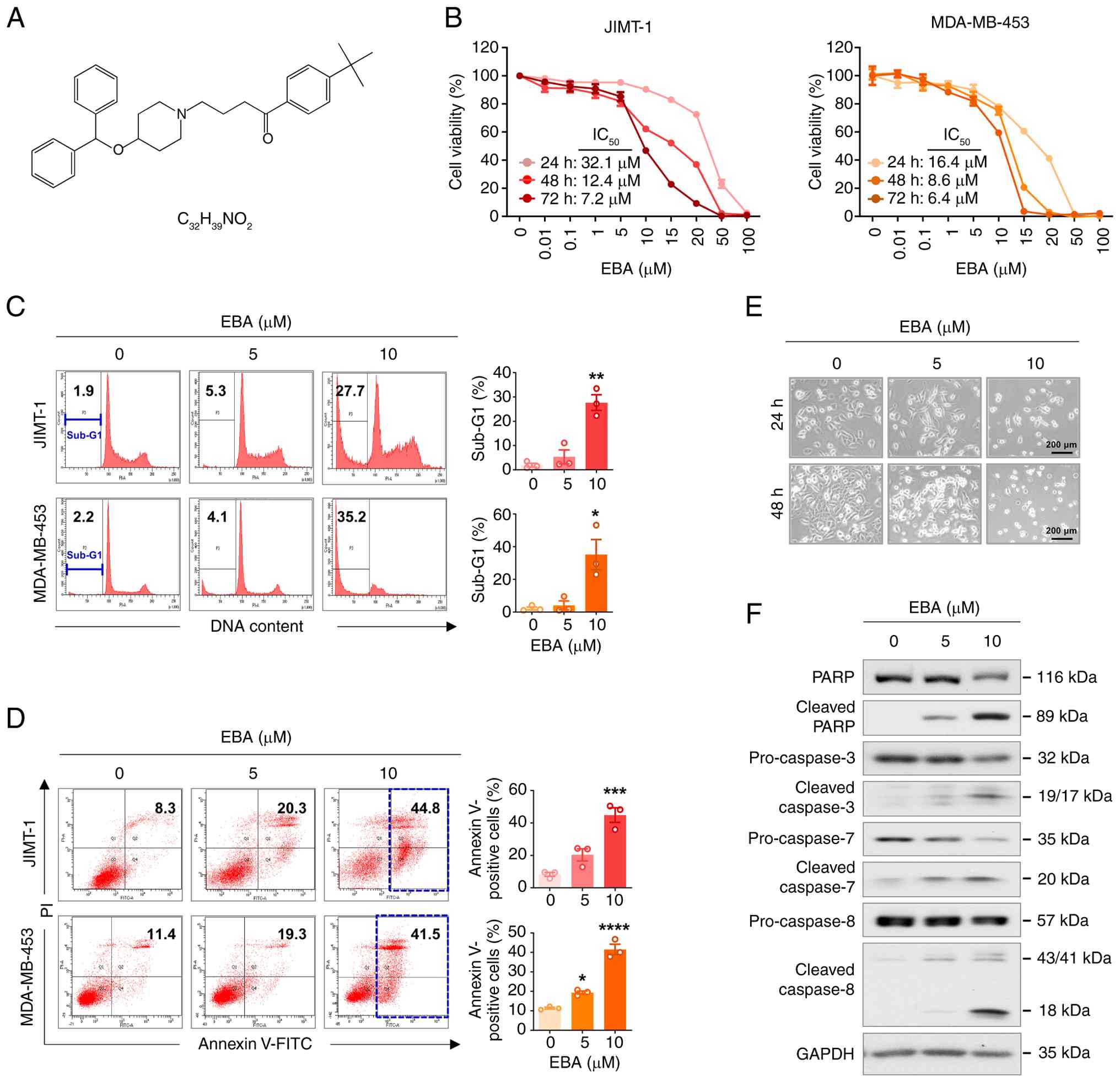
Figure 1

EBA induces apoptosis in
trastuzumab-resistant breast cancer cells. (A) Chemical structure
of EBA. (B) Cell viability and IC50 values were
determined using the MTS assay. JIMT-1 and MDA-MB-453 cells were
treated with EBA (48 h) and analyzed by flow cytometry to assess
(C) sub-G1 phase populations and (D) early and late apoptotic
cells. (E) Morphological changes in JIMT-1 cells following EBA
treatment, observed by phase-contrast microscopy. Magnification,
x200. (F) Effect of EBA on the expression of PARP, cleaved PARP,
caspase-3, -7 and -8 and cleaved caspase-3, -7 and -8 in JIMT-1
cells. GAPDH was used as a loading control. *P<0.05,
**P<0.01, ***P<0.001 and
****P<0.0001 vs. vehicle-treated control (0 μM
EBA). EBA, ebastine.

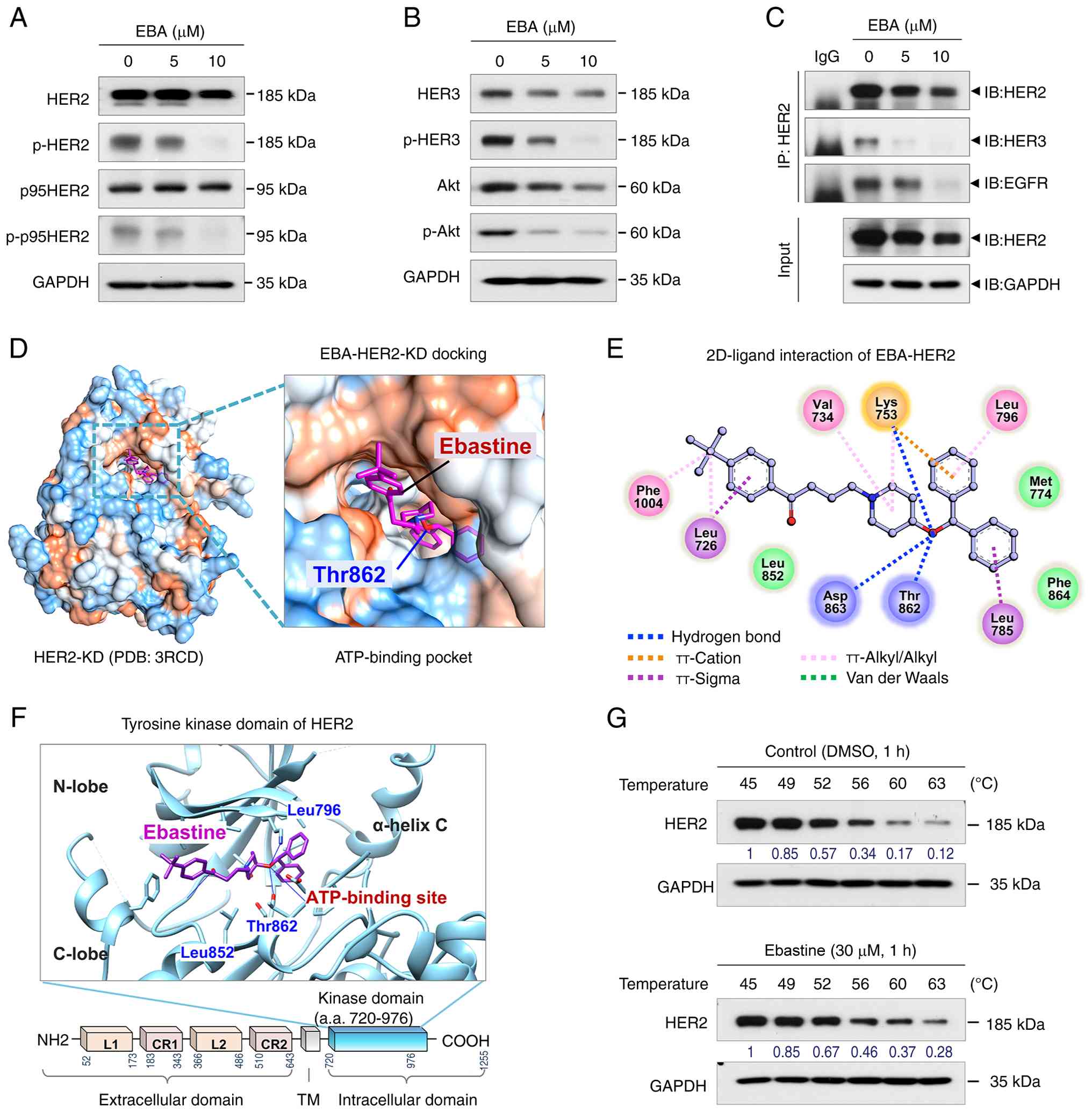
Figure 2

EBA downregulates HER2, p95HER2, HER3
and AKT expression. (A) Immunoblot analysis of HER2, p95HER2 and
p-HER2 (Y1221/1222) in JIMT-1 cells treated with EBA for 48 h. (B)
Immunoblot analysis of HER3, p-HER3 (Y1289), AKT and p-AKT
following treatment with EBA (48 h) in JIMT-1 cells. (C) Immunoblot
analysis of HER2, HER3 and EGFR following IP with anti-HER2
antibody in JIMT-1 cells treated with EBA. In silico
molecular docking of EBA with the crystal structure of HER2-KD. (D)
Surface map of lipophilic and hydrophilic properties at the
ATP-binding site of HER2-KD (red, hydrophobic; blue, hydrophilic).
(E) 2D interaction diagram showing intermolecular interactions
between EBA and HER2-KD. Key amino acid residues within the binding
pocket are shown. (F) Predicted binding pose of EBA (purple stick
model) within the tyrosine kinase domain of HER2 (blue ribbon). (G)
293T cells were treated with DMSO or EBA for 1 h at 37°C, followed
by heating for 3 min. Soluble fractions were collected following
centrifugation and analyzed by immunoblotting using an anti-HER2
antibody. EBA, ebastine; p-, phosphorylated; IP,
immunoprecipitation; IB, immunoblotting; KD, kinase domain PCB,
protein complex binding; TM, transmembrane; a.a., amino acid.

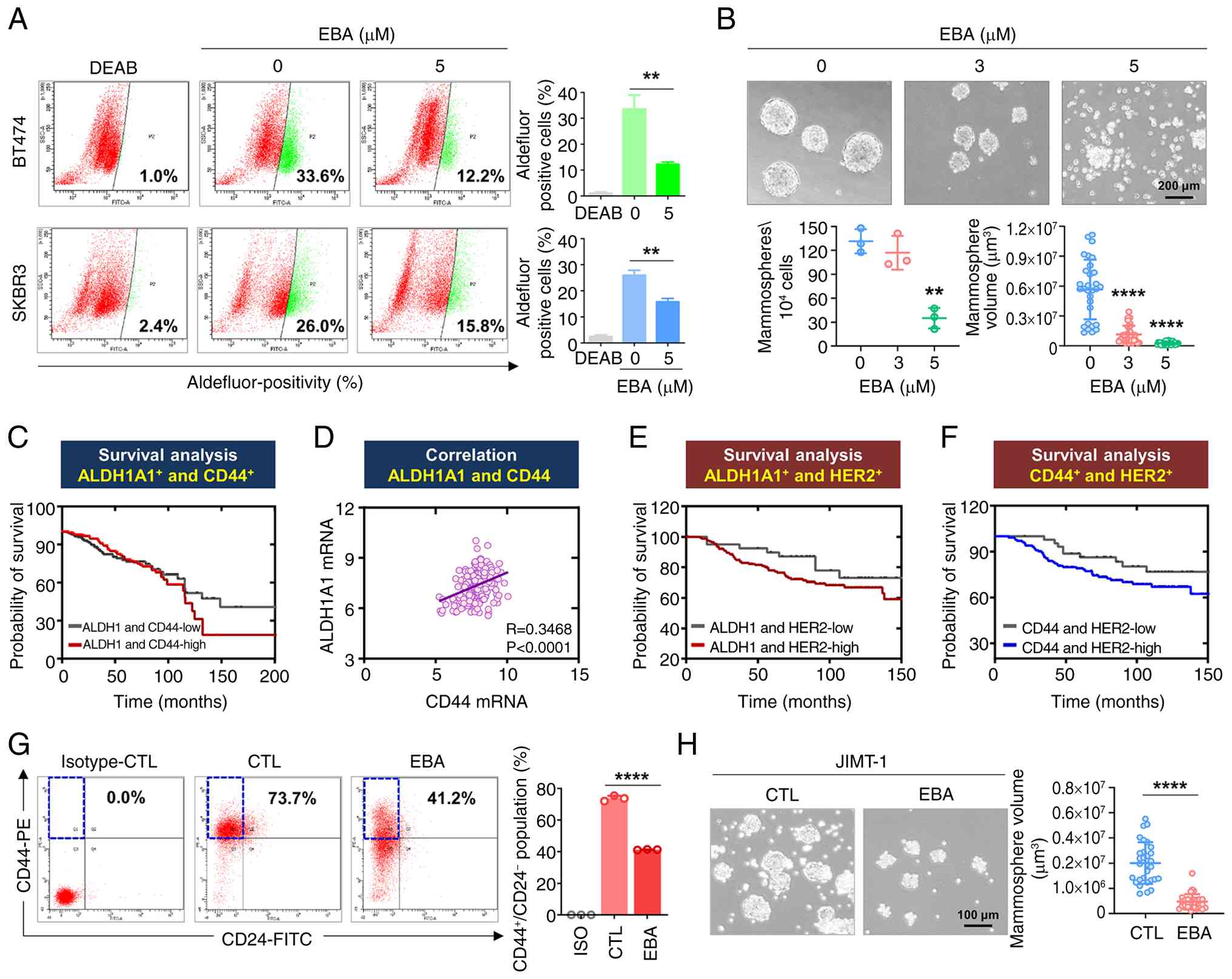
Figure 3

EBA impairs cancer stem cell-like
properties. (A) BT474 and SKBR3 cells were treated with EBA for 48
h, and ALDH1 activity was assessed by flow cytometry using the
Aldefluor assay. DEAB was used to define the baseline of
Aldefluor-positive fluorescence. (B) BT474 cells (5x10⁴
cells/ml) were plated in ultra-low attachment dishes and cultured
in the presence or absence of EBA for 5 days. The number and volume
of mammospheres were measured by microscopy. (C) Overall survival
of patients with breast cancer stratified by the co-expression of
ALDH1A1 and CD44. (D) Spearman correlation analysis of ALDH1A1 and
CD44 mRNA levels in patients with HER2-positive breast cancer from
The Cancer Genome Atlas cohort (n=76). Kaplan-Meier survival
analyses of patients with HER2-overexpressing breast cancer
stratified by (E) ALDH1A1 and (F) CD44 expression. Patients were
divided into high- and low-expression groups based on the median
gene expression. Statistical significance was determined using the
log-rank test. (G) JIMT-1 cells were treated with EBA (3 μM)
for 48 h and the CD44high/CD24low cell
populations were identified by flow cytometry. (H) JIMT-1 cells
(1.5x10⁴ cells/ml) were cultured under serum-free
suspension conditions in the presence of EBA (3 μM) for 8
days. Mammosphere number and volumes were quantified.
**P<0.01 and ****P<0.0001 vs.
vehicle-treated control (0 μM EBA). EBA, ebastine; ALDH,
aldehyde dehydrogenase; DEAB, diethylaminobenzaldehyde; CTL,
control; ISO, isotype.

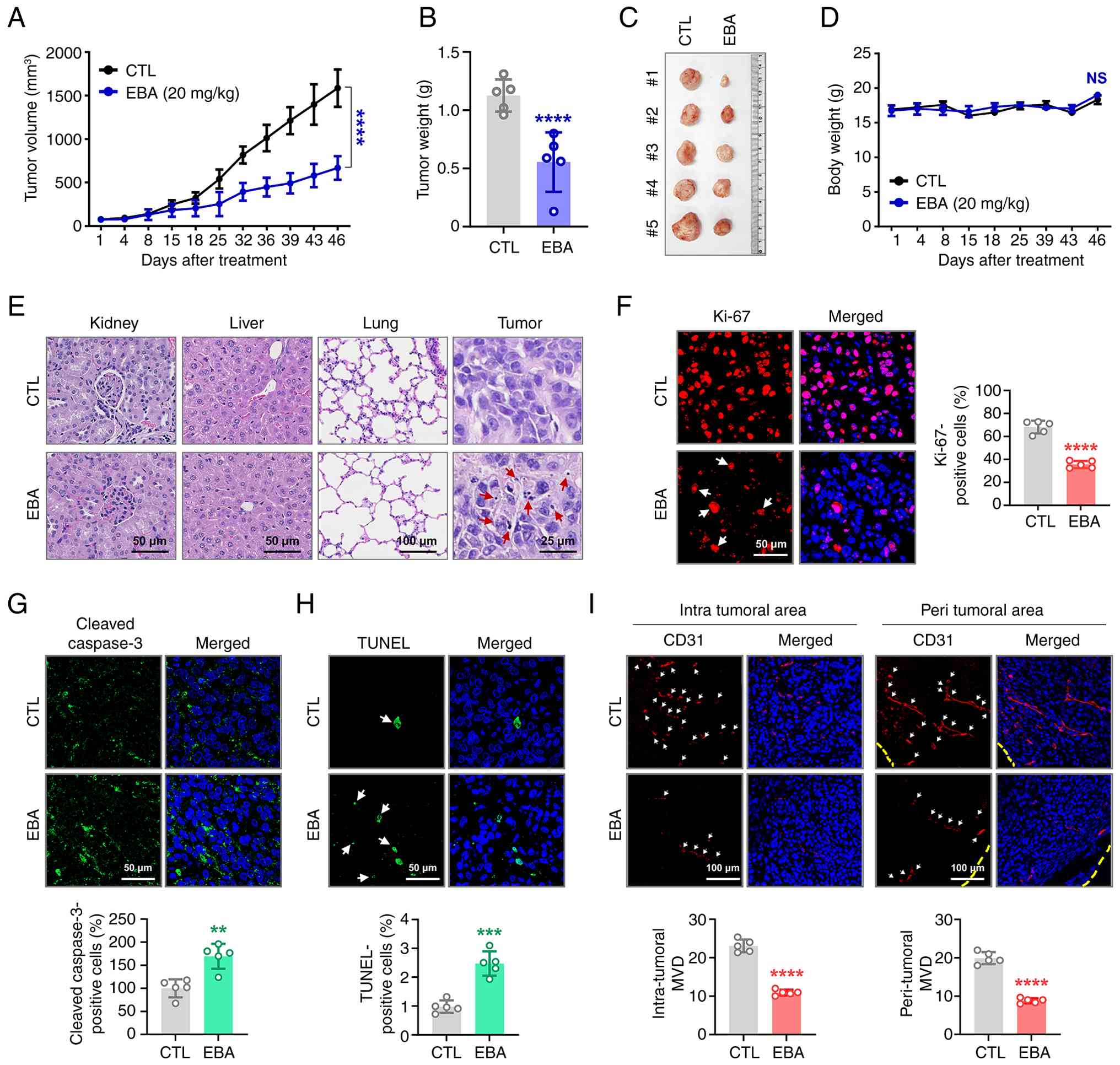
Figure 4

EBA inhibits tumor growth in
trastuzumab-resistant JIMT-1 xenografts. JIMT-1 cells
(3.5x10⁶) were injected into the fourth mammary fat pad
of BALB/c nude mice. Mice were administered EBA intraperitoneally
(20 mg/kg body weight) every other day for 46 days. Tumor (A)
volume and (B) weight were measured. ****P<0.0001 vs.
CTL (vehicle-treated group). (C) Representative xenograft tumors.
(D) No significant alteration in body weight between the
EBA-treated and CTL groups was observed (n=5). (E) Representative
hematoxylin and eosin staining of kidney, liver, lung and tumor
tissue. Red arrows indicate the apoptotic cells with cell shrinkage
and nuclear condensation. (F) Tumor sections were immunostained for
Ki-67 (red) and DAPI (blue). Ki-67-positive cells were quantified.
Apoptosis was assessed by (G) immunostaining for cleaved caspase-3
and (H) TUNEL assay. Arrows indicate TUNEL-positive nuclei) (I)
Tumor angiogenesis was assessed by immunostaining with the
endothelial cell marker CD31 (red) and DAPI (blue). CD31-positive
microvessels in intra- and peritumoral regions were quantified.
CD31-positive staining within the tumor is indicated by white
arrows. The tumor-stroma interface is indicated by a yellow dashed
outline. **P<0.01, ***P<0.001,
****P<0.0001 vs. CTL. EBA, ebastine; CTL, control;
NS, not significant; MVD, microvessel density.

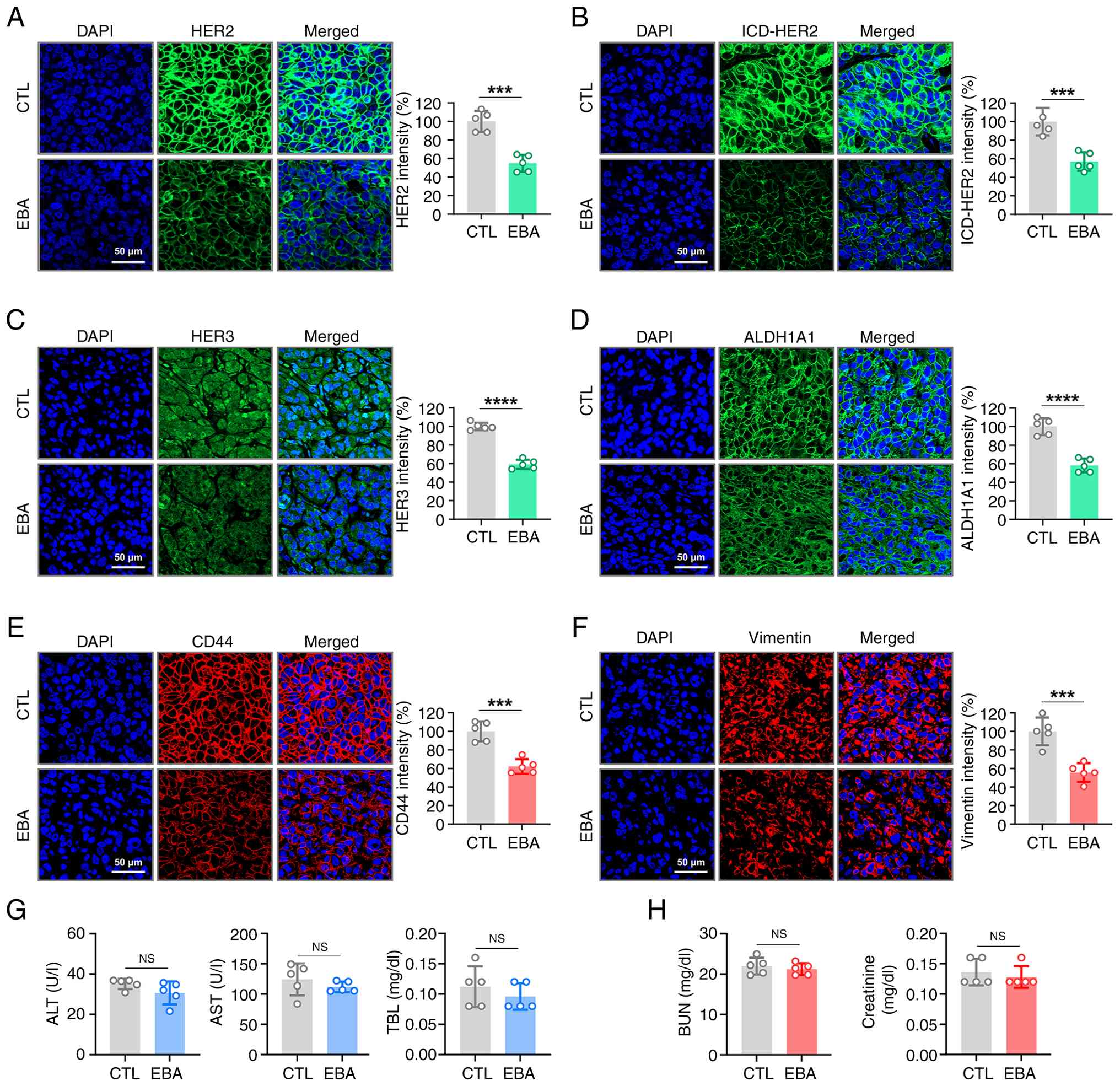
Figure 5

EBA downregulates HER2, ICD-HER2,
HER3, ALDH1A1, CD44 and vimentin in JIMT-1 xenograft tumors.
Immunofluorescence staining of JIMT-1 xenograft tumor tissue for
(A) full-length HER2 (green), (B) ICD-HER2 (green) and (C) HER3.
Immunohistochemical analysis of (D) ALDH1A1 (green) and (E) CD44
(red) in tumor tissue. (F) Tumor sections were immunostained for
vimentin (red). Magnification, x500. Fluorescence intensities were
quantified. Serum biochemical analysis for (G) liver and (H) kidney
function in EBA-treated or CTL mice (n=5). Serum levels of ALT,
AST, TBL, BUN and creatinine were assessed.
***P<0.001, ****P<0.0001. ALT, alanine
aminotransferase; AST, aspartate aminotransferase; BUN, blood urea
nitrogen; EBA, ebastine; ICD, intracellular domain; ALDH, aldehyde
dehydrogenase; CTL, control; NS, not significant.
View References

1 

Slamon DJ, Clark GM, Wong SG, Levin WJ, Ullrich A and McGuire WL: Human breast cancer: Correlation of relapse and survival with amplification of the HER-2/neu oncogene. Science. 235:177–182. 1987. View Article : Google Scholar : PubMed/NCBI

2 

Swain SM, Shastry M and Hamilton E: Targeting HER2-positive breast cancer: Advances and future directions. Nat Rev Drug Discov. 22:101–126. 2023. View Article : Google Scholar

3 

Swain SM, Baselga J, Kim SB, Ro J, Semiglazov V, Campone M, Ciruelos E, Ferrero JM, Schneeweiss A, Heeson S, et al: Pertuzumab, trastuzumab, and docetaxel in HER2-positive metastatic breast cancer. N Engl J Med. 372:724–734. 2015. View Article : Google Scholar : PubMed/NCBI

4 

Xu L, Xie Y, Gou Q, Cai R, Bao R, Huang Y and Tang R: HER2-targeted therapies for HER2-positive early-stage breast cancer: present and future. Front Pharmacol. 15:14464142024. View Article : Google Scholar : PubMed/NCBI

5 

Zhu K, Yang X, Tai H, Zhong X, Luo T and Zheng H: HER2-targeted therapies in cancer: A systematic review. Biomark Res. 12:162024. View Article : Google Scholar : PubMed/NCBI

6 

Sánchez-Lorenzo L, Bachiller A, Gea C and Espinós J: Current management and future perspectives in metastatic HER2-positive breast cancer. Semin Oncol Nurs. 40:1515542024. View Article : Google Scholar

7 

Arteaga CL and Engelman JA: ERBB receptors: From oncogene discovery to basic science to mechanism-based cancer therapeutics. Cancer Cell. 25:282–303. 2014. View Article : Google Scholar : PubMed/NCBI

8 

Chu X, Tian W, Ning J, Xiao G, Zhou Y, Wang Z, Zhai Z, Tanzhu G, Yang J and Zhou R: Cancer stem cells: Advances in knowledge and implications for cancer therapy. Signal Transduct Target Ther. 9:1702024. View Article : Google Scholar : PubMed/NCBI

9 

Pattabiraman DR and Weinberg RA: Tackling the cancer stem cells-what challenges do they pose? Nat Rev Drug Discov. 13:497–512. 2014. View Article : Google Scholar : PubMed/NCBI

10 

Ginestier C, Hur MH, Charafe-Jauffret E, Monville F, Dutcher J, Brown M, Jacquemier J, Viens P, Kleer CG, Liu S, et al: ALDH1 is a marker of normal and malignant human mammary stem cells and a predictor of poor clinical outcome. Cell Stem Cell. 1:555–567. 2007. View Article : Google Scholar

11 

Shah D and Osipo C: Cancer stem cells and HER2 positive breast cancer: The story so far. Genes Dis. 3:114–123. 2016. View Article : Google Scholar : PubMed/NCBI

12 

Duru N, Fan M, Candas D, Menaa C, Liu HC, Nantajit D, Wen Y, Xiao K, Eldridge A, Chromy BA, et al: HER2-associated radioresistance of breast cancer stem cells isolated from HER2-negative breast cancer cells. Clin Cancer Res. 18:6634–6647. 2012. View Article : Google Scholar : PubMed/NCBI

13 

Korkaya H and Wicha MS: HER2 and breast cancer stem cells: More than meets the eye. Cancer Res. 73:3489–3493. 2013. View Article : Google Scholar : PubMed/NCBI

14 

Xia Y, Sun M, Huang H and Jin WL: Drug repurposing for cancer therapy. Signal Transduct Target Ther. 9:922024. View Article : Google Scholar : PubMed/NCBI

15 

Kim JY, Cho Y, Oh E, Lee N, An H, Sung D, Cho TM and Seo JH: Disulfiram targets cancer stem-like properties and the HER2/Akt signaling pathway in HER2-positive breast cancer. Cancer Lett. 379:39–48. 2016. View Article : Google Scholar : PubMed/NCBI

16 

Chen D, Cui QC, Yang H and Dou QP: Disulfiram, a clinically used anti-alcoholism drug and copper-binding agent, induces apoptotic cell death in breast cancer cultures and xenografts via inhibition of the proteasome activity. Cancer Res. 66:10425–10433. 2006. View Article : Google Scholar : PubMed/NCBI

17 

Serageldin MA, El-Bassiouny NA, El-Kerm Y, Aly RG, Helmy MW, El-Mas MM and Kassem AB: A randomized controlled study of neoadjuvant metformin with chemotherapy in nondiabetic breast cancer women: The METNEO study. Br J Clin Pharmacol. 90:3160–3175. 2024. View Article : Google Scholar : PubMed/NCBI

18 

Goodwin PJ, Chen BE, Gelmon KA, Whelan TJ, Ennis M, Lemieux J, Ligibel JA, Hershman DL, Mayer IA, Hobday TJ, et al: Effect of metformin vs placebo on invasive disease-free survival in patients with breast cancer: The MA.32 randomized clinical trial. JAMA. 327:1963–1973. 2022. View Article : Google Scholar : PubMed/NCBI

19 

Roberts DJ: A preclinical overview of ebastine. Studies on the pharmacological properties of a novel histamine H1 receptor antagonist. Drugs. 52(Suppl 1): S8–S14. 1996. View Article : Google Scholar

20 

Noveck RJ, Preston RA and Swan SK: Pharmacokinetics and safety of ebastine in healthy subjects and patients with renal impairment. Clin Pharmacokinet. 46:525–534. 2007. View Article : Google Scholar : PubMed/NCBI

21 

Li Q, Liu KY, Liu Q, Wang G, Jiang W, Meng Q, Yi Y, Yang Y, Wang R, Zhu S, et al: Antihistamine drug ebastine inhibits cancer growth by targeting polycomb group protein EZH2. Mol Cancer Ther. 19:2023–2033. 2020. View Article : Google Scholar : PubMed/NCBI

22 

Seo J, Park M, Ko D, Kim S, Park JM, Park S, Nam KD, Farrand L, Yang J, Seok C, et al: Ebastine impairs metastatic spread in triple-negative breast cancer by targeting focal adhesion kinase. Cell Mol Life Sci. 80:1322023. View Article : Google Scholar : PubMed/NCBI

23 

Pan Z, Li SJ, Guo H, Li ZH, Fei X, Chang SM, Yang QC and Cheng DD: Ebastine exerts antitumor activity and induces autophagy by activating AMPK/ULK1 signaling in an IPMK-dependent manner in osteosarcoma. Int J Biol Sci. 19:537–551. 2023. View Article : Google Scholar : PubMed/NCBI

24 

Cancer Genome Atlas Network: Comprehensive molecular portraits of human breast tumours. Nature. 490:61–70. 2012. View Article : Google Scholar : PubMed/NCBI

25 

Park SJ, Yoon BH, Kim SK and Kim SY: GENT2: An updated gene expression database for normal and tumor tissues. BMC Med Genomics. 12(Suppl 5): S1012019. View Article : Google Scholar

26 

Wiseman LR and Faulds D: Ebastine. a review of its pharmacological properties and clinical efficacy in the treatment of allergic disorders. Drugs. 51:260–277. 1996. View Article : Google Scholar : PubMed/NCBI

27 

Tanner M, Kapanen AI, Junttila T, Raheem O, Grenman S, Elo J, Elenius K and Isola J: Characterization of a novel cell line established from a patient with Herceptin-resistant breast cancer. Mol Cancer Ther. 3:1585–1592. 2004. View Article : Google Scholar

28 

Vranic S, Gatalica Z and Wang ZY: Update on the molecular profile of the MDA-MB-453 cell line as a model for apocrine breast carcinoma studies. Oncol Lett. 2:1131–1137. 2011. View Article : Google Scholar : PubMed/NCBI

29 

Park M, Jung E, Park JM, Park S, Ko D, Seo J, Kim S, Nam KD, Kang YK, Farrand L, et al: The HSP90 inhibitor HVH-2930 exhibits potent efficacy against trastuzumab-resistant HER2-positive breast cancer. Theranostics. 14:2442–2463. 2024. View Article : Google Scholar : PubMed/NCBI

30 

Wang ZH, Zheng ZQ, Jia SC, Liu SN, Xiao XF, Chen GY, Liang WQ and Lu XF: Trastuzumab resistance in HER2-positive breast cancer: Mechanisms, emerging biomarkers and targeting agents. Front Oncol. 12:10064292022. View Article : Google Scholar : PubMed/NCBI

31 

Chandarlapaty S, Scaltriti M, Angelini P, Ye Q, Guzman M, Hudis CA, Norton L, Solit DB, Arribas J, Baselga J and Rosen N: Inhibitors of HSP90 block p95-HER2 signaling in trastuzumab-resistant tumors and suppress their growth. Oncogene. 29:325–334. 2010. View Article : Google Scholar

32 

Yang M, Li Y, Kong L, Huang S, He L, Liu P, Mo S, Lu X, Lin X, Xiao Y, et al: Inhibition of DPAGT1 suppresses HER2 shedding and trastuzumab resistance in human breast cancer. J Clin Invest. 133:e1644282023. View Article : Google Scholar : PubMed/NCBI

33 

Baselga J and Swain SM: Novel anticancer targets: Revisiting ERBB2 and discovering ERBB3. Nat Rev Cancer. 9:463–475. 2009. View Article : Google Scholar : PubMed/NCBI

34 

Gajria D and Chandarlapaty S: HER2-amplified breast cancer: Mechanisms of trastuzumab resistance and novel targeted therapies. Expert Rev Anticancer Ther. 11:263–275. 2011. View Article : Google Scholar : PubMed/NCBI

35 

Korkaya H, Paulson A, Iovino F and Wicha MS: HER2 regulates the mammary stem/progenitor cell population driving tumorigenesis and invasion. Oncogene. 27:6120–6130. 2008. View Article : Google Scholar : PubMed/NCBI

36 

Oh E, Kim YJ, An H, Sung D, Cho TM, Farrand L, Jang S, Seo JH and Kim JY: Flubendazole elicits anti-metastatic effects in triple-negative breast cancer via STAT3 inhibition. Int J Cancer. 143:1978–1993. 2018. View Article : Google Scholar : PubMed/NCBI

37 

Idowu MO, Kmieciak M, Dumur C, Burton RS, Grimes MM, Powers CN and Manjili MH: CD44(+)/CD24(-/low) cancer stem/progenitor cells are more abundant in triple-negative invasive breast carcinoma phenotype and are associated with poor outcome. Hum Pathol. 43:364–373. 2012. View Article : Google Scholar

38 

Boulbes DR, Chauhan GB, Jin Q, Bartholomeusz C and Esteva FJ: CD44 expression contributes to trastuzumab resistance in HER2-positive breast cancer cells. Breast Cancer Res Treat. 151:501–513. 2015. View Article : Google Scholar : PubMed/NCBI

39 

Pushpakom S, Iorio F, Eyers PA, Escott KJ, Hopper S, Wells A, Doig A, Guilliams T, Latimer J, McNamee C, et al: Drug repurposing: Progress, challenges and recommendations. Nat Rev Drug Discov. 18:41–58. 2019. View Article : Google Scholar

40 

Armando RG, Mengual Gómez DL and Gomez DE: New drugs are not enough-drug repositioning in oncology: An update. Int J Oncol. 56:651–684. 2020.PubMed/NCBI

41 

Simons FER and Simons KJ: H1 antihistamines: Current status and future directions. World Allergy Organ J. 1:145–155. 2008. View Article : Google Scholar : PubMed/NCBI

42 

Hurst M and Spencer CM: Ebastine: An update of its use in allergic disorders. Drugs. 59:981–1006. 2000. View Article : Google Scholar : PubMed/NCBI

43 

Schlam I, Tarantino P and Tolaney SM: Overcoming resistance to HER2-directed therapies in breast cancer. Cancers (Basel). 14:39962022. View Article : Google Scholar : PubMed/NCBI

44 

Berns K, Horlings HM, Hennessy BT, Madiredjo M, Hijmans EM, Beelen K, Linn SC, Gonzalez-Angulo AM, Stemke-Hale K, Hauptmann M, et al: A functional genetic approach identifies the PI3K pathway as a major determinant of trastuzumab resistance in breast cancer. Cancer Cell. 12:395–402. 2007. View Article : Google Scholar : PubMed/NCBI

45 

Pourjamal N, Yazdi N, Halme A, Joncour VL, Laakkonen P, Saharinen P, Joensuu H and Barok M: Comparison of trastuzumab emtansine, trastuzumab deruxtecan, and disitamab vedotin in a multiresistant HER2-positive breast cancer lung metastasis model. Clin Exp Metastasis. 41:91–102. 2024. View Article : Google Scholar : PubMed/NCBI

46 

Pályi-Krekk Z, Barok M, Isola J, Tammi M, Szöllosi J and Nagy P: Hyaluronan-induced masking of ErbB2 and CD44-enhanced trastuzumab internalisation in trastuzumab resistant breast cancer. Eur J Cancer. 43:2423–2433. 2007. View Article : Google Scholar : PubMed/NCBI

47 

Kim YJ, Sung D, Oh E, Cho Y, Cho TM, Farrand L, Seo JH and Kim JY: Flubendazole overcomes trastuzumab resistance by targeting cancer stem-like properties and HER2 signaling in HER2-positive breast cancer. Cancer Lett. 412:118–130. 2018. View Article : Google Scholar

48 

Chen C, Zhao S, Karnad A and Freeman JW: The biology and role of CD44 in cancer progression: Therapeutic implications. J Hematol Oncol. 11:642018. View Article : Google Scholar : PubMed/NCBI

49 

Ouhtit A, Rizeq B, Saleh HA, Rahman MM and Zayed H: Novel CD44-downstream signaling pathways mediating breast tumor invasion. Int J Biol Sci. 14:1782–1790. 2018. View Article : Google Scholar : PubMed/NCBI

50 

Berr AL, Wiese K, Dos Santos G, Koch CM, Anekalla KR, Kidd M, Davis JM, Cheng Y, Hu YS and Ridge KM: Vimentin is required for tumor progression and metastasis in a mouse model of non-small cell lung cancer. Oncogene. 42:2074–2087. 2023. View Article : Google Scholar : PubMed/NCBI

51 

Grasset EM, Dunworth M, Sharma G, Loth M, Tandurella J, Cimino-Mathews A, Gentz M, Bracht S, Haynes M, Fertig EJ and Ewald AJ: Triple-negative breast cancer metastasis involves complex epithelial-mesenchymal transition dynamics and requires vimentin. Sci Transl Med. 14:eabn75712022. View Article : Google Scholar : PubMed/NCBI

52 

Winter M, Meignan S, Völkel P, Angrand PO, Chopin V, Bidan N, Toillon RA, Adriaenssens E, Lagadec C and Le Bourhis X: Vimentin promotes the aggressiveness of triple negative breast cancer cells surviving chemotherapeutic treatment. Cells. 10:15042021. View Article : Google Scholar : PubMed/NCBI

53 

Li F, Zhang L, Feng F, Zheng K, Li Y, Wang T and Ren G: Livin participates in resistance to trastuzumab therapy for breast cancer through ERK1/2 and AKT pathways and promotes EMT-like phenotype. RSC Adv. 8:28588–28601. 2018. View Article : Google Scholar : PubMed/NCBI

54 

Liu S, Cong Y, Wang D, Sun Y, Deng L, Liu Y, Martin-Trevino R, Shang L, McDermott SP, Landis MD, et al: Breast cancer stem cells transition between epithelial and mesenchymal states reflective of their normal counterparts. Stem Cell Reports. 2:78–91. 2013. View Article : Google Scholar

55 

Usman S, Waseem NH, Nguyen TKN, Mohsin S, Jamal A, Teh MT and Waseem A: Vimentin Is at the heart of epithelial mesenchymal transition (EMT) mediated metastasis. Cancers (Basel). 13:49852021. View Article : Google Scholar : PubMed/NCBI

56 

van Beijnum JR, Huijbers EJM, van Loon K, Blanas A, Akbari P, Roos A, Wong TJ, Denisov SS, Hackeng TM, Jimenez CR, et al: Extracellular vimentin mimics VEGF and is a target for anti-angiogenic immunotherapy. Nat Commun. 13:28422022. View Article : Google Scholar : PubMed/NCBI

57 

Dave JM and Bayless KJ: Vimentin as an integral regulator of cell adhesion and endothelial sprouting. Microcirculation. 21:333–344. 2014. View Article : Google Scholar : PubMed/NCBI

58 

Shah D, Wyatt D, Baker AT, Simms P, Peiffer DS, Fernandez M, Rakha E, Green A, Filipovic A, Miele L and Osipo C: Inhibition of HER2 increases JAGGED1-dependent breast cancer stem cells: Role for membrane JAGGED1. Clin Cancer Res. 24:4566–4578. 2018. View Article : Google Scholar : PubMed/NCBI

59 

Hangauer MJ, Viswanathan VS, Ryan MJ, Bole D, Eaton JK, Matov A, Galeas J, Dhruv HD, Berens ME, Schreiber SL, et al: Drug-tolerant persister cancer cells are vulnerable to GPX4 inhibition. Nature. 551:247–250. 2017. View Article : Google Scholar : PubMed/NCBI

60 

Huang WC, Hung CM, Wei CT, Chen TM, Chien PH, Pan HL, Lin YM and Chen YJ: Interleukin-6 expression contributes to lapatinib resistance through maintenance of stemness property in HER2-positive breast cancer cells. Oncotarget. 7:62352–62363. 2016. View Article : Google Scholar : PubMed/NCBI

61 

Kim JH, Park S, Jung E, Shin J, Kim YJ, Kim JY, Sessler JL, Seo JH and Kim JS: A dual-action niclosamide-based prodrug that targets cancer stem cells and inhibits TNBC metastasis. Proc Natl Acad Sci USA. 120:e23040811202023. View Article : Google Scholar : PubMed/NCBI

62 

Ajmeera D and Ajumeera R: Drug repurposing: A novel strategy to target cancer stem cells and therapeutic resistance. Genes Dis. 11:148–175. 2023. View Article : Google Scholar : PubMed/NCBI

63 

Kim JY, Lee N, Kim YJ, Cho Y, An H, Oh E, Cho TM, Sung D and Seo JH: Disulfiram induces anoikis and suppresses lung colonization in triple-negative breast cancer via calpain activation. Cancer Lett. 386:151–160. 2017. View Article : Google Scholar

64 

Kannappan V, Ali M, Small B, Rajendran G, Elzhenni S, Taj H, Wang W and Dou QP: Recent advances in repurposing disulfiram and disulfiram derivatives as copper-dependent anticancer agents. Front Mol Biosci. 8:7413162021. View Article : Google Scholar : PubMed/NCBI

65 

Cvek B: The promiscuity of disulfiram in medicinal research. ACS Med Chem Lett. 14:1610–1614. 2023. View Article : Google Scholar : PubMed/NCBI

66 

Vincent J, Liminana R, Meredith PA and Reid JL: The pharmacokinetics, antihistamine and concentration-effect relationship of ebastine in healthy subjects. Br J Clin Pharmacol. 26:497–502. 1988. View Article : Google Scholar : PubMed/NCBI

67 

Rocha GZ, Dias MM, Ropelle ER, Osório-Costa F, Rossato FA, Vercesi AE, Saad MJ and Carvalheira JB: Metformin amplifies chemotherapy-induced AMPK activation and antitumoral growth. Clin Cancer Res. 17:3993–4005. 2011. View Article : Google Scholar : PubMed/NCBI

68 

Saini N and Yang X: Metformin as an anti-cancer agent: Actions and mechanisms targeting cancer stem cells. Acta Biochim Biophys Sin (Shanghai). 50:133–143. 2018. View Article : Google Scholar : PubMed/NCBI

69 

Vazquez-Martin A, Oliveras-Ferraros C and Menendez JA: The antidiabetic drug metformin suppresses HER2 (erbB-2) oncoprotein overexpression via inhibition of the mTOR effector p70S6K1 in human breast carcinoma cells. Cell Cycle. 8:88–96. 2009. View Article : Google Scholar

70 

Tan M, Ye W, Liu Y, Chen X, Huttad L, Chua MS and So S: Niclosamide prodrug enhances oral bioavailability and efficacy against hepatocellular carcinoma by targeting vasorin-TGFβ signalling. Br J Pharmacol. 182:5517–5535. 2025. View Article : Google Scholar : PubMed/NCBI

Related Articles

  • Abstract
  • View
  • Download
  • Twitter
Copy and paste a formatted citation
Spandidos Publications style
Jung E, Kim JY, Ko D, Seo J, Lee SY, Lee D, Kim S, Park M, Kim S, Park S, Park S, et al: Ebastine targets HER2/HER3 signaling and cancer stem cell traits to overcome trastuzumab resistance in HER2‑positive breast cancer. Int J Mol Med 57: 80, 2026.
APA
Jung, E., Kim, J.Y., Ko, D., Seo, J., Lee, S.Y., Lee, D. ... Seo, J.H. (2026). Ebastine targets HER2/HER3 signaling and cancer stem cell traits to overcome trastuzumab resistance in HER2‑positive breast cancer. International Journal of Molecular Medicine, 57, 80. https://doi.org/10.3892/ijmm.2026.5751
MLA
Jung, E., Kim, J. Y., Ko, D., Seo, J., Lee, S. Y., Lee, D., Kim, S., Park, M., Kim, S., Park, S., Lee, K., Kang, Y. K., Nam, K. D., Kim, Y., Seo, J. H."Ebastine targets HER2/HER3 signaling and cancer stem cell traits to overcome trastuzumab resistance in HER2‑positive breast cancer". International Journal of Molecular Medicine 57.4 (2026): 80.
Chicago
Jung, E., Kim, J. Y., Ko, D., Seo, J., Lee, S. Y., Lee, D., Kim, S., Park, M., Kim, S., Park, S., Lee, K., Kang, Y. K., Nam, K. D., Kim, Y., Seo, J. H."Ebastine targets HER2/HER3 signaling and cancer stem cell traits to overcome trastuzumab resistance in HER2‑positive breast cancer". International Journal of Molecular Medicine 57, no. 4 (2026): 80. https://doi.org/10.3892/ijmm.2026.5751
Copy and paste a formatted citation
x
Spandidos Publications style
Jung E, Kim JY, Ko D, Seo J, Lee SY, Lee D, Kim S, Park M, Kim S, Park S, Park S, et al: Ebastine targets HER2/HER3 signaling and cancer stem cell traits to overcome trastuzumab resistance in HER2‑positive breast cancer. Int J Mol Med 57: 80, 2026.
APA
Jung, E., Kim, J.Y., Ko, D., Seo, J., Lee, S.Y., Lee, D. ... Seo, J.H. (2026). Ebastine targets HER2/HER3 signaling and cancer stem cell traits to overcome trastuzumab resistance in HER2‑positive breast cancer. International Journal of Molecular Medicine, 57, 80. https://doi.org/10.3892/ijmm.2026.5751
MLA
Jung, E., Kim, J. Y., Ko, D., Seo, J., Lee, S. Y., Lee, D., Kim, S., Park, M., Kim, S., Park, S., Lee, K., Kang, Y. K., Nam, K. D., Kim, Y., Seo, J. H."Ebastine targets HER2/HER3 signaling and cancer stem cell traits to overcome trastuzumab resistance in HER2‑positive breast cancer". International Journal of Molecular Medicine 57.4 (2026): 80.
Chicago
Jung, E., Kim, J. Y., Ko, D., Seo, J., Lee, S. Y., Lee, D., Kim, S., Park, M., Kim, S., Park, S., Lee, K., Kang, Y. K., Nam, K. D., Kim, Y., Seo, J. H."Ebastine targets HER2/HER3 signaling and cancer stem cell traits to overcome trastuzumab resistance in HER2‑positive breast cancer". International Journal of Molecular Medicine 57, no. 4 (2026): 80. https://doi.org/10.3892/ijmm.2026.5751
Follow us
  • Twitter
  • LinkedIn
  • Facebook
About
  • Spandidos Publications
  • Careers
  • Cookie Policy
  • Privacy Policy
How can we help?
  • Help
  • Live Chat
  • Contact
  • Email to our Support Team