Spandidos Publications Logo
  • About
    • About Spandidos
    • Aims and Scopes
    • Abstracting and Indexing
    • Editorial Policies
    • Reprints and Permissions
    • Job Opportunities
    • Terms and Conditions
    • Contact
  • Journals
    • All Journals
    • Oncology Letters
      • Oncology Letters
      • Information for Authors
      • Editorial Policies
      • Editorial Board
      • Aims and Scope
      • Abstracting and Indexing
      • Bibliographic Information
      • Archive
    • International Journal of Oncology
      • International Journal of Oncology
      • Information for Authors
      • Editorial Policies
      • Editorial Board
      • Aims and Scope
      • Abstracting and Indexing
      • Bibliographic Information
      • Archive
    • Molecular and Clinical Oncology
      • Molecular and Clinical Oncology
      • Information for Authors
      • Editorial Policies
      • Editorial Board
      • Aims and Scope
      • Abstracting and Indexing
      • Bibliographic Information
      • Archive
    • Experimental and Therapeutic Medicine
      • Experimental and Therapeutic Medicine
      • Information for Authors
      • Editorial Policies
      • Editorial Board
      • Aims and Scope
      • Abstracting and Indexing
      • Bibliographic Information
      • Archive
    • International Journal of Molecular Medicine
      • International Journal of Molecular Medicine
      • Information for Authors
      • Editorial Policies
      • Editorial Board
      • Aims and Scope
      • Abstracting and Indexing
      • Bibliographic Information
      • Archive
    • Biomedical Reports
      • Biomedical Reports
      • Information for Authors
      • Editorial Policies
      • Editorial Board
      • Aims and Scope
      • Abstracting and Indexing
      • Bibliographic Information
      • Archive
    • Oncology Reports
      • Oncology Reports
      • Information for Authors
      • Editorial Policies
      • Editorial Board
      • Aims and Scope
      • Abstracting and Indexing
      • Bibliographic Information
      • Archive
    • Molecular Medicine Reports
      • Molecular Medicine Reports
      • Information for Authors
      • Editorial Policies
      • Editorial Board
      • Aims and Scope
      • Abstracting and Indexing
      • Bibliographic Information
      • Archive
    • World Academy of Sciences Journal
      • World Academy of Sciences Journal
      • Information for Authors
      • Editorial Policies
      • Editorial Board
      • Aims and Scope
      • Abstracting and Indexing
      • Bibliographic Information
      • Archive
    • International Journal of Functional Nutrition
      • International Journal of Functional Nutrition
      • Information for Authors
      • Editorial Policies
      • Editorial Board
      • Aims and Scope
      • Abstracting and Indexing
      • Bibliographic Information
      • Archive
    • International Journal of Epigenetics
      • International Journal of Epigenetics
      • Information for Authors
      • Editorial Policies
      • Editorial Board
      • Aims and Scope
      • Abstracting and Indexing
      • Bibliographic Information
      • Archive
    • Medicine International
      • Medicine International
      • Information for Authors
      • Editorial Policies
      • Editorial Board
      • Aims and Scope
      • Abstracting and Indexing
      • Bibliographic Information
      • Archive
  • Articles
  • Information
    • Information for Authors
    • Information for Reviewers
    • Information for Librarians
    • Information for Advertisers
    • Conferences
  • Language Editing
Spandidos Publications Logo
  • About
    • About Spandidos
    • Aims and Scopes
    • Abstracting and Indexing
    • Editorial Policies
    • Reprints and Permissions
    • Job Opportunities
    • Terms and Conditions
    • Contact
  • Journals
    • All Journals
    • Biomedical Reports
      • Information for Authors
      • Editorial Policies
      • Editorial Board
      • Aims and Scope
      • Abstracting and Indexing
      • Bibliographic Information
      • Archive
    • Experimental and Therapeutic Medicine
      • Information for Authors
      • Editorial Policies
      • Editorial Board
      • Aims and Scope
      • Abstracting and Indexing
      • Bibliographic Information
      • Archive
    • International Journal of Epigenetics
      • Information for Authors
      • Editorial Policies
      • Editorial Board
      • Aims and Scope
      • Abstracting and Indexing
      • Bibliographic Information
      • Archive
    • International Journal of Functional Nutrition
      • Information for Authors
      • Editorial Policies
      • Editorial Board
      • Aims and Scope
      • Abstracting and Indexing
      • Bibliographic Information
      • Archive
    • International Journal of Molecular Medicine
      • Information for Authors
      • Editorial Policies
      • Editorial Board
      • Aims and Scope
      • Abstracting and Indexing
      • Bibliographic Information
      • Archive
    • International Journal of Oncology
      • Information for Authors
      • Editorial Policies
      • Editorial Board
      • Aims and Scope
      • Abstracting and Indexing
      • Bibliographic Information
      • Archive
    • Medicine International
      • Information for Authors
      • Editorial Policies
      • Editorial Board
      • Aims and Scope
      • Abstracting and Indexing
      • Bibliographic Information
      • Archive
    • Molecular and Clinical Oncology
      • Information for Authors
      • Editorial Policies
      • Editorial Board
      • Aims and Scope
      • Abstracting and Indexing
      • Bibliographic Information
      • Archive
    • Molecular Medicine Reports
      • Information for Authors
      • Editorial Policies
      • Editorial Board
      • Aims and Scope
      • Abstracting and Indexing
      • Bibliographic Information
      • Archive
    • Oncology Letters
      • Information for Authors
      • Editorial Policies
      • Editorial Board
      • Aims and Scope
      • Abstracting and Indexing
      • Bibliographic Information
      • Archive
    • Oncology Reports
      • Information for Authors
      • Editorial Policies
      • Editorial Board
      • Aims and Scope
      • Abstracting and Indexing
      • Bibliographic Information
      • Archive
    • World Academy of Sciences Journal
      • Information for Authors
      • Editorial Policies
      • Editorial Board
      • Aims and Scope
      • Abstracting and Indexing
      • Bibliographic Information
      • Archive
  • Articles
  • Information
    • For Authors
    • For Reviewers
    • For Librarians
    • For Advertisers
    • Conferences
  • Language Editing
Login Register Submit
  • This site uses cookies
  • You can change your cookie settings at any time by following the instructions in our Cookie Policy. To find out more, you may read our Privacy Policy.

    I agree
Search articles by DOI, keyword, author or affiliation
Search
Advanced Search
presentation
International Journal of Molecular Medicine
Join Editorial Board Propose a Special Issue
Print ISSN: 1107-3756 Online ISSN: 1791-244X
Journal Cover
May-2026 Volume 57 Issue 5

Full Size Image

Sign up for eToc alerts
Recommend to Library

Journals

International Journal of Molecular Medicine

International Journal of Molecular Medicine

International Journal of Molecular Medicine is an international journal devoted to molecular mechanisms of human disease.

International Journal of Oncology

International Journal of Oncology

International Journal of Oncology is an international journal devoted to oncology research and cancer treatment.

Molecular Medicine Reports

Molecular Medicine Reports

Covers molecular medicine topics such as pharmacology, pathology, genetics, neuroscience, infectious diseases, molecular cardiology, and molecular surgery.

Oncology Reports

Oncology Reports

Oncology Reports is an international journal devoted to fundamental and applied research in Oncology.

Experimental and Therapeutic Medicine

Experimental and Therapeutic Medicine

Experimental and Therapeutic Medicine is an international journal devoted to laboratory and clinical medicine.

Oncology Letters

Oncology Letters

Oncology Letters is an international journal devoted to Experimental and Clinical Oncology.

Biomedical Reports

Biomedical Reports

Explores a wide range of biological and medical fields, including pharmacology, genetics, microbiology, neuroscience, and molecular cardiology.

Molecular and Clinical Oncology

Molecular and Clinical Oncology

International journal addressing all aspects of oncology research, from tumorigenesis and oncogenes to chemotherapy and metastasis.

World Academy of Sciences Journal

World Academy of Sciences Journal

Multidisciplinary open-access journal spanning biochemistry, genetics, neuroscience, environmental health, and synthetic biology.

International Journal of Functional Nutrition

International Journal of Functional Nutrition

Open-access journal combining biochemistry, pharmacology, immunology, and genetics to advance health through functional nutrition.

International Journal of Epigenetics

International Journal of Epigenetics

Publishes open-access research on using epigenetics to advance understanding and treatment of human disease.

Medicine International

Medicine International

An International Open Access Journal Devoted to General Medicine.

Journal Cover
May-2026 Volume 57 Issue 5

Full Size Image

Sign up for eToc alerts
Recommend to Library

  • Article
  • Citations
    • Cite This Article
    • Download Citation
    • Create Citation Alert
    • Remove Citation Alert
    • Cited By
  • Similar Articles
    • Related Articles (in Spandidos Publications)
    • Similar Articles (Google Scholar)
    • Similar Articles (PubMed)
  • Download PDF
  • Download XML
  • View XML

  • Supplementary Files
    • Supplementary_Data.pdf
Article Open Access

Propofol upregulates MFG‑E8 in BV2 cells to inhibit pyroptosis mediated by the NF‑κB/NLRP3 pathway, thereby ameliorating ischemic‑reperfusion neuronal injury

  • Authors:
    • Shewei Guo
    • Yingwei Zhen
    • Guosheng Zhou
    • Zhihua Zhao
  • View Affiliations / Copyright

    Affiliations: Department of Neurosurgery, The First Affiliated Hospital of Zhengzhou University, Zhengzhou, Henan 453001, P.R. China, Department of Neurology, The First Affiliated Hospital of Zhengzhou University, Zhengzhou, Henan 453001, P.R. China
    Copyright: © Guo et al. This is an open access article distributed under the terms of Creative Commons Attribution License.
  • Article Number: 115
    |
    Published online on: March 5, 2026
       https://doi.org/10.3892/ijmm.2026.5786
  • Expand metrics +
Metrics: Total Views: 0 (Spandidos Publications: | PMC Statistics: )
Metrics: Total PDF Downloads: 0 (Spandidos Publications: | PMC Statistics: )
Cited By (CrossRef): 0 citations Loading Articles...

This article is mentioned in:


Abstract

Abnormal activation and pyroptosis of microglia caused by cerebral ischemia‑reperfusion injury (CIRI) are key mechanisms underlying neuronal damage. The NF‑κB/NLRP3 pathway is a core mediator of microglial pyroptosis and neuroinflammatory cascades in CIRI. Milk fat globule‑EGF factor 8 (MFG‑E8) is a critical anti‑inflammatory and neuroprotective factor. Propofol (PPF) exhibits antioxidant activity and ameliorates neuronal injury, but its effects on CIRI and underlying mechanisms remain unclear. The present study aimed to investigate whether PPF alleviates neuronal injury by modulating NF‑κB/NLRP3 pathway via regulating MFG‑E8 expression. An oxygen‑glucose deprivation/reoxygenation (OGD/R) model was established using mouse microglial BV‑2 and hippocampal neuronal HT22 cells and cell survival was assessed via Cell Counting Kit‑8 assay. Polarity in BV‑2 cells was evaluated using flow cytometry, while cell death was assessed by Calcein AM/PI and TUNEL staining. A transient middle cerebral artery occlusion (tMCAO) mouse model was established and neurological deficit scores were assessed. The impacts of PPF on cortical damage, neuroinflammation, apoptosis and pyroptosis in tMCAO mice were observed by histopathological staining. Inflammatory factor levels were assessed using ELISA kits. Western blotting was performed to assess MFG‑E8, pyroptosis and NF‑κB/NLRP3 pathway‑related proteins. OGD/R decreased viability, increased apoptosis and pyroptosis rates in BV‑2 and HT22 cells and promoted M1 polarization in BV‑2 cells; PPF treatment reversed these effects. MFG‑E8 was downregulated in OGD/R‑treated BV2 cells, while PPF upregulated MFG‑E8 expression. Additionally, PPF decreased cerebral infarction volume in tMCAO mice, improved neurological deficit score, mitigated pathological brain tissue damage and decreased the number of degenerating neurons. PPF also inhibited pro‑inflammatory microglia activation and decreased pro‑inflammatory factor levels. Mechanistically, PPF suppressed NF‑κB pathway activation and downregulated NLRP3 by upregulating MFG‑E8; silencing MFG‑E8 reduced the protective effects of PPF in tMCAO mice and OGD/R cell models. PPF improved neuronal injury in CIRI by upregulating MFG‑E8 to inhibit pyroptosis induced by the NF‑κB/NLRP3 pathway.
View Figures

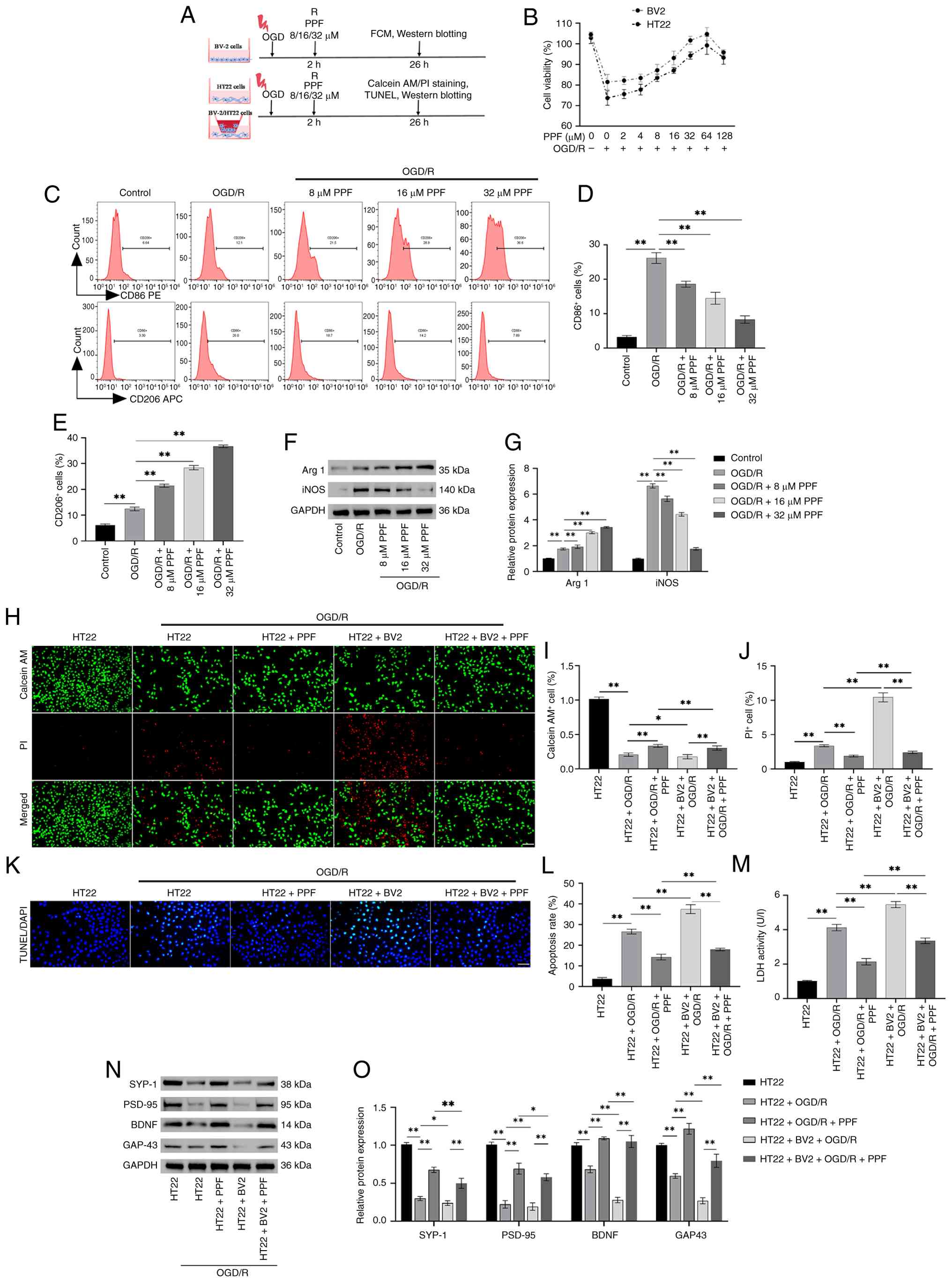
Figure 1

PPF suppresses excessive activation
of BV-2 cells and ameliorates damage in HT22 cells following OGD/R.
(A) Operational flowchart. (B) Cell Counting Kit-8 assay was
performed to determine the viability of BV2 and HT22 cells after 24
h treatment with PPF. (C) Flow cytometry revealed that PPF
decreased the number of CD86-positive and increased the number of
CD206-positive cells. (D) Quantitative analysis of flow cytometry
confirmed that PPF significantly decreased the proportion of
CD86-positive cells and (E) significantly increased the proportion
of CD206-positive cells. (F) Western blotting of iNOS, Arg 1, and
GAPDH (internal reference). (G) Western blotting revealed that PPF
decreased iNOS and increased Arg 1 levels in BV-2 cells. (H)
Calcein AM/PI staining revealed decreased viability in
OGD/R-treated HT22 cells, which was diminished upon co-culture with
BV-2 cells, whereas PPF enhanced cell survival (magnification, ×20;
scale bar, 100 μm). (I) Quantitative analysis of Calcein
AM/PI staining showed that PPF enhanced the survival ability of
HT22 cells in the OGD/R+BV2 co-culture system and (J) decreased the
death rate of HT22 cells in the OGD/R+BV2 co-culture system. (K)
TUNEL staining to assess TUNEL positivity in HT22 cells (green
fluorescence) (magnification, ×40; scale bar, 50 μm). (L)
TUNEL staining indicated increased apoptosis in OGD/R-treated HT22
cells. Co-culture with BV-2 cells elevated apoptosis rates, whereas
PPF reduced apoptosis. (M) Following OGD/R, LDH release increased
in HT22 cells and was further elevated after co-culture with BV-2
cells, while PPF treatment decreased LDH release. (N) Western
blotting protein bands for SYP-1, PSD-95, BDNF, GAP-43, and GAPDH.
(O) Quantitative analysis of western blotting revealed that PPF
induced elevated SYP-1, PSD-95, BDNF and GAP-43 levels in HT22
cells. *P<0.05, **P<0.01. PPF,
Propofol; OGD/R, Oxygen-glucose deprivation/reoxygenation; iNOS,
inducible nitric oxide synthase; Arg, arginase 1; LDH, lactate
dehydrogenase; SYP, synapsin; PSD, postsynaptic density protein;
BDNF, brain-derived neurotrophic factor; GAP, growth-associated
protein; FCM, flow cytometry.

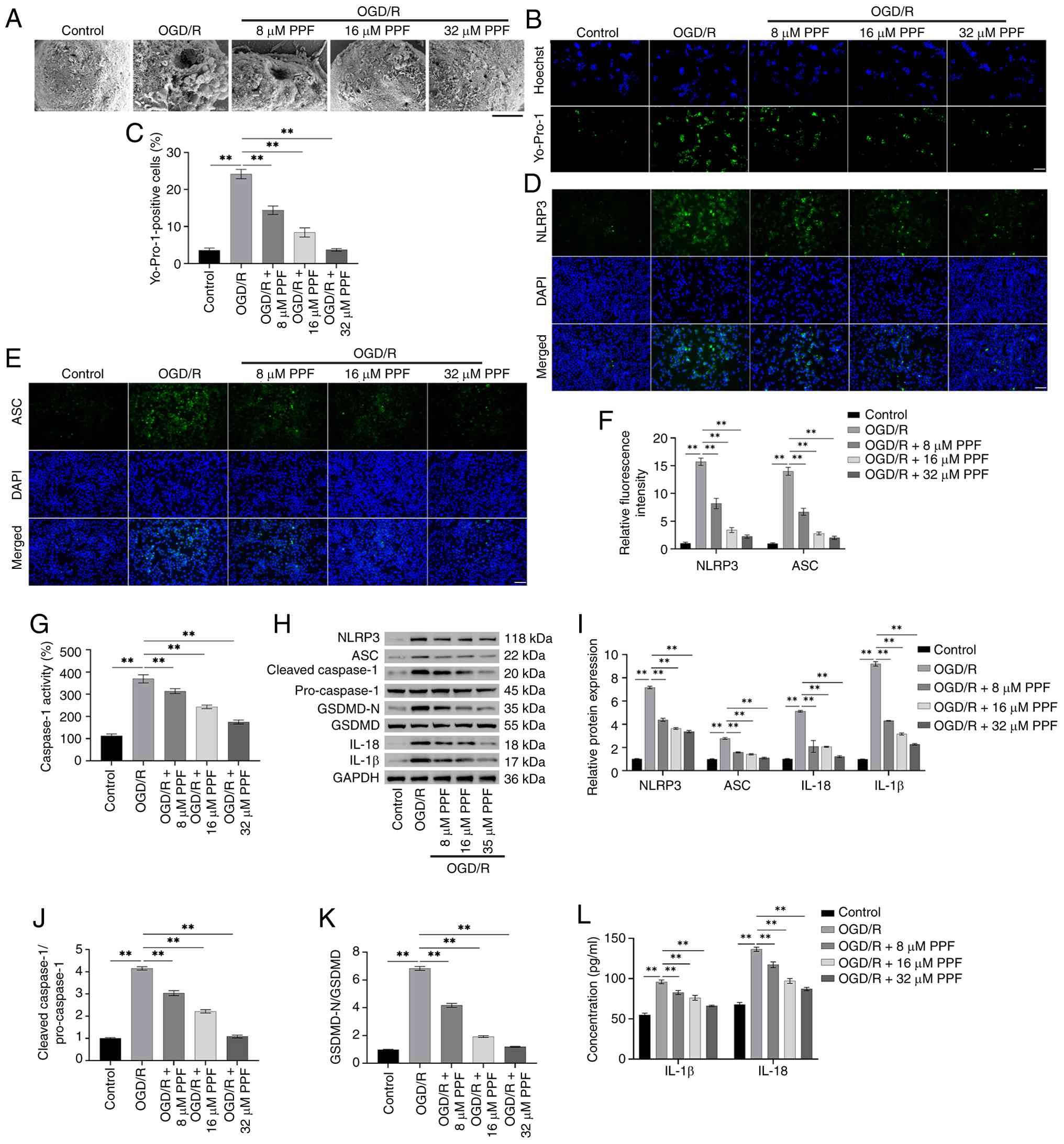
Figure 2

PPF suppresses NLRP3-mediated
pyroptosis in BV2 cells following OGD/R. (A) SEM observation of BV2
cell morphology (magnification, ×20,000; scale bar, 2 μm).
(B) Yo-Pro-1 and Hoechst 33342 staining for assessing the
pyroptosis levels in BV-2 cells. (C) Quantitative analysis of
Yo-Pro-1 and Hoechst 33342 staining revealed that PPF deceased
pyroptosis levels in BV-2 cells. (D) Immunofluorescence staining of
NLRP3 in BV2 cells (magnification, ×40; scale bar, 50 μm).
(E) Immunofluorescence staining of ASC in BV2 cells (magnification,
×40; scale bar, 50 μm). (F) Quantitative analysis of
immunofluorescence staining revealed that NLRP3 and ASC
fluorescence intensity increased in OGD/R-treated BV2 cells, while
PPF decreased the fluorescence intensity of both proteins. (G)
Caspase-1 activity was detected in BV2 cells following OGD/R using
Caspase-1 Activity Assay kit. (H) Western blotting of NLRP3, ASC,
cleaved-caspase-1, pro-caspase-1, GSDMD-N, GSDMD, IL-18, IL-1β, and
GAPDH (internal reference). (I) Western blot analysis revealed
elevated NLRP3, ASC, IL-1β and IL-18,
cleaved-caspase-1/pro-caspase-1 levels (J), and GSDMD-N/GSDMD
levels (K) in OGD/R-treated BV2 cells, PPF treatment reduced these
proteins levels. (L) ELISA showed that PPF decreased IL-1β and
IL-18 levels. **P<0.01. PPF, Propofol; OGD/R,
Oxygen-glucose deprivation/reoxygenation; ASC, apoptosis-associated
speck-like protein containing a CARD; GSDMD, gasdermin D.

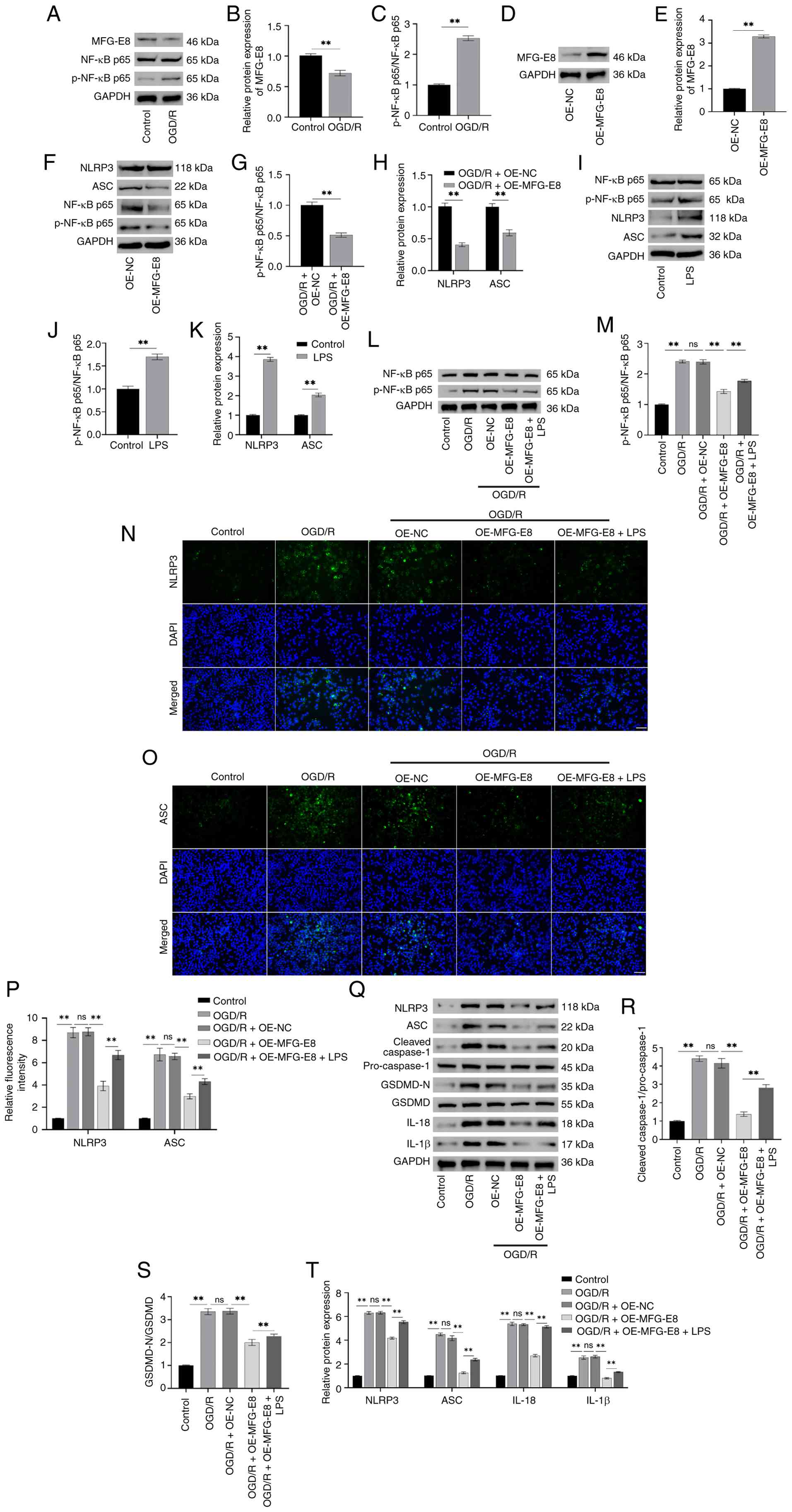
Figure 3

Overexpression of MFG-E8 suppresses
NF-κB and NLRP3 activation in OGD/R-induced BV2 cells. (A) Western
blotting protein bands for MFG-E8, p-NF-κB, NF-κB, and GAPDH
(internal reference). (B and C) Following OGD/R, western blotting
revealed decreased MFG-E8 expression (B) and elevated p-NF-κB/NF-κB
levels (C) in BV2 cells. (D) Western blotting protein bands for
MFG-E8 and GAPDH (internal reference). (E) Following transfection
of OE-MFG-E8 into BV2 cells, MFG-E8 expression was elevated
markedly. (F) Western blotting protein bands for NLRP3, ASC,
p-NF-κB, NF-κB, and GAPDH (internal reference). (G and H) Following
transfection with OE-MFG-E8, p-NF-κB/NF-κB levels (G), and NLRP3
and ASC levels (H) were detected using western blotting. (I)
Western blotting protein bands for NLRP3, ASC, p-NF-κB, NF-κB, and
GAPDH (internal reference). Following treatment with the NF-κB
activator LPS, p-NF-κB/NF-κB (J), and NLRP3 and ASC levels (K) were
detected by western blotting. (L) Western blotting protein bands
for p-NF-κB, NF-κB, and GAPDH (internal reference). (M) Following
transfection with OE-MFG-E8, p-NF-κB/NF-κB expression was
decreased, whereas treatment with LPS increased p-NF-κB/NF-κB
levels. (N) Immunofluorescence staining of NLRP3 in BV2 cells
(magnification, ×40; scale bar, 50 μm). (O)
Immunofluorescence staining of ASC in BV2 cells (magnification,
×40; scale bar, 50 μm). (P) Immunofluorescence revealed
OE-MFG-E8 reduced the fluorescence intensity of NLRP3 and ASC,
while LPS diminished the effect of MFG-E8 overexpression. (Q)
Western blotting protein bands for NLRP3, ASC, cleaved-caspase-1,
pro-caspase-1, GSDMD-N, GSDMD, IL-1β, IL-18, and GAPDH (internal
reference). (R-T) Western blotting revealed that OE-MFG-E8 reduced
cleaved-caspase-1/pro-caspase-1 levels (R), GSDMD-N/GSDMD levels
(S), NLRP3, ASC, IL-1β, and IL-18 levels (T) in OGD/R-induced BV2
cells, LPS attenuated the impact of OE-MFG-E8.
**P<0.01. PPF, Propofol; OGD/R, Oxygen-glucose
deprivation/reoxygenation; ASC, apoptosis-associated speck-like
protein containing a CARD; MFG-E8, milk fat globule-EGF factor 8;
GSDM, gasdermin; OE, overexpression; p-, phosphorylated; LPS,
lipopolysaccharide; NC, negative control; ns, not significant.

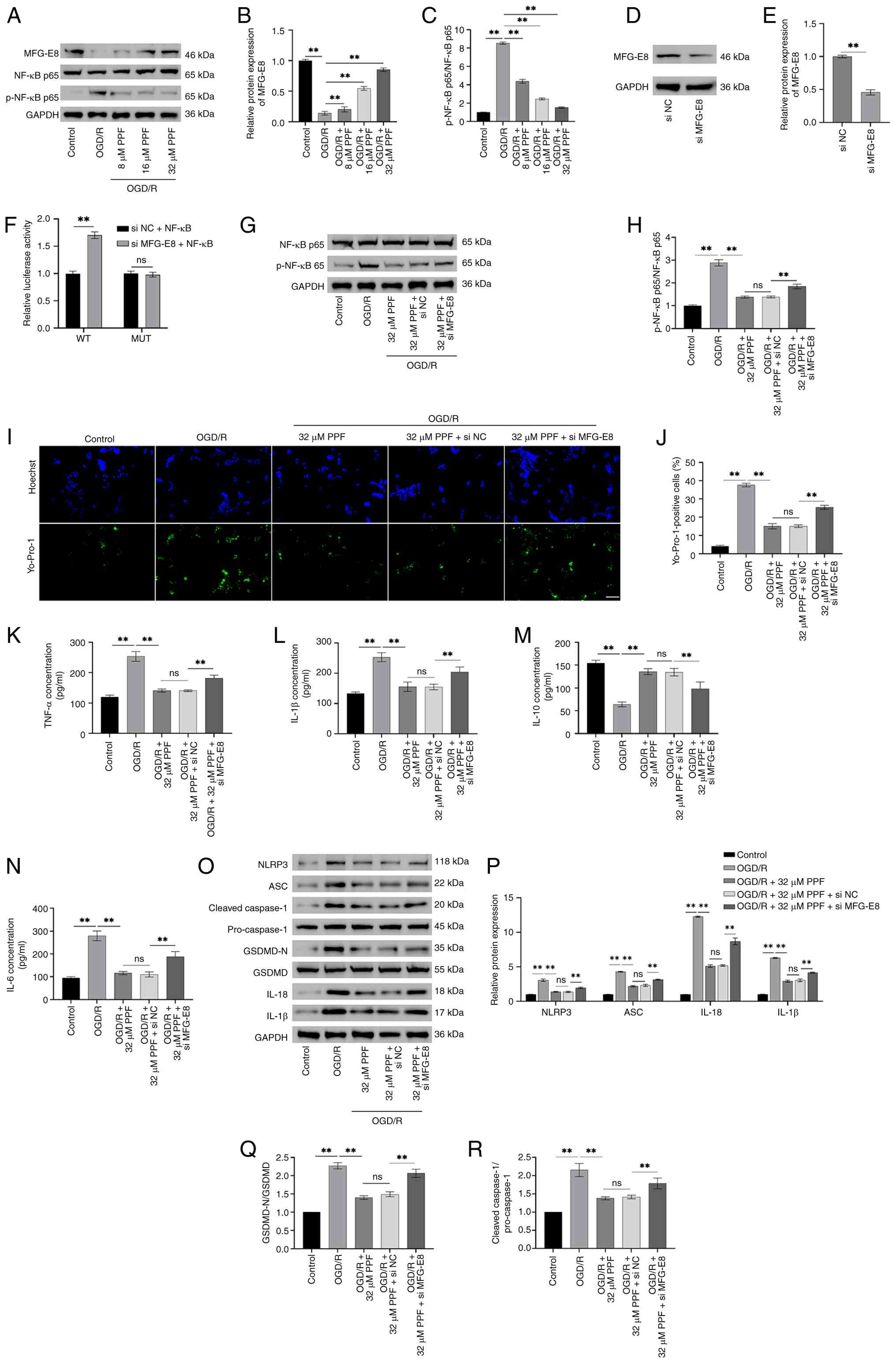
Figure 4

PPF suppresses pyroptosis caused by
NF-κB/NLRP3 signaling by upregulating MFG-E8. (A) Western blotting
protein bands for MFG-E8, p-NF-κB, NF-κB, and GAPDH (internal
reference) in BV2 cells. (B) Western blotting revealed that PPF
increased MFG-E8 and decreased p-NF-κB/NF-κB levels (C) in BV2
cells. (D) Western blotting for MFG-E8 and GAPDH in BV2 cells. (E)
Following transfection of si-MFG-E8 into BV2 cells, MFG-E8 protein
levels were significantly decreased. (F) Dual luciferase reporter
gene assay confirmed that NF-κB is the target of MFG-E8. (G)
Western blotting protein bands for p-NF-κB, NF-κB, and GAPDH
(internal reference) in BV2 cells. (H) si-MFG-E8 attenuated the
effects of PPF, resulting in elevated p-NF-κB/NF-κB levels. (I)
Yo-Pro-1 and Hoechst 33342 staining for assessing the pyroptosis
levels in BV-2 cells (magnification, ×40; scale bar, 50 μm).
(J) Yo-Pro-1 and Hoechst 33342 staining showed that PPF decreased
Yo-Pro-1 positivity, while silencing MFG-E8 increased Yo-Pro-1
positivity. ELISA showed that PPF decreased TNF-α (K) and IL-1β (L)
levels, silencing MFG-E8 reversed this effect. (M and N) ELISA
showed that PPF raised IL-10 levels (M) and decreased IL-6 levels
(N), silencing MFG-E8 reversed this effect. (O) Western blotting
protein bands for NLRP3, ASC, cleaved-caspase-1, pro-caspase-1,
GSDMD-N, GSDMD, IL-1β, IL-18, and GAPDH (internal reference) in BV2
cells. (P-R) Western blot analysis indicated that PPF decreased
NLRP3, ASC, IL-1β, and IL-18 levels (P), GSDMD-N/GSDMD levels (Q),
cleaved-caspase-1/pro-caspase-1 levels (R), silencing MFG-E8
increased these protein levels. **P<0.01. PPF,
propofol; MFG-E8, milk fat globule-EGF factor 8; OGD/R,
Oxygen-glucose deprivation/reoxygenation; ASC, apoptosis-associated
speck-like protein containing a CARD; GSDM, gasdermin; OE,
overexpression; p-, phosphorylated; LPS, lipopolysaccharide; NC,
negative control; ns, not significant; si, small interfering; WT,
wild-type; MUT, mutant.

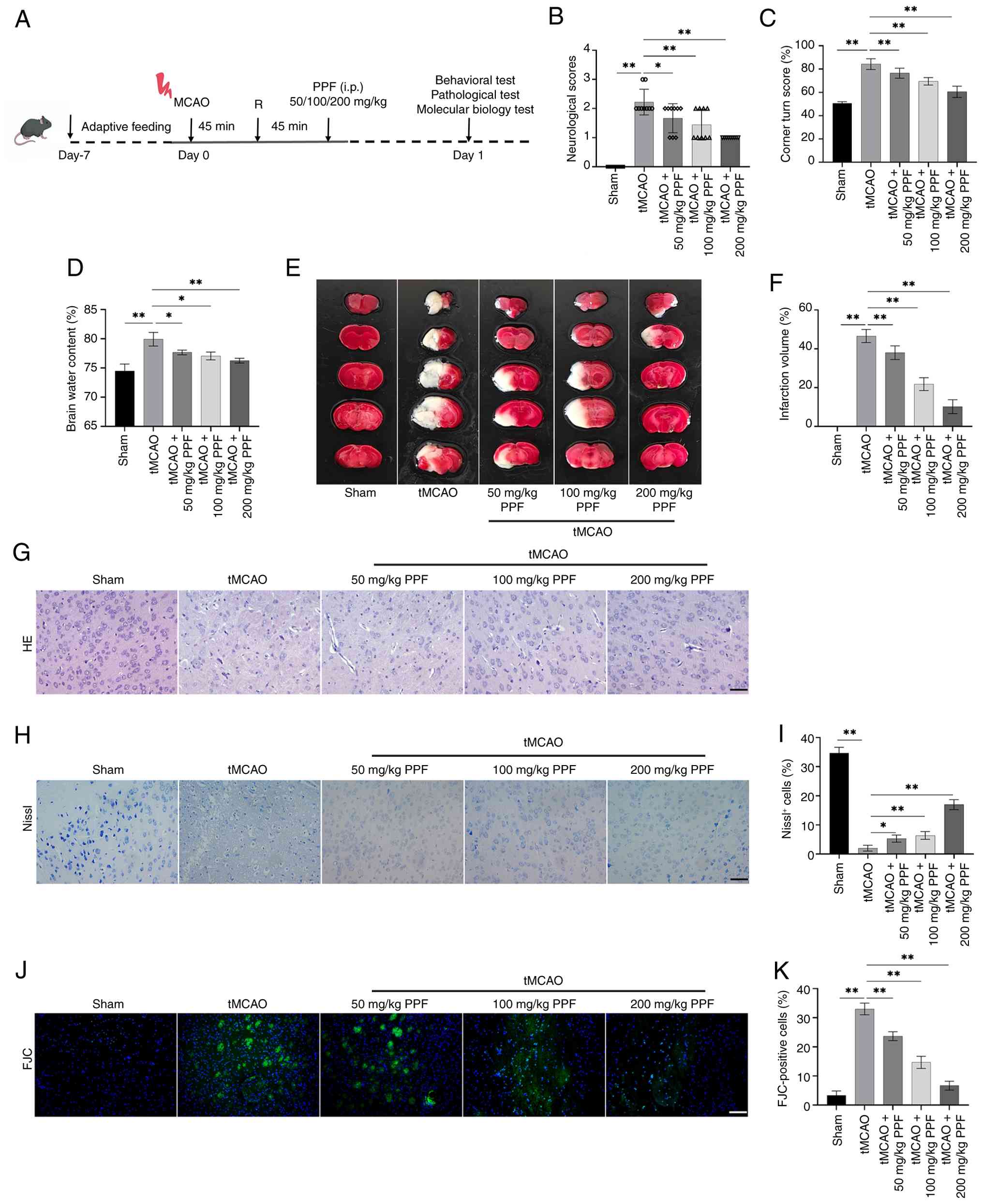
Figure 5

PPF improves neurological deficit and
decreases brain tissue pathology in tMCAO mice. (A) Operational
flowchart. (B) Longa scoring indicated that PPF decreased
neurological deficit scores in tMCAO mice (n=9). (C) Corner test
results demonstrated that PPF decreased sensorimotor deficits in
tMCAO mice. (D) PPF decreased brain water content in tMCAO mice.
(E) TTC staining to assess cerebral infarct lesions in tMCAO mice.
(F) TTC staining revealed well-defined infarct lesions in the
cerebral cortex of tMCAO mice, with PPF diminishing infarct volume.
(G) HE staining was used to assess the histopathological brain
damage in tMCAO mice (magnification, ×40; scale bar, 50 μm).
(H) Nissl staining was used to assess the proportion of
Nissl-positive cells in the brain tissue of tMCAO mice
(magnification, ×40; scale bar, 50 μm). (I) Nissl staining
revealed a decrease in Nissl-positive cell count in tMCAO mice. PPF
increased the number of Nissl-positive cells. (J) Number of
degenerative neurons in tMCAO mice was observed by FJC staining
(magnification, ×20; scale bar, 100 μm). (K) FJC staining
indicated PPF decreased the number of degenerating neurons in the
ischemic penumbra of tMCAO mice. *P<0.05,
**P<0.01. PPF, Propofol; tMCAO, transient middle
cerebral artery occlusion; HE, hematoxylin and eosin; FJC,
Fluoro-Jade C; i.p., intraperitoneal injection.

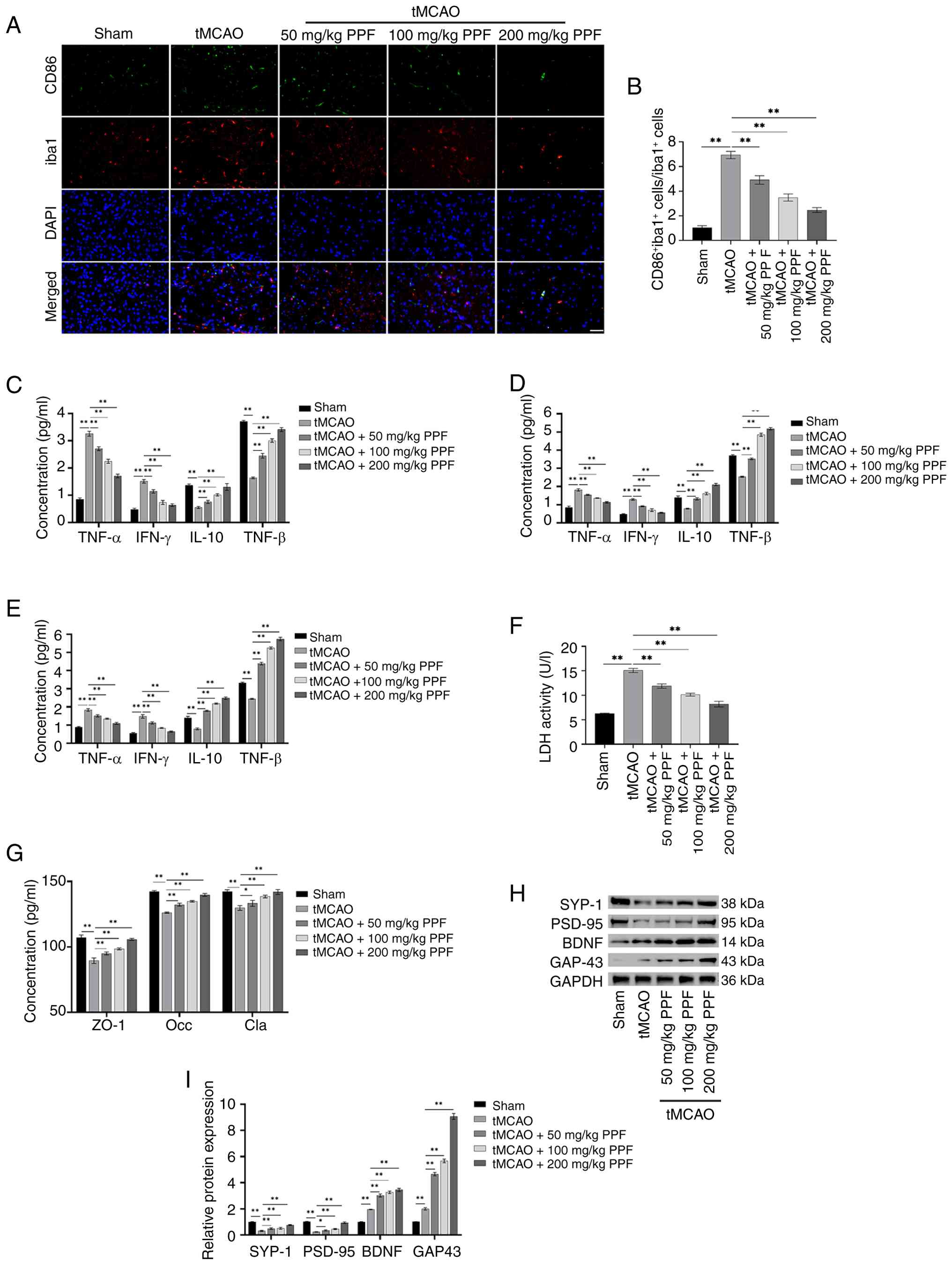
Figure 6

PPF suppresses microglial activation
and neuronal injury in tMCAO mice. (A) Co-localization of Iba1 and
CD86 was detected by immunofluorescence. (magnification, ×40; scale
bar, 50 μm). (B) Immunofluorescence colocalization revealed
an increased proportion of CD86+ Iba1+ cells
in tMCAO mice, which was decreased by PPF treatment. ELISA
detection of TNF-α, IL-10, IFN-γ, and TGF-β levels in the ischemic
(C) core and (D) penumbra and (E) non-ischemic zone of brain
tissue. (F) Ischemic penumbra of tMCAO mice exhibited heightened
LDH levels. PPF reduced LDH levels. (G) ELISA revealed decreased
Cla, Occ and ZO-1 levels in tMCAO mice, while PPF elevated these
tight junction-associated protein levels. (H) Western blotting of
SYP-1, PSD-95, BDNF, GAP-43, and GAPDH (internal reference). (I)
Western blotting revealed decreased SYP-1 and PSD-95 levels, along
with increased BDNF and GAP-43 levels in tMCAO mice; these effects
were reversed by PPF. *P<0.05,
**P<0.01. PPF, Propofol; tMCAO, transient middle
cerebral artery occlusion; Iba, Ionized calcium binding adaptor
molecule; LDH, lactate dehydrogenase; Cla, Claudin; Occ, Occludin;
ZO-1, zona occludens 1; PSD, postsynaptic density protein; BDNF,
brain-derived neurotrophic factor; GAP, growth-associated protein;
SYP, synapsin.

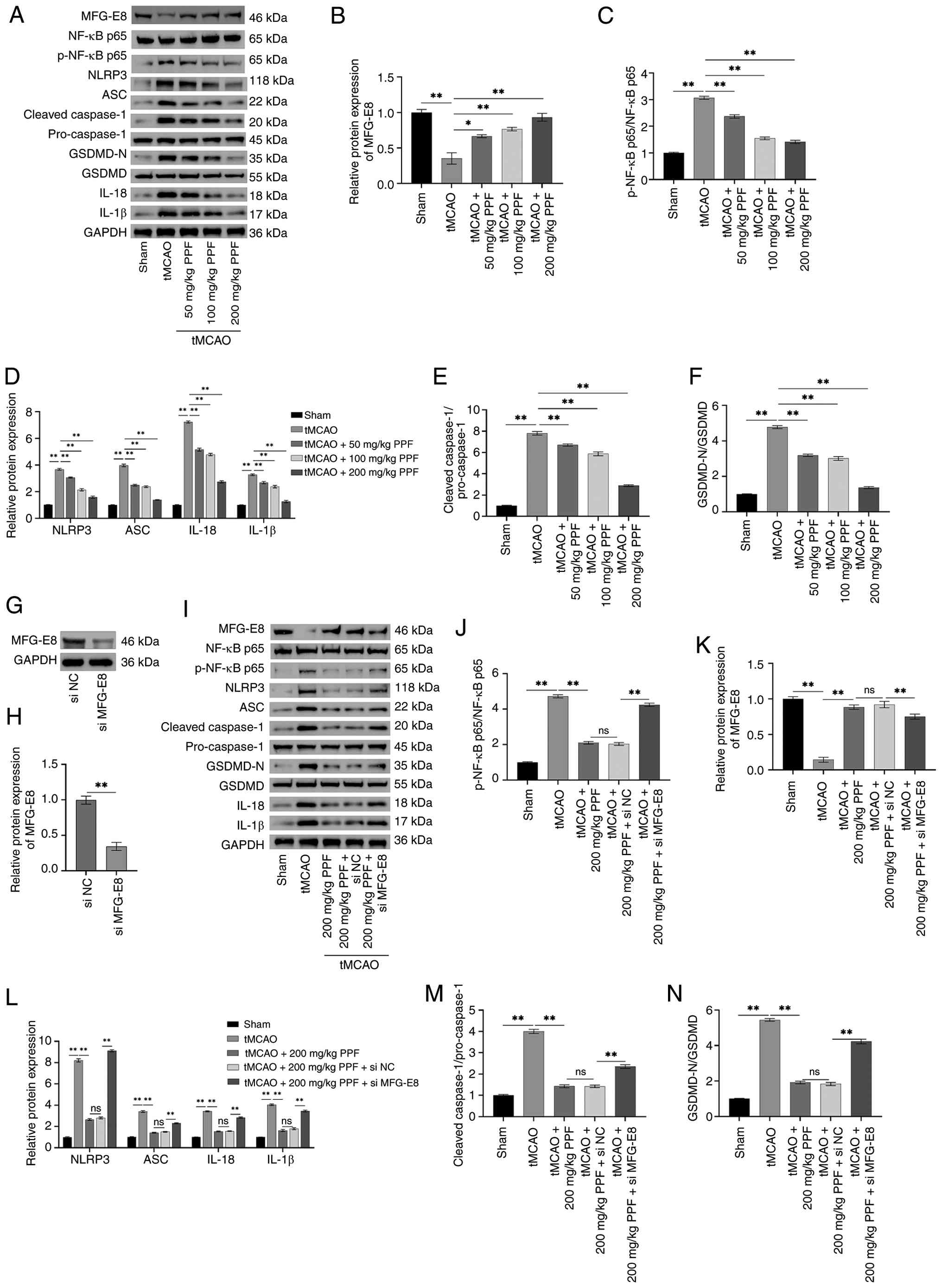
Figure 7

PPF upregulates MFG-E8 to inhibit
activation of NF-κB/NLRP3 pathway. (A) Western blotting of MFG-E8,
p-NF-κB, NF-κB, NLRP3, ASC, cleaved-caspase-1, pro-caspase-1,
GSDMD-N, GSDMD, IL-18, IL-1β, and GAPDH (internal reference). (B-F)
Western blot analysis revealed decreased MFG-E8 (B) levels in tMCAO
mice, along with elevated p-NF-κB/NF-κB (C), NLRP3, ASC, IL-1β,
IL-18 (D), cleaved-caspase-1/pro-caspase-1 (E), GSDMD-N/GSDMD (F)
levels. PPF reduced these protein levels. (G) Western blotting
protein bands for MFG-E8 and GAPDH (internal reference). (H)
Western blotting detected the expression of MFG-E8 in the brain
tissue of mice after injection of si-MFG-E8/si-NC. (I) Western
blotting protein bands for MFG-E8, p-NF-κB, NF-κB, NLRP3, ASC,
cleaved-caspase-1, pro-caspase-1, GSDMD-N, GSDMD, IL-18, IL-1β, and
GAPDH (internal reference). (J-N) Western blot analysis revealed
that si-MFG-E8 diminished the therapeutic efficacy of PPF, leading
to deceased MFG-E8 level (J) and elevated p-NF-κB/NF-κB (K), NLRP3,
ASC, IL-1β, and IL-18 levels (L), and
cleaved-caspase-1/pro-caspase-1 (M) and GSDMD-N/GSDMD (N) levels in
tMCAO mice. *P<0.05, **P<0.01. PPF,
Propofol; tMCAO, transient middle cerebral artery occlusion;
MFG-E8, milk fat globule-EGF factor 8; p-, phosphorylated; ASC,
apoptosis-associated speck-like protein containing a CARD; ns, not
significant; GSDMD, gasdermin D; si, small interfering; NC,
negative control.

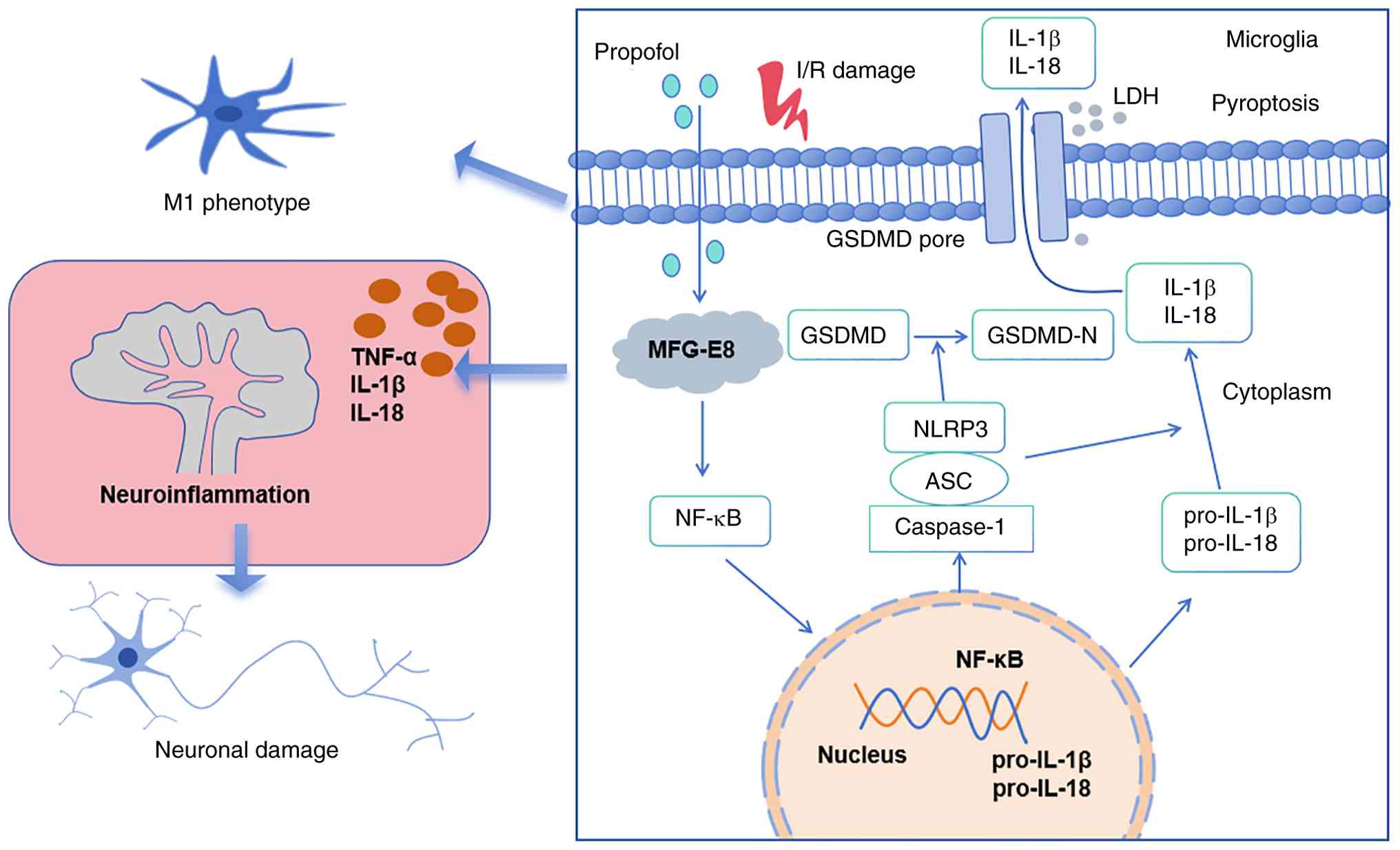
Figure 8

Mechanism of action of Propofol in
attenuating I/R neuronal injury. Propofol ameliorates neuronal
injury in cerebral I/R injury by inhibiting NF-κB/NLRP3
pathway-mediated focal death through upregulation of MFG-E8. I/R,
ischemia/reperfusion; LDH, lactate dehydrogenase; GSDMD, gasdermin
D; MFG-E8, milk fat globule-EGF factor 8; ASC, apoptosis-associated
speck-like protein containing a CARD.
View References

1 

Feigin VL, Brainin M, Norrving B, Martins SO, Pandian J, Lindsay P, F Grupper M and Rautalin I: World stroke organization: Global stroke fact sheet 2025. Int J Stroke. 20:132–144. 2025. View Article : Google Scholar :

2 

Tan KS, Pandian JD, Liu L, Toyoda K, Leung TWH, Uchiyama S, Kuroda S, Suwanwela NC, Aaron S, Chang HM and Venketasubramanian N: Stroke in Asia. Cerebrovasc Dis Extra. 14:58–75. 2024.PubMed/NCBI

3 

Li XY, Kong XM, Yang CH, Cheng ZF, Lv JJ, Guo H and Liu XH: Global, regional, and national burden of ischemic stroke, 1990-2021: An analysis of data from the global burden of disease study 2021. EClinicalMedicine. 75:1027582024. View Article : Google Scholar : PubMed/NCBI

4 

Herpich F and Rincon F: Management of acute ischemic stroke. Crit Care Med. 48:1654–1663. 2020. View Article : Google Scholar : PubMed/NCBI

5 

Feske SK: Ischemic stroke. Am J Med. 134:1457–1464. 2021. View Article : Google Scholar : PubMed/NCBI

6 

Kapanova G, Tashenova G, Akhenbekova A, Tokpınar A and Yılmaz S: Cerebral ischemia reperfusion injury: From public health perspectives to mechanisms. Folia Neuropathol. 60:384–389. 2022. View Article : Google Scholar

7 

Li M, Tang H, Li Z and Tang W: Emerging treatment strategies for cerebral ischemia-reperfusion injury. Neuroscience. 507:112–124. 2022. View Article : Google Scholar : PubMed/NCBI

8 

Yu L, Zhang Y, Chen Q, He Y, Zhou H, Wan H and Yang J: Formononetin protects against inflammation associated with cerebral ischemia-reperfusion injury in rats by targeting the JAK2/STAT3 signaling pathway. Biomed Pharmacother. 149:1128362022. View Article : Google Scholar : PubMed/NCBI

9 

Li L, Jiang W, Yu B, Liang H, Mao S, Hu X, Feng Y, Xu J and Chu L: Quercetin improves cerebral ischemia/reperfusion injury by promoting microglia/macrophages M2 polarization via regulating PI3K/Akt/NF-κB signaling pathway. Biomed Pharmacother. 168:1156532023. View Article : Google Scholar

10 

Zhang Q, Jia M, Wang Y, Wang Q and Wu J: Cell death mechanisms in cerebral ischemia-reperfusion injury. Neurochem Res. 47:3525–3542. 2022. View Article : Google Scholar : PubMed/NCBI

11 

Shi M, Chen J, Liu T, Dai W, Zhou Z, Chen L and Xie Y: Protective effects of remimazolam on cerebral ischemia/reperfusion injury in rats by inhibiting of NLRP3 inflammasome-dependent pyroptosis. Drug Des Devel Ther. 16:413–423. 2022. View Article : Google Scholar : PubMed/NCBI

12 

Zhu XN, Li J, Qiu GL, Wang L, Lu C, Guo YG, Yang KX, Cai F, Xu T, Yuan TF and Hu J: Propofol exerts anti-anhedonia effects via inhibiting the dopamine transporter. Neuron. 111:1626–1636.e6. 2023. View Article : Google Scholar : PubMed/NCBI

13 

Viderman D, Nabidollayeva F, Bilotta F and Abdildin YG: Comparison of dexmedetomidine and propofol for sedation in awake craniotomy: A meta-analysis. Clin Neurol Neurosurg. 226:1076232023. View Article : Google Scholar : PubMed/NCBI

14 

Guan S, Sun L, Wang X, Huang X and Luo T: Propofol inhibits neuroinflammation and metabolic reprogramming in microglia in vitro and in vivo. Front Pharmacol. 14:11618102023. View Article : Google Scholar : PubMed/NCBI

15 

Liu J, Ai P, Sun Y, Yang X, Li C, Liu Y, Xia X and Zheng JC: Propofol inhibits microglial activation via miR-106b/Pi3k/Akt axis. Front Cell Neurosci. 15:7683642021. View Article : Google Scholar : PubMed/NCBI

16 

Wang D, Sun H, Hai K, Li N, Gu Y and Ma Z: Propofol alleviates traumatic brain injury through regulating Th17/Treg balance by activation of the AMPK/SIRT1 pathway. Toxicol Mech Methods. 35:644–654. 2025. View Article : Google Scholar : PubMed/NCBI

17 

Sun B, Ou H, Ren F, Guan Y, Huan Y and Cai H: Propofol protects against cerebral ischemia/reperfusion injury by down-regulating long noncoding RNA SNHG14. ACS Chem Neurosci. 12:3002–3014. 2021. View Article : Google Scholar : PubMed/NCBI

18 

Gao YY, Tao T, Wu D, Zhuang Z, Lu Y, Wu LY, Liu GJ, Zhou Y, Zhang DD, Wang H, et al: MFG-E8 attenuates inflammation in subarachnoid hemorrhage by driving microglial M2 polarization. Exp Neurol. 336:1135322021. View Article : Google Scholar

19 

Dong X, Zhang Z, Shu X, Zhuang Z, Liu P, Liu R, Xia S, Bao X, Xu Y and Chen Y: MFG-E8 alleviates cognitive impairments induced by chronic cerebral hypoperfusion by phagocytosing myelin debris and promoting remyelination. Neurosci Bull. 40:483–499. 2024. View Article : Google Scholar :

20 

Li D, Lu W, Wang R and Ma Y: MFG-E8 in microglial regulation: A review of basic research in the central nervous system. J Food Sci. 90:e702352025. View Article : Google Scholar : PubMed/NCBI

21 

Cai Q, Zhao C, Xu Y, Lin H, Jia B, Huang B, Lin S, Chen D, Jia P, Wang M, et al: Qingda granule alleviates cerebral ischemia/reperfusion injury by inhibiting TLR4/NF-κB/NLRP3 signaling in microglia. J Ethnopharmacol. 324:1177122024. View Article : Google Scholar

22 

Ou Z, Zhao M, Xu Y, Wu Y, Qin L, Fang L, Xu H and Chen J: Huangqi Guizhi Wuwu decoction promotes M2 microglia polarization and synaptic plasticity via Sirt1/NF-κB/NLRP3 pathway in MCAO rats. Aging (Albany NY). 15:10031–10056. 2023. View Article : Google Scholar : PubMed/NCBI

23 

Xue K, Qi M, She T, Jiang Z, Zhang Y, Wang X, Wang G, Xu L, Peng B, Liu J, et al: Argon mitigates post-stroke neuroinflammation by regulating M1/M2 polarization and inhibiting NF-κB/NLRP3 inflammasome signaling. J Mol Cell Biol. 14:mjac0772023. View Article : Google Scholar

24 

Meimei C, Fei Z, Wen X, Huangwei L, Zhenqiang H, Rongjun Y, Qiang Z, Qiuyang L, Xiaozhen L, Yuan Y, et al: Taxus chinensis (Pilg.) Rehder fruit attenuates aging behaviors and neuroinflammation by inhibiting microglia activation via TLR4/NF-κB/NLRP3 pathway. J Ethnopharmacol. 337:1189432025. View Article : Google Scholar

25 

Ashrafizadeh M: Cell death mechanisms in human cancers: Molecular pathways, therapy resistance and therapeutic perspective. J Cancer Biomol Ther. 1:17–40. 2024. View Article : Google Scholar

26 

Lei P, Li Z, Hua Q, Song P, Gao L, Zhou L and Cai Q: Ursolic acid alleviates neuroinflammation after intracerebral hemorrhage by mediating microglial pyroptosis via the NF-κB/NLRP3/GSDMD pathway. Int J Mol Sci. 24:147712023. View Article : Google Scholar

27 

Cai X, Li Y, Zheng X, Hu R, Li Y, Xiao L and Wang Z: Propofol suppresses microglial phagocytosis through the downregulation of MFG-E8. J Neuroinflammation. 18:182021. View Article : Google Scholar : PubMed/NCBI

28 

Shi X, Cai X, Di W, Li J, Xu X, Zhang A, Qi W, Zhou Z and Fang Y: MFG-E8 selectively inhibited Aβ-induced microglial M1 polarization via NF-κB and PI3K-Akt pathways. Mol Neurobiol. 54:7777–7788. 2017. View Article : Google Scholar

29 

Xu X, Gao W, Li L, Hao J, Yang B, Wang T, Li L, Bai X, Li F, Ren H, et al: Annexin A1 protects against cerebral ischemia-reperfusion injury by modulating microglia/macrophage polarization via FPR2/ALX-dependent AMPK-mTOR pathway. J Neuroinflammation. 18:1192021. View Article : Google Scholar : PubMed/NCBI

30 

Tao W, Zhang X, Ding J, Yu S, Ge P, Han J, Luo X, Cui W and Chen J: The effect of propofol on hypoxia- and TNF-α-mediated BDNF/TrkB pathway dysregulation in primary rat hippocampal neurons. CNS Neurosci Ther. 28:761–774. 2022. View Article : Google Scholar : PubMed/NCBI

31 

Beaulieu J, Costa G, Renaud J, Moitié A, Glémet H, Sergi D and Martinoli MG: The neuroinflammatory and neurotoxic potential of palmitic acid is mitigated by oleic acid in microglial cells and microglial-neuronal co-cultures. Mol Neurobiol. 58:3000–3014. 2021. View Article : Google Scholar : PubMed/NCBI

32 

Xian M, Cai J, Zheng K, Liu Q, Liu Y, Lin H, Liang S and Wang S: Aloe-emodin prevents nerve injury and neuroinflammation caused by ischemic stroke via the PI3K/AKT/mTOR and NF-κB pathway. Food Funct. 12:8056–8067. 2021. View Article : Google Scholar : PubMed/NCBI

33 

Zhao R, Zhao D, Zhu X, Li F, Xiong P, Li S and Liu J: The influence of miR-3149 on the malignancy progression of gastric cancer by negatively regulating CEACAM5. J Cancer Biomol Ther. 1:1–10. 2024. View Article : Google Scholar

34 

Liu J, Zhang X, Guo J, Zhang Y, Fan J, Liu J, Chen J, Jiang J, Yu B, Zhang K and Zhou B: Ursolic acid ameliorates cerebral ischemia-reperfusion injury by inhibiting NF-κB/NLRP3-mediated microglia pyroptosis and neuroinf lammation. Front Pharmacol. 16:16221312025. View Article : Google Scholar

35 

Kong L, Li W, Chang E, Wang W, Shen N, Xu X, Wang X, Zhang Y, Sun W, Hu W, et al: mtDNA-STING axis mediates microglial polarization via IRF3/NF-κB signaling after ischemic stroke. Front Immunol. 13:8609772022. View Article : Google Scholar

36 

Zhang Q, Wang L, Chen B, Zhuo Q, Bao C and Lin L: Propofol inhibits NF-κB activation to ameliorate airway inflammation in ovalbumin (OVA)-induced allergic asthma mice. Int Immunopharmacol. 51:158–164. 2017. View Article : Google Scholar : PubMed/NCBI

37 

Gao YY, Zhang ZH, Zhuang Z, Lu Y, Wu LY, Ye ZN, Zhang XS, Chen CL, Li W and Hang CH: Recombinant milk fat globule-EGF factor-8 reduces apoptosis via integrin β3/FAK/PI3K/AKT signaling pathway in rats after traumatic brain injury. Cell Death Dis. 9:8452018. View Article : Google Scholar

38 

Longa EZ, Weinstein PR, Carlson S and Cummins R: Reversible middle cerebral artery occlusion without craniectomy in rats. Stroke. 20:84–91. 1989. View Article : Google Scholar : PubMed/NCBI

39 

Lu J, Li Z, Zhao Q, Liu D and Mei YA: Neuritin improves the neurological functional recovery after experimental intracerebral hemorrhage in mice. Neurobiol Dis. 156:1054072021. View Article : Google Scholar : PubMed/NCBI

40 

Pandarathodiyil AK, Ramanathan A, Garg R, Doss JG, Rahman FBA, Ghani WMN and Vijayan SP: Lactate dehydrogenase: The beacon of hope? J Pharm Bioallied Sci. 14(Suppl 1): S1090–S1092. 2022. View Article : Google Scholar : PubMed/NCBI

41 

Zhang L, Dai X, Li D, Wu J, Gao S, Song F, Liu L, Zhou Y, Liu D and Mei W: MFG-E8 ameliorates nerve injury-induced neuropathic pain by regulating microglial polarization and neuroinflammation via integrin β3/SOCS3/STAT3 pathway in mice. J Neuroimmune Pharmacol. 19:492024. View Article : Google Scholar

42 

Zhong Y, Gu L, Ye Y, Zhu H, Pu B, Wang J, Li Y, Qiu S, Xiong X and Jian Z: JAK2/STAT3 axis intermediates microglia/macrophage polarization during cerebral ischemia/reperfusion injury. Neuroscience. 496:119–128. 2022. View Article : Google Scholar : PubMed/NCBI

43 

Liao J, Wei M, Wang J, Zeng J, Liu D, Du Q, Ge J and Mei Z: Naotaifang formula attenuates OGD/R-induced inflammation and ferroptosis by regulating microglial M1/M2 polarization through BMP6/SMADs signaling pathway. Biomed Pharmacother. 167:1154652023. View Article : Google Scholar : PubMed/NCBI

44 

Chen S, Pan J, Gong Z, Wu M, Zhang X, Chen H, Yang D, Qi S, Peng Y and Shen J: Hypochlorous acid derived from microglial myeloperoxidase could mediate high-mobility group box 1 release from neurons to amplify brain damage in cerebral ischemia-reperfusion injury. J Neuroinflammation. 21:702024. View Article : Google Scholar : PubMed/NCBI

45 

Lan Z, Tan F, He J, Liu J, Lu M, Hu Z, Zhuo Y, Liu J, Tang X, Jiang Z, et al: Curcumin-primed olfactory mucosa-derived mesenchymal stem cells mitigate cerebral ischemia/reperfusion injury-induced neuronal PANoptosis by modulating microglial polarization. Phytomedicine. 129:1556352024. View Article : Google Scholar : PubMed/NCBI

46 

Gong L, Liang J, Xie L, Zhang Z, Mei Z and Zhang W: Metabolic reprogramming in gliocyte post-cerebral ischemia/reperfusion: From pathophysiology to therapeutic potential. Curr Neuropharmacol. 22:1672–1696. 2024. View Article : Google Scholar

47 

Gao J, Su G, Liu J, Song J, Chen W, Chai M, Xie X, Wang M, Liu J and Zhang Z: A novel compound ligusticum cycloprolactam alleviates neuroinflammation after ischemic stroke via the FPR1/NLRP3 signaling axis. CNS Neurosci Ther. 30:e701582024. View Article : Google Scholar : PubMed/NCBI

48 

Zeng L, Hu S, Zeng L, Chen R, Li H, Yu J and Yang H: Animal models of ischemic stroke with different forms of middle cerebral artery occlusion. Brain Sci. 13:10072023. View Article : Google Scholar : PubMed/NCBI

49 

Luo L, Liu M, Fan Y, Zhang J, Liu L, Li Y, Zhang Q, Xie H, Jiang C, Wu J, et al: Intermittent theta-burst stimulation improves motor function by inhibiting neuronal pyroptosis and regulating microglial polarization via TLR4/NFκB/NLRP3 signaling pathway in cerebral ischemic mice. J Neuroinflammation. 19:1412022. View Article : Google Scholar

50 

Xu H, Ma Y, Shao L, Fu Y, Luo B, Xia C and Min X: Pan-cancer analysis of DLAT reveals it as a prognostic biomarker involved in immune infiltration of liver hepatocellular carcinoma. J Cancer. 16:2167–2180. 2025. View Article : Google Scholar : PubMed/NCBI

51 

Ermine CM, Bivard A, Parsons MW and Baron JC: The ischemic penumbra: From concept to reality. Int J Stroke. 16:497–509. 2021. View Article : Google Scholar : PubMed/NCBI

52 

Biagioni F, Mastroiacovo F, Lenzi P, Puglisi-Allegra S, Busceti CL, Ryskalin L, Ferese R, Bucci D, Frati A, Nicoletti F and Fornai F: The autophagy-related organelle autophagoproteasome is suppressed within ischemic penumbra. Int J Mol Sci. 22:103642021. View Article : Google Scholar : PubMed/NCBI

53 

Ji W, Ren Y, Wei X, Ding X, Dong Y and Yuan B: Ischemic stroke protected by ISO-1 inhibition of apoptosis via mitochondrial pathway. Sci Rep. 13:27882023. View Article : Google Scholar : PubMed/NCBI

54 

Yang SH and Liu R: Four decades of ischemic penumbra and its implication for ischemic stroke. Transl Stroke Res. 12:937–945. 2021. View Article : Google Scholar : PubMed/NCBI

55 

Candelario-Jalil E, Dijkhuizen RM and Magnus T: Neuroinflammation, stroke, blood-brain barrier dysfunction, and imaging modalities. Stroke. 53:1473–1486. 2022. View Article : Google Scholar : PubMed/NCBI

56 

Anthony S, Cabantan D, Monsour M and Borlongan CV: Neuroinflammation, stem cells, and stroke. Stroke. 53:1460–1472. 2022. View Article : Google Scholar : PubMed/NCBI

57 

Wang H, Zhang S, Xie L, Zhong Z and Yan F: Neuroinflammation and peripheral immunity: Focus on ischemic stroke. Int Immunopharmacol. 120:1103322023. View Article : Google Scholar : PubMed/NCBI

58 

Dmitrieva VG, Povarova OV, Skvortsova VI, Limborska SA, Myasoedov NF and Dergunova LV: Semax and Pro-Gly-Pro activate the transcription of neurotrophins and their receptor genes after cerebral ischemia. Cell Mol Neurobiol. 30:71–79. 2010. View Article : Google Scholar

59 

Liu K, Li L, Liu Z, Li G, Wu Y, Jiang X, Wang M, Chang Y, Jiang T, Luo J, et al: Acute administration of metformin protects against neuronal apoptosis induced by cerebral ischemia-reperfusion injury via regulation of the AMPK/CREB/BDNF pathway. Front Pharmacol. 13:8326112022. View Article : Google Scholar : PubMed/NCBI

60 

Guo L, Huang Z, Huang L, Liang J, Wang P, Zhao L and Shi Y: Surface-modified engineered exosomes attenuated cerebral ischemia/reperfusion injury by targeting the delivery of quercetin towards impaired neurons. J Nanobiotechnology. 19:1412021. View Article : Google Scholar : PubMed/NCBI

61 

Li D, Rongchun W, Lu W and Ma Y: Exploring the potential of MFG-E8 in neurodegenerative diseases. Crit Rev Food Sci Nutr. 65:5587–5601. 2025. View Article : Google Scholar

62 

Zhao M, Wu Y, Huang L, Wang J and Zhang A: The umbilical cord blood exosome MFG-E8 alleviates hypoxic-ischemic encephalopathy brain injury in neonatal rats by restoring autophagy flux and inhibiting ferroptosis through GSK3β/β-catenin signaling. Regen Ther. 30:321–332. 2025. View Article : Google Scholar : PubMed/NCBI

63 

Cheyuo C, Jacob A, Wu R, Zhou M, Qi L, Dong W, Ji Y, Chaung WW, Wang H, Nicastro J, et al: Recombinant human MFG-E8 attenuates cerebral ischemic injury: Its role in anti-inflammation and anti-apoptosis. Neuropharmacology. 62:890–900. 2012. View Article : Google Scholar

64 

Han YH, Liu XD, Jin MH, Sun HN and Kwon T: Role of NLRP3 inflammasome-mediated neuronal pyroptosis and neuroinflammation in neurodegenerative diseases. Inflamm Res. 72:1839–1859. 2023. View Article : Google Scholar : PubMed/NCBI

65 

Fu J and Wu H: Structural mechanisms of NLRP3 inflammasome assembly and activation. Annu Rev Immunol. 41:301–316. 2023. View Article : Google Scholar : PubMed/NCBI

66 

Li X, Yao M, Li L, Ma H, Sun Y, Lu X, Jing W and Nie S: Aloe-emodin alleviates cerebral ischemia-reperfusion injury by regulating microglial polarization and pyroptosis through inhibition of NLRP3 inflammasome activation. Phytomedicine. 129:1555782024. View Article : Google Scholar : PubMed/NCBI

67 

Ruan H, Li W, Wang J, Chen G, Xia B, Wang Z and Zhang M: Propofol alleviates ventilator-induced lung injury through regulating the Nrf2/NLRP3 signaling pathway. Exp Mol Pathol. 114:1044272020. View Article : Google Scholar : PubMed/NCBI

68 

Shen G, Lou C, Li Q, Zhao B, Luo Y, Wu F, Jiao D, Fang M and Geng Y: Edaravone dexborneol alleviates cerebral ischemia-reperfusion injury through NF-κB/NLRP3 signal pathway. Anat Rec (Hoboken). 307:372–384. 2024. View Article : Google Scholar

69 

Liu PF, Gao T, Li TZ, Yang YT, Xu YX, Xu ZP and Mi WD: Repeated propofol exposure-induced neuronal damage and cognitive impairment in aged rats by activation of NF-κB pathway and NLRP3 inflammasome. Neurosci Lett. 740:1354612021. View Article : Google Scholar

Related Articles

  • Abstract
  • View
  • Download
  • Twitter
Copy and paste a formatted citation
Spandidos Publications style
Guo S, Zhen Y, Zhou G and Zhao Z: Propofol upregulates MFG‑E8 in BV2 cells to inhibit pyroptosis mediated by the NF‑&kappa;B/NLRP3 pathway, thereby ameliorating ischemic‑reperfusion neuronal injury. Int J Mol Med 57: 115, 2026.
APA
Guo, S., Zhen, Y., Zhou, G., & Zhao, Z. (2026). Propofol upregulates MFG‑E8 in BV2 cells to inhibit pyroptosis mediated by the NF‑&kappa;B/NLRP3 pathway, thereby ameliorating ischemic‑reperfusion neuronal injury. International Journal of Molecular Medicine, 57, 115. https://doi.org/10.3892/ijmm.2026.5786
MLA
Guo, S., Zhen, Y., Zhou, G., Zhao, Z."Propofol upregulates MFG‑E8 in BV2 cells to inhibit pyroptosis mediated by the NF‑&kappa;B/NLRP3 pathway, thereby ameliorating ischemic‑reperfusion neuronal injury". International Journal of Molecular Medicine 57.5 (2026): 115.
Chicago
Guo, S., Zhen, Y., Zhou, G., Zhao, Z."Propofol upregulates MFG‑E8 in BV2 cells to inhibit pyroptosis mediated by the NF‑&kappa;B/NLRP3 pathway, thereby ameliorating ischemic‑reperfusion neuronal injury". International Journal of Molecular Medicine 57, no. 5 (2026): 115. https://doi.org/10.3892/ijmm.2026.5786
Copy and paste a formatted citation
x
Spandidos Publications style
Guo S, Zhen Y, Zhou G and Zhao Z: Propofol upregulates MFG‑E8 in BV2 cells to inhibit pyroptosis mediated by the NF‑&kappa;B/NLRP3 pathway, thereby ameliorating ischemic‑reperfusion neuronal injury. Int J Mol Med 57: 115, 2026.
APA
Guo, S., Zhen, Y., Zhou, G., & Zhao, Z. (2026). Propofol upregulates MFG‑E8 in BV2 cells to inhibit pyroptosis mediated by the NF‑&kappa;B/NLRP3 pathway, thereby ameliorating ischemic‑reperfusion neuronal injury. International Journal of Molecular Medicine, 57, 115. https://doi.org/10.3892/ijmm.2026.5786
MLA
Guo, S., Zhen, Y., Zhou, G., Zhao, Z."Propofol upregulates MFG‑E8 in BV2 cells to inhibit pyroptosis mediated by the NF‑&kappa;B/NLRP3 pathway, thereby ameliorating ischemic‑reperfusion neuronal injury". International Journal of Molecular Medicine 57.5 (2026): 115.
Chicago
Guo, S., Zhen, Y., Zhou, G., Zhao, Z."Propofol upregulates MFG‑E8 in BV2 cells to inhibit pyroptosis mediated by the NF‑&kappa;B/NLRP3 pathway, thereby ameliorating ischemic‑reperfusion neuronal injury". International Journal of Molecular Medicine 57, no. 5 (2026): 115. https://doi.org/10.3892/ijmm.2026.5786
Follow us
  • Twitter
  • LinkedIn
  • Facebook
About
  • Spandidos Publications
  • Careers
  • Cookie Policy
  • Privacy Policy
How can we help?
  • Help
  • Live Chat
  • Contact
  • Email to our Support Team