Spandidos Publications Logo
  • About
    • About Spandidos
    • Aims and Scopes
    • Abstracting and Indexing
    • Editorial Policies
    • Reprints and Permissions
    • Job Opportunities
    • Terms and Conditions
    • Contact
  • Journals
    • All Journals
    • Oncology Letters
      • Oncology Letters
      • Information for Authors
      • Editorial Policies
      • Editorial Board
      • Aims and Scope
      • Abstracting and Indexing
      • Bibliographic Information
      • Archive
    • International Journal of Oncology
      • International Journal of Oncology
      • Information for Authors
      • Editorial Policies
      • Editorial Board
      • Aims and Scope
      • Abstracting and Indexing
      • Bibliographic Information
      • Archive
    • Molecular and Clinical Oncology
      • Molecular and Clinical Oncology
      • Information for Authors
      • Editorial Policies
      • Editorial Board
      • Aims and Scope
      • Abstracting and Indexing
      • Bibliographic Information
      • Archive
    • Experimental and Therapeutic Medicine
      • Experimental and Therapeutic Medicine
      • Information for Authors
      • Editorial Policies
      • Editorial Board
      • Aims and Scope
      • Abstracting and Indexing
      • Bibliographic Information
      • Archive
    • International Journal of Molecular Medicine
      • International Journal of Molecular Medicine
      • Information for Authors
      • Editorial Policies
      • Editorial Board
      • Aims and Scope
      • Abstracting and Indexing
      • Bibliographic Information
      • Archive
    • Biomedical Reports
      • Biomedical Reports
      • Information for Authors
      • Editorial Policies
      • Editorial Board
      • Aims and Scope
      • Abstracting and Indexing
      • Bibliographic Information
      • Archive
    • Oncology Reports
      • Oncology Reports
      • Information for Authors
      • Editorial Policies
      • Editorial Board
      • Aims and Scope
      • Abstracting and Indexing
      • Bibliographic Information
      • Archive
    • Molecular Medicine Reports
      • Molecular Medicine Reports
      • Information for Authors
      • Editorial Policies
      • Editorial Board
      • Aims and Scope
      • Abstracting and Indexing
      • Bibliographic Information
      • Archive
    • World Academy of Sciences Journal
      • World Academy of Sciences Journal
      • Information for Authors
      • Editorial Policies
      • Editorial Board
      • Aims and Scope
      • Abstracting and Indexing
      • Bibliographic Information
      • Archive
    • International Journal of Functional Nutrition
      • International Journal of Functional Nutrition
      • Information for Authors
      • Editorial Policies
      • Editorial Board
      • Aims and Scope
      • Abstracting and Indexing
      • Bibliographic Information
      • Archive
    • International Journal of Epigenetics
      • International Journal of Epigenetics
      • Information for Authors
      • Editorial Policies
      • Editorial Board
      • Aims and Scope
      • Abstracting and Indexing
      • Bibliographic Information
      • Archive
    • Medicine International
      • Medicine International
      • Information for Authors
      • Editorial Policies
      • Editorial Board
      • Aims and Scope
      • Abstracting and Indexing
      • Bibliographic Information
      • Archive
  • Articles
  • Information
    • Information for Authors
    • Information for Reviewers
    • Information for Librarians
    • Information for Advertisers
    • Conferences
  • Language Editing
Spandidos Publications Logo
  • About
    • About Spandidos
    • Aims and Scopes
    • Abstracting and Indexing
    • Editorial Policies
    • Reprints and Permissions
    • Job Opportunities
    • Terms and Conditions
    • Contact
  • Journals
    • All Journals
    • Biomedical Reports
      • Information for Authors
      • Editorial Policies
      • Editorial Board
      • Aims and Scope
      • Abstracting and Indexing
      • Bibliographic Information
      • Archive
    • Experimental and Therapeutic Medicine
      • Information for Authors
      • Editorial Policies
      • Editorial Board
      • Aims and Scope
      • Abstracting and Indexing
      • Bibliographic Information
      • Archive
    • International Journal of Epigenetics
      • Information for Authors
      • Editorial Policies
      • Editorial Board
      • Aims and Scope
      • Abstracting and Indexing
      • Bibliographic Information
      • Archive
    • International Journal of Functional Nutrition
      • Information for Authors
      • Editorial Policies
      • Editorial Board
      • Aims and Scope
      • Abstracting and Indexing
      • Bibliographic Information
      • Archive
    • International Journal of Molecular Medicine
      • Information for Authors
      • Editorial Policies
      • Editorial Board
      • Aims and Scope
      • Abstracting and Indexing
      • Bibliographic Information
      • Archive
    • International Journal of Oncology
      • Information for Authors
      • Editorial Policies
      • Editorial Board
      • Aims and Scope
      • Abstracting and Indexing
      • Bibliographic Information
      • Archive
    • Medicine International
      • Information for Authors
      • Editorial Policies
      • Editorial Board
      • Aims and Scope
      • Abstracting and Indexing
      • Bibliographic Information
      • Archive
    • Molecular and Clinical Oncology
      • Information for Authors
      • Editorial Policies
      • Editorial Board
      • Aims and Scope
      • Abstracting and Indexing
      • Bibliographic Information
      • Archive
    • Molecular Medicine Reports
      • Information for Authors
      • Editorial Policies
      • Editorial Board
      • Aims and Scope
      • Abstracting and Indexing
      • Bibliographic Information
      • Archive
    • Oncology Letters
      • Information for Authors
      • Editorial Policies
      • Editorial Board
      • Aims and Scope
      • Abstracting and Indexing
      • Bibliographic Information
      • Archive
    • Oncology Reports
      • Information for Authors
      • Editorial Policies
      • Editorial Board
      • Aims and Scope
      • Abstracting and Indexing
      • Bibliographic Information
      • Archive
    • World Academy of Sciences Journal
      • Information for Authors
      • Editorial Policies
      • Editorial Board
      • Aims and Scope
      • Abstracting and Indexing
      • Bibliographic Information
      • Archive
  • Articles
  • Information
    • For Authors
    • For Reviewers
    • For Librarians
    • For Advertisers
    • Conferences
  • Language Editing
Login Register Submit
  • This site uses cookies
  • You can change your cookie settings at any time by following the instructions in our Cookie Policy. To find out more, you may read our Privacy Policy.

    I agree
Search articles by DOI, keyword, author or affiliation
Search
Advanced Search
presentation
International Journal of Molecular Medicine
Join Editorial Board Propose a Special Issue
Print ISSN: 1107-3756 Online ISSN: 1791-244X
Journal Cover
June-2026 Volume 57 Issue 6

Full Size Image

Sign up for eToc alerts
Recommend to Library

Journals

International Journal of Molecular Medicine

International Journal of Molecular Medicine

International Journal of Molecular Medicine is an international journal devoted to molecular mechanisms of human disease.

International Journal of Oncology

International Journal of Oncology

International Journal of Oncology is an international journal devoted to oncology research and cancer treatment.

Molecular Medicine Reports

Molecular Medicine Reports

Covers molecular medicine topics such as pharmacology, pathology, genetics, neuroscience, infectious diseases, molecular cardiology, and molecular surgery.

Oncology Reports

Oncology Reports

Oncology Reports is an international journal devoted to fundamental and applied research in Oncology.

Experimental and Therapeutic Medicine

Experimental and Therapeutic Medicine

Experimental and Therapeutic Medicine is an international journal devoted to laboratory and clinical medicine.

Oncology Letters

Oncology Letters

Oncology Letters is an international journal devoted to Experimental and Clinical Oncology.

Biomedical Reports

Biomedical Reports

Explores a wide range of biological and medical fields, including pharmacology, genetics, microbiology, neuroscience, and molecular cardiology.

Molecular and Clinical Oncology

Molecular and Clinical Oncology

International journal addressing all aspects of oncology research, from tumorigenesis and oncogenes to chemotherapy and metastasis.

World Academy of Sciences Journal

World Academy of Sciences Journal

Multidisciplinary open-access journal spanning biochemistry, genetics, neuroscience, environmental health, and synthetic biology.

International Journal of Functional Nutrition

International Journal of Functional Nutrition

Open-access journal combining biochemistry, pharmacology, immunology, and genetics to advance health through functional nutrition.

International Journal of Epigenetics

International Journal of Epigenetics

Publishes open-access research on using epigenetics to advance understanding and treatment of human disease.

Medicine International

Medicine International

An International Open Access Journal Devoted to General Medicine.

Journal Cover
June-2026 Volume 57 Issue 6

Full Size Image

Sign up for eToc alerts
Recommend to Library

  • Article
  • Citations
    • Cite This Article
    • Download Citation
    • Create Citation Alert
    • Remove Citation Alert
    • Cited By
  • Similar Articles
    • Related Articles (in Spandidos Publications)
    • Similar Articles (Google Scholar)
    • Similar Articles (PubMed)
  • Download PDF
  • Download XML
  • View XML

  • Supplementary Files
    • Supplementary_Data.pdf
Article Open Access

Astragaloside IV targets TUBB4B to inhibit proliferation and promote apoptosis of pituitary tumor cells via the STMN1/ERK pathway

  • Authors:
    • Jiale Li
    • Yufei Qu
    • Wenge Zhang
    • Zexu Yang
    • Yangdong Zeng
    • Jisheng Xu
    • Kuncen Xie
    • Qi Liu
  • View Affiliations / Copyright

    Affiliations: Department of Neurosurgery, The First Affiliated Hospital of Shihezi University, Shihezi University, Shihezi, Xinjiang 832008, P.R. China, National Health Commission Key Laboratory of Prevention and Treatment of Central Asia High Incidence Diseases (Co‑construction), Shihezi University, Shihezi, Xinjiang 832008, P.R. China
    Copyright: © Li et al. This is an open access article distributed under the terms of Creative Commons Attribution License.
  • Article Number: 151
    |
    Published online on: April 1, 2026
       https://doi.org/10.3892/ijmm.2026.5822
  • Expand metrics +
Metrics: Total Views: 0 (Spandidos Publications: | PMC Statistics: )
Metrics: Total PDF Downloads: 0 (Spandidos Publications: | PMC Statistics: )
Cited By (CrossRef): 0 citations Loading Articles...

This article is mentioned in:


Abstract

Pituitary tumors, as common intracranial neoplasms, present challenges in clinical management because of high postoperative recurrence rate, drug resistance and pronounced side effects. Astragaloside IV (AS‑IV), the primary active component of the traditional Chinese herb Astragalus membranaceus, has antitumor activity in numerous types of cancer. However, its effects and mechanisms in pituitary tumors remain unclear. The present study aimed to investigate the effects of AS‑IV on proliferation and apoptosis of pituitary tumor cells and to elucidate its molecular mechanisms. Cell Counting Kit‑8 (CCK‑8), TUNEL, EdU, immunohistochemistry (IHC), and Western blotting, among others, showed that AS‑IV significantly suppressed the viability of the rat pituitary tumor cell lines GH3 and MMQ in a concentration‑ and time‑dependent manner while inducing apoptosis. Tubulin β4B Class IVb (TUBB4B) was highly expressed in pituitary tumor tissue and its overexpression promoted cell proliferation while inhibiting apoptosis. AS‑IV bound TUBB4B with high affinity, forming a stable complex. TUBB4B regulation influenced pituitary tumor cell sensitivity to AS‑IV, with AS‑IV demonstrating enhanced antitumor efficacy in TUBB4B‑overexpressing tumors. TUBB4B activated the ERK/MAPK signaling pathway by upregulating Stathmin 1 (STMN1) expression, which promoted G1/S phase transition. The ERK‑specific inhibitor U0126 reversed this pro-proliferative effect. To the best of our knowledge, the present study is the first to reveal that AS‑IV inhibits pituitary tumor proliferation and promotes apoptosis by targeting TUBB4B to regulate the STMN1‑ERK signaling axis, providing a novel theoretical basis and potential strategies for traditional Chinese medicine treatment and molecular targeted research on pituitary tumors.
View Figures

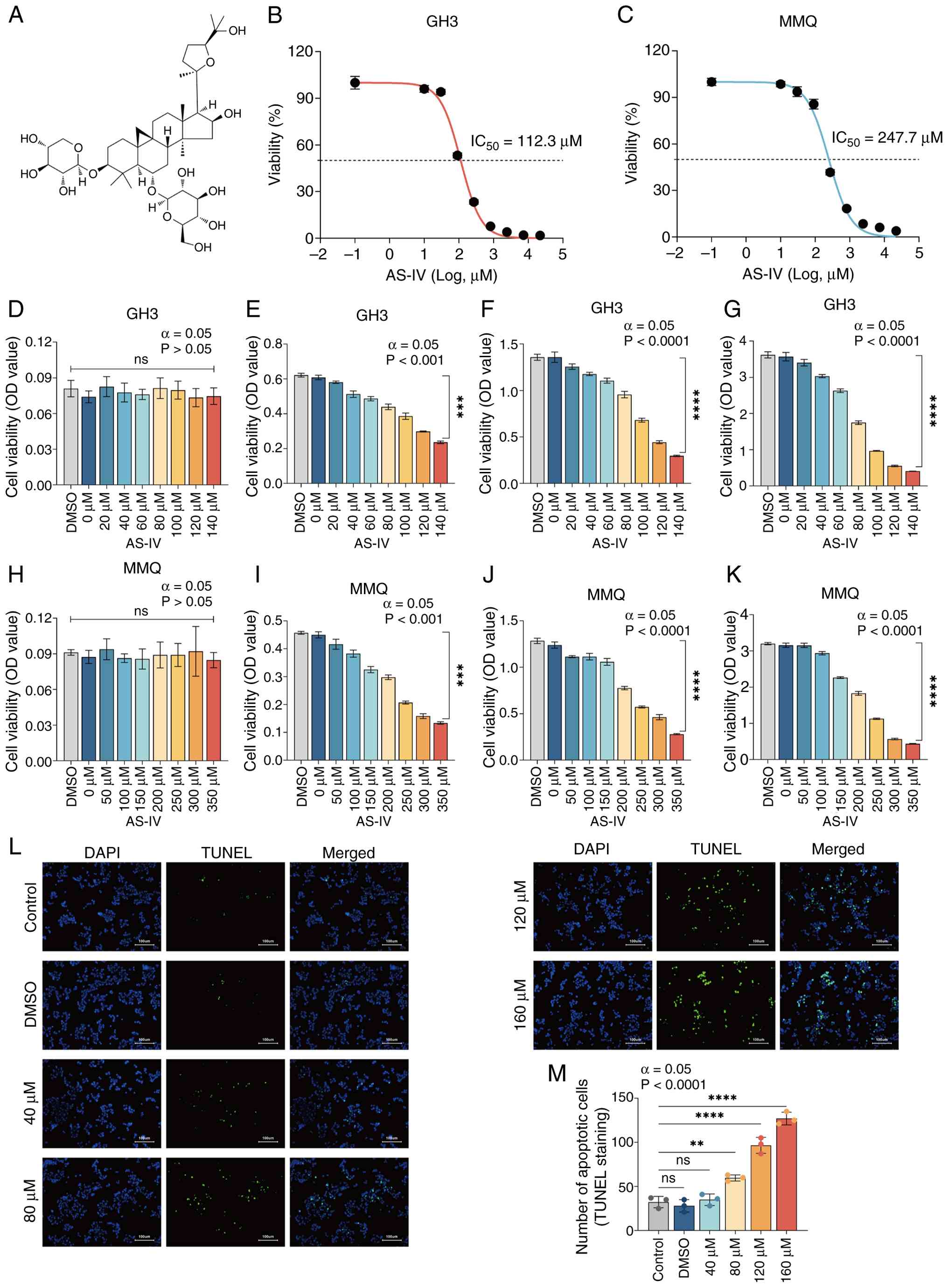
Figure 1

AS-IV inhibits the proliferation and
promotes the apoptosis of GH3/MMQ cells in a concentration- and
time-dependent manner. (A) Chemical structure of AS-IV.
IC50 of AS-IV in (B) GH3 and (C) MMQ cells following 48
h treatment. Viability of the GH3 cells treated with 0-140
μM AS-IV at (D) 0, (E) 24, (F) 48 and (G) 72 h. Viability of
MMQ-treated cells treated with 0-350 μM AS-IV at (H) 0, (I)
24, (J) 48 and (K) 72 h. (L) TUNEL assay was used to assess the
apoptotic effect of AS-IV on GH3. (M) Number of apoptotic cells in
each group. ****P<0.0001, ***P<0.001,
**P<0.01 vs. control. ns, not significant; AS-IV,
astragaloside IV; IC50, half-maximal inhibitory
concentration; OD, optical density.

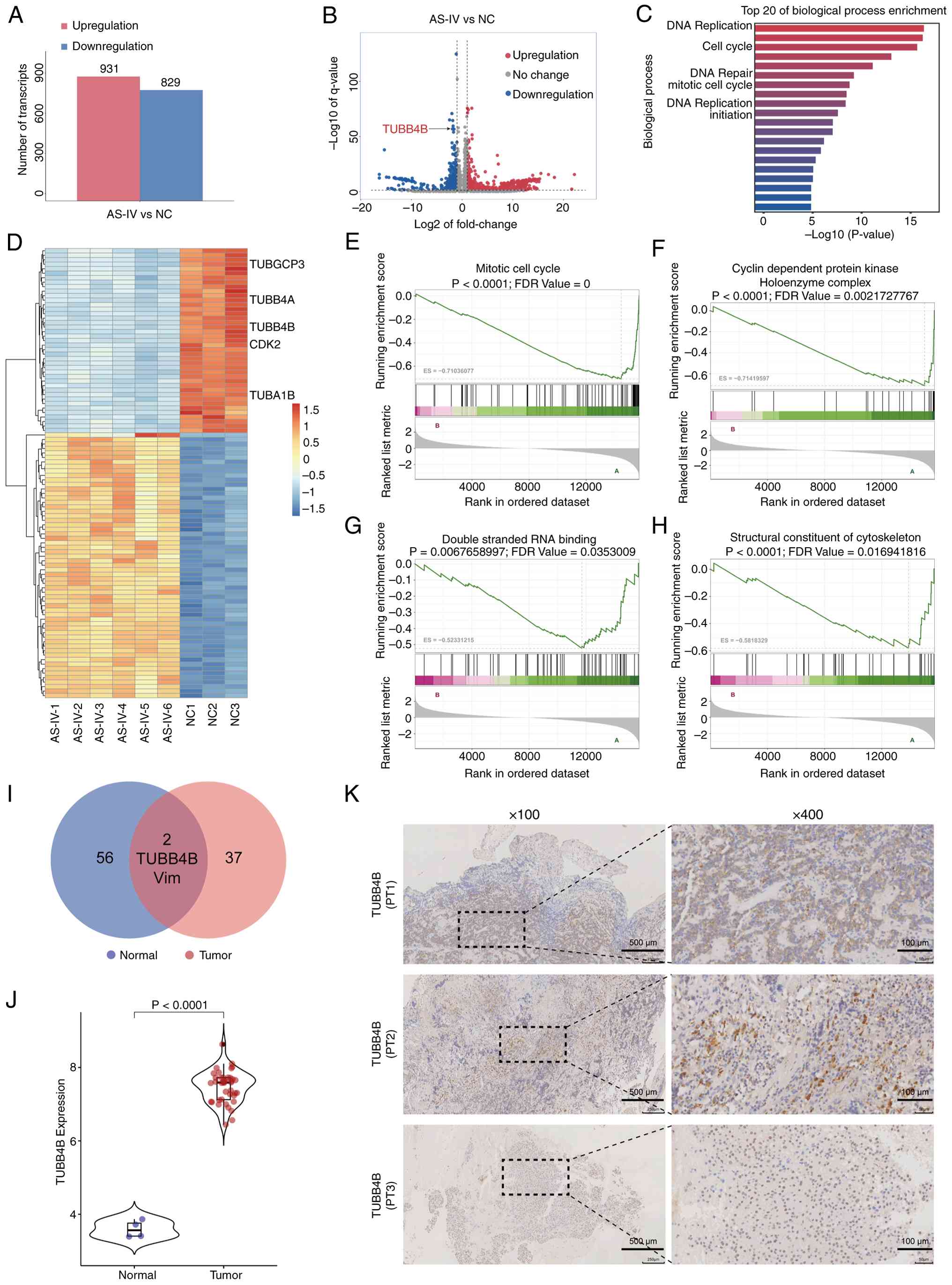
Figure 2

Transcriptomic sequencing reveals
that the TUBB4B gene is significantly downregulated in GH3 cells
treated with AS-IV and TUBB4B is highly expressed in pituitary
tumors. (A) Number of DEGs between the AS-IV and NC group. (B)
Volcano plot showing the distribution of DEGs. (C) Gene Ontology
enrichment analysis for the biological processes. (D) Heatmap of
the expression of significant DEGs. Gene set enrichment analysis
demonstrated that downregulated DEGs were enriched in (E) 'mitotic
cell cycle', (F) 'cyclin-dependent protein kinase holoenzyme
complex', (G) 'double-stranded RNA binding' and (H) 'structural
constituent of cytoskeleton' (ES<-0.5; P<0.05; FDR<0.25).
(I) Venn diagram of genes enriched in 'double-stranded RNA binding'
and 'structural constituent of cytoskeleton' showing that the
TUBB4B gene is at the intersection. (J) Expression of TUBB4B in
normal human pituitary glands and pituitary tumors; TUBB4B was
highly expressed in pituitary tumors (data from GSE136781,
P<0.0001). (K) Immunohistochemical staining of TUBB4B in tissue
samples from PTs with pituitary neuroendocrine tumors. TUBB4B,
tubulin β4B class IVb; AS-IV, Astragaloside IV; DEG, differentially
expressed genes; NC, negative control; ES, enrichment score; FDR,
false discovery rate; PT, pituitary tumor; Vim, vimentin.

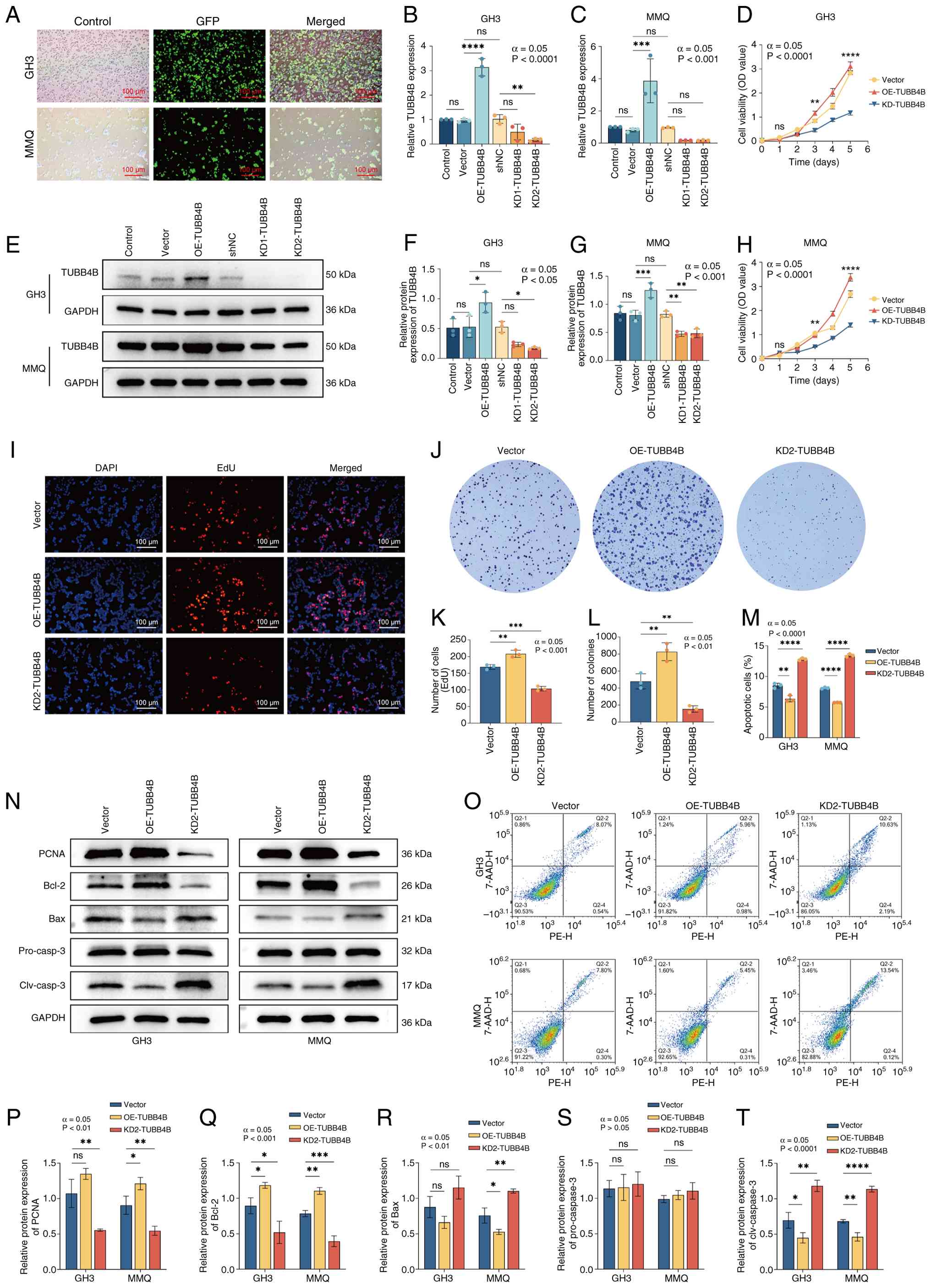
Figure 3

TUBB4B promotes the proliferation and
inhibits the apoptosis of pituitary tumor cells. (A) Fluorescence
images of the GH3/MMQ cells transfected with lentivirus. Reverse
transcription-quantitative PCR was used to assess expression
efficiency of TUBB4B in lentivirus-transfected (B) GH3 and (C) MMQ
cell lines. (D) Cell Counting Kit-8 assay was used to assess the
viability of GH3 cells. (E) Western blotting was used to assess
expression efficiency of TUBB4B in lentivirus-transfected (F) GH3
and (G) MMQ cell lines. (H) Cell Counting Kit-8 assay was used to
assess the viability of MMQ cells. (I) EdU staining was used to
assess the effect of TUBB4B on the proliferation of GH3 cells. (J)
Colony formation of GH3 cells. (K) EdU-positive cells. (L) Number
of colonies. (M) Number of apoptotic GH3/MMQ cells. (N) Western
blot bands (O) Flow cytometry. Western blotting was used to assess
protein expression of (P) PCNA, (Q) Bcl-2, (R) Bax, (S)
pro-caspase-3 and (T) clv caspase-3 in GH3 and MMQ cell lines.
****P<0.0001, ***P<0.001,
**P<0.01, *P<0.05 vs. vector. TUBB4B,
tubulin β4B class IVb; OE, overexpression; shNC, short hairpin RNA
negative control; KD, knockdown; OD, optical density; clv, cleaved;
ns, not significant.

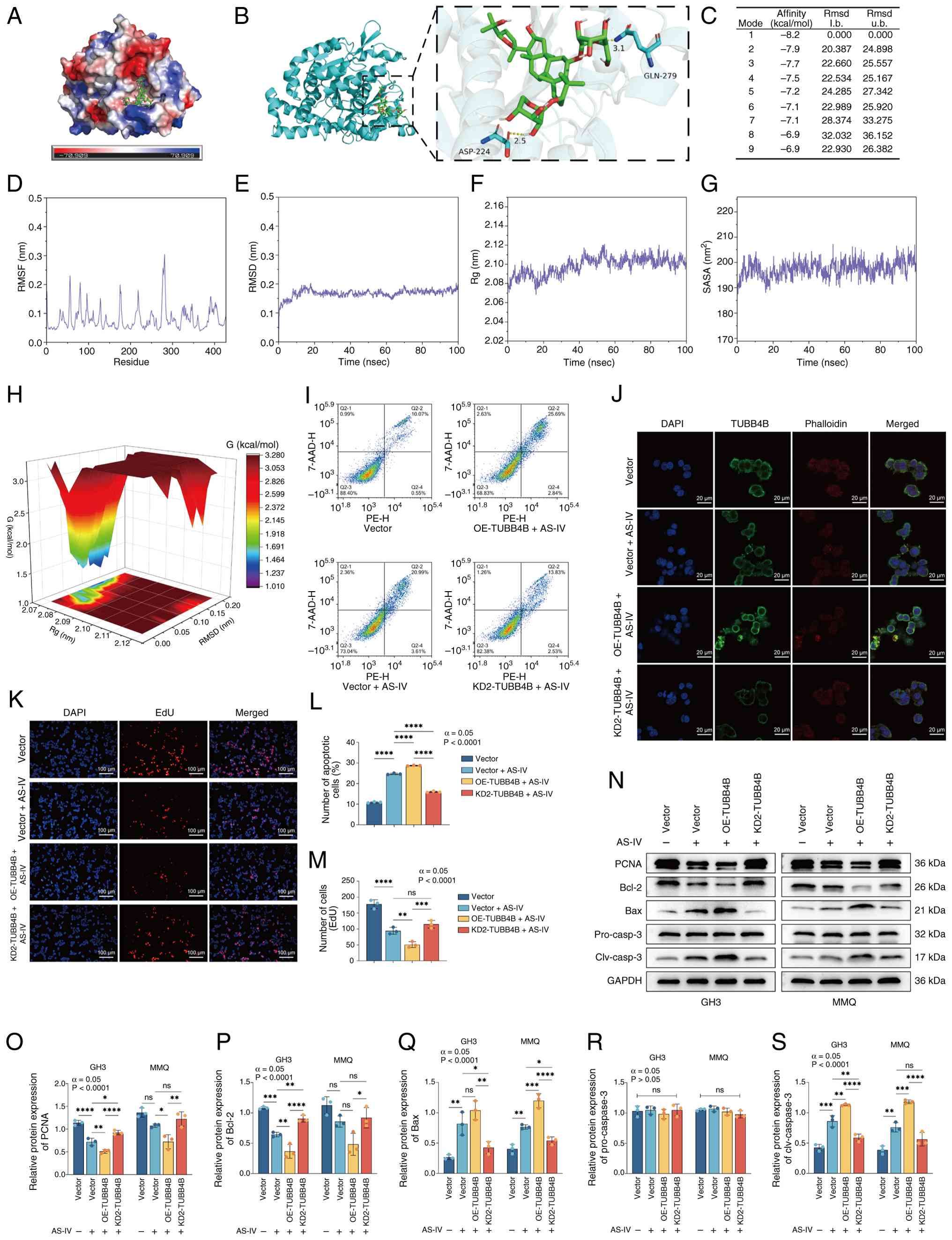
Figure 4

AS-IV exerts an inhibitory effect on
pituitary tumors by targeting and binding TUBB4B. (A) Surface
electrostatic potential of the TUBB4B protein. (B) Molecular
docking between AS-IV (green) and TUBB4B (blue). Yellow dashed
lines represent hydrogen bonds. (C) Molecular docking binding
energies of AS-IV and TUBB4B in different spatial conformations.
(D) RMSF, (E) RMSD, (F) Rg and (G) SASA between TUBB4B protein
residues and the AS-IV solution in the experimental system. (H)
Free energy landscape showing that the conformation of the
AS-IV-TUBB4B complex is dominant and more stable when the Rg was
2.07-2.09 nm and the RMSD was 0.03-0.17 nm. (I) Flow cytometry was
used to assess apoptosis of GH3 cells. (J) Immunofluorescence of
GH3 cells following AS-IV treatment. (K) EdU staining was used to
assess proliferation of GH3 cells. (L) Proportion of apoptotic GH3
cells. (M) Number of EdU-positive cells. (N) Western blotting was
used to assess the protein expression of (O) PCNA, (P) Bcl-2, (Q)
Bax, (R) pro-caspase-3 and (S) cleaved-caspase-3 in the GH3/MMQ
cell lines. ****P<0.0001, ***P<0.001,
**P<0.01, *P<0.05. AS-IV, Astragaloside
IV; TUBB4B, tubulin beta 4B class IVb; RMSF, root mean square
fluctuation; RMSD, Root Mean Square Deviation; Rg, radius of
Gyration; SASA, Solvent-Accessible Surface Area; OE,
overexpression; KD, knockdown; l. b., lower bound; u. b., upper
bound; clv, cleaved; ns, not significant.

Figure 5

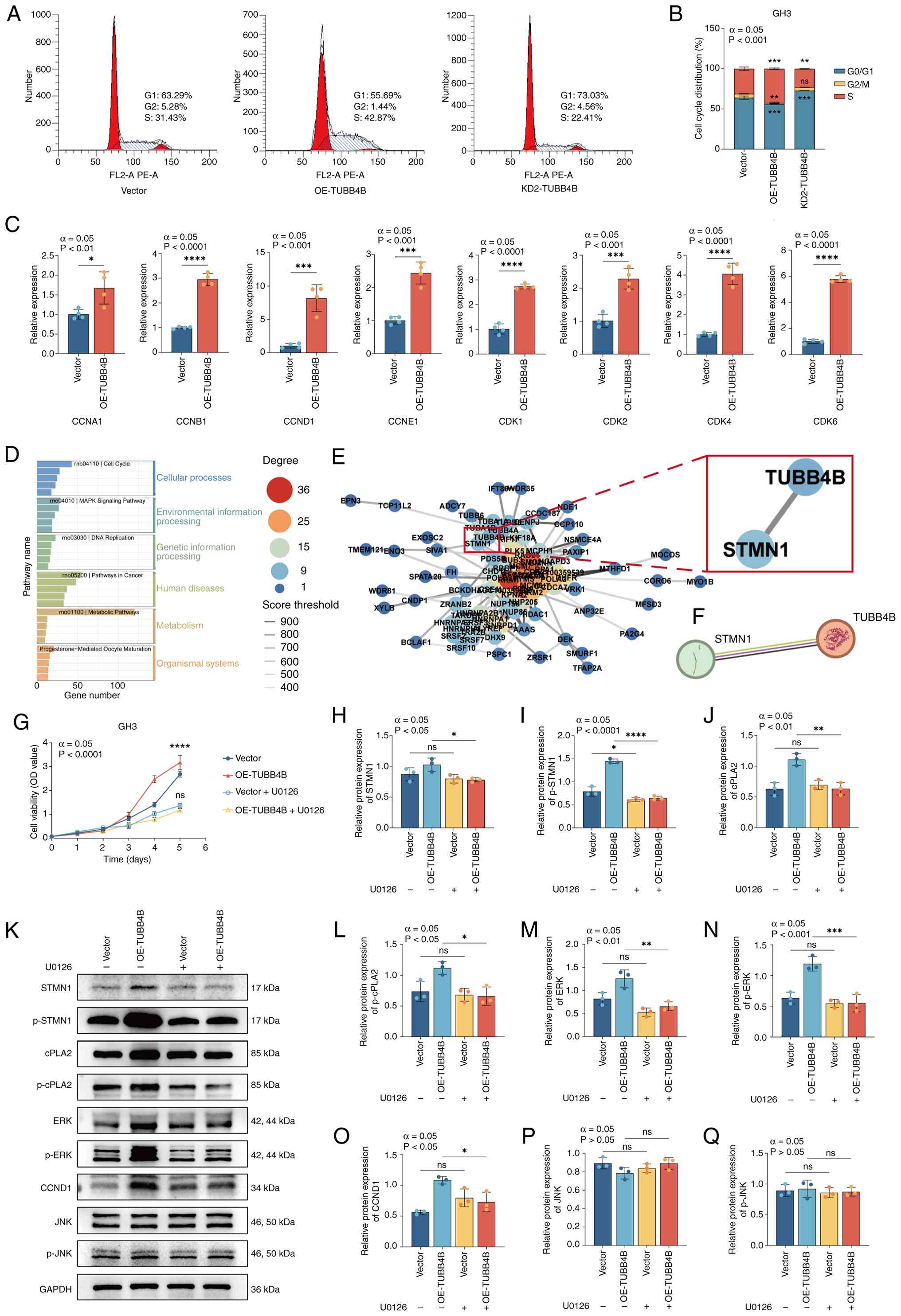
OE-TUBB4B upregulates STMN1 and
activates the ERK pathway. (A) Effect of TUBB4B on GH3 cell cycle
progression. (B) Cell cycle distribution. (C) Reverse
transcription-quantitative PCR was used to assess the effects of
OE-TUBB4B. (D) Transcriptomic sequencing showing Kyoto Encyclopedia
of Genes and Genomes pathway enrichment of differentially expressed
genes. (E) Transcriptomic sequencing showing the protein-protein
interaction network of proteins that interact with TUBB4B (red box
indicates key pathway proteins that interact with TUBB4B). (F)
Interaction diagram between the TUBB4B and STMN1 proteins from
STRING. (G) Cell Counting Kit-8 assay was used to assess the
viability of GH3 cells treated with U0126. In GH3 cell lines
treated with U0126, the protein expression levels of (H) STMN1, (I)
p-STMN1 (I), and cPLA2 (J) were assessed by western blotting (K),
and levels of p-cPLA2 (L), ERK (M), p-ERK (N), CCND1 (O), JNK (P),
and p-JNK (Q) were also assessed. ****P<0.0001,
***P<0.001, **P<0.01,
*P<0.05 vs. vector. OE, overexpression; TUBB4B,
tubulin beta 4B class IVb; STMN1, stathmin 1; p-, phosphorylated;
cPLA2, cytosolic phospholipase A2; CCND1, cyclin D1; KD, knockdown;
OD, optical density; ns, not significant.

Figure 6

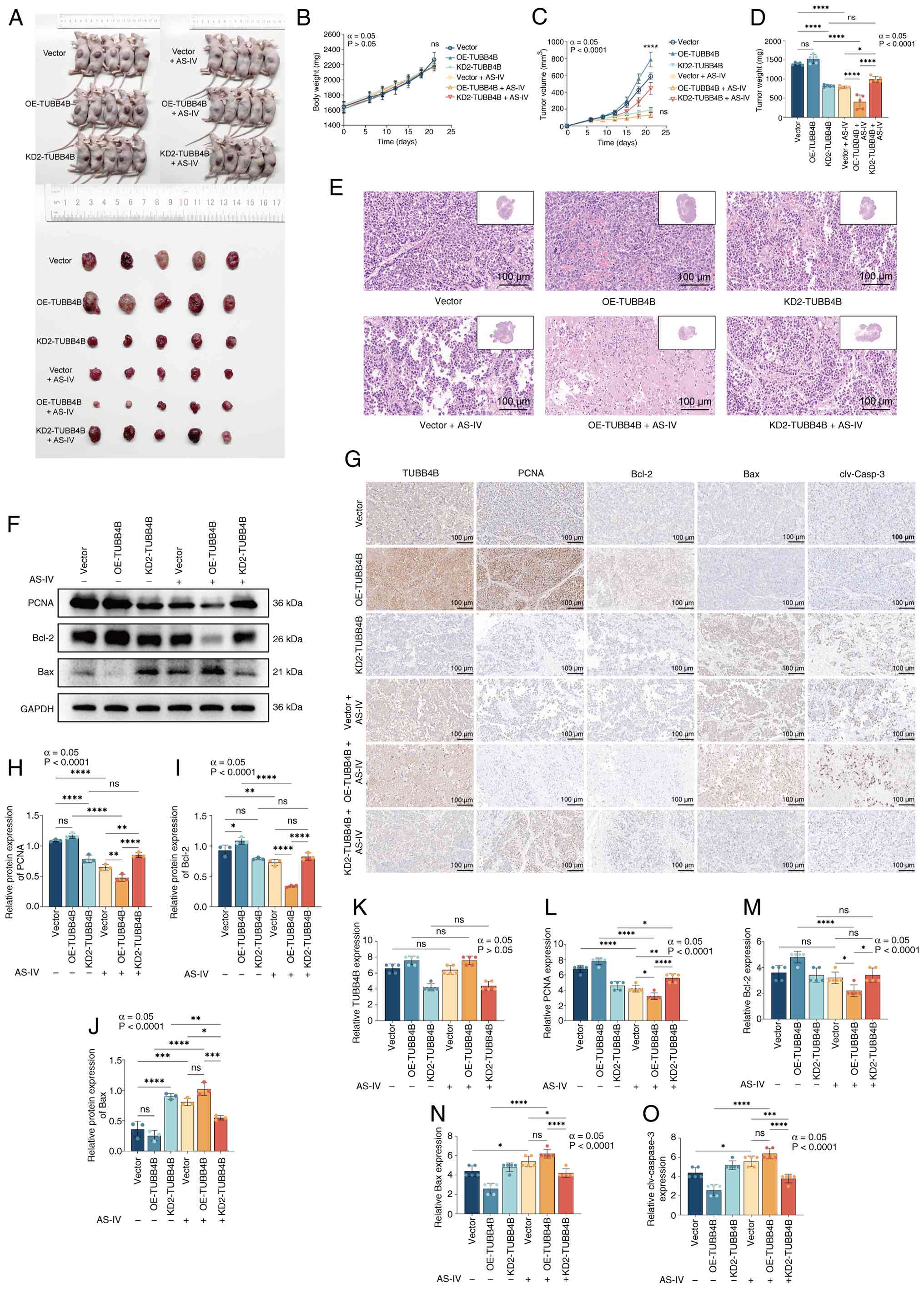
AS-IV inhibits proliferation and
promotes apoptosis of xenograft tumors in animals by targeting of
TUBB4B. (A) Xenograft tumors in nude mice. (B) Body weight and (C)
tumor volume growth curve of the nude mice. (D) Tumor weight. (E)
Representative hematoxylin and eosin staining images of tumors
(inset: 10X magnification). (F) Western blotting was used to assess
protein expression. (G) Representative IHC staining images of
TUBB4B, PCNA, Bcl-2, Bax and cleaved-caspase-3 proteins. Expression
levels of (H) PCNA, (I) Bcl-2 and (J) Bax. IHC staining scores for
(K) TUBB4B, (L) PCNA, (M) Bcl-2, (N) Bax and (O) clv-caspase-3
(Allred scoring system was used). ****P<0.0001,
***P<0.001, **P<0.01,
*P<0.05. AS-IV, astragaloside IV; TUBB4B, tubulin β4B
class IVb; IHC, immunohistochemistry; OE, overexpression; KD,
knockdown; ns, not significant; clv, cleaved.

Figure 7

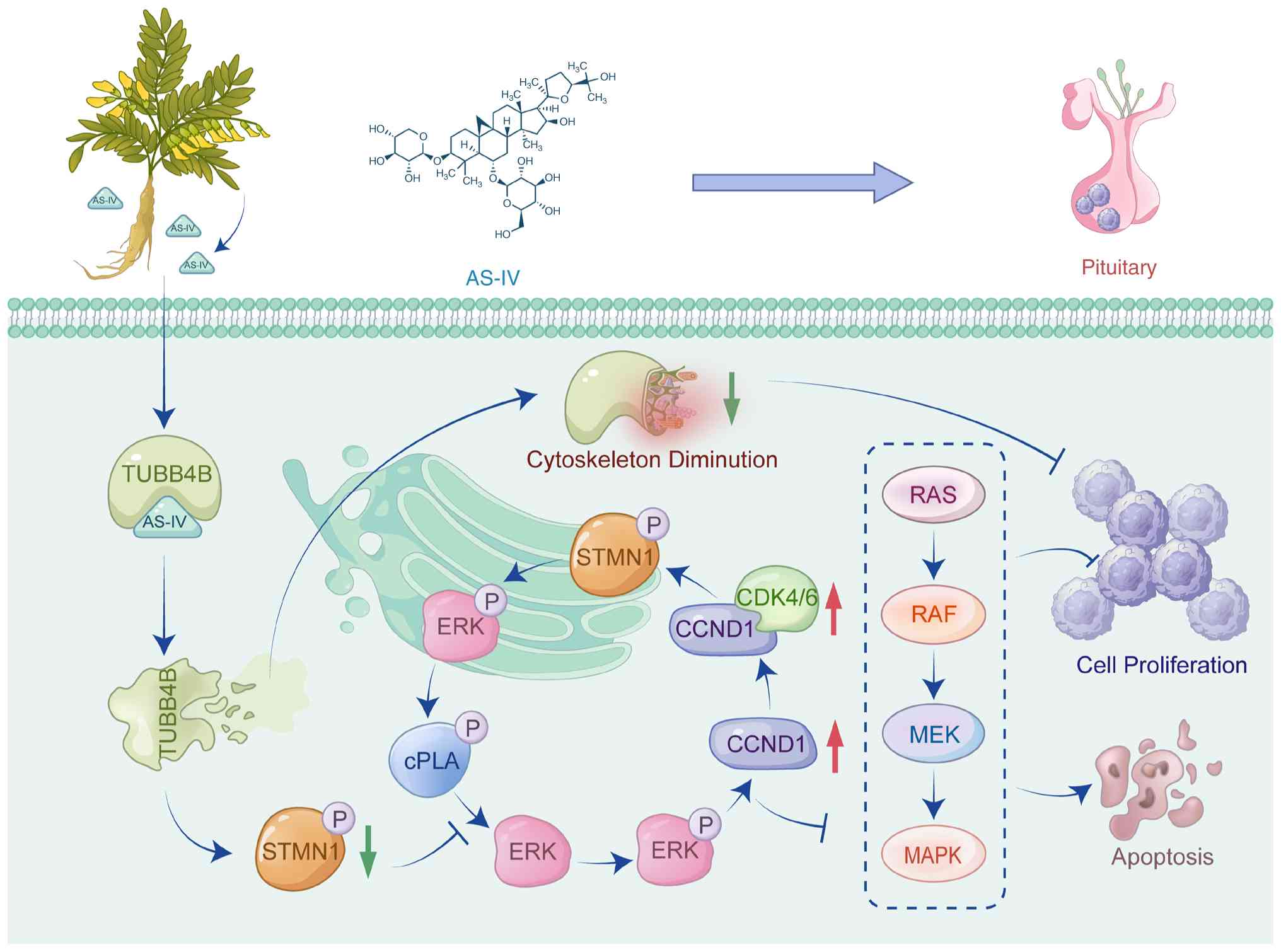
Mechanism by which AS-IV regulates
proliferation and apoptosis in pituitary tumors by targeting
TUBB4B. AS-IV is chemically purified from the Chinese herbal
medicine Astragalus membranaceus. AS-IV interacts with
pituitary tumor cells by specifically binding TUBB4B, resulting in
the formation of a TUBB4B-AS-IV complex. This complex formation
decreases cytoskeletal stability while suppressing the expression
of the downstream pathway protein STMN1 and its phosphorylation.
Additionally, it inhibits the activation of the positive feedback
loop of the ERK pathway, suppressing pituitary tumor proliferation
and promoting apoptosis. AS-IV, astragaloside IV; TUBB4B, tubulin
beta 4B class IVb; cPLA, cytosolic phospholipase A; STMN1, stathmin
1; CCN, cyclin.
View References

1 

Dai C, Kang J, Liu X, Yao Y, Wang H and Wang R: How to classify and define pituitary tumors: Recent advances and current controversies. Front Endocrinol (Lausanne). 12:6046442021. View Article : Google Scholar : PubMed/NCBI

2 

Kong F, Cheng W and Zhan Q: Clinical study on the selection of endoscopes and microscopes for transsphenoidal surgery of non-aggressive pituitary macroadenoma and microadenoma and the influencing factors of hyposmia after endoscopic transsphenoidal surgery. Front Neurol. 15:13210992024. View Article : Google Scholar : PubMed/NCBI

3 

Raverot G, Ilie MD, Lasolle H, Amodru V, Trouillas J, Castinetti F and Brue T: Aggressive pituitary tumours and pituitary carcinomas. Nat Rev Endocrinol. 17:671–684. 2021. View Article : Google Scholar : PubMed/NCBI

4 

Burman P, Casar-Borota O, Perez-Rivas LG and Dekkers OM: Aggressive pituitary tumors and pituitary carcinomas: From pathology to treatment. J Clin Endocrinol Metab. 108:1585–1601. 2023. View Article : Google Scholar : PubMed/NCBI

5 

Raverot G and Ilie MD: Immunotherapy in pituitary carcinomas and aggressive pituitary tumors. Best Pract Res Clin Endocrinol Metab. 36:1017122022. View Article : Google Scholar : PubMed/NCBI

6 

Liang Y, Chen B, Liang D, Quan X, Gu R, Meng Z, Gan H, Wu Z, Sun Y, Liu S and Dou G: Pharmacological effects of astragaloside IV: A review. Molecules. 28:61182023. View Article : Google Scholar : PubMed/NCBI

7 

Xia D, Li W, Tang C and Jiang J: Astragaloside IV, as a potential anticancer agent. Front Pharmacol. 14:10655052023. View Article : Google Scholar : PubMed/NCBI

8 

Li L, Li G, Chen M and Cai R: Astragaloside IV enhances the sensibility of lung adenocarcinoma cells to bevacizumab by inhibiting autophagy. Drug Dev Res. 83:461–469. 2021. View Article : Google Scholar : PubMed/NCBI

9 

Zhu Y and Lu F: Astragaloside IV inhibits cell viability and glycolysis of hepatocellular carcinoma by regulating KAT2A-mediated succinylation of PGAM1. BMC Cancer. 24:6822024. View Article : Google Scholar : PubMed/NCBI

10 

Yu Y, Hao J, Wang L, Zheng X, Xie C, Liu H, Wu J, Qiao S and Shi J: Astragaloside IV antagonizes the malignant progression of breast cancer induced by macrophage M2 polarization through the TGF-β-regulated Akt/Foxo1 pathway. Pathol Res Pract. 249:1547662023. View Article : Google Scholar

11 

Dharmapal D, Jyothy A, Mohan A, Balagopal PG, George NA, Sebastian P, Maliekal TT and Sengupta S: β-Tubulin isotype, TUBB4B, regulates the maintenance of cancer stem cells. Front Oncol. 11:7880242021. View Article : Google Scholar

12 

Feng M, Wang K, Fu S, Wei H, Mu X, Li L and Zhang S: Tubulin TUBB4B Is involved in spermatogonia proliferation and cell cycle processes. Genes (Basel). 13:10822022. View Article : Google Scholar : PubMed/NCBI

13 

Yang Y, Boza-Serrano A, Dunning CJR, Clausen BH, Lambertsen KL and Deierborg T: Inflammation leads to distinct populations of extracellular vesicles from microglia. J Neuroinflammation. 15:1682018. View Article : Google Scholar : PubMed/NCBI

14 

McFadden JR, Tolete CDP, Huang Y, Macnamara E, Sept D, Nesterova G, Gahl WA, Sackett DL and Malicdan MCV: Clinical, genetic, and structural characterization of a novel TUBB4B tubulinopathy. Mol Genet Metab Rep. 36:1009902023.PubMed/NCBI

15 

Hu H, Zhang Y, Zhai H, Dong J, Zuo L, Guo X and Wang C: P300 reduces TUBB4B expression to facilitate the biological process of migration and invasion of non-small cell lung cancer cells. Tissue Cell. 88:1023862024. View Article : Google Scholar : PubMed/NCBI

16 

Zhang W, Zhang P, Pu Y, Chen Z, Su G, Deng Y, Zhang Y, Ji Y, Huang Z, Zhou Q, et al: DNA 5-hydroxymethylcytosine landscape and transcriptional profile highlight the TUBB4B-mediated Th17/Th1/Treg imbalance in Behçet's uveitis. Invest Ophthalmol Vis Sci. 66:282025. View Article : Google Scholar

17 

Sobierajska K, Ciszewski WM, Wawro ME, Wieczorek-Szukała K, Boncela J, Papiewska-Pajak I, Niewiarowska J and Kowalska MA: TUBB4B downregulation is critical for increasing migration of metastatic colon cancer cells. Cells. 8:8102019. View Article : Google Scholar : PubMed/NCBI

18 

Filipovich E, Gorodkova E, Shcherbakova A, Asaad W, Popov S, Melnichenko G, Mokrysheva N and Utkina M: The role of cell cycle-related genes in the tumorigenesis of adrenal and thyroid neuroendocrine tumors. Heliyon. 11:e414572024. View Article : Google Scholar

19 

Liu B, Wang J, Wang G, Jiang W, Li Z, Shi Y, Zhang J, Pei Q, Huang G, Wang L, et al: Hepatocyte-derived exosomes deliver H2AFJ to hepatic stellate cells and promote liver fibrosis via the MAPK/STMN1 axis activation. Int Immunopharmacol. 115:096052023. View Article : Google Scholar

20 

Wang C, Zhang H, Xu F, Niu Y, Wu Y, Wang X, Peng Y, Sun J, Liang L and Xu P: Substituted 3-benzylcoumarins as allosteric MEK1 inhibitors: Design, synthesis and biological evaluation as antiviral agents. Molecules. 18:6057–6091. 2013. View Article : Google Scholar : PubMed/NCBI

21 

Livak KJ and Schmittgen TD: Analysis of relative gene expression data using real-time quantitative PCR and the 2(-Delta Delta C(T)) method. Methods. 25:402–408. 2001. View Article : Google Scholar

22 

Elking DM: A non-periodic particle mesh Ewald method for radially symmetric kernels in free space. Comput Phys Commun. 312:1097392025. View Article : Google Scholar

23 

Bussi G, Donadio D and Parrinello M: Canonical sampling through velocity rescaling. J Chem Phys. 126:0141012007. View Article : Google Scholar : PubMed/NCBI

24 

Hosseini AN and van der Spoel D: Martini on the rocks: Can a coarse-grained force field model crystals? J Phys Chem Lett. 15:1079–1088. 2024. View Article : Google Scholar : PubMed/NCBI

25 

Zocchi R, Compagnucci C, Bertini E and Sferra A: Deciphering the tubulin language: Molecular determinants and readout mechanisms of the tubulin code in neurons. Int J Mol Sci. 24:27812023. View Article : Google Scholar : PubMed/NCBI

26 

Liu X, Chu W, Shang S, Ma L, Jiang C, Ding Y, Wang J, Zhang S and Shao B: Preliminary study on the anti-apoptotic mechanism of astragaloside IV on radiation-induced brain cells. Int J Immunopathol Pharmacol. 34:20587384209545942020. View Article : Google Scholar : PubMed/NCBI

27 

Hu T, Fei Z and Wei N: Chemosensitive effects of astragaloside IV in osteosarcoma cells via induction of apoptosis and regulation of caspase-dependent Fas/FasL signaling. Pharmacol Rep. 69:1159–1164. 2017. View Article : Google Scholar : PubMed/NCBI

28 

Liu J, Wang D, Ren N, Zhang L and Wang T: Metabolites of Astragalus membranaceus and their pro-apoptotic and cytotoxic activities: Insights into targeted metabolic pathways. Front Pharmacol. 16:16479582025. View Article : Google Scholar : PubMed/NCBI

29 

Wu M, Li K, Wu J, Zhang Q, Ma X, Dai W, Gao H, Ding X, Wang W and Xiao W: Astragaloside IV: A multipotent phytochemical for treating fibrotic diseases (Review). Int J Mol Med. 57:502026.

30 

Xu L and Li Y, He Z, Chen W and Li Y: Astragaloside IV ameliorates experimental autoimmune myasthenia gravis through multi-target regulation of immune-microbiota-metabolism network and ferroptosis inhibition. Pathol Res Pract. Feb 24–2026.Epub ahead of print. View Article : Google Scholar

31 

Sanzhaeva U, Wonsettler NR, Rhodes SB and Ramamurthy V: TUBB4B is essential for the expansion of differentiating spermatogonia. Sci Rep. 14:208892024. View Article : Google Scholar : PubMed/NCBI

32 

Fang Z, Meng Q, Xu J, Wang W, Zhang B, Liu J, Liang C, Hua J, Zhao Y, Yu X and Shi S: Signaling pathways in cancer-associated fibroblasts: Recent advances and future perspectives. Cancer Commun (Lond). 43:3–41. 2023. View Article : Google Scholar :

33 

Guo YJ, Pan WW, Liu SB, Shen ZF, Xu Y and Hu LL: ERK/MAPK signalling pathway and tumorigenesis. Exp Ther Med. 19:1997–2007. 2020.PubMed/NCBI

34 

Zhang X, Ji J, Yang Y, Zhang J and Shen L: Stathmin1 increases radioresistance by enhancing autophagy in non-small-cell lung cancer cells. Onco Targets Ther. 9:2565–2574. 2016.PubMed/NCBI

35 

Wang S, Su T, Tong H, Zhou D, Ma F, Ding J, Hao Y, Shi W and Quan Z: Circβ-catenin promotes tumor growth and Warburg effect of gallbladder cancer by regulating STMN1 expression. Cell Death Discov. 7:2332021. View Article : Google Scholar

36 

Li J, Kong F, Wu K, Song K, He J and Sun W: miR-193b directly targets STMN1 and uPA genes and suppresses tumor growth and metastasis in pancreatic cancer. Mol Med Rep. 10:2613–2620. 2014. View Article : Google Scholar : PubMed/NCBI

37 

Zeng L, Lyu X, Yuan J, Chen Y, Wen H, Zhang L, Shi J, Liu B, Li W and Yang S: STMN1 promotes tumor metastasis in non-small cell lung cancer through microtubule-dependent and nonmicrotubule-dependent pathways. Int J Biol Sci. 20:1509–1527. 2024. View Article : Google Scholar : PubMed/NCBI

38 

Li M and Zhou Q: Prognostic value of STMN1 expression in non-small cell lung cancer: A Meta-analysis. Zhongguo Fei Ai Za Zhi. 27:826–830. 2024.In Chinese.

39 

Zhang Y, Wei S, Zhang Q, Zhang Y and Sun C: Paris saponin VII inhibits triple-negative breast cancer by targeting the MEK/ERK/STMN1 signaling axis. Phytomedicine. 130:1557462024. View Article : Google Scholar : PubMed/NCBI

40 

Lovrić J, Dammeier S, Kieser A, Mischak H and Kolch W: Activated raf induces the hyperphosphorylation of stathmin and the reorganization of the microtubule network. J Biol Chem. 273:22848–22855. 1998. View Article : Google Scholar

41 

Ye Y, Liu L, Feng Z, Liu Y, Miao J, Wei X, Li H, Yang J, Cao X and Zhao J: The ERK-cPLA2-ACSL4 axis mediating M2 macrophages ferroptosis impedes mucosal healing in ulcerative colitis. Free Radic Biol Med. 214:219–235. 2024. View Article : Google Scholar : PubMed/NCBI

42 

Wang X, Li J, Jiang C, Zhang C, Yuan L, Zhang T, Liu Y, Ma S, Kang P, Li D, et al: Splicing factor FUS facilitates the progression of PIT1-lineage PitNETs by upregulating MDM2. Theranostics. 16:3032–3049. 2026. View Article : Google Scholar : PubMed/NCBI

43 

Mitsutani M, Matsushita M, Yokoyama M, Morita A, Hano H, Fujikawa T, Tagami T and Moriyama K: Growth hormone directly stimulates GATA2 expression. Growth Horm IGF Res. 74:1015722024. View Article : Google Scholar : PubMed/NCBI

44 

Zhou W, Zheng S, Ye L, Su T, Xie J, Jiang L, Jiang Y, Zhong X, Wu L, Zhou W and Wang W: The USP8 mutational status in combination with postsurgical cortisol levels for predicting recurrence of cushing disease. J Clin Endocrinol Metab. 111:e156–e165. 2025. View Article : Google Scholar : PubMed/NCBI

45 

Kaparounaki C, Ilie MD, De Alcubierre D, Anagnostis P, Haidich AB, Isidori AM, Dekkers OM, Goulis DG and Raverot G: Medical treatment in acromegaly: A network meta-analysis. Eur J Endocrinol. 193:S83–S94. 2025. View Article : Google Scholar : PubMed/NCBI

46 

He D, Wang Q, Sheng Z and Li G: Preoperative medical therapy for acromegaly: Current knowledge and clinical significance. Front Endocrinol (Lausanne). 16:16360472026. View Article : Google Scholar : PubMed/NCBI

47 

Kong P and Tang X, Liu F and Tang X: Astragaloside IV regulates circ_0001615 and miR-873-5p/LASP1 axis to suppress colorectal cancer cell progression. Chem Biol Drug Des. 103:e144232024. View Article : Google Scholar : PubMed/NCBI

48 

Qiu T, Li D, Liu Y, Ren H, Yang X and Luo W: Astragaloside IV inhibits the proliferation of human uterine leiomyomas by targeting IDO1. Cancers (Basel). 14:44242022. View Article : Google Scholar : PubMed/NCBI

49 

Zhang X, Zhang F, Li Y, Fan N, Zhao K, Zhang A, Kang J, Lin Y, Xue X and Jiang X: Blockade of PI3K/AKT signaling pathway by astragaloside IV attenuates ulcerative colitis via improving the intestinal epithelial barrier. J Transl Med. 22:4062024. View Article : Google Scholar : PubMed/NCBI

50 

Li M, Niu Y, Tian L, Zhang T, Zhou S, Wang L, Sun J, Wumiti T, Chen Z, Zhou Q, et al: Astragaloside IV alleviates macrophage senescence and d-galactose-induced bone loss in mice through STING/NF-κB pathway. Int Immunopharmacol. 129:1115882024. View Article : Google Scholar

51 

Li L, Wang Q, He Y, Sun L, Yang Y and Pang X: Astragaloside IV suppresses migration and invasion of TGF-β1-induced human hepatoma HuH-7 cells by regulating Nrf2/HO-1 and TGF-β1/Smad3 pathways. Naunyn Schmiedebergs Arch Pharmacol. 395:397–405. 2022. View Article : Google Scholar : PubMed/NCBI

52 

Yu Z, Gao M, Wu X, Li J, Liu B, Wang R, Tan J, Yu X and Geng L: Potential mechanisms and effects of AFB1-induced asthma: A comprehensive analysis based on network toxicology and molecular docking. PLoS One. 21:e03411722026. View Article : Google Scholar : PubMed/NCBI

53 

Zou F, Du Q, Zhang Y, Zuo L and Sun Z: Pseudo-allergic reactions induced by Chinese medicine injections: A review. Chin Med. 18:1492023. View Article : Google Scholar : PubMed/NCBI

Related Articles

  • Abstract
  • View
  • Download
  • Twitter
Copy and paste a formatted citation
Spandidos Publications style
Li J, Qu Y, Zhang W, Yang Z, Zeng Y, Xu J, Xie K and Liu Q: Astragaloside IV targets TUBB4B to inhibit proliferation and promote apoptosis of pituitary tumor cells via the STMN1/ERK pathway. Int J Mol Med 57: 151, 2026.
APA
Li, J., Qu, Y., Zhang, W., Yang, Z., Zeng, Y., Xu, J. ... Liu, Q. (2026). Astragaloside IV targets TUBB4B to inhibit proliferation and promote apoptosis of pituitary tumor cells via the STMN1/ERK pathway. International Journal of Molecular Medicine, 57, 151. https://doi.org/10.3892/ijmm.2026.5822
MLA
Li, J., Qu, Y., Zhang, W., Yang, Z., Zeng, Y., Xu, J., Xie, K., Liu, Q."Astragaloside IV targets TUBB4B to inhibit proliferation and promote apoptosis of pituitary tumor cells via the STMN1/ERK pathway". International Journal of Molecular Medicine 57.6 (2026): 151.
Chicago
Li, J., Qu, Y., Zhang, W., Yang, Z., Zeng, Y., Xu, J., Xie, K., Liu, Q."Astragaloside IV targets TUBB4B to inhibit proliferation and promote apoptosis of pituitary tumor cells via the STMN1/ERK pathway". International Journal of Molecular Medicine 57, no. 6 (2026): 151. https://doi.org/10.3892/ijmm.2026.5822
Copy and paste a formatted citation
x
Spandidos Publications style
Li J, Qu Y, Zhang W, Yang Z, Zeng Y, Xu J, Xie K and Liu Q: Astragaloside IV targets TUBB4B to inhibit proliferation and promote apoptosis of pituitary tumor cells via the STMN1/ERK pathway. Int J Mol Med 57: 151, 2026.
APA
Li, J., Qu, Y., Zhang, W., Yang, Z., Zeng, Y., Xu, J. ... Liu, Q. (2026). Astragaloside IV targets TUBB4B to inhibit proliferation and promote apoptosis of pituitary tumor cells via the STMN1/ERK pathway. International Journal of Molecular Medicine, 57, 151. https://doi.org/10.3892/ijmm.2026.5822
MLA
Li, J., Qu, Y., Zhang, W., Yang, Z., Zeng, Y., Xu, J., Xie, K., Liu, Q."Astragaloside IV targets TUBB4B to inhibit proliferation and promote apoptosis of pituitary tumor cells via the STMN1/ERK pathway". International Journal of Molecular Medicine 57.6 (2026): 151.
Chicago
Li, J., Qu, Y., Zhang, W., Yang, Z., Zeng, Y., Xu, J., Xie, K., Liu, Q."Astragaloside IV targets TUBB4B to inhibit proliferation and promote apoptosis of pituitary tumor cells via the STMN1/ERK pathway". International Journal of Molecular Medicine 57, no. 6 (2026): 151. https://doi.org/10.3892/ijmm.2026.5822
Follow us
  • Twitter
  • LinkedIn
  • Facebook
About
  • Spandidos Publications
  • Careers
  • Cookie Policy
  • Privacy Policy
How can we help?
  • Help
  • Live Chat
  • Contact
  • Email to our Support Team