Spandidos Publications Logo
  • About
    • About Spandidos
    • Aims and Scopes
    • Abstracting and Indexing
    • Editorial Policies
    • Reprints and Permissions
    • Job Opportunities
    • Terms and Conditions
    • Contact
  • Journals
    • All Journals
    • Oncology Letters
      • Oncology Letters
      • Information for Authors
      • Editorial Policies
      • Editorial Board
      • Aims and Scope
      • Abstracting and Indexing
      • Bibliographic Information
      • Archive
    • International Journal of Oncology
      • International Journal of Oncology
      • Information for Authors
      • Editorial Policies
      • Editorial Board
      • Aims and Scope
      • Abstracting and Indexing
      • Bibliographic Information
      • Archive
    • Molecular and Clinical Oncology
      • Molecular and Clinical Oncology
      • Information for Authors
      • Editorial Policies
      • Editorial Board
      • Aims and Scope
      • Abstracting and Indexing
      • Bibliographic Information
      • Archive
    • Experimental and Therapeutic Medicine
      • Experimental and Therapeutic Medicine
      • Information for Authors
      • Editorial Policies
      • Editorial Board
      • Aims and Scope
      • Abstracting and Indexing
      • Bibliographic Information
      • Archive
    • International Journal of Molecular Medicine
      • International Journal of Molecular Medicine
      • Information for Authors
      • Editorial Policies
      • Editorial Board
      • Aims and Scope
      • Abstracting and Indexing
      • Bibliographic Information
      • Archive
    • Biomedical Reports
      • Biomedical Reports
      • Information for Authors
      • Editorial Policies
      • Editorial Board
      • Aims and Scope
      • Abstracting and Indexing
      • Bibliographic Information
      • Archive
    • Oncology Reports
      • Oncology Reports
      • Information for Authors
      • Editorial Policies
      • Editorial Board
      • Aims and Scope
      • Abstracting and Indexing
      • Bibliographic Information
      • Archive
    • Molecular Medicine Reports
      • Molecular Medicine Reports
      • Information for Authors
      • Editorial Policies
      • Editorial Board
      • Aims and Scope
      • Abstracting and Indexing
      • Bibliographic Information
      • Archive
    • World Academy of Sciences Journal
      • World Academy of Sciences Journal
      • Information for Authors
      • Editorial Policies
      • Editorial Board
      • Aims and Scope
      • Abstracting and Indexing
      • Bibliographic Information
      • Archive
    • International Journal of Functional Nutrition
      • International Journal of Functional Nutrition
      • Information for Authors
      • Editorial Policies
      • Editorial Board
      • Aims and Scope
      • Abstracting and Indexing
      • Bibliographic Information
      • Archive
    • International Journal of Epigenetics
      • International Journal of Epigenetics
      • Information for Authors
      • Editorial Policies
      • Editorial Board
      • Aims and Scope
      • Abstracting and Indexing
      • Bibliographic Information
      • Archive
    • Medicine International
      • Medicine International
      • Information for Authors
      • Editorial Policies
      • Editorial Board
      • Aims and Scope
      • Abstracting and Indexing
      • Bibliographic Information
      • Archive
  • Articles
  • Information
    • Information for Authors
    • Information for Reviewers
    • Information for Librarians
    • Information for Advertisers
    • Conferences
  • Language Editing
Spandidos Publications Logo
  • About
    • About Spandidos
    • Aims and Scopes
    • Abstracting and Indexing
    • Editorial Policies
    • Reprints and Permissions
    • Job Opportunities
    • Terms and Conditions
    • Contact
  • Journals
    • All Journals
    • Biomedical Reports
      • Information for Authors
      • Editorial Policies
      • Editorial Board
      • Aims and Scope
      • Abstracting and Indexing
      • Bibliographic Information
      • Archive
    • Experimental and Therapeutic Medicine
      • Information for Authors
      • Editorial Policies
      • Editorial Board
      • Aims and Scope
      • Abstracting and Indexing
      • Bibliographic Information
      • Archive
    • International Journal of Epigenetics
      • Information for Authors
      • Editorial Policies
      • Editorial Board
      • Aims and Scope
      • Abstracting and Indexing
      • Bibliographic Information
      • Archive
    • International Journal of Functional Nutrition
      • Information for Authors
      • Editorial Policies
      • Editorial Board
      • Aims and Scope
      • Abstracting and Indexing
      • Bibliographic Information
      • Archive
    • International Journal of Molecular Medicine
      • Information for Authors
      • Editorial Policies
      • Editorial Board
      • Aims and Scope
      • Abstracting and Indexing
      • Bibliographic Information
      • Archive
    • International Journal of Oncology
      • Information for Authors
      • Editorial Policies
      • Editorial Board
      • Aims and Scope
      • Abstracting and Indexing
      • Bibliographic Information
      • Archive
    • Medicine International
      • Information for Authors
      • Editorial Policies
      • Editorial Board
      • Aims and Scope
      • Abstracting and Indexing
      • Bibliographic Information
      • Archive
    • Molecular and Clinical Oncology
      • Information for Authors
      • Editorial Policies
      • Editorial Board
      • Aims and Scope
      • Abstracting and Indexing
      • Bibliographic Information
      • Archive
    • Molecular Medicine Reports
      • Information for Authors
      • Editorial Policies
      • Editorial Board
      • Aims and Scope
      • Abstracting and Indexing
      • Bibliographic Information
      • Archive
    • Oncology Letters
      • Information for Authors
      • Editorial Policies
      • Editorial Board
      • Aims and Scope
      • Abstracting and Indexing
      • Bibliographic Information
      • Archive
    • Oncology Reports
      • Information for Authors
      • Editorial Policies
      • Editorial Board
      • Aims and Scope
      • Abstracting and Indexing
      • Bibliographic Information
      • Archive
    • World Academy of Sciences Journal
      • Information for Authors
      • Editorial Policies
      • Editorial Board
      • Aims and Scope
      • Abstracting and Indexing
      • Bibliographic Information
      • Archive
  • Articles
  • Information
    • For Authors
    • For Reviewers
    • For Librarians
    • For Advertisers
    • Conferences
  • Language Editing
Login Register Submit
  • This site uses cookies
  • You can change your cookie settings at any time by following the instructions in our Cookie Policy. To find out more, you may read our Privacy Policy.

    I agree
Search articles by DOI, keyword, author or affiliation
Search
Advanced Search
presentation
International Journal of Molecular Medicine
Join Editorial Board Propose a Special Issue
Print ISSN: 1107-3756 Online ISSN: 1791-244X
Journal Cover
June-2026 Volume 57 Issue 6

Full Size Image

Sign up for eToc alerts
Recommend to Library

Journals

International Journal of Molecular Medicine

International Journal of Molecular Medicine

International Journal of Molecular Medicine is an international journal devoted to molecular mechanisms of human disease.

International Journal of Oncology

International Journal of Oncology

International Journal of Oncology is an international journal devoted to oncology research and cancer treatment.

Molecular Medicine Reports

Molecular Medicine Reports

Covers molecular medicine topics such as pharmacology, pathology, genetics, neuroscience, infectious diseases, molecular cardiology, and molecular surgery.

Oncology Reports

Oncology Reports

Oncology Reports is an international journal devoted to fundamental and applied research in Oncology.

Experimental and Therapeutic Medicine

Experimental and Therapeutic Medicine

Experimental and Therapeutic Medicine is an international journal devoted to laboratory and clinical medicine.

Oncology Letters

Oncology Letters

Oncology Letters is an international journal devoted to Experimental and Clinical Oncology.

Biomedical Reports

Biomedical Reports

Explores a wide range of biological and medical fields, including pharmacology, genetics, microbiology, neuroscience, and molecular cardiology.

Molecular and Clinical Oncology

Molecular and Clinical Oncology

International journal addressing all aspects of oncology research, from tumorigenesis and oncogenes to chemotherapy and metastasis.

World Academy of Sciences Journal

World Academy of Sciences Journal

Multidisciplinary open-access journal spanning biochemistry, genetics, neuroscience, environmental health, and synthetic biology.

International Journal of Functional Nutrition

International Journal of Functional Nutrition

Open-access journal combining biochemistry, pharmacology, immunology, and genetics to advance health through functional nutrition.

International Journal of Epigenetics

International Journal of Epigenetics

Publishes open-access research on using epigenetics to advance understanding and treatment of human disease.

Medicine International

Medicine International

An International Open Access Journal Devoted to General Medicine.

Journal Cover
June-2026 Volume 57 Issue 6

Full Size Image

Sign up for eToc alerts
Recommend to Library

  • Article
  • Citations
    • Cite This Article
    • Download Citation
    • Create Citation Alert
    • Remove Citation Alert
    • Cited By
  • Similar Articles
    • Related Articles (in Spandidos Publications)
    • Similar Articles (Google Scholar)
    • Similar Articles (PubMed)
  • Download PDF
  • Download XML
  • View XML
Article Open Access

Triptolide exerts antiviral effects and alleviates influenza A‑induced pneumonia by inhibiting the overactivation of absent in melanoma 2 signaling in immune cells

  • Authors:
    • Yeyang Chen
    • Hua Wu
    • Xiangjian Wu
    • Likun Che
    • Xiaoyan Fu
    • Ruihan Qi
    • Dan Jia
    • Minfang Li
    • Wei Xie
    • Wenxiang Zhu
  • View Affiliations / Copyright

    Affiliations: School of Chinese Medicine, Hong Kong Baptist University, Hong Kong, SAR 999077, P.R. China, School of Life Sciences, Beijing University of Chinese Medicine, Beijing 100029; P.R. China, The Fourth Clinical Medical College, Guangzhou University of Chinese Medicine/Shenzhen Hospital of Traditional Chinese Medicine, Shenzhen, Guangdong 518033, P.R. China
    Copyright: © Chen et al. This is an open access article distributed under the terms of Creative Commons Attribution License.
  • Article Number: 158
    |
    Published online on: April 15, 2026
       https://doi.org/10.3892/ijmm.2026.5829
  • Expand metrics +
Metrics: Total Views: 0 (Spandidos Publications: | PMC Statistics: )
Metrics: Total PDF Downloads: 0 (Spandidos Publications: | PMC Statistics: )
Cited By (CrossRef): 0 citations Loading Articles...

This article is mentioned in:


Abstract

Influenza A (H1N1) virus‑induced pneumonia poses a significant clinical challenge because of excessive immune activation and limited targeted therapies. While current antivirals suppress viral replication, they fail to control absent in melanoma 2 (AIM2) inflammasome‑mediated hyperinflammation, a key driver of immunopathology and mortality. The present study investigated whether triptolide (TP) ameliorates H1N1‑induced pneumonia by targeting this unmet need. The results demonstrated that H1N1 infection reduced the levels of inflammatory cytokines in both human bronchial epithelial cells (HBEpiCs) and THP‑1 cells and decreased the adhesion between the two cell types. Furthermore, high‑dose H1N1 activation triggered the AIM2 signaling pathway in THP‑1 cells but not in HBEpiCs and decreased the viability of THP‑1 cells. In vitro and in vivo experiments both confirmed that TP effectively inhibited inflammation in alveolar epithelial cells and immune cells, as well as the adhesion between these cell types. Additionally, TP reduced the viral load of H1N1 in a murine pneumonia model. Further studies revealed that TP inactivated the AIM2 signaling pathway in THP‑1 cells but not in HBEpiCs. However, overexpression of AIM2 in THP‑1 cells markedly reversed the anti‑inflammatory effects of TP. Based on these findings, it was hypothesized that TP modulates the immune response by inactivating the AIM2 signaling pathway in immune cells, which reduces excessive immune cell activation and decreases the harmful interactions between immune cells and alveolar epithelial cells, ultimately alleviating the lung inflammation induced by H1N1 virus infection. The present study proposed a novel mechanism by which TP alleviates lung damage by suppressing AIM2‑driven immune hyperactivation in immune cells, thereby reducing harmful crosstalk with epithelial cells. This is the first evidence of AIM2‑targeted therapy positioning TP as a promising candidate for treating viral pneumonia.
View Figures

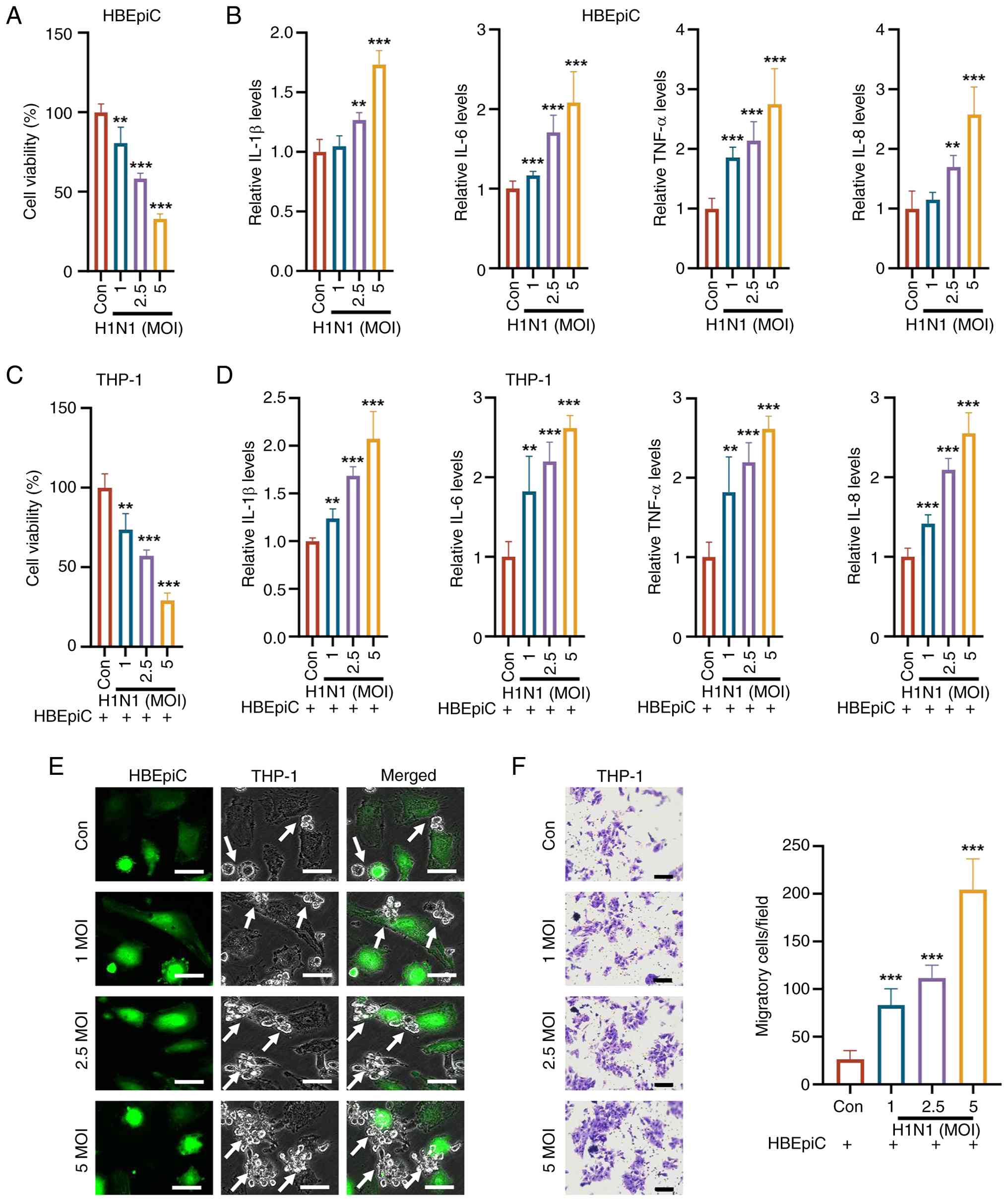
Figure 1

H1N1 infection affects cell
viability, inflammatory cytokine secretion and interactions between
HBEpiCs and THP-1 cells. (A) CCK-8 assay revealed that HBEpiC
viability decreased in a concentration-dependent manner following
H1N1 infection. (B) ELISA revealed that the levels of IL-1β, IL-6,
TNF-α, and IL-8 in HBEpiCs decreased with increasing H1N1
infection. (C) CCK-8 assay indicated that supernatants from
H1N1-infected HBEpiC cultures reduced the viability of THP-1 cells
in a dose-dependent manner. (D) ELISA results suggested that the
levels of inflammatory cytokines (IL-1β, IL-6, TNF-α and IL-8) in
THP-1 cells were decreased following exposure to supernatants from
H1N1-infected HBEpiC cultures. (E) Cell adhesion assay revealed
that the number of THP-1 cells adhering to HBEpiCs increased with
increasing H1N1 concentration (scale bar, 10 μm). Arrow
indicates THP-1 cells that remain attached to the surface of
HBEpiCs, highlighting the adhesion interaction between the two cell
types. (F) Transwell assay suggested that H1N1 infection enhanced
the migration capacity of THP-1 cells, with increased migration
observed at higher virus concentrations (scale bar, 50 μm).
The data are presented as the mean ± standard deviation;
**P<0.01, ***P<0.001 vs. control. H1N1,
influenza A; HBEpiCs, human bronchial epithelial cells; ELISA,
enzyme-linked immunosorbent assay; IL, interleukin; TNF-α, tumor
necrosis factor-α; Con, control; MOI, multiplicity of
infection.

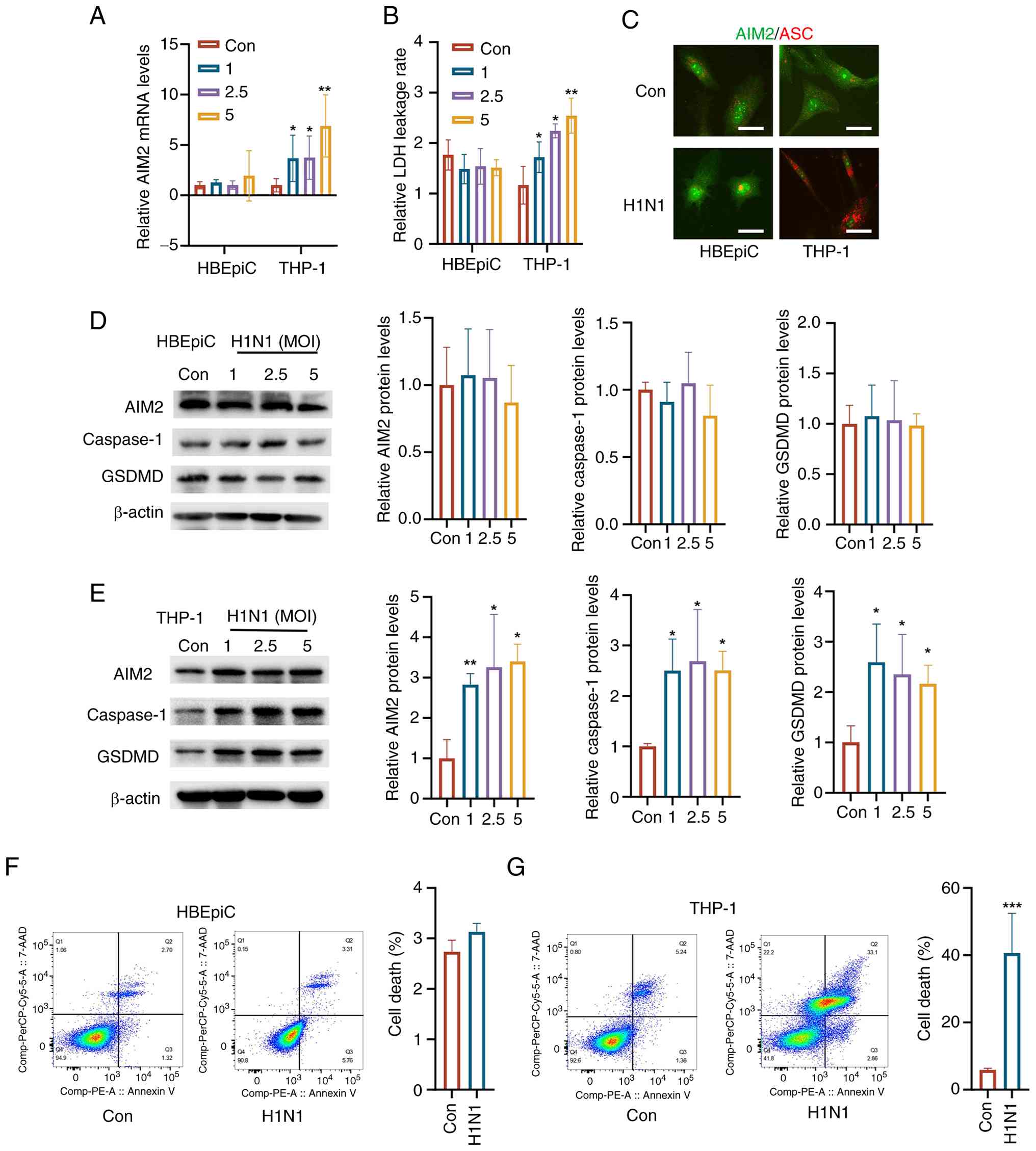
Figure 2

Differential activation of AIM2
signaling in THP-1 cells and HBEpiCs following H1N1 infection. (A)
RT-qPCR analysis revealed that H1N1 infection did not alter AIM2
mRNA levels in HBEpiCs but markedly increased AIM2 mRNA levels in
THP-1 cells. (B) LDH release assay indicated that H1N1 infection
did not affect LDH release in HBEpiCs but markedly increased LDH-1
release in THP-1 cells. (C) Dual-immunofluorescence staining
demonstrated the formation of ASC-AIM2 complexes in THP-1 cells
post-H1N1 infection (scale bar, 10 μm). (D) Western blot
analysis revealed no significant changes in AIM2, caspase-1, or
GSDMD protein levels in HBEpiCs following H1N1 infection but
increased expression of AIM2, caspase-1 and GSDMD in THP-1 cells
following H1N1 infection (E). (F) Flow cytometry analysis revealed
no significant cell death in HBEpiCs following infection, (G)
whereas THP-1 cells treated with the supernatant from H1N1-infected
HBEpiC cultures presented markedly increased cell death compared
with the control. The data are presented as the mean ± standard
deviation; *P<0.05, **P<0.01,
***P<0.001 vs. control. AIM2, absent in melanoma 2;
HBEpiCs, human bronchial epithelial cells; H1N1, influenza A;
RT-qPCR, reverse transcription-quantitative PCR; GSDMD, gasdermin
D; Con, control; MOI, multiplicity of infection.

Figure 3

TP modulates the inflammatory
response and immune cell activity in H1N1-infected HBEpiCs and
THP-1 cells. (A) No significant changes were observed in HBEpiCs
treated with various concentrations of TP (5, 10 and 20 nM)
following H1N1 infection compared with the control. (B) After TP
treatment, the levels of the inflammatory cytokines IL-1β, IL-6,
TNF-α and IL-8 in HBEpiCs were markedly lower than those in the
untreated group. (C) The viability of THP-1 cells pretreated with
H1N1-infected HBEpiC culture supernatant decreased after TP
treatment. (D) The levels of IL-1β, IL-6, TNF-α, and IL-8 in THP-1
cells were markedly lower after TP treatment. (E) The adhesion of
THP-1 cells to HBEpiCs induced by H1N1 infection decreased in a
dose-dependent manner with increasing TP concentration (scale bar,
10 μm). Arrow indicates THP-1 cells that remain attached to
the surface of HBEpiCs, highlighting the adhesion interaction
between the two cell types. (F) The migration capacity of THP-1
cells was markedly reduced when the supernatant from H1N1-infected
HBEpiC cultures was treated with TP (scale bar, 50 μm). The
data are presented as the mean ± standard deviation;
*P<0.05, **P<0.01,
***P<0.001 vs. control. TP, triptolide; H1N1,
influenza A; HBEpiCs, human bronchial epithelial cells; IL,
interleukin; TNF-α, tumor necrosis factor-α; Con, control.

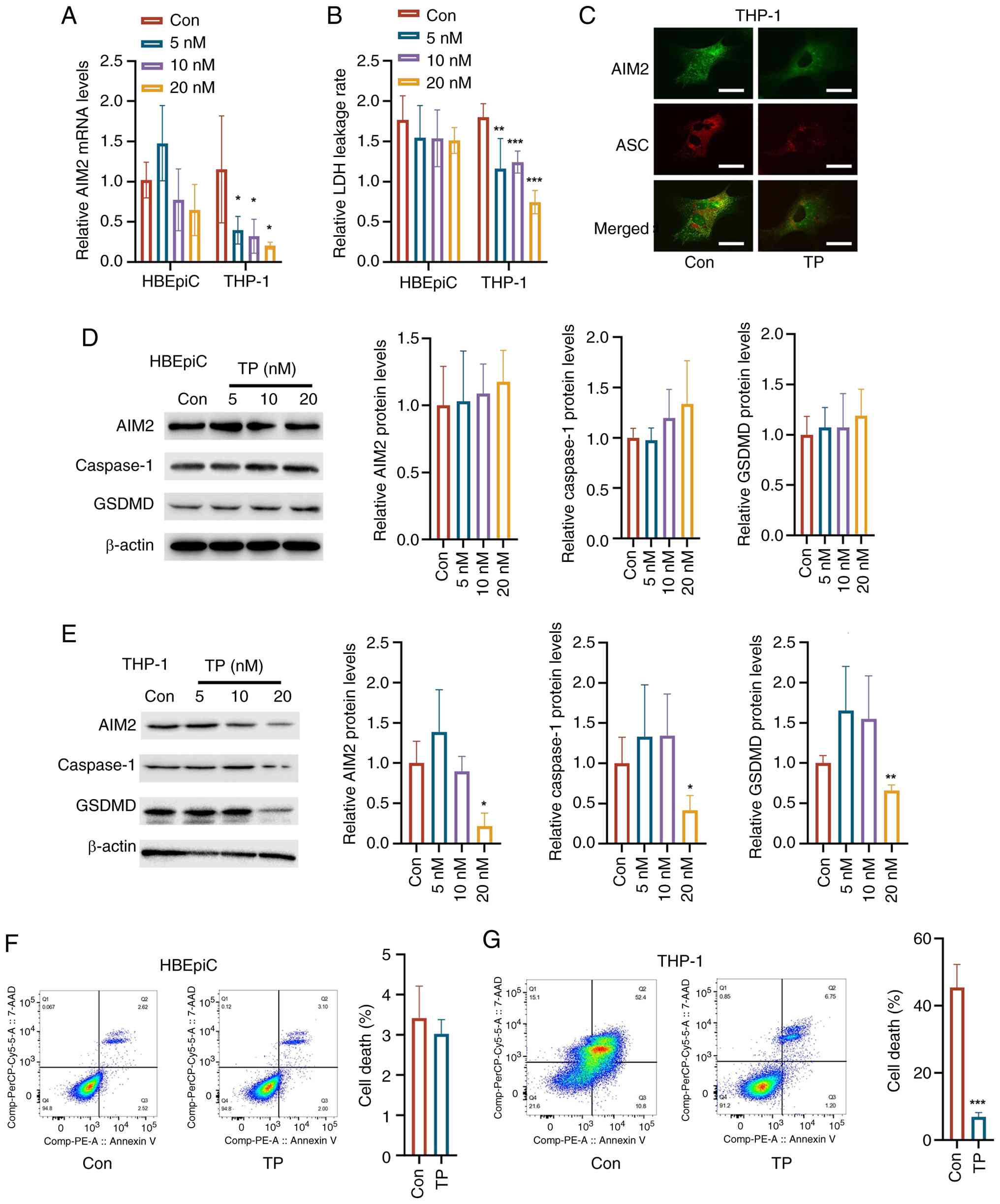
Figure 4

Effects of TP on AIM2 signaling, LDH
leakage, and pyroptosis in HBEpiCs and THP-1 cells. (A) RT-qPCR
analysis revealed that TP treatment did not alter AIM2 mRNA
expression in HBEpiCs but markedly reduced AIM2 mRNA levels in
THP-1 cells. (B) TP did not affect the LDH leakage rate in HBEpiCs
but markedly reduced LDH leakage in THP-1 cells. (C)
Dual-fluorescence staining revealed that TP treatment decreased the
formation of ASC-AIM2 complexes in THP-1 cells (scale bar, 10
μm). (D) Western blot analysis indicated that TP treatment
did not markedly affect the expression of these proteins in
HBEpiCs. (E) TP treatment reduced the protein expression of AIM2,
caspase-1, and GSDMD in THP-1 cells. (F) Flow cytometry revealed no
difference in cell death between HBEpiCs treated with 20 nM TP and
the control. (G) In THP-1 cells infected with H1N1 and treated with
20 nM TP, a significant reduction in cell death was identified
compared with that in the H1N1 infection group. The data are
presented as the mean ± standard deviation; *P<0.05,
**P<0.01, ***P<0.001 vs. control. TP,
triptolide; AIM2, absent in melanoma 2; LDH, lactate dehydrogenase;
HBEpiCs, human bronchial epithelial cells; RT-qPCR, reverse
transcription-quantitative PCR; H1N1, influenza A; GSDMD, gasdermin
D; Con, control.

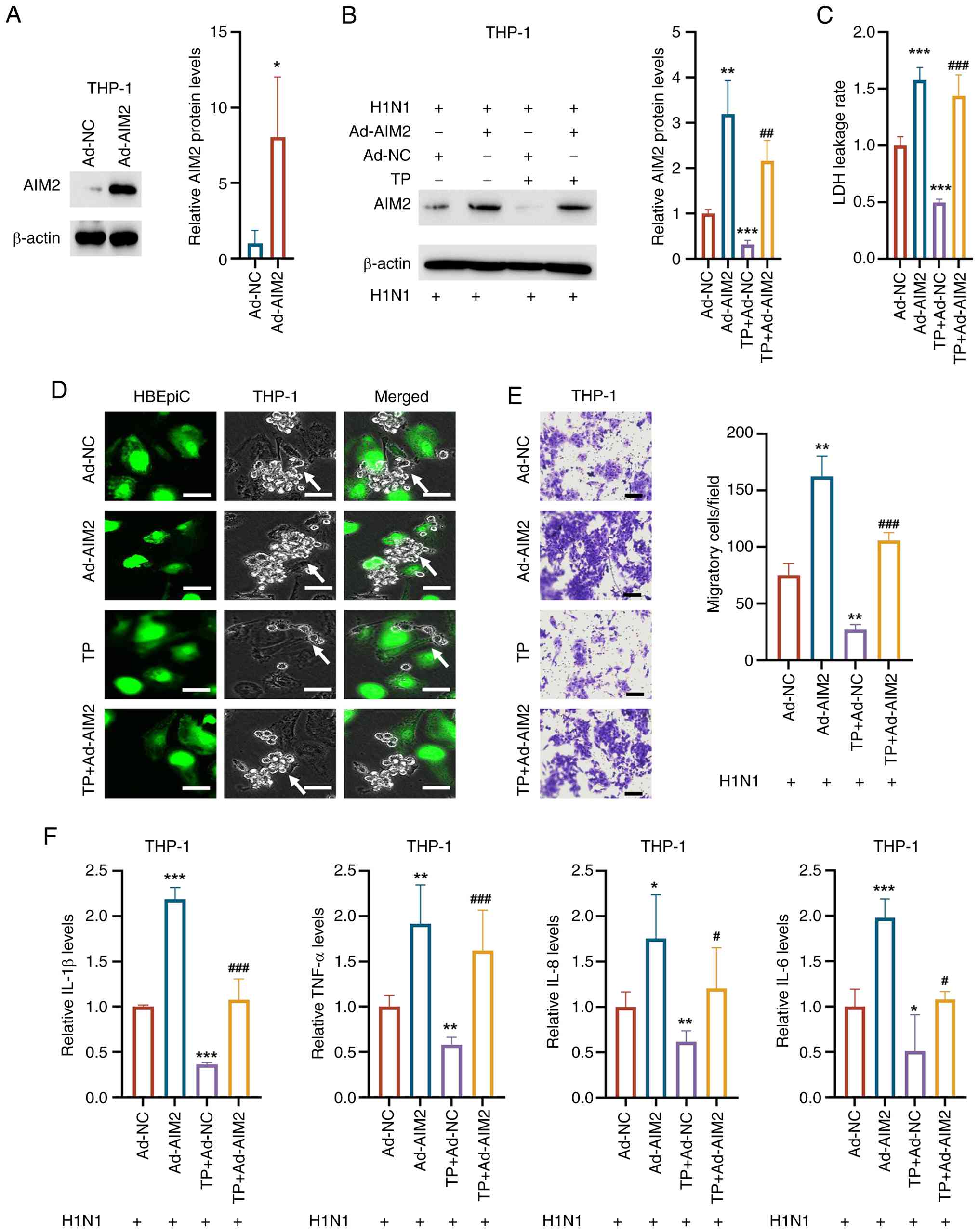
Figure 5

AIM2 overexpression reverses the
immunosuppressive effects of TP in THP-1 cells. (A) Transfection
with Ad-AIM2 upregulated the expression of AIM2 compared with that
of Ad-NC in THP-1 cells. (B) AIM2 protein levels were elevated in
THP-1 cells overexpressing AIM2 compared with control THP-1 cells.
(C) In THP-1 cells, AIM2 overexpression increased the LDH leakage
rate. (D) AIM2 overexpression reversed the TP-induced reduction in
adhesion between THP-1 cells and HBEpiCs (scale bar, 10 μm).
(E) AIM2 overexpression enhanced the migration ability of THP-1
cells compared with that of H1N1-treated control cells and reversed
the TP-induced decrease in THP-1 cell migration (scale bar, 50
μm). (F) AIM2 overexpression reversed the TP-induced
reduction in inflammatory cytokine levels. The data are presented
as the mean ± standard deviation; *P<0.05,
**P<0.01, ***P<0.001 vs. Con;
#P<0.05, ##P<0.01,
###P<0.001 vs. Ad-AIM2. AIM2, absent in melanoma 2;
TP, triptolide; LDH, lactate dehydrogenase; HBEpiCs, human
bronchial epithelial cells; H1N1, influenza A; GSDMD, gasdermin D;
IL, interleukin; TNF-α, tumor necrosis factor-α; Con, control.

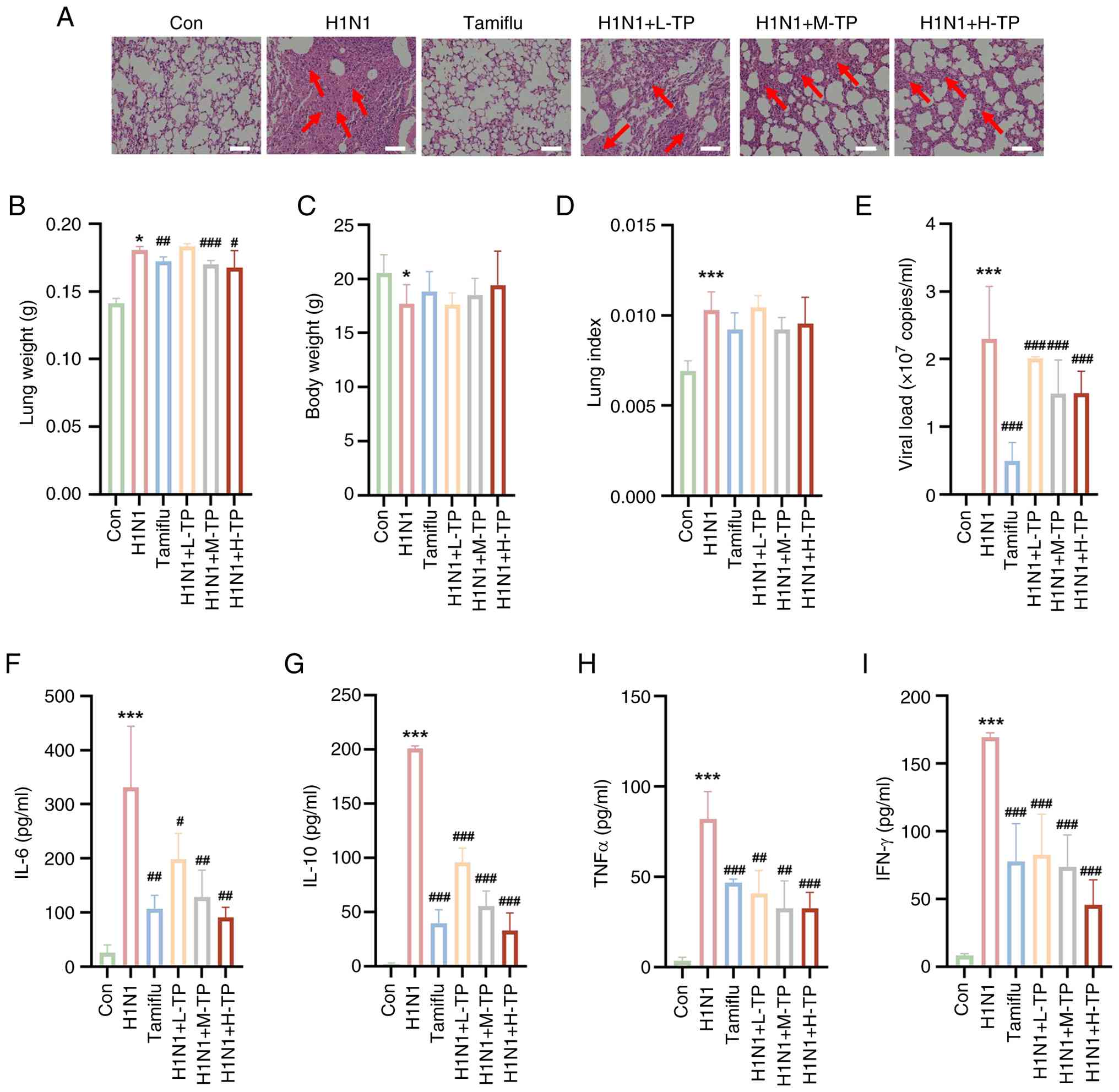
Figure 6

TP modulates the immune response and
alleviates lung injury in a murine H1N1 pneumonia model. (A)
Representative images of hematoxylin and eosin stained sections
(magnification, ×20; red arrows demarcate regions of pulmonary
consolidation; scale bar, 100 μm). (B) H1N1 infection led to
increased lung weight compared with that in the control group,
whereas lung weight was markedly reduced in the Tamiflu, L-TP,
M-TP, and H-TP groups. (C) No significant changes in body weight
were observed among the treatment groups. (D) The lung index was
decreased in the H1N1 group and did not fully recover in the four
treatment groups. (E) The Tamiflu, L-TP, M-TP, and H-TP treatment
groups presented markedly reduced viral loads compared with the
H1N1 group, with the Tamiflu group exhibiting the most significant
reduction. (F-I) Following H1N1 infection, inflammatory cytokine
levels were elevated, but treatment with Tamiflu, L-TP, M-TP, and
H-TP markedly reduced these levels in a dose-dependent manner. The
data are expressed as the mean ± standard deviation;
*P<0.05, **P<0.01,
***P<0.001, vs. Con; #P<0.05,
##P<0.01, ###P<0.001 vs. H1N1;
$$P<0.01 vs. H1N1+L-TP. TP, triptolide; H1N1,
influenza A; Con, control.
View References

1 

Li X, Gu M, Zheng Q, Gao R and Liu X: Packaging signal of influenza A virus. Virol J. 18:362021. View Article : Google Scholar : PubMed/NCBI

2 

Dong Y, Wang L, Burgner DP, Miller JE, Song Y, Ren X, Li Z, Xing Y, Ma J, Sawyer SM and Patton GC: Infectious diseases in children and adolescents in China: Analysis of national surveillance data from 2008 to 2017. BMJ. 369:m10432020. View Article : Google Scholar : PubMed/NCBI

3 

Chen Z, Tsui JL, Cai J, Su S, Viboud C, du Plessis L, Lemey P, Kraemer MUG and Yu H: Disruption of seasonal influenza circulation and evolution during the 2009 H1N1 and COVID-19 pandemics in Southeastern Asia. Nat Commun. 16:4752025. View Article : Google Scholar : PubMed/NCBI

4 

Ghorbani A, Ngunjiri JM and Lee CW: Influenza A virus subpopulations and their implication in pathogenesis and vaccine development. Annu Rev Anim Biosci. 8:247–267. 2020. View Article : Google Scholar

5 

Park J, Fong Legaspi SL, Schwartzman LM, Gygli SM, Sheng ZM, Freeman AD, Matthews LM, Xiao Y, Ramuta MD, Batchenkova NA, et al: An inactivated multivalent influenza A virus vaccine is broadly protective in mice and ferrets. Sci Transl Med. 14:eabo21672022. View Article : Google Scholar : PubMed/NCBI

6 

Pinto RM, Bakshi S, Lytras S, Zakaria MK, Swingler S, Worrell JC, Herder V, Hargrave KE, Varjak M, Cameron-Ruiz N, et al: BTN3A3 evasion promotes the zoonotic potential of influenza A viruses. Nature. 619:338–347. 2023. View Article : Google Scholar : PubMed/NCBI

7 

Huang L, Wang J, Ma X, Sun L, Hao C and Wang W: Inhibition of influenza a virus infection by natural stilbene piceatannol targeting virus hemagglutinin. Phytomedicine. 120:1550582023. View Article : Google Scholar : PubMed/NCBI

8 

Yu J, Li H, Jia J, Huang Z, Liu S, Zheng Y, Mu S, Deng X, Zou X, Wang Y, et al: Pandemic influenza A (H1N1) virus causes abortive infection of primary human T cells. Emerg Microbes Infect. 11:1191–1204. 2022. View Article : Google Scholar : PubMed/NCBI

9 

Zheng Y, He D, Zuo W, Wang W, Wu K, Wu H, Yuan Y, Huang Y, Li H, Lu Y, et al: Influenza A virus dissemination and infection leads to tissue resident cell injury and dysfunction in viral sepsis. EBioMedicine. 116:1057382025. View Article : Google Scholar : PubMed/NCBI

10 

Meng X, Zhu Y, Yang W, Zhang J, Jin W, Tian R, Yang Z and Wang R: HIF-1α promotes virus replication and cytokine storm in H1N1 virus-induced severe pneumonia through cellular metabolic reprogramming. Virol Sin. 39:81–96. 2024. View Article : Google Scholar :

11 

Rewar S, Mirdha D and Rewar P: Treatment and prevention of pandemic H1N1 influenza. Ann Glob Health. 81:645–653. 2015. View Article : Google Scholar

12 

Lampejo T: Influenza and antiviral resistance: An overview. Eur J Clin Microbiol Infect Dis. 39:1201–1208. 2020. View Article : Google Scholar : PubMed/NCBI

13 

Xu DW and Tate MD: Taking AIM at influenza: The role of the AIM2 inflammasome. Viruses. 16:15352024. View Article : Google Scholar : PubMed/NCBI

14 

Zhang H, Luo J, Alcorn JF, Chen K, Fan S, Pilewski J, Liu A, Chen W, Kolls JK and Wang J: AIM2 inflammasome is critical for influenza-induced lung injury and mortality. J Immunol. 198:4383–4393. 2017. View Article : Google Scholar : PubMed/NCBI

15 

Schattgen SA, Gao G, Kurt-Jones EA and Fitzgerald KA: Cutting edge: DNA in the lung microenvironment during influenza virus infection tempers inflammation by engaging the DNA sensor AIM2. J Immunol. 196:29–33. 2016. View Article : Google Scholar

16 

Gao J, Zhang Y, Liu X, Wu X, Huang L and Gao W: Triptolide: Pharmacological spectrum, biosynthesis, chemical synthesis and derivatives. Theranostics. 11:7199–7221. 2021. View Article : Google Scholar : PubMed/NCBI

17 

Fang WY, Tseng YT, Lee TY, Fu YC, Chang WH, Lo WW, Lin CL and Lo YC: Triptolide prevents LPS-induced skeletal muscle atrophy via inhibiting NF-κB/TNF-α and regulating protein synthesis/degradation pathway. Br J Pharmacol. 178:2998–3016. 2021. View Article : Google Scholar : PubMed/NCBI

18 

Han R, Rostami-Yazdi M, Gerdes S and Mrowietz U: Triptolide in the treatment of psoriasis and other immune-mediated inflammatory diseases. Br J Clin Pharmacol. 74:424–436. 2012. View Article : Google Scholar : PubMed/NCBI

19 

Wang N, Min X, Ma N, Zhu Z, Cao B, Wang Y, Yong Q, Huang J and Li K: The negative impact of triptolide on the immune function of human natural killer cells. Pharmaceuticals (Basel). 16:4582023. View Article : Google Scholar : PubMed/NCBI

20 

Zhu W, Li Y, Zhao J and Wang Y, Li Y and Wang Y: The mechanism of triptolide in the treatment of connective tissue disease-related interstitial lung disease based on network pharmacology and molecular docking. Ann Med. 54:541–552. 2022. View Article : Google Scholar : PubMed/NCBI

21 

Liu C, Wu X, Bing X, Qi W, Zhu F, Guo N, Li C, Gao X, Cao X, Zhao M and Xia M: H1N1 influenza virus infection through NRF2-KEAP1-GCLC pathway induces ferroptosis in nasal mucosal epithelial cells. Free Radic Biol Med. 204:226–242. 2023. View Article : Google Scholar : PubMed/NCBI

22 

Wei Z, Gao R, Sun Z, Yang W, He Q, Wang C, Zhang J, Zhang X, Guo L and Wang S: Baicalin inhibits influenza A (H1N1)-induced pyroptosis of lung alveolar epithelial cells via caspase-3/GSDME pathway. J Med Virol. 95:e287902023. View Article : Google Scholar : PubMed/NCBI

23 

Livak KJ and Schmittgen TD: Analysis of relative gene expression data using real-time quantitative PCR and the 2(-Delta Delta C(T)) method. Methods. 25:402–408. 2001. View Article : Google Scholar

24 

Du HX, Zhou HF, Yang JH, Lu YY, He Y and Wan HT: Preliminary study of Yinhuapinggan granule against H1N1 influenza virus infection in mice through inhibition of apoptosis. Pharm Biol. 58:979–991. 2020. View Article : Google Scholar : PubMed/NCBI

25 

Paukner S, Kimber S, Cumper C, Rea-Davies T, Sueiro Ballesteros L, Kirkham C, Hargreaves A, Gelone SP, Richards C and Wicha WW: In vivo immune-modulatory activity of lefamulin in an influenza virus A (H1N1) infection model in mice. Int J Mol Sci. 25:54012024. View Article : Google Scholar : PubMed/NCBI

26 

Wan YS, You Y, Ding QY, Xu YX, Chen H, Wang RR, Huang YW, Chen Z, Hu WW and Jiang L: Triptolide protects against white matter injury induced by chronic cerebral hypoperfusion in mice. Acta Pharmacol Sin. 43:15–25. 2022. View Article : Google Scholar

27 

Zeldin DC, Wohlford-Lenane C, Chulada P, Bradbury JA, Scarborough PE, Roggli V, Langenbach R and Schwartz DA: Airway inflammation and responsiveness in prostaglandin H synthase-deficient mice exposed to bacterial lipopolysaccharide. Am J Respir Cell Mol Biol. 25:457–465. 2001. View Article : Google Scholar : PubMed/NCBI

28 

Matute-Bello G, Downey G, Moore BB, Groshong SD, Matthay MA, Slutsky AS and Kuebler WM; Acute Lung Injury in Animals Study Group: An official American thoracic society workshop report: Features and measurements of experimental acute lung injury in animals. Am J Respir Cell Mol Biol. 44:725–738. 2011. View Article : Google Scholar : PubMed/NCBI

29 

Gao J, Peng S, Shan X, Deng G, Shen L, Sun J, Jiang C, Yang X, Chang Z, Sun X, et al: Inhibition of AIM2 inflammasome-mediated pyroptosis by Andrographolide contributes to amelioration of radiation-induced lung inflammation and fibrosis. Cell Death Dis. 10:9572019. View Article : Google Scholar : PubMed/NCBI

30 

Zhou J, Li S, Yang Y, Zhou C, Wang C and Zeng Z: Triptolide alleviates acute lung injury by reducing mitochondrial dysfunction mediated ferroptosis through the STAT3/p53 pathway. Free Radic Biol Med. 230:79–94. 2025. View Article : Google Scholar : PubMed/NCBI

31 

Yoo ES: Study of specific oligosaccharide structures related with swine flu (H1N1) and avian flu, and tamiflu as their remedy. J Microbiol Biotechnol. 21:449–454. 2011. View Article : Google Scholar : PubMed/NCBI

32 

Zima V, Albiñana CB, Rojíková K, Pokorná J, Pachl P, Řezáčová P, Hudlicky J, Navrátil V, Majer P, Konvalinka J, et al: Investigation of flexibility of neuraminidase 150-loop using tamiflu derivatives in influenza A viruses H1N1 and H5N1. Bioorg Med Chem. 27:2935–2947. 2019. View Article : Google Scholar : PubMed/NCBI

33 

Gu C, Chen Y, Li H, Wang J and Liu S: Considerations when treating influenza infections with oseltamivir. Expert Opin Pharmacother. 25:1301–1316. 2024. View Article : Google Scholar : PubMed/NCBI

34 

Hou W, Liu B and Xu H: Triptolide: Medicinal chemistry, chemical biology and clinical progress. Eur J Med Chem. 176:378–392. 2019. View Article : Google Scholar : PubMed/NCBI

35 

Ling L, Ren A, Lu Y, Zhang Y, Zhu H, Tu P, Li H and Chen D: The synergistic effect and mechanisms of flavonoids and polysaccharides from Houttuynia cordata on H1N1-induced pneumonia in mice. J Ethnopharmacol. 302:1157612023. View Article : Google Scholar

36 

Fontes CA, Dos Santos AAS and De Oliveira SA: High-resolution computed tomography enhances the diagnosis and follow-up of influenza A (H1N1) virus-associated pneumonia. J Infect Dev Ctries. 14:317–320. 2020. View Article : Google Scholar : PubMed/NCBI

37 

Himaal Dev GJ, Venkategowda PM, Sutar AR and Shankar V: Intestinal mucormycosis in an adult with H1N1 pneumonia on extracorporeal membrane oxygenation. Ann Card Anaesth. 24:92–94. 2021. View Article : Google Scholar : PubMed/NCBI

38 

Ding W, Li R, Song T, Yang Z, Xu D, Huang C, Shen S, Zhong N, Lai K and Deng Z: AMG487 alleviates influenza A (H1N1) virus-induced pulmonary inflammation through decreasing IFN-γ-producing lymphocytes and IFN-γ concentrations. Br J Pharmacol. 181:2053–2069. 2024. View Article : Google Scholar : PubMed/NCBI

39 

Zhang S, Sun F, Zhu J, Qi J, Wang W, Liu Z, Li W, Liu C, Liu X, Wang N, et al: Phillyrin ameliorates influenza a virus-induced pulmonary inflammation by antagonizing CXCR2 and inhibiting NLRP3 inflammasome activation. Virol J. 20:2622023. View Article : Google Scholar : PubMed/NCBI

40 

Arranz-Herrero J, Presa J, Rius-Rocabert S, Utrero-Rico A, Arranz-Arija JÁ, Lalueza A, Escribese MM, Ochando J, Soriano V and Nistal-Villan E: Determinants of poor clinical outcome in patients with influenza pneumonia: A systematic review and meta-analysis. Int J Infect Dis. 131:173–179. 2023. View Article : Google Scholar : PubMed/NCBI

41 

Han Y, Ge C, Ye J, Li R and Zhang Y: Demethyleneberberine alleviates Pseudomonas aeruginosa-induced acute pneumonia by inhibiting the AIM2 inflammasome and oxidative stress. Pulm Pharmacol Ther. 83:1022592023. View Article : Google Scholar : PubMed/NCBI

42 

Tseng YH, Chen IC, Li WC and Hsu JH: Regulatory cues in pulmonary fibrosis-with emphasis on the AIM2 inflammasome. Int J Mol Sci. 24:108762023. View Article : Google Scholar : PubMed/NCBI

43 

Cho SJ, Hong KS, Jeong JH, Lee M, Choi AMK, Stout-Delgado HW and Moon JS: DROSHA-dependent AIM2 inflammasome activation contributes to lung inflammation during idiopathic pulmonary fibrosis. Cells. 8:9382019. View Article : Google Scholar : PubMed/NCBI

44 

Cho SJ, Moon JS, Nikahira K, Yun HS, Harris R, Hong KS, Huang H, Choi AMK and Stout-Delgado H: GLUT1-dependent glycolysis regulates exacerbation of fibrosis via AIM2 inflammasome activation. Thorax. 75:227–236. 2020. View Article : Google Scholar :

45 

Zhang T, Du H, Feng S, Wu R, Chen T, Jiang J, Peng Y, Ye C and Fang R: NLRP3/ASC/caspase-1 axis and serine protease activity are involved in neutrophil IL-1β processing during Streptococcus pneumoniae infection. Biochem Biophys Res Commun. 513:675–680. 2019. View Article : Google Scholar : PubMed/NCBI

46 

Fang R, Tsuchiya K, Kawamura I, Shen Y, Hara H, Sakai S, Yamamoto T, Fernandes-Alnemri T, Yang R, Hernandez-Cuellar E, et al: Critical roles of ASC inflammasomes in caspase-1 activation and host innate resistance to Streptococcus pneumoniae infection. J Immunol. 187:4890–4899. 2011. View Article : Google Scholar : PubMed/NCBI

47 

Aliabadi N, Jamalidoust M, Pouladfar G, Ziyaeyan A and Ziyaeyan M: Antiviral activity of triptolide on herpes simplex virus in vitro. Immun Inflamm Dis. 10:e6672022. View Article : Google Scholar : PubMed/NCBI

48 

Ben Yebdri F, Van Grevenynghe J, Tang VA, Goulet ML, Wu JH, Stojdl DF, Hiscott J and Lin R: Triptolide-mediated inhibition of interferon signaling enhances vesicular stomatitis virus-based oncolysis. Mol Ther. 21:2043–2053. 2013. View Article : Google Scholar : PubMed/NCBI

49 

Tian J, Liu Y, Gao W, Shi X, Cheng F and Xie B: NETs activate AIM2 to mediate synovial fibroblast pyroptosis and promote acute gouty arthritis development. Immunol Lett. 275:1070072025. View Article : Google Scholar : PubMed/NCBI

Related Articles

  • Abstract
  • View
  • Download
  • Twitter
Copy and paste a formatted citation
Spandidos Publications style
Chen Y, Wu H, Wu X, Che L, Fu X, Qi R, Jia D, Li M, Xie W, Zhu W, Zhu W, et al: Triptolide exerts antiviral effects and alleviates influenza A‑induced pneumonia by inhibiting the overactivation of absent in melanoma 2 signaling in immune cells. Int J Mol Med 57: 158, 2026.
APA
Chen, Y., Wu, H., Wu, X., Che, L., Fu, X., Qi, R. ... Zhu, W. (2026). Triptolide exerts antiviral effects and alleviates influenza A‑induced pneumonia by inhibiting the overactivation of absent in melanoma 2 signaling in immune cells. International Journal of Molecular Medicine, 57, 158. https://doi.org/10.3892/ijmm.2026.5829
MLA
Chen, Y., Wu, H., Wu, X., Che, L., Fu, X., Qi, R., Jia, D., Li, M., Xie, W., Zhu, W."Triptolide exerts antiviral effects and alleviates influenza A‑induced pneumonia by inhibiting the overactivation of absent in melanoma 2 signaling in immune cells". International Journal of Molecular Medicine 57.6 (2026): 158.
Chicago
Chen, Y., Wu, H., Wu, X., Che, L., Fu, X., Qi, R., Jia, D., Li, M., Xie, W., Zhu, W."Triptolide exerts antiviral effects and alleviates influenza A‑induced pneumonia by inhibiting the overactivation of absent in melanoma 2 signaling in immune cells". International Journal of Molecular Medicine 57, no. 6 (2026): 158. https://doi.org/10.3892/ijmm.2026.5829
Copy and paste a formatted citation
x
Spandidos Publications style
Chen Y, Wu H, Wu X, Che L, Fu X, Qi R, Jia D, Li M, Xie W, Zhu W, Zhu W, et al: Triptolide exerts antiviral effects and alleviates influenza A‑induced pneumonia by inhibiting the overactivation of absent in melanoma 2 signaling in immune cells. Int J Mol Med 57: 158, 2026.
APA
Chen, Y., Wu, H., Wu, X., Che, L., Fu, X., Qi, R. ... Zhu, W. (2026). Triptolide exerts antiviral effects and alleviates influenza A‑induced pneumonia by inhibiting the overactivation of absent in melanoma 2 signaling in immune cells. International Journal of Molecular Medicine, 57, 158. https://doi.org/10.3892/ijmm.2026.5829
MLA
Chen, Y., Wu, H., Wu, X., Che, L., Fu, X., Qi, R., Jia, D., Li, M., Xie, W., Zhu, W."Triptolide exerts antiviral effects and alleviates influenza A‑induced pneumonia by inhibiting the overactivation of absent in melanoma 2 signaling in immune cells". International Journal of Molecular Medicine 57.6 (2026): 158.
Chicago
Chen, Y., Wu, H., Wu, X., Che, L., Fu, X., Qi, R., Jia, D., Li, M., Xie, W., Zhu, W."Triptolide exerts antiviral effects and alleviates influenza A‑induced pneumonia by inhibiting the overactivation of absent in melanoma 2 signaling in immune cells". International Journal of Molecular Medicine 57, no. 6 (2026): 158. https://doi.org/10.3892/ijmm.2026.5829
Follow us
  • Twitter
  • LinkedIn
  • Facebook
About
  • Spandidos Publications
  • Careers
  • Cookie Policy
  • Privacy Policy
How can we help?
  • Help
  • Live Chat
  • Contact
  • Email to our Support Team