Spandidos Publications Logo
  • About
    • About Spandidos
    • Aims and Scopes
    • Abstracting and Indexing
    • Editorial Policies
    • Reprints and Permissions
    • Job Opportunities
    • Terms and Conditions
    • Contact
  • Journals
    • All Journals
    • Oncology Letters
      • Oncology Letters
      • Information for Authors
      • Editorial Policies
      • Editorial Board
      • Aims and Scope
      • Abstracting and Indexing
      • Bibliographic Information
      • Archive
    • International Journal of Oncology
      • International Journal of Oncology
      • Information for Authors
      • Editorial Policies
      • Editorial Board
      • Aims and Scope
      • Abstracting and Indexing
      • Bibliographic Information
      • Archive
    • Molecular and Clinical Oncology
      • Molecular and Clinical Oncology
      • Information for Authors
      • Editorial Policies
      • Editorial Board
      • Aims and Scope
      • Abstracting and Indexing
      • Bibliographic Information
      • Archive
    • Experimental and Therapeutic Medicine
      • Experimental and Therapeutic Medicine
      • Information for Authors
      • Editorial Policies
      • Editorial Board
      • Aims and Scope
      • Abstracting and Indexing
      • Bibliographic Information
      • Archive
    • International Journal of Molecular Medicine
      • International Journal of Molecular Medicine
      • Information for Authors
      • Editorial Policies
      • Editorial Board
      • Aims and Scope
      • Abstracting and Indexing
      • Bibliographic Information
      • Archive
    • Biomedical Reports
      • Biomedical Reports
      • Information for Authors
      • Editorial Policies
      • Editorial Board
      • Aims and Scope
      • Abstracting and Indexing
      • Bibliographic Information
      • Archive
    • Oncology Reports
      • Oncology Reports
      • Information for Authors
      • Editorial Policies
      • Editorial Board
      • Aims and Scope
      • Abstracting and Indexing
      • Bibliographic Information
      • Archive
    • Molecular Medicine Reports
      • Molecular Medicine Reports
      • Information for Authors
      • Editorial Policies
      • Editorial Board
      • Aims and Scope
      • Abstracting and Indexing
      • Bibliographic Information
      • Archive
    • World Academy of Sciences Journal
      • World Academy of Sciences Journal
      • Information for Authors
      • Editorial Policies
      • Editorial Board
      • Aims and Scope
      • Abstracting and Indexing
      • Bibliographic Information
      • Archive
    • International Journal of Functional Nutrition
      • International Journal of Functional Nutrition
      • Information for Authors
      • Editorial Policies
      • Editorial Board
      • Aims and Scope
      • Abstracting and Indexing
      • Bibliographic Information
      • Archive
    • International Journal of Epigenetics
      • International Journal of Epigenetics
      • Information for Authors
      • Editorial Policies
      • Editorial Board
      • Aims and Scope
      • Abstracting and Indexing
      • Bibliographic Information
      • Archive
    • Medicine International
      • Medicine International
      • Information for Authors
      • Editorial Policies
      • Editorial Board
      • Aims and Scope
      • Abstracting and Indexing
      • Bibliographic Information
      • Archive
  • Articles
  • Information
    • Information for Authors
    • Information for Reviewers
    • Information for Librarians
    • Information for Advertisers
    • Conferences
  • Language Editing
Spandidos Publications Logo
  • About
    • About Spandidos
    • Aims and Scopes
    • Abstracting and Indexing
    • Editorial Policies
    • Reprints and Permissions
    • Job Opportunities
    • Terms and Conditions
    • Contact
  • Journals
    • All Journals
    • Biomedical Reports
      • Information for Authors
      • Editorial Policies
      • Editorial Board
      • Aims and Scope
      • Abstracting and Indexing
      • Bibliographic Information
      • Archive
    • Experimental and Therapeutic Medicine
      • Information for Authors
      • Editorial Policies
      • Editorial Board
      • Aims and Scope
      • Abstracting and Indexing
      • Bibliographic Information
      • Archive
    • International Journal of Epigenetics
      • Information for Authors
      • Editorial Policies
      • Editorial Board
      • Aims and Scope
      • Abstracting and Indexing
      • Bibliographic Information
      • Archive
    • International Journal of Functional Nutrition
      • Information for Authors
      • Editorial Policies
      • Editorial Board
      • Aims and Scope
      • Abstracting and Indexing
      • Bibliographic Information
      • Archive
    • International Journal of Molecular Medicine
      • Information for Authors
      • Editorial Policies
      • Editorial Board
      • Aims and Scope
      • Abstracting and Indexing
      • Bibliographic Information
      • Archive
    • International Journal of Oncology
      • Information for Authors
      • Editorial Policies
      • Editorial Board
      • Aims and Scope
      • Abstracting and Indexing
      • Bibliographic Information
      • Archive
    • Medicine International
      • Information for Authors
      • Editorial Policies
      • Editorial Board
      • Aims and Scope
      • Abstracting and Indexing
      • Bibliographic Information
      • Archive
    • Molecular and Clinical Oncology
      • Information for Authors
      • Editorial Policies
      • Editorial Board
      • Aims and Scope
      • Abstracting and Indexing
      • Bibliographic Information
      • Archive
    • Molecular Medicine Reports
      • Information for Authors
      • Editorial Policies
      • Editorial Board
      • Aims and Scope
      • Abstracting and Indexing
      • Bibliographic Information
      • Archive
    • Oncology Letters
      • Information for Authors
      • Editorial Policies
      • Editorial Board
      • Aims and Scope
      • Abstracting and Indexing
      • Bibliographic Information
      • Archive
    • Oncology Reports
      • Information for Authors
      • Editorial Policies
      • Editorial Board
      • Aims and Scope
      • Abstracting and Indexing
      • Bibliographic Information
      • Archive
    • World Academy of Sciences Journal
      • Information for Authors
      • Editorial Policies
      • Editorial Board
      • Aims and Scope
      • Abstracting and Indexing
      • Bibliographic Information
      • Archive
  • Articles
  • Information
    • For Authors
    • For Reviewers
    • For Librarians
    • For Advertisers
    • Conferences
  • Language Editing
Login Register Submit
  • This site uses cookies
  • You can change your cookie settings at any time by following the instructions in our Cookie Policy. To find out more, you may read our Privacy Policy.

    I agree
Search articles by DOI, keyword, author or affiliation
Search
Advanced Search
presentation
International Journal of Molecular Medicine
Join Editorial Board Propose a Special Issue
Print ISSN: 1107-3756 Online ISSN: 1791-244X
Journal Cover
July-2026 Volume 58 Issue 1

Full Size Image

Sign up for eToc alerts
Recommend to Library

Journals

International Journal of Molecular Medicine

International Journal of Molecular Medicine

International Journal of Molecular Medicine is an international journal devoted to molecular mechanisms of human disease.

International Journal of Oncology

International Journal of Oncology

International Journal of Oncology is an international journal devoted to oncology research and cancer treatment.

Molecular Medicine Reports

Molecular Medicine Reports

Covers molecular medicine topics such as pharmacology, pathology, genetics, neuroscience, infectious diseases, molecular cardiology, and molecular surgery.

Oncology Reports

Oncology Reports

Oncology Reports is an international journal devoted to fundamental and applied research in Oncology.

Experimental and Therapeutic Medicine

Experimental and Therapeutic Medicine

Experimental and Therapeutic Medicine is an international journal devoted to laboratory and clinical medicine.

Oncology Letters

Oncology Letters

Oncology Letters is an international journal devoted to Experimental and Clinical Oncology.

Biomedical Reports

Biomedical Reports

Explores a wide range of biological and medical fields, including pharmacology, genetics, microbiology, neuroscience, and molecular cardiology.

Molecular and Clinical Oncology

Molecular and Clinical Oncology

International journal addressing all aspects of oncology research, from tumorigenesis and oncogenes to chemotherapy and metastasis.

World Academy of Sciences Journal

World Academy of Sciences Journal

Multidisciplinary open-access journal spanning biochemistry, genetics, neuroscience, environmental health, and synthetic biology.

International Journal of Functional Nutrition

International Journal of Functional Nutrition

Open-access journal combining biochemistry, pharmacology, immunology, and genetics to advance health through functional nutrition.

International Journal of Epigenetics

International Journal of Epigenetics

Publishes open-access research on using epigenetics to advance understanding and treatment of human disease.

Medicine International

Medicine International

An International Open Access Journal Devoted to General Medicine.

Journal Cover
July-2026 Volume 58 Issue 1

Full Size Image

Sign up for eToc alerts
Recommend to Library

  • Article
  • Citations
    • Cite This Article
    • Download Citation
    • Create Citation Alert
    • Remove Citation Alert
    • Cited By
  • Similar Articles
    • Related Articles (in Spandidos Publications)
    • Similar Articles (Google Scholar)
    • Similar Articles (PubMed)
  • Download PDF
  • Download XML
  • View XML

  • Supplementary Files
    • Supplementary_Data1.pdf
    • Supplementary_Data2.pdf
Article Open Access

miR‑223‑3p promotes microglial lactylation and M1 polarization via the FBXW7/Notch1/Hes1/SIRT1 axis

  • Authors:
    • Xiaoyu Wang
    • Lin Song
    • Jiafeng Wang
    • Qianqian Xie
    • Yan Wang
    • Chunyan Li
    • Tianqi Wang
    • Yifeng Du
  • View Affiliations / Copyright

    Affiliations: Department of Neurology, Shandong Provincial Hospital Affiliated to Shandong First Medical University, Jinan, Shandong 250021, P.R. China, Department of Urology, Shandong Provincial Hospital Affiliated to Shandong First Medical University, Jinan, Shandong 250021, P.R. China
    Copyright: © Wang et al. This is an open access article distributed under the terms of Creative Commons Attribution License.
  • Article Number: 178
    |
    Published online on: May 8, 2026
       https://doi.org/10.3892/ijmm.2026.5849
  • Expand metrics +
Metrics: Total Views: 0 (Spandidos Publications: | PMC Statistics: )
Metrics: Total PDF Downloads: 0 (Spandidos Publications: | PMC Statistics: )
Cited By (CrossRef): 0 citations Loading Articles...

This article is mentioned in:


Abstract

Neuroinflammation is a hallmark of Alzheimer's disease (AD) and is closely linked to microglial M1 polarization. In the present study, miR‑223‑3p was identified as a critical regulator of microglial metabolic reprogramming. Analyses of Gene Expression Omnibus and AD Neuroimaging Initiative datasets revealed significant upregulation of miR‑223‑3p in the brain, blood, and cerebrospinal fluid of patients with AD. The overexpression of miR‑223‑3p promoted M1 polarization and increased reactive oxygen species (ROS) levels. Transcriptomic, metabolomic and Seahorse analyses revealed increased glycolysis, lactate production and lactylation, whereas inhibition of lactylation reduced M1 polarization and ROS accumulation. Mechanistically, miR‑223‑3p suppressed SIRT1 expression and directly targeted FBXW7, leading to activation of the Notch1/Hes1 pathway and further suppression of SIRT1. In summary, these findings demonstrate that miR‑223‑3p drives microglial lactylation‑mediated M1 polarization through the FBXW7/Notch1/Hes1/SIRT1 signaling axis. The present study provides new insight into the role of lactylation in neuroinflammation and highlights miR‑223‑3p as a potential therapeutic target for AD.
View Figures

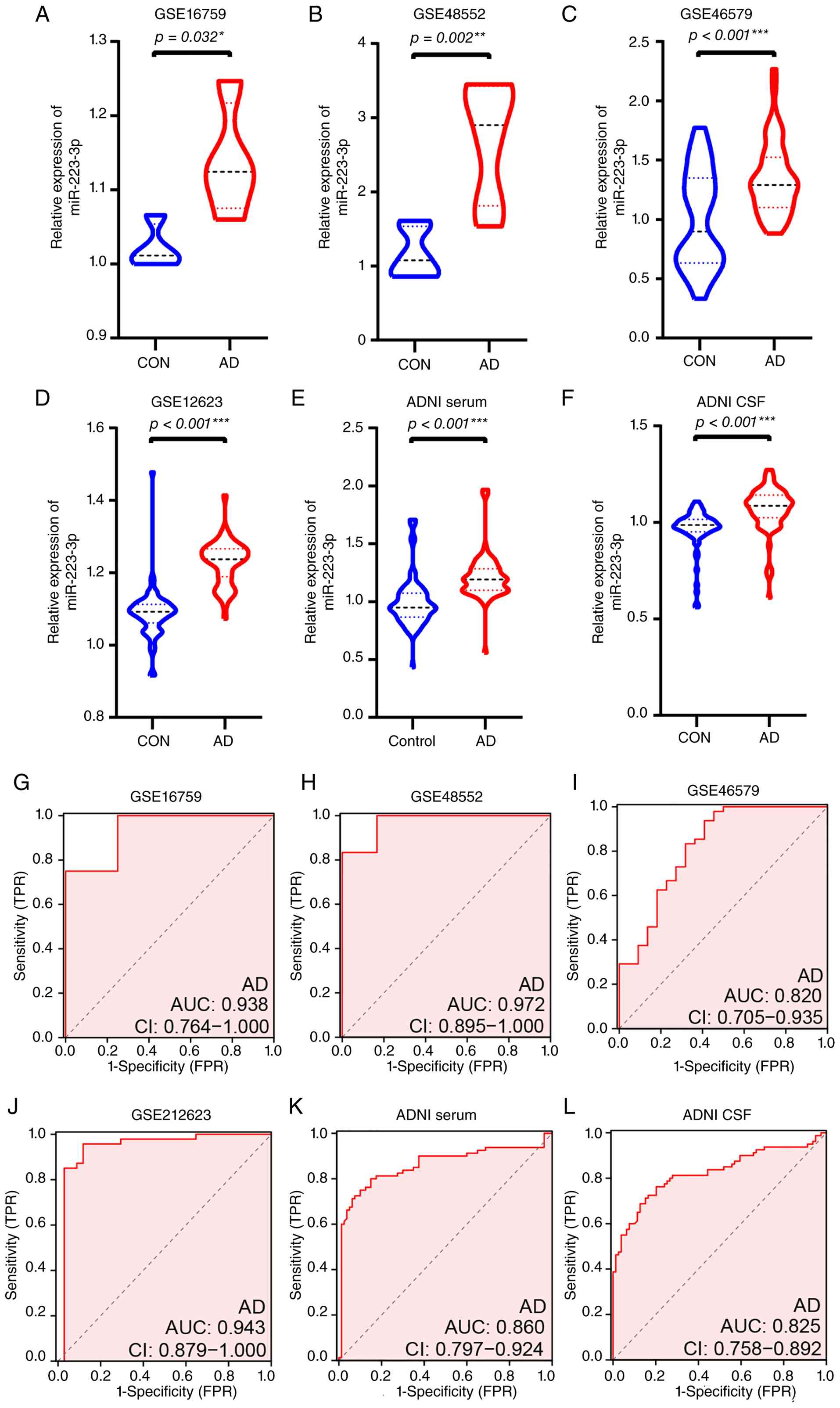
Figure 1

miR-223-3p is dysregulated in
patients with AD. (A and B) Expression of miR-223-3p in (A)
parietal lobe tissues and (B) prefrontal cortex tissues of patients
with AD compared with controls. (C and D) miR-223-3p levels in both
(C) serum and (D) CSF samples from patients with AD relative to
those from controls in the GEO dataset. (E and F) miR-223-3p levels
in both (E) serum and (F) CSF samples from patients with AD
relative to those from controls according to the ADNI dataset. (G)
ROC curve of miR-223-3p in parietal lobe tissues for AD from GEO
dataset. (H) ROC curve of miR-223-3p in prefrontal cortex tissues
for AD from GEO dataset. (I) ROC curves of miR-223-3p in serum for
AD from GEO dataset. (J) ROC curves of miR-223-3p in CSF for AD
from GEO dataset. (K) ROC curves of miR-223-3p in serum for AD from
ADNI dataset. (L) ROC curves of miR-223-3p in CSF for AD from ADNI
dataset. *P<0.05, **P<0.01 and
***P<0.001. miR, microRNA; AD, Alzheimer's disease;
CSF, cerebrospinal fluid; GEO, Gene Expression Omnibus; ADNI, AD
Neuroimaging Initiative; ROC, receiver operating characteristic;
AUC, area under the curve; CI, confidence interval.

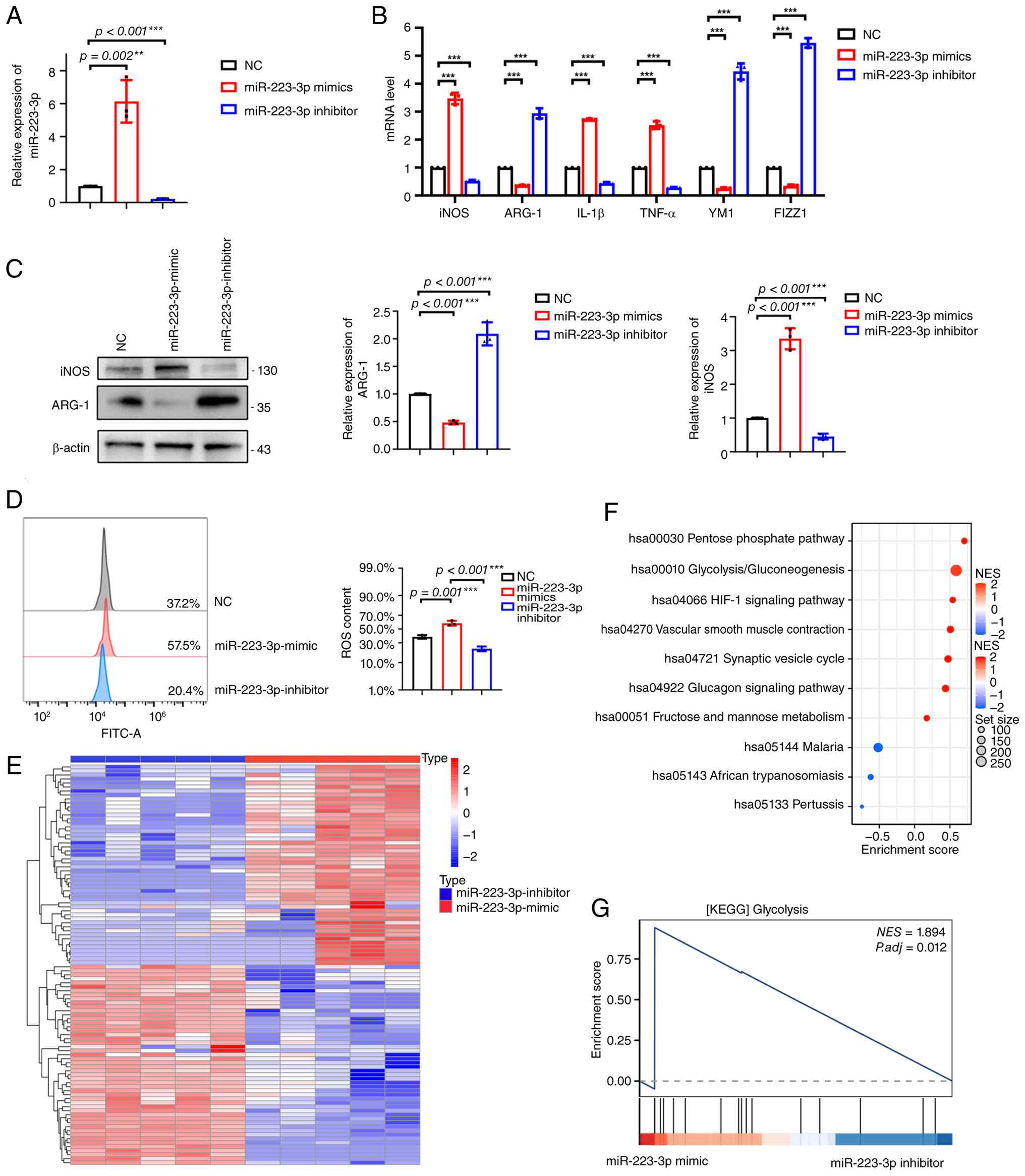
Figure 2

miR-223-3p promotes microglial M1
polarization. (A) RT-qPCR analysis of miR-223-3p expression. (B)
RT-qPCR analysis of M1/M2 polarization marker genes in microglia.
(C) Western blot detection of iNOS and Arg-1 protein levels. (D)
Flow cytometric analysis of ROS levels. (E) Heatmap of genes
differentially expressed between the high- and low-miR-223-3p
groups. (F) KEGG pathway enrichment analysis of differentially
expressed genes. (G) Gene Set Enrichment Analysis of
glycolysis-associated pathways in miR-223-3p-regulated microglia.
**P<0.01 and ***P<0.001. miR, microRNA;
RT-qPCR, reverse transcription-quantitative PCR; iNOS, inducible
nitric oxide synthase; ROS, reactive oxygen species; KEGG, Kyoto
Encyclopedia of Genes and Genomes; NC, negative control.

Figure 3

miR-223-3p promotes microglial M1
polarization through the regulation of lactylation. (A) Heatmap of
metabolite profiles across three experimental groups. (B-E)
LC-MS/MS quantification of (B) lactate, (C) pyruvate, (D)
NADP+ and (E) NADPH levels. (F and G) ECAR assays
measuring basal and compensatory glycolysis. (H and I) OCR assays
assessing mitochondrial respiration. (J) Lactate content assay
assessing intracellular lactate level. (K) Western blot analysis of
global lactylation levels. (L) Western blot analysis of lactylation
levels following treatment with glycolytic inhibitors oxamate (10
mM; 24 h) and 2-DG (10 mM; 24 h). (M) Reverse
transcription-quantitative PCR analysis of microglial polarization
markers. (N and O) Flow cytometric analysis of ROS levels.
*P<0.05, **P<0.01 and
***P<0.001. miR, microRNA; ECAR, extracellular
acidification rate; OCR, oxygen consumption rate; 2-DG,
2-deoxy-D-glucose; ROS, reactive oxygen species; NC, negative
control.

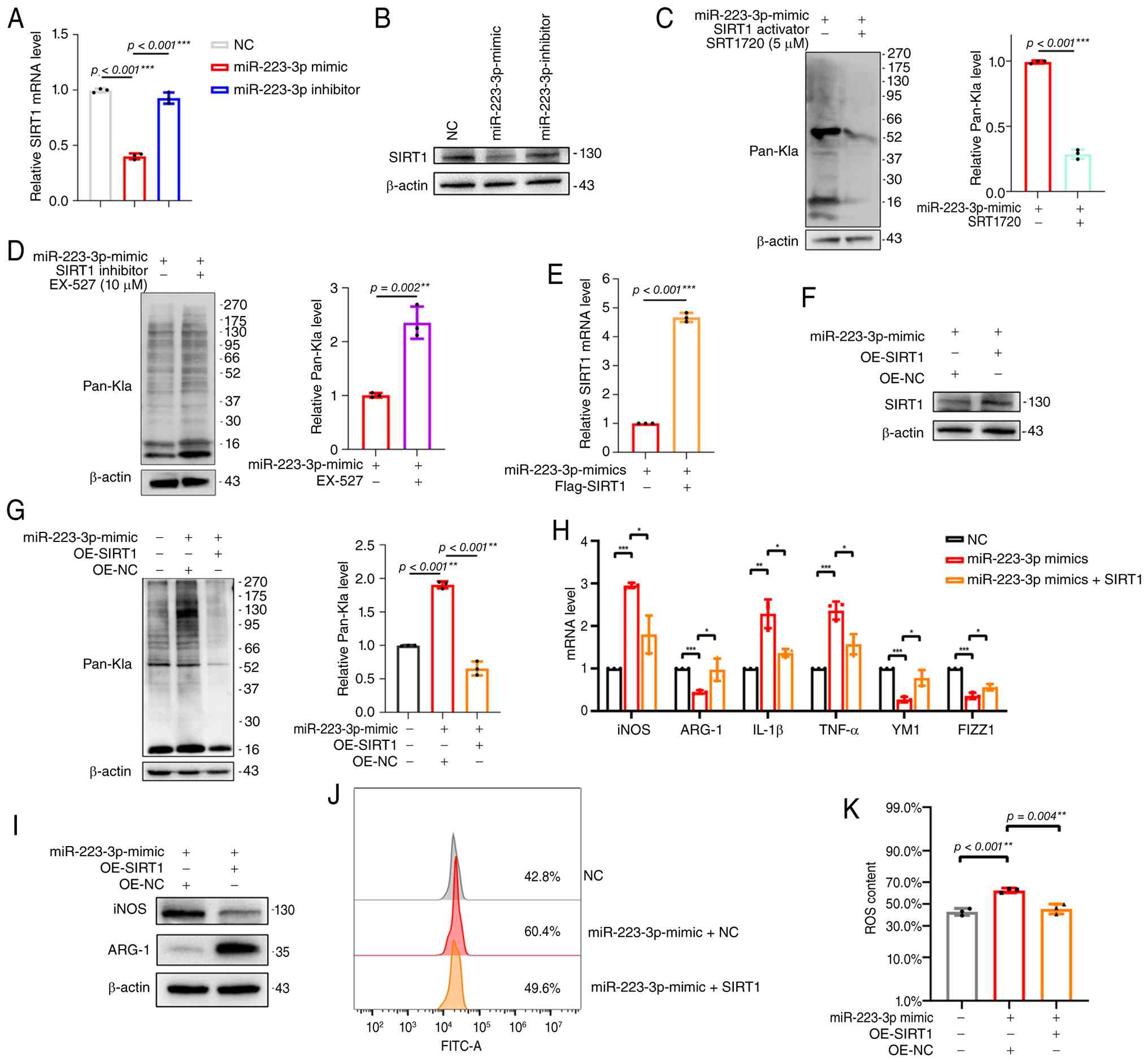
Figure 4

miR-223-3p promotes microglial
lactylation and M1 polarization by suppressing SIRT1 expression.
(A) RT-qPCR analysis of SIRT1 mRNA expression. (B) Western
blot analysis of SIRT1 protein levels. (C) Western blot analysis of
lactylation levels following treatment with SIRT1 activator SRT1720
(5 μM; 24 h). (D) Western blot analysis of lactylation
levels following treatment with SIRT1 inhibitor EX-527 (10
μM; 24 h). (E and F) RT-qPCR and Western blot validation of
SIRT1 overexpression in rescue experiments. (G) Western blot
detection of global lactylation levels. (H) RT-qPCR analysis of
microglial polarization markers. (I) Western blot analysis of iNOS
and Arg-1 protein expression. (J and K) Flow cytometric analysis of
ROS levels. *P<0.05, **P<0.01 and
***P<0.001. miR, microRNA; SIRT1, sirtuin 1; RT-qPCR,
reverse transcription-quantitative PCR; iNOS, inducible nitric
oxide synthase; ROS, reactive oxygen species; NC, negative control;
OE, overexpression.

Figure 5

miR-223-3p suppresses SIRT1
transcription via the Notch1/Hes1 signaling pathway, thereby
promoting microglial lactylation and M1 polarization. (A) RT-qPCR
analysis of Notch1 and Hes1 mRNA levels. (B) Western
blot analysis of NICD1 and Hes1 protein expression. (C) Western
blot analysis of SIRT1 expression following silencing Hes1. (D)
Western blot detection of global lactylation levels. (E) RT-qPCR
analysis of microglial polarization markers. (F and G) RT-qPCR and
western blot detection of SIRT1 following treatment with Notch1
inhibitor DAPT (20 nM; 24 h). (H) Western blot detection of global
lactylation levels. (I) RT-qPCR analysis of microglial polarization
markers. (J) Western blot analysis of iNOS and Arg-1 protein
expression. (K) Flow cytometric analysis of ROS levels.
*P<0.05, **P<0.01 and
***P<0.001. miR, microRNA; SIRT1, sirtuin 1; RT-qPCR,
reverse transcription-quantitative PCR; iNOS, inducible nitric
oxide synthase; ROS, reactive oxygen species; NC, negative control;
ns, not significant.

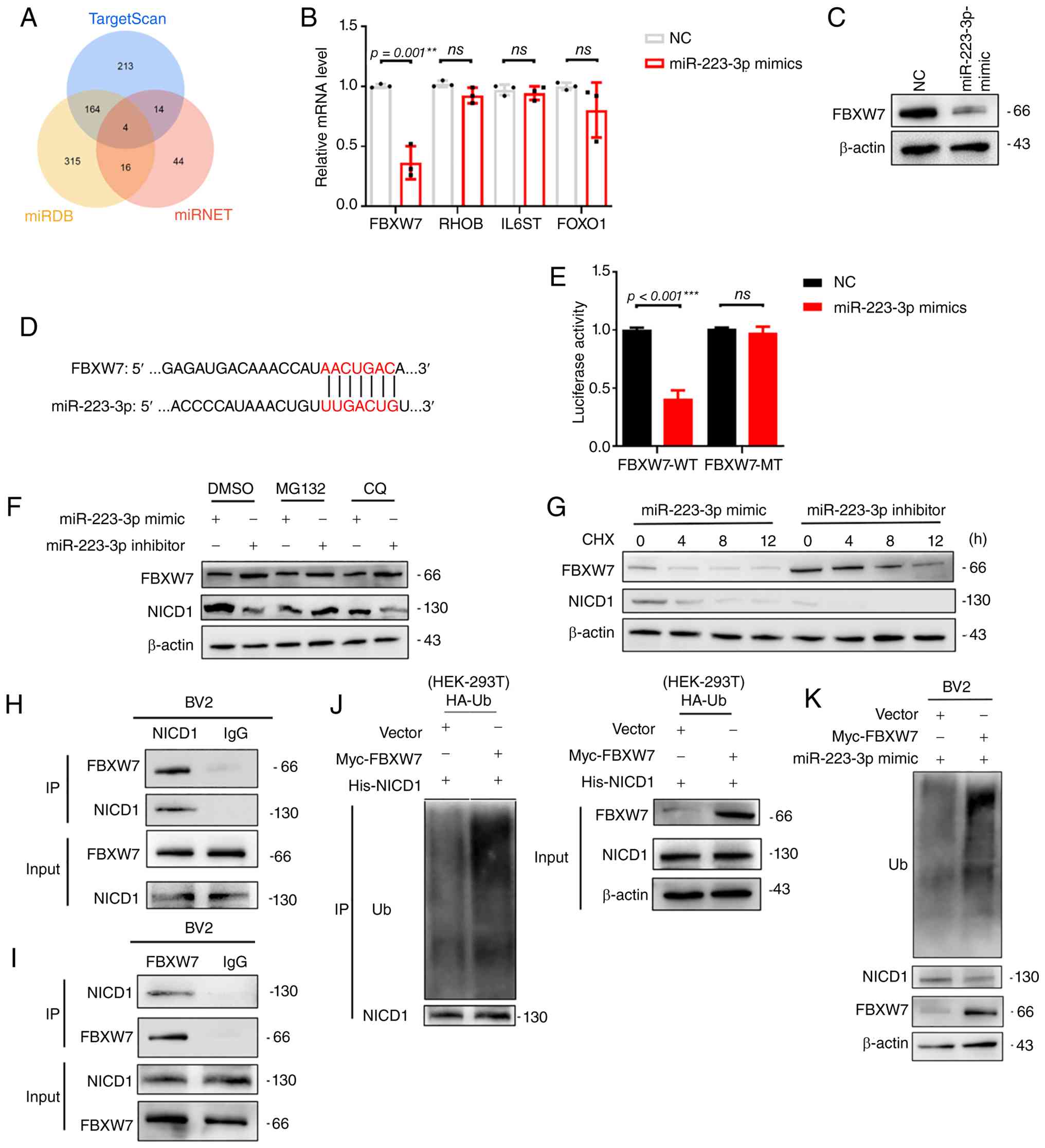
Figure 6

miR-223-3p targets FBXW7 to reduce
Notch1 ubiquitination and degradation. (A) Venn diagram showing the
overlap of predicted miR-223-3p targets from three databases. (B)
Reverse transcription-quantitative PCR analysis of downstream
target mRNA expression. (C) Western blot detection of FBXW7 protein
expression. (D) Predicted binding site between miR-223-3p and the
3' untranslated region of FBXW7. (E) Dual-luciferase
reporter assay confirming the direct interaction between miR-223-3p
and FBXW7. (F) Effects of the proteasome inhibitor MG132 and
the lysosomal inhibitor CQ on NICD1 protein expression in BV2 cells
with altered miR-223-3p expression. (G) CHX chase assay showing the
dynamics of NICD1 protein degradation in BV2 cells. (H and I)
Co-immunoprecipitation analysis of the interaction between FBXW7
and NICD1. (J) Effect of FBXW7 overexpression on NICD1
ubiquitination in 293T cells. (K) Western blot analysis of
FBXW7-mediated regulation of NICD1 expression and ubiquitination in
microglia. **P<0.01 and ***P<0.001.
miR, microRNA; CHX, cycloheximide; NC, negative control; ns, not
significant.

Figure 7

Schematic representation of the
proposed mechanism of miR-223-3p in microglial M1 polarization.
miR, microRNA; SIRT1, sirtuin 1.
View References

1 

Lanctôt KL, Hviid Hahn-Pedersen J, Eichinger CS, Freeman C, Clark A, Tarazona LRS and Cummings J: Burden of illness in people with Alzheimer's disease: A systematic review of epidemiology, comorbidities and mortality. J Prev Alzheimers Dis. 11:97–107. 2024. View Article : Google Scholar : PubMed/NCBI

2 

Heneka MT, van der Flier WM, Jessen F, Hoozemanns J, Thal DR, Boche D, Brosseron F, Teunissen C, Zetterberg H, Jacobs AH, et al: Neuroinflammation in Alzheimer disease. Nat Rev Immunol. 25:321–352. 2025. View Article : Google Scholar

3 

Young-Pearse TL, Lee H, Hsieh YC, Chou V and Selkoe DJ: Moving beyond amyloid and tau to capture the biological heterogeneity of Alzheimer's disease. Trends Neurosci. 46:426–444. 2023. View Article : Google Scholar : PubMed/NCBI

4 

Gao C, Jiang J, Tan Y and Chen S: Microglia in neurodegenerative diseases: Mechanism and potential therapeutic targets. Signal Transduct Target Ther. 8:3592023. View Article : Google Scholar : PubMed/NCBI

5 

Orihuela R, McPherson CA and Harry GJ: Microglial M1/M2 polarization and metabolic states. Br J Pharmacol. 173:649–665. 2016. View Article : Google Scholar

6 

Ward PS and Thompson CB: Metabolic reprogramming: A cancer hallmark even warburg did not anticipate. Cancer Cell. 21:297–308. 2012. View Article : Google Scholar : PubMed/NCBI

7 

Zhang Y, Chen JC, Zheng JH, Cheng YZ, Weng WP, Zhong RL, Sun SL, Shi YS and Pan XD: Pterosin B improves cognitive dysfunction by promoting microglia M1/M2 polarization through inhibiting Klf5/Parp14 pathway. Phytomedicine. 135:1561522024. View Article : Google Scholar : PubMed/NCBI

8 

Zhang D, Tang Z, Huang H, Zhou G, Cui C, Weng Y, Liu W, Kim S, Lee S, Perez-Neut M, et al: Metabolic regulation of gene expression by histone lactylation. Nature. 574:575–580. 2019. View Article : Google Scholar : PubMed/NCBI

9 

Wang L, Cai Z, Gu Q and Xu C: cGAS deficiency regulates the phenotypic polarization and glycolysis of microglia through lactylation in hypoxic-ischemic encephalopathy cell model. Biochem Genet. 62:3961–3976. 2024. View Article : Google Scholar : PubMed/NCBI

10 

Pan RY, He L, Zhang J, Liu X, Liao Y, Gao J, Liao Y, Yan Y, Li Q, Zhou X, et al: Positive feedback regulation of microglial glucose metabolism by histone H4 lysine 12 lactylation in Alzheimer's disease. Cell Metab. 34:634–648.e6. 2022. View Article : Google Scholar : PubMed/NCBI

11 

Chang HC and Guarente L: SIRT1 and other sirtuins in metabolism. Trends Endocrinol Metab. 25:138–145. 2014. View Article : Google Scholar : PubMed/NCBI

12 

Herskovits AZ and Guarente L: SIRT1 in neurodevelopment and brain senescence. Neuron. 81:471–483. 2014. View Article : Google Scholar : PubMed/NCBI

13 

Rahman S and Islam R: Mammalian Sirt1: Insights on its biological functions. Cell Commun Signal. 9:112011. View Article : Google Scholar : PubMed/NCBI

14 

Lian B, Zhang J, Yin X, Wang J, Li L, Ju Q, Wang Y, Jiang Y, Liu X, Chen Y, et al: SIRT1 improves lactate homeostasis in the brain to alleviate parkinsonism via deacetylation and inhibition of PKM2. Cell Rep Med. 5:1016842024. View Article : Google Scholar : PubMed/NCBI

15 

Tsukihara S, Akiyama Y, Shimada S, Hatano M, Igarashi Y, Taniai T, Tanji Y, Kodera K, Yasukawa K, Umeura K, et al: Delactylase effects of SIRT1 on a positive feedback loop involving the H19-glycolysis-histone lactylation in gastric cancer. Oncogene. 44:724–738. 2025. View Article : Google Scholar

16 

Zhang N, Zhang Y, Xu J, Wang P, Wu B, Lu S, Lu X, You S, Huang X, Li M, et al: α-myosin heavy chain lactylation maintains sarcomeric structure and function and alleviates the development of heart failure. Cell Res. 33:679–698. 2023. View Article : Google Scholar : PubMed/NCBI

17 

Li S, Lei Z and Sun T: The role of microRNAs in neurodegenerative diseases: A review. Cell Biol Toxicol. 39:53–83. 2023. View Article : Google Scholar

18 

Jiao P, Wang XP, Luoreng ZM, Yang J, Jia L, Ma Y and Wei DW: miR-223: An effective regulator of immune cell differentiation and inflammation. Int J Biol Sci. 17:2308–2322. 2021. View Article : Google Scholar : PubMed/NCBI

19 

La Rosa F, Mancuso R, Agostini S, Piancone F, Marventano I, Saresella M, Hernis A, Fenoglio C, Galimberti D, Scarpini E and Clerici M: Pharmacological and epigenetic regulators of NLRP3 inflammasome activation in Alzheimer's disease. Pharmaceuticals (Basel). 14:11872021. View Article : Google Scholar : PubMed/NCBI

20 

Sánchez-Ceinos J, Rangel-Zuñiga OA, Clemente-Postigo M, Podadera-Herreros A, Camargo A, Alcalá-Diaz JF, Guzmán-Ruiz R, López-Miranda J and Malagón MM: miR-223-3p as a potential biomarker and player for adipose tissue dysfunction preceding type 2 diabetes onset. Mol Ther Nucleic Acids. 23:1035–1052. 2021. View Article : Google Scholar : PubMed/NCBI

21 

Zhao Y, Zhong R, Deng C and Zhou Z: Circle RNA circABCB10 modulates PFN2 to promote breast cancer progression, as well as aggravate radioresistance through facilitating glycolytic metabolism Via miR-223-3p. Cancer Biother Radiopharm. 36:477–490. 2021.

22 

Nunez-Iglesias J, Liu CC, Morgan TE, Finch CE and Zhou XJ: Joint genome-wide profiling of miRNA and mRNA expression in Alzheimer's disease cortex reveals altered miRNA regulation. PLoS One. 5:e88982010. View Article : Google Scholar : PubMed/NCBI

23 

Lau P, Bossers K, Janky R, Salta E, Frigerio CS, Barbash S, Rothman R, Sierksma AS, Thathiah A, Greenberg D, et al: Alteration of the microRNA network during the progression of Alzheimer's disease. EMBO Mol Med. 5:1613–1634. 2013. View Article : Google Scholar : PubMed/NCBI

24 

Leidinger P, Backes C, Deutscher S, Schmitt K, Mueller SC, Frese K, Haas J, Ruprecht K, Paul F, Stähler C, et al: A blood based 12-miRNA signature of Alzheimer disease patients. Genome Biol. 14:R782013. View Article : Google Scholar : PubMed/NCBI

25 

Wiedrick JT, Phillips JI, Lusardi TA, McFarland TJ, Lind B, Sandau US, Harrington CA, Lapidus JA, Galasko DR, Quinn JF and Saugstad JA: Validation of MicroRNA biomarkers for Alzheimer's disease in human cerebrospinal fluid. J Alzheimers Dis. 67:875–891. 2019. View Article : Google Scholar : PubMed/NCBI

26 

Yu G, Wang LG, Han Y and He QY: clusterProfiler: An R package for comparing biological themes among gene clusters. OMICS. 16:284–287. 2012. View Article : Google Scholar : PubMed/NCBI

27 

Liberzon A, Subramanian A, Pinchback R, Thorvaldsdóttir H, Tamayo P and Mesirov JP: Molecular signatures database (MSigDB) 3.0. Bioinformatics. 27:1739–1740. 2011. View Article : Google Scholar : PubMed/NCBI

28 

Liberzon A, Birger C, Thorvaldsdóttir H, Ghandi M, Mesirov JP and Tamayo P: The molecular signatures database (MSigDB) hallmark gene set collection. Cell Syst. 1:417–425. 2015. View Article : Google Scholar

29 

Duan JL, Ruan B, Song P, Fang ZQ, Yue ZS, Liu JJ, Dou GR, Han H and Wang L: Shear stress-induced cellular senescence blunts liver regeneration through Notch-sirtuin 1-P21/P16 axis. Hepatology. 75:584–599. 2022. View Article : Google Scholar

30 

Kinney JW, Bemiller SM, Murtishaw AS, Leisgang AM, Salazar AM and Lamb BT: Inflammation as a central mechanism in Alzheimer's disease. Alzheimers Dement (N Y). 4:575–590. 2018. View Article : Google Scholar : PubMed/NCBI

31 

Kang YJ, Tan HY, Lee CY and Cho H: An air particulate pollutant induces neuroinflammation and neurodegeneration in human brain models. Adv Sci (Weinh). 8:e21012512021. View Article : Google Scholar : PubMed/NCBI

32 

McIntosh A, Mela V, Harty C, Minogue AM, Costello DA, Kerskens C and Lynch MA: Iron accumulation in microglia triggers a cascade of events that leads to altered metabolism and compromised function in APP/PS1 mice. Brain Pathol. 29:606–621. 2019. View Article : Google Scholar : PubMed/NCBI

33 

Kong E, Li Y, Ma P, Zhang Y, Ding R, Hua T, Yang M and Yuan H: Lyn-mediated glycolysis enhancement of microglia contributes to neuropathic pain through facilitating IRF5 nuclear translocation in spinal dorsal horn. J Cell Mol Med. 27:1664–1681. 2023. View Article : Google Scholar : PubMed/NCBI

34 

Baik SH, Kang S, Lee W, Choi H, Chung S, Kim JI and Mook-Jung I: A breakdown in metabolic reprogramming causes microglia dysfunction in Alzheimer's disease. Cell Metab. 30:493–507.e6. 2019. View Article : Google Scholar : PubMed/NCBI

35 

Thapa R, Moglad E, Afzal M, Gupta G, Bhat AA, Hassan Almalki W, Kazmi I, Alzarea SI, Pant K, Singh TG, et al: The role of sirtuin 1 in ageing and neurodegenerative disease: A molecular perspective. Ageing Res Rev. 102:1025452024. View Article : Google Scholar : PubMed/NCBI

36 

Razick DI, Akhtar M, Wen J, Alam M, Dean N, Karabala M, Ansari U, Ansari Z, Tabaie E and Siddiqui S: The role of sirtuin 1 (SIRT1) in neurodegeneration. Cureus. 15:e404632023.PubMed/NCBI

37 

Yang X, Zhou P, Zhao Z, Li J, Fan Z, Li X, Cui Z and Fu A: Improvement effect of mitotherapy on the cognitive ability of Alzheimer's disease through NAD+/SIRT1-mediated autophagy. Antioxidants (Basel). 12:20062023. View Article : Google Scholar

38 

Zhao W, Yang R, Meng X, Xu SQ, Li MM, Hao ZC, Wang SY, Jiang YK, Naseem A, Chen QS, et al: Panax quinquefolium saponins protects neuronal activity by promoting mitophagy in both in vitro and in vivo models of Alzheimer's disease. J Ethnopharmacol. 340:1192502025. View Article : Google Scholar

39 

Li B, Chen Y, Zhou Y, Feng X, Gu G, Han S, Cheng N, Sun Y, Zhang Y, Cheng J, et al: Neural stem cell-derived exosomes promote mitochondrial biogenesis and restore abnormal protein distribution in a mouse model of Alzheimer's disease. Neural Regen Res. 19:1593–1601. 2024. View Article : Google Scholar :

40 

Cho SH, Chen JA, Sayed F, Ward ME, Gao F, Nguyen TA, Krabbe G, Sohn PD, Lo I, Minami S, et al: SIRT1 deficiency in microglia contributes to cognitive decline in aging and neurodegeneration via epigenetic regulation of IL-1β. J Neurosci. 35:807–818. 2015. View Article : Google Scholar : PubMed/NCBI

41 

Wang J, Zhao R, Xu S, Zhou XY, Cai K, Chen YL, Zhou ZY, Sun X, Shi Y, Wang F, et al: NOTCH1 mitochondria localization during heart development promotes mitochondrial metabolism and the endothelial-to-mesenchymal transition in mice. Nat Commun. 15:99452024. View Article : Google Scholar : PubMed/NCBI

42 

Wang J, Zhu M, Zhu J, Li J, Zhu X, Wang K, Shen K, Yang K, Ni X, Liu X, et al: HES1 promotes aerobic glycolysis and cancer progression of colorectal cancer via IGF2BP2-mediated GLUT1 m6A modification. Cell Death Discov. 9:4112023. View Article : Google Scholar : PubMed/NCBI

43 

Shi L, Liu S, Chen J, Wang H and Wang Z: Microglial polarization pathways and therapeutic drugs targeting activated microglia in traumatic brain injury. Neural Regen Res. 21:39–56. 2026. View Article : Google Scholar

44 

Mo JS, Kim MY, Han SO, Kim IS, Ann EJ, Lee KS, Seo MS, Kim JY, Lee SC, Park JW, et al: Integrin-linked kinase controls Notch1 signaling by down-regulation of protein stability through Fbw7 ubiquitin ligase. Mol Cell Biol. 27:5565–5574. 2007. View Article : Google Scholar : PubMed/NCBI

45 

Bellon M and Nicot C: Increased H19/miR-675 expression in adult T-cell leukemia is associated with a unique notch signature pathway. Int J Mol Sci. 25:51302024. View Article : Google Scholar : PubMed/NCBI

46 

Wu S, Wang Z, Zhu Y, Zhu X, Guo L, Fu Y, Zhang Q, Mou X and Liu Y: MiR-223-3p regulates the eosinophil degranulation and enhances the inflammation in allergic rhinitis by targeting FBXW7. Int Immunopharmacol. 118:1100072023. View Article : Google Scholar : PubMed/NCBI

47 

Chen S, Lin J, Zhao J, Lin Q, Liu J, Wang Q, Mui R and Ma L: FBXW7 attenuates tumor drug resistance and enhances the efficacy of immunotherapy. Front Oncol. 13:11472392023. View Article : Google Scholar : PubMed/NCBI

Related Articles

  • Abstract
  • View
  • Download
  • Twitter
Copy and paste a formatted citation
Spandidos Publications style
Wang X, Song L, Wang J, Xie Q, Wang Y, Li C, Wang T and Du Y: miR‑223‑3p promotes microglial lactylation and M1 polarization via the FBXW7/Notch1/Hes1/SIRT1 axis. Int J Mol Med 58: 178, 2026.
APA
Wang, X., Song, L., Wang, J., Xie, Q., Wang, Y., Li, C. ... Du, Y. (2026). miR‑223‑3p promotes microglial lactylation and M1 polarization via the FBXW7/Notch1/Hes1/SIRT1 axis. International Journal of Molecular Medicine, 58, 178. https://doi.org/10.3892/ijmm.2026.5849
MLA
Wang, X., Song, L., Wang, J., Xie, Q., Wang, Y., Li, C., Wang, T., Du, Y."miR‑223‑3p promotes microglial lactylation and M1 polarization via the FBXW7/Notch1/Hes1/SIRT1 axis". International Journal of Molecular Medicine 58.1 (2026): 178.
Chicago
Wang, X., Song, L., Wang, J., Xie, Q., Wang, Y., Li, C., Wang, T., Du, Y."miR‑223‑3p promotes microglial lactylation and M1 polarization via the FBXW7/Notch1/Hes1/SIRT1 axis". International Journal of Molecular Medicine 58, no. 1 (2026): 178. https://doi.org/10.3892/ijmm.2026.5849
Copy and paste a formatted citation
x
Spandidos Publications style
Wang X, Song L, Wang J, Xie Q, Wang Y, Li C, Wang T and Du Y: miR‑223‑3p promotes microglial lactylation and M1 polarization via the FBXW7/Notch1/Hes1/SIRT1 axis. Int J Mol Med 58: 178, 2026.
APA
Wang, X., Song, L., Wang, J., Xie, Q., Wang, Y., Li, C. ... Du, Y. (2026). miR‑223‑3p promotes microglial lactylation and M1 polarization via the FBXW7/Notch1/Hes1/SIRT1 axis. International Journal of Molecular Medicine, 58, 178. https://doi.org/10.3892/ijmm.2026.5849
MLA
Wang, X., Song, L., Wang, J., Xie, Q., Wang, Y., Li, C., Wang, T., Du, Y."miR‑223‑3p promotes microglial lactylation and M1 polarization via the FBXW7/Notch1/Hes1/SIRT1 axis". International Journal of Molecular Medicine 58.1 (2026): 178.
Chicago
Wang, X., Song, L., Wang, J., Xie, Q., Wang, Y., Li, C., Wang, T., Du, Y."miR‑223‑3p promotes microglial lactylation and M1 polarization via the FBXW7/Notch1/Hes1/SIRT1 axis". International Journal of Molecular Medicine 58, no. 1 (2026): 178. https://doi.org/10.3892/ijmm.2026.5849
Follow us
  • Twitter
  • LinkedIn
  • Facebook
About
  • Spandidos Publications
  • Careers
  • Cookie Policy
  • Privacy Policy
How can we help?
  • Help
  • Live Chat
  • Contact
  • Email to our Support Team