Spandidos Publications Logo
  • About
    • About Spandidos
    • Aims and Scopes
    • Abstracting and Indexing
    • Editorial Policies
    • Reprints and Permissions
    • Job Opportunities
    • Terms and Conditions
    • Contact
  • Journals
    • All Journals
    • Oncology Letters
      • Oncology Letters
      • Information for Authors
      • Editorial Policies
      • Editorial Board
      • Aims and Scope
      • Abstracting and Indexing
      • Bibliographic Information
      • Archive
    • International Journal of Oncology
      • International Journal of Oncology
      • Information for Authors
      • Editorial Policies
      • Editorial Board
      • Aims and Scope
      • Abstracting and Indexing
      • Bibliographic Information
      • Archive
    • Molecular and Clinical Oncology
      • Molecular and Clinical Oncology
      • Information for Authors
      • Editorial Policies
      • Editorial Board
      • Aims and Scope
      • Abstracting and Indexing
      • Bibliographic Information
      • Archive
    • Experimental and Therapeutic Medicine
      • Experimental and Therapeutic Medicine
      • Information for Authors
      • Editorial Policies
      • Editorial Board
      • Aims and Scope
      • Abstracting and Indexing
      • Bibliographic Information
      • Archive
    • International Journal of Molecular Medicine
      • International Journal of Molecular Medicine
      • Information for Authors
      • Editorial Policies
      • Editorial Board
      • Aims and Scope
      • Abstracting and Indexing
      • Bibliographic Information
      • Archive
    • Biomedical Reports
      • Biomedical Reports
      • Information for Authors
      • Editorial Policies
      • Editorial Board
      • Aims and Scope
      • Abstracting and Indexing
      • Bibliographic Information
      • Archive
    • Oncology Reports
      • Oncology Reports
      • Information for Authors
      • Editorial Policies
      • Editorial Board
      • Aims and Scope
      • Abstracting and Indexing
      • Bibliographic Information
      • Archive
    • Molecular Medicine Reports
      • Molecular Medicine Reports
      • Information for Authors
      • Editorial Policies
      • Editorial Board
      • Aims and Scope
      • Abstracting and Indexing
      • Bibliographic Information
      • Archive
    • World Academy of Sciences Journal
      • World Academy of Sciences Journal
      • Information for Authors
      • Editorial Policies
      • Editorial Board
      • Aims and Scope
      • Abstracting and Indexing
      • Bibliographic Information
      • Archive
    • International Journal of Functional Nutrition
      • International Journal of Functional Nutrition
      • Information for Authors
      • Editorial Policies
      • Editorial Board
      • Aims and Scope
      • Abstracting and Indexing
      • Bibliographic Information
      • Archive
    • International Journal of Epigenetics
      • International Journal of Epigenetics
      • Information for Authors
      • Editorial Policies
      • Editorial Board
      • Aims and Scope
      • Abstracting and Indexing
      • Bibliographic Information
      • Archive
    • Medicine International
      • Medicine International
      • Information for Authors
      • Editorial Policies
      • Editorial Board
      • Aims and Scope
      • Abstracting and Indexing
      • Bibliographic Information
      • Archive
  • Articles
  • Information
    • Information for Authors
    • Information for Reviewers
    • Information for Librarians
    • Information for Advertisers
    • Conferences
  • Language Editing
Spandidos Publications Logo
  • About
    • About Spandidos
    • Aims and Scopes
    • Abstracting and Indexing
    • Editorial Policies
    • Reprints and Permissions
    • Job Opportunities
    • Terms and Conditions
    • Contact
  • Journals
    • All Journals
    • Biomedical Reports
      • Information for Authors
      • Editorial Policies
      • Editorial Board
      • Aims and Scope
      • Abstracting and Indexing
      • Bibliographic Information
      • Archive
    • Experimental and Therapeutic Medicine
      • Information for Authors
      • Editorial Policies
      • Editorial Board
      • Aims and Scope
      • Abstracting and Indexing
      • Bibliographic Information
      • Archive
    • International Journal of Epigenetics
      • Information for Authors
      • Editorial Policies
      • Editorial Board
      • Aims and Scope
      • Abstracting and Indexing
      • Bibliographic Information
      • Archive
    • International Journal of Functional Nutrition
      • Information for Authors
      • Editorial Policies
      • Editorial Board
      • Aims and Scope
      • Abstracting and Indexing
      • Bibliographic Information
      • Archive
    • International Journal of Molecular Medicine
      • Information for Authors
      • Editorial Policies
      • Editorial Board
      • Aims and Scope
      • Abstracting and Indexing
      • Bibliographic Information
      • Archive
    • International Journal of Oncology
      • Information for Authors
      • Editorial Policies
      • Editorial Board
      • Aims and Scope
      • Abstracting and Indexing
      • Bibliographic Information
      • Archive
    • Medicine International
      • Information for Authors
      • Editorial Policies
      • Editorial Board
      • Aims and Scope
      • Abstracting and Indexing
      • Bibliographic Information
      • Archive
    • Molecular and Clinical Oncology
      • Information for Authors
      • Editorial Policies
      • Editorial Board
      • Aims and Scope
      • Abstracting and Indexing
      • Bibliographic Information
      • Archive
    • Molecular Medicine Reports
      • Information for Authors
      • Editorial Policies
      • Editorial Board
      • Aims and Scope
      • Abstracting and Indexing
      • Bibliographic Information
      • Archive
    • Oncology Letters
      • Information for Authors
      • Editorial Policies
      • Editorial Board
      • Aims and Scope
      • Abstracting and Indexing
      • Bibliographic Information
      • Archive
    • Oncology Reports
      • Information for Authors
      • Editorial Policies
      • Editorial Board
      • Aims and Scope
      • Abstracting and Indexing
      • Bibliographic Information
      • Archive
    • World Academy of Sciences Journal
      • Information for Authors
      • Editorial Policies
      • Editorial Board
      • Aims and Scope
      • Abstracting and Indexing
      • Bibliographic Information
      • Archive
  • Articles
  • Information
    • For Authors
    • For Reviewers
    • For Librarians
    • For Advertisers
    • Conferences
  • Language Editing
Login Register Submit
  • This site uses cookies
  • You can change your cookie settings at any time by following the instructions in our Cookie Policy. To find out more, you may read our Privacy Policy.

    I agree
Search articles by DOI, keyword, author or affiliation
Search
Advanced Search
presentation
International Journal of Molecular Medicine
Join Editorial Board Propose a Special Issue
Print ISSN: 1107-3756 Online ISSN: 1791-244X
Journal Cover
July-2026 Volume 58 Issue 1

Full Size Image

Sign up for eToc alerts
Recommend to Library

Journals

International Journal of Molecular Medicine

International Journal of Molecular Medicine

International Journal of Molecular Medicine is an international journal devoted to molecular mechanisms of human disease.

International Journal of Oncology

International Journal of Oncology

International Journal of Oncology is an international journal devoted to oncology research and cancer treatment.

Molecular Medicine Reports

Molecular Medicine Reports

Covers molecular medicine topics such as pharmacology, pathology, genetics, neuroscience, infectious diseases, molecular cardiology, and molecular surgery.

Oncology Reports

Oncology Reports

Oncology Reports is an international journal devoted to fundamental and applied research in Oncology.

Experimental and Therapeutic Medicine

Experimental and Therapeutic Medicine

Experimental and Therapeutic Medicine is an international journal devoted to laboratory and clinical medicine.

Oncology Letters

Oncology Letters

Oncology Letters is an international journal devoted to Experimental and Clinical Oncology.

Biomedical Reports

Biomedical Reports

Explores a wide range of biological and medical fields, including pharmacology, genetics, microbiology, neuroscience, and molecular cardiology.

Molecular and Clinical Oncology

Molecular and Clinical Oncology

International journal addressing all aspects of oncology research, from tumorigenesis and oncogenes to chemotherapy and metastasis.

World Academy of Sciences Journal

World Academy of Sciences Journal

Multidisciplinary open-access journal spanning biochemistry, genetics, neuroscience, environmental health, and synthetic biology.

International Journal of Functional Nutrition

International Journal of Functional Nutrition

Open-access journal combining biochemistry, pharmacology, immunology, and genetics to advance health through functional nutrition.

International Journal of Epigenetics

International Journal of Epigenetics

Publishes open-access research on using epigenetics to advance understanding and treatment of human disease.

Medicine International

Medicine International

An International Open Access Journal Devoted to General Medicine.

Journal Cover
July-2026 Volume 58 Issue 1

Full Size Image

Sign up for eToc alerts
Recommend to Library

  • Article
  • Citations
    • Cite This Article
    • Download Citation
    • Create Citation Alert
    • Remove Citation Alert
    • Cited By
  • Similar Articles
    • Related Articles (in Spandidos Publications)
    • Similar Articles (Google Scholar)
    • Similar Articles (PubMed)
  • Download PDF
  • Download XML
  • View XML

  • Supplementary Files
    • Supplementary_Data.pdf
Article Open Access

Betulinic acid alleviates the inflammatory injury of osteoblasts in osteoporosis by augmenting autophagy via the AMPK-mTOR signaling pathway

  • Authors:
    • Yiwei Zhao
    • Zechao Qu
    • Lin Liu
    • Yong Zhang
    • Xiaohao Wang
    • Bo Zhang
    • Yining Gong
    • Liang Yan
  • View Affiliations / Copyright

    Affiliations: Department of Spine Surgery, Honghui Hospital, Xi'an Jiao Tong University, Xi'an, Shaanxi 710054, P.R. China, Department of Critical Care Medicine, Honghui Hospital, School of Medicine, Xi'an Jiao Tong University, Xi'an, Shaanxi 710054, P.R. China
    Copyright: © Zhao et al. This is an open access article distributed under the terms of Creative Commons Attribution License.
  • Article Number: 187
    |
    Published online on: May 13, 2026
       https://doi.org/10.3892/ijmm.2026.5858
  • Expand metrics +
Metrics: Total Views: 0 (Spandidos Publications: | PMC Statistics: )
Metrics: Total PDF Downloads: 0 (Spandidos Publications: | PMC Statistics: )
Cited By (CrossRef): 0 citations Loading Articles...

This article is mentioned in:


Abstract

Osteoporosis (OP) is a systemic disease characterized by a reduction in the number of trabecular bone structures and damage to the bone microstructure. It is commonly found in people who are aging or have estrogen deficiency. Oxidative stress and chronic inflammation caused by pathological factors such as aging and estrogen deficiency are key pathogenic factors. Betulinic acid (BA), a natural pentacyclic triterpenoid compound, exhibits anti‑inflammatory and antioxidant biological effects. However, its role and potential mechanisms in the inflammatory injury of osteoblasts in OP remain unclear. In the present study, in vivo experiments were conducted using an ovariectomized (OVX) rat model of OP, with bone microstructure analyzed by micro‑CT, protein expression detected by immunohistochemistry, and serum inflammatory factors measured by ELISA. BA was revealed to alleviate bone loss in OVX rats and inhibit the expression of NOD‑like receptor pyrin domain‑containing 3 (NLRP3), Asc and caspase‑1 in the femur of OVX rats, as well as suppress the release of inflammatory factors such as interleukin‑1 β, interleukin‑6, and tumor necrosis factor‑αin the serum of rats. The inflammatory injury osteoblast model of BA intervention was also studied with hydrogen peroxide (H2O2) in vitro, with reactive oxygen species (ROS) levels assessed by fluorescence assay, osteogenic differentiation evaluated by ALP staining and alizarin red staining, and autophagy‑related proteins detected by western blotting. BA pretreatment reduced production of ROS, inhibited expression of NLRP3 and downstream pathway activation, improved alkaline phosphatase activity, mineralization ability, and osteogenic differentiation ability of MC3T3‑E1 cells. Administration of BA increased the autophagy of MC3T3‑E1 cells treated with H2O2, which was confirmed by the increased expression levels of LC3b II and Beclin‑1 and the decreased expression levels of P62. In addition, BA could enhance the phosphorylation of AMPK in MC3T3‑E1 cells treated with H2O2 and reduce the phosphorylation of mTOR, but this effect could be rescued by Compound C (an AMPK blocker). BA can protect osteoblasts from inflammatory injury by reducing the production of ROS and inhibiting the activation of NLRP3 through autophagy mediated by the AMPK/mTOR pathway.
View Figures

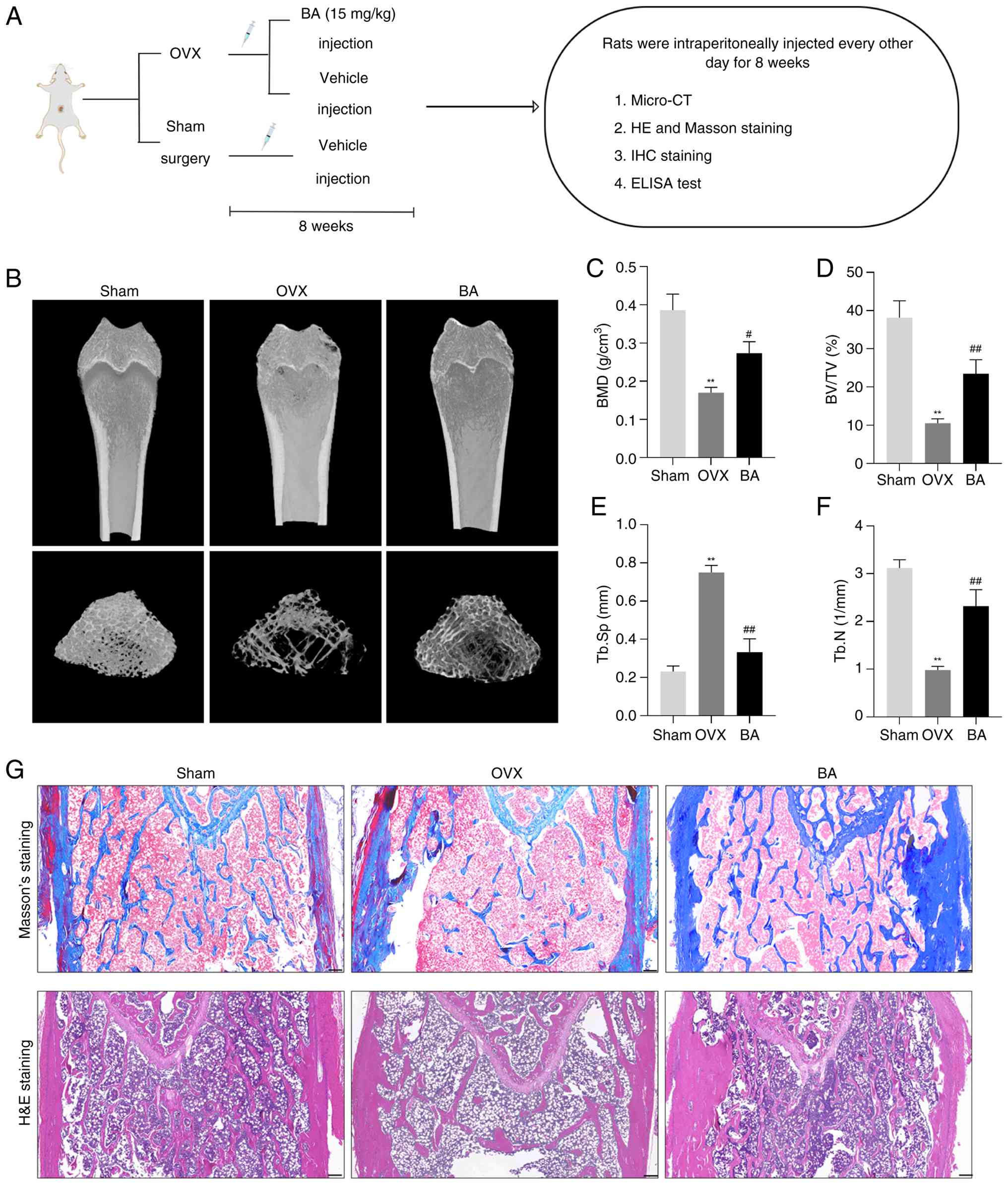
Figure 1

Protective effect of BA on
OVX-induced bone loss in rats. (A) Flow chart representing the
study design protocol to evaluate the therapeutic effect of BA on
OVX rats. (B) Representative images of femurs in each group of rats
detected by micro-CT. (C-F) Quantitative analyses of bone
structural parameters: BMD, BV/TV, Tb.Sp and Tb.N. (G) Masson's
staining and H&E staining of metaphyseal tissue sections of
femurs. Scale bar, 200 μm. Data are expressed as the mean ±
SEM. **P<0.01 vs. sham group; #P<0.05
and ##P<0.01 vs. corresponding OVX group. BA,
betulinic acid; OVX, ovariectomized; BMD, bone mineral density;
BV/TV, bone volume fraction; Tb.N., trabecular number; Tb.Sp,
trabecular separation; IHC, immunohistochemical.

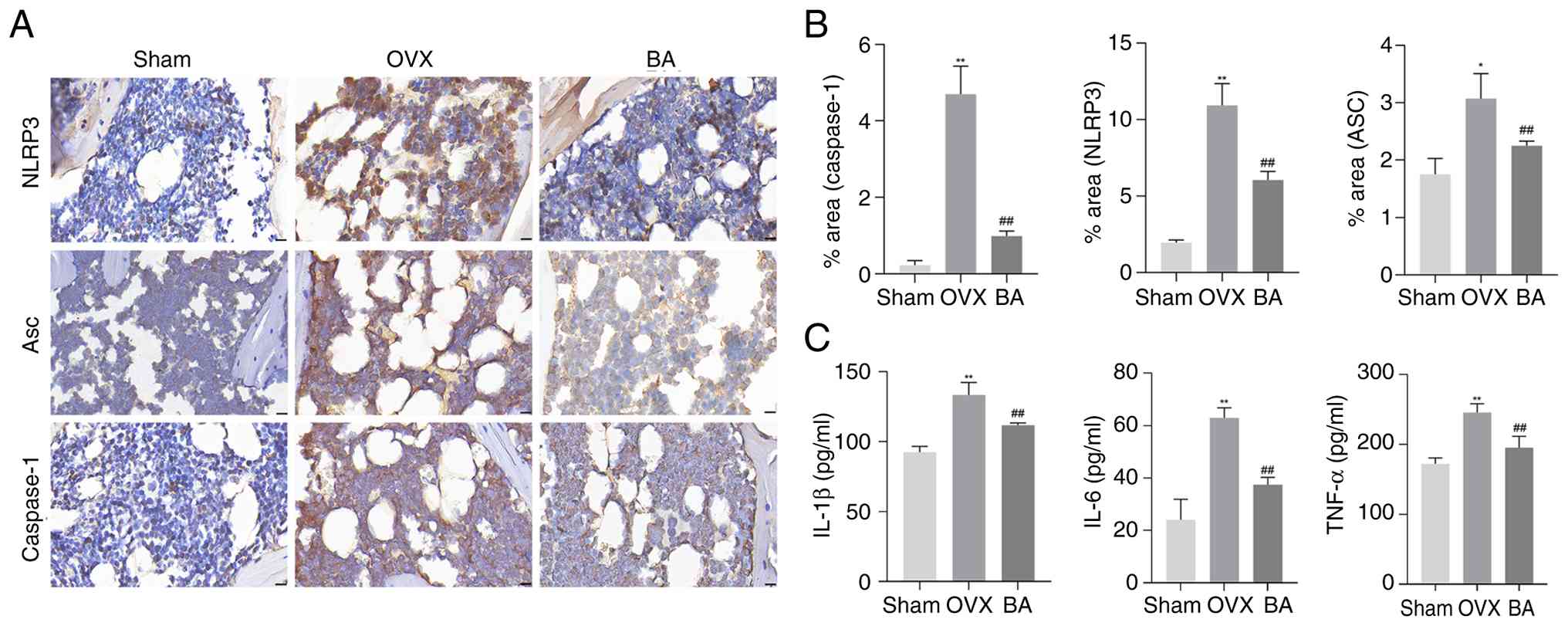
Figure 2

Protective effect of BA on
OVX-induced inflammation in rats. (A) Immunohistochemical analysis
was performed to detect the expression of NLRP3, Asc and Caspase 1
in rat femoral epiphyseal tissue. Scale bar, 100 μm. (B)
Positive areas of NLRP3, Asc and Caspase 1 in rat femoral
epiphyseal tissue. (C) The expression levels of IL-1β, IL-6 and
TNF-α in rat serum. Data are expressed as the mean ± SEM.
*P<0.05 and **P<0.01 vs. sham group;
##P<0.01 vs. corresponding OVX group. BA, betulinic
acid; OVX, ovariectomized; NLRP3, NOD-like receptor pyrin
domain-containing 3.

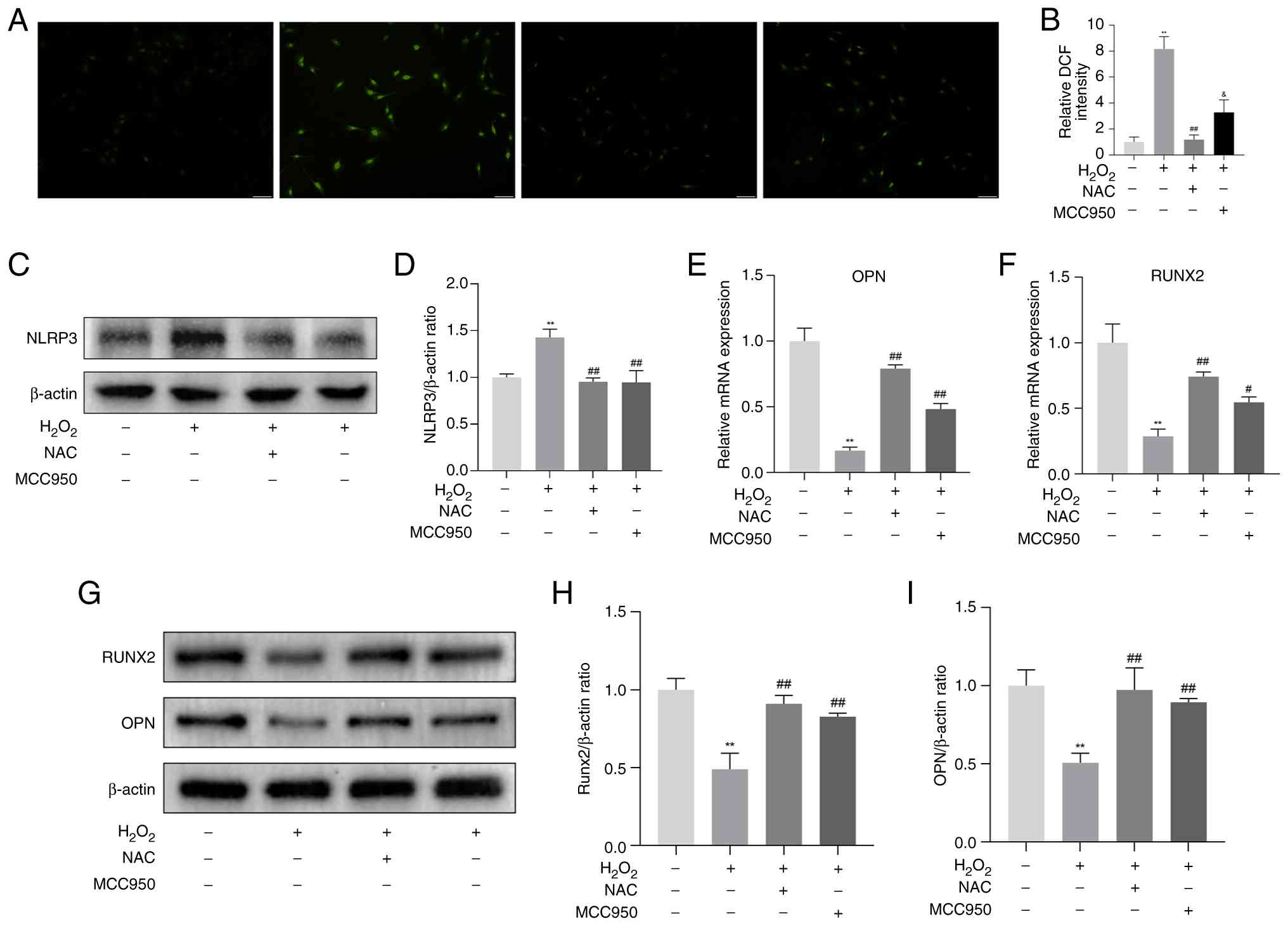
Figure 3

H2O2-induced
osteogenic differentiation decline in MC3T3-E1 cells related to
ROS/NLRP3. (A) MC3T3-E1 was cultured with ROS inhibitor NAC (20
μM) or NLRP3 inhibitor MCC950 (100 μM) in a medium
containing H2O2 (200 μM) to produce
ROS, and then intracellular ROS was detected by DCFH-DA. Scale bar,
100 μm. (B) The average relative DCF fluorescence intensity
on each pore cell was evaluated and quantified. (C) The protein
levels of NLRP3 were determined by western blotting. (D)
Quantification of the results shown in C. (E and F) Quantitative
analysis of the expression of osteoblast marker mRNA in osteoblasts
treated with NAC or MCC950 with or without
H2O2 by reverse transcription-quantitative
PCR. (G) The protein levels of related markers in the process of
osteoblast induction were determined by western blotting. (H and I)
Quantification of the results shown in G. Data are expressed as the
mean ± SEM. **P<0.01 vs. control group;
#P<0.05 and ##P<0.01 vs. corresponding
H2O2 group; &P<0.01 vs.
corresponding H2O2 group. ROS, reactive
oxygen species; NAC, N-acetyl-L-cysteine; NLRP3, NOD-like receptor
pyrin domain-containing 3; RUNX2, runt-related transcription factor
2.

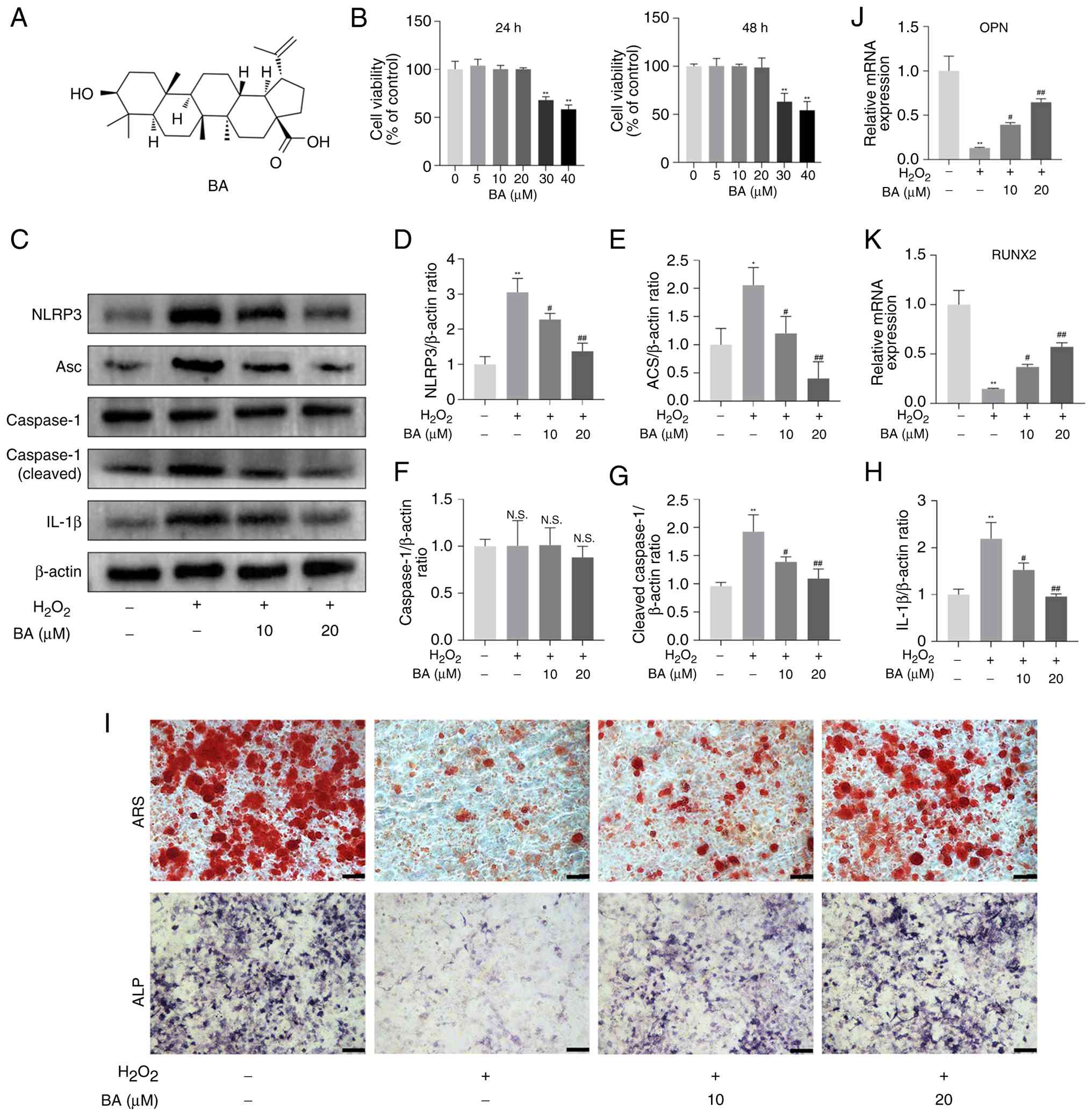
Figure 4

BA attenuates NLRP3-induced
inflammatory injury and osteogenic differentiation decline in
H2O2-exposed MC3T3-E1 cells. (A) The chemical
structure of BA. (B) MC3T3-E1 cells were treated with different
concentrations of BA (0, 5, 10, 20, 30 and 40 μM) for 24 and
48 h. Cell viability was measured by Cell Counting Kit-8 assay. (C)
MC3T3-E1 cells were incubated in the presence of
H2O2 (200 μM) medium with the BA (10
μM) or BA (20 μM), western blot analysis was
performed against NLRP3, Asc, caspase-1, cleaved caspase-1 and
IL-1β. (D-H) Quantification of the results shown in C. (I) ALP and
ARS staining were performed in MC3T3-E1 cells. (J and K)
Quantitative analysis of osteoblast marker gene expression after
treatment with different concentrations of BA using reverse
transcription-quantitative PCR. Data are expressed as the mean ±
SEM. **P<0.01 vs. control group;
#P<0.05 and ##P<0.01 vs. corresponding
H2O2 group. BA, betulinic acid; NLRP3,
NOD-like receptor pyrin domain-containing 3; ALP, alkaline
phosphatase; ARS, alizarin red staining; RUNX2, runt-related
transcription factor 2; N.S., not significant.

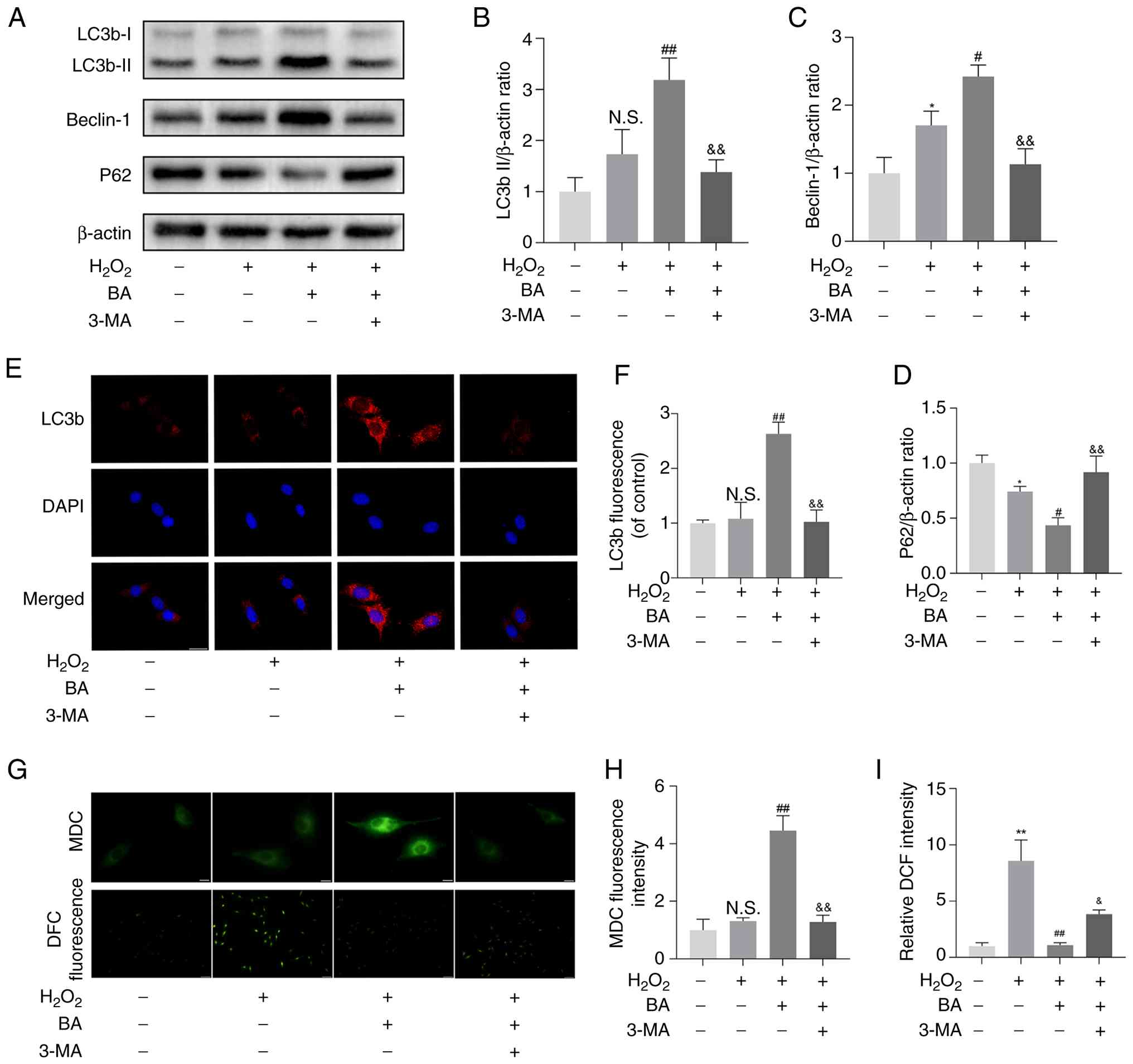
Figure 5

BA enhances autophagy in
H2O2-exposed MC3T3-E1 cells. (A) MC3T3-E1
cells were incubated in the presence of H2O2
(200 μM) medium with the BA (20 μM) or BA (20
μM) + 3-MA, western blot analysis was performed against
LC3b, beclin-1 and p62. (B-D) Quantification of the results shown
in A. (E) The expression of lc3b protein was detected by
immunofluorescence. (F) Quantification of the results shown in E.
(G) MDC detected the production of autophagosomes. Intracellular
reactive oxygen species were detected by DCFH-DA. (H and I)
Quantification of the results shown in G. Data are expressed as the
mean ± SEM. *P<0.05 and **P<0.01 vs.
control group; #P<0.05 and ##P<0.01 vs.
corresponding H2O2 group;
&P<0.05 and &&P<0.01 vs.
corresponding H2O2 + BA group. BA, betulinic
acid; MDC, monodansylcadaverine; 3-MA, 3-methyladenin; N.S., not
significant.

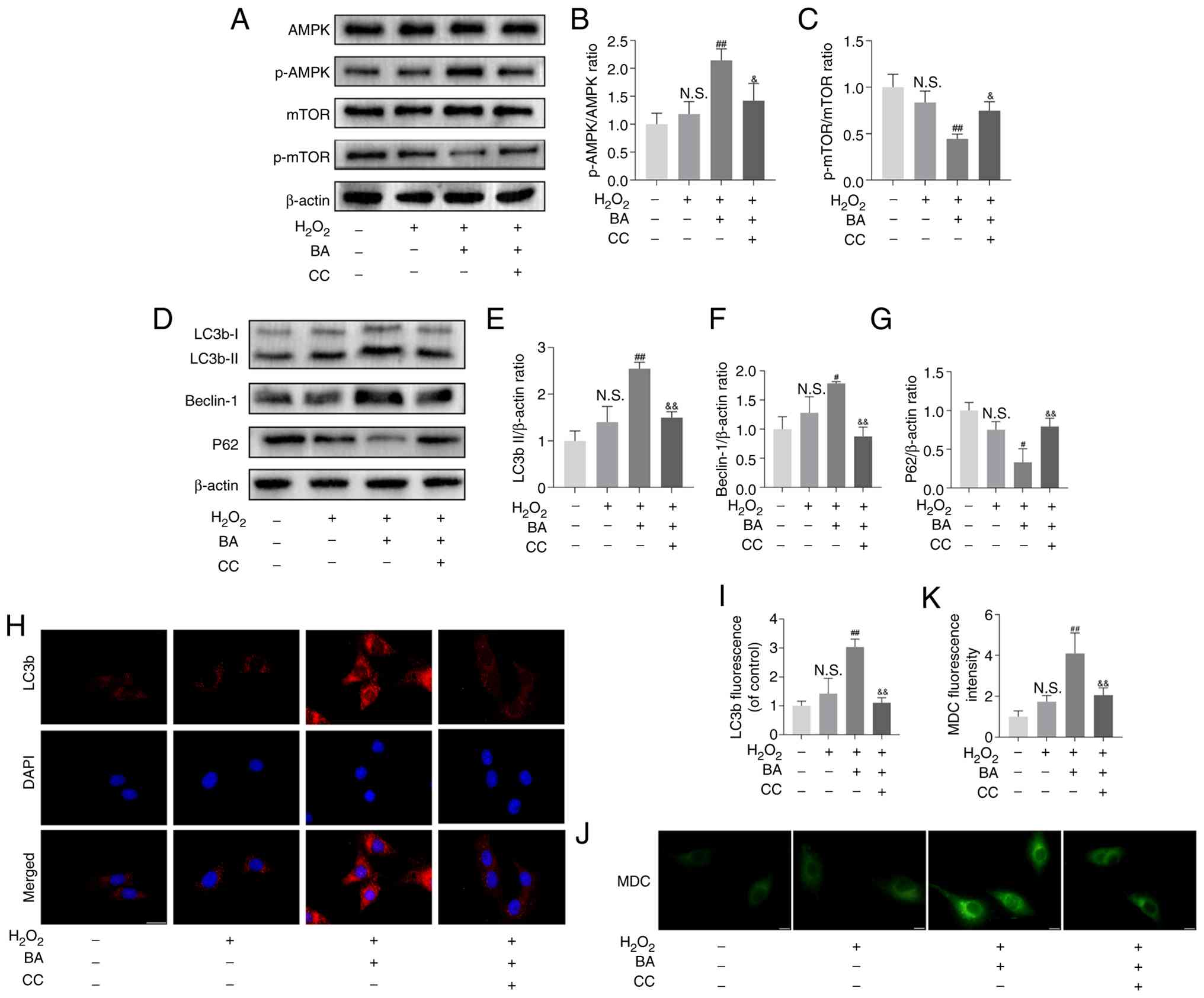
Figure 6

BA activates the AMPK/mTOR signaling
pathway in H2O2-exposed MC3T3-E1 cells. (A)
MC3T3-E1 cells were incubated in the presence of
H2O2 (200 μM) medium with the BA (20
μM) or BA (20 μM) + CC (AMPK inhibitor), western blot
analysis was performed against p-AMPK and AMPK, p-mTOR and mTOR. (B
and C) Quantification of the results shown in A. (D) Western blot
analysis was performed against LC3b, beclin-1 and p62. (E-G)
Quantification of the results shown in D. (H) The expression of
lc3b protein was detected by immunofluorescence. (I) Quantification
of the results shown in H. (J) MDC detected the production of
autophagosomes. (K) Quantification of the results shown in J. Data
are expressed as the mean ± SEM. #P<0.05 and
##P<0.01 vs. corresponding H2O2
group; &P<0.05 and &&P<0.01
vs. corresponding H2O2 + BA group. BA,
betulinic acid; CC, compound c; p-, phosphorylated; MDC,
monodansylcadaverine; N.S., not significant.

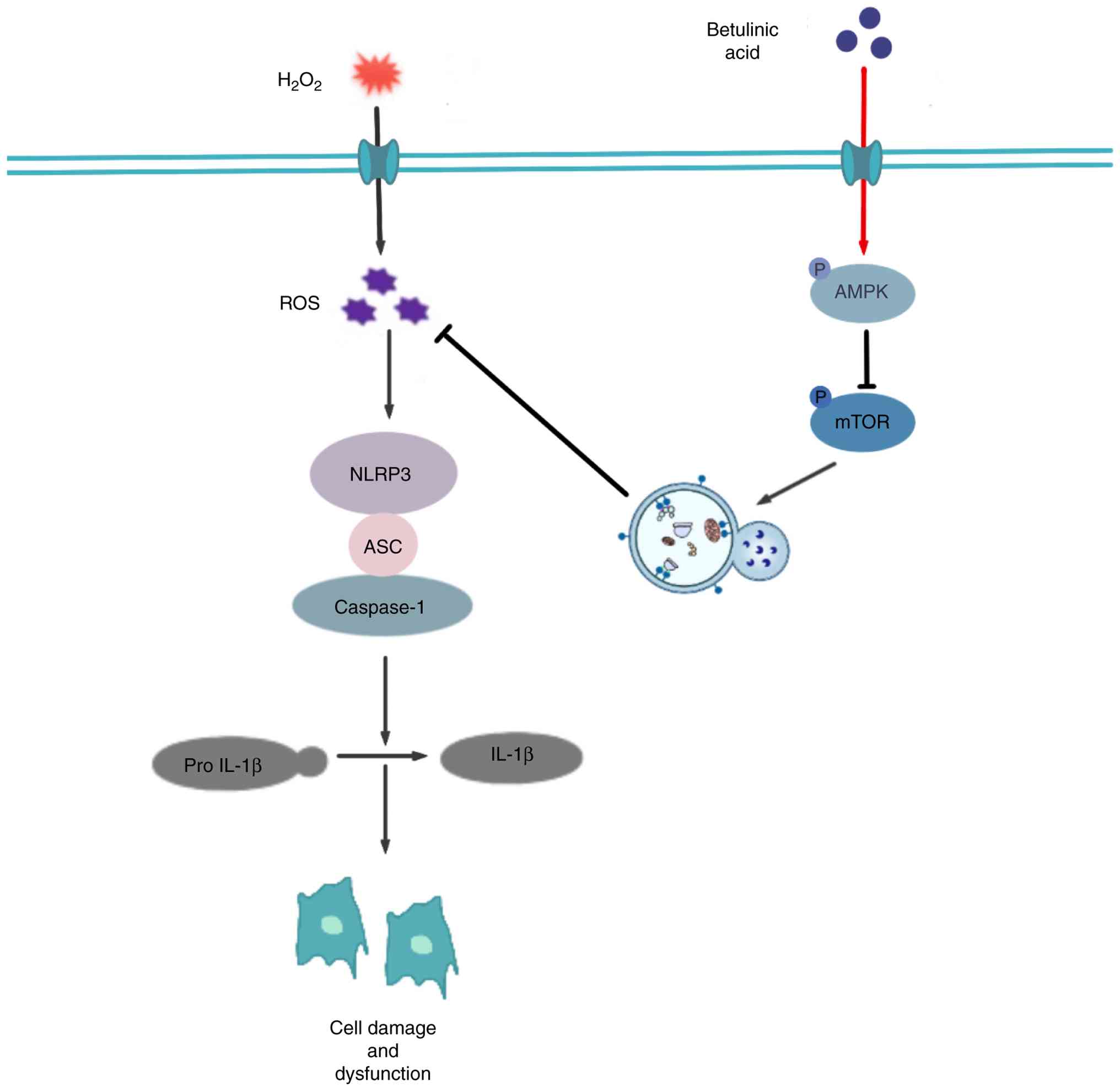
Figure 7

Schematic illustration of the working
model demonstrating that betulinic acid activates autophagy via the
AMPK/mTOR pathway to inhibit ROS production, thereby suppressing
NLRP3 inflammasome activation and alleviating inflammatory damage
to osteoblasts. ROS, reactive oxygen species; NLRP3, NOD-like
receptor pyrin domain-containing 3.
View References

1 

Fischer V and Haffner-Luntzer M: Interaction between bone and immune cells: Implications for postmenopausal osteoporosis. Semin Cell Dev Biol. 123:14–21. 2022. View Article : Google Scholar

2 

Ott SM: Osteoporosis treatment: Not easy. Ann Intern Med. 176:278–279. 2023. View Article : Google Scholar : PubMed/NCBI

3 

Adler RA: Osteoporosis treatment: Decreased mortality too? J Clin Endocrinol Metab. 108:e48–e49. 2023. View Article : Google Scholar

4 

Song S, Guo Y, Yang Y and Fu D: Advances in pathogenesis and therapeutic strategies for osteoporosis. Pharmacol Ther. 237:1081682022. View Article : Google Scholar : PubMed/NCBI

5 

Adami G, Fassio A, Rossini M, Caimmi C, Giollo A, Orsolini G, Viapiana O and Gatti D: Osteoporosis in rheumatic diseases. Int J Mol Sci. 20:58672019. View Article : Google Scholar : PubMed/NCBI

6 

Valero C and González Macías J: Atherosclerosis, vascular calcification and osteoporosis. Med Clin (Barc). 164:e13–e20. 2025.In English, Spanish. View Article : Google Scholar

7 

Weaver CM: Nutrition and bone health. Oral Dis. 23:412–415. 2017. View Article : Google Scholar

8 

Kimball JS, Johnson JP and Carlson DA: Oxidative stress and osteoporosis. J Bone Joint Surg Am. 103:1451–1461. 2021. View Article : Google Scholar : PubMed/NCBI

9 

Yao Y, Cai X, Chen Y, Zhang M and Zheng C: Estrogen deficiency-mediated osteoimmunity in postmenopausal osteoporosis. Med Res Rev. 45:561–575. 2025. View Article : Google Scholar

10 

Zhang YW, Cao MM, Li YJ, Lu PP, Dai GC, Zhang M, Wang H and Rui YF: Fecal microbiota transplantation ameliorates bone loss in mice with ovariectomy-induced osteoporosis via modulating gut microbiota and metabolic function. J Orthop Translat. 37:46–60. 2022. View Article : Google Scholar : PubMed/NCBI

11 

Wang G, Tan J, Huang C, Xu Y, Yang Z and Huo L: Based on NF-κB and Notch1/Hes1 signaling pathways, the mechanism of artesunate on inflammation in osteoporosis in ovariectomized rats was investigated. Front Biosci (Landmark Ed). 29:2662024. View Article : Google Scholar

12 

Sun D, Peng Y, Ge S and Fu Q: USP1 inhibits NF-κB/NLRP3 induced pyroptosis through TRAF6 in osteoblastic MC3T3-E1 cells. J Musculoskelet Neuronal Interact. 22:536–545. 2022.PubMed/NCBI

13 

Xu L, Zhang L, Wang Z, Li C, Li S, Li L, Fan Q and Zheng L: Melatonin suppresses estrogen deficiency-induced osteoporosis and promotes osteoblastogenesis by inactivating the NLRP3 inflammasome. Calcif Tissue Int. 103:400–410. 2018. View Article : Google Scholar : PubMed/NCBI

14 

An T, Zha W and Zi J: Biotechnological production of betulinic acid and derivatives and their applications. Appl Microbiol Biotechnol. 104:3339–3348. 2020. View Article : Google Scholar : PubMed/NCBI

15 

Lou H, Li H, Zhang S, Lu H and Chen Q: A review on preparation of betulinic acid and its biological activities. Molecules. 26:55832021. View Article : Google Scholar : PubMed/NCBI

16 

Zheng X, Cao Z, Wang M, Yuan R, Han Y, Li A and Wang X: Betulinic acid reduces intestinal inflammation and enhances intestinal tight junctions by modulating the PPAR-γ/NF-κB signaling pathway in intestinal cells and organoids. Nutrients. 17:20522025. View Article : Google Scholar

17 

Xia G, Shen C, Xiao Y, Wang X, Qiu L, Lei S and Jiang R: Shenling Baizhu Powder and Betulin attenuate sepsis-induced intestinal injury by targeting GADD45B/TAOK1/p38 MAPK pathway. J Ethnopharmacol. 353:1202822025. View Article : Google Scholar : PubMed/NCBI

18 

Zheng LY, Zou X, Wang YL, Zou M, Ma F, Wang N, Li JW, Wang MS, Hung HY and Wang Q: Betulinic acid-nucleoside hybrid prevents acute alcohol-induced liver damage by promoting anti-oxidative stress and autophagy. Eur J Pharmacol. 914:1746862022. View Article : Google Scholar

19 

Ou Z, Zhu L, Huang C, Ma C, Kong L, Lin X, Gao X, Huang L, Wen L, Liang Z, et al: Betulinic acid attenuates cyclophosphamide-induced intestinal mucosa injury by inhibiting the NF-κB/MAPK signalling pathways and activating the Nrf2 signalling pathway. Ecotoxicol Environ Saf. 225:1127462021. View Article : Google Scholar

20 

Li J, Bao G, ALyafeai E, Ding J, Li S, Sheng S, Shen Z, Jia Z, Lin C, Zhang C, et al: Betulinic acid enhances the viability of random-pattern skin flaps by activating autophagy. Front Pharmacol. 10:10172019. View Article : Google Scholar : PubMed/NCBI

21 

Liu Y, Bi Y, Mo C, Zeng T, Huang S, Gao L, Sun X and Lv Z: Betulinic acid attenuates liver fibrosis by inducing autophagy via the mitogen-activated protein kinase/extracellular signal-regulated kinase pathway. J Nat Med. 73:179–189. 2019. View Article : Google Scholar

22 

Liu B, Wu Y, Liang T, Zhou Y, Chen G, He J, Ji C, Liu P, Zhang C, Lin J, et al: Betulinic acid attenuates osteoarthritis via limiting NLRP3 inflammasome activation to decrease interleukin-1β maturation and secretion. Mediators Inflamm. 2023:37064212023. View Article : Google Scholar

23 

Wu C, Chen H, Zhuang R, Zhang H, Wang Y, Hu X, Xu Y, Li J, Li Y, Wang X, et al: Betulinic acid inhibits pyroptosis in spinal cord injury by augmenting autophagy via the AMPK-mTOR-TFEB signaling pathway. Int J Biol Sci. 17:1138–1152. 2021. View Article : Google Scholar : PubMed/NCBI

24 

Liu T, Wang L, Liang P, Wang X, Liu Y, Cai J, She Y, Wang D, Wang Z, Guo Z, et al: USP19 suppresses inflammation and promotes M2-like macrophage polarization by manipulating NLRP3 function via autophagy. Cell Mol Immunol. 18:2431–2442. 2021. View Article : Google Scholar

25 

Behera J, Ison J, Tyagi A, Mbalaviele G and Tyagi N: Mechanisms of autophagy and mitophagy in skeletal development, diseases and therapeutics. Life Sci. 301:1205952022. View Article : Google Scholar : PubMed/NCBI

26 

Wang J, Zhang Y, Cao J, Wang Y, Anwar N, Zhang Z, Zhang D, Ma Y, Xiao Y, Xiao L and Wang X: The role of autophagy in bone metabolism and clinical significance. Autophagy. 19:2409–2427. 2023. View Article : Google Scholar : PubMed/NCBI

27 

Lin Z, Gu Y, Liu Y, Chen Z, Fang S, Wang Z, Liu Z, Lin Q, Hu Y, Jiang N, et al: Melatonin attenuates inflammatory bone loss by alleviating mitophagy and lactate production. Apoptosis. 30:1351–1371. 2025. View Article : Google Scholar : PubMed/NCBI

28 

Tang N, Zhao H, Zhang H and Dong Y: Effect of autophagy gene DRAM on proliferation, cell cycle, apoptosis, and autophagy of osteoblast in osteoporosis rats. J Cell Physiol. 234:5023–5032. 2019. View Article : Google Scholar

29 

Qiao J, Liu A, Sun C and Liu Q: HIF1A overexpression promotes osteoblast differentiation through activation of autophagy to alleviate osteoporosis. Sci Rep. 15:303702025. View Article : Google Scholar : PubMed/NCBI

30 

Livak KJ and Schmittgen TD: Analysis of relative gene expression data using real-time quantitative PCR and the 2(-Delta Delta C(T)) method. Methods. 25:402–408. 2001. View Article : Google Scholar

31 

Choi H, Jeong BC, Kook MS and Koh JT: Betulinic acid synergically enhances BMP2-induced bone formation via stimulating Smad 1/5/8 and p38 pathways. J Biomed Sci. 23:452016. View Article : Google Scholar : PubMed/NCBI

32 

Zhang Y, He N, Zhou X, Wang F, Cai H, Huang SH, Chen X, Hu Z and Jin X: Betulinic acid induces autophagy-dependent apoptosis via Bmi-1/ROS/AMPK-mTOR-ULK1 axis in human bladder cancer cells. Aging (Albany NY). 13:21251–21267. 2021. View Article : Google Scholar : PubMed/NCBI

33 

Wang S, Deng Z, Ma Y, Jin J, Qi F, Li S, Liu C, Lyu FJ and Zheng Q: The role of autophagy and mitophagy in bone metabolic disorders. Int J Biol Sci. 16:2675–2691. 2020. View Article : Google Scholar : PubMed/NCBI

34 

Du J, Wang Y, Wu C, Zhang X, Zhang X and Xu X: Targeting bone homeostasis regulation: Potential of traditional Chinese medicine flavonoids in the treatment of osteoporosis. Front Pharmacol. 15:13618642024. View Article : Google Scholar : PubMed/NCBI

35 

Kim JM, Lin C, Stavre Z, Greenblatt MB and Shim JH: Osteoblast-osteoclast communication and bone homeostasis. Cells. 9:20732020. View Article : Google Scholar : PubMed/NCBI

36 

Li J, Chen X, Lu L and Yu X: The relationship between bone marrow adipose tissue and bone metabolism in postmenopausal osteoporosis. Cytokine Growth Factor Rev. 52:88–98. 2020. View Article : Google Scholar : PubMed/NCBI

37 

Zhang C, Li H, Li J, Hu J, Yang K and Tao L: Oxidative stress: A common pathological state in a high-risk population for osteoporosis. Biomed Pharmacother. 163:1148342023. View Article : Google Scholar : PubMed/NCBI

38 

Weitzmann MN and Pacifici R: Estrogen deficiency and bone loss: An inflammatory tale. J Clin Invest. 116:1186–1194. 2006. View Article : Google Scholar : PubMed/NCBI

39 

Cheng CH, Chen LR and Chen KH: Osteoporosis due to hormone imbalance: An overview of the effects of estrogen deficiency and glucocorticoid overuse on bone turnover. Int J Mol Sci. 23:13762022. View Article : Google Scholar : PubMed/NCBI

40 

Wu M, Chen G and Li YP: TGF-β and BMP signaling in osteoblast, skeletal development, and bone formation, homeostasis and disease. Bone Res. 4:160092016. View Article : Google Scholar

41 

Zanotti S and Canalis E: Notch signaling and the skeleton. Endocr Rev. 37:223–253. 2016. View Article : Google Scholar : PubMed/NCBI

42 

Uluçkan Ö, Jimenez M, Karbach S, Jeschke A, Graña O, Keller J, Busse B, Croxford AL, Finzel S, Koenders M, et al: Chronic skin inflammation leads to bone loss by IL-17-mediated inhibition of Wnt signaling in osteoblasts. Sci Transl Med. 8:330ra3372016. View Article : Google Scholar

43 

Zhang H, Hilton MJ, Anolik JH, Welle SL, Zhao C, Yao Z, Li X, Wang Z, Boyce BF and Xing L: NOTCH inhibits osteoblast formation in inflammatory arthritis via noncanonical NF-κB. J Clin Invest. 124:3200–3214. 2014. View Article : Google Scholar : PubMed/NCBI

44 

Livshits G and Kalinkovich A: Targeting chronic inflammation as a potential adjuvant therapy for osteoporosis. Life Sci. 306:1208472022. View Article : Google Scholar : PubMed/NCBI

45 

Iantomasi T, Romagnoli C, Palmini G, Donati S, Falsetti I, Miglietta F, Aurilia C, Marini F, Giusti F and Brandi ML: Oxidative stress and inflammation in osteoporosis: Molecular mechanisms involved and the relationship with microRNAs. Int J Mol Sci. 24:37722023. View Article : Google Scholar : PubMed/NCBI

46 

Abais JM, Xia M, Zhang Y, Boini KM and Li PL: Redox regulation of NLRP3 inflammasomes: ROS as trigger or effector? Antioxid Redox Signal. 22:1111–1129. 2015. View Article : Google Scholar

47 

Que X, Zheng S, Song Q, Pei H and Zhang P: Fantastic voyage: The journey of NLRP3 inflammasome activation. Genes Dis. 11:819–829. 2023. View Article : Google Scholar : PubMed/NCBI

48 

Fu J and Wu H: Structural mechanisms of NLRP3 inflammasome assembly and activation. Annu Rev Immunol. 41:301–316. 2023. View Article : Google Scholar : PubMed/NCBI

49 

Jiang W, Li X, Dong S and Zhou W: Betulinic acid in the treatment of tumour diseases: Application and research progress. Biomed Pharmacother. 142:1119902021. View Article : Google Scholar : PubMed/NCBI

50 

Feng R, Wang Q, Yu T, Hu H, Wu G, Duan X, Jiang R, Xu Y and Huang Y: Quercetin ameliorates bone loss in OVX rats by modulating the intestinal flora-SCFAs-inflammatory signaling axis. Int Immunopharmacol. 136:1123412024. View Article : Google Scholar : PubMed/NCBI

51 

Liu S, Yao S, Yang H, Liu S and Wang Y: Autophagy: Regulator of cell death. Cell Death Dis. 14:6482023. View Article : Google Scholar : PubMed/NCBI

52 

Di Q, Zhao X, Tang H, Li X, Xiao Y, Wu H, Wu Z, Quan J and Chen W: USP22 suppresses the NLRP3 inflammasome by degrading NLRP3 via ATG5-dependent autophagy. Autophagy. 19:873–885. 2023. View Article : Google Scholar

53 

Lin Q, Li S, Jiang N, Jin H, Shao X, Zhu X, Wu J, Zhang M, Zhang Z, Shen J, et al: Inhibiting NLRP3 inflammasome attenuates apoptosis in contrast-induced acute kidney injury through the upregulation of HIF1A and BNIP3-mediated mitophagy. Autophagy. 17:2975–2990. 2021. View Article : Google Scholar

54 

Chen H, Cheng Y, Du H, Zhang C, Zhou Y, Zhao Z, Li Y, Friedemann T, Mei J, Schröder S, et al: Shufeng Jiedu capsule ameliorates olfactory dysfunction via the AMPK/mTOR autophagy pathway in a mouse model of allergic rhinitis. Phytomedicine. 107:1544262022. View Article : Google Scholar : PubMed/NCBI

55 

Wei J, Li Y, Liu Q, Lan Y, Wei C, Tian K, Wu L, Lin C, Xu J, Zhao J and Yang Y: Betulinic acid protects from bone loss in ovariectomized mice and suppresses RANKL-associated osteoclastogenesis by inhibiting the MAPK and NFATc1 pathways. Front Pharmacol. 11:10252020. View Article : Google Scholar : PubMed/NCBI

56 

Jeong DH, Kwak SC, Lee MS, Yoon KH, Kim JY and Lee CH: Betulinic acid inhibits RANKL-induced osteoclastogenesis via attenuating Akt, NF-κB, and PLCγ2-Ca2+ signaling and prevents inflammatory bone loss. J Nat Prod. 83:1174–1182. 2020. View Article : Google Scholar : PubMed/NCBI

Related Articles

  • Abstract
  • View
  • Download
  • Twitter
Copy and paste a formatted citation
Spandidos Publications style
Zhao Y, Qu Z, Liu L, Zhang Y, Wang X, Zhang B, Gong Y and Yan L: Betulinic acid alleviates the inflammatory injury of osteoblasts in osteoporosis by augmenting autophagy via the AMPK-mTOR signaling pathway. Int J Mol Med 58: 187, 2026.
APA
Zhao, Y., Qu, Z., Liu, L., Zhang, Y., Wang, X., Zhang, B. ... Yan, L. (2026). Betulinic acid alleviates the inflammatory injury of osteoblasts in osteoporosis by augmenting autophagy via the AMPK-mTOR signaling pathway. International Journal of Molecular Medicine, 58, 187. https://doi.org/10.3892/ijmm.2026.5858
MLA
Zhao, Y., Qu, Z., Liu, L., Zhang, Y., Wang, X., Zhang, B., Gong, Y., Yan, L."Betulinic acid alleviates the inflammatory injury of osteoblasts in osteoporosis by augmenting autophagy via the AMPK-mTOR signaling pathway". International Journal of Molecular Medicine 58.1 (2026): 187.
Chicago
Zhao, Y., Qu, Z., Liu, L., Zhang, Y., Wang, X., Zhang, B., Gong, Y., Yan, L."Betulinic acid alleviates the inflammatory injury of osteoblasts in osteoporosis by augmenting autophagy via the AMPK-mTOR signaling pathway". International Journal of Molecular Medicine 58, no. 1 (2026): 187. https://doi.org/10.3892/ijmm.2026.5858
Copy and paste a formatted citation
x
Spandidos Publications style
Zhao Y, Qu Z, Liu L, Zhang Y, Wang X, Zhang B, Gong Y and Yan L: Betulinic acid alleviates the inflammatory injury of osteoblasts in osteoporosis by augmenting autophagy via the AMPK-mTOR signaling pathway. Int J Mol Med 58: 187, 2026.
APA
Zhao, Y., Qu, Z., Liu, L., Zhang, Y., Wang, X., Zhang, B. ... Yan, L. (2026). Betulinic acid alleviates the inflammatory injury of osteoblasts in osteoporosis by augmenting autophagy via the AMPK-mTOR signaling pathway. International Journal of Molecular Medicine, 58, 187. https://doi.org/10.3892/ijmm.2026.5858
MLA
Zhao, Y., Qu, Z., Liu, L., Zhang, Y., Wang, X., Zhang, B., Gong, Y., Yan, L."Betulinic acid alleviates the inflammatory injury of osteoblasts in osteoporosis by augmenting autophagy via the AMPK-mTOR signaling pathway". International Journal of Molecular Medicine 58.1 (2026): 187.
Chicago
Zhao, Y., Qu, Z., Liu, L., Zhang, Y., Wang, X., Zhang, B., Gong, Y., Yan, L."Betulinic acid alleviates the inflammatory injury of osteoblasts in osteoporosis by augmenting autophagy via the AMPK-mTOR signaling pathway". International Journal of Molecular Medicine 58, no. 1 (2026): 187. https://doi.org/10.3892/ijmm.2026.5858
Follow us
  • Twitter
  • LinkedIn
  • Facebook
About
  • Spandidos Publications
  • Careers
  • Cookie Policy
  • Privacy Policy
How can we help?
  • Help
  • Live Chat
  • Contact
  • Email to our Support Team