Spandidos Publications Logo
  • About
    • About Spandidos
    • Aims and Scopes
    • Abstracting and Indexing
    • Editorial Policies
    • Reprints and Permissions
    • Job Opportunities
    • Terms and Conditions
    • Contact
  • Journals
    • All Journals
    • Oncology Letters
      • Oncology Letters
      • Information for Authors
      • Editorial Policies
      • Editorial Board
      • Aims and Scope
      • Abstracting and Indexing
      • Bibliographic Information
      • Archive
    • International Journal of Oncology
      • International Journal of Oncology
      • Information for Authors
      • Editorial Policies
      • Editorial Board
      • Aims and Scope
      • Abstracting and Indexing
      • Bibliographic Information
      • Archive
    • Molecular and Clinical Oncology
      • Molecular and Clinical Oncology
      • Information for Authors
      • Editorial Policies
      • Editorial Board
      • Aims and Scope
      • Abstracting and Indexing
      • Bibliographic Information
      • Archive
    • Experimental and Therapeutic Medicine
      • Experimental and Therapeutic Medicine
      • Information for Authors
      • Editorial Policies
      • Editorial Board
      • Aims and Scope
      • Abstracting and Indexing
      • Bibliographic Information
      • Archive
    • International Journal of Molecular Medicine
      • International Journal of Molecular Medicine
      • Information for Authors
      • Editorial Policies
      • Editorial Board
      • Aims and Scope
      • Abstracting and Indexing
      • Bibliographic Information
      • Archive
    • Biomedical Reports
      • Biomedical Reports
      • Information for Authors
      • Editorial Policies
      • Editorial Board
      • Aims and Scope
      • Abstracting and Indexing
      • Bibliographic Information
      • Archive
    • Oncology Reports
      • Oncology Reports
      • Information for Authors
      • Editorial Policies
      • Editorial Board
      • Aims and Scope
      • Abstracting and Indexing
      • Bibliographic Information
      • Archive
    • Molecular Medicine Reports
      • Molecular Medicine Reports
      • Information for Authors
      • Editorial Policies
      • Editorial Board
      • Aims and Scope
      • Abstracting and Indexing
      • Bibliographic Information
      • Archive
    • World Academy of Sciences Journal
      • World Academy of Sciences Journal
      • Information for Authors
      • Editorial Policies
      • Editorial Board
      • Aims and Scope
      • Abstracting and Indexing
      • Bibliographic Information
      • Archive
    • International Journal of Functional Nutrition
      • International Journal of Functional Nutrition
      • Information for Authors
      • Editorial Policies
      • Editorial Board
      • Aims and Scope
      • Abstracting and Indexing
      • Bibliographic Information
      • Archive
    • International Journal of Epigenetics
      • International Journal of Epigenetics
      • Information for Authors
      • Editorial Policies
      • Editorial Board
      • Aims and Scope
      • Abstracting and Indexing
      • Bibliographic Information
      • Archive
    • Medicine International
      • Medicine International
      • Information for Authors
      • Editorial Policies
      • Editorial Board
      • Aims and Scope
      • Abstracting and Indexing
      • Bibliographic Information
      • Archive
  • Articles
  • Information
    • Information for Authors
    • Information for Reviewers
    • Information for Librarians
    • Information for Advertisers
    • Conferences
  • Language Editing
Spandidos Publications Logo
  • About
    • About Spandidos
    • Aims and Scopes
    • Abstracting and Indexing
    • Editorial Policies
    • Reprints and Permissions
    • Job Opportunities
    • Terms and Conditions
    • Contact
  • Journals
    • All Journals
    • Biomedical Reports
      • Information for Authors
      • Editorial Policies
      • Editorial Board
      • Aims and Scope
      • Abstracting and Indexing
      • Bibliographic Information
      • Archive
    • Experimental and Therapeutic Medicine
      • Information for Authors
      • Editorial Policies
      • Editorial Board
      • Aims and Scope
      • Abstracting and Indexing
      • Bibliographic Information
      • Archive
    • International Journal of Epigenetics
      • Information for Authors
      • Editorial Policies
      • Editorial Board
      • Aims and Scope
      • Abstracting and Indexing
      • Bibliographic Information
      • Archive
    • International Journal of Functional Nutrition
      • Information for Authors
      • Editorial Policies
      • Editorial Board
      • Aims and Scope
      • Abstracting and Indexing
      • Bibliographic Information
      • Archive
    • International Journal of Molecular Medicine
      • Information for Authors
      • Editorial Policies
      • Editorial Board
      • Aims and Scope
      • Abstracting and Indexing
      • Bibliographic Information
      • Archive
    • International Journal of Oncology
      • Information for Authors
      • Editorial Policies
      • Editorial Board
      • Aims and Scope
      • Abstracting and Indexing
      • Bibliographic Information
      • Archive
    • Medicine International
      • Information for Authors
      • Editorial Policies
      • Editorial Board
      • Aims and Scope
      • Abstracting and Indexing
      • Bibliographic Information
      • Archive
    • Molecular and Clinical Oncology
      • Information for Authors
      • Editorial Policies
      • Editorial Board
      • Aims and Scope
      • Abstracting and Indexing
      • Bibliographic Information
      • Archive
    • Molecular Medicine Reports
      • Information for Authors
      • Editorial Policies
      • Editorial Board
      • Aims and Scope
      • Abstracting and Indexing
      • Bibliographic Information
      • Archive
    • Oncology Letters
      • Information for Authors
      • Editorial Policies
      • Editorial Board
      • Aims and Scope
      • Abstracting and Indexing
      • Bibliographic Information
      • Archive
    • Oncology Reports
      • Information for Authors
      • Editorial Policies
      • Editorial Board
      • Aims and Scope
      • Abstracting and Indexing
      • Bibliographic Information
      • Archive
    • World Academy of Sciences Journal
      • Information for Authors
      • Editorial Policies
      • Editorial Board
      • Aims and Scope
      • Abstracting and Indexing
      • Bibliographic Information
      • Archive
  • Articles
  • Information
    • For Authors
    • For Reviewers
    • For Librarians
    • For Advertisers
    • Conferences
  • Language Editing
Login Register Submit
  • This site uses cookies
  • You can change your cookie settings at any time by following the instructions in our Cookie Policy. To find out more, you may read our Privacy Policy.

    I agree
Search articles by DOI, keyword, author or affiliation
Search
Advanced Search
presentation
International Journal of Molecular Medicine
Join Editorial Board Propose a Special Issue
Print ISSN: 1107-3756 Online ISSN: 1791-244X
Journal Cover
July-2026 Volume 58 Issue 1

Full Size Image

Sign up for eToc alerts
Recommend to Library

Journals

International Journal of Molecular Medicine

International Journal of Molecular Medicine

International Journal of Molecular Medicine is an international journal devoted to molecular mechanisms of human disease.

International Journal of Oncology

International Journal of Oncology

International Journal of Oncology is an international journal devoted to oncology research and cancer treatment.

Molecular Medicine Reports

Molecular Medicine Reports

Covers molecular medicine topics such as pharmacology, pathology, genetics, neuroscience, infectious diseases, molecular cardiology, and molecular surgery.

Oncology Reports

Oncology Reports

Oncology Reports is an international journal devoted to fundamental and applied research in Oncology.

Experimental and Therapeutic Medicine

Experimental and Therapeutic Medicine

Experimental and Therapeutic Medicine is an international journal devoted to laboratory and clinical medicine.

Oncology Letters

Oncology Letters

Oncology Letters is an international journal devoted to Experimental and Clinical Oncology.

Biomedical Reports

Biomedical Reports

Explores a wide range of biological and medical fields, including pharmacology, genetics, microbiology, neuroscience, and molecular cardiology.

Molecular and Clinical Oncology

Molecular and Clinical Oncology

International journal addressing all aspects of oncology research, from tumorigenesis and oncogenes to chemotherapy and metastasis.

World Academy of Sciences Journal

World Academy of Sciences Journal

Multidisciplinary open-access journal spanning biochemistry, genetics, neuroscience, environmental health, and synthetic biology.

International Journal of Functional Nutrition

International Journal of Functional Nutrition

Open-access journal combining biochemistry, pharmacology, immunology, and genetics to advance health through functional nutrition.

International Journal of Epigenetics

International Journal of Epigenetics

Publishes open-access research on using epigenetics to advance understanding and treatment of human disease.

Medicine International

Medicine International

An International Open Access Journal Devoted to General Medicine.

Journal Cover
July-2026 Volume 58 Issue 1

Full Size Image

Sign up for eToc alerts
Recommend to Library

  • Article
  • Citations
    • Cite This Article
    • Download Citation
    • Create Citation Alert
    • Remove Citation Alert
    • Cited By
  • Similar Articles
    • Related Articles (in Spandidos Publications)
    • Similar Articles (Google Scholar)
    • Similar Articles (PubMed)
  • Download PDF
  • Download XML
  • View XML

  • Supplementary Files
    • Supplementary_Data1.pdf
    • Supplementary_Data2.pdf
Article Open Access

CTRP3 alleviates neuropathic pain by improving mitochondrial biogenesis and mitochondrial unfolded protein response via spinal SIRT1 in rats

  • Authors:
    • Tianzhu Liu
    • Longqing Zhang
    • Wei Mei
  • View Affiliations / Copyright

    Affiliations: Department of Anesthesiology and Pain Medicine, Hubei Key Laboratory of Geriatric Anesthesia and Perioperative Brain Health, and Wuhan Clinical Research Center for Geriatric Anesthesia, Tongji Hospital, Tongji Medical College, Huazhong University of Science and Technology, Wuhan, Hubei 430030, P.R. China
    Copyright: © Liu et al. This is an open access article distributed under the terms of Creative Commons Attribution License.
  • Article Number: 197
    |
    Published online on: May 21, 2026
       https://doi.org/10.3892/ijmm.2026.5868
  • Expand metrics +
Metrics: Total Views: 0 (Spandidos Publications: | PMC Statistics: )
Metrics: Total PDF Downloads: 0 (Spandidos Publications: | PMC Statistics: )
Cited By (CrossRef): 0 citations Loading Articles...

This article is mentioned in:


Abstract

Neuropathic pain arises from an intricate network of interconnected pathophysiological mechanisms, yet the arsenal of effective therapeutic strategies remains frustratingly limited. Accumulating evidence has linked mitochondrial dysfunction to the progression of neuropathic pain. C1q‑tumor necrosis factor‑related protein‑3 (CTRP3), a newly identified adipokine with diverse cytoprotective capacities, has not been previously explored for its role in nociceptive processing. To explore the role of CTRP3 in pain hypersensitivity, pain‑related behavioral assessments were conducted using von Frey filaments and acetone drop method in male rats subjected to spared nerve injury (SNI). To unravel the underlying mechanisms, spinal cord tissues were subjected to western blotting, reverse transcription‑quantitative PCR, immunofluorescence staining, dihydroethidium staining, small interfering RNA (siRNA) technologies and biochemical assays for quantifying oxidative markers. The findings showed that SNI markedly reduced endogenous CTRP3 expression in spinal neurons. Intrathecal administration of recombinant CTRP3 (rCTRP3) alleviated mechanical allodynia and cold hyperalgesia in SNI‑induced rats. Additionally, rCTRP3 treatment enhanced PGC‑1α‑mediated mitochondrial biogenesis, ATF5‑triggered mitochondrial unfolded protein response (UPRmt), and mitigated spinal oxidative stress. Mechanistically, pharmacological inhibition of SIRT1 with EX‑527, or siRNA‑mediated silencing of PGC‑1α or ATF5, reversed the effects of CTRP3 on pain hypersensitivity, mitochondrial biogenesis, UPRmt and oxidative stress. The present study demonstrates that CTRP3 mitigates mechanical allodynia and cold hyperalgesia in male SNI rats by activating spinal SIRT1, thereby enhancing PGC‑1α‑mediated mitochondrial biogenesis and ATF5‑induced UPRmt. CTRP3 may therefore represent a novel therapeutic target for the management of neuropathic pain.
View Figures

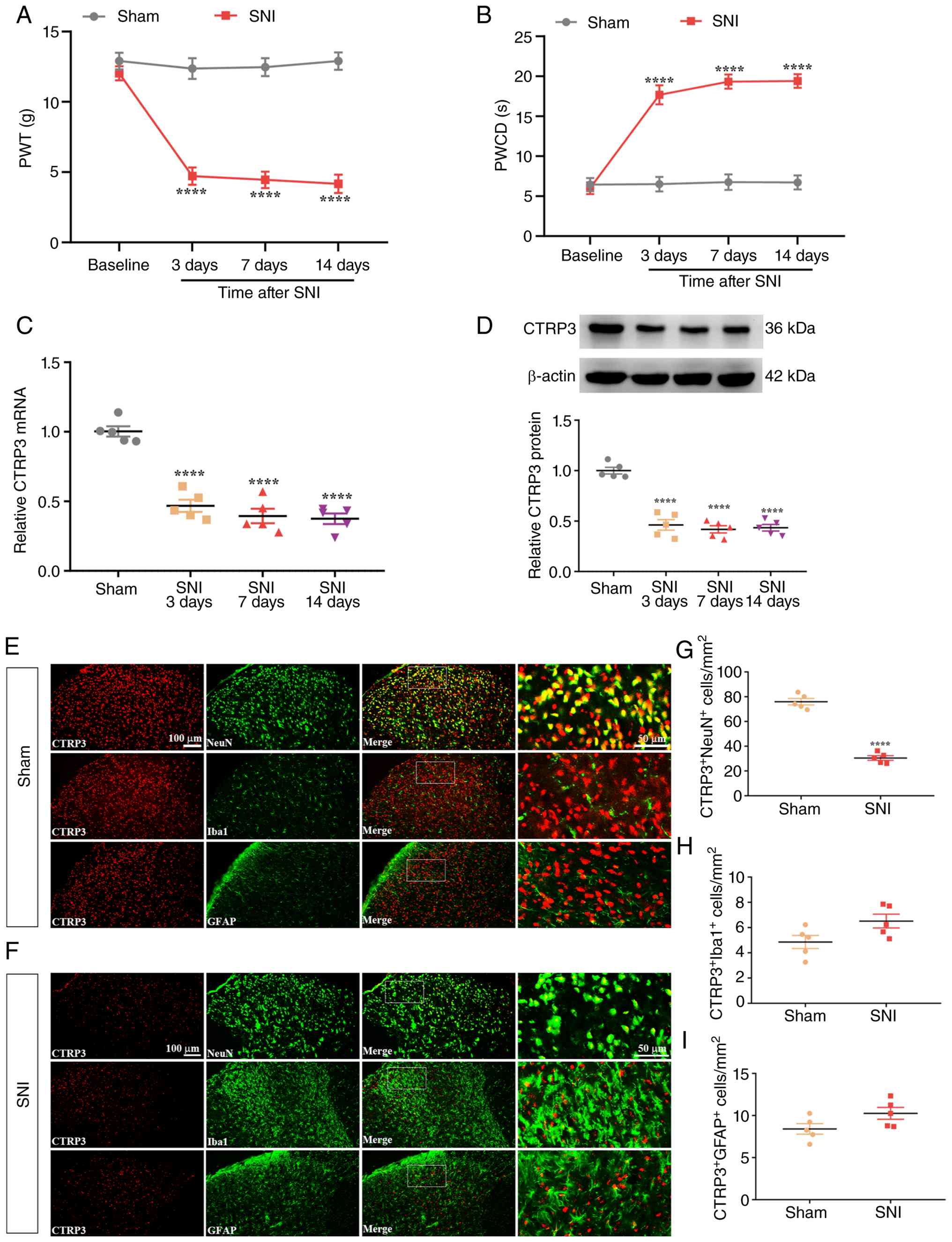
Figure 1

Spinal CTRP3 expression is
downregulated following SNI. (A and B) Compared with sham-operated
control rats, rats subjected to SNI exhibited a significant
reduction in PWT and a prominent elevation in PWCD from post-SNI
day 3 to day 14. ****P<0.0001 vs. sham group, n=10
rats/group. (C and D) RT-qPCR and WB analyses showed a marked
decrease in CTRP3 mRNA and protein levels in the spinal cord of SNI
rats relative to sham controls. (E-I) IF staining results
demonstrated that SNI led to reduced CTRP3 expression in neurons
within the spinal dorsal horn of rats. ****P<0.0001
vs. sham group, n=5 rats/group. SNI, spared nerve injury; PWT, paw
withdrawal threshold; PWCD, paw withdrawal cold duration; RT-qPCR,
reverse transcription-quantitative polymerase chain reaction; WB,
western blotting; IF, immunofluorescence; CTRP3, C1q-tumor necrosis
factor-related protein 3.

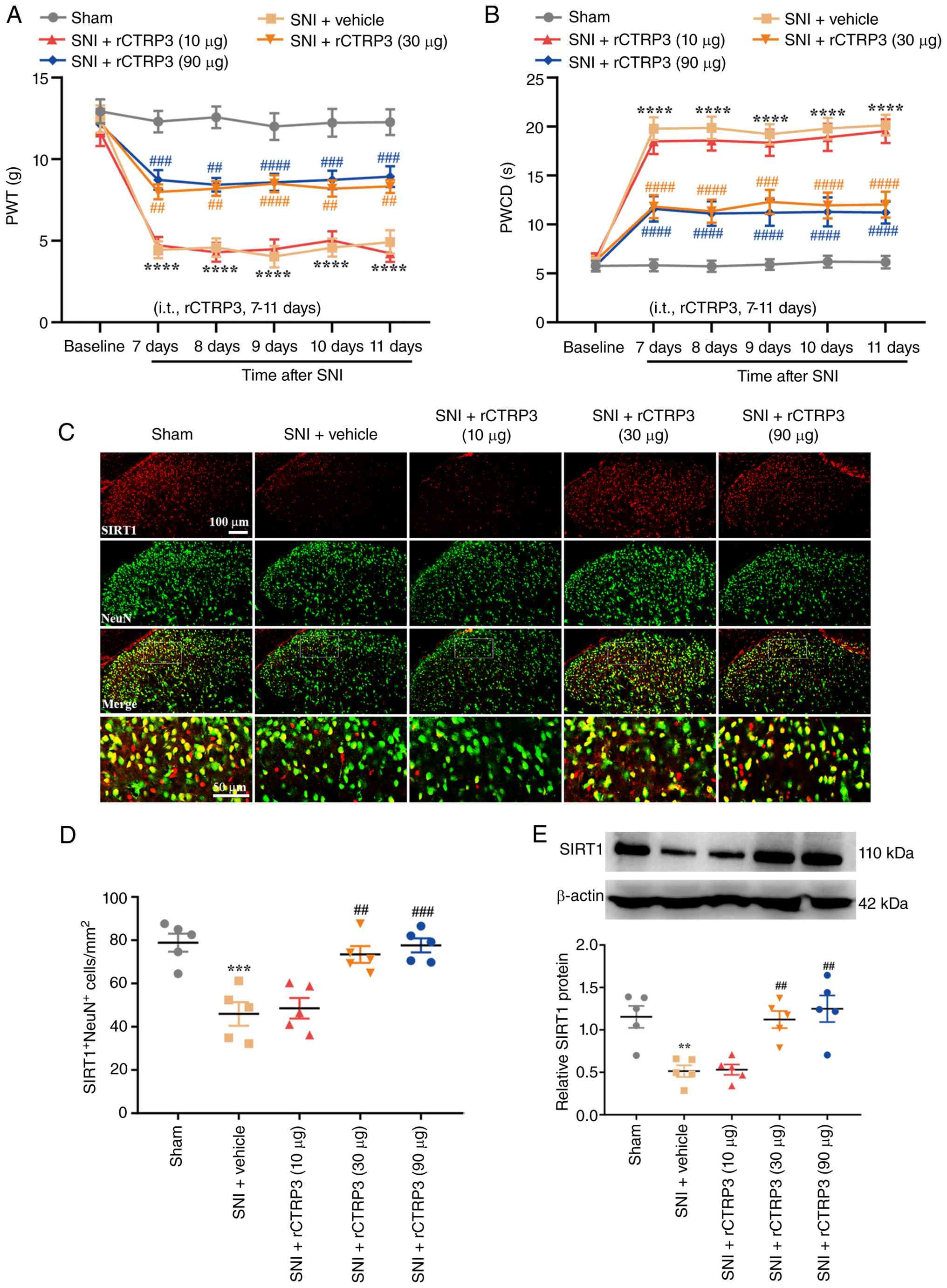
Figure 2

Intrathecal administration of rCTRP3
alleviates pain hypersensitivity and activates spinal SIRT1 in SNI
rats. (A and B) Behavioral assessments showed that repeated
intrathecal injection of rCTRP3 (30 or 90 μg) significantly
reversed the SNI-induced reductions in PWT and increases in PWCD.
****P<0.0001 vs. sham group; ##P<0.01,
###P<0.001 and ####P<0.0001 vs. SNI +
vehicle group; n=10 rats/group. (C and D) IF staining results
revealed that the number of SIRT1-positive neurons was lower in SNI
rats than in the sham group, whereas treatment with rCTRP3 (30 and
90 μg) reversed this decrease in SIRT1 expression in spinal
dorsal horn neurons of SNI rats. (E) WB analysis demonstrated that
SIRT1 levels in the spinal cord were reduced in SNI rats, and this
downregulation was markedly attenuated by rCTRP3 treatment at doses
of 30 or 90 μg. **P<0.01 and
***P<0.001 vs. sham group; ##P<0.01 and
###P<0.001, vs. SNI + vehicle group; n=5 rats/group.
rCTRP3, recombinant complement C1q tumor necrosis factor-related
protein 3; SNI, spared nerve injury; PWT, paw withdrawal threshold;
PWCD, paw withdrawal cold duration; IF, immunofluorescence; SIRT1,
sirtuin 1; WB, western blotting.

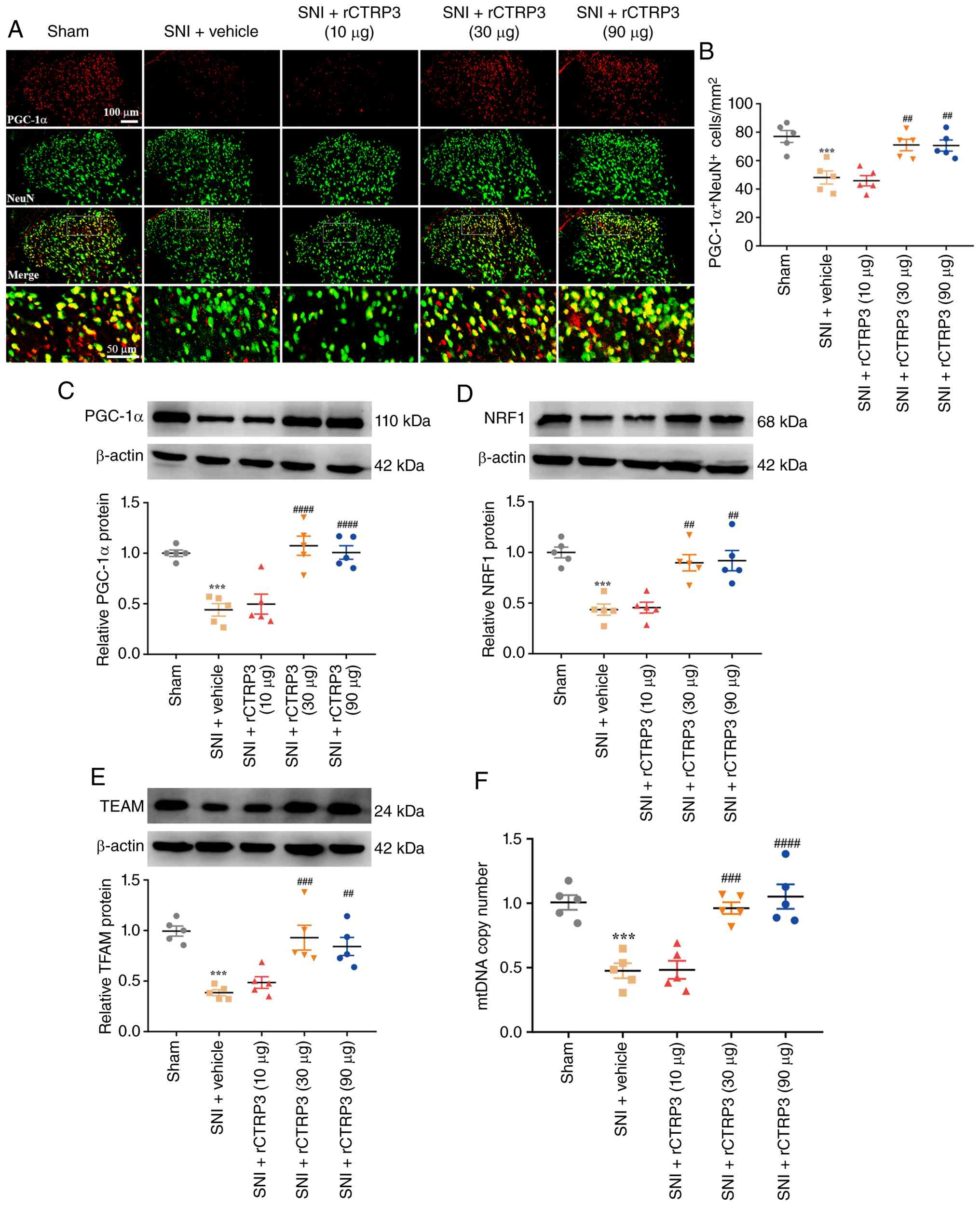
Figure 3

rCTRP3 promotes PGC-1α-mediated
mitochondrial biogenesis in the spinal cord of SNI rats. (A and B)
IF staining showed a significant decrease in neuronal PGC-1α levels
in SNI rats; this reduction was notably reversed by intrathecal
administration of rCTRP3 (30 and 90 μg). (C-E) WB analysis
demonstrated that rCTRP3 treatment (30 and 90 μg) blocked
the nerve injury-induced downregulation of PGC-1α, NRF1 and TFAM in
the spinal cord, compared with the SNI + vehicle group. (F) rCTRP3
administration (30 and 90 μg) reversed the reduction in
spinal mtDNA copy number observed in SNI rats.
***P<0.001 vs. sham group; ##P<0.01,
###P<0.001 and ####P<0.0001 vs. SNI +
vehicle group; n=5 rats/group. rCTRP3, recombinant complement C1q
tumor necrosis factor-related protein 3; PGC-1α, peroxisome
proliferator-activated receptor gamma coactivator 1-alpha; SNI,
spared nerve injury; IF, immunofluorescence; WB, western blotting;
NRF1, nuclear respiratory factor 1; TFAM, mitochondrial
transcription factor A; mtDNA, mitochondrial DNA.

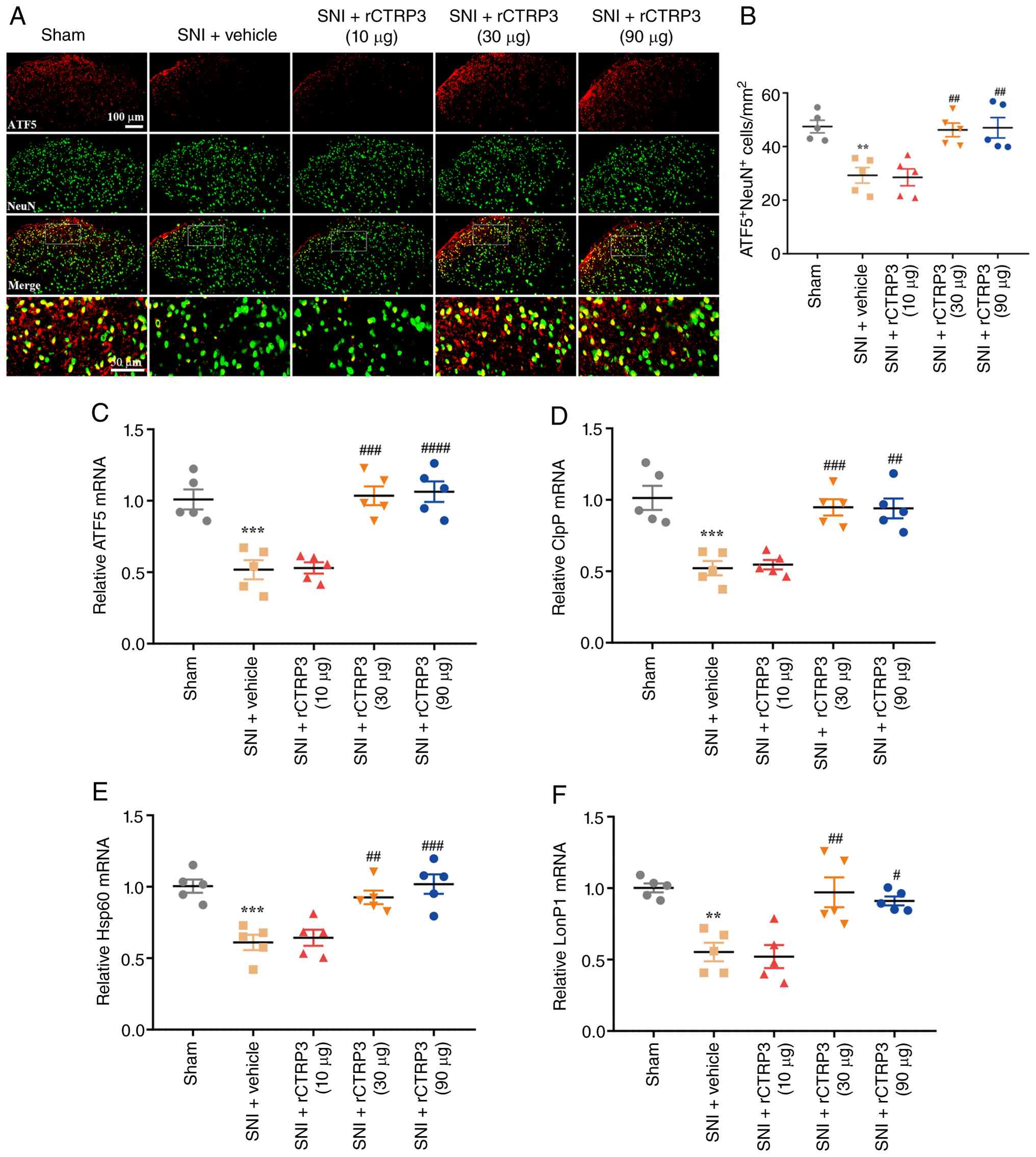
Figure 4

rCTRP3 promotes ATF5-induced
UPRmt in the spinal cord of SNI rats. (A and B) IF
staining showed a notable decrease in spinal neuronal ATF5 levels
in SNI rats; this reduction was significantly reversed by
intrathecal administration of rCTRP3 (30 and 90 μg). (C-F)
RT-qPCR analysis demonstrated that rCTRP3 treatment (30 and 90
μg) blocked the nerve injury-induced downregulation of ATF5,
ClpP, Hsp60 and LonP1 in the spinal cord, compared with the SNI +
vehicle group. **P<0.01 and ***P<0.001
vs. sham group; #P<0.05, ##P<0.01,
###P<0.001 and ####P<0.0001 vs. SNI +
vehicle group; n=5 rats/group. rCTRP3, recombinant complement C1q
tumor necrosis factor-related protein 3; ATF5, activating
transcription factor 5; UPRmt, mitochondrial unfolded
protein response; SNI, spared nerve injury; IF, immunofluorescence;
RT-qPCR, reverse transcription-quantitative polymerase chain
reaction; ClpP, caseinolytic mitochondrial matrix peptidase
proteolytic subunit; Hsp60, heat shock protein 60; LonP1, Lon
protease 1.

Figure 5

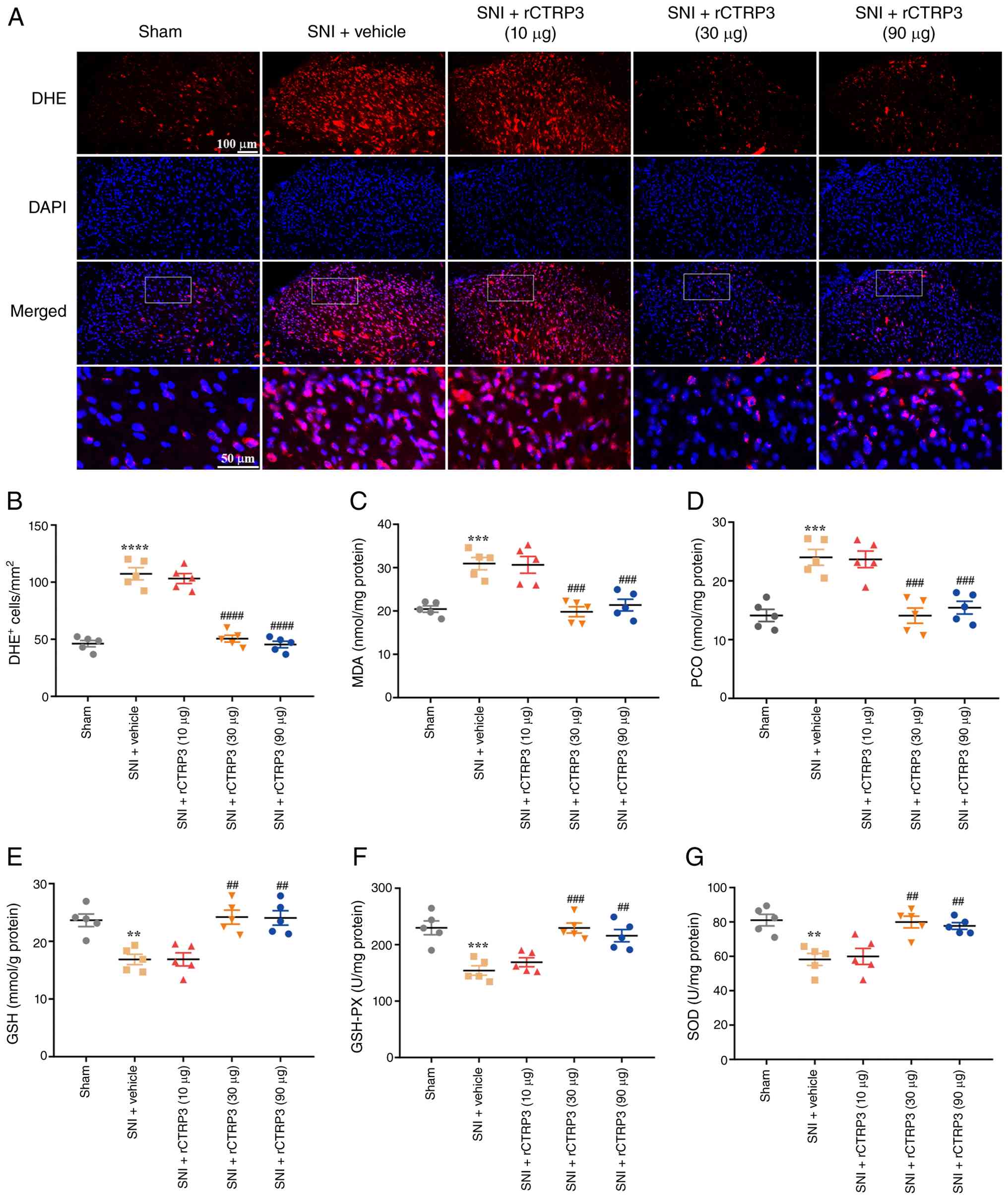
rCTRP3 administration attenuates
SNI-induced oxidative stress in the rat spinal cord. (A and B) DHE
staining showed that rCTRP3 treatment (30 and 90 μg)
significantly reduced the increased number of DHE-positive cells in
the spinal dorsal horn of SNI rats. (C and D) Biochemical assays
revealed that SNI elevated the spinal content of MDA and PCO;
intrathecal injection of rCTRP3 (30 and 90 μg) reversed this
elevation. (E and F) rCTRP3 (30 and 90 μg) restored the
reduced concentrations of reduced GSH and activity of GSH-PX in the
spinal cord of SNI rats. (G) Administration of rCTRP3 (30 and 90
μg) reversed the decreased activity of SOD in the spinal
cord of SNI rats. **P<0.01, ***P<0.001
and ****P<0.0001 vs. sham group;
##P<0.01, ###P<0.001 and
####P<0.0001 vs. SNI + vehicle group; n=5 rats/group.
rCTRP3, recombinant complement C1q tumor necrosis factor-related
protein 3; SNI, spared nerve injury; DHE, dihydroethidium; MDA,
malondialdehyde; PCO, protein carbonyl; GSH, glutathione; GSH-PX,
glutathione peroxidase; SOD, superoxide dismutase.

Figure 6

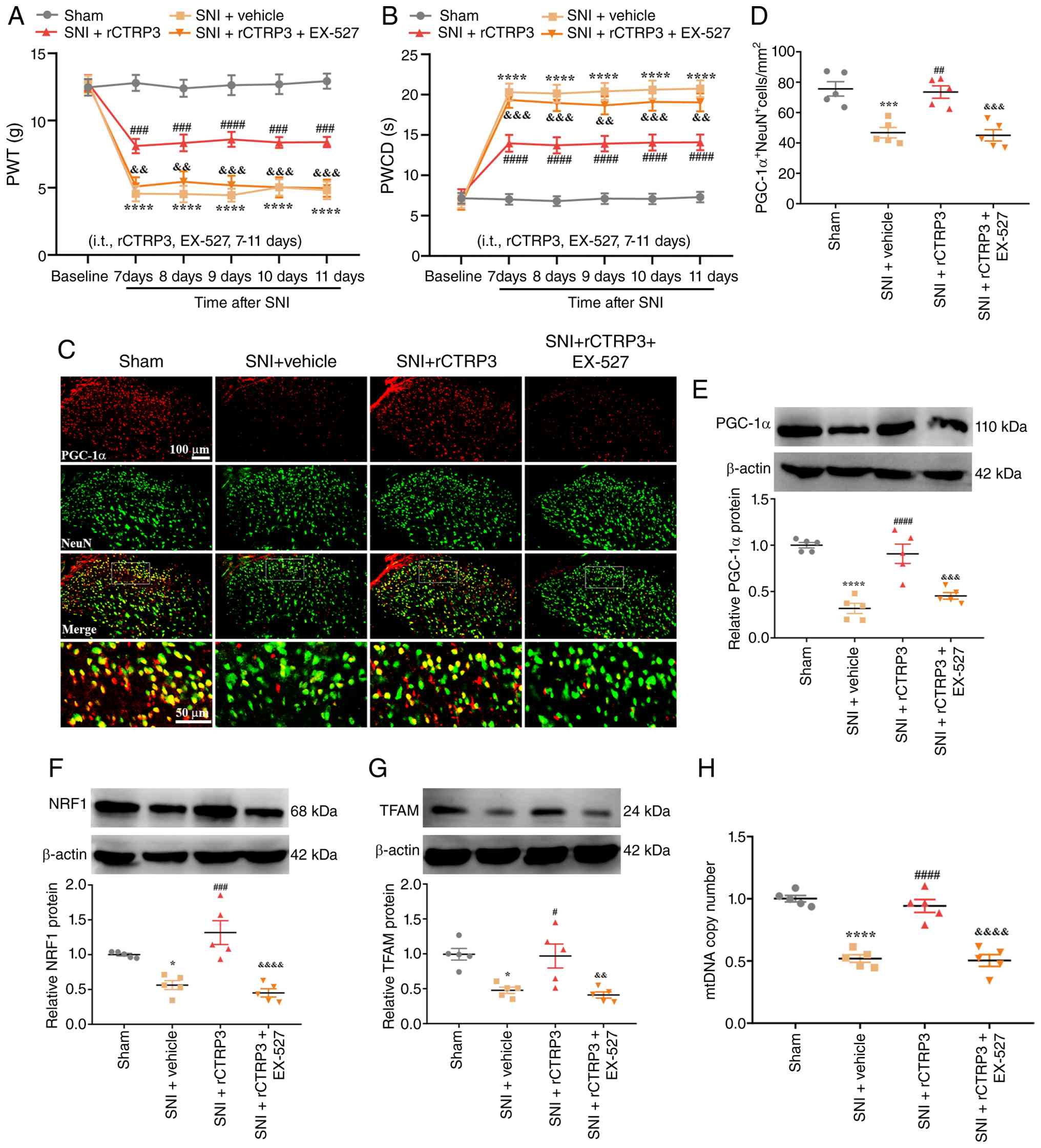
SIRT1 antagonist abrogates
rCTRP3-mediated amelioration of pain hypersensitivity and
PGC-1α-dependent mitochondrial biogenesis in SNI rats. (A and B)
Intrathecal injection of EX-527 (a SIRT1 antagonist) reversed the
rCTRP3-induced increases in PWT and reductions in PWCD in SNI rats.
****P<0.0001 vs. sham group; ###P<0.001
and ####P<0.0001 vs. SNI + vehicle group;
&&P<0.01 and
&&&P<0.001 vs. SNI + rCTRP3 group; n=10
rats/group. (C and D) IF staining revealed that EX-527 blocked the
rCTRP3-induced upregulation of PGC-1α expression in spinal dorsal
horn neurons of SNI rats. (E-G) WB analysis demonstrated that
EX-527 abolished the rCTRP3-mediated elevation of PGC-1α, NRF1 and
TFAM levels in the spinal cord of SNI rats. (H) Administration of
rCTRP3 reversed the reduction in mtDNA copy number in SNI rats, but
this protective effect was inhibited by EX-527.
*P<0.05, ***P<0.001 and
****P<0.0001 vs. sham group; #P<0.05,
##P<0.01, ###P<0.001 and
####P<0.0001 vs. SNI + vehicle group;
&&P<0.01,
&&&P<0.001 and
&&&&P<0.0001 vs. SNI + rCTRP3 group;
n=5 rats/group. SIRT1, sirtuin 1; rCTRP3, recombinant complement
C1q tumor necrosis factor-related protein 3; SNI, spared nerve
injury; EX-527, a selective SIRT1 antagonist; PWT, paw withdrawal
threshold; PWCD, paw withdrawal cold duration; IF,
immunofluorescence; WB, Western blotting; PGC-1α, peroxisome
proliferator-activated receptor gamma coactivator 1-alpha; NRF1,
nuclear respiratory factor 1; TFAM, mitochondrial transcription
factor A; mtDNA, mitochondrial DNA.

Figure 7

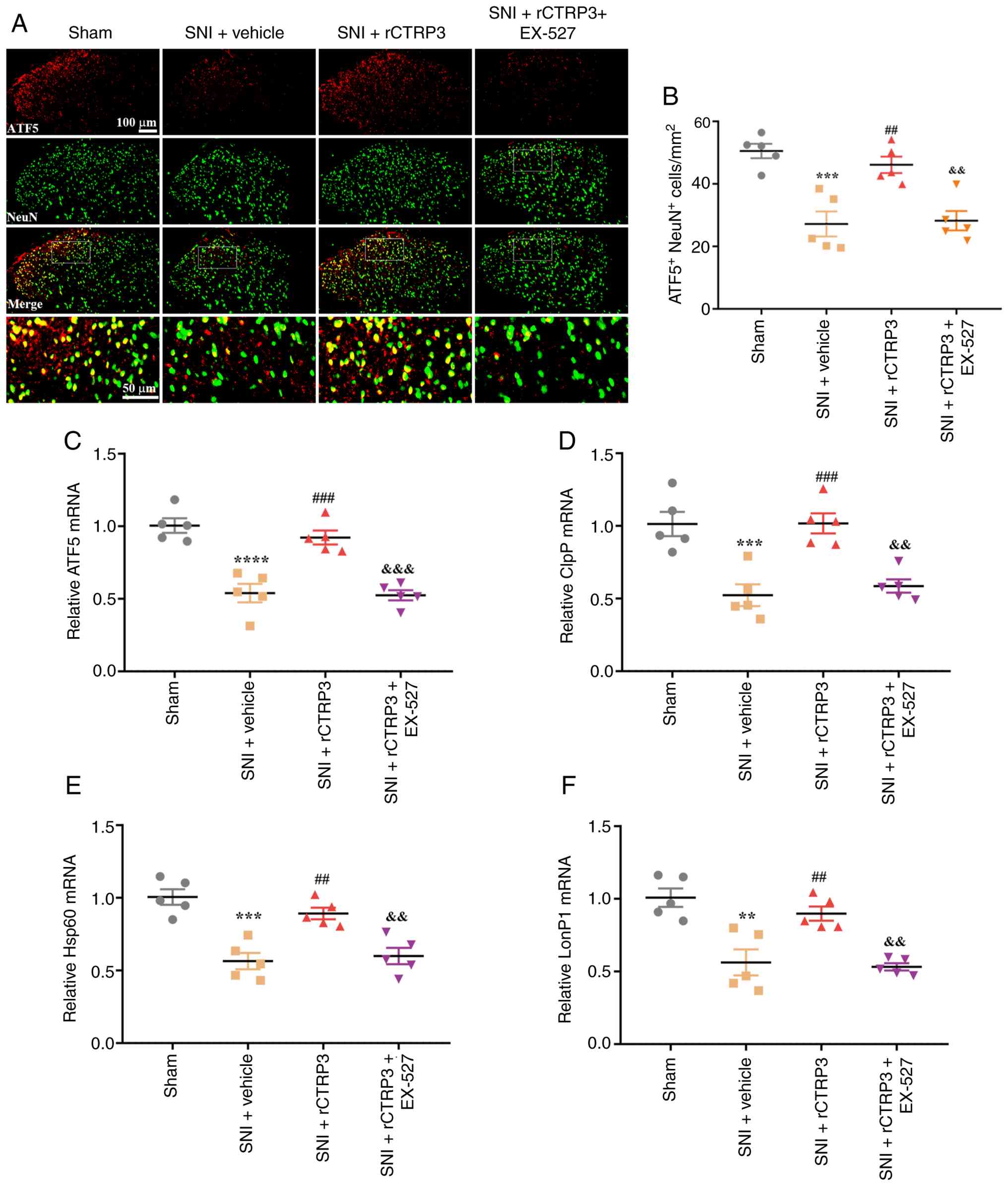
SIRT1 antagonist blocks
rCTRP3-induced enhancement of ATF5-mediated UPRmt in SNI
rats. (A and B) IF staining results showed that EX-527 inhibited
the rCTRP3-induced upregulation of ATF5 expression in spinal dorsal
horn neurons of SNI rats. (C-F) RT-qPCR analysis demonstrated that
EX-527 abolished the rCTRP3-mediated elevation of ATF5, ClpP, Hsp60
and LonP1 expression in the spinal cord, compared with the SNI +
rCTRP3 group. **P<0.01, ***P<0.001 and
****P<0.0001 vs. sham group; ##P<0.01
and ###P<0.001 vs. SNI + vehicle group;
&&P<0.01 and
&&&P<0.001 vs. SNI + rCTRP3 group; n=5
rats/group. SIRT1, sirtuin 1; rCTRP3, recombinant complement C1q
tumor necrosis factor-related protein 3; SNI, spared nerve injury;
EX-527, selective SIRT1 inhibitor; IF, immunofluorescence; RT-qPCR,
reverse transcription-quantitative polymerase chain reaction; ATF5,
activating transcription factor 5; UPRmt, mitochondrial
unfolded protein response; ClpP, caseinolytic mitochondrial matrix
peptidase proteolytic subunit; Hsp60, heat shock protein 60; LonP1,
Lon protease 1.

Figure 8

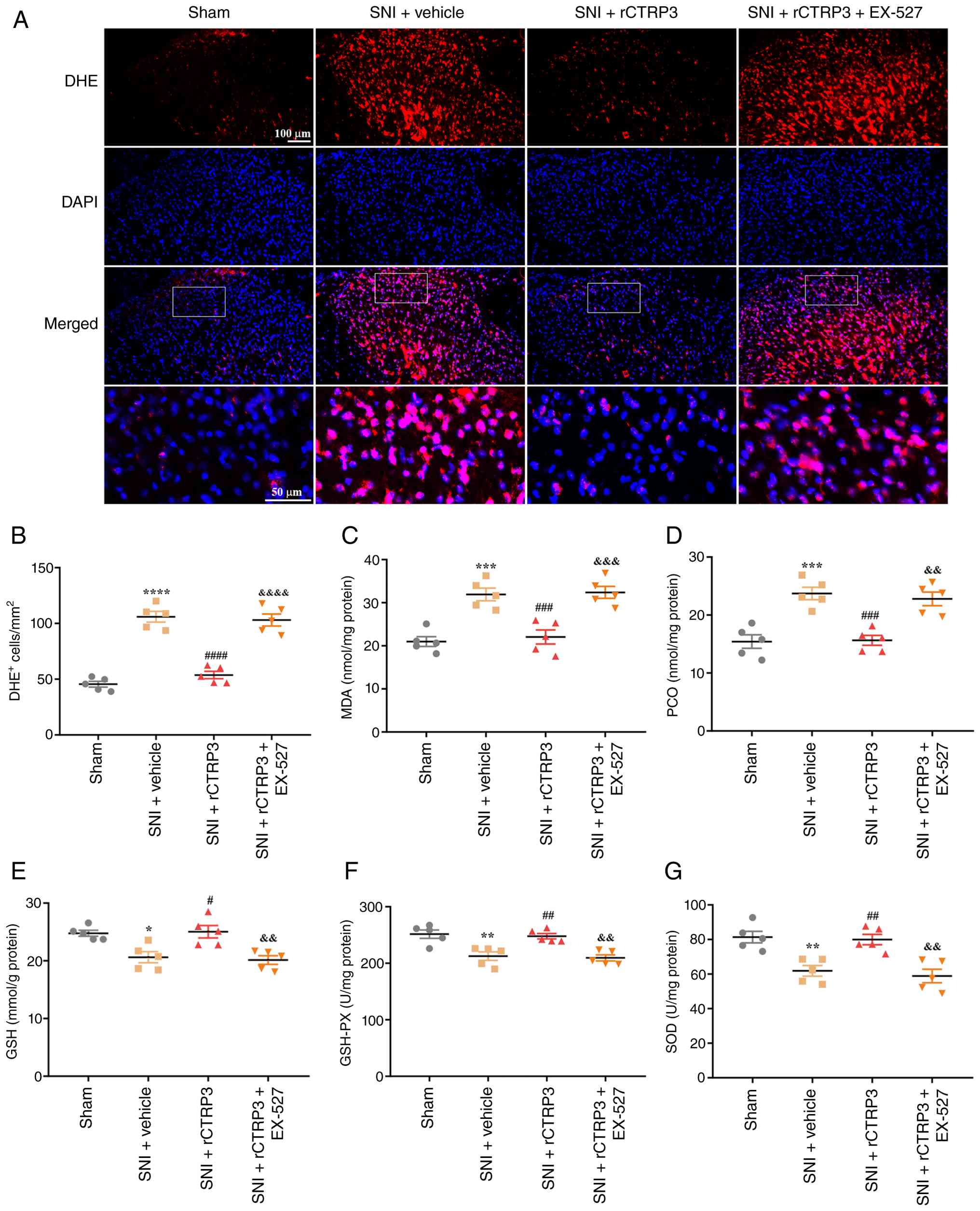
SIRT1 inhibitor abrogates
rCTRP3-induced attenuation of spinal oxidative stress in SNI rats.
(A and B) DHE staining revealed that, compared with the SNI +
rCTRP3 group, EX-527 treatment reversed the rCTRP3-induced decrease
in the number of DHE-positive cells in the spinal cord of SNI rats.
(C and D) Biochemical assay results demonstrated that EX-527
eliminated the rCTRP3-mediated reduction in spinal levels of MDA
and PCO in SNI rats. (E-G) rCTRP3 treatment increased the spinal
level of reduced GSH and enhanced the activity of GSH-PX and SOD in
SNI rats; however, these protective effects were counteracted by
the SIRT1 antagonist (EX-527). *P<0.05,
**P<0.01, ***P<0.001 and
****P<0.0001 vs. sham group; #P<0.05,
##P<0.01, ###P<0.001 and
####P<0.0001 vs. SNI + vehicle group;
&&P<0.01,
&&&P<0.001 and
&&&&P<0.0001 vs. SNI + rCTRP3 group;
n=5 rats/group. SIRT1, sirtuin 1; rCTRP3, recombinant complement
C1q tumor necrosis factor-related protein 3; SNI, spared nerve
injury; EX-527, a selective SIRT1 inhibitor; DHE, dihydroethidium;
MDA, malondialdehyde; PCO, protein carbonyl; GSH, glutathione;
GSH-PX, glutathione peroxidase; SOD, superoxide dismutase.

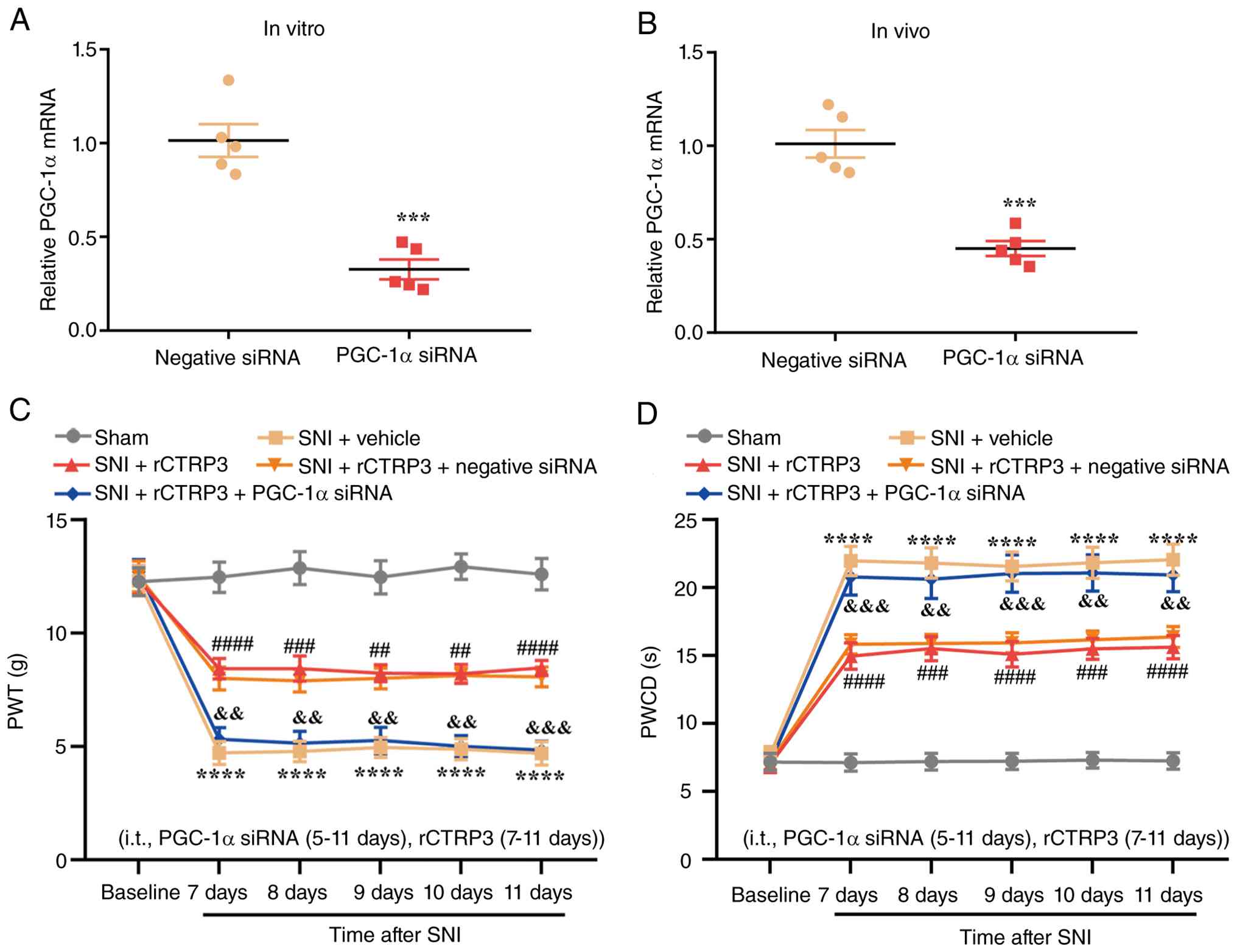
Figure 9

PGC-1α siRNA abrogates
rCTRP3-mediated alleviation of pain hypersensitivity in SNI rats.
(A) RT-qPCR analysis confirmed that PGC-1α siRNA transfection
induced significant downregulation of PGC-1α mRNA in PC12 cells.
***P<0.001 vs. negative siRNA group; n=5. (B) RT-qPCR
results verified that PGC-1α siRNA efficiently suppressed PGC-1α
expression in the spinal cord. ***P<0.001 vs.
negative siRNA group; n=5 rats/group. (C and D) Behavioral
assessments showed that rCTRP3 treatment increased PWT and reduced
PWCD in SNI rats; however, co-administration of PGC-1α siRNA
reversed this analgesic effect of rCTRP3.
****P<0.0001 vs. sham group; ##P<0.01,
###P<0.001 and ####P<0.0001 vs. SNI +
vehicle group; &&P<0.01 and
&&&P<0.001 vs. SNI + rCTRP3 group; n=10
rats/group. PGC-1α, peroxisome proliferator-activated receptor
gamma coactivator 1-alpha; siRNA, small interfering RNA; rCTRP3,
recombinant complement C1q tumor necrosis factor-related protein 3;
SNI, spared nerve injury; RT-qPCR, reverse
transcription-quantitative polymerase chain reaction; PWT, paw
withdrawal threshold; PWCD, paw withdrawal cold duration.

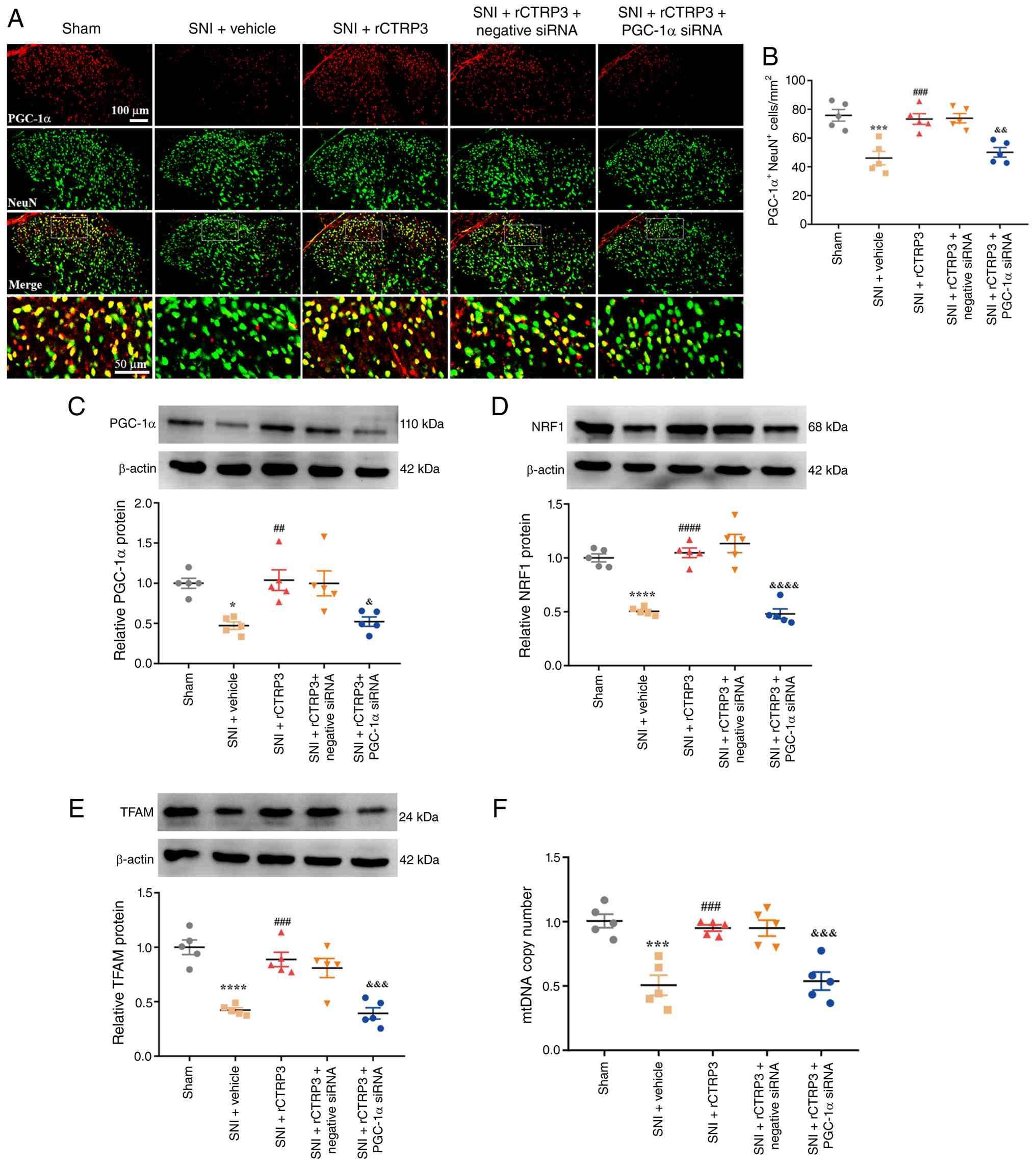
Figure 10

PGC-1α siRNA abrogates
rCTRP3-mediated enhancement of mitochondrial biogenesis in SNI
rats. (A and B) IF staining revealed that PGC-1α siRNA blocked the
rCTRP3-induced upregulation of PGC-1α expression in spinal dorsal
horn neurons of SNI rats. (C-E) WB analysis demonstrated that
PGC-1α siRNA eliminated the rCTRP3-mediated elevation of PGC-1α,
NRF1, and TFAM levels in the spinal cord, compared with the SNI +
rCTRP3 group. (F) rCTRP3 treatment reversed the reduction in mtDNA
copy number in SNI rats, and this regulatory effect was inhibited
by PGC-1α siRNA. *P<0.05, ***P<0.001
and ****P<0.0001 vs. sham group;
##P<0.01, ###P<0.001 and
####P<0.0001 vs. SNI + vehicle group;
&P<0.05, &&P<0.01,
&&&P<0.001 and
&&&&P<0.0001 vs. SNI + rCTRP3 group;
n=5 rats/group. PGC-1α, peroxisome proliferator-activated receptor
gamma coactivator 1-alpha; siRNA, small interfering RNA; rCTRP3,
recombinant complement C1q tumor necrosis factor-related protein 3;
SNI, spared nerve injury; IF, immunofluorescence; WB, Western
blotting; NRF1, nuclear respiratory factor 1; TFAM, mitochondrial
transcription factor A; mtDNA, mitochondrial DNA.

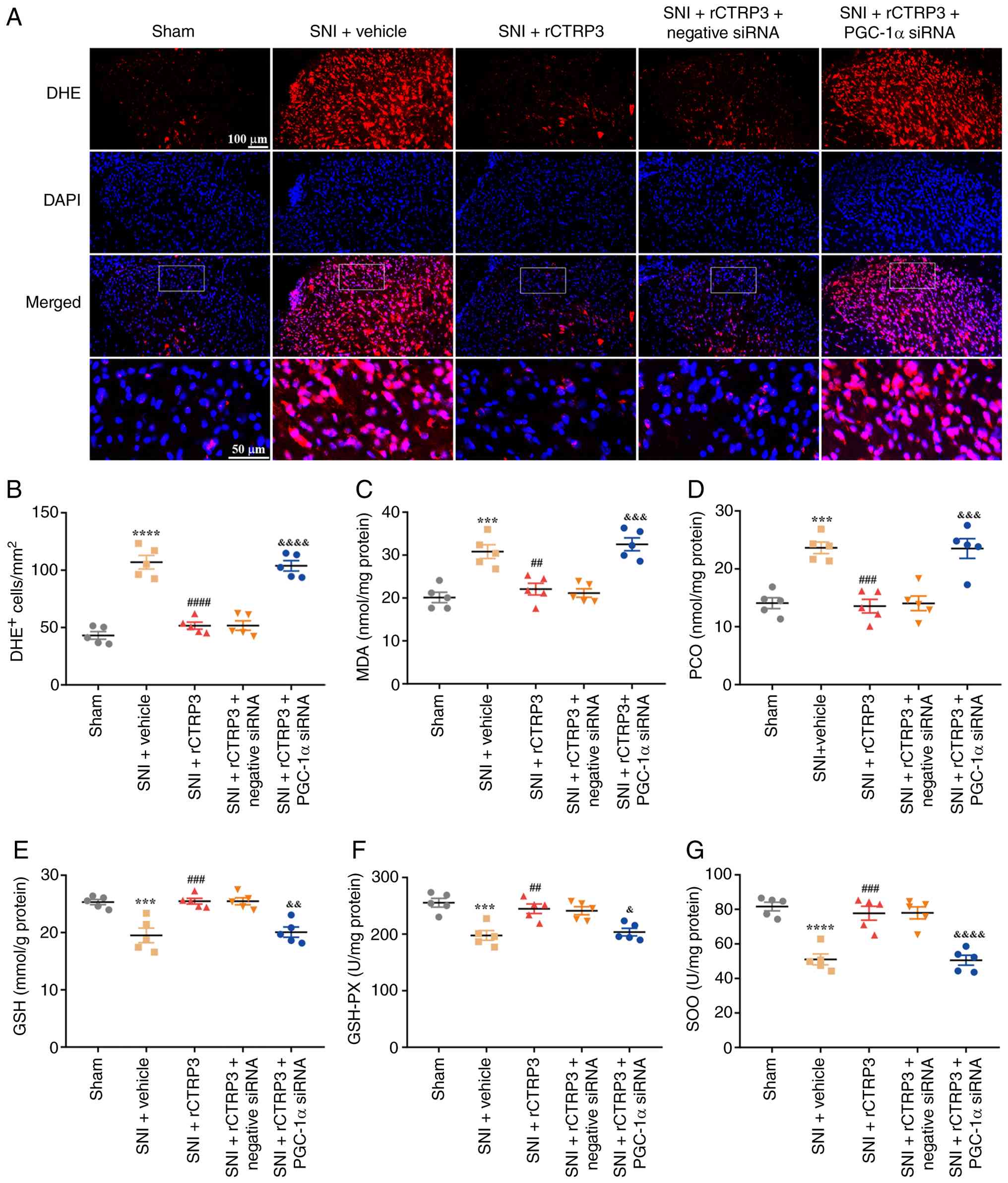
Figure 11

PGC-1α siRNA blocks rCTRP3-induced
reduction of spinal oxidative stress in SNI rats. (A and B) DHE
staining analysis showed that compared with the SNI + rCTRP3 group,
administration of PGC-1α siRNA reversed the rCTRP3-induced decrease
in the number of DHE-positive cells in the spinal cord of SNI rats.
(C and D) Biochemical assay results revealed that PGC-1α siRNA
abolished the rCTRP3-mediated downregulation of MDA and PCO, in the
spinal cord of SNI rats. (E-G) Administration of rCTRP3 increased
the level of reduced GSH and enhanced the activity of GSH-PX and
SOD in the spinal cord of SNI rats, but these beneficial changes
were counteracted by PGC-1α siRNA intervention.
***P<0.001 and ****P<0.0001 vs. sham
group; ##P<0.01, ###P<0.001 and
####P<0.0001 vs. SNI + vehicle group;
&P<0.05, &&P<0.01,
&&&P<0.001 and
&&&&P<0.0001 vs. SNI + rCTRP3 group;
n=5 rats/group. PGC-1α, peroxisome proliferator-activated receptor
gamma coactivator 1-alpha; siRNA, small interfering RNA; rCTRP3,
recombinant complement C1q tumor necrosis factor-related protein 3;
SNI, spared nerve injury; DHE, dihydroethidium; MDA,
malondialdehyde; PCO, protein carbonyl; GSH, glutathione; GSH-PX,
glutathione peroxidase; SOD, superoxide dismutase.

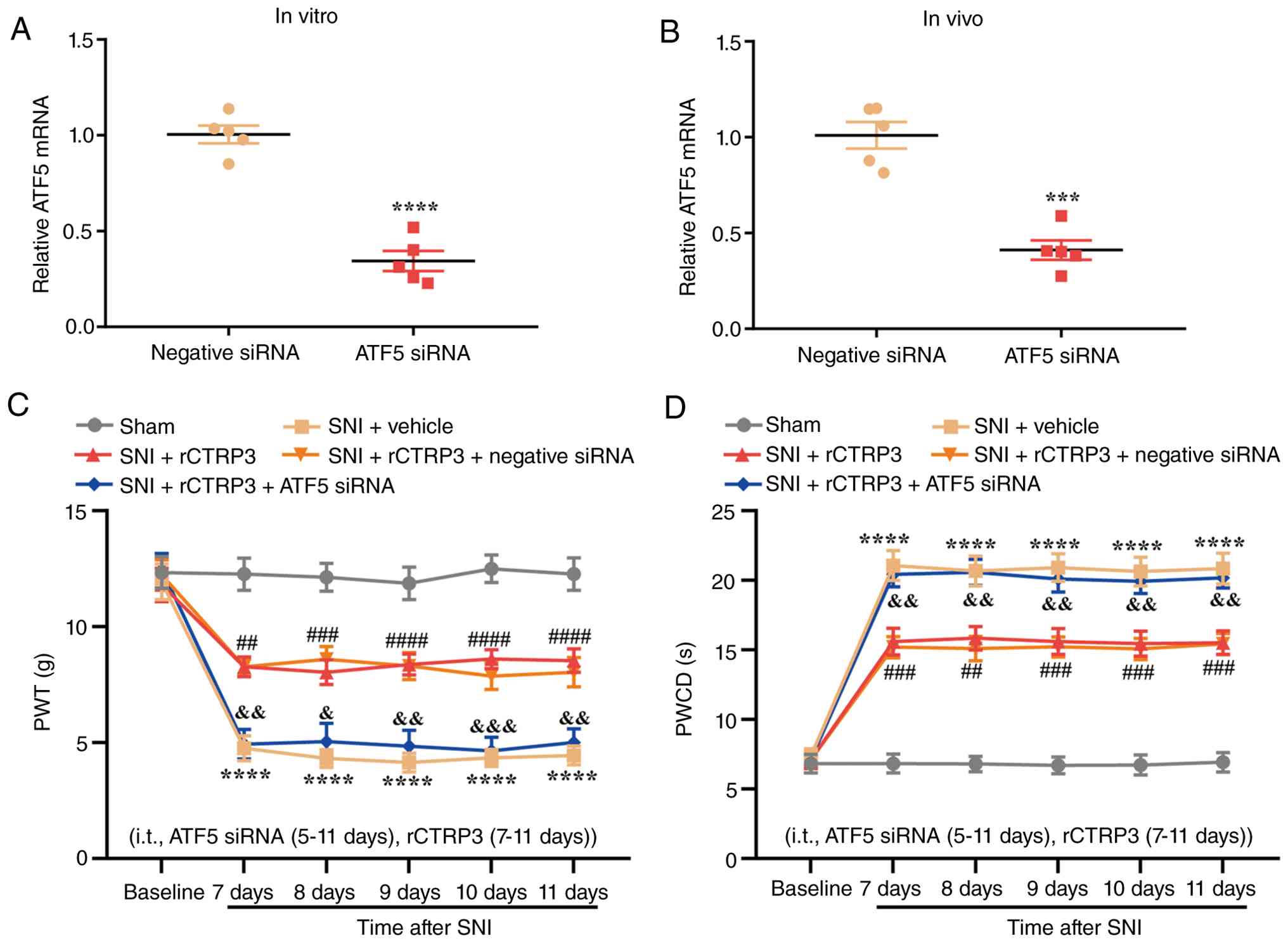
Figure 12

ATF5 siRNA abrogates rCTRP3-mediated
alleviation of pain hypersensitivity in SNI rats. (A) RT-qPCR
analysis confirmed that ATF5 siRNA transfection induced significant
downregulation of ATF5 mRNA in PC12 cells.
****P<0.0001 vs. negative siRNA group; n=5. (B)
RT-qPCR results confirmed that ATF5 siRNA effectively inhibited
ATF5 expression in the spinal cord. ***P<0.001 vs.
negative siRNA group; n=5 rats/group. (C and D) Behavioral
assessments demonstrated that rCTRP3 treatment elevated PWT and
downregulated PWCD in SNI rats; however, co-administration of ATF5
siRNA reversed this analgesic effect of rCTRP3.
****P<0.0001 vs. sham group; ##P<0.01,
###P<0.001 and ####P<0.0001 vs. SNI +
vehicle group; &P<0.05,
&&P<0.01 and
&&&P<0.001 vs. SNI + rCTRP3 group; n=10
rats/group. ATF5, activating transcription factor 5; siRNA, small
interfering RNA; rCTRP3, recombinant complement C1q tumor necrosis
factor-related protein; SNI, spared nerve injury; RT-qPCR, reverse
transcription-quantitative polymerase chain reaction; PWT, paw
withdrawal threshold; PWCD, paw withdrawal cold duration.

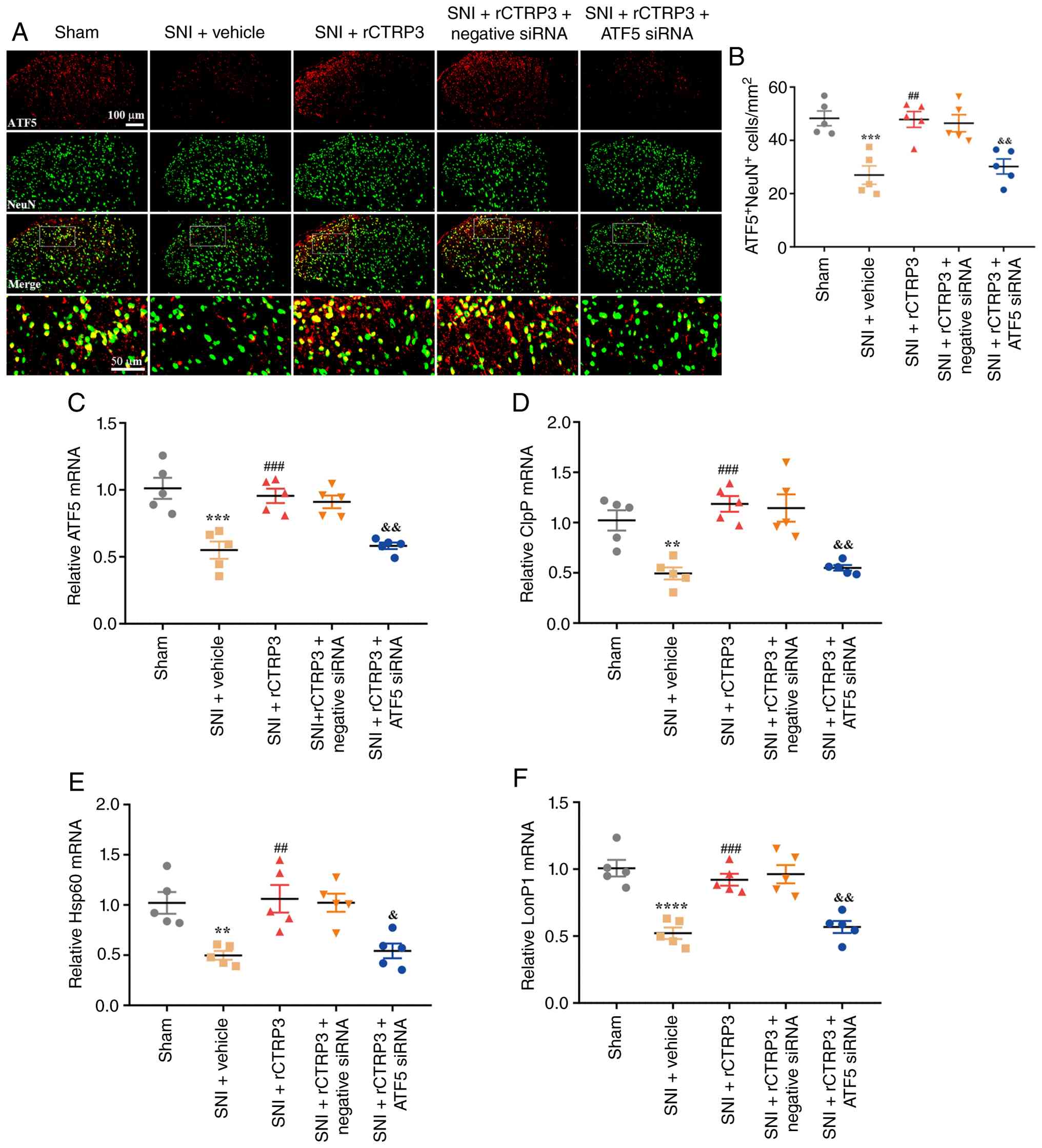
Figure 13

ATF5 siRNA abrogates rCTRP3-mediated
enhancement of UPRmt in SNI rats. (A and B) IF staining
revealed that ATF5 siRNA inhibited the rCTRP3-induced upregulation
of ATF5 expression in spinal dorsal horn neurons of SNI rats. (C-F)
RT-qPCR analysis demonstrated that ATF5 siRNA eliminated the
rCTRP3-mediated elevation in the expression levels of ATF5, ClpP,
Hsp60 and LonP1 in the spinal cord, relative to the SNI + rCTRP3
group. **P<0.01, ***P<0.001 and
****P<0.0001 vs. sham group; ##P<0.01
and ###P<0.001 vs. SNI + vehicle group;
&P<0.05 and &&P<0.01 vs.
SNI + rCTRP3 group; n=5 rats/group. ATF5, activating transcription
factor 5; siRNA, small interfering RNA; rCTRP3, recombinant
complement C1q tumor necrosis factor-related protein;
UPRmt, mitochondrial unfolded protein response; SNI,
spared nerve injury; IF, immunofluorescence; RT-qPCR, reverse
transcription-quantitative polymerase chain reaction; ClpP,
caseinolytic mitochondrial matrix peptidase proteolytic subunit;
Hsp60, heat shock protein 60; LonP1, Lon protease 1.

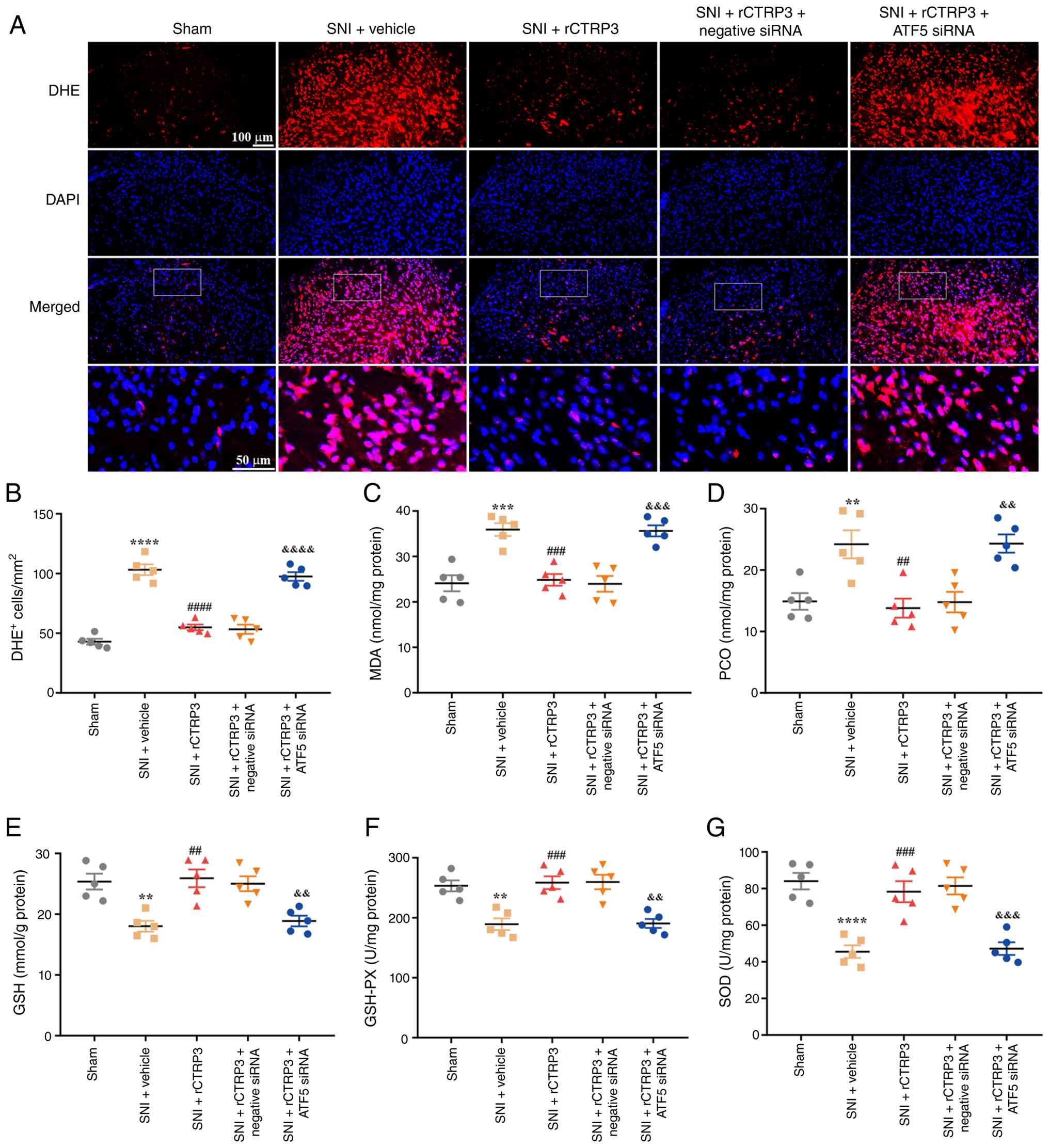
Figure 14

ATF5 siRNA abrogates rCTRP3-induced
reduction of spinal oxidative stress in SNI rats. (A and B) DHE
staining analysis indicated that compared with the SNI + rCTRP3
group, administration of ATF5 siRNA counteracted the rCTRP3-induced
decrease in the number of DHE-positive cells in the spinal cord of
SNI rats. (C and D) Biochemical assay data revealed that ATF5 siRNA
abolished the rCTRP3-mediated downregulation of MDA and PCO in the
spinal cord of SNI rats. (E-G) rCTRP3 treatment increased the level
of reduced GSH, and enhanced the activity of GSH-PX and SOD in the
spinal cord of SNI rats, but these favorable changes were reversed
by ATF5 siRNA intervention. **P<0.01,
***P<0.001 and ****P<0.0001 vs. sham
group; ##P<0.01, ###P<0.001 and
####P<0.0001 vs. SNI + vehicle group;
&&P<0.01,
&&&P<0.001 and
&&&&P<0.0001 vs. SNI + rCTRP3 group;
n=5 rats/group. ATF5, activating transcription factor 5; siRNA,
small interfering RNA; rCTRP3, recombinant complement C1q tumor
necrosis factor-related protein; SNI, spared nerve injury; DHE,
dihydroethidium; MDA, malondialdehyde; PCO, protein carbonyl; GSH,
glutathione; GSH-PX, glutathione peroxidase; SOD, superoxide
dismutase.

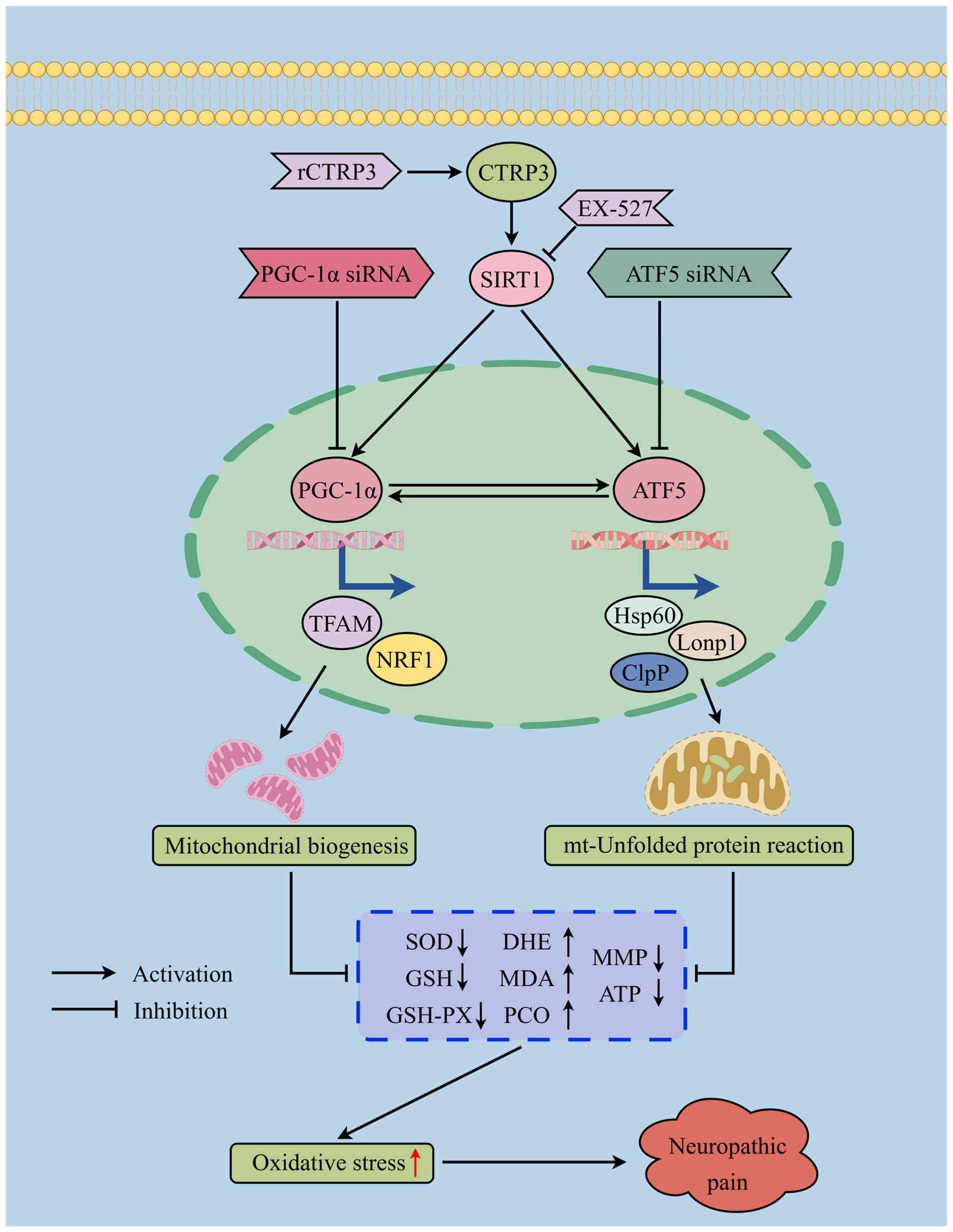
Figure 15

Schematic illustration of the role of
CTRP3 in neuropathic pain. CTRP3 alleviates pain hypersensitivity
and spinal oxidative stress in SNI rats by activating spinal SIRT1,
thereby enhancing PGC-1α/ATF5-induced mitochondrial biogenesis and
UPRmt. CTRP3, complement C1q tumor necrosis
factor-related protein 3; SNI, spared nerve injury; SIRT1, sirtuin
1; PGC-1α, peroxisome proliferator-activated receptor gamma
coactivator 1-alpha; ATF5, activating transcription factor 5;
UPRmt, mitochondrial unfolded protein response; MDA,
malondialdehyde; PCO, protein carbonyl; MMP, mitochondrial membrane
potential; GSH, glutathione; GSH-PX, glutathione peroxidase; SOD,
superoxide dismutase; DHE, dihydroethidium; ClpP, caseinolytic
mitochondrial matrix peptidase proteolytic subunit; Hsp60, heat
shock protein 60; LonP1, Lon protease 1; siRNA, small interfering
RNA.
View References

1 

Borbjerg MK, Wegeberg AM, Nikontovic A, Mørch CD, Arendt-Nielsen L, Ejskjaer N, Brock C, Vestergaard P and Røikjer J: Understanding the impact of diabetic peripheral neuropathy and neuropathic pain on quality of life and mental health in 6,960 people with diabetes. Diabetes Care. 48:588–595. 2025. View Article : Google Scholar : PubMed/NCBI

2 

Soliman N, Moisset X, Ferraro MC, de Andrade DC, Baron R, Belton J, Bennett DLH, Calvo M, Dougherty P, Gilron I, et al: Pharmacotherapy and non-invasive neuromodulation for neuropathic pain: A systematic review and meta-analysis. Lancet Neurol. 24:413–428. 2025. View Article : Google Scholar : PubMed/NCBI

3 

Su Y, Verkhratsky A and Yi C: Targeting connexins: Possible game changer in managing neuropathic pain? Trends Mol Med. 30:642–659. 2024. View Article : Google Scholar : PubMed/NCBI

4 

Ward J, Grinstead A, Kemp A, Kersten P, Schmid AB and Ridehalgh C: A meta-analysis exploring the efficacy of neuropathic pain medication for low back pain or spine-related leg pain: Is efficacy dependent on the presence of neuropathic pain? Drugs. 84:1603–1636. 2024. View Article : Google Scholar : PubMed/NCBI

5 

Malcangio M and Sideris-Lampretsas G: How microglia contribute to the induction and maintenance of neuropathic pain. Nat Rev Neurosci. 26:263–275. 2025. View Article : Google Scholar : PubMed/NCBI

6 

Liu L, Li Y, Chen G and Chen Q: Crosstalk between mitochondrial biogenesis and mitophagy to maintain mitochondrial homeostasis. J Biomed Sci. 30:862023. View Article : Google Scholar : PubMed/NCBI

7 

Zhang L, Xin C, Wang S, Zhuo S, Zhu J, Li Z, Liu Y, Yang L and Chen Y: Lactate transported by MCT1 plays an active role in promoting mitochondrial biogenesis and enhancing TCA flux in skeletal muscle. Sci Adv. 10:eadn45082024. View Article : Google Scholar : PubMed/NCBI

8 

Jamwal S, Blackburn JK and Elsworth JD: PPARγ/PGC1α signaling as a potential therapeutic target for mitochondrial biogenesis in neurodegenerative disorders. Pharmacol Ther. 219:1077052021. View Article : Google Scholar

9 

Yang D, Sun Y, Wen P, Chen Y, Cao J, Sun X and Dong Y: Chronic stress-induced serotonin impairs intestinal epithelial cell mitochondrial biogenesis via the AMPK-PGC-1α axis. Int J Biol Sci. 20:4476–4495. 2024. View Article : Google Scholar

10 

Dumesic PA, Wilensky SE, Bose S, Van Vranken JG, Gygi SP and Spiegelman BM: RBM43 controls PGC1α translation and a PGC1α-STING signaling axis. Cell Metab. 37:742–757.e8. 2025. View Article : Google Scholar

11 

Lin H, Shao X, Gu H, Yu X, He L, Zhou J, Zhong Z, Guo S, Li D, Chen F, et al: Akkermansia muciniphila ameliorates doxorubicin-induced cardiotoxicity by regulating PPARα-dependent mitochondrial biogenesis. NPJ Biofilms Microbiomes. 11:862025. View Article : Google Scholar

12 

Lan X, Wang Q, Liu Y, You Q, Wei W, Zhu C, Hai D, Cai Z, Yu J, Zhang J and Liu N: Isoliquiritigenin alleviates cerebral ischemia-reperfusion injury by reducing oxidative stress and ameliorating mitochondrial dysfunction via activating the Nrf2 pathway. Redox Biol. 77:1034062024. View Article : Google Scholar : PubMed/NCBI

13 

Wang W, Zhao F, Ma X, Perry G and Zhu X: Mitochondria dysfunction in the pathogenesis of Alzheimer's disease: Recent advances. Mol Neurodegener. 15:302020. View Article : Google Scholar : PubMed/NCBI

14 

Zheng Q, Liu H, Zhang H, Han Y, Yuan J, Wang T, Gao Y and Li Z: Ameliorating mitochondrial dysfunction of neurons by biomimetic targeting nanoparticles mediated mitochondrial biogenesis to boost the therapy of Parkinson's disease. Adv Sci (Weinh). 10:e23007582023. View Article : Google Scholar : PubMed/NCBI

15 

Zhang L, Tan X, Song F, Li D, Wu J, Gao S, Sun J, Liu D, Zhou Y and Mei W: Activation of G-protein-coupled receptor 39 reduces neuropathic pain in a rat model. Neural Regen Res. 19:687–696. 2024. View Article : Google Scholar

16 

Zhang LQ, Zhou YQ, Li JY, Sun J, Zhang S, Wu JY, Gao SJ, Tian XB and Mei W: 5-HT1F receptor agonist ameliorates mechanical allodynia in neuropathic pain via induction of mitochondrial biogenesis and suppression of neuroinflammation. Front Pharmacol. 13:8345702022. View Article : Google Scholar

17 

Zhou Z, Fan Y, Zong R and Tan K: The mitochondrial unfolded protein response: A multitasking giant in the fight against human diseases. Ageing Res Rev. 81:1017022022. View Article : Google Scholar : PubMed/NCBI

18 

Shpilka T and Haynes CM: The mitochondrial UPR: Mechanisms, physiological functions and implications in ageing. Nat Rev Mol Cell Biol. 19:109–120. 2018. View Article : Google Scholar

19 

Sutandy FXR, Gößner I, Tascher G and Münch C: A cytosolic surveillance mechanism activates the mitochondrial UPR. Nature. 618:849–854. 2023. View Article : Google Scholar : PubMed/NCBI

20 

Zu X, Chen S, Li Z, Hao L, Fu W, Zhang H, Yin Z, Wang Y and Wang J: SPI1 activates mitochondrial unfolded response signaling to inhibit chondrocyte senescence and relieves osteoarthritis. Bone Res. 13:472025. View Article : Google Scholar : PubMed/NCBI

21 

Xiong X, Hou J, Zheng Y, Jiang T, Zhao X, Cai J, Huang J, He H, Xu J, Qian S, et al: NAD+-boosting agent nicotinamide mononucleotide potently improves mitochondria stress response in Alzheimer's disease via ATF4-dependent mitochondrial UPR. Cell Death Dis. 15:7442024. View Article : Google Scholar

22 

An H, Zhou B, Hayakawa K, Durán Laforet V, Park JH, Nakamura Y, Mandeville ET, Liu N, Guo S, Yu Z, et al: ATF5-mediated mitochondrial unfolded protein response (UPRmt) protects neurons against oxygen-glucose deprivation and cerebral ischemia. Stroke. 55:1904–1913. 2024. View Article : Google Scholar : PubMed/NCBI

23 

Yang Y, Lu D, Wang M, Liu G, Feng Y, Ren Y, Sun X, Chen Z and Wang Z: Endoplasmic reticulum stress and the unfolded protein response: Emerging regulators in progression of traumatic brain injury. Cell Death Dis. 15:1562024. View Article : Google Scholar : PubMed/NCBI

24 

Zhou Z, Lu J, Yang M, Cai J, Fu Q, Ma J and Zhu L: The mitochondrial unfolded protein response (UPRmt) protects against osteoarthritis. Exp Mol Med. 54:1979–1990. 2022. View Article : Google Scholar : PubMed/NCBI

25 

Xu WN, Zheng HL, Yang RZ, Sun YF, Peng BR, Liu C, Song J, Jiang SD and Zhu LX: The mitochondrial UPR induced by ATF5 attenuates intervertebral disc degeneration via cooperating with mitophagy. Cell Biol Toxicol. 40:162024. View Article : Google Scholar : PubMed/NCBI

26 

Wang Q, Piao J, Li Y, Tu H, Lv D, Hu L, Zhang R and Zhong Z: Bone marrow-mesenchymal stem cells alleviate microglial Pyroptosis after intracerebral hemorrhage in rat by secreting C1q/tumor necrosis factor-related protein 3. Exp Neurol. 364:1143872023. View Article : Google Scholar : PubMed/NCBI

27 

Xue K, Shao S, Fang H, Ma L, Li C, Lu Z and Wang G: Adipocyte-derived CTRP3 exhibits anti-inflammatory effects via LAMP1-STAT3 axis in psoriasis. J Invest Dermatol. 142:1349–1359.e8. 2022. View Article : Google Scholar

28 

Liu N, Gong Z, Li Y, Xu Y, Guo Y, Chen W, Sun X, Yin X and Liu W: CTRP3 inhibits myocardial fibrosis through the P2X7R-NLRP3 inflammasome pathway in SHR rats. J Hypertens. 42:315–328. 2024. View Article : Google Scholar

29 

Yan Z, Cao X, Wang C, Liu S, Li Y, Lu G, Yan W, Guo R, Zhao D, Cao J and Xu Y: C1q/tumor necrosis factor-related protein-3 improves microvascular endothelial function in diabetes through the AMPK/eNOS/NO• signaling pathway. Biochem Pharmacol. 195:1147452022. View Article : Google Scholar

30 

Yu H, Zhang Z, Li G, Feng Y, Xian L, Bakhsh F, Xu D, Xu C, Vong T, Wu B, et al: Adipokine C1q/tumor necrosis factor-related protein 3 (CTRP3) attenuates intestinal inflammation via sirtuin 1/NF-κB signaling. Cell Mol Gastroenterol Hepatol. 15:1000–1015. 2023. View Article : Google Scholar

31 

Shi L, Tan Y, Zheng W, Cao G, Zhou H, Li P, Cui J, Song Y, Feng L, Li H, et al: CTRP3 alleviates mitochondrial dysfunction and oxidative stress injury in pathological cardiac hypertrophy by activating UPRmt via the SIRT1/ATF5 axis. Cell Death Discov. 10:532024. View Article : Google Scholar : PubMed/NCBI

32 

Gao J, Qian T and Wang W: CTRP3 activates the AMPK/SIRT1-PGC-1α pathway to protect mitochondrial biogenesis and functions in cerebral ischemic stroke. Neurochem Res. 45:3045–3058. 2020. View Article : Google Scholar : PubMed/NCBI

33 

Luo Y, Ali T, Hu Y, Gong Q, Zheng C, Li L, Li S and Hao L: Erythropoietin (EPO) alleviates chronic stress-induced depression by modulating SIRT1-mediated mitochondrial function. J Neuroimmune Pharmacol. 20:732025. View Article : Google Scholar : PubMed/NCBI

34 

Liu Y, Yang H, Luo N, Fu Y, Qiu F, Pan Z, Li X, Jian W, Yang X, Xue Q, et al: An Fgr kinase inhibitor attenuates sepsis-associated encephalopathy by ameliorating mitochondrial dysfunction, oxidative stress, and neuroinflammation via the SIRT1/PGC-1α signaling pathway. J Transl Med. 21:4862023. View Article : Google Scholar

35 

Li H, Chen D, Zhang X, Chen M, Zhi Y, Cui W, Li S, Xu F, Tan Y, Zhou H, et al: Screening of an FDA-approved compound library identifies apigenin for the treatment of myocardial injury. Int J Biol Sci. 19:5233–5244. 2023. View Article : Google Scholar : PubMed/NCBI

36 

He Q, Zhou Y, Wu L, Huang L, Yuan Y, Flores JJ, Luo X, Tao Y, Chen X, Kanamaru H, et al: Inhibition of acid-sensing receptor GPR4 attenuates neuronal ferroptosis via RhoA/YAP signaling in a rat model of subarachnoid hemorrhage. Free Radic Biol Med. 225:333–345. 2024. View Article : Google Scholar : PubMed/NCBI

37 

Xu Z, Xie W, Feng Y, Wang Y, Li X, Liu J, Xiong Y, He Y, Chen L, Liu G and Wu Q: Positive interaction between GPER and β-alanine in the dorsal root ganglion uncovers potential mechanisms: Mediating continuous neuronal sensitization and neuroinflammation responses in neuropathic pain. J Neuroinflammation. 19:1642022. View Article : Google Scholar

38 

Zhang LQ, Gao SJ, Sun J, Li DY, Wu JY, Song FH, Liu DQ, Zhou YQ and Mei W: DKK3 ameliorates neuropathic pain via inhibiting ASK-1/JNK/p-38-mediated microglia polarization and neuroinflammation. J Neuroinflammation. 19:1292022. View Article : Google Scholar : PubMed/NCBI

39 

Zhao Y, Zhang Y, Lei T, Zhang S, Nan K, Zhang X and Fan LH: ZEB1 maintains mitochondrial fission and macrophage efferocytosis by restraining MFN2, thereby limiting inflammation and improving tendon-bone healing. Int J Mol Med. 57:1342026. View Article : Google Scholar

40 

Li L, Bai L, Yang K, Zhang J, Gao Y, Jiang M, Yang Y, Zhang X, Wang L, Wang X, et al: KDM6B epigenetically regulated-interleukin-6 expression in the dorsal root ganglia and spinal dorsal horn contributes to the development and maintenance of neuropathic pain following peripheral nerve injury in male rats. Brain Behav Immun. 98:265–282. 2021. View Article : Google Scholar : PubMed/NCBI

41 

Fan CY, McAllister BB, Stokes-Heck S, Harding EK, Pereira de Vasconcelos A, Mah LK, Lima LV, van den Hoogen NJ, Rosen SF, Ham B, et al: Divergent sex-specific pannexin-1 mechanisms in microglia and T cells underlie neuropathic pain. Neuron. 113:896–911.e9. 2025. View Article : Google Scholar

42 

Zhang L, Dai X, Li D, Wu J, Gao S, Song F, Liu L, Zhou Y, Liu D and Mei W: MFG-E8 ameliorates nerve injury-induced neuropathic pain by regulating microglial polarization and neuroinflammation via integrin β3/SOCS3/STAT3 pathway in mice. J Neuroimmune Pharmacol. 19:492024. View Article : Google Scholar

43 

Liu T, Zhang L and Mei W: CTRP9 attenuates peripheral nerve injury-induced mechanical allodynia and thermal hyperalgesia through regulating spinal microglial polarization and neuroinflammation mediated by AdipoR1 in male mice. Cell Biol Toxicol. 40:912024. View Article : Google Scholar : PubMed/NCBI

44 

Yingze Y, Zhihong J, Tong J, Yina L, Zhi Z, Xu Z, Xiaoxing X and Lijuan G: NOX2-mediated reactive oxygen species are double-edged swords in focal cerebral ischemia in mice. J Neuroinflammation. 19:1842022. View Article : Google Scholar : PubMed/NCBI

45 

Zhang H, Zhang N, Yang X, Zhang J, Ge X, Wang L, Wang S and Wen Y: DL-3-n-butylphthalide protects mitochondria against ischemia/hypoxia damage via suppressing GCN5L1-mediated Drp1 acetylation in neurons and mouse brains. CNS Neurosci Ther. 31:e706822025. View Article : Google Scholar : PubMed/NCBI

46 

Song Y, Zhang Y, Wan Z, Pan J, Gao F, Li F, Zhou J and Chen J: CTRP3 alleviates myocardial ischemia/reperfusion injury in mice through activating LAMP1/JIP2/JNK pathway. Int Immunopharmacol. 107:1086812022. View Article : Google Scholar : PubMed/NCBI

47 

Zeng X, Peng Y, Wang Y and Kang K: C1q/tumor necrosis factor-related protein-3 (CTRP3) activated by forkhead box O4 (FOXO4) down-regulation protects retinal pericytes against high glucose-induced oxidative damage through nuclear factor erythroid 2-related factor 2 (Nrf2)/Nuclear factor-kappaB (NF-κB) signaling. Bioengineered. 13:6080–6091. 2022. View Article : Google Scholar : PubMed/NCBI

48 

Zeng Y, Xu Y, Pan Y and Guo H: KLF10 knockdown negatively regulates CTRP3 to improve OGD/R-induced brain microvascular endothelial cell injury and barrier dysfunction through Nrf2/HO-1 signaling pathway. Tissue Cell. 82:1021062023. View Article : Google Scholar : PubMed/NCBI

49 

Chen Y, Liu W, Chen M, Sun Q, Chen H and Li Y: Up-regulating lncRNA OIP5-AS1 protects neuron injury against cerebral hypoxia-ischemia induced inflammation and oxidative stress in microglia/macrophage through activating CTRP3 via sponging miR-186-5p. Int Immunopharmacol. 92:1073392021. View Article : Google Scholar : PubMed/NCBI

50 

Wu T, Tang C, Fan J and Tao J: Administration of rTMS alleviates stroke-induced cognitive deficits by modulating miR-409-3p/CTRP3/AMPK/Sirt1 axis. J Mol Neurosci. 72:507–515. 2022. View Article : Google Scholar

51 

Zhao G, Zhang L, Qian D, Sun Y and Liu W: miR-495-3p inhibits the cell proliferation, invasion and migration of osteosarcoma by targeting C1q/TNF-related protein 3. Onco Targets Ther. 12:6133–6143. 2019. View Article : Google Scholar : PubMed/NCBI

52 

Zhao M, Shen Z, Zheng Z, Xu Y, Zhang J, Liu J, Peng S, Wan J, Qin JJ and Wang M: Cardiomyocyte LGR6 alleviates ferroptosis in diabetic cardiomyopathy via regulating mitochondrial biogenesis. Metabolism. 159:1559792024. View Article : Google Scholar : PubMed/NCBI

53 

You W, Knoops K, Berendschot TTJM, Benedikter BJ, Webers CAB, Reutelingsperger CPM and Gorgels TGMF: PGC-1a mediated mitochondrial biogenesis promotes recovery and survival of neuronal cells from cellular degeneration. Cell Death Discov. 10:1802024. View Article : Google Scholar : PubMed/NCBI

54 

Song FH, Liu DQ, Zhou YQ and Mei W: SIRT1: A promising therapeutic target for chronic pain. CNS Neurosci Ther. 28:818–828. 2022. View Article : Google Scholar : PubMed/NCBI

55 

Xu JW, Xu X, Ling Y, Wang YC, Huang YJ, Yang JZ, Wang JY and Shen X: Vincamine as an agonist of G-protein-coupled receptor 40 effectively ameliorates diabetic peripheral neuropathy in mice. Acta Pharmacol Sin. 44:2388–2403. 2023. View Article : Google Scholar : PubMed/NCBI

56 

Pal A, Sharan L, Das A, Paul S, Babu SS, Das S, Banerjee S and Kumar A: Vitexin mitigates AIM2 inflammasome-mediated mitochondrial dysfunction and neuroinflammation in chronic constriction injury induced neuropathy model. Int Immunopharmacol. 158:1148772025. View Article : Google Scholar : PubMed/NCBI

57 

Zhang B, Tan Y, Zhang Z, Feng P, Ding W, Wang Q, Liang H, Duan W, Wang X, Yu S, et al: Novel PGC-1α/ATF5 axis partly activates UPRmt and mediates cardioprotective role of tetrahydrocurcumin in pathological cardiac hypertrophy. Oxid Med Cell Longev. 2020:91870652020.

58 

Zhao Y, Zhang YD, Zhang YY, Qian SW, Zhang ZC, Li SF, Guo L, Liu Y, Wen B, Lei QY, et al: p300-dependent acetylation of activating transcription factor 5 enhances C/EBPβ transactivation of C/EBPα during 3T3-L1 differentiation. Mol Cell Biol. 34:315–324. 2014. View Article : Google Scholar :

Related Articles

  • Abstract
  • View
  • Download
  • Twitter
Copy and paste a formatted citation
Spandidos Publications style
Liu T, Zhang L and Mei W: CTRP3 alleviates neuropathic pain by improving mitochondrial biogenesis and mitochondrial unfolded protein response via spinal SIRT1 in rats. Int J Mol Med 58: 197, 2026.
APA
Liu, T., Zhang, L., & Mei, W. (2026). CTRP3 alleviates neuropathic pain by improving mitochondrial biogenesis and mitochondrial unfolded protein response via spinal SIRT1 in rats. International Journal of Molecular Medicine, 58, 197. https://doi.org/10.3892/ijmm.2026.5868
MLA
Liu, T., Zhang, L., Mei, W."CTRP3 alleviates neuropathic pain by improving mitochondrial biogenesis and mitochondrial unfolded protein response via spinal SIRT1 in rats". International Journal of Molecular Medicine 58.1 (2026): 197.
Chicago
Liu, T., Zhang, L., Mei, W."CTRP3 alleviates neuropathic pain by improving mitochondrial biogenesis and mitochondrial unfolded protein response via spinal SIRT1 in rats". International Journal of Molecular Medicine 58, no. 1 (2026): 197. https://doi.org/10.3892/ijmm.2026.5868
Copy and paste a formatted citation
x
Spandidos Publications style
Liu T, Zhang L and Mei W: CTRP3 alleviates neuropathic pain by improving mitochondrial biogenesis and mitochondrial unfolded protein response via spinal SIRT1 in rats. Int J Mol Med 58: 197, 2026.
APA
Liu, T., Zhang, L., & Mei, W. (2026). CTRP3 alleviates neuropathic pain by improving mitochondrial biogenesis and mitochondrial unfolded protein response via spinal SIRT1 in rats. International Journal of Molecular Medicine, 58, 197. https://doi.org/10.3892/ijmm.2026.5868
MLA
Liu, T., Zhang, L., Mei, W."CTRP3 alleviates neuropathic pain by improving mitochondrial biogenesis and mitochondrial unfolded protein response via spinal SIRT1 in rats". International Journal of Molecular Medicine 58.1 (2026): 197.
Chicago
Liu, T., Zhang, L., Mei, W."CTRP3 alleviates neuropathic pain by improving mitochondrial biogenesis and mitochondrial unfolded protein response via spinal SIRT1 in rats". International Journal of Molecular Medicine 58, no. 1 (2026): 197. https://doi.org/10.3892/ijmm.2026.5868
Follow us
  • Twitter
  • LinkedIn
  • Facebook
About
  • Spandidos Publications
  • Careers
  • Cookie Policy
  • Privacy Policy
How can we help?
  • Help
  • Live Chat
  • Contact
  • Email to our Support Team