Spandidos Publications Logo
  • About
    • About Spandidos
    • Aims and Scopes
    • Abstracting and Indexing
    • Editorial Policies
    • Reprints and Permissions
    • Job Opportunities
    • Terms and Conditions
    • Contact
  • Journals
    • All Journals
    • Oncology Letters
      • Oncology Letters
      • Information for Authors
      • Editorial Policies
      • Editorial Board
      • Aims and Scope
      • Abstracting and Indexing
      • Bibliographic Information
      • Archive
    • International Journal of Oncology
      • International Journal of Oncology
      • Information for Authors
      • Editorial Policies
      • Editorial Board
      • Aims and Scope
      • Abstracting and Indexing
      • Bibliographic Information
      • Archive
    • Molecular and Clinical Oncology
      • Molecular and Clinical Oncology
      • Information for Authors
      • Editorial Policies
      • Editorial Board
      • Aims and Scope
      • Abstracting and Indexing
      • Bibliographic Information
      • Archive
    • Experimental and Therapeutic Medicine
      • Experimental and Therapeutic Medicine
      • Information for Authors
      • Editorial Policies
      • Editorial Board
      • Aims and Scope
      • Abstracting and Indexing
      • Bibliographic Information
      • Archive
    • International Journal of Molecular Medicine
      • International Journal of Molecular Medicine
      • Information for Authors
      • Editorial Policies
      • Editorial Board
      • Aims and Scope
      • Abstracting and Indexing
      • Bibliographic Information
      • Archive
    • Biomedical Reports
      • Biomedical Reports
      • Information for Authors
      • Editorial Policies
      • Editorial Board
      • Aims and Scope
      • Abstracting and Indexing
      • Bibliographic Information
      • Archive
    • Oncology Reports
      • Oncology Reports
      • Information for Authors
      • Editorial Policies
      • Editorial Board
      • Aims and Scope
      • Abstracting and Indexing
      • Bibliographic Information
      • Archive
    • Molecular Medicine Reports
      • Molecular Medicine Reports
      • Information for Authors
      • Editorial Policies
      • Editorial Board
      • Aims and Scope
      • Abstracting and Indexing
      • Bibliographic Information
      • Archive
    • World Academy of Sciences Journal
      • World Academy of Sciences Journal
      • Information for Authors
      • Editorial Policies
      • Editorial Board
      • Aims and Scope
      • Abstracting and Indexing
      • Bibliographic Information
      • Archive
    • International Journal of Functional Nutrition
      • International Journal of Functional Nutrition
      • Information for Authors
      • Editorial Policies
      • Editorial Board
      • Aims and Scope
      • Abstracting and Indexing
      • Bibliographic Information
      • Archive
    • International Journal of Epigenetics
      • International Journal of Epigenetics
      • Information for Authors
      • Editorial Policies
      • Editorial Board
      • Aims and Scope
      • Abstracting and Indexing
      • Bibliographic Information
      • Archive
    • Medicine International
      • Medicine International
      • Information for Authors
      • Editorial Policies
      • Editorial Board
      • Aims and Scope
      • Abstracting and Indexing
      • Bibliographic Information
      • Archive
  • Articles
  • Information
    • Information for Authors
    • Information for Reviewers
    • Information for Librarians
    • Information for Advertisers
    • Conferences
  • Language Editing
Spandidos Publications Logo
  • About
    • About Spandidos
    • Aims and Scopes
    • Abstracting and Indexing
    • Editorial Policies
    • Reprints and Permissions
    • Job Opportunities
    • Terms and Conditions
    • Contact
  • Journals
    • All Journals
    • Biomedical Reports
      • Information for Authors
      • Editorial Policies
      • Editorial Board
      • Aims and Scope
      • Abstracting and Indexing
      • Bibliographic Information
      • Archive
    • Experimental and Therapeutic Medicine
      • Information for Authors
      • Editorial Policies
      • Editorial Board
      • Aims and Scope
      • Abstracting and Indexing
      • Bibliographic Information
      • Archive
    • International Journal of Epigenetics
      • Information for Authors
      • Editorial Policies
      • Editorial Board
      • Aims and Scope
      • Abstracting and Indexing
      • Bibliographic Information
      • Archive
    • International Journal of Functional Nutrition
      • Information for Authors
      • Editorial Policies
      • Editorial Board
      • Aims and Scope
      • Abstracting and Indexing
      • Bibliographic Information
      • Archive
    • International Journal of Molecular Medicine
      • Information for Authors
      • Editorial Policies
      • Editorial Board
      • Aims and Scope
      • Abstracting and Indexing
      • Bibliographic Information
      • Archive
    • International Journal of Oncology
      • Information for Authors
      • Editorial Policies
      • Editorial Board
      • Aims and Scope
      • Abstracting and Indexing
      • Bibliographic Information
      • Archive
    • Medicine International
      • Information for Authors
      • Editorial Policies
      • Editorial Board
      • Aims and Scope
      • Abstracting and Indexing
      • Bibliographic Information
      • Archive
    • Molecular and Clinical Oncology
      • Information for Authors
      • Editorial Policies
      • Editorial Board
      • Aims and Scope
      • Abstracting and Indexing
      • Bibliographic Information
      • Archive
    • Molecular Medicine Reports
      • Information for Authors
      • Editorial Policies
      • Editorial Board
      • Aims and Scope
      • Abstracting and Indexing
      • Bibliographic Information
      • Archive
    • Oncology Letters
      • Information for Authors
      • Editorial Policies
      • Editorial Board
      • Aims and Scope
      • Abstracting and Indexing
      • Bibliographic Information
      • Archive
    • Oncology Reports
      • Information for Authors
      • Editorial Policies
      • Editorial Board
      • Aims and Scope
      • Abstracting and Indexing
      • Bibliographic Information
      • Archive
    • World Academy of Sciences Journal
      • Information for Authors
      • Editorial Policies
      • Editorial Board
      • Aims and Scope
      • Abstracting and Indexing
      • Bibliographic Information
      • Archive
  • Articles
  • Information
    • For Authors
    • For Reviewers
    • For Librarians
    • For Advertisers
    • Conferences
  • Language Editing
Login Register Submit
  • This site uses cookies
  • You can change your cookie settings at any time by following the instructions in our Cookie Policy. To find out more, you may read our Privacy Policy.

    I agree
Search articles by DOI, keyword, author or affiliation
Search
Advanced Search
presentation
International Journal of Molecular Medicine
Join Editorial Board Propose a Special Issue
Print ISSN: 1107-3756 Online ISSN: 1791-244X
Journal Cover
August-2026 Volume 58 Issue 2

Full Size Image

Sign up for eToc alerts
Recommend to Library

Journals

International Journal of Molecular Medicine

International Journal of Molecular Medicine

International Journal of Molecular Medicine is an international journal devoted to molecular mechanisms of human disease.

International Journal of Oncology

International Journal of Oncology

International Journal of Oncology is an international journal devoted to oncology research and cancer treatment.

Molecular Medicine Reports

Molecular Medicine Reports

Covers molecular medicine topics such as pharmacology, pathology, genetics, neuroscience, infectious diseases, molecular cardiology, and molecular surgery.

Oncology Reports

Oncology Reports

Oncology Reports is an international journal devoted to fundamental and applied research in Oncology.

Experimental and Therapeutic Medicine

Experimental and Therapeutic Medicine

Experimental and Therapeutic Medicine is an international journal devoted to laboratory and clinical medicine.

Oncology Letters

Oncology Letters

Oncology Letters is an international journal devoted to Experimental and Clinical Oncology.

Biomedical Reports

Biomedical Reports

Explores a wide range of biological and medical fields, including pharmacology, genetics, microbiology, neuroscience, and molecular cardiology.

Molecular and Clinical Oncology

Molecular and Clinical Oncology

International journal addressing all aspects of oncology research, from tumorigenesis and oncogenes to chemotherapy and metastasis.

World Academy of Sciences Journal

World Academy of Sciences Journal

Multidisciplinary open-access journal spanning biochemistry, genetics, neuroscience, environmental health, and synthetic biology.

International Journal of Functional Nutrition

International Journal of Functional Nutrition

Open-access journal combining biochemistry, pharmacology, immunology, and genetics to advance health through functional nutrition.

International Journal of Epigenetics

International Journal of Epigenetics

Publishes open-access research on using epigenetics to advance understanding and treatment of human disease.

Medicine International

Medicine International

An International Open Access Journal Devoted to General Medicine.

Journal Cover
August-2026 Volume 58 Issue 2

Full Size Image

Sign up for eToc alerts
Recommend to Library

  • Article
  • Citations
    • Cite This Article
    • Download Citation
    • Create Citation Alert
    • Remove Citation Alert
    • Cited By
  • Similar Articles
    • Related Articles (in Spandidos Publications)
    • Similar Articles (Google Scholar)
    • Similar Articles (PubMed)
  • Download PDF
  • Download XML
  • View XML

  • Supplementary Files
    • Supplementary_Data.pdf
Article Open Access

Microbiota‑derived indole‑3‑propionic acid reprograms bone marrow stem cell fate via PPARγ suppression to rescue osteoporosis

  • Authors:
    • Jinwu Bai
    • Ruideng Wang
    • Jixing Fan
    • Shilong Su
    • Gao Si
    • Qinyong You
    • Ao Sun
    • Daole Hu
    • Shan Gao
    • Yang Lv
    • Fang Zhou
  • View Affiliations / Copyright

    Affiliations: Department of Orthopedics, Peking University Third Hospital, Beijing 100191, P.R. China, Department of Orthopedics, Shenzhen Traditional Chinese Medicine Hospital, Shenzhen, Guangdong 518032, P.R. China
    Copyright: © Bai et al. This is an open access article distributed under the terms of Creative Commons Attribution License.
  • Article Number: 208
    |
    Published online on: June 3, 2026
       https://doi.org/10.3892/ijmm.2026.5879
  • Expand metrics +
Metrics: Total Views: 0 (Spandidos Publications: | PMC Statistics: )
Metrics: Total PDF Downloads: 0 (Spandidos Publications: | PMC Statistics: )
Cited By (CrossRef): 0 citations Loading Articles...

This article is mentioned in:


Abstract

Osteoporosis (OP) is increasingly recognised as a disorder driven by impaired lineage allocation of bone marrow stromal cells (BMSCs), characterised by a shift from osteogenesis toward adipogenesis under conditions such as oestrogen deficiency and oxidative stress. Although gut microbiota‑derived metabolites have emerged as critical regulators of skeletal homeostasis, their direct role in BMSC fate determination remains poorly understood. In the present study, indole‑3‑propionic acid (IPA) was identified, a metabolite produced by Clostridium sporogenes, as a key regulator of bone‑fat balance. Integrative analyses combining 16S rRNA sequencing, metabolomics, transcriptomics and functional assays revealed that IPA levels were significantly reduced in ovariectomised mice and positively correlated with bone mass. Functionally, IPA protected BMSCs from oxidative stress‑induced apoptosis, restored osteogenic capacity, and suppressed adipogenic differentiation. Mechanistically, RNA sequencing and molecular docking analyses demonstrated that IPA modulates the peroxisome proliferator‑activated receptor gamma (PPARγ) signalling pathway, thereby reprogramming BMSC lineage commitment. In vivo, oral administration of IPA markedly improved trabecular bone microarchitecture, enhanced bone formation, and corrected marrow adiposity without detectable systemic toxicity. Collectively, the present findings identified IPA as a previously under‑recognised microbiota‑derived metabolite that maintains skeletal homeostasis by restoring the osteogenic‑adipogenic balance through suppression of PPARγ signalling. The present study uncovers a mechanistic link between gut microbial metabolism and BMSC fate regulation and highlights IPA as a promising therapeutic candidate for OP.
View Figures

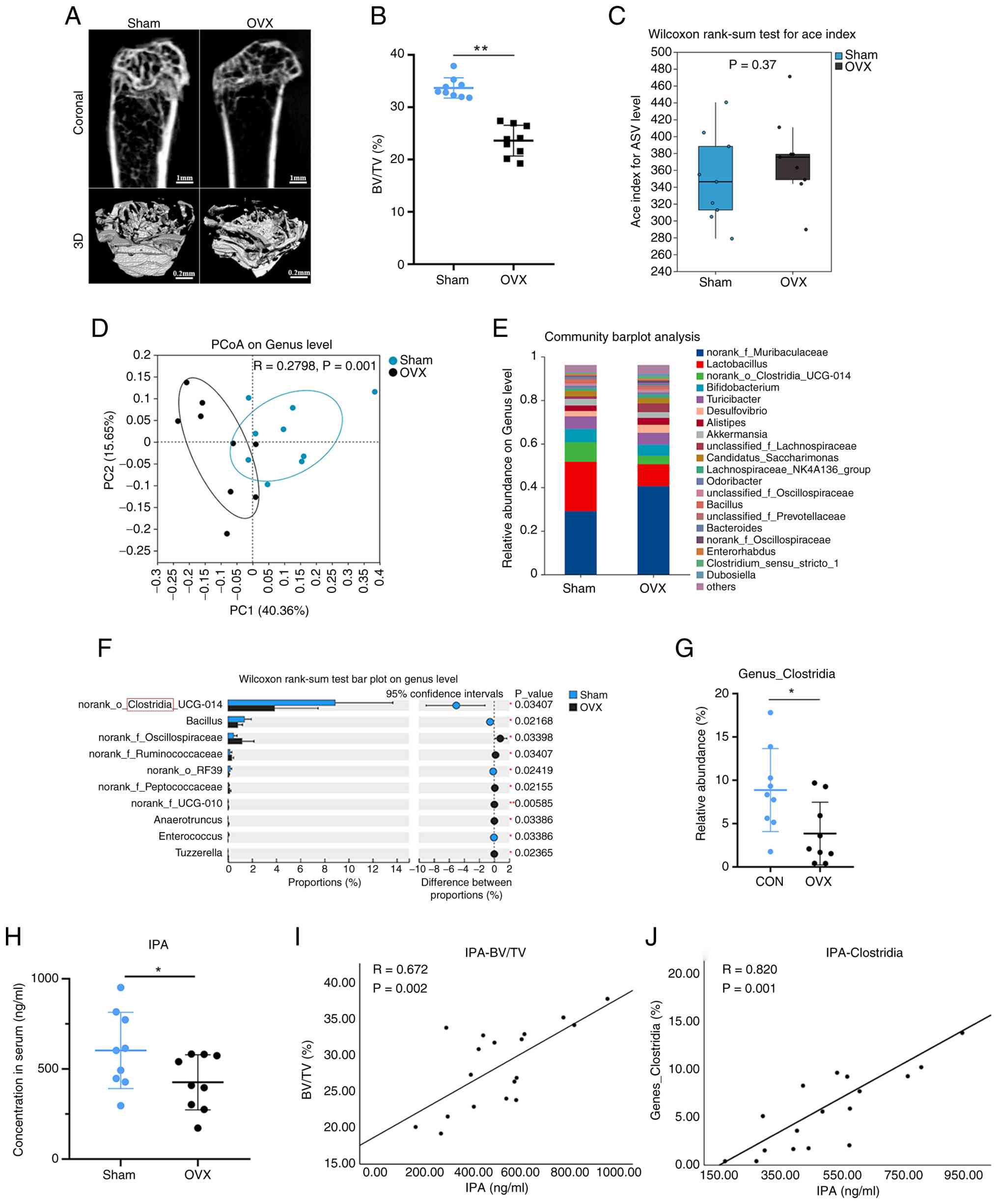
Figure 1

Decreased C. sporogenes
abundance and reduced IPA levels in OVX-induced osteoporotic mice.
(A) Representative micro-CT images of Sham and OVX mice (n=9). (B)
Quantification of BV/TV between the two groups. (C) α-diversity
analysis based on the ACE index. (D) β-diversity analysis based on
principal coordinate analysis. (E) Relative abundance of gut
microbiota at the genus level (n=9). (F) Wilcoxon rank-sum test
analysis of gut microbiota at the genus level between the two
groups. (G) Relative abundance of the Clostridia genus
between the two groups. (H) Serum IPA concentrations in the two
groups. (I) Spearman correlation analysis between IPA levels and
BV/TV. (J) Spearman correlation analysis between IPA levels and the
Clostridia genus. Data are presented as the mean ± SD.
*P<0.05 and **P<0.01 compared with the
control group. IPA, indole-3-propionic acid; OVX, ovariectomy;
BV/TV, bone volume fraction.

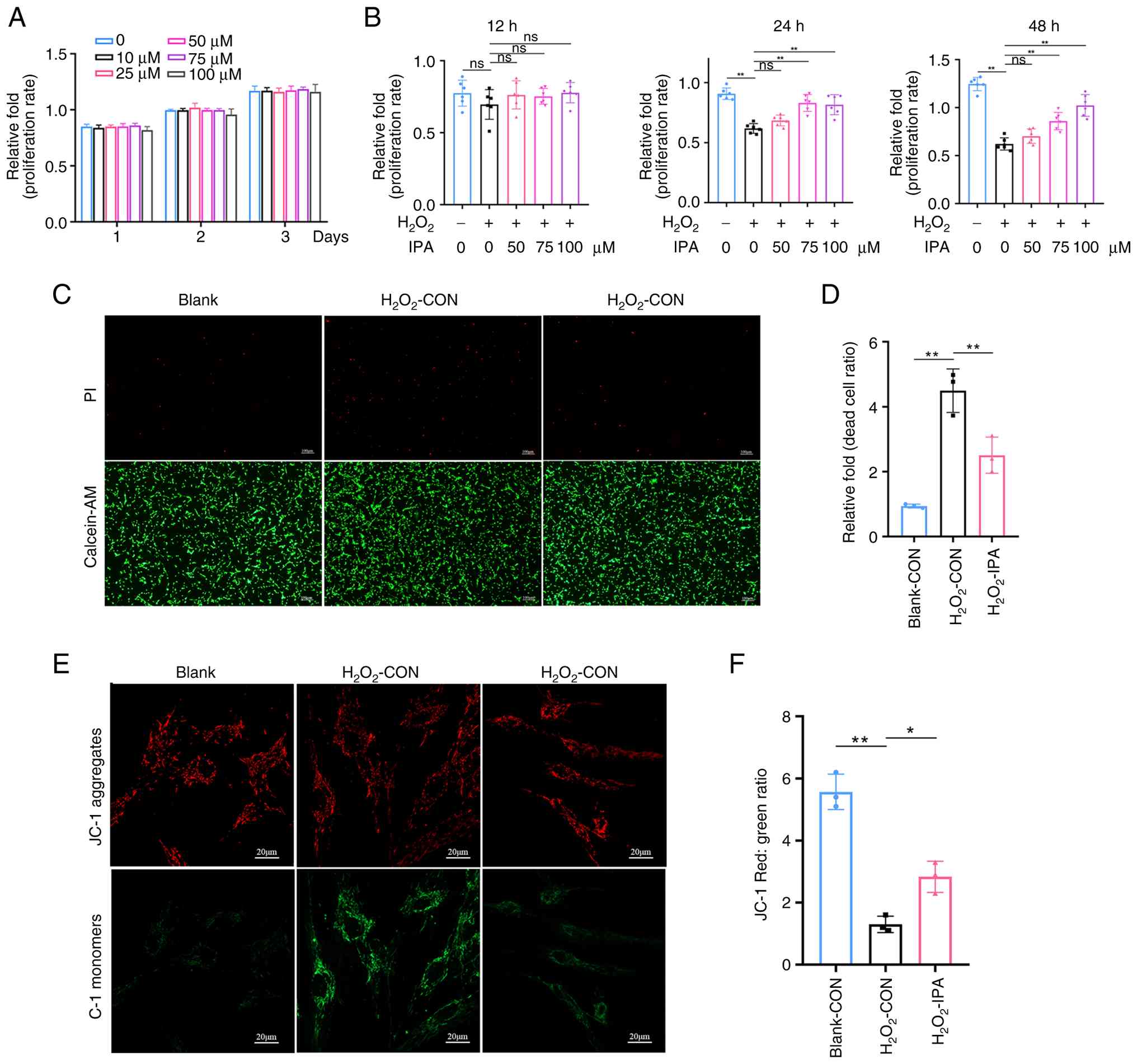
Figure 2

IPA protects mBMSCs against
H2O2-induced apoptotic injury. (A) Effects of
IPA on mBMSC viability over 1, 2, and 3 days, as determined by the
CCK-8 assay. (B) Effects of IPA pretreatment on mBMSC viability
following H2O2 exposure for 12, 24, and 48 h,
as determined by the CCK-8 assay. (C) Live/dead staining of mBMSCs
on day 1 using propidium iodide (dead cells) and Calcein-AM (live
cells). (D) Quantification of the dead-cell ratio based on
live/dead staining. (E) Mitochondrial membrane potential of
H2O2-treated mBMSCs with or without IPA
treatment for 1 day, assessed by JC-1 staining. (F) Quantification
of the red/green fluorescence ratio from JC-1 staining. All
experiments were repeated at least three times. Data are presented
as the mean ± SD. **P<0.01 compared with the control
group. IPA, indole-3-propionic acid; mBMSCs, mouse bone marrow
stromal cells; CCK-8, Cell Counting Kit-8; ns, not significant.

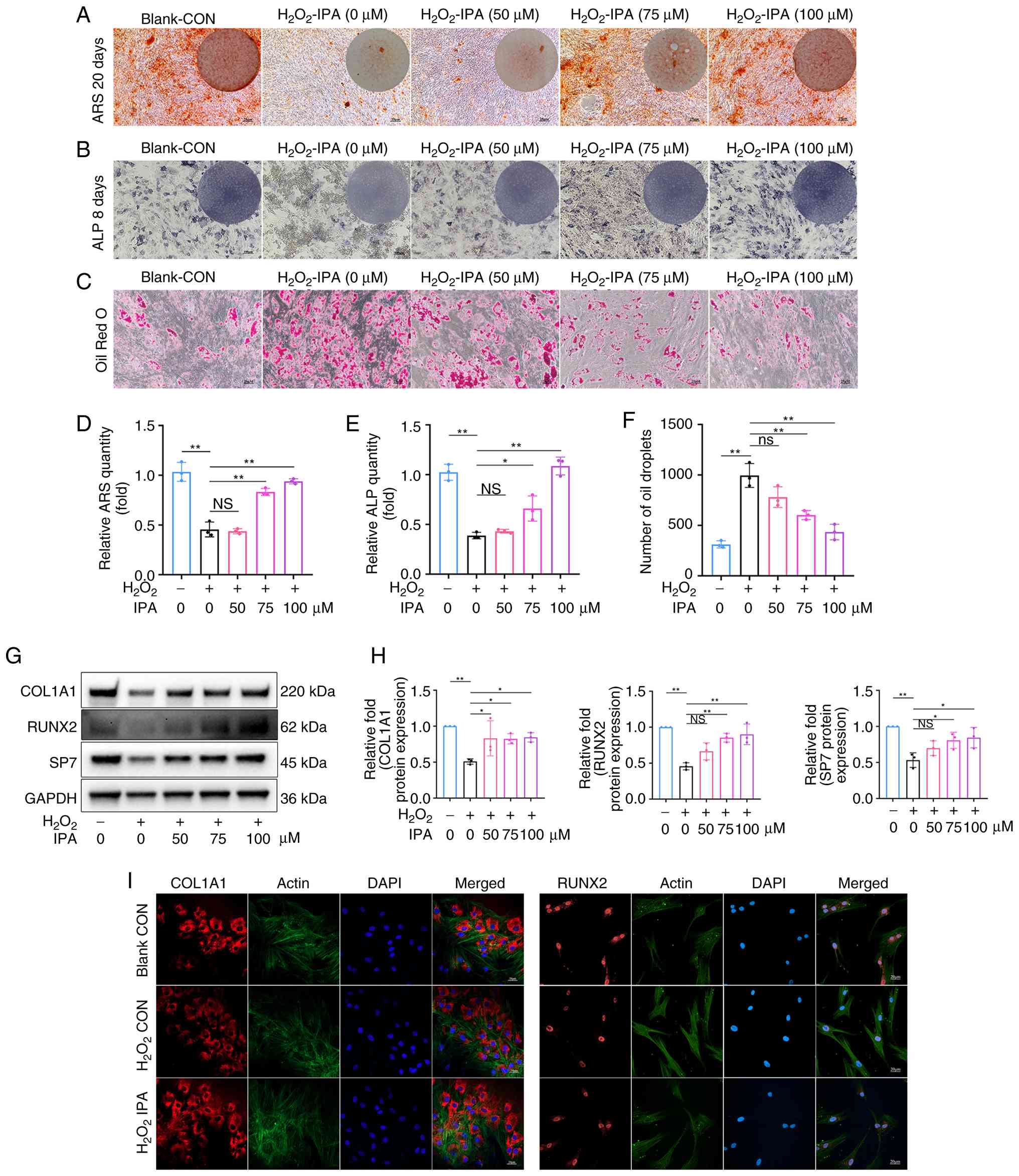
Figure 3

IPA attenuates
H2O2-induced suppression of osteogenic
function in vitro. (A) ARS staining of mBMSCs after 20 days
of osteogenic differentiation. Scale bar, 25 µm. (B) ALP
staining of mBMSCs after 8 days of osteogenic differentiation.
Scale bar, 100 µm. (C) Oil Red O staining of mBMSCs after 8
days of osteogenic differentiation. Scale bar, 25 µm. (D)
Quantification of ARS staining. (E) Quantification of ALP staining.
(F) Quantification of Oil Red O staining. (G) Expression of
osteogenesis-related proteins in mBMSCs after 5 days of osteogenic
differentiation, assessed by western blotting. (H) Quantification
of western blot results. (I) Representative immunofluorescence
images of RUNX2 and COL1A1 expression. Scale bar, 20
µm. All experiments were repeated at least three times. Data
are presented as the mean ± SD. *P<0.05 and
**P<0.01 compared with the control group. IPA,
indole-3-propionic acid; ARS, alizarin Red S; mBMSCs, mouse bone
marrow stromal cells; ALP, alkaline phosphatase; COL1A1, collagen,
type I, alpha 1; RUNX2, Runt-related transcription factor 2; NS,
not significant.

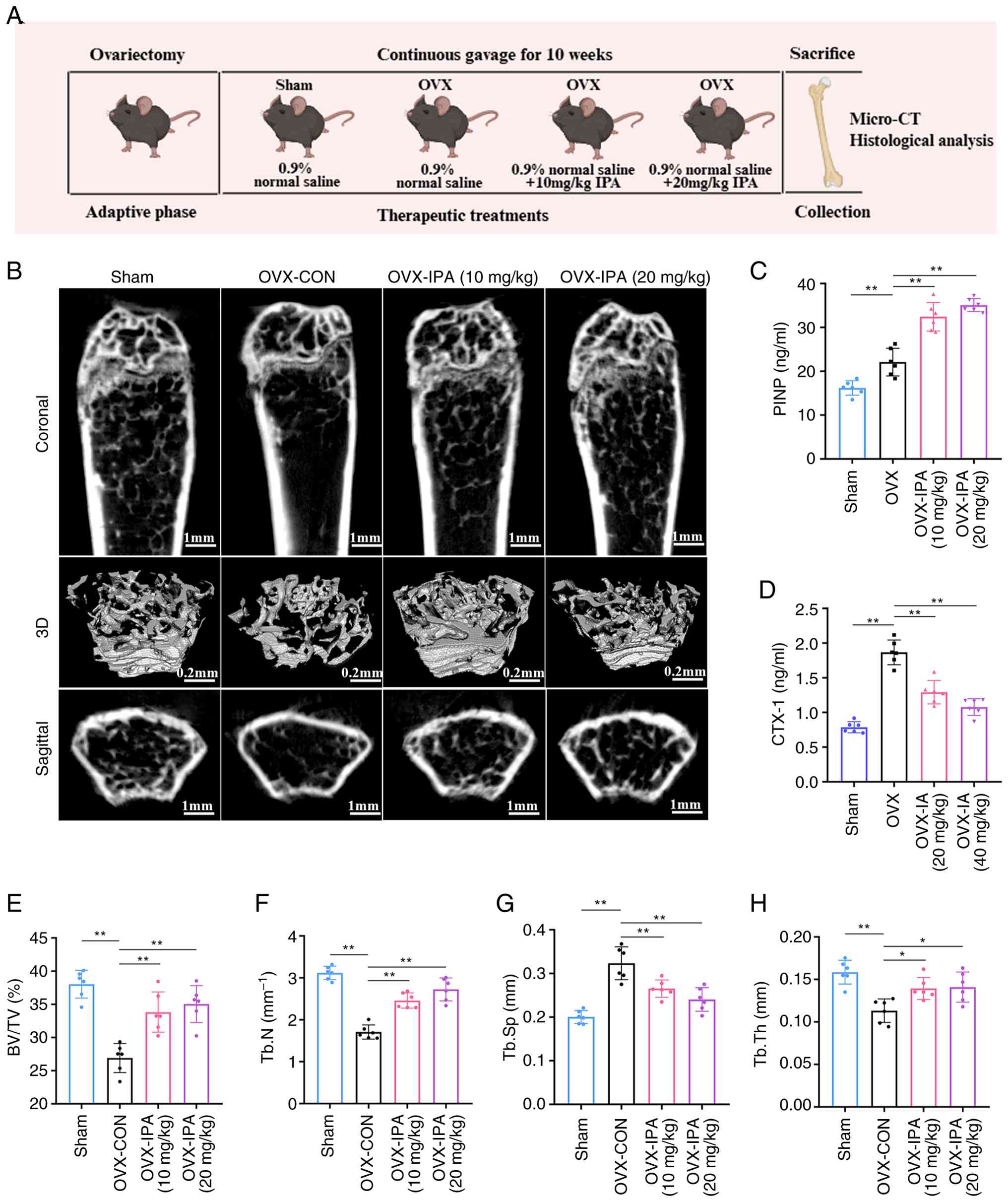
Figure 4

IPA supplementation mitigates
OVX-induced bone loss and enhances bone formation. (A) Schematic
overview of the animal experimental workflow. (B) Representative
micro-CT images of distal femurs from the four experimental groups
(n=6). (C) Serum concentrations of PINP. (D) Serum concentrations
of CTX-1. (E-H) Quantification of trabecular bone parameters,
including BV/TV, Tb.N, Tb.Sp and Tb.Th. Data are presented as the
mean ± SD. *P<0.05 and **P<0.01
compared with the control group. IPA, indole-3-propionic acid; OVX,
ovariectomy; BV/TV, bone volume fraction; Tb.N, trabecular number;
Tb.Th, trabecular thickness; Tb.Sp, trabecular separation

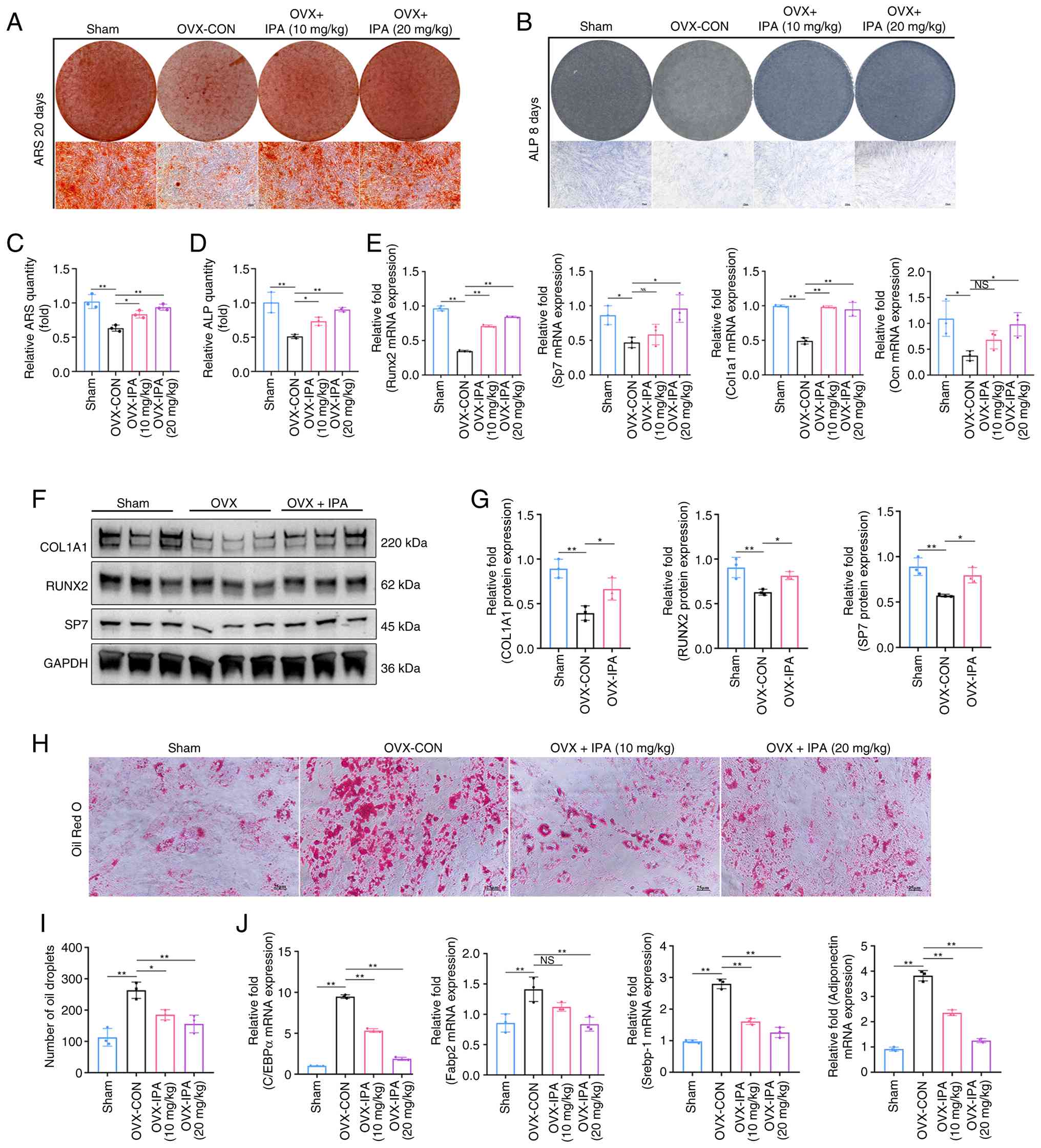
Figure 5

IPA restores OVX-induced bone-fat
imbalance in vivo. (A) ARS staining of mBMSCs isolated from
mice after 20 days of osteogenic differentiation. Scale bar, 25
µm. (B) ALP staining of mBMSCs isolated from mice after 8
days of osteogenic differentiation. Scale bar, 25 µm. (C)
Quantification of ARS staining. (D) Quantification of ALP staining.
(E) Expression of osteogenesis-related genes after 7 days of
osteogenic differentiation, assessed by RT-qPCR. (F) Expression of
osteogenic-related proteins after 7 days of osteogenic
differentiation examined using western blot analysis. (G)
Quantification of results of western blot analysis. (H) Oil Red O
staining of mBMSCs isolated from mice after 8 days of adipogenic
differentiation. Scale bar, 25 µm. (I) Quantification of Oil
Red O staining. (J) Expression of adipogenesis-related genes after
10 days of adipogenic differentiation, assessed by RT-qPCR. All
experiments were repeated at least 3 times. Data are presented as
the mean ± SD. *P<0.05 and **P<0.01
compared with the control group. IPA, indole-3-propionic acid; OVX,
ovariectomy; ARS, alizarin Red S; mBMSCs, mouse bone marrow stromal
cells; ALP, alkaline phosphatase; RT-qPCR, reverse
transcription-quantitative PCR; NS, not significant.

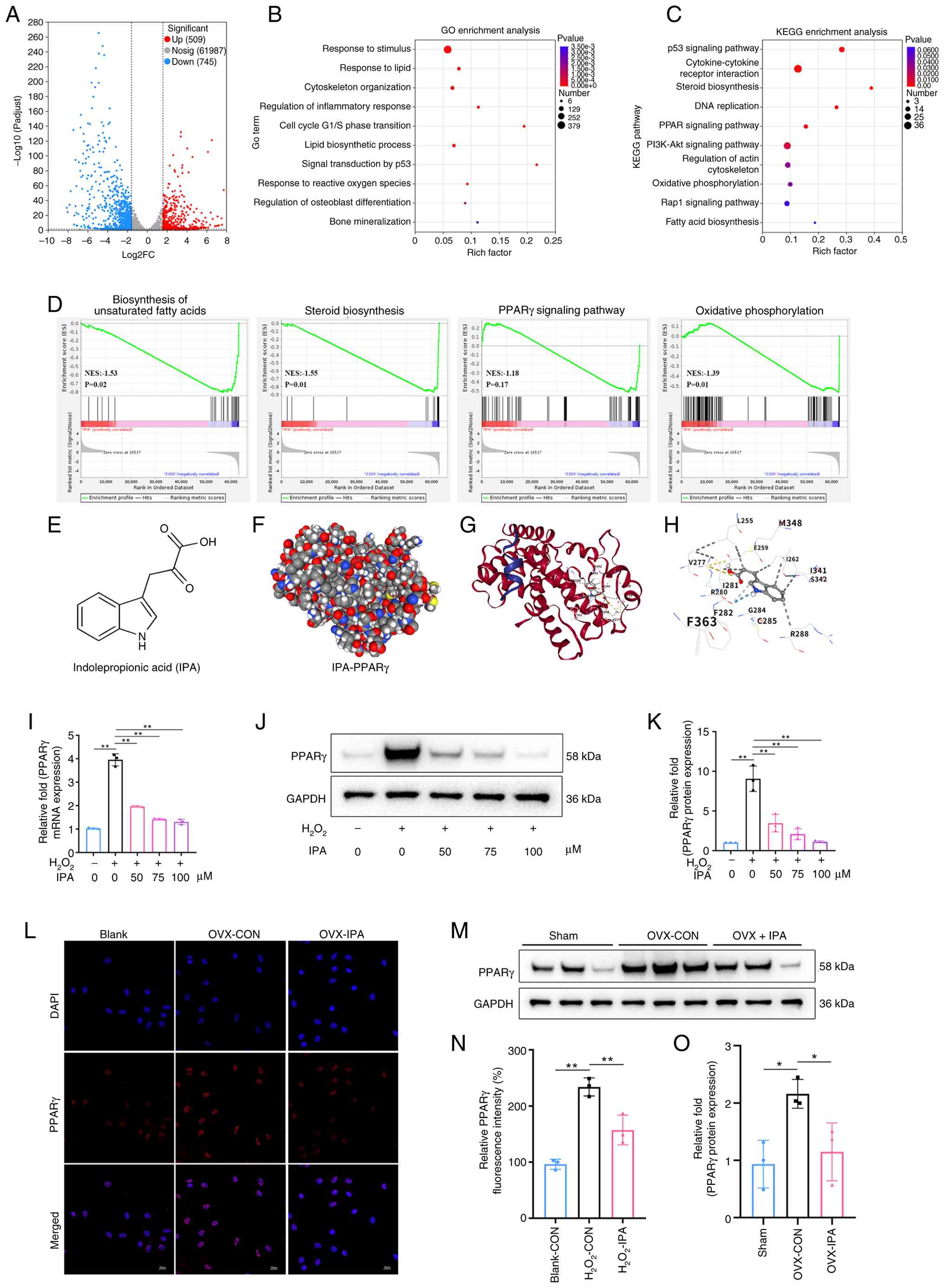
Figure 6

IPA regulates the
osteogenic-adipogenic balance of BMSCs by targeting the PPARγ
signalling pathway. (A) Volcano plots of DEGs between the two
groups (n=3 per group). (B) GO biological process enrichment
analysis of common DEGs. (C) KEGG enrichment analysis showing
significantly altered signalling pathways following IPA treatment.
(D) Gene Set Enrichment Analysis of pathways related to
biosynthesis of unsaturated fatty acids, steroid biosynthesis, the
PPARγ signalling pathway and oxidative phosphorylation. (E)
Chemical structure of IPA. (F) Three-dimensional docking model of
IPA and PPARγ. (G) Two-dimensional docking model of IPA and PPARγ.
(H) Specific binding sites between AKT and including
indole-3-acetic acid. (I) Expression of PPARγ mRNA assessed by
reverse transcription-quantitative PCR. (J) Expression of PPARγ
protein assessed by western blotting. (K) Quantification of western
blot results. (L) Representative IF images of PPARγ expression in
the presence of IPA (100 µM). Scale bar, 20 µm. (M)
Expression of PPARγ protein in mBMSCs isolated from mice in
vivo, assessed by western blotting. (N) Quantification of PPARγ
fluorescence intensity by IF analysis. (O) Quantification of
western blot results. All experiments were repeated at least three
times. Data are presented as the mean ± SD. *P<0.05
and **P<0.01 compared with the control group. IPA,
indole-3-propionic acid; BMSCs, bone marrow stromal cells; PPARγ,
peroxisome proliferator-activated receptor gamma; DEGs,
differentially expressed genes; GO, Gene Ontology; KEGG, Kyoto
Encyclopedia of Genes and Genomes; IF, immunofluorescence.

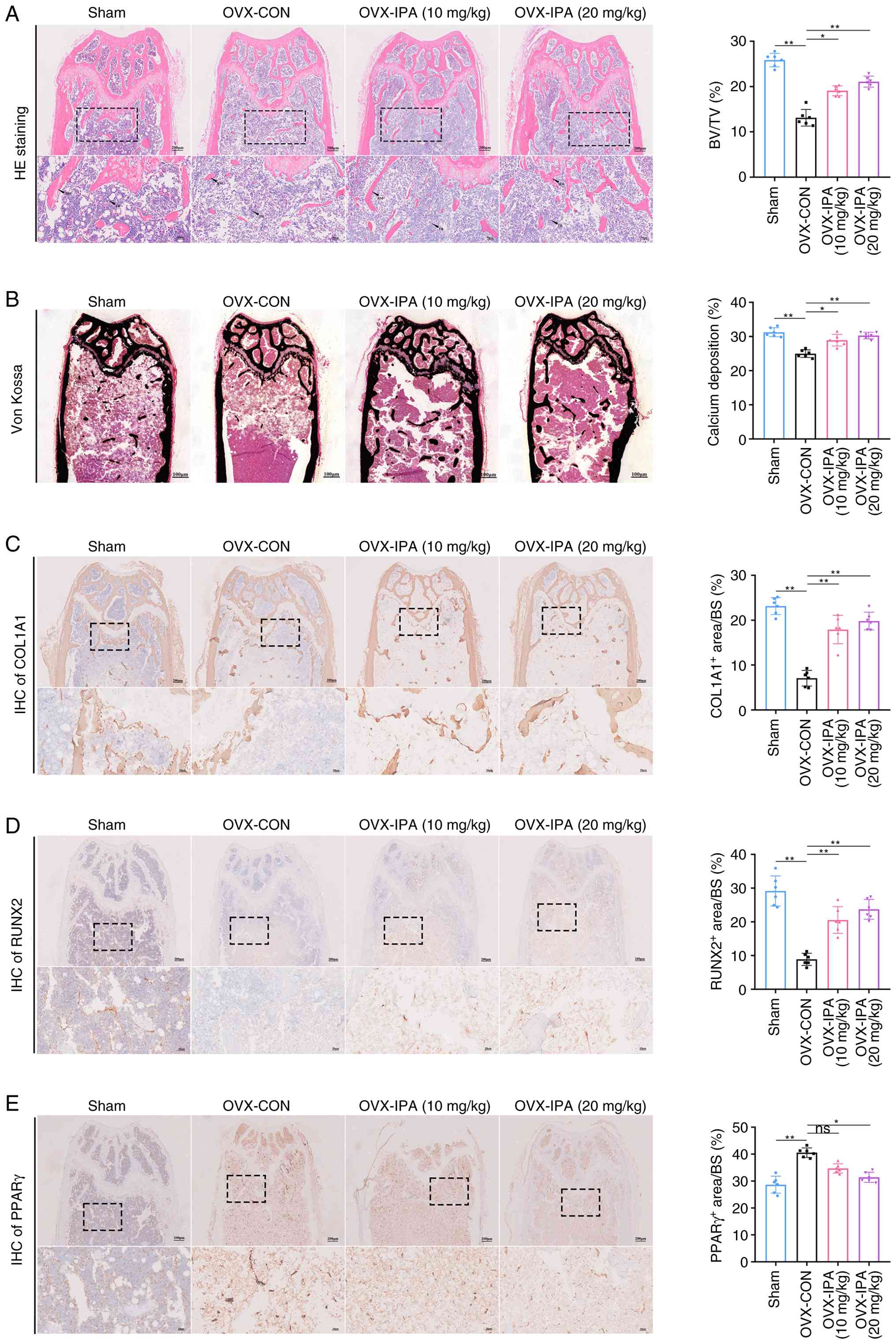
Figure 7

IPA supplementation suppresses PPARγ
signalling to enhance bone formation and attenuate OVX-induced bone
loss. (A) Representative H&E staining images and quantification
of BV/TV in the four experimental groups. Scale bar, 200 µm.
(B) Representative Von Kossa staining images and quantification of
calcium deposition in the four groups. Scale bar, 100 µm.
(C) Histological analysis of femoral tissue stained for COL1A1 and
quantification of the COL1A1-positive area by IHC staining (n=6).
(D) Histological analysis of femoral tissue stained for RUNX2 and
quantification of the RUNX2-positive area by IHC staining (n=6).
(E) Histological analysis of femoral tissue stained for PPARγ and
quantification of the PPARγ-positive area by IHC staining (n=6).
Data are presented as the mean ± SD. *P<0.05 and
**P<0.01 compared with the control group. IPA,
indole-3-propionic acid; PPARγ, peroxisome proliferator-activated
receptor gamma; OVX, ovariectomy; COL1A1, collagen, type I, alpha
1; IHC, immunohistochemistry; RUNX2, Runt-related transcription
factor 2; ns, not significant.

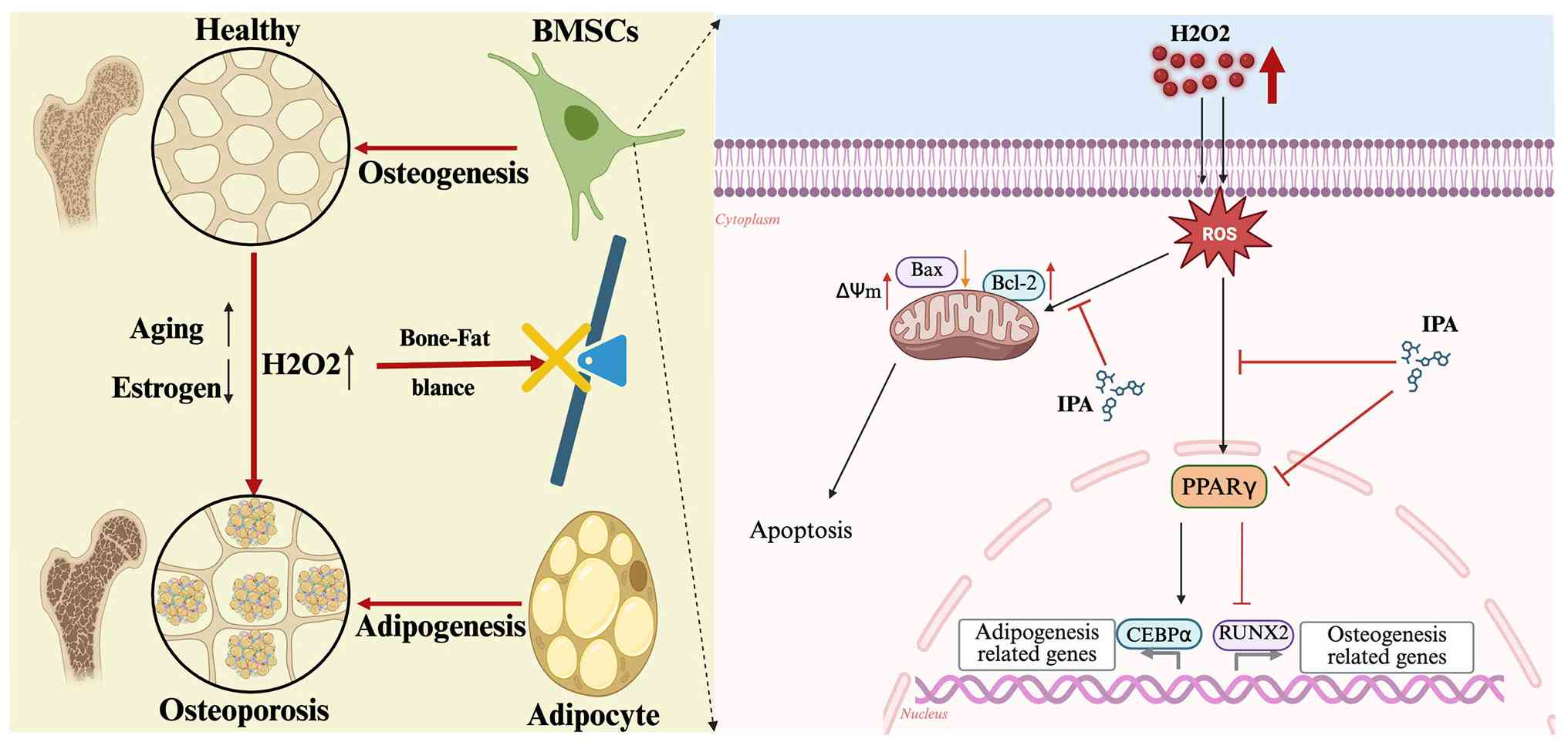
Figure 8

Schematic illustration of the
proposed working model. BMSCs, bone marrow stromal cells; IPA,
indole-3-propionic acid; PPARγ, peroxisome proliferator-activated
receptor gamma; ROS, reactive oxygen species.
View References

1 

Wang L, Yu W, Yin X, Cui L, Tang S, Jiang N, Cui L, Zhao N, Lin Q, Chen L, et al: Prevalence of osteoporosis and fracture in China: The China osteoporosis prevalence study. JAMA Netw Open. 4:e21211062021. View Article : Google Scholar : PubMed/NCBI

2 

Curtis EM, Moon RJ, Dennison EM, Harvey NC and Cooper C: Recent advances in the pathogenesis and treatment of osteoporosis. Clin Med (Lond). 16:360–364. 2016. View Article : Google Scholar : PubMed/NCBI

3 

Rachner TD, Khosla S and Hofbauer LC: Osteoporosis: Now and the future. Lancet. 377:1276–1287. 2011. View Article : Google Scholar : PubMed/NCBI

4 

Ayers C, Kansagara D, Lazur B, Fu R, Kwon A and Harrod C: Effectiveness and safety of treatments to prevent fractures in people with low bone mass or primary osteoporosis: A living systematic review and network meta-analysis for the american college of physicians. Ann Intern Med. 176:182–195. 2023. View Article : Google Scholar : PubMed/NCBI

5 

Stegen S and Carmeliet G: Metabolic regulation of skeletal cell fate and function. Nat Rev Endocrinol. 20:399–413. 2024. View Article : Google Scholar : PubMed/NCBI

6 

Zhang J, Hu W, Zou Z, Li Y, Kang F, Li J and Dong S: The role of lipid metabolism in osteoporosis: Clinical implication and cellular mechanism. Genes Dis. 11:1011222024. View Article : Google Scholar : PubMed/NCBI

7 

Zou J, Chen H, Fan X, Qiu Z, Zhang J and Sun J: Garcinol prevents oxidative stress-induced bone loss and dysfunction of BMSCs through NRF2-antioxidant signaling. Cell Death Discov. 10:822024. View Article : Google Scholar : PubMed/NCBI

8 

Alves CH, Farrell E, Vis M, Colin EM and Lubberts E: Animal models of bone loss in inflammatory arthritis: From cytokines in the bench to novel treatments for bone loss in the Bedside-a comprehensive review. Clin Rev Allergy Immunol. 51:27–47. 2016. View Article : Google Scholar :

9 

Zhang W, Wu X, Li W, Zhang H, Wang Y, Xu J, Li W, Qin Y, Wu Z, Ge G, et al: Pinosylvin inhibits inflammatory and osteoclastogenesis via NLRP3 inflammasome. Adv Sci (Weinh). 12:e015322025. View Article : Google Scholar : PubMed/NCBI

10 

Costa AG, Cusano NE, Silva BC, Cremers S and Bilezikian JP: Cathepsin K: Its skeletal actions and role as a therapeutic target in osteoporosis. Nat Rev Rheumatol. 7:447–456. 2011. View Article : Google Scholar : PubMed/NCBI

11 

Veis DJ and O'Brien CA: Osteoclasts, master sculptors of bone. Annu Rev Pathol. 18:257–281. 2023. View Article : Google Scholar

12 

Riegger J, Schoppa A, Ruths L, Haffner-Luntzer M and Ignatius A: Oxidative stress as a key modulator of cell fate decision in osteoarthritis and osteoporosis: A narrative review. Cell Mol Biol Lett. 28:762023. View Article : Google Scholar : PubMed/NCBI

13 

Iantomasi T, Romagnoli C, Palmini G, Donati S, Falsetti I, Miglietta F, Aurilia C, Marini F, Giusti F and Brandi M: Oxidative stress and inflammation in osteoporosis: Molecular mechanisms involved and the relationship with microRNAs. Int J Mol Sci. 24:37722023. View Article : Google Scholar : PubMed/NCBI

14 

Akune T, Ohba S, Kamekura S, Yamaguchi M, Chung UI, Kubota N, Terauchi Y, Harada Y, Azuma Y, Nakamura K, et al: PPARgamma insufficiency enhances osteogenesis through osteoblast formation from bone marrow progenitors. J Clin Invest. 113:846–855. 2004. View Article : Google Scholar : PubMed/NCBI

15 

Ahmadian M, Suh JM, Hah N, Liddle C, Atkins AR, Downes M and Evans RM: PPARgamma signaling and metabolism: The good, the bad and the future. Nat Med. 19:557–566. 2013. View Article : Google Scholar : PubMed/NCBI

16 

Tsai YS and Maeda N: PPARgamma: A critical determinant of body fat distribution in humans and mice. Trends Cardiovasc Med. 15:81–85. 2005. View Article : Google Scholar : PubMed/NCBI

17 

Tontonoz P and Spiegelman BM: Fat and beyond: The diverse biology of PPARgamma. Annu Rev Biochem. 77:289–312. 2008. View Article : Google Scholar : PubMed/NCBI

18 

Liu C, Xiong Q, Li Q, Lin W, Jiang S, Zhang D, Wang Y, Duan X, Gong P and Kang N: CHD7 regulates bone-fat balance by suppressing PPAR-gamma signaling. Nat Commun. 13:19892022. View Article : Google Scholar

19 

Zhang YW, Song PR, Wang SC, Liu H, Shi ZM and Su JC: Diets intervene osteoporosis via gut-bone axis. Gut Microbes. 16:22954322024. View Article : Google Scholar : PubMed/NCBI

20 

Zhang YW, Wu Y, Liu XF, Chen X and Su JC: Targeting the gut microbiota-related metabolites for osteoporosis: The inextricable connection of gut-bone axis. Ageing Res Rev. 94:1021962024. View Article : Google Scholar : PubMed/NCBI

21 

Al Saedi A, Sharma S, Summers MA, Nurgali K and Duque G: The multiple faces of tryptophan in bone biology. Exp Gerontol. 129:1107782020. View Article : Google Scholar

22 

Xiang T, Yang C, Xie L, Xiao S, Tang Y, Huang G, Sun D, Chen Y and Luo F: Aberrant tryptophan metabolism manipulates osteochondral homeostasis. Research (Wash D C). 8:07282025.PubMed/NCBI

23 

Miao H, Zhang SJ, Wu X, Li P and Zhao YY: Tryptophan metabolism as a target in gut microbiota, ageing and kidney disease. Int J Biol Sci. 21:4374–4387. 2025. View Article : Google Scholar : PubMed/NCBI

24 

Chen Y, Yang C, Deng Z, Xiang T, Ni Q, Xu J, Sun D and Luo F: Gut microbially produced tryptophan metabolite melatonin ameliorates osteoporosis via modulating SCFA and TMAO metabolism. J Pineal Res. 76:e129542024. View Article : Google Scholar : PubMed/NCBI

25 

Su S and Tian L: Association between dietary tryptophan intake and bone health: A cross-sectional study. Calcif Tissue Int. 116:62024. View Article : Google Scholar : PubMed/NCBI

26 

Xu H, Luo Y, An Y and Wu X: The mechanism of action of indole-3-propionic acid on bone metabolism. Food Funct. 16:406–421. 2025. View Article : Google Scholar : PubMed/NCBI

27 

Kim CS, Jung S, Hwang GS and Shin DM: Gut microbiota indole-3-propionic acid mediates neuroprotective effect of probiotic consumption in healthy elderly: A randomized, double-blind, placebo-controlled, multicenter trial and in vitro study. Clin Nutr. 42:1025–1033. 2023. View Article : Google Scholar : PubMed/NCBI

28 

Anaya JM, Bollag WB, Hamrick MW and Isales CM: The role of tryptophan metabolites in musculoskeletal stem cell aging. Int J Mol Sci. 21:66702020. View Article : Google Scholar : PubMed/NCBI

29 

Li J, Zhang L, Wu T, Li Y, Zhou X and Ruan Z: Indole-3-propionic acid improved the intestinal barrier by enhancing epithelial barrier and mucus barrier. J Agric Food Chem. 69:1487–1495. 2021. View Article : Google Scholar

30 

Zeng Y, Guo M, Wu Q, Tan X, Jiang C, Teng F, Chen J, Zhang F, Ma X, Li X, et al: Gut microbiota-derived indole-3-propionic acid alleviates diabetic kidney disease through its mitochondrial protective effect via reducing ubiquitination mediated-degradation of SIRT1. J Adv Res. 73:607–630. 2025. View Article : Google Scholar :

31 

Zhao ZH, Xin FZ, Xue Y, Hu Z, Han Y, Ma F, Zhou D, Liu XL, Cui A, Liu Z, et al: Indole-3-propionic acid inhibits gut dysbiosis and endotoxin leakage to attenuate steatohepatitis in rats. Exp Mol Med. 51:1–14. 2019.

32 

Wu R, Kong Y, Li J, Chen H, Jiao Y, Sun C and Ju Y: Indole-3 propionate inhibits NF-kappaB/NLRP3-mediated osteoclastogenesis and improves bone quality in high-fat-diet induced obese mice. Biochim Biophys Acta Mol Basis Dis. 1871:1679522025. View Article : Google Scholar

33 

Bai J, Si G, Wang R, Su S, Fan J, He X, Lv Y, Gao S and Zhou F: Gut metabolite indoleacrylic acid suppresses osteoclast formation by AHR mediated NF-κB signaling pathway. Int J Biol Sci. 22:951–969. 2026. View Article : Google Scholar

34 

Bai J, Han G, Fan J, Wang R, Su S, Sun A, Hu D, Lv Y, Gao S and Zhou F: Gut microbial metabolite alleviates osteoporosis by attenuating AKT-NFATc1 signaling pathway and ROS production. Free Radic Biol Med. 243:351–366. 2026. View Article : Google Scholar

35 

Peng R, Song C, Gou S, Liu H, Kang H, Dong Y, Xu Y, Hu P, Cai K, Feng Q, et al: Gut Clostridium sporogenes-derived indole propionic acid suppresses osteoclast formation by activating pregnane X receptor. Pharmacol Res. 202:1071212024. View Article : Google Scholar : PubMed/NCBI

36 

Chen C, Cao Z, Lei H, Zhang C, Wu M, Huang S, Li X, Xie D, Liu M, Zhang L and Chen G: Microbial tryptophan metabolites ameliorate Ovariectomy-induced bone loss by repairing intestinal AhR-mediated gut-bone signaling pathway. Adv Sci (Weinh). 11:e24045452024. View Article : Google Scholar : PubMed/NCBI

37 

Bai J, Zhang W, Zhou C, Zhao G, Zhong H, Hang K, Xu J, Zhang W, Chen E, Wu J, et al: MFG-E8 promotes osteogenic differentiation of human bone marrow mesenchymal stem cells through GSK3β/β-catenin signaling pathway. FASEB J. 37:e229502023. View Article : Google Scholar

38 

Wu X, Wang K, Chen H, Cao B, Wang Y, Wang Z, Dai C, Yao M, Ji X, Jiang X, et al: Hypoxia-induced mitochondrial fission regulates the fate of bone marrow mesenchymal stem cells by maintaining HIF1α stabilization. Free Radic Biol Med. 225:127–144. 2024. View Article : Google Scholar : PubMed/NCBI

39 

Jurisic V, Srdic-Rajic T, Konjevic G, Bogdanovic G and Colic M: TNF-α induced apoptosis is accompanied with rapid CD30 and slower CD45 shedding from K-562 cells. J Membr Biol. 239:115–122. 2011. View Article : Google Scholar : PubMed/NCBI

40 

Liu Y, Yang X, Gan J, Chen S, Xiao ZX and Cao Y: CB-Dock2: Improved protein-ligand blind docking by integrating cavity detection, docking and homologous template fitting. Nucleic Acids Res. 50:W159–W164. 2022. View Article : Google Scholar : PubMed/NCBI

41 

Li D, Zhao Z, Zhu L, Feng H, Song J, Fu J, Li J, Chen Z and Fu H: 7,8-DHF inhibits BMSC oxidative stress via the TRKB/PI3K/AKT/NRF2 pathway to improve symptoms of postmenopausal osteoporosis. Free Radic Biol Med. 223:413–429. 2024. View Article : Google Scholar : PubMed/NCBI

42 

Chen M, Liang H, Wu M, Ge H, Ma Y, Shen Y, Lu S, Shen C, Zhang H, Wang Z and Tang L: Fgf9 regulates bone marrow mesenchymal stem cell fate and bone-fat balance in osteoporosis by PI3K/AKT/Hippo and MEK/ERK signaling. Int J Biol Sci. 20:3461–3479. 2024. View Article : Google Scholar : PubMed/NCBI

43 

Yang L, Liu X, Chen S, Sun J, Tao Y, Ma L, Zeng Y, Luo K, Tian R and Meng X: Scutellarin ameliorates mitochondrial dysfunction and apoptosis in OGD/R-insulted HT22 cells through mitophagy induction. Biomed Pharmacother. 179:1173402024. View Article : Google Scholar : PubMed/NCBI

44 

Zhao J, Bai X, Du J, Chen Y, Guo X, Zhang J, Gan J, Wu P, Chen S, Zhang X, et al: Tryptophan metabolism: From physiological functions to key roles and therapeutic targets in cancer (Review). Oncol Rep. 54:862025. View Article : Google Scholar : PubMed/NCBI

45 

Li Y, Jin D, Xie W, Wen L, Chen W, Xu J, Ding J and Ren D: PPAR-γ and wnt regulate the differentiation of MSCs into adipocytes and osteoblasts respectively. Curr Stem Cell Res Ther. 13:185–192. 2018. View Article : Google Scholar

46 

Kim K, Kim JH, Kim I, Seong S, Koh JT and Kim N: Sestrin2 inhibits RANKL-induced osteoclastogenesis through AMPK activation and ROS inhibition. Free Radic Biol Med. 211:77–88. 2024. View Article : Google Scholar

47 

Ye W, Liao Y, Liu X, Wang Y, Li T, Zhao Y, He Z, Chen J, Yin M, Sheng Y, et al: Dectin-2 depletion alleviates osteoclast-induced bone loss in periodontitis via Syk/NOX2/ROS signaling. Free Radic Biol Med. 229:13–29. 2025. View Article : Google Scholar : PubMed/NCBI

Related Articles

  • Abstract
  • View
  • Download
  • Twitter
Copy and paste a formatted citation
Spandidos Publications style
Bai J, Wang R, Fan J, Su S, Si G, You Q, Sun A, Hu D, Gao S, Lv Y, Lv Y, et al: Microbiota‑derived indole‑3‑propionic acid reprograms bone marrow stem cell fate via PPAR&gamma; suppression to rescue osteoporosis. Int J Mol Med 58: 208, 2026.
APA
Bai, J., Wang, R., Fan, J., Su, S., Si, G., You, Q. ... Zhou, F. (2026). Microbiota‑derived indole‑3‑propionic acid reprograms bone marrow stem cell fate via PPAR&gamma; suppression to rescue osteoporosis. International Journal of Molecular Medicine, 58, 208. https://doi.org/10.3892/ijmm.2026.5879
MLA
Bai, J., Wang, R., Fan, J., Su, S., Si, G., You, Q., Sun, A., Hu, D., Gao, S., Lv, Y., Zhou, F."Microbiota‑derived indole‑3‑propionic acid reprograms bone marrow stem cell fate via PPAR&gamma; suppression to rescue osteoporosis". International Journal of Molecular Medicine 58.2 (2026): 208.
Chicago
Bai, J., Wang, R., Fan, J., Su, S., Si, G., You, Q., Sun, A., Hu, D., Gao, S., Lv, Y., Zhou, F."Microbiota‑derived indole‑3‑propionic acid reprograms bone marrow stem cell fate via PPAR&gamma; suppression to rescue osteoporosis". International Journal of Molecular Medicine 58, no. 2 (2026): 208. https://doi.org/10.3892/ijmm.2026.5879
Copy and paste a formatted citation
x
Spandidos Publications style
Bai J, Wang R, Fan J, Su S, Si G, You Q, Sun A, Hu D, Gao S, Lv Y, Lv Y, et al: Microbiota‑derived indole‑3‑propionic acid reprograms bone marrow stem cell fate via PPAR&gamma; suppression to rescue osteoporosis. Int J Mol Med 58: 208, 2026.
APA
Bai, J., Wang, R., Fan, J., Su, S., Si, G., You, Q. ... Zhou, F. (2026). Microbiota‑derived indole‑3‑propionic acid reprograms bone marrow stem cell fate via PPAR&gamma; suppression to rescue osteoporosis. International Journal of Molecular Medicine, 58, 208. https://doi.org/10.3892/ijmm.2026.5879
MLA
Bai, J., Wang, R., Fan, J., Su, S., Si, G., You, Q., Sun, A., Hu, D., Gao, S., Lv, Y., Zhou, F."Microbiota‑derived indole‑3‑propionic acid reprograms bone marrow stem cell fate via PPAR&gamma; suppression to rescue osteoporosis". International Journal of Molecular Medicine 58.2 (2026): 208.
Chicago
Bai, J., Wang, R., Fan, J., Su, S., Si, G., You, Q., Sun, A., Hu, D., Gao, S., Lv, Y., Zhou, F."Microbiota‑derived indole‑3‑propionic acid reprograms bone marrow stem cell fate via PPAR&gamma; suppression to rescue osteoporosis". International Journal of Molecular Medicine 58, no. 2 (2026): 208. https://doi.org/10.3892/ijmm.2026.5879
Follow us
  • Twitter
  • LinkedIn
  • Facebook
About
  • Spandidos Publications
  • Careers
  • Cookie Policy
  • Privacy Policy
How can we help?
  • Help
  • Live Chat
  • Contact
  • Email to our Support Team