Spandidos Publications Logo
  • About
    • About Spandidos
    • Aims and Scopes
    • Abstracting and Indexing
    • Editorial Policies
    • Reprints and Permissions
    • Job Opportunities
    • Terms and Conditions
    • Contact
  • Journals
    • All Journals
    • Oncology Letters
      • Oncology Letters
      • Information for Authors
      • Editorial Policies
      • Editorial Board
      • Aims and Scope
      • Abstracting and Indexing
      • Bibliographic Information
      • Archive
    • International Journal of Oncology
      • International Journal of Oncology
      • Information for Authors
      • Editorial Policies
      • Editorial Board
      • Aims and Scope
      • Abstracting and Indexing
      • Bibliographic Information
      • Archive
    • Molecular and Clinical Oncology
      • Molecular and Clinical Oncology
      • Information for Authors
      • Editorial Policies
      • Editorial Board
      • Aims and Scope
      • Abstracting and Indexing
      • Bibliographic Information
      • Archive
    • Experimental and Therapeutic Medicine
      • Experimental and Therapeutic Medicine
      • Information for Authors
      • Editorial Policies
      • Editorial Board
      • Aims and Scope
      • Abstracting and Indexing
      • Bibliographic Information
      • Archive
    • International Journal of Molecular Medicine
      • International Journal of Molecular Medicine
      • Information for Authors
      • Editorial Policies
      • Editorial Board
      • Aims and Scope
      • Abstracting and Indexing
      • Bibliographic Information
      • Archive
    • Biomedical Reports
      • Biomedical Reports
      • Information for Authors
      • Editorial Policies
      • Editorial Board
      • Aims and Scope
      • Abstracting and Indexing
      • Bibliographic Information
      • Archive
    • Oncology Reports
      • Oncology Reports
      • Information for Authors
      • Editorial Policies
      • Editorial Board
      • Aims and Scope
      • Abstracting and Indexing
      • Bibliographic Information
      • Archive
    • Molecular Medicine Reports
      • Molecular Medicine Reports
      • Information for Authors
      • Editorial Policies
      • Editorial Board
      • Aims and Scope
      • Abstracting and Indexing
      • Bibliographic Information
      • Archive
    • World Academy of Sciences Journal
      • World Academy of Sciences Journal
      • Information for Authors
      • Editorial Policies
      • Editorial Board
      • Aims and Scope
      • Abstracting and Indexing
      • Bibliographic Information
      • Archive
    • International Journal of Functional Nutrition
      • International Journal of Functional Nutrition
      • Information for Authors
      • Editorial Policies
      • Editorial Board
      • Aims and Scope
      • Abstracting and Indexing
      • Bibliographic Information
      • Archive
    • International Journal of Epigenetics
      • International Journal of Epigenetics
      • Information for Authors
      • Editorial Policies
      • Editorial Board
      • Aims and Scope
      • Abstracting and Indexing
      • Bibliographic Information
      • Archive
    • Medicine International
      • Medicine International
      • Information for Authors
      • Editorial Policies
      • Editorial Board
      • Aims and Scope
      • Abstracting and Indexing
      • Bibliographic Information
      • Archive
  • Articles
  • Information
    • Information for Authors
    • Information for Reviewers
    • Information for Librarians
    • Information for Advertisers
    • Conferences
  • Language Editing
Spandidos Publications Logo
  • About
    • About Spandidos
    • Aims and Scopes
    • Abstracting and Indexing
    • Editorial Policies
    • Reprints and Permissions
    • Job Opportunities
    • Terms and Conditions
    • Contact
  • Journals
    • All Journals
    • Biomedical Reports
      • Information for Authors
      • Editorial Policies
      • Editorial Board
      • Aims and Scope
      • Abstracting and Indexing
      • Bibliographic Information
      • Archive
    • Experimental and Therapeutic Medicine
      • Information for Authors
      • Editorial Policies
      • Editorial Board
      • Aims and Scope
      • Abstracting and Indexing
      • Bibliographic Information
      • Archive
    • International Journal of Epigenetics
      • Information for Authors
      • Editorial Policies
      • Editorial Board
      • Aims and Scope
      • Abstracting and Indexing
      • Bibliographic Information
      • Archive
    • International Journal of Functional Nutrition
      • Information for Authors
      • Editorial Policies
      • Editorial Board
      • Aims and Scope
      • Abstracting and Indexing
      • Bibliographic Information
      • Archive
    • International Journal of Molecular Medicine
      • Information for Authors
      • Editorial Policies
      • Editorial Board
      • Aims and Scope
      • Abstracting and Indexing
      • Bibliographic Information
      • Archive
    • International Journal of Oncology
      • Information for Authors
      • Editorial Policies
      • Editorial Board
      • Aims and Scope
      • Abstracting and Indexing
      • Bibliographic Information
      • Archive
    • Medicine International
      • Information for Authors
      • Editorial Policies
      • Editorial Board
      • Aims and Scope
      • Abstracting and Indexing
      • Bibliographic Information
      • Archive
    • Molecular and Clinical Oncology
      • Information for Authors
      • Editorial Policies
      • Editorial Board
      • Aims and Scope
      • Abstracting and Indexing
      • Bibliographic Information
      • Archive
    • Molecular Medicine Reports
      • Information for Authors
      • Editorial Policies
      • Editorial Board
      • Aims and Scope
      • Abstracting and Indexing
      • Bibliographic Information
      • Archive
    • Oncology Letters
      • Information for Authors
      • Editorial Policies
      • Editorial Board
      • Aims and Scope
      • Abstracting and Indexing
      • Bibliographic Information
      • Archive
    • Oncology Reports
      • Information for Authors
      • Editorial Policies
      • Editorial Board
      • Aims and Scope
      • Abstracting and Indexing
      • Bibliographic Information
      • Archive
    • World Academy of Sciences Journal
      • Information for Authors
      • Editorial Policies
      • Editorial Board
      • Aims and Scope
      • Abstracting and Indexing
      • Bibliographic Information
      • Archive
  • Articles
  • Information
    • For Authors
    • For Reviewers
    • For Librarians
    • For Advertisers
    • Conferences
  • Language Editing
Login Register Submit
  • This site uses cookies
  • You can change your cookie settings at any time by following the instructions in our Cookie Policy. To find out more, you may read our Privacy Policy.

    I agree
Search articles by DOI, keyword, author or affiliation
Search
Advanced Search
presentation
International Journal of Molecular Medicine
Join Editorial Board Propose a Special Issue
Print ISSN: 1107-3756 Online ISSN: 1791-244X
Journal Cover
September-2026 Volume 58 Issue 3

Full Size Image

Sign up for eToc alerts
Recommend to Library

Journals

International Journal of Molecular Medicine

International Journal of Molecular Medicine

International Journal of Molecular Medicine is an international journal devoted to molecular mechanisms of human disease.

International Journal of Oncology

International Journal of Oncology

International Journal of Oncology is an international journal devoted to oncology research and cancer treatment.

Molecular Medicine Reports

Molecular Medicine Reports

Covers molecular medicine topics such as pharmacology, pathology, genetics, neuroscience, infectious diseases, molecular cardiology, and molecular surgery.

Oncology Reports

Oncology Reports

Oncology Reports is an international journal devoted to fundamental and applied research in Oncology.

Experimental and Therapeutic Medicine

Experimental and Therapeutic Medicine

Experimental and Therapeutic Medicine is an international journal devoted to laboratory and clinical medicine.

Oncology Letters

Oncology Letters

Oncology Letters is an international journal devoted to Experimental and Clinical Oncology.

Biomedical Reports

Biomedical Reports

Explores a wide range of biological and medical fields, including pharmacology, genetics, microbiology, neuroscience, and molecular cardiology.

Molecular and Clinical Oncology

Molecular and Clinical Oncology

International journal addressing all aspects of oncology research, from tumorigenesis and oncogenes to chemotherapy and metastasis.

World Academy of Sciences Journal

World Academy of Sciences Journal

Multidisciplinary open-access journal spanning biochemistry, genetics, neuroscience, environmental health, and synthetic biology.

International Journal of Functional Nutrition

International Journal of Functional Nutrition

Open-access journal combining biochemistry, pharmacology, immunology, and genetics to advance health through functional nutrition.

International Journal of Epigenetics

International Journal of Epigenetics

Publishes open-access research on using epigenetics to advance understanding and treatment of human disease.

Medicine International

Medicine International

An International Open Access Journal Devoted to General Medicine.

Journal Cover
September-2026 Volume 58 Issue 3

Full Size Image

Sign up for eToc alerts
Recommend to Library

  • Article
  • Citations
    • Cite This Article
    • Download Citation
    • Create Citation Alert
    • Remove Citation Alert
    • Cited By
  • Similar Articles
    • Related Articles (in Spandidos Publications)
    • Similar Articles (Google Scholar)
    • Similar Articles (PubMed)
  • Download PDF
  • Download XML
  • View XML

  • Supplementary Files
    • Supplementary_Data1.pdf
    • Supplementary_Data2.pdf
Article Open Access

Tubular PFKFB3 drives diabetic kidney fibrosis via lactate‑dependent H4K12 lactylation and HIPK2 transactivation

  • Authors:
    • Mingkun Xu
    • Linhang Fu
    • Yulong Zhang
    • Xiuli Guo
    • Han Wu
    • Sijing Gao
    • Fei Xiao
    • Li Xu
  • View Affiliations / Copyright

    Affiliations: Department of Anesthesiology, Affiliated Hospital of Guangdong Medical University, Zhanjiang, Guangdong 524003, P.R. China, Department of Anesthesiology, The Second Affiliated Hospital of Guangdong Medical University, Zhanjiang, Guangdong 524003, P.R. China, Department of Laboratory Medicine, The Second Affiliated Hospital of Guangdong Medical University, Zhanjiang, Guangdong 524003, P.R. China, International Medical and Special Care Ward, The Affiliated Hospital of Guangdong Medical University, Zhanjiang, Guangdong 524002, P.R. China, Department of Laboratory Medicine, Maoming People's Hospital, Maoming, Guangdong 525099, P.R. China
    Copyright: © Xu et al. This is an open access article distributed under the terms of Creative Commons Attribution License.
  • Article Number: 255
    |
    Published online on: July 13, 2026
       https://doi.org/10.3892/ijmm.2026.5926
  • Expand metrics +
Metrics: Total Views: 0 (Spandidos Publications: | PMC Statistics: )
Metrics: Total PDF Downloads: 0 (Spandidos Publications: | PMC Statistics: )
Cited By (CrossRef): 0 citations Loading Articles...

This article is mentioned in:


Abstract

Aerobic glycolysis is increasingly recognized as a pathogenic driver in diabetic kidney disease (DKD). However, the epigenetic role of its end product, lactate, remains largely undefined. Spatial transcriptomics analysis revealed active glycolysis in tubular epithelial cells. The participation of histone lactylation in DKD was confirmed through inhibition of histone lactylation by glycolysis inhibitors or lactate in vivo. The potential target genes of H4K12 lactylation (H4K12la) were screened by CUT&Tag analyses. The candidate target genes were validated through ChIP‑qPCR, RT‑qPCR and western blot analyses. The present study found that the expression of 6‑phosphofructo‑2‑kinase/fructose‑2,6‑biphosphatase 3 (PFKFB3), a pivotal glycolytic regulator, was markedly upregulated in tubular epithelial cells derived from patients with DKD and from the corresponding mouse models. Inhibition of the expression of PFKFB3 mitigated the kidney fibrotic process and alleviated renal function in a DKD mouse model. Conversely, upregulation of PFKFB3 expression aggravated renal fibrogenesis and promoted the deterioration of renal pathology. Moreover, it was demonstrated that the reduction in the levels of lactate levels markedly alleviated renal fibrosis in DKD. With regard to its mechanism of action, lactate was generated via PFKFB3‑driven glycolytic reprogramming and selectively enhanced H4K12 lactylation at the homeodomain‑interacting protein kinase 2 (HIPK2) promoter, thereby activating its transcription and driving renal fibrotic progression. These findings indicated that PFKFB3 in renal tubules upregulates HIPK2 expression via facilitating H4K12la‑dependent gene transcription. Therefore, intervention approaches targeting PFKFB3‑triggered HIPK2 activation in tubular cells may offer a novel therapeutic strategy for DKD.
View Figures

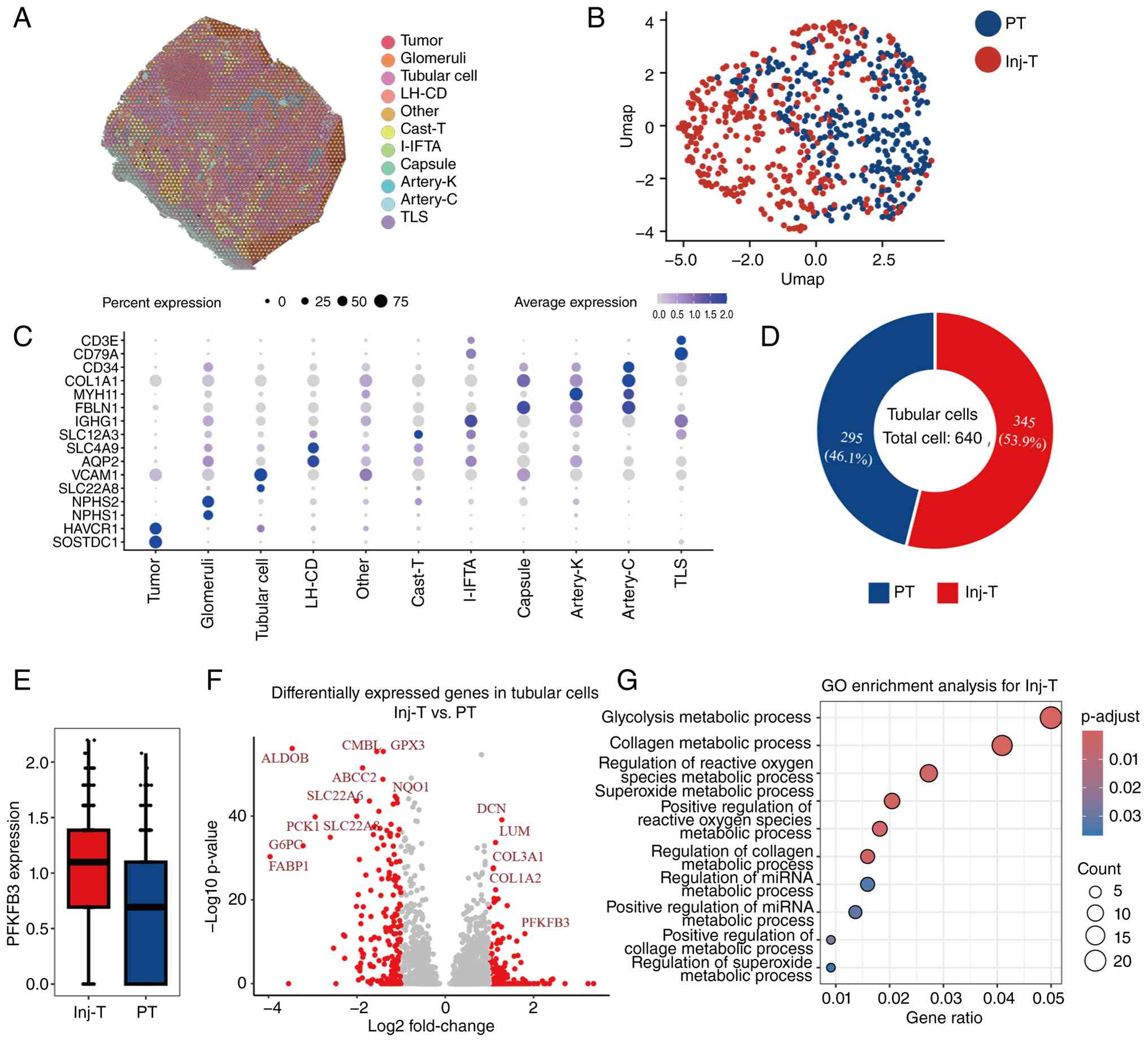
Figure 1

Glycolysis pathway is activated in
injury renal tubular cells in DKD. (A and C) Spatial distribution
and UMAP analysis of clusters derived from pathological
classification. (B and D) Proportion of the PT subclusters and
injury PT on the kidney section of DKD patients. (E and F)
Expression of PFKFB3 between PT and injury PT subclusters. (G)
(GO-BP) enrichment analysis of subcluster-specific genes in injured
PT cells. UMAP, Uniform Manifold Approximation and Projection; PT,
proximal tubules; DKD, diabetic kidney disease; PFKFB3,
6-phosphofructo-2-kinase/fructose-2,6-biphosphatase 3; GO-BP, Gene
Ontology Biological Process.

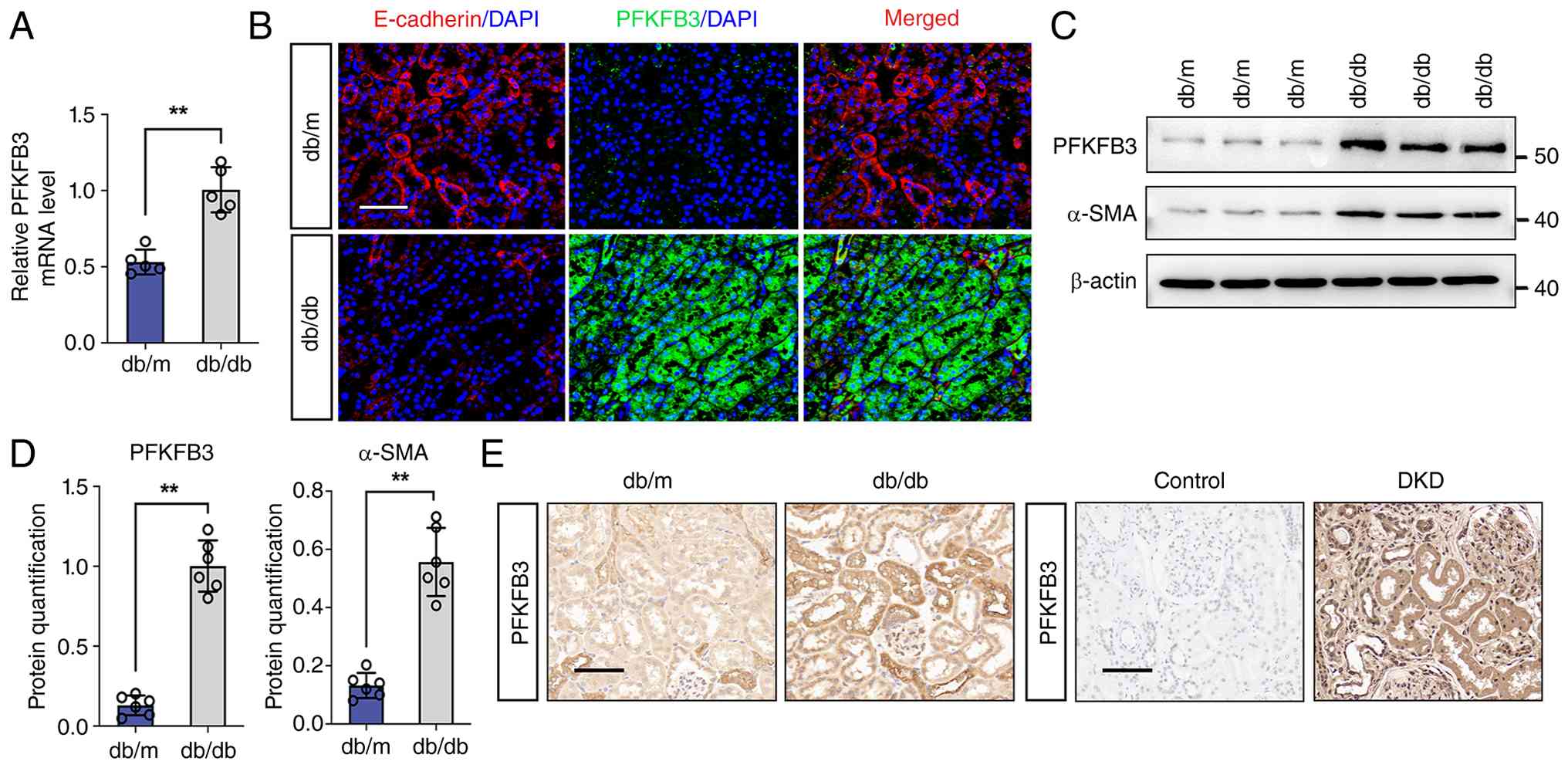
Figure 2

PFKFB3 expression is increased in
renal tubular cells in DKD. (A) RT-qPCR for renal PFKFB3 and HK2 in
db/m and db/db groups (n=5). (B) Immunostained E-cadherin (red) and
PFKFB3 (green), and counterstained with DAPI (blue) by IF staining
in db/m and db/db groups (n=6). Scale bar, 50 μm. Protein
levels of α-SMA and PFKFB3 in db/m and db/db groups by (C) western
blotting and (D) its semi-quantitative analysis (n=6). (E)
Representative images of IHC staining for PFKFB3 (scale bar, 50
μm) in db/m and db/db groups or in Control and DKD group
(n=6). **P<0.01 vs. db/m group by Student's t-test.
PFKFB3, 6-phosphofructo-2-kinase/fructose-2,6-biphosphatase 3; DKD,
diabetic kidney disease; RT-qPCR, reverse
transcription-quantitative PCR; IF, immunofluorescence; α-SMA,
α-smooth muscle actin; IHC, immunohistochemistry.

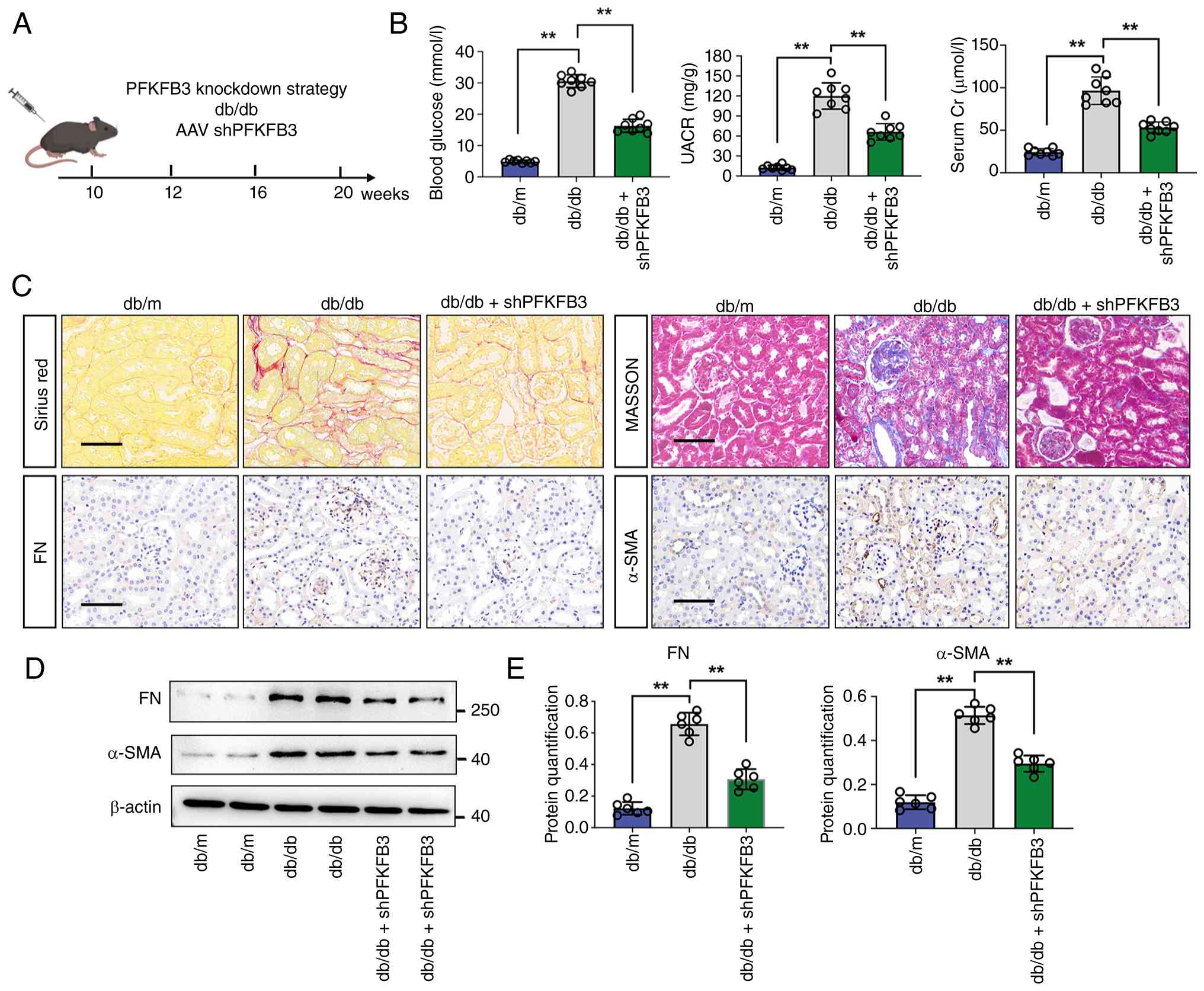
Figure 3

Knockdown of PFKFB3 ameliorates renal
fibrosis in db/db mice. (A) Schematic illustration of AAV9-shPFKFB3
injection in the db/db group; (B). Blood glucose levels, UACR and
Cr levels in db/m, db/db, and db/db + shPFKFB3 group (n=8). (C)
Representative images of Masson, Sirius red staining and IHC
staining (α-SMA and FN level) (scale bar=50 μm) in db/m,
db/db, and db/db + shPFKFB3 groups (n=6). (D and E) Protein levels
of α-SMA and FN in db/m, db/db, and db/db + shPFKFB3 groups by
western blotting, with semi-quantitative analyses (n=6). Data
represent the mean ± SD from three independent experiments.
**P<0.01 vs. db/db group by one-way ANOVA. PFKFB3,
6-phosphofructo-2-kinase/fructose-2,6-biphosphatase 3; AAV,
adeno-associated virus; sh, short hairpin; UACR, urinary albumin
creatinine ratio; Cr, creatinine; IHC, immunohistochemistry; α-SMA,
α-smooth muscle actin; FN, fibronectin.

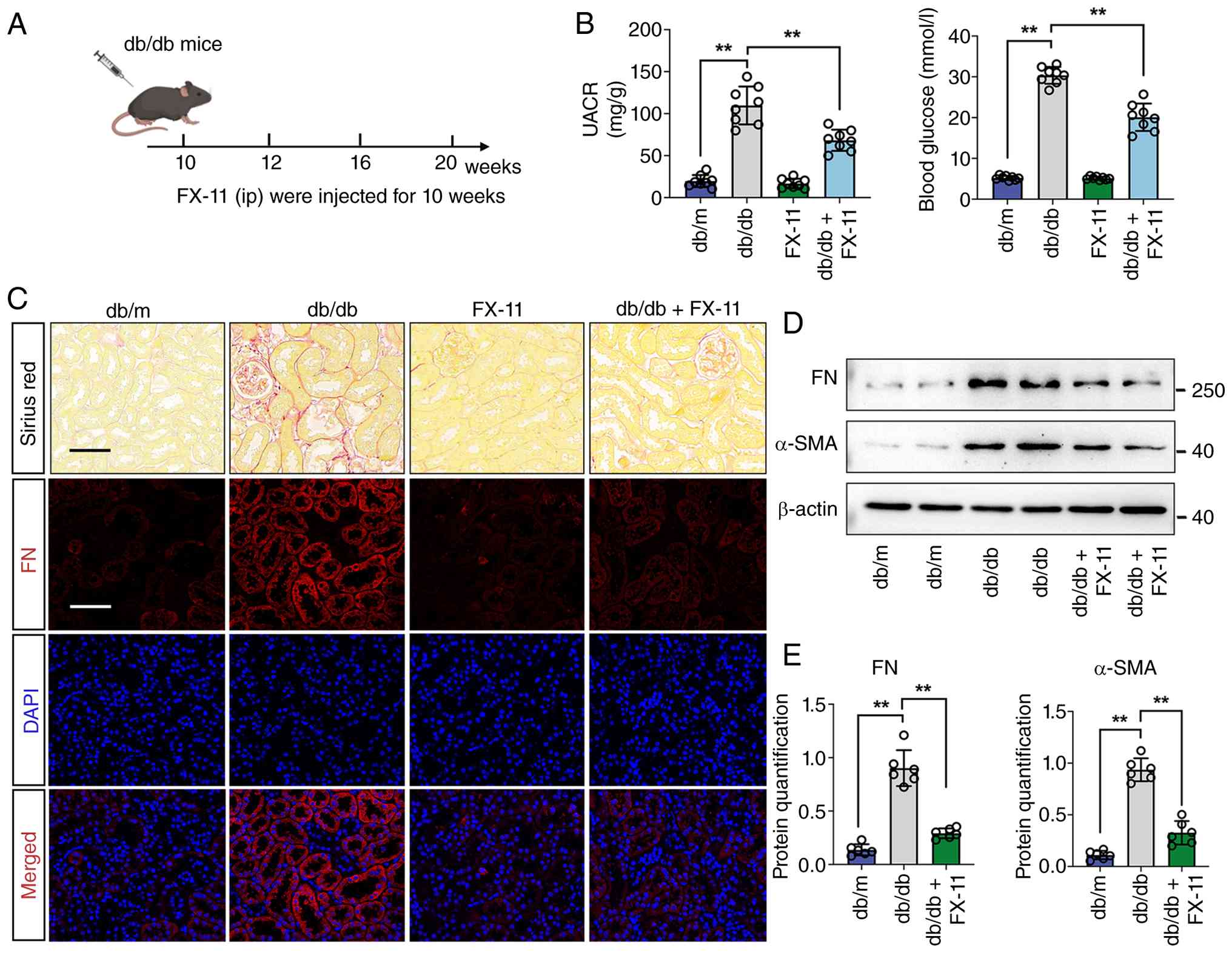
Figure 4

Inhibition of lactate attenuates
renal fibrosis in db/db mice. (A) Illustrative overview of the
FX-11 intervention strategy in db/db mice. (B) Blood glucose levels
and UACR levels in db/m, db/db, db/m + FX-11 and db/db + FX-11
group (n=8). (C) Representative images of Sirius red and IF
staining of FN (green), DAPI (blue) in db/m, db/db, db/m + FX-11
and db/db + FX-11 group (n=6). (D and E) Protein levels of α-SMA
and FN in db/m, db/db, db/m + FX-11 and db/db + FX-11 groups by
western blotting (n=6). Data represent the mean ± SD from three
independent experiments. **P<0.01 vs. db/db group by
one-way ANOVA. UACR, urinary albumin creatinine ratio; IF,
immunofluorescence; FN, fibronectin; α-SMA, α-smooth muscle
actin.

Figure 5

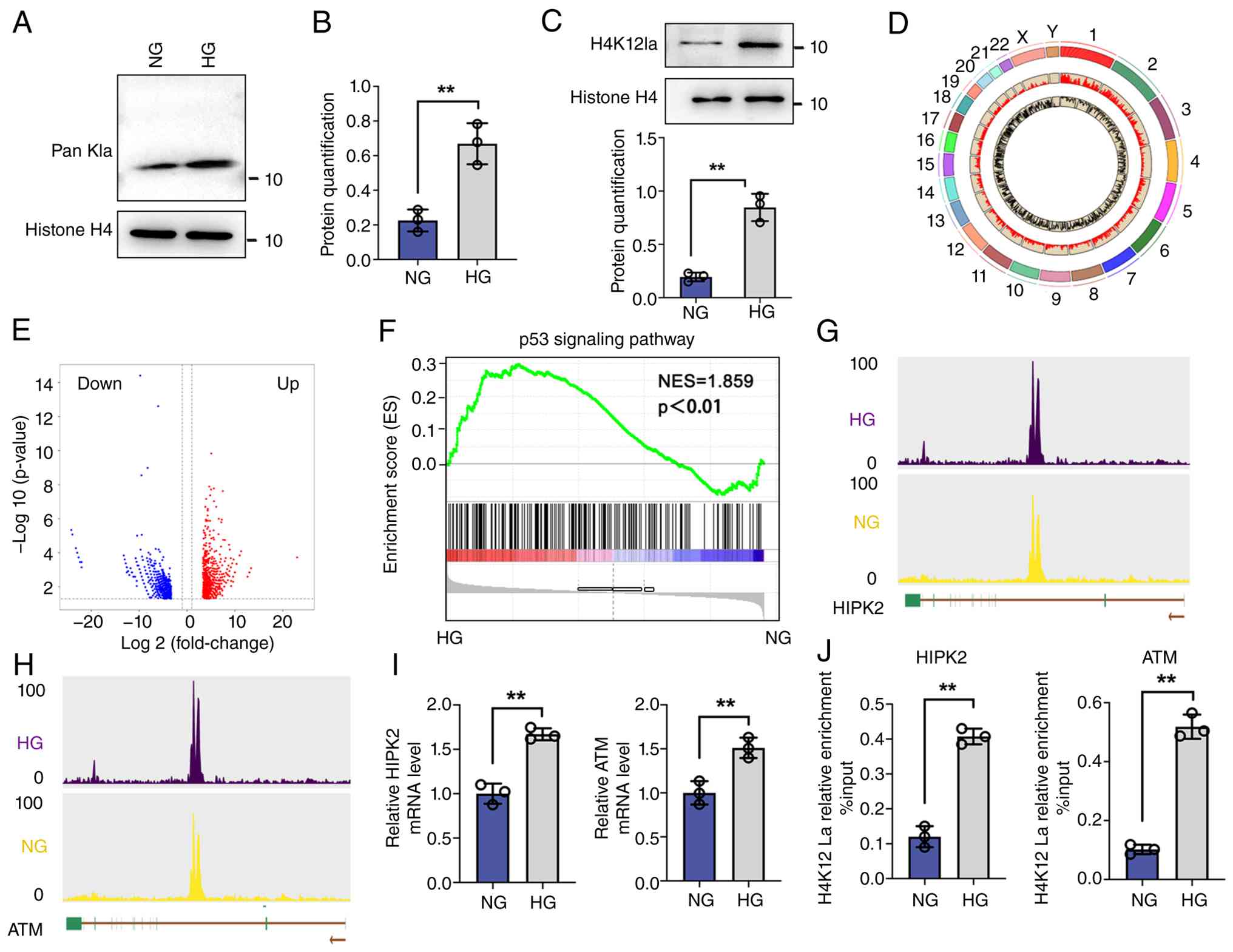
H4K12la initiates p53 pathway related
genes under HG condition in HK-2 cells. (A and B) Protein levels of
Pan Kla in NG and HG groups by western blotting, and its
semi-quantitative analysis (n=3). (C) The protein levels of H4K12la
by western blotting in NG and HG groups and their semi-quantitative
analyses (n=3); (D and E) Distribution of different genomic
distribution of H4K12la peaks between NG and HG group by
CUT&Tag. (F) GSEA on the regulation of p53 signaling pathway.
(G and H) IGV tracks for HIPK2 and ATM from CUT&Tag analysis.
(I) The mRNA level of HIPK2 and ATM in the NG and HG group in HK-2
cells by RT-qPCR (n=3). (J) H4K12la occupancy analysis of HIPK2 and
ATM in the NG and HG group in HK-2 cells by CUT&Tag-qPCR (n=3).
Data represent the mean ± SD from three independent experiments.
**P<0.01 vs. NG group by Student's t-test. HG, high
glucose; NG, normal glucose; GSEA, gene set enrichment analysis;
RT-qPCR, reverse transcription-quantitative PCR.

Figure 6

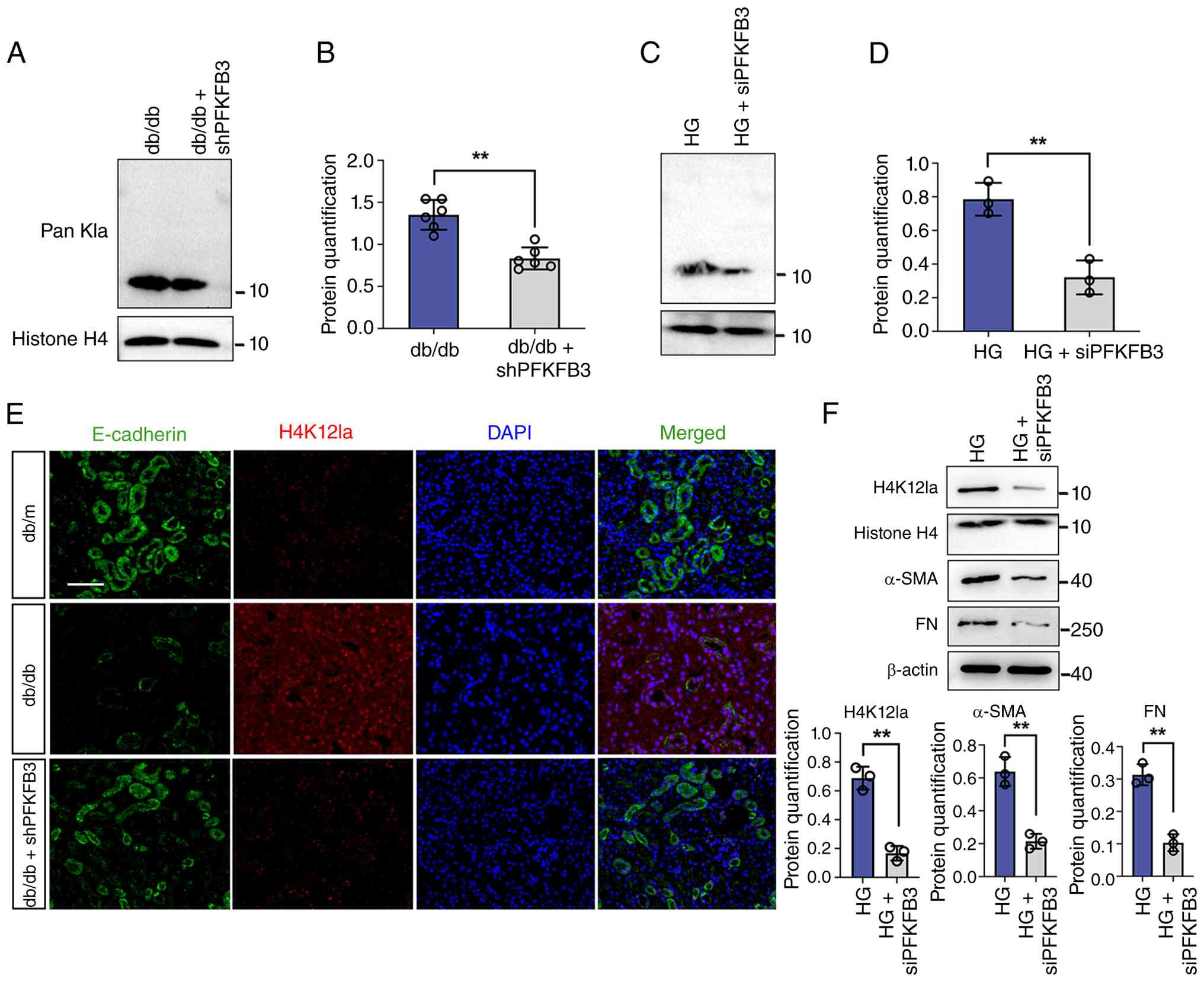
PFKFB3-driven lactate triggers H4K12
lactylation in DKD. (A and B) Protein levels of Pan Kla in db/db
and db/db + shPFKFB3 groups by western blotting and its
semi-quantitative analysis (n=6). (C and D) Protein levels of Pan
Kla in HG and HG + siPFKFB3 groups by western blotting and its
semi-quantitative analysis (n=3). (E) Immunostained E-cadherin
(green) and H4K12la (red), and counterstained with DAPI (blue) by
IF staining in db/m, db/db and db/db + shPFKFB3 groups (n=6). Scale
bar, 50 μm. (F) The protein levels of H4K12la, α-SMA and FN
by western blot in HG and HG + siPFKFB3 groups, and their
semi-quantitative analyses (n=3). Data represent the mean ± SD from
three independent experiments. **P<0.01 vs. (D and F)
HG group or (B) db/db group by Student's t-test. PFKFB3,
6-phosphofructo-2-kinase/fructose-2,6-biphosphatase 3; DKD,
diabetic kidney disease; sh, short hairpin; HG, high glucose; si,
small interfering; IF, immunofluorescence; FN, fibronectin.

Figure 7

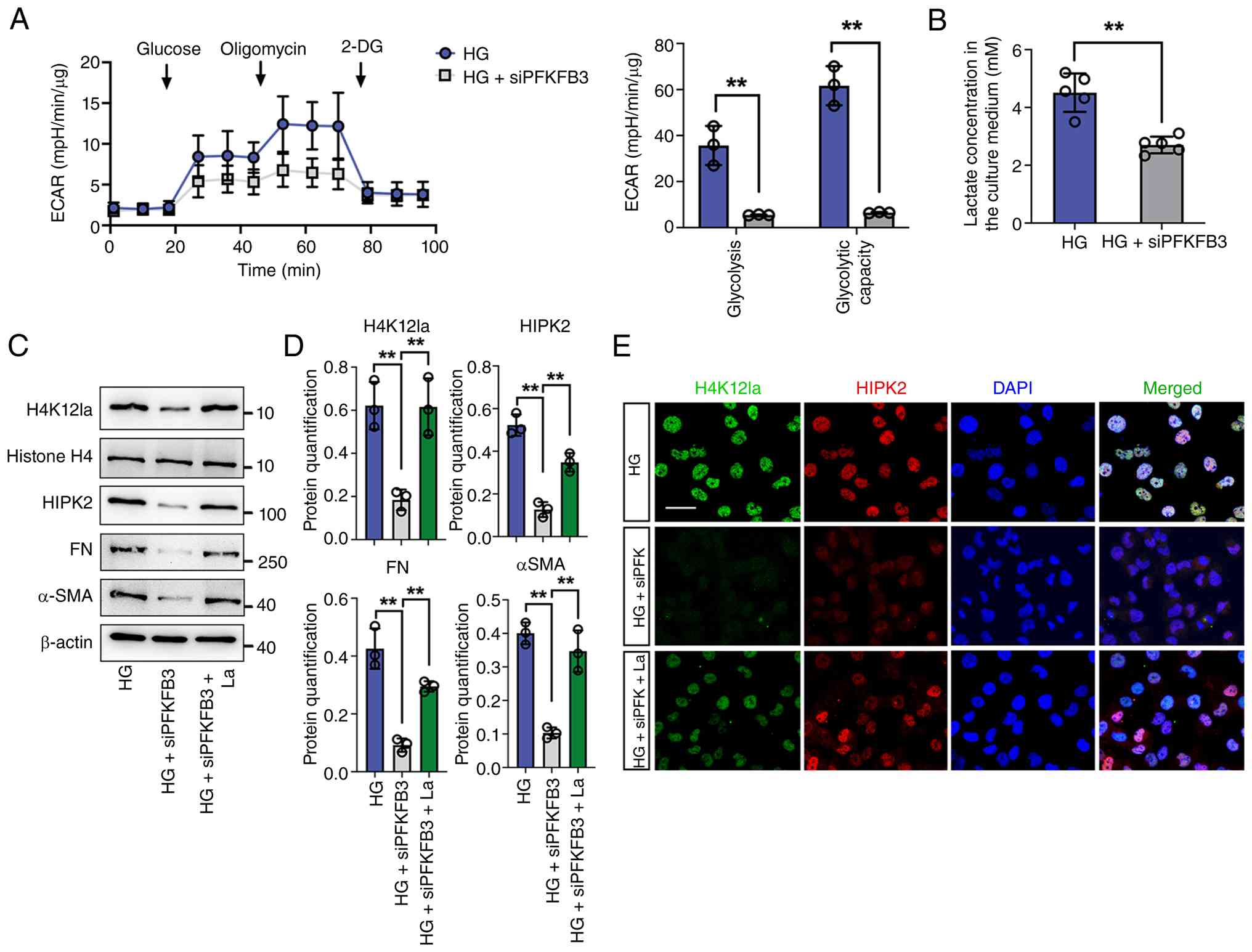
PFKFB3-mediated H4K12la initiates
renal tubule fibrosis in DKD. (A) The ECAR levels after culturing
with glucose followed by oligomycin and 2-DG in HG and HG +
siPFKFB3 groups (n=3). (B) The lactate concentration in HK-2 cells
in the HG and HG + siPFKFB3 groups (n=5). (C and D) Protein levels
of H4K12la, HIPK2, FN and α-SMA in HG, HG + siPFKFB3 and HG +
siPFKFB3 + La groups in HK-2 cells by western blotting, with
semi-quantitative analyses (n=3). (E) Immunostaining for H4K12la
(green) and HIPK2 (red), counterstained with DAPI (blue) in HG, HG
+ siPFKFB3 and HG + siPFKFB3 + La (scale bar, 50 μm). Data
represent the mean ± SD from three independent experiments.
**P<0.01 versus HG group (A and B) by Student's
t-test or HG + siPFKFB3 group (D) by one-way ANOVA. PFKFB3,
6-phosphofructo-2-kinase/fructose-2,6-biphosphatase 3; DKD,
diabetic kidney disease; ECAR, extracellular acidification rate;
HG, high glucose; si, small interfering; FN, fibronectin; α-SMA,
α-smooth muscle actin.
View References

1 

Pavkov ME and Miyamoto Y: Diabetes and kidney disease. IDF Diabetes Atlas. 2023, https://diabetesatlas.org/resources/idf-diabetes-atlas-reports/diabetes-and-kidney-disease/. Accessed Nov 12, 2025

2 

Martinez Leon V, Hilburg R and Susztak K: Mechanisms of diabetic kidney disease and established and emerging treatments. Nat Rev Endocrinol. 22:21–35. 2026. View Article : Google Scholar

3 

Mentz RJ, Anker SD, Pitt B, Rossing P, Ruilope LM, Gebel M, Kolkhof P, Lawatscheck R, Rohwedder K and Bakris GL; on behalf of the FIDELIO-DKD and FIGARO-DKD investigators: Efficacy and safety of finerenone in patients with chronic kidney disease and type 2 diabetes by diuretic use: A FIDELITY analysis. Eur J Heart Fail. 27:764–774. 2025. View Article : Google Scholar : PubMed/NCBI

4 

Zhao H and Guo J: Macrophages in focus: Key drivers and therapeutic opportunities in diabetic kidney disease. Int J Biol Sci. 21:4647–4662. 2025. View Article : Google Scholar : PubMed/NCBI

5 

Naaman SC and Bakris GL: Diabetic nephropathy: Update on pillars of therapy slowing progression. Diabetes Care. 46:1574–1586. 2023. View Article : Google Scholar : PubMed/NCBI

6 

Mimura I, Chen Z and Natarajan R: Epigenetic alterations and memory: Key players in the development/progression of chronic kidney disease promoted by acute kidney injury and diabetes. Kidney Int. 107:434–456. 2025. View Article : Google Scholar

7 

Mohandes S, Doke T, Hu H, Mukhi D, Dhillon P and Susztak K: Molecular pathways that drive diabetic kidney disease. J Clin Invest. 133:e1656542023. View Article : Google Scholar : PubMed/NCBI

8 

Fan X, Yang M, Lang Y, Lu S, Kong Z, Gao Y, Shen N, Zhang D and Lv Z: Mitochondrial metabolic reprogramming in diabetic kidney disease. Cell Death Dis. 15:4422024. View Article : Google Scholar : PubMed/NCBI

9 

Hong Q, Kim H, Cai GY, Chen XM, He JC and Lee K: Modulation of TGF-β signaling new approaches toward kidney disease and fibrosis therapy. Int J Biol Sci. 21:1649–1665. 2025. View Article : Google Scholar

10 

Zou Y, Yiu WH, Lok SWY, Ma J, Feng Y, Lai KN and Tang SCW: Tubular FoxP2 and kidney fibrosis. J Am Soc Nephrol. 36:544–558. 2025. View Article : Google Scholar

11 

Saraswati S, Martínez P, Serrano R, Mejías D, Graña-Castro O, Díaz RÁ, Flores JM and Blasco MA: Telomere dysfunction in renal tubular epithelial cells leads to kidney fibrosis. J Am Soc Nephrol. 36:2348–2363. 2025. View Article : Google Scholar : PubMed/NCBI

12 

Yao L, Liang X, Liu Y, Li B, Hong M, Wang X, Chen B, Liu Z and Wang P: Non-steroidal mineralocorticoid receptor antagonist finerenone ameliorates mitochondrial dysfunction via PI3K/Akt/eNOS signaling pathway in diabetic tubulopathy. Redox Biol. 68:1029462023. View Article : Google Scholar : PubMed/NCBI

13 

Wang M, Li Q, Wang S, Zuo L, Hai Y, Yuan S, Li X, Huang X, Yang C, Yao L, et al: Astragaloside IV protects renal tubular epithelial cells against oxidative stress-induced injury by upregulating CPT1A-mediated HSD17B10 lysine succinylation in diabetic kidney disease. Phytother Res. 38:4519–4540. 2024. View Article : Google Scholar : PubMed/NCBI

14 

Wu YW, Chen JW, Lin LY, Huang JH, Chang CC and Chang TT: FABP4 inhibition protects renal tubular cells and ameliorates renal inflammation in diabetic kidney disease. Biochem Pharmacol. 236:1168992025. View Article : Google Scholar : PubMed/NCBI

15 

Hommos MS, Glassock RJ and Rule AD: Structural and functional changes in human kidneys with healthy aging. J Am Soc Nephrol. 28:2838–2844. 2017. View Article : Google Scholar : PubMed/NCBI

16 

Bao Y, Shan Q, Lu K, Yang Q, Liang Y, Kuang H, Wang L, Hao M, Peng M, Zhang S and Cao G: Renal tubular epithelial cell quality control mechanisms as therapeutic targets in renal fibrosis. J Pharm Anal. 14:1009332024. View Article : Google Scholar : PubMed/NCBI

17 

Liu X, Zhang Y, Wang Y, Yang Y, Qiao Z, Zhan P, Jin H, Xu Q, Tang W, Sun Y, et al: Tubular MYDGF slows progression of chronic kidney disease by maintaining mitochondrial homeostasis. Adv Sci (Weinh). 12:e24097562025. View Article : Google Scholar :

18 

Huang H, Han Y, Zhang Y, Zeng J, He X, Cheng J, Wang S, Xiong Y, Yin H, Yuan Q, et al: Deletion of pyruvate carboxylase in tubular epithelial cell promotes renal fibrosis by regulating SQOR/cGAS/STING-mediated glycolysis. Adv Sci (Weinh). 12:e24087532025. View Article : Google Scholar : PubMed/NCBI

19 

Nishima N and Tanaka S: Lactate: A missing link between metabolism and inflammation in CKD progression? Kidney Int. 106:183–185. 2024. View Article : Google Scholar : PubMed/NCBI

20 

Zhu W, Guo S, Sun J, Zhao Y and Liu C: Lactate and lactylation in cardiovascular diseases: Current progress and future perspectives. Metabolism. 158:1559572024. View Article : Google Scholar : PubMed/NCBI

21 

Xie W, He Q, Zhang Y, Xu X, Wen P, Cao H, Zhou Y, Luo J, Yang J and Jiang L: Pyruvate kinase M2 regulates mitochondrial homeostasis in cisplatin-induced acute kidney injury. Cell Death Dis. 14:6632023. View Article : Google Scholar : PubMed/NCBI

22 

Shao M, Chen D, Wang Q, Guo F, Wei F, Zhang W, Gan T, Luo Y, Fan X, Du P, et al: Canagliflozin regulates metabolic reprogramming in diabetic kidney disease by inducing fasting-like and aestivation-like metabolic patterns. Diabetologia. 67:738–754. 2024. View Article : Google Scholar : PubMed/NCBI

23 

Darshi M, Kugathasan L, Maity S, Sridhar VS, Fernandez R, Limonte CP, Grajeda BI, Saliba A, Zhang G, Drel VR, et al: Glycolytic lactate in diabetic kidney disease. JCI Insight. 9:e1688252024. View Article : Google Scholar : PubMed/NCBI

24 

Ye Z, Sun Y, Yang S, Li L, Li B, Xia Y, Yuan T, Yu W, Chen L, Zhou X and Cheng F: Lgals3 promotes calcium oxalate crystal formation and kidney injury through histone lactylation-mediated FGFR4 activation. Adv Sci (Weinh). 12:e24139372025. View Article : Google Scholar : PubMed/NCBI

25 

Xiang T, Wang X, Huang S, Zhou K, Fei S, Zhou B, Yue K, Li Q, Xue S, Dai Y, et al: Inhibition of PKM2 by shikonin impedes TGF-β1 expression by repressing histone lactylation to alleviate renal fibrosis. Phytomedicine. 136:1563242025. View Article : Google Scholar

26 

Zhang X, Chen J, Lin R, Huang Y, Wang Z, Xu S, Wang L, Chen F, Zhang J, Pan K and Yin Z: Lactate drives epithelial-mesenchymal transition in diabetic kidney disease via the H3K14la/KLF5 pathway. Redox Biol. 75:1032462024. View Article : Google Scholar : PubMed/NCBI

27 

Arat S, Huynh R, Kumpf S, Qian J, Shoieb A, Virgen-Slane R, Voigt F, Xie Z and Jakubczak JL: Effects of donor source on transcriptomic profiles of human kidney tissue. FASEB J. 37:e228042023. View Article : Google Scholar : PubMed/NCBI

28 

Mei H, Jing T, Liu H, Liu Y, Zhu X, Wang J and Xu L: Ursolic acid alleviates mitotic catastrophe in podocyte by inhibiting autophagic P62 accumulation in diabetic nephropathy. Int J Biol Sci. 20:3317–3333. 2024. View Article : Google Scholar : PubMed/NCBI

29 

Leary S, Underwood W, Anthony R, Cartner S, Grandin T, Greenacre C, Gwaltney-Brant S, McCrackin MA, Meyer R, Miller D, et al: AVMA Guidelines for the Euthanasia of Animals: 2020 Edition. American Veterinary Medical Association; Schaumburg, IL: 2020

30 

Livak KJ and Schmittgen TD: Analysis of relative gene expression data using real-time quantitative PCR and the 2(-delta delta C(T)) method. Methods. 25:402–408. 2001. View Article : Google Scholar

31 

Lin XF, Cui XN, Yang J, Jiang YF, Wei TJ, Xia L, Liao XY, Li F, Wang DD, Li J, et al: SGLT2 inhibitors ameliorate NAFLD in mice via downregulating PFKFB3, suppressing glycolysis and modulating macrophage polarization. Acta Pharmacol Sin. 45:2579–2597. 2024. View Article : Google Scholar : PubMed/NCBI

32 

Zhong YX, Zhao HB, Lian MH, Shen JM, Li CX, Ma HM, Xu D, Chen GQ and Zhang C: SUMOylated hnRNPM suppresses PFKFB3 phosphorylation to regulate glycolysis and tumorigenesis. Cancer Lett. 616:2175732025. View Article : Google Scholar : PubMed/NCBI

33 

Li Z, Liang Z, Qi H, Luo X, Wang M, Du Z and Guo W: Lactate shuttling links histone lactylation to adult hippocampal neurogenesis in mice. Dev Cell. 60:1182–1198.e8. 2025. View Article : Google Scholar : PubMed/NCBI

34 

Zhang J, Wu D, Zeng F, Gu H, Li C, Cata JP, Guo K, Miao C and Zhang H: Lactate metabolic reprogramming and histone lactylation modification in sepsis. Int J Biol Sci. 21:5034–5055. 2025. View Article : Google Scholar : PubMed/NCBI

35 

Jung CY and Yoo TH: Pathophysiologic mechanisms and potential biomarkers in diabetic kidney disease. Diabetes Metab J. 46:181–197. 2022. View Article : Google Scholar : PubMed/NCBI

36 

Das S, Devi Rajeswari V, Venkatraman G, Elumalai R, Dhanasekaran S and Ramanathan G: Current updates on metabolites and its interlinked pathways as biomarkers for diabetic kidney disease: A systematic review. Transl Res. 265:71–87. 2024. View Article : Google Scholar

37 

Yang H, Sun J, Sun A, Wei Y, Xie W, Xie P, Zhang L, Zhao L and Huang Y: Podocyte programmed cell death in diabetic kidney disease: Molecular mechanisms and therapeutic prospects. Biomed Pharmacother. 177:1171402024. View Article : Google Scholar : PubMed/NCBI

38 

Hu H, Li W, Hao Y, Peng Z, Zou Z and Liang W: Baicalin ameliorates renal fibrosis by upregulating CPT1α-mediated fatty acid oxidation in diabetic kidney disease. Phytomedicine. 122:1551622024. View Article : Google Scholar

39 

Yang G, Liu X, Li Y, Li L, Xiang J, Liang Z, Jiang M and Yang S: TRIM65 as a key regulator of ferroptosis and glycolysis in lactate-driven renal tubular injury and diabetic kidney disease. Cell Rep. 44:1160912025. View Article : Google Scholar : PubMed/NCBI

40 

Azushima K, Kovalik JP, Yamaji T, Ching J, Chng TW, Guo J, Liu JJ, Nguyen M, Sakban RB, George SE, et al: Abnormal lactate metabolism is linked to albuminuria and kidney injury in diabetic nephropathy. Kidney Int. 104:1135–1149. 2023. View Article : Google Scholar : PubMed/NCBI

41 

Zeng H, Pan T, Zhan M, Hailiwu R, Liu B, Yang H and Li P: Suppression of PFKFB3-driven glycolysis restrains endothelial-to-mesenchymal transition and fibrotic response. Signal Transduct Target Ther. 7:3032022. View Article : Google Scholar : PubMed/NCBI

42 

Bartrons R, Rodríguez-García A, Simon-Molas H, Castaño E, Manzano A and Navarro-Sabaté À: The potential utility of PFKFB3 as a therapeutic target. Expert Opin Ther Targets. 22:659–674. 2018. View Article : Google Scholar : PubMed/NCBI

43 

Ma J, Li X, Li Q, Sun Z, You Y, Zhang L, Ji Z, Zhou H, Zhang Q, Wang L, et al: Niacin regulates glucose metabolism and osteogenic differentiation via the SIRT2-C/EBPβ-AREG signaling axis. Biomed Pharmacother. 180:1174472024. View Article : Google Scholar

44 

Wang TT, Han T, Xiao X, Guo D, Sun X, Liu Y, Zhao L, Xu H, Li R, Jiang L, et al: SIRT3 deficiency reduces PFKFB3-driven T-cell glycolysis and promotes arthritic inflammation. Sci China Life Sci. 68:1755–1769. 2025. View Article : Google Scholar : PubMed/NCBI

45 

Jiang A, Liu J, Wang Y and Zhang C: cGAS-STING signaling pathway promotes hypoxia-induced renal fibrosis by regulating PFKFB3-mediated glycolysis. Free Radic Biol Med. 208:516–529. 2023. View Article : Google Scholar : PubMed/NCBI

46 

Song C, Wang S, Fu Z, Chi K, Geng X, Liu C, Cai G, Chen X, Wu D and Hong Q: IGFBP5 promotes diabetic kidney disease progression by enhancing PFKFB3-mediated endothelial glycolysis. Cell Death Dis. 13:3402022. View Article : Google Scholar : PubMed/NCBI

47 

Li Y, Chen X, Xu X, Chen C, Min M, Liang D, Ren J and Mao H: OTUB2 contributes to vascular calcification in chronic kidney disease via the YAP-mediated transcription of PFKFB3. Theranostics. 15:1185–1204. 2025. View Article : Google Scholar : PubMed/NCBI

48 

Chen J, Huang Z, Chen Y, Tian H, Chai P, Shen Y, Yao Y, Xu S, Ge S and Jia R: Lactate and lactylation in cancer. Signal Transduct Target Ther. 10:382025. View Article : Google Scholar : PubMed/NCBI

49 

Llibre A, Kucuk S, Gope A, Certo M and Mauro C: Lactate: A key regulator of the immune response. Immunity. 58:535–554. 2025. View Article : Google Scholar : PubMed/NCBI

50 

Wang T, Ye Z, Li Z, Jing DS, Fan GX, Liu MQ, Zhuo QF, Ji SR, Yu XJ, Xu XW and Qin Y: Lactate-induced protein lactylation: A bridge between epigenetics and metabolic reprogramming in cancer. Cell Prolif. 56:e134782023. View Article : Google Scholar : PubMed/NCBI

51 

Yu X, Yang J, Xu J, Pan H, Wang W, Yu X and Shi S: Histone lactylation: From tumor lactate metabolism to epigenetic regulation. Int J Biol Sci. 20:1833–1854. 2024. View Article : Google Scholar : PubMed/NCBI

52 

Li Y, Cao Q, Hu Y, He B, Cao T, Tang Y, Zhou XP, Lan XP and Liu SQ: Advances in the interaction of glycolytic reprogramming with lactylation. Biomed Pharmacother. 177:1169822024. View Article : Google Scholar : PubMed/NCBI

53 

Li F, Si W, Xia L, Yin D, Wei T, Tao M, Cui X, Yang J, Hong T and Wei R: Positive feedback regulation between glycolysis and histone lactylation drives oncogenesis in pancreatic ductal adenocarcinoma. Mol Cancer. 23:902024. View Article : Google Scholar : PubMed/NCBI

54 

Sheng X, Lin H, Cole PA and Zhao Y: Biochemistry and regulation of histone lysine L-lactylation. Nat Rev Mol Cell Biol. 27:95–109. 2025. View Article : Google Scholar : PubMed/NCBI

55 

Liao Z, Chen B, Yang T, Zhang W and Mei Z: Lactylation modification in cardio-cerebral diseases: A state-of-the-art review. Ageing Res Rev. 104:1026312025. View Article : Google Scholar

Related Articles

  • Abstract
  • View
  • Download
  • Twitter
Copy and paste a formatted citation
Spandidos Publications style
Xu M, Fu L, Zhang Y, Guo X, Wu H, Gao S, Xiao F and Xu L: Tubular PFKFB3 drives diabetic kidney fibrosis via lactate‑dependent H4K12 lactylation and HIPK2 transactivation. Int J Mol Med 58: 255, 2026.
APA
Xu, M., Fu, L., Zhang, Y., Guo, X., Wu, H., Gao, S. ... Xu, L. (2026). Tubular PFKFB3 drives diabetic kidney fibrosis via lactate‑dependent H4K12 lactylation and HIPK2 transactivation. International Journal of Molecular Medicine, 58, 255. https://doi.org/10.3892/ijmm.2026.5926
MLA
Xu, M., Fu, L., Zhang, Y., Guo, X., Wu, H., Gao, S., Xiao, F., Xu, L."Tubular PFKFB3 drives diabetic kidney fibrosis via lactate‑dependent H4K12 lactylation and HIPK2 transactivation". International Journal of Molecular Medicine 58.3 (2026): 255.
Chicago
Xu, M., Fu, L., Zhang, Y., Guo, X., Wu, H., Gao, S., Xiao, F., Xu, L."Tubular PFKFB3 drives diabetic kidney fibrosis via lactate‑dependent H4K12 lactylation and HIPK2 transactivation". International Journal of Molecular Medicine 58, no. 3 (2026): 255. https://doi.org/10.3892/ijmm.2026.5926
Copy and paste a formatted citation
x
Spandidos Publications style
Xu M, Fu L, Zhang Y, Guo X, Wu H, Gao S, Xiao F and Xu L: Tubular PFKFB3 drives diabetic kidney fibrosis via lactate‑dependent H4K12 lactylation and HIPK2 transactivation. Int J Mol Med 58: 255, 2026.
APA
Xu, M., Fu, L., Zhang, Y., Guo, X., Wu, H., Gao, S. ... Xu, L. (2026). Tubular PFKFB3 drives diabetic kidney fibrosis via lactate‑dependent H4K12 lactylation and HIPK2 transactivation. International Journal of Molecular Medicine, 58, 255. https://doi.org/10.3892/ijmm.2026.5926
MLA
Xu, M., Fu, L., Zhang, Y., Guo, X., Wu, H., Gao, S., Xiao, F., Xu, L."Tubular PFKFB3 drives diabetic kidney fibrosis via lactate‑dependent H4K12 lactylation and HIPK2 transactivation". International Journal of Molecular Medicine 58.3 (2026): 255.
Chicago
Xu, M., Fu, L., Zhang, Y., Guo, X., Wu, H., Gao, S., Xiao, F., Xu, L."Tubular PFKFB3 drives diabetic kidney fibrosis via lactate‑dependent H4K12 lactylation and HIPK2 transactivation". International Journal of Molecular Medicine 58, no. 3 (2026): 255. https://doi.org/10.3892/ijmm.2026.5926
Follow us
  • Twitter
  • LinkedIn
  • Facebook
About
  • Spandidos Publications
  • Careers
  • Cookie Policy
  • Privacy Policy
How can we help?
  • Help
  • Live Chat
  • Contact
  • Email to our Support Team