RNA 5-methylcytosine (m5C) occurs in coding and
noncoding (nc)RNAs whose stability, processing and translation
influence protein production. The NOP2/Sun RNA methyltransferase
(NSUN) family and transfer (t)RNA aspartic acid methyltransferase 1
(TRDMT1) differ in substrate recognition and localization, so
similar changes in regulator expression need not produce the same
RNA response (1,2). Oxygen or nutrient fluctuations,
inflammation and repeated treatment can alter RNA processing and
the availability of proteins needed for cancer-cell growth or
survival. Expression-based studies have associated m5C regulators
with prognosis and immune infiltration, but these associations do
not identify the modified RNA responsible for the phenotype
(3,4). The unresolved question is how a
particular stress alters writer activity, reader binding and
substrate selection, and how the resulting RNA changes affect
cancer-cell behavior.
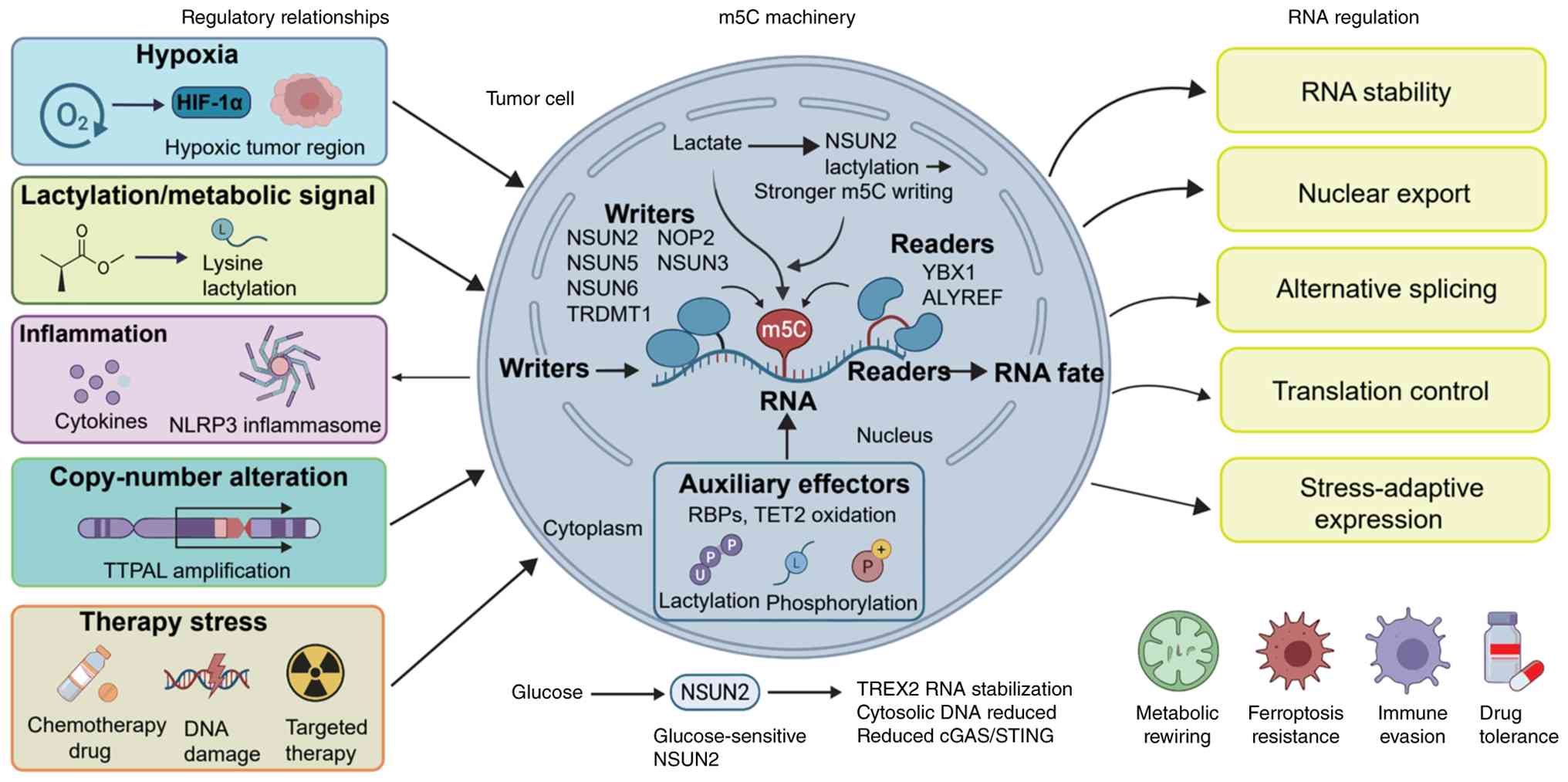
Metabolic signals can influence immune responses
through substrate-specific RNA regulation. Glucose binding
increases NSUN2 activity, which stabilizes three prime repair
exonuclease 2 (TREX2) mRNA and limits cytosolic DNA accumulation
and cyclic GMP-AMP synthase (cGAS)/stimulator of interferon
response cGAMP interactor 1 (STING) activation (5). Here, nutrient sensing affects
immune signaling through a defined RNA target. Whether this
relationship occurs in another tumor depends on the relevant RNA
substrate and reader. Cancer cell-state transitions in response to
stress involve changes in RNA fate, metabolic dependence, immune
interactions and treatment tolerance. These stress-associated
functional changes do not encompass all lineage plasticity or tumor
evolution. Attributing these responses to RNA m5C requires site
identification and writer perturbation, followed by RNA-fate
measurements linked to phenotype rescue and reader-binding
measurements where involved. Catalytic-mutant and RNA-specific
rescue are particularly relevant because proteins such as NOP2
nucleolar protein (NOP2) retain functions that do not require
methyltransferase activity (6).
Stress-responsive m5C regulation involves both the
deposition of the modification and the subsequent processing of
modified RNA. NSUN-family proteins and TRDMT1 act as writers,
whereas Aly/REF export factor (ALYREF) and Y-box binding protein 1
(YBX1) function as readers or cooperate with other RNA-binding
proteins. Hypoxia engages ALYREF-associated kinesin family member
(KIF)20A/BUB1 mitotic checkpoint serine/threonine kinase regulation
in cervical cancer, while lactylation enhances NSUN2-dependent
regulation during pancreatic cancer perineural invasion (13,14). Inflammatory signaling and genomic
alterations intersect with this machinery in different ways:
circTMEM45A-associated RNA regulation promotes NLR family pyrin
domain containing 3 activation, whereas alpha tocopherol transfer
protein like amplification enhances NSUN2-dependent sterol
regulatory element binding transcription factor 2 (SREBP2) mRNA
modification in esophageal cancer (15,16). Renal cancer analyses also
associate NSUN2 with glycolysis, histone lactylation and immune
escape (17). Once engaged,
NSUN2 can act on different transcripts, including SREBP2 in
hepatocellular carcinoma and chaperonin containing TCP1 subunit 5
in lung adenocarcinoma (18,19). Their subsequent regulation
depends on RNA-binding partners. YBX1 cooperates with eukaryotic
translation initiation factor 4A1 to support closed-loop
translation of linear ring finger protein 115 mRNA, while
ALYREF-associated regulation supports colony stimulating factor 2
mRNA stability (20,21). ALYREF also participates in
NSUN2-dependent leucine rich repeat containing G protein-coupled
receptor 4 regulation and platinum resistance in ovarian cancer
(22). Changes in writer
activity and RNA-binding partners can therefore alter which
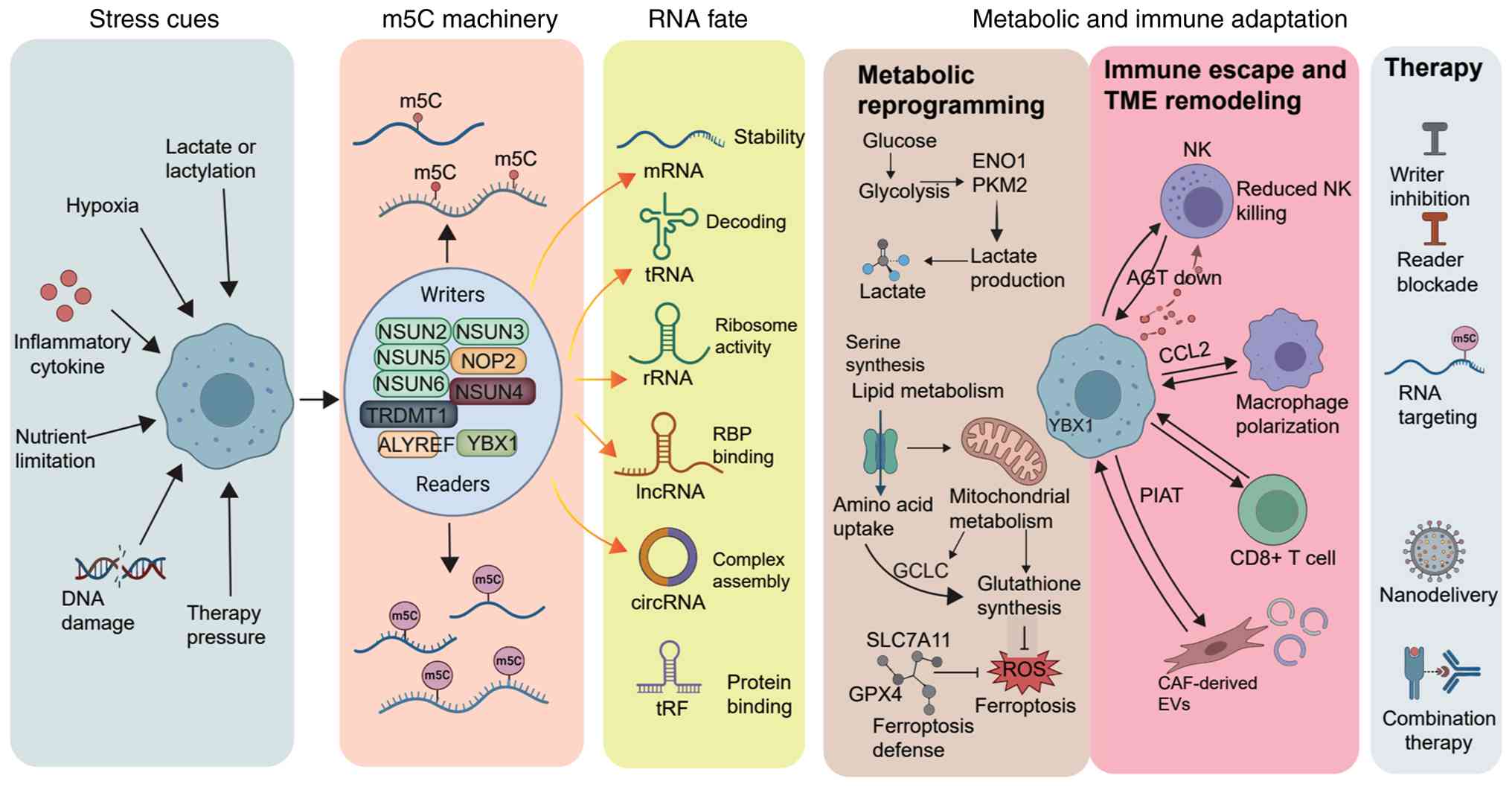
transcripts persist or are translated under stress (Fig. 2).
The separation between catalytic activity and RNA
processing is particularly apparent for NOP2 nucleolar protein,
also called NSUN1. Human NOP2 deposits m5C at C4447 of 28S
ribosomal (r)RNA and associates with pre-rRNA and box C/D small
nucleolar ribonucleoprotein complexes. Catalytically inactive NOP2
can nevertheless rescue aspects of pre-rRNA processing and complex
assembly after NOP2 depletion (6). Ribosome assembly can therefore
remain dependent on NOP2 even when it is independent of
NOP2-mediated methylation. In hepatocellular carcinoma,
NOP2-mediated modification of XPD mRNA is instead associated with
transcript stability and tumor progression (23). These distinct RNA functions
explain why loss of the whole protein cannot be treated as
equivalent to inhibition of its catalytic activity.
NSUN5 acts on both rRNA and non-rRNA. Subsequent
processing of the modified RNA can change the consequences of m5C
deposition. NSUN5 deposits m5C on catenin beta 1
chromatin-associated RNA, after which tet methylcytosine
dioxygenase 2 oxidizes m5C to RNA 5-hydroxymethylcytosine and RNA
binding fox-1 homolog 2 (RBFOX2) recognizes the oxidized RNA and
promotes its degradation. Reduced expression of β-catenin and CD47
enhances macrophage phagocytosis of glioma cells (24). In this setting, m5C deposition
precedes RNA loss because oxidation creates the RNA species
recognized by RBFOX2.
For NSUN6, substrate differences likewise accompany
different effects on tumor growth. Its involvement in transfer RNA
(tRNA)-Cys-derived fragments connects methylation with fragment
activity and protein binding, whereas selected mRNA targets connect
it to proliferation and migration (25). NSUN6 depletion increases
pancreatic cancer cell proliferation and xenograft growth, and
NSUN6-dependent NM23-H1 regulation restrains migration and
epithelial-mesenchymal transition in lung cancer (26,27). By contrast, NSUN6-mediated
modification of methyltransferase 3, N6-adenosine-methyltransferase
complex catalytic subunit (METTL3) mRNA promotes colon
adenocarcinoma progression (28). In the latter setting, regulation
of an m6A-writing enzyme also allows an m5C-dependent RNA event to
influence another modification system. These different substrates
provide a basis for separating tumor-restraining from
tumor-promoting NSUN6 activity.
TRDMT1 participates in both tRNA protection and
damage-associated RNA regulation. It methylates C38 of tRNA-Asp and
azacytidine inhibits methylation at this site. Its ubiquitination
and removal at DNA lesions affect repair and treatment response
(29,30). These functions can have different
consequences for tumor survival. In anaplastic thyroid carcinoma,
reduced TRDMT1 activity increases a tRNA-Gly-GCC-derived fragment
that promotes growth (31). In
hepatocellular carcinoma, TRDMT1 has instead been associated with
resistance through ATP citrate lyase (ACLY)- or TNF superfamily
member 10 (TNFSF10)-related regulation (32,33). The response to TRDMT1 inhibition
therefore depends in part on whether loss of RNA protection,
altered fragment production or impaired repair has the greater
effect.
For mRNA, the most frequently reported consequence
is altered transcript stability, but the direction and phenotype
depend on the encoded protein. Increased stability supports cyclin
L2 expression in ovarian cancer and AIF family member 2,
ferroptosis suppressor-dependent ferroptosis defense in acute
myeloid leukemia (34,35). NSUN2-dependent dihydroorotate
dehydrogenase (quinone) regulation similarly connects mitochondrial
ferroptosis defense with oxaliplatin resistance in colorectal
cancer (36). In nasopharyngeal
carcinoma, however, NSUN2-dependent regulation reduces TP53 mRNA
stability (37). Both increased
expression of a survival protein and reduced expression of a tumor
suppressor can therefore favor tumor growth. Other targets connect
the same RNA property to metabolism or dissemination.
Apolipoprotein (APO)L1 and phosphoribosylformylglycinamidine
synthase regulation affects downstream PI3K-AKT activity and purine
synthesis, respectively (38,39). KIF11 regulation promotes gastric
cancer lymphatic metastasis, while LINC02167-associated kinase
suppressor of ras 1 mRNA stabilization activates downstream
ERK/MAPK signaling in colorectal cancer (40,41). Nuclear factor erythroid 2-related
factor 2-related regulation and NSUN2/YBX1-dependent HGH1
cochaperone stabilization further connect RNA availability with
redox defense and growth (42,43). Transcript abundance is not the
only relevant change: NSUN2-dependent modification promotes
ALYREF-mediated export of serine and arginine rich splicing factor
6 (SRSF6) mRNA. The resulting SRSF6 protein changes
UDP-N-acetylglucosamine pyrophosphorylase 1 splicing, linking the
RNA-export event to multidrug resistance in anaplastic thyroid
cancer (44). Thus, the
consequences of mRNA regulation reflect both the amount and the
form of RNA available for protein production.
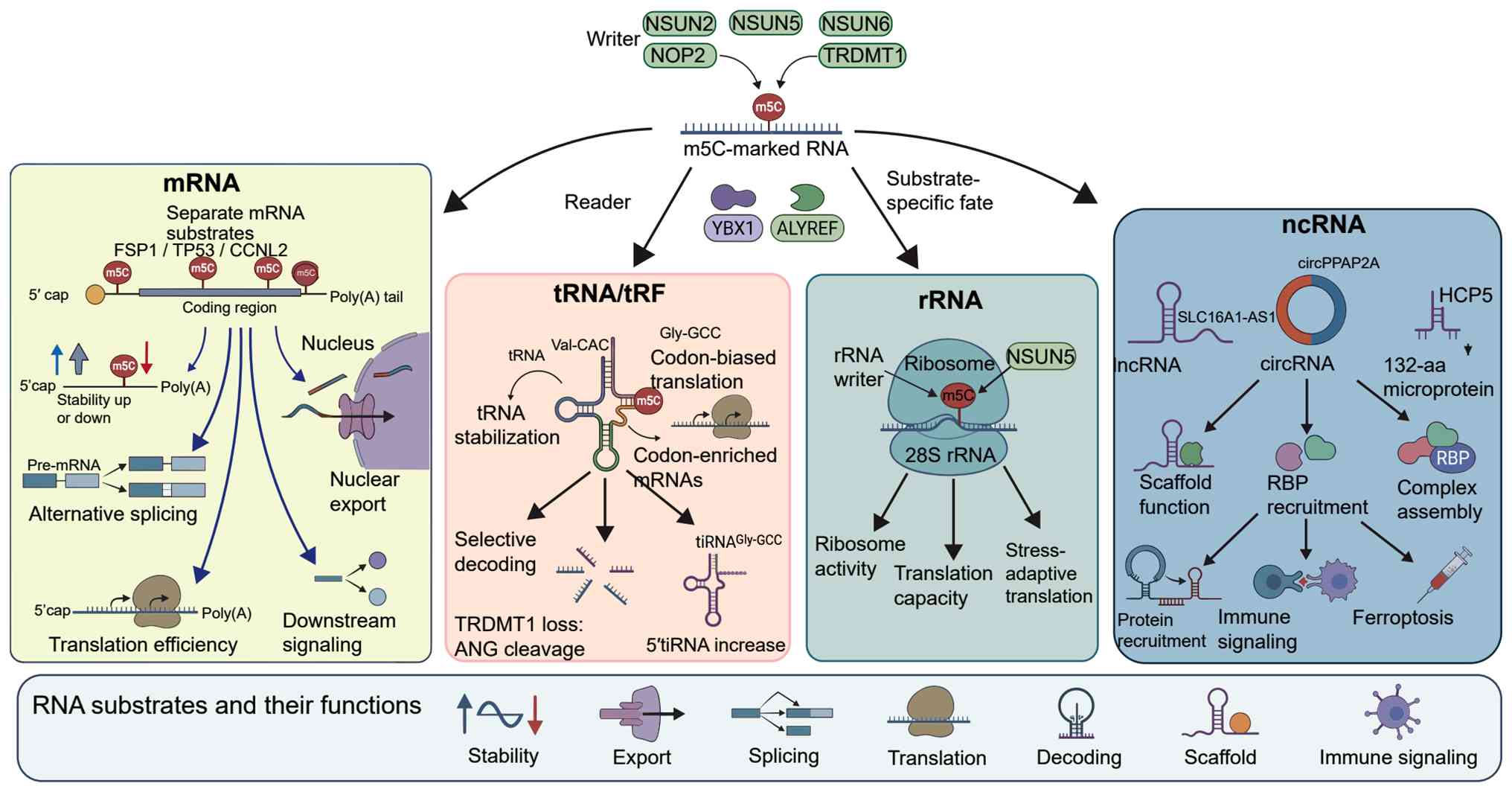
tRNA and rRNA affect that production more directly
through the translational apparatus. NSUN2-dependent tRNA-Val-CAC
regulation promotes codon-biased translation in triple-negative
breast cancer, while stabilization of selected tRNAs supports
oncogenic translation in anaplastic thyroid cancer (45,46). Protein synthesis can consequently
change without a parallel increase in mRNA abundance. Cleavage
introduces an additional outcome because tRNA-derived fragments may
acquire functions distinct from those of the parent tRNA. A
tumor-targeted tRNA-derived fragment strategy, for example, induces
ovarian cancer ferroptosis by disrupting system
Xc−-associated defense (47). At the ribosomal level, NSUN5 loss
induces stress-adaptive translation in glioma, whereas other
glioblastoma models associate NSUN5 with greater protein synthesis
and growth (48,49). These glioma models show different
relationships between NSUN5 activity, protein synthesis and stress
adaptation. ncRNAs add control through protein recruitment: solute
carrier family 16 member 1 (SLC16A1)-antisense 1 (AS1) associates
with NSUN2 to stabilize heat shock protein family A (Hsp70) member
5 mRNA, and the NSUN5-circPPAP2A pathway affects immune suppression
and anti-programmed cell death 1 sensitivity (50,51). Reader-dependent mRNA regulation
provides a complementary route through STAT1/programmed cell death
ligand 1 (PD-L1) in intrahepatic cholangiocarcinoma and
transmembrane 4 L six family member 1 in bladder cancer (52,53). ALYREF-associated ATP binding
cassette subfamily G member 4 expression extends the consequences
of RNA availability to drug efflux in castration-resistant prostate
cancer (54). An HLA complex P5
(HCP5)-derived 132-amino-acid microprotein further regulates the
reading step by enhancing YBX1-ELAV like RNA binding protein 1
(ELAVL1) interaction and preserving SLC7A11 and glucose-6-phosphate
dehydrogenase mRNA stability (55). HCP5 affects these modified mRNAs
through its microprotein product, whereas SLC16A1-AS1 recruits
NSUN2 as an RNA. These RNA classes therefore influence protein
production through distinct combinations of stability, decoding,
ribosome function and protein binding (Fig. 3).
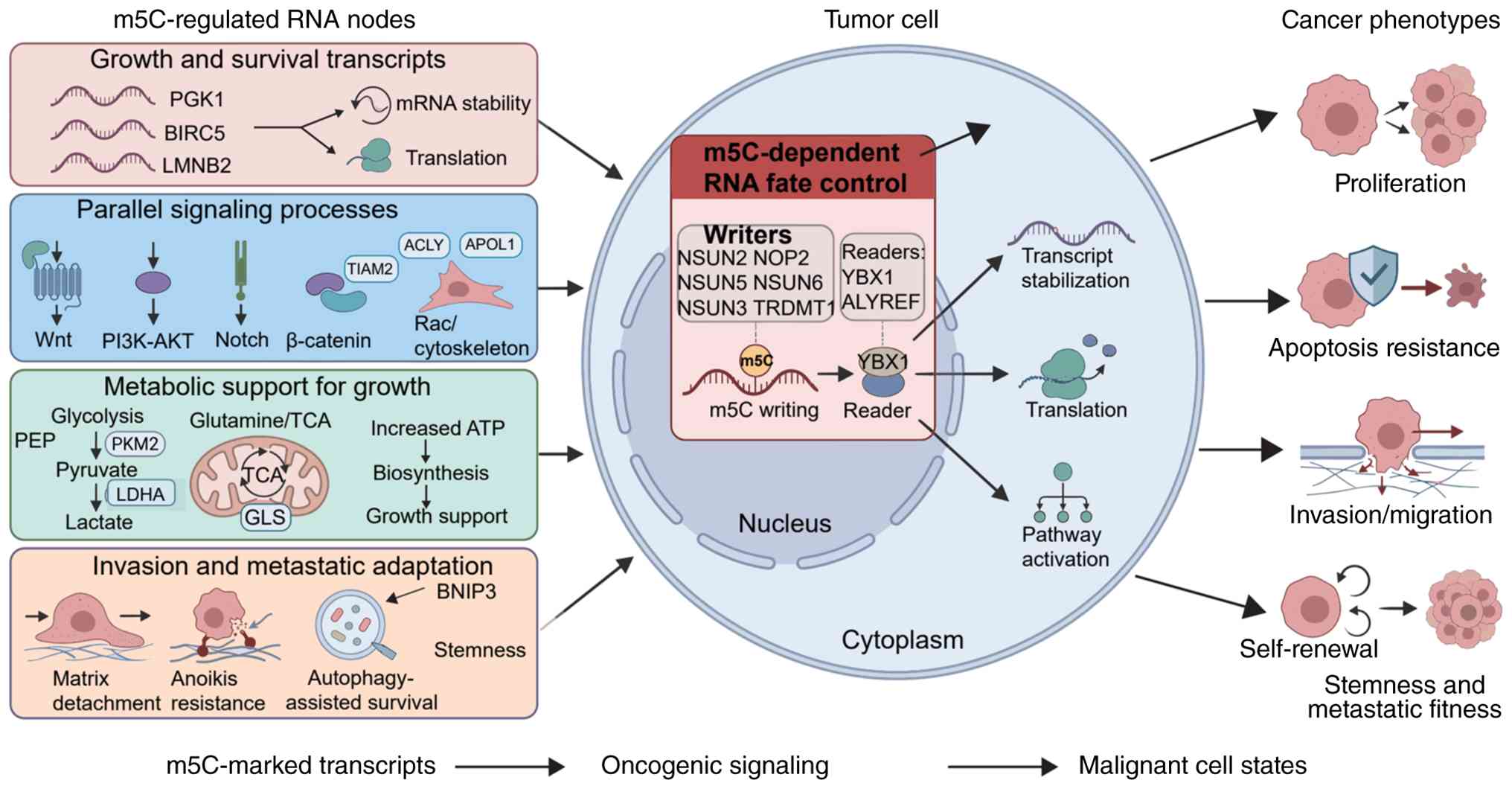
RNA-fate changes support malignant behavior when
they increase the availability of proteins required for cell
division, survival or nutrient use. NSUN2-mediated phosphoglycerate
kinase 1 (PGK1) mRNA stabilization promotes gastric cancer growth,
invasion, stemness and glycolysis, while ALYREF-dependent
isocitrate dehydrogenase [NADP(+)] 1 regulation supports
intrahepatic cholangiocarcinoma progression (56,57). NSUN2-associated hexokinase domain
containing 1 and phosphoglycerate dehydrogenase (PHGDH) regulation
provides related metabolic support in retinoblastoma and colorectal
cancer (58,59). Such metabolic effects complement
the regulation of proteins acting more directly in division and
survival. ALYREF stabilizes baculoviral IAP repeat containing 5
mRNA, linking transcript stability to survivin-associated mitotic
control and apoptosis inhibition, whereas NOP2-mediated lamin B2
mRNA modification supports a protein involved in nuclear structure
and cell division (60,61). Increased abundance of these
proteins can support growth either by supplying metabolic
intermediates or by sustaining cell division and survival.
Downstream signaling and metabolic demand then
determine how those protein changes affect growth and
dissemination. NSUN5-associated PI3K-AKT activity in prostate
cancer and NSUN3-associated reactive oxygen species (ROS)
accumulation in hepatocellular carcinoma accompany increased growth
(62,63). NSUN5 and NSUN2 have also been
associated with Wnt activity in gastric cancer and hepatocellular
carcinoma, respectively (64,65). NSUN2-dependent Wnt/β-catenin
regulation promotes colon adenocarcinoma growth (66). NSUN2-dependent stabilization of
TIAM Rac1 associated GEF 2 mRNA affects pancreatic cancer
progression and downstream cytoskeletal regulation (67). Metabolic support operates
alongside these signaling effects: NSUN2-dependent pyruvate kinase
M2 (PKM2) regulation supports glucose use, while NSUN5-mediated
glutaminase stabilization supports glutamine metabolism (68,69). Growth and motility still require
survival after cells leave their normal attachment sites. In
prostate cancer, NSUN2/ALYREF-dependent modification promotes
autophagy-associated anoikis resistance, allowing cells to survive
matrix detachment (70).
Together, nutrient use, survival and motility support dissemination
(Fig. 4). DNA damage and drug
exposure impose additional requirements on repair and stress
resistance.
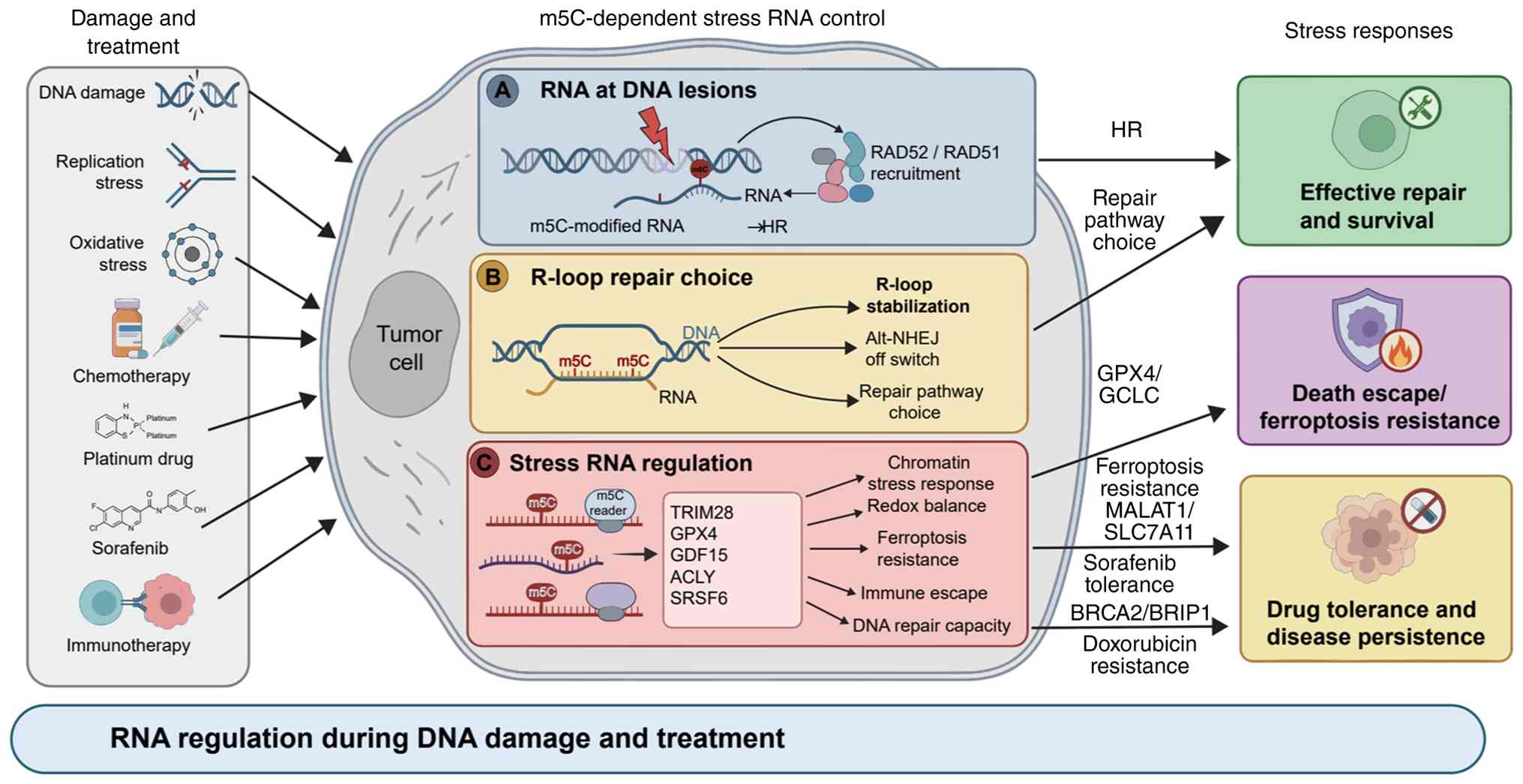
At DNA lesions, RNA m5C can affect repair by
changing the recruitment and residence of repair proteins. TRDMT1
loss reduces RAD51 and RAD52 recombinase recruitment, compromises
homologous recombination and increases sensitivity to DNA
double-strand breaks (2). RAD52
preferentially binds DNA-RNA hybrids containing m5C-modified RNA
in vitro, providing a local explanation for the reduced
repair-factor recruitment. R-loop methylation influences a
different repair choice: TRDMT1-dependent m5C suppresses
alternative non-homologous end joining (Alt-NHEJ) (71). In bladder cancer, NSUN2-dependent
R-loop stabilization has also been associated with progression and
cisplatin response (72). The
relevant outcome therefore depends on the hybrid structure and
repair pathway involved (Fig. 5A and
B). Y RNA fragments offer a related RNA-binding mechanism by
forming complexes with YBX1 that alter poly(ADP-ribose) polymerase
1 residence at DNA breaks (73).
Whether this YBX1 complex requires m5C recognition remains
unresolved.
Repair can also be affected by RNA regulation away
from the immediate lesion. Forkhead box A1-dependent NSUN2 activity
preserves tripartite motif containing 28 mRNA stability in prostate
cancer, altering the abundance of a chromatin-associated protein
rather than modifying RNA locally at a break (74). This creates a distinction between
recruitment of repair machinery and the availability of proteins
that influence chromatin responses. TRDMT1-dependent control of
repeat elements adds a further source of genome stress: Deficient
osteosarcoma cells show impaired responses to exogenous RNA and
increased retrotransposon activity during prolonged culture
(75). These changes concern
genome stress accumulated during prolonged culture rather than an
acute chemotherapy response. RNA regulation can therefore affect
genome maintenance at individual lesions or through longer-term
changes in chromatin-associated proteins and repeat activity.
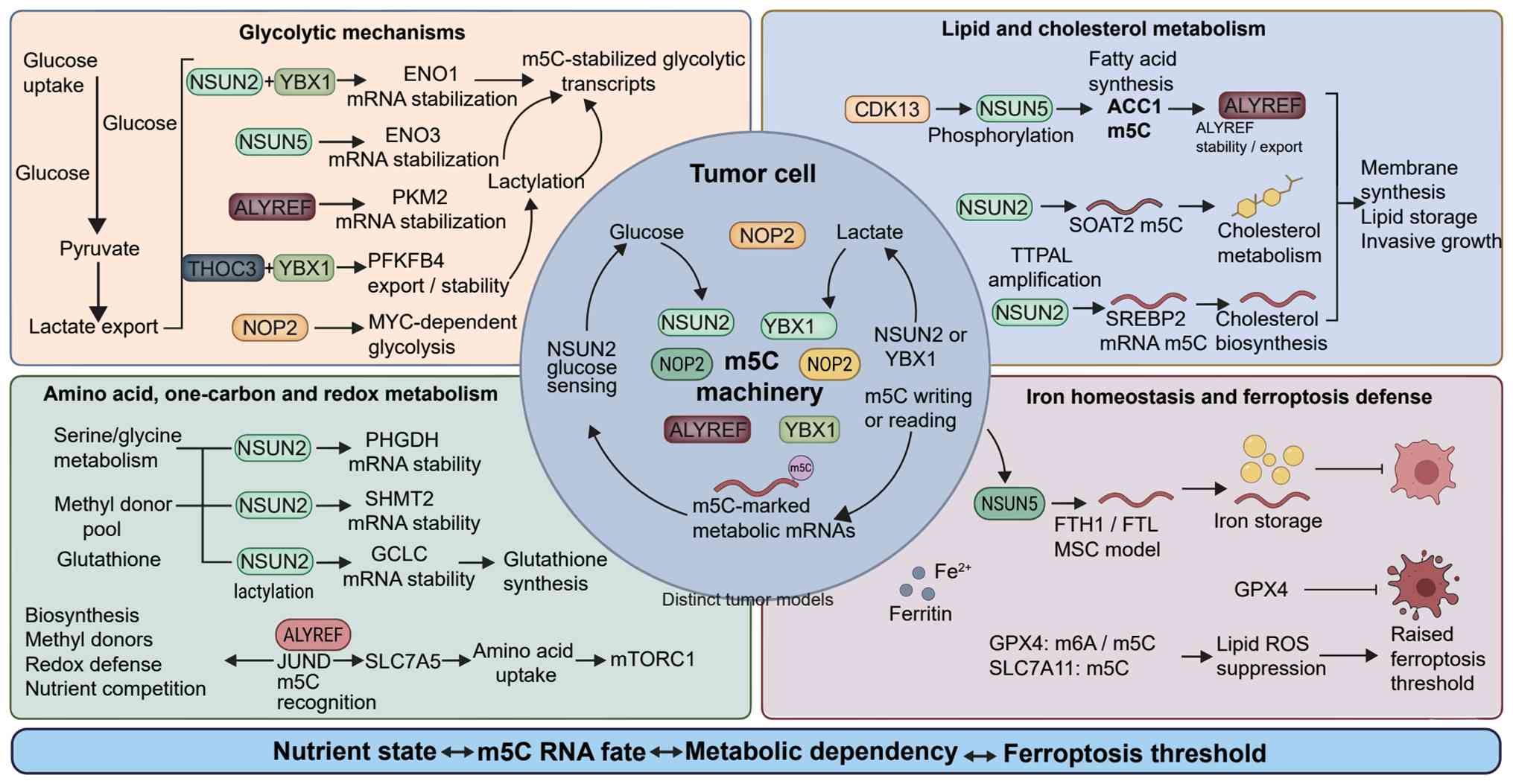
Survival under stress also depends on metabolic
processes regulated by m5C. This regulation is bidirectional, as
enzymes encoded by modified transcripts generate metabolites that
can alter writer or reader activity. In colorectal cancer, NSUN2
and YBX1 stabilize enolase 1 mRNA and increase lactate production.
Lactate then reinforces NSUN2 transcription and substrate
interaction through H3K18 and NSUN2 K356 lactylation (76). A separate colorectal cancer study
extends lactate sensitivity to the reading step, where YBX1 K92
lactylation enhances binding to modified RNA (77). Other glycolytic transcripts reach
sustained expression through different regulatory combinations.
NSUN5-dependent ENO3 stabilization increases glucose uptake and
lactate production in clear cell renal cell carcinoma, while
hypoxia-inducible factor (HIF)-1α induction and ALYREF-dependent
stability jointly support PKM2 expression in bladder cancer
(78,79). THO complex subunit 3 and YBX1
maintain 6-phosphofructo-2-kinase/fructose-2,6-biphosphatase 4 mRNA
export and stability in lung squamous cell carcinoma (80). NOP2-associated MYC regulation and
NSUN5-mediated ephrin A3 (EFNA3) stabilization extend these effects
to glycolytic transcription and upstream signaling in
hepatocellular carcinoma (81,82). EFNA3 is a signaling ligand rather
than a glycolytic enzyme, so its effect is indirect. Glucose
binding increases NSUN2 activity and TREX2 mRNA stability, linking
nutrient sensing to cGAS/STING suppression (5). A study on glioma also associated
NSUN2 with glucose metabolism (83). The ENO1-lactate feedback was
defined in colorectal cancer, while the other tumors involve
different substrates, reader availability or initiating
signals.
Beyond glycolysis, modified transcripts support the
lipids, amino acids and energy needed for sustained growth.
Cyclin-dependent kinase (CDK)13-dependent NSUN5 Ser327
phosphorylation promotes acetyl-CoA carboxylase mRNA modification,
ALYREF-dependent export and fatty acid synthesis, whereas
NSUN2-mediated sterol O-acyltransferase 2 regulation affects
cholesterol metabolism and competition with T cells (84,85). Acyl-CoA synthetase long chain
family member 3 (ACSL3) is associated with regulator patterns, but
direct modification of a particular ACSL3 RNA site remains
unestablished (86). Amino acid
metabolism extends this RNA dependence to biosynthesis and
methyl-donor supply. NSUN2 stabilizes PHGDH and serine
hydroxymethyltransferase 2 mRNAs, supporting serine/glycine
synthesis and one-carbon metabolism in acute myeloid leukemia
(87). A study reported that
methionine restriction or NOP2 depletion reduced the growth of
MYC-driven liver tumors (88).
Energy production can also be affected through mitochondrial RNA.
NSUN3-dependent tRNA modification supports translation and
oxidative phosphorylation in metastasis-initiating cells, while
NSUN4-associated circERI3 modification affects mitochondrial energy
metabolism (89,90). METTL17 provides a related
mitochondrial-translation example involving ferroptosis and
colorectal cancer growth, although its direct catalytic role in RNA
m5C has not been established (91).
Metabolic support becomes relevant to cell-death
resistance when it preserves antioxidant capacity or iron handling.
In gastric cancer, N-alpha-acetyltransferase 10, NatA catalytic
subunit-dependent NSUN2 K508 lactylation stabilizes
glutamate-cysteine ligase catalytic subunit mRNA, increasing
glutathione synthesis and resistance to doxorubicin-induced
ferroptosis (92).
NSUN5-dependent ferritin heavy chain 1 (FTH1) regulation suppresses
ferroptosis in the same cancer type, while NSUN2-associated FTH1
regulation accompanies increased global protein synthesis in
B-acute lymphoblastic leukemia (93,94). FTH1/ferritin light
chain-associated protection against ferroptosis has also been
described in mesenchymal stem cells (95). Glutathione peroxidase 4
(GPX4)-dependent redox defense involves both m6A and m5C regulation
(96). SLC2A1 expression is also
associated with prognosis and immune infiltration, although its
direct regulation at an m5C site remains unresolved (97). Amino acid uptake can also affect
the nutrients available to immune cells. ALYREF recognition of
modified JunD proto-oncogene, AP-1 transcription factor subunit
mRNA promotes SLC7A5, mTOR complex 1 activity and amino acid uptake
in pancreatic ductal adenocarcinoma (98). This connects tumor nutrient
uptake to the amino acids available to CD8+ T cells.
NSUN2-associated glucose reprogramming in hepatocellular carcinoma
likewise involves tumor-immune nutrient competition (99). Tumor metabolic activity can
therefore alter nutrient availability for immune responses
(Fig. 6).
Associations between m5C regulators and tumor
immunity vary with the cells contributing to tissue-level
expression. Regulator patterns in clear cell renal cell carcinoma
and lung adenocarcinoma correlate with immune-cell composition and
prognosis (3,4). Bulk and single-cell hepatocellular
carcinoma analyses similarly associate DNA methyltransferase 1,
NSUN5 and ALYREF with natural killer (NK)-cell infiltration or
adverse clinical features (100,101). Reader- and long (l) ncRNA-based
scores relate to macrophage infiltration and predicted drug
response in bladder and colon cancer (102,103). Related scores in hepatocellular
carcinoma and prostate cancer extend these associations to stromal
and T-cell features (104,105). In glioblastoma, YBX1-positive
tumor cells are associated with proliferation, whereas
YBX1-positive myeloid cells show TNF- and APOE-related interactions
(106). The RNA targets
responsible for these cell-specific expression associations remain
elusive.
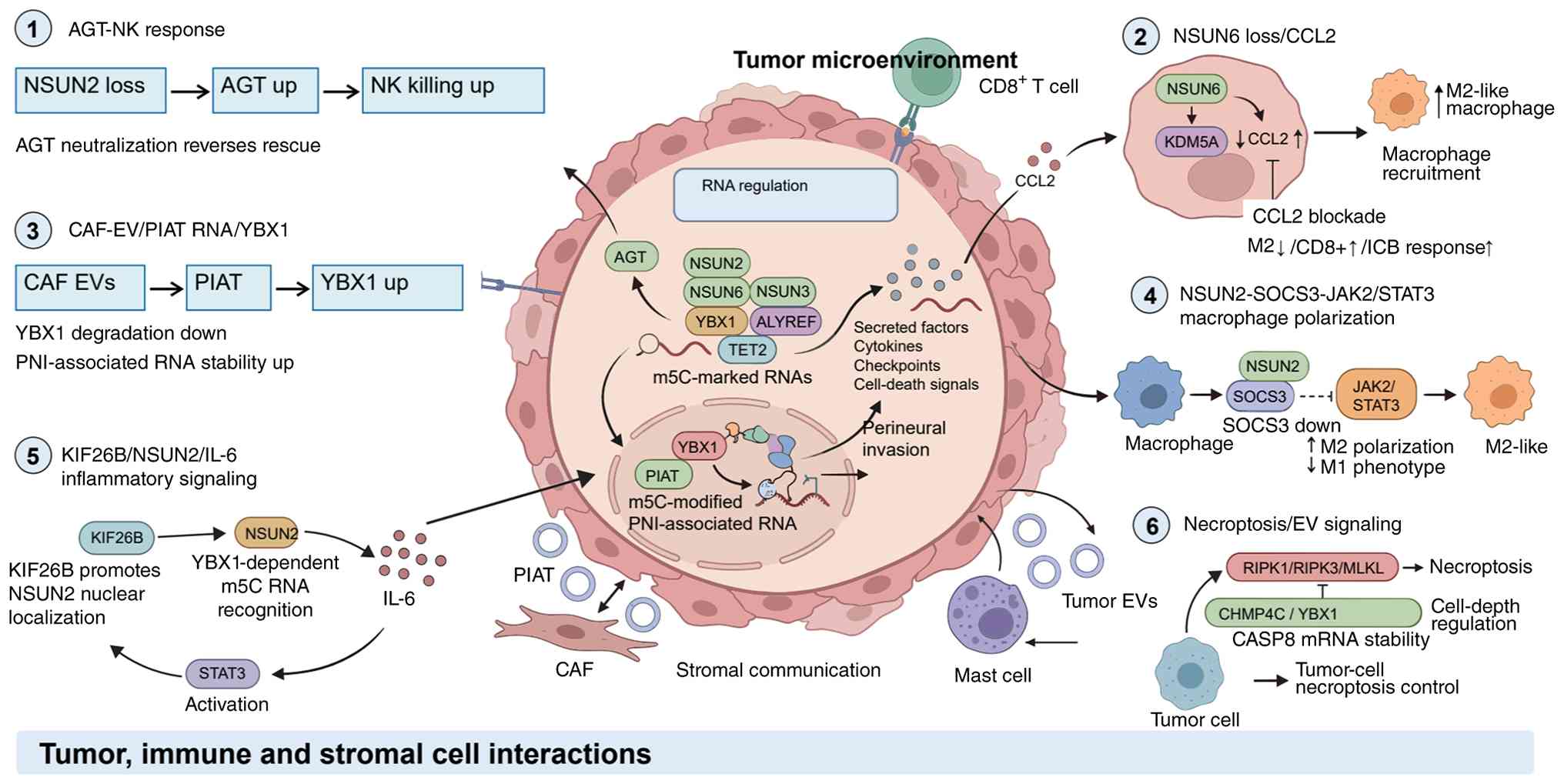
Tumor-cell RNA regulation can affect immune function
through secreted factors. In liver cancer cocultures, NSUN2
depletion increased angiotensinogen (AGT) expression and NK-cell
killing. AGT neutralization reversed the increase, while exogenous
AGT increased IFN-γ, TNF-α, perforin and the proportion of
CD107a-positive NK cells (107). AGT therefore contributes to the
NK-cell response following NSUN2 depletion (Fig. 7, part ①). A distinct
secreted-factor mechanism operates after NSUN6 deficiency in
pancreatic ductal adenocarcinoma. Reduced lysine demethylase 5A
mRNA stability increases tumor-cell C-C motif chemokine ligand 2
(CCL2) transcription and secretion, which promotes
immunosuppressive macrophage accumulation and weakens antitumor
immunity. CCL2 blockade restores checkpoint-treatment sensitivity
in the deficient mouse models (108). RNA regulation within myeloid
cells can also change their activation state. In bladder
cancer-associated macrophage models, NSUN2 lowers suppressor of
cytokine signaling 3 (SOCS3) mRNA stability and export, relieving
SOCS3 inhibition of JAK2/STAT3 and favoring M2 over M1 polarization
(109). NSUN3 depletion in head
and neck cancer also shifts macrophage proportions toward M1
(110). The effects of
regulator depletion consequently depend on the RNA target and the
participating immune cells.
Inflammatory signals can sustain RNA-dependent
changes in cell behavior. In bladder cancer, KIF26B promotes NSUN2
ubiquitination and nuclear localization, increasing YBX1-associated
IL-6 expression. IL-6 feeds back through STAT3, KIF26B
transcription and NSUN2 acetylation (111). Cell death provides another
means of altering the signals released by tumor cells. In
pancreatic cancer, charged multivesicular body protein 4C
(CHMP4C)/YBX1-associated caspase-8 (CASP8) mRNA regulation
increases Casp8 protein and suppresses receptor interacting
serine/threonine kinase 1 (RIPK1)/RIPK3/mixed lineage kinase domain
like pseudokinase (MLKL)-dependent necroptosis. CHMP4C also
promotes extracellular vesicle (EV)-associated phospho-MLKL export.
Tumor-conditioned medium promotes mast-cell migration, while
tumor-derived EV uptake increases mast-cell cytokine secretion
(112). Stromal EVs can instead
alter RNA recognition within recipient tumor cells.
Cancer-associated fibroblast-derived EVs deliver the lncRNA PIAT,
which limits NEDD4 like E3 ubiquitin protein ligase-dependent YBX1
degradation and increases binding to RNAs associated with
perineural invasion (113).
Stromal transfer can therefore alter YBX1 abundance and its
interaction with modified RNAs in recipient tumor cells (Fig. 7).
Drug exposure adds to these metabolic and immune
pressures. Altered RNA regulation can preserve proteins that limit
drug-induced cell death. Stabilization of SERPINB5 promotes
cervical cancer chemotherapy resistance, while NSUN2-dependent
SLC7A11 regulation supports redox defense in colorectal cancer
(114,115). Non-SMC condensin I complex
subunit G-associated NSUN2 regulation of GPX4 mRNA and ETS variant
transcription factor 4/ALYREF-dependent PKM2 regulation similarly
contribute to ferroptosis resistance in hepatocellular carcinoma
and intrahepatic cholangiocarcinoma, respectively (116,117). These metabolic defenses support
survival, while other RNA targets affect responses to specific
drugs. HIF1A promotes NSUN2-dependent growth differentiation factor
15 stabilization and reduces sorafenib sensitivity, whereas NSUN7
suppression restores 4-hydroxytamoxifen sensitivity in resistant
breast cancer cells (118,119). NSUN5-dependent BRCA2 DNA repair
associated and BRCA1 interacting DNA helicase 1 expression supports
doxorubicin resistance through repair capacity (120). The DNMT2-m5C-ACLY pathway
instead contributes to lenvatinib resistance through histone
acetylation and downstream Notch signaling, while TRDMT1-associated
TNFSF10 suppression has been linked to bortezomib resistance
(32,33). The RNA target and the type of
drug-induced injury influence which survival process is sustained
(Fig. 5C).
Reader-dependent regulation can sustain resistance
through several transcripts or through immune recognition. ALYREF
regulation of TBL1X/Y related 1 and lysine methyltransferase 2E
(inactive) increases APOC1 in oxaliplatin-resistant esophageal
cancer, while NSUN2/ALYREF maintains PD-L1 expression in non-small
cell lung cancer (121,122). Reducing RNA methylation can
instead contribute to drug-induced cell death. A study reported
that azacytidine reduced m5C on chromatin-associated RNA and
contributed to leukemia cell death (123). This RNA-related effect differs
from the drug's DNA-hypomethylating activity. Its relevance to
patient selection would depend on linking the RNA response to
treatment outcome. m5C-related expression signatures in glioma and
papillary thyroid cancer were found to be associated with prognosis
or inferred treatment response (124,125). These scores describe expression
patterns rather than directly measuring the RNA modification
responsible for drug response.
Interventions against these RNA-dependent survival
processes can target the chemical modification, writer or reader
proteins, or substrate RNAs. Delivery systems determine which
tissues are exposed to these interventions (Table I). Azacytidine inhibits
DNMT2-dependent tRNA-Asp C38 methylation, whereas decitabine lacks
the same RNA effect, but clinical use of either drug has not
validated RNA m5C as a response marker (29). S-adenosylhomocysteine-based
covalent DNMT2 compounds engage catalytic cysteine 79 (C79) in
biochemical assays, whereas B19 binds NSUN3 and suppresses
colorectal cancer growth in cell and animal models (126,127). Erianin reduces NSUN2-associated
ChaC glutathione specific gamma-glutamylcyclotransferase 1
regulation and vasculogenic mimicry in uveal melanoma models
(128). In T-cell lymphoma
models, including patient-derived xenografts, lanatoside C disrupts
YBX1-MYC binding and also affects p300-dependent transcription
(129). Inhibition of
NSUN2/ALYREF/YBX1-associated control of Yes-associated
transcriptional regulator also reduces tumor growth and metastasis
in non-small cell lung cancer models (130). RNA-directed approaches narrow
the intervention to a transcript or fragment, as illustrated by
MALAT1-IN1, a small-molecule inhibitor of metastasis associated
lung adenocarcinoma transcript 1 (MALAT1), and an inhibitor of
5'tiRNA-Gly-GCC, the 5'tRNA-derived stress-induced RNA (tRNA half)
generated from tRNA-Gly-GCC (31,131). For RNA interference,
ROS-responsive ferrocene nanoparticles improve intravenous delivery
of small interfering RNA targeting NSUN2 in gastric cancer models.
Biodistribution and tumor uptake were measured, while longer-term
exposure and toxicity remain unresolved (132). DNMT1-associated CDK1 regulation
also links pyrimidine metabolism to drug response, although direct
RNA methylation must be separated from the established
DNA-methylation functions of DNMT1 (133).
The choice of a combination partner follows the
resistance mechanism affected by the RNA intervention. MALAT1-IN1
with sorafenib addresses ELAVL1/SLC7A11-associated ferroptosis
defense, whereas inhibition of 5'tiRNA-Gly-GCC with doxorubicin
targets a fragment generated after TRDMT1 loss (31,131). In ovarian cancer, YB-B1
enhances cisplatin activity in cell and patient-derived xenograft
models (34). Chemotherapy
response also varies with the methyltransferase inhibited and the
drug used. Combined NSUN2 and METTL1 depletion increases
5-fluorouracil sensitivity in HeLa cells, but TRDMT1 loss produces
variable responses to doxorubicin and etoposide (134,135). Combining these interventions
with immunotherapy may have opposing effects on tumor cells and
immune effector cells. Disrupting glucose-NSUN2 regulation
increases cGAS/STING activity and CCL2 blockade restores checkpoint
sensitivity after NSUN6 loss (5,108). However, methionine restriction
reduces NK cell granule protein 7 (NKG7) mRNA methylation and
weakens chimeric antigen receptor-T-cell killing in lung squamous
cell carcinoma cocultures, with partial rescue after NKG7
restoration (136). Thus, an
intervention that impairs tumor-cell adaptation may also impair the
immune response intended to eliminate the tumor. Dose and schedule
therefore need to balance tumor inhibition against injury to immune
effector cells. The degree of additivity or synergy and the benefit
to patients remain to be established.
Near-term clinical investigation is more feasible
with existing nucleoside analogues than with newly developed writer
inhibitors. Existing nucleoside analogues allow RNA pharmacodynamic
measurements during clinical treatment without first developing a
new agent. Such measurements must still distinguish RNA effects
from DNA hypomethylation and relate them to patient response. Among
experimental candidates, reader-directed compounds evaluated in
patient-derived tumors warrant further pharmacological comparison
(34,129). Substrate-directed combinations
also allow the RNA response to be tested alongside sensitivity to
an existing drug, although neither approach is validated for
patients selected by m5C status (131). De novo writer inhibitors
face the additional problem of inhibiting tumor-dependent activity
while retaining normal-tissue and immune-cell functions. A
candidate RNA site and binding protein should therefore be linked
to treatment sensitivity in the relevant tumor before being used
for patient selection. In preclinical evaluations, measuring
intratumoral concentrations of the therapeutic agent alongside
target-RNA changes and immune-cell function would help determine
whether a tolerated dose engages the intended mechanism.
The contribution of m5C to stress adaptation depends
on the modified RNA, its subsequent processing and the cell in
which these changes occur. NSUN5 loss alters stress-adaptive
translation in glioma, whereas NSUN6 can restrain pancreatic cancer
growth (26,48). TRDMT1 loss in thyroid cancer
instead increases tumor-promoting tRNA fragments (31). Functional differences can also
arise independently of methylation. Catalytically inactive NOP2 can
support ribosome assembly, so loss of the protein affects more than
its methyltransferase activity (6). Metabolic and immune effects follow
the same substrate dependence. ENO1-associated lactate production
reinforces NSUN2 in colorectal cancer, while glucose-sensitive
NSUN2 regulates TREX2 and cGAS/STING in separate systems (5,76). AGT neutralization and CCL2
blockade then reveal distinct immune responses after NSUN2 or NSUN6
depletion (107,108). Whether these processes coexist
within one lesion remains unresolved.
The next experiments need to distinguish the
RNA-specific effect from changes in other modifications, protein
functions or cell populations. GPX4 regulation by m6A and m5C and
NSUN6-dependent METTL3 modification raise the possibility that more
than one RNA modification contributes to the same phenotype
(28,96). In future studies, paired site
perturbations and reader-binding measurements could separate
additive, opposing and interdependent effects, provided sequence
and expression controls account for the consequences of changing
the cytosine itself. Site-resolved measurements are needed because
conventional m5C-RNA immunoprecipitation sequencing does not
directly identify the modified nucleotide or quantify its
modification fraction (8,137).
Combining these measurements with RNA stability or translation
assays and phenotypic rescue can test functional consequences, as
illustrated by NSUN6/KDM5A and MALAT1/SLC7A11 regulation (108,131). Cell-type-specific perturbation
is then needed to determine where it occurs, as bulk measurements
cannot resolve the different YBX1-associated patterns observed in
glioblastoma tumor and myeloid populations (106). Building on patient-derived
models used for reader-directed agents (34,129), future studies could compare the
same drug combination in m5C-dependent and independent tumors at
matched exposures, alongside measurements of immune-cell killing.
An RNA response that accompanies selective tumor inhibition could
then be tested as a clinical pharmacodynamic marker. RNA m5C links
stress exposure to changes in RNA stability, processing and
translation, with effects that depend on the substrate and cell
type. Therapeutic development therefore requires selective
disruption of tumor-supporting RNA regulation while preserving
normal-tissue and antitumor immune functions.
Not applicable.
YLZ and SSY conceived the review. SSY drafted the
original manuscript. YLZ led the revision, critically revised the
manuscript for important intellectual content and supervised the
work. BLZ and XZT contributed to literature review and manuscript
preparation. YLZ and SSY confirm the authenticity of all data and
references cited in the manuscript. All authors read and approved
the final manuscript.
Not applicable.
Not applicable.
The authors declare that they have no competing
interests.
Not applicable.
No funding was received.
|
1
|
Chi L and Delgado-Olguín P: Expression of
NOL1/NOP2/sun domain (Nsun) RNA methyltransferase family genes in
early mouse embryogenesis. Gene Expr Patterns. 13:319–327. 2013.
View Article : Google Scholar
|
|
2
|
Chen H, Yang H, Zhu X, Yadav T, Ouyang J,
Truesdell SS, Tan J, Wang Y, Duan M, Wei L, et al: m5C
modification of mRNA serves a DNA damage code to promote homologous
recombination. Nat Commun. 11:28342020. View Article : Google Scholar
|
|
3
|
Xu W, Zhu W, Tian X, Liu W, Wu Y, Anwaier
A, Su J, Wei S, Qu Y, Zhang H and Ye D: Integrative
5-methylcytosine modification immunologically reprograms tumor
microenvironment characterizations and phenotypes of clear cell
renal cell carcinoma. Front Cell Dev Biol. 9:7724362021. View Article : Google Scholar : PubMed/NCBI
|
|
4
|
Chen H, Ge XL, Zhang ZY, Liu M, Wu RY,
Zhang XF, Xu LP, Cheng HY, Sun XC and Zhu HC: M5C
regulator-mediated methylation modification patterns and tumor
microenvironment infiltration characterization in lung
adenocarcinoma. Transl Lung Cancer Res. 10:2172–2192. 2021.
View Article : Google Scholar : PubMed/NCBI
|
|
5
|
Chen T, Xu ZG, Luo J, Manne RK, Wang Z,
Hsu CC, Pan BS, Cai Z, Tsai PJ, Tsai YS, et al: NSUN2 is a glucose
sensor suppressing cGAS/STING to maintain tumorigenesis and
immunotherapy resistance. Cell Metab. 35:1782–1798.e8. 2023.
View Article : Google Scholar
|
|
6
|
Liao H, Gaur A, McConie H, Shekar A, Wang
K, Chang JT, Breton G and Denicourt C: Human NOP2/NSUN1 regulates
ribosome biogenesis through non-catalytic complex formation with
box C/D snoRNPs. Nucleic Acids Res. 50:10695–10716. 2022.
View Article : Google Scholar :
|
|
7
|
Li M, Tao Z, Zhao Y, Li L, Zheng J, Li Z
and Chen X: 5-methylcytosine RNA methyltransferases and their
potential roles in cancer. J Transl Med. 20:2142022. View Article : Google Scholar : PubMed/NCBI
|
|
8
|
Zhang L, Li Y, Li L, Yao F, Cai M, Ye D
and Qu Y: Detection, molecular function and mechanisms of m5C in
cancer. Clin Transl Med. 15:e702392025. View Article : Google Scholar :
|
|
9
|
Zheng L, Duan Y, Li M, Wei J, Xue C, Chen
S, Wei Q, Tang F, Xiong W, Zhou M and Deng H: Deciphering the vital
roles and mechanism of m5C modification on RNA in cancers. Am J
Cancer Res. 13:6125–6146. 2023.
|
|
10
|
Mao Z, Tian Y, Wu L and Zhang Y:
Epitranscriptomic mechanisms and implications of RNA m5C
modification in cancer. Theranostics. 15:8404–8428. 2025.
View Article : Google Scholar
|
|
11
|
Yuan F, Xia Y, Huang Z, Gao H, Bian Y and
Zhou X: m5C RNA methylation in cancer: From biological mechanism to
clinical perspectives. Eur J Med Res. 30:5032025. View Article : Google Scholar : PubMed/NCBI
|
|
12
|
Liu Z, Zhang H, Xie Y, Wang D, Liang P and
Yang K: 5-mC RNA methylation: A key regulator in cancer development
and treatment. J Transl Med. 24:3382026. View Article : Google Scholar : PubMed/NCBI
|
|
13
|
Gao Y and Zou T: Hypoxia triggers
ALYREF-mediated m5C methylation of KIF20A to activate
KIF20A/BUB1 for generating ferroptosis resistance in cervical
cancer cells. Kaohsiung J Med Sci. 42:e700932026. View Article : Google Scholar
|
|
14
|
Huang T, Hu C, Chen H, Jiang H, Li T, Tian
Q, He R, Yuan Y, Jiang Y, Zhou Y, et al: Lactylation-driven
NSUN2-mediated RNA m5C modification promotes perineural invasion in
pancreatic cancer. Theranostics. 16:1782–1803. 2026. View Article : Google Scholar :
|
|
15
|
Meng L, Wu H, Wu J, Ding P, He J, Li T,
Niu X, Sang M and Liu L: Aberrant CircTMEM45A facilitates
inflammatory progression of esophageal squamous cell carcinoma
through m5C-mediated NLRP3 activation. Cancer Res. 85:2694–2713.
2025. View Article : Google Scholar
|
|
16
|
Huang S, Liu Y, Zhao M, Wang T, Mao L,
Wang T, Guo C, Huang W, Peng Z, Zhang Z, et al: Copy number
amplification of TTPAL promotes cholesterol biosynthesis and
esophageal squamous cell carcinoma progression via elevating
NSUN2-mediated m5C modification of SREBP2 mRNA. J Exp Clin Cancer
Res. 44:2202025. View Article : Google Scholar : PubMed/NCBI
|
|
17
|
Wang K, Kong F, Han X, Zhi Y and Wang H,
Ren C and Wang H: Integrative multi-omics reveal NSUN2 facilitates
glycolysis and histone lactylation-driven immune evasion in renal
carcinoma. Genes Immun. 26:312–323. 2025. View Article : Google Scholar
|
|
18
|
Li R, Li S, Shen L, Li J, Zhang D, Yu J,
Huang L, Liu N, Lu H and Xu M: LINC00618 facilitates growth and
metastasis of hepatocellular carcinoma via elevating cholesterol
synthesis by promoting NSUN2-mediated SREBP2 m5C modification.
Ecotoxicol Environ Saf. 285:1170642024. View Article : Google Scholar : PubMed/NCBI
|
|
19
|
Li M, Du N and Tang P: The oncogenic role
of NSUN2 in lung adenocarcinoma by stabilizing CCT5 mRNA via a
YBX1-dependent m5C modification. Mol Cell Biochem. 481:231–243.
2026. View Article : Google Scholar
|
|
20
|
Li O, An K, Wang H, Li X, Wang Y, Huang L,
Du Y, Qin N, Dong J, Wei J, et al: Targeting YBX1-m5C mediates
RNF115 mRNA circularisation and translation to enhance
vulnerability of ferroptosis in hepatocellular carcinoma. Clin
Transl Med. 15:e702702025. View Article : Google Scholar :
|
|
21
|
Wu L, Gu L, Zheng Y, Liu J, Wei Z, Liu F,
Li J, Meng L, Sang Y, Sang M, et al: CircPRKCA facilitates
esophageal squamous cell carcinoma metastasis via m5C-dependent
CSF2 mRNA stabilization. J Transl Med. 23:3852025. View Article : Google Scholar
|
|
22
|
Yang S, He P, Wang W, Xu X, Xi X and Li Y:
Multi-omics analysis reveals that ALYREF-mediated m5C
modification promotes platinum resistance in ovarian cancer via the
NSUN2/ALYREF/LGR4 axis. Cell Death Dis. 17:772025. View Article : Google Scholar
|
|
23
|
Sun GF and Ding H: NOP2-mediated m5C
methylation of XPD is associated with hepatocellular carcinoma
progression. Neoplasma. 70:340–349. 2023. View Article : Google Scholar : PubMed/NCBI
|
|
24
|
Wu R, Sun C, Chen X, Yang R, Luan Y, Zhao
X, Yu P, Luo R, Hou Y, Tian R, et al: NSUN5/TET2-directed
chromatin-associated RNA modification of 5-methylcytosine to
5-hydroxymethylcytosine governs glioma immune evasion. Proc Natl
Acad Sci USA. 121:e23216111212024. View Article : Google Scholar : PubMed/NCBI
|
|
25
|
Ying X, Huang Y, Huang J, Cai Q, Zhang D,
Chen C, Nie Y, Yang B, Li C, Hu W, et al: m5C-modified
tRF3b-CysGCA-23 suppresses bladder cancer malignancy by
repressing H3K18 lactylation via stabilizing RBM4. Adv Sci (Weinh).
13:e222942026. View Article : Google Scholar
|
|
26
|
Yang R, Liang X, Wang H, Guo M, Shen H,
Shi Y, Liu Q, Sun Y, Yang L and Zhan M: The RNA methyltransferase
NSUN6 suppresses pancreatic cancer development by regulating cell
proliferation. EBioMedicine. 63:1031952021. View Article : Google Scholar :
|
|
27
|
Lu Z, Liu B, Kong D, Zhou X, Pei D and Liu
D: NSUN6 regulates NM23-H1 expression in an m5C manner to affect
epithelial-mesenchymal transition in lung cancer. Med Princ Pract.
33:56–65. 2024. View Article : Google Scholar :
|
|
28
|
Cui Y, Lv P and Zhang C: NSUN6 mediates
5-methylcytosine modification of METTL3 and promotes colon
adenocarcinoma progression. J Biochem Mol Toxicol. 38:e237492024.
View Article : Google Scholar
|
|
29
|
Schaefer M, Hagemann S, Hanna K and Lyko
F: Azacytidine inhibits RNA methylation at DNMT2 target sites in
human cancer cell lines. Cancer Res. 69:8127–8132. 2009. View Article : Google Scholar : PubMed/NCBI
|
|
30
|
Zhu X, Wang X, Yan W, Yang H, Xiang Y, Lv
F, Shi Y, Li HY and Lan L: Ubiquitination-mediated degradation of
TRDMT1 regulates homologous recombination and therapeutic response.
NAR Cancer. 3:zcab0102021. View Article : Google Scholar : PubMed/NCBI
|
|
31
|
Zhou R, Li B, Cao M, Wu Z, Xia F and Li X:
DNMT2 inhibits anaplastic thyroid cancer progression by
downregulating 5'tiRNAGly-GCC production. Cell Death Dis.
17:2402026. View Article : Google Scholar
|
|
32
|
Yang S, Li J, Mao S, Zhao X, Liu D, Chen
J, Fu J, Bu Y, Wu X, Liu S, et al: DNMT2-m5C-ACLY axis promotes
lenvatinib resistance in hepatocellular carcinoma through histone
acetylation-mediated notch pathway. Adv Sci (Weinh). 13:e159312026.
View Article : Google Scholar :
|
|
33
|
Lai J, Chen L, Li Q, Zhao G, Li X, Guo D,
Chen Z, Zhang Y, Fan J, Zhao H, et al: tRNA methyltransferase DNMT2
promotes hepatocellular carcinoma progression and enhances
bortezomib resistance through inhibiting TNFSF10. Cell Signal.
127:1115332025. View Article : Google Scholar
|
|
34
|
Zhang K, Cheng G, Jiang W, Kong B, Yao S
and Liu X: 5-Methylcytosine regulated CCNL2 promotes tumorigenesis
and cisplatin resistance of ovarian cancer with therapeutic
implications. J Ovarian Res. 18:1622025. View Article : Google Scholar : PubMed/NCBI
|
|
35
|
Ye W, Zhao Y, Zhou Y, Huang J, He X, Ma Z,
Huang X, Hu C, Li F, Ling Q, et al: NSUN2-mediated cytosine-5
methylation of FSP1 protects acute myeloid leukemia cells from
ferroptosis. Mol Cancer. 24:2012025. View Article : Google Scholar :
|
|
36
|
Zhang J, Shen J, Zeng T, Gao C, Sheng B,
Li J, Zeng W, Shen J, Shen C and Wang J and Wang J: Targeting the
NSUN2-DHODH axis reverses ferroptosis resistance and oxaliplatin
resistance in colorectal cancer. Front Pharmacol. 17:17399812026.
View Article : Google Scholar : PubMed/NCBI
|
|
37
|
Zheng L, Wei J, Li X, Li M, Xue C, Chen S,
Wei Q, Fan S, Xiong W, Zhou M and Deng H: NSUN2 negatively
regulates TP53 mRNA stability to promote the malignant progression
of nasopharyngeal carcinoma. Cancers (Basel). 17:39502025.
View Article : Google Scholar :
|
|
38
|
Tian J, Gao J, Cheng C, Xu Z, Chen X, Wu
Y, Fu G and Jin B: NOP2-mediated 5-methylcytosine modification of
APOL1 messenger RNA activates PI3K-Akt and facilitates clear cell
renal cell carcinoma progression. Int J Biol Sci. 20:4853–4871.
2024. View Article : Google Scholar :
|
|
39
|
Zuo S, Li L, Wen X, Gu X, Zhuang A, Li R,
Ye F, Ge S, Fan X, Fan J, et al: NSUN2-mediated m5 C RNA
methylation dictates retinoblastoma progression through promoting
PFAS mRNA stability and expression. Clin Transl Med. 13:e12732023.
View Article : Google Scholar
|
|
40
|
Zhang Y, He R, Ye J, Xu X, Gui X, Wu Y,
Lin X, Lin X and Chen K: Novel m5C-dependent
post-transcriptional regulation of KIF11 drives lymphatic
metastasis in gastric cancer. Sci Rep. 15:447822025. View Article : Google Scholar
|
|
41
|
Qi J, Jiang T, Liu B, Hu Q, Chen J, Ma N,
Xu Y, Song H and Song J: LINC02167 stabilizes KSR1 mRNA in an
m5C-dependent manner to regulate the ERK/MAPK signaling
pathway and promotes colorectal cancer metastasis. J Exp Clin
Cancer Res. 44:1212025. View Article : Google Scholar
|
|
42
|
Chen Y, Jiang Z, Zhang C, Zhang L, Chen H,
Xiao N, Bai L, Liu H and Wan J: 5-Methylcytosine transferase NSUN2
drives NRF2-mediated ferroptosis resistance in non-small cell lung
cancer. J Biol Chem. 300:1067932024. View Article : Google Scholar : PubMed/NCBI
|
|
43
|
Zhang X, An K, Ge X, Sun Y, Wei J, Ren W,
Wang H, Wang Y, Du Y, He L, et al: NSUN2/YBX1 promotes the
progression of breast cancer by enhancing HGH1 mRNA stability
through m5C methylation. Breast Cancer Res. 26:942024.
View Article : Google Scholar
|
|
44
|
Hou X, Dong Q, Hao J, Liu M, Ning J, Tao
M, Wang Z, Guo F, Huang D, Shi X, et al: NSUN2-mediated
m5C modification drives alternative splicing
reprogramming and promotes multidrug resistance in anaplastic
thyroid cancer through the NSUN2/SRSF6/UAP1 signaling axis.
Theranostics. 15:2757–2777. 2025. View Article : Google Scholar
|
|
45
|
Wang W, Ding Y, Zhao H, Wang S, Huang J
and Sun L: NSUN2-tRNAVal-CAC-axis-regulated codon-biased
translation drives triple-negative breast cancer glycolysis and
progression. Cell Mol Biol Lett. 30:1002025. View Article : Google Scholar
|
|
46
|
Li P, Wang W, Zhou R, Ding Y and Li X: The
m5 C methyltransferase NSUN2 promotes codon-dependent
oncogenic translation by stabilising tRNA in anaplastic thyroid
cancer. Clin Transl Med. 13:e14662023. View Article : Google Scholar
|
|
47
|
Ouyang J, Wang J, Wang H, Tao N, Zhang Q,
Xie B, Chen S, Zhao Y and Tao W: A tumor-targeted tRF therapeutics
triggers ovarian cancer ferroptosis via dual inhibition of system
Xc. Adv Mater. 38:e210782026. View Article : Google Scholar
|
|
48
|
Janin M, Ortiz-Barahona V, de Moura MC,
Martínez-Cardús A, Llinàs-Arias P, Soler M, Nachmani D, Pelletier
J, Schumann U, Calleja-Cervantes ME, et al: Epigenetic loss of
RNA-methyltransferase NSUN5 in glioma targets ribosomes to drive a
stress adaptive translational program. Acta Neuropathol.
138:1053–1074. 2019. View Article : Google Scholar : PubMed/NCBI
|
|
49
|
Zhou J, Kong YS, Vincent KM,
Dieters-Castator D, Bukhari AB, Glubrecht D, Liu RZ, Quilty D,
Findlay SD, Huang X, et al: RNA cytosine methyltransferase NSUN5
promotes protein synthesis and tumorigenic phenotypes in
glioblastoma. Mol Oncol. 17:1763–1783. 2023. View Article : Google Scholar :
|
|
50
|
Zheng B, Zhao W, Jin Y, Sun W, Li Y, Zhang
Q, Li Y, Wang J, Chen D, Ren K, et al: LncRNA SLC16A1-AS1
cooperates with NSUN2 to stabilize GRP78 mRNA via m5C modification
in gastric cancer. iScience. 29:1146142026. View Article : Google Scholar :
|
|
51
|
Gui C, Liu J, Chen J, Zhou X, Feng H, Fu
L, Chen Y, Zhang L, Huang H, Xu X, et al: Targeting the
NSUN5-circPPAP2A axis reverses immunosuppression and sensitizes
renal cell carcinoma to anti-PD-1 therapy. Cancer Lett.
649:2184662026. View Article : Google Scholar : PubMed/NCBI
|
|
52
|
Sun XY, Yu B, Yu J, Wang YP, Li XB, Sun
RR, Tian X and Kan QC: YBX1 is required for maintaining PD-L1
expression in intrahepatic cholangiocarcinoma by regulating STAT1
stability in an m5C-dependent manner. Hepatobiliary Pancreat Dis
Int. 24:643–655. 2025. View Article : Google Scholar
|
|
53
|
Li H, Liang Y, Tang J, Luo H and Wang Y:
YBX1 enhances the stability of TM4SF1 in an
m5C-dependent manner to promote bladder cancer
proliferation and glycolysis. Comb Chem High Throughput Screen.
29:2061–2074. 2026. View Article : Google Scholar
|
|
54
|
Ke ZB, Chen JY, Lin B, Chen CR, Xue YT,
Sun JB, Yan ZH, Zhao YX, Liu MX, Wang Z, et al: OTUB2/ALYREF axis
modulates the docetaxel resistance of castration-resistant prostate
cancer via upregulating ABCG4-mediated drug efflux. Int J Biol Sci.
22:3342–3366. 2026. View Article : Google Scholar : PubMed/NCBI
|
|
55
|
Li Q, Guo G, Chen Y, Lu L, Li H, Zhou Z,
Guo J, Gan X, Hu Y, Li Q, et al: HCP5 derived novel microprotein
triggers progression of gastric cancer through regulating
ferroptosis. Adv Sci (Weinh). 11:e24070122024. View Article : Google Scholar : PubMed/NCBI
|
|
56
|
Liu S, Xu B and Zhao J: NSUN2-mediated m5C
modification of PGK1 mRNA promotes cell growth, invasion, stemness
and glycolysis in gastric cancer. Cell Cycle. 24:283–295. 2025.
View Article : Google Scholar : PubMed/NCBI
|
|
57
|
Hao Z, Yang H, Zhu W, Yu D, Cao Y and Wu
Y: ALYREF promotes progression of intrahepatic cholangiocarcinoma
through increasing the level of isocitrate dehydrogenase 1 in an
m5C-dependent manner. Mol Cell Biol. 45:198–211. 2025. View Article : Google Scholar : PubMed/NCBI
|
|
58
|
Guan J, Lu L and Jiang Y: NSUN2
contributes to the RB malignant progression and glycolysis by
mediating the m5C methylation modification of HKDC1. J Bioenerg
Biomembr. 57:275–287. 2025. View Article : Google Scholar : PubMed/NCBI
|
|
59
|
Li H, Gong T, Zhao Y, Luo Y, Tang S, Wang
T, Lin H and Zhong M: NSUN2 promotes colorectal cancer progression
by stabilizing PHGDH mRNA to promote serine metabolism
reprogramming. Cancer Metab. 13:372025. View Article : Google Scholar : PubMed/NCBI
|
|
60
|
Tian Y, Liu J, Sun L and Wang X: ALYREF
regulates the m5C modification and stability of BIRC5 mRNA to
promote ovarian cancer progression. Pathol Res Pract.
272:1560552025. View Article : Google Scholar : PubMed/NCBI
|
|
61
|
Bi J, Huang Y, Hu W and Liu Y:
NOP2-mediated m5C methylation modification of LMNB2 mRNA
facilitates colorectal cancer progression. Cancer Med.
14:e709702025. View Article : Google Scholar : PubMed/NCBI
|
|
62
|
Huang M, Zou H, Liang Y, Cao F, Teng Q,
Guan Y, Wang Y, Pang J and Lei H: Nop2/Sun domain family member 5
contributes to tumorigenic properties in prostate cancer by
engaging the PI3K-AKT pathway and tumor-associated macrophages.
Biochim Biophys Acta Mol Basis Dis. 1871:1679742025. View Article : Google Scholar
|
|
63
|
Liu H, Liang S, Peng C, Yang J, Yang Z and
Mo W: NSUN3-mediated ROS accumulation promotes hepatocellular
carcinoma proliferation and activates PI3K/AKT pathway. Biochem
Genet. 64:2782–2796. 2026. View Article : Google Scholar
|
|
64
|
Liu S, Liu Y, Zhou Y, Xia G, Liu H, Zeng
Y, Pei Z, Cao J, Jing G, Zou H and Liao C: NSUN5 promotes
tumorigenic phenotypes through the WNT signaling pathway and
immunosuppression of CD8+ T cells in gastric cancer. Cell Signal.
124:1114752024. View Article : Google Scholar : PubMed/NCBI
|
|
65
|
Xing H, Gu X, Liu Y, Xu L, He Y and Xue C:
NSUN2 regulates Wnt signaling pathway depending on the m5C RNA
modification to promote the progression of hepatocellular
carcinoma. Oncogene. 43:3469–3482. 2024. View Article : Google Scholar : PubMed/NCBI
|
|
66
|
Wen Y, Huang M, Fu H, Liu H, Peng X, Zeng
Y, Xiao Q, Xiong Q, Guo X, Du Z, et al: NSUN2 as a therapeutic
target: Modulating tumor growth and immune microenvironment in
colon adenocarcinoma. Biochim Biophys Acta Mol Basis Dis.
1872:1682452026. View Article : Google Scholar : PubMed/NCBI
|
|
67
|
Zhang G, Liu L, Li J, Chen Y, Wang Y,
Zhang Y, Dong Z, Xue W, Sun R and Cui G: NSUN2 stimulates tumor
progression via enhancing TIAM2 mRNA stability in pancreatic
cancer. Cell Death Discov. 9:2192023. View Article : Google Scholar : PubMed/NCBI
|
|
68
|
Qi Q, Zhong R, Huang Y, Tang Y, Zhang XW,
Liu C, Gao CF, Zhou L, Yu J and Wu LY: The RNA M5C
methyltransferase NSUN2 promotes progression of hepatocellular
carcinoma by enhancing PKM2-mediated glycolysis. Cell Death Dis.
16:822025. View Article : Google Scholar
|
|
69
|
Shu M, Guo K, Huang Y and Wang W: NSUN5
promotes cholangiocarcinoma progression by enhancing GLS mRNA
stabilization. J Cancer Res Clin Oncol. 151:1172025. View Article : Google Scholar : PubMed/NCBI
|
|
70
|
Sun G, Chen S, Chen M, Xiao X, Zhang R, Ye
H, Guo Y and Liu R: NSUN2/ALYREF-mediated RNA m5c modification
promotes anoikis resistance of prostate cancer through activating
autophagy. Oncogene. 45:1800–1814. 2026. View Article : Google Scholar
|
|
71
|
Yang H, Lachtara EM, Ran X, Hopkins J,
Patel PS, Zhu X, Xiao Y, Phoon L, Gao B, Zou L, et al: The RNA m5C
modification in R-loops as an off switch of Alt-NHEJ. Nat Commun.
14:61142023. View Article : Google Scholar : PubMed/NCBI
|
|
72
|
Wu Y, Ying Y, Zhang F, Shu X, Qi Z, Wang
J, Liu Z, Tang Y, Sun J, Yi J, et al: NSUN2-mediated R-loop
stabilization as a key driver of bladder cancer progression and
cisplatin sensitivity. Cancer Lett. 611:2174162025. View Article : Google Scholar
|
|
73
|
Shaw A, Ajit K, Chataignier M and
Gullerova M: Non-coding Y RNA fragments in a complex with YBX1
modulate PARP1 residency at DNA double strand breaks. Nucleic Acids
Res. 53:gkaf5172025. View Article : Google Scholar : PubMed/NCBI
|
|
74
|
Wang Z, Mierxiati A, Zhu W, Li T, Xu H,
Wan F and Ye D: FOXA1-dependent NSUN2 facilitates the advancement
of prostate cancer by preserving TRIM28 mRNA stability in a
m5C-dependent manner. NPJ Precis Oncol. 9:1272025. View Article : Google Scholar : PubMed/NCBI
|
|
75
|
Betlej G, Lewińska A, Adamczyk-Grochala J,
Błoniarz D, Rzeszutek I and Wnuk M: Deficiency of TRDMT1 impairs
exogenous RNA-based response and promotes retrotransposon activity
during long-term culture of osteosarcoma cells. Toxicol In Vitro.
80:1053232022. View Article : Google Scholar
|
|
76
|
Chen B, Deng Y, Hong Y, Fan L, Zhai X, Hu
H, Yin S, Chen Q, Xie X, Ren X, et al: Metabolic recoding of
NSUN2-mediated m5C modification promotes the progression
of colorectal cancer via the NSUN2/YBX1/m5C-ENO1
positive feedback loop. Adv Sci (Weinh). 11:e23098402024.
View Article : Google Scholar
|
|
77
|
Chen S, Wang X, Chen Y, Qiao Y and Hu X:
K92 lactylation of YBX1 orchestrates m5C RNA recognition to
facilitate colorectal cancer progression. Int J Biol Macromol.
346:1506862026. View Article : Google Scholar : PubMed/NCBI
|
|
78
|
Wang J, Ju HJ, Zhang F, Tian H, Wang WG,
Ma YL, Xu WS and Wang YH: A novel NSUN5/ENO3 pathway promotes the
Warburg effect and cell growth in clear cell renal cell carcinoma
by 5-methylcytosine-stabilized ENO3 mRNA. Am J Transl Res.
15:878–895. 2023.PubMed/NCBI
|
|
79
|
Wang JZ, Zhu W, Han J, Yang X, Zhou R, Lu
HC, Yu H, Yuan WB, Li PC, Tao J, et al: The role of the
HIF-1α/ALYREF/PKM2 axis in glycolysis and tumorigenesis of bladder
cancer. Cancer Commun (Lond). 41:560–575. 2021. View Article : Google Scholar :
|
|
80
|
Yu T, Zhang Q, Yu SK, Nie FQ, Zhang ML,
Wang Q and Lu KH: THOC3 interacts with YBX1 to promote lung
squamous cell carcinoma progression through PFKFB4 mRNA
modification. Cell Death Dis. 14:4752023. View Article : Google Scholar
|
|
81
|
Zhang H, Zhai X, Liu Y, Xia Z, Xia T, Du
G, Zhou H, Franziska Strohmer D, Bazhin AV, Li Z, et al:
NOP2-mediated m5C modification of c-Myc in an EIF3A-dependent
manner to reprogram glucose metabolism and promote hepatocellular
carcinoma progression. Research (Wash D C). 6:01842023.PubMed/NCBI
|
|
82
|
Han Y, Deng X, Chen H, Chen J, Xu W and
Liu L: NSUN5 accelerates the progression of liver hepatocellular
carcinoma by m5C-EFNA3-mediated glycolysis. BMC Cancer.
25:12372025. View Article : Google Scholar : PubMed/NCBI
|
|
83
|
He Y, Yuan Y, Ji L, Shu Y, Wang Z, Zhang
S, Yang W, Chen M and Liu Y: Integrative analysis identifies NSUN2
as an essential coordinator for glioma malignancy and glucose
metabolism. J Gene Med. 26:e700042024. View Article : Google Scholar : PubMed/NCBI
|
|
84
|
Zhang Y, Chen XN, Zhang H, Wen JK, Gao HT,
Shi B, Wang DD, Han ZW, Gu JF, Zhao CM, et al: CDK13 promotes lipid
deposition and prostate cancer progression by stimulating
NSUN5-mediated m5C modification of ACC1 mRNA. Cell Death Differ.
30:2462–2476. 2023. View Article : Google Scholar : PubMed/NCBI
|
|
85
|
Jiang J, Liu F, Cui D, Xu C, Chi J, Yan T
and Guo F: Novel molecular mechanisms of immune evasion in
hepatocellular carcinoma: NSUN2-mediated increase of SOAT2 RNA
methylation. Cancer Commun (Lond). 45:846–879. 2025. View Article : Google Scholar : PubMed/NCBI
|
|
86
|
Niu Q, Mou Y, Yao Y, Dong H, Wang K, Zeng
Z, Tao Y, Gong X and Li H: Multidimensional analysis reveals the
potential of ACSL3 as a cancer biomarker: From pan-cancer
exploration to functional validation in hepatocellular carcinoma.
Clin Exp Med. 25:3512025. View Article : Google Scholar : PubMed/NCBI
|
|
87
|
Li S, Liu Y, Wu X, Pan M, Zhao H, Hong Y,
Zhang Q, Hu S, Ouyang A, Li G, et al: The m5C
methyltransferase NSUN2 promotes progression of acute myeloid
leukemia by regulating serine metabolism. Cell Rep. 44:1156612025.
View Article : Google Scholar
|
|
88
|
Lin S, Berdan C, Sandy M, Lu X, Ramani V,
Nomura DK, Chen X, Lee J and Goga A: Methionine metabolism and the
NOP2 methyltransferase are essential for MYC-Driven liver
tumorigenesis. bioRxiv [Preprint]: 2026.01.28.702329. 2026.
|
|
89
|
Delaunay S, Pascual G, Feng B, Klann K,
Behm M, Hotz-Wagenblatt A, Richter K, Zaoui K, Herpel E, Münch C,
et al: Mitochondrial RNA modifications shape metabolic plasticity
in metastasis. Nature. 607:593–603. 2022. View Article : Google Scholar : PubMed/NCBI
|
|
90
|
Wu J, Zhao Q, Chen S, Xu H, Zhang R, Cai
D, Gao Y, Peng W, Chen X, Yuan S, et al: NSUN4-mediated m5C
modification of circERI3 promotes lung cancer development by
altering mitochondrial energy metabolism. Cancer Lett.
605:2172662024. View Article : Google Scholar
|
|
91
|
Li H, Yu K, Hu H, Zhang X, Zeng S, Li J,
Dong X, Deng X, Zhang J and Zhang Y: METTL17 coordinates
ferroptosis and tumorigenesis by regulating mitochondrial
translation in colorectal cancer. Redox Biol. 71:1030872024.
View Article : Google Scholar : PubMed/NCBI
|
|
92
|
Niu K, Chen Z, Li M, Ma G, Deng Y, Zhang
J, Wei D, Wang J and Zhao Y: NSUN2 lactylation drives cancer cell
resistance to ferroptosis through enhancing GCLC-dependent
glutathione synthesis. Redox Biol. 79:1034792025. View Article : Google Scholar :
|
|
93
|
Su Y, Liu J, Zheng Z, Shi L, Huang W,
Huang X, Ye C, Qi J, Wang W and Zhuang H: NSUN5-FTH1 axis inhibits
ferroptosis to promote the growth of gastric cancer cells. Cell
Biochem Biophys. 81:553–560. 2023. View Article : Google Scholar
|
|
94
|
Yuan Y, Li M, Yu X, Meng C, Yu S, Chen X,
Zhang S, Shi L, Qin X, Huang Z, et al: NSUN2 promotes
leukemogenesis by ferritin heavy chain 1-mediated anti-ferroptosis
and enhancing global protein synthesis in an
m5C-dependent manner in B-acute lymphoblastic leukemia.
Clin Epigenetics. 17:1792025. View Article : Google Scholar
|
|
95
|
Liu J, Ren Z, Yang L, Zhu L, Li Y, Bie C,
Liu H, Ji Y, Chen D, Zhu M and Kuang W: The NSUN5-FTH1/FTL pathway
mediates ferroptosis in bone marrow-derived mesenchymal stem cells.
Cell Death Discov. 8:992022. View Article : Google Scholar : PubMed/NCBI
|
|
96
|
Chen B, Hong Y, Zhai X, Deng Y, Hu H, Tian
S, Zhang Y, Ren X, Zhao J and Jiang C: m6A and m5C modification of
GPX4 facilitates anticancer immunity via STING activation. Cell
Death Dis. 14:8092023. View Article : Google Scholar :
|
|
97
|
Wang Q, Zou H, Liu D and Zhong J:
Multifaceted bioinformatic analysis uncover links m5C-related
ferroptosis gene SLC2A1 to prognosis and immune infiltration in
lung adenocarcinoma. Discov Oncol. 17:7362026. View Article : Google Scholar : PubMed/NCBI
|
|
98
|
Meng Q, Xie Y, Sun K, He L, Wu H, Zhang Q
and Liang T: ALYREF-JunD-SLC7A5 axis promotes pancreatic ductal
adenocarcinoma progression through epitranscriptome-metabolism
reprogramming and immune evasion. Cell Death Discov. 10:972024.
View Article : Google Scholar :
|
|
99
|
He J, Liu B, Zhao W, Shen H, Wang Y, Li W,
Jin C, Wang Y, Cai X and Shi L: The glucose sensor
NSUN2-m5C modification regulates tumor-immune glucose
metabolism reprogramming to drive hepatocellular carcinoma
evolution. Int J Biol Sci. 21:4529–4548. 2025. View Article : Google Scholar
|
|
100
|
Liu HT, Rau CS, Liu YW, Hsieh TM, Huang
CY, Chien PC, Lin HP, Wu CJ, Chuang PC and Hsieh CH: Deciphering
the divergent gene expression landscapes of m6A/m5C/m1A methylation
regulators in hepatocellular carcinoma through single-cell and bulk
RNA transcriptomic analysis. J Hepatocell Carcinoma. 10:2383–2395.
2023. View Article : Google Scholar
|
|
101
|
Xue C, Zhao Y, Li G and Li L: Multi-omic
analyses of the m5C regulator ALYREF reveal its
essential roles in hepatocellular carcinoma. Front Oncol.
11:6334152021. View Article : Google Scholar
|
|
102
|
Pan W, Liu X and Liu S: ALYREF m5C RNA
methylation reader predicts bladder cancer prognosis by regulating
the tumor immune microenvironment. Medicine (Baltimore).
103:e375902024. View Article : Google Scholar : PubMed/NCBI
|
|
103
|
Liu Z, Chang S, Chen S, Gu R and Guo S: A
novel prognostic signature based on m5C-related LncRNAs and its
immunological characteristics in colon adenocarcinoma. Discov
Oncol. 16:3322025. View Article : Google Scholar
|
|
104
|
Li D, Li K, Zhang W, Yang KW, Mu DA, Jiang
GJ, Shi RS and Ke D: The m6A/m5C/m1A regulated gene signature
predicts the prognosis and correlates with the immune status of
hepatocellular carcinoma. Front Immunol. 13:9181402022. View Article : Google Scholar : PubMed/NCBI
|
|
105
|
Tan X, Cai Z, Chen G, Cai C, Chen J, Liang
Y, Zhuo Y, Liu J, Huang L, Ouyang B, et al: Identification and
verification of an ALYREF-involved 5-methylcytosine based signature
for stratification of prostate cancer patients and prediction of
clinical outcome and response to therapies. Discov Oncol.
14:622023. View Article : Google Scholar : PubMed/NCBI
|
|
106
|
Ge Y, Weng H, Sun Y and Wu M: Integrated
single-cell and spatial transcriptomic analysis reveals YBX1 drives
immune regulation in GBM progression. Heliyon. 10:e294512024.
View Article : Google Scholar : PubMed/NCBI
|
|
107
|
Pang H, Wang L, Li Y and Zhou Y: Deep
learning model and omics screening highlight angiotensinogen as a
5-methylcytosine (m5C) regulated mediator of
tumor-microenvironment communication in liver cancer. Front
Immunol. 17:17528022026. View Article : Google Scholar
|
|
108
|
Zeng L, Liu S, Peng X, Xue C, Wang D, Bai
R, Liu S, Chen Z, Zhao H, Xu Z, et al: NSUN6 deficiency drives
immune suppression in pancreatic cancer via the
KDM5A-CCL2-macrophage axis. Gut. 75:1753–1770. 2026. View Article : Google Scholar : PubMed/NCBI
|
|
109
|
Tang Y, Deng X, Wang Y, Zhou Q, Zhang C,
Liu Z, Zheng R, Zeng J, Tan X, Wu Z, et al: NSUN2-mediated m5C
modification of SOCS3 mRNA modulates macrophage polarization in
bladder cancer. Cell Death Dis. 17:752025. View Article : Google Scholar : PubMed/NCBI
|
|
110
|
Jin S, Li J, Shen Y, Wu Y, Zhang Z and Ma
H: RNA 5-Methylcytosine Regulator NSUN3 promotes tumor progression
through regulating immune infiltration in head and neck squamous
cell carcinoma. Oral Dis. 30:313–328. 2024. View Article : Google Scholar
|
|
111
|
Wang JM, Xie HY, Zhang FH, Shu X, Luo JD,
Xie LP and Li JF: Aberrant KIF26B expression promotes bladder
cancer progression through driving NSUN2 nuclear localization. J
Hematol Oncol. 18:1102025. View Article : Google Scholar : PubMed/NCBI
|
|
112
|
Yu L, Guo Q, Li Y, Mao M, Liu Z, Li T,
Wang L and Zhang X: CHMP4C promotes pancreatic cancer progression
by inhibiting necroptosis via the RIPK1/RIPK3/MLKL pathway. J Adv
Res. 77:653–668. 2025. View Article : Google Scholar : PubMed/NCBI
|
|
113
|
Zheng S, Hu C, Lin Q, Li T, Li G, Tian Q,
Zhang X, Huang T, Ye Y, He R, et al: Extracellular vesicle-packaged
PIAT from cancer-associated fibroblasts drives neural remodeling by
mediating m5C modification in pancreatic cancer mouse models. Sci
Transl Med. 16:eadi01782024. View Article : Google Scholar
|
|
114
|
Liu J, Zhou L, Yao P, Zhang N, Guo X, Chen
F, Yang S, Du X, Wang H, Zhou Y, et al: M5C-driven
stabilization of SERPINB5 promotes cervical cancer progression and
chemotherapy resistance. Cell Death Dis. 17:2152026. View Article : Google Scholar
|
|
115
|
Tong R, Li Y, Wang J, Liu C, Liu Y, Li R
and Wang X: NSUN2 knockdown promotes the ferroptosis of colorectal
cancer cells via m5C modification of SLC7A11 mRNA. Biochem Genet.
64:524–537. 2026. View Article : Google Scholar
|
|
116
|
Huang Z, Wang J, He A, Feng Q, Yang J, Wu
L and Liao W: NCAPG confers ferroptosis resistance of
hepatocellular carcinoma through NSUN2-mediated m5C modification.
Cell Signal. 138:1122562026. View Article : Google Scholar
|
|
117
|
Wang X, Duan W, Ma Z, Wen H, Mao X and Liu
C: ETV4/ALYREF-mediated glycolytic metabolism through PKM2 enhances
resistance to ferroptosis and promotes the development of
intrahepatic cholangiocarcinoma. Cancer Metab. 13:192025.
View Article : Google Scholar : PubMed/NCBI
|
|
118
|
Wang L, Zhuang B, Jiang Y, Chen Z, Ge C,
Yu M, Yu S and Lin H: Hypoxia-induced HIF1A impairs sorafenib
sensitivity in hepatocellular carcinoma through NSUN2-mediated
stabilization of GDF15. Cell Signal. 135:1120762025. View Article : Google Scholar : PubMed/NCBI
|
|
119
|
Mahmood S, Chernov AV, Khan S, Chitteti R,
Salihah SS, Qureshi SA, Patel HH and Gul A: NSUN7 suppression
reduces metastatic potential and restores sensitivity to 4-OH
tamoxifen in resistant MCF-7 cells. Anticancer Res. 45:5321–5339.
2025. View Article : Google Scholar
|
|
120
|
Xu Y, Qin C, Zhang M, Wu Q, Li Z, Mo H,
Chen C, Zhou A, Li J and Ni W: NSUN5 mediates resistance to
doxorubicin via Up-regulation of DNA damage repair proteins BRCA2
and BRIP1 in colorectal cancer. Am J Pathol. 195:1921–1935. 2025.
View Article : Google Scholar : PubMed/NCBI
|
|
121
|
Hu J, Liu Q, Feng B, Lu Y and Chen K:
ALYREF-mediated regulation of TBL1XR1 and KMT2E synergistically
upregulates APOC1, contributing to oxaliplatin resistance in
esophageal cancer. Cancer Res Treat. 57:1064–1089. 2025. View Article : Google Scholar : PubMed/NCBI
|
|
122
|
Yang Y, Cao L, Xu X, Li D, Deng Y, Li L,
Zeng B, Jiang H, Shan L, Huang Y, et al: NSUN2/ALYREF axis-driven
m5C methylation enhances PD-L1 expression and
facilitates immune evasion in non-small-cell lung cancer. Cancer
Immunol Immunother. 74:1322025. View Article : Google Scholar
|
|
123
|
Gao B, Li Y, Zhao L, Zou Z, Ma X, Hong J,
Xiang J, Dou X, Yang FC, Xu M and He C: 5-Azacytosine induces
cytotoxicity via 5-methylcytosine depletion on chromatin-associated
RNA in leukemia. bioRxiv [Preprint]: 2025.06.24.661348. 2025.
|
|
124
|
Huang F, Wang X, Zhong J, Chen H, Song D,
Xu T, Tian K, Sun P, Sun N, Qin J, et al: Using integrated analysis
from multicentre studies to identify RNA methylation-related lncRNA
risk stratification systems for glioma. Cancer Cell Int.
23:1562023. View Article : Google Scholar : PubMed/NCBI
|
|
125
|
Ding Y, Li X, Wang W and Cai L:
Integrative analysis of 5-methylcytosine associated signature in
papillary thyroid cancer. Sci Rep. 15:44052025. View Article : Google Scholar : PubMed/NCBI
|
|
126
|
Schwickert M, Zimmermann RA, Habeck T,
Hoba SN, Nidoieva Z, Fischer TR, Stark MM, Kersten C, Lermyte F,
Helm M and Schirmeister T: Covalent S-adenosylhomocysteine-based
DNA methyltransferase 2 inhibitors with a new type of Aryl warhead.
ACS Med Chem Lett. 14:777–787. 2023. View Article : Google Scholar
|
|
127
|
Tang Z, Zhang N, Chen S, Fang J, Tang X,
Lou Y, Jiang Y, Ma Y, Chen X, Chen Z, et al: Bipyridine derivatives
as NOP2/Sun RNA methyltransferase 3 inhibitors for the treatment of
colorectal cancer. J Med Chem. 67:13446–13473. 2024. View Article : Google Scholar : PubMed/NCBI
|
|
128
|
Zuo S, Ho SI, Li L, Tang J, Tang Z, He F,
Liu Y, Zhang J, Ye F, Fan X, et al: Erianin abrogates cancerous
vasculogenic mimicry through targeting m5C methylase NSUN2 in uveal
melanoma. Invest Ophthalmol Vis Sci. 66:472025. View Article : Google Scholar : PubMed/NCBI
|
|
129
|
Liu B, Jiang B, Liu S, Zhang S, Huang Z,
Zhang M, Zhao X, Li Q, Li X, Xia J, et al: Targeting MYC in T-cell
lymphoma via epigenetic modulation with a small-molecule inhibitor.
Mol Cancer. 25:1142026. View Article : Google Scholar : PubMed/NCBI
|
|
130
|
Li R, Jin D, Shao S and Guo J: NSUN2
promoted tumor growth and metastatic via m5C-regulation
of YAP through ALYREF/YBX1 axis in NSCLC. Cell Death Dis.
17:2992026. View Article : Google Scholar
|
|
131
|
Shi CJ, Pang FX, Lei YH, Deng LQ, Pan FZ,
Liang ZQ, Xie T, Wu XL, Wang YY, Xian YF, et al: 5-Methylcytosine
methylation of MALAT1 promotes resistance to sorafenib in
hepatocellular carcinoma through ELAVL1/SLC7A11-mediated
ferroptosis. Drug Resist Updat. 78:1011812025. View Article : Google Scholar
|
|
132
|
Lu Y, Huang Y, Mao C, Shan P, Wu C, Zhu J,
Lin Y, Li Z and Lu M: Reactive oxygen species-responsive ferrocene
nanoparticles delivering small interfering RNA targeting NOP2/Sun
RNA methyltransferase family member 2 for gastric cancer therapy.
Biomater Res. 29:02092025. View Article : Google Scholar : PubMed/NCBI
|
|
133
|
Zhao X, Mao S, Fang Y, Chen J, Bi L, Li J,
Wu J, Gao J, Yang S, Fu J, et al: Landscape analysis of m5C
modification regulators unveils DNMT1-mediated dysregulated
pyrimidine metabolism in hepatocellular carcinoma. Clin
Epigenetics. 17:1442025. View Article : Google Scholar : PubMed/NCBI
|
|
134
|
Okamoto M, Fujiwara M, Hori M, Okada K,
Yazama F, Konishi H, Xiao Y, Qi G, Shimamoto F, Ota T, et al: tRNA
modifying enzymes, NSUN2 and METTL1, determine sensitivity to
5-fluorouracil in HeLa cells. PLoS Genet. 10:e10046392014.
View Article : Google Scholar : PubMed/NCBI
|
|
135
|
Bloniarz D, Adamczyk-Grochala J, Lewinska
A and Wnuk M: The lack of functional DNMT2/TRDMT1 gene modulates
cancer cell responses during drug-induced senescence. Aging (Albany
NY). 13:15833–15874. 2021. View Article : Google Scholar : PubMed/NCBI
|
|
136
|
Yu T, Nie FQ, Zhang Q, Yu SK, Zhang ML,
Wang Q, Wang EX, Lu KH and Sun M: Effects of methionine deficiency
on B7H3-DAP12-CAR-T cells in the treatment of lung squamous cell
carcinoma. Cell Death Dis. 15:122024. View Article : Google Scholar : PubMed/NCBI
|
|
137
|
Dai Q, Ye C, Irkliyenko I, Wang Y, Sun HL,
Gao Y, Liu Y, Beadell A, Perea J, Goel A and He C: Ultrafast
bisulfite sequencing detection of 5-methylcytosine in DNA and RNA.
Nat Biotechnol. 42:1559–1570. 2024. View Article : Google Scholar : PubMed/NCBI
|