Spandidos Publications Logo
  • About
    • About Spandidos
    • Aims and Scopes
    • Abstracting and Indexing
    • Editorial Policies
    • Reprints and Permissions
    • Job Opportunities
    • Terms and Conditions
    • Contact
  • Journals
    • All Journals
    • Oncology Letters
      • Oncology Letters
      • Information for Authors
      • Editorial Policies
      • Editorial Board
      • Aims and Scope
      • Abstracting and Indexing
      • Bibliographic Information
      • Archive
    • International Journal of Oncology
      • International Journal of Oncology
      • Information for Authors
      • Editorial Policies
      • Editorial Board
      • Aims and Scope
      • Abstracting and Indexing
      • Bibliographic Information
      • Archive
    • Molecular and Clinical Oncology
      • Molecular and Clinical Oncology
      • Information for Authors
      • Editorial Policies
      • Editorial Board
      • Aims and Scope
      • Abstracting and Indexing
      • Bibliographic Information
      • Archive
    • Experimental and Therapeutic Medicine
      • Experimental and Therapeutic Medicine
      • Information for Authors
      • Editorial Policies
      • Editorial Board
      • Aims and Scope
      • Abstracting and Indexing
      • Bibliographic Information
      • Archive
    • International Journal of Molecular Medicine
      • International Journal of Molecular Medicine
      • Information for Authors
      • Editorial Policies
      • Editorial Board
      • Aims and Scope
      • Abstracting and Indexing
      • Bibliographic Information
      • Archive
    • Biomedical Reports
      • Biomedical Reports
      • Information for Authors
      • Editorial Policies
      • Editorial Board
      • Aims and Scope
      • Abstracting and Indexing
      • Bibliographic Information
      • Archive
    • Oncology Reports
      • Oncology Reports
      • Information for Authors
      • Editorial Policies
      • Editorial Board
      • Aims and Scope
      • Abstracting and Indexing
      • Bibliographic Information
      • Archive
    • Molecular Medicine Reports
      • Molecular Medicine Reports
      • Information for Authors
      • Editorial Policies
      • Editorial Board
      • Aims and Scope
      • Abstracting and Indexing
      • Bibliographic Information
      • Archive
    • World Academy of Sciences Journal
      • World Academy of Sciences Journal
      • Information for Authors
      • Editorial Policies
      • Editorial Board
      • Aims and Scope
      • Abstracting and Indexing
      • Bibliographic Information
      • Archive
    • International Journal of Functional Nutrition
      • International Journal of Functional Nutrition
      • Information for Authors
      • Editorial Policies
      • Editorial Board
      • Aims and Scope
      • Abstracting and Indexing
      • Bibliographic Information
      • Archive
    • International Journal of Epigenetics
      • International Journal of Epigenetics
      • Information for Authors
      • Editorial Policies
      • Editorial Board
      • Aims and Scope
      • Abstracting and Indexing
      • Bibliographic Information
      • Archive
    • Medicine International
      • Medicine International
      • Information for Authors
      • Editorial Policies
      • Editorial Board
      • Aims and Scope
      • Abstracting and Indexing
      • Bibliographic Information
      • Archive
  • Articles
  • Information
    • Information for Authors
    • Information for Reviewers
    • Information for Librarians
    • Information for Advertisers
    • Conferences
  • Language Editing
Spandidos Publications Logo
  • About
    • About Spandidos
    • Aims and Scopes
    • Abstracting and Indexing
    • Editorial Policies
    • Reprints and Permissions
    • Job Opportunities
    • Terms and Conditions
    • Contact
  • Journals
    • All Journals
    • Biomedical Reports
      • Information for Authors
      • Editorial Policies
      • Editorial Board
      • Aims and Scope
      • Abstracting and Indexing
      • Bibliographic Information
      • Archive
    • Experimental and Therapeutic Medicine
      • Information for Authors
      • Editorial Policies
      • Editorial Board
      • Aims and Scope
      • Abstracting and Indexing
      • Bibliographic Information
      • Archive
    • International Journal of Epigenetics
      • Information for Authors
      • Editorial Policies
      • Editorial Board
      • Aims and Scope
      • Abstracting and Indexing
      • Bibliographic Information
      • Archive
    • International Journal of Functional Nutrition
      • Information for Authors
      • Editorial Policies
      • Editorial Board
      • Aims and Scope
      • Abstracting and Indexing
      • Bibliographic Information
      • Archive
    • International Journal of Molecular Medicine
      • Information for Authors
      • Editorial Policies
      • Editorial Board
      • Aims and Scope
      • Abstracting and Indexing
      • Bibliographic Information
      • Archive
    • International Journal of Oncology
      • Information for Authors
      • Editorial Policies
      • Editorial Board
      • Aims and Scope
      • Abstracting and Indexing
      • Bibliographic Information
      • Archive
    • Medicine International
      • Information for Authors
      • Editorial Policies
      • Editorial Board
      • Aims and Scope
      • Abstracting and Indexing
      • Bibliographic Information
      • Archive
    • Molecular and Clinical Oncology
      • Information for Authors
      • Editorial Policies
      • Editorial Board
      • Aims and Scope
      • Abstracting and Indexing
      • Bibliographic Information
      • Archive
    • Molecular Medicine Reports
      • Information for Authors
      • Editorial Policies
      • Editorial Board
      • Aims and Scope
      • Abstracting and Indexing
      • Bibliographic Information
      • Archive
    • Oncology Letters
      • Information for Authors
      • Editorial Policies
      • Editorial Board
      • Aims and Scope
      • Abstracting and Indexing
      • Bibliographic Information
      • Archive
    • Oncology Reports
      • Information for Authors
      • Editorial Policies
      • Editorial Board
      • Aims and Scope
      • Abstracting and Indexing
      • Bibliographic Information
      • Archive
    • World Academy of Sciences Journal
      • Information for Authors
      • Editorial Policies
      • Editorial Board
      • Aims and Scope
      • Abstracting and Indexing
      • Bibliographic Information
      • Archive
  • Articles
  • Information
    • For Authors
    • For Reviewers
    • For Librarians
    • For Advertisers
    • Conferences
  • Language Editing
Login Register Submit
  • This site uses cookies
  • You can change your cookie settings at any time by following the instructions in our Cookie Policy. To find out more, you may read our Privacy Policy.

    I agree
Search articles by DOI, keyword, author or affiliation
Search
Advanced Search
presentation
International Journal of Oncology
Join Editorial Board Propose a Special Issue
Print ISSN: 1019-6439 Online ISSN: 1791-2423
Journal Cover
September 2012 Volume 41 Issue 3

Full Size Image

Cover Legend PDF

Sign up for eToc alerts
Recommend to Library

Journals

International Journal of Molecular Medicine

International Journal of Molecular Medicine

International Journal of Molecular Medicine is an international journal devoted to molecular mechanisms of human disease.

International Journal of Oncology

International Journal of Oncology

International Journal of Oncology is an international journal devoted to oncology research and cancer treatment.

Molecular Medicine Reports

Molecular Medicine Reports

Covers molecular medicine topics such as pharmacology, pathology, genetics, neuroscience, infectious diseases, molecular cardiology, and molecular surgery.

Oncology Reports

Oncology Reports

Oncology Reports is an international journal devoted to fundamental and applied research in Oncology.

Experimental and Therapeutic Medicine

Experimental and Therapeutic Medicine

Experimental and Therapeutic Medicine is an international journal devoted to laboratory and clinical medicine.

Oncology Letters

Oncology Letters

Oncology Letters is an international journal devoted to Experimental and Clinical Oncology.

Biomedical Reports

Biomedical Reports

Explores a wide range of biological and medical fields, including pharmacology, genetics, microbiology, neuroscience, and molecular cardiology.

Molecular and Clinical Oncology

Molecular and Clinical Oncology

International journal addressing all aspects of oncology research, from tumorigenesis and oncogenes to chemotherapy and metastasis.

World Academy of Sciences Journal

World Academy of Sciences Journal

Multidisciplinary open-access journal spanning biochemistry, genetics, neuroscience, environmental health, and synthetic biology.

International Journal of Functional Nutrition

International Journal of Functional Nutrition

Open-access journal combining biochemistry, pharmacology, immunology, and genetics to advance health through functional nutrition.

International Journal of Epigenetics

International Journal of Epigenetics

Publishes open-access research on using epigenetics to advance understanding and treatment of human disease.

Medicine International

Medicine International

An International Open Access Journal Devoted to General Medicine.

Journal Cover
September 2012 Volume 41 Issue 3

Full Size Image

Cover Legend PDF

Sign up for eToc alerts
Recommend to Library

  • Article
  • Citations
    • Cite This Article
    • Download Citation
    • Create Citation Alert
    • Remove Citation Alert
    • Cited By
  • Similar Articles
    • Related Articles (in Spandidos Publications)
    • Similar Articles (Google Scholar)
    • Similar Articles (PubMed)
  • Download PDF
  • Download XML
  • View XML
Article

RL71, a second-generation curcumin analog, induces apoptosis and downregulates Akt in ER-negative breast cancer cells

  • Authors:
    • Babasaheb Yadav
    • Sebastien Taurin
    • Lesley Larsen
    • Rhonda J. Rosengren
  • View Affiliations / Copyright

    Affiliations: Department of Pharmacology and Toxicology, University of Otago, Dunedin, New Zealand, Department of Chemistry, University of Otago, Dunedin, New Zealand
  • Pages: 1119-1127
    |
    Published online on: June 15, 2012
       https://doi.org/10.3892/ijo.2012.1521
  • Expand metrics +
Metrics: Total Views: 0 (Spandidos Publications: | PMC Statistics: )
Metrics: Total PDF Downloads: 0 (Spandidos Publications: | PMC Statistics: )
Cited By (CrossRef): 0 citations Loading Articles...

This article is mentioned in:


Abstract

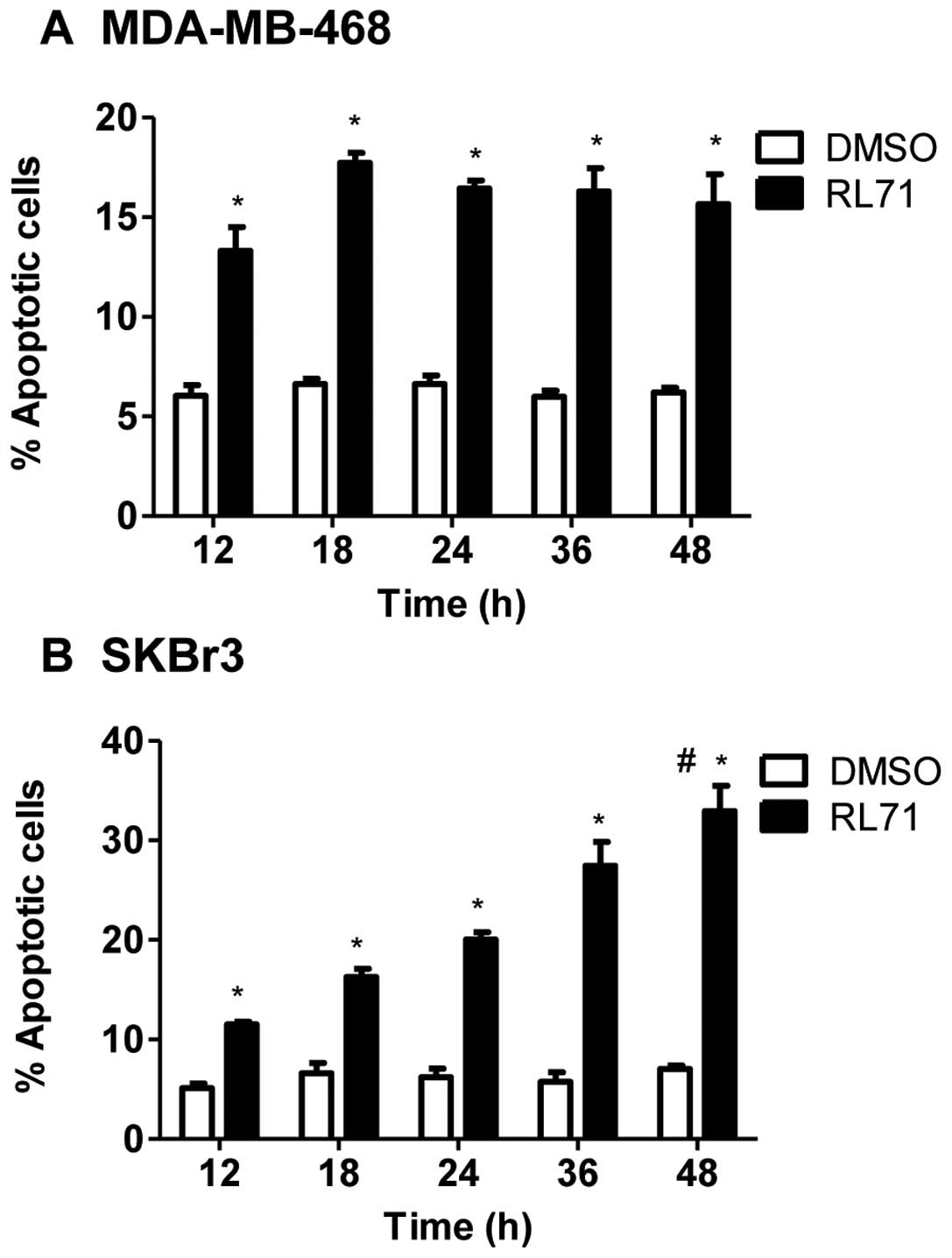
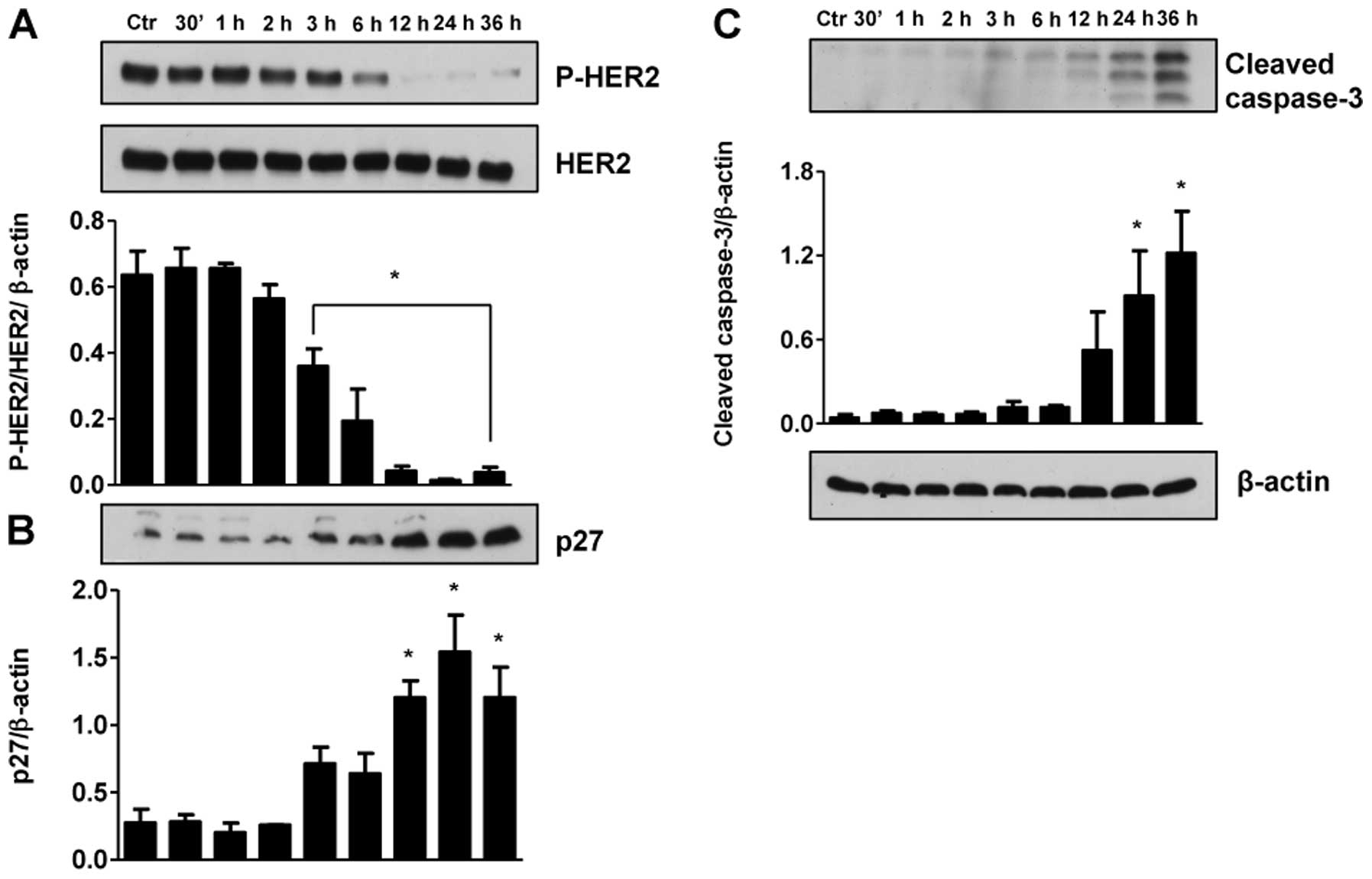
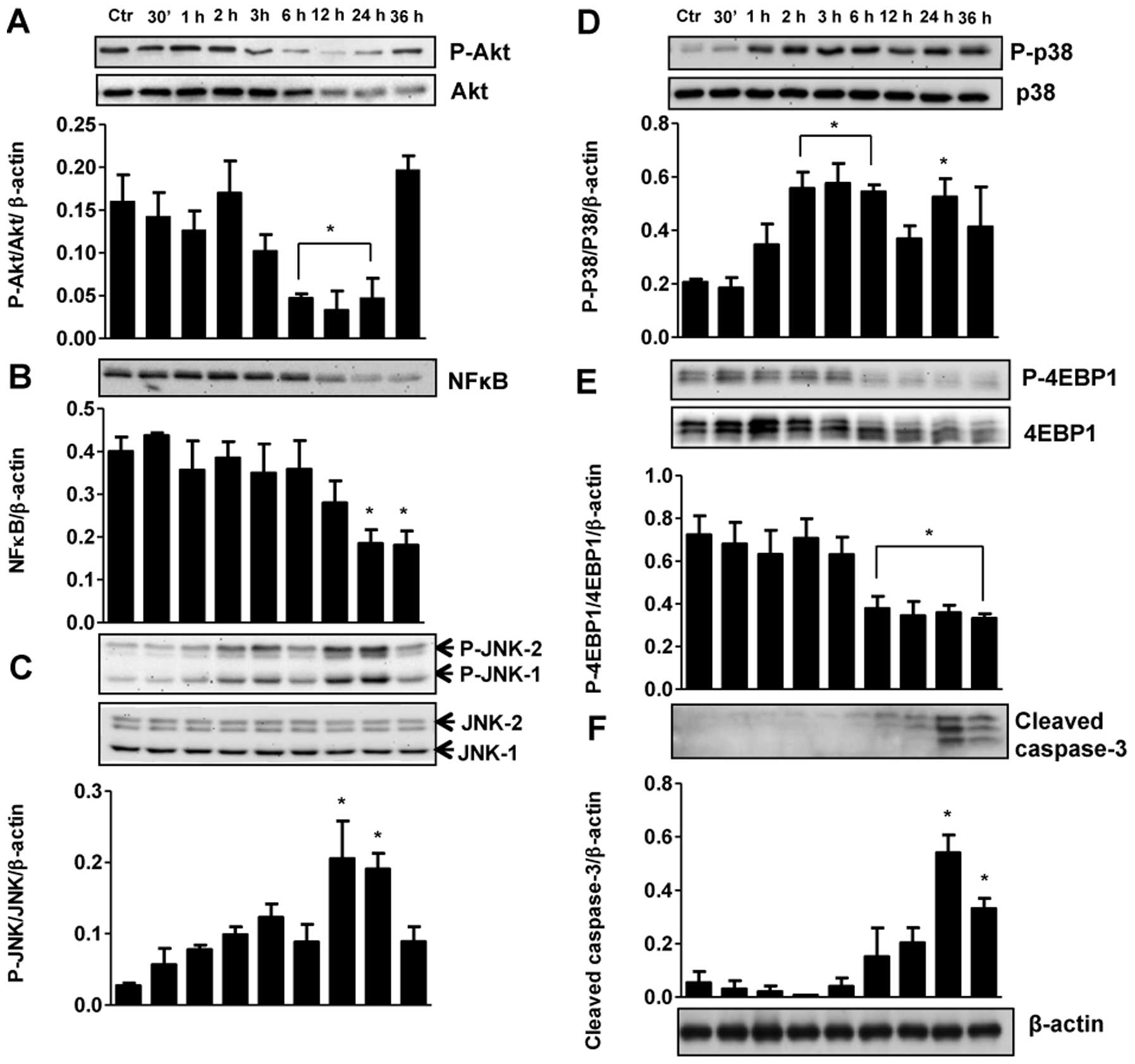
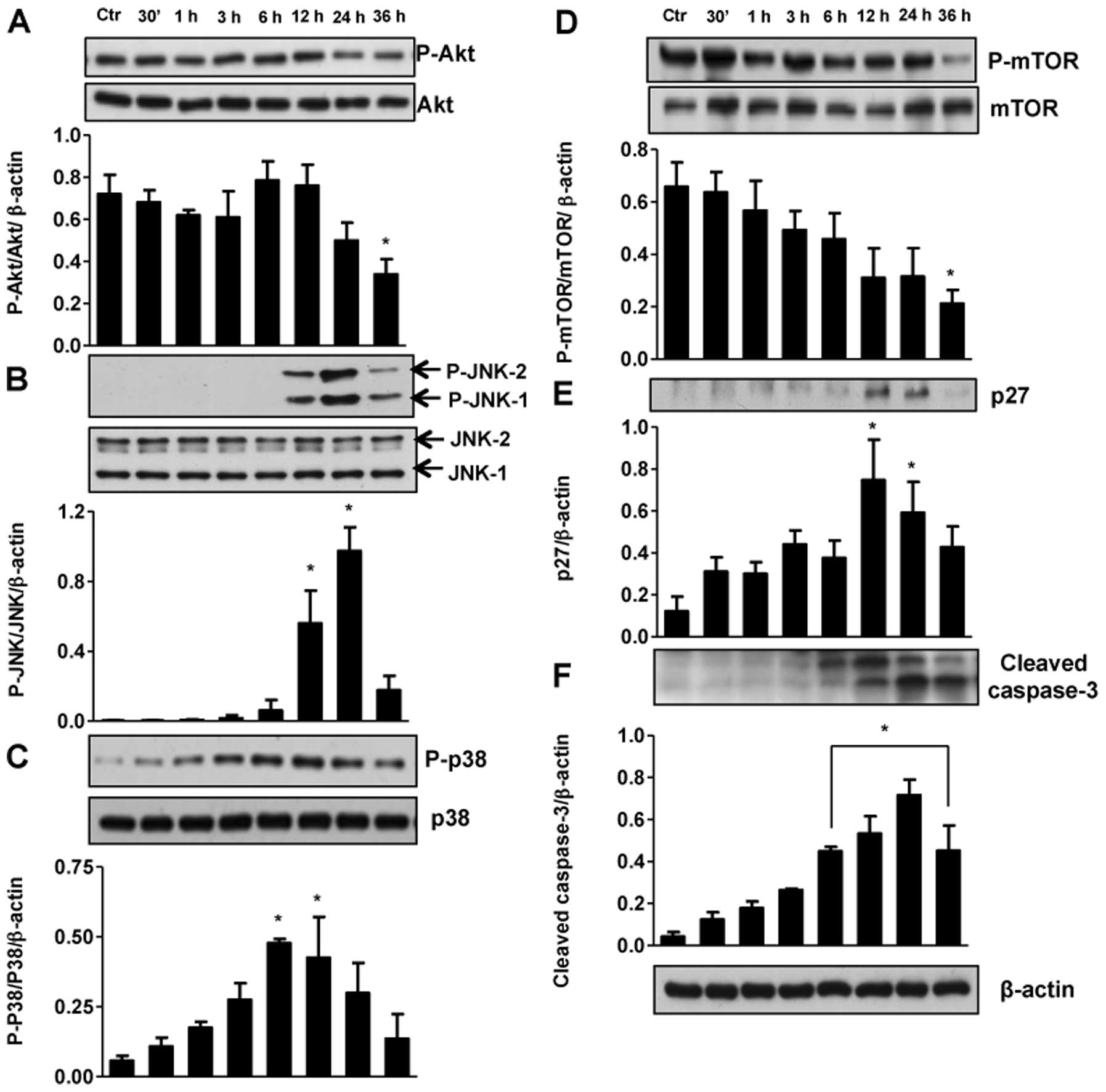
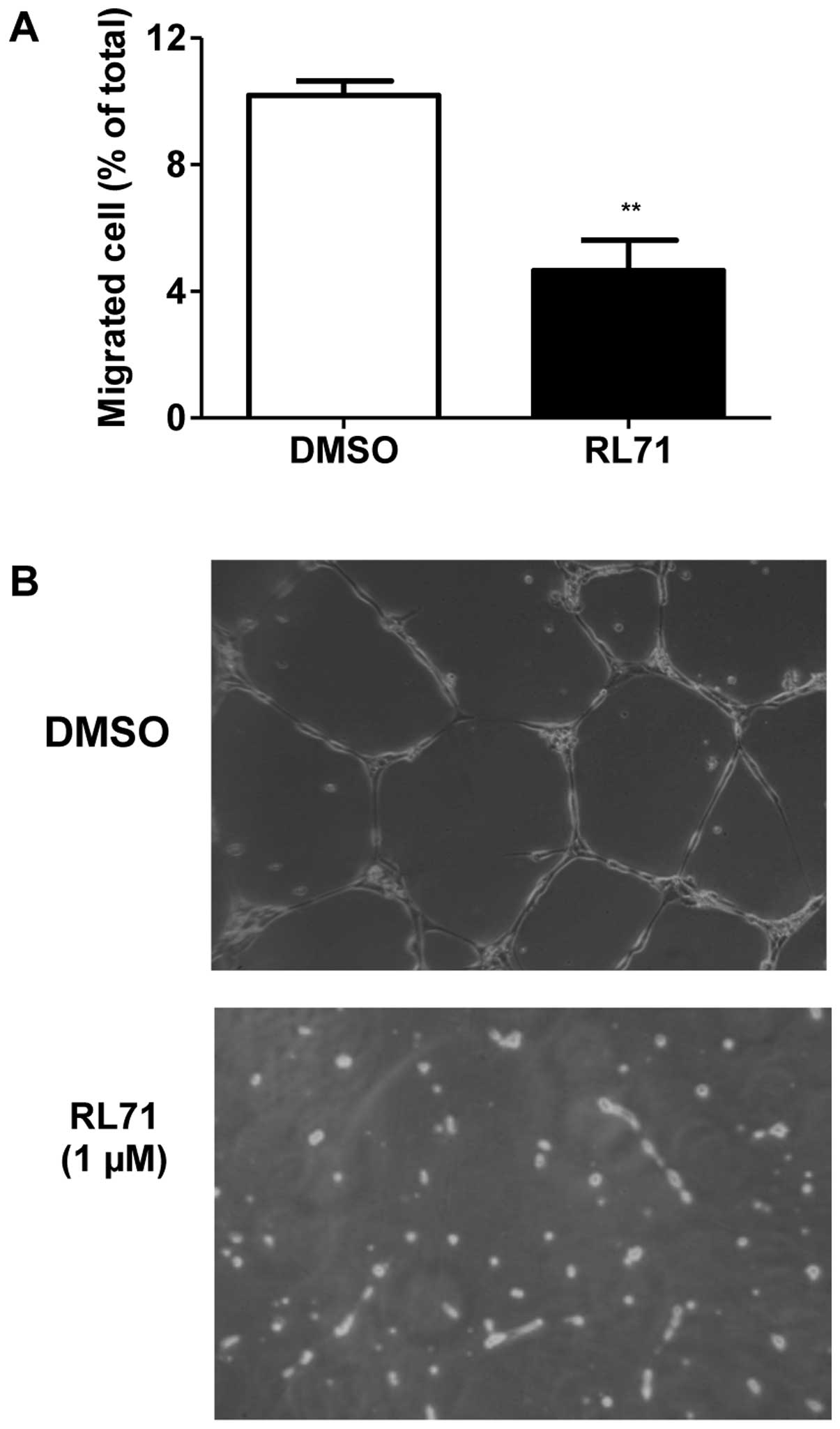
There is a need for the development of new, safe and efficacious drug therapies for the treatment of estrogen receptor (ER)-negative breast cancers. RL71 is a second-generation curcumin analog that exhibits potent cytotoxicity towards a variety of ER-negative breast cancer cells. Therefore, we have further examined the mechanism of this anticancer activity in three different ER-negative breast cancer cell lines. The mechanistic studies demonstrated that RL71 (1 µM) induced cell cycle arrest in the G2/M phase of the cell cycle. Moreover, RL71 (1 µM) caused 35% of SKBr3 cells to undergo apoptosis after 48 h and this effect was time-dependent. This correlated with an increase in cleaved caspase-3 as shown by western blotting. RL71 (1 µM) also decreased HER2/neu phosphorylation and increased p27 in SKBr3 cells. While in MDA-MB-231 and MDA-MB-468 cells RL71 (1 µM) significantly decreased Akt phosphorylation and transiently increased the stress kinases JNK1/2 and p38 MAPK. In addition, RL71 exhibited anti-angiogenic potential in vitro as it inhibited HUVEC cell migration and the ability of these cells to form tube-like networks. RL71 (8.5 mg/kg) was also orally bioavailable as it produced a peak plasma concentration of 0.405 µg/ml, 5 min after oral drug administration. Thus, our findings provide evidence that RL71 has potent anticancer activity and has potential to be further developed as a drug for the treatment of ER-negative breast cancer.
View Figures

Figure 1

Figure 2

Figure 3

Figure 4

Figure 5

Figure 6

Figure 7

Figure 8

View References

1. 

Parl FF, Schmidt BP, Dupont WD and Wagner RK: Prognostic significance of estrogen receptor status in breast cancer in relation to tumor stage, axillary node metastasis, and histopathologic grading. Cancer. 54:2237–2242. 1984. View Article : Google Scholar : PubMed/NCBI

2. 

Doane AS, Danso M, Lal P, Donaton M, Zhang L, Hudis C and Gerald WL: An estrogen receptor-negative breast cancer subset characterized by a hormonally regulated transcriptional program and response to androgen. Oncogene. 25:3994–4008. 2006. View Article : Google Scholar

3. 

Carey LA, Dees EC, Sawyer L, et al: The triple negative paradox: primary tumor chemosensitivity of breast cancer subtypes. Clin Cancer Res. 13:2329–2334. 2007. View Article : Google Scholar : PubMed/NCBI

4. 

Sorlie T, Perou CM, Tibshirani R, et al: Gene expression patterns of breast carcinomas distinguish tumor subclasses with clinical implications. Proc Natl Acad Sci USA. 98:10869–10874. 2001. View Article : Google Scholar : PubMed/NCBI

5. 

Kaplan HG and Malmgren JA: Impact of triple negative phenotype on breast cancer prognosis. Breast J. 14:456–463. 2008. View Article : Google Scholar : PubMed/NCBI

6. 

Anand P, Thomas Sherin G, Kunnumakkara Ajaikumar B, et al: Biological activities of curcumin and its analogues (Congeners) made by man and Mother Nature. Biochem Pharmacol. 76:1590–1611. 2008. View Article : Google Scholar : PubMed/NCBI

7. 

Cheng A-L, Hsu C-H, Lin J-K, et al: Phase I clinical trial of curcumin, a chemopreventive agent, in patients with high-risk or pre-malignant lesions. Anticancer Res. 21:2895–2900. 2001.PubMed/NCBI

8. 

Inano H, Onoda M, Inafuku N, et al: Chemoprevention by curcumin during the promotion stage of tumorigenesis of mammary gland in rats irradiated with gamma-rays. Carcinogenesis. 20:1011–1018. 1999. View Article : Google Scholar : PubMed/NCBI

9. 

Pereira MA, Grubbs CJ, Barnes LH, et al: Effects of the phytochemicals, curcumin and quercetin, upon azoxymethane-induced colon cancer and 7,12-dimethylbenz[a]anthracene-induced mammary cancer in rats. Carcinogenesis. 17:1305–1311. 1996.PubMed/NCBI

10. 

Schaaf C, Shan B, Buchfelder M, et al: Curcumin acts as anti-tumorigenic and hormone-suppressive agent in murine and human pituitary tumour cells in vitro and in vivo. Endocr Relat Cancer. 16:1339–1350. 2009. View Article : Google Scholar : PubMed/NCBI

11. 

Singletary K, MacDonald C, Wallig M and Fisher C: Inhibition of 7,12-dimethylbenz[a]anthracene (DMBA)-induced mammary tumorigenesis and DMBA-DNA adduct formation by curcumin. Cancer Lett. 103:137–141. 1996.

12. 

Chiu T-L and Su C-C: Curcumin inhibits proliferation and migration by increasing the Bax to Bcl-2 ratio and decreasing NF-κBp65 expression in breast cancer MDA-MB-231 cells. Int J Mol Med. 23:469–475. 2009.PubMed/NCBI

13. 

Kang HJ, Lee SH, Price JE and Kim LS: Curcumin suppresses the paclitaxel-induced nuclear factor-κB in breast cancer cells and potentiates the growth inhibitory effect of paclitaxel in a breast cancer nude mice model. Breast J. 15:223–229. 2009.

14. 

Liu Q, Loo WTY, Sze SCW and Tong Y: Curcumin inhibits cell proliferation of MDA-MB-231 and BT-483 breast cancer cells mediated by down-regulation of NFκB, cyclinD and MMP-1 transcription. Phytomed. 16:916–922. 2009.PubMed/NCBI

15. 

Prasad CP, Rath G, Mathur S, Bhatnagar D and Ralhan R: Potent growth suppressive activity of curcumin in human breast cancer cells: Modulation of Wnt/beta-catenin signaling. Chem Biol Interact. 181:263–271. 2009. View Article : Google Scholar : PubMed/NCBI

16. 

Rowe DL, Ozbay T, O’Regan RM and Nahta R: Modulation of the BRCA1 protein and induction of apoptosis in triple negative breast cancer cell lines by the polyphenolic compound curcumin. Breast Cancer Basic Clin Res. 3:61–75. 2009.PubMed/NCBI

17. 

Somers-Edgar TJ, Scandlyn MJ, Stuart EC, Le Nedelec MJ, Valentine SP and Rosengren RJ: The combination of epigallocatechin gallate and curcumin suppresses ERalpha-breast cancer cell growth in vitro and in vivo. Int J Cancer. 122:1966–1971. 2008. View Article : Google Scholar : PubMed/NCBI

18. 

Wu X and Wu K: Antiproliferative effect of curcumin on human breast cancer of MCF-7 cells. Di-San Junyi Daxue Xuebao. 28:1870–1872. 2006.

19. 

Liang G, Shao L, Wang Y, et al: Exploration and synthesis of curcumin analogues with improved structural stability both in vitro and in vivo as cytotoxic agents. Bioorg Med Chem. 17:2623–2631. 2009. View Article : Google Scholar : PubMed/NCBI

20. 

Markaverich BM, Schauweker TH, Gregory RR, Varma M, Kittrell FS, Medina D and Varma RS: Nuclear type II sites and malignant cell proliferation: inhibition by 2,6-bis-benzylidenecyclohexanones. Cancer Res. 52:2482–2488. 1992.PubMed/NCBI

21. 

Adams BK, Ferstl EM, Davis MC, et al: Synthesis and biological evaluation of novel curcumin analogs as anti-cancer and anti-angiogenesis agents. Bioorg Med Chem. 12:3871–3883. 2004. View Article : Google Scholar : PubMed/NCBI

22. 

Adams Brian K, Cai J, Armstrong J, et al: EF24, a novel synthetic curcumin analog, induces apoptosis in cancer cells via a redox-dependent mechanism. Anticancer Drugs. 16:263–275. 2005.PubMed/NCBI

23. 

Yadav B, Taurin S, Rosengren RJ, Schumacher M, Diederich M, Somers-Edgar TJ and Larsen L: Synthesis and cytotoxic potential of heterocyclic cyclohexanone analogues of curcumin. Bioorg Med Chem. 18:6701–6707. 2010. View Article : Google Scholar : PubMed/NCBI

24. 

Skehan P, Storeng R, Scudiero D, et al: New colorimetric cytotoxicity assay for anti-cancer drug screening. J Natl Cancer Inst. 82:1107–1112. 1990. View Article : Google Scholar : PubMed/NCBI

25. 

Somers-Edgar TJ, Taurin S, Larsen L, Chandramouli A, Nelson MA and Rosengren RJ: Mechanisms for the activity of heterocyclic cyclohexanone curcumin derivatives in estrogen receptor negative human breast cancer cell lines. Invest New Drugs. 29:87–97. 2011. View Article : Google Scholar

26. 

Stuart EC and Rosengren RJ: The combination of raloxifene and epigallocatechin gallate suppresses growth and induces apoptosis in MDA-MB-231 cells. Life Sci. 82:943–948. 2008. View Article : Google Scholar : PubMed/NCBI

27. 

Wang SC and Hung MC: HER2 overexpression and cancer targeting. Semin Oncol. 28:115–124. 2001. View Article : Google Scholar : PubMed/NCBI

28. 

Hsieh WT, Huang KY, Lin HY and Chung JG: Physalis angulata induced G2/M phase arrest in human breast cancer cells. Food Chem Toxicol. 44:974–983. 2006. View Article : Google Scholar : PubMed/NCBI

29. 

Hsu JD, Kao SH, Ou TT, Chen YJ, Li YJ and Wang CJ: Gallic acid induces G2/M phase arrest of breast cancer cell MCF-7 through stabilization of p27(Kip1) attributed to disruption of p27(Kip1)/Skp2 complex. J Agric Food Chem. 59:1996–2003. 2011. View Article : Google Scholar : PubMed/NCBI

30. 

Santen RJ, Song RX, McPherson R, Kumar R, Adam L, Jeng MH and Yue W: The role of mitogen-activated protein (MAP) kinase in breast cancer. J Steroid Biochem Mol Biol. 80:239–256. 2002. View Article : Google Scholar : PubMed/NCBI

31. 

Wada T and Penninger JM: Mitogen-activated protein kinases in apoptosis regulation. Oncogene. 23:2838–2849. 2004. View Article : Google Scholar : PubMed/NCBI

32. 

Liu B, Han M, Sun RH, Wang JJ, Zhang YP, Zhang DQ and Wen JK: ABL-N-induced apoptosis in human breast cancer cells is partially mediated by c-Jun NH2-terminal kinase activation. Breast Cancer Res. 12:R92010. View Article : Google Scholar : PubMed/NCBI

33. 

Kuo PL, Chen CY and Hsu YL: Isoobtusilactone a induces cell cycle arrest and apoptosis through reactive oxygen species/apoptosis signal-regulating kinase 1 signaling pathway in human breast cancer cells. Cancer Res. 67:7406–7420. 2007. View Article : Google Scholar

34. 

Collett GP and Campbell FC: Curcumin induces c-jun N-terminal kinase-dependent apoptosis in HCT116 human colon cancer cells. Carcinogenesis. 25:2183–2189. 2004. View Article : Google Scholar : PubMed/NCBI

35. 

Weir NM, Selvendiran K, Kutala VK, et al: Curcumin induces G2/M arrest and apoptosis in cisplatin-resistant human ovarian cancer cells by modulating Akt and p38 MAPK. Cancer Biol Ther. 6:178–184. 2007. View Article : Google Scholar : PubMed/NCBI

36. 

Eto I: Nutritional and chemopreventive anti-cancer agents up-regulate expression of p27Kip1, a cyclin-dependent kinase inhibitor, in mouse JB6 epidermal and human MCF7, MDA-MB-321 and AU565 breast cancer cells. Cancer Cell Int. 6:202006. View Article : Google Scholar : PubMed/NCBI

37. 

Dillon RL, White DE and Muller WJ: The phosphatidyl inositol 3-kinase signaling network: implications for human breast cancer. Oncogene. 26:1338–1345. 2007. View Article : Google Scholar : PubMed/NCBI

38. 

Vivanco I and Sawyers CL: The phosphatidylinositol 3-kinase AKT pathway in human cancer. Nat Rev Cancer. 2:489–501. 2002. View Article : Google Scholar : PubMed/NCBI

39. 

Burow ME, Weldon CB, Melnik LI, Duong BN, Collins-Burow BM, Beckman BS and McLachlan JA: PI3-K/AKT regulation of NF-kappaB signaling events in suppression of TNF-induced apoptosis. Biochem Biophys Res Commun. 271:342–345. 2000. View Article : Google Scholar : PubMed/NCBI

40. 

Gong L, Li Y, Nedeljkovic-Kurepa A and Sarkar FH: Inactivation of NF-kappaB by genistein is mediated via Akt signaling pathway in breast cancer cells. Oncogene. 22:4702–4709. 2003. View Article : Google Scholar : PubMed/NCBI

41. 

Barkett M and Gilmore TD: Control of apoptosis by Rel/NF-kappaB transcription factors. Oncogene. 18:6910–6924. 1999. View Article : Google Scholar : PubMed/NCBI

42. 

Lauder A, Castellanos A and Weston K: c-Myb transcription is activated by protein kinase B (PKB) following interleukin 2 stimulation of T cells and is required for PKB-mediated protection from apoptosis. Mol Cell Biol. 21:5797–5805. 2001. View Article : Google Scholar : PubMed/NCBI

43. 

Shehzad A, Wahid F and Lee YS: Curcumin in cancer chemoprevention: molecular targets, pharmacokinetics, bioavailability, and clinical trials. Arch Pharm. 343:489–499. 2010. View Article : Google Scholar : PubMed/NCBI

44. 

Dhandapani KM, Mahesh VB and Brann DW: Curcumin suppresses growth and chemoresistance of human glioblastoma cells via AP-1 and NFkappaB transcription factors. J Neurochem. 102:522–538. 2007. View Article : Google Scholar : PubMed/NCBI

45. 

Kasinski AL, Du Y, Thomas SL, et al: Inhibition of IkappaB kinase-nuclear factor-kappaB signaling pathway by 3,5-bis(2-flurobenzylidene)piperidin-4-one (EF24), a novel monoketone analog of curcumin. Mol Pharmacol. 74:654–661. 2008. View Article : Google Scholar : PubMed/NCBI

46. 

Al-Hujaily EM, Mohamed AG, Al-Sharif I, et al: PAC, a novel curcumin analogue, has anti-breast cancer properties with higher efficiency on Er-negative cells. Breast Cancer Res Treat. 128:97–107. 2010. View Article : Google Scholar : PubMed/NCBI

47. 

Hutzen B, Friedman L, Sobo M, et al: Curcumin analogue GO-Y030 inhibits STAT3 activity and cell growth in breast and pancreatic carcinomas. Int J Oncol. 35:867–872. 2009.PubMed/NCBI

48. 

Kumar AP, Garcia GE, Ghosh R, Rajnarayanan RV, Alworth WL and Slaga TJ: 4-Hydroxy-3-methoxybenzoic acid methyl ester: a curcumin derivative targets Akt/NF kappa B cell survival signaling pathway: potential for prostate cancer management. Neoplasia. 5:255–266. 2003. View Article : Google Scholar : PubMed/NCBI

49. 

Lin L, Hutzen B, Ball S, et al: New curcumin analogues exhibit enhanced growth-suppressive activity and inhibit AKT and signal transducer and activator of transcription 3 phosphorylation in breast and prostate cancer cells. Cancer Sci. 100:1719–1727. 2009. View Article : Google Scholar : PubMed/NCBI

50. 

Anand P, Kunnumakkara AB, Newman RA and Aggarwal BB: Bioavailability of curcumin: problems and promises. Mol Pharm. 4:807–818. 2007. View Article : Google Scholar : PubMed/NCBI

Related Articles

  • Abstract
  • View
  • Download
  • Twitter
Copy and paste a formatted citation
Spandidos Publications style
Yadav B, Taurin S, Larsen L and Rosengren RJ: RL71, a second-generation curcumin analog, induces apoptosis and downregulates Akt in ER-negative breast cancer cells. Int J Oncol 41: 1119-1127, 2012.
APA
Yadav, B., Taurin, S., Larsen, L., & Rosengren, R.J. (2012). RL71, a second-generation curcumin analog, induces apoptosis and downregulates Akt in ER-negative breast cancer cells. International Journal of Oncology, 41, 1119-1127. https://doi.org/10.3892/ijo.2012.1521
MLA
Yadav, B., Taurin, S., Larsen, L., Rosengren, R. J."RL71, a second-generation curcumin analog, induces apoptosis and downregulates Akt in ER-negative breast cancer cells". International Journal of Oncology 41.3 (2012): 1119-1127.
Chicago
Yadav, B., Taurin, S., Larsen, L., Rosengren, R. J."RL71, a second-generation curcumin analog, induces apoptosis and downregulates Akt in ER-negative breast cancer cells". International Journal of Oncology 41, no. 3 (2012): 1119-1127. https://doi.org/10.3892/ijo.2012.1521
Copy and paste a formatted citation
x
Spandidos Publications style
Yadav B, Taurin S, Larsen L and Rosengren RJ: RL71, a second-generation curcumin analog, induces apoptosis and downregulates Akt in ER-negative breast cancer cells. Int J Oncol 41: 1119-1127, 2012.
APA
Yadav, B., Taurin, S., Larsen, L., & Rosengren, R.J. (2012). RL71, a second-generation curcumin analog, induces apoptosis and downregulates Akt in ER-negative breast cancer cells. International Journal of Oncology, 41, 1119-1127. https://doi.org/10.3892/ijo.2012.1521
MLA
Yadav, B., Taurin, S., Larsen, L., Rosengren, R. J."RL71, a second-generation curcumin analog, induces apoptosis and downregulates Akt in ER-negative breast cancer cells". International Journal of Oncology 41.3 (2012): 1119-1127.
Chicago
Yadav, B., Taurin, S., Larsen, L., Rosengren, R. J."RL71, a second-generation curcumin analog, induces apoptosis and downregulates Akt in ER-negative breast cancer cells". International Journal of Oncology 41, no. 3 (2012): 1119-1127. https://doi.org/10.3892/ijo.2012.1521
Follow us
  • Twitter
  • LinkedIn
  • Facebook
About
  • Spandidos Publications
  • Careers
  • Cookie Policy
  • Privacy Policy
How can we help?
  • Help
  • Live Chat
  • Contact
  • Email to our Support Team