Spandidos Publications Logo
  • About
    • About Spandidos
    • Aims and Scopes
    • Abstracting and Indexing
    • Editorial Policies
    • Reprints and Permissions
    • Job Opportunities
    • Terms and Conditions
    • Contact
  • Journals
    • All Journals
    • Oncology Letters
      • Oncology Letters
      • Information for Authors
      • Editorial Policies
      • Editorial Board
      • Aims and Scope
      • Abstracting and Indexing
      • Bibliographic Information
      • Archive
    • International Journal of Oncology
      • International Journal of Oncology
      • Information for Authors
      • Editorial Policies
      • Editorial Board
      • Aims and Scope
      • Abstracting and Indexing
      • Bibliographic Information
      • Archive
    • Molecular and Clinical Oncology
      • Molecular and Clinical Oncology
      • Information for Authors
      • Editorial Policies
      • Editorial Board
      • Aims and Scope
      • Abstracting and Indexing
      • Bibliographic Information
      • Archive
    • Experimental and Therapeutic Medicine
      • Experimental and Therapeutic Medicine
      • Information for Authors
      • Editorial Policies
      • Editorial Board
      • Aims and Scope
      • Abstracting and Indexing
      • Bibliographic Information
      • Archive
    • International Journal of Molecular Medicine
      • International Journal of Molecular Medicine
      • Information for Authors
      • Editorial Policies
      • Editorial Board
      • Aims and Scope
      • Abstracting and Indexing
      • Bibliographic Information
      • Archive
    • Biomedical Reports
      • Biomedical Reports
      • Information for Authors
      • Editorial Policies
      • Editorial Board
      • Aims and Scope
      • Abstracting and Indexing
      • Bibliographic Information
      • Archive
    • Oncology Reports
      • Oncology Reports
      • Information for Authors
      • Editorial Policies
      • Editorial Board
      • Aims and Scope
      • Abstracting and Indexing
      • Bibliographic Information
      • Archive
    • Molecular Medicine Reports
      • Molecular Medicine Reports
      • Information for Authors
      • Editorial Policies
      • Editorial Board
      • Aims and Scope
      • Abstracting and Indexing
      • Bibliographic Information
      • Archive
    • World Academy of Sciences Journal
      • World Academy of Sciences Journal
      • Information for Authors
      • Editorial Policies
      • Editorial Board
      • Aims and Scope
      • Abstracting and Indexing
      • Bibliographic Information
      • Archive
    • International Journal of Functional Nutrition
      • International Journal of Functional Nutrition
      • Information for Authors
      • Editorial Policies
      • Editorial Board
      • Aims and Scope
      • Abstracting and Indexing
      • Bibliographic Information
      • Archive
    • International Journal of Epigenetics
      • International Journal of Epigenetics
      • Information for Authors
      • Editorial Policies
      • Editorial Board
      • Aims and Scope
      • Abstracting and Indexing
      • Bibliographic Information
      • Archive
    • Medicine International
      • Medicine International
      • Information for Authors
      • Editorial Policies
      • Editorial Board
      • Aims and Scope
      • Abstracting and Indexing
      • Bibliographic Information
      • Archive
  • Articles
  • Information
    • Information for Authors
    • Information for Reviewers
    • Information for Librarians
    • Information for Advertisers
    • Conferences
  • Language Editing
Spandidos Publications Logo
  • About
    • About Spandidos
    • Aims and Scopes
    • Abstracting and Indexing
    • Editorial Policies
    • Reprints and Permissions
    • Job Opportunities
    • Terms and Conditions
    • Contact
  • Journals
    • All Journals
    • Biomedical Reports
      • Information for Authors
      • Editorial Policies
      • Editorial Board
      • Aims and Scope
      • Abstracting and Indexing
      • Bibliographic Information
      • Archive
    • Experimental and Therapeutic Medicine
      • Information for Authors
      • Editorial Policies
      • Editorial Board
      • Aims and Scope
      • Abstracting and Indexing
      • Bibliographic Information
      • Archive
    • International Journal of Epigenetics
      • Information for Authors
      • Editorial Policies
      • Editorial Board
      • Aims and Scope
      • Abstracting and Indexing
      • Bibliographic Information
      • Archive
    • International Journal of Functional Nutrition
      • Information for Authors
      • Editorial Policies
      • Editorial Board
      • Aims and Scope
      • Abstracting and Indexing
      • Bibliographic Information
      • Archive
    • International Journal of Molecular Medicine
      • Information for Authors
      • Editorial Policies
      • Editorial Board
      • Aims and Scope
      • Abstracting and Indexing
      • Bibliographic Information
      • Archive
    • International Journal of Oncology
      • Information for Authors
      • Editorial Policies
      • Editorial Board
      • Aims and Scope
      • Abstracting and Indexing
      • Bibliographic Information
      • Archive
    • Medicine International
      • Information for Authors
      • Editorial Policies
      • Editorial Board
      • Aims and Scope
      • Abstracting and Indexing
      • Bibliographic Information
      • Archive
    • Molecular and Clinical Oncology
      • Information for Authors
      • Editorial Policies
      • Editorial Board
      • Aims and Scope
      • Abstracting and Indexing
      • Bibliographic Information
      • Archive
    • Molecular Medicine Reports
      • Information for Authors
      • Editorial Policies
      • Editorial Board
      • Aims and Scope
      • Abstracting and Indexing
      • Bibliographic Information
      • Archive
    • Oncology Letters
      • Information for Authors
      • Editorial Policies
      • Editorial Board
      • Aims and Scope
      • Abstracting and Indexing
      • Bibliographic Information
      • Archive
    • Oncology Reports
      • Information for Authors
      • Editorial Policies
      • Editorial Board
      • Aims and Scope
      • Abstracting and Indexing
      • Bibliographic Information
      • Archive
    • World Academy of Sciences Journal
      • Information for Authors
      • Editorial Policies
      • Editorial Board
      • Aims and Scope
      • Abstracting and Indexing
      • Bibliographic Information
      • Archive
  • Articles
  • Information
    • For Authors
    • For Reviewers
    • For Librarians
    • For Advertisers
    • Conferences
  • Language Editing
Login Register Submit
  • This site uses cookies
  • You can change your cookie settings at any time by following the instructions in our Cookie Policy. To find out more, you may read our Privacy Policy.

    I agree
Search articles by DOI, keyword, author or affiliation
Search
Advanced Search
presentation
International Journal of Oncology
Join Editorial Board Propose a Special Issue
Print ISSN: 1019-6439 Online ISSN: 1791-2423
Journal Cover
December 2012 Volume 41 Issue 6

Full Size Image

Cover Legend PDF

Sign up for eToc alerts
Recommend to Library

Journals

International Journal of Molecular Medicine

International Journal of Molecular Medicine

International Journal of Molecular Medicine is an international journal devoted to molecular mechanisms of human disease.

International Journal of Oncology

International Journal of Oncology

International Journal of Oncology is an international journal devoted to oncology research and cancer treatment.

Molecular Medicine Reports

Molecular Medicine Reports

Covers molecular medicine topics such as pharmacology, pathology, genetics, neuroscience, infectious diseases, molecular cardiology, and molecular surgery.

Oncology Reports

Oncology Reports

Oncology Reports is an international journal devoted to fundamental and applied research in Oncology.

Experimental and Therapeutic Medicine

Experimental and Therapeutic Medicine

Experimental and Therapeutic Medicine is an international journal devoted to laboratory and clinical medicine.

Oncology Letters

Oncology Letters

Oncology Letters is an international journal devoted to Experimental and Clinical Oncology.

Biomedical Reports

Biomedical Reports

Explores a wide range of biological and medical fields, including pharmacology, genetics, microbiology, neuroscience, and molecular cardiology.

Molecular and Clinical Oncology

Molecular and Clinical Oncology

International journal addressing all aspects of oncology research, from tumorigenesis and oncogenes to chemotherapy and metastasis.

World Academy of Sciences Journal

World Academy of Sciences Journal

Multidisciplinary open-access journal spanning biochemistry, genetics, neuroscience, environmental health, and synthetic biology.

International Journal of Functional Nutrition

International Journal of Functional Nutrition

Open-access journal combining biochemistry, pharmacology, immunology, and genetics to advance health through functional nutrition.

International Journal of Epigenetics

International Journal of Epigenetics

Publishes open-access research on using epigenetics to advance understanding and treatment of human disease.

Medicine International

Medicine International

An International Open Access Journal Devoted to General Medicine.

Journal Cover
December 2012 Volume 41 Issue 6

Full Size Image

Cover Legend PDF

Sign up for eToc alerts
Recommend to Library

  • Article
  • Citations
    • Cite This Article
    • Download Citation
    • Create Citation Alert
    • Remove Citation Alert
    • Cited By
  • Similar Articles
    • Related Articles (in Spandidos Publications)
    • Similar Articles (Google Scholar)
    • Similar Articles (PubMed)
  • Download PDF
  • Download XML
  • View XML
Article

ERK-modulated intrinsic signaling and G2/M phase arrest contribute to the induction of apoptotic death by allyl isothiocyanate in MDA-MB-468 human breast adenocarcinoma cells

  • Authors:
    • Shih-Chang Tsai
    • Wen-Wen Huang
    • Wei-Chien Huang
    • Chi-Cheng Lu
    • Jo-Hua Chiang
    • Shu-Fen Peng
    • Jing-Gung Chung
    • Yu-Hsin Lin
    • Yuan-Man Hsu
    • Sakae Amagaya
    • Jai-Sing Yang
  • View Affiliations / Copyright

    Affiliations: Department of Biological Science and Technology, China Medical University, Taichung 404, Taiwan, R.O.C., Department of Graduate Institute of Cancer Biology, China Medical University, Taichung 404, Taiwan, R.O.C., Department of Life Sciences, National Chung Hsing University, Taichung 402, Taiwan, R.O.C., Tsuzuki Institute for Traditional Medicine, China Medical University, Taichung 404, Taiwan, R.O.C., Department of Pharmacology, China Medical University, Taichung 404, Taiwan, R.O.C.
  • Pages: 2065-2072
    |
    Published online on: September 24, 2012
       https://doi.org/10.3892/ijo.2012.1640
  • Expand metrics +
Metrics: Total Views: 0 (Spandidos Publications: | PMC Statistics: )
Metrics: Total PDF Downloads: 0 (Spandidos Publications: | PMC Statistics: )
Cited By (CrossRef): 0 citations Loading Articles...

This article is mentioned in:


Abstract

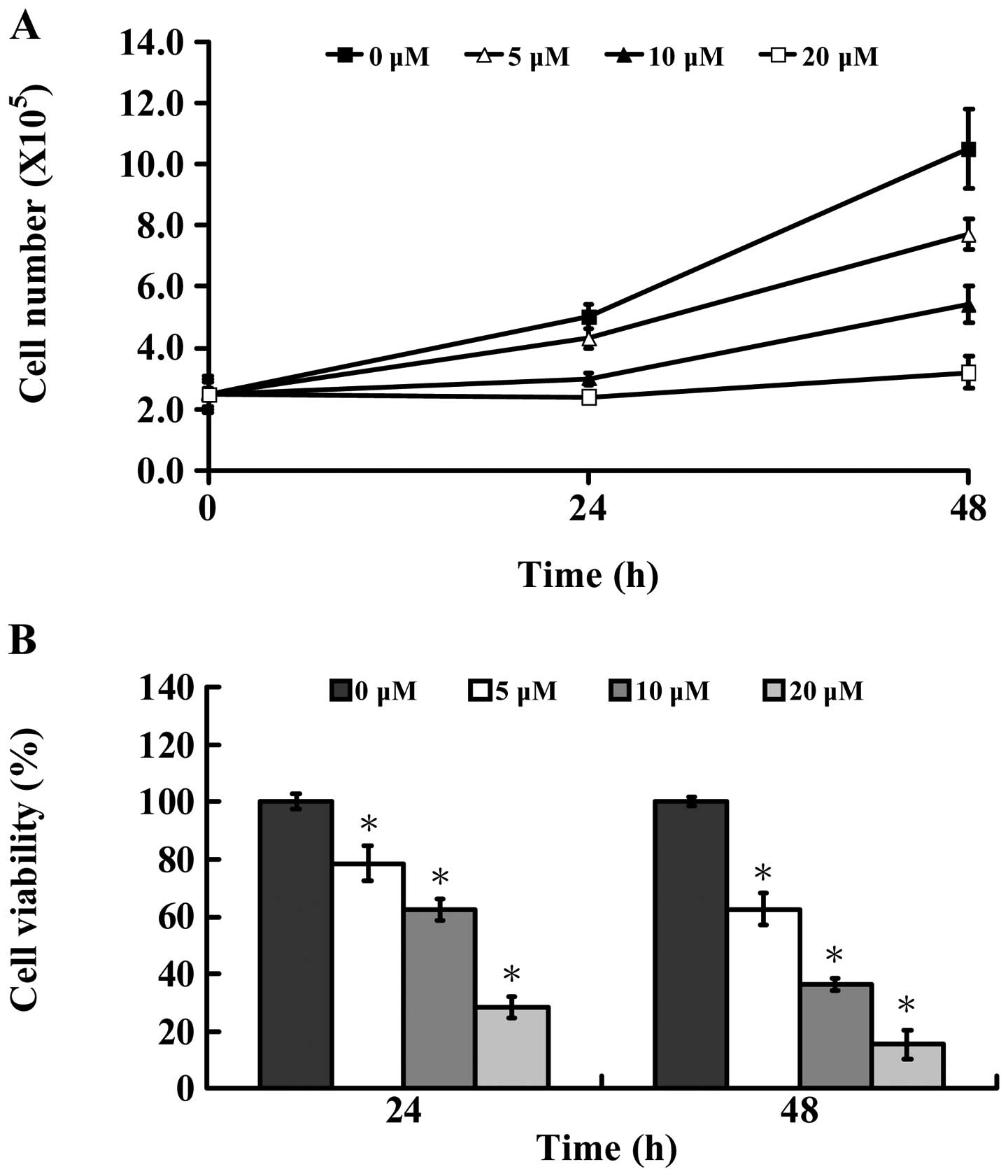
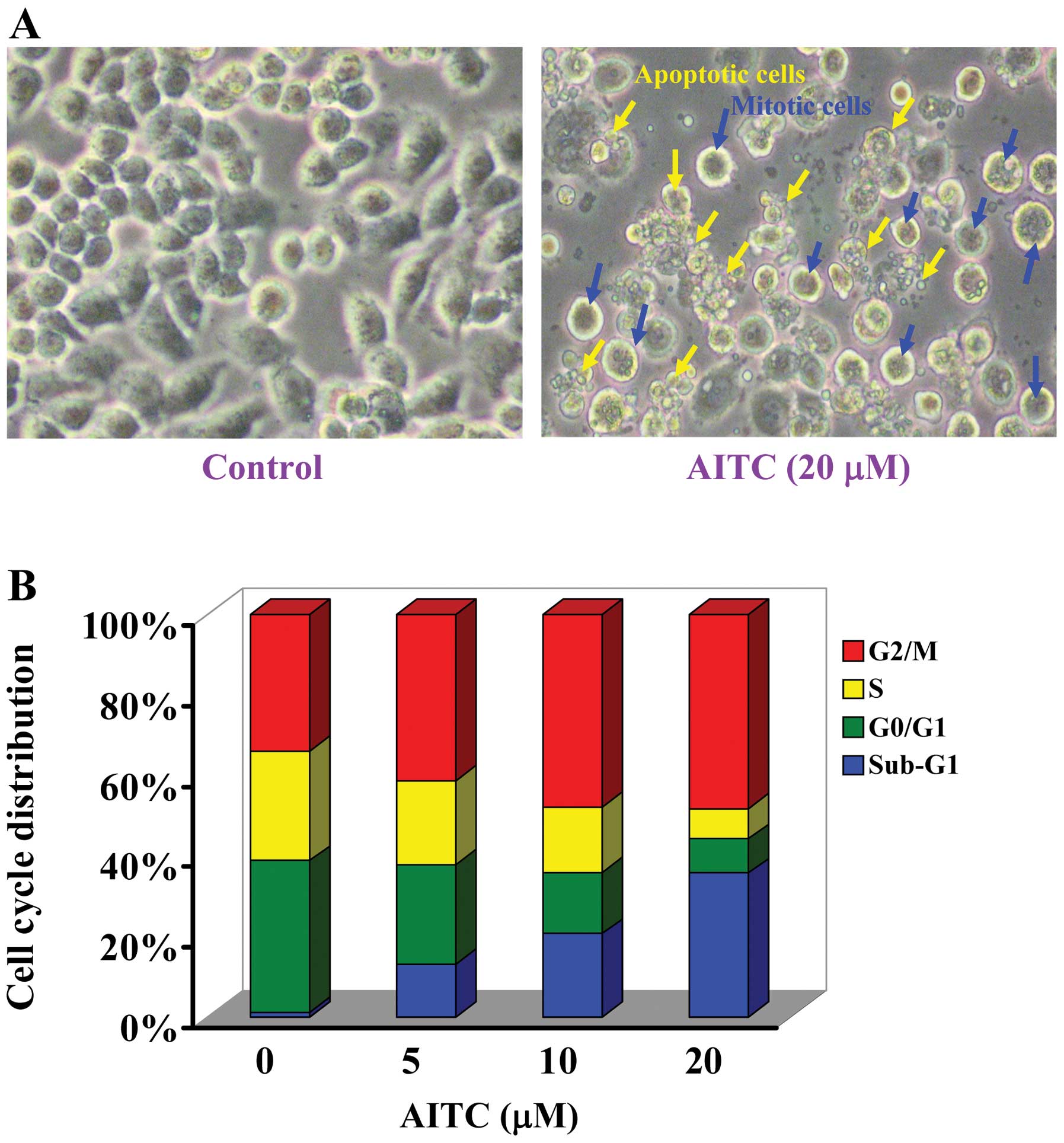
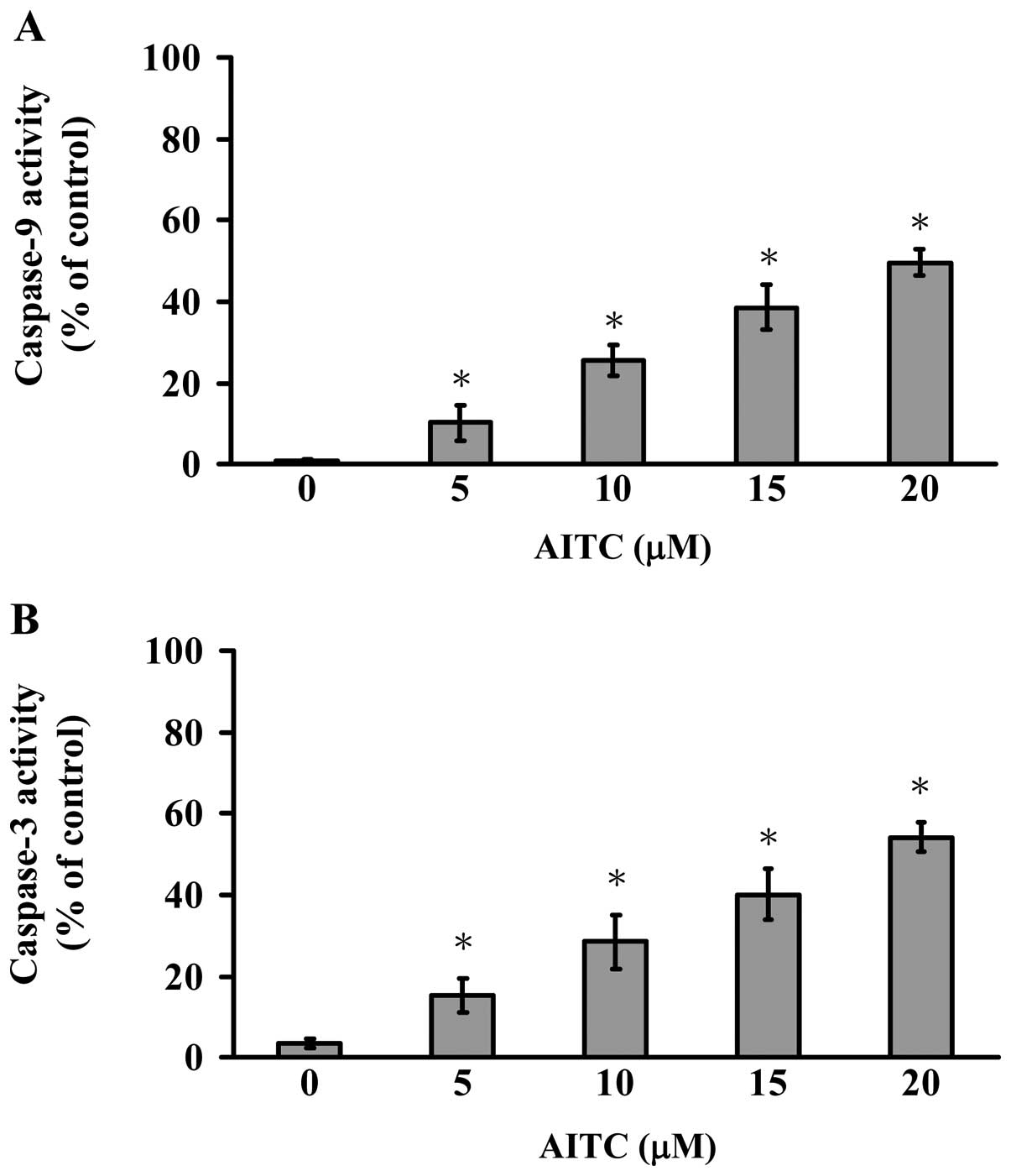
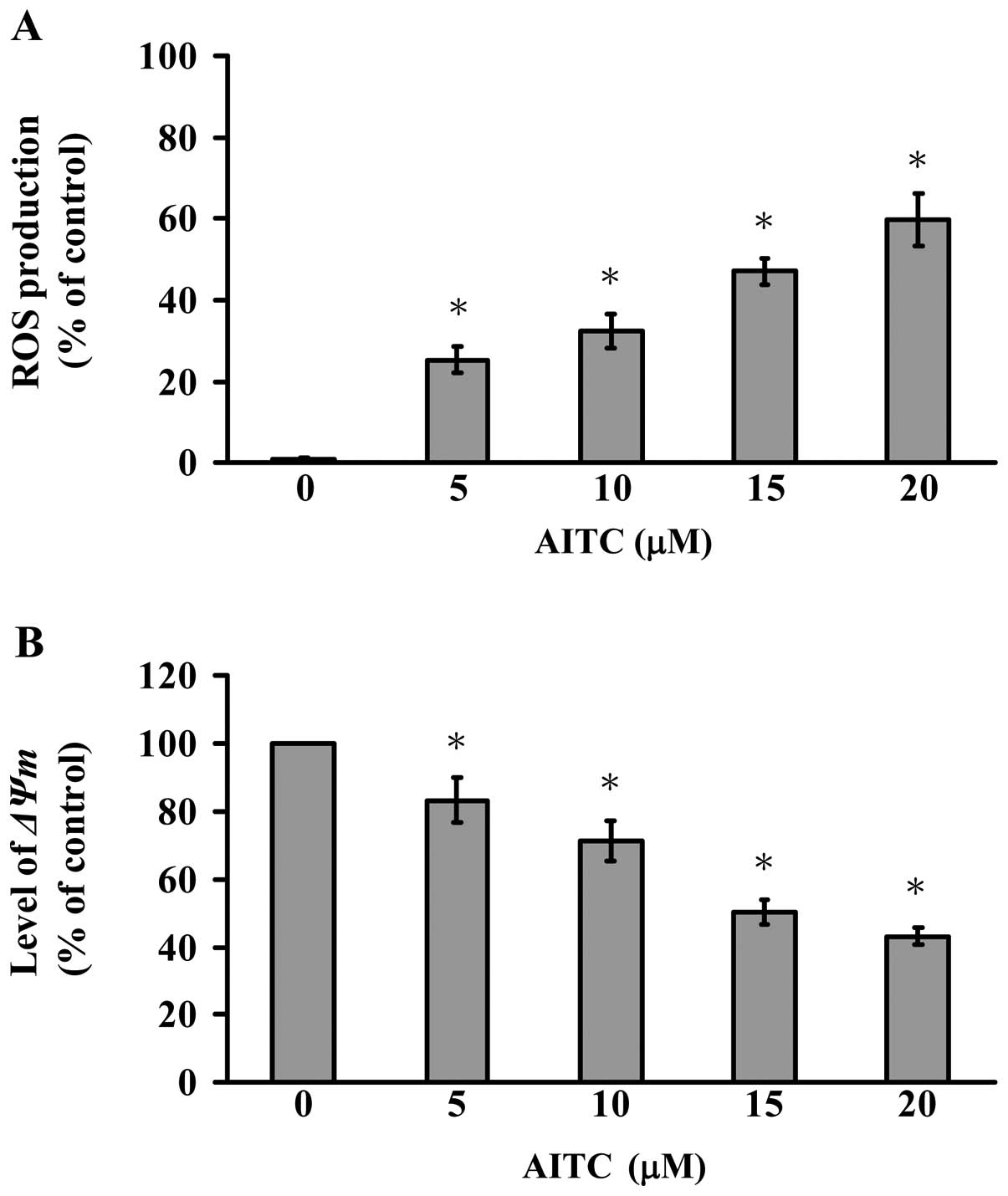
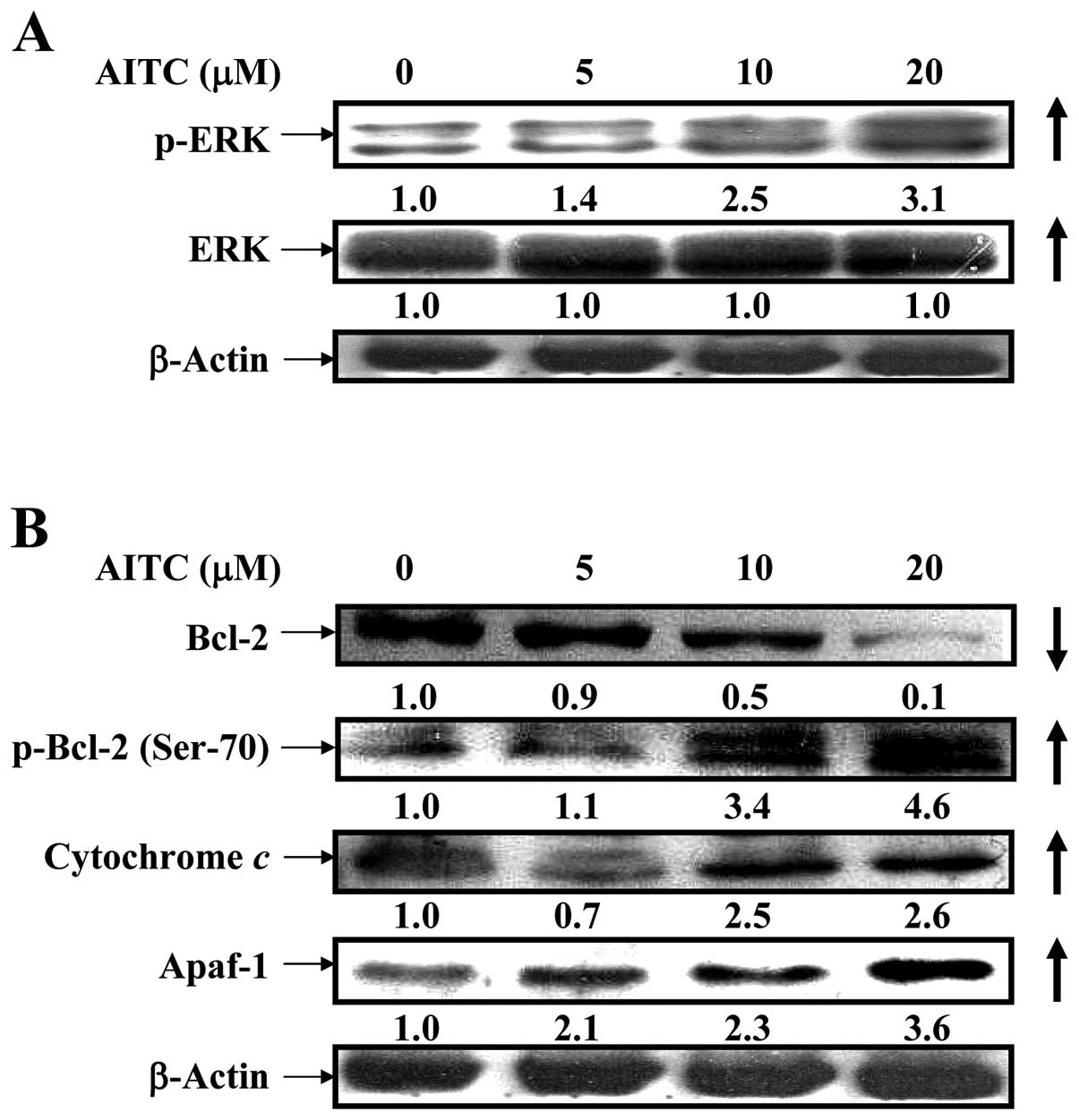
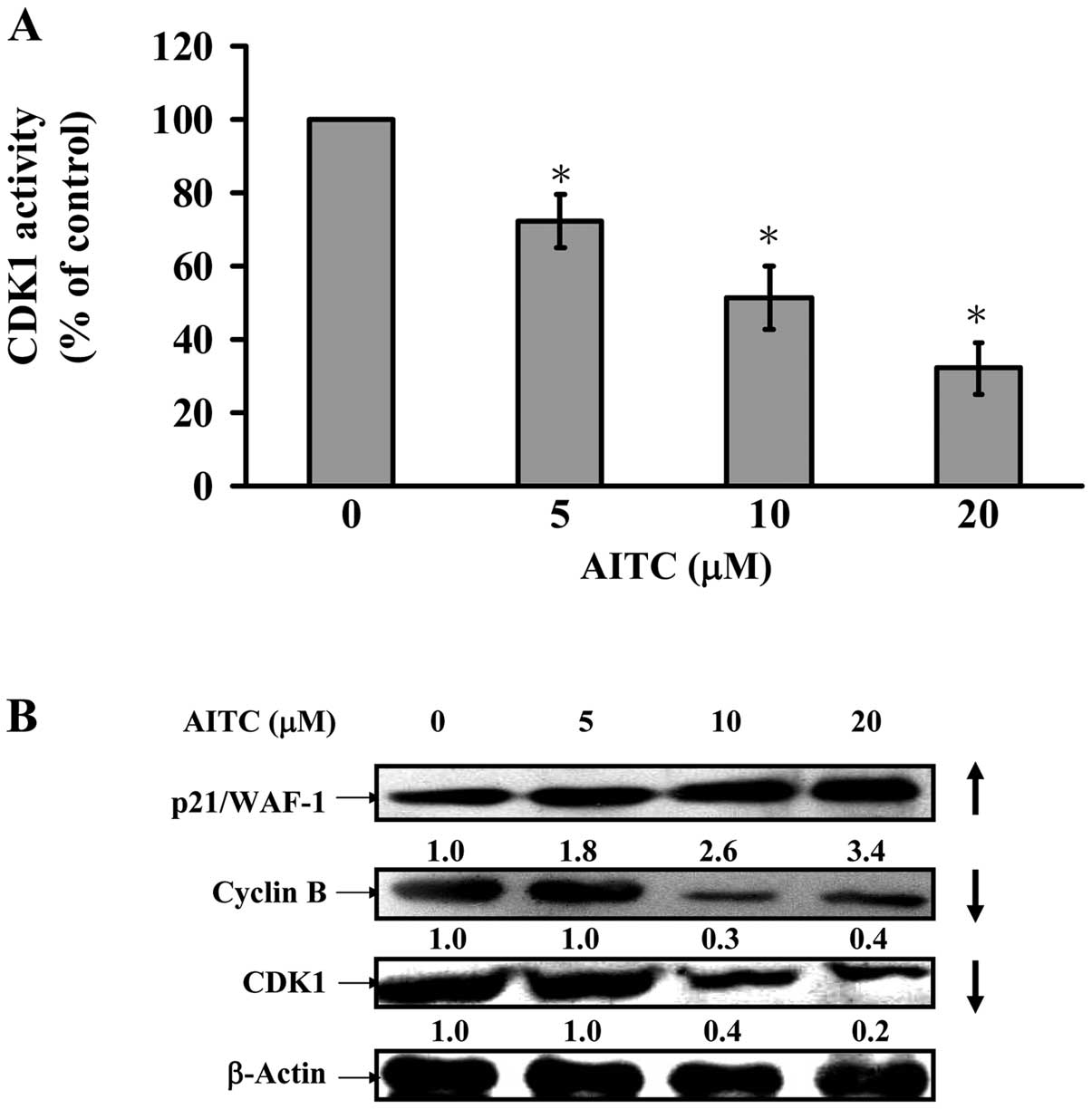
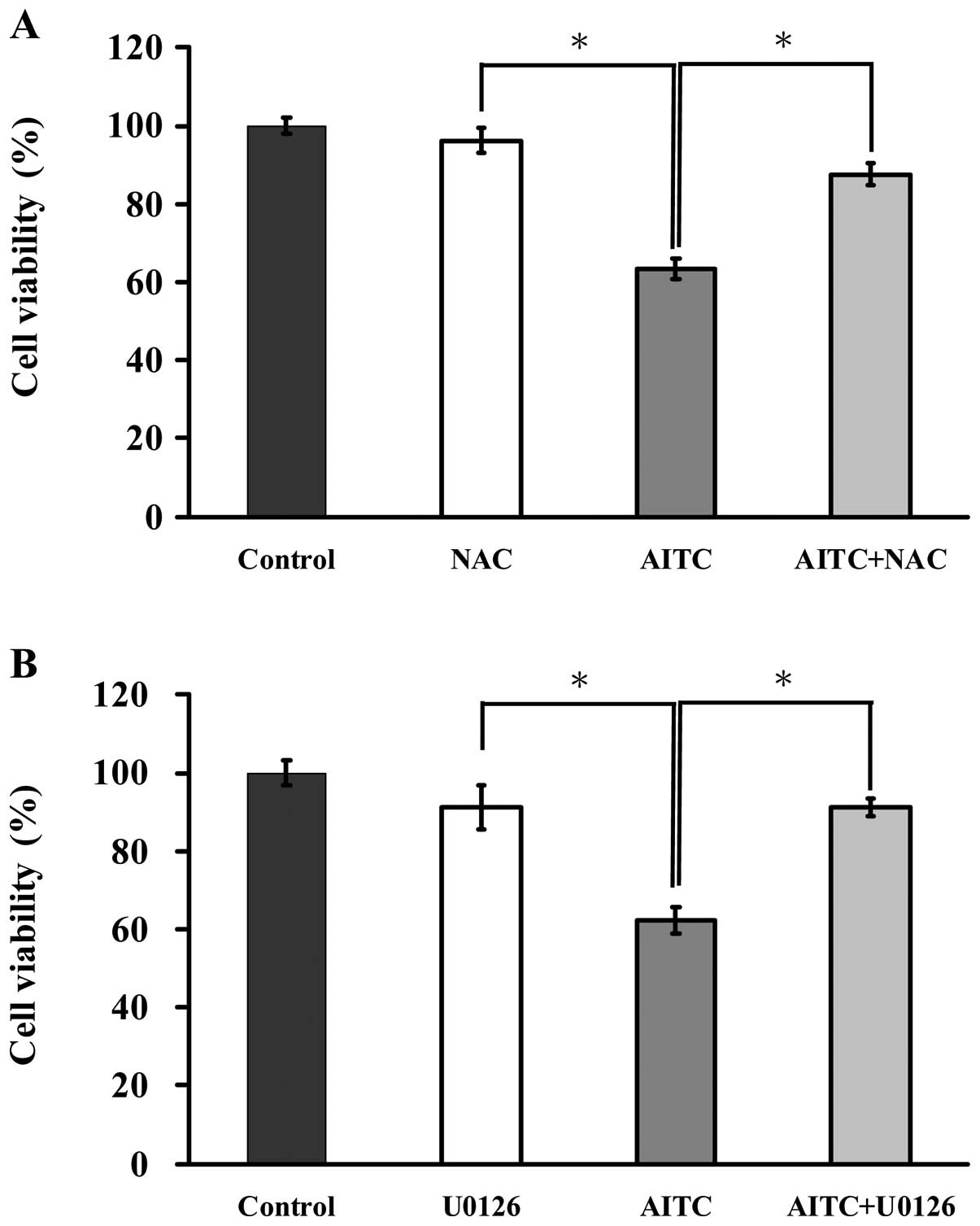
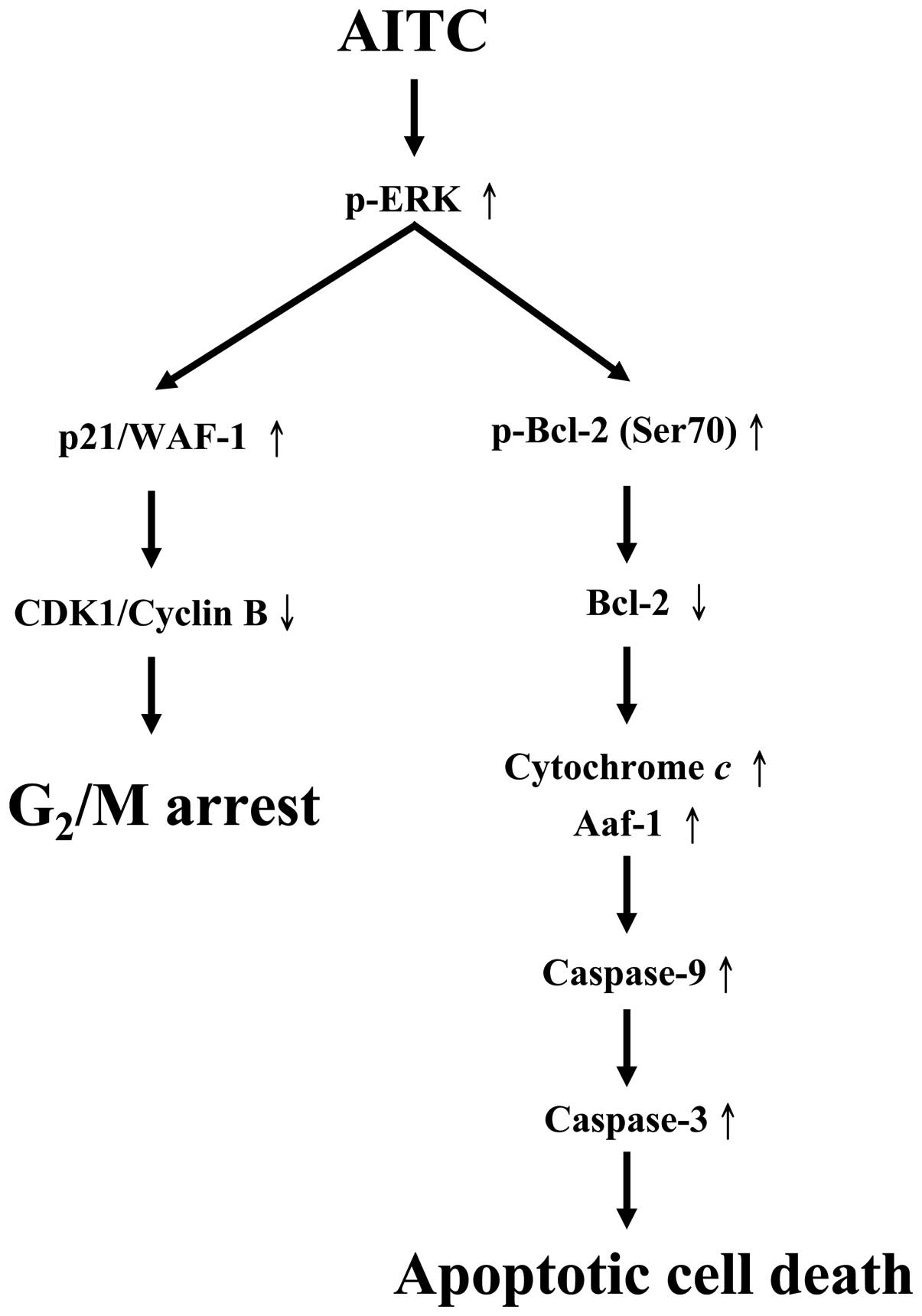
Allyl isothiocyanate (AITC), a member of the isothiocyanate (ITC) family found in a constituent of cruciferous vegetables, possesses anticancer activity and induces apoptosis in various types of human cancer cell lines. However, no available information showed antitumor effects in human breast adenocarcinoma cells. The current study was focused on exploring the mechanisms underlying AITC-induced apoptosis in MDA-MB-468 human breast cancer cells in vitro. We found that AITC reduced the cell number and viability using trypan blue staining with the Countess Automated Cell Counter and the MTT assay, respectively. AITC also was found to induce apoptotic cell morphological changes by a contrast-phase microscope and cell cycle arrest at G2/M phase by flow cytometric assay in MDA-MB-468 cells. Intrinsic apoptosis-associated factors such as caspase-9 and caspase-3 activities were performed, and reactive oxygen species (ROS) production, loss of mitochondrial membrane potential (∆Ψm) occurred in AITC-treated MDA-MB-468 cells. AITC also stimulated mitochondria-related signaling, including p-Bcl-2 (Ser-70), cytochrome c and Apaf-1 in MDA-MB-468 cells. We found that the p-ERK signal was upregulated in AITC-treated cells. Importantly, NAC (a ROS scavenger) and U0126 (an ERK inhibitor) abolished AITC-reduced viability in MDA-MB-468 cells. AITC downregulated CDK1 activity and altered the expression of G2/M phase-modulated associated protein levels by western blotting in MDA-MB-468 cells. In summary, our findings demonstrated that AITC-promoted G2/M phase and AITC-triggered apoptosis correlate with the activation of phosphorylation of ERK in MDA-MB-468 cells. AITC is a potential agent for applcation in the treatment of human breast cancer.
View Figures

Figure 1

Figure 2

Figure 3

Figure 4

Figure 5

Figure 6

Figure 7

Figure 8

View References

1. 

Kushad MM, Brown AF, Kurilich AC, et al: Variation of glucosinolates in vegetable crops of Brassica oleracea. J Agric Food Chem. 47:1541–1548. 1999. View Article : Google Scholar : PubMed/NCBI

2. 

Rungapamestry V, Duncan AJ, Fuller Z and Ratcliffe B: Changes in glucosinolate concentrations, myrosinase activity, and production of metabolites of glucosinolates in cabbage (Brassica oleracea var. capitata) cooked for different durations. J Agric Food Chem. 54:7628–7634. 2006. View Article : Google Scholar : PubMed/NCBI

3. 

Uematsu Y, Hirata K, Suzuki K, Iida K, Ueta T and Kamata K: Determination of isothiocyanates and related compounds in mustard extract and horseradish extract used as natural food additives. Shokuhin Eiseigaku Zasshi. 43:10–17. 2002.(In Japanese).

4. 

Zhang Y: Allyl isothiocyanate as a cancer chemopreventive phytochemical. Mol Nutr Food Res. 54:127–135. 2010. View Article : Google Scholar : PubMed/NCBI

5. 

Negri R, Muntoni F and D’Amore R: Antibiotic effect of the allyl isothiocyanate extracted from various horticultural forms of the seeds of Raphanus Sativus L. var. radicula pers towards various bacteria, including two strains of tubercle bacillus avian type, Cow 18 and Cow 70. Note II Rend Ist Sup Sanit. 14:186–193. 1951.PubMed/NCBI

6. 

Wagner AE, Boesch-Saadatmandi C, Dose J, Schultheiss G and Rimbach G: Anti-inflammatory potential of allyl-isothiocyanate - role of Nrf2, NF-(kappa) B and microRNA-155. J Cell Mol Med. 16:836–843. 2012. View Article : Google Scholar : PubMed/NCBI

7. 

Sellam A, Dongo A, Guillemette T, Hudhomme P and Simoneau P: Transcriptional responses to exposure to the brassicaceous defence metabolites camalexin and allyl-isothiocyanate in the necrotrophic fungus Alternaria brassicicola. Mol Plant Pathol. 8:195–208. 2007. View Article : Google Scholar : PubMed/NCBI

8. 

Srivastava SK, Xiao D, Lew KL, et al: Allyl isothiocyanate, a constituent of cruciferous vegetables, inhibits growth of PC-3 human prostate cancer xenografts in vivo. Carcinogenesis. 24:1665–1670. 2003. View Article : Google Scholar : PubMed/NCBI

9. 

Smith TK, Lund EK, Parker ML, Clarke RG and Johnson IT: Allyl-isothiocyanate causes mitotic block, loss of cell adhesion and disrupted cytoskeletal structure in HT29 cells. Carcinogenesis. 25:1409–1415. 2004. View Article : Google Scholar : PubMed/NCBI

10. 

Smith T, Musk SR and Johnson IT: Allyl isothiocyanate selectively kills undifferentiated HT29 cells in vitro and suppresses aberrant crypt foci in the colonic mucosa of rats. Biochem Soc Trans. 24:381S1996.

11. 

Bhattacharya A, Li Y, Geng F, Munday R and Zhang Y: The principal urinary metabolite of allyl isothiocyanate, N-acetyl-S-(N-allylthiocarbamoyl)cysteine, inhibits the growth and muscle invasion of bladder cancer. Carcinogenesis. 33:394–398. 2012. View Article : Google Scholar : PubMed/NCBI

12. 

Bhattacharya A, Tang L, Li Y, et al: Inhibition of bladder cancer development by allyl isothiocyanate. Carcinogenesis. 31:281–286. 2010. View Article : Google Scholar : PubMed/NCBI

13. 

Hasegawa T, Nishino H and Iwashima A: Isothiocyanates inhibit cell cycle progression of HeLa cells at G2/M phase. Anticancer Drugs. 4:273–279. 1993. View Article : Google Scholar : PubMed/NCBI

14. 

Zhang Y, Tang L and Gonzalez V: Selected isothiocyanates rapidly induce growth inhibition of cancer cells. Mol Cancer Ther. 2:1045–1052. 2003.PubMed/NCBI

15. 

Lau WS, Chen T and Wong YS: Allyl isothiocyanate induces G2/M arrest in human colorectal adenocarcinoma SW620 cells through downregulation of Cdc25B and Cdc25C. Mol Med Rep. 3:1023–1030. 2010.PubMed/NCBI

16. 

Chen NG, Chen KT, Lu CC, et al: Allyl isothiocyanate triggers G2/M phase arrest and apoptosis in human brain malignant glioma GBM 8401 cells through a mitochondria-dependent pathway. Oncol Rep. 24:449–455. 2010.PubMed/NCBI

17. 

Hwang ES and Lee HJ: Allyl isothiocyanate and its N-acetylcysteine conjugate suppress metastasis via inhibition of invasion, migration, and matrix metalloproteinase-2/-9 activities in SK-Hep 1 human hepatoma cells. Exp Biol Med (Maywood). 231:421–430. 2006.

18. 

Rodrigues-Ferreira S, Abdelkarim M, Dillenburg-Pilla P, et al: Angiotensin II facilitates breast cancer cell migration and metastasis. PLoS One. 7:e356672012. View Article : Google Scholar : PubMed/NCBI

19. 

Jemal A, Bray F, Center MM, Ferlay J, Ward E and Forman D: Global cancer statistics. CA Cancer J Clin. 61:69–90. 2011. View Article : Google Scholar

20. 

Ossovskaya V, Wang Y, Budoff A, et al: Exploring molecular pathways of triple-negative breast cancer. Genes Cancer. 2:870–879. 2011. View Article : Google Scholar : PubMed/NCBI

21. 

Rakha EA, Reis-Filho JS and Ellis IO: Basal-like breast cancer: a critical review. J Clin Oncol. 26:2568–2581. 2008. View Article : Google Scholar : PubMed/NCBI

22. 

Gucalp A and Traina TA: Triple-negative breast cancer: adjuvant therapeutic options. Chemother Res Pract. 2011:6962082011.PubMed/NCBI

23. 

Gelmon K, Dent R, Mackey JR, Laing K, McLeod D and Verma S: Targeting triple-negative breast cancer: optimising therapeutic outcomes. Ann Oncol. Apr 19–2012, (Epub ahead of print).

24. 

Li C, Zhao X, Toline EC, et al: Prevention of carcinogenesis and inhibition of breast cancer tumor burden by dietary stearate. Carcinogenesis. 32:1251–1258. 2011. View Article : Google Scholar : PubMed/NCBI

25. 

Ebert T, Kleine-Gunk B, Altwein JE, Miller K and Mallmann P: Dietary prevention of carcinomas of the breast and prostate: fundamental and practical aspects of the Nutritional Cancer Prevention (NCP) program. Dtsch Med Wochenschr. 127:1392–1396. 2002.(In German).

26. 

Chen KT, Hour MJ, Tsai SC, et al: The novel synthesized 6-fluoro-(3-fluorophenyl)-4-(3-methoxyanilino)quinazoline (LJJ-10) compound exhibits anti-metastatic effects in human osteosarcoma U-2 OS cells through targeting insulin-like growth factor-I receptor. Int J Oncol. 39:611–619. 2011.

27. 

Liao CL, Lai KC, Huang AC, et al: Gallic acid inhibits migration and invasion in human osteosarcoma U-2 OS cells through suppressing the matrix metalloproteinase-2/-9, protein kinase B (PKB) and PKC signaling pathways. Food Chem Toxicol. 50:1734–1740. 2012. View Article : Google Scholar : PubMed/NCBI

28. 

Yu FS, Wu CC, Chen CT, et al: Diallyl sulfide inhibits murine WEHI-3 leukemia cells in BALB/c mice in vitro and in vivo. Hum Exp Toxicol. 28:785–790. 2009. View Article : Google Scholar : PubMed/NCBI

29. 

Tsou MF, Peng CT, Shih MC, et al: Benzyl isothiocyanate inhibits murine WEHI-3 leukemia cells in vitro and promotes phagocytosis in BALB/c mice in vivo. Leuk Res. 33:1505–1511. 2009. View Article : Google Scholar : PubMed/NCBI

30. 

Lu CC, Yang JS, Huang AC, et al: Chrysophanol induces necrosis through the production of ROS and alteration of ATP levels in J5 human liver cancer cells. Mol Nutr Food Res. 54:967–976. 2010. View Article : Google Scholar : PubMed/NCBI

31. 

Lu CC, Yang JS, Chiang JH, et al: Novel quinazolinone MJ-29 triggers endoplasmic reticulum stress and intrinsic apoptosis in murine leukemia WEHI-3 cells and inhibits leukemic mice. PLoS One. 7:e368312012. View Article : Google Scholar : PubMed/NCBI

32. 

Lin JP, Yang JS, Chang NW, et al: GADD153 mediates berberine-induced apoptosis in human cervical cancer Ca ski cells. Anticancer Res. 27:3379–3386. 2007.PubMed/NCBI

33. 

Lin YT, Yang JS, Lin HJ, et al: Baicalein induces apoptosis in SCC-4 human tongue cancer cells via a Ca2+-dependent mitochondrial pathway. In Vivo. 21:1053–1058. 2007.PubMed/NCBI

34. 

Ying WZ and Sanders PW: Cytochrome c mediates apoptosis in hypertensive nephrosclerosis in Dahl/Rapp rats. Kidney Int. 59:662–672. 2001. View Article : Google Scholar : PubMed/NCBI

35. 

Yang JS, Hour MJ, Huang WW, Lin KL, Kuo SC and Chung JG: MJ-29 inhibits tubulin polymerization, induces mitotic arrest, and triggers apoptosis via cyclin-dependent kinase 1-mediated Bcl-2 phosphorylation in human leukemia U937 cells. J Pharmacol Exp Ther. 334:477–488. 2010. View Article : Google Scholar

36. 

Liu KC, Huang AC, Wu PP, et al: Gallic acid suppresses the migration and invasion of PC-3 human prostate cancer cells via inhibition of matrix metalloproteinase-2 and -9 signaling pathways. Oncol Rep. 26:177–184. 2011.PubMed/NCBI

37. 

Lan YH, Wu YC, Wu KW, et al: Death receptor 5-mediated TNFR family signaling pathways modulate γ-humulene-induced apoptosis in human colorectal cancer HT29 cells. Oncol Rep. 25:419–424. 2011.PubMed/NCBI

38. 

Wu SH, Hang LW, Yang JS, et al: Curcumin induces apoptosis in human non-small cell lung cancer NCI-H460 cells through ER stress and caspase cascade- and mitochondria-dependent pathways. Anticancer Res. 30:2125–2133. 2010.PubMed/NCBI

39. 

Lai WW, Yang JS, Lai KC, et al: Rhein induced apoptosis through the endoplasmic reticulum stress, caspase- and mitochondria-dependent pathways in SCC-4 human tongue squamous cancer cells. In Vivo. 23:309–316. 2009.

40. 

Chiang JH, Yang JS, Ma CY, et al: Danthron, an anthraquinone derivative, induces DNA damage and caspase cascades-mediated apoptosis in SNU-1 human gastric cancer cells through mitochondrial permeability transition pores and Bax-triggered pathways. Chem Res Toxicol. 24:20–29. 2011. View Article : Google Scholar

41. 

Huang WW, Chiu YJ, Fan MJ, et al: Kaempferol induced apoptosis via endoplasmic reticulum stress and mitochondria-dependent pathway in human osteosarcoma U-2 OS cells. Mol Nutr Food Res. 54:1585–1595. 2010. View Article : Google Scholar : PubMed/NCBI

42. 

Huang WW, Ko SW, Tsai HY, et al: Cantharidin induces G2/M phase arrest and apoptosis in human colorectal cancer colo 205 cells through inhibition of CDK1 activity and caspase-dependent signaling pathways. Int J Oncol. 38:1067–1073. 2011.PubMed/NCBI

43. 

Chou LC, Yang JS, Huang LJ, et al: The synthesized 2-(2-fluorophenyl)-6,7-methylenedioxyquinolin-4-one (CHM-1) promoted G2/M arrest through inhibition of CDK1 and induced apoptosis through the mitochondrial-dependent pathway in CT-26 murine colorectal adenocarcinoma cells. J Gastroenterol. 44:1055–1063. 2009. View Article : Google Scholar

44. 

Deng X, Kornblau SM, Ruvolo PP and May WS Jr: Regulation of Bcl2 phosphorylation and potential significance for leukemic cell chemoresistance. J Natl Cancer Inst Monogr. 30–37. 2001.PubMed/NCBI

45. 

Mai H, May WS, Gao F, Jin Z and Deng X: A functional role for nicotine in Bcl2 phosphorylation and suppression of apoptosis. J Biol Chem. 278:1886–1891. 2003. View Article : Google Scholar : PubMed/NCBI

46. 

Lavrik IN, Golks A and Krammer PH: Caspases: pharmacological manipulation of cell death. J Clin Invest. 115:2665–2672. 2005. View Article : Google Scholar : PubMed/NCBI

47. 

Choi JA, Kim JY, Lee JY, et al: Induction of cell cycle arrest and apoptosis in human breast cancer cells by quercetin. Int J Oncol. 19:837–844. 2001.PubMed/NCBI

48. 

Tang L and Zhang Y: Dietary isothiocyanates inhibit the growth of human bladder carcinoma cells. J Nutr. 134:2004–2010. 2004.PubMed/NCBI

49. 

Xiao D, Srivastava SK, Lew KL, et al: Allyl isothiocyanate, a constituent of cruciferous vegetables, inhibits proliferation of human prostate cancer cells by causing G2/M arrest and inducing apoptosis. Carcinogenesis. 24:891–897. 2003. View Article : Google Scholar : PubMed/NCBI

50. 

Watanabe N, Okochi E, Mochizuki M, Sugimura T and Ushijima T: The presence of single nucleotide instability in human breast cancer cell lines. Cancer Res. 61:7739–7742. 2001.PubMed/NCBI

51. 

Salem SD, Abou-Tarboush FM, Saeed NM, et al: Involvement of p53 in gemcitabine mediated cytotoxicity and radiosensitivity in breast cancer cell lines. Gene. 498:300–307. 2012. View Article : Google Scholar : PubMed/NCBI

52. 

Lobrich M and Jeggo PA: The impact of a negligent G2/M checkpoint on genomic instability and cancer induction. Nat Rev Cancer. 7:861–869. 2007. View Article : Google Scholar : PubMed/NCBI

53. 

Maeda T, Nagaoka Y, Kawai Y, et al: Inhibitory effects of cancer cell proliferation by novel histone deacetylase inhibitors involve p21/WAF1 induction and G2/M arrest. Biol Pharm Bull. 28:849–853. 2005. View Article : Google Scholar : PubMed/NCBI

54. 

Wu L and Levine AJ: Differential regulation of the p21/WAF-1 and mdm2 genes after high-dose UV irradiation: p53-dependent and p53-independent regulation of the mdm2 gene. Mol Med. 3:441–451. 1997.PubMed/NCBI

55. 

Ciccarelli C, Marampon F, Scoglio A, et al: p21WAF1 expression induced by MEK/ERK pathway activation or inhibition correlates with growth arrest, myogenic differentiation and onco-phenotype reversal in rhabdomyosarcoma cells. Mol Cancer. 4:412005. View Article : Google Scholar

56. 

Lee B and Moon SK: Ras/ERK signaling pathway mediates activation of the p21WAF1 gene promoter in vascular smooth muscle cells by platelet-derived growth factor. Arch Biochem Biophys. 443:113–119. 2005. View Article : Google Scholar : PubMed/NCBI

57. 

Kroemer G, Galluzzi L and Brenner C: Mitochondrial membrane permeabilization in cell death. Physiol Rev. 87:99–163. 2007. View Article : Google Scholar : PubMed/NCBI

58. 

Lai E, Teodoro T and Volchuk A: Endoplasmic reticulum stress: signaling the unfolded protein response. Physiology (Bethesda). 22:193–201. 2007. View Article : Google Scholar : PubMed/NCBI

59. 

Park HH: Structural features of caspase-activating complexes. Int J Mol Sci. 13:4807–4818. 2012. View Article : Google Scholar : PubMed/NCBI

60. 

Geng F, Tang L, Li Y, et al: Allyl isothiocyanate arrests cancer cells in mitosis, and mitotic arrest in turn leads to apoptosis via Bcl-2 protein phosphorylation. J Biol Chem. 286:32259–32267. 2011. View Article : Google Scholar : PubMed/NCBI

61. 

Xu C, Shen G, Yuan X, et al: ERK and JNK signaling pathways are involved in the regulation of activator protein 1 and cell death elicited by three isothiocyanates in human prostate cancer PC-3 cells. Carcinogenesis. 27:437–445. 2006. View Article : Google Scholar : PubMed/NCBI

Related Articles

  • Abstract
  • View
  • Download
  • Twitter
Copy and paste a formatted citation
Spandidos Publications style
Tsai S, Huang W, Huang W, Lu C, Chiang J, Peng S, Chung J, Lin Y, Hsu Y, Amagaya S, Amagaya S, et al: ERK-modulated intrinsic signaling and G2/M phase arrest contribute to the induction of apoptotic death by allyl isothiocyanate in MDA-MB-468 human breast adenocarcinoma cells. Int J Oncol 41: 2065-2072, 2012.
APA
Tsai, S., Huang, W., Huang, W., Lu, C., Chiang, J., Peng, S. ... Yang, J. (2012). ERK-modulated intrinsic signaling and G2/M phase arrest contribute to the induction of apoptotic death by allyl isothiocyanate in MDA-MB-468 human breast adenocarcinoma cells. International Journal of Oncology, 41, 2065-2072. https://doi.org/10.3892/ijo.2012.1640
MLA
Tsai, S., Huang, W., Huang, W., Lu, C., Chiang, J., Peng, S., Chung, J., Lin, Y., Hsu, Y., Amagaya, S., Yang, J."ERK-modulated intrinsic signaling and G2/M phase arrest contribute to the induction of apoptotic death by allyl isothiocyanate in MDA-MB-468 human breast adenocarcinoma cells". International Journal of Oncology 41.6 (2012): 2065-2072.
Chicago
Tsai, S., Huang, W., Huang, W., Lu, C., Chiang, J., Peng, S., Chung, J., Lin, Y., Hsu, Y., Amagaya, S., Yang, J."ERK-modulated intrinsic signaling and G2/M phase arrest contribute to the induction of apoptotic death by allyl isothiocyanate in MDA-MB-468 human breast adenocarcinoma cells". International Journal of Oncology 41, no. 6 (2012): 2065-2072. https://doi.org/10.3892/ijo.2012.1640
Copy and paste a formatted citation
x
Spandidos Publications style
Tsai S, Huang W, Huang W, Lu C, Chiang J, Peng S, Chung J, Lin Y, Hsu Y, Amagaya S, Amagaya S, et al: ERK-modulated intrinsic signaling and G2/M phase arrest contribute to the induction of apoptotic death by allyl isothiocyanate in MDA-MB-468 human breast adenocarcinoma cells. Int J Oncol 41: 2065-2072, 2012.
APA
Tsai, S., Huang, W., Huang, W., Lu, C., Chiang, J., Peng, S. ... Yang, J. (2012). ERK-modulated intrinsic signaling and G2/M phase arrest contribute to the induction of apoptotic death by allyl isothiocyanate in MDA-MB-468 human breast adenocarcinoma cells. International Journal of Oncology, 41, 2065-2072. https://doi.org/10.3892/ijo.2012.1640
MLA
Tsai, S., Huang, W., Huang, W., Lu, C., Chiang, J., Peng, S., Chung, J., Lin, Y., Hsu, Y., Amagaya, S., Yang, J."ERK-modulated intrinsic signaling and G2/M phase arrest contribute to the induction of apoptotic death by allyl isothiocyanate in MDA-MB-468 human breast adenocarcinoma cells". International Journal of Oncology 41.6 (2012): 2065-2072.
Chicago
Tsai, S., Huang, W., Huang, W., Lu, C., Chiang, J., Peng, S., Chung, J., Lin, Y., Hsu, Y., Amagaya, S., Yang, J."ERK-modulated intrinsic signaling and G2/M phase arrest contribute to the induction of apoptotic death by allyl isothiocyanate in MDA-MB-468 human breast adenocarcinoma cells". International Journal of Oncology 41, no. 6 (2012): 2065-2072. https://doi.org/10.3892/ijo.2012.1640
Follow us
  • Twitter
  • LinkedIn
  • Facebook
About
  • Spandidos Publications
  • Careers
  • Cookie Policy
  • Privacy Policy
How can we help?
  • Help
  • Live Chat
  • Contact
  • Email to our Support Team