Spandidos Publications Logo
  • About
    • About Spandidos
    • Aims and Scopes
    • Abstracting and Indexing
    • Editorial Policies
    • Reprints and Permissions
    • Job Opportunities
    • Terms and Conditions
    • Contact
  • Journals
    • All Journals
    • Oncology Letters
      • Oncology Letters
      • Information for Authors
      • Editorial Policies
      • Editorial Board
      • Aims and Scope
      • Abstracting and Indexing
      • Bibliographic Information
      • Archive
    • International Journal of Oncology
      • International Journal of Oncology
      • Information for Authors
      • Editorial Policies
      • Editorial Board
      • Aims and Scope
      • Abstracting and Indexing
      • Bibliographic Information
      • Archive
    • Molecular and Clinical Oncology
      • Molecular and Clinical Oncology
      • Information for Authors
      • Editorial Policies
      • Editorial Board
      • Aims and Scope
      • Abstracting and Indexing
      • Bibliographic Information
      • Archive
    • Experimental and Therapeutic Medicine
      • Experimental and Therapeutic Medicine
      • Information for Authors
      • Editorial Policies
      • Editorial Board
      • Aims and Scope
      • Abstracting and Indexing
      • Bibliographic Information
      • Archive
    • International Journal of Molecular Medicine
      • International Journal of Molecular Medicine
      • Information for Authors
      • Editorial Policies
      • Editorial Board
      • Aims and Scope
      • Abstracting and Indexing
      • Bibliographic Information
      • Archive
    • Biomedical Reports
      • Biomedical Reports
      • Information for Authors
      • Editorial Policies
      • Editorial Board
      • Aims and Scope
      • Abstracting and Indexing
      • Bibliographic Information
      • Archive
    • Oncology Reports
      • Oncology Reports
      • Information for Authors
      • Editorial Policies
      • Editorial Board
      • Aims and Scope
      • Abstracting and Indexing
      • Bibliographic Information
      • Archive
    • Molecular Medicine Reports
      • Molecular Medicine Reports
      • Information for Authors
      • Editorial Policies
      • Editorial Board
      • Aims and Scope
      • Abstracting and Indexing
      • Bibliographic Information
      • Archive
    • World Academy of Sciences Journal
      • World Academy of Sciences Journal
      • Information for Authors
      • Editorial Policies
      • Editorial Board
      • Aims and Scope
      • Abstracting and Indexing
      • Bibliographic Information
      • Archive
    • International Journal of Functional Nutrition
      • International Journal of Functional Nutrition
      • Information for Authors
      • Editorial Policies
      • Editorial Board
      • Aims and Scope
      • Abstracting and Indexing
      • Bibliographic Information
      • Archive
    • International Journal of Epigenetics
      • International Journal of Epigenetics
      • Information for Authors
      • Editorial Policies
      • Editorial Board
      • Aims and Scope
      • Abstracting and Indexing
      • Bibliographic Information
      • Archive
    • Medicine International
      • Medicine International
      • Information for Authors
      • Editorial Policies
      • Editorial Board
      • Aims and Scope
      • Abstracting and Indexing
      • Bibliographic Information
      • Archive
  • Articles
  • Information
    • Information for Authors
    • Information for Reviewers
    • Information for Librarians
    • Information for Advertisers
    • Conferences
  • Language Editing
Spandidos Publications Logo
  • About
    • About Spandidos
    • Aims and Scopes
    • Abstracting and Indexing
    • Editorial Policies
    • Reprints and Permissions
    • Job Opportunities
    • Terms and Conditions
    • Contact
  • Journals
    • All Journals
    • Biomedical Reports
      • Information for Authors
      • Editorial Policies
      • Editorial Board
      • Aims and Scope
      • Abstracting and Indexing
      • Bibliographic Information
      • Archive
    • Experimental and Therapeutic Medicine
      • Information for Authors
      • Editorial Policies
      • Editorial Board
      • Aims and Scope
      • Abstracting and Indexing
      • Bibliographic Information
      • Archive
    • International Journal of Epigenetics
      • Information for Authors
      • Editorial Policies
      • Editorial Board
      • Aims and Scope
      • Abstracting and Indexing
      • Bibliographic Information
      • Archive
    • International Journal of Functional Nutrition
      • Information for Authors
      • Editorial Policies
      • Editorial Board
      • Aims and Scope
      • Abstracting and Indexing
      • Bibliographic Information
      • Archive
    • International Journal of Molecular Medicine
      • Information for Authors
      • Editorial Policies
      • Editorial Board
      • Aims and Scope
      • Abstracting and Indexing
      • Bibliographic Information
      • Archive
    • International Journal of Oncology
      • Information for Authors
      • Editorial Policies
      • Editorial Board
      • Aims and Scope
      • Abstracting and Indexing
      • Bibliographic Information
      • Archive
    • Medicine International
      • Information for Authors
      • Editorial Policies
      • Editorial Board
      • Aims and Scope
      • Abstracting and Indexing
      • Bibliographic Information
      • Archive
    • Molecular and Clinical Oncology
      • Information for Authors
      • Editorial Policies
      • Editorial Board
      • Aims and Scope
      • Abstracting and Indexing
      • Bibliographic Information
      • Archive
    • Molecular Medicine Reports
      • Information for Authors
      • Editorial Policies
      • Editorial Board
      • Aims and Scope
      • Abstracting and Indexing
      • Bibliographic Information
      • Archive
    • Oncology Letters
      • Information for Authors
      • Editorial Policies
      • Editorial Board
      • Aims and Scope
      • Abstracting and Indexing
      • Bibliographic Information
      • Archive
    • Oncology Reports
      • Information for Authors
      • Editorial Policies
      • Editorial Board
      • Aims and Scope
      • Abstracting and Indexing
      • Bibliographic Information
      • Archive
    • World Academy of Sciences Journal
      • Information for Authors
      • Editorial Policies
      • Editorial Board
      • Aims and Scope
      • Abstracting and Indexing
      • Bibliographic Information
      • Archive
  • Articles
  • Information
    • For Authors
    • For Reviewers
    • For Librarians
    • For Advertisers
    • Conferences
  • Language Editing
Login Register Submit
  • This site uses cookies
  • You can change your cookie settings at any time by following the instructions in our Cookie Policy. To find out more, you may read our Privacy Policy.

    I agree
Search articles by DOI, keyword, author or affiliation
Search
Advanced Search
presentation
International Journal of Oncology
Join Editorial Board Propose a Special Issue
Print ISSN: 1019-6439 Online ISSN: 1791-2423
Journal Cover
February 2013 Volume 42 Issue 2

Full Size Image

Cover Legend PDF

Sign up for eToc alerts
Recommend to Library

Journals

International Journal of Molecular Medicine

International Journal of Molecular Medicine

International Journal of Molecular Medicine is an international journal devoted to molecular mechanisms of human disease.

International Journal of Oncology

International Journal of Oncology

International Journal of Oncology is an international journal devoted to oncology research and cancer treatment.

Molecular Medicine Reports

Molecular Medicine Reports

Covers molecular medicine topics such as pharmacology, pathology, genetics, neuroscience, infectious diseases, molecular cardiology, and molecular surgery.

Oncology Reports

Oncology Reports

Oncology Reports is an international journal devoted to fundamental and applied research in Oncology.

Experimental and Therapeutic Medicine

Experimental and Therapeutic Medicine

Experimental and Therapeutic Medicine is an international journal devoted to laboratory and clinical medicine.

Oncology Letters

Oncology Letters

Oncology Letters is an international journal devoted to Experimental and Clinical Oncology.

Biomedical Reports

Biomedical Reports

Explores a wide range of biological and medical fields, including pharmacology, genetics, microbiology, neuroscience, and molecular cardiology.

Molecular and Clinical Oncology

Molecular and Clinical Oncology

International journal addressing all aspects of oncology research, from tumorigenesis and oncogenes to chemotherapy and metastasis.

World Academy of Sciences Journal

World Academy of Sciences Journal

Multidisciplinary open-access journal spanning biochemistry, genetics, neuroscience, environmental health, and synthetic biology.

International Journal of Functional Nutrition

International Journal of Functional Nutrition

Open-access journal combining biochemistry, pharmacology, immunology, and genetics to advance health through functional nutrition.

International Journal of Epigenetics

International Journal of Epigenetics

Publishes open-access research on using epigenetics to advance understanding and treatment of human disease.

Medicine International

Medicine International

An International Open Access Journal Devoted to General Medicine.

Journal Cover
February 2013 Volume 42 Issue 2

Full Size Image

Cover Legend PDF

Sign up for eToc alerts
Recommend to Library

  • Article
  • Citations
    • Cite This Article
    • Download Citation
    • Create Citation Alert
    • Remove Citation Alert
    • Cited By
  • Similar Articles
    • Related Articles (in Spandidos Publications)
    • Similar Articles (Google Scholar)
    • Similar Articles (PubMed)
  • Download PDF
  • Download XML
  • View XML
Article

Inhibition of poly(ADP-ribose) polymerase-1 or poly(ADP‑ribose) glycohydrolase individually, but not in combination, leads to improved chemotherapeutic efficacy in HeLa cells

  • Authors:
    • Xiaoxing Feng
    • David W. Koh
  • View Affiliations / Copyright

    Affiliations: Department of Pharmaceutical Sciences, College of Pharmacy, Washington State University, Pullman, WA 99164-6534, USA
  • Pages: 749-756
    |
    Published online on: December 17, 2012
       https://doi.org/10.3892/ijo.2012.1740
  • Expand metrics +
Metrics: Total Views: 0 (Spandidos Publications: | PMC Statistics: )
Metrics: Total PDF Downloads: 0 (Spandidos Publications: | PMC Statistics: )
Cited By (CrossRef): 0 citations Loading Articles...

This article is mentioned in:


Abstract

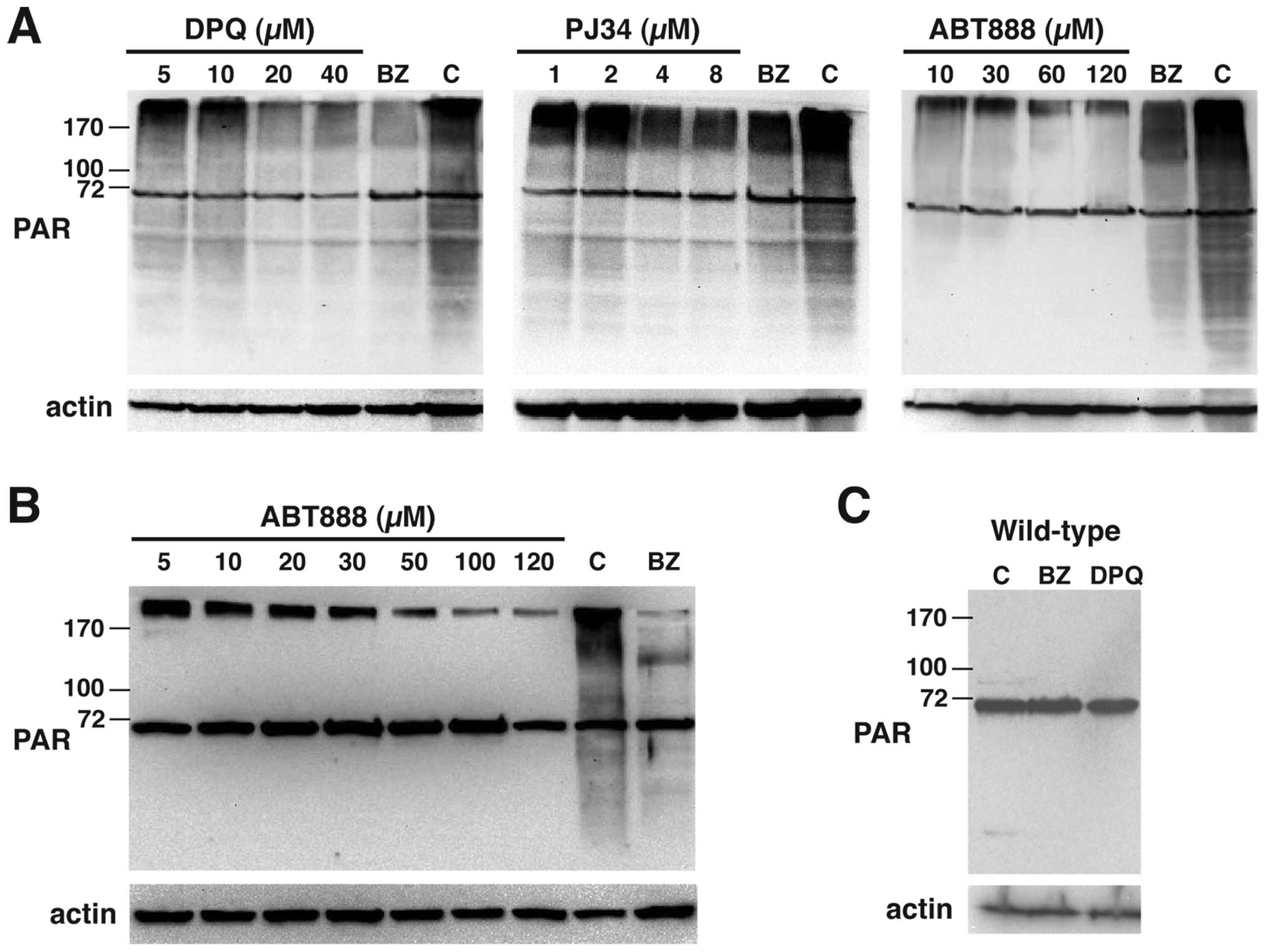
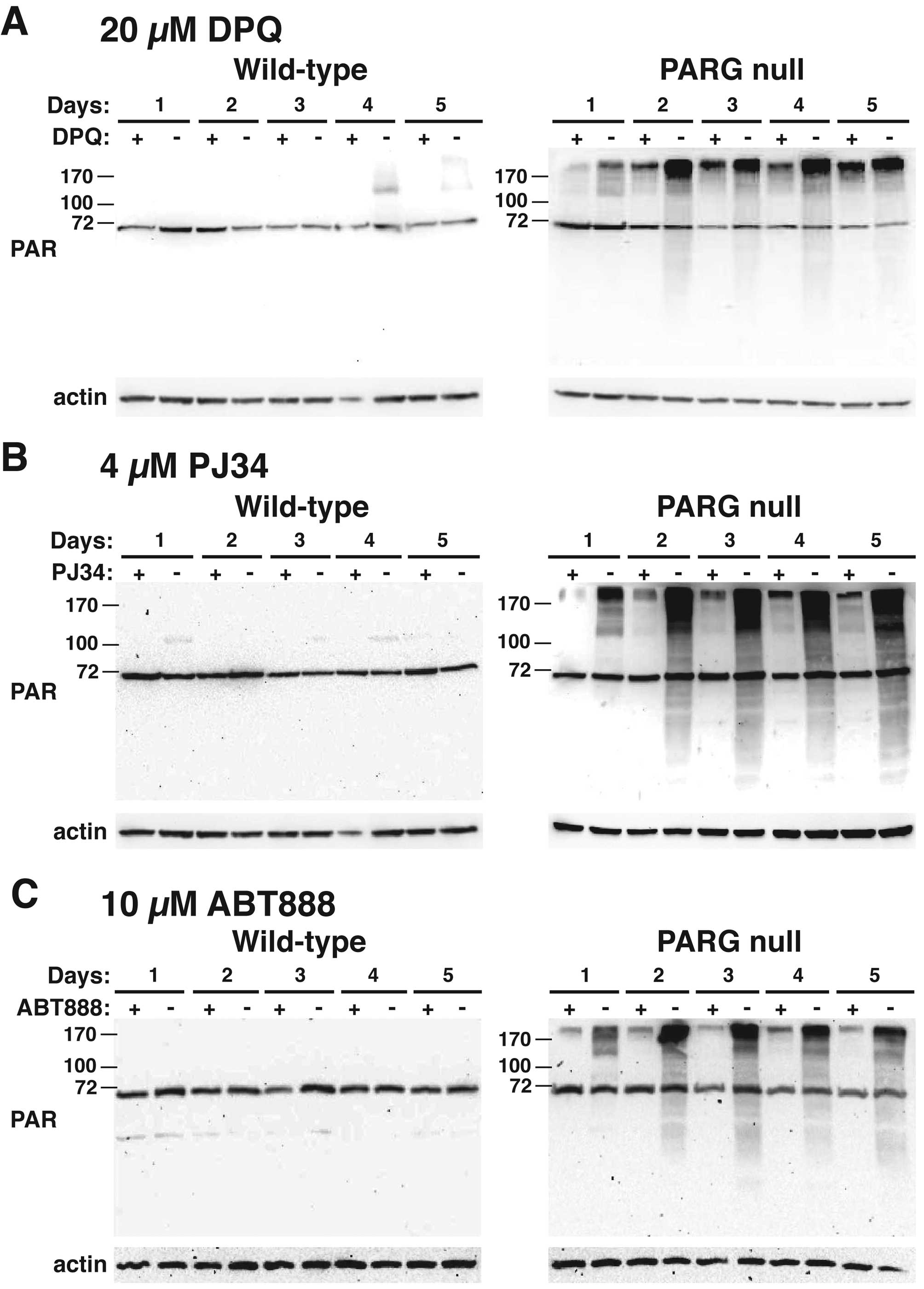
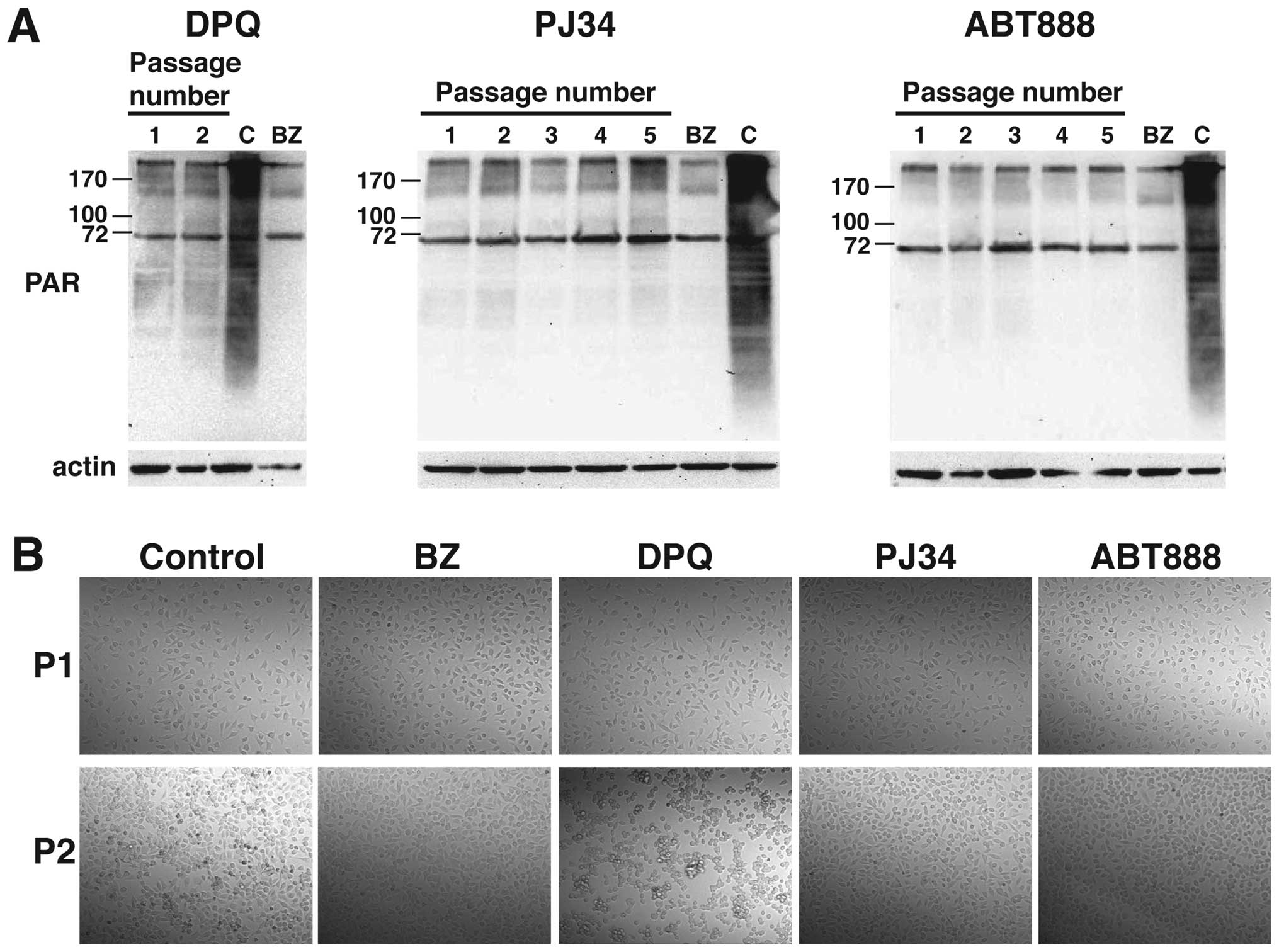
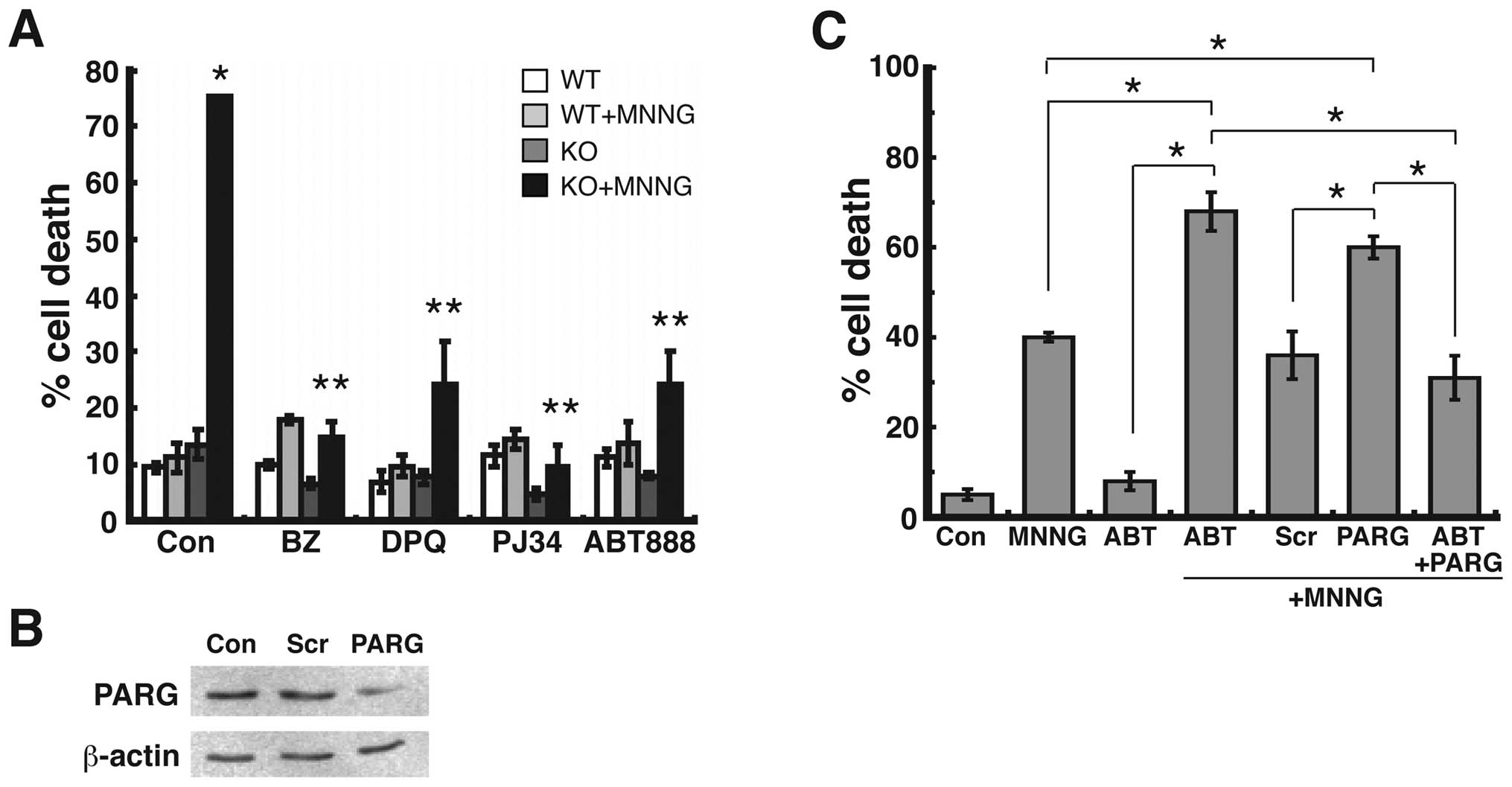
The genome-protecting role of poly(ADP-ribose) (PAR) has identified PAR polymerase-1 (PARP-1) and PAR glycohydrolase (PARG), two enzymes responsible for the synthesis and hydrolysis of PAR, as chemotherapeutic targets. Each has been previously individually evaluated in chemotherapy, but the effects of combination PARP-1 and PARG inhibition in cancer cells are not known. Here we determined the effects of the inhibition of PARP-1 and the absence or RNAi knockdown of PARG on PAR synthesis, cell death after chemotherapy and long-term viability. Using three experimental/clinical PARP-1 inhibitors in PARG-null cells, we show decreased levels of PAR and increased short‑term and long‑term viability with each inhibitor, with the exception of DPQ. Treatment with the experimental chemotherapeutic agent, N-methyl-N'-nitro-N-nitrosoguanidine (MNNG), led to increased cell death in PARG-null cells, but decreased cell death when pretreated with each PARP-1 inhibitor. Similar results were observed in MNNG-treated HeLa cells, where RNAi knockdown of PARG or pretreatment with ABT-888 led to increased HeLa cell death, whereas combination PARG RNAi knockdown + ABT-888 failed to produce increased cell death. The results demonstrate the ability of the PARP-1 inhibitors to decrease PAR levels, maintain viability and decrease PAR-mediated cell death after chemotherapeutic treatment in the absence of PARG. Further, the results demonstrate that the combination of PARP-1 and PARG inhibition in chemotherapy does not produce increased HeLa cell death. Thus, the results indicate that inhibiting both PARP-1 and PARG, which both are chemotherapeutic targets that increase cancer cell death, does not lead to synergistic cell death in HeLa cells. Therefore, strategies that target PAR metabolism for the improved treatment of cancer may be required to target PARP-1 and PARG individually in order to optimize cancer cell death.
View Figures

Figure 1

Figure 2

Figure 3

Figure 4

View References

1. 

Wang ZQ, Stingl L, Morrison C, et al: PARP is important for genomic stability but dispensable in apoptosis. Genes Dev. 11:2347–2358. 1997. View Article : Google Scholar : PubMed/NCBI

2. 

Dantzer F, de La Rubia G, Menissier-De Murcia J, Hostomsky Z, de Murcia G and Schreiber V: Base excision repair is impaired in mammalian cells lacking Poly(ADP-ribose) polymerase-1. Biochemistry. 39:7559–7569. 2000. View Article : Google Scholar : PubMed/NCBI

3. 

Trucco C, Oliver FJ, de Murcia G and Menissier-de Murcia J: DNA repair defect in poly(ADP-ribose) polymerase-deficient cell lines. Nucleic Acids Res. 26:2644–2649. 1998. View Article : Google Scholar : PubMed/NCBI

4. 

Menissier de Murcia J, Ricoul M, Tartier L, et al: Functional interaction between PARP-1 and PARP-2 in chromosome stability and embryonic development in mouse. EMBO J. 22:2255–2263. 2003.PubMed/NCBI

5. 

Ame JC, Rolli V, Schreiber V, et al: PARP-2, a novel mammalian DNA damage-dependent poly(ADP-ribose) polymerase. J Biol Chem. 274:17860–17868. 1999. View Article : Google Scholar : PubMed/NCBI

6. 

Juarez-Salinas H, Sims JL and Jacobson MK: Poly(ADP-ribose) levels in carcinogen-treated cells. Nature. 282:740–741. 1979. View Article : Google Scholar : PubMed/NCBI

7. 

Brochu G, Duchaine C, Thibeault L, Lagueux J, Shah GM and Poirier GG: Mode of action of poly(ADP-ribose) glycohydrolase. Biochim Biophys Acta. 1219:342–350. 1994. View Article : Google Scholar : PubMed/NCBI

8. 

Lin W, Ame JC, Aboul-Ela N, Jacobson EL and Jacobson MK: Isolation and characterization of the cDNA encoding bovine poly(ADP-ribose) glycohydrolase. J Biol Chem. 272:11895–11901. 1997. View Article : Google Scholar : PubMed/NCBI

9. 

Schreiber V, Ame JC, Dolle P, et al: Poly(ADP-ribose) polymerase-2 (PARP-2) is required for efficient base excision DNA repair in association with PARP-1 and XRCC1. J Biol Chem. 277:23028–23036. 2002. View Article : Google Scholar : PubMed/NCBI

10. 

Dantzer F, Schreiber V, Niedergang C, et al: Involvement of poly(ADP-ribose) polymerase in base excision repair. Biochimie. 81:69–75. 1999. View Article : Google Scholar : PubMed/NCBI

11. 

Sims JL, Berger SJ and Berger NA: Poly(ADP-ribose) Polymerase inhibitors preserve nicotinamide adenine dinucleo-tide and adenosine 5′-triphosphate pools in DNA-damaged cells: mechanism of stimulation of unscheduled DNA synthesis. Biochemistry. 22:5188–5194. 1983.PubMed/NCBI

12. 

Andrabi SA, Kim NS, Yu SW, et al: Poly(ADP-ribose) (PAR) polymer is a death signal. Proc Natl Acad Sci USA. 103:18308–18313. 2006. View Article : Google Scholar : PubMed/NCBI

13. 

Jacobson EL, Smith JY, Wielckens K, Hilz H and Jacobson MK: Cellular recovery of dividing and confluent C3H10T1/2 cells from N-methyl-N’-nitro-N-nitrosoguanidine in the presence of ADP-ribosylation inhibitors. Carcinogenesis. 6:715–718. 1985.PubMed/NCBI

14. 

Park SD, Kim CG and Kim MG: Inhibitors of poly(ADP-ribose) polymerase enhance DNA strand breaks, excision repair, and sister chromatid exchanges induced by alkylating agents. Environ Mutagen. 5:515–525. 1983. View Article : Google Scholar : PubMed/NCBI

15. 

Boulton S, Pemberton LC, Porteous JK, et al: Potentiation of temozolomide-induced cytotoxicity: a comparative study of the biological effects of poly(ADP-ribose) polymerase inhibitors. Br J Cancer. 72:849–856. 1995. View Article : Google Scholar : PubMed/NCBI

16. 

Rankin PW, Jacobson EL, Benjamin RC, Moss J and Jacobson MK: Quantitative studies of inhibitors of ADP-ribosylation in vitro and in vivo. J Biol Chem. 264:4312–4317. 1989.PubMed/NCBI

17. 

Banasik M, Komura H, Shimoyama M and Ueda K: Specific inhibitors of poly(ADP-ribose) synthetase and mono(ADP-ribosyl)transferase. J Biol Chem. 267:1569–1575. 1992.PubMed/NCBI

18. 

Kjellen E, Pero RW, Brun E, et al: A phase I/II evaluation of metoclopramide as a radiosensitiser in patients with inoperable squamous cell carcinoma of the lung. Eur J Cancer. 31A:2196–2202. 1995. View Article : Google Scholar : PubMed/NCBI

19. 

Rouleau M, Patel A, Hendzel MJ, Kaufmann SH and Poirier GG: PARP inhibition: PARP1 and beyond. Nat Rev Cancer. 10:293–301. 2010. View Article : Google Scholar : PubMed/NCBI

20. 

Farmer H, McCabe N, Lord CJ, et al: Targeting the DNA repair defect in BRCA mutant cells as a therapeutic strategy. Nature. 434:917–921. 2005. View Article : Google Scholar : PubMed/NCBI

21. 

Bryant HE, Schultz N, Thomas HD, et al: Specific killing of BRCA2-deficient tumours with inhibitors of poly(ADP-ribose) polymerase. Nature. 434:913–917. 2005. View Article : Google Scholar : PubMed/NCBI

22. 

Donawho CK, Luo Y, Penning TD, et al: ABT-888, an orally active poly(ADP-ribose) polymerase inhibitor that potentiates DNA-damaging agents in preclinical tumor models. Clin Cancer Res. 13:2728–2737. 2007. View Article : Google Scholar : PubMed/NCBI

23. 

Norquist B, Wurz KA, Pennil CC, et al: Secondary somatic mutations restoring BRCA1/2 predict chemotherapy resistance in hereditary ovarian carcinomas. J Clin Oncol. 29:3008–3015. 2011. View Article : Google Scholar : PubMed/NCBI

24. 

Hutchinson L: Targeted therapies: PARP inhibitor olaparib is safe and effective in patients with BRCA1 and BRCA2 mutations. Nat Rev Clin Oncol. 7:5492010. View Article : Google Scholar : PubMed/NCBI

25. 

Tutt A, Robson M, Garber JE, et al: Oral poly(ADP-ribose) polymerase inhibitor olaparib in patients with BRCA1 or BRCA2 mutations and advanced breast cancer: a proof-of-concept trial. Lancet. 376:235–244. 2010. View Article : Google Scholar

26. 

Audeh MW, Carmichael J, Penson RT, et al: Oral poly(ADP-ribose) polymerase inhibitor olaparib in patients with BRCA1 or BRCA2 mutations and recurrent ovarian cancer: a proof-of-concept trial. Lancet. 376:245–251. 2010. View Article : Google Scholar

27. 

Fujihara H, Ogino H, Maeda D, et al: Poly(ADP-ribose) glycohydrolase deficiency sensitizes mouse ES cells to DNA damaging agents. Curr Cancer Drug Targets. 9:953–962. 2009. View Article : Google Scholar : PubMed/NCBI

28. 

Hanai S, Kanai M, Ohashi S, et al: Loss of poly(ADP-ribose) glycohydrolase causes progressive neurodegeneration in Drosophila melanogaster. Proc Natl Acad Sci USA. 101:82–86. 2004. View Article : Google Scholar : PubMed/NCBI

29. 

Koh DW, Lawler AM, Poitras MF, et al: Failure to degrade poly(ADP-ribose) causes increased sensitivity to cytotoxicity and early embryonic lethality. Proc Natl Acad Sci USA. 101:17699–17704. 2004. View Article : Google Scholar : PubMed/NCBI

30. 

Min W, Cortes U, Herceg Z, Tong WM and Wang ZQ: Deletion of the nuclear isoform of poly(ADP-ribose) glycohydrolase (PARG) reveals its function in DNA repair, genomic stability and tumorigenesis. Carcinogenesis. 31:2058–2065. 2010. View Article : Google Scholar : PubMed/NCBI

31. 

Ame JC, Fouquerel E, Gauthier LR, et al: Radiation-induced mitotic catastrophe in PARG-deficient cells. J Cell Sci. 122:1990–2002. 2009. View Article : Google Scholar : PubMed/NCBI

32. 

Tentori L, Leonetti C, Scarsella M, et al: Poly(ADP-ribose) glycohydrolase inhibitor as chemosensitiser of malignant melanoma for temozolomide. Eur J Cancer. 41:2948–2957. 2005. View Article : Google Scholar : PubMed/NCBI

33. 

Fathers C, Drayton RM, Solovieva S and Bryant HE: Inhibition of poly(ADP-ribose) glycohydrolase (PARG) specifically kills BRCA2-deficient tumor cells. Cell Cycle. 11:990–997. 2012. View Article : Google Scholar : PubMed/NCBI

34. 

Kickhoefer VA, Siva AC, Kedersha NL, et al: The 193-kD vault protein, VPARP, is a novel poly(ADP-ribose) polymerase. J Cell Biol. 146:917–928. 1999. View Article : Google Scholar : PubMed/NCBI

35. 

Smith S, Giriat I, Schmitt A and de Lange T: Tankyrase, a poly(ADP-ribose) polymerase at human telomeres. Science. 282:1484–1487. 1998. View Article : Google Scholar : PubMed/NCBI

36. 

Takahashi K, Greenberg JH, Jackson P, Maclin K and Zhang J: Neuroprotective effects of inhibiting poly(ADP-ribose) synthetase on focal cerebral ischemia in rats. J Cereb Blood Flow Metab. 17:1137–1142. 1997. View Article : Google Scholar : PubMed/NCBI

37. 

Abdelkarim GE, Gertz K, Harms C, et al: Protective effects of PJ34, a novel, potent inhibitor of poly(ADP-ribose) polymerase (PARP) in in vitro and in vivo models of stroke. Int J Mol Med. 7:255–260. 2001.

38. 

Shieh WM, Ame JC, Wilson MV, et al: Poly(ADP-ribose) polymerase null mouse cells synthesize ADP-ribose polymers. J Biol Chem. 273:30069–30072. 1998. View Article : Google Scholar : PubMed/NCBI

39. 

Pinsky SD, Tew KD, Smulson ME and Woolley PV III: Modification of L1210 cell nuclear proteins by 1-methyl-1-nitrosourea and 1-methyl-3-nitro-1-nitrosoguanidine. Cancer Res. 39:923–928. 1979.PubMed/NCBI

40. 

Kim MY, Mauro S, Gevry N, Lis JT and Kraus WL: NAD+-dependent modulation of chromatin structure and transcription by nucleosome binding properties of PARP-1. Cell. 119:803–814. 2004.

41. 

Zhou Y, Feng X and Koh DW: Synergistic cytotoxicity of N-methyl-N’-nitro-N-nitrosoguanidine and absence of poly(ADP-ribose) glycohydrolase involves chromatin decondensation. Int J Oncol. 39:121–127. 2011.

42. 

Zhou Y, Feng X and Koh DW: Enhanced DNA accessibility and increased DNA damage induced by the absence of poly(ADP-ribose) hydrolysis. Biochemistry. 49:7360–7366. 2010. View Article : Google Scholar : PubMed/NCBI

43. 

Zhou Y, Feng X and Koh DW: Activation of cell death mediated by apoptosis-inducing factor due to the absence of poly(ADP-ribose) glycohydrolase. Biochemistry. 50:2850–2859. 2011. View Article : Google Scholar : PubMed/NCBI

44. 

Jacobson MK and Jacobson EL: Discovering new ADP-ribose polymer cycles: protecting the genome and more. Trends Biochem Sci. 24:415–417. 1999. View Article : Google Scholar : PubMed/NCBI

45. 

Feng X, Zhou Y, Proctor AM, Hopkins MM, Liu M and Koh DW: Silencing of apoptosis-inducing factor and poly(ADP-ribose) glycohydrolase reveals novel roles in breast cancer cell death after chemotherapy. Mol Cancer. 11:482012. View Article : Google Scholar : PubMed/NCBI

Related Articles

  • Abstract
  • View
  • Download
  • Twitter
Copy and paste a formatted citation
Spandidos Publications style
Feng X and Koh D : Inhibition of poly(ADP-ribose) polymerase-1 or poly(ADP‑ribose) glycohydrolase individually, but not in combination, leads to improved chemotherapeutic efficacy in HeLa cells. Int J Oncol 42: 749-756, 2013.
APA
Feng, X., & Koh, D. . (2013). Inhibition of poly(ADP-ribose) polymerase-1 or poly(ADP‑ribose) glycohydrolase individually, but not in combination, leads to improved chemotherapeutic efficacy in HeLa cells. International Journal of Oncology, 42, 749-756. https://doi.org/10.3892/ijo.2012.1740
MLA
Feng, X., Koh, D. ."Inhibition of poly(ADP-ribose) polymerase-1 or poly(ADP‑ribose) glycohydrolase individually, but not in combination, leads to improved chemotherapeutic efficacy in HeLa cells". International Journal of Oncology 42.2 (2013): 749-756.
Chicago
Feng, X., Koh, D. ."Inhibition of poly(ADP-ribose) polymerase-1 or poly(ADP‑ribose) glycohydrolase individually, but not in combination, leads to improved chemotherapeutic efficacy in HeLa cells". International Journal of Oncology 42, no. 2 (2013): 749-756. https://doi.org/10.3892/ijo.2012.1740
Copy and paste a formatted citation
x
Spandidos Publications style
Feng X and Koh D : Inhibition of poly(ADP-ribose) polymerase-1 or poly(ADP‑ribose) glycohydrolase individually, but not in combination, leads to improved chemotherapeutic efficacy in HeLa cells. Int J Oncol 42: 749-756, 2013.
APA
Feng, X., & Koh, D. . (2013). Inhibition of poly(ADP-ribose) polymerase-1 or poly(ADP‑ribose) glycohydrolase individually, but not in combination, leads to improved chemotherapeutic efficacy in HeLa cells. International Journal of Oncology, 42, 749-756. https://doi.org/10.3892/ijo.2012.1740
MLA
Feng, X., Koh, D. ."Inhibition of poly(ADP-ribose) polymerase-1 or poly(ADP‑ribose) glycohydrolase individually, but not in combination, leads to improved chemotherapeutic efficacy in HeLa cells". International Journal of Oncology 42.2 (2013): 749-756.
Chicago
Feng, X., Koh, D. ."Inhibition of poly(ADP-ribose) polymerase-1 or poly(ADP‑ribose) glycohydrolase individually, but not in combination, leads to improved chemotherapeutic efficacy in HeLa cells". International Journal of Oncology 42, no. 2 (2013): 749-756. https://doi.org/10.3892/ijo.2012.1740
Follow us
  • Twitter
  • LinkedIn
  • Facebook
About
  • Spandidos Publications
  • Careers
  • Cookie Policy
  • Privacy Policy
How can we help?
  • Help
  • Live Chat
  • Contact
  • Email to our Support Team